• About
  • Best Baby Names
  • Celebrity Baby Names
  • Celebrity Baby Names – Current
  • Celebrity Baby Names – Past
  • Featured Boys Names
  • Featured Girls Names
  • Featured Unisex Names
  • Links to Name Data
  • Waltzing on the Web

Waltzing More Than Matilda

~ Names with an Australian Bias of Democratic Temper

Waltzing More Than Matilda

Tag Archives: name trends

Famous Name: Nancy

06 Tuesday Sep 2011

Posted by A.O. in Famous Names

≈ 9 Comments

Tags

celebrity baby names, classic names, english names, famous namesakes, fictional namesakes, name history, name popularity, name trends, nicknames, UK name popularity, US name popularity

2829044-3x4-700x933

This blog post was first published on September 6 2011, and revised and updated on September 24 2015.

Famous Namesake
On August 7 2011, Australia’s most decorated servicewoman of World War II died. Nancy Wake was born in New Zealand in 1912, and her family moved to Australia when she was a baby. Not long after, her father abandoned the family and went back to New Zealand, selling their house in the process, thus leaving his wife and six children homeless and destitute.

Life must have been tough for young Nancy, but she was clearly a born survivor. A girl of spirit, she ran away from home at the age of 16 and worked as a nurse. When an aunt left her a £200 inheritance, she travelled to New York, and then London, where she became a journalist.

During the 1930s, she settled in Paris, and worked for the Hearst newspapers as European correspondent. One of her first assignments was to interview Adolf Hitler. She also witnessed first-hand the brutal persecution of Jews by the Nazis in Vienna, and vowed that if she could ever do something about it, she would.

In 1939 Nancy married Henri Fiocca, a handsome and wealthy French industrialist who she described as the love of her life. Six months later, Germany invaded France, and Henri and Nancy both joined the French Resistance. Nancy worked as a courier, smuggling food and messages to Resistance agents in Spain, and was able to assist more than a thousand escaped prisoners of war and Allied fliers out of France.

By 1942, the Gestapo had become aware of a significant Resistance agent who was proving a thorn in their side, and code-named her The White Mouse. She was #1 on the Gestapo’s “Most Wanted” list, and had a 5 million franc bounty on her head. Nancy escaped to England, where she trained as a spy in the French section of the British Special Operations Executive, who worked with local resistance groups in German-occupied territories.

She parachuted back into France in 1944 to help with D-Day preparations, and after D-Day was in charge of an army involved in combat against German troops. Never one to back down from a hard task, she once cycled 500 km in three days, crossing several German checkpoints, to find an operator to radio Britain and request new radio codes.

Attractive, vivacious and feisty, she drew admiration for being an “Australian bombshell” who was a crack shot with a cheerfully never-say-die attitude. One of her comrades, Henri Tardivat, said of her: She is the most feminine woman I know, until the fighting starts. Then she is like five men.

At the end of the war, Nancy discovered that her beloved husband Henri had been captured, tortured and executed by the Gestapo in 1943 for refusing to disclose her location. She never ceased to regret leaving France, and blamed herself for his death, believing that if she had stayed with him, he would have survived.

After the war, she was showered in international honours, including the George Medal, the Croix de Guerre, the Medaille de la Resistance, the Chevalier de Legion d’Honneur, and the US Medal of Freedom. Further honours came to her throughout her life, but none from Australia for many years. At first she refused all Australian recognition, then there was some bureaucratic tangles because technically Nancy was still a citizen of New Zealand.

Nancy probably didn’t help the process by getting unsuccessfully involved in Australian politics, and by telling them to stick their medals somewhere unmentionable. Rather belatedly, she was awarded the Companion Order of Australia in 2004; by that time she had left Australia permanently to live in London, after being widowed once more (this time after 40 years of marriage).

Nancy died three weeks away from her 99th birthday. On March 10 2013, her ashes were taken to the village of Verneix near Montluçon, in central France – the region she had used as her base while a Resistance fighter. Here the ashes were scattered in a private ceremony attended by close friends, in accordance with her wishes.

She said of herself: I hate wars and violence, but if they come, I don’t see why we women should just wave our men a proud goodbye and then knit them balaclavas.

Name Information
Nancy was originally a short form of Annis, the medieval English form of Agnes, and in use since the Middle Ages. However, by the time Nancy became commonly used as an independent name in the 18th century, it was derived from Nan, a short form of Ann or Anne.

There are many famous namesakes for this name. Anne “Nancy” Regan, former US First Lady; Nancy Astor, the first female MP in the British Parliament; boot-stomping singer Nancy Sinatra; witty author Nancy Mitford; voice actress of Bart Simpson, Nancy Cartright; punk lover Nancy Spungen; nobbled skater Nancy Kerrigan. It’s interesting how often famous Nancys end up being controversial in some way.

Fictional Nancys are just as strong characters as their real world counterparts. Smart girl detective Nancy Drew, an inspiration to powerful women such as Hilary Clinton. Piratical tomboy Nancy Blackett from Swallows and Amazons; her real name is Ruth, but pirates must be ruthless! Dreamworld heroine Nancy Thompson, who takes on the nightmarish Freddy Kruger. Poor degraded Nancy from Oliver Twist, who performs a noble act to save another, though it risks her own life.

Nancy is a classic name which has been almost continuously on the charts. It was #114 in the 1900s, joined the Top 100 the following decade, and peaked in the 1920s at #26. It left the Top 100 in the 1950s and has fallen gradually; currently it is around the 500s.

In the United States, Nancy was a Top 100 name in the late 19th century, and then again from the 1920s to the end of the 1970s – a very good run. It is has fallen steadily since then and is now #752. In the UK, Nancy was on the top 100 from the mid-19th century until World War II. In 1996 it was #251, and generally making upward progress. It joined the Top 100 again last year, and is currently #90. UK Prime Minister David Cameron has a daughter named Nancy, born in 2004.

Nancy is a wholesome yet spunky name which faded too quickly in Australia compared to other countries. It fits in perfectly with the current trend for cute short form names such as Maggie and Kitty, while having a clean classic feel. This is a spirited choice, suitable for those who want their daughters to be in the thick of the fight, not just waving and knitting on the sidelines.

POLL RESULT
Nancy received an approval rating of 56%. 30% of people thought the name was too dated and old-fashioned, but 16% said it was sweet and wholesome. Nobody was affected by the “nasty Nancy” label given to Nancy Spungen, but 6% were concerned about the phrase “negative Nancy”, and 4% were really bothered that “nancy” is slang for a homosexual or effeminate man.

(Image of Nancy Wake c 1945  from The Australian War Memorial, which houses the collection of all her war medals)
Boys Names from the Top 100 of the 1930s

26 Sunday Jun 2011

Posted by A.O. in Name Themes and Lists

≈ 18 Comments

Tags

Anglo-Saxon names, animal names, aristocratic names, Arthurian names, Celtic names, classic names, english names, epithets, European name popularity, famous namesakes, fictional namesakes, Gaelic names, German names, germanic names, Greek names, Irish name popularity, Irish names, Latin names, mythological names, name history, name meaning, name popularity, name trends, names from films, names from television, nicknames, Old English names, Old Norse names, retro names, royal names, royal titles, saints names, Scottish names, Slavic names, Spanish names, UK name trends, US name trends, Welsh names

This post was first published on June 26 2011, and substantially revised and updated on June 25 2015.

Alfred
Anglo-Saxon name meaning “elf counsel”. The name became famous due to Alfred the Great, 9th century king of Wessex, who defended England against the Vikings, and was the first to call himself King of the Anglo-Saxons. Renowned for his love of learning, he encouraged education and reformed the legal system. Although not officially a saint, he is regarded as a Christian hero, and has a feast day in the Anglican Church. The name Alfred continued to be used even after the Norman Conquest, when many Anglo-Saxon names were discarded. It dwindled after the Middle Ages, but had a revival in the 19th century, and was chosen as the name of one of Queen Victoria’s sons – an earlier Prince Alfred was the son of King George III, and the current British family trace their ancestry back to Alfred the Great. Alfred is a classic name which has never left the charts. It was #14 in the 1900s, and #50 by the 1930s. Alfred left the Top 100 in the 1950s, and is currently around the 300s, its position apparently fairly stable. Popular in Scandinavia, Alfie, Fred, and Freddie give this venerable classic several cute nickname options.

Brian
Irish name, possibly from the Celtic bre, meaning “hill”, to suggest “high, great, exalted”. In Irish mythology, Brian is one of three brothers who are sent on a worldwide magical quest. In some versions, Brian is the clever one of the three, while his brothers are bumbling and easily pushed around. A famous namesake is Brian Boru, the first High King of Ireland, and founder of the O’Brien dynasty; he made the name common in Ireland. The name Brian was also used in Brittany, and became quite popular in East Anglia, where it was spread by Breton immigrants, and in the north of England, brought over by Scandinavian settlers who had lived in Ireland. It experienced a revival in the early 20th century. Brian is a classic name which has never left the charts. It was #169 in the 1900s, and joined the Top 100 in the 1920s. Peaking in the 1930s and ’40s at #7, Brian didn’t leave the Top 100 until the 1980s – Monty Python’s Life of Brian having turned it into a “joke name” didn’t help its fortunes. However, it’s been reasonably stable for about a decade, and is around the 300s. Brian remains a popular name in Ireland. This is a strong-sounding Irish classic still getting reasonable use.

Colin
Anglicised form of the Scottish name Cailean, meaning “whelp, pup, young dog” in Gaelic. It is also a medieval pet form of Col, short for Nicholas, so it’s an English name as well. Cuilén mac Ildulb was a 10th century King of the Scots, while Sir Colin Campbell (“Colin the Great”) was a 13th century cousin of Robert the Bruce, and one of the earliest known members of the Clan Campbell, ancestor of the Earls of Argyll. The name became traditional in the Campbell family because of him. Colin was #51 in the 1900s, and peaked in the 1930s at #14. It left the Top 100 in the 1980s, and although it stayed in use for many years afterwards, now seems to be quite rare. Colin is a traditional name which has a gentle and slightly poetic feel, and works well in the middle.

Edwin
Modern form of the Anglo-Saxon name Eadwine, meaning “rich friend”. The name was traditional amongst Anglo-Saxon royalty and nobility, with the most famous Edwin being a 7th century king of Northumbria who converted to Christianity; it was said that during his reign, the land was so peaceful that a woman with a new baby could walk across the country without being harmed (it tells you something that this was considered remarkable). He was canonised as a saint after his death. The name Edwin sunk in popularity after the Norman Conquest, but was revived in the 19th century during the Victorian enthusiasm for early English names. Edwin is a classic name which has never left the charts. It was #52 in the 1900s, and #88 by the 1930s. It left the Top 100 in the 1940s, and is currently around the 400s. A good alternative to popular Edward, while still having Eddie, Ed, Ned, and Ted as nicknames.

Frederick
English form of the Germanic name Friduric, translated as “peaceful ruler”; the modern German version is Friedrich. A favourite amongst European royalty, the name was traditional amongst the Holy Roman Emperors, with Frederick I also known as Frederick Barbarossa, meaning “red bearded” in Italian. Descended from two of Germany’s leading royal houses, he is regarded as the greatest of the medieval Holy Roman Emperors. Handsome, charismatic, and courtly, he was ambitious and skilful, greatly increasing Germany’s power base, and bringing back the Roman rule of law. According to medieval legend, he is not dead, but sleeps in a cave, waiting to return Germany to its former greatness. There are also a couple of medieval German saints named Frederick. The name was brought to England by the Normans after the Conquest, but it didn’t catch on. It was revived in the 18th century when the German House of Hanover inherited the British throne; Prince Frederick was the eldest son of King George II. Frederick is a classic name which has never left the charts. It was #8 in the 1900s, and #26 by the 1930s. It left the Top 100 in the 1960s, and sunk to its lowest level in the 1990s, at #459. Since then it has gradually increased in popularity, and is now around the low 200s. A distinguished name with friendly nicknames like Fred and Freddie, Frederick is already popular in the UK.

Ivan
Slavic form of John. A traditional Slavic name, there have been many famous Ivans in history, including six tsars of Russia, and many Croatian and Ukrainian leaders. St Ivan is a legendary hermit from Bohemia, while St Ivan of Rila is the patron saint of Bulgaria. Ivan continues to be a popular name in Eastern Europe, while the Spanish form Iván is popular in Spain and Latin America. Its long-term use in the English-speaking world may come from its similarity to the Welsh form of John, Ifan, so it can be seen as an Anglicised form of the Welsh name. Ivan is a classic name which has never left the charts. It was #117 in the 1900s, peaked in the 1910s at #97, and was #100 in the 1930s. It left the Top 100 in the 1940s and is currently around the low 300s, having been reasonably stable since the 1990s. That makes it a great cross-cultural choice which has remained both familiar and underused.

Lawrence
Variant of Laurence, and the usual surname form of the name. St Lawrence of Rome was a 3rd century Spanish saint who was archdeacon of Rome during a time of Christian persecution. There are many stories and legends about him. One is that he spirited the Holy Grail to Spain, where it remains in Valencia. Another is that the Emperor demanded that Lawrence hand over all the church’s goods. Lawrence hastily distributed everything the poor, then presented the city’s suffering, saying that these were the true treasures of the church. For this act of defiance, he was supposedly martyred by being roasted over a gridiron; after hours of pain, he remarked cheerfully: I’m well done. Turn me over! He is one of the most widely venerated saints, and his tomb a favourite pilgrimage site since the 4th century. Lawrence is a classic name which has never left the charts. It was #67 in the 1900s, peaked at #55 in the 1910s and ’20s, and was #61 in the 1930s. It left the Top 100 in the 1960s, and reached its lowest point in 2010 at #466. Since then it has risen again, and is now in the 200s, outstripping Laurence in popularity. This rugged-sounding classic comes with the nicknames Lawrie and Larry.

Lionel
Medieval pet form of Leon, a Greek name meaning “lion”; it could also be directly from Lion, which was used as a nickname in the Middle Ages. According to Arthurian legend, Sir Lionel was a Breton king, and knight of the Round Table. He features in the Grail Quest, where he is shown to be unworthy of the Grail, and more interested in fighting than the spiritual life. Lionel of Antwerp was a son of King Edward III, and reputedly a giant of a man, almost seven feet tall and of athletic build. It is through him that the House of York claimed the throne of England, and the name was a common one amongst the aristocracy. Lionel was #68 in the 1900s, peaked in the 1910s at #66, and was #73 by the 1930s. It left the Top 100 in the 1950s, and hasn’t charted since the 1980s. The name is rising in both the the UK and US, fitting in well with both popular Leo, and the trend for animal names. Definitely a worthy choice that has too often been overlooked!

Rex
The Latin word for “king”, and the title of the ancient kings of Rome (“Rex Romae“) – according to legend, the first king of Rome was Romulus. The Roman monarchs did not inherit kingship, but were elected to the role, and held absolute power. The word rex is ultimately from an ancient root meaning “to rule”, and it is related to the Sanskrit term Raja, the German word reich, and the English words rich, right, regal, royal, reign, and realm. Rex has been used as a personal name since the 17th century, but only came into common use in the 19th century. Rex was #138 in the 1900s, and entered the Top 100 in the 1920s. Peaking in the 1930s at #74, Rex left the Top 100 in the 1950s. It left the charts in the 1980s, but returned the following decade at #635. It has continued climbing, and is now around the 300s. No wonder Rex is making a comeback – it’s short and snappy, ends in the fashionable X (like Max), and sounds very masculine and confident.

Walter
English form of the ancient Germanic name Walthari, meaning “ruler of the army”. It was brought to England by the Normans and soon replaced its Old English version, Wealdhere. Mythologist Jacob Grimm theorised that the name may have originally been an epithet of one of the Germanic war gods, and be linked to the Norse god Tyr. The name was especially famous in the Middle Ages because of Walter of Aquitaine, a legendary king of the Visigoths; medieval poems tell of his military exploits, fighting one-handed against his foes. He may be based on a 5th century king of Aquitaine, Wallia – his name is probably from the Old Norse for “slaughter”. There is a 12th century English saint called Walter. Walter was #15 in the 1900s, and #46 by the 1930s. It left the Top 100 in the 1950s, and dropped off the charts in the 1990s. However, it made a comeback in 2011 after the hit TV show Breaking Bad aired in Australia, with ailing chemistry teacher turned criminal Walter White played by Bryan Cranston. His name was inspired by the American poet, Walt Whitman, and he is also often known as Walt. His teenage son is Walter White Jr, giving the name a younger image to match Walter Snr’s villainous smarts. Walter is currently around the 500s, and it is yet to be seen whether it continues rising now the show has finished. I hope so, because this retro name now seems fresh and unconventional.

POLL RESULTS
People’s favourite names were Walter, Frederick and Alfred, and their least favourites were Lionel, Ivan and Brian.

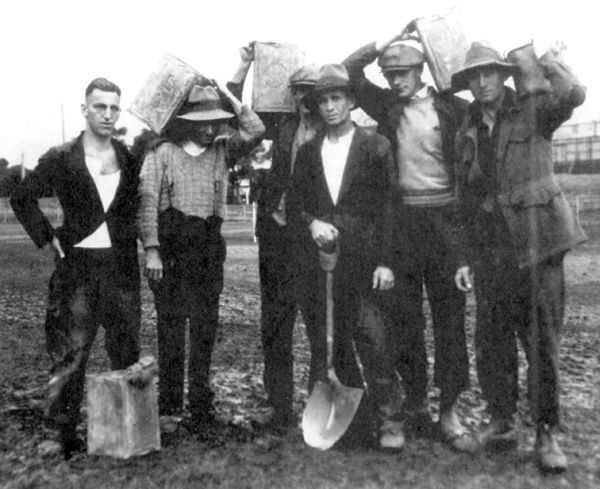
(Photo of men doing relief work during the Great Depression in 1933 from the National Library of Australia)

Girls Names from the Top 100 of the 1930s

19 Sunday Jun 2011

Posted by A.O. in Name Themes and Lists

≈ 37 Comments

Tags

Anglo-Saxon names, Biblical names, celebrity baby names, Christmas names, classic names, english names, European name popularity, famous namesakes, fictional namesakes, flower names, French names, Greek names, honouring, Italian names, Latin names, locational names, middle names, military events, mythological names, name history, name meaning, name popularity, name trends, names from movies, names from songs, nature names, nicknames, plant names, popular names, retro names, Roman names, royal names, saints names, Scottish names, Shakespearean names, Tatar names, unisex names, virtue names, vocabulary names

This blog post was first published on June 19 2011, and revised and updated on June 12 2015.

Alma
May be derived from the Latin almus, meaning “nourishing” – an epithet given to several Roman goddesses, including Ceres. Alma mater, meaning “nurturing mother”, is a Latin term often used to refer to one’s college or university: it was originally a title given to mother goddesses, and later to the Virgin Mary. The obscure 4th century Romano-British saint Alma Pompea, married to the semi-legendary King Hoel of Brittany, is an early example of the name. The name was given a boost after being used in Sir Edmund Spenser’s 1590 poem, The Faerie Queen; he seems to have been influenced by the Renaissance Italian word alma, meaning “soul”. The name became popular in the 19th century, after the Crimean War began with the Battle of Alma, when Anglo-French forces defeated the Russians near the River Alma – the river’s name is from a Tatar word meaning “wild apple”. After this date, babies of both sexes (but mostly girls) were named Alma in honour of the military victory. Alma was #24 in the 1900s, and #97 in the 1930s, leaving the Top 100 the following decade, and the charts in the 1960s. Alma made a mild comeback in 2011, and seems very contemporary, as it has been used in Brokeback Mountain and The Hunger Games. Already popular in Europe, Alma would make an interesting alternative to names such as Amelia, Anna, or Emma.

Audrey
Pet form of the Anglo-Saxon name Etheldreda, meaning “noble strength”; it was the name of a 7th century English princess and saint whose feast day is June 23. It became less common after the Middle Ages, because St Audrey Day Fairs sold low-quality necklaces that were disparagingly called tawdries – which is where we get the word for something cheap and tacky from. Audrey was revived in the 19th century when the Victorians rediscovered many Anglo-Saxon names. The name was already familiar, as Audrey is the simple but honest country girl in Shakespeare’s As You Like It. The Victorians were also in the middle of a Shakespeare revival, so Audrey was a dead cert for a comeback. Audrey was #156 in the 1900s, and peaked in the 1920s at #32. The name was #36 in the 1930s, but plummeted so that it was off the Top 100 by the following decade. It fell to a low of 0 in the 1980s, but climbed after the death of Audrey Hepburn until it reached the Top 100 again in 2008. Once tawdry Audrey now seems charming and stylish, and is currently #44 and climbing.

Elsie
Often said to be a pet form of Elizabeth, but technically a pet form of Elspeth, the Scottish form of the name, and was originally Elspie. The name Elsie can be found in songs and poems dating to the 17th century, and became a 19th century favourite. Elsie was #7 in the 1900s, #59 in the 1930s, and left the Top 100 in the 1940s. Elsie left the charts in the 1970s, but returned in the early 2000s at #731. It joined the Top 100 in 2013 at #91, and last year rose 26 places to #65 – an impressive performance. Sweet and unpretentious, Elsie is very much back in the game.

Hazel
Named for the hedgerow tree or shrub which produces edible nuts; the Celts equated hazelnuts with wisdom and poetic inspiration, and the Druids made staffs from hazel branches. It was considered to be one of the trees belonging to the fairies, and folk tales tell of its ability to protect from evil. Hazel has been used as a personal name since the 17th century, mostly for girls, and became popular in the 19th century when plant names were fashionable. Hazel was #45 in the 1900s, and peaked in the 1910s at #18; by the 1930s it was #55. Hazel left the Top 100 in the 1940s, and the charts by the 1970s, making a return in the late 2000s at #477, after Julia Roberts named her daughter Hazel. Last year Hazel had an outstanding debut as the fastest-rising name of 2014, rising #63 places to #88. One factor must surely be the romantic film The Fault in Our Stars, with its heartbreaking heroine Hazel Lancaster, although there have also been Hazels in the Heroes of Olympus series, and Gossip Girl.

Iris
Greek personification of the rainbow who served as messenger to the gods, and linked them to humanity. The name literally means “rainbow”, which is where the colourful iris flower got its name from – and the colourful irises in our eyes. Irises were used in the Middle Ages as a symbol of monarchy, as the fleur-de-lis pattern depicts. Religious pictures from the medieval period show the Virgin Mary holding an iris to symbolise purity and chastity. Filled with meaning and associations, the name was used by the 19th century British aristocracy for both females and males (because the Greeks called the iris flower a “hyacinth”, and Hyacinth was a male name), but quickly became used by all classes, and nearly always for girls. Iris was #62 in the 1900s, and peaked in the 1910s at #31; it was #72 by the 1930s. Iris left the Top 100 in the 1940s, and left the charts in the 1970s, although it returned in the 1980s at #748. Off the charts in the 1990s, Iris came back in the early 2000s at #551, and is now around the mid-200s and apparently stable. Almost always on the charts, Iris manages to be a “normal” name that is still underused. Hip and artistic, it has slightly dark or even punk undertones. It’s a floral name with a bit of bite.

Josephine
Anglicised form of Joséphine, a pet form of Joséphe, a French feminine form of Joseph; by the 19th century Joséphine had become the standard form of the name. It has been used by several of the royal houses of Europe, and is famous as the first wife of Napoleon Bonaparte, and thus the first Empress of the French. Joséphine was born Marie Joséphe, so it was the pet form of her middle name. Classic Josephine has always been on the charts. It was #86 in the 1900s, peaked in the 1910s at #76, and by the 1930s was #78. It left the Top 100 in the 1940s, and sunk to its lowest level in 2011 at #199, so it has never been out of the 200s. In 2012 it made an appearance again in the Top 100 at #93 after the birth of Princess Josephine, the daughter of Australian-born Princess Mary of Denmark, but has since stabilised into its usual place around the mid-100s. Josephine is a solid stayer with royal blood whose nicknames range from the sensible Jo to the cute Josie to the tomboy Joey to the froufrou Fifi to the cool Joss.

Joy
Refers to the emotion of extreme happiness and gladness. It was originally a Puritan virtue name dating from the 16th century, referring to rejoicing for the salvation of God – perhaps most famous from the hymn, Joy to the World, now often used as a Christmas carol. In fact, joy and Christmas have become so entwined that you could even see Joy as a name suitable for a baby born around late December. However, the name Joy has become secularised, and often linked to the joyful experience of welcoming a child into the world: babies have even been called “bundles of joy”. Joy entered the charts in the 1910s at #205, and was in the Top 100 by the following decade. It peaked in the 1930s and ’40s at #60, and left the Top 100 in the 1960s. Joy reached its lowest point in the 1990s at #802, but then increased slightly in popularity, and was stable in the 500s for some time. Its current position is not known for sure, but is in at least occasional use. Quite common in the middle position, Joy is a strong, simple name with a beautiful meaning, and the current trend for virtue names mean that it would be refreshing to see it up front.

Lillian
Most likely a pet form of Elizabeth dating to the Middle Ages: there is a medieval Scottish ballad about a lady named Lillian. The name became greatly more popular in the 19th century, to the point where it could be seen as another Victorian revival of a medieval name, and may have been understood as an elaboration of Lily, which also became fashionable in the 19th century as a flower name. Lillian is a classic name which has never left the charts. It was #35 in the 1900s, reached #86 by the 1930s, and left the Top 100 in the 1940s. It reached its lowest point in the 1970s at #562, and then climbed steeply, following in the footsteps of Lily, until it reached the Top 100 again in 2008 at #81. It is currently #86, so its position is stable. However, the high number of Lilys and Lillys (not to mention the Laylas and Lolas) mean that lovely Lillian may feel almost too on trend for some.

Marie
French form of Maria: in France it has sometimes used for males, especially as a middle name, but in English-speaking countries is almost always feminine. The name often reminds people of Queen Marie Antoinette, whose first two baptismal names were Maria Antonia – she was Austrian by birth. In the Middle Ages, Marie was commonly used in England, and predates the use of Mary. The medieval poet Marie de France lived and worked in England, possibly at the court of King Henry II – it is even thought that she may have been Henry’s own half-sister. The traditional English pronunciation of the name was MAH-ree (still used in the 20th century), but it is now usually said muh-REE. A name never out of common use for centuries, Marie was #71 in the 1900s, and peaked in the 1930s at #11 – perhaps Irving Berling’s hit song Marie, sung by Rudy Vallee, was an influence on its success at this time. Marie left the Top 100 in the 1960s, and fell off the charts in 2011. It is now only in occasional use, although a common middle name. Marie is still popular in Europe, and this is a pretty, traditional name that still seems very wearable.

Olive
English form of the Roman name Oliva, which refers to both the olive tree and its fruit. There is a legendary Italian martyr called Saint Oliva, known as Blessed Olive. The Crusaders introduced the name Olive to England in the 12th century; returning from the Holy Land, they often gave their children names of Biblical import in honour of their religious duty. Olives play a major role in the Bible, from the dove bringing an olive branch to Noah after the Flood, to Christ ascending to Heaven from the Mount of Olives. It was a name used for both males and females, and in fact I have seen a baby boy named Olive in the past few years – but overall Olive has been more common for girls. Olive became popular in the 19th century, along with other plant names. Olive was #26 in the 1900s, and was #73 by the 1930s. It left the Top 100 in the 1940s, and was off the charts by the 1960s. It returned in the late 2000s, after Australian actress Isla Fisher chose the name Olive for her eldest daughter. After a smooth rise, Olive joined the Top 100 in 2012, debuting at #94. It is currently #76, so rising sedately rather than steeply. Buoyed by the success of Olivia and Oliver, and with a V in the middle like other popular names, Olive should continue to do well.

POLL RESULTS
People’s favourite names were Hazel, Iris and Josephine, and their least favourites were Joy, Marie and Alma.

(Painting is Moira Madden, later Moira Hallenstein by Arthur Challen (1937); from the State Library of Victoria.

Boys Names from Video Games

17 Sunday Apr 2011

Posted by A.O. in Name Themes and Lists

≈ 10 Comments

Tags

Anglo-Saxon names, animal names, Arabic names, aristocratic titles, astronomical names, bird names, celebrity baby names, controversial names, english names, famous namesakes, fictional namesakes, Greek names, hebrew names, Irish names, Japanese names, Latin names, mythological names, name history, name meaning, name trends, names from video games, nature names, nicknames, Roman names, slang terms, Spanish names, surname names, tree names, unisex names, vocabulary names

This post was first published on April 17 2011, and heavily edited on April 23 2015.

Altair
Altaïr Ibn-La’Ahad is the protagonist of the first game in the Assassin’s Creed series. Born in the Holy Land in 1165 to an Arabic Muslim father and Italian Christian mother, he joins the medieval secret society of the Assassins. Due to his superior abilities, he quickly gains the title of Master Assassin, but Altaïr becomes overconfident and arrogant, and must be taken down a peg or two. He goes on to have further adventures in later games. Mysteriously cloaked and hooded, he is dark, rather handsome, and has an intense expression. Altair is Arabic for “the flying eagle”, and it is the name of the brightest star in the Aquila constellation. It is pronounced al-TAH-yir, but English-speakers will probably prefer al-TARE instead, and this pronunciation is accepted by astronomers as equally correct. Not only an extremely popular name for people and places in video games, Altair is commonly used to name aeroplanes and rockets too, adding to its flighty, space-age image.

Ash
Ash Ketchum is the main protagonist of the Pokémon (“Pocket Monsters”) series; a ten-year old boy with shaggy dark hair covered by a baseball cap, brown eyes, and a snub nose. A true Pokémon obsessive, he always has a fanatical look in his eyes. He has no other interests apart from Pokémon, and only makes friends with children and adults who share his hobby. His original Japanese name was Satoshi (“clear-thinking, wise”), after creator Satoshi Tajiri. The character is based on Tajiri’s memories of himself as a child, when he was a keen insect collector. The English name Ash was taken from one of the possible default names that can be chosen in the original Pokémon game. Ash can be short for names such as Ashley, Asher, or Ashton, a vocabulary name for the residue of something burned, or a nature name after the ash tree. As the Professors in the Pokémon universe all have tree names (Oak, Juniper, Rowan etc), I think the game-makers probably had the last option in mind. This is a simple, attractive nature name, and although it is technically unisex, I have only seen it on boys so far.

Kain
Kain is an arrogant nobleman who becomes a vampire lord in the Legacy of Kain series, an anti-hero who is morally ambivalent at best, yet provides his world’s only hope. There has been a trend in popular culture to present male vampires as romantically desirable, but Kain is not a pretty-boy vamp, but the stuff of nightmares, and not suitable for taking to senior prom. Kain is the Greek form of the Hebrew name Cain, which is used in the Greek version of the Old Testament. In the Old Testament, Cain was a son of Adam and Eve, and committed the first murder by killing his brother Abel in a fit of furious jealousy. This theme also plays a role in the Legacy of Kain story. In the Bible the name Cain is interpreted as “begotten, acquired”, but modern etymologists think it is most likely from an ancient South Arabian word for “metalsmith”. In the Bible, Cain is said to have been the ancestor of a nation who became the first metalworkers, so that does mesh with the Biblical narrative. Although Cain is a controversial character, this name fits in so well with current name trends that it has had reasonable use over the years: a big help is that it’s a homophone of Kane, the Anglicised form of Irish Cathan, meaning “battle”. Famous Australian namesakes include fantasy writer Kain Massin, and actor Kain O’Keefe.

Link
Link is the hero of The Legend of Zelda game series [pictured]. Usually he is young with fair hair and blue eyes, and he is always dressed in green tights and tunic, and has pointed ears. Link is humble, polite and brave, as befits a true hero, and is possessed with a burning sense of justice. He travels through the land, defeating creatures, evil forces, and baddies in order to save Princess Zelda and her kingdom. Despite having minimal facial expression and speaking mostly in grunts, Link is one of the most popular video game characters of all time. Creator Shigeru Miyamato wanted to call him Chris or Christo after his godfather, but this was changed by Nintendo (I wonder if it seemed too Messianic for them?). Instead Link was chosen, because the character is the player’s link to the world of the video game. You might also think of a baby Link as being the link that brings your family together. The name Link doesn’t seem that unusual, because it is already used as a short form of Lincoln.

Maximo
In the Maximo duology, Maximo is a gallant knight who goes out into the world leaving his castle and kingdom in the care of a trusted friend. Unfortunately, little does he know that his pal is, in fact, an evil super-villain. While Maximo tools around in blissful ignorance, this dastardly creep takes over Maximo’s kingdom, and forces Maximo’s girlfriend, Princess Sophia, into marriage with him. Maximo returns home to find his kingdom and his life in ruins. It’s a completely awful day for him, but rather than sit at home crying and eating chocolate, he bravely goes in search of his lost love.
Maximo is the Spanish form of the Roman family name Maximus, from the Latin for “greatest”. Although the Spanish pronunciation is MAHK-see-mo, I’m guessing most English-speakers would say it MAKS-uh-mo, and use the popular Max as a nickname. A Spanish heritage choice that puts a cool spin on fashionable Maximus.

Raiden
Raiden is a thunder god in the Mortal Kombat series, an immortal with many supernatural abilities, and a distinctly hands-on approach. He looks like an enormous, muscular man with eyes filled with lightning and long iron-grey hair. Raiden is a variant of Raijin, the name for the god of thunder and storms in the Shinto religion and Japanese mythology. His name means “thunder god”. He is a popular folk figure who appears in many stories, and his name has been used in several other Japanese video games. The name is pronounced RAH-ee-den, but in English, is meant to be said RY-den. However, the temptation to pronounce it RAY-den, to fit in with the trend for Aiden, Braden, Caden and Hayden type names, is often too strong to resist. I have seen this name used quite a bit on boys in Australia, and mostly their parents have gone with the RAY-den pronunciation.

Ryu
Ryu is the lead character of the Street Fighter series, and an enormously strong Japanese martial artist. Powerful and uber-masculine with huge muscles, his karate outfit is casually tattered. During the game series, it turns out that Ryu has a touch of evil in his psychological make-up which can be exploited by the bad guys. However, Ryu is mentally strong enough to fight off their brainwashing attempts. What a trouper. Naturally he is far too butch to hang out with girls or anything wet like that, but he does have a rather super chum called Ken. Ryu is Japanese for “dragon”, and it is also a suffix to denote a particular school of thought, usually used for martial arts. It’s a popular name in Japanese video games. Ryu is difficult for English-speakers to pronounce correctly. It’s said as one-syllable – RYOO. I have seen this name used on several Australian boys in honour of the game character, but they have either been called RY-oo or ROO (like a kangaroo). This does fit in with familiar names such as Ryan and Reuben.

Snow
Snow Villiers is the leader of an anti-government rebel group in Final Fantasy XIII who gets engaged to a cute pink-haired girl. Their wedding plans are put on ice once his fiancée is turned into a block of crystal. He has to save the world and his sweetheart, while trying to convince his future sister-in-law he’s a decent bloke. Snow is a Nordic giant – 6 foot 7 with a powerful physique, fair skin, pale blond hair, blue eyes, and a light stubble beard. Despite his wintry appearance, he is warm-hearted, fiery-tempered, and optimistic. In the game, the name Snow denotes the character’s affinity for water and ice spells. Snow is a nature name and surname in use as a personal name since the 16th century, and is one of those rare names that has been almost equally given to boys and girls over time. Names connected with the winter and cold are currently on trend, and this one works for both sexes, and as either a first or middle name. It’s a hip alternative to fashionable Winter, but a possible drawback is that it is also a slang term for cocaine.

Sparrow
In Fable II, Sparrow is a poor orphan child who finds out they are descended from a heroic line. Sparrow can be played as either a male or female character, so the name is deliberately unisex. The name Sparrow is after the small brown bird, one of the most familiar birds in the world. Sparrows are often used to denote something common, or of low value, and they are the emblem of the London Cockneys. The New Testament tells us that God cares even for the worthless sparrow, so we know the most insignificant person is valued and worthy of divine love, and Saint Francis preached sermons to these birds. According to the ancient Greeks, sparrows were sacred to the goddess Aphrodite and a symbol of enduring love, while in Christian legend, the sparrow was the only bird who witnessed the Crucifixion. Sparrow has been used as a name since the 17th century, and is historically more common for boys; Pirates of the Caribbean has given it a swashbuckling air. It became a celebrity baby name when Nicole Richie and Joel Madden had a son called Sparrow in 2009. A humble name that’s on trend, and has more behind it than at first glance.

Thane
In Mass Effect 2, Thane Krios is a member of an alien species who are humanoid with reptilian features. An expert assassin dying of an incurable lung disease, he joins an apparent suicide mission to give purpose to what’s left of his life and atone for all the murder he’s committed. Despite his chosen profession, he is a deeply spiritual man following a polytheistic religion. The name Thane is an Anglo-Saxon title of nobility, and is from the Old English thegn meaning “servant, retainer”. A thane was an attendant to a king or noble lord who had military duties as part of their service (similar to a knight). In medieval Scotland it was the name for a hereditary tenant of the Crown; Macbeth held this title in Shakespeare’s play. The name has been used since the 16th century, and a famous namesake is English actor and dancer Thane Bettany, father-in-law to Jennifer Connolly, and step-uncle to Sophie Rhys-Jones, the wife of Prince Edward. This is one of those rare names that have a strong history, and don’t sound strange, being similar to familiar names like Dane and Zane.

POLL RESULTS
People’s favourite names were Ash, Sparrow, and Link, and their least favourite were Kain, Raiden, and Ryu.

Girls Names from Songs

06 Sunday Mar 2011

Posted by A.O. in Name Themes and Lists

≈ 39 Comments

Tags

American names, aristocratic names, Australian slang terms, British name trends, created names, famous namesakes, fictional namesakes, food names, French names, fruit names, gemstone names, germanic names, Hawaiian names, hebrew names, Latin names, name history, name meaning, name trends, names from films, names from songs, nature names, nicknames, Old Norse names, patriotic names, plant names, polynesian names, popular names, retro names, royal names, saints names, scandinavian names, Turkish names, UK name popularity, unisex names, vintage names, Yiddish slang


This list was first published on March 6 2011, and substantially revised and updated on March 12 2015.

Astrid
Goodbye (Astrid Goodbye) was a 1979 single for popular rock band Cold Chisel, written as an energetic set finisher. Songwriter Don Walker didn’t know anyone named Astrid, and thinks he probably heard of the name because of Bill Wyman’s partner, Astrid Lundstrom. Astrid is the modern form of Ástríðr, an Old Norse name which can be translated as “beloved of God”, or more freely as “divine beauty”. A traditional name amongst Scandinavian royalty since medieval times, it was the name of Canute the Great’s sister, giving it a slender English connection. It became well known in the English-speaking world because of popular Swedish children’s novelist Astrid Lindgren, the author of the Pippi Longstocking books, and has received fresh attention from Astrid Hofferson in the film How to Train Your Dragon. The name is often understood as being related to the word “star”, because it sounds like the Greek aster, which was exploited in a Dr Who special where Kylie Minogue played star-loving Astrid Peth. This attractive name is currently around the 500s.

Ayla
Ayla was a 1987 single for New Wave duo Flash and the Pan, comprised of music industry powerhouses and ex-Easybeats, Harry Vanda and George Young. The name Ayla has several possible origins. It can be a variant of the Hebrew name Elah, meaning “terebinth tree”, pronounced eh-LAH, or a Turkish name meaning “halo of light around the moon”, and often translated as “moonlight”. In Turkey, it is pronounced to sound like the name Isla. The name Ayla was also used for a beautiful, inventive, and spiritually gifted palaeolithic superwoman in the popular Earth Children  novel series by Jean M. Auel. In the books, Ayla is a Neanderthal attempt at the character’s real name, which isn’t given, but much longer; it is said like Kayla without the K. The name Ayla first joined the US Top 1000 in 1987, a year after Auel’s Clan of the Cave Bear was made into a film, starring Daryl Hannah. Despite being a flop, it seems to have catapulted Ayla to #593, and to have helped inspire the Flash and the Pan song. In Australia, Ayla joined the Top 100 in 2013, fitting in with popular names like Layla and Ava.

Clementine
Col Joye’s 1959 #1 hit single (Rockin’ Rollin’) Clementine is a hip retelling of the folk ballad, My Darling Clementine. In this version, the miner’s daughter Clementine is a jeep-driving “real down chick” who meets up with a “cat from the city” in a jumping joint where she hops, bops, and “digs that crazy rhythm”. Clementine is a French form of Clementina, the feminine form of Clement, from the Latin name Clemens, meaning “merciful, gentle”. Clement is a saint’s name, so Clementine would originally have been given with this in mind, and the name dates to the Middle Ages. It has a rather aristocratic image, with several French princesses named Clémentine, and Sir Winston Churchill’s wife was also called Clementine. A clementine is a small citrus fruit, but that isn’t an issue in Australia, where they are nearly always sold as mandarins. Clementine was quite a popular name in Australia in the 19th century, but has never been in the charts since Federation. There has been renewed interest in the name recently, with the quirky Clementine children’s book series by Sara Pennypacker, Clementine the moral compass in The Walking Dead video game, and free spirit Clementine in the film, Eternal Sunshine of the Spotless Mind. Expect to see more of this elegant vintage name in the future.

Evie
Stevie Wright is the former lead singer of legendary 1960s rock band The Easybeats. Australia’s first international pop star, he was the first forced to deal with the pressures of being famous and beautiful at a very young age, and the first to blaze, burn out, and come crashing down in spectacular fashion. Evie is his 1974 rock ballad of young love and new life blossoming, blooming, and then going appallingly wrong, and is the only 11-minute song to become a #1 hit. Evie is a pet form of Eve, or a short form of names like Evelyn. It’s been used as an independent name since the 18th century in America, and may have a Dutch influence. Evie first joined the charts in the early 2000s, after the song was covered by one-off supergroup The Wrights in 2004. It climbed so steeply that it was in the Top 100 by the late 2000s, and was #22 in 2013. It’s even more popular in the UK, so you can see this as part of the British nicknamey trend, as much as a tribute to an Australian classic.

Georgy
The Seekers were a folk group, and the first Australian band to achieve major success in the UK and US. Georgy Girl was the title song to the 1966 British movie of the same name, a Swinging Sixties coming-of-age tale about a naïve, frumpy young girl and her unconventional love affairs. The song went to #1 in Australia, and was The Seekers’ highest-charting single in the US, where it got to #2 and was used to advertise mineral water. Georgy can be used as a pet form of either the male name George, or the female names Georgia, Georgette, or Georgiana – the “Georgy Girl”in the song is named Georgina. Although Georgy has a long history of use for both sexes, it is far less common that the variant Georgie, which has charted for girls since the 1990s and is rising steeply in the 200s.

Leilani
Leilani, released 1982, was the début single by quirky rock group Le Hoodoo Gurus (later Hoodoo Gurus). The song’s narrative is loosely based on the plot of 1951 B-grade movie Bird of Paradise, and combines an exotic South Pacific setting with an oddly suburban mindset, and a fun faux-Polynesian chorus filled with Australian place names. Leilani is a Hawaiian name meaning “heavenly garland of flowers”, but often understood as “heavenly child”, pronounced lay-LAH-nee. It fits in with the trend for L-l names, such as Lillian, and is currently around the 300s. A very pretty Polynesian heritage choice which has the fashionable nickname Lani.

Matilda
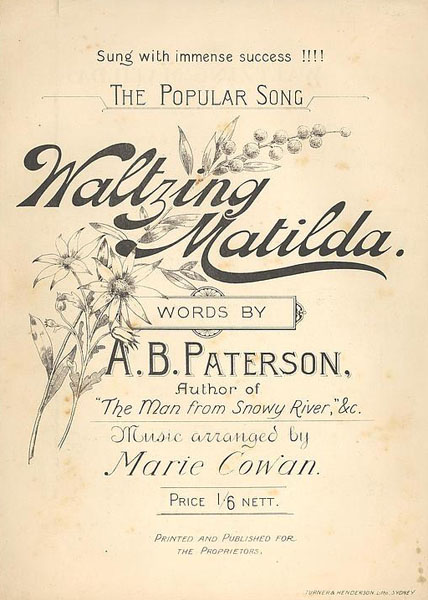
Waltzing Matilda was written by Banjo Paterson in 1895. The Matilda in the song isn’t a dancing girl, but is what swagmen called the bundle that they carried; to “waltz Matilda” is to walk while carrying a bundle. It is said that the swagman in the song was a real person called Samuel Hoffmeister who was involved in the Shearer’s Strike of that year, so it’s a political protest song (unintentionally). Waltzing Matilda is our unofficial national song and the lyrics are written on every Australian passport. Matilda is a Germanic name meaning “mighty in battle”. A traditional name amongst European royalty, it was literally brought over with the Conqueror to England, as it was the name of William I’s wife, the mother of William II and Henry I. Her grand-daughter was named after her, and she was married to a Holy Roman Emperor, so was the Empress Matilda. She tried to claim the throne of England as her father’s heir, but was never crowned queen, being named Lady of the English – her son instead became King Henry II. Saint Matilda was a medieval German queen whose son became a Holy Roman Emperor; she is the patron saint of large families. Matilda was #144 in the 1900s, and disappeared from the charts in the 1930s. It made a comeback in the 1980s, after Matilda the Kangaroo was chosen as the mascot for the 1982 Commonwealth Games, held in Brisbane and won by Australia. Matilda joined the Top 100 in the early 2000s, peaked in 2009 at #16, and by 2013 had only fallen to #18. A patriotic retro name choice that is extremely stable in the charts.

Rosie
Founded by the brothers of one of the Easybeats, AC/DC is Australia’s most successful rock band, and one of the most successful world-wide. Whole Lotta Rosie is their cheeky 1978 single, allegedly based on Bon Scott’s real life encounter with an obese Tasmanian woman. Rosie is a pet form of Rose which has a long history as an independent name; it can be used as a short form of any Rose- name, such as Rosalie, Rosamund, Rosetta, or Rosemary. Rosie was #229 in the 1900s, and left the charts in the 1930s. It made a come-back in the 1980s, reaching #749 and climbing steeply. It was in the mid-100s in Victoria in 2012. A sweet, fresh-faced retro name that is already Top 100 in Britain.

Ruby
Ruby Wednesday is an early song by rock band Eskimo Joe, released in 1999. A whimsical re-take on the Rolling Stones’ Ruby Tuesday, it made the Triple J Hottest 100 the year it came out. Ruby is a precious gemstone, whose name comes from the Latin for “red”. It’s been used as a girl’s name since the 17th century, but became popular in the 19th, when gemstone names became fashionable. Ruby was #21 in the 1900s, and had left the Top 100 by the 1930s. It disappeared from the charts in the 1950s, but came back in the 1980s at #548. It reached the Top 100 in 1996, peaked at #1 in 2012, and and by 2013 was #2. A spunky retro choice which has already reached maximum popularity, and is therefore expected to gradually fall.

Sadie
Sadie (The Cleaning Lady) was a 1967 novelty song and the first solo single for pop idol Johnny Farnham; it hit #1 and was the biggest-selling single by an Australian artist in the 1960s. Sadie is a pet form of Sarah, which seems to have originated in 18th century America. The name gained an especially Jewish image in 19th century England, where in Yiddish slang, a Sadie was a low status Jewish girl, sometimes with connotations of prostitution. It’s interesting how often Sadie is linked with that profession, such as Sadie Thompson in the W. Somerset Maughan’s Rain, while The Beatles’ Sadie adds another “sexy” image to the name. Sadie was #145 in the 1900s, and left the charts in the 1940s. It returned in the late 2000s at #566, and in Victoria is in the mid-100s, a similar popularity to that in the UK, while it is already a Top 100 name in the US. This sassy retro name looks set to go places.

POLL RESULTS
People’s favourite names were Evie, Matilda, and Clementine, and their least favourite were Ayla, Leilani, and Georgy.

Newer posts →

Enter your email address to follow this blog

Categories

Archives

Recent Comments

A.O.'s avatarwaltzingmorethanmati… on Zarah Zaynab and Wolfgang…
Madelyn's avatarMadelyn on Zarah Zaynab and Wolfgang…
JD's avatardrperegrine on Can Phoebe Complete This …
A.O.'s avatarwaltzingmorethanmati… on Rua and Rhoa
redrover23's avatarredrover23 on Rua and Rhoa

Blogroll

  • Appellation Mountain
  • Baby Name Pondering
  • Babynamelover's Blog
  • British Baby Names
  • Clare's Name News
  • For Real Baby Names
  • Geek Baby Names
  • Name Candy
  • Nameberry
  • Nancy's Baby Names
  • Ren's Baby Name Blog
  • Sancta Nomina
  • Swistle: Baby Names
  • The Art of Naming
  • The Baby Name Wizard
  • The Beauty of Names
  • Tulip By Any Name

RSS Feed

  • RSS - Posts

RSS Posts

  • Celebrity Baby News: Melanie Vallejo and Matt Kingston
  • Names from the TV Show “Cleverman”
  • Can Phoebe Complete This Sibset?
  • Zarah Zaynab and Wolfgang Winter
  • Baby, How Did You Get That Name?
  • Celebrity Baby News: Media Babies
  • Celebrity Baby News: Adelaide Crows Babies
  • Celebrity Baby News: Chris and Rebecca Judd
  • Names at Work: Name News From the World of Business and Employment
  • Celebrity Baby News: Sporting Round Up

Currently Popular

  • Rare Boys Names From the 1950s
  • Celebrity Baby News: Toby Allen and Darren Weller
  • The Top 100 Names of the 1900s in New South Wales
  • Girls Names of Australian Aboriginal Origin
  • The Top 100 Names of the 1940s in New South Wales

Tags

celebrity baby names celebrity sibsets english names famous namesakes fictional namesakes honouring locational names middle names name combinations name history name meaning name popularity name trends nicknames popular names saints names sibsets surname names twin sets unisex names

Blog at WordPress.com.

Privacy & Cookies: This site uses cookies. By continuing to use this website, you agree to their use.
To find out more, including how to control cookies, see here: Cookie Policy
  • Subscribe Subscribed
    • Waltzing More Than Matilda
    • Join 517 other subscribers
    • Already have a WordPress.com account? Log in now.
    • Waltzing More Than Matilda
    • Subscribe Subscribed
    • Sign up
    • Log in
    • Report this content
    • View site in Reader
    • Manage subscriptions
    • Collapse this bar
 

Loading Comments...