• About
  • Best Baby Names
  • Celebrity Baby Names
  • Celebrity Baby Names – Current
  • Celebrity Baby Names – Past
  • Featured Boys Names
  • Featured Girls Names
  • Featured Unisex Names
  • Links to Name Data
  • Waltzing on the Web

Waltzing More Than Matilda

~ Names with an Australian Bias of Democratic Temper

Waltzing More Than Matilda

Tag Archives: middle names

Famous Name: Diamantina

04 Wednesday Dec 2013

Posted by A.O. in Famous Names

≈ 2 Comments

Tags

famous namesakes, gemstone names, Greek names, honouring, Italian names, locational names, middle names, nicknames

Ancher-Mortlock-Woolley-joins-Conrad-Gargett-Riddel-415086-xl

On December 10, it will mark 154 years since Lady Diamantina Bowen arrived in Queensland. Lady Bowen was the wife of Queensland’s first governor, Sir George Bowen, whose history and surname we looked at in Brisbane Suburbs That Could Be Used as Boys Names.

Lady Bowen was born in the beautiful Ionian Islands of Greece as the Contessa Diamantina di Roma, one of a large aristocratic family descended from Venetians who had occupied the Ionian Islands for centuries as part of the Republic of Venice. Diamantina’s father was President of the Ionian Senate, and had been appointed Poet Laureate of the islands by Queen Victoria, as the Ionian Islands were then a British Protectorate.

Diamantina grew up in a privileged world, was well-educated, and familiar with government, politics and diplomacy. She was described as pretty, slender and graceful, with an attractiveness which came from her expression rather than her features. She was softly-spoken, and had a slight accent when speaking in English; in private, she spoke Italian. Despite their Italian origins, the di Roma family were members of the Greek Orthodox faith.

Diamantina married Sir George Bowen, government secretary to the islands, in 1856, and came to Brisbane three years later with her husband and baby daughter. The Bowens were met by a crowd of 4000 people, waving both the Union Jack and the Greek flag in welcome. Brisbane was enormously excited by their arrival, and there was a 21-gun salute, triumphal arch, fireworks, and days and days of speeches, proclamations, and general celebrations in their honour.

One of the ladies who presented Diamantina with a bouquet described her as a “beautiful Greek fairy princess … stepped out of a poetry book”. The poor fairy princess had endured agonising sea sickness to get there, and being pregnant, possibly morning sickness as well; it must have been an ordeal for her to stand there in the heat and humidity through all the official events.

Brisbane itself must have been something of a culture shock to Diamantina, because although it was a prosperous and thriving community, it was also a pioneering one, and would have seemed rough and dusty, with lumpy roads, and an unreliable water supply.

However, Lady Bowen fulfilled her duties as Queensland’s first lady admirably. She became a celebrated hostess,  and her balls and dinner parties were the highlight of the social scene. She held a weekly salon, and her graciousness is credited with raising the general tone of Brisbane society.

Diamantina was an accomplished pianist and singer, and her interest in music led to her to become a patroness of the arts. When their official residence was ready, the Bowens had an elegant and spacious sandstone mansion to entertain in. Diamantina personally supervised the layout of the grounds, and assisted with the development of the surrounding Royal Botanic Gardens.

Diamantina was also a tireless worker for charity. She started the first Sunday School for children, and helped found the Lady Bowen Lying-In Hospital, Brisbane’s first maternity hospital, and forerunner to the Royal Brisbane Women’s Hospital. She was also a patron of an orphanage, and of a hospital for the incurably ill. At a time marked by religious bias, Lady Bowen befriended the Sisters of Mercy, and became a patroness of their fund-raising efforts.

Diamantina was greatly admired in Brisbane, and became a great favourite. She was dignified without being aloof, and reserved without being cold, but most of all kind-hearted and compassionate, with a genuine desire to be accessible. I suspect it was because of his wife that Sir George was asked to stay on a further two years after his term of office ended.

When the Bowens finally left after eight years, 120 of Brisbane’s married women presented Diamantina with a diamond necklace, and 120 of its single women gave her a gold bracelet studded with emeralds. Diamantina must have made several close personal connections in Brisbane, because we are told that she wept bitterly as she left, becoming so distraught that she had to be carried to the ship to New Zealand, where Sir George had been appointed governor-general.

Diamantina had many namesakes in Queensland – not only Roma Street and Lady Bowen Park in Brisbane, but the town of Roma, the Diamantina River, and Diamantina Island are just a few that come to mind.

Diamantina returned to Australia when Sir George became governor of Victoria. Now in her mid-life, Diamantina’s manner had become impressively regal, and she was seen as exotic, fascinating, and elegant. A Melbourne gossip columnist noted her dazzling black eyes, flawless creamy complexion, and lovely figure. She inspired awe and respect, but never again did she seem quite so loved as she had been in Queensland, where she was a figure of poetry and romance.  

Diamantina is a variation of the Greek name Diamanto, meaning “diamond”. The name is used in both Greece and Italy, and can be pronounced dee-uh-man-TEE-nuh or dy-uh-man-TEE-nuh. The obvious nicknames are Di, Dee and Tina, although Diamond, Mandy and Monti seem possible as well. Lady Bowen’s eldest daughter had Diamantina as her middle name, and she went by Nina, which appeals to me most of all.

Diamantina is a pretty and elaborate girl’s name which belonged to one of the most charming ladies to grace our shores. Diamantina was a heroine to the Greek community in Queensland, and this could be a Greek heritage choice, or a Queensland heritage choice. If the name Diamond seems too hard or crude, Diamantina may seem softer and more elegant.

POLL RESULT: Diamantina received an approval rating of 42%. 36% of people thought it was too fussy and frilly, although 21% saw it as romantic and fairytale.

(Picture shows the governor’s official residence, now Old Government House, in the grounds of Queensland University of Technology, where it is used for functions)

Can Your Son be Named Barnaby if the Dog is Named Barney?

09 Saturday Nov 2013

Posted by A.O. in Naming Assistance

≈ 9 Comments

Tags

choosing baby names, dog names, honouring, middle names, nicknames

little-boy-and-dog

Louise is expecting her first child in less a month, a boy. She feels that there isn’t much time left, and she and her husband have not yet managed to settle their baby name dilemma.

Their favourite name for a boy, and the one they would very much like to use, is Barnaby. However, they have a pet dog named Barney. Although they aren’t planning to use Barney as a nickname for Barnaby, Louise is realistic enough to know that it isn’t impossible he’ll end up being a Barney, at least sometimes. In any case, she wonders whether Barnaby and Barney are too close in sound, or too closely related to each other.

If they decide not to go with Barnaby, their “back up” name is Jasper, which they both like a lot, but they don’t love it the way they love Barnaby. They would definitely feel a pang of regret or disappointment if they didn’t get to use the name Barnaby.

Louise wants to know if people think it’s possible for them to use the name Barnaby? Will others think it’s weird if their son and the dog have a similar name? Is it cruel to give their son the same name as the family pooch?

The baby’s middle name will be Ross, after his dad, and their surname begins with M and ends with N eg Macklin.

~ ~ ~ ~ ~ ~ ~ ~ ~ ~

Louise, I think most people would cross a baby name off their list if it was the same as, or even very similar to, the name of the family pet. No matter how much they liked it, it would be regretfully banished to the land of Not-to-Be.

That you are still seriously considering the name Barnaby, and in fact it is still your front-runner, tells me you are extremely attached to it. If you are still considering the name Barnaby, then I would say, yes it is a real possibility.

Will other people think it is weird? Quite likely some of them will. Are you obligated to fulfil the expectations of others in your choice of baby name? No. The most important thing is whether you think it is weird or not. (If you are writing in for opinions, and have a “back up” name, then at least part of you must think it’s a little weird).

I don’t think that it’s a great idea for your son and your dog to share very similar names, but being practical, these things are often more of a big deal in our heads before they happen than they are in real life. It’s not ideal, but it may be workable.

I think the biggest mistake you are making is thinking that you are running out of time, and need to make a decision before your son is born. Please consider taking your new baby home before choosing the name – once you have your son in the same house with the dog, using both their names, you will have a real life situation in which to make a decision, rather than a theoretical one.

I suspect that either you will find that it is actually a bit too weird and just isn’t going to work, or else that it feels more easy and natural than you feared. Although if you stick with Barnaby, I would be prepared to laugh off a few jokes from friends and family about your choice.

Please write back and let us know what you decide!

NAME UPDATE: The baby’s name is Archer!

POLL RESULTS: Almost 85% of respondents thought that the name Barnaby was acceptable for a couple who owned a dog named Barney. 44% thought it would be unusual, but would work out fine, 28% didn’t like the idea, but thought that it would probably be okay, while a relaxed 12% couldn’t even see what the problem was. Only 4% of people thought that it would be very wrong to name your son Barnaby if the dog was named Barney.

More than half of respondents preferred Jasper Ross to Barnaby Ross, with 55% choosing the first option and 38% picking the second. 7% of people couldn’t decide as they liked both names equally.

Interview with Clare from Name News

03 Sunday Nov 2013

Posted by A.O. in Blog Reviews

≈ 7 Comments

Tags

Anglo-Saxon names, Appellation Mountain, baby name books, changing names, Cornish names, Facebook, LibraryThing, middle names, Name News, popular names, Scoop.it, The Pan Book of Boys Names, The Pan Book of Girls Names, UK name popularity, Welsh names

DIGITAL CAMERA

Clare has a wonderful Name News page on the Scoop.it website, which collects interesting blog posts and stories in the news about names. Her collection includes posts in languages other than English, so if you want to know what they think about names in Portugal or The Netherlands, click the “Google translate” button and read on! One of the most useful functions is the “Find” key, where you can search for topics which interest you. Name News is so handy for keeping up to date with what’s going on around the blogosphere that I consult it every day – it’s easier than subscribing to hundreds of sites, or getting dozens of e-mail alerts. Attractive and user-friendly, Name News is an invaluable contribution to the naming community.

What is your name?

Yvonne Clare.

Have you ever changed your name?

I went by my first name until I was four, when I decided to use my middle name instead. Now my first name only appears in official situations, and on the odd family Christmas card – and in messages from a friend called Yvonne, who is tickled that we have a hidden name connection. I don’t dislike the name, but it feels like an old toy or a piece of baby clothing: it was great when I was little, and I’m still attached to it, but it no longer fits for everyday use. I’m happy as a Clare and I like the fact it’s more typical for someone my age.

How did you start getting interested in names?

When I was about six, I was visiting a relative who was clearing out some books, and someone handed me The Pan Book of Boys’ Names and The Pan Book of Girls’ Names. I took them home and have been dipping into them ever since. They are particularly strong on literary and legendary figures and references to names in poetry. I’m sure that they contributed to my love of languages, as they gave me a first taste of Latin, Greek, Old English, Welsh, and many others. Each book has a wonderful appendix of names considered unusual by the authors. A couple of decades on I have dozens of name books, but those two are still among my favourites.

What inspired you to sign up with Scoop.it in order to share name stories with the wider community?

At the beginning of this year I became aware of the many name blogs that are out there. I wanted to read everything, but was a bit overwhelmed by the sheer number of posts. I wanted to contribute in some way, but didn’t feel inspired to write a blog. I’m not so good at regular research and writing; I prefer reading, organising and making accessible the work of others. (That’s why I’m a librarian in real life.)

An acquaintance started a Scoop.it page gathering stories about rare books and manuscripts, and I decided to try something similar for name stories. It’s straightforward to create a Scoop.it account and set up a page, and to add “scoops” – I normally use a button on my browser. It’s pretty much as simple as reading name stories that come up on my feeds and alerts, and adding them.

I would do it just for personal interest, which sounds rather nerdy, but it’s very encouraging that others are looking at the site too. I know there’s been a huge leap in the number of views whenever the site has been mentioned by other bloggers, especially in Appellation Mountain’s Sunday Summaries, so many thanks to you all for getting the momentum going!

I know I’m a bit of a vulture, existing on other people’s hard work, but I hope the site achieves two things: providing a one-stop feed of name stories for people who don’t want to follow lots of different sites, and enabling people to easily search the archives of all the name blogs and articles.

Any other way to connect with you online?

Name News has a Facebook page, although at the moment I’m using it for following news and the odd “like”, rather than anything more dynamic. I also keep a list of my name books on LibraryThing. If anyone uses that site, feel free to connect! I doubt the list is of much use to anyone else, but it’s quite handy for me, as my collection is currently scattered between two houses.

What is it about a name story that makes you interested to know more?

I always get excited when I see one of my favourite names in the title. For example, the very first scoop I made was Appellation Mountain’s post Edith, Everild, and Eden: Getting to Edie. Everild was the catalyst – I just couldn’t resist sharing it! I also enjoy birth announcements, clever data analysis, gems from historical records, personal stories … pretty much anything that’s informative, positive, and open-minded.

Do you have a pet peeve when it comes to names?

My peeves are with writing about names, rather than the names themselves. I’m sure I’m not alone in disliking:

  • proscriptive advice and “rules” that will make precious little difference to naming habits as a whole
  • unhelpful criticism and negativity about parents’ name choices
  • false claims about the “meaning” of names – and false information in general
  • overuse of the word “unique” (I know: now who’s being proscriptive?!)

What are some of your favourite names?

Girls: Annest/Annice, Everil/Everild, Freda/Frida, Hilda, Miriam, Naomi, Tamsin, Tess

Boys: Arthur, David, Edward, Henry, Hugh/Huw, Robin

What names do you dislike?

I’m not so keen on names with excess “frilly” syllables. I usually prefer the streamlined option, so Isabel over Isabella, Mark over Marcus. Maybe even Em over Emma, or is that going a bit far? By that logic, I should prefer Hild to Hilda, and in some ways I do, but sadly it crosses the threshold of being a bit too much to inflict on an unsuspecting British child.

Are there are names you love, but could never use?

Names that would be hard to spell and pronounce, culturally unsuitable, and more about me showing off than the child’s best interests. For example, Ælfric (“Alf-rich”), Buddug (“Biðig“, the Modern Welsh form of Boudicca), and Elestren, which I’ve loved since I saw it in a book of Cornish names years ago. I’ll save them for pets and inanimate objects! I’d also be wary of names that sound similar to mine or my partner’s, like Cleo and Robin.

What are your favourite names in the England/Wales Top 100?

Amy (#62) and Arthur (#52).

What are your favourite names which have never been in the England/Wales Top 1000 (since 1996)?

Hilda and Clem.

Do you have any names picked out for your future children?

I have an ongoing list of favourites, but don’t really have a clue how my partner and I will feel if/when the time comes. I expect that choosing a name for a real person will bring out sides of us that we never knew existed.

What is something we don’t know about you?

I’ve recently taken up morris dancing, a traditional English dance style with props such as sticks, bells and handkerchiefs. It’s great fun, but a challenge as I’m not very co-ordinated!

What advice would you give someone who was choosing a name for their baby?

I’ve tried and failed to come up with a wise, snappy, universal answer to this question. Every time I think I’ve got it, I think Oh, but there could be exceptions, or But that might not work for everyone. Maybe that’s a cop-out, but it’s a personal, sometimes complicated decision, with no clear right or wrong way to do it. Plus it’s not something I’ve had experience of yet. I think I’d have to ask for a few more specifics before feeling qualified to give advice. Or, true to form, I could point people towards helpful books and websites.

(Clare’s profile photo of her favourite name books supplied by interviewee)

Brisbane Suburbs That Could Be Used as Boys Names

13 Sunday Oct 2013

Posted by A.O. in Name Themes and Lists

≈ 7 Comments

Tags

aristocratic names, Biblical names, english names, famous namesakes, fictional namesakes, French names, Gaelic names, hebrew names, Irish names, Latin names, locational names, middle names, name history, name meaning, name popularity, names from films, names from television, nicknames, Old English names, Old Norse names, popular names, rare names, Roman names, saints names, Scottish names, surname names, unisex names, US name popularity, Welsh names

857092-121013-wap-hamilton

Augustine

Augustine Heights is a new suburb of Ipswich, and gained its name from St Augustine’s Catholic Church and College. The name Augustine is from the Roman name Augustinus, derived from Augustus, meaning “great, venerable”. Its most famous namesake is the theologian Saint Augustine of Hippo, considered one of the most important Church Fathers. He describes his conversion to Christianity in his Confessions, which has become a classic of Christian literature. The name became popular in England in the Middle Ages because of Saint Augustine of Canterbury, a 6th century founder of the English church known as the Apostle to the English. It is probably because of him that there is an English form of Augustine – the popular Austin. In France, Augustine is a girls name, the feminine form of Augustinus.

Bowen

Bowen Hills is an inner-city suburb of Brisbane. It is named after Sir George Bowen, an Irishman who was the first Governor of Queensland. Tactful and democratic, with a great love of the outdoors, he made himself popular enough to be invited to serve two more years when his term had expired. There are a few places in Queensland named after Sir Bowen, including Bowen Park, a pleasure garden in Bowen Hills. The surname Bowen can be Welsh, meaning “son of Owen“, or it can be Irish, in which case it is an Anglicised form of the Gaelic O’Buadhachain, meaning “son of Buadhach”. The name Buadhach means “victory, triumph”. This name reminds me of the Bowen Technique, an alternative massage treatment developed by Australian Tom Bowen, although Bowen is a knight and dragon-slayer in the movie Dragonheart. Rarely seen here, Bowen is in the Top 1000 and rising for boys in the US. It gives the unisex nickname Bo, and for some reason I see this as a girls name just as much as a boys.

Chandler

Chandler is a semi-rural outer suburb of Brisbane. It is named after Sir John Beals Chandler, a successful businessman with a chain of electrical goods stores, and who owned several radio stations. He was elected to the Queensland Parliament in the 1940s, and Lord Mayor of Brisbane in the 1940s and early ’50s. Chandler is an English occupational surname, which denoted someone who made and sold candles, or someone who was responsible for the wax, soap, candles and lighting in a medieval great house. This name will remind many of Chandler Bing, from popular sit-com, Friends.

Crosby

Mount Crosby is an outer suburb of Brisbane adjoining the state forest. It is named after its dominant natural feature, Mount Crosby. The first settlers to this area were from the village of Crosby-on-Eden, near the Scottish border, and it seems likely that they named their new home after their original one. The surname Crosby is after the place name, a common one in northern England and southern Scotland. The name is of Old Norse origin, and means “settlement by the cross”; as we learned from Cruz, these stone crosses were often used as markers. Famous Crosbys include entertainer Bing Crosby and musician David Crosby. The name has recently begun charting in the US, after drama series Parenthood was shown on television there. The show has a character called Crosby Braverman, played by Dax Shephard, and the name must have resonated, because it went up 69 places last year. Crosby is rare in Australia (I’ve only seen it on a child once), but maybe Parenthood will have an effect here too.

Ebenezer

Ebenezer is a suburb of Ipswich. It had been a preaching place on the Methodist Church circuit since 1863, and by 1882 a church had been built named the Wesleyan Ebenezer Church. It is from this church that the suburb gets its name. In the Old Testament, Eben-Ezer is a place mentioned as the scene of battles between the Israelites and the Philistines; its modern day location is not known, but it is probably in Palestine or Arabic Israel. Eben-Ezer is from the Hebrew for “stone of help”, and it is theorised that a stone dedicated to Yahweh may have been located here to give it its name. Its most famous namesake must be Ebenezer Scrooge from Charles Dicken’s A Christmas Carol, the cold-hearted miser redeemed by three spirits of Christmas. I think the name Ebenezer sounds pretty hip now, and an Old Testament boys name which has been overlooked for too long. Eben and Ben would make good nicknames.

Hamilton

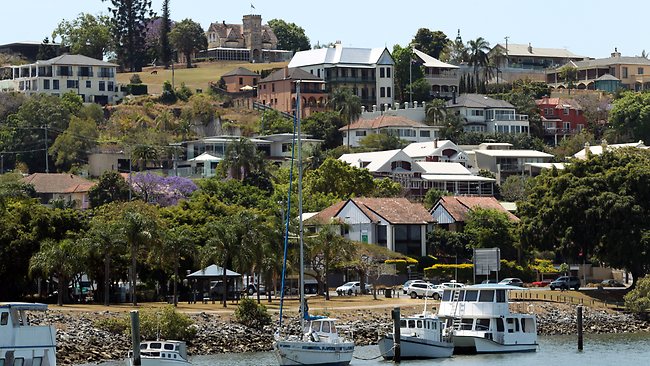
Hamilton is a hilly inner-city suburb of Brisbane on the Brisbane River which was built by convict labour. It soon became known for its upper-class country houses and estates, ornamental shade trees, picturesque location and fine views of the city. Hamilton is associated with “old money”, and has the highest mean income of any suburb in Queensland. It is named after the Hamilton Hotel, built in 1865 by Gustav Hamilton, a wealthy solicitor who owned most of the land in the area. It soon became known as a meeting place for the horse racing world, as the Turf Club is nearby, and is still popular today. Hamilton is an English and Scottish surname after the village of Hamilton in Leicestershire; its name means “crooked hill” in Old English. The aristocratic Hamilton family gained lands in Lanarkshire, Scotland, and gave their name to the town of Hamilton there. The Hamiltons married into the Scottish royal family, and the Duke of Hamilton and Brandon is the highest peer in Scotland. A famous person with the name is Hamilton Hume, an early Australian explorer of New South Wales who was a top-notch bushman and formed friendly relationship with Aboriginal peoples. This is a name with an impressive pedigree.

Logan

The city of Logan is halfway between Brisbane and the Gold Coast. It began as a penal settlement, and farming soon followed; it was developed for housing in the 1960s due to its laissez-faire planning laws. Logan is named after Captain Patrick Logan, the Scottish commandant of the original penal settlement, who had a reputation for being strict to the point of cruelty. He was a great explorer and was killed on one of his expeditions, most likely by Aborigines who had repeatedly told him to get off their land. News of his death was met with wild joy from the convicts. Logan is a Scottish surname; the Clan Logan comes from the “lands of Logan” in Ayrshire, which may be from the Gaelic for “hollow”, or even of Norman origin. In Ireland, it is considered to come from the Gaelic O’Leoghain, meaning “grandson of the warrior”. This name has many namesakes from popular culture, including the dystopian sci-fi film Logan’s Run, where Logan is played by Michael Yorke, and Logan aka Wolverine from the X-Men films, played by Hugh Jackman. Logan has charted since the 1970s (when Logan’s Run first screened), and ranked in the 1980s at #344. It climbed steeply through the 1990s and made the Top 100 by the 2000s. It is currently #38 nationally, #36 in New South Wales, #33 in Victoria, #65 in Queensland, #46 in South Australia, #28 in Western Australia, #17 in Tasmania, and #50 in the Australian Capital Territory.

Sherwood

Sherwood is a suburb on Oxley Creek. Its name comes from a farm which was named after Sherwood Forest in Nottinghamshire, England. A Royal Forest, and remnant of an older and much larger royal hunting forest, it is one of England’s most ancient, having survived since the end of the last Ice Age. It is famous for its association with legendary folk hero Robin Hood, who is supposed to have lived in Sherwood, according to some sources. Sherwood in Brisbane even made its own Sherwood Forest Park, which is now, less romantically, the Sherwood Arboretum. The name Sherwood means “shire wood”. A famous person with the name is American author Sherwood Anderson.

Tennyson

Tennyson is a riverside suburb named in honour of Alfred, Lord Tennyson. Tennyson was Poet Laureate of Great Britain and Ireland during Queen Victoria’s reign, and has the record for length of tenure as a Laureate at 42 years. Revered in his own time, he remains one of the popular English poets. One of his much-loved works is the Idylls of the King, a cycle of blank verse poems inspired by the legends of King Arthur; many of the streets in Tennyson have Arthurian names in compliment of the Idylls. For those amused by these coincidences, the Queensland Tennis Centre is located in Tennyson, and was once the Tennyson Tennis Centre. The English surname Tennyson means “son of Tenney”, with Tenney a pet form of the name Denis. Actor Russell Crowe has a son named Tennyson, after his favourite poet. This is a handsome and unusual name, with a great namesake, and would make an excellent middle name too.

Windsor

Windsor is an inner-city suburb of Brisbane, with many old homes, and containing several heritage-listed sites. It was named Windsor in 1887, most likely after Windsor Castle in Berkshire, England, as it was Queen Victoria’s Golden Jubilee Year. Windsor Castle was built by William the Conqueror, and was originally a fortification to protect the outskirts of London, with strategic views of the River Thames and access to the royal hunting forest of Windsor. Since the rule of Henry I, William’s son, it has been a royal residence, and is the largest inhabited castle and longest-occupied palace in Europe. Today it is a royal palace and weekend retreat for Elizabeth II, and state banquets and official entertainments are often held there – it is also a major tourist attraction. The castle is named after the nearby village of Windsor, once the site of a palace for the Saxon kings. Its name means “winding shores, winch shores” in Old English, because boats were pulled by windlass up the river. Famously, Windsor is the surname of the British royal family: the name was changed from Saxe-Coburg and Gotha by George V in 1917, due to anti-German sentiment during World War I. The final straw was when Germany used the Gotha G. IV aircraft to bomb London – just four months later, the Saxe-Coburg-Gothas had become the Windsors, the name taken from the royal palace. A famous person named Windsor is British actor Windsor Davies, best known as the sergeant on It Ain’t Half Hot Mum. Royal names are all the rage, and you can’t get any more royal than Windsor.

POLL RESULT: People’s favourite names were Tennyson, Augustine, and Windsor, and their least favourite were Sherwood, Hamilton, and Ebenezer.

(Photo shows the suburb of Hamilton)

Celebrity Baby News: Carrie Graf and Camille Chicheportiche

08 Tuesday Oct 2013

Posted by A.O. in Celebrity Baby News

≈ Comments Off on Celebrity Baby News: Carrie Graf and Camille Chicheportiche

Tags

celebrity baby names, celebrity sibsets, middle names, twin sets

KM-gallery--20Carrie-20Graf-20and-20family-20131002123923765915-620x414

Basketball coach Carrie Graf, and her partner Camille Chicheportiche, welcomed twins Charli and Bentley on June 21. Charli was born first, weighing 2.8 kg, and her brother Bentley followed just two minutes later, weighing 2.7 kg. Charli and Bentley were conceived with the help of IVF, using an international sperm donor who is open to revealing his identity to the twins if they want that. The twins both have Chicheportiche as their middle name, since a hyphenated surname seemed too unwieldy.

Carrie began her basketball career at the age of 15, and competed in the Women’s National Basketball League from 1983-89 before studying to become a coach. She has coached women’s basketball for over 20 years, and was named WNBL Coach of the Year in 2007 and 2008. She holds the most records for coaching wins, with more than 200 under her belt. She has coached the Sydney Flames and the Canberra Capitals; she coached the latter during their 2008/2009 season when they won the WNBL Championship. Carrie was the first Australian to be named a head coach in the American WNBA, coaching the Phoenix Mercury. She has also coached the national women’s basketball team, taking them to medal wins at two Summer Olympics, winning the FIBA Oceania Championship, and the World University Games. Carrie won High Performance Coach of the Year and Young Coach of the Year in 1996, was awarded an Australian Sports Medal for services to basketball in 2000, and was named a life member of the WNBL in 2006. She was Sportsperson of the Year in 2008.

Camille, who carried the twins, is on maternity leave from the Australian Federal Police. She and Carrie have been together for seven years after being introduced by mutual friends, and wear rings as a sign of their committment. The couple live in the ACT where same-sex marriage is about to be legalised, but even if the legislation gets through, they have no immediate plans to marry.

(Picture shows Carrie and Camille with the twins – Carrie is on the right holding Charli in pink; photo from the Sydney Morning Herald).

Names Spotted at Home and Abroad: Winter Edition

02 Wednesday Oct 2013

Posted by A.O. in Names Spotted at Home and Abroad

≈ 6 Comments

Tags

Anglo-Saxon names, birth notices, english names, family history, famous namesakes, fictional namesakes, honouring, locational names, middle names, mythological names, name image, name meanings, name trends, Nameberry, Near Eastern names, retro names, surname names, twin sets

084532-baby-couture

A new trend at the moment is for a baby’s christening gown to be modelled on its mother’s wedding dress (hands up anyone who thinks it’s weird for a baby to wear a wedding dress). Mum Annie [pictured] loved her pink tulle and silk wedding dress so much that it seemed the obvious choice for a mini-me christening gown for her seven-month old daughter – and at $1200 a pop, dress designers are happy to replicate their creations in teeny-tiny mode. I know people are interested in what names the wealthy and fashionable choose for their children, and Annie’s daughter is named Pierra – which looks like a feminine form of Pierre, although it also looks like Sierra with a P.

I featured Sassafras on the blog as a girls name last year, but admit to feeling a bit doubtful at the time because I’d only ever seen the name used once – in a birth notice four or five years ago. Was it too out there to suggest as a baby name? Then after seeing a Sass Winnie in a birth announcement in August, regular commenter Sophia said that she knew a little girl named Sassafras, nn Sass. I idly asked an interstate friend over the phone if she knew a Sassafras (not thinking she would) – answer: yes, there’s a Sassafras at her son’s primary school. Now I see a toddler named Sassafras in the local paper from Bellingen on the mid-north coast of New South Wales. If nothing else, my mind has been eased about including Sassafras. It’s clearly less daring, and a lot less rare, than I thought.

A baby boy from Queensland was born very unexpectedly while his mother was taking a nap. He was born in July, on the night of the NRL State of Origin decider between Queensland and New South Wales, just as his father had left for the game. He was named Benji, after his dad’s favourite NRL player, Benji Marshall, from the Wests Tigers, who has recently changed codes and countries and gone to rugby union in New Zealand. I have noticed a lot of baby boys named Benji in the past year or so, and wonder how many of them were named after Benji Marshall – and if the numbers will dry up now that he has gone.

This website has photos of twins from around the world. WARNING: MAJOR CUTENESS ALERT! Name nerd theory states that twin names must not be “matchy”, but here’s proof tons of parents think the matchier the better. Here we have Zoe and Chloe, Jaqi and Jaqari, Xander and Xavier, Evan and Ivan, Jake and Jimi, Ruby and Rose, Jack and Daniel. I did like Reef and Eden, and Gwendoline and Jasper.

This mother of a gorgeous baby boy has the name Oriana, a medieval literary name which may mean “sunrise” or “gold”, or possibly something else. The name might remind you of the famous cruise liners, or more recently, the Bratz doll. It’s certainly a stunning name which seems very usable, with Ariana and Aurelia so fashionable at present. Oriana has a heartbreaking struggle ahead of her, so we wish a speedy recovery to her son Luca.

A story on postnatal depression, and how worryingly few people take it seriously enough, interviewed a mum, now recovered from her PND, named Cybele. Cybele is a Phrygian mother goddess whose ancient Near Eastern name possibly means “mountain”, to suggest “born from stone, born from the earth”. It is said SIB-uh-lee. I think that’s a gorgeous name, and with Sybilla so trendy, seems like a great choice for parents who want something a bit different.

Lavington Fisher of South Australia recently passed his 100th birthday, and looks absolutely amazing for his age. Lavington is a surname from place names in England meaning “Lafa’s people”; the Anglo-Saxon name Lafa may be understood as “survivor, treasure, heirloom, remnant”. Lavington is a good name for someone who has lived for more than a century! There is a place in New South Wales called Lavington, named after the English towns. It reminds me of both lavender, and lamington cakes.

The Great Australian Bake Off on Channel Nine included a contestant in her twenties named Bliss. I’ve noticed quite a few people on name forums who love the idea of Bliss, but worry that it won’t seem “name-like” enough. Having seen Bliss on a real person, I can assure them it doesn’t seem much different to Joy as a name. The trouble is that to me Bliss always seemed like a very flakey name, and the real life Bliss was actually quite ditzy and flakey, so it was rather annoying to have my name prejudice confirmed so readily.

The winner of the show was named Nancy, and I was delighted to see this name on an intelligent, attractive engineering student. I featured this name on the blog, and was pleased how well Nancy works as a young person’s name (apart from on girl detective Nancy Drew, who must be getting on a bit by now). It’s such a smart, spunky name.

Abby from Appellation Mountain did a Nameberry post about some interesting names from her family history. Most of the names from my family tree aren’t too exciting. However, when I looked way, way, way, way back, I did find a Hercules in the 17th century, a great-uncle many times over. Now I wouldn’t name a son Hercules, but it could be usable as a middle name. The thing is, is a connection from the 17th century, not even a direct ancestor, too much of a stretch as a “family name”? At what point does a name from your family tree cease to become a family name (considering that all people are related to each other at some point)?

I was chatting to some friends about the surge in popularity for retro names from the 1900s to the 1930s, such as Olive, Hazel and Florence. The general consensus was that they were over it – it’s been done to death, and so, so boring. They thought to have an interesting retro name now, you had to turn to the 1940s and ’50s – something like Linda or Valerie would seem much more hip. What staggered me is that Olive has only has just started to become popular, while Hazel and Florence aren’t even in the Top 100 yet! Yet they are already “boring”. At this rate, we will have revisited all the name trends of the 20th century by the next decade.

Celebrity Baby News: Rachael Finch and Michael Miziner

01 Tuesday Oct 2013

Posted by A.O. in Celebrity Baby News

≈ 1 Comment

Tags

celebrity baby names, honouring, middle names

finch-narrow

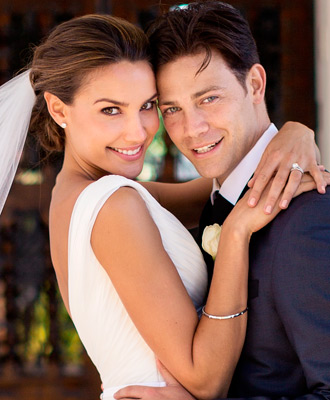
Former Miss Australia, model and media personality Rachael Finch, and her husband Michael Miziner, welcomed their first child on September 24, and have named their daughter Violet Rachael. Violet’s middle name seems to be after her mother.

Rachael won the Queensland Model of the Year contest in 2004, while she was still in high school, and signed with IMG. She received the People’s Choice Award for Miss Teen Australia in 2006, and was crowned Miss Australia in 2009; she came third runner-up in the subsequent Miss Universe pageant that year. After her pageant wins, she came third in Celebrity Masterchef 2009, and was a contestant on Dancing with the Stars in 2010. She has worked as a fill-in radio host on NovaFM, and currently does a daily weather report on Channel Seven’s Sunrise.

Michael was born in Russia and came to Australia as a child (Rachael is half-Ukrainian on her mother’s side). He is a professional ballroom dancer, and he and Rachael met when they were partnered on Dancing with the Stars in 2010. Michael and Rachael were married in January this year, and discovered they were expecting a baby while on their honeymoon in Thailand.

(Photo of Rachael and Michael from the Townsville Bulletin)

Waltzing with … Augusta

15 Sunday Sep 2013

Posted by A.O. in Waltzing with ...

≈ 3 Comments

Tags

epithets and titles, famous namesakes, fictional namesakes, historical records, honouring, imperial titles, Latin names, middle names, name combinations, names of boats, nicknames, Roman names, royal names, sibsets

Lady Augusta_steamer

September 17 marks the maiden voyage of the first paddle-steamer down the Murray River, in 1853. The Murray is Australia’s longest river at 2508 km long; it has its source in the Alps, meanders across the southern inland plains where it forms most of the border between Victoria and New South Wales, and ends at Lake Alexandrina in South Australia, which empties into the Southern Ocean near Goolwa.

Europeans first discovered the Murray in 1824, and Captain Charles Sturt became the first explorer to follow the river’s course down to Lake Alexandrina, in 1828-29. In 1851, the South Australian government offered 2000 pounds reward to the first steamship to reach the junction of the Murray and Darling Rivers, at Wentworth.

The Scottish explorer Francis Cadell, who had already navigated part of the Amazon and sailed to China and Singapore by this time, heard about the reward in 1852. Nobody had claimed the money yet, and Cadell was determined to give it a shot. He had a steamer built in Sydney, and during its construction, did a test run on the Murray in a canvas boat.

Just to make things more exciting, a British-born Australian named William Randell who had lived near the Murray River also threw his hat in the ring. He built his own steamboat in 1852, even though he had no experience in boat construction, and had never seen a paddle-steamer before. He was the first person to actually put a steamboat in the river. Randell didn’t even know about the reward until later – it was a personal goal.

Cadell had much greater flair for public relations. While Randell named his craft Mary Ann after his mother, Cadell cannily called his the Lady Augusta, in honour of the South Australian governor’s wife, Lady Augusta Sophia Young (the town of Port Augusta in South Australia is also named after this lady). On the Lady Augusta‘s maiden voyage, Cadell took as his passengers the governor and his wife, members of the Legislative Council, and a journalist to give him a good write-up.

Cadell set out from Goolwa on August 25 1853. For most of the way he and Randell were neck-and-neck; however, on September 17, the Lady Augusta arrived in Swan Hill a few hours before the Mary Ann.

Swan Hill is 1000 miles from the sea, and although they were still ages from Wentworth, the governor decided the contest was over, and Cadell had won. He was deemed the first person to successfully navigate the Murray River in a practicable steamboat, and the governor arranged for gold medals to be awarded to Cadell, the Legislative Council, and himself. He then gave Cadell another 2000 pounds to build another boat.

William Randell kept going, and although he didn’t reach Wentworth either, he went further than Cadell. Due to a general feeling that Randell had been treated unjustly, he was given 300 pounds, and then another 400 when public sentiment continued to mutter about it. In fact neither Cadell or Randell had fulfilled the requirements of the contest, and this must surely rank as one of the unfairest competitions of all time.

Both Francis Cadell and William Randell attracted investors and went into business running steamships on the Murray, and because of their efforts, the Murray was opened up as an avenue of transportation. Perhaps it doesn’t really matter that Francis Cadell was the first official steamboat navigator of the Murray River in the Lady Augusta. I still think it stinks though.

Augusta is the feminine form of Augustus, from the Latin for “great, venerable, majestic”. Just as Augustus was used as a title by the Roman emperors, Augusta was a title bestowed upon some women attached to the imperial families of Rome and the Greek dynasties. It was the highest honour that could be conferred, signalling not only power, but a goddess-like status – indeed, many goddesses were given the title of Augusta.

The first woman to receive the title was Livia Drusilla, the widow of the Emperor Augustus, who became known as Julia Augusta. By all accounts she was very proud and regal, with a commanding personality. She had a lot of political influence, and enjoyed wielding power and being showered with honours. She was a direct ancestor of a dynasty of emperors, including Tiberius (her son), Caligula, Claudius and Nero.

The name Augusta was introduced to Britain in the 18th century through the Hanoverian rulers. George III gave the name Augusta to his sixth child and second daughter, Augusta Sophia. The town of Augusta on Western Australia’s south-west coast is named after her, and I fancy that Lady Augusta might have been too. Princess Augusta was named after her grandmother, Princess Augusta of Saxe-Gotha – Augusta, Georgia, in the United States, which hosts The Masters golf tournament, is named after her.

Augusta has been a traditional name in the British royal family, and was common amongst the aristocracy. However, we often think of it as a comically “difficult” old lady name. Oscar Wilde may have begun it, in his comedy, The Importance of Being Earnest, where Lady Bracknell is the main characters’ haughty Aunt Augusta.

Growing up, it seemed that every second children’s book had an Aunt Augusta in it, who would be crabby, or eccentric, or snooty, or fun-suppressing. The name almost seemed to be code for such an aunt, in the same way you would expect a fictional lab assistant named Igor to be hunch-backed and attached to a mad scientist. J.K. Rowling followed this English kidlit tradition by giving Neville Longbottom a dominating, hard-to-please grandma named Augusta.

And before I could even read anything much, life followed (or preceded?) art by giving me a Great Aunt Augusta who, in true literary fashion, was stern and austere, hated noise, mess and light, thought that children should be neither seen or heard, and scared the stuffing out of me when I was four.

For ages it didn’t seem possible to me that you could name a baby Augusta; it didn’t seem so much an “old lady name” as an “old bag name”. But Augusta was once an elegant young lady’s name, and could be again. With August a stylish choice for boys and girls, and Gus a fashionable name for boys, Augusta’s chances look better than they have in a long time.

Augusta isn’t the right choice for me as a family name, but maybe it is for you. Maybe your Great-Aunt Augusta was warm and loving and made you cinnamon buns, or cool and funny and gave you rides on her motorbike, you lucky punk. Point is, it could be the perfect name for someone else.

Augusta is a rare vintage name which still seems patrician and dignified, but comes with spunky nicknames Gus and Gussie, and the quirky Augie and Oggy. It would also make a sensational middle name. I don’t think Augusta’s everyone cup of tea and biscuit, but I imagine those who are drawn to it would be passionate supporters. You can’t fall halfheartedly in love with Augusta – she’s too strong for that.

Name Combinations for Augusta

Augusta Caroline, Augusta Geraldine, Augusta Harriet, Augusta Florence, Augusta Mabel, Augusta Ottilie

Brothers for Augusta

Charles, Ernest, Frederick, Henry, Leopold, Octavius

Sisters for Augusta

Beatrice, Cecilia, Elizabeth, Georgiana, Helena, Victoria

Note: The name combinations are from Australian historical records, while the siblings are from the British royal family.

POLL RESULT: Augusta received an approval rating of 77%. 29% of people loved the name, and a further 29% liked it.

(Photo is of the Lady Augusta on the Murray River; image from the State Library of South Australia)

Rare Royal Names for Boys

08 Sunday Sep 2013

Posted by A.O. in Name Themes and Lists

≈ 11 Comments

Tags

alphanumeric names, anagram names, Anglo-Saxon names, Arthurian names, Biblical names, birth notices, classic names, Danish names, english names, famous namesakes, fictional namesakes, German names, germanic names, Greek names, hebrew names, Latin names, middle names, mythological names, name history, name meaning, name popularity, names of months, nicknames, Old English names, popular names, rare names, Roman names, royal names, saints names, Scottish names, stage names, surname names, unisex names

Franz_Xaver_Winterhalter_Family_of_Queen_Victoria

Alastair

Alastair Windsor was a great-grandson of Queen Victoria through his father, and a great-great-grandson of Victoria through his mother. Although born a prince, he was stripped of his royal titles while still a toddler, after the regulations were tightened up. Alastair went into the army, and died during World War II on active service, in unconventional circumstances. He had been sent to Canada as aide-de-camp to the Governor General, who was a relation of his. Both his regiment and the Governor General had rejected him as incompetent, and he fell out of a window while drunk. It can get very cold in Canada, and Alastair succumbed to hypothermia overnight. Alastair is the Anglicised form of Alasdair, a Scottish form of Alexander. Alasdair Mòr Mac Dòmhnaill is the ancestor of the Clan MacAlister. I think Alastair very handsome, and in a country where Lachlan and Hamish are common, it doesn’t seem out of place. If the alas at the start bothers you, it can also be spelled the more common Alistair.

Athelstan

Although there had been many English kings before him, Athelstan the Glorious was the first ruler of all England, and the first who can be called king of the English. He was the grandson of Alfred the Great, and like his grandfather, had a reputation as a man of great intelligence and justice. His household was a centre for learning, he created the most centralised government England had yet had, maintained social order, encouraged literature, was an unbeaten military leader, and a key player in international affairs. He gets rave reviews from medieval historians, and even foreign writers of his time were eager to sing his praises. He is a king worthy of admiration, yet while the name Alfred was successfully revived and is still used now, Athelstan went out of use after the Norman Conquest, and remains extremely rare. Just doesn’t seem fair, does it? Athelstan is the modern form of the Anglo-Saxon name Æþelstan, meaning “noble stone”; it was very common amongst Anglo-Saxon royalty and nobility, and there are quite a few other kings with the name. I admit it does seem a little unwieldy, but it comes with the nickname Stan.

August

August was the second name of Prince Ernst August, a great-great grandson of George III and cousin of George V. As a member of the Hanoverian family, he was born a prince of Britain and Ireland, but during World War I, anti-German sentiment convinced the British royal family to strip the titles from their German relatives. However, the Hanoverians didn’t consider themselves bound by British rules, and continued to call themselves princes and princesses. To this day, the Hanoverians ask the British monarch for permission to marry, like other royals. It’s a bit of an odd situation. Prince Ernst was the last reigning monarch of the House of Hanover, and his marriage to Princess Victoria of Prussia the last large gathering of European royals before World War I broke out – he was very much the end of an era. August is the German form of Augustus, a traditional middle name in the Hanoverian royal family which continues to be handed down. You can also see August as after the month, in which case it can be given to both sexes.

Axel

Axel was the final middle name of Prince Georg Wilhelm Ernst August Friedrich Axel, the son of Prince Ernst August. He married Princess Sophie of Greece and Denmark, who was Prince Philip’s sister. The name Axel is the medieval Danish form of the Hebrew name Absalom. In the Old Testament, Absalom was a son of King David, staggeringly handsome and extremely charming. He rebelled against his father; it’s a pretty awful story involving incest, rape and murder, and not one of the most uplifting parts of the Bible. Absalom was killed when he got his head stuck in a tree, which is meant to be very ironic for some reason. To me the ironic part is his name means “my father is peace”, and he went to war against his father. Axel is not a popular name in Australia, but I feel as if it will be in a few years, based on how frequently I see it in birth notices – it is #164 in Victoria. Its use seems to be influenced by singer Axl Rose, whose stage name is famously an anagram.

Edmund

Edmund the Magnificent was half-brother to Athelstan the Glorious, and his successor to the throne. He only ruled for a few years before he was murdered, but in that short time he had important military victories in the north, established peace with Scotland, began reviving the monasteries and helped restore Louis IV to the throne of France. His great-grandson Edmund Ironsides fought valiantly against the Danes, and although ultimately defeated by King Canute, was a skilled and inspiring leader. Edmund is an Old English name meaning “rich protector”, and it was common amongst Anglo-Saxon royalty and nobility. Saint Edmund the Martyr was a King of East Anglia killed by the Danes, and was the patron saint of England until Saint George got the gig – there is a movement in East Anglia to reinstate him. Unlike many other Anglo-Saxon names, Edmund remained in use after the Conquest (probably because of the saint), and was even used in the royal family. It’s surprising how rare this name is compared to classic, popular Edward, but it’s a very handsome and noble one. Narnia fans will know it as the name of the treacherous Pevensie brother, who redeems himself and becomes a king of Narnia. Edmund “Ted” Gyngell is a recent celebrity baby, sometimes called Edmund the Magnificent after his namesake.

Emmanuel

Emmanuel was the final middle name of Francis Albert Augustus Charles Emmanuel of Saxe-Coburg and Gotha, otherwise known as Prince Albert. He married his cousin Victoria, who was the heir to the British throne at the time. Victoria had the choice of two cousins to wed, and chose Albert as the most handsome and charming. Queen Victoria was devoted to Albert, and he was a great support to her, holding quite a bit of power behind the throne. A progressive and liberal thinker, he helped bring in many reforms, set the example that monarchy must be above politics, and made a huge success of the Great Exhibition of 1851. He died while only in his early 40s, and Queen Victoria was devastated. She wore mourning for the rest of her days and withdrew from public life. Emmanuel is a Hebrew name meaning “God is with us”; the Old Testament gives the name in a prophecy, and the New Testament attached it to Jesus Christ as the Messiah. The name was common amongst European royalty, but less often used in Britain. In Australia it’s possibly best known as a surname, from guitarist Tommy Emmanuel.

Eustace

Eustace was the eldest son of King Stephen, and a great-grandson of William the Conqueror. Stephen had become king of England in a rather controversial way. After the heir to the throne had drowned in a disastrous shipwreck, Stephen had himself declared king by popular acclaim and was speedily crowned before anyone knew what was happening. The Empress Matilda had been next in line, but she was only a woman, and Stephen thought he should rule instead. Matilda didn’t agree, and their subsequent battle for power threw England into a state of anarchy for nearly two decades. Stephen had Eustace declared his co-king, but the church refused to ratify this, and nearly everyone was greatly relieved when the teenaged Eustace unexpectedly died. Generally perceived as rather a blot, his welcome demise allowed peace negotiations to go ahead. Even more conveniently, Stephen died the following year leaving Matilda’s son, Henry II, as ruler. Eustace is the English form of Greek Eustachios, meaning “rich crop”, a name chosen for himself by a 2nd century Roman general and martyr who had been born Placidus, and is known as Saint Eustace; because of him, the name was common during the Middle Ages. This is another name from The Narnia Chronicles, because Eustace Scrubb was a rather annoying character who, like the saint, was converted from his previous beliefs. Hardly anybody seems to like the name Eustace, and even C.S. Lewis made fun of Eustace Scrubb’s name.

Leopold

Prince Leopold was a son of Queen Victoria, named after his great-uncle, Leopold I of Belgium, who had helped arrange the marriage of Victoria and Albert. Leopold’s birth is famous because his mother used chloroform during labour, giving the royal seal of approval for women to seek pain relief during childbirth. Prince Leopold inherited the family condition of haemophilia and also had mild epilepsy; he became a patron of the arts, literature and chess. He knew Alice Liddell, famous as the inspiration for Lewis Carroll’s Alice books (one of which revolves around chess), and some believe he considered marrying her, although others say it was her older sister Edith who was his intended wife. Queen Victoria arranged for him to marry Princess Helena of Waldeck and Pyrmont, a distant cousin. Leopold’s marriage was happy, and he and Helena had a daughter named Alice, but he died as a result of haemophilia after only a few years. He passed away just before his son Charles was born. Alice inherited the haemophilia gene, and passed it on to her son Rupert, who also died young. Leopold is a Germanic name meaning “bold people”; it was common amongst German royalty. This rather grandiose name has popular Leo as the nickname.

Magnus

Magnus was a son of King Harold II and Edith the Fair, or Edith the Gentle Swan, sometimes (wrongly) called Edith Swan-neck. Harold and Edith were married in a traditional manner known as handfasting, and although Edith was regarded as Harold’s wife by regular people, and their children as princes and princesses, the clergy saw her only as his mistress because they hadn’t wed in a Christian ceremony. Harold did have another wife, also called Edith, but this was a marriage of political convenience, and not a love match as it was with Edith the Fair. According to legend, after Harold was killed at the Battle of Hastings, only Edith the Fair could identify his body by markings she knew, so Harold was able to have a Christian burial. Magnus is a Latin name meaning “great”; Magnus Maximus was a 4th century Western Roman Emperor who became important in British folklore and Welsh legend, and is part of the mythology of King Arthur. There are several saints named Magnus, and it was a traditional name in the royal families of Norway and Sweden. The name is often thought of as Scottish, and one of the Saints Magnus was from Scotland. This is a great name, rich in history and legend, strong and interesting, and a good alternative to Max.

Octavius

Prince Octavius was the thirteenth child of King George III, and doted upon by his adoring parents. At the age of four, he was inoculated against the smallpox virus, and as vaccination was still in its experimental stages, became ill and died, the last member of the British royal family to suffer from smallpox. The sudden death of the tiny prince caused his family immense grief, and during his later bouts of madness, King George even had hallucinations about Octavius. What made it harder for them was they had lost Octavius’ younger brother Alfred in exactly the same way six months previously. Octavius is a Roman name coming from the Latin for “eight”; Octavius was the eighth son of King George III. Octavius seems very hip – fresher than Atticus and Orlando, with a distinct feel of its own. It would be a good choice for an eighth child or grandchild, or someone born in August (the 8th month) or October.

POLL RESULT: People’s favourite names were August, Magnus, and Alastair, and their least favourite were Octavius, Athelstan and Eustace.

(Picture shows a portrait of Prince Albert and his royal family by Franz Xaver Winterhalter)

Rare Royal Names for Girls

01 Sunday Sep 2013

Posted by A.O. in Name Themes and Lists

≈ 11 Comments

Tags

Anglo-Saxon names, Christmas names, Danish names, english names, famous namesakes, fictional namesakes, French names, germanic names, Greek names, honouring, Latin names, locational names, middle names, mythological names, name history, name meaning, names from television, nicknames, Old English names, Old Norse names, rare names, Roman names, royal names, saints names, scandinavian names, Star Trek

Berengaria

Royal babies have been on everyone’s mind lately, and we recently saw two babies born in the royal family within less than a month of each other.

Not only have been people been doing web searches for Prince George and Maud Windsor, they’ve been searching for royal baby names in general, uncommon royal names, and royal names that nobody else is using.

So here is a list of queens and princesses connected to English royal houses by either birth or marriage, whose names aren’t popular or common in Australia (although I can’t promise nobody else will use them).

Adeliza

Adeliza of Louvain married Henry I, and became queen of England. She was considered pretty, but didn’t manage to produce any royal heirs. However, after Henry’s death she re-married, and had seven children; she is an ancestor of many of the noble English families. William the Conqueror had a daughter called Adeliza, named after his sister – the name wasn’t uncommon amongst Norman-French aristocracy. Adeliza is a medieval English form of Adelais, a short form of Adelheidis, the original old Germanic form of Adelaide. It’s pronounced ad-uh-LEE-za. Although it doesn’t have any connection to the name Elizabeth, it looks like a combination of Adele and Eliza, and might feel like a way to honour relatives who have variants of these names. It’s rare, but doesn’t seem unfamiliar.

Berengaria

Berengaria of Navarre was Queen of England through her marriage to Richard I, “the Lionheart”. She is the only English queen never to set foot in the country, since she only visited England after her husband’s death, when she was no longer queen. Richard himself spent only a few months in England during his marriage, as he was busy Crusading. Richard and Berengaria never had any children, and it is not known if their marriage was ever consummated, as they spent so much time apart. Richard’s family seem to have liked her, and there are a few other royal English Berengarias, perhaps named after her. Berengaria was a traditional name amongst Spanish royalty, and is the feminine form of Berengar, an ancient Germanic name meaning “bear spear”. It is pronounced behr-en-GAR-ee-uh, and the name has been bestowed upon a planet in the Star Trek universe inhabited by dragon-like creatures. This doesn’t sound like any currently popular names, and the nickname Berry is appealing.

Christabel

Christabel was the middle name of Princess Alice, wife of Prince Henry, Duke of Gloucester, a son of George V. Princess Alice was born into the aristocracy on both sides of her family, and was a direct descendant of Charles II, through an illegitimate line. She is related to Sarah, Duchess of York, the wife of Alice’s great-nephew, Prince Andrew. Just after the Second World War, Prince Henry was appointed Governor-General of Australia, and he and Princess Alice lived in Canberra for two years. The name Christabel is a combination of Christina with a -bel suffix, but Princess Alice was given this name because was born on December 25, and the name suggests Christmas bells. Her niece Princess Alexandra was also born on Christmas Day, and shares the middle name Christabel. Apart from the Christmas connection, this pretty name might seem like a good way to honour a Christine and an Isobel (for example) simultaneously.

Elfreda

Elfreda was one of the wives of Edgar I, and she was the first king’s wife to be crowned and anointed as Queen of England. Beautiful and powerful, she was unfortunately linked with the murder of her stepson Saint Edward the Martyr, and ever after appears in medieval history in the role of evil stepmother. Her own son, replacement to the martyred Edward, was Ethelred the Unready, only a child when he took the throne. Elfreda was a traditional name amongst Anglo-Saxon royalty, and Alfred the Great of Wessex had a daughter named Elfreda, an ancestor of Queen Matilda, the wife of William the Conqueror; through Matilda, the monarchs of England are descendants of the House of Wessex. There is a Saint Elfreda, an Anglo-Saxon princess. Elfreda is a modern spelling of the Anglo-Saxon name Ælfþryð, meaning “elf strength”. The name went out of use after the Norman Conquest, but was revived in the 19th century, although it never became popular. Freda would make a good nickname – unfortunately, sweet Elfie would probably be misheard as Alfie, leading to confusion.

Eugenie

Eugenie was the second name of Victoria Eugenie, a grand-daughter of Queen Victoria who married Alfonso XIII and became Queen of Spain. Her grandson Juan Carlos I is the current king of Spain. Unfortunately, her marriage to Alfonso wasn’t particularly happy, and she didn’t enjoy great popularity with the Spanish people – she was greeted with an assassination attempt on her wedding day. After the Republicans gained power, Victoria Eugenie went into exile with the rest of the Spanish royal family. Queen Victoria Eugenie’s middle name was in honour of her godmother, Maria Eugenia “Eugénie” de Montijo, empress consort to Napoleon III. Eugénie was a member of the Spanish nobility, and after the defeat of the Second French Empire, she lived in England, where she became friendly with the British royal family. The name remains well-known because of Princess Eugenie of York, daughter of Prince Andrew, who was named after Victoria Eugenie. Eugenie is the Anglicisation of Eugénie, the French form of Eugenia, which is the feminine form of Greek Eugenius, meaning “well born, of noble birth”. This elegant name is said yoo-JEE-nee, and Gina or Genie could be used as nicknames.

Marina

Princess Marina of Greece and Denmark was a cousin of Prince Philip. Like her cousin, she married into the British royal family when she wed Prince George, the Duke of Kent, an uncle of Queen Elizabeth II; she was the last foreign-born princess to marry into the British royal family. Princess Marina was attractive and stylish, earning her a place in the International Best Dressed List Hall of Fame, and her favourite shade of blue-green became known as “Marina blue”. Princess Marina’s mother was the grand-daughter of Tsar Alexander II of Russia, and Marina may have been named after Princess Marina of Russia. Princess Marina and the Duke of Kent were married in 1934, and a year later, Swiss water-ski champ Marina Doria was born, which looks more than coincidental. Oddly enough, Marina Doria also became Princess Marina, when she married a prince of Naples. Marina’s name has been passed down to her grand-daughter, Maud Elizabeth Daphne Marina Windsor, and I have seen a birth announcement for a Scarlett Marina this week. Marina is the feminine form of the Roman name Marinus, which may be from the Latin for “of the sea”. There are two saints named Marina, and it’s also the name Saint Margaret is known by in the Orthodox church. Marina is a very beautiful name, and familiar in Australia due to entertainer Marina Prior.

Melita

Princess Victoria Melita was a grand-daughter of both Queen Victoria and Tsar Alexander II, making her Princess Marina’s great-aunt. Her love life was one of great turmoil, because she fell in love with her cousin Kirill, Grand Duke of Russia, but was forced to marry her cousin Ernest, Grand Duke of Hesse instead. The marriage wasn’t a success, as Victoria Melita preferred Kirill, and Ernest preferred young boys. Soon after Victoria and Ernest ‘s divorce, Kirill was almost killed during the Russo-Japanese War, and this brush with death made him realise that nothing was more important than being with his true love. He defied his family, and married Victoria Melita, much to his parents’ rage and disgust. Although their marriage and family life was happy, the Russian Revolution and subsequent exile was a setback, and the couple rather naively supported the Nazi Party. More emotional pain followed for Victoria when Kirill was unfaithful to her, which she never got over. Her life contained some bitterness, but Victoria Melita’s middle name has a sweet meaning. Melita is the Latin name for the island of Malta, thought to come from its Greek name, Melite, meaning “sweet as honey”; Malta was famous for its honey production. This doesn’t sound out of place next to popular names like Mila and Layla, and would be a great way to honour Maltese ancestry; you could use Millie or Lita as nicknames.

Sibylla

Princess Sibylla (born Sibylle) was a great-granddaughter of Queen Victoria who married her second-cousin Prince Gustaf Adolf (known as “Edmund”) of Sweden; her son Carl XVI Gustaf is the current king of Sweden. The couple don’t seem to have been very popular in Sweden, being plagued by rumours of Nazi sympathising, of which there is no proof. Unfortunately, Sibylla did have quite a few relatives in the Nazi Party in Germany, who threw her a big fat Nazi wedding, and this can’t have been a help at soothing suspicions. The name Sibylla (or Sybilla) has been used amongst European royalty and nobility since the Middle Ages, and has been connected with the British royal family from early on. William the Conqueror’s son Robert was married to a Sybilla, and Henry I had an illegitimate daughter named Sybilla, who married Alexander I of Scotland. Sibylla is from the Greek word for a female prophet of the ancient world who uttered divine revelations in a state of frenzy; the word became sibyl in English. During the Middle Ages, it was thought that the Greek and Romans sybils had been precursors to Christian prophecy, and therefore gained respectability as a Christian concept and name. This name (and its variants), though uncommon, is quite trendy in Australia, being known from actress Sibylla Budd, and the heroine of My Brilliant Career, Sybylla Melvyn, whose name inspired feminist publishing house, Sybylla Press.

Sigrid

The splendidly-named Sigrid the Haughty was supposedly the wife of Sweyn Forkbeard, who ruled England before the Conquest, in the days when the Danish royal house held the throne. It’s not clear if Sigrid was her real name, because it seems that Sweyn’s wife was actually Polish rather than Scandinavian, and in fact we can’t be sure if “Sigrid the Haughty” even existed. She may well be a fictional character, but her story is compelling. Beautiful and proud, Sigrid was a woman of great political power, who tended to wreak terrible revenge on those who annoyed her, and is supposed to have burned two of her suitors to death to discourage others. It could be that this fascinating lady of legend was tacked on to a real Polish woman who married Sweyn, and became the mother of King Canute the Great. Sigrid is from the Old Norse name Sigríðr, meaning “beautiful victory”. This is another name familiar in Australia because of an actress – the very famous Sigrid Thornton. The usual nicknames are Siri and Sigi.

Thyra

Thyra was the daughter of Sigrid and Sweyn Forkbeard, the sister of Canute the Great. She was married to Godwin, the first Earl of Essex, the father of King Harold who fell at the Battle of Hastings. She didn’t live very long, and she and Godwin didn’t have any children together, so she’s rather a footnote in the history books. She may have been named after Thyra, the wife of King Gorm the Old of Denmark; they were the parents of Harald Bluetooth, the father of Sweyn Forkbeard. According to at least one source, Queen Thyra was English, the daughter of King Ethelred of Wessex. She was said to be a smart and sensible woman who led an army against the Germans, and was described as the “pride of Denmark”. According to legend, one of Thyra’s daughters was captured by trolls and carried off to their kingdom in the far north. Thyra is from the Old Norse name Þýri, derived from the name of the god Thor, and possibly meaning “Thor’s war”. The name is pronounced TEE-rah, and I think it’s attractive and contemporary-sounding, although pronunciation may be an issue, with people trying to say it THY-rah.

POLL RESULT: People’s favourite names were Marina, Adeliza, and Christabel, and their least favourite were Elfreda, Thyra, and Berengaria.

(Picture is a drawing of Queen Berengaria)

← Older posts
Newer posts →

Enter your email address to follow this blog

Categories

Archives

Recent Comments

A.O.'s avatarwaltzingmorethanmati… on Zarah Zaynab and Wolfgang…
Madelyn's avatarMadelyn on Zarah Zaynab and Wolfgang…
JD's avatardrperegrine on Can Phoebe Complete This …
A.O.'s avatarwaltzingmorethanmati… on Rua and Rhoa
redrover23's avatarredrover23 on Rua and Rhoa

Blogroll

  • Appellation Mountain
  • Baby Name Pondering
  • Babynamelover's Blog
  • British Baby Names
  • Clare's Name News
  • For Real Baby Names
  • Geek Baby Names
  • Name Candy
  • Nameberry
  • Nancy's Baby Names
  • Ren's Baby Name Blog
  • Sancta Nomina
  • Swistle: Baby Names
  • The Art of Naming
  • The Baby Name Wizard
  • The Beauty of Names
  • Tulip By Any Name

RSS Feed

  • RSS - Posts

RSS Posts

  • Celebrity Baby News: Melanie Vallejo and Matt Kingston
  • Names from the TV Show “Cleverman”
  • Can Phoebe Complete This Sibset?
  • Zarah Zaynab and Wolfgang Winter
  • Baby, How Did You Get That Name?
  • Celebrity Baby News: Media Babies
  • Celebrity Baby News: Adelaide Crows Babies
  • Celebrity Baby News: Chris and Rebecca Judd
  • Names at Work: Name News From the World of Business and Employment
  • Celebrity Baby News: Sporting Round Up

Currently Popular

  • Celebrity Baby News: Alisa Camplin and Oliver Warner
  • Rare Boys Names From the 1950s
  • The Top 100 Names of the 1930s in New South Wales
  • Sad Celebrity Baby News (contents may cause distress)
  • Girls Names From Stars and Constellations

Tags

celebrity baby names celebrity sibsets english names famous namesakes fictional namesakes honouring locational names middle names name combinations name history name meaning name popularity name trends nicknames popular names saints names sibsets surname names twin sets unisex names

Create a free website or blog at WordPress.com.

Privacy & Cookies: This site uses cookies. By continuing to use this website, you agree to their use.
To find out more, including how to control cookies, see here: Cookie Policy
  • Subscribe Subscribed
    • Waltzing More Than Matilda
    • Join 517 other subscribers
    • Already have a WordPress.com account? Log in now.
    • Waltzing More Than Matilda
    • Subscribe Subscribed
    • Sign up
    • Log in
    • Report this content
    • View site in Reader
    • Manage subscriptions
    • Collapse this bar
 

Loading Comments...