• About
  • Best Baby Names
  • Celebrity Baby Names
  • Celebrity Baby Names – Current
  • Celebrity Baby Names – Past
  • Featured Boys Names
  • Featured Girls Names
  • Featured Unisex Names
  • Links to Name Data
  • Waltzing on the Web

Waltzing More Than Matilda

~ Names with an Australian Bias of Democratic Temper

Waltzing More Than Matilda

Tag Archives: birth registries

Finding Baby Names to Match Your Surname

05 Sunday May 2013

Posted by A.O. in Your Questions Answered

≈ 18 Comments

Tags

birth notices, birth registries, Charles Dickens, choosing baby names, classic names, colour names, Enid Blyton, flower names, Google, middle names, modern classics, nature names, nicknames, plant names, popular names, rare names, retro names, surname names, surnames, tree names, vintage names

wordlesqThis is a question frequently Googled: how to match baby names with your surname. After reading birth notices every week for more than a year, I’ve seen thousands of names, and often thought how nicely, or how awkwardly, their first and last names matched, so I feel reasonably well-qualified to share my views.

Although there’s many ways to approach this, I decided the best place to start is to work out what kind of surname you have, and then go on from there.

The Common Surname

If your surname is one of the most common, you have quite a bit of choice, since almost any type of first name will match it. Yearning for something slightly unusual? Amarantha Gray sounds just fine. Want something classic for a seamless match? George Anderson is perfect. Love contemporary popular names? Paige Hamilton is for you. Charmed by vintage style? Maybe you will like Harold Price.

Should you go down the common first name + common last name route, remember to whack in a rare middle name somewhere. This isn’t just so your child doesn’t end up with something that looks like the placeholder name on credit card brochures – it’s to help with identification. Otherwise Thomas James Martin could be in for a lifetime of proving who he is.

The Rare Yet Regular-Sounding Surname

There are some British surnames which sound ordinary but are extremely rare – even unique. The identity issue with these names is that it can be hard to maintain privacy, especially when matched with a rare first name. My preference for a rare surname is a first name which is normal-sounding, and neither obscure nor super common. As rare surnames are often of great antiquity, I like old-fashioned and retro names to match them, and family trees can be a great source of inspiration.

The Long Surname

For reasons of practicality, lengthy surnames tend to go best with shorter first names, if only so they can fit on government forms. Sure, you can always ask for extra paper, but do you really trust bureaucrats not to lose half your application? Extremely long names can even be rejected by Births, Deaths and Marriages.

The Short Surname

The general advice is that if you have a one-syllable surname, you need a longer first name to balance it. This seems to be thought especially necessary for girls, who apparently need something elegant and flowing in order to offset their petite surname.

I don’t think that’s obligatory, as I can’t see a problem with being called Jack Black, Claire Holt, Glenn Ford, Grace Wong, Charles Wood or Rose Byrne (yep these are all famous people). Two short names together can seem blunt, punchy and memorable, so if that’s your style, then go for it. If you want something longer, then that’s excellent too.

The Heavy, Ponderous Surname

If your surname is quite stodgy or cumbersome, like Trenchard or Blenkinsopp, don’t attempt to balance it with something fluffy, or double the problem by adding an equally heavy first name. Seek to soften the sound, rather than lighten it. I think these surnames go well with something plain, classic and elegant, when they can end up sounding very dignified.

The Cute Surname

With a surname that’s on the whimsical side, such as Pook or Dingle, a rare, eccentric, or very cute name can wind up sounding like something out of Charles Dickens or Enid Blyton. Be careful with alliteration or assonance, because Rupert Pook or Dorothy Dingle is hitting the Whimsy-o-Meter a little hard. Modern classics and popular names can act as ballast with these surnames.

The Surname Which is Commonly Known as a First Name

I think if you have a surname which is well known as a first name, you should avoid first names which were originally surnames. Cooper Henry seems certain to get his name muddled on a regular basis.

The Difficult to Spell or Pronounce Surname

There are two schools of thought on this one. One states that if your surname always needs to be spelled out, then the first name should be something very plain and simple so only one name needs explanation. The other says that since the person is going to be spelling their name out anyway, they might as well cover two names as one. As someone with a married surname that needs spelling out, I lean towards the first theory, as I’m glad of a simple first name in these situations.

The Common Surname with a Variant Spelling

Following this line of thought, if you are a Smyth or a Johnstone, I would avoid a first name that has multiple accepted ways of spelling it, such as Isobel or Kayden. Pick something that is nearly always spelled one way, such as Alice or William.

The Surname Which is Also a Word

Many English surnames are also words, and you have to be careful that you don’t accidentally turn your child’s name into a sentence or a description. Olive Carter is a job title, Isabella Plum a question which can only be answered with No, and Daisy Knight seems like an oxymoron.

If your surname is Woods, Forrest, Bush, Orchard, Garden or Gardener, that rules out flower and tree names. Body part names like Head, Neck and Legg can’t have colour names in front of them. We’ve all heard about Lee King and Joe King – but Milla King doesn’t sound too good either. Check the nickname as well, as there must be many parents who brought home a Robert Banks from the hospital, only to realise their mistake later.

Having Fun with a Word Surname (Enter At Your Child’s Risk)

Some people with word-name surnames are tempted to do something playful with it. Sometimes this can be cute but cheesy, as with Ruby Swann or Isla Fairweather. Other times it sounds lame, like Sonny Day or Will Power. Skye Light is just silly, and Honey Pye slightly cruel.

Before you turn your child’s name into a permanent joke, think carefully before going with Penny Lane, Forrest Greene, Strawberry Fields, or River Jordan. To be honest though, I think most people with these kind of names actually love them (or come to love them). Just make sure it’s a fun joke name, not a bad joke name – Mary Christmas is nicer than Candy Kane, Rusty Carr or Rainbow Trout.

The Surname Which Sounds Like a Word

Some surnames aren’t words, but they sound like words, and especially once said aloud, can fulfil the same function. For example, Clementine Daley sounds like a method of obtaining more Vitamin C. There is no connection between the surname Hoare and the word whore, and when I meet someone named Hoare, I don’t think of the word whore. Unless their name is Scarlett. And what were Misty Hyman‘s parents thinking?

The Problematic Surname

I’m not going to sugarcoat it, some surnames are going to attract attention, no matter what name is in front of them. Apart from making sure you aren’t falling into any of the usual “word name traps” (such as Adam Bastard, Blake Death or Mae Freak), I think if you have one of these slightly difficult surnames, you should choose something inconspicuous for the first name. James Glasscock is probably easier to live with than the more flamboyant Aloysius Glasscock.

The Non-Anglo Surname

Some people believe that if you have an Italian surname (for example), only an Italian first name sounds right with it. Others say that if you live in an English-speaking country but have a non-English name, your child’s first name needs to be English so they can fit in more easily.

I don’t really agree with either of these notions, as I think both can work, depending on what suits you. I think I have seen almost every combination of names by ethnic origin, and I’ve never once though, Oh no, Finnish and Fijian don’t go together, or You can’t have a Chinese surname with a Spanish first name! Your surname, no matter what country it originates from, doesn’t have to lock you into a box.

If you’ve read through this and realised that your surname is neither very common nor very rare, of moderate length, neither ponderous nor whimsical, not commonly used as a first name, easy to spell and pronounce, not a vocabulary word or otherwise problematic, and not from a different cultural background … well, you shouldn’t really have any major problems!

Should She Change the Spelling of Her Daughter’s Name?

26 Saturday Jan 2013

Posted by A.O. in Naming Assistance

≈ 13 Comments

Tags

birth registries, Births Deaths and Marriages, changing a baby's name, Dutch names, naming laws, nicknames

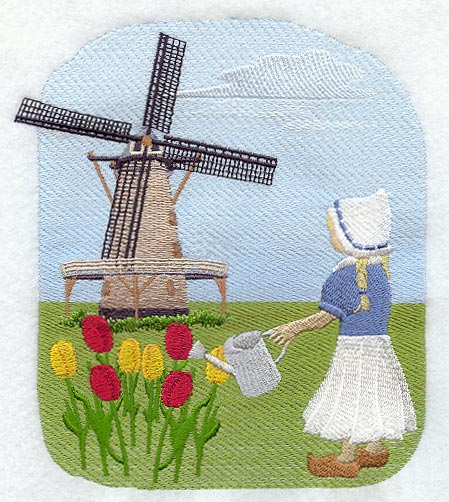
U1264Laura has a five-month-old daughter named Lijsbeth, which is a traditional Dutch spelling of the name Lisbet, and is pronounced LEES-bet.

Few people have been able to pronounce Lijsbeth’s name, and even her Australian grandparents haven’t been able to learn to say it properly. Laura is getting heartily sick of having to correct people all the time, and feels bad for her daughter that nobody knows how to say her name – especially as Lijsbeth’s big sister has a very simple, straightforward name (for example, Katie). She has started telling people to just call Lijsbeth by the nickname Bessie, even though Laura doesn’t particularly care for this name.

Since her daughter was born, Laura has learned from a Dutch cousin that the spelling Lijsbeth is considered so old-fashioned in the Netherlands that even Dutch people would have trouble pronouncing it.

Laura is starting to think it might be a good idea to officially change the spelling of her daughter’s name, probably to Lisbet (said the same way as Lijsbeth), although she’s not completely sure. She still wants her baby girl to have a Dutch name with Dutch pronunciation, like Lisbet, but she’s worried it won’t be said properly.

~ ~ ~ ~ ~ ~ ~

This is the first time someone has written in to the blog having already named their baby, but not completely satisfied with the results.

I think that if you want to change the spelling of your daughter’s name, then you’ve got good reasons for wanting to do so. In just five months you’ve already run into issues, and if you’re fed up with constantly correcting people after this brief period, you have to remember that Lijsbeth has a lifetime of it ahead of her.

Not only that, but you’ve also discovered that her Dutch name, chosen to honour her heritage, would be a curiosity and a stumbling block even in the Netherlands. I don’t think it’s unreasonable to use the modern Dutch spelling instead.

I think Lisbet is much simpler to spell than Lijsbeth, but I’m not sure it would solve the pronunciation issues, because they are said exactly the same way. I don’t actually think LEES-bet is that hard to say, once you’ve learned how, but explaining it to everyone is probably a pain.

Luckily, you only have to register the spelling of a baby’s name, not its pronunciation, so I would just concentrate on the spelling for now, and worry about pronunciation later. Changing the spelling might make it easier for people to understand; you may become more relaxed about people’s attempts to say the name correctly; it’s possible that in time you will decide to compromise on how the name is said. I would just put that issue to one side for now and see what happens.

I think your idea of using a nickname for everyday use is a brilliant one, but what a shame you don’t like your daughter’s nickname. Is there something else you could use instead? Lisa, Leesie, Libby, Libsy, Lili, Lilbet, Itsy, Issy, Betty, Betsy, Bitsy, Bibi, Biddie, Birdie …. ?

As your daughter gets older, she will probably develop her own ideas about how she’d like her name to be pronounced, and what nickname she would prefer. Our names do often evolve and change with us, and she may come home from kinder one day and announce that her nickname is Lissy, because that’s what all the other kids call her.

The good news is that it is relatively easy to officially change your child’s name (or its spelling) before it is 12 months old. My understanding is that in the first year, it’s not considered a legal name change, but simply an amendment to the birth certificate. That means that whatever the original name was, it will simply be wiped from the records as if it had never existed.

Each state and territory has different rules, but in some states it is free, and in others you will have to pay a nominal administrative fee. Just like registering the name for the first time, both parents must sign the certificate at Births, Deaths and Marriages, and once you have the new birth certificate, you’ll have to change her details with Medicare, Centrelink, the doctor’s office, and anywhere else that has her name in their database. A bit of paperwork to fill in, but that’s about it.

You may also want to send a mass e-mail to everyone you know, briefly explaining you’ve changed the spelling of your daughter’s name to something simpler, but that the pronunciation will stay the same. This could also be an opportunity to let them know that a nickname of your choice can be used instead.

It is important that you are absolutely sure that you want to do this, that you know exactly which spelling you want to use, and that both parents are completely on board with it. It’s really something you don’t want to delay either, so I would get on to it as soon as you know what you want to do.

Good luck Laura, I’m sure you will be able to come up with a solution that makes life easier for you, and ultimately for your little girl as well. Write in again if you still feel unsure about it, or run into further issues down the track.

NOTE: In the end, Laura decided her daughter’s name didn’t need to be changed.

POLL RESULTS: Just over half of respondents voted that the baby’s name be changed to Lisbet. Nearly 18% voted for the spelling to be unchanged.

(Image from Embroidery Library)

Name News Round-Up

13 Saturday Oct 2012

Posted by A.O. in Names in the News

≈ 4 Comments

Tags

Australian Aboriginal names, baby name superstitions, birth records, birth registries, changing a baby's name, choosing baby names, locational names, name changes, name combinations, name meanings, name popularity, name trends, nicknames, popular names, vintage names

I’ve read quite a few odd little snippets abut names in the news, and the holidays seems like a good opportunity to share them.

The same names popular across New South Wales

Data from the NSW Registry of Births, Deaths and Marriages shows that most areas followed the same name trends last year, despite cultural and ethnic differences. One of the major exceptions to the rule was the name Aaliyah, which is #77 across the state, but a Top Ten name in Blacktown, in Sydney’s western suburbs. At the public hospitals of Royal North Shore and Royal Prince Alfred, Oliver and Chloe were the most popular names; Olivia was the favourite name at Westmead, St George and Nepean hospitals, while Isabella topped the girl’s list at Randwick, Blacktown and Liverpool hospitals. Ethan was #1 in Liverpool, while the Central Coast was the only region to appreciate Cooper in significant numbers. Amelia proved an across-the-board favourite in almost every region, only failing to make the Top Ten in Newcastle, St Leonards, Central Coast and Blacktown.

Lismore bucks the trend

Despite this uniformity, up in Lismore in the state’s far north, they pride themselves on doing things a little differently, including baby names. In the Northern Rivers region, the most popular baby names are Riley and Mia (#20 and #5 in the state respectively). Cooper is the #2 boy’s name in Lismore, adding weight to the idea that it is coastal areas which tend to go for this name. Grace is #4 in Lismore, although #14 in the state.

Baby name regret, 1909 style

This is a story sent in by a reader to one of those columns where people send in their odd little stories.

The Unthank family of Somerville welcomed their baby daughter Hazel Ethel in 1909. Today Somerville is a suburb of Melbourne, but back then it was a rural orchard town. In order to register his daughter’s birth, Mr Unthank had to drive 10 km (6 miles) by horse and carriage to Hastings, a bustling seaside town (now another suburb).

On his way to the registry office, he dropped into the local pub to visit his wife’s family, who owned the pub, and share the good news. They all had a few drinks, and decided Hazel Ethel wasn’t suitable after all. They picked a new name, wrote it down on a piece of paper, and Mr Unthank continued his journey.

When Mr Unthank got home, he casually told his wife that he and her sisters had changed the baby’s name, but unfortunately he couldn’t remember what it was, as he had handed the slip of paper to the registrar and thought no more about it.

It was six weeks before they could find the time to visit their relatives again, and in the meantime, they had no idea what their daughter’s name was. They just called her Bubby. Eventually, they discovered her name was Zalie Vivienne Unthank, but for the rest of her life, Zalie was known by her family as Bub.

Perhaps not so strangely, both Hazel and Zalie now sound perfectly suitable as contemporary baby names. Do you think her dad and aunties made the right choice for 1909? And which one sounds better today?

(You can see the birth record for Zalie here, where her name is given as Zalie Vyvian).

Baby name superstitions

In a newspaper article from Tasmania dated 1936, it is claimed that in times gone by, it was considered lucky to choose a baby’s name before it was born. The name had to be chosen in the first nine days after birth, or it would be an unlucky child. The article unfortunately doesn’t say how long ago these superstitions were in effect.

The town that got its name back

This isn’t about baby names, but I checked my blog’s title, and it says it is about Australian names, not just baby or even people names.

The town of Mutchilba in far north Queensland is on the small side, but famed for its mangoes. In 1999, the town was quietly downgraded and removed from the map. The population of Mutchilba was (statistically speaking) moved to swell the ranks of nearby Dimbulah, which has the same postcode.

It’s said that life moves at a slower pace in the tropical heat, and perhaps that explains why the good people of Mutchilba failed to notice the change in status to their little town until July of this year. Perhaps nobody bought any new maps in the interim. Certainly nobody bothered telling them.

However, when the local paper published an article informing them of what had occurred, they were hopping mad, and launched a campaign to get their town back.

I’m happy to say they were successful, and as of October 12 this year, Mutchilba is now officially a town once more. Queensland Natural Resources and Mines Minister Andrew Cripps says the State Government fast-tracked the process, and that he took personal interest in the case, being from the far north himself.

The mayor of Mutchilba is now hoping to re-launch the Mutchilba Mango Mardi Gras, the annual festival celebrating the mango harvest, as a means of highlighting the town’s unique identity.

Mutchilba has a lovely meaning in the local language – “place of many birds”.

You Can’t Call It That: What the Law Says About Naming Your Baby

20 Sunday Feb 2011

Posted by A.O. in Naming Issues

≈ 35 Comments

Tags

banned names, birth registries, naming laws, unique names

Every once in a while you meet someone with a name where you think, “Surely that name shouldn’t have been allowed.” And quite often the newspapers will publish names that have been denied by the registrar that seem relatively inoffensive. Recently, I wondered what exactly the law says on what names you can and cannot name your baby.

As the nation’s capital and the place where most laws are passed, I decided to start in Canberra at the Australian Capital Territory Registrar-General’s Office’s website. By clicking on a likely link, it took me to the Office of Regulatory Services in the Department of Justice and Community Safety, which handles the registration of births, deaths and marriages as well as other important things, such as parking and rental bonds.

I rang the number on the Contact page, in the naïve hope that the laws on baby names might be printed out for public use – perhaps in a little pamphlet called Beware Parents: Names Forbidden by the Government, or more playfully, Naughty, Naughty Names You Needn’t Think of Using. In my hopeful imagination, this little pamphlet could then be posted to me at the taxpayer’s expense.

No such luck. First there was an amusing problem getting hold of them as my phone system automatically cuts me off if I’m left on hold for more than 40 seconds, and then once I managed to speak to someone, they very kindly pointed me to the website which has all the legislation on it for me to look it up for myself.

Now I must say that the laws are written in a very simple, clear, comprehensible way that anyone of average intelligence with a high school education should be able to follow. The trouble is, I am obviously a moron because I could NOT find the section where it tells you which names are prohibited.

I rang the Births, Deaths and Marriages Office again, and an extremely helpful lady talked me through it and then patiently directed me to the exact part of the legislation where a prohibited name is defined. Amazingly, it was exactly where I had been told it would be. I still don’t understand why it has to be at the end in a glossary – why can’t it have its own heading in the law?

As I read through the list of six things you can’t call your baby, I couldn’t help but be struck by part e) or is, in the registrar-general’s opinion, undesirable. It seemed awfully, well, subjective.

“But doesn’t that mean the registrar-general could ban any name? I mean, what if he didn’t like the name Mary because all the people he knew called Mary were horrible?” I asked my patient helper.

However, it turned out that although a register-general COULD do that, they probably wouldn’t, as they have to back it up with some pretty substantial evidence in the court of appeal. I presume if a registrar-general kept losing cases in the court of appeal it wouldn’t look very good, so they use their apparently limitless powers in a judicious manner.

I asked hopefully if all the states had the same naming laws, but to my disappointment was told that, no, they tended to differ slightly, and I’d have to look up each state and territory one by one. I said goodbye to the Births, Deaths and Marriages staff member, no doubt to her immense relief.

And so it was off to New South Wales Births, Deaths and Marriages, where I discovered that my phone system also cuts me off if I’m left talking to an automated phone message for more than 40 seconds.

Eventually I was put through to a charming girl called, I believe, Mikayla. Mikayla also helped me navigate the complexities of the NSW legislation page, and when the necessary Act refused to appear when I hit “search” gave me the obvious advice, which was to Google it. Of course! Why hadn’t I though of that? Because I’m a dullard who needs everything explained patiently and slowly, it would seem. Even when I Googled, and got to the right document, I could NOT find the place where it defines a prohibited name. Mikayla found it for me, and I still have no idea how she did it. Clearly our tax dollars are being well spent.

The NSW only had four things you couldn’t call your baby; two less than the ACT. But once again (d) is contrary to the public interest for some other reason seemed almost wilfully vague. Asking Mikayla for some more guidance on this issue, I asked her what kinds of names might be banned under point d). “For example, what if you wanted to call your baby … um, Watermelon?” I asked, plucking a hypothetical name out of the air.

In Mikayla’s opinion, Watermelon could very well end up being reviewed. “That’s a pretty degrading name to give a child,” she said disapprovingly. This surprised me – Watermelon didn’t seem that crazy; since Gwyneth Paltrow called her daughter Apple, I figured that fruit names are now acceptable. Maybe not. Personally I thought that Watermelon’s parents might have a case if it went to appeal, but Mikayla was quick to add that she wasn’t a lawyer (and therefore her personal opinions should not be taken as legal statements). Feeling immensely pleased that we live in a society where government workers are free to give their personal opinions, I said farewell to anti-Watermelon Mikayla.

And next time you talk to a government employee on the phone and they’re a wee bit tetchy with you – remember that they may have just spent the last half hour talking to an idiotic nuisance like me.

Rather than frazzle any more of them, I just went to each state and territory’s legislation website, since I knew what I was looking for now. Each state and territory had the same basic standards, but some did seem to be slightly stricter – the ACT and Queensland appeared to have the most amount of rules on what names must be avoided. And here they are:

ALL STATES

* Names which are an obscene or offensive word

* Names which are impractical to use because they are too long (I don’t know what defines “too long”, but I presume it means it doesn’t fit into the number of boxes on government forms)

* Names which are impractical to use because they contain characters with no phonetic significance eg J @ yne, Jasm!ne, J00lia, J*nn*f*r or Je$$ica

* Names which are impractical to use for some other reason (in NSW, a blank space, a Medicare number and the number 7 have all been denied; in one case the name X was knocked back, but A and B have been allowed in WA)

* Names which include or resemble an official rank or title eg Lord, Lady, Princess, Queen, Sir, Doctor (However, a NSW couple successfully won the right to call their son Duke in 2009, so in some cases these might win on appeal)

* Names which are contrary to the public interest for some other reason

The last one leaves a margin for interpretation. In NSW, the names Jesus Christ and Ned Kelly have been rejected as inappropriate, yet the names God Bless and Fully Hektic Sik have been deemed officially acceptable (God Bless? Really? I mean the child’s first name is actually God ….) In New Zealand, parents have been unsuccessful in their attempts to call their children Adolf Hitler and Satan. No word on whether it’s happened here, but WA registrar Alan Andersson has said that Adolf Hitler and Satan would definitely be on the naughty list here as well. I’m now thinking Watermelon would almost certainly get through. Surely it’s better than Fully Hektik Sik.

QUEENSLAND

The first and middle names cannot form a sentence or a statement. The examples that the legislation gives are Save Mother Earth or Down With Capitalism, but would also cover Chocolate Is Yummy and that other New Zealand reject, Tallulah Does The Hula In Hawaii. However, these names could be banned in other states under the vague reason of “contrary to the public interest”.

ACT

* The name cannot sound similar to the name of a body or organisation. So no Redd Kross or Salvation-Armi, I presume.

* The part about “contrary to the public interest” is replaced with “in the registrar-general’s opinion, undesirable”. I don’t know whether this makes any difference, nor do I know whether this means the ACT is more conservative or more liberal in its views.

There you have it – that’s what the law says about choosing a name for your child. By the way, if you are thinking to yourself, “But my great-grandmother’s name was Princess,” or “My neighbour’s parents were hippies, and his name is Dolphins Are People Too,” the legislation was only introduced in the 1990s.

So if you’re worried that the name you’ve chosen may be “too weird” – relax. Because if it gets through the birth registration process, and they rubber stamp it, it’s officially not too weird.

And when you meet a child or teenager and you think the name their parents chose is “too weird” – remember that their name has already been scrutinised under the law, and if they were allowed to register it, then by the standards of our nation, their name has already been judged to be “not too weird”. Yes, even A, B, God and Fully Hektic Sik.

Acknowledgements: Thank you to the Registries of Births, Deaths and Marriages in the ACT and NSW for their valuable assistance. Information on names which have been rejected and accepted in certain states comes from articles in The Sunday Telegraph and Perth Now. The couple who successfully appealed to call their son Duke were featured on Channel 7’s “Today Tonight”.

Newer posts →

Enter your email address to follow this blog

Categories

Archives

Recent Comments

A.O.'s avatarwaltzingmorethanmati… on Zarah Zaynab and Wolfgang…
Madelyn's avatarMadelyn on Zarah Zaynab and Wolfgang…
JD's avatardrperegrine on Can Phoebe Complete This …
A.O.'s avatarwaltzingmorethanmati… on Rua and Rhoa
redrover23's avatarredrover23 on Rua and Rhoa

Blogroll

  • Appellation Mountain
  • Baby Name Pondering
  • Babynamelover's Blog
  • British Baby Names
  • Clare's Name News
  • For Real Baby Names
  • Geek Baby Names
  • Name Candy
  • Nameberry
  • Nancy's Baby Names
  • Ren's Baby Name Blog
  • Sancta Nomina
  • Swistle: Baby Names
  • The Art of Naming
  • The Baby Name Wizard
  • The Beauty of Names
  • Tulip By Any Name

RSS Feed

  • RSS - Posts

RSS Posts

  • Celebrity Baby News: Melanie Vallejo and Matt Kingston
  • Names from the TV Show “Cleverman”
  • Can Phoebe Complete This Sibset?
  • Zarah Zaynab and Wolfgang Winter
  • Baby, How Did You Get That Name?
  • Celebrity Baby News: Media Babies
  • Celebrity Baby News: Adelaide Crows Babies
  • Celebrity Baby News: Chris and Rebecca Judd
  • Names at Work: Name News From the World of Business and Employment
  • Celebrity Baby News: Sporting Round Up

Currently Popular

  • Celebrity Baby News: Toby Allen and Darren Weller
  • Rare Boys Names From the 1950s
  • The Top 100 Names of the 1900s in New South Wales
  • Girls Names of Australian Aboriginal Origin
  • Celebrity Baby News: Jason Morrison and Heidi Tiltins

Tags

celebrity baby names celebrity sibsets english names famous namesakes fictional namesakes honouring locational names middle names name combinations name history name meaning name popularity name trends nicknames popular names saints names sibsets surname names twin sets unisex names

Blog at WordPress.com.

Privacy & Cookies: This site uses cookies. By continuing to use this website, you agree to their use.
To find out more, including how to control cookies, see here: Cookie Policy
  • Subscribe Subscribed
    • Waltzing More Than Matilda
    • Join 517 other subscribers
    • Already have a WordPress.com account? Log in now.
    • Waltzing More Than Matilda
    • Subscribe Subscribed
    • Sign up
    • Log in
    • Report this content
    • View site in Reader
    • Manage subscriptions
    • Collapse this bar
 

Loading Comments...