• About
  • Best Baby Names
  • Celebrity Baby Names
  • Celebrity Baby Names – Current
  • Celebrity Baby Names – Past
  • Featured Boys Names
  • Featured Girls Names
  • Featured Unisex Names
  • Links to Name Data
  • Waltzing on the Web

Waltzing More Than Matilda

~ Names with an Australian Bias of Democratic Temper

Waltzing More Than Matilda

Tag Archives: birth notices

Famous Names: Clyde and Campbell

06 Wednesday Aug 2014

Posted by A.O. in Famous Names

≈ 2 Comments

Tags

aristocratic surnames, birth notices, dated names, famous namesakes, Gaelic names, locational names, modern classics, name history, name meaning, name popularity, names of mascots, names of rivers, Scottish names, surname names, US name popularity
6388929879_8002efc401_z

The Glasgow Commonwealth Games ended on Sunday, a very friendly games where Glasgow gave everyone a warm welcome. It was the first time England had won since 1986, and those games were also held in Scotland. In fact, it was a great Games for the British, with England, Scotland (fourth), and Wales (thirteenth) all winning more medals than they ever had before, in something of an Olympian afterglow.

At the closing ceremony, the baton was passed on to Australia, because the next Commonwealth Games will be held on the Gold Coast in April 2018. Let’s hope we’ll have better uniforms for that. Oh and by the way – it poured with rain the last few days of the Glasgow Games, but our team was warm and dry in their jumpers and anoraks, so who’s laughing now?

Now the Games are over for four more years, this is the end of our Scottish names. I picked the name Clyde because that was the mascot for the Glasgow Games, a cheery looking thistle named after the River Clyde, which flows through the city of Glasgow.

As an Australian reference, I picked Campbell for the Campbell sisters, Cate and Bronte, who did so well in the swimming. Between them they won five gold medals, so as many as Wales, and if they were a country they would have come fourteenth in the medal tally. They were also on the team which set a world record for the women’s freestyle relay.

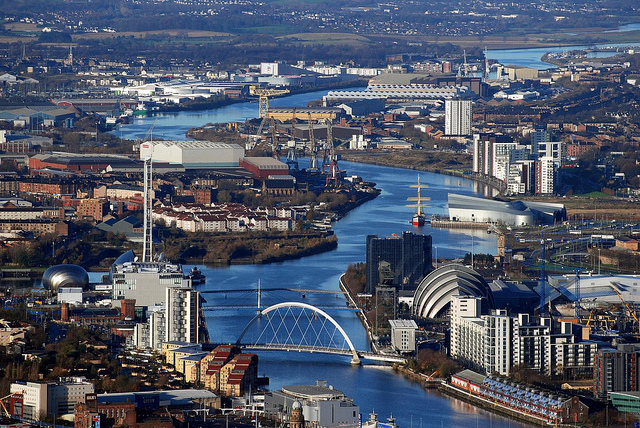
Clyde is a Scottish surname, given to those who lived along the River Clyde. The Clyde is the third largest river in Scotland, and has its source in the Lowther Hills, in Scotland’s Southern Uplands. It meanders west across the country, and empties into the Firth of Clyde, the largest and deepest coastal waters of the British Isles.

The river’s Gaelic name is Chluaidh, which probably means “cleansing”. It may be related to the Latin cloaca, “sewer, drain”. Clyde has been used as a first name for boys since around the 18th century.

One of my favourite Australian Clydes is Clyde Fenton, a flying doctor in the years before WW II, who piloted his own plane as well as serving as a medical officer in the Northern Territory. Known for his kind and determinedly helpful nature, as well as his great resilience, he was famous for his daring rescues, lively escapades, and madcap pranks, which usually got him into trouble with the authorities. Although fairly indifferent to his own personal safety, he surprisingly lived into his eighties.

The name Clyde was #104 in the 1900s, when Clyde Fenton was born, and peaked in the 1910s at #96. It left the Top 100 in the 1920s, and hasn’t charted since the 1950s. Although it’s a dated name, it has never been really popular, and perhaps isn’t as tied to a particular era as you might think. Interestingly, this name just reached the Top 1000 again in the US, so seems to be having a comeback there.

The name sounds big and capable to me – perhaps because of Clydesdale horses. These Scottish horses were so important in colonial Australia they were called “the breed that built Australia”.

Campbell is a Scottish surname. The Clan Campbell are one of the largest of the Highlands clans, and became one of the most powerful families in Scotland. The Campbells had a reputation for being good soldiers and fighters, but lacking in diplomacy and cunning. The chief of the clan is the Duke of Argyll, in the Peerage of Scotland. The current Duke is Torquil Campbell, and his son and heir is Archibald Campbell, who is around ten years old – I think you will remember that Archibald is a traditional name in the Campbell family.

The name Campbell comes from Cam Beul, a Gaelic nickname meaning “crooked mouth, wry mouth”. The first person given this nickname is said to have been Dugald on Lochawe in the 12th century, who supposedly had a habit of talking out of one side of his mouth.

The name was originally Cambel, but as early as the 14th century it began to be spelled with a p, perhaps because the Norman knights at the Scottish court who were responsible for administration misunderstood it as from the Norman-French camp bello, “beautiful plain”. Campbell has been used as a (mostly male) first name since the 17th century.

Campbell began charting in the 1960s, debuting at #302. This is the decade British speed enthusiast Donald Campbell made several attempts in Australia to break land and water speed records, finally achieving success in 1964, when he broke both the land speed record on Lake Eyre in South Australia, and the water speed record on Lake Dumbleyung in Western Australia.

The popularity of the name Campbell went up steeply in the 1990s, the decade when sound-alike Cameron reached its height and began falling, and peaked in the early 2000s at #181. In New South Wales it seems to be somewhere in the 300s, but in Victoria it is around the high 100s. In the past, it has managed to be a Top 100 name in Tasmania.

It would be interesting to see how Queensland premier Campbell Newman affects the popularity of the name, since politicians generally don’t give names a boost, and Campbell Newman is extremely unpopular, according to the polls. In fact, it will be interesting to see whether he is still premier at the next Commonwealth Games. I do see Campbell quite frequently in birth notices, but not in Queensland, I must admit.

(Premier Newman was born in the 1960s, just as the name Campbell hit the charts, and a year before Donald Campbell broke the speed records in Australia, so his parents were naming trail-blazers.)

Campbell is a strong, handsome Scottish choice which has managed to become a modern classic without ever becoming popular. This makes it a desirable option for parents seeking a name that is familiar without being common.

Two Scottish surnames-as-first-names – but which one is better?

POLL RESULTS
Clyde received an approval rating of 41%, while Campbell did rather better at 59%.

(Picture shows the River Clyde in Glasgow, taken from the air)

Names Spotted at Home and Abroad (Winter 2014)

28 Monday Jul 2014

Posted by A.O. in Names Spotted at Home and Abroad

≈ 4 Comments

Tags

birth notices, famous namesakes, fictional namesakes, holiday names, illegal names, Irish names, metal names, middle names, mythological names, name meaning, name trends, names from television, names of pets, nature names, rare names, surname names, twin sets, urban legends, virtue names, vocabulary names

image-tools

Anzac Day for Baby Anzac
After I covered the name Anzac on the blog, I received several e-mails from people insisting that it was illegal for babies to be named Anzac in Australia, and that my post should be altered to reflect that. I have seen babies in birth notices with this name, but my correspondents refused to believe me, as I had no proof of this (which is fair enough – imagine if I believed all the people who said they knew twins called Lemonjello and Orangejello).

Because of this healthy scepticism, I am posting a story about a baby named Anzac Judd from Bowraville, near Nambucca Heads in northern New South Wales. Unfortunately, it’s a sad story, because Anzac passed away from a spinal disease when only a few months old. On Anzac Day this year, Bowraville held a golfing and bowls day in Anzac’s memory, and even though the circumstances are heartbreaking, it shows that Anzac Day can mean more to you when you have a baby Anzac.

Danger is His Middle Name for a Reason
Robbie Danger Russell of Darwin was born with an extremely rare and little-understood genetic condition that meant doctors held out little hope of him surviving birth. Robbie did survive, despite multiple medical conditions, and at one year of age, still has the eyesight doctors expected him to have lost by now, although his prognosis is still very poor. Robbie’s mother Jennifer seems to have chosen the middle name Danger as a sign of the hazards that lay ahead of him, and that he lives with every day.

Quick Silver
I know readers love to know what fashionable people are naming their children, so here’s a quick profile of interior stylist Sibella Court who has a little shop in Paddington, and a daughter named Silver with her partner Ben Harper. Silver is pretty, and very much like mum’s name, but Silver Harper is a little race-horsey for my tastes.

And if you’d like to know what is in style, Sibella recommends vases of fruit and foliage, black walls, random surfboards, painter’s ladders, 1950s seashell collections, Union Jacks, vintage life-vests, and subway tiles. But for goodness sakes, don’t do any of this, because the story is from March, and that’s all TOTALLY LAST SEASON.

Sibella also had a pet pig named Wilbur, but pigs either went out of style, or now it’s bacon, the story didn’t really explain. Love the name Wilbur though!

Is it Just Hype?
I read a story about one of the many families who were victims of financial fraud committed by the Commonwealth Bank, and who were able to win their case in court, under the most difficult of circumstances.

One of the family, Tegan Couper of Shellharbour, is pictured with her baby son Hype. It’s a very unusual name, almost a virtue name really. I kept wondering if it was short for something, but could only think of Hyperion, which seemed even less likely, in a way.

Supposedly Seen – Sheen
Brisbane comedienne Mel Buttle wrote a piece about her childhood pet, a beloved dog named Benny, which she named after a boy named Ben she liked at school. In case we don’t think that’s an impressive naming story, she said she knows a baby who was named Sheen, after Charlie Sheen.

Not sure if that’s just a joke, but Sheen doesn’t seem that bad (if you put aside the Charlie Sheen part for a moment). The Irish surname Sheen is derived from a personal name which meant “peaceful”, and it almost sounds like a masculine form of Sheena, or a variant of Shane, as well as the appeal of English word sheen, meaning “lustre”.

Mel’s new dog is named Molly.

The Gods on Television
There was a new television program on ABC1 this autumn called The Gods of Wheat Street. Set in Casino in New South Wales, it’s about an Aboriginal family named Freeburn who have to let go of the past after their mother Eden‘s death, with the help of a bit of magic. Head of the family is Odin, and his siblings are Ares, Isolde, and Tristan, while Odin’s daughters are named Electra and Athena. The names may possibly help the trend for mythological names (and seem informed by said trend).

Perth Suburbs That Could Be Used As Boys Names

20 Sunday Jul 2014

Posted by A.O. in Name Themes and Lists

≈ 4 Comments

Tags

animal names, aristocratic names, aristocratic titles, Australian slang terms, Biblical names, bird names, birth notices, British names, car names, celebrity baby names, Celtic names, english names, famous namesakes, fictional namesakes, Gaelic names, germanic names, hebrew names, historical records, Latin names, locational names, middle names, mythological names, name history, name meaning, name popularity, names from television, names of boats, nature names, nicknames, Puritan names, saints names, Scottish names, surname names, unisex names, US name popularity, US name trends

2725210-01

Ashby
Ashby is a residential northern suburb, first developed in the late 1990s. It is named after the original landowner, Mr E.E. Ashby, who lived here before World War I. Ashby is a surname which means “farm among the ash trees” in a mixture of Old English and Old Norse; it is more common in Lincolnshire, Leicestershire and the East Midlands, which have a history of Scandinavian influence. Ashby has been used as a name for boys since the 17th century, and seems to have been especially popular amongst Puritan families. The town of Ashby-de-la-Zouch in Leicestershire was an important centre for Puritan preaching and education, which may be an inspiration for the name. Ashby isn’t rare in Australian records, although more common as a middle name, and has occasionally been given to girls. I saw this is a boy’s middle name in a birth notice, and thought this might make an appealing Ash- name for boys, which seems more obviously masculine than Ashley. Unfortunately, it could easily be confused with Ashley too.

Bentley
Bentley is 8 km south of the city, and is the location of the main campus of Curtin University. The area has been settled since 1830, and was developed in the post-war period with government housing, including homes for returned servicemen. Today Bentley is very varied: it has a light industrial area, but part of it is still used for grazing. The suburb is named after John Bentley, a veteran of the Crimean War who arrived in the Swan River Colony as a pensioner guard, and supervised convicts building what is now the Albany Highway. Bentley is a surname after the common English place name, meaning “bent-grass meadow”; bent-grass refers to rushes or reeds. Bentley has been used as a boy’s name since the 17th century, and has recently leaped up the charts in the United States to become a Top 100 name. Its jump in popularity is attributed to a baby named Bentley on reality show 16 and Pregnant. In Australia, Bentley is around the high 100s, which is still a lot more popular than it is in the UK. People often connect the name to the luxury car company, founded in 1919 by W.O. Bentley.

Bertram
Bertram is a new suburb of the City of Kwinana, in Perth’s south (for more information, see Leda in Perth Suburbs That Could Be Used As Girls Names). It is named after an assisted migrant from the 1920s, who came here under the group settlement scheme. Bertram is a Germanic name which means “bright raven”; it was introduced to Britain by the Normans. A famous Australian namesake is Sir Bertram Stevens, who was Premier of New South Wales in the years before the Second World War. Bertram has been quite a popular name in fiction, including the main character of Shakespeare’s All’s Well That Ends Well. Unfortunately, Bertram is not, on the face of it, a very sympathetic character, although he gets his regulation happy ending anyway. Another fictional Bertram is Bertie Wooster, from P.G. Wodehouse’s Jeeves books; a good-natured idler, this Bertram is not without charm, although perhaps not the most sturdy namesake. The short form Bertie would be very cute though.

Carlisle
Carlisle is south of the CBD, and close enough to offer views of the city. Originally farmland, it was developed in the late 19th century, and is a fairly typical older suburb. The name Carlisle was chosen by the suburb’s ratepayers, who called it after the northern English city of Carlisle in Cumbria. Their logic was that just as Cumbrian Carlisle is famously near the border between England and Scotland, so was Australian Carlisle right on the border between the city of Perth and its suburbs. However, it is interesting to note that one of the landowners at the time was named Carlisle; it is possible his surname put the idea in the ratepayers’ minds. Carlisle is an ancient city which was one of the most heavily fortified towns of pre-Roman Briton: its name means “stronghold of the god Lugus”. Lugus was one of the most prominent of the Celtic gods, and the Romans identified him with Mercury, as he was known as a god of trade and skill. Carlisle has been used as a boy’s name since the 18th century, and was originally used most often in Cumbria. It has recently received some interest since the name was chosen for one of the more sympathetic vampires in the Twilight series.

Falcon
Falcon is one of the suburbs of Mandurah, a coastal city 45 km from Perth, within the metropolitan area. It is popular with tourists and retirees, making it the least affordable city in Australia. Falcon has a number of beaches, and is named after Falcon Bay, which is pronounced FAWL-kin, rather than FAL-kin – an earlier English pronunciation of the word. Falcon was a yacht whose crew won a silver medal at the 1956 Olympics in Melbourne, and many of Falcon’s streets are named for yachts. Falcon has been used as a boy’s name since medieval times – there is even an obscure St. Falcon, and Falcon was the middle name of Antarctic explorer Robert Scott. The name may be from the Latin Falco, meaning “falcon”, or derived from the Germanic name Fulco, meaning “people”. I did find a few Falcons born in Australia, and for some reason they were nearly all South Australian. In Australia, this name will remind people strongly of the car, the Ford Falcon, and perhaps also the slang term in rugby league for being accidentally hit in the head by the ball. I’m not sure whether the pronunciation will make any difference.

Murdoch
Murdoch is in the south, and the home of Murdoch University. The university is named in honour of Sir Walter Murdoch, a former chancellor of the University of Western Australia, and its founding Professor of English. Sir Walter was a essayist famous for his wit and intelligence, and an active proponent of international peace and justice, political freedom, women’s rights, and affordable childcare. His great-nephew is the media mogul Rupert Murdoch. The surname Murdoch is the Anglicised form of two Gaelic personal names that became conflated with one another, and were written as Muireadhach. One name was Muiredach, meaning “mariner”, and the other was Murchad, meaning “sea warrior”. Muireadhach was a traditional name amongst the Earls of Monteith, and Murdoch has seen particular use in their seat of Perthshire. Murdoch is commonly found in Australian records amongst Scottish families, but although we have enthusiastically embraced Lachlan, Murdoch has been less successful. Fun fact: Murdoch was an early name crush for a particular Australian blogger, which makes you wonder if this could have been a contender without the prominent Murdoch family.

Samson
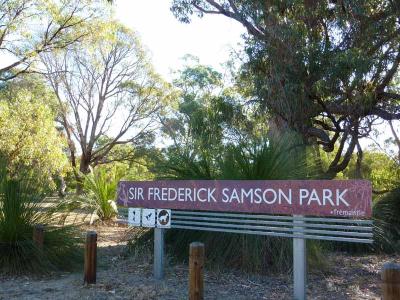
Samson is a small suburb of Fremantle, a southern port city in the Perth metropolitan area. The suburb was only developed in the 1970s, as before this it had belonged to the army, and was a military camp during World War II. The suburb is named after the Samson family, who have been prominent in the Fremantle area for nearly two centuries. Sir Frederick Samson was mayor of Fremantle for twenty years, from the 1950s to the 1970s, and his home, Samson House, is one of Fremantle’s landmarks. The suburb of Samson contains Sir Frederick Samson Park, Fremantle’s only bush reserve. Sir Frederick was the grandson of Lionel Samson, a wealthy Jewish merchant who settled in the Swan River Colony in 1829 and became one of its most successful pioneers. Popular for his charm and wit, respected for his integrity, the business he founded is still run by the Samson family, making it Western Australia’s oldest family business. Samson is one of the most famous characters in the Old Testament, a judge of the Israelites known for his superhuman strength. His name is from the Hebrew for “man of the sun”, leading some scholars to suspect he was originally a sun god, or demi-god. Samson was in use as an English name during the Middle Ages, and there is a Welsh St Samson, one of the Apostles of Brittany. This is a very masculine name which provides another way to get the popular short form Sam.

Sawyer
Sawyers Valley is on the eastern fringe of Perth’s outer suburbs, and 40 km from the city. Its name came about because it was originally a saw mill and timber processing area. It’s now a semi-rural suburb in the bush-covered hills surrounding Perth. Sawyer is an occupational surname for someone who sawed wood for a living – and in the days when most things were made of wood, an important trade. Sawyer has been used as a personal name since the 17th century, mostly as a male name. In Australian records, I can only find it as a man’s first name, although not unusual as a female middle name. Sawyer doesn’t chart in Australia, but has been in the US Top since 1991; it had a huge jump up the charts after Steven Spielberg chose the name for his son in 1992. In America, it is a unisex name, but more common for boys. Although it is in rare use here, I have seen it a few times, on both sexes. Its most famous namesake is Tom Sawyer, the young scamp from the stories by Mark Twain, while it has also been alias for Josh Holloway’s character on Lost.

Stirling
Stirling is a residential suburb 10 km north of the city. The area has a multicultural history, because in the 1920s it attracted retired Chinese miners from the goldfields, returned servicemen from the First World War, and many Italian migrant. It became a successful market gardening region producing almost every vegetable possible, some for export. Even after development in the 1960s and ’70s, the suburb remains one of Perth’s most ethnically diverse, with a third of the population having Italian heritage, and many from Macedonian, Greek and Asian backgrounds. The suburb is named after James Stirling, who was the first governor of Western Australia, and who lobbied for a colony to be founded on the Swan River. Stirling is a Scottish Clan name which comes from the city of that name in central Scotland; it is known as the “Gateway to the Highlands”. The meaning of its name is not known, although folk etymology says that it is from the Gaelic for “place of battle”. Another theory is that it is British, and means “dwelling place of Melyn”; the name Melyn is said to mean “yellow-skinned, sallow-skinned”. Stirling has been used as a boy’s name since the 18th century, and was first used this way in Stirlingshire. I have seen this name quite a few times in birth notices, and it’s one with a great deal of dignity.

Warwick
Warwick is in the northern suburbs of Perth, and a large section of it is still native bushland. It originally belonged to a railway company, and is named after Warwick Road, the major road which goes through it, and pre-dates the suburb’s development. It may have been inspired by Warwick Road in London. The name Warwick comes from the English city of Warwick in the Midlands; its name means “dwellings by the weir” in Old English, as the River Avon flows through it. It’s pronounced WOR-ik. The Earl of Warwick is one of the most prestigious titles in the British peerage, and Guy of Warwick a legendary English hero, which may help explain why Warwick has been used as a boy’s name since at least the 16th century. However, it seems to have originated in Devon, in the seat of a family named Warwick who belonged to the minor nobility. Warwick first charted in the 1910s at #203, joining the Top 100 in the 1940s, where it peaked at #80. It left the Top 100 in the 1960s, and hasn’t charted since the 1990s. Famous Australians with this name include the racing driver Warwick Brown, and flamboyant former AFL star, Warwick Capper.

POLL RESULTS
The public’s favourite names were Sawyer, Samson and Ashby, and their least favourite were Stirling, Warwick and Murdoch.

(Photo shows the entrance to Sir Frederick Samson Park, in Samson)

My Top 100 Predictions – How Accurate Were They?

29 Sunday Jun 2014

Posted by A.O. in Naming Issues

≈ 4 Comments

Tags

birth notices, name predictions, popular names

cfa-exam-december-2012-results

Before the 2013 birth data was released, I published my predictions of what names could be joining the Top 100 at some point, based on how frequently I’d seen them in birth notices that year. Now that all the data is out, I thought I’d go back and see how accurate this method was.

CORRECT

Indi/Indie
I only said that if all spellings were combined this name would already be Top 100, but Indie joined the national Top 100 at #94, and the Top 100 of New South Wales at #100. Meanwhile, both Indi and Indie joined the Queensland Top 100 at #92 and #90.

Louis/Lewis
This was another situation where if both these spellings were counted as one name, it would be a Top 100 name. As it happened, Louis not only joined the national Top 100 at #74, it was the fastest-rising name of the year. Lewis also joined the Top 100 at #97.

Harriet
I suggested it was ready to make the Top 100 this year, which it did – Harriet joined the national Top 100 at #89, and was one of 2013’s fastest-rising names to boot.

Elsie
I predicted Elsie would be in the national Top 100 within the next two years; it made #91 last year.

Pippa
I said that Pippa could make the national Top 100 within the next two years. It was quicker than that, making #95.

Indigo
This seemed likely to become a Top 100 name at some point, and it joined the national Top 100 at #96.

Peyton
I thought Peyton was a possibility to make Top 100 one day; it joined the national Top 100 at #98.

Parker
I picked this to become a future Top 100 name, and it joined the national Top 100 at #98.

PARTIALLY CORRECT

April
I thought April might join the national Top 100 this year, but it didn’t, although it was Top 100 in Queensland (new), Tasmania, and the Australian Capital Territory.

Asha
I thought this had a chance to join the national Top 100, which didn’t happen, although it did make the Top 100 in the Australian Capital Territory.

Spencer
I thought that Spencer had a shot at making the national Top 100, and although that didn’t happen, it was one of the fastest-rising names in Victoria, which does look promising for the future.

Theodore
This seemed like a possibility to make the Top 100 within five years. It joined the Top 100 in Queensland, and was one of the state’s fastest-rising names, which is very encouraging.

Alana
I said that if all spellings were combined this name would already be Top 100, but it did join the Top 100 in the Australian Capital Territory, scraping in at #99.

Lexi
As above. It joined the Top 100 in Victoria at #90.

Amity
I thought this was a possibility to make Top 100 one day: although it didn’t make the national Top 100, it did join the Queensland Top 100 at #86 and was one of the state’s fastest-rising names.

Jude
I thought perhaps this might make Top 100 at some point. It has already joined the Victorian Top 100.

INCORRECT

Bonnie
Because this was already Top 100 in Victoria, I thought it might keep rising and join the national Top 100 as well. It didn’t – in fact it left the Victorian Top 100 as well. It’s only on the Tasmanian Top 100.

Billie
This is another name which seemed as if it might take off since it was already on the Victorian Top 100. Like Bonnie, it fell instead.

Penelope
This was new to the national Top 100 and several state Top 100s, and one of the fastest-rising names of the year – in Victoria, it moved up more than 100 places! Did I see it coming? Nope; it moved much faster than I thought possible. I didn’t even see that many Penelopes in birth notices – maybe six or seven in the year, and never more than one in an individual week.

Nathaniel
This was new to the national Top 100 and several state 100s, and one of the fastest-rising names of the year. If I had seen enough examples in birth notices, I would have checked it and seen that it was only just outside the Top 100 and risng steeply. But I didn’t.

Ayla
This joined the national Top 100, and was one of the the fastest-rising names. I did notice several Aylas in birth notices, but there didn’t seem enough to make any firm predictions about it.

Daisy
This joined the Top 100, and was one of the fastest-rising names. There were quite a few Daisys in birth notices, and in retrospect, I should have paid more attention to the fact that it was only just outside the Top 100 in Victoria. Missing this one really was a careless mistake.

Ariana
This just scraped in at #100. There was little data on Ariana for me to be able to predict its future with any certainty, and I certainly don’t recall seeing more than a few in birth notices.

Nevaeh
I’m still scratching my head as to how this made the Top 100, when it only charted in Queensland – generally a name has to make the Top 100 in either New South Wales or Victoria to be in the national Top 100. No, I didn’t see it coming, didn’t see very many in birth notices, and frankly I still think there was an error somewhere!

There were eight hits, eight misses, and eight that weren’t exactly right, but didn’t seem quite wrong either. It seems as if predicting the future top names based on my own observations gave some mixed results, and although I still think it was a worthwhile exercise, I’m left with some doubts about its usefulness.

POLL RESULTS
71% of people thought using birth notices to predict future popularity was generally useful, with 50% saying it was mostly accurate, but with some notable misses, and a generous 21% thinking it was pretty much spot on.

Only 5% of people were totally unimpressed with the method, with 3% saying it was mostly inaccurate with some notable hits, and a harsh 2% seeing it as pretty much a complete failure.

24% hedged their bets by saying it was pretty much fifty-fifty each way.

Waltzing With … Winter

22 Sunday Jun 2014

Posted by A.O. in Waltzing with ...

≈ 6 Comments

Tags

birth notices, english names, Gaelic names, German-Jewish names, historical records, Irish names, middle names, name history, name meaning, name popularity, nature names, season names, surname names, UK name trends, unisex names, US name trends, vocabulary names

flat,550x550,075,f (1)

Yesterday was the winter solstice, so we are now embarking on the coldest part of the year. In Hobart they celebrated the winter solstice with an icy nude swim at sunrise, and declared that being half frozen to death was quite exhilarating.

It’s been a fairly mild winter so far (hopefully in Hobart too), although winter still came as a shock to me as we’d had such a warm autumn. There’s lots to enjoy about winter: the grass which was dry and brown in summer is now a lush green; the sunshine is warm, but doesn’t burn; the clear blue skies of winter are more beautiful than in summer.

I look forward to making soup, walking for miles without getting hot and sweaty, footy season, weekends ski-ing, and cold nights at home by the fire. I love the eerie look of trees looming through fog, waking up to find a glitter of ice on the lawn, snow capping the mountains, or falling softly on the house like icing sugar.

Of course, I also hate going to work in the pitch dark, finding the frost has killed all the vegetables in the garden, everyone tracking mud and dead leaf mush into the house, and miserable grey days where the sun doesn’t appear until 3.30 pm, then sets at 4. But on a sunny winter Sunday, it’s easy to forget all that.

I planned to do the name Winter today back in January, but yesterday a blog reader considered the name Winter for one of her twin daughters, and on Friday there was a boy with Winter as one of his middle names, so what with the winter solstice, this does seem like the weekend for Winter.

Winter is an English word derived from Ancient Germanic. The original meaning is not known for sure: it may come from an ancient word for “water”, possibly to denote “wet season”.

The English surname Winter started out as a nickname for someone who was of a cold or miserable “wintry” temperament – not very flattering! As an Irish surname, Winter can be an Anglicisation of the Gaelic Mac Giolla Gheimhridh, meaning “son of the servant of Gheimhridh”, with the personal name Gheimhridh meaning “winter”. Winter can also be a German-Jewish surname after the season. The surname is frequently spelled Wynter, making this a variant spelling with a long history.

Winter has been used as a first name since at least the 16th century, and according to early records, most people named Winter were born during the winter months. Later records don’t seem to show much correlation between the name Winter being chosen and the season of birth.

Winter is historically much more common as a male name, suggesting that the surname was more influential than the season. These days, Winter is more often thought of as a female name, and it charts in the United States as a girl’s name only, where it is rising. In the UK, Winter is more common for girls (more than three times as many Winters are girls), but is rising steeply for both sexes. Interestingly, the less common spelling Wynter has been much more evenly given to both sexes through history (although still more common for males).

Winter was in the 200s in Victoria in 2012 – there were almost as many baby girls named Winter just in this state as in the whole of the UK. I see Winter used mostly as a girl’s name in Australian birth notices, but it seems more common as a boy’s name in the middle position, showing its great versatility.

Even though Winter is currently more common as a girl’s name, it still seems very usable for boys. It sounds similar to Winston, is a surname, and the season of winter isn’t generally thought of as particularly feminine. It is sometimes personalised as Old Man Winter or Father Winter, and another “winter character” of folklore is Jack Frost. This always reminds me of the Australian bird, the Jacky Winter – another boyish-sounding winter connection.

I can think of two famous female characters connected to winter, and they are both from the fairy tales of Hans Christian Anderson. One of them is the beautiful yet deadly Ice-Maiden, and the other is the Snow Queen. Although the Snow Queen is a seemingly malevolent character, she is an attractive one: beautiful, strong, and intelligent, she is a “queen bee”. Because of these two characters, we call an alluring yet frosty woman an “ice maiden” or “snow queen”, and rumour has it that Anderson based both these characters on the opera singer Jenny Lind, and her rejection of him.

The Snow Queen recently received a reboot in the Disney film Frozen, with a completely different plot and characters from Anderson’s fairy tale. The stranger-danger theme of a beautiful cold woman in a sleigh seducing, abducting, and imprisoning a little boy had already been co-opted by C.S. Lewis for The Lion, the Witch and the Wardrobe, so something different was necessary.

Frozen has been a huge hit, with its appealing characters, fun dialogue, heart-warming coming-of-age story, and catchy songs. As Ebony from Babynameobsessed has pointed out, that has had an effect on the naming world. The name Elsa is becoming more popular, Arendelle suddenly seems usable as a baby name, and perhaps we can expect more winter-inspired names such as Snow, Frost, Ivy, June … and Winter.

Winter is a clean-sounding name that conjures up the purity of virgin snow, mysterious fog descending on the earth like a white blanket, the crisp sparkle of morning frost. Or maybe it reminds you of invigorating hikes in the cold air, and the thrill of downhill ski-ing, or of hot cocoa drunk before a blazing fire, and snuggling under the quilts at night while listening to a storm roaring outside.

When I think of stories connected with winter, apart from ice maidens, snow queens, white witches and frost fairies, I think of the white bear in the tale East o’ the Sun and West o’ the Moon, of the frost giants of Norse legend, of William Shakespeare’s comedy The Winter’s Tale, with its frozen queen, and Mark Helprin’s New York fantasy, Winter’s Tale.

There are so many fantasy stories about winter, perfect for recounting before the fire on cold nights, that there seems something magical it. Anything is possible in a winter wonderland – it’s a season of miracles.

POLL RESULT
Winter received an extremely good approval rating of 78%. 28% of people loved the name, while a further 24% liked it. Less than 10% of people hated the name.

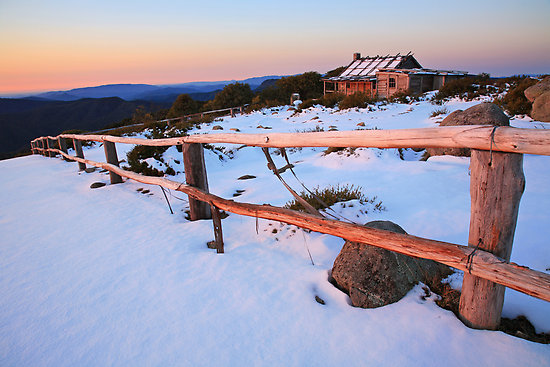
(Picture shows Craig’s Hut at Thredbo, New South Wales; photo from Red Bubble)

Famous Names: Azalea and Amethyst

04 Wednesday Jun 2014

Posted by A.O. in Famous Names

≈ 16 Comments

Tags

Anne of Green Gables, birth notices, dog names, english names, famous namesakes, flower names, gemstone names, Greek names, locational names, name history, name meaning, nature names, pet names, plant names, rap names, screen names, stage names, street names, US name trends

May-purpleazalea

Australian rapper and model Iggy Azalea has been in the news recently, as she performed at the Billboard Music Awards last month. Her song Fancy recently reached #1 on the Billboard Top 100 in the same week that Ariana Grande’s Problem, which features Azalea, made #2. This makes Iggy Azalea the first act to reach #1 and #2 simultaneously since the Beatles did it in 1964 with I Wanna Hold Your Hand, and She Loves You.

Iggy grew up in the hippie town of Mullumbimby in northern New South Wales, and began rapping at the age of fourteen after developing an obsession with Tupac when she was eleven. Unsuccessful and unpopular at school, Iggy dropped out. Shortly before her sixteenth birthday, she left for a “holiday” in the United States, during which she phoned her parents and broke it to them that she wasn’t coming home, but going to seek her fortune as a professional rapper. She lived in the southern states, and developed a southern American accent for professional purposes.

As a rapper in America, Iggy was at first unsuccessful and unpopular, but Mullumbimby had accustomed her to this, and it didn’t faze her. Later she moved to Los Angeles, and began uploading her own videos to YouTube: her career began to grow when her first official music video, for her song Pu$$y, went viral. Her first studio album, The New Classic, was released in April this year and debuted at #3 on the Billboard charts, also making #1 on Billboard’s Top R&B/Hip-Hop albums, and Top Rap Albums. She is the first non-American female rapper to reach the summit of these charts.

We are told that screen names are no longer necessary in Hollywood, but stage names are still common in the world of rap and hip-hop. Iggy Azalea invented hers using the old chestnut of combining her pet dog’s name with the name of the street she grew up on (her family still lives on Azalea Street in Mullumbimby). While some people might use this method and end up with something uninspiring, like Pickles Main or Mr. Bunny Wunny Commercial Estate, Iggy Azalea got pretty lucky with hers, although her real name of Amethyst Kelly seems marketable enough.

I have been seeing quite a few Azaleas and Amethysts in birth notices in the past few years, and wonder whether Amethyst Kelly aka Iggy Azalea has had an effect? I haven’t seen any girls named Iggy though.

The azalea is a flowering ornamental shrub native to Asia, Europe and North America; it is a member of the rhododendron family. Azaleas bloom in the spring, and have beautiful frilly flowers in shades of pink, purple, and white.

Its name comes from the Greek for “dry”, because it grows in dry soil and is tough enough to thrive in harsh conditions. In Chinese culture, azaleas are a symbol of womanhood and love for the home. Azalea festivals are held in Japan, China, Korea, and in many cities of the United States; the azalea is the state wildflower of Georgia in the US.

Azalea has been used as a girl’s name since the 18th century, originating in both Britain and the US. Although there is some dispute as to when azaleas were introduced to England from the Americas, they were definitely imported by the early 18th century. Azalea first turns up in Ohio in the US, where there is a small town named Azalea, so it can be seen as a place name. The name Azalea is currently rising in popularity in the United States.

As a name, Azalea seems flouncy and feminine, and also quite tough – the “dry” meaning seems very appropriate in Australia. It can be pronounced either uh-ZAY-lee-uh or uh-ZAYL-yuh, and fits in with trendy names such as Zalia and Zahlia, so that it seems a little exotic but doesn’t sound particularly strange. Zay or Zaylie could be used as short forms.

An amethyst is a semi-precious gemstone which is a violet-shaded quartz, ranging from a pinkish colour to a deep purple. The name comes from Greek, and means “not intoxicated”, due to a belief that amethysts were a protection against drunkenness.

The ancient Greeks and Romans drank wine from cups made from amethyst, thinking this would stop them being affected by alcohol. In medieval times, amethyst amulets were worn in battle, in the belief that they had healing properties, and kept the wearer cool-headed; they are supposed to have the ability to dispel illusions.

Amethysts are mined all over the world, with the highest quality coming from Brazil and Sri Lanka. You can fossick for amethysts yourself in Australia, with the most promising locations being in northern Queensland. You can also find “desert amethysts” – very old glass bottles which have baked in the sun until they turn a pretty violet colour.

Amethysts seem to capture the imagination of writers, and there are many stories and poems about them, even in ancient times. If you have read the Anne of Green Gables books by L.M. Montgomery, you will remember that as a child, Anne thought that diamonds would be “purply-sparkling” like amethysts and was disappointed to find they were colourless. One of her fancies was that amethysts were the souls of good violets.

Amethyst has been used as a personal name since the 19th century, when other gemstone names were fashionable; it can be shortened to Amy. Although amethysts are not rare or valuable, there is something pure and wholesome about them, even spiritual. As Anne says: “I think amethysts are just sweet”.

Two pretty nature names starting with A, both belonging to the same person. Which one do you prefer?

POLL RESULT
Azalea received a very good approval rating of 74%, but people were less enthusiastic about Amethyst, which had an approval rating of 43%.

azalea-st

(Top photo shows purple azalea flowers; bottom photo shows Azalea Street in Mullumbimby)

Famous Name: Harvey

28 Wednesday May 2014

Posted by A.O. in Famous Names, Requested Names

≈ 7 Comments

Tags

birth notices, Breton names, english names, famous namesakes, French names, Gaelic names, Gallic names, Irish names, mythological names, name history, name meaning, name popularity, Old Breton names, popular names, retro names, saints names, surname names, UK name trends, US name trends


world-no-tobacco-day-rose-graphicFamous Namesake
On May 31 it will be World No Tobacco Day, encouraging smokers to abstain from tobacco for just 24 hours. World No Tobacco Day was started by the UN’s World Health Organization in 1987, and each year there is a new theme: this year it is “Raise taxes on tobacco”. Should you wish to celebrate No Tobacco Day by giving up smoking, information and support can be gained from a number of government and community services.

The number of Australian smokers has dropped dramatically since World War II. In 1945, about three-quarters of men and a quarter of women smoked every day. Today it’s 16% of men and 13% of women, with numbers continuing to fall, making us one of the most successful countries at reducing smoking in the English-speaking world. That can be attributed to vigorous public anti-tobacco campaigns running since the 1980s.

Australia’s campaign against smoking began with William Harvey, a distinguished thoracic physician who devoted his lengthy career to the study and treatment of tuberculosis after his father (also a doctor) contracted the disease. Harvey had the satisfaction of seeing TB become less common, due to better testing and treatment, but over time he became concerned at the growing incidence of lung cancer.

In 1965 he helped found the Australian Council on Smoking and Health as part of his campaign against smoking, and was its president from 1966 to 1975. This didn’t make him popular with some, especially tobacco companies, who continued to deny there was any link between smoking and disease. However, William Harvey had been a POW during World War II who continued caring for his patients even as disease threatened his own life. He didn’t believe in giving up.

He visited schools and sporting bodies, he wrote to the newspapers, and he persuaded other doctors and medical organisations to join him in his campaign against tobacco. One of his achievements was the banning of cigarette vending machines in hospitals. Progress seemed slow, but he persisted, saying that he had great faith in “the inevitability of gradualness”. A devoted family man, Harvey was a keen gardener and surfer into his twilight years, and played golf, tennis and bowls. He passed away suddenly in 1981 at the age of 84 – a good advertisement for a life of healthy non-smoking.

William Harvey didn’t live to see the big government campaigns against smoking of the 1980s, but their existence and determination owe a great debt to his dedication and energy. And if I can reveal my hand, I have friends and family members who have given up smoking, and as a result I have got to spend many more years with them, or seen them live happier, healthier lives. Every one of them was convinced to give up by anti-smoking campaigns, so from the bottom of my heart, I thank you William Harvey.

Name Information
Harvey is an English surname, and one of the earliest recorded. It is derived from the Breton personal name Huiarnuiu derived from the Old Breton name Huiarnviu, meaning “blazing iron”. The Gallic form of the name is Hervé, and St Hervé (or St Harvey) is one of Brittany’s most popular saints.

Hervé was born blind, and was a 6th century hermit and bard known for his humility. According to legend, he had the power to cure animals, and was always accompanied by a wolf. The story goes the wolf had eaten the ox that the saint used for ploughing, and St Hervé made such an eloquent sermon that the wolf volunteered to pull the plough instead, in penitence.

One of the followers of William the Conqueror during the Conquest was named Hereueu, another form of the Breton name. Use of the name as a surname followed almost immediately after the arrival of men with the first name, and is first found in Norfolk, where the Harvey family were granted lands for their services at the Battle of Hastings.

In Ireland, Harvey was used to Anglicise the Gaelic surname O’hAirmheadhaigh, meaning “grandson of Airmed”. Airmed is a goddess from Irish mythology, known for being a healer during a great battle. As she wept over the grave of her brother, who had been slain by her father, all the healing herbs of the world sprang up, watered by her tears. Airmed gathered them into her cloak, but her father scattered the herbs, so that no person can ever know all the secrets of herbalism – only Airmed. Her name is identical to a word meaning “a measure of grain”, although I’m not sure if that is the origin of the name.

Harvey was also used to Anglicise the Gaelic surname Ó hEarchaidh, meaning “son of Earchadh”. Earchadh is an Irish name that I have seen translated as “noble warrior”. By the way, William Harvey was very proud of his Irish Protestant heritage, so his surname was Irish, although most likely of English origin rather than Gaelic.

The name Harvey was #167 in the 1900s, and peaked in the 1940s at #141 – perhaps because of a family of cricketers from Victoria with the surname Harvey who flourished around this time. Harvey disappeared from the charts from the 1960s to the 1980s, but made a comeback in the 1990s when it ranked at #581.

Interestingly, this was the time when retail chain Harvey Norman, co-founded by maverick businessman Gerry Harvey, became a “superstore” business, with massive expansion. The name Harvey zoomed up the charts to make #314 for the early 2000s and #243 for the late 2000s. Harvey peaked in 2010 at #149, and then began dipping the next year – this coincides with Gerry Harvey’s unpopular campaign to make consumers pay Goods and Services Tax on items bought online from overseas websites.

Although Harvey is in the 100s in New South Wales, it is a Top 100 name in Victoria. Harvey entered the Victorian Top 100 in 2010, debuting at #100, and last year made #64. If you are in Victoria you probably think of Harvey as a popular and rising name, while in other states, Harvey may seem fashionable but underused. It is not clear at present if other states will follow Victoria’s lead, but as Harvey is Top 100 in the UK, and rising in the US, international trends suggest Harvey’s popularity here may be increasing.

Harvey is a cute, spunky name for boy, but there’s also something strong and masculine about it. This retro name has been underused for most of its history, and is now making a comeback – in at least one state, it is more popular now than at any other time. This may give some parents the jitters. Although it has only ever charted as a boy’s name, I have seen Harvey on a few girls in birth notices, and the Irish goddess does give this some legitimacy as a name for both genders.

POLL RESULT
Harvey received an excellent approval rating of 75%, making it one of the highest-rated names for 2014. People saw the name Harvey as strong and manly (20%), cute and boyish (16%), and traditional without being stuffy (13%). However, 11% were reminded too strongly of Harvey Norman stores. There was a strong preference for Harvey being reserved for boys only, with 18% saying it was only suitable for boys, and just 2% believing it could be used for both genders.

Thank you to Vanessa for suggesting the name Harvey be featured on Waltzing More Than Matilda.

Popular Names in Regional Australia for 2013

25 Sunday May 2014

Posted by A.O. in Naming Issues

≈ 4 Comments

Tags

birth notices, birth registries, name popularity, popular names, regional popularity

7mudgee1M_m

All the birth data from 2013 is in, both national and state, but what about the names that are popular in your particular city or region? For most of you, I can’t really help out. But in those few cases where local papers published some statistics, they provided some interesting comparisons with the data overall.

In only a few cases does the information come from birth registries. Most of it is taken from birth notices, and you have to remember that not everyone puts a birth notice in the paper when they have a baby – these days many people prefer to use social media, or even just send everyone a text. It is also becoming less common for local papers to have a section in the paper for birth notices.

Information from hospitals can be incomplete too, because (apart from people having home births) parents haven’t always chosen a baby name in advance to give the paper. I notice from viewing baby photos released from hospitals that people from other cultures usually don’t give a name when they are photographed, and I’m not sure whether that’s because it’s usual to choose the name some time after birth, or whether it isn’t customary to tell strangers the name of a new baby.

So by no means official, but still worth a read, especially if you are from one of these areas.

In the Newcastle area, in the Hunter Valley region, the most popular boy’s name was William, and the most popular girl’s name was Olivia. Other popular boys’ names were Lachlan at #2, Charlie at #3, and Cooper and Darcy at #4 and #5. For girls, it was Lilly at #2, Lucy #3, Mia #4 and Ruby #5. During the year, I looked through all the baby photos released by Newcastle hospitals, and was surprised at how few Jacks and Charlottes there were, while Stellas and Calebs abounded.

The NSW birth registry revealed that the most popular names for babies in the Clarence Valley region around the city of Grafton were Harrison and Ruby, and there was an equal number of babies with either of these names.

In Tamworth, in the New England region, Lachlan and Matilda were the most popular names, and for boys, William and Liam were the next-most popular boys’ names. Popular girls’ names included Chloe, Elizabeth, Indi and Willow. There were significantly more boys in the paper than girls – 93 to 57.

In Orange, in New South Wales’ Central West region, the most popular baby names were James, Amelia and Annabelle. Other popular boys’ names were Isaac, William, Thomas and George, while popular girls’ included Isabella, Isabelle, and Lara.

In Mudgee, also in the Central West, the most popular baby name was Charlie as a boy’s name, with Archer, David, Logan and Liam all appearing more than once. There don’t seem to have been any girls’ names which appeared more than once.

I saw all the baby photos released from the hospital in the city of Queanbeyan, in the Eden-Monaro region, and the #1 baby name overall was Henry – 30% of all babies bore this name, with about two-thirds of the boys called Henry.

In Wagga Wagga, in the Riverina region, the most popular boy’s name was Brock (not in the Top 100), and the most popular girl’s name was Evie. Charlie, Darcy, Isaac, Jacob, Mason and Tom came second for boys, with Ivy the second-most popular girl’s name, and Matilda and Georgie tieing for third spot. There was no third place winners for boys.

In Albury and Wodonga, which straddle the border between New South Wales and Victoria, the most popular boy’s name was Jack, and the most popular girls’ names were Grace and Lily. Harry and Oliver were second for the boys, and Chloe for the girls. Patrick and William were third for the boys, while there was no clear winner for third place amongst the girls, with nine names receiving the same amount of use – Ella, Elsie, Evie, Imogen, Isla, Lara, Mia, Pippa and Scarlett.

In Ballarat, in Victoria’s Central Highlands, the most popular names for boys were Jack or Jackson #1, Tom or Thomas #2, Hudson and William #3, Cooper #4, and Harrison, Harry or Henry #5. For girls it was Charlotte and Ruby #1, Emily #2, Ella #3, Annabelle, Isabelle, Mila, Mia and Sophie at #4, and Ava, Isabella, Indianna, Matilda and Madison at #5. It was noted how the number of birth notices had dwindled over the years, with the rise of Facebook and other social media.

In Warrnambool, on Victoria’s south-west coast, William and Liam were the most popular boys’ names, with Matilda most popular for girls. Jackson, in all its spelling variants, was second for boys, and Charlotte second for girls.

In Hamilton in western Victoria, the most popular baby names were William and Mia, with other popular names for boys being Aiden and Thomas, while Amelia, Ava, Beatrice, Emma, Fiona, Grace, Lucy, Olivia, Jessica, Matilda, Ruby and Sophie were popular for girls. Hamilton also counts middle name usage, with Grace the most common middle name overall.

In the Wimmera region around the city of Horsham in western Victoria, the most popular boy’s name was Jack, and there was no clear winner for girls’ names, although Evie, Holly, Layla, Mia, Pippa, Zara and Zoe were all used more than once. There were more birth notices for boys – 107 boys to 80 girls.

In Queensland, birth registries made some note of regional popularity. Lachlan was the #1 name in Townsville, and tied with Jack for first place in Cairns and the Rockhampton area. Cooper was the most popular boy’s name name in Ipswich, while Hunter came first in the Wide Bay region. Mia was #1 in both the Gold Coast and Sunshine Coast regions, Olivia was #1 for girls in Ispwich, and Ruby was #1 for girls in Cairns.

Hospitals in Mackay in Central Queensland revealed that the top names for boys were Braxton and Nate, while for girls they were Lilly and Seanna (which has never charted – is this a misprint for Sienna?).

In Port Lincoln, on the Eyre Peninsula in South Australia, the most popular names for boys were Noah, Levi and Hunter, while Ella, Olive and Mila were most popular for girls. The paper noted that two out of three of the Ellas had the same middle name – they were both Ella Michelle. The most popular middle name for girls was Rose, and William and James were the most popular middle names for boys.

(Photo is of the town of Mudgee)

Famous Names: Barry and Gladys

07 Wednesday May 2014

Posted by A.O. in Famous Names

≈ 4 Comments

Tags

birth notices, British names, dated names, famous namesakes, fictional namesakes, Irish names, locational names, name history, name meaning, name popularity, names from comics, names from films, nicknames, Norman names, royal names, saints names, Scottish names, surname names, Welsh names

art-barry6-620x349

Last month, New South Wales Liberal Premier Barry O’Farrell resigned from his position during a NSW Independent Commission Against Corruption investigation into Australian Water Holdings. Barry denied receiving a $3000 bottle of Grange Hermitage from a AWH executive and failing to declare it, but a thank you note in his handwriting, even mentioning the 1959 vintage of wine (the year of Barry’s birth), was presented to ICAC as evidence.

Minister for Transport Gladys Berejiklian was Barry O’Farrell’s choice for his successor, but in the end she settled for Deputy to Premier Mike Baird, and was rewarded by being made Minister for the Hunter region.

New South Wales is not unaccustomed to these political scandals. The former Labor Premier resigned from his shadow ministry roles due to a personal affair, and a former Liberal Party leader resigned in tragic circumstances several years ago. The new Premier is now watching his ministry become engulfed in a cash-for favours scandal which has also damaged the NSW Labor Party, and is creating anxiety for the Federal government as well. Expect more scalps.

Barry can be seen as an Anglicised form of the Irish name Bairre, a short form of Finnbarr or Barrfind, meaning “fair hair”. It can also be an Anglicised form of the Irish name Berach, derived from a Gaelic word meaning “sharp”, and often glossed as “spear”.

There are five Irish saints named Finnbarr, with the best known being a 6th century monk who created a centre of learning in the city of Cork. Saint Barrfind (known by a confusing variety of spellings of his name) is a 6th century Irish saint who legend says was a disciple of Saint Columba, and said to have voyaged to North America, serving as an inspiration for Saint Brendan the Navigator. Saint Berach was a 6th century Irish saint who was a disciple of Saint Kevin.

The Barry surname can be derived from these names, such as O’Baire, meaning “son of the fair haired one”. But most Irish Barry families got their surname from the Normans, because de Barri was a knight who came over during the Norman Conquest of Ireland. The name comes from the village of LaBarre in Normandy, whose name may mean “gateway, barrier”.

However, the aristocratic de Barry family, Normans settled in Wales, received their name from ownership of Barry Island, whose name seems to come from the Welsh for “hill”, although it’s often said to be named after Saint Baroc, a British saint who had a chapel on the island. The Scottish Barrys take their name from a place name in Angus which also means “hill”.

Barry has been used as a first name in Ireland and England (and more rarely, Wales and Scotland) since at least the 18th century, and due to immigration from Ireland, became known in the Americas and Australia as well.

A famous Australian namesake is comedian Barry Humphries, who created the character of naively ocker Barry McKenzie for a Private Eye comic strip in the 1960s. In the 1970s films, Barry McKenzie is the nephew of Humphries creation Edna Everage, and played by Australian singer Barry Crocker. Perhaps due to this trio of Barrys, and Barry McKenzie’s rich Australian slang (mostly made up), Barry is often perceived as a very Aussie name. This does have some validity, because Barry peaked higher in popularity here than elsewhere.

Barry was #121 in the 1910s, and joined the Top 100 in the 1920s at #84. It peaked in the 1940s at #10, and left the Top 100 in the 1970s – perhaps the Barry Mackenzie films weren’t a help to it? Barry last ranked in the 1990s, but just two years ago I saw a birth notice for a baby Barry, so it is still in occasional use. Bazza or Baz are the traditional nicknames, although Baz Luhrman is not a Barry.

Gladys is a modern form of the medieval Welsh name Gwladus, traditionally identified as a Welsh form of Claudia, although it may come from the Old Welsh word for “country, nation, realm”, with connotations of sovereignty and rulership over the land.

The name Gwladus was used amongst royalty and nobility in medieval Wales, and Saint Gwladys (often called Saint Gladys) was the beautiful daughter of a legendary Welsh king who married another king, also a saint (somehow he managed to fit raiding and robbery onto his CV). The saintly couple had a number of children who were saints as well. According to legend, Gwladys and her family knew King Arthur, and lived in the woods as hermits, with a strict regimen of vegetarianism, cold baths, and chastity.

The name Gladys became well known outside Wales in the 19th century, when English author Ouida used it for a character in her novel Puck. In the book, Gladys is a farm girl who becomes a gifted actress; angelically beautiful, she manages to be both pure and passionate. Apart from this attractive namesake, the nickname Glad seems cheerful, and Gladys may have reminded some parents of gladiolus flowers (the familiar “gladdies” so beloved of Dame Edna Everage).

Gladys was #8 in the 1900s, left the Top 100 in the 1940s, and hasn’t ranked since the 1950s. There was a very famous Australian singer named Gladys Moncrieff, an absolute superstar for decades, known as “Australia’s Queen of Song”, and “Our Glad”. She started her career as “Gladys the Wonder Child” in the 1900s, and was still holding farewell concerts in the 1960s, laden with awards and honours on every side. The name Gladys disappeared from the charts around the same time she retired, but must have remained in some use, for Gladys Berejiklian was born in 1970.

Gladys was very popular once – as popular as Ava is now. In its day it was fashionable, and must have been seen as fresh, pretty, and charming. It is now generally viewed as an “ugly old lady name”, and often cited as an example of a name that can never be brought back, like an unlovely corpse with DO NOT REVIVE scrawled across its chest.

I think most of us are realistic enough to know that our daughters’ names – so popular, fashionable, fresh, pretty, and charming at present – will probably become “old lady names”, given enough time. We know there will be wrinkled Madisons, widows-humped Khaleesis, Willows with hip replacements, and Arias doting over their great-grandchildren, and their names’ image will change to match their senior status.

But names like Gladys are a looming spectre – what if our daughters’ names don’t just become old lady names, but ugly old lady names? Names that people hate, shudder with horror to think they were ever used, and vow will never be used again? And what popular names of today will be the “ugly old lady names” of the next century, I wonder?

POLL RESULT
Barry received an approval rating of 17%, making it the lowest-rated boys’ name of 2014, and the lowest-rated name overall. 45% of people thought that Barry was a terrible name, and only one person loved it. Gladys did slightly better, with an approval rating of 25%, but 46% of people hated the name.

(Photo of Barry O’Farrell and Gladys Berejiklian from The Sydney Morning Herald)


Famous Name: Digger

30 Wednesday Apr 2014

Posted by A.O. in Famous Names

≈ 5 Comments

Tags

Australian slang terms, birth notices, birth registries, choosing baby names, controversial names, english names, historical records, middle names, military terms, name history, name meaning, nicknames, vocabulary names


4120733_origLast Friday it was Anzac Day, marking 99 years since the landing at Anzac Cove for the Gallipoli Campaign. One of the enduring military terms from the conflict, still very much in use today, is Digger, to refer to an Australian soldier who has seen active service. More than that, the word is patriotic, symbolising a particular type of Australian-ness that is rugged, resilient, and resourceful.

The word Digger has a relatively long history in Australia, dating to the goldfields of the 1850s to refer to miners. Already it had an aura to it, for the Diggers of the Eureka Stockade were a powerful symbol of grass-roots democracy. A Digger was not only tough enough to thrive in the harsh conditions of the goldfields, he was ready to stand up for his mates and resist oppressive authority. Furthermore, the blue work clothes of the miners which were used to make the Eureka Flag were part of the inspiration for the phrase “true blue Australian” – the working man who fought for his rights.

How the word became used for the Anzacs is a matter of some debate. It is documented that British commander General Ian Hamilton urged the Anzac leader William Birdwood, You have got through the difficult business [of landing], now you have only to dig, dig, dig until you are safe. This advice was handed down through the ranks, and official war historian Charles Bean believed that it was the troop’s dry sense of humour which led them to refer to themselves as Diggers.

Another view is that the word came into use even before Australians reached Gallipoli. A former soldier recalled an occasion when Birdwood addressed the men of the 11th Battalion near Cairo, in preparation for the landings on Gallipoli. Birdwood warned the troops that they had to be good diggers and good soldiers. The soldier insisted that the term caught on from that point, and it seems likely that the impetus to dig and tunnel at Gallipoli made the term more widespread.

Australians must have gained a reputation for their digging, because in 1915 it was reported of Australian soldiers in Gallipoli, They are the best trench diggers in the [British] Army. They work like bullocks, fight like tigers … yet are so cheerful and work together like old pals.

Although Digger may have originated as a military term at Gallipoli, it first came into prominence in 1916 on the Western Front, possibly following a speech by Brigadier James Cannan, commander of the 11th Brigade, about the digging prowess of the 44th Battalion in the trenches of northern France, who were then derisively labelled the diggers. Many of these men had been miners in the Western Australian goldfields before enlisting, so these miners-turned-soldiers may be a direct connection between the use of Digger for miners, and for soldiers.

By mid-1917, Digger was in wide use amongst Australian soldiers, and became the accepted mode of address for the Anzacs. While Australian and New Zealand soldiers called each other Digger, the British called only the Australians Diggers, and the New Zealanders Kiwis. (One soldier wrote home from France: … the name Digger came from the Tommies [British], who think we Australians are all miners or cowboys.)

Digger was already recognised in Australia as a term for miners, and already part of the Australian image. This might explain why Australians so warmly embraced the word, and why it became such a vital part of the Anzac identity.

After the war, the word Digger became part of the Anzac legend, embodying the qualities of endurance, courage, ingenuity, good humour, and mateship. Many Australians who had served in the war were nicknamed Digger, and Prime Minister Billy Hughes was proud that he had been called “The Little Digger” by the troops. There was an entertainment troupe of Australian and New Zealander World War I veterans called The Diggers. They went on to make several “Digger” films, which received poor reviews from the critics, but were popular with audiences, especially in rural areas. It was even suggested in Parliament that that the rank of Private in the Australian Army should be re-named Digger.

Digger can often be found as a name in Australian records, yet rarely as an official baby name. Digger has been commonly used as a nickname, not only by returned servicemen, but on children as well. Despite this, I could only find Digger on a very few birth records, and each time only as a middle name. (There was a baby in the Birth Announcements with Digger as his middle name too).

It’s interesting that while we are apparently very happy to call men and boys Digger, there doesn’t seem much evidence of us putting it down on the birth certificate as a first name. I wonder if parents worry it will seem disrespectful to Australian soldiers or the Anzacs, or if they have even been dissuaded at the birth registry. A little while ago, I received an e-mail from someone who was considering the name Digger for her baby – did they choose the name in the end?

I think Digger seems cute yet masculine as a name, and it shouldn’t be forgotten that it can be used as an endearment, like mate or cobber – nor that the word was in use even before World War I. Some may find the name quite heavily value-laden in Australian society, perhaps too heavily.

I have read this definition of the Digger: “A man for whom freedom, comradeship, a wide tolerance, and a strong sense of the innate worth of man, count for more than all the kingdoms of the world, and the glory in them.” That’s quite a big meaning for a name to carry, but what a magnificent meaning for your son’s name to hold.

POLL RESULT
Digger received an approval rating of 35%. 28% of people thought it was only suitable as a nickname, but 21% saw it as uniquely Australian.

(Photo shows Western Australian miners who enlisted in 1916).

← Older posts
Newer posts →

Enter your email address to follow this blog

Categories

Archives

Recent Comments

A.O.'s avatarwaltzingmorethanmati… on Zarah Zaynab and Wolfgang…
Madelyn's avatarMadelyn on Zarah Zaynab and Wolfgang…
JD's avatardrperegrine on Can Phoebe Complete This …
A.O.'s avatarwaltzingmorethanmati… on Rua and Rhoa
redrover23's avatarredrover23 on Rua and Rhoa

Blogroll

  • Appellation Mountain
  • Baby Name Pondering
  • Babynamelover's Blog
  • British Baby Names
  • Clare's Name News
  • For Real Baby Names
  • Geek Baby Names
  • Name Candy
  • Nameberry
  • Nancy's Baby Names
  • Ren's Baby Name Blog
  • Sancta Nomina
  • Swistle: Baby Names
  • The Art of Naming
  • The Baby Name Wizard
  • The Beauty of Names
  • Tulip By Any Name

RSS Feed

  • RSS - Posts

RSS Posts

  • Celebrity Baby News: Melanie Vallejo and Matt Kingston
  • Names from the TV Show “Cleverman”
  • Can Phoebe Complete This Sibset?
  • Zarah Zaynab and Wolfgang Winter
  • Baby, How Did You Get That Name?
  • Celebrity Baby News: Media Babies
  • Celebrity Baby News: Adelaide Crows Babies
  • Celebrity Baby News: Chris and Rebecca Judd
  • Names at Work: Name News From the World of Business and Employment
  • Celebrity Baby News: Sporting Round Up

Currently Popular

  • Rare Boys Names From the 1950s
  • Celebrity Baby News: Toby Allen and Darren Weller
  • The Top 100 Names of the 1900s in New South Wales
  • Girls Names of Australian Aboriginal Origin
  • Celebrity Baby News: Antonia Kidman and Craig Marran

Tags

celebrity baby names celebrity sibsets english names famous namesakes fictional namesakes honouring locational names middle names name combinations name history name meaning name popularity name trends nicknames popular names saints names sibsets surname names twin sets unisex names

Create a free website or blog at WordPress.com.

Privacy & Cookies: This site uses cookies. By continuing to use this website, you agree to their use.
To find out more, including how to control cookies, see here: Cookie Policy
  • Subscribe Subscribed
    • Waltzing More Than Matilda
    • Join 517 other subscribers
    • Already have a WordPress.com account? Log in now.
    • Waltzing More Than Matilda
    • Subscribe Subscribed
    • Sign up
    • Log in
    • Report this content
    • View site in Reader
    • Manage subscriptions
    • Collapse this bar
 

Loading Comments...