• About
  • Best Baby Names
  • Celebrity Baby Names
  • Celebrity Baby Names – Current
  • Celebrity Baby Names – Past
  • Featured Boys Names
  • Featured Girls Names
  • Featured Unisex Names
  • Links to Name Data
  • Waltzing on the Web

Waltzing More Than Matilda

~ Names with an Australian Bias of Democratic Temper

Waltzing More Than Matilda

Tag Archives: aristocratic names

Waltzing With … Anna

08 Sunday Feb 2015

Posted by A.O. in Waltzing with ...

≈ 1 Comment

Tags

Anglo-Saxon names, aristocratic names, Biblical names, British names, classic names, Disney names, Disney princesses, Etruscan names, European name popularity, famous namesakes, fictional namesakes, Greek names, hebrew names, Irish names, Latin names, mythological names, name days, name history, name meaning, name popularity, names from films, names of cakes, popular names, Roman names, royal names, unisex names
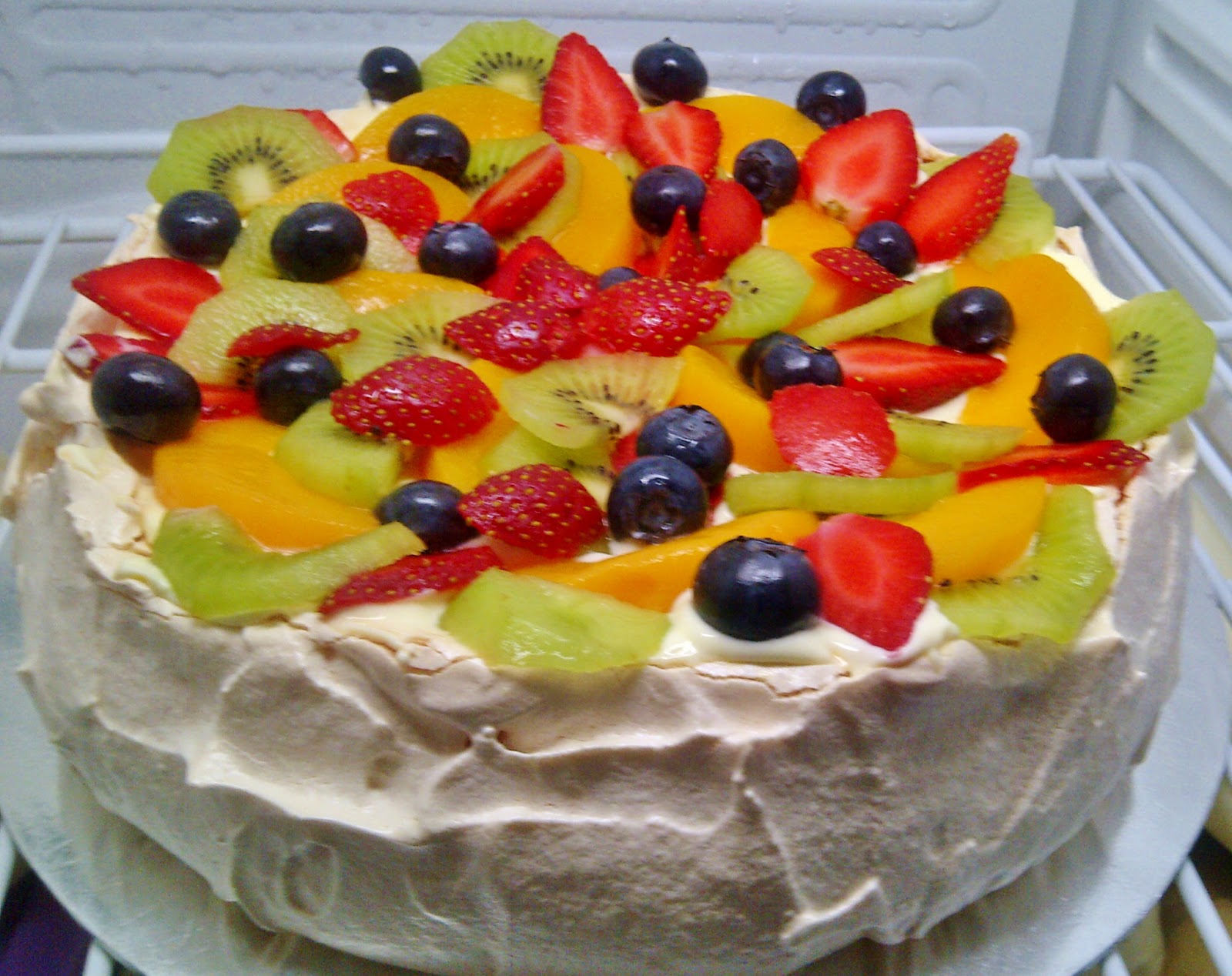
Pavlova RM90_01

Famous Namesake
On Thursday February 12, it will be the 134th birthday of the Russian prima ballerina Anna Pavlova. At a time when the rules of classical ballet were rigidly enforced, the dainty Anna performed in a graceful, romantic style, with less emphasis on precision and acrobatics. The principal artist with the Imperial Ballet and the Ballets Russes, she formed her own company and became the first ballerina to tour as an international star.

It was during one of her tours to Australia and New Zealand in the 1920s that Anna Pavlova would be honoured with the creation of an iconic Australasian dish, and in the process spark a rivalry between the two Trans-Tasman nations, who both claim it as their national dessert.

A pavlova is a meringue cake which has a crisp outer shell, and a soft marshmallow-y filling; a delectable, sweet, melt-in-your-mouth treat which is traditionally smothered in whipped cream and fresh summer fruit. Supposedly, the fragile pavlova was inspired by light-as-air Anna Pavlova, with its meringue casing designed to emulate the soft folds of her white ballet skirt.

Both New Zealand and Australia have some rather dubious stories as to how the pavlova first came to be made and named, but indefatigable research by a New Zealand food historian shows that it definitely originated in New Zealand, with a 1929 recipe being found in a New Zealand magazine. Meanwhile, it didn’t make an appearance in Australia until the early 1930s. So New Zealand gets the honours for inventing the pavlova, although it really does feel as if Australia has embraced the pavlova more heartily – it is a favourite choice to celebrate Australia Day.

I always have a pavlova for my Name Day cake: it not only reflects my name, Anna, but is perfect for a hot summery February Name Day. It’s also very appropriate, because my dad is from New Zealand and my mum born in Australia, so it symbolises the two countries coming together.

Name Information
Anna is the Latinised Greek form of the Hebrew name Hannah, meaning “favour, grace, graciousness”, sometimes translated more freely as “God has favoured me”, or “the grace of God”. The New Testament uses the Greek form Anna, in contrast to the Old Testament Hannah.

The Gospel of Luke tells of Anna the Prophetess, an old widow perhaps more than a century in age, who was very devout, and spent all her time fasting and praying. At the Presentation of Jesus in the Temple, celebrated as Candlemas in early February, she immediately recognised the infant Jesus as the redeemer, and gave thanks to God for having been allowed to see Jesus in her lifetime. Despite having a walk-on role in the Gospels, Anna is recognised as a saint.

According to Christian legend, the mother of the Virgin Mary was also named Anna (or Hannah), but she is usually referred to as Saint Anne in order to avoid confusion with Anna the Prophetess. The use of the name Anna was inspired by Saint Anne rather than the aged prophetess.

In classical mythology, Anna was the sister of Dido, Queen of Carthage; she appears in Virgil’s Aeneid. According to the poet Ovid, this Anna was the same being as the Roman goddess Anna Perenna, whose name refers to the “circle of the year” (per annum, in Latin). Her feast day marked the first full moon of the year, and people offered sacrifices so that the year should be successful.

Ovid relates that Anna escaped from Carthage to Italy, where she accidentally drowned and became a river nymph – he translated her name as meaning “perennial stream” (amnis perennis). Ovid says that the goddess was a tiny old woman who baked cakes, and that crude jokes and songs were sung at her festivals. She may have been a mother goddess, and originally Etruscan – if so, her name might be from the Etruscan nanas, meaning “to bear, to beget (a child)”.

Another mythological Anna is the half-sister of King Arthur, usually referred to as Morgause; in many stories she bears Arthur a son, to his downfall. Morgause seems to be a title, meaning “of the Orkneys”, so Anna would have been her personal name.

It may be that she is based on the Irish goddess Anu, sometimes called Ana or Annan. One possibility is that Anu is another name for the mother goddess Danu/Dana, while the war goddess the Morrigan was sometimes called Anand. The British had a winter storm goddess that they referred to as Gentle Annie or Annis, apparently from terror of her hideous powers (this is another link with the name Agnes in Britain). The name is speculated to come from the ancient Celtic anon, meaning “deity, spirit”.

While we’re looking at the name Anna in different cultures, it is worth mentioning that it is also a man’s name, because Anna (or Onna) was an Anglo-Saxon king. One theory is that his name was a nickname for Ethelmund, meaning “noble protection”, or one of the other Ethel- names. Don’t ask me how Anna is short for Ethelmund!

The name Anna has been in common use in the west since the Middle Ages, and has historically been more popular in Eastern Europe and Scandinavia, where it was used by the nobility. It was traditional in the Russian royal family, and the 18th century Empress Anna of Russia was a nasty piece of work. Apart from Anna Pavlova, another famous Russian Anna is the beautiful Anna Karenina, title character of the tragic novel by Leo Tolstoy, considered one of the greatest works of fiction ever written.

Anna is a classic name which has never left the charts. It was #208 in the 1900s, and sunk to its lowest level in the 1920s at #353. After that, it began climbing and joined the Top 100 in the 1950s at #89. The rise into popularity may have been influenced by the 1948 film version of Anna Karenina, starring Vivien Leigh, and helped along by the 1956 film The King and I, with Deborah Kerr in the role of Anna. These movies probably helped give Anna a touch of exoticism.

The King and I was based on the Broadway musical of the same name, in turn based on the book Anna and the King of Siam by Margaret Landon, from the memoirs of Anna Leonowens about her experiences as a royal teacher in Bangkok in the 1860s (Anna Leonowens lived for a few years in Western Australia). Anna and the King was made into a TV show in 1972, and although it flopped in the US, had a decent lifespan on Australian television as re-runs, giving the name Anna a fair amount of exposure during the 1970s.

Anna peaked at the start of the 1980s at #34, then gradually sank into the bottom half of the Top 100. It has not shown any signs of serious decline, but remained relatively stable. In 2013, Anna was #64 nationally, #60 in New South Wales, #81 in Victoria, #87 in Queensland, where it rejoined the Top 100 and was one of its fastest-rising names, #47 in Western Australia, and #71 in the Australian Capital Territory. Preliminary results for 2014 suggest Anna may have improved its position, and is one of Victoria’s fastest-rising names of last year.

One of the factors helping the name along must surely be Princess Anna from the 2013 hit Disney film Frozen, the younger sister of “snow queen” Elsa. Anna is an attractive heroine who is brave and hopeful, with a strong, loving heart. I know many little girls – and even some not so little ones – who adore Anna for being sweet and genuine, with an endearing awkwardness. I wonder how many baby Annas have had their name suggested by an older sister?

Anna is still popular and stable after many decades, and even shows signs of a recent boost. It is a popular name all over the world, but tends to be most popular in central and Eastern Europe, and is the #1 name in Austria. Last year blog readers voted Anna their favourite internationally recognisable girls’ name.

I have found Anna a very easy name to wear. It’s a common name never out of use, but has never been highly popular, so I don’t actually know many people with my name, although everyone has heard of it. Nobody has had any problems spelling it (I learned to write my name as a toddler in about a minute!), and everyone can pronounce it to my satisfaction, even those who don’t speak English. The biggest issue is that it sounds similar to other names, such as Hannah and Emma, which can cause a slight hold-up over the phone.

I can’t pretend that Anna is a very exciting name, but for such a short and simple one, I don’t think it is completely boring either. It’s a palindrome, which tickled me as a child, and it has quite an interesting history – it fascinates me that so many Annas from legend have been elderly women, sometimes with quite a dark side! Its “foreignness” made it popular in the mid twentieth century, and even now I think it has a slight touch of European exoticism: Disney chose it for a Scandinavian princess, after all.

POLL RESULT
Anna received a frankly unbelievable approval rating of 100%, making it the highest-rated girls name in the Waltzing With … category, the highest-rated girls name overall, and the highest-rated overall name of 2015. 46% of people loved the name Anna, and nobody disliked or hated it. I have trouble accepting that I have the perfect name, and can’t help thinking that everyone was too polite to say they didn’t like it!

(Picture shows a pavlova; photo from Just LilDaisy)

Famous Name: Richard

21 Wednesday Jan 2015

Posted by A.O. in Famous Names

≈ 3 Comments

Tags

aristocratic names, classic names, European name popularity, famous namesakes, fictional namesakes, germanic names, medieval nicknames, name history, name meaning, name popularity, nicknames, royal names, saints names, Shakespearean names, surnames, UK name popularity, US name popularity

450245-1b3cb7a2-9613-11e4-9bd9-740a91fb6db7

Famous Namesake
I seem to end up doing names connected with cricket every January, and this year my choice was inspired by seeing The Richies in the stands on Day 2 of the Sydney test against India early in the month – otherwise known as known as Richie Day, which takes place the day before Jane McGrath Day.

The Richies are a group of cricket enthusiasts who dress up as iconic cricket commentator Richard “Richie” Benaud, complete with trademark silver hair, cream jacket, sunglasses, and oversized Channel Nine microphone (it is law that a Richie can only speak on Richie Day if they talk into their microphone).

The Richies were founded in 2010 by Michael Hennessy as a homage to Richie Benaud, who had just announced his retirement from full-time commentating. The first year there were ten Richies, this year there were 350; next year they hope to fill a whole bay, which means 680 Richies.

The group were inspired by comedian Billy Birmingham, who has gained fame for his cricket parodies under the name The Twelfth Man, where he often impersonated Richie Benaud’s distinctive voice. This year Billy Birmingham put The Richies through their paces, and revealed his own sons had dressed as Richie Benaud for the 2013 Test.

As for Richie Benaud himself? He wasn’t just a much-loved commentator, but a great all-rounder who debuted in the 1950s, and was captain for 28 tests between 1958 and 1962 without losing a series. He was the first player to complete the test double of 200 wickets and 2000 runs, and has been inducted into the Australian Cricket Hall of Fame and the ICC Cricket Hall of Fame.

Now 84 and battling skin cancer, Richie Benaud will appear with Billy Birmingham in advertisements for Australia Day this year – but don’t expect Richie to fully endorse his comedy double.

Name Information
Richard is a Germanic name which comes from ric (“power, rule”) and hard (“brave, hardy”), usually translated as “brave ruler”. It was introduced to Britain by the Normans, and has become one of the stock of standard English names, while also well known in other European countries.

Richard has been commonly used by English royalty and aristocracy. One of the best known is Richard I, known as Richard the Lionheart. Said to be tall, elegant, and extremely handsome with red-gold hair, he had a reputation as a great military leader, and remains an enduring figure of romance.

The last English king with the name was Richard III, whose reputation was so tarnished after his death that the name has never been used for a British monarch since (the child who would have been Richard IV was one of the “princes in the Tower” who disappeared in a sinister way, which didn’t help its fortunes as a royal name).

Richard III is infamous from Shakespeare’s play of the same name, where he is portrayed as a deformed, murderous, power-hungry villain. Recently, Richard III has been back in the news after his skeleton was dug up in a Leicester car park, with signs of many injuries from his death at the Battle of Bosworth Fields. Although the skeleton did have scoliosis, so that one shoulder would have been higher than the other, facial reconstruction shows him as looking young and quite pleasant rather than a hideous monster, and modern historians have been kinder towards him.

There are a number of British saints named Richard, including Saint Richard of Chichester, the patron saint of Sussex. There is a Saxon saint named Saint Richard the Pilgrim, but details of his life are sketchy, and Richard doesn’t seem to have been his real name. There are also several Saint Richards who were martyred for their faith in the 16th century.

Because the name has remained in common use for so many years, it is easy to think of famous men named Richard. You might think of composers Richard Strauss and Richard Wagner, singers “Little Richard” (Richard Penniman) and Richard Ashcroft, Beatles drummer Richard Starkey “Ringo Starr”, comedians Richard Pryor and Rich Hall, actors Richard Burton, Richard Attenborough, Richard Gere, Richard Harris, Richard E. Grant, Richard Wilson, and Richard Dean Anderson, presenter Richard Hammond, scientist Richard Dawkins, charismatic entrepreneur Richard Branson, and disgraced former US President Richard Nixon, who was named after Richard the Lionheart.

Richard is a classic name which has never left the charts. It was #26 in the 1900s, and reached its peak in the 1940s at #15. It didn’t leave the Top 100 until the early 2000s, and has gently declined so it is now around the mid-200s. Despite being at its lowest point so far, the name is still in reasonable use and relatively stable. Its popularity is about the same in the UK, and in the US is around the mid 100s. Richard is most popular in the Czech Republic.

Richard has many nicknames, but one thing not helpful to the name is that most of them seem rather dated. Dick, once so common that we could say every Tom, Dick and Harry to mean “every man”, is now frowned upon as an embarrassment, while Dicky reminds older people of “Tricky Dicky” Nixon. Rick and Ricky both peaked in the 1960s, and while I quite like Rich, Richie and Ritchie, Richie Rich, Richie Cunningham, and Ritchie Valens might give them a 1950-ish feel.

You can find medieval short forms of Richard through the English surnames they have inspired. Hick and Hitch led to Hitchens, Higg to Higgins, while Ditch led to Deek and Deex. Dickon was King Richard III’s nickname – also a character in The Secret Garden. Dickon was transformed into names such as Diggin and Diggle, which are quite a lot like fashionable Digby, and make Digger or Digs seem like reasonable vintage-style short forms of Richard. Dix is also a possibility, in line with names such as Max.

With Richard, you get a solid classic name that has never been out of the 200s; a name good enough for kings and saints and celebrities, as well as all manner of ordinary men. It’s a name which matures well, and looks professional on a CV. In fact, as Richie Benaud would say, you might think this name is perfectly “marvellous”!

POLL RESULTS
Richard received an approval rating of 44%. 22% of people were really bothered by the possibility of Dick being given as the nickname for Richard, while 19% saw the name as dated and old-fashioned. However, 14% thought Richard was a name with a solid meaning and history behind it. 3% disagreed with the majority, and thought it was silly and immature to believe there was anything wrong with the nickname Dick.

The 2014 Matilda Awards

18 Sunday Jan 2015

Posted by A.O. in Blog News

≈ 2 Comments

Tags

aristocratic names, Biblical names, celebrity baby names, classic names, english names, famous namesakes, flower names, gemstone names, Greek names, hebrew names, historical records, middle names, name combinations, nature names, Old French names, patriotic names, plant names, popular names, rare names, retro names, royal names, Scottish names, sibsets, surname names, twin sets, underused classics, virtue names

165256

Welcome to the second annual Matilda Awards, a quest to discover which names featured on the blog in 2014 gained the greatest approval from the public.

Waltzing With … Category

The most popular names featured in the Waltzing With … category were CONSTANCE for girls, which scored an approval rating of 85% and FORREST for boys, which was rated 78%.

Constance is an Old French name dating to medieval times, traditional amongst aristocracy and royalty, but also valued as a virtue name. It hasn’t charted since the 1990s, and hasn’t been popular since the 1920s. The name Constance was chosen to honour courageous World War I nurse, Sister Constance Keys.

Forrest is an English surname with strong Scottish associations, in use as a first name since at least the 16th century, and possibly even earlier. It has never charted, but is found fairly often in Australian historical records. The name Forrest was chosen for the wealthy Forrest family, prominent in conservative politics.

Once again, the key to winning this category, which has a very simple voting system, is for people to have a high level of tolerance for the name. Both Constance and Forrest were names which hardly anybody had animosity towards, and most people thought were perfectly fine.

Famous Name Category

The most popular names featured in the Famous Name Category were HOPE and OPAL for girls, which both scored an approval rating of 86% and SAMUEL for boys, which scored 88% and was the top-rated name overall for the year.

Hope is a virtue name which is an underused classic; almost constantly on the charts, it has never become popular. Hope was praised as a simple and elegant classic which was both pretty and wholesome, and had a very positive meaning. The name was chosen to commemorate the centenary of the start of World War I.

Opal is a gemstone name with a patriotic meaning – the opal is Australia’s national gem, and the black opal is the state gem for New South Wales. A name most used during the Victoria era, it has never charted, but is often found in Australian records, especially in opal mining regions. Opal gained approval as an unusual and refreshing choice which was both pretty and simple, and hip and quirky. The name was chosen for the roll-out of the Opal public transport card in Sydney.

It’s interesting that Hope and Opal tied for first place, as they are quite similar – both short, simple English names with a strong OPE sound to them.

Samuel is a Hebrew name from the Bible; in the Old Testament, Samuel was a prophet and judge of Israel who brought peace to the land. Samuel is a classic name which has never been out of the Top 200, and is very popular, with a stable position for twenty years. Samuel was seen as a handsome classic which was both strong and gentle; a “nice guy” name which aged well and suited a variety of people. The name was chosen for the actor Samuel Johnson, who broke the world unicycling record to raise funds for breast cancer research; coincidentally, Samuel did this feat for his sister, who is named Constance, another favourite name.

Name Themes and Lists Category

The most popular names which were featured in the Names Themes and Lists Category were VIOLET and THEODORE. Violet won very convincingly, and also managed to win its original poll, while Theodore had a comfortable win.

Violet is a retro flower name first used in Scotland. Popular in the 1900s, it left the charts from the 1960s to the 2000s, but is now back with a bang, and zooming up the Top 100. The name was chosen for a spring-time list of native Australian flowers.

Theodore is a Greek name common in ancient times, which gained popularity amongst early Christians. An underused classic, Theodore has been rising steeply for decades, and seems likely to join the Top 100 soon. Theodore was chosen from the Australian children’s book Antonio S and the Mystery of Theodore Guzman by Odo Hirsch, part of a list for Book Week.

Celebrity Baby Names

The most popular celebrity baby girl name was CLEMENTINE FRANCES LOGAN, which proved a clear favourite right from the start. Clementine is the daughter of Peter and Hannah Logan, and this is proof you do not need to be an A-lister to have a great baby name, because the Logans are local celebrities from the Mudgee area, who run a successful wine company. Tess Clementine was the favourite baby name in 2013, and it looks as if blog-readers are Clementine-crazy.

The most popular celebrity baby boy name was EVANDER MAXWELL GLEAVE, who managed to win by a single vote in an extremely tight contest, as many boys’ names were nominated this year. Evander is the son of Australian model and Miss Australia winner Erin McNaught, and British rapper Example (Elliot Gleave).

Clementine and Evander both have elegance and substance, with classical roots, and a European vibe, being fairly popular in France, while uncommon here. The middle names are solid classics which aren’t popular as first names. Celebrities, take note!

There was no favourite amongst the celebrity twins, as none of them received enough approval to be eligible. Yes, this is a tough audience.

Names from the Birth Announcements

The most popular names for multiples were boy/girl twins FLORENCE AND HENRY, who proved solid performers. This handsome twin set from March was nominated by Madelyn.

In the girls section, ARABELLA HERMIONE ROSE scraped through by one vote. Elegant and a little off-beat, this pretty girl’s name from April was nominated by Sophia.

Amongst the boys, HUGO FREDERICK had a very comfortable win. This stylish boy’s name from early November was nominated by Nana Patricia.

The sibsets were dominated by LILY, WINTER, BEAU AND VIOLET, who absolutely destroyed all opposition. Note that Violet had a second victory. These four siblings, whose names have a simple, natural feel, were nominated in late November by both Nicole and Names For Real (Sarah from For Real Baby Names).

Some themes were clear this year: Scottish names did very well, as Forrest, Violet, Clementine Logan and Arabella all have links with Scotland. It did not win independence, but the land of loch and legend clearly won our hearts. Nature names and virtue names were also clear favourites – a positive meaning seems to be a real help.

Waltzing With … Constance

09 Sunday Nov 2014

Posted by A.O. in Waltzing with ...

≈ 3 Comments

Tags

aristocratic names, famous namesakes, fictional namesakes, French name popularity, Latin names, name history, name meaning, name popularity, nicknames, Old French names, Puritan names, rare names, Roman names, royal names, Shakespearean names, UK name popularity, US name popularity, virtue names

9-2508527-bun230914key1c_fct667x500x4.0x98.0_t620

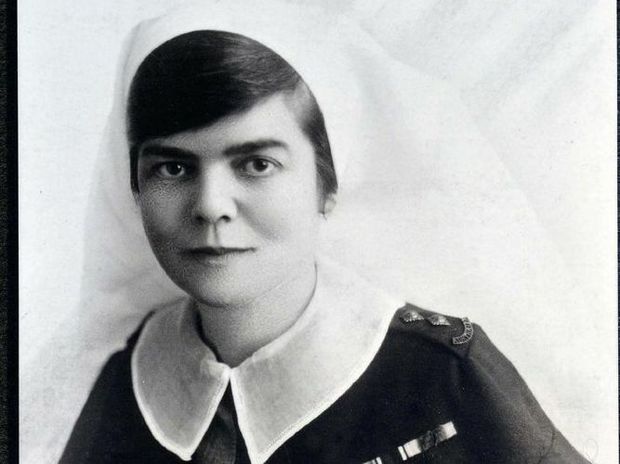
This Tuesday is Remembrance Day, so today we will remember a World War I heroine. The Australian nurses who served in World War I have not always received the full recognition they deserve, but the award-winning television miniseries Anzac Girls, based on their stories, has brought these “other Anzacs” attention this year.

More than 5000 Australian nurses served during World War I, many of them in the sort of unofficial capacity that meant they are barely remembered today. They worked under gruelling conditions, underpaid, under-resourced, and often forced to improvise. They shared many of the soldiers’ hardships, including illness, physical danger, and psychological trauma.

Nurses were a vital part of the war effort, taking care of wounded soldiers, and offering comfort and cheer, giving them the courage to go back to the battlefield. No matter what horrors they saw, nurses had to remain cheerful, because the men depended on them. Many nurses became friends with their patients, meaning that losing one in battle brought deeper emotional strain. The Allied soldiers often commented that Australian nurses were amongst the kindest and most caring, and their professional standards were high.

Sister Constance Keys has been on the blog twice before – she was amongst a group of nurses whose photo was used for Girls Names from the 1910s, and a quote from one of her letters was used for the entry on Gallipoli. Constance Keys was a Brisbane nurse who enlisted in the Australian Army Nursing Service in 1914, serving in Egypt, England, France, and Belgium.

Constance treated casualties from Gallipoli, and for most of 1918 was right near the front line in northern France, where her nursing station was heavily bombed more than once. Conditions were wet and cold, greatly increasing the suffering of her patients, and making movement difficult. She and her staff treated those who had been gassed, coped with influenza outbreaks, and had many casualties who suffered from exhaustion as well as wounds.

Sister Keys was discharged from the AIF in 1920 as one of the most highly decorated nurses in the AANS. Twice mentioned in dispatches for bravery, she received the Royal Red Cross, first and second class, and was awarded the Médaille des Epidémies in recognition of her work for French refugees. After the war, she became a hospital matron, and married a Gallipoli veteran; during World War II she trained Red Cross volunteers and entertained soldiers.

After her death, her wartime diaries and letters came to light, as well as her autograph book, in which she managed to get the signature of King George V. They give a clear picture of a young woman who was not only courageous and compassionate, but determined to remain in good spirits.

Under fire, Constance was “only afraid of being afraid”, and in the English fogs, “apart from the constant feeling of loss, quite well”. She writes of her little troubles, such as not having enough food, her hair falling out, and being a “bushwhacker” in regard to fashion, all in bright and amusing terms. She was a caring nurse who wrote letters and postcards to soldiers with no mail, felt guilty that she could only afford to shout ten men to lemonade and not everyone, and took time to make mud pies with a “little French kid”.

Connie also enjoyed those moments of pleasure and fun that came her way, such as buying a lovely pair of buttoned boots in England, seeing exquisite Oriental artefacts in Cairo shop windows, a mess room in Belgium with a sweet-toned piano for her to play, going on leave in Cannes to wake up to eucalypts and wattles outside her window. But she always remained a Queensland girl who had forgotten the taste of mango, and longed for a slice of passionfruit cake.

Constance is the medieval Old French form of the Roman name Constantia, the feminine form of Constantius, derived from the name Constans. This Latin name means “constant, steadfast”, referring to someone steady and faithful in their purpose or feelings. It is the basis for the English word constancy.

Traditional amongst European royalty and nobility, this name literally came over with the Conqueror, because Constance was one of the children of William I, said to have been the most gifted of his daughters. Princess Constance was her mother’s favourite child, so she wasn’t offered in marriage until she was positively ancient by medieval standards – in her mid to late twenties. She married a duke of Brittany, but died not long afterwards, reputedly poisoned by her servants.

Constance has often been used by the British aristocracy. One example is Lady Constance Bulwer-Lytton, a suffragette who went by the alias Jane Warton so she wouldn’t receive special treatment. A vegetarian, campaigner for birth control, prison reformist, and supporter of Morris dancing, she never married, as her mother would not allow her to marry a man from a lower social class. She died from a heart attack and series of strokes in her fifties; it is thought from the force-feedings she endured while hunger-striking in prison.

Other upper-class Constances include the pacifist writer Lady Constance Malleson, who performed as an actress under the name Colette O’Niel, Lady Constance Gaskell, Lady in Waiting to Princess Marina, and (Constance) Gwladys Robinson, Marchioness of Ripon, a patron of the arts and friend of celebrities such as Oscar Wilde and Nellie Melba. This reminds me that Oscar Wilde’s wife was named Constance too.

Constance is a favourite choice for aristocrats in English fiction, such as P.G. Wodehouse’s imposing Lady Constance Keeble, and Lady Constance Chatterley who forms a close connection with her husband’s gamekeeper in D.H. Lawrence’s Lady Chatterley’s Lover. It is also a Shakespearean name, because the historical character Constance, Duchess of Brittany, who married a son of Henry II, appears in King John.

But Constance was not just a name for dames, duchesses, and dowagers. Being a virtue name, it was appreciated by the Puritans, and Constance Hopkins was a teenaged girl who sailed on the Mayflower as a pilgrim: she was a sister of the baby boy Oceanus who was born on the voyage, and often mentioned in name blogs. Constance married and had twelve children, who provided her with seventy four grand-children; she has many living descendents. So the name Constance has plenty of history in America too.

Constance left the US Top 1000 in 2000, is still falling, and last year there were 103 baby girls named Constance – the same number as those called Arwen. It is much more popular in the UK, where Constance is #267 and stable. Constance is most popular in France, where it is just outside the Top 100 and rising.

In Australia, Constance was #83 in the 1900s, and peaked in the 1920s at #76, before leaving the Top 100 in the 1930s. It dropped off the charts in the 1960s, and made a minor come-back in the 1990s at #751. I rarely see a baby named Constance, but it does get a bit of use as a middle name, where it makes a wonderful alternative to the popular Grace.

Constance is a beautiful, elegant traditional name; a strong, brave name for a woman, yet also modest and sensible. It’s in rare use now, but that may be a drawcard for those parents wanting a familiar name that isn’t common. The nickname Connie sounds dated, which probably helps explain its lack of popularity, but you could use something more modern, like Coco or Tansy. However, Constance doesn’t need a nickname in my opinion – it’s lovely all on its own.

POLL RESULT
Constance received an outstanding approval rating of 88%, making it the highest-rated of the featured names of the “Waltzing” category in 2014. 34% of people liked the name Constance, while 30% didn’t mind it. Only 1% (1 person) hated the name the Constance.

(Photo of Sister Constance “Connie” Keys from the Bundaberg News Mail)

Waltzing With … Lucius

05 Sunday Oct 2014

Posted by A.O. in Waltzing with ...

≈ 3 Comments

Tags

aristocratic names, Arthurian names, Biblical names, Etruscan names, famous namesakes, fictional namesakes, Harry Potter names, imperial names, Latin names, name history, name meaning, name popularity, papal names, rare names, Roman names, royal names, royal titles, saints names, Shakespearean names, UK name popularity, US name popularity

y_Daybreak

Today is the start of Daylight Saving Time in New South Wales, Victoria, South Australia, Tasmania, and the Australian Capital Territory. Clocks went forward at 2 am this morning, so if you forgot, you are now an hour behind.

Because daylight saving becomes more pointless the closer you are to the equator, states which have tropical regions do not have daylight saving, and this means Queensland, Western Australia, and the Northern Territory. For everyone else, it’s a reminder we are moving towards summer and increasing hours of daylight, so it seems the perfect opportunity to look at a name connected with light.

Lucius was the most common name in ancient Rome times across all classes; it is usually said to be derived from the Latin word lux, meaning “light”. One theory is that it was given to children who were born at dawn, but the sheer number of people called Lucius makes this untenable. Another theory connects it to loukus, which originally meant “bright, shining”, although by the classical period it had come to mean “a cleared grove”.

Lucius is the name ascribed to an early Roman king, but it is probably a misunderstanding of Lucumo, the Etruscan word for “king”, which would be his title; the name Lucius was traditional in his family, suggesting another origin for the name. The Roman dictator Sulla, who served as an inspiration for Julius Caesar, was named Lucius Cornelius Sulla Felix. There were at least two Roman Emperors named Lucius: Lucius Dominitius Aurelianus (called Aurelian), and Lucius Aurelius Commodus (called Commodus).

Commodus was the son of the emperor Marcus Aurelius, and grandson of an emperor: he was the first emperor to be “born in the purple” (during his father’s reign). He is probably best known to us as the wicked emperor in the movie Gladiator, killed by Russell Crowe in the role of Maximus: although a fictional story, the real Commodus was eccentric and cruel, and assassinated by his wrestling partner, Narcissus.

The name Lucius was a favourite choice amongst early Christians because of the meaning of “light”, and there are several saints with the name. Saint Lucius of Cyrene is mentioned in the New Testament as a founder of the church in Antioch. There have been three popes named Lucius, and Pope Lucius I is also a saint.

Another Saint Lucius is a legendary 2nd century King of the Britons, who tradition credits with introducing Christianity to Britain by writing to the pope asking to be converted. His story became well known after it was included in the histories of Venerable Bede, and embellished by Geoffrey of Monmouth. For centuries it was an important myth of British Christianity, and although there’s no solid evidence he existed, some feel there must be a grain of truth to the legend. The church of St Peter Under Cornhill in London claims St Lucius as its founder.

The Roman philosopher and statesman known to us as Seneca had the full name Lucius Annaeus Seneca. He wrote many of his famous works while in exile, and later became an advisor to the Emperor Nero. This didn’t end well for him, as he was (probably wrongly) implicated in a plot against Nero, and forced to commit suicide. Early Christians greatly approved of him, and virtually hailed him as a humanist saint. According to medieval legend, he was converted to Christianity by Saint Paul, and is mentioned by writers such as Dante and Chaucer.

Despite all this heavy-duty Christian background, and even a British connection, Lucius has never been a common English name. It does seem to have had some history of use in Yorkshire, which has strong ties to the legendary Saint Lucius.

The name Lucius is a traditional one in the aristocratic Cary family, who bear the title Viscount Falkland. The 2nd Viscount fought on the Royalist side in the English Civil War and was killed in action. The current Viscount Falkland is named Lucius, and so is his son (a writer who goes by his middle name, Alexander), and his grandson.

Lucius has probably been used more often in America, and there are a number of famous politicians from the United States bearing this name. It’s also known from American writer and bon vivant, Lucius Beebe, and American sci-fi author Lucius Shepard.

Lucius isn’t too unusual a name in Australian historic records. Dr William Harvey, who was featured on the blog earlier this year, had a father named Lucius who was also a doctor, and it was his father’s death from tuberculosis which led Dr Harvey into specialising in thoracic medicine. A famous Australian with the name is musician Lucius Borich, the son of Kevin Borich, who was in the band The Party Boys.

Lucius doesn’t chart in Australia. 14 baby boys were named Lucius in England/Wales last year, while in the US (where Lucius peaked at #257 in the 19th century), 125 boys were named Lucius in 2013 – the same number as those called Hollis and Zephaniah.

If there seems a lack of real life Luciuses, fiction has stepped into the breach, for they abound in books, movies, TV programs, and video games. It’s no new phenomenon, for Lucius is the narrator of The Golden Ass by African author Apuleius; written in Latin in the 1st century, this comedy is sometimes regarded as the world’s first novel. Lucius is also in Arthurian legend, a fictional Emperor of Rome who King Arthur defeats, thus becoming not just King of Britain, but Emperor over all the West.

Lucius has been used as a character name twice by William Shakespeare, in Titus Andronicus and Julius Caesar. In fact, pretty much anyone who writes a story set in Roman times will include a Lucius somewhere, as it was the #1 name.

One of the best known fictional Luciuses of contemporary times is the slippery Lucius Malfoy from the Harry Potter series. Upper crust, corrupt, bigoted, and ready to slip over to the Dark Side whenever convenient, Lucius is a dyed-in-the-wool villain and general Mr Nastypants for most of the series. Only towards the end does he receive a lukewarm redemption.

His name, although suitably aristocratic, brings to mind Lucius from The Golden Ass, which is a book about witchcraft and magic – not to mention someone (literally) making an ass of themselves. However, just as Malfoy’s son’s name, Draco, means “serpent” and reminds us of the Devil, Lucius’ name is reminiscent of Lucifer, a name related to Lucius, meaning “light-bringer”, and which is often understood by Christianity as Satan’s name before his fall.

Unfortunately, some people think Lucius and Lucifer sound too similar for comfort. Stories that make the connection don’t help, such as the video game Lucius, Son of Lucifer, or the horror novel The Haunting of Sister Mary Francis, which has a character named Lucius Lucifer. On the plus side, that gives Lucius a bit of a “bad boy” edge.

An alternative is Lucian, which is derived from Lucius. Lucian is more popular in Australia than Lucius, being around the 500s, and fits in with the trend for boy’s names ending in N – Lucian almost seems like a fancier version of Lachlan.

Lucius can be pronounced either LOO-see-us, or LOO-shus. The ancient Romans said it more like LOO-ki-us, which perhaps suggests the three syllable pronunciation is more “correct”. Obvious nicknames are Lucky, Luke, Luc, Luca, Luce, Loosh, Lou, and Louie. I have seen a baby Lucius nicknamed Luci or Lucy by his family, which startled me, even though it makes perfect sense.

Handsome, intelligent, and with a rather upper-class image, Lucius does have a few issues, but seems like a name that someone could really fall in love with. It’s quite seductive – even luscious! I’ve noticed this name is often favoured by dads, suggesting that many guys appreciate the richness and power that stand behind it.

This is a rare boy’s name that is perfectly balanced between elegance and strength, brightness and darkness, history and magic, with lashings of Ancient Roman street cred and a bit of sex appeal to boot. Lucius could well be the name that lights up your life.

POLL RESULT
Lucius received a very good approval rating of 77%. 37% of people loved the name Lucius, while 25% of people didn’t mind it. Only around 5% of people hated the name.

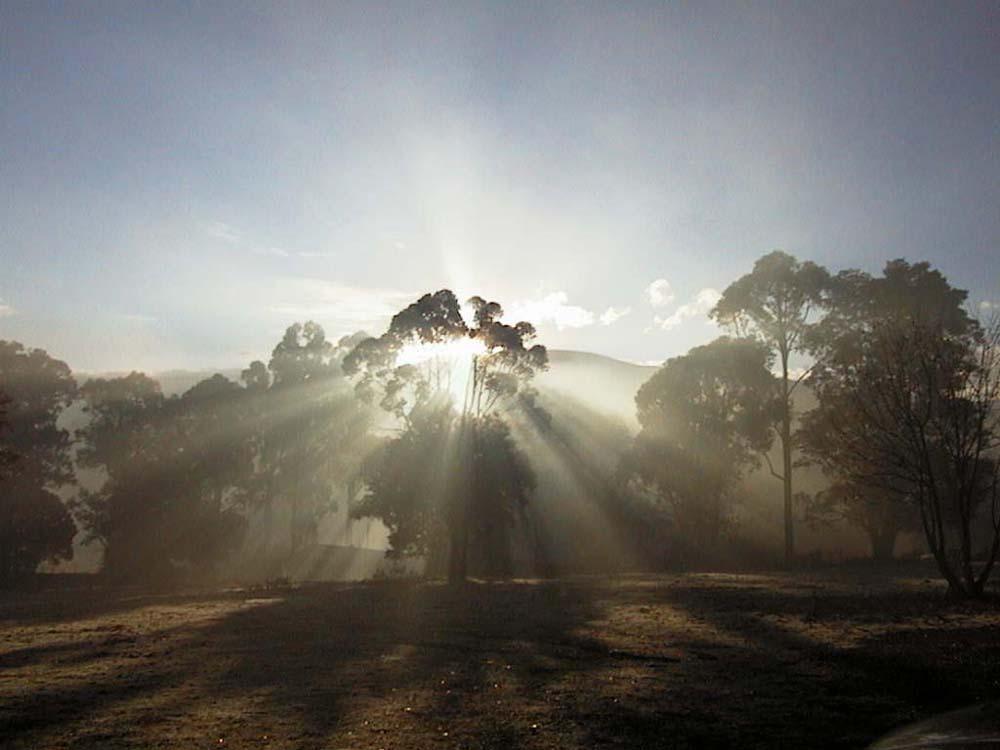
(Photo shows daybreak at Delderfield, Marysville, in country Victoria)


Diminutive Names for Girls – 2

21 Sunday Sep 2014

Posted by A.O. in Name Themes and Lists

≈ 6 Comments

Tags

aristocratic names, celebrity baby names, famous namesakes, fictional namesakes, French names, Greek names, international name trends, Italian names, mythological names, name history, name meaning, name popularity, name trends, names from movies, names from television, names of mascots, popular names, retro names, royal names, saints names, Spanish names, unisex names

907393-underbelly-razor

It’s been more than a year since we had a list of short form names, and as this is a huge growth area, it’s time for another.

Ada
Short form of Adelaide and related names. It has been an independent name since the Middle Ages, and was used by royalty and the nobility; an example is the Ada who was reputedly the sister of Charlemagne. There is also a 7th century St Ada, who was a French nun and abbess. Ada was especially popular during the 19th century, and a famous namesake from this era is (Augusta) Ada King, Countess of Lovelace, a daughter of Lord Byron and his only child born in wedlock – nearly always known as Ada Lovelace. Ada was a gifted mathematician who produced an algorithm designed to be used by a machine; in effect, the first computer program. A famous contemporary example is Australian actress Ada Nicomedou. Ada was #40 in the 1900s, and left the Top 100 in the 1920s; it was off the charts by the 1950s. Ada made a comeback in the 1990s at #845, and is currently around the 300s. Fitting in perfectly with the trend for short simple names like Ava, and for traditional old-fashioned names like Elsie, this is a hip retro short form that not too many people are using.

Bella
Short form of Isabella, and other names ending in -bella, such as Annabella or Arabella. However, many people connect it to the Italian word for “beautiful”, and understand it that way. Bella has been an independent name since the Middle Ages, and has had particular use by Jewish families from Russia and Central Europe – two examples are American feminist Bella Abzug, and writer Bella Rosenfeld, the wife of Russian-French artist Marc Chagall. A famous Australian namesake is actress Bella Heathcote, best known for her role on Neighbours a few years ago. Bella first joined the charts in the 1990s at #541, rising on the heels of Isabella, which began its impressive ascent in the 1980s. Bella entered the Top 100 in 2002, debuting at #99; it peaked in 2010 at #41, and is currently #48 nationally. Like Isabella, Bella’s success is often attributed to the Twilight series, although as you can see, it was rising and even popular before the first novel was released in 2005. Stephenie Meyer’s Bella Swan (an irritating character name because it describes the story’s outcome) probably did help though, if only by increasing visibility.

Demi
Short form of the Greek name Demetria, the feminine form of Demetrius, which is derived from the name of the agricultural goddess Demeter. The goddess’ name is often translated as “earth mother” or “barley mother”. Demi is also sometimes connected with the French word demi, meaning “half”, to suggest “small” (as in half-pint). This name has a big dose of star power, thanks to Hollywood actress Demi Moore, and from a generation younger, pop singer and actress Demteria “Demi” Lovato. The name is usually pronounced duh-MEE, but English-speakers sometimes prefer it to be said to rhyme with Emmie. Demi is around the 500s in Australia, and is rising in the US, but falling in the UK, so international trends are at odds on this one.

Ellie
Short form of any name starting with El-, such as Eleanor, Ellen, Elizabeth, or Eloise, and long used as an independent name. It is well known from British pop singer Elena “Ellie” Goulding, and a favourite in the world of fiction. Fictional namesakes include the dainty little girl in The Water Babies, Ellie Linton, heroine of John Marsden’s Tomorrow When the War Began, Eleanor “Ellie” Arroway, brainy heroine of Carl Sagan’s Contact, adventurous Ellie Frederickson from Up, the woolly mammoth from the Ice Age series, and strong matriarch Eleanor “Miss Ellie” Ewing, from Dallas. Ellie joined the charts in the 1980s at #349, and was in the Top 100 as early as 1993, at #98. It managed to get in again a decade later in 2003, at #72, and has remained fairly stable in the bottom half of the Top 100 ever since. Currently it is #56. Ellie fits in perfectly with popular names like Ella, and is well-used without being overly common or rising alarmingly.

Frankie
Unisex nickname that in the case of boys is a pet form of Francis, Francesco, Francisco, Frank, or Franklin, and in the case of girls, of Frances, Francesca, Francisca, or Francine. Famous male Frankies include American crooner Frankie Valli, British comedian Frankie Howerd, American actor Frankie Muniz, who played the title role in Malcolm in the Middle, and Australian kick-boxer Frankie Georgi. A famous female Frankie is British pop singer Frankie Sandford, and the name has been chosen for their daughters by several celebrities, including Drew Barrymore, and in Australia by rugby league star Johnathan Thurston, weather presenter Sara Cumming, and news presenter Rebecca Morse. In the US, Frankie only charts for boys, while in the UK, it charts for both sexes, but is only popular as a boy’s name. In Australia, Frankie is a unisex name, and significantly more common for girls. The reason for its increasingly feminine image here is no doubt because of the hip women’s fashion magazine, frankie.

Gigi
French nickname for any name with a G sound, such as Georgine or Ghislaine. Its most famous namesake is the charming Parisian schoolgirl in Colette’s 1942 novella, Gigi, who is being trained to be a courtesan by her family. Their plans go awry when the gamine Gigi attracts a wealthy older man, and becomes his wife instead of his mistress. It has been turned into a musical and a couple of films, including the 1958 Hollywood production starring Leslie Caron as Gigi, which is surprisingly faithful to the book, except for discreetly upping Gigi’s age from twelve to around sixteen, and adding songs like Thank Heavens For Little Girls. Gigi’s name is short for Gilberte, by the way. In Italy it is a male nickname, short for Luigi. An Australian with this name is actress Gigi Edgely, who has starred in Farscape. A flirty French Lolita, Gigi is currently a hip girl’s name in the style of Coco. It was recently chosen as a celebrity baby name by swimmer Geoff Huegill.

Millie
Short for any name with a mil sound, such as Millicent, Mildred, Camilla, Emilia, or Amelia, and is also spelled Milly. You can see Millie as a vintage charmer, all bonnets and hoop skirts, but there’s also something a little Swinging Sixties about it, thanks to My Boy Lollipop, sung by Millie Small, and the 1967 film Thoroughly Modern Millie, starring Julie Andrews. It has a very Australian connection as Millie the Echidna was one of the official mascots for the Sydney Olympics (her name is short for Millenium). Millie was #196 in the 1900s, and left the charts in the 1930s. It returned in the 1990s at #501, had a definite upsurge after the 2000 Olympics, and in 2011 was only just outside the Top 100, its highest point ever gained. It fits in perfectly with popular names like Milla and Mila, and is right on trend for sprightly vintage names, so it feels as if popularity must be just around the corner for suddenly modern-again Millie.

Stevie
Unisex nickname for either the boys’ name Stephen or Steven, or the girl’s name Stephanie; these are Greek in origin, and mean “crown”. Stevie has been an independent name since the Middle Ages, and although you might think of it as very modern for girls, it’s been a female name since the 18th century. Famous male Stevies include Stevie Wonder, Stevie Ray Vaughan, and Australia’s first international pop star, Stevie Wright. A famous female one is English novelist and confessional poet Stevie Smith, whose real name was Florence, and who gained her nickname from a perceived resemblance to jockey Steve Donaghue. However, the most well known female example is singer-songwriter Stevie Nicks, and it is no doubt her popularity in the 1970s and 1980s which made Stevie seem more feminine. In Australia, Stevie can be only be found in current use as a girl’s name, and it’s around the 300s. While writing this, I realised what a musical name Stevie is – look at all those namesakes from the world of pop and rock!

Tess
Short form of Teresa or Theresa, a rather mysterious name, because the various meanings suggested for it are always Greek, but the name itself is of Spanish origin. Nobody has been able to explain this to my satisfaction. Tess has a very famous literary namesake, the beautiful, tormented title character of Thomas Hardy’s rural tragedy, Tess of the D’Urbervilles. Tess Harding is the celebrated journalist trying to cope with marriage as well as a career in rom-com classic Woman of the Year (1941), with Tess played by Katharine Hepburn in her first outing with Spencer Tracy. Another Tracy connection is the adorably-named Tess Trueheart, eventual wife of comic strip detective, Dick Tracy. Tess Mcleod is one of the sisters in Australian drama series McLeod’s Daughters, played by the popular Bridie Carter. Last year comedian Dave Hughes welcomed a daughter named Tess Clementine, voted the most popular celebrity baby name of 2013. Tess joined the charts in the 1980s at #352, and peaked in the early 2000s at #209. Simple yet strong, pert and practical, Tess is a short and stylish choice.

Tilly
Short for Matilda, this can also be spelled Tillie. Apart from being a short form of a patriotic name, Tilly has a notorious namesake in Australia. Tilly Devine was an infamous figure of the Sydney underworld between the two world wars, who became known first as a prostitute, then as a brothel madam and gang member. Her wealth was legendary – she owned real estate, luxury cars, gold and diamonds, threw lavish parties, and always travelled first class. Operating out of Woolloomooloo, Tilly was known as the “Queen of the ‘Loo”, and in the 1953 travelled to London for the coronation of Queen Elizabeth II. Tilly’s story, and her violent gang war with rival vice queen Kate Leigh, was covered in Channel Nine’s drama series, Underbelly: Razor. Tilly is around the 100s in Australia, so not rare at all, while Tillie does not chart. It is something of a puzzle as to why Millie is preferred to Milly, but Tilly preferred to Tillie. Tilly is a sweet and spunky short form in line with British name trends, with an Australian identity all its own.

Thank you to Brooke for suggesting the name Millie be featured on Waltzing More Than Matilda.

POLL RESULTS

The public’s favourite names were Ada, Tess and Millie, and their least favourite were Frankie, Stevie and Bella.

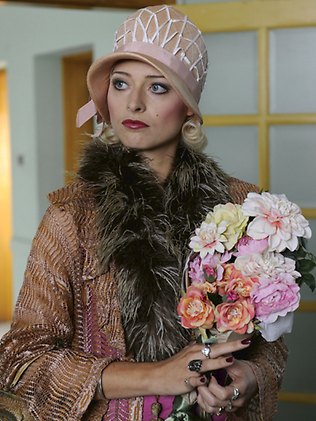
(Photo shows New Zealand actress Chelsie Preston Crayford as Tilly Devine in Underbelly: Razor)

Boys Names From Australian Children’s Literature

24 Sunday Aug 2014

Posted by A.O. in Name Themes and Lists

≈ 10 Comments

Tags

aristocratic names, aristocratic surnames, Australian slang terms, Biblical names, classic names, colour names, english names, famous namesakes, fictional namesakes, Gaelic names, German names, germanic names, Greek names, hebrew names, Irish names, Latin names, locational names, modern classics, mythological names, name history, name meaning, name popularity, names from songs, names from television, names of businesses, nature names, nicknames, Old Gaelic names, Persian names, plant names, popular names, retro names, royal names, saints names, Scottish names, surname names, tree names, underused classics, unisex names

Cyan Magenta Yellow Black

Darius
Odo Hirsch’s Darius Bell and the Glitter Pool (2009) tells the story of the Bells, a proud family fallen on hard times; plucky youngest son Darius must save the family’s estate. (Name nerd bonus info: Odo is the older form of the German name Otto). Darius is the Latin form of Dareios, the Greek form of the Persian name Dārayavahush, meaning “holding on to goodness”. This name was traditional amongst the Persian kings, and Darius I was known as Darius the Great, as he ruled over the Achaemenid Empire at the height of its power. Darius III was defeated by Alexander the Great, and there are a number of minor princes with the name. Darius is mentioned several times in the Old Testament, so it is a Biblical name as well (nobody is sure which historical Darius it means). Although rare, this name is known in Australia from NRL star Darius Boyd, while there is also a Darius in The Hunger Games trilogy. Darius is a cool-sounding name that might appeal to a broad range of people.

Felix
Terry Denton’s first picture book was Felix and Alexander (1985), about a little boy named Alexander who gets lost, and his toy dog Felix must find him. Felix is a Latin name meaning “fortunate”. It was first given as a nickname to the Roman general and statesman Lucius Cornelius Sulla, a free translation of the Greek nickname he acquired during his military campaigns – Epaphroditos, meaning “beloved of Aphrodite”. The Roman procurator Felix is mentioned in the New Testament, although not in a positive way – he imprisoned St Paul. Felix was a favourite name amongst early Christians, and there are heaps of saints named Felix, including the 7th century Felix of Burgundy, who introduced Christianity to East Anglia, and three popes. Two Australian connections are Felix the Cat, and Australia Felix, the name given to the lush farmland of western Victoria by explorer Sir Thomas Mitchell. Felix was #172 in the 1900s, and left the charts in the 1920s. It returned in the 1980s at #396 and climbed steadily; it’s been on and off the Top 100 since 2011. It’s now #86, and was one of the fastest-rising names last year. A hip retro favourite growing in recognition.

Harley
Sleepy Harley (2011), written by Karen Treanor and illustrated by Kelly Iveson, is a picture book about a cat named Harley who tries to find a place to nap in a Perth suburb. Harley is a surname which comes from a place name meaning “hare meadow” in Old English. The de Harley family were nobles whose history can be traced before the Conquest, and Sir Robert Harley, first Earl of Oxford, was from a prominent political family. One of them, William Cavendish-Bentinck, became British Prime Minister in the 18th and 19th centuries; he was the maternal great-great-great grandfather of Queen Elizabeth. The name will remind many of Harley-Davidson motorycles, giving Harley a pretty cool image. Harley was #212 in the 1900s, and went up and down before dropping off the charts in the 1950s. It returned in the 1970s at #462, and rose before peaking at #70 in 1992. It dropped again before starting to rise in the early 2000s, and is not far out of the Top 100. You could see Harley as an underused classic – in use for many years, but never very popular. I have occasionally seen Harley on girls as well.

Jude
Me and Jeshua (1984) by award-winning author Eleanor Spence is a historical novel about the childhood of Jesus of Nazareth, as seen through the eyes of his cousin Jude. Jude is a variant of the name Judas, Greek form of the Hebrew name Judah, meaning “praised”. In the New Testament, Jude is used for the Apostle whose name was Judas, to distinguish him from Judas Iscariot. Jude is also listed in the New Testament as one of the brothers of Jesus (Eleanor Spence follows a tradition they were cousins), but it is not clear if Jude the Apostle was Jesus’ brother. The Apostle Jude is usually connected with the Apostle Simon the Zealot, and according to tradition they were both martyred in Beirut. Jude is well known as the patron saint of lost causes, and this has made him one of the most venerated saints. Contemporary associations are the actor Jude Law, and the Beatles song Hey Jude. Jude can also be used as a girl’s name, short for Judith, as in the YA novel by Maureen McCarthy, Queen Kat, Carmel, and St. Jude Get a Life (1995). This attractive name has quietly been gaining in popularity, and last year joined the Top 100 in Victoria.

Leonard
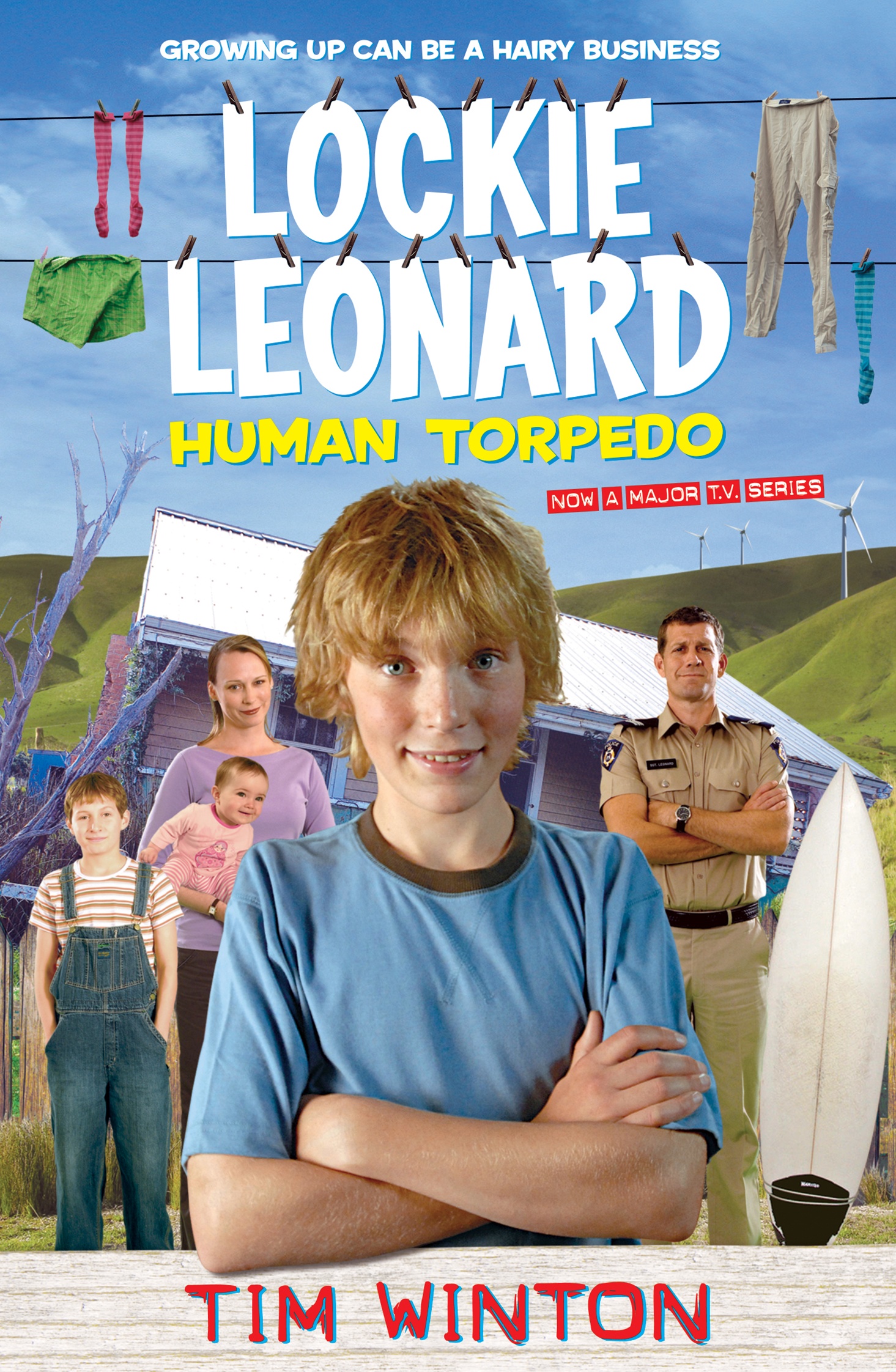
The Lockie Leonard series by Tim Winton (1990-97) stars a surf rat named Lachlan “Lockie” Leonard who moves to the Western Australian town of Angelus (based on Albany). Leonard is a Germanic name which can be translated as “brave lion” or “brave as a lion”. St Leonard is a legendary 6th century saint, a Frankish nobleman at the court of Clovis I who could liberate prisoners from their chains when invoked. The Normans brought the name to England, although it didn’t become particularly common until the 19th century. Famous Australians with the name include distinguished chemist Leonard Lindoy, and hard-hitting post-war cricketer Leonard “Jock” Livingston, also a talented rugby league footballer. Leonard has been a popular name amongst Jews in the past, including Jock Livingston: other examples are Canadian folk singer Leonard Cohen and actor Leonard Nimoy. Leonard was #39 in the 1900s, and peaked in the 1910s at #35. It didn’t leave the Top 100 until the 1960s, and remained in steady but low use until getting a little boost after The Big Bang Theory, with main character Leonard Hofstadter, began airing in the late 2000s. Clunky cool, this underused classic provides a way to get the popular nickname Lenny.

Nathaniel
In Isobelle Carmody’s YA novel The Gathering (1993), Nathaniel Delaney is a teenager who moves to a grim seaside town and finds himself locked in a battle between the forces of Light and Dark. Nathaniel is a variant of Nathanael, the Greek form of Hebrew Netan’el, meaning “God has given”, nearly always understood as “gift of God”. In the Bible, Nathaniel is usually identified with the Apostle Bartholomew; as Bartholomew means “son of Talmai”, it is taken to be Nathaniel’s surname. Nathaniel was in use as an English name by the 16th century, and became more common after the Protestant Reformation. It was used amongst the aristocracy, and also became a favourite in America, with author Nathaniel Hawthorne a notable bearer. Nathaniel was #179 in the 1900s, and left the charts the following decade. It returned in the 1970s at #296, and climbed steadily until it reached the Top 100 last year at #79, making it one of the fastest-rising names of 2013. A handsome retro name that gives the popular nickname Nate, it’s well known from Australian actor Nathaniel Buzolic, from The Vampire Diaries, and Australian singer-songwriter Nathaniel Willemse, who was on The X-Factor.

Rafferty
The Rafferty series by Joan Woodberry (1959-62) are the adventures of an English boy named Rafferty who moves to a fishing village on the Queensland coast. Rafferty is a common Irish surname, an Anglicised form of O’Raithbheartaigh, meaning “son of Rabhartach”. The Old Gaelic personal name Rabhartach means “wielder of prosperity”. The name has a particular Australian resonance, due to iconic Australian actor John “Chips” Rafferty. He was seen as the quintessential Australian, and took part in a marketing campaign convincing British people to migrate to Australia in the 1950s – this might explain the choice of Rafferty’s name in Woodberry’s books. Another Australian reference is the slang term Rafferty’s rules, meaning “no rules at all”. It gives the name Rafferty a pleasantly raffish, lawless feel. This name is around the 200s in Australia, and although it is rising in the UK, is more popular here than anywher else. I have also begun to see a few girls named Rafferty.

Rowan
The Rowan of Rin fantasy series by Emily Rodda (1993-2003) takes place in a fictional world. Rowan is the unlikely hero, considered a bit of a wimpy weakling by the sturdy villagers of Rin, but when danger strikes, his resourcefulness and courage saves the day. Rowan is a Scottish name that’s an Anglicised form of Ruadhán, a pet form of Ruadh, Gaelic for “red”, often given as a nickname to a man with red hair. You may remember that the red-headed Scottish outlaw Raibeart “Ruadh” MacGregor is known as Rob Roy by the English. Rowan can also be unisex when named after the rowan tree; its English name comes from the Germanic for “to redden”, because of the tree’s red berries, so either way the meaning has a connection with the colour. A pleasant association with the tree is that according to folklore it has the power to ward off evil. The name Rowan has charted for boys since the 1940s, debuting at #205, and climbing until it peaked in the 1980s at #164. It’s now around the 300s-400s. Rowan is an underused modern classic which alludes to a vibrant colour, and a magical tree.

Silvander
Norman Lindsay is famous for writing and illustrating The Magic Pudding (1918), a comic fantasy deservedly recognised as a classic. For some reason, his other children’s book, The Flyaway Highway (1936), is neglected, even though it’s just as funny and fantastical. I loved this story, which relates how Egbert and Muriel Jane meet a “bloke with horns and cows’ hooves” named Silvander Dan, who take them on a journey down the Flyaway Highway. As a child, I thought that the name Silvander was made up for the book (although I’m afraid I was already junior name nerd enough to know what it meant). However, I’ve since found that Silvander was a literary name in the 18th century, and in most of the sources I’ve read, characters named Silvander are untrustworthy bounders! The name is derived from Silvanus, the Roman god of woods and fields, from the Latin silva, meaning “wood, forest”. Although an extremely rare name, it is just enough like Silas and Alexander to not be completely outrageous, and has an agreeably silvery sound. For those who like Leander and Evander, here is another to consider.

Theodore
I told myself I would not choose more than one book from a single author, but was forced to make an exception for Odo Hirsch, from whose oeuvre I could happily fill two lists. Antonio S and the Mystery of Theodore Guzman (1997) is his first novel, a charming story about a boy who lives in a grand old house, and is fascinated by a reclusive actor. (Name nerd bonus info: Odo Hirsch is the pen name of Dr David Kausman). Theodore is from the Greek name Theodorus, meaning “God’s gift”. Theodorus wasn’t uncommon in ancient times; ironically one of its famous bearers was the 4th century BC philosopher Theodorus the Atheist. Because of its meaning, the name was a popular choice for early Christians, and saints named Theodore are numerous, including a 7th century Archbishop of Canterbury and two popes. Theodore was also traditional mongst the Byzantine Emperors, and the Russian Tsars. Theodore was #116 in the 1900s, and reached its lowest point in the 1970s at #383. It began rising steeply in the 1990s, and last year joined the Queensland Top 100 at #79, making it one of the state’s highest-rising names. A sophisticated classic name which comes with cool short forms Theo and Ted, I’d call this underused except I’m not sure how long it will stay that way.

POLL RESULTS
The public’s favourite names were Theodore, Jude and Felix, and their least favourite were Leonard, Darius and Harley.

(Picture shows cover of Lockie Leonard – Human Torpedo by Tim Winton)

Waltzing with … Archibald

27 Sunday Jul 2014

Posted by A.O. in Waltzing with ...

≈ 11 Comments

Tags

adult name changes, aristocratic names, famous namesakes, Gaelic names, germanic names, honouring, name popularity, name trends, names of awards, nicknames, retro names, Scottish names

resize

The Commonwealth Games opened in Glasgow on July 23, so the blog is featuring a few Scottish names; today it’s Archibald. Everyone is talking about the cute Scottish terriers in tartan coats who stole the show at the Commonwealth Games Opening Ceremony, each one of them leading in a national team. I think it was a moment where we all went Awwwww ….

The Scottie dogs were perhaps the only ones whose outfits were not scrutinised, because everyone wants to see whose team uniforms are the best, and worst. Australia traditionally fails dismally in the fashion stakes, and this year we were true to form, sending our team in unpopular outfits which were criticised as looking like something home-made for a Star Trek convention.

I presume the Games Committee sent everyone a cover letter to let them know that Glasgow summers are usually mild, and can have the odd wet day. The Australian designer seems to have understood that as code for “you are entering a polar hell with perpetual torrents of rain”, as everyone was sent equipped with anoraks, woolly jumpers, scarves, snow hats, and who knows what else. As Glasgow is currently in a heatwave, this has led to well-deserved international derision.

But like good hosts, Scotland has saved us from being the worst-dressed team by tactfully showing up in a lurid tartan mixture of bright blue, turquoise, fuschia, navy, caramel and mustard. Thanks Scotland – now our green anoraks with lemon piping, lumpy lime green jumpers, and baggy pants are only second place for ugliest uniform.

The Games have got off to a good start for Australia – we’re currently on top of the medal table by a whisker, we’ve set several world records, and two of the Hockeyroos took a selfie with the queen in the background, and it went viral, so our horrible uniforms haven’t held us back.

Archibald comes from the Germanic elements ercan (“genuine”) and bald (“bold”), and usually translated as “truly bold”. The first part of it was altered to make it seem as if it was derived from Greek archos, meaning “master”.

The Normans introduced the name to Britain, and it quickly became popular in Scotland, where it was used to Anglicise the Gaelic name Gille Easbuig, meaning “servant of the bishop” (it’s also Anglicised to Gillespie). Archibald is a traditional name in the Clan Campbell, as their founder was named Gille Easbuig.

As you would expect, there are quite a few Archibalds in Scottish history, including the fearsome-sounding Archibald the Grim, a 14th century Earl of Douglas and Lord of Galloway. The most powerful magnate in Scotland, he stood in higher stead even than the king. Because of him, the name Archibald became traditional in the Douglas family as well.

The name Archibald is well known in Australia due to the Archibald Prize, which is awarded for portrait painting. It was founded in 1921 from a bequest from J.F. Archibald, the co-owner and editor of The Bulletin in the days of its greatest influence.

J.F. Archibald was an interesting character from a naming perspective – he was baptised John Feltham Archibald, but changed his name to Jules Francois (pronounced FRANK-wa). This was considered rather pretentious, and everyone just called him “Archie”. He also professed to be Scottish, part-French, and Jewish, when he was actually Irish Catholic, which likewise afforded his peers great amusement.

The Archibald Prize is known as “the face that stops the nation”, as it is Australia’s favourite art award. It’s very accessible, especially as many of the portraits are of celebrities, and gets a lot of coverage in the media. Many people are interested to know who wins the Archibald, and generally there is widespread criticism or condemnation for whoever the judges choose. Indeed, the Archibald has been almost continuously controversial, with several protests, disputes, and legal actions throughout its history.

The Archibald Prize also offers two categories that are judged by non-experts: the People’s Choice Award voted by the viewing public, and the Packing Room Prize, awarded by the staff who install the portraits in the gallery. These prizes are more likely to be awarded to portraits of celebrities. It is possible to win the main prize and the other categories, but that rarely happens, and nobody has ever won all three at once.

The Archibald is so famous that it has inspired two parallel art institutions. One of them is the Salon des Refusés (Salon of Rejects – shades of J.F. Archibald!), an exhibition showing works which have been rejected for the Archibald. The prize for this is a People’s Choice Award.

The other is the Bald Archy Prize, a spoof art competition for satirical portraits; the winner is supposedly chosen by a sulphur-crested cockatoo named Maude. Absurdist and irreverent, you can see the appeal to the Australian sense of humour; it’s an extremely popular art award, and heaps of fun. This year’s winner was a portrait of Mitchell Johnson in the guise of Miley Cyrus’ Wrecking Ball – a cheeky comment on his devastating performance in the Ashes.

The name Archibald was #57 in the 1900s, and left the Top 100 in the 1920s; it left the charts in the 1950s. However, since the late 2000s, Archibald has made a slight comeback, and managed to chart several times around the 400-500s. In 2010, there were 11 babies named Archibald in New South Wales, and in 2012, there were 7 babies named Archibald born in Victoria.

The reason for this mild revival? The short form Archie, which has been Top 100 since 2007, and is rising in popularity. If you want a long form for Archie, and you think Archer is too popular or too trendy or too modern or too surnamey, that pretty much leaves Archibald.

Once upon a time, Archibald was perhaps rather fusty – a great-grandfather name smelling strongly of mothballs. But with the revival of vintage names, discerning parents may think it’s time for it to be taken out of storage.

And why not? Archibald is a clunky yet strong name with a long history, and has an aristocratic image. It makes a great Scottish heritage choice, and also references one of Australia’s favourite cultural institutions. Honouring an Archibald in your family has never seemed so possible.

Archibald would look dignified on a CV, and even a possible future knighthood makes Sir Archibald rather pleasing. Yet what could be friendlier and more democratic than simple Archie or Archy for everyday use?

POLL RESULT
Archibald received an approval rating of 53%. 24% of people disliked the name, and a further 24% hated it. However, 20% of people loved the name.

(Photo of Scottish terrier at the Commonwealth Games opening ceremony from the Daily Record)

Requested Famous Name: Annabelle

23 Wednesday Jul 2014

Posted by A.O. in Famous Names, Requested Names

≈ 3 Comments

Tags

aristocratic names, famous namesakes, honouring, Latin names, modern classic names, name history, name meaning, name popularity, name trends, names of boats, popular names, portmanteau names, Scottish names, UK name popularity, US name popularity

Annabelle_Rankin

Famous Namesake
On July 28, it will be the 106th birthday of pioneering stateswoman Dame Annabelle Rankin, who was the first woman from Queensland to sit in the Parliament of Australia, the second female Australian Senator, and second female parliamentarian for the Liberal Party.

Annabelle was the daughter of Colin Rankin, a Scottish-born Queensland politician who served in both the Boer War and First World War; Annabelle was named after her mother. Her father encouraged her to travel, and when she left school, she went to China, Japan, England, Scotland, and continental Europe. With a background in community involvement, she worked in the slums of London, and with refugees from the Spanish Civil War.

Back in Australia, Annabelle was a volunteer during World War II, serving at air raid shelters and hospitals, and organised the YWCA’s welfare efforts for servicewomen. Her responsibilities involved travelling to military bases in Queensland and New South Wales, and she accompanied Eleanor Roosevelt, First Lady of the United States of America, and Lady Gowrie, wife of the governor-general, on their visits to the troops.

After the war, she stood as a candidate for the Liberal-Country Party, and entered the Senate on July 1 1947. Annabelle was the first woman in the British Commonwealth to be appointed as an opposition whip, and was the whip in the Senate from 1951 to 1966.

Dame Annabelle was appointed Minister for Housing in 1966, becoming the first woman in Australia to administer a government department. As minister, she worked to provide housing for old age pensioners, and introduced a housing system for Aboriginal Australians and new migrants. As a newspaper of the time helpfully noted: “She tackles men’s problems too”.

After retiring from parliament in 1971, Dame Annabelle was appointed high commissioner to New Zealand – the first woman in Australian to lead a diplomatic mission. She supported several community organisations, including the Australian Red Cross Society, Country Women’s Association, Girl Guides, Victoria League, and Royal Commonwealth Society.

She was for many years the President of the Queensland branch of the Children’s Book Council of Australia, and the Dame Annabelle Rankin Award for services to children’s literature in Queensland is given in her honour. Another of her namesakes is the Annabelle Rankin, one of the ferries on Sydney Harbour.

Dame Annabelle was easily recognisable from her auburn hair and warm brown eyes, and combined a cheerful, friendly demeanour with a strong, uncompromising will, and apparently tireless energy. She was an excellent orator, and very capable of handling the occasional heckler (by no means were all the hecklers male, either).

While researching the name Annabelle, I noticed quite a few people seemed to think that the name Annabelle sounded “unprofessional”, and predicted that a woman named Annabelle could never be taken seriously in public life. If nothing else, the career of Annabelle Rankin proves this to be completely untrue.

Name Information
Annabelle is a variant of the name Annabel, which originated in Scotland during the Middle Ages. Although it is sometimes treated as a cross between Anna and Belle, this isn’t plausible as it pre-dates the common use of the name Anna in Scotland.

It’s assumed to be a variant of the Latin name Amabel, meaning “lovable” – the long form of Mabel, and close relation to familiar Amy. It may have been influenced by the name Agnes (“pure”), which was said (and often spelled) Annas at that time.

The Annabelle spelling probably has been influenced by Anna and Belle in the modern era, and is often understood as meaning “graceful and beautiful”. Although this isn’t very good etymology, the name is a bit of a hodge-podge, and you might feel free to translate it as you wish.

The names Annabel and Annabelle have long been favourites with the British peerage, both English and Scottish, which gives them a rather aristocratic air. I tend to feel that Annabel is a bit more “posh”, while others may think that the Frenchified Annabelle seems more stylish and “finished”.

Annabelle has charted in Australia since the 1970s, when it debuted at #580. Since the 1980s it has risen steeply, and it entered the Top 100 in 2000, at #92. It entered the Top 50 in 2007, when it reached #46, and although it wobbled a little here and there, it is now at the highest point it has ever been.

Currently it is #44 nationally, #35 in New South Wales, #50 in Victoria, #43 in Queensland, #47 in Western Australia, #61 in Tasmania, and #36 in the Australian Capital Territory.

Annabelle is also Top 100 and climbing in the US and the UK, but is more popular here than anywhere else, making Annabelle one of those unexpectedly Australian names. Annabelle is also Top 100 in New Zealand, but isn’t rising in popularity.

Annabel has charted in Australia since the 1960s, entering the rankings at #420, but while it also rose steeply during the 1980s, hasn’t become popular, and is still in the 100s. Annabel is only just outside the Top 100 in the UK, but is stable rather than rising, which is probably similar to the situation here. In the US, it is rising steeply, but only in the high 400s, so a long way off popularity.

Annabelle is a pretty, elegant, ultra-feminine name that’s well on its way to becoming a modern classic (while Annabel is already there). It fits in so smoothly with the trend for -belle and -bella names that it’s become quite popular, and may become more so.

Although it wasn’t originally linked to the names Anna and Belle, it might be used to honour people with those names, or similar names. Possible short forms abound, but all the the Annabelles I’ve ever met have only used their full name – it strikes me as one of those relatively long names that are somewhat nickname-resistant. There’s plenty to love about adorable Annabelle!

Thank you to Brooke for suggesting the name Annabelle to be featured on Waltzing More Than Matilda

POLL RESULTS
Annabelle received an approval rating of 62%. 20% of people preferred the name Annabel, but 16% thought Annabelle was beautiful and feminine. Only person thought the name Annabelle was too popular. I wonder if Annabel would have done better – perhaps we will feature it another time.

(Photo is of Dame Annabelle Rankin)

Perth Suburbs That Could Be Used As Boys Names

20 Sunday Jul 2014

Posted by A.O. in Name Themes and Lists

≈ 4 Comments

Tags

animal names, aristocratic names, aristocratic titles, Australian slang terms, Biblical names, bird names, birth notices, British names, car names, celebrity baby names, Celtic names, english names, famous namesakes, fictional namesakes, Gaelic names, germanic names, hebrew names, historical records, Latin names, locational names, middle names, mythological names, name history, name meaning, name popularity, names from television, names of boats, nature names, nicknames, Puritan names, saints names, Scottish names, surname names, unisex names, US name popularity, US name trends

2725210-01

Ashby
Ashby is a residential northern suburb, first developed in the late 1990s. It is named after the original landowner, Mr E.E. Ashby, who lived here before World War I. Ashby is a surname which means “farm among the ash trees” in a mixture of Old English and Old Norse; it is more common in Lincolnshire, Leicestershire and the East Midlands, which have a history of Scandinavian influence. Ashby has been used as a name for boys since the 17th century, and seems to have been especially popular amongst Puritan families. The town of Ashby-de-la-Zouch in Leicestershire was an important centre for Puritan preaching and education, which may be an inspiration for the name. Ashby isn’t rare in Australian records, although more common as a middle name, and has occasionally been given to girls. I saw this is a boy’s middle name in a birth notice, and thought this might make an appealing Ash- name for boys, which seems more obviously masculine than Ashley. Unfortunately, it could easily be confused with Ashley too.

Bentley
Bentley is 8 km south of the city, and is the location of the main campus of Curtin University. The area has been settled since 1830, and was developed in the post-war period with government housing, including homes for returned servicemen. Today Bentley is very varied: it has a light industrial area, but part of it is still used for grazing. The suburb is named after John Bentley, a veteran of the Crimean War who arrived in the Swan River Colony as a pensioner guard, and supervised convicts building what is now the Albany Highway. Bentley is a surname after the common English place name, meaning “bent-grass meadow”; bent-grass refers to rushes or reeds. Bentley has been used as a boy’s name since the 17th century, and has recently leaped up the charts in the United States to become a Top 100 name. Its jump in popularity is attributed to a baby named Bentley on reality show 16 and Pregnant. In Australia, Bentley is around the high 100s, which is still a lot more popular than it is in the UK. People often connect the name to the luxury car company, founded in 1919 by W.O. Bentley.

Bertram
Bertram is a new suburb of the City of Kwinana, in Perth’s south (for more information, see Leda in Perth Suburbs That Could Be Used As Girls Names). It is named after an assisted migrant from the 1920s, who came here under the group settlement scheme. Bertram is a Germanic name which means “bright raven”; it was introduced to Britain by the Normans. A famous Australian namesake is Sir Bertram Stevens, who was Premier of New South Wales in the years before the Second World War. Bertram has been quite a popular name in fiction, including the main character of Shakespeare’s All’s Well That Ends Well. Unfortunately, Bertram is not, on the face of it, a very sympathetic character, although he gets his regulation happy ending anyway. Another fictional Bertram is Bertie Wooster, from P.G. Wodehouse’s Jeeves books; a good-natured idler, this Bertram is not without charm, although perhaps not the most sturdy namesake. The short form Bertie would be very cute though.

Carlisle
Carlisle is south of the CBD, and close enough to offer views of the city. Originally farmland, it was developed in the late 19th century, and is a fairly typical older suburb. The name Carlisle was chosen by the suburb’s ratepayers, who called it after the northern English city of Carlisle in Cumbria. Their logic was that just as Cumbrian Carlisle is famously near the border between England and Scotland, so was Australian Carlisle right on the border between the city of Perth and its suburbs. However, it is interesting to note that one of the landowners at the time was named Carlisle; it is possible his surname put the idea in the ratepayers’ minds. Carlisle is an ancient city which was one of the most heavily fortified towns of pre-Roman Briton: its name means “stronghold of the god Lugus”. Lugus was one of the most prominent of the Celtic gods, and the Romans identified him with Mercury, as he was known as a god of trade and skill. Carlisle has been used as a boy’s name since the 18th century, and was originally used most often in Cumbria. It has recently received some interest since the name was chosen for one of the more sympathetic vampires in the Twilight series.

Falcon
Falcon is one of the suburbs of Mandurah, a coastal city 45 km from Perth, within the metropolitan area. It is popular with tourists and retirees, making it the least affordable city in Australia. Falcon has a number of beaches, and is named after Falcon Bay, which is pronounced FAWL-kin, rather than FAL-kin – an earlier English pronunciation of the word. Falcon was a yacht whose crew won a silver medal at the 1956 Olympics in Melbourne, and many of Falcon’s streets are named for yachts. Falcon has been used as a boy’s name since medieval times – there is even an obscure St. Falcon, and Falcon was the middle name of Antarctic explorer Robert Scott. The name may be from the Latin Falco, meaning “falcon”, or derived from the Germanic name Fulco, meaning “people”. I did find a few Falcons born in Australia, and for some reason they were nearly all South Australian. In Australia, this name will remind people strongly of the car, the Ford Falcon, and perhaps also the slang term in rugby league for being accidentally hit in the head by the ball. I’m not sure whether the pronunciation will make any difference.

Murdoch
Murdoch is in the south, and the home of Murdoch University. The university is named in honour of Sir Walter Murdoch, a former chancellor of the University of Western Australia, and its founding Professor of English. Sir Walter was a essayist famous for his wit and intelligence, and an active proponent of international peace and justice, political freedom, women’s rights, and affordable childcare. His great-nephew is the media mogul Rupert Murdoch. The surname Murdoch is the Anglicised form of two Gaelic personal names that became conflated with one another, and were written as Muireadhach. One name was Muiredach, meaning “mariner”, and the other was Murchad, meaning “sea warrior”. Muireadhach was a traditional name amongst the Earls of Monteith, and Murdoch has seen particular use in their seat of Perthshire. Murdoch is commonly found in Australian records amongst Scottish families, but although we have enthusiastically embraced Lachlan, Murdoch has been less successful. Fun fact: Murdoch was an early name crush for a particular Australian blogger, which makes you wonder if this could have been a contender without the prominent Murdoch family.

Samson
Samson is a small suburb of Fremantle, a southern port city in the Perth metropolitan area. The suburb was only developed in the 1970s, as before this it had belonged to the army, and was a military camp during World War II. The suburb is named after the Samson family, who have been prominent in the Fremantle area for nearly two centuries. Sir Frederick Samson was mayor of Fremantle for twenty years, from the 1950s to the 1970s, and his home, Samson House, is one of Fremantle’s landmarks. The suburb of Samson contains Sir Frederick Samson Park, Fremantle’s only bush reserve. Sir Frederick was the grandson of Lionel Samson, a wealthy Jewish merchant who settled in the Swan River Colony in 1829 and became one of its most successful pioneers. Popular for his charm and wit, respected for his integrity, the business he founded is still run by the Samson family, making it Western Australia’s oldest family business. Samson is one of the most famous characters in the Old Testament, a judge of the Israelites known for his superhuman strength. His name is from the Hebrew for “man of the sun”, leading some scholars to suspect he was originally a sun god, or demi-god. Samson was in use as an English name during the Middle Ages, and there is a Welsh St Samson, one of the Apostles of Brittany. This is a very masculine name which provides another way to get the popular short form Sam.

Sawyer
Sawyers Valley is on the eastern fringe of Perth’s outer suburbs, and 40 km from the city. Its name came about because it was originally a saw mill and timber processing area. It’s now a semi-rural suburb in the bush-covered hills surrounding Perth. Sawyer is an occupational surname for someone who sawed wood for a living – and in the days when most things were made of wood, an important trade. Sawyer has been used as a personal name since the 17th century, mostly as a male name. In Australian records, I can only find it as a man’s first name, although not unusual as a female middle name. Sawyer doesn’t chart in Australia, but has been in the US Top since 1991; it had a huge jump up the charts after Steven Spielberg chose the name for his son in 1992. In America, it is a unisex name, but more common for boys. Although it is in rare use here, I have seen it a few times, on both sexes. Its most famous namesake is Tom Sawyer, the young scamp from the stories by Mark Twain, while it has also been alias for Josh Holloway’s character on Lost.

Stirling
Stirling is a residential suburb 10 km north of the city. The area has a multicultural history, because in the 1920s it attracted retired Chinese miners from the goldfields, returned servicemen from the First World War, and many Italian migrant. It became a successful market gardening region producing almost every vegetable possible, some for export. Even after development in the 1960s and ’70s, the suburb remains one of Perth’s most ethnically diverse, with a third of the population having Italian heritage, and many from Macedonian, Greek and Asian backgrounds. The suburb is named after James Stirling, who was the first governor of Western Australia, and who lobbied for a colony to be founded on the Swan River. Stirling is a Scottish Clan name which comes from the city of that name in central Scotland; it is known as the “Gateway to the Highlands”. The meaning of its name is not known, although folk etymology says that it is from the Gaelic for “place of battle”. Another theory is that it is British, and means “dwelling place of Melyn”; the name Melyn is said to mean “yellow-skinned, sallow-skinned”. Stirling has been used as a boy’s name since the 18th century, and was first used this way in Stirlingshire. I have seen this name quite a few times in birth notices, and it’s one with a great deal of dignity.

Warwick
Warwick is in the northern suburbs of Perth, and a large section of it is still native bushland. It originally belonged to a railway company, and is named after Warwick Road, the major road which goes through it, and pre-dates the suburb’s development. It may have been inspired by Warwick Road in London. The name Warwick comes from the English city of Warwick in the Midlands; its name means “dwellings by the weir” in Old English, as the River Avon flows through it. It’s pronounced WOR-ik. The Earl of Warwick is one of the most prestigious titles in the British peerage, and Guy of Warwick a legendary English hero, which may help explain why Warwick has been used as a boy’s name since at least the 16th century. However, it seems to have originated in Devon, in the seat of a family named Warwick who belonged to the minor nobility. Warwick first charted in the 1910s at #203, joining the Top 100 in the 1940s, where it peaked at #80. It left the Top 100 in the 1960s, and hasn’t charted since the 1990s. Famous Australians with this name include the racing driver Warwick Brown, and flamboyant former AFL star, Warwick Capper.

POLL RESULTS
The public’s favourite names were Sawyer, Samson and Ashby, and their least favourite were Stirling, Warwick and Murdoch.

(Photo shows the entrance to Sir Frederick Samson Park, in Samson)

← Older posts
Newer posts →

Enter your email address to follow this blog

Categories

Archives

Recent Comments

A.O.'s avatarwaltzingmorethanmati… on Zarah Zaynab and Wolfgang…
Madelyn's avatarMadelyn on Zarah Zaynab and Wolfgang…
JD's avatardrperegrine on Can Phoebe Complete This …
A.O.'s avatarwaltzingmorethanmati… on Rua and Rhoa
redrover23's avatarredrover23 on Rua and Rhoa

Blogroll

  • Appellation Mountain
  • Baby Name Pondering
  • Babynamelover's Blog
  • British Baby Names
  • Clare's Name News
  • For Real Baby Names
  • Geek Baby Names
  • Name Candy
  • Nameberry
  • Nancy's Baby Names
  • Ren's Baby Name Blog
  • Sancta Nomina
  • Swistle: Baby Names
  • The Art of Naming
  • The Baby Name Wizard
  • The Beauty of Names
  • Tulip By Any Name

RSS Feed

  • RSS - Posts

RSS Posts

  • Celebrity Baby News: Melanie Vallejo and Matt Kingston
  • Names from the TV Show “Cleverman”
  • Can Phoebe Complete This Sibset?
  • Zarah Zaynab and Wolfgang Winter
  • Baby, How Did You Get That Name?
  • Celebrity Baby News: Media Babies
  • Celebrity Baby News: Adelaide Crows Babies
  • Celebrity Baby News: Chris and Rebecca Judd
  • Names at Work: Name News From the World of Business and Employment
  • Celebrity Baby News: Sporting Round Up

Currently Popular

  • Celebrity Baby News: Alisa Camplin and Oliver Warner
  • Rare Boys Names From the 1950s
  • Sad Celebrity Baby News (contents may cause distress)
  • Celebrity Baby News: Nicki Gemmell and Andrew Sholl
  • Celebrity Baby News: Jacinta Allan and Yorick Piper

Tags

celebrity baby names celebrity sibsets english names famous namesakes fictional namesakes honouring locational names middle names name combinations name history name meaning name popularity name trends nicknames popular names saints names sibsets surname names twin sets unisex names

Blog at WordPress.com.

Privacy & Cookies: This site uses cookies. By continuing to use this website, you agree to their use.
To find out more, including how to control cookies, see here: Cookie Policy
  • Subscribe Subscribed
    • Waltzing More Than Matilda
    • Join 517 other subscribers
    • Already have a WordPress.com account? Log in now.
    • Waltzing More Than Matilda
    • Subscribe Subscribed
    • Sign up
    • Log in
    • Report this content
    • View site in Reader
    • Manage subscriptions
    • Collapse this bar
 

Loading Comments...