Famous Name: Thorn

Tags

, , , , , , , , , , , , , ,

4978915726_62d35a67eb_o

October 2 will be the 96th birthday of Rosaleen Norton. She was originally from New Zealand, born into a middle-class English family; the Norton family emigrated to Sydney when Rosaleen was eight. She was an unconventional child who disliked other children and all authority figures, including her mother; she slept in a tent in the garden, and preferred the company of her many pets, which included a spider named Horatius. Later in life, she claimed that she had been born a witch, and bore physical proofs of this, including pointed ears and blue markings on her left knee.

From early in life, her favourite time was the night, and while still very young, she began to experience strange fantasies of mystical ghouls and spirits. She liked to draw, and the pictures she drew were inspired by her nightly fantasies. This got her into trouble, because teachers and classmates alike were disturbed by her drawings of demons and vampires, and when she was 14, she was expelled from her private Church of England girl’s school in the belief that she was a corrupting influence. It was not the last time she was to be condemned for her art.

Rosaleen went to art college, where her talent for drawing was more appreciated, and gained work here and there as a writer and illustrator. She lived at the Ship and Mermaid Inn in The Rocks, a run-down pub that attracted artistic types – Joseph Conrad and Jack London both stayed there while visiting Sydney (not together, I presume). It was here that she began reading books on Greek mythology, psychology, magic, occultism, demonology, and the Quabalah.

Rosaleen began experimenting with self-hypnosis and automatic writing as techniques to heighten her artistic perception; these methods were popular with surrealist artists like Salvador Dali and Andrew Breton. During her experiments, she received visions of supernatural figures, and from her occult studies, believed she had not merely accessed her subconscious, but an “astral plane”. She came to see the spiritual entities as having an independent reality of their own, and was able to communicate with them.

Rosaleen turned her symbolic visions into art, but attempts to exhibit or publish her work led to court cases where she was charged with obscenity, and attempting to corrupt public morals. It turned out the adult world still thought like the headmistress of a girl’s school. Rosaleen defended her work as pagan archetypes based on Greek mythology, but even when she won her case, the result was that the exhibition was cancelled, or the book censored. If you think Australia was peculiarly backward in the 1950s, her treatment was even more severe in America, where her book was banned entirely, and copies burned.

Already a notorious figure, Rosaleen settled in King’s Cross, the red light district of Sydney, which attracted many bohemians, artists, writers and poets. She became well known in the area and some of her artwork was displayed in local cafes. Curious visitors came to see the “Witch of King Cross”, who had decorated her house with occult murals, and put up a placard on the door which read: Welcome to the house of ghosts, goblins, werewolves, vampires, witches, wizards and poltergeists.

The police had her arrested for “vagrancy”, which in those days could be used against anyone not in steady employment, and a mentally ill homeless woman claimed that her life had fallen apart after taking part in a Satanic “black mass” with Rosaleen. Being a pagan, Rosaleen didn’t believe in Satan, and eventually the woman admitted she had made the whole thing up. However the tabloids went crazy and she was accused in their pages of doing everything from drinking blood to animal sacrifice – a practice she found abhorrent, for she had a very strong bond with animals.

Rosaleen had her own style of pantheistic witchcraft, based on worshipping Pan as the embodiment of natural forces, and rituals inspired by the works of Aleister Crowley. She was a practitioner of sex magic, and due to a couple of high-profile court cases where this led to further charges of obscenity by her coven, there is a public record of her religious beliefs and practices, given by herself, which make for fascinating reading for the student of comparative religion. You get the distinct impression that the courts were just slightly more interested in the sexual aspects of her magic rituals than strictly necessary.

Interestingly, Rosaleen herself said that her style of magic, called The Goat Fold Path, was not of her own devising, but what she thought was an old Welsh tradition which had existed in inner Sydney from the city’s earliest days, brought here by convicts. There is no way of proving or disproving this, but if correct, it means that European pagans have been in Australia from the beginning, along with Christians, Jews, and atheists.

Rosaleen estimated that she was in personal contact with hundreds of witches, which means that even in the socially repressive 1940s and ’50s, witchcraft was alive and well in Australia before the arrival of contemporary Wicca in the late 1960s. Witchcraft was illegal in Australia until 1971; one of the few religions to be banned in Australia. On the 2011 census, about 32 000 Australians identified themselves as Neopagan, and of those, over 8 000 identified their religion as either Wicca or Witchcraft.

Rosaleen Norton’s craft name was Thorn, perhaps a counterpoint to the Rose suggested by her birth name. The sharp name suited her, because she found spiritual energy in a dark approach to her religion, apparent in her artwork. By no means was she a “fluffy bunny” witch, and was keen on hexing people, and selling curses. She asserted the need to explore the dark parts of her psyche, and embrace them, rather than denying their power.

I think that by taking the name Thorn, she was indicating a willingness to face the pain of life unflinchingly. Even while dying from colon cancer, she said to a friend: I came into the world bravely; I’ll go out bravely.

Thorn is a nature nature which is seldom used, but one which I find very strong and attractive. In botany, a thorn is a branch or stem which ends in a sharp point; their function seems to be to protect a plant from being eaten, and also to provide shade or insulation. The English word thorn may be from an ancient root meaning “stiff”.

In Genesis, thorns are said to be one of Adam and Eve’s punishments, with the earth producing thorns and thistles in order to make food gathering more difficult, and generally ruin their day. In the New Testament, Christ was forced to wear a crown of thorns as a mocking punishment, seemingly a parody of the crown worn by the Roman emperor. In Christian tradition a crown of thorns is a symbol of great humility.

Thorn or thorn tree is also one of the many names by which hawthorn is known (see May). Hawthorn bushes are often used as hedging plants, so that their spiny thorns may protect livestock. The English surname Thorn probably denoted someone who lived near a prominent hawthorn.

Thorn is also a rune letter; despite the way it sounds, it is from the Old Norse for “giants”. However, the Anglo-Saxons do seem to have connected it to thorns, and it is often seen as a rune of warning or even misfortune, although others say that the power it represents can serve as protection – if you dare to grasp the thorn.

In the records, most people named Thorn are male, but I can imagine a girl named Thorn as well – the flipside of Rose (although strictly speaking roses don’t have thorns but prickles). I only found a couple of people named Thorn in Australian records, and they were both male, but as a middle name it was well used by both sexes.

The many associations of this name are double-edged, and some may think of pain and punishment, while others reminded of its protection and power. After all, from a plant’s point of view, thorns are healthy and necessary. It’s a glass half-full situation. Do you weep because roses have thorns, or rejoice that thorn bushes are laden with flowers?

POLL RESULT: Thorn received an approval rating of 44%. 20% of people couldn’t see the name Thorn on a real person, while 16% were reminded of the word prick, or the phrase thorn in my side. However, 15% thought it was an attractive and original nature name, and 11% saw it as strong and protective.

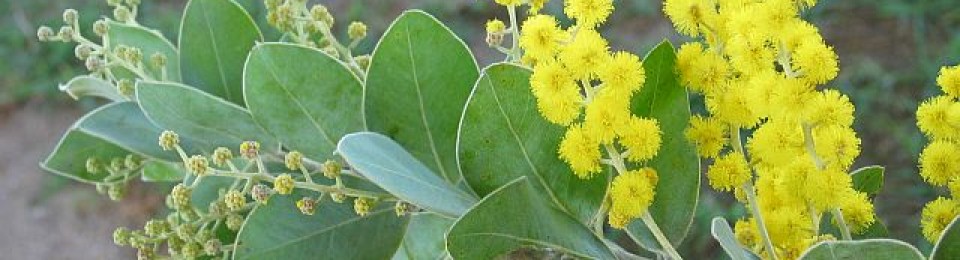
(Photo of thorn from Flickr)
Celebrity Baby News: Football Babies

Tags

, , , , , ,

Riijkaard-20130921213405652201-620x349

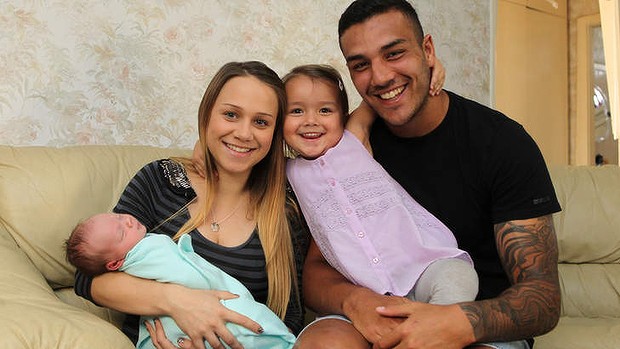
NRL player Dylan Farrell, and his partner Hayley Mundy [pictured], welcomed their son Derain about a week ago. Derain Farrell joins big sister Leilani, aged 3. Derain is a place in New South Wales, whose name is said to come from an Aboriginal language meaning “of the mountains”; Dylan grew up on an Aboriginal mission on the South Coast. Dylan has played for South Sydney Rabbitohs since 2010, and has been signed with the St. George Illawarra Dragons for next season. Souths will face Manly in the finals on Friday.

Soccer star Mark Milligan, and his wife Rhia, welcomed their daughter Audrey earlier this year. Audrey Milligan joins big sister Maya. Mark has been playing professionally since 2002, and is currently signed with Melbourne Victory; he is also a member of the national team, the Socceroos.

Local rugby league player Chris Thompson, and his wife Chrystal, welcomed their son Chandon early in the year. Chandon Thompson joins big sister Alaqua, aged 4, and big brother Mataeo, aged 2. Chris plays for CYMS in Dubbo. Chandon is a French surname, taken from a common place name in France; it is most associated with the champagne Moët & Chandon.

Celebrity Baby News: Brooke Harman and Jeffrey Walker

Tags

BLW_1433_2

Actress Brooke Harman, and her husband, director Jeffrey Walker, welcomed their first child on June 24, and have named their son Boston Scott. Boston Walker was born at 10.38 pm, and weighed 3.6 kg (7lb 15oz); Brooke announced his birth on her blog.

Brooke was born in the United States, and came to Australia as a young child, growing up in Queensland. Her first television role was at the age of 11, on the children’s series, The Wayne Manifesto. She has guest starred on shows such as Home and Away and All Saints, and been in a few films, including the 2003 version of Ned Kelly. Brooke had the lead role in children’s drama series, Pirate Island, and recently had a recurring role on teen drama series, Dance Academy.

Jeffrey started out as a child actor, with his first role at the age of 6, on House Rules. He had major roles in Round the Twist, Ocean Girl, and Mirror, Mirror, and was the star of The Wayne Manifesto, for which he received a Young Actor’s Award from the Australian Film Institute. He and Brooke first met on the set of The Wayne Manifesto. Jeffrey is now a television director who has worked on soaps such as Neighbours and Home and Away, as well as children’s series such as Wicked Science, H2O, The Elephant Princess, and Blue Water High. Jeffrey also plays guitar for the indie rock band, Ballet Imperial.

(Photo of Brooke and Boston from Hello Sailor)

Thank you to Nicole for sending in this celebrity baby tip! All celebrity baby news is gratefully received.


Why Your Child Will Hate Their Name

Tags

, , , , , , , , , , , , , ,

I-HATE-MY-NAME-815x1024

How can I pick a name my child won’t hate?

That’s the question somebody typed into a search bar, and Google knows how, ended up on my blog. Here’s the kicker: you can’t. There’s no name, no matter how tastefully chosen, that comes with a guarantee that your child won’t one day hate it to bits.

I know people with what I see as very nice names (nicer than mine, in my opinion) who hate them with a bewildering passion, while people who have what I consider very boring or even ugly names are deeply grateful to their parents for choosing them. We all have different tastes.

I do know quite a few people who hate their names, and if you hang out on name forums, you don’t have to look hard to find others who have become disgruntled with their names. While everyone has their own personal quirks, over the years I have noticed a few things they tended to have in common.

These are often not the things that baby name articles warn you about. For example, a popular belief is that a “weird name” is sure to be hated by the bearer, who will be teased in the playground and come to loathe their name, their parents, and probably the whole world.

I haven’t noticed this to be the case, with most owners of unusual names enjoying, or at least coming to terms with them. I have never met anyone with an unusual name who legally changed it to something more mundane, even those who professed to find it a bit of a pain sometimes. At most, they adopted a pseudonym when booking restaurants.

Another piece of advice often handed out is that a “bizarre” name spelling will be such a nuisance that the bearer will undoubtedly wish that their parents had gone with something more traditional. Again, I don’t find that to be generally true. Some people with unusually spelled names loathe them, while others are delighted by them.

I know someone with a very unintuitive name spelling (think Veeruyniiikkarh for Veronica), and she loves that every letter in her name was individually chosen by her mum, with each one having a specific personal meaning. I thought it would be the most tremendous nuisance to have to spell out every time, but she assures me that she doesn’t mind at all. “It makes me feel special that my name gets so much attention”. For her, holding up queues is an ego-massage.

As I can’t tell you how to pick a name your child won’t hate, I thought I would least explain why they may end up hating it.

They hate themselves

Research has shown that people with high self-esteem tend to like their own name, and the higher their sense of self-worth, the more they liked their name. That suggests that people who dislike their own name may suffer from self-esteem issues.

You might assume that someone who dislikes their name would arrogantly think it not good enough for them, but sometimes it seems to be the other way around – they don’t think they are good enough for their names.

“It’s a popular girl name, it’s just not me”; “It’s too pretty for me carry it off”; or the most tragic I heard, “It sounds like the name of a happy normal person”.

To give your child the best chance of liking their name, make sure that they have high self-esteem. Convince them that they are pretty, popular, happy and normal enough for their name.

Their name is going downhill

A lot of parents worry about popularity; nearly always that the name is “too popular” to use, or is going to be too popular in the future.

However, I’ve noticed that the majority of people who dislike their names were given names that were either falling in popularity when they were born, or hitting their peak, so that they had begun falling by the time they started school.

Not only that, but the level of dislike appears to correlate with how steeply the name rose and fell. Names with a very obvious peak and trough, dating them to a particular era, seem to be the most disliked.

It doesn’t necessarily seem to be the most popular names that are disliked so much as those which display this pattern. For example, Sarah was the #1 name of the 1980s, yet I rarely hear Sarahs complain bitterly about their name. Could that be because Sarah is a classic which is still in the Top 40, so we don’t think of it as a “typical 1980s name”?

I don’t often hear anyone identify the trajectory of their name’s popularity as the reason for their dissatisfaction. They all have what appear to be good reasons for their dislike: it’s unattractive, it’s boring, it doesn’t suit them. Yet somehow it seems to be names falling in popularity which are perceived as ugly, boring, and not suiting their owners.

People given names that were already dated and out of style at the time of their birth (“old people” names) usually say that they hated their name as a child, but now they’re grown up, they appreciate it’s different from the usual names of their generation.

That may because such names sometimes begin to come back into fashion when they are adults. For example, someone born in the 1980s named Florence would have had a dated name, as it peaked in the 1900s. But now it is fashionable and rising in popularity – suddenly Florence has a cool name.

I do think popularity is worth considering – but not to cross off a name because it’s hit a particular point in the charts. Of course, you can’t know how a name will perform in the future, but you can at least see how it’s doing now. Has it maintained its position over several decades? Has it suddenly “come out of nowhere”? Is it already falling steeply? This information might help you choose between different names.

They hate the reason you chose their name

If someone really loves their name, I don’t think a bad name story will seriously ruin it for them, but if someone is already lukewarm, a bad one can add insult to injury. The factors that seem to get people’s goats are a perceived randomness, casualness, or lack of thought in the way their name was selected.

When you tell your child how you chose their name, stress how important it was to you and how much you love their name. If you chose their name from a baby name book, or a TV show, for example, make sure they understand that it wasn’t just by chance you chose their name. Whatever it was that made you fall in love with the name, express it. And don’t wait until they’re a moody teen or resentful adult to share the good news – they should know from an early age how special you think their name is.

I know a lot of people who disliked their names, and were even thinking of changing them, until their parents explained how much love and care had gone into choosing it. Teenagers who thought their parents had unimaginatively picked a popular name found that they had been named after a much-loved relative. A “made up” name that seemed “random” was the result of putting together the initials of their parents’ best friends who introduced them. And sometimes just knowing it was a name their parents loved above all others was enough to reconcile someone to a name they had thought ordinary.

The bottom line: everyone wants their name to be meaningful. Show your child that theirs is.

You hate your name

In some cases, disliking names seems to run in the family. Quite a number of women I know who dislike their names tell me that their mother was also unhappy with her own name. This may be from parental modelling. Just as mothers who constantly moan about their flabby thighs tend to have daughters with body image problems, it could be that mothers who dislike their name unconsciously send the message to their children to focus on anything about their name that fails to please.

If you hate your own name, make peace with it. Don’t try to work out your own issues when choosing your child’s name. So many parents seem to think that because they hated being one of a dozen in their class their child’s name must be rare, or because they hated their nickname their child needs a “nickname proof” name.

It’s well intentioned, but the trouble is that you’ve made your child’s name story all about you. When you tell your child how you chose their name, the story shouldn’t include information about how you felt about your name. Don’t use your child’s name as an opportunity to fix the mistakes of the past.

They hate you

In rare but distressing cases, people reject their names because their relationship with their parents irretrievably breaks down. It’s not uncommon for them to change their names in order to signal a complete break from their family background, and it can also be so their parents can’t easily locate them.

I don’t think this is worth worrying about, because if it occurs, their name isn’t really the issue, and is the least of your problems.

POSTSCRIPT: I should add that most of my observations in regard to name dislike relate to women. It isn’t that I don’t know any men who dislike their names – I know a fair few who hated their name enough to legally change it, and I’ve read a lot of articles written by men on how much they dislike their name.

However, women and girls do seem to more openly express their feelings about their names, and it’s possible that they have subtler emotions toward their name, or are more likely to be analytical about them. Perhaps women are more likely to be “fussy” about their names than men. Whatever the reason, it seems to be easier to gather information about their feelings towards their names (at least for me).

POLL RESULTS
79% of people responding to the poll were generally satisfied with their name. 33% liked their name, 19% loved their name, 18% weren’t mad about their name, but could live with it, and 9% said that they used to dislike their name, but had changed their mind and now felt positive towards it.

However, 12% of people did hate their name, while 9% thought that hate was too strong a word to use, but they didn’t really like their names either.

The good news is, most of us have names that we are content with, and around 10% of people who don’t like their name will change their minds.

(Picture from Naver)

Celebrity Baby News: Australian Rules Football Babies

Tags

,

899131-lewis-jetta

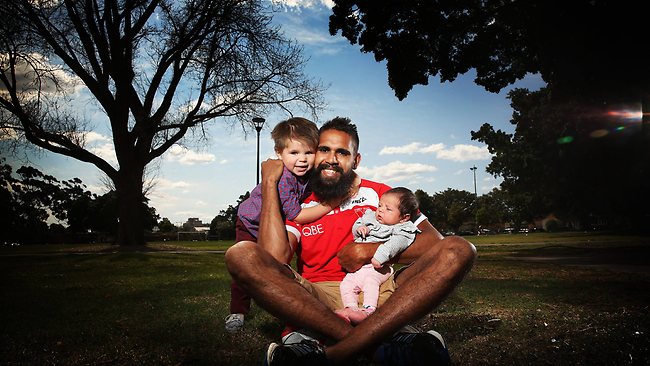
It’s football finals season, so here are two baby daughters of Australian rules footballers. Both have a connection to the West, and both have pretty floral names.

Lewis Jetta, who plays for the Sydney Swans in the AFL, and his partner Jess, welcomed their daughter Daisy last month. Daisy Jetta joins big brother Lewis aged 2 – Lewis is known as Junior.

Lewis is originally from Western Australia, and has been playing for the Sydney Swans since 2010. He is a director with the National Aboriginal Sporting Chance Academy, which works with Indigenous youth, and has been involved with the Australian Literacy and Numeracy Foundation’s Wall of Hands campaign, and the Learn Earn Legend initiative. He is keen to provide a good role model for Indigenous youth, and he and his cousin Neville, who plays for Melbourne, both returned to school to complete Year 12 as an encouragement to their younger cousins. Tonight Lewis will be back in his home state for the preliminary finals against Fremantle Dockers.

Lewis chose Lewis Junior’s name, and under a prearranged agreement, Jess got naming rights for a girl. Lewis jokes that he suggested Louise, but the idea was vetoed.

Rory O’Brien, who plays for the East Fremantle Sharks in the WAFL, and his partner Ebony Lawler, welcomed their daughter Ivy Mae last year.

This year, Rory won the Sandover Medal, awarded to the fairest and best player in the West Australia Football League. Rory is the first person from his club to win it for fifteen years, and he gained the second highest number of votes in history.

(Photo shows Lewis Jetta with his children Junior and Daisy)

Leopold and Maximilian

Tags

, ,

02890MTwins

Gus and Max (Jack)

Perri Belle and Jaegar Flynn (Halle)

Phoebe Aimee Diana and Amelia Nicole Christine


Girls

Annalise Evelyn Ivy-May

Ayla Loren (Keelen)

Emmy Cate (Stella, Ollie)

Eva Jules

Harvi June (Daxon)

Jean Anne

Mia Bella (Ava)

Monica Charli (Gretel)

Pailin “Gemma”

Sanchia Ruby Robin

Shalilah Ida Rose (Tahneesha, Kaden, Tyler)

Summer Donna

Taleisha Jaide

Tilda Ellen (Pippa)

Victoria Lillian (Eliza)

Zarina Zae Claire


Boys

Antanas Jacob

Arion Kon (Zahlia, Malitah)

Duke David (Charlize)

Edward Horace

Finley Rex (Jacob, Lacey, Ruby)

Flynn Fortune

Henry Arthur (Thomas)

Jack William (Gidget)

Leopold Stefan

Lewis Reeve (Nate, Ruby)

Maximilian James (Thomas, Emma, Samuel, Charlotte, Lily, Sarah, Lucy)

Oscar Maxwell “Ozzie” (Tilly)

Ralph Harrison

Stefan Gabriel (Freddie)

Trey Edward

Xavier Albert (Luke, Liana)


Most popular names this week

Girls: Madison

Boys: Xavier

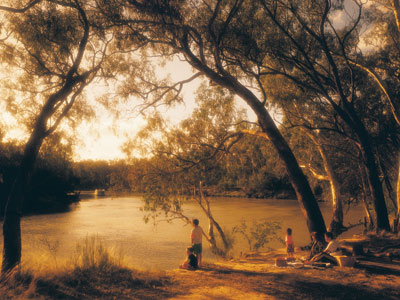
(Picture shows a family picnic by the Murray River, near Mildura in Victoria)

Celebrity Baby News: Daisy Turnbull-Brown and Captain James Brown

Tags

,

-0584_MG_5790

Daisy Turnbull-Brown, and her husband Captain James Brown welcomed their first child on September 19, and have named their son Jack Alexander. Jack Turnbull-Brown was born in the morning, weighing 3.8 kg (8 lb 3 oz) and 55 cm long. Alexander is the name of Daisy’s brother.

Daisy is a history teacher, and James served as an officer in the Australian Army before becoming a Military Fellow at the Lowy Institute, researching military issues and defence policy. Daisy and James were married in 2010.

Daisy is the daughter of Liberal MP Malcolm Turnbull, member for the seat of Wentworth, and recently made Minister for Communications. Daisy’s mother Lucy Turnbull is a prominent businesswoman and former Mayor of Sydney.

Jack is the first grand-child for Malcolm and Lucy.

(Photo shows Daisy and James’ wedding day, with the bride and groom accompanied by their parents, and Daisy’s brother Alex)

Famous Name: Jason

Tags

, , , , , , , , , , , , , , , , , , ,

51WNMTYA9qL

A federal election was held on September 7, and we have had a change of government. Votes are still being counted, so the election isn’t over, and we may have some names from it when the process is complete.

However, in a much more frivolous political poll held in August, Cleo magazine rated the male politicians on their sex appeal, and decided that Labor MP Jason Clare, described as the “Rob Lowe of Australian politics”, was the winner. I can’t help thinking if a men’s magazine had rated female politicians like this it would be considered very wrong.

Jason Clare represents the seat of Blaxland in western Sydney, which he won in 2007, and until recently was the Federal Home Affairs Minister. Jason grew up in the western suburbs, made dux of his class, and completed a law degree while pursuing an interest in politics. While Labor lost the election with a significant swing against it, Jason managed to increase his hold over the electorate by 6%.

To show that he is not vain about his appearance, Jason modestly joked that his wife’s preference in the Cleo poll was for the runner-up, Stephen Smith. Hello ladies – he’s a smart, handsome law graduate and his wife doesn’t appreciate him! (is the message I think we’re meant to be receiving there).

Jason is from the Greek name Iason, derived from the Greek for “to heal”. Iaso was the Greek goddess of recuperation from illness, so you could see Jason as a masculine form of her name. Although Jason is often translated as “healer” or even “physician”, to me the meaning of the name is more about the body’s natural ability to heal itself.

The name is best known from the mythological prince of Thessaly, who led a hand-picked crew of heroes on the good ship Argo, in quest of the Golden Fleece, with the aid of the goddess Hera. Jason and the Argonauts had a series of adventures, in which they didn’t behave very nobly for much of the time, then arrived in Colchis, which today is in Georgia, on the Black Sea.

The Golden Fleece was owned by King Aeetes, and to obtain it, the king gave Jason three tasks which seemed impossible to perform. Hera arranged for Aeetes’ daughter Medea to fall in love with Jason, and as she was a great sorceress, she was able to use her knowledge of magic to help him succeed, after he promised her that they would get married.

Jason and Medea then fled with the Fleece and sailed away on the Argo, because King Aeetes knew that Jason could only have completed the tasks by cheating, and wanted his property back. He pursued them until Medea came up with the horrible plan to kill her own brother and throw him into the sea, piece by piece, to distract her father.

Medea’s interest in dismembering family members continued when she and Jason returned to Greece, and she arranged for his Uncle Pelias to get chopped up into soup. Pelias had tried to drown Jason as a baby, then sent him off on the dangerous Golden Fleece quest hoping he’d die, so she had her reasons. With her penchant for murdering relatives, you’d think that Jason would have been blissfully happy with Medea, but instead he betrayed her love by becoming engaged to another woman.

When Medea tried to point out that all Jason’s luck in life was because of her, and he was being very ungrateful, he replied, “Babe, you’re the one who got lucky when the gods made you fall in love with me”. Medea wasn’t the type to take this treatment lying down, and she promptly burned her rival to death before murdering the children she and Jason had had together. Although Jason was ungallant, Medea’s tendency to see her own flesh and blood as collateral damage is disturbing.

Because Jason had broken his vow to love Medea forever, the goddess Hera abandoned him, and he wound up lonely and miserable. He was killed when the Argo, now old and rotting, broke and fell on top of him while he was asleep – a suitably ironic finish.

A king of Thessaly named Jason was a contemporary of Alexander the Great‘s father. A successful and ambitious general, it is thought that he must have been at least one of the inspirations of the great Alexander himself. It seems very likely he was named after the Thessalian hero.

There is a Jason in the New Testament, one of the Seventy Disciples of Christ, who ran a “safe house” for Christians in Thessalonica, and was once arrested for it. Saint Paul appointed him bishop of Tarsus, and he is known as Saint Jason. Unusually for an early Christian saint, Jason lived to a ripe old age. The Jewish historian Josephus tells us that Hellenised Jews used the name Jason to replace Yeshua (Joshua or Jesus), and this may apply to Saint Jason too.

Being Biblical, Jason was acceptable for use as a Christian name, and can be found in the records from at least the 16th century. The name Jason became very popular in the 1970s, and it looks as if this was due to the original Jason, because the movie Jason and the Argonauts came out in 1963 (it cut out most of the revolting parts). A special effects tour de force, it’s a cult classic, and according to Tom Hanks, the greatest film ever made. It must have made a huge impression.

Jason was already rising in popularity at the time of the film’s release, but soon zoomed up the charts to make the US Top 100 three years later. It was Top 10 in the US for all of the 1970s, which coincides with popular TV series, The Waltonshaving a Jason. Even in the late 1980s, when Jason was #27, Pamela Redmond Satran and Linda Rosenkrantz were urging parents to “go beyond Jennifer and Jason”. Despite their book’s success, Jason has still not left the Top 100 in the United States, so American parents only partially heeded their call.

Jason has charted in Australia since the 1950s, when it was #290 for the decade. By the 1960s it had climbed phenomenally to make the Top 50, at #43 for the decade. It peaked in the 1970s (when Jason Clare was born) at #3, was still #18 in the 1980s, and #35 in the 1990s. Did nobody feel like going beyond Jason? It finally left the Top 100 in the mid-2000s, and is currently #133 and stable – not popular any more, but by no means plummeting into obscurity.

Jason has been a real 1960s success story, and continues to influence popular names for boys, because parents are still attracted to similar names, such as Mason, Jacob, Jayden, Jackson, Jasper and Jordan. In fact, Jason is staging a comeback under the short form Jace – already Top 100 in the United States, and no doubt rising here too.

It turns out we’re not ready to go beyond Jason yet – at least, not very far.

POLL RESULT: Jason received an approval rating of 38%. People saw the name Jason as a “dad name” (30%), and common and boring (20%). However, 12% saw it as a “nice guy” name, and 10% thought it attractive. Nobody thought the name Jason was sexy.

Popular Here, There and Everywhere: International Name Trends

Tags

, , , , , ,

The Most International Popular Names

These names are all within ten places of each other on the Top 100s of Australia, England/Wales, and the United States, and should be equally familiar in all countries.

Boys

Ethan, James, Joshua, William

Girls

Ava, Ella, Emily, Isabella, Layla, Mia, Olivia

James and Olivia are the most international popular names, being no more than 2 places apart between any two countries.

You Saw it Here First

These are names which are already popular in Australia, but still rising toward the Top 100 in England/Wales and the United States.

Boys

Archer, Beau, Braxton, Jasper

Girls

Mila, Olive

Archer and Olive are the Australian popular names furthest ahead of international trends.

(The freshest names from the UK are Theodore and Elsie, and the freshest trends from the US are Jeremiah and Josiah – no popular American girls names were ahead of the trends).

Never Gonna Give You Up

These are names which have already left the Top 100 in the UK and US, but still remain popular in Australia.

Boys

Ashton, Hayden, Marcus, Mitchell, Patrick

Girls

Chelsea, Jade

Mitchell and Chelsea are the Australian popular names most behind international trends.

(The stalest names in the UK are Kyle and Bethany, while in the US, Gavin and Kylie are furthest past their used-by date).

Australia was the furthest ahead of international trends, and the USA most behind international trends – surely an indication of our different population sizes.

The Least International Popular Names

These names are common in one country, but rarely used in the others.

Most Australian Name: Darcy for a boy – it is considered feminine in the UK and US

Most British Name: Mackenzie for a boy – it is considered feminine in Australia and the US

Most American Names: Easton (boy) and Genesis (girl)

Waltzing with … Augusta

Tags

, , , , , , , , , , , , ,

Lady Augusta_steamer

September 17 marks the maiden voyage of the first paddle-steamer down the Murray River, in 1853. The Murray is Australia’s longest river at 2508 km long; it has its source in the Alps, meanders across the southern inland plains where it forms most of the border between Victoria and New South Wales, and ends at Lake Alexandrina in South Australia, which empties into the Southern Ocean near Goolwa.

Europeans first discovered the Murray in 1824, and Captain Charles Sturt became the first explorer to follow the river’s course down to Lake Alexandrina, in 1828-29. In 1851, the South Australian government offered 2000 pounds reward to the first steamship to reach the junction of the Murray and Darling Rivers, at Wentworth.

The Scottish explorer Francis Cadell, who had already navigated part of the Amazon and sailed to China and Singapore by this time, heard about the reward in 1852. Nobody had claimed the money yet, and Cadell was determined to give it a shot. He had a steamer built in Sydney, and during its construction, did a test run on the Murray in a canvas boat.

Just to make things more exciting, a British-born Australian named William Randell who had lived near the Murray River also threw his hat in the ring. He built his own steamboat in 1852, even though he had no experience in boat construction, and had never seen a paddle-steamer before. He was the first person to actually put a steamboat in the river. Randell didn’t even know about the reward until later – it was a personal goal.

Cadell had much greater flair for public relations. While Randell named his craft Mary Ann after his mother, Cadell cannily called his the Lady Augusta, in honour of the South Australian governor’s wife, Lady Augusta Sophia Young (the town of Port Augusta in South Australia is also named after this lady). On the Lady Augusta‘s maiden voyage, Cadell took as his passengers the governor and his wife, members of the Legislative Council, and a journalist to give him a good write-up.

Cadell set out from Goolwa on August 25 1853. For most of the way he and Randell were neck-and-neck; however, on September 17, the Lady Augusta arrived in Swan Hill a few hours before the Mary Ann.

Swan Hill is 1000 miles from the sea, and although they were still ages from Wentworth, the governor decided the contest was over, and Cadell had won. He was deemed the first person to successfully navigate the Murray River in a practicable steamboat, and the governor arranged for gold medals to be awarded to Cadell, the Legislative Council, and himself. He then gave Cadell another 2000 pounds to build another boat.

William Randell kept going, and although he didn’t reach Wentworth either, he went further than Cadell. Due to a general feeling that Randell had been treated unjustly, he was given 300 pounds, and then another 400 when public sentiment continued to mutter about it. In fact neither Cadell or Randell had fulfilled the requirements of the contest, and this must surely rank as one of the unfairest competitions of all time.

Both Francis Cadell and William Randell attracted investors and went into business running steamships on the Murray, and because of their efforts, the Murray was opened up as an avenue of transportation. Perhaps it doesn’t really matter that Francis Cadell was the first official steamboat navigator of the Murray River in the Lady Augusta. I still think it stinks though.

Augusta is the feminine form of Augustus, from the Latin for “great, venerable, majestic”. Just as Augustus was used as a title by the Roman emperors, Augusta was a title bestowed upon some women attached to the imperial families of Rome and the Greek dynasties. It was the highest honour that could be conferred, signalling not only power, but a goddess-like status – indeed, many goddesses were given the title of Augusta.

The first woman to receive the title was Livia Drusilla, the widow of the Emperor Augustus, who became known as Julia Augusta. By all accounts she was very proud and regal, with a commanding personality. She had a lot of political influence, and enjoyed wielding power and being showered with honours. She was a direct ancestor of a dynasty of emperors, including Tiberius (her son), Caligula, Claudius and Nero.

The name Augusta was introduced to Britain in the 18th century through the Hanoverian rulers. George III gave the name Augusta to his sixth child and second daughter, Augusta Sophia. The town of Augusta on Western Australia’s south-west coast is named after her, and I fancy that Lady Augusta might have been too. Princess Augusta was named after her grandmother, Princess Augusta of Saxe-Gotha – Augusta, Georgia, in the United States, which hosts The Masters golf tournament, is named after her.

Augusta has been a traditional name in the British royal family, and was common amongst the aristocracy. However, we often think of it as a comically “difficult” old lady name. Oscar Wilde may have begun it, in his comedy, The Importance of Being Earnest, where Lady Bracknell is the main characters’ haughty Aunt Augusta.

Growing up, it seemed that every second children’s book had an Aunt Augusta in it, who would be crabby, or eccentric, or snooty, or fun-suppressing. The name almost seemed to be code for such an aunt, in the same way you would expect a fictional lab assistant named Igor to be hunch-backed and attached to a mad scientist. J.K. Rowling followed this English kidlit tradition by giving Neville Longbottom a dominating, hard-to-please grandma named Augusta.

And before I could even read anything much, life followed (or preceded?) art by giving me a Great Aunt Augusta who, in true literary fashion, was stern and austere, hated noise, mess and light, thought that children should be neither seen or heard, and scared the stuffing out of me when I was four.

For ages it didn’t seem possible to me that you could name a baby Augusta; it didn’t seem so much an “old lady name” as an “old bag name”. But Augusta was once an elegant young lady’s name, and could be again. With August a stylish choice for boys and girls, and Gus a fashionable name for boys, Augusta’s chances look better than they have in a long time.

Augusta isn’t the right choice for me as a family name, but maybe it is for you. Maybe your Great-Aunt Augusta was warm and loving and made you cinnamon buns, or cool and funny and gave you rides on her motorbike, you lucky punk. Point is, it could be the perfect name for someone else.

Augusta is a rare vintage name which still seems patrician and dignified, but comes with spunky nicknames Gus and Gussie, and the quirky Augie and Oggy. It would also make a sensational middle name. I don’t think Augusta’s everyone cup of tea and biscuit, but I imagine those who are drawn to it would be passionate supporters. You can’t fall halfheartedly in love with Augusta – she’s too strong for that.

Name Combinations for Augusta

Augusta Caroline, Augusta Geraldine, Augusta Harriet, Augusta Florence, Augusta Mabel, Augusta Ottilie

Brothers for Augusta

Charles, Ernest, Frederick, Henry, Leopold, Octavius

Sisters for Augusta

Beatrice, Cecilia, Elizabeth, Georgiana, Helena, Victoria

Note: The name combinations are from Australian historical records, while the siblings are from the British royal family.

POLL RESULT: Augusta received an approval rating of 77%. 29% of people loved the name, and a further 29% liked it.

(Photo is of the Lady Augusta on the Murray River; image from the State Library of South Australia)