Famous Name: Winsome

Tags

, , , , , , , , , , , , , , ,

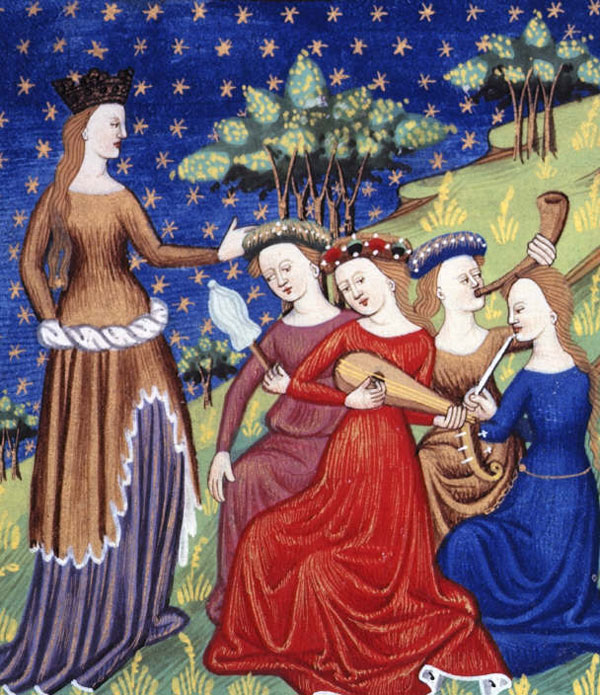
giovanni_boccaccio_women_playing

If you were in Sydney in early October, you could have attended the Royal Australian Navy International Fleet Review, celebrating one hundred years of our navy. Or, if you were of a more musical bent, you could have been there for The Renaissance Player’s 35th Runnymede Pop Festival. Held at Sydney University in its Gothic-style Great Hall, this is a unique concert of music, mime and poetry from medieval Europe, performed in brightly-coloured costumes.

The Runnymede Pop Festival has been going since 1973, and from the beginning has featured early music specialist Winsome Evans. Winsome is the director of the Renaissance Players, Australia’s oldest early music ensemble, and she is a professional harpsichordist, composer, and arranger. She conducted the first Renaissance Players concert while still a student.

Winsome is a recipient of the British Empire Medal in the Queen’s Birthday Honours List, The Order of Australia, and a NSW Jaycees Award for services to music.

Winsome is an English word meaning “charming in an innocent manner”. A winsome person is cheerful and open-hearted, engaging, and perhaps slightly naive, in a completely delightful way. The word comes from the Old English for “joy”, and is ultimately from an ancient root meaning “wish, love”.

Winsome is also an English surname, coming from the village of Winchcombe in Gloucester, or from Winscomb in Somerset. In either case, the name is Old English, and means “remote valley”. However, in some cases, the surname may have come directly from the Old English word winsom, meaning “attractive, lovely”, used as a personal name. If so, it means that the first name Winsome could date back to medieval times.

The first name Winsome can be found in records from the middle of the 19th century in North America, and seems to have been especially associated with Ontario, Canada. The reason for this may be Winsome Lake, which is one of the many thousands of smaller lakes in the Great Lakes region of Ontario, but why it inspired baby names is something of a mystery to me. I have been unable to discover how Winsome Lake received its name, because it is relatively obscure.

There are over one hundred women named Winsome in Australian records, most of them born around the turn of the twentieth century. There is another famous Winsome in Australia – Winsome McCaughey, who was Lord Mayor of Melbourne in the late 1980s. And another Australian musical connection too – Peggy Winsome Glanville-Hicks was a Melbourne-born opera composer and music critic who flourished in the middle of the 20th century.

Other successful Winsomes include British playwright Winsome Pinnock, and US Republican politician Winsome Sears. Interestingly, Sears was born in Jamaica and Pinnock’s parents were Jamaican, so there seems to be a West Indian connection. There was a grassroots playwright in Jamaica who wrote under the code name “Winsome” about 20-30 years ago. You can still find the name Winsome in use in Jamaica today, including singer Winsome Benjamin, and prize-winning cook Winsome Murphy.

Although Winsome is a secular virtue name like Felicity or Honour, the word winsome has come to have a particular meaning for evangelical Christians. The book Winsome Christianity by Henry Durbanville was published in 1952, and Winsome Evangelism by Ponder W. Gilliland came out in 1973.

I can’t pretend to be an expert on the subject, but my understanding is that the general message is to be winsome in your Christianity in order to attract more converts, and that some evangelists even use the word winsome to mean “capable of winning souls to Christ”. Author Neil Gaiman is apparently a big fan of the meaning of language changing over time, so I expect this example would be of great pleasure to him. It does give the name Winsome a special meaning for some Christians, so that it could become a religious virtue name in this context.

Winsome is a name I find very intriguing – the meaning of the word winsome seems very feminine to me, and Winsome is overwhelmingly used as a female name. Yet the name itself isn’t frilly in the least, having a similar sound to the male name Winston (which also comes from the Old English for “joy”). It’s a strong-sounding name for a girl, but with a dainty meaning.

Winsome isn’t a name I’ve ever seen on a baby or a child, and its heyday (if it can ever be said to have had one) was over many years ago. However, Winnie is becoming hip once more, and Winsome would be a rare and unusual way to reach it.

POSTSCRIPT: Abby Sandel mentioned Winsome in her Nameberry Nine column, and I was surprised and pleased at how many Berries liked or even loved the name Winsome.

POLL RESULT: Winsome received an approval rating of 61%. 21% of people thought it was an interesting modern virtue name, while 19% loved the idea of Winnie as the short form. However, 18% were reminded too strongly of the phrase win some, lose some. Only one person thought the name Winsome was too cutesy.
Celebrity Baby News: Alisa Camplin and Oliver Warner

Tags

,

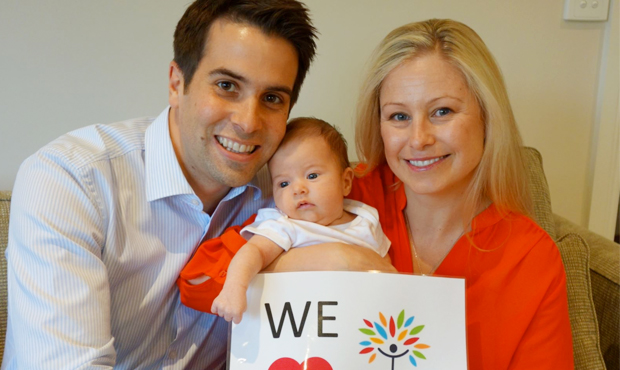
131202_finnansgiftOlympic aerial ski-er Alisa Camplin, and her husband, Oliver Warner, welcomed their daughter Florence on October 3. Florence Warner was born at the Royal Women’s Hospital in Melbourne. Alisa and Oliver lost their first child, Finnan, in 2011, and set up the charity Finnan’s Gift in his honour.

(Photo of Alisa, Oliver and baby Florence from Collingwood Football Club)

Celebrity Baby News: James Tamou and Brittney McGlone

Tags

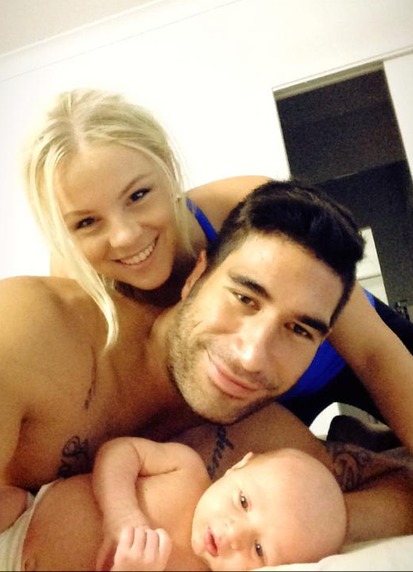
1381675_10151682101531127_951431220_nNRL football player James Tamou, and his partner Brittney McGlone, welcomed their first child in August, and have named their son Brooklyn Knox.

James is originally from New Zealand, and moved to Australia when he was 13. He has played for the North Queensland Cowboys since 2009, and in 2010 he was named their most improved player. He has played for the New Zealand Maori team, and has recently represented both Australia and New South Wales. Currently James is in England for the Rugby League World Cup, playing for the Australian national squad.

Brittney is a full-time professional athlete, a 400-metre hurdler at the Australian Institute of Sport. One of her hobbies is running in stilettos, and she has won all four races that have been held in Australia – two of them for Guinness world records. She has also been entering fashion-on-the-field competitions on race days since she was a teenager, and last year was crowned Myer Face of Canberra Racing.

(Photo from Facebook)

Never Out of Season: Different Varieties of Classic Name

Tags

, , , , , , ,

roberts_springtime

Classic baby names are a perpetual subject for discussion. This week Abby Sandel wondered in her Nameberry Nine column what makes a classic name, and Laura Wattenberg at The Baby Name Wizard shared her “magic formula” for turning classic names into pure gold (unfortunately her mathematical formula doesn’t work in Australia – either we don’t have a big enough population, or enough data, or both).

“Classic baby names” are a popular search term too, but it didn’t seem helpful to just write down a list of classic names. I sorted them into categories, so you can see what kind of classic each classic name is.

I counted as a classic any name which had charted in Australia for a century, never disappeared from the charts for more than a decade at a time, and never did so more than twice. After some experimentation, I found this was the most generous definition I could work with that didn’t become meaningless.

Contemporary Classics

These classics have a very modern feel to them, because they are more popular now than they were a century ago, and didn’t experience a peak of popularity in the middle. Choose one of these, and you get a name that feels both traditional and up to date.

  • Amelia
  • Charlotte
  • Ella
  • Emily
  • Eva
  • Grace
  • Hope
  • Isabella
  • Lily
  • Lucy
  • Sophia
  • Stella
  • Alexander
  • Angus
  • Darcy
  • Harry
  • Jack
  • Lachlan
  • Leo
  • Lewis
  • Marcus
  • Max
  • Oliver
  • Samuel
  • William

Up and Coming Classics

These classics are currently rising in popularity. It’s hard for a classic name to seem surprising or original, but these mostly manage to feel quite fresh. I think these classic names would make stylish choices – they’re names that we’re subconsciously primed to want more of.

  • Adele
  • Alice
  • Amelia
  • Angela
  • Audrey
  • Daisy
  • Elaine
  • Eva
  • Evelyn
  • Gloria
  • Irene
  • Josephine
  • Leah
  • Lillian
  • Rosalie
  • Rose
  • Sophia
  • Stella
  • Victoria
  • Vivienne
  • Arthur
  • Frank
  • John
  • Lawrence
  • Leo
  • Leon
  • Lewis and Louis
  • Patrick
  • Theodore
  • Vincent

Ready Steady Classics

Name nerds often talk about “timeless classics”, and these classic names are truly timeless. Their position has remained relatively stable, and over the course of the last century, they haven’t risen or fallen more than 250 places. I call them the Ready Steady Classics because they are maintaining a steady course, and ready to be used at any time. You can’t go wrong with a Ready Steady – they’re a very safe choice.

  • Angela
  • Annie
  • Catherine and Katherine
  • Christina
  • Claire
  • Elizabeth
  • Esther
  • Georgina
  • Josephine
  • Julia
  • Katie
  • Laura
  • Maria
  • Mary
  • Naomi
  • Rachel
  • Rebecca
  • Rose
  • Sarah
  • Adrian
  • Alexander
  • Andrew
  • Angus
  • Anthony
  • Charles
  • Christopher
  • Daniel
  • David
  • Edward
  • Eric
  • Harry
  • Hugh
  • George
  • Kevin
  • James
  • John
  • Joseph
  • Leon
  • Louis
  • Marcus
  • Mark
  • Martin
  • Matthew
  • Michael
  • Nicholas
  • Patrick
  • Paul
  • Peter
  • Raymond
  • Richard
  • Robert
  • Samuel
  • Stephen
  • Thomas
  • Timothy
  • Vincent
  • William

Underused Classics

These classic names have remained in use, yet haven’t become popular during the past century (the highest any has been is the very bottom of the Top 100). Choose one of these and you get a name which seems “normal”, but also slightly “unusual”. It’s a very attractive quality.

  • Adele
  • Beth
  • Bridget
  • Christina
  • Cecilia
  • Erica
  • Estelle
  • Faith
  • Georgina
  • Greta
  • Helena
  • Hope
  • Leila
  • Louisa
  • Lydia
  • Martha
  • Miriam
  • Rosa
  • Rosalie
  • Teresa and Theresa
  • Vivian and Vivienne
  • Carl
  • Duncan
  • Ivan
  • Leon
  • Lewis and Louis
  • Theodore
  • Wesley

Faded Classics

The Faded Classics have fallen more than 250 places since they peaked in popularity, and are currently at their lowest ebb. Is that any reason to reject these names? Definitely not! A classic never goes out of style, and as many of these names have hit the bottom of their cycle, they may be about to turn things around, and begin climbing in popularity in a decade or two. Some of these classics manage to have a funky vintage feel.

  • Clare
  • Linda
  • Louise
  • Marie
  • Mona
  • Nancy
  • Patricia
  • Ruth
  • Veronica
  • Shirley
  • Susan
  • Albert
  • Brian
  • Dennis
  • Edwin
  • Geoffrey and Jeffrey
  • Keith
  • Laurence
  • Leonard
  • Malcolm
  • Murray
  • Philip and Phillip
  • Roger

Under the Radar Classics

These classic names are not peaking, or rising, or fading, or maintaining a steady course. As a result, they may have escaped your attention. You may even be surprised to find some of these are classics. Don’t overlook them – these are all good names, and one of them may be perfect for you.

  • Alison
  • Amanda
  • Anna
  • Anne
  • Beatrice
  • Caroline
  • Eleanor
  • Ellen
  • Emma
  • Frances
  • Hannah
  • Helen
  • Iris
  • Isabel
  • Jacqueline
  • Jane
  • Joy
  • Joyce
  • Madeline
  • Margaret
  • Monica
  • Natalie
  • Sylvia
  • Valerie
  • Alan and Allan
  • Alfred
  • Bruce
  • Douglas
  • Francis
  • Frederick
  • Henry
  • Ian
  • Kenneth
  • Maxwell
  • Neil
  • Rex
  • Roy
  • Stanley
  • Victor

TRIVIA

  • The most contemporary of the Contemporary Classics are Sophia and Lachlan, who have the largest gap between their current position and their position in the 1910s. Sophia is 315 places higher, while Lachlan has gained 188 places.
  • The most up and coming of the Up and Coming Classics are Rosalie and Frank, who have risen highest in the last few years. Rosalie has risen 638 places since the mid-2000s, while Frank has risen 170 places.
  • The steadiest of the Ready Steady Classics are Elizabeth and James. Elizabeth has remained within 32 places throughout the past century, while James has remained within just 15 places.
  • The most underused of the Underused Classics are Estelle and Wesley. The highest Estelle has ever been is #222, and the highest Wesley has ever been is #165 – both in the 1920s.
  • The most faded of the Faded Classics are Susan and Keith, who have fallen the most from their peak. Susan went from #1 in the 1950s to its current position of 0, while Keith went from #8 in the 1920s to its present position of 0.

NOTE: I can’t guarantee I have included every classic name. If you believe one is missing, let me know.

POLL RESULTS

Question: What type of classic name do you like best?
Underused classic – 31%
Up and coming classic – 18%
Under the radar classic – 13%
Contemporary classic – 5%
Ready steady classic – 5%
Faded classics – 3%
None (classics are boring) – 3%
I can’t decide (I love so many) – 22%

(Painting shown is Springtime by the Australian artist Charles Conder – 1888)

Name Update: They Stayed True to Their First Love

Tags

,

images

Elise and Alex had already decided on the name Digby for their third child when someone else in their social circle used the name for their son. Feeling obliged to look for something else, Elise wrote in to the blog to ask for ideas on boys names.

In the end, they decided that they didn’t like anything else as much as Digby, and no other name was right for them, so they went ahead and used Digby for their baby, as they had planned.

Unfortunately, they were met with a frosty reception from the parents of the first Digby, and things have been a bit awkward between them ever since.

However, although disappointed with how the other parents have chosen to react to their news, Elise and Alex couldn’t be happier that they stuck with their favourite name, and know that they made the right choice.

Congratulations Elise and Alex, and welcome Digby!

You don’t have to abandon your favourite baby name just because someone else used it first, and this is yet another warning that it’s unreasonable to expect to have a name all to yourself, even if it’s not common.

Endellion and Florabella

Tags

, ,

JacarandAvenuePoundSt(ST)

Twins

Mackenna Sarah and Xiomara Suzanne


Girls

Anouk Juno (Felix)

Aria Kerehi (Tyra, Chaz)

Blair Merekara

Emmeline Adelaide Sarah (Tom)

Endellion Louise

Florabella Elizabeth

Gina Rose (Evie)

Haidee Grace (Indy, Oakey)

Harriette Kelly (Peony)

Isla Summer (Sienna, Lily)

Ivy Winifred (Ruby, Violet)

Marnie Jennifer Poppy (Aggie, Crosby)

Milla Alethea

Monet Isla (Sophie, Tom)

Poppy Olivia Trouble

Sylvie Grace (Camille)


Boys

Alfie Edward (Sage, Abe)

Baxter Patterson James (Hunter, Clementine)

Edward James Alexander (Isabella, Georgia)

Gus Mario (Lottie)

Hamish Gustav (Eliza, Joseph)

Johan Jibin

Jude Leo (Stella)

Kas Pande

Kohen Ian

Lawson John (Henry, Campbell)

Pacer

Paco Panagiotis

Rex Joseph (Dempsey, Ronin, Sullivan)

Santiago

Tayte Mitchell John

Ted Davey


Most popular names this week

Girls: Harriet and Mackenna

Boys: Logan

(Photo shows flowering jacaranda trees lining the streets of Grafton, NSW; the Jacaranda Festival is on there from October 19 to November 3)

Famous Names: Henry and Navy

Tags

, , , , , , , , , , , , , , , , , ,

5000830-3x2-940x627

Early in October, the Royal Australian Navy International Fleet Review was held, celebrating the 100th anniversary of the first Royal Australian Navy fleet in Sydney Harbour, on October 4 1913. Around 40 warships from twenty countries, and 16 tall ships took part, with seven RAN ships symbolising the 1913 entry itself. A stunning fireworks display on the Harbour used huge projections on the Sydney Opera House to tell the story of our century-old navy.

Although the Governor General Quentin Bryce reviewed the Fleet as the Queen’s Representative, it is traditional to have a member of the royal family in attendance for the Review, and Prince Henry of England, otherwise known as Captain Wales, or Prince Harry, got the gig. It was his first official visit to Australia, and although only here for 36 hours, he made himself immensely popular.

The famous names this week are in honour of the Royal Australian Navy, and our royal visitor.

Henry is from the Germanic name Heimrich, meaning “home ruler”. It has been commonly used amongst European royalty, and there are many rulers of Germany, France, Spain and Portugal named Henry, or one of its equivalents. There have also been six Holy Roman Emperors named Henry, one of them a saint. Other saints named Henry include a legendary bishop of Sweden, and Henry of Coquet, a Danish hermit who lived on an island off the coast of Northumberland.

Henry is a traditional name in the British royal family, and there have been eight English kings named Henry. Henry I was the son of William the Conqueror, and probably named after his great-uncle, King Henry I of France. The last king named Henry was Henry VIII, who is best remembered for his six wives, and for the English Reformation, which saw the Church of England break away from the Roman Catholic Church and the pope’s authority. In his prime handsome and powerful, he is considered to be one of the most charismatic of English rulers.

There have been a few British princes named Henry, and Prince Harry may have been named after his great-uncle Prince Henry, the Duke of Gloucester, who was Governor-General of Australia, and married to Princess Alice, whose middle name was covered in Rare Royal Names for Girls.

Some people find it hard to understand why Harry is a short form of Henry. In the Middle Ages, Herry or Harry was how the name Henry was pronounced in England, so anyone named Henry was automatically a Harry once their name was said aloud. Today the medieval Harry is used as a pet form of Henry.

It is sometimes forgotten that Prince Harry’s official name is Henry, so that when he was introduced as an ambassador of the 2012 Olympic Games, some viewers wondered who this “Prince Henry” chap was. Bizarrely, one online news source (now removed) even reported that Prince Harry and Prince Henry of England attended the closing ceremony together (well, I guess they did, in a way).

Henry is a classic name in Australia which has never left the charts. It was #11 in the 1900s, and gradually fell until the left the Top 100 in the 1950s, hitting its lowest point in the 1970s at #265. Since then, it has gradually climbed, and was back on the Top 100 by the 1990s, where it has continued to increase in popularity. It isn’t shooting up dramatically, but making steady gains.

Currently it is #33 nationally, #27 in New South Wales, #23 in Victoria, #35 in Queensland, #17 in South Australia, #33 in Western Australia, #15 in Tasmania, #19 in the Northern Territory, and #10 in the Australian Capital Territory.

Henry is a handsome classic that seems intelligent and solidly unpretentious. It’s a popular name, and rising in popularity, but in a sensible, steady way. It seems unlikely at this point to match Prince Harry’s brother’s name, William, in the popularity stakes, and get to #1.

Navy is an English vocabulary name; the word navy refers to a fleet of military watercraft. Although navies have been used since ancient Greek and Roman times, navy is quite a modern word in English, dating back to around the 17th century, it is from the Old French meaning “fleet of ships” – ultimately from the ancient Greek for “ship”.

You can also see Navy as a colour name, since navy blue or navy is the very dark blue named after the traditional colour of naval uniforms.

Navy has been used as a personal name since the very late 18th century, and is first found in the United States, more specifically New England. The births of the first babies named Navy coincide with the establishment of the US Navy in 1794, so it seems to be a very patriotic name, and likely to be given to children of people connected with the navy itself.

Navy is much more common in the US than anywhere else, although rare in America too, and overall it has been given to boys and girls in fairly equal numbers. It is an extremely rare name in Australian historical records, and seems to be slightly more common as a girls name here; I have only ever seen Navy on girls, but so infrequently that it seems an entirely unisex name.

Rare, unisex, and rather modern, the name Navy would honour a naval connection in the family, or a family naval tradition.

POLL RESULTS: Henry received an astonishing approval rating of 95%. Navy received a more modest approval rating of 25%.

Celebrity Baby News: Kathryn Eisman and Siimon Reynolds

Tags

siimon_kathryn_420-420x0

Author and media personality Kathryn Eisman, and her husband Siimon Reynolds, welcomed their first child on October 13, and have named their daughter Capri Mirabelle. Capri Reynolds was born at 7.51 am weighing 3.8 kg (8 lb 8 oz) at Cedars-Sinai Medical Center in Los Angeles. Capri’s birth was announced on Twitter.

Kathryn was born in Sydney and studied journalism at the University of Technology, Sydney before moving to New York City. She started out at WNBC’s morning news show, Today in New York. She has hosted several lifestyle/entertainment shows, and been a reporter on morning shows on Channels Ten and Seven. She is the author of several books, such as How to Tell a Woman by Her Handbag, is columnist on several magazines, including Cleo and Men’s Health, and a blogger for websites such as Yahoo!

Siimon is an Australian business mentor, motivational speaker, and author of self-help books such as Why People Fail. He was one of Australia’s youngest self-made millionaires, making his fortune by 21, and was part of the advertising group behind the notorious “Grim Reaper” AIDS campaign in the 1980s.  He is chairman of website group OMG. Siimon and Kathryn were married in Palm Springs, California, in 2011.

(Photo of Kathryn and Siimon from the Sydney Morning Herald)

Waltzing with … Eugene

Tags

, , , , ,

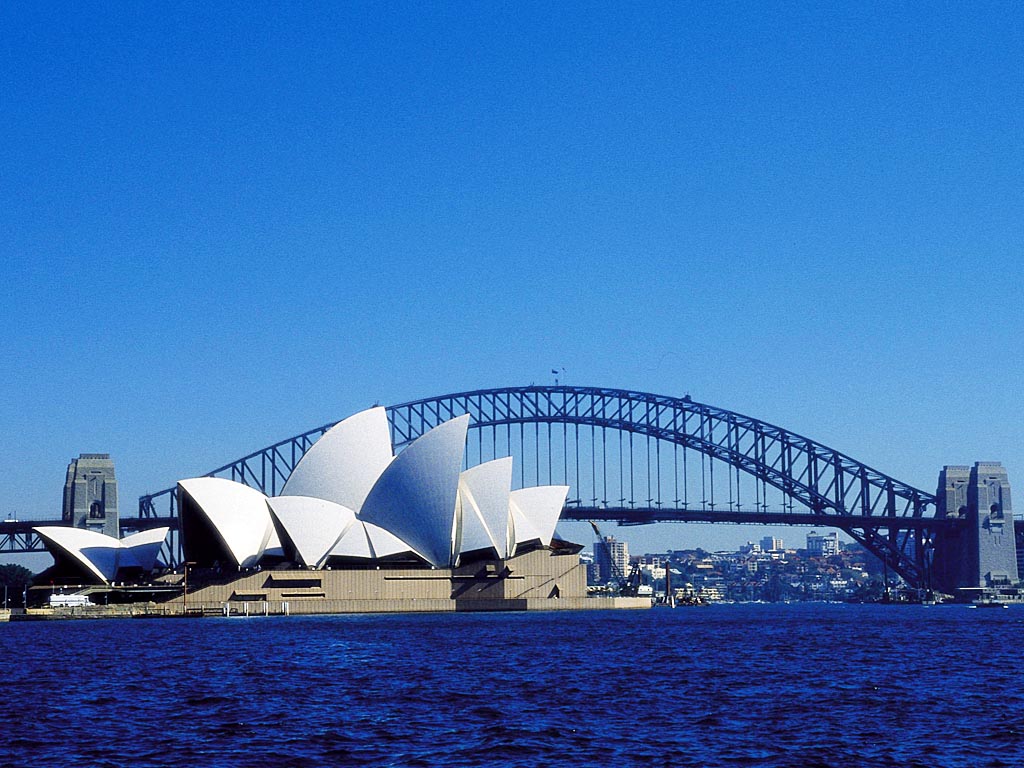
sydney opera house

Today is the fortieth anniversary of the opening of the Sydney Opera House, officially opened by Queen Elizabeth on October 20 1973. Set on Bennelong Point, right near the Harbour Bridge, it is surrounded on three sides by the harbour, and flanked by the Royal Botanic Gardens. The Opera House’s distinctive design, featuring a roof of white “shells”, makes it an icon. It is instantly recognisable; a symbol of Sydney, and of Australia itself.

Despite its name, the Opera House isn’t just for opera, but is a performing arts complex. It was designed by Danish architect Jørn Utzon, who won the competition to design it in 1957. Unfortunately, in what seems to be a familiar story with foreign architects in Australia, Utzon was treated very badly after a change of state government, and eventually forced to resign from the project, never to return to Australia.

The project finished ten years late, and cost more than fourteen times its budget; Utzon wasn’t invited to the opening ceremony, nor was his name mentioned. The Sydney Opera House Trust later repented of its treatment of Jørn Utzon, and in the 1990s they reconciled with him, and he was appointed a design consultant for future work.

Utzon won the Pritzker Architecture Prize in 2003 for the Sydney Opera House, the Opera House’s Utzon Room was named in his honour in 2004, the Opera House was named a World Heritage Site in 2007, and after Jørn Utzon died in 2008, the Opera House held a state memorial service for him in the Concert Hall.

The story of Jørn Utzon is familiar in Australia. What many people don’t know is the name of the man who ensured we had a Sydney Opera House at all.

Eugene Goossens was an Englishman of Belgian descent, from a musical family. A prize-winning musician, he was an associate of the Royal College of Music, and had been a violinist in London before forming his own orchestra and becoming a conductor. For many years he taught and conducted in the United States, and when he left, nine American composers collaborated on a tribute in his honour.

Eugene came to Sydney in 1946, and was the first chief conductor of the Sydney Symphony Orchestra, and the director of the NSW Conservatorium of Music. It was in 1948 that he proclaimed, “Sydney must have an opera house!”. He successfully lobbied the NSW government, and controversially insisted it be located at Bennelong Point, which was being used for an ugly tram shed; the government wanted the opera house next to Wynard train station.

Eugene was a colossus of Sydney’s cultural landscape, who earned more than the Prime Minister, and used his celebrity to make classical music popular in Sydney. However, his life changed forever in the early 1950s when he met Rosaleen Norton, the “Witch of King’s Cross”. I must ask you to refresh your memory by re-reading the entry for Thorn, or if you didn’t bother reading it the first time, take a look now, otherwise the rest of this post is going to be confusing.

Eugene had a secret interest in the occult and erotica, and was fascinated by Rosaleen’s paintings, which exuded blatant sexuality while accessing pagan archetypes. The two of them embarked on a passionate affair, and Eugene was not just Rosaleen’s lover, but also a member of her coven. Together, they and other self-described witches took part in magical sex rites. Eugene wrote love letters to Rosaleen, telling her to destroy them, but she never did.

The police had been investigating Rosaleen for many years, and been collecting evidence against her, including photos of her taking part in rituals, considered pornographic at the time. It wasn’t long before they knew that Eugene was also taking part in these activities. Before they could arrest him, Eugene had left on a European concert tour, which included a visit to Buckingham Palace, where he was knighted.

When Sir Eugene returned to Australia in 1956, the police searched his luggage and found 1000 pornographic images, as well as masks and incense for rituals. Eugene now made a terrible mistake. He hadn’t been arrested or charged, and could have refused to answer any questions. Instead, he naively agreed to a police interview without a lawyer. Perhaps he thought a simple chat would clear the whole mess up – instead, they confronted him with the photographs and letters.

Rather than deny everything or pretend it had all been a silly joke, Eugene made a remarkably full and frank confession. He was now looking at a charge of scandalous conduct, which could bring a prison sentence of several years. His fall came swiftly – stood down from his positions and left to face the music alone, he was found guilty, and fined £100 for breaching the Customs Act. Although never charged for scandalous conduct, word soon got around as to what lay behind his court case.

Sir Eugene resigned, and left Australia in disgrace on his 63rd birthday, his career in ruins, and his wife on the next plane to America. He never recovered from the scandal, and died six years later, after suffering poor health. But a decade on, his vision became a reality. Although there was no reconciliation for Eugene, his portrait was hung in the Opera House library, there is a bust of him in the Opera House foyer, and the ABC named its main concert venue after him. In such ways we have tried to atone for once again taking down a foreign genius.

So when you look at the Sydney Opera House, blazing out pure and white against the brilliant blue harbour, remember that it is intimately connected with illegal sex and dark magic, and that we owe it to a man seen as a pervert and a disgrace. Thus are all things bound up strangely, one with another.

Eugene is the English form of Eugenios, from the Greek meaning “well born”, meaning born into a wealthy, noble, or highly-regarded family. The word eugenics comes from the same source, to indicate that only those of good “stock” should be permitted to reproduce.

Although there are several saints named Eugene, and four popes, the name never took off the way some other saints names have, and it wasn’t common during the Middle Ages. It received a boost in the 17th and 18th centuries, due to Prince Eugene of Savoy, one of the most successful military commanders in European history, and the greatest Austrian general of all time. However, the name was more popular in continental Europe than in Britain.

I was surprised to see from the historical records that Eugene was used as a female name much more often than I expected, and that in Australian records, numbers of male and female Eugenes were almost even. It did take me aback that Eugene was basically a unisex name in Australia.

Eugene is a name that, for many years, has had a rather dorky, uncool image. It’s a name that people seem to love bashing on blogs and forums. But I think it sounds very elegant – I see it as an intellectual name rather than a nerdy one. And the nickname Gene is pretty cool. Looking for something different, but with history and style? Maybe Eugene is the name you’ve been searching for.

Name Combinations for Eugene

Eugene Francis, Eugene Joseph, Eugene Redmond, Eugene Spencer, Eugene Victor, Eugene Walter

Brothers for Eugene

Basil, Giles, Nicholas, Quentin, Rufus, Wilfred

Sisters for Eugene

Adela, Clematis, Gertrude, Mary, Susanna, Thais

POLL RESULT: Eugene received an approval rating of 54%. 28% of people thought it was okay, but 26% disliked it.

Maxie Rose and Major Bill

Tags

, ,

163452-mark-winterbottom


Twins

Zahra Alison and Madina Kishwar


Girls

Adele Louisa (Eliza)

Amelie Rose (Poppy, Bebop)

Constance Hope (Logan, Indianna)

Elisabet Daphne (Celeste)

Emilia Mary

Josie Jane Kennedy

Keltie (Tanner)

Maggie May Rose (Coen)

Martika Lea

Maxie Rose (Ray)

Natalia Donata

Nikkisha Norma Jean

Sophia Norina

Sylvie Eloise (Lily)

Tasha Kaur

Violette Skye (Leila)


Boys

Blake Hamilton (Austin)

Branson William Blake (Emmalise)

Edison Leigh (Nate)

Eli Blaze

Flynn Ryder

Louis Patrick (Henry)

Luke Harrison Ford

Major Bill (Bear)

Milo Timothy

Navarre Hampton James (Vegas)

Oakley Anthony Lance

Oliver Barnard

Rhoidh Alec James (Ailsa)

Tylan Miller (Alyssa)

Vincent Thomas Nicola

Zoel Danny (Reef)


Most popular names this week

Girls: Mia

Boys: Riley

(Photo shows Mark Winterbottom winning the Supercheap Auto Bathurst 1000 in Bathurst, New South Wales)