How Can She Choose a Modern Baby Name If He’s Still Living in the ’70s?

Tags

, , , , , , ,

047728-bcabc874-5cb4-11e3-8eb9-1c57f26bd260Fiona and Brent are expecting their fourth child next month. They had no problems choosing names for a baby girl, but have found it more difficult to agree on names for boys.

Fiona and Brent want many of the same things in a name: it must be easy to spell and pronounce, it must be recognisable as a name to everyone, it must have a long history of use, and it must have an established nickname. The trouble is, they don’t always see eye to eye on what those things mean.

Brent only likes names that he is familiar with from people of his own generation – the names of people he went to school with. His choice would be a name like Peter, Ian, Jason, or Nicholas.

Fiona doesn’t want a dated 1970s name for her son, although she would be happy with a classic name that has always been popular. She would like a religious association for the name, but could gain that from the middle name. Her choice would be a name like Owen, Dominic, Patrick, Luke, or Silas.

As a result, Fiona and Brent are left with a very short list of compromise names which are classics, and could belong to someone of any age. So far they have managed to agree on John, David, William, and Patrick.

Sometimes Fiona loves the idea of having a little Johnny, Davey, Billy or Paddy, and feels a compromise is absolutely fine. Other times she worries that these names will sound out of place on a baby born in 2014, and seem a bit old-fashioned next to the Lucases and Olivers who will be his schoolmates. These concerns are significant enough to keep her awake at night.

She wonders if there is any such thing as a classic name which is a safe and reliable choice, and yet still sounds fresh? Or have they picked out good names, and can stop looking for something else?

Fiona and Brent’s other three children have very nice classic names from the Bible. Fiona doesn’t care at all if the name doesn’t fit into a “sibset”, although the names they have already chosen do happen to sound good together.

The middle name will be John, unless they pick John for the first name, and the second middle name will be Francis.

The family surname is an unusual English one that is instantly recognisable as the name of an extremely famous fictional character eg Merlin, Batman. It tends to get good-natured teasing, and although it’s a nice surname with positive associations, they don’t want a first name which will draw further attention to it, or excite more comment.

* * * * * * * * * *

I was so interested to get your e-mail Fiona, because I quite often see women writing in to name forums saying that their partner only likes names from his own generation, and the advice often seems to be to wait until the next baby, because by then he’ll have realised that the popular names of today are Chloe and Mason, not Kylie and Jason. Clearly that doesn’t always work, since you are now up to Baby #4 and Brent hasn’t changed his mind.

If it makes things easier for you, it really isn’t that uncommon for couples to choose baby names from their own era. Many people like “normal” baby names, and for some, normal means the names they grew up with. I read birth notices every week, and you’d be surprised how many families I see where the children’s names could be people I went to school with: Emma, Natalie and Damien, or Penelope and Marcus, or Joshua, Sarah, Michael and Elizabeth.

I think you’ve come up with an excellent compromise in choosing classic names that feel familiar to Brent, yet remain common enough that they haven’t become dated. It probably suits your surname too, because if your surname is unusual yet highly recognisable from another context, a classic name gives it dignity, and even a bit of anonymity.

However, you did ask if there is a way to choose a classic name that feels fresh and modern, and to a certain extent, there is. Last year I wrote an article on classic names, which sorted them into categories, and the first category is Contemporary Classics, which are classics currently at their most popular, so that they feel traditional, yet also up-to-date. Boys names in this category which were reasonably common in the 1970s include:

  • Alexander (#69 in the 1970s)
  • Angus (#139 in the 1970s)
  • Lachlan (#137 in the 1970s)
  • Marcus (#109 in the 1970s)
  • Samuel (#83 in the 1970s)
  • William (#48 in the 1970s)

There are also the Up and Coming Classics, which are currently rising in popularity. Although a classic name can’t exactly sound original, Up and Coming Classics seem quite fresh and stylish. Boys names in this category which were reasonably common in the 1970s include:

  • Frank (#143 in the 1970s)
  • John (#14 in the 1970s)
  • Leon (#141 in the 1970s)
  • Patrick (#65 in the 1970s)

As you can see, three of the four classic names you are considering are actually quite fresh and modern, with William very popular, and John and Patrick rising. And David is still in the Top 100, and fairly stable, so it definitely isn’t dated. I don’t think these will stand out or seem strange in a future classroom.

I know you were a bit iffy about William, and whether it sounded odd with your surname, and I’m going to be the one who tells you: yes it does. Even though it’s a handsome classic, it does draw attention to your surname, in the same way Arthur Merlin or Robin Batman would seem a bit much (even if you called him Artie or Rob). I would cross William off your list.

I think John, Patrick, and David all sound really nice with the middle names you have chosen, and they all sound fine with your surname. Basically, I guess I’m saying you have already done a good job of choosing names for your potential future son, and there’s no need for you to keep looking.

I hope that you can now get a few good nights sleep in before the baby arrives!

Readers, which of the names on Fiona and Brent’s name list do you like best? And do you have any name suggestions for them?

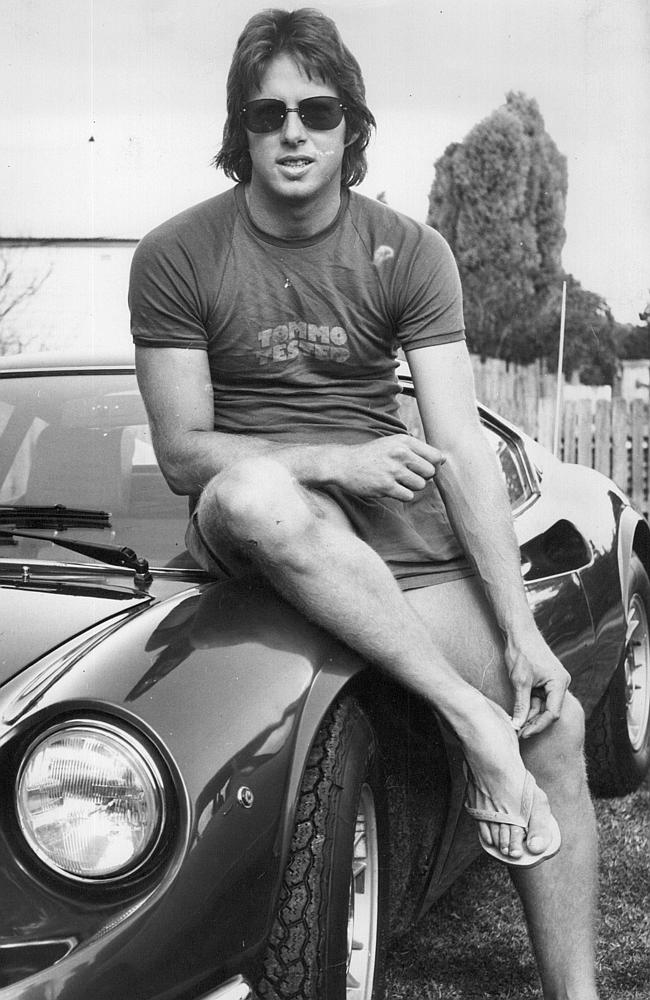
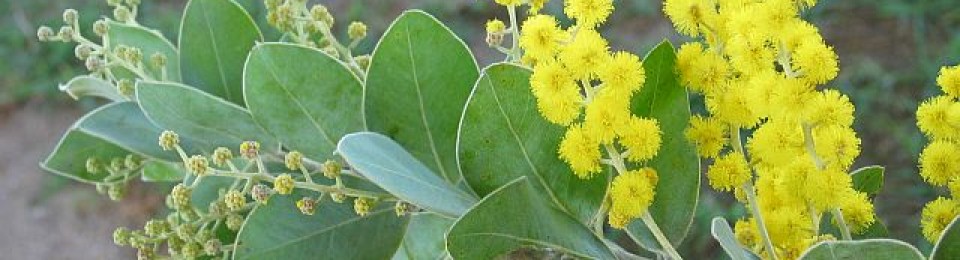
(Photo shows 1970s bowler Jeff Thomson)

NAME UPDATE: The baby’s name is John Patrick Francis!

POLL RESULT: The public’s choice for the baby’s name was Patrick John Francis, with nearly half of respondents voting for this name combination.

Poppy Raine and Sunny Beau

Tags

, , , ,

1355814-3x2-940x627

Twins
Arion and Peleh
Hallie and Harlow
Milly Iris and Leila Renee (Matilda, Charlie)
Nyia Elizabeth and Xavier Thomas (Bailey)
Sadie and Olive
Shia and Harley – both boys (Shaiy, Ethan, Issac)

Girls
Alessia Virginia
Amelie Juanita (Harrison)
Arabella Hermione Rose (Charlie, Olivia, Edward)
Arielle Arwen
Chloe Blyth
Genevieve Laurenn (Sebastian)
Grace Eleanor (Lucy)
Indigo Freya (Mackinley)
Josephine Daisy
Lolita Valentina
Lucinda Ellen (Darcy, Annabelle)
Olive Eugenie
Poppy Raine (Dusty)
Quinn Morgana
Remi Mae (Jayla)
Rita Elizabeth
Sophie Seerita
Tiahnee Allegra
Tully Ellis
Vienna Charlotte (Rhys)

Boys
Ace Winter
Ary (Mina, Rei)
Boston George
Denilson Thiago Silva
Denzel Brae (Layla)
Florin Frederick (Priya, Theo)
Holden James (Lily)
Joachim David (Willoughby)
Jobe Stanley
Jude Montgomery
Kade Aryan
Massimo Vassili
McLeod Fletcher
Moses Isaiah
Sunny Beau
Taj Archer (Tahli, Kobie, Kadel)
Tray Dennis William (Antwan, Makailah, Navaeh)
Tucker Scout
Vincent Christopher (Gianni, Rocco)
William Emile

Thank you to Brooke at Baby Name Pondering, who contributed some of these names from the Herald Sun.

Note: Some of these names are from Bonds Baby Search 2014.

(Picture shows a rainbow over Fairhaven Beach, south of Geelong on Victoria’s Great Ocean Road; photo from the ABC, submitted by Rob Putland)

Requested Name: Eva

Tags

, , , , , , , , , , , , , , , , , , ,


Front1Eva is the Latinate form of Eve, a Hebrew name translated as “breath, life”. Eve is famous as the first woman in the Bible, and the companion of the first man, Adam. She shared Adam’s fate of being cast out of the Garden of Eden, and is regarded in the Bible as the mother of all humanity. Apart from the biblical figure, there is also a saint named Blessed Eva of Liege, a medieval holy recluse.

Eva is the most usual form of the name Eve in many countries around the world, and in Ireland and Scotland, can be used to Anglicise the Irish name Aoife, meaning “beauty”. In Australia, Eva has historically been often used by European immigrants, particularly amongst Catholics and Jews. This gives it considerable scope as a potential heritage choice.

Amongst English-speakers, the name received a boost of popularity in the 19th century after the publication of Harriet Beecher Stowe’s 1852 anti-slavery novel, Uncle Tom’s Cabin. In the book, Evangeline St. Clare, or “Little Eva” is an angelic little girl who inspires love in even the most heart-hardened, and in her final throes, converts all the slaves to Christianity with some locks of her hair. It is the pure goodness of Little Eva which changes the lives of all around her.

Uncle Tom’s Cabin created a wave of pro-slavery novels to combat its views, and one of them was Little Eva: the Flower of the South, in 1853. Quick to cash in on the Little Eva phenomenon, it features yet another angelic little girl called Little Eva, equally loving and lacking in prejudice – only in this book, Eva is so kind-hearted that when the slaves are set free, they elect to remain with her of their own free will. This idealistic dream of voluntary slavery never came to pass on a large scale.

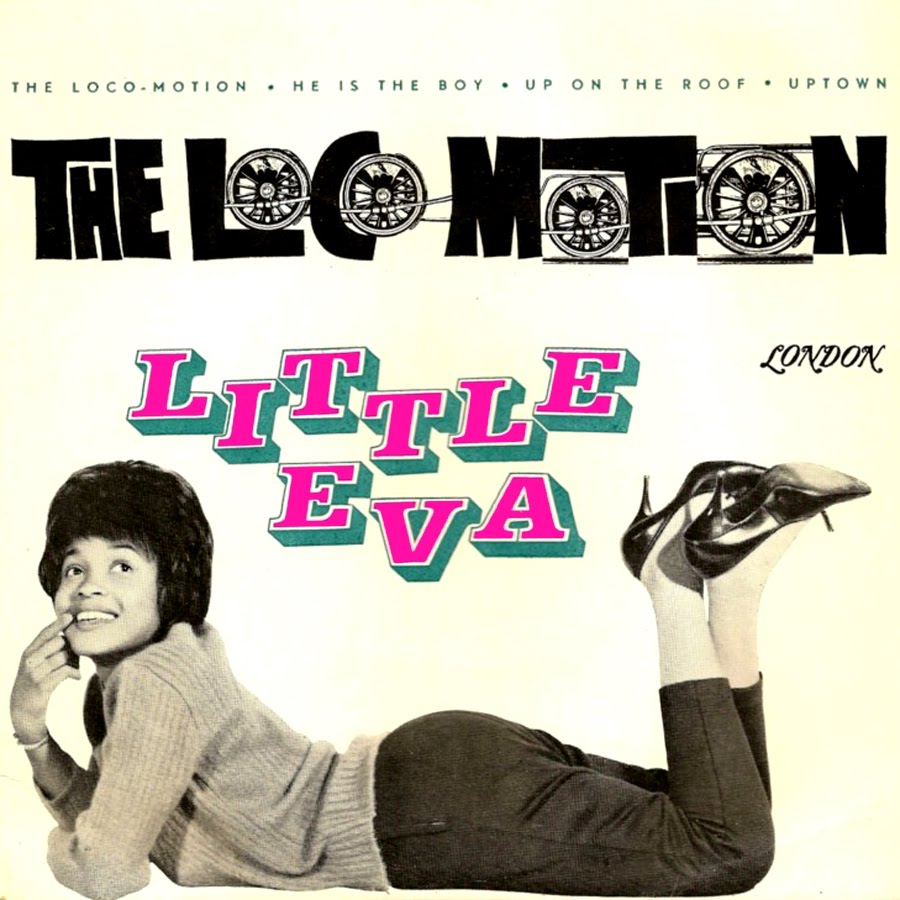
A real life Little Eva was the 1960s pop singer, born Eva Narcissus Boyd. She didn’t receive her moniker from either of these literary characters, but was called Little Eva by her family to distinguish her from her aunt, also named Eva. Little Eva is most famous for singing The Locomotion, later covered by Australian pop star Kylie Minogue. Little Eva apparently wasn’t too impressed by Kylie’s version.

Another Australian connection to Little Eva comes from World War II, when an American Air Force plane named the Little Eva got lost and crashed after a bombing mission in an isolated region of the Gulf of Carpentaria in Queensland. What happened to the survivors of the crash, and their desperate struggle against the dangers of the Australian outback, was made into a documentary called Aeroplane Dance, and is being developed into a feature film scheduled for release this year.

Eva is a classic name in Australia which has never left the charts. It was #37 in the 1900s, sinking until it left the Top 100 in the 1930s. It reached its lowest point in the 1980s at #425, then rose steeply during the 1990s to make the Top 100 for the late 2000s. Currently it is #24 nationally, #26 in New South Wales, #30 in Victoria, #31 in Queensland, #66 in Tasmania, and #27 in the Australian Capital Territory.

Eva is a very international name, being popular in all English-speaking countries, and all over Europe, including Eastern Europe and Scandinavia. It is most popular in Slovenia, at #2, and its popularity in Britain and New Zealand is almost identical to that in Australia.

Eva’s position in the Top 100 is stable, and it is now at its highest level of popularity ever. This makes it a Contemporary Classic – a traditional classic name which manages to feel modern and up-to-date. Because it is still rising, albeit gradually, it is also an Up and Coming Classic, so that it still seems rather fresh and stylish.

This all helps to make Eva an attractive choice. Furthermore, it fits in with the trend for short names ending in -a, such as Isla and Ella, and the V names, such as Ava, Ivy, Evie and Evelyn. This means that while Eva doesn’t stand out amongst its peers, neither does it sound particularly distinctive.

However, for those who care about such things, Eva has the advantage of being a classic, unlike Isla, Ella, Ava, Ivy and Evie, and also began rising before them, so that it cannot be accused of being a copycat. Eva is closest to the name Evelyn, which is also a classic that began rising in the 1990s – although Evelyn has yet to reach the popularity it enjoyed in the 1900s.

Eva is a beautiful classic name that is feminine without being frilly. Eva sounds intelligent as well as pretty, and it’s a name which ages well. It is easy to spell and pronounce, and is popular without being either extremely common or faddish. That makes it a baby name which might tick a lot of boxes on many people’s lists. The usual nicknames are Eve or Evie, but it is so short and simple that it doesn’t really need a nickname.

POLL RESULT
Eva received an excellent approval rating of 83%, making it one of the highest-rated names of 2014. People saw the name Eva as a stylish classic (23%), feminine yet not frilly (19%), beautiful or pretty (18%), and easy to spell and pronounce (17%). However, 6% thought it was too popular. Nobody thought the name Eva sounded too much like the word evil.

Thank you to Brooke for suggesting the name Eva be featured on Waltzing More Than Matilda

Top 20 Baby Names in the Northern Territory for 2013

Tags

, ,


GIRLS

  1. Charlotte
  2. Olivia
  3. Amelia
  4. Ruby
  5. Chloe
  6. Matilda
  7. Mia
  8. Sophie
  9. Emily
  10. Evelyn
  11. Grace
  12. Isabella
  13. Jasmine
  14. Zoe
  15. Lily
  16. Madison
  17. Ava
  18. Ella
  19. Isla
  20. Savannah

BOYS

  1. William
  2. Cooper
  3. Oliver
  4. Lucas
  5. John
  6. Mason
  7. Noah
  8. Thomas
  9. Alexander
  10. Jack
  11. Michael
  12. Ethan
  13. Jaxon
  14. Logan
  15. Riley
  16. Xavier
  17. Isaac
  18. Jackson
  19. James
  20. Lachlan

GIRLS NAME TRENDS

Biggest Riser: Evelyn (+11 at least)

Biggest Faller: Sophia (-13 at least)

New: Evelyn, Isla, Lily, Madison, Savannah

Gone: Alice, Hannah, Layla, Maddison, Sophia


BOYS NAME TRENDS

Biggest Riser: Oliver (+18 at least)

Biggest Faller: James (-17)

New: Alexander, Isaac, Jaxon, John, Logan, Noah, Oliver, Xavier

Gone: Charlie, Daniel, Harrison, Henry, Levi, Liam, Ryan, Samuel, Tyler

NOTE: The Northern Territory only releases a Top 20 each year due to its very small population size.

Celebrity Baby News: Cameron Bird and Kellie Sutherland

Tags

architectureinhelsinki_web_1

Music artists Cameron Bird and Kellie Sutherland welcomed their first child last month, and have named their son Ralph.

Cameron and Kellie are from indie pop band Architecture in Helsinki. The band was formed in 2000, and got its name after Cameron cut up newspapers and rearranged the words. Their new album NOW&4EVA has just been released, and to promote it they have opened a temporary concept store in Melbourne Central Shopping Centre. They will be touring in Australia to promote the album, and hope to tour in North America soon. Cameron first met Kellie at a party, where he invited her to join the band. They have been together for five years, and live in Melbourne.

(Photo is of Architecture in Helsinki; Cameron is first on the left, and Kellie is the only woman)

Celebrity Baby News: Football Babies

Tags

,

497815-22d1c1b0-af3c-11e3-bbbe-18ebc4e71679

NRL footballer Tariq Sims, and his partner, model Ashleigh Sudholz, welcomed their first child on March 1 and have named their daughter Lakia Kai. Tariq has played for rugby league team, The North Queensland Cowboys, since 2011, and has also represented New South Wales Country and the national team of Fiji, which he qualified for through his Fijian mother. Tariq’s name was featured on the blog. Ashleigh is an award-winning swimwear model who specialises in promoting sportswear.

A-League footballer Matt Smith, and his wife Aicha, welcomed their third child on March 18, and have named their daughter Isla Evelyn. Isla Smith joins big sister Ava, aged 5, and big brother Owen, aged 2; Owen’s birth was announced on the blog. Matt is the captain of Brisbane Roar FC.

(Photo shows Tariq and Ashleigh before Lakia’s birth)

Celebrity Baby News: Kelly Landry and Anthony Bell

Tags

,

383626-sail-with-the-stars-boxing-day-bon-voyageModel and TV presenter Kelly Landry, and her husband, accountant and skipper Anthony Bell, welcomed their second child on March 26, and have named their daughter Thea Elizabeth. Thea Bell joins big sister Charlize, aged 2; Charlize’s birth was announced on the blog.

(Photo of Kelly, Anthony and Charlize from The Daily Telegraph)

Names of Australian Birds for Girls

Tags

, , , , , , , , , , , , , , , , , , , , , , , ,


Eastern Rosella #40I seem to have covered several bird names on the blog recently, and that might be because our family was watching light-hearted bird documentary series, Hello Birdy, on the ABC, or maybe just because I love birds. Australia is lucky enough to have a staggering array of birds, many of them colourful, beautiful, intelligent, or unusual, and sadly, often under-appreciated. Here are some names that bring to mind a few of our feathered friends. Click on a likely link, and you will be taken to a YouTube video of each bird – there’s at least one for every entry.

Brahminy
The Brahminy Kite is a bird of prey and scavenger native to Australasia and Asia; in Australia they are found in coastal regions in the north. They are chestnut brown with a white head, breast, and tail tip, and typically nest in trees in mangrove swamps. The name Brahminy is due to their being found in India; it alludes to the Hindu Brahmin priestly caste, and is said BRAH-min-ee. The Brahminy Kite is the official mascot of Jakarta, in Indonesia, and in India is regarded as a representation of Garuda, the sacred bird of the supreme god Vishnu. I would not have considered this as a person’s name if I hadn’t seen a baby girl named Brahminy. It’s a bold choice, and its connection with a sacred bird is fascinating.

Corella
The Corella is a small, white cockatoo with a pink blush to its plumage. They are found from the central deserts to the eastern coastal plains, and are a familiar sight on farms and in cities. In some areas, Corellas have become so numerous they are considered a pest, being particularly destructive to trees and cereal crops. They congregate in large flocks, even up to several thousand, and make a high-pitched screeching noise which is ear-piercing when a flock all calls together, and can be heard for miles. Although they are noisy birds, they are very playful and have the joie de vivre that all parrots are blessed with. They are popular as pets, because they are good talkers, and excellent mimics. The word corella comes from the Wiradjuri language of central New South Wales. Corella has been used as a girl’s name since the 18th century, and is probably part of the Cor- group which is based on the Greek Kore, meaning “maiden”. The bird gives it a uniquely Australian flavour.

Dove
Here’s the dirty little secret about Doves: they’re just pigeons! Not only that, it’s unclear what makes some species of pigeons “doves”, because while we generally call smaller pigeons doves, that isn’t always the case. The confusion arises because the word pigeon is from Latin, and dove from Ancient Germanic, so they are two different words for the same thing (like autumn and fall). Nonetheless, their images are completely different: doves are symbols of peace, while pigeons are seen as disease-ridden pests (in fact, pigeons are no more disease-ridden than any other animal and pose no general health risk). Australia has a number of species identified as doves, and although we often think of doves as modest and grey, the Emerald Dove has striking green colouring, and the many varieties of Fruit Dove are likewise very colourful. There are also introduced species of dove, including those kept as pets. Dove has been used as a first name since the 17th century, and has been far more common for girls; a contemporary example is Disney actress Dove Cameron. Dove not only rhymes with love, but doves are used as symbols of love, since pigeons mate for life; the word dove can mean “sweetheart”. Perhaps because of this, doves were considered sacred to goddesses such as Venus. Another religious connection is that in Christian iconography, the Holy Spirit is often depicted as a dove.

Halcyon
Halcyon is the Latin name for the Tree Kingfishers, a large genus of birds found in Africa, Asia and Australasia, with Australasia having the most species. They are recognisable by their large heads and long pointed bills, and many are brightly coloured, often in iridescent blues and greens. The Laughing Kookaburra is a type of tree kingfisher, an iconic Australian bird with a raucous cackle that seems to epitomise the spirit of the bush. Halcyon is from the Greek for “kingfisher”, and is connected to a character from Greek mythology named Alcyone; the daughter of the winds, she married Ceyx, the son of the morning star. The pair were very much in love, and after Ceyx was lost at sea in a terrible storm, the unhappy Alcyone threw herself into the waves to end her life. The gods took pity on them, and changed both into kingfishers. According to legend, the “halcyon days” of midwinter, when storms cease, was when Alcyone laid her eggs, and her father restrained the winds so that she could do so safely. Because of this, the word halcyon (pronounced HAL-see-uhn) has come to mean “calm, serene, peaceful”, with our halcyon days those happy times we look back on with nostalgia. Halcyon has been used as a girl’s name since the 19th century: pretty and unusual, it gives Hallie as the nickname.

Lalage
Lalage is the scientific name for the Trillers, native to Asia and Australasia; they are small birds, usually coloured black, white and grey. They are called Trillers because during the breeding season, the males make a cheerful, almost continuous, trilling call. Lalage is derived from Greek, and means “to babble, to prattle”, or, in the case of birds, “to chirp”. The name became known from an ode by Roman poet Horace, where he speaks of his love for a young girl, his “sweetly laughing, sweet talking Lalage”. It has been used a few times since as a literary name, most notably in Kipling’s Rimini. Lalage has had occasional use, and in Britain seems to have a fairly upper-class image: contemporary examples are photjournalist Lalage Snow, and fashion designer Lalage Beaumont. In English, this name is usually pronounced LAL-a-gee or LA-la-ghee – just remember it’s three syllables, emphasis on the first, hard g like girl, not soft like germ. This fascinating name fits in with L-L names like Lillian, and as Lalage was a very young courtesan, almost seems like a posh version of Lolita! Lallie, Lollie, and Lala could be nicknames.

Lark
Larks are plain brown birds to look at, but their great beauty is in their voices, for they are famous for their melodious singing. This has made them a favourite subject for poets, such as Percy Bysshe Shelley’s, To a Skylark, and to say someone sings “like a lark” is a great compliment to the range and joyousness of their notes. Traditionally, larks are a symbol for dawn and daybreak, as in “getting up with the lark”, and this has given them religious overtones, for just as dawn is the passage between night and day, it can also be seen as that between heaven and earth. In Renaissance paintings, larks were sometimes used as a symbol of Christ. Although Australia has many birds with lark as part of their name, our only true lark is Horsfield’s Bushlark, widely found in grasslands and open woodlands. It is much smaller than larks in the northern hemisphere, and doesn’t have quite such an impressive voice, although its songs are still rich and varied, and it is a good mimic as well. The Eurasian Skylark which features in Shelley’s verse has been introduced here. Lark has been used as a name since the 18th century, and is historically more common for boys, but is often now thought of as more feminine than masculine. It’s a simple, non-frilly nature name laden with symbolism, and is more often found in the middle.

Maggie
Maggie is the affectionate name for the Australian Magpie. Although they look similar, it isn’t closely related to the European Magpie. Easily recognisable from their black and white plumage, magpies are very familiar in suburban life. Magpies are one of Australia’s favourite songbirds, because they have a complex, melodious warble, and will carol in chorus at dusk and dawn. They can also mimic other birds and animals, including human speech. Bold and sturdy, they are not typically wary of humans, and will happily accept (demand!) free food from us. They become unpopular in spring, as males can be so aggressive during breeding season that they swoop or even attack humans to warn them away. This is when feeding them pays off, as they can tell individual people apart, and won’t scare their buddies. The Magpie was a totem animal for the Indigenous people of the Illawarra, and is an official emblem of South Australia, appearing on the state flag. Magpies is a common name for sporting teams, and the cocky attitude of the Magpie is seen as indicative of the national character. Maggie is also a short form of Margaret. It was #174 in the 1900s, and was off the charts by the 1940s, returning in the 1970s. It has climbed steadily, and is currently in the 100s.

Oriole
Orioles are a large family of birds found throughout the world, which come in a variety of colours. Australian Orioles are green, perfect for blending in with the trees. They are fruit-eating birds, and the Figbird is one of the Orioles, although it doesn’t only eat figs. Orioles and Figbirds are attracted to backyards with small fruit trees and bushes, and which have native trees such as eucalypti and wattle; they are a fairly common sight in suburbia. The word oriole is derived from the Latin for “gold”, because the Eurasian Golden Oriole is a bright yellow. Oriole is related to names like Aurelia and Auriol, which are from the same derivation, and looks a lot like Oriel, which may be seen as a variant of Auriol, but also has Irish and Germanic origins. Oriole seems like a way to retain the golden meaning, while also referencing the bird.

Rainbird
The Rainbird is the colloquial name for the Pacific Koel, a species of migratory cuckoo which arrives here in spring from Papua New Guinea and Indonesia, and is found in north and eastern Australia. It’s called a Rainbird because of the belief that its rather mournful “whooping” call is a harbinger of wet weather. Males call for a mate during their breeding season, which coincides with the spring rains and the summer “wet season”, and are so loud they can be considered a nuisance. Like all cuckoos, Rainbirds lay their eggs in the nests of other species so that they can be raised by the unsuspecting hosts; however, unlike most other cuckoos, the baby Rainbird doesn’t kill the host chicks. Rainbirds are rather goofy-looking birds; the males have glossy black plumage and bright red eyes. I have seen Rainbird used as a girl’s middle name, and think it makes a wonderful name for a spring or summer baby. It would work equally well for boys.

Rosella
Rosellas are colourful parrots which are very familiar in suburbia. I think we might take them for granted, because they really are pretty, with a more pleasing range of calls than most parrots. Rosellas will be attracted to any garden that provides them with water, seeds and fruit, and can become so tame that they will eat out of your hand. This has led them to become common as pets, but in captivity they can become bored and aggressive, so I think it’s nicer to have them as backyard visitors. European settlers first saw Eastern Rosellas at Rose Hill (now called Parramatta), and called them Rosehill Parakeets; this evolved into Rosehillers, and eventually became Rosella. The Sydney suburb of Rozelle is named after them. Rosella is also a popular brand of tomato sauce, which sports an Eastern Rosella as its logo. By coincidence, Rosella is also an Italian name, an elaboration of Rosa, and looks like a combination of popular Rose and Ella.

POLL RESULTS
The public’s favourite names were Lark, Maggie and Rosella, and their least favourite were Brahminy, Oriole and Lalage.

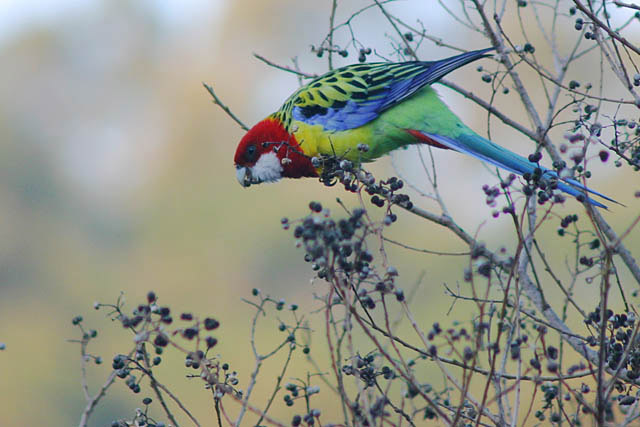
(Photo shows an Eastern Rosella)

Elvis and Memphis

Tags

, ,

elvis-kids

Twins

Duke and Valentina
Gabriel and Rafaela
Koa and Leilani
Mila-Giselle and Allegra-Paris
Rosa and Anjali
Zander and Stellan

Girls
Anthea Jayne
Avery Jewell (Austin, River)
Azaria Kahurangi Rose
Charis
Cleo Alice (Evie, Jack, Lola)
Corleigha Shakiya Gay
Daisy Evelyn (Phoenix, Jett)
Delilah June
Edith Ruth Wilma “Edie”
Eloise Angela Mary (William, Samuel)
Everly Violet
Florence Gretel (Elsie)
Hadley Honour
Harriet Emily Mabel
Juno Rose
Lily Evangeline (Jayden, Jack)
Louanna Cynthia
Morgan Paige (Zoey)
Nirvana
Ripley Temperance
Rochelle Lucy
Seraphina Catherine
Sorayah Verchanti
Starlett
Zarlie Gwen

Boys
Ace Jesus
Adrian Berry
Arden Blair Von
Austin Mio (Ariella)
Eli James Addison
Elvis Liam (Maggie)
Gerald Eric Steven
Hermes
Ike Albert Danger
Jadon Feta
Jali John
Jamieson Vernon (Dasha)
Jarrah Indie
Jarvis Arthur James
Kamdyn Nash (Brayth)
Memphis Colt (Diva)
Orion Gabriel
Rafael De Shan (Solomon)
Samson Spencer (Roly, Felix)
Sheldon Paul Ross
Sydney Paul
Tex Leo Clarence
Vaughn Edward Rolf (Lincoln, Evie)
Windsor Breeze
Wyatt Joe

Note: Some names from Bonds Baby Search 2014.

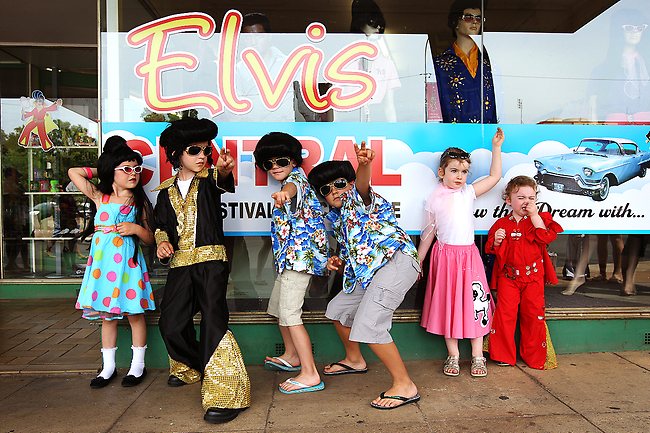
(Picture shows children celebrating at the Parkes Elvis Festival in New South Wales)


Famous Name: Clarice

Tags

, , , , , , ,

Clarice_Beckett_-_Punt_Road_Bridge,_Yarra_River

As we move into misty autumn, we will look at an Australian artist who worked in obscurity, and whose 127th birthday was on this year’s Equinox, March 21. Clarice Beckett was born into a comfortably-off Victorian family – her grandfather was the master builder who designed and built Como House.

Her father’s only ambition for his daughter seems to have been that she would marry into wealth, but her mother, a hobbyist painter, encouraged her artistic talents. Clarice studied art in Melbourne, including three years under Frederick McCubbin, and was a student of the controversial artist Max Meldrum, who argued that painting was a pure science, most reliant on tone, and with colour the least important component.

In 1918, Clarice’s father retired, moving his family to the Melbourne bayside suburb of Beaumaris. Her parents were ill and demanding, so that Clarice took responsibility for most of the household chores. Mr Beckett seems to have been disappointed in his career, and to have been a very difficult man. He wouldn’t allow Clarice to have a studio, telling her that the kitchen table was good enough.

Clarice built herself a little cart filled with painting equipment, which she used as a portable studio. She tended to go out very early and late, the only times she was free from domestic duties, to paint scenes from her local area, finding endless inspiration in the sea, beaches and suburban streets, bathed in the soft light of dawn and dusk. Her style was simple and original, and her paintings strongly atmospheric, often set on misty days.

Clarice was never taken seriously as an artist in her lifetime, with critics occasionally sneering at her “continual state of fog”, but most ignoring her completely. Sales of her work were pitifully small. Even her mentor Max Meldrum, who was supportive of her work, made it known that there would never be a great female artist, as women lacked the necessary capacity to be alone. Yet he praised Clarice for “working like a man”, and defended her fiercely. Her artist friends saw her as beautiful, unassuming and intelligent; sharply witty, but with the aloofness of extreme shyness.

In 1934, Mrs Beckett died from a stroke, and Clarice was severely affected by her mother’s death. The two had become very close, and Clarice was left alone with her invalid father, who became jealous of anything which might take his daughter away from him. She stopped attending art classes or social events, and when friends came to the house, Mr Beckett ordered them to leave. Clarice was now completely isolated, and she admitted to feeling a failure.

Clarice still painted whenever she could and one night, a year after her mother’s death, she continued working outdoors even though a storm had set in. She caught a chill which developed into pneumonia; her heart was already weak, and she died five days later, aged 48. The doctor believed that she might have survived, had her will to live been stronger.

It was not until 1971 that an exhibition of Clarice Beckett’s paintings were held, after more than 2000 of her canvases were found rotting away in a country barn. A leading critic hailed her as “a remarkable modernist”, and the Australian National Gallery purchased 14 of her paintings. The public were so enthusiastic that viewing hours were extended and the exhibition sold out. Since then, there have been several more public exhibitions of her work; she is regarded as one of Australia’s finest artists, and it is promised that she will never be forgotten again.

Clarice is a medieval form of the name Clara, a Roman name which comes from the Latin meaning “clear, bright”. Clarice is thought to be based on the Old French form, Claritia – just as the medieval name Lettice was based on Letitia. It was brought over by the Norman aristocracy, who were big fans of “Clare” names, and it can be found by the early 12th century, sometimes spelled Claris. Clara itself doesn’t seem to have been used in Britain until slightly later.

The name Clarice became well known in 1991 with the release of the Oscar-winning movie, The Silence of the Lambs, whose heroine is the beautifully named Clarice Starling, an FBI trainee on the trail of a serial killer. Clarice Starling was listed by the American Film Institute as one of the Top 100 movie heroes, and is the highest female on the list.

A rather different fictional Clarice is the equally delightfully named Clarice Bean Tuesday, from the children’s books by English author Lauren Child, who also penned the popular Charlie and Lola series. Clarice Bean is the middle child in her family, who longs for space and privacy, but instead finds herself in all kinds of amusingly chaotic situations.

If you like a name that has a song attached to it, you can sing along to Clarice, by Transatlantic folk-rockers, America. Like all songs by this band, I find it pleasant enough, but have little idea what it is about, although the lyrics don’t seem negative at all.

There are two pronunciations of Clarice. It can be said KLA-ris, to rhyme with Paris, which is a more British pronunciation, or it can be said kluh-REES, to rhyme with Denise, which is far more common in the United States. You’re welcome to choose either pronunciation, but to my mind, the first one sounds far more stylish and contemporary, while the second one reminds me of those pseudo-French names like Shanice and Fonice, which seem a bit daggy and dated.

Clarice is a strong yet elegant name which seems intelligent and dignified. It’s a very old name, but to me doesn’t seem “old-fashioned”. I can imagine it sounding adorable on a little girl, like Clarice Bean, but also perfect for an adult, like Clarice Beckett. It would make a great alternative to popular-yet-falling Claire, or fashionable-and-rising Clara for anyone who would like a traditional name which is still a little out of the ordinary.

POLL RESULT
Clarice received an approval rating of 54%. The name reminded 23% of people too strongly of Silence of the Lambs, but 15% thought the name was pretty and feminine. Nobody thought the name Clarice was tacky and tasteless.

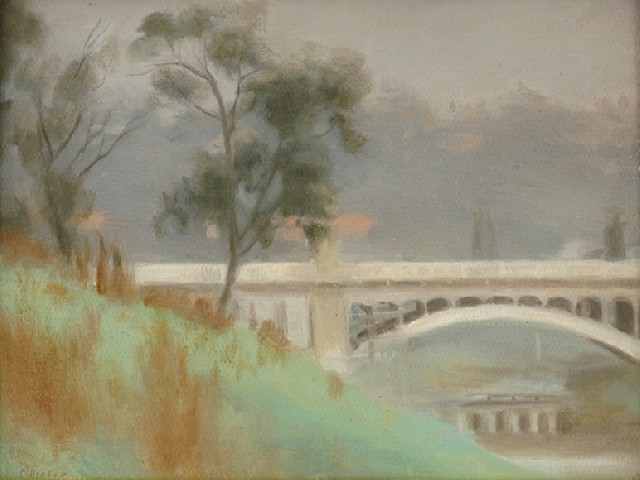
(Picture is Punt Road Bridge, Yarra River by Clarice Beckett)