Celebrity Baby News: Jess Sinclair and Chantelle Delaney

Tags

,

Chantelle Delaney Ladies Luncheon Crown Palladium cJ7gg9UEEFll

Former AFL player Jess Sinclair, and singer Chantelle Delaney, welcomed their first child on November 17 and have named their son Mason Nate. Mason Sinclair was born at 10.23 am, weighing 2.97 kg (6lb 6 oz) and 47.5 cm long. Mason’s name is a nod to Chantelle’s grandmother, May.

Jess played for the Fremantle Dockers from 1997-2000, and for the North Melbourne Kangaroos from 2001-2008. After retiring from AFL, Jess played for Heidelberg in the Northern Football League, and retired from playing last year. This year he began coaching St Mary’s Salesian in the Victorian Amateur Football Association.

Chantelle has been performing since she was a child, and regularly makes international radio and television appearances. In 2008 she took part in the Great Walk to Beijing to raise cancer awareness, and sang a duet with organiser Olivia Newton-John. Recently Chantelle has entertained the troops in East Timor and the Solomon Islands, and performed the national anthem at major sporting events. She is currently working on her debut album. Jess and Chantelle were married in 2009.

Famous Name: Caleb

Tags

, , , , , , , , , , , , , ,

148170-a35f84fa-ca7d-11e3-9aee-4ab1c4ff1b91

Duckbour Caleb James Shang, known as Caleb, or by his Chinese name Lee, or the nickname “Charlie”, was one of the more unlikely heroes of World War I. Quiet, soft-spoken and shy, the slightly-built Queenslander from far north Cairns was 170 cm tall and weighed 51 kg. Furthermore, as the son of a Chinese-born father and Australian-born mother, nobody expected him to even enlist, as only those of European ancestry were considered eligible for military service at this time, and it was unusual for people of Asian ancestry to join the armed forces.

Yet both Caleb and his brother Sidney enlisted in 1916, and in 1917 Caleb joined the 47th Battalion in time to join heavy fighting in Flanders on the Western Front. He later fought on the Somme during the heaviest attack ever faced by Australian soldiers, and after his battalion was disbanded due to severe casualties, he served in the 45th Battalion during the Battle of Amiens. Here he was wounded, and evacuated to England before being sent back to Australia when the war was over.

Caleb was a runner, signaller, and scout, tirelessly running messages and bringing supplies at all hours, signalling while exposed to the enemy, constantly volunteering for dangerous missions into enemy territory, and attacking snipers in broad daylight. The runner’s job was one of the most dangerous on the Western Front, and had a terrifying casualty rate, yet for most of his war service, Caleb got through these perilous situations without a scratch.

Caleb’s outstanding endurance, contempt for danger, gallantry, skilful resourcefulness, and devotion to duty inspired those around him, and earned him the admiration of both the officers and men. The first Australian soldier of Chinese descent to be decorated, the most highly decorated Chinese Australian soldier of World War I, and the most highly decorated Queensland soldier of his time, he received the Distinguished Conduct Medal twice, and was awarded the Military Medal.

When he returned home to Cairns in 1919, Private Caleb Shang received a hero’s welcome, with 3000 people turning out to jubilantly greet him on the wharf at dawn. The mayor was there, as were the Returned Soldiers League, and the Cairns Citizen Brass Band played See the Conquering Hero Comes. The Cairns Post raised a subscription fund to start him off in civilian life, and more than £45 was raised by the townspeople.

During World War II, Caleb served with the Volunteer Defence Force in Cairns; during his service he suffered several head injuries, which may explain why he later spent time in a psychiatric hospital. In the 1940s, there was heightened anti-Asian feeling due to the war against Japan, and Caleb was sometimes the target of racist slurs, as few people knew of his distinguished war record and volunteer service. In 1943, he attended his only Anzac Day parade, apparently in response to the racism he encountered during World War II.

According to Caleb’s sister Alma, he never talked about the war to his family. In 2002, Caleb’s daughter Delta, then in her 70s, described her father as reserved, modest, understanding, kind and gentle, speaking very little about his war service. She could not guess what motivated him to enlist, but knew that her father loved a challenge.

Caleb Shang’s story is not completely unlike that of Caleb in the Bible. According to the Old Testament, Caleb was one of twelve spies sent out by Moses into the land of Canaan. Each spy was the head of one of the twelve tribes of Israel, and Caleb represented the tribe of Judah. Ten of the spies reported back that it would be impossible to conquer the land, but Joshua and Caleb brought back encouraging reports to Moses. Because of Caleb and Joshua’s courage and faith, they were the only two ancient Israelites allowed to reach the Promised Land, and Caleb was granted lands around Hebron, now in Palestine.

There is another Caleb mentioned in the Bible, the great-grandson of Judah. Jewish tradition says these two Calebs are the same person, which would explain why Caleb was the head of the tribe. However, biblical scholars find this unlikely – in fact, they are not even sure that Caleb the spy was an Israelite by birth, as the Bible indicates he was a Kenizzite, from a desert tribe. He might have been accepted into the tribe of Judah, and if so, becoming its head would have indicated someone of really superior ability. That’s more impressive than just inheriting the role from great-granddaddy.

Bible historians believe the story of Caleb represents the movement of a clan which invaded Palestine from the south, settled around Hebron, and became gradually absorbed into the tribe of Judah. According to Bible genealogies, the Calebites were descendants of Esau, twin brother to Jacob, so were closely related to the Israelites, and natural friends and allies. (Nabal, the grumpy first husband of the prophetess Abigail, was a Calebite). The Bible story is a way to explain how a non-Israelite desert people became part of the tribe of Judah.

The original Hebrew spelling of the name Caleb is identical with the Hebrew word kelev, meaning “dog”. Animal names are not unusual in the Old Testament, although nobody knows for sure why Caleb might have been called this. Considering his non-Israelite origins, it’s possible that his name was non-Hebrew, and just sounded like the Hebrew word for dog.

However, some scholars think it may have been given to indicate his original tribal totem as an ethnic signifier; if so, the totem would have referred to the Canaan dog. This is a breed of pariah dog which has existed since biblical times, and is one of the oldest breeds of dog in the world. The Old Testament makes several references to these dogs, both wild ones roaming in packs through the desert, and those which worked alongside humans. The Canaan dog is modern Israel’s national dog.

Canaan dogs are strong, athletic, agile and healthy, with a well-developed survival instinct. Highly intelligent and naturally defensive, they make excellent watch dogs, who bark readily as a warning. They are not aggressive towards humans, being cautious and even docile, and remain strongly attached and loyal to their owners. They are still used as sheep dogs by the Bedouins.

For a tribe to take the Canaan dog as their totem, they would have seen themselves as survivors in the harsh desert – not fighters ready to attack, but willing to defend their territory. Baby name books are generally reluctant to admit the meaning of “dog” to Caleb, and often gloss it as “faithful” or “devoted to God”. Although you can see the Caleb from the Bible story as having canine faithfulness, the original tribal totem seems much more likely to indicate a people tough enough to get through anything.

Caleb has a long history as a Christian name, because a 5th century king of Axum (around modern-day Ethiopia) was named Kaleb; he is considered a saint in the Orthodox tradition. Caleb has been used as an English name since at least the 16th century, and became much more common after the Protestant Reformation (Kaleb has been used almost as long by English-speakers, but not so widely).

A fictional namesake is the hero of William Godwin’s radical 18th century novel, Things as They Are, or The Adventures of Caleb Williams. A raging commercial success, the book was both condemned as dangerous anarchist propaganda, and glorified as an inspiring work of genius. Another is Caleb “Cal” Trask from John Steinbeck’s East of Eden, portrayed on film by James Dean. There have been many other Calebs in fiction, right up to the present, with Pretty Little Liars, and Divergent.

Caleb has charted since the 1970s, when it debuted at #443. It rose steeply until joining the Top 100 in 1996 at #83, but has never been higher than #50. Currently it is #72 nationally, #71 in New South Wales, #95 in Victoria, #66 in Queensland, #61 in Tasmania, where it was one of the fastest-rising boy’s names of last year, and #78 in the Australian Capital Territory.

This is a handsome modern classic – one of the Old Testament biblical names for boys which sounded fresher and more exotic than the familiar Bible classics. Despite being popular for many years, it has remained relatively stable in the bottom half of the Top 100, making it a safe choice. Perhaps the meaning has dogged its footsteps, but I can’t really see any problem as dogs are our beloved companions, known for their beautiful, faithful natures. Cal, Cale or Cabe can be used as nicknames.

POLL RESULTS
Caleb received an excellent approval rating of 84%, making it one of the highest-rated names of 2014. People saw the name Caleb as a modern classic with plenty of history (30%), strong and masculine (19%), and handsome or cute (13%). However, 9% thought it was too popular. 15% of people thought the possible meaning of “dog” wasn’t a problem, as dogs are faithful, smart, and loving, while 6% were really bothered by the canine connection. Nobody thought the name Caleb was harsh or ugly.

Royal Baby News: Lady Edwina Grosvenor and Dan Snow

Tags

, , , ,

article-1334244-0C486177000005DC-204_468x606

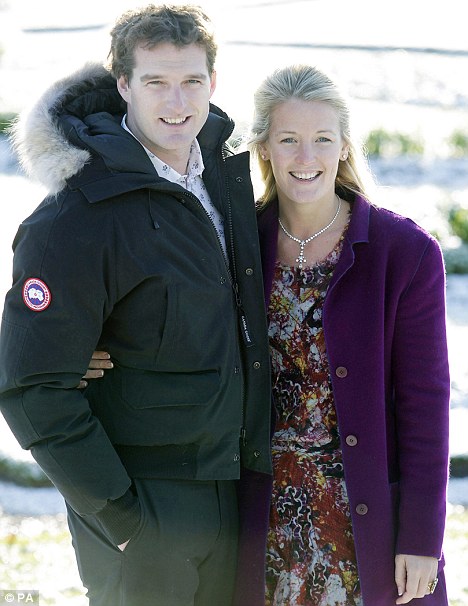
Lady Edwina Grosvenor, and her husband Dan Snow, welcomed their son Wolf Robert on September 9, a brother for Zia, aged 3.

Lady Edwina is a prison reformist and philanthropist. She is the daughter of the Duke of Westminster, the third richest man in Britain, who is significantly wealthier than the queen. Through her mother Natalia Phillips, Lady Edwina is a direct descendant of King George II, and thus has a right of succession to the British throne, although she is only distantly in line. A distant relation of both Queen Elizabeth and Prince Philip, she is also a direct descendant of the Russian author Alexander Pushkin, and Nicholas I of Russia. Princess Diana was Lady Edwina’s godmother, and her mother Natalia is godmother to Prince William.

Dan Snow is a television presenter who has made numerous history programmes for the BBC. Some of the programmes he has presented include Battlefield Britain, Britain’s Lost World, Rome’s Lost Empire, and Battle Castles. In My Family at War, he explored the role of his great-grandfather Thomas Snow, who was a military commander on the Somme during World War I. A political advocate for several causes, he was prominent in the Let’s Stay Together campaign to keep Scotland part of the Union. He and Lady Edwina were married in 2010, in a small private ceremony.

Dan Snow made this statement about the choice of Wolf’s name: Our son was born today, 2005 years to the day since his ancestors erupted out of the Teutoburger Wald and annihilated the mighty legions of Varus. Like those wild Germans, he came screaming out of the dawn mist, under a full moon, and so we named him Wolf.

The Battle of the Teutoburg Forest (Teutoburger Wald) took place in September 9 AD, when an alliance of Germanic tribes led by Arminius, chieftain of the Cherusci tribe, ambushed and annihilated three Roman legions and auxiliaries led by the Roman general Publius Quinctilius Varus. The result of the battle was that Germania remained independent and never became part of the Roman Empire. The date is a matter of speculation, but a full moon in September that year would have been late in the month – September 9 was two days after the new moon. There would been attacks at dawn during the course of the battle, which raged for days.

Wolf and his father Dan share the same middle name, which also happens to be the name of two of Wolf’s great-grandfathers, on both sides of his family.

(Photo of Lady Edwina Grosvenor and Dan Snow on their wedding day from the Daily Mail)

The Gentle Art of Discussing Baby Names

Tags

, , , , , , , , ,

article-1047463-025C436E00000578-505_468x354

Being a life-long name-nerd, I spent a lot of my younger years dreaming up names for future children. In these daydreams, I was joined at the hip with someone who agreed enthusiastically with my name choices, or responded joyously : “But my darling! That has always been my favourite name, too!”. At the very worst, I hoped my future other half would be the type who said, “Honestly, I’m not very interested in baby names. Anything you pick you out will be fine, sweetie pie”.

These dreams did not eventuate. My husband turned out not to be the easygoing “whatever you say dear” sort of bloke, and it seemed as if every name I suggested was greeted with: No, Nope, Not that one, I don’t think so, and the occasional Absolutely not. I had a long list of names, and every single one got shot down without explanation. What was most frustrating was that he never suggested any names, so I had no idea what was wrong with all these names, or what names he would prefer.

After lots of arguments that never went anywhere, I came up with a new set of rules. He had to at least tell me what was wrong with the suggested name, or it stayed on the list. And just saying “I don’t like it” wasn’t good enough – he had to explain exactly why he didn’t like it. If his answer was something silly, like “I once worked with someone called that and I didn’t like them”, then the name stayed on the list.

There were a few false starts, as he feared as I would jump down his throat the minute he said anything. But I insisted I’d rather hear the truth, and told him I would hear him out without arguing. He started to elaborate on his Nos, and boy, did the flood gates open.

Sometimes it was hard to hear (some of these were names I loved after all), and sometimes I did break my promise and argued back, but as time went on it got easier and easier. The best part was that we were no longer deadlocked, and as he explained what was wrong with every single name I suggested, I started to get a feel for his tastes. That meant that rather than thrash out every name, I could automatically cross off those similar to ones he disliked.

Here are some of the highlights (?) of the process.

BOYS

Alistair
Him: Too posh. People will think he has a country estate and a trust fund, but instead he’ll have a swing set and a piggy bank.
Me: Perhaps that will teach people not to stereotype names.
Him: There’s breaking stereotypes, and then there’s committing fraud. This is more the second one.

Ari
Him (surprised): Oh … I like that one! What language is it from?
Me: It’s Old Norse.
Him: Awsome, I love Scandinavian names. What does it mean?
Me: Eagle.
Him (outraged): What kind of sick meaning is that? How could anyone be so twisted as to call their child evil?
Me: Not evileagle. Like the bird.
Him: Well, now all I can think of is evil when I hear it.
(This ended in a heated discussion about people who don’t listen versus people who don’t speak clearly enough).

Angus
Our surname starts with Wil-, so any name ending with an S sound will end up having SWILL in it. This one sounds like “Anger Swill”.
(I cross off all names ending in an S sound).

Bede
Sounds like bidet.

Dante
We’re not Italian!

Digby
Sounds like a dog’s name.

Edmund
Me: I thought maybe with Teddy as the nickname, but is it too close to Eddie?
Him: It’s too close to Narnia, if you ask me.
Me: But you said yes to Lucy!
Him: Lucy sounds sweet – Edmund sounds like a little creep who will sell you out to the White Witch for a block of Turkish Delight.

Ezekiel
It’s like someone throwing crockery down a flight of stairs. No weird Old Testament names – they’re ugly.

Felix
Too catty. And we can’t have any names ending in X, because it sounds the same as something ending in S.
(I cross off all names ending in X).

Gabriel
Too girly.

Hamish
Him: I really hate Scottish names – they’re ugly and pretentious.
Me: But Scottish names are traditional in your family.
Him: Yeah well this is one tradition coming to an end now because I hate them!
(I cross off all Scottish names, gloomily knowing my parents-in-law will blame me).

Hugo
It’s a cartoon villain name.

Jago
It will get twisted around into Gay Joe.

James
Him: That’s the most boring boy’s name in existence.
Me (enraged): It ismyfather’sname!
Him (aghast): What? No! Your dad’s name is Fred!
Me: His name is James – his nickname is Fred!
(This ended in a heated discussion about people who don’t bother to learn their own father-in-law’s name versus people who cause confusion because their nicknames are nothing like their actual name).

Jasper
Him: Yuk, sounds evil.
Me: It doesn’t – Jasper is a saint who brought gifts to baby Jesus.
Him: No, Jasper is a crook who stole Dalmatian puppies so a demon hag could turn them into coats!

Jarvis
“Jar of swill” – don’t you remember the whole discussion we had about Angus?
(Oops, forgot to cross it off).

Jude
Hey Jude, na na na na – aargh that song is an earworm, now I’ll never get it out of my head.

Leander
Him: For a boy or a girl?
Me: It’s a boy’s name.
Him: Well it sounds like a mix of Leanne and Miranda.
Me: What if you think of it more as a mix of Leo and Alexander?
Him: I hate Leo and Alexander.
(I secretly cross Leo and Alexander off the list).

Monty
Monty Python.

Oscar
Too grouchy.

Owen
Sounds as if he will always be owin’ money.

Rafael
We’re not Spanish!

GIRLS

Allegra
Him: What would we call her – Leggy? Where does it come from, anyway?
Me (evasively): Well, Lord Byron had a daughter named Allegra.
Him: What happened to her – did she end up famous, like that other daughter?
Me: Um, no … he took her from her mother and stuck her in a convent, and she died.
Him: That’s horrible! This name should be banned!

Clementine
She drowned!

Cordelia
Him: Her senile father didn’t love her! Why are all these names after girls abused by their dads?
Me: Clementine wasn’t abused.
Him: No, her father committed suicide!

Cressida
Him: Wasn’t she a prostitute?
Me: No.
Him: Well it reminds me of watercress anyway.

Harriet
I only like pretty girls’ names.

Esther
Me: This was my favourite teacher’s name.
Him: Too chemical-y.

Jemima
Him: Would she be named after the rag-doll, or the duck?
Me: Maybe after the beautiful daughter of Job in the Bible.
Him: So we’d be naming our daughter after a woman whose father was tortured for no reason? Can we not have any names from stories where the father has a terrible time, please?
(I cross off Keziah).

Lyra
Sounds like liar.

Madeleine
Me: I’m not sure about this one, what do you think?
Him: Nothing that starts with the word mad.

Saskia
Sounds like a snake hissing.

Sylvia
Him: No names starting with S, because look at the initial.
Me: You mean SW, south-west?
Him: No, S. Wil-, swill!
Me: Oh not this again.

Ursula
Him: Don’t you realise the joke on Friends was that Phoebe had a nice name while her evil twin Ursula had an awful one?
Me: So you like the name Phoebe?
Him: Yes.
Me: Me too, let’s add it to the list.
(Partial success!)

Virginia
It looks like virgin and sounds like vagina.

Zara
I hate names that start with Z.

As we worked through the process, it was apparent what names had to go – apart from anything Scottish, Old Testament, starting with Z, ending with X, or starting or ending with S. He didn’t like names that had negative meanings or associations, especially ones from childhood, and was exquisitely sensitive towards anything which sounded even vaguely negative or ridiculous.

Fussy and over-sensitive about names? Now that’s something a name nerd can understand. We weren’t so different after all.

POLL RESULTS
People thought the names that were most unfairly rejected by my husband were James and Harriet. However, there seemed to be sympathy for his views on Bede and Jarvis, as they received no votes to “save” them.

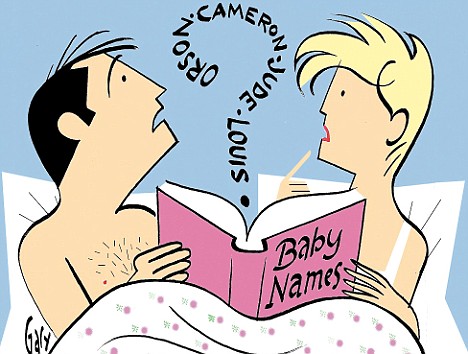
(Cartoon from the Daily Mail)

What Would You Call Archer and Cleo’s Baby Sister?

Tags

, , ,

BROTHER AND SISTER

Lydia and Oliver have a son named Archer, and a daughter named Cleo – Lydia found the blog quite helpful when they were choosing Cleo’s name. They didn’t plan to have more children, but are expecting another girl next month. Now they feel at something of a loss when it comes to names.

The two front runners at the moment are Edie and Quinn. Lydia has been thinking about Edie and loving it ever since she found she was pregnant, while Quinn is a recent name love which seems cute and sassy, like Cleo. Lydia wonders if Quinn is feminine enough for a girl, although she has been tracking it in birth announcements on the blog, and believes that its use skews more towards the pink end of the spectrum.

Other names that have been considered are Amelie nn Millie (she worries that it would constantly get turned into Emily, just as Cleo is often mistakenly called Chloe), Milla nn Millie, and Lexie. Lydia loves the name Holly, but their one-syllable surname ends with an OW sound (eg Bough), and Oliver says Holly Bough sounds too much like “Holy Cow”. Lydia wonders whether it does really?

Oliver likes the names Alice, Zoe, Molly, and Elle/Ellie, but Lydia has vetoed all of them. She thinks that Cleo and Elle sound odd as sisters, as they are both titles of women’s magazines. Lydia likes the name Eve, but a friend has a daughter of this name, and she’d feel bad about forcing her to name-share, although that wouldn’t stop her if it was the clear favourite.

The middle name will probably be a family name, maybe Joy or Hannah, although they’re not sure yet. Lydia feels that once they have selected the name, the middle name will slot into place pretty naturally.

Lydia would ideally like a name that’s ahead of the curve that won’t be confused with other names, loves names that either start or end with a vowel, names that can be shortened to an -ee sound nickname (eg Quinnie), likes the letter X, and fancies a name starting with E, so the children’s initials would spell ACE, but these are just nice-to-haves rather than must-haves.

Lydia wonders what people think of Edie and Quinn, and if there are any other names that would suit a sister for Archer and Cleo?

~ ~ ~ ~ ~ ~ ~ ~ ~ ~

I think Edie is a great choice which seems to tick pretty much all of your boxes. It’s fashionable and spunky like Cleo, and has a relaxed casual feel like Archer. It also seems a bit like Oliver’s choice of Ellie, and would sound great with the middle name Joy, if you end up using it.

The only drawback that occurs to me is that a mum who wrote in to the blog last year said that she had a daughter named Edie, and people often misread it or mispronounced it as Eddie – maybe they thought it was short for Edwina? I’m only mentioning that because you said you would prefer a name that didn’t get mistaken for other names, although it seems as if many shortish girls’ names get muddled (as an Anna who gets called Hannah or Emma, I think most get used to it).

Quinn is also a great choice – it’s sleek and modern, and in a similar style to Archer and Cleo. I think make sure that you feel comfortable saying and calling Cleo and Quinn together on a regular basis, because although they look very different, they start with the same sound.

The only data I have for the name Quinn is the 2012 complete data from Victoria, and that shows Quinn to be fairly evenly unisex – 24 girls named Quinn, and 30 boys. That tallies with my own observations, because I quite often see a girl named Quinn and a boy named Quinn in the same week of birth notices. (Girl Quinns have been selected for the Birth Announcements on the blog more often than boys, as they tend to have more stylish or interesting middle names). I think it seems suitable for either sex.

Holly -ow did not particularly sound like Holy Cow to me – it reminded me more of Holly Bough, which is why I selected Bough as your fill-in surname. The trouble is, no matter what anyone else says, if Oliver hears it as Holy Cow, he’s probably always going to hear it as Holy Cow, so I think it has to be crossed off as a possibility.

Here are some other names which might appeal:

Eden
I thought this might work with Edie as the nickname. It’s clean and modern like Quinn, unisex but more obviously feminine in usage, associated with Eve, and sounds nice with Joy as the middle name. It’s popular, but still at the bottom of the Top 100, and is on the upswing without rising rapidly. Is this too religious or too gardeny for you?

Millie
You seem really keen on Millie, but can’t quite find the right name to get there, while Oliver has Molly as one of his favourites. Millie is so spunky and stylish, and I think Archer, Cleo and Millie sound wonderful together. If you are considering Edie as a stand-alone name, why not Millie?

Minnie
Millie + Quinnie = Minnie? This is an extremely cute name that’s super sassy – it’s so ready for a comeback, and is already doing well in the UK.

Romy/Romie
This is such a hip little name, and I think it makes a great match with Cleo. It has the same syllable sounds as Zoe, which Oliver likes.

Roxy/Roxie
If you like Lexie, how do you feel about Roxie? To me it has that same sassy feel as Cleo.

Hallie
This short form of Harriet is in line with Holly, Molly, Ellie, and Millie, and like Cleo, is a vintage choice which seems fresh and contemporary. I’m wondering if Hallie -ow still sounds like another phrase to Oliver, though.

Heidi
Reminds me of both Holly and Hannah. I hope Oliver doesn’t hear it as sounding too much like “hide a cow”, or “cowhide”.

Hazel
Somehow this pretty name reminds me of both Holly and Zoe, and if you used Zellie as the nickname, might seem like Ellie without being too run of the mill. It seems like an interesting and unexpected match with Archer and Cleo, although like Quinn it doesn’t follow the pattern of beginning or ending with a vowel.

Winnie
You love the sound of Quinnie, so how about Winnie? It’s ahead of the curve and just adorable.

Xanthe
It’s got an X, but it doesn’t have an X sound – is that a problem? I think it sounds lovely with Cleo.

It sounds as if you really love both Edie and Quinn, and either one of those names could very well be your perfect choice. Even if a name seems to have a few little niggles, it’s best to follow your heart rather than look for something which looks perfect on paper, but doesn’t feel right.

Readers, what do you think of Edie or Quinn as a sister to Archer and Cleo? And what other names could be suitable?

UPDATE: The baby’s name was Edie!

POLL RESULT: Edie was the public’s top choice for the baby’s name, receiving 16% of the vote, and Eden, with the nickname Edie, was only just behind. Quinn received half as many votes, with 8%.

(Painting by Pino Daeni)

Celebrity Baby Names: Poppy Montgomery and Shawn Sanford

Tags

, ,

poppy-montgomery-240x320

Hollywood actress Poppy Montgomery, and her husband, Microsoft executive Shawn Sanford, welcomed their son Gus Monroe Deveraux on November 11 – quite aptly, on Remembrance Day, sometimes known as Poppy Day! Gus Sanford joins big sister Violet, aged 19 months, whose birth was featured on the blog, and big brother Jackson, aged 6, who is Poppy’s son from a previous relationship to Adam Kaufman, as well as siblings Hayley and Brandon from Shawn’s previous marriage.

During her pregnancy, Poppy wrote a blog post on choosing the perfect baby name, something which she feels very strongly about. Her own name has caused her a few unhappy moments, and she believes a badly-matched first name and surname can be a terrible mistake (she still shudders at how close she came to calling her first son Jack Kaufman). There’s information on why she chose Violet Grace for her daughter, and some sensible advice on choosing baby names. She’s certainly done a great job on Gus Monroe.

Remi Alexis and Rhen Darcy

Tags

, ,

916x478-NewInKids2

Triplets
Menachem, Zalman and Sima

Girls
Alirah Pearl (Elysia, Zaria, Xanthe)
Avayah Scarlett
Bonnie Joy Louise (Fraser, Fletcher)
Camille Heather
Celeste Xin Jie (Callum)
Charlotte Lilith (Abbygail)
Elodie Ivana (Leeara, Mehki, Eli, Sullivan)
Emmeline Lily (Thomas)
Gabriele Eve (Sofia)
Harper Robyn Grace (Riley, Tate)
Heidi Kim (Sasha, Cleo, Bryce)
Isla Connie (Hugo)
Katya Margaret (Izay)
Lauren Luisa
Leilani Heipura Vaine Matapo (Caleb, Noah, Denisha)
Mackenzie Tegan
Nida Helen
Penny Mae (Jimmy)
Phoebe Rose (Eloise, Charlotte)
Remi Alexis (Will)
Riley Alice
Sadie Isobel (Audrey)
Sage McKenna
Scarlett Maeve (Paige, Annabelle, Nathaniel, Hector, Ethan)
Winnie Kathleen (Harper)

Boys
Ajay Olaf
Alexander John Edwin
Aurelius Jonah (Noah, Dante, Allegra)
Axel William King (Marcus, Tahlia)
Billy Jack
Boston Lawry (Macey, Ava, Eden)
Broden Arthur Peter (Tanner)
Charelie
Darius
Dyson James
George Patrick Richard
Huon Porter Wade (Violet)
Icestain
Koby Keith (Amelia)
Levi Eden (Emerson, Harvey, Kyah)
Luke Dejan (Tiana)
Jett Sydney (Reef)
Maximus Richmond (Avalon, Poppy)
Mikey
Paddy George
Raffael Luca (Lachlan, Gabriella)
Rhen Darcy
Samuel Edward Louis (William, Charlie, Alexander)
Tristan (Quentin, Siara)
Xavier Vivian

Note: Thank you to Brooke from Baby Name Pondering for her contributions from the Herald Sun.

(Photo from Bonds Kids)

Name News – War Time Edition

Tags

, , , , , , , , , , ,

Article Lead - narrow6119138610g24r1410499067381.jpg-300x0

Honour a War Veteran … With a Baby
ABC Radio publicised an interesting new campaign for the centenary of World War I. Martin Hamilton-Smith, the South Australian Minister for Veterans Affairs, has a plan to encourage new parents to give their children the names of World War I Anzac soldiers as a way to honour the country’s war veterans.

Martin’s own parents gave him the idea, because they bestowed on him the middle name of his paternal and maternal grandfathers, one of whom served on the Western Front in World War I, and the other who was a Rat of Tobruk in World War II. Martin followed their pattern, giving his son Thomas the middle name Theodore, which was the name of Martin’s great-uncle who was killed in France, and has been able to pass on to his son stories and letters about Theo.

He is calling on parents to consider giving their baby either the first or middle name of an ancestor who served in World War I, and to post their story to his Facebook page. He encourages those who don’t have a direct ancestor to go to a war memorial and pick the name of a soldier. Girls could be named after a nurse who served in World War I, or after a wife or mother bereaved by the war, or who cared for their returned loved ones, many of whom were left with injuries or post-traumatic stress.

The national secretary of the RSL thinks it’s a good idea, but wonders whether children will find it an honour, or a burden. In his wife’s family, a boy has been named after a great-uncle killed in World War I, and it doesn’t seem to have affected him in a negative way.

ABC Radio pictures the playgrounds of the near future filled with children named Bert, Clarry, Reg, Olive, and Edith, but Olive is already in the Top 100, and vintage names are on trend, so it may be difficult to gauge how much influence this campaign will wield on baby names.

POLL RESULTS
57% of people would consider naming their baby after a World War I veteran. 43% saw it as a way to connect their child to our history, while 14% saw it as a way to honour our heroes.
12% were in favour of the idea, but didn’t think it was suitable for their family.
19% of people were against the idea, with 17% saying that children deserved their own identity and a name all their own, while 2% thought it was too much of a burden.
12% weren’t sure how they felt about the idea.
Nobody thought that names from World War I were too old-fashioned for modern children.

Hot Baby Name Trend, 1914 Style
The Canberra Times had a column looking at the events of a century ago. Back in 1914, British army officer Earl Kitchener was the face of the war effort, and a popular subject for Toby jugs, statuettes, and souvenirs. The newspaper looked at the patriotic column of “Clio” in Melbourne’s humorous Punch magazine:

Do you know the baptismal names of Lord Kitchener?”

Not one person in a dozen does. Horatio Herbert. Perfectly appalling names, aren’t they? Shakespeare was perfectly right, you know, when he pertinently inquired, “What’s in a name?” for after all it is not the name but the man who bears it that matters most; and if Lord Kitchener bore any other names … he would still be the most splendid figure in English history to day.

Horatio Herbert is to be the fashionable name for boy babies this year. It is a curious medical fact that during war there are more boys born than girls, and mothers delight in choosing the name of some great soldier for their sons. And so this year the fad is in full swing. It began last week in the birth columns of a daily paper, when the announcement of the birth of a son was followed by his name in brackets (Earl Kitchener). But most mothers are quite content to drop the title, and bestow on their babies the plain names ‘Horatio Herbert.’

I did not find an Earl Kitchener born in 1914 (he might still be alive, or the story might refer to a British newspaper), but there were several born during World War I, and one born during the Boer War, where Earl Kitchener also played a leading role. I only found one Horatio Herbert, and he was born in the 1870s; however, Earl Kitchener went by his middle name, and there are quite a number of Herbert Horatios, and many Herbert Kitcheners. More than a hundred babies were given Kitchener as their middle name, and quite a few had Kitchener as their first name.

Note: “Clio” does not seem to have realised that there are always more boys born than girls, with an estimated 107 boys born for every 100 girls. There is some backing for their statement that more boys than usual are born during war-time, although the reason why is not known. However an Australian newspaper reported in 1941 that Australia bucked this trend, as numbers of boy babies decreased here during World War I, and the first years of World War II.

POLL RESULTS
People’s top choice to honour Earl Kitchener was to make Kitchener the middle name, with a third of respondents voting for it. The least favourite choice was the name combination Herbert Horatio, which got only one vote.

The First Casualties of War Are … Names
And on a very sombre note, a baby name which has been a casualty of war: Isis. The Daily Mail reports that an eight-year-old girl from Sydney named Isis Leskien has suffered the effects of her name.

I know it seems absolutely stupid (because it is), but since the terrorist group often referred to as ISIS has been in the news, people have been distancing themselves from her family, scared to be associated with her. Her brother Maximus has noticed that when they go to soccer together people stare when they hear the name Isis, and mum and dad Sheridan and Frank remember the days when people used to say, “What a beautiful name”, when they heard the name Isis; alas, not any more.

In the US, a petition has been started by a woman named Isis Martinez to ask media outlets to stop referring to the terrorist organisation as ISIS – it currently has more than 35 000 signatures, and the Leskiens are urging people to sign it. Whether it’s the petition or not, I have noticed that on the news here the organisation is now usually called ISIL or the Islamic State, but that may be slender comfort to people called Isis, as the name ISIS continues to be commonly used elsewhere.

POLL RESULTS
66% of people said they didn’t feel any differently about the name Isis
17% said the name Isis now made them feel very uncomfortable
15% said the name Isis now made them feel a little uncomfortable
2% said the name now made them feel so extremely uncomfortable that they would prefer to avoid someone named Isis

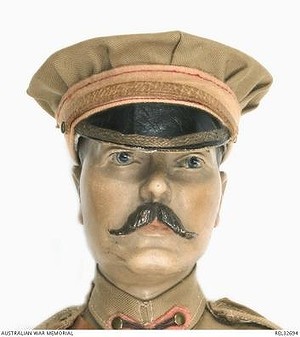
(Photo is of a statuette of Earl Kitchener, from the Australian War Memorial)

Famous Name: Gough

Tags

, , , , , , , ,

971657_10151752994791789_804766665_n

November 11 is Remembrance Day, but it’s important in Australian history for another reason: the constitutional crisis of 1975, when Labor Prime Minister Gough Whitlam was dismissed from office by Governor-General Sir John Kerr. The Opposition had used its control of the Senate to block supply bills which had been passed by the lower house – a move which was within the letter of the law, but went against parliamentary tradition. Without supply, the government was unable to finance itself, and effectively stymied.

The Governor-General took the highly unusual step of breaking the deadlock by dismissing Gough Whitlam without any warning, and installing Opposition Leader Malcolm Fraser as caretaker prime minister until an election could be held. Known as “The Dismissal”, Tuesday November 11 1975 was a day of high drama, with the proclamation read from the steps of Parliament House to a crowd of angry ALP supporters, all booing furiously, until it finished with the traditional sign-off, “God save the queen”.

Gough Whitlam then made his famous speech, which began, Well may we say “God save the queen”, because nothing will save the Governor-General, went on to call Malcolm Fraser Kerr’s cur, and ended by urging his followers to maintain the rage until polling day. These statements became Labor catch phrases, even battle cries, although as it transpired, not enough people maintained sufficient rage, as the Coalition won the pre-Christmas election in a record victory. By some accounts, the Coalition senators would have eventually caved in, rendering The Dismissal unnecessary.

Edward Gough Whitlam, always known by his middle name, was the 21st Prime Minister of Australia, and an enduring icon of the Labor Party. Tall, cultured, articulate, and witty, he modernised the ALP, and after it had spent 23 years in the political wilderness, was able to turn the party from one of protest into a viable alternative government.

Elected in 1972 under the simple but effective slogan It’s Time, Gough Whitlam was a whirlwind of change in the nation, enacting a record number of bills during his three years in office. Troops were withdrawn from the Vietnam War, and draft-dodgers released from prison; a universal health care system was brought in, now called Medicare.

The Family Court was created, Legal Aid established, the death penalty abolished, and no-fault divorce brought in. The Department of Aboriginal Affairs was established, the Racial Discrimination Act enacted, the Aboriginal Land Rights Act passed, and the prime minister handed back traditional lands in the Northern Territory to their original owners. Whitlam was the first prime minister to visit communist China, granted independence to Papua New Guinea, changed Australia’s stance on South Africa’s apartheid policy, and fought against nuclear testing in the Pacific.

His list of achievements roll on and on like the credits of an epic movie. He supported women’s rights, appointing a women’s advisor to the Prime Minister, pushing for equal pay, bringing in welfare for mothers, and increased access to contraception. He supported young people, ending conscription, lowering the voting age to 18, introducing youth radio 2JJ, and abolishing university fees. He supported the arts and the environment, gave us our own national anthem, dumped the out-dated system of knights and dames, got rid of radio and TV licenses, and connected homes to sewerage. Gough brought Australia into the modern age.

After they had both left parliament, former prime ministers Gough Whitlam and Malcolm Fraser made friends and even worked together on political causes, but Whitlam never spoke to Kerr again. Gough Whitlam became an elder statesman in the ALP, and was the first person to be given life membership of the party. The oldest Australian former prime minister thus far, he passed away this year on October 21 aged 98, and his state memorial service was held on November 5, attended by the current, and six former living prime ministers.

Gough is a Welsh surname meaning “red”; the name would have been given to someone with a ruddy complexion or red hair. The surname may pre-date the Norman Conquest, and originates from the Powys region. It is pronounced to rhyme with cough.

Gough has been used as a personal name since the 17th century, mostly for males. It isn’t uncommon in Australian historical records, although far more frequently found as a middle name than a first (just as with Gough Whitlam). Although it isn’t particularly strange, it is very closely associated with the former prime minister, and some Australians may think of it as a “one person name”.

I am sure that at this point I would have warned parents of the obvious pitfalls of using the name Gough on a baby – except that I know someone, have known them very well for a long time in fact, named Gough. He was born during Gough Whitlam’s term of office, and his parents named him in honour of the prime minister, for whom they had an enormous respect.

As it turned out (and this is something else I would have warned about), their son did not share their ideals when he grew up, and his politics are much further to the right than theirs. It sounds as if Gough’s parents did everything wrong, making a foolish and perhaps even selfish decision to saddle their son with a name which might cause him embarrassment in the future.

But the truth is that Gough loves his name, and although he has a perfectly serviceable middle name that he could have used instead, nothing would induce him to be called anything but Gough. Like many people with unusual names, he finds it a wonderful ice-breaker, and nobody ever forgets his name. And because it’s such a famous name, everyone knows how to spell and pronounce it too, which isn’t always the case with unusual names.

That he more or less views Gough Whitlam as a blot on the politico-historical landscape is a source of great amusement to him, and he says people no more expect him to be left-wing than they would expect someone named Elvis to be a great singer. He doesn’t feel that he is under any pressure to emulate Gough Whitlam in any way, but I suppose some might wonder if he has unconsciously fought against his name by taking a very different path (although he has a strong ethic of service to his community, like the former PM).

So I can’t in all conscience warn you that you are making a mistake in choosing the name Gough for your baby. It might have more advantages than you’d initially imagine, and there is no evidence that it will ruin your child’s life or cause name bullying. Perhaps now that Gough Whitlam has passed away after a long and honourable lifetime of public service, it seems even more usable than it did in the early 1970s.

However, I am still fairly sure that even if you insist that your son is named for your great-grandfather Frank Gough who married his cousin Annie Gough and called his first child Gough Gough, everyone will assume that he is really named after Gough Whitlam and that you have outed yourself as a “true believer”. Not that there’s any dishonour in that.

POLL RESULTS
Gough received an approval rating of 46%. 36% of people thought it sounded too much like cough or off, but 15% saw it as strong and unforgettable. 4% of people were put off the name by Gough Whitlam.

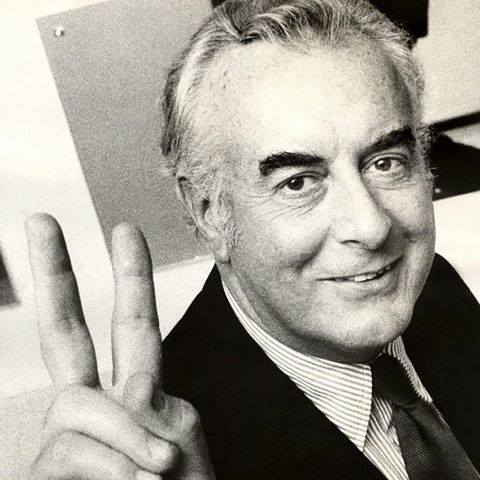
(Photo of Gough Whitlam from the Sydney Morning Herald)

Celebrity Baby News: Leona Edmiston and Jeremy Ducker

Tags

, ,

LN-Cover-Leona3-20140805180506450995-300x0

Fashion designer Leona Edmiston, and her husband Jeremy Ducker, welcomed twin girls named Dusty and Dylan in 2012. The twins were born in the United States via surrogate, and somehow I missed the story at the time.

Leona studied fashion design at East Sydney Technical College, and began her first label in 1983 with fellow designer Peter Morrissey, which was very hip. In 2001 she began her self-named solo label, and also designs children’s clothes on the Little Leona label. Leona has had several shows at Fashion Week, and sells in stores in Australia, the US, and the UK, as well as on her own website. She was recently honoured with the In Style and Audi Women of Style fashion award. Jeremy is a former lawyer and Leona’s business partner; they have been married for thirteen years.

(Photo of Leona and Jeremy with the twins from the Sydney Morning Herald)