Cute and Concise: Nicknames, Short Forms and Pet Forms for Boys from Bonds Baby Search

Tags

, ,

Are you stressed, busy, leading a hectic lifestyle? Too time-poor to keep saying a full name every day? Then you need … a nickname for your child! A nickname can shave valuable seconds off each day, saving you minutes every year. Minutes you can productively spend saying, “No that’s his full name”. (Unless you’ve picked a pet form which is the same length as the original name, in which case no time will be saved).

Abe

Alby (as well as being short for Albert etc, this can also be an Anglicisation of the Irish name Ailbhe)

Alfie

Andy

Ardie (short for Arden?)

Augie (short for Augustus etc)

Bastian (short for Sebastian)

Benji

Bob or Bobby

Brax (short for Braxton)

Cam (short for Cameron or Camden)

Chas (short for Charles)

Clarrie (short for Clarence)

Danny

Dennie (short for Dennis)

Dion (short for Dionysus etc)

Drew

Ed, Eddy or Eddie

Franky

Fred, Freddy or Freddie

Gabe

Geordie (pet form of George)

Gus (short for Augustus or Angus)

Jace (short for Jason)

Jamie

Jax

Jed

Jens (short for Johannes)

Jez (short for Jeremy)

Jimmy

Joe or Joey

Jonty (short for Jonathan)

Jordi (short for Jordan)

Josh

Judd

Kal

Lex

Mack

Manny (short for Emmanuel etc)

Matt or Matty

Mick

Monty (short for Montgomery etc)

Ned

Oli or Ollie (short for Oliver)

Ozzie (short for Oscar et al)

Raffy (short for Rafferty)

Rafi (short for Rafael)

Randy (short for Randall et al)

Reggie (short for Reginald)

Ricky

Rino (short for Italian names ending in -rino)

Robbie

Sacha

Sandy

Sol (as well as being short for Solomon, can also be named after the sun)

Tavian (short for Octavian)

Ted or Teddy

Terry

Theo

Tom or Tommy

Tyler (short for Tyler et al)

Vinnie

Will

Zah (short for Zahmir et al)

Zeph (short for Zephaniah or Zephyr)

Zeke

Bonnie Blue and Tildy Wren: My Favourite Girls’ Names from the Bonds Baby Search

Tags

Adelaide Bessie

Alice Marjorie

Anais Genevieve

Arielle Sunday

Azalea Phoenix

Bonnie Blue

Cedar Tiaz

Chai Amaya

Chanelle Lulu

Ciara Niamh

Cordelia Nette

Cynthia Rose

Eden Love

Elisa Anita

Evelyn Violet

Faith Diamond

Guinevere Lily

Halo Breeze

Harper Papillon

Honor Jewel

Indigo Peaches

Isadora Eve

Isla Pearl

Jasmine Oriwia

Kandice Chilli

Kiana Bumbles

Lilly Teo

London Aspen

Luella Audrey

Magali Coraline

Maia Persis

Margot Alice

Marley Bean

Miette Evie

Oceanna Zoe

Olivia Isis

Pepper Faith

Perri Sweetpea

Polly Boo

Rosalie Dawn

Ru Xue

Sinead Louise

Star Violet

Stellar Coco

Temperance Ivy

Thandiwe Arabella

Tildy Wren

Vida Louise

Violet Bee

Vivienne Elise

Winter Rose

Zanthie Minx

Levi Jagger and Wolf Ryder: My Favourite Boys’ Names from the Bonds Baby Search

Tags

Ashton Fox

Astro River

Benjamin Hillel

Blade Lucian

Brandon Bleu

Byron Lewis

Charlie Albert

Cian Ciaran

Darcy Lyle

Declan Danger

Diesel Cruz

Dylan Chief

Eamon Fergus

Eden Warwick

Emil Auguste

Flint Rifo

Harlem Cue

Harper Hendrix

Jackson Teddy

Jad Taio

Jett Reeve

Jia Shun

Julian Jay

Justice Vincent

Kormak Magnus

Levi Jagger

Logan Radley

Lowel Jacob

Luke Phoenix

Maddox Andre

Maxmilian Aston

Miles Otto

Monte Flynn

Noah Anakin

Oakley Lorne

Oistin Andrew

Oliver Rossi

Paxton Felix

Reggie Lee

Romeo Lucien

Sebastian Xavier

Silas Ari

Sonny Keepa

Taeo Rayne

Tai Kingston

Tynnan James

Vegas York

William Cadel

Wolf Ryder

Wyatt Blaze

Xavier Armour

Zenith Vedder

MYTH: Very Popular Names Should be Avoided, Because in Thirty Years They Will Sound Dated and Embarassing

Tags

, , , , , , ,

Along with all the articles on popular names that came out with the 2011 name data, there were several which warned parents not to give their baby a name from the Top 10 , because in thirty years it will sound old and frumpy.

I don’t know why they all decided thirty years was the point at which this would occur – I would have thought by the age of thirty, you would be too mature to care if you had a fashionable name or not anyway. Seriously, if you are over the age of thirty, and thinking ZOMG my name is like totally lame and uncool now! all I can tell you is Get a grip! You’re not in high school any more. Also, nobody has used ZOMG since 2007.

Of course, it’s kind of silly, because if everyone stopped using the Top 10 names because they were too popular, then they wouldn’t be Top 10 any more, ten other names would be. The only way you can avoid some names being at the top of the popularity lists is to have a law that each name can only be used once per year. In which case, pity the kids born in December, who will be named Farqui-Neemehoor or Exmayhemaliah.

However, putting that rather obvious objection aside, I decided to take a look at the Top 10 of 1982, to see if those names really had dated as badly as the Commodore 64, Bucks Fizz, and puffed shoulders, or were still going strong, like Angelina Jolie, environmental activism, and deely bobbers.

GIRLS

1. Sarah: Classic name which has never left the rankings. Has been Top 100 since the 1960s. Currently gently declining at #31.

2. Rebecca: Almost continually in the rankings, only dropping off in the 1930s. Was Top 100 from the 1960s until the late 2000s. Currently gently declining in the mid 100s.

3. Melissa: Has charted since the 1950s, and was Top 100 from the 1960s to the 2000s. Currently stable in the mid-300s.

4. Jessica: Has charted since the 1960s, and was Top 10 by the 1980s. It kept climbing, and became the #1 name of the 1990s. Currently stable at #20.

5. Nicole: Has charted since the 1950s, and was Top 100 from the 1960s until the late 2000s. Currently stable in the low 200s.

6. Lauren: Has charted since the 1940s, and was Top 10 by the 1980s. It continued to climb, and peaked in the 1990s. Lauren has only just left the Top 100, and is probably in the very low 100s.

7. Michelle: Has charted since the 1940s, and was Top 100 from the 1950s to the 2000s. Currently stable in the mid-100s.

8. Kate: Ranked in the 1900s, but dropped off the charts from the 1930s to the 1950s. Was Top 100 from the 1970s until the very end of the 2000s. Currently stable in the low 100s; however I believe this name is not finished, and may rejoin the Top 100.

9. Emma: Almost continuously in the rankings, only dropping off in the 1940s. Has been Top 100 since the 1970s. Currently #17 and on a slight rise.

10. Lisa: Has charted since the 1940s, and was Top 100 from the 1960s to the 2000s. Currently declining in the mid-500s.

BOYS

1. Michael: Solid classic that’s never left the Top 100, and was Top 10 from 1940 to the 2000s. Currently stable at #35.

2. Mathew: Classic name that has never left the rankings, and has been Top 100 since the 1950s. Currently gently declining at #32.

3. Andrew: Solid classic that’s never left the Top 100, and was Top 10 from the 1960s to the 1990s. Currently stable at #70.

4. David: Solid classic that’s never left the Top 100, and was Top 10 from the 1940s to the 1990s. Currently stable at #78.

5. Daniel: Solid classic that’s never left the Top 100, and was Top 10 from the 1970s to the late 2000s. Currently gently declining at #24.

6. Christopher: Classic name that has never left the rankings. It was Top 100 in the 1900s, and returned to it in the 1940s. Currently stable at #84.

7. Benjamin: Classic name that has never left the rankings, and has been Top 100 since the 1970s. Currently on a decline at #11.

8. James: Solid, enduring classic that has never left the Top 20. It was Top 10 from the 1900s to the 1940s, and then again from the 1980s to the late 2000s. Currently on a slight decline at #12.

9. Mark: Classic name that has never left the rankings, and was Top 100 from the 1940s to the late 2000s. Currently stable in the low 200s.

10. Luke: Has charted since the 1940s, and been Top 100 since the 1970s. Currently declining at #33.

From the girls’ list, three of them are still in the Top 100, and from the boys’ list nine of them are still Top 100. Of the names that have left the Top 100, most of them are stable, rather than becoming ever less popular. Michelle and Nicole may not sound the freshest, but the 100s and 200s are not the dim backwoods of the popularity charts (they are where where Mary and Clara live). Melissa and Lisa are probably the most dated-sounding of the names, but they are on the charts, which means that parents are still using them. Based on the data above, I think that’s pretty much a BUSTED.

However, another theory I’ve seen on baby name forums is that the names of thirty years ago have become so firmly entrenched that they now seem a little … well, boring. This idea does have some merit, because although names such as Emma and Andrew are absolutely great, and nobody will criticise you for using them, nobody is going to say, “Oh what a stunningly beautiful and unusual name; I’m sure there’s a fascinating story behind your choice of it,” either. Which is fine, not everyone wants their child’s name to be a constant source of comments and questions. But I’d be edging towards a PLAUSIBLE on that one.

So where will our current Top 10 be in thirty years? Some would say it’s foolish to speculate, but on the basis that the best predictor of the future is the past, I’ll have a stab at it. That’s how I do my footy tipping anyway.

The average time that a popular girl’s name spent in the Top 100 was 46 years, which means about half the girls’ names from the current Top 10 are contenders for staying in the Top 100 until 2042. Of the names from 1982 which have lasted, Sarah and Emma had a long history of being on the charts, while Jessica was still gaining in popularity. Based on that, I’d say classics Charlotte and Amelia have the best chance for being stayers, while another Shakespearean coinage, Olivia, could keep going and going.

Chloe, Isabella and Sophie seem as if they will at the very least remain relatively stable in the 100s, like Rebecca, Michelle and Lauren. I’m picking Ava to be the Nicole of our times (200s), and Sienna to be another Melissa (300s). Because Lisa was the least successful name, and a cute nickname form of a longer name, perhaps Mia will also not fare so well long term. Ruby and Kate are retro names that have gone in and out of fashion, and I think both are quite unpredictable.

As far as the boys names go, chances are that 90% of them will still be in the Top 100 by 2042. I’m picking Joshua to be the name that doesn’t go the distance, as it is currently in the same decline that Mark was in 1982. Two of the names from 1982, Benjamin and James, are barely outside the Top 10 today, and I would back Ethan and Lucas as the most likely to mimic that success.

Results are unscientific and for entertainment purposes only. Baby Name Mythbusters is not affiliated with the television show, “Mythbusters”.

Names From Bonds Baby Search: British-ish Names

Tags

, , , , ,

These are names from the British languages of Ireland, Wales, Cornwall, Scotland and Brittany. I’ve called the list “British-ish” because many of the names have been Anglicised or are otherwise “inspired” by these languages rather than being strictly authentic. If you’re thinking there are many names missing, they could well turn up on other lists … Pronunciations and origins to the best of my knowledge.

GIRLS

Aneira (Welsh)

Aoife (EEF-ya – Irish)

Ashleen (variant modern Irish)

Bree (Anglicised Irish)

Bridget (Anglicised Irish)

Cailin (ka-LEEN – faux-Irish)

Carys (modern Welsh)

Ciara (KEE-ruh – Irish)

Eilish (EE-leesh – Anglicised Irish)

Fianna (fee-ANN-uh – Irish)

Isibeal (ISH-ih-bale – Irish)

Maela (MAH-el-uh – Breton)

Niamh (NEEV – Irish)

Nimueh (NIM-oo-ay – variant mythological Welsh)

Rhiannon (mythological Welsh)

Saoirse (SEER-sha – modern Irish)

Seren (modern Welsh)

Shayla (faux-Irish)

Sian (SHAHN – Welsh)

Sinead (SHIN-ayd – Irish)

Siobhan (SHIV-on – Irish)

Tegan (modern Welsh)


BOYS

Braith (Welsh?)

Brendan (Latinised Irish)

Bryn (Welsh)

Cadel (Welsh)

Caelan (KAY-len – Anglicised Irish)

Cian (KEEN – Irish)

Cillian (KIL-ee-an – Irish)

Denzel (variant Cornish?)

Duncan (Scottish)

Eamon (AY-mon – Irish)

Eoghan (O-in – Scottish/Irish)

Ewan (Anglicised Scottish/Irish)

Fergus (Anglicised Scottish/Irish)

Finlay (Anglicised Scottish/Irish)

Fionn (FIN – Irish)

Griffin (Latinised Welsh)

Ian (Scottish)

Jock (Scottish)

Kormak (variant Scottish/Irish)

Lorcan (Irish)

Malachy (MAL-uh-kee – Irish)

Morgan (Anglicised Welsh)

Neil (Irish/Scottish)

Oistin (OHS-teen – Irish)

Ronan (Irish)

Ruairidh (RAWR-ee – Irish)

Seirian (modern Welsh)

Shea (SHAY – Anglicised Irish)

Talisyn (variant mythological Welsh)

Taryn (variant modern Welsh?)

Tighe (TYGE – Irish)

Saturday Sibset: The Family From the Emerald Isle

Tags

, , , , , , , , , , ,

It’s Saint Patrick’s Day today, so of course this week’s sibset is from Ireland. The Hoban family moved to Australia in 2005 from the town of Wicklow, south of Dublin.

After selling their family business, Mr and Mrs Hoban wanted to show their four sons the world, so they went to Adelaide as temporary residents, where Mrs Hoban got a job as a nurse. However, life in Adelaide must have been good to them, because they decided to make it their permanent home.

They wanted to become citizens in 2007, but missed the cut-off by three days, after the law changed so that residents had to be living here for four years instead of two. Their fourth anniversary came up in October 2011, but they decided to delay just a bit further so that they could become citizens on Australia Day this year.

Mr Hoban says that leaving behind their friends, family and jobs was a “huge deal”, but now every time they leave Adelaide and come back, he is so happy he could “kiss the ground”. The youngest Hoban children have spent more than half their lives in Australia, and it means more to them than their country of birth.

Australia has a great fondness for Irish names, so we’ll have a look at the Hobans and see whether they have names already familiar here.

Kevin: Kevin is the father of the family, and as we well know, his name is considered a classic here, and still used fairly often. Luckily he didn’t migrate to Germany or one of the many other nations who don’t view Kevin kindly.

Tona: Tona is Kevin’s wife, and her name is usually taken to be a pet form of the name Antonia. However, there is a Scandinavian name Tona, meaning “fresh thunder”. Although Wicklow is said to have been settled by Vikings, the first one is probably more likely. It’s very similar to names such as Toni and Tonia.

Darragh (20): There are two possible sources for this name, pronounced DAH-rah, although in an Australian accent, I suspect it comes out as DARR-uh. One is that it’s a variant of the name Dara, which means “oak tree”. It is the same source as the name of the city of Derry or Londonderry in Northern Ireland. Oak trees were sacred in Celtic mythology, and there was a sixth century Saint MacDara (son of Dara), who was one of those reclusive island-dwelling hermit saints who flourished in Ireland. He has given his name to the tiny islet off the coast of Connemara on which he sequestered himself. Darragh can also be an Anglicised form of the name Dáire, meaning both “fruitful, fertile, rutting” and “tumult, rage, violence”. There are many kings and heroes of Irish legend with this name, and they may all go back ultimately to a god of the Otherworld. Despite its ancient origins, Darragh came into general use in Ireland fairly recently, so most of us wouldn’t have heard of it yet, although it is currently #16 in Ireland. However, it’s a wonderful name, extremely masculine, and one which I think Australians could easily embrace. It sounds comfortingly like that Aussie standard, Darren, and has also been Latinised as Darius.

Ryan (18): This name is very popular in both Ireland and Australia, although more popular in its country of origin, being #6 at present, while it’s #57 in South Australia.

Cian (14): This means “ancient” in Gaelic, and is pronounced KEE-an or KEEN. It’s another name from Irish legend, and is also recorded as the name of a Welsh poet. Cian is #14 in Ireland, and although it isn’t as popular here, it’s fairly well known and in use. There are also several variants and derivatives used, such as Kian, Keene, Keane, Keenan and so on.

Evin (12): This is the Anglicised form of the Gaelic name Éimhín, which may mean “swift”. There is a sixth century Saint Éimhín, who was from Munster, but a monk at an abbey in County Wexford. He is said to have written a biography of Saint Patrick, which makes it a great name for St Patrick’s Day. Evin is rare in both Ireland and Australia, although the name can also be Anglicised to its soundalike, Evan, and this name is #27 in Ireland and #95 in South Australia. Evin also has his dad’s name, minus the K – perhaps deliberate?

So out of six genuine Irish names, one is a classic, one is popular, one is in use, and the other three have a familiar sound to them and seem very usable.

Sage and Atticus: Birth Announcements from the “Sydney Morning Herald” (February)

Tags

,

Girls

Abbey Rose (Xavier, Lillian)

Alexandra Juliette (Max, Nathalie)

Amlie Rose

Chelsea Jane

Henrietta Elizabeth (Hugo, Beatrix)

Matilda Rachel (Gemma)

Rianna Anne

Sage Zara Joy

Saoirse Kirsten


Boys

Archie Reeve (Chloe, Ava, Jack, Charlie, Annie-Rose)

Atticus Jack

Daniel Anthony

Gabriel Philip

Henry Howard

Konrad Kurt Wilhelm

Sebastian Maxwell (Sophia, Clementine)

Toby Spencer (Benny)

Tristan Price (Joshua, Melanie, Stephanie)

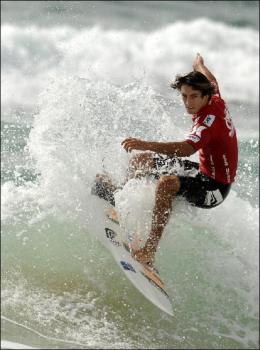
(Picture shows the Australian Open of Surfing, held during February on Manly Beach)

Grace Mira de Faye: Birth Announcements from Sydney’s Southern and Outer Suburbs

Tags

, ,

Twins

Lilia Beau and Piper Eilee


Girls

Annabelle Charlie Florence (Christian, Samuel)

Ava Matisse (Rhys, Logan)

Edie Lillee (Lola, Lottie)

Estelle Josephine

Grace Mira de Faye

Indiana Jean (Blake, Zane)

Lacey Skye

Pyper Susan (Emerald, Bede)

Summer Savannah (Grace, Jake)


Boys

Alexander Andrew

Jack Ashley (Alexis)

Jesse Christopher

Kip Maxwell

Lucian James

Mackenzie Harrison (Harley)

River Paul (Eva)

Ty John

Zach Hamilton (Noah)

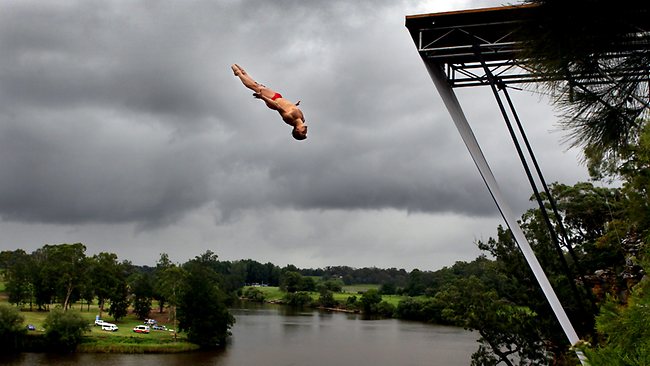
(Picture shows the Red Bull Cliff Diving World Series Qualifications, held during February on the Hawkesbury River)

New Australian Study on Baby Names

Tags

, , , , , , ,

A new study on how parents choose their children’s names is being undertaken by Dr Deb Dempsey from Swinburne University of Technology and Associate Professor Jo Lindsay from Monash University.

“Naming decisions may be guided by culture and tradition. They may also be shaped by our sense of connection or belonging to family history, other identity issues, personal taste and fashion,” Dr Dempsey said.

The Preliminary Results:

50% just like the sound of the name

20% base their decision on cultural significance

15% choose a name that suits their surname

11% name their children after a celebrity or book character

4% are inspired to use the name of someone they admire

How These Children Received Their Names:

Charles: A traditional name that can be modernised to give more options. Also, a short name to match a very long surname.

Kiera: A variation of the Irish name Ciara, to reflect her Irish mother’s heritage.

Milla: A Slavic name to recognise her Croatian grandfather’s background.

Ezie (Milla’s brother): Mother saw the name on another child, and liked it.

Omer: Chosen for her father’s Israeli background.

Brooke: Her mother always liked the name.

Henry: Chosen to reflect his father’s English heritage.

More participants are needed, and Australians may participate by taking the survey here.

There aren’t many Australian studies done on baby names, so I am happy to publicise this one. I have done the survey myself, and it only takes about 10-15 minutes, and does give you the opportunity to share your own “name story” – it’s not just ticking boxes. I hope any Australian parent reading this will take part.

Famous Name: Roald

Tags

, , , , , , ,

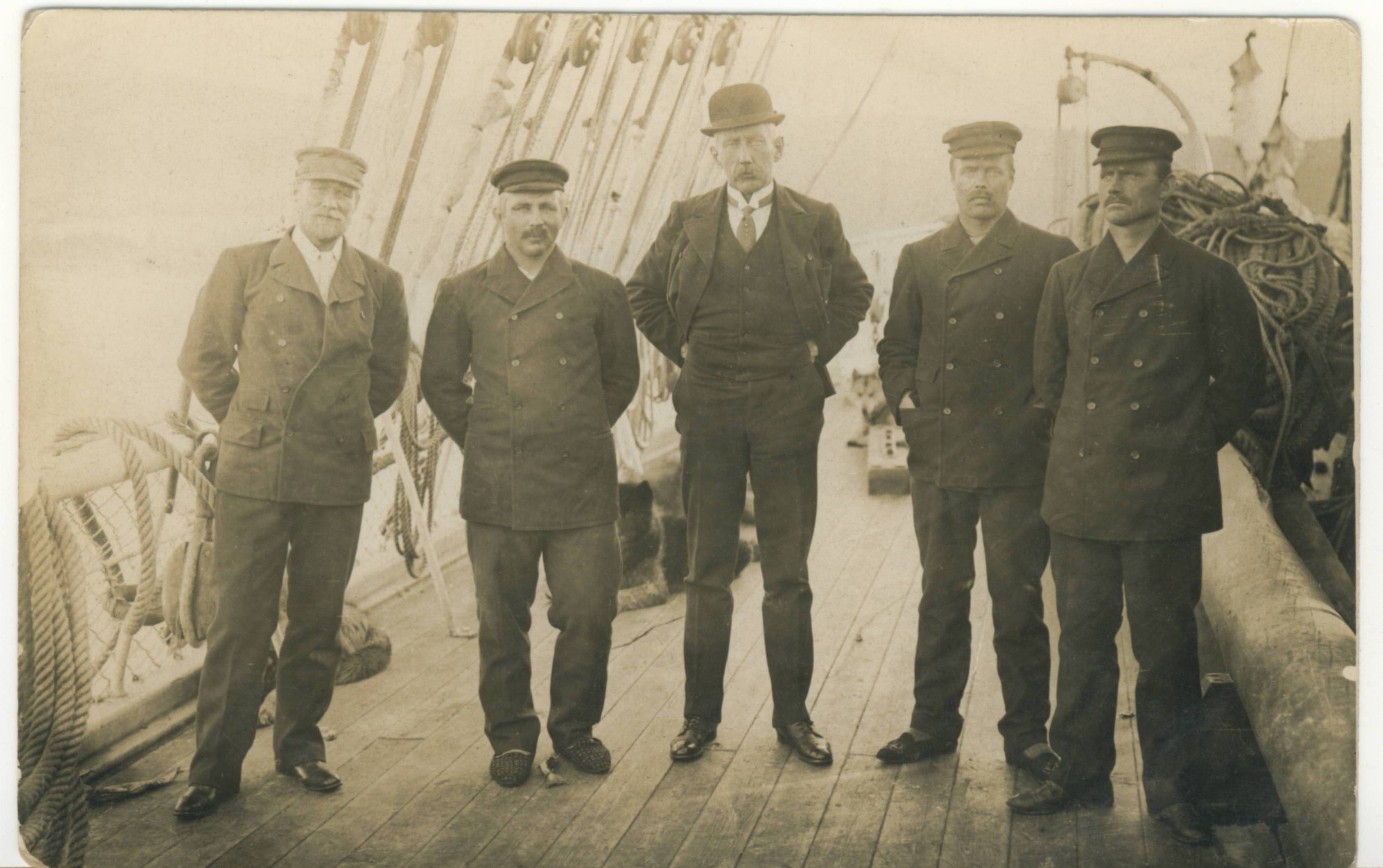
March 7 this year marked the centenary of an important event in history. One hundred years ago on this date, Norwegian explorer Roald Amundsen sailed into Hobart, having led the expedition which first reached the geographic South Pole, on December 14 1911.

You would think that such an achievement would be greeted with parades and brass bands as they disembarked, and the men of the expedition would be celebrating with wine, women and song. However, Amundsen and his crew behaved very mysteriously. The men remained on board their ship, the Fram, while Amundsen posed as an ordinary sailor, and booked himself into Hadley’s Hotel, where they gave him a crummy room and treated him like a tramp.

Roald Amundsen sent coded telegrams of his feat to his brother and the King of Norway, but had to maintain his silence. Under the terms of several media deals he had made, he couldn’t go public until the contracted newspapers in London, Paris, Berlin and Oslo had published their exclusive stories.

On March 10 he broke his silence, and the Hobart media learned to their chagrin that the biggest story in the world had been right under their noses, and they’d been pipped at the post by the European papers. The hotel suddenly couldn’t do enough for their guest.

Tasmania has always had a special relationship with Antarctica, being the last port of call before you reach the frozen wastes, and Hobart was a pivotal part of the great age of Antarctic exploration. Today it is a base for Australian and French supply ships, and the Institute of Marine and Antarctic Research is currently under construction on the city’s waterfront.

To celebrate Amundsen’s centennial, last weekend the city of Hobart re-enacted the historic moment that the Norwegian explorer sent that vital telegram, ending with the unveiling of a commemorative plaque at the General Post Office from whence the telegram was first sent. There was also a Huskies Picnic, with husky displays, and other Amundsen-related fun.

Roald is the modern form of the Old Norse name Hróðvaldr or Hróaldr, meaning “famous ruler”. These Viking names seem to turn up in the historical records fairly frequently, and a nobleman named Hróaldr is said to have been one of the first Norse settlers in Iceland. According to Kay at Nook of Names, it is one of the possible origins for the English surname Rowett, and it is also behind the English surname Rolston. Roald is a place name in Norway.

This name is quite familiar to most people because of the author Roald Dahl, who was born in Wales to Norwegian parents, and named after the polar explorer, Roald Amundsen. Although Roald Dahl wrote adult fiction, he is best known and loved for his children’s books, which have become modern classics.

Titles such as Charlie and the Chocolate Factory, Matilda, The Witches, James and the Giant Peach, and Fantastic Mr Fox have been enjoyed by children as both books and movies. There are very few children who are not delighted by the dark comedy of Mr Dahl’s storytelling; some of them may be heartened to learn that Roald Dahl was only an average student at school, and considered an atrocious writer.

I think this name sounds very strong and even heroic (Roald Dahl himself was a World War II fighter ace). The pronunciation is a slight issue, because the Norwegian way to say it is ROO-all, but the English way is ROE-ald. Either way, there is a danger of it becoming slurred into the word rule or rolled. You get a very Australian nickname, Roo, from the Norwegian pronunciation.

Whether you would like to honour a polar explorer, a popular author, Norwegian heritage, Viking ancestry, or a connection with Antarctic research, Roald seems an excellent and unusual choice.

(The photo is of Amundsen with his crew on board the Fram; he is the one in the middle wearing a bowler hat. The photo is held by the Nasjonalbiblioteket in Oslo).