• About
  • Best Baby Names
  • Celebrity Baby Names
  • Celebrity Baby Names – Current
  • Celebrity Baby Names – Past
  • Featured Boys Names
  • Featured Girls Names
  • Featured Unisex Names
  • Links to Name Data
  • Waltzing on the Web

Waltzing More Than Matilda

~ Names with an Australian Bias of Democratic Temper

Waltzing More Than Matilda

Category Archives: Waltzing with …

Waltzing With … Olivia

22 Sunday Jul 2012

Posted by A.O. in Waltzing with ...

≈ 5 Comments

Tags

anagram names, created names, english names, European name popularity, famous namesakes, fictional namesakes, Latin names, locational names, name combinations, name history, name meaning, name popularity, New Zealand name popularity, popular names, saints names, Shakespearean names, sibsets, tree names, UK name popularity, US name popularity

This blog post was first published on July 22 2012, and substantially revised and re-posted on May 4 2016.

This Friday, July 27, it is Schools Tree Day. I always think this is a great way to start off the Spring Term, as it gets students out of the classroom and connecting with nature. This year there will be an emphasis on programs where children plant and care for trees in public bushland, teaching them about the environment and community responsibility.

National Tree Day (on Sunday July 29), and its “junior partner”, Schools Tree Day, are Australia’s biggest tree-planting events. National Tree Day was co-founded by pop singer Olivia Newton-John and Australian environmental group Planet Ark in 1996; since then more than 3.8 million people have planted over 22 million trees and shrubs.

Olivia Newton-John is an ambassador to the United Nations Environmental Program, and has won awards for her efforts on behalf of the environment from the Environmental Media Association and the Rainforest Alliance. This year she was named one of Australia’s Living Treasures by the National Trust. In honour of Ms Newton-John’s achievements and charity work, I am taking a closer look at her first name.

Name Information
Olivia is a name invented by William Shakespeare for his play Twelfth Night. It is generally believed that Shakespeare based it on the Latin name Oliva, meaning “olive” and pronounced oh-LEEV-ah.

Oliva of Brescia was a Roman saint martyred in the 2nd century. Interestingly, the saint is now often known as Saint Olivia, to distinguish her from a legendary saint from the 9th century called Oliva of Palermo, and known as Blessed Olive.

Blessed Olive was a beautiful thirteen year old girl of noble family who was kidnapped by Muslims and martyred by them after the usual imprisonment and torture. It’s clearly a piece of propaganda, but she is still a patron saint of music. Confusingly, sometimes she is also known as Saint Olivia, to distinguish her from Saint Oliva of Brescia.

Shakespeare chose the name Olivia for a beautiful countess of Illyria, an ancient land in the Balkans on the Adriatic Coast, where Slovenia, Croatia, Montenegro and Albania are now. As its name suggests, Twelfth Night was written as an entertainment for the end of the Christmas season; its first performance was after Candlemas in 1602.

The eve of Epiphany was supposed to be a time when all the usual rules were turned topsy-turvy, so it is not surprising that cross-dressing plays a big part in the plot. The countess Olivia falls in love with a woman named Viola (an anagram of Oliva, while Olivia is an anagram of I, Viola) believing her to be a man named Cesario. The joke in Shakespeare’s day, when only males were permitted on stage, was that the role of Viola was played by a boy pretending to be a woman pretending to be man.

Olivia is such a stunning beauty that Viola’s twin brother Sebastian marries her virtually on sight, in an almost dreamlike state, while she thinks he is “Cesario”. They both marry under false pretences, but it is less illegal than Olivia marrying Viola. It’s a comedy, so everything works out.

The name Olivia was too good not be used by other writers, so a character named Olivia is in William Wycherley’s 1676 play The Plain Dealer, cleverly utilising a similar plot to Twelfth Night. In Oliver Goldsmith’s 1766 novel The Vicar of Wakefield, Olivia is the vicar’s strikingly beautiful daughter. In an impetuous rush of passion, she is tricked into a fake marriage with a womanising squire; luckily, it turns out the squire himself was tricked and the marriage is real.

A real marriage to an evil womaniser doesn’t sound like much of a happy ending for Olivia, but it’s happier than not being married at all, it seems. Arresting beauty and dodgy weddings seem the hallmark of the literary Olivia.

Olivia has been in use as an English name since the 17th century, and became more common in the 19th. An early famous namesake was the English socialite Olivia Devenish, who married Thomas Raffles, the vice-governor of Java.

Olivia Miss Newton-John emigrated to Australia from Britain in the 1950s, and during the 1960s was a regular on Australian radio and television before becoming a successful country-pop singer overseas. The name Olivia first appeared on the Top 100 in 1978 at #64, the same year that Olivia starred as Sandy in the hit musical film Grease.

The name Olivia was only on the Top 100 sporadically in the 1980s, never getting any higher than its initial position (Newton-John’s “sexy” image in this decade probably wasn’t a help). It began rising in the 1990s after Olivia’s career quietened down and she put away the spandex, shooting up to #46 in 1990. By 1998 it was in the Top 10 at #5, and it peaked at #1 in 2005, and then again in 2014.

Currently Olivia is #2 nationally, #2 in New South Wales, #1 in Victoria, #2 in Queensland, #3 in South Australia, #1 in Western Australia, #26 in Tasmania, #6 in the Northern Territory, and #4 in the Australian Capital Territory.

In the US, the name Olivia has charted consistently in the Top 1000 since the 19th century, rarely leaving the Top 500. It has been in the Top 100 since the 1990s, and is currently at its peak position of #2. In the UK it has been in the Top 100 since the 1990s, and peaked at #1 in 2008-2010. It is currently #2. Olivia is also #2 in New Zealand, and is popular across the English-speaking world as well as East and West Europe, and Scandinavia. Olivia is a name that travels very well.

Coincidentally or not, the rise and stability of Olivia looks similar to the trajectory of the name Oliver, which is now at #1 – in fact, the two names were #1 together in 2014. Olivia’s success may have helped her twin sister Olive rise through the ranks, for this retro charmer began zooming up the charts in the 2000s, and is now in the Top 100.

Other famous namesakes include Hollywood star Olivia de Havilland; author Olivia Manning; George Harrison’s widow, Olivia Harrison; and actresses Olivia Wilde and Olivia Williams. Although there are many fictional Olivias, one of the most famous is the adorable pig from the children’s book and TV series, named after the author’s niece (I’ve noticed many baby Olivias seem to get toy pigs as gifts).

Lovely Olivia has become one of our modern classics, currently at the peak of its success and still stable after 17 years in the Top 10. I think, like that other Shakespearean coinage Jessica, it will be with us for some time to come.

POLL RESULT
Olivia scored an approval rating of 89%, making it the most popular girl’s name of 2012 in this category. 35% of people thought the name Olivia was okay, while only 4% hated it.

(Picture shows old olive trees in Albania).

Waltzing With … Lawson

17 Sunday Jun 2012

Posted by A.O. in Waltzing with ...

≈ 3 Comments

Tags

english names, famous namesakes, locational names, name history, name meaning, names of bands, nicknames, Norwegian names, surname names, UK name popularity, US name popularity

This blog entry was first posted on June 17 2012, and revised and re-published on April 6 2012.

Today is the birthday of the Australian poet Henry Lawson, who was born June 17 1867. Public celebrations to mark this event were held last weekend, to coincide with the Queen’s Birthday long weekend.

There are two festivals in his honour in the Western Plains region of New South Wales. The town of Grenfell has one because that’s where Henry Lawson was born, and so does the town of Gulgong because Henry’s parents moved there when he was just six weeks old, and spent his first five or six years there.

Willoughby council in Sydney holds a bush poetry reading every two years at Henry Lawson’s Cave, and this year it fell on Henry Lawson’s actual birthday. Henry Lawson’s Cave is a small cavern which the author used as an occasional refuge, and perhaps wrote some of his work there. Another site for Lawson-lovers to visit in Sydney is the statue of Henry Lawson near the Domain, an area that Lawson enjoyed walking in, and perhaps sometimes slept out in.

Henry Lawson is said to one of our three national poets, the other two being Banjo Paterson and C.J. Dennis, yet it is as a writer of short fiction that he really shone. His style is quite modern, being spare and unflinching, with plot being less important than powerful imagery. He has sometimes been compared to Hemingway and Chekhov in terms of a lean, raw writing style. His mother was the feminist Louisa Lawson, and the political bent of his work was greatly influenced by her and her radical friends.

His importance as an Australian bush writer is that he wrote of the realities of the Australian bush, rather than the romanticised version you get from Banjo Paterson. Henry Lawson was born to a struggling family on the goldfields, and his parents’ marriage broke up; as a man who greatly admired his mother, he had a deep appreciation of how hard bush life could be for women, and how strong they needed to be just to survive, let alone thrive. The outback frequently appalled Lawson, and he saw it as a place of suffering.

Yet his perceptions of the bush have helped to shape our identity, and he had a gift for capturing and evoking the national character in just a few words. He stressed the egalitarianism and mateship of the Australian psyche, and championed the underdog and the urban poor. He understood the laconic Australian sense of humour, with its sharp sense of irony.

Lawson’s life was a sad one; he was bullied as a child and never felt that he fit in, his little sister died, his parents split up, he went deaf early in life which increased his sense of isolation, he struggled to gain recognition and find steady work, his marriage was unhappy and mirrored his parents’ by ending in separation, and he drank to ease his sadness which made things worse. He spent time in gaols, convalescent homes, and mental asylums.

It’s tempting to think that he inherited a strain of Nordic gloom from his Scandinavian father, and that depression was at the back of many of his misfortunes. Because of this, last year two men did the Henry Lawson Walk, which re-enacted a walk Lawson took with a friend from Bourke in outback New South Wales to Hungerford in outback Queensland – a trip of around 450 km (280 miles).

They did it to raise awareness and funds for Beyond Blue, the national depression initiative. Beyond Blue has programs which focus on men’s health, alcoholism, and those facing isolation in rural areas – in fact many of the problems suffered by Lawson in the late 19th and early 20th centuries are still being battled today. He is truly one of the moderns, both in life and art.

Name Information
Lawson is an English surname meaning “son of Law”, with Law a popular medieval nickname for the name Lawrence. The name was especially associated with Yorkshire, as the Lawson family was prominent during the War of the Roses. Lawson has been used as a personal name since the 17th century, with use concentrated in the north of England – an apparent legacy of its Yorkshire origins.

It should be noted that Henry Lawson’s father Anglicised his surname from the Norwegian form of the name, Larsen. There is a suburb of Canberra named after Henry Lawson – not to be confused with the town of Lawson in the Blue Mountains. Although Henry Lawson did live in the Blue Mountains at one point, the town is named after the explorer, William Lawson.

In the US, Lawson was especially associated with the southern states: John Lawson explored North Carolina in the 18th century, and Gaines Lawson was a Confederate captain in the American Civil War. Alfred Lawson was a popular philosopher in the Midwest, promoting vegetarianism, the end of banking, and racially integrated baseball; an aviation pioneer, he is cited as the inventor of the airliner, although it immediately crashed.

The name Lawson charted in the US Top 1000 from the late 19th century until World War II, then had a long break from 1950 to 2000. Since then, the name has been steadily going up the charts and is now #485 – the highest the name has been since the early 20th century.

In the UK, the name Lawson has been in the Top 1000 since 2003, and has been climbing since 2010, when the British band Lawson formed. Since their first album came out in 2012, the name has gone up even more steeply, and is now #409.

In Australia, Lawson is in steady use, and perhaps also around the 400s here. It’s a name which pays tribute to the first Australian writer to be given a state funeral, and is less popular and more modern-sounding than his first name, Henry, and fits in with popular names such as Lincoln and Logan.

Historian Manning Clark wrote that Australia was “Lawson writ large”, and this patriotic name honours the man who who been called “the people’s poet”, “our poet-prophet”, and “the real voice of Australia”. It’s a voice that is not always comfortable to hear, but this is a great name for anyone who loves the real Australia, and not an idyllic vision of it.

POLL RESULTS
Lawson received an approval rating of 89%, making it one of the highest rated names of 2012. 39% of people loved the name Lawson, and nobody hated it.

Waltzing With … Chrysanthe

13 Sunday May 2012

Posted by A.O. in Waltzing with ...

≈ 1 Comment

Tags

famous namesakes, flower names, French names, Greek names, name combinations, name history, name meaning, nature names, nicknames, plant names, rare names, saints names, unisex names

This blog post was first published on May 13 2012, and revised and re-posted on March 23 2015

Today is Mother’s Day, which is a special day for anyone who is a mother, or has ever had a mother or mother figure to care for them – hopefully that’s all of us.

Celebrations of motherhood are not a new idea; the ancient Greeks and Romans had festivals in honour of the mother goddess Cybele, and the Christian Church commemorates Mothering Sunday on the fourth Sunday in Lent. Although the mother being honoured on this day is the Virgin Mary, traditionally it was a day for people to spend with their own mum, and bring her flowers and cake.

The Mother’s Day we celebrate in May was started in the United States, and came out of the women’s peace movement. In 1868, Ann Jarvis tried to promote a pacifist Mother’s Day, and when she died in 1904, her vision was still just a dream. Ann’s daughter Anna Jarvis was determined to continue her mother’s campaign, and by 1914, US Congress had passed a law proclaiming the second Sunday in May would be called Mother’s Day.

Unfortunately for Anna and all her hard work, she soon became horrified by the commercialisation of Mother’s Day; greeting cards and boxes of chocolates were not at all what she had had in mind. For the rest of her life, she protested against it, and in the process was arrested for disturbing the peace. Anna spent all her savings trying to stop what she had accomplished, and died in poverty in 1948.

The tradition of giving gifts on Mother’s Day was begun in Australia by a Sydney woman named Janet Heyden. In 1924, Mrs Heyden made a visit to someone in a state women’s home, and was saddened to find so many neglected mothers. To cheer them up, she organised schoolchildren to help bring them gifts donated by local businesses.

Janet was also disappointed by the commercialism of her idea, but sensible enough to realise that more good than harm would come of it. She continued visiting lonely mothers and cheering their days until she died in 1960.

Name Information
The traditional flower to give your mum for Mother’s Day in Australia is the chrysanthemum, because it is an autumn flower, suitable for the season, and ends in mum. The flowers originate in China, where they symbolise cleansing and health, and when they were introduced to Europe, they were named chrysanthemums, meaning “golden flower” in Greek. The Ancient Greeks also had this flower name, but they used it to refer to the daisy-like weed we call the corn marigold, which has been brought to Australia and grows wild here too.

Chrysanthos or Chrysanthus is an Ancient Greek name meaning “golden flower”. Saint Chrysanthus was an early Christian martyr, the husband of the supposed Vestal Virgin named Daria who converted to Christianity. That part of the legend can’t be true, but nonetheless Chrysanthus and Daria were very popular saints, and the name was well known. There was a Roman governor in Britain in the 4th century named Chrysanthus, and Chrysanthos has been used in modern Greece.

Chrysanthe is the feminine form of Chrysanthus, and can also be spelled Chrysanthi (the more obviously Greek spelling). The name is pronounced kri-ZAN-thee. Chrysanthe is also the French form of Chrysanthus, so has been used as a male name in French-speaking countries, including French Canada.

Chrysanthe is a rare name, and has mostly been used in Greece, and by those of Greek heritage. It doesn’t show up in the data in either the US or the UK. However I have seen it used in Australia, and not only on people from a Greek background. A famous contemporary namesake is American/Australian composer and violinist Chrysanthe Tan, who is of Greek heritage, and may be giving the name some publicity.

There’s something a little extravagant about Chrysanthe – it’s gilded, artistic and showy. Yet it doesn’t sound much different to the more familiar Christina, Anthea, and Xanthe. It is tied by sound and meaning to the chrysanthemum flower, which makes it an ideal name for a daughter born on, or near, Mother’s Day.The traditional nickname is Chryssa, but you could also use Chrys, Chryssie, Thea, or Zan.

POLL RESULT
Chrysanthe received an approval rating of 65%. Opinions on the name were fairly evenly divided – 25% of people thought it was an okay name, while 18% of people hated it.

Waltzing With … Billy

08 Sunday Apr 2012

Posted by A.O. in Waltzing with ...

≈ 5 Comments

Tags

Easter names, english names, famous namesakes, fictional namesakes, Irish name popularity, name history, name meaning, name popularity, nicknames, rhyming slang, slang terms, UK name popularity, unisex names, US name popularity, vocabulary words

This article was first published on April 8 2012, and revised and re-posted on March 9 2016.

Fictional Namesake
The blog entry for Pasco looked at a religious side to Easter, so this one will be about a secular aspect of the holiday.

One of the most popular symbols of the season is the Easter Bunny; this was an old German custom, and originally a hare rather than a rabbit (which is why the word bunny is used, to cover both creatures). Hares and rabbits are famous for being prolific breeders, so they make obvious fertility symbols for a festival which occurs in the northern spring and celebrates new life.

However in Australia, this prolificness of the rabbit has made it an invasive pest and an environmental disaster. Rabbits first arrived on the First Fleet and were bred for food in hutches, but don’t seem to have become a problem in mainland Australia until 1859.

In this fateful year, some bright spark named Thomas Austin thought it would be utterly spiffing to release 24 English rabbits onto his country property in Victoria so that he could continue the rabbit hunting lifestyle he had enjoyed in England. Austin opined the rabbits would do little harm, and might provide a touch of “home”.

Austin released both wild grey rabbits and domestic rabbits; the two varieties intermingled to become an extremely hardy and resilient Super Rabbit. Even then it might not have been such a mess, except that all the landowners living around Austin got in on this new fad, and released stacks of rabbits onto their own farms.

Within a decade, there were so many rabbits that 2 million could be killed each year without making the slightest difference to their numbers. By Federation in 1901, they were already holding a Royal Commission to see how the “rabbit problem” could be brought under control.

Rabbits are thought to be the most significant factor in loss of native species. They kill young trees, compete with native animals for resources, and cause horrific soil erosion which takes centuries to recover. They cost the agricultural sector millions of dollars in damages each year.

During the 1980s and ’90s, the environmental movement in Australia made a stand by using a new Easter symbol – the Easter Bilby. Bilbies (pictured) are cute native marsupials with a long muzzle and long ears, and they are an endangered species. The Foundation for a Rabbit-Free Australia used the Easter Bilby to educate people about the damage that feral rabbits do to our delicate ecology.

Haigh’s Chocolates got on board by stopping making chocolate bunnies, and making the very first chocolate bilbies. Darrell Lea also make chocolate bilbies, with part of the profits going to the Save the Bilby Fund. You can buy cheap chocolate bilbies from supermarkets as well, but it’s probably a toss-up whether any of the money you spend will go towards helping real bilbies.

The campaign has been successful, because thirty years ago there was no such thing as a chocolate bilby, and now they are an established part of Easter. Schools and school holiday programs often use the Easter Bilby for egg hunts and other activities, as an opportunity to teach kids about the environment as they play games and munch chocolate. Buying a bilby instead of a bunny feels patriotic and environmentally responsible.

There have been many picture books about the Easter Bilby, but the first one, and the first mention of the Easter Bilby, was Billy the Aussie Easter Bilby, by Queensland children’s author Rose-Marie Dusting, in 1979. Rose-Marie’s first version of the story was written in 1968, when she was only nine years old. Most likely, Rose-Marie chose the name Billy because it sounds like the word bilby.

Name Information
Billy is a pet form of Bill, which is short for William; it has been used an an independent name since the 18th century. People often ask how Bill became short for William (which doesn’t start with a B), but nobody seems to know for sure. It is presumed to be part of that medieval initial letter swapping which saw Richard become Dick, and Robert become Bob.

Billy is also a vocabulary word which has a particular resonance in Australia – a billy is a cooking pot used to boil water on a campfire. It’s thought that the word billycan comes from the large cans used to transport bully beef (corned beef) on ships sent to Australia or during exploration in the outback.

It’s a word which reminds us of the outback and our history, and even now some older Australians will say they are going to put the billy on for tea, when they just mean the kettle. Billy Tea is a brand of strong tea which has been sold since the late 19th century, and many arcane methods are suggested for making the perfect brew of tea over a campfire. You can read of billies in the poems of Henry Lawson and Banjo Paterson, the most famous reference being the jolly swagman in Waltzing Matilda, who sang as he watched and waited ’til his billy boiled.

A billy lid is not just a lid for a billy, but also affectionate rhyming slang for “kid” (child). There’s also the Puffing Billy steam train network near Melbourne, a major tourist attraction, and billy buttons, a type of native daisy.

One of the most famous Australian men who went by the name was Billy Blue, the first Australian convict to become a celebrity. Described in the records as a “Jamaican Negro”, Billy claimed to be a freed slave with some Native American heritage who had fought with the British during the War of Independence. When convicted, he was living in London, and had stolen sugar to use in his chocolate-making business.

In Australia, he became popular with the government and the public for his whimsical personality and witty banter. When he completed his sentence, he became a ferryman, and was granted 80 acres of land in the North Sydney area – Blues Point and William Street are two of several local landmarks named after him.

Other namesakes include Billy the Native, a bushranger who passed into folklore as “the traveller’s friend”; Billy Lynch, an Aboriginal community leader in the Katoomba area with hundreds of proud descendants; Billy Sing, a Chinese-Australian soldier who served with distinction in the Gallipoli Campaign; Billy Thorpe, rock singer from the 1960s and 70s; Billy Elliot, the jockey who rode Phar Lap to victory seven times; and NRL star Billy Slater.

Billy entered the Australian charts in the 1970s at #427, and began climbing steeply. It hasn’t reached the national Top 100, but is often seen around the bottom of popularity charts in certain states, and would not be far off. William is a very popular name, and it is possible that some of those Williams also go by Billy.

In the US (home of Billy the Kid and fictional sailor Billy Budd), Billy has been almost continually on the charts, and was a Top 100 name from the early 1920s until the end of the 1970s, peaking in the 1930s at #20. After that very impressive run, it has been on the decline and is now #794. It also charted as a girl’s name (a variant of Billie) from the 1920s until the 1940s, peaking in 1930 at #527.

In the UK (home of Billy Idol and fictional schoolboy Billy Bunter), Billy was a Top 100 name in the 1990s; it left the Top 100 in 2009 and is currently #122, and has been occasionally used for girls. Billy is still a popular name in Ireland. In Australia, Billy has never had a long run of popularity as in other English-speaking countries, so feels a bit fresher here.

Billly is an environmentally-friendly Easter creation; a name from history; a name from poetry; a name from the landscape; the name of a host of colourful Australian characters. Billy is a name which says, “I’m coming at you world, ready or not!” He’s a true blue wild colonial boy who is cute as a button, and sweet as a chocolate bilby.

POLL RESULTS
Billy received an approval rating of 78%, making it one of the highest-rated names of 2012. 42% of people thought the name Billy was okay, while 11% hated it.

Waltzing With …Toci

04 Sunday Mar 2012

Posted by A.O. in Waltzing with ...

≈ 4 Comments

Tags

Aztec names, holiday names, Mexican names, mythological names, Nahuatl names, name history, name meaning, Native American names, rare names

This blog post was first published on March 4 2012, and edited and republished on February 24 2016

Today is the first Sunday in March, which means it’s Clean Up Australia Day. This environmental effort encourages people to clean up their own communities, and the concept went global after Australia pitched the idea to the United Nations – hence the birth of Clean Up The World, whose clean-up campaign is held on the third weekend in September (the northern hemisphere autumn).

Cleaning up seems suitable for the Lenten season, when we are supposed to be ridding ourselves of bad habits, and pulling back from the excesses of Christmas and New Year. Although Lent is an important period on the Christian calendar, it must have seemed natural to our ancestors, since late winter/early spring was a time of cleansing and purification to both the ancient Romans and the ancient Celts. This season was also the natural time for them to do their spring cleaning, and may have been inspired by the spring rains washing the land.

In the southern hemisphere, Lent occurs in the late summer and autumn. However, many cultures hold their festivals of cleansing and purification in the autumn instead of the spring, tying them to the harvest and preparations for winter.

For example, the Aztecs of central Mexico had Ochpaniztli, the Month of Sweeping, corresponding to the first twenty days of September. They didn’t just have a Clean Up Day – for three weeks, not only houses were cleaned, but everyone pitched in and cleaned the entire city. They also took communal sweat baths, that were designed to cleanse the body, mind and spirit. Then they fasted – not for a mere forty days, like Lent, but for eighty days.

The presiding goddess of the Month of Sweeping was Toci, who was called The Mother of the Gods, and also Heart of the Earth. She was a goddess of healing, and venerated by healers and midwives. Another of her names was the “grandmother of sweat baths”, and she was also a war goddess. Her war epithet was Woman of Discord.

The Month of Sweeping was not only cleansing, but also a time for sowing corn, ritual dancing, and military ceremonies. It was a busy time of year. (If you have even a dim knowledge of Aztec society, you will be able to guess what else was performed during Ochpaniztli to honour Toci).

Another of her names was Tlazolteotl, a goddess of purification who could cleanse both the body and the spirit. People confessed their sins to Tlazolteotl through a priest, upon which they were forgiven (although people confess their sins during Lent too, the Aztecs did it only once in their lives; I don’t know what happened if you sinned after your confession).

Tlazolteotl sent people sexually transmitted diseases to punish them for lechery, but she would heal and forgive them too. She also inspired people with the desires to commit acts of lewdness … clearly she was a complicated goddess. She was called She Who Eats Sin, The Death Caused by Lust, and She of Two Faces. Slightly confusingly, under her two-faced designation, she was believed to consist of four different sisters representing different stages of a woman’s life: Tiacapan, Teicu, Tlaco and Xocotzin.

Toci means “our grandmother” in the Nahuatl language, as she was a very ancient goddess. It might seem strange to give a baby a name that means “grandmother”. And yet obviously we hope our baby daughters will grow up to be old and wise, and we don’t have any problems giving them the names of their grandmother, or our own grandmother. There are several names in Native American languages which mean “grandmother”, so they must have been seen as appropriate.

Toci only shows up a few time in the records as a name given to girls in Mexico, so this is a rarity even in its country of origin. English-speakers can pronounce the name something like TOH-see, to rhyme with Josie. Not only an interesting heritage choice, Toci has an elusive multicultural feel.

Toci does almost qualify as a truly unique name. It’s simple, it’s not frilly, and is difficult to turn into a nickname. Its meaning is venerable, and its history dark and mysterious. I don’t think for a moment that the average person would choose the name Toci, but for some reason it fascinates me.

POLL RESULTS
Toci received an approval rating of 43%. 40% of people disliked the name, and only 8% liked it.

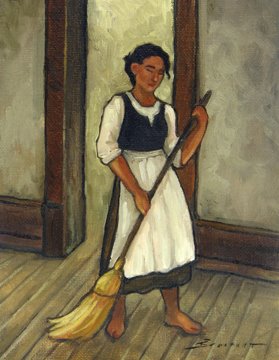
(Picture is Woman Sweeping the Floor, by Deb Schmit)

Waltzing with … Skyler

29 Sunday Jan 2012

Posted by A.O. in Waltzing with ...

≈ 5 Comments

Tags

American names, celebrity baby names, Dutch names, famous namesakes, fictional namesakes, name combinations, name history, name meaning, name popularity, name trends, nicknames, sibsets, surname names, UK name popularity, unisex names, US name popularity, US name trends

4c86fe452cad39ae2f1075e407eda5e1

This post was first published on January 29 2012, and heavily revised on February 10 2016.

Tomorrow school goes back in three different states and territories (Queensland has already been back a week), which means that the summer holidays are drawing to a close. I chose this name as suitable for the start of term, thanks to its educational meaning.

Name Information
Skyler is a variant of Schuyler; a Dutch surname of German origin meaning “scholar”, said SKIE-luh. This name was brought to what is now the United States by Dutch colonists, who settled in the east during the 17th century.

The Schuylers were a prominent New York family. Pieter Schuyler was the first mayor of Albany in New York, and a commander of the British forces at the Battle of La Prairie, near Montreal. His descendants were numerous and distinguished, including his grand-nephew Philip Schuyler, who was a general in the American Revolution and Senator for the state of New York. It is said that the first use of the names Schuyler and Skyler was in honour of this family.

Schuyler has only appeared on the US Top 1000 a smattering of times. It shows up first at the beginning of the twentieth century, and then again between the mid 1980s and mid 1990s, only charting as a male name, and never getting higher than the bottom of the Top 1000. Currently Schuyler is almost equally given to both sexes in the US – 17 girls and 15 boys last year.

Famous people with the name include Schuyler Colefax, the 17th US Vice-President, who was a distant cousin of Philip Schuyler, and Schuyler Wheeler, inventor of the electric fan. Schuyler has been chosen as a baby name by actors Michael J. Fox and Sissy Spacek – both times for daughters. The name is barely used outside the United States, and pronunciation would be a puzzle to most.

During the 1940s and 1950s there was a popular American radio and television series called Sky King, about an Arizona rancher and pilot called Schuyler “Sky” King. During the 1950s, the spelling variant Skyler begins showing up in the data. It’s tempting to imagine that people tuned into the show, and began spelling the name as it sounded, or in such a way as to make the nickname Sky more obvious.

Skyler joined the US Top 1000 in 1981 for boys, and for girls in 1990 – it began showing up in data as a girls name in the late 1970s, so it had a brisk rise as a girls name. Skyler peaked for boys in 1996 at #217, and is currently #351. For girls, it peaked in 2000 at #250, and is currently #302.

Famous Skylers include Skyler Green, a footballer who played for the Dallas Cowboys in the NFL, and actress Skyler Samuels, who played Gigi on Wizards of Waverley Place. A fictional Skyler is Skyler White from the TV series Breaking Bad, played by Anna Gunn. Fashion stylist Rachel Zoe has a son named Skyler.

In the UK, Skyler has charted for boys and girls since the late 1990s. Currently it is #406 for girls, while in 2014, there were 13 boys named Skyler. It is rising rapidly for both sexes.

Rising alongside Skyler is the variant Skylar. While it has never been higher for boys in the US than the 300s, and is currently #635, it is Top 100 for girls, being #48 and rising. A famous namesake is American singer and songwriter Skylar Grey, born Holly Hafermann – her stage name a reference to mysterious “grey skies”.

In the UK, Skylar is #212 for girls and rising steeply. It is occasionally used for boys, and in 2014 there were 5 baby boys named Skylar.

There are also spelling variants of Skyler/Skylar which are specifically feminine. Skyla is #531 in the US, #156 and rising in the UK, and in 2012 made the Top 100 in New Zealand. It is much more popular than Skylah, but that is rising rapidly as well.

Skyla and Skylah are much more common in Australia than any other spellings of Skyler, and the numbers in the UK and New Zealand suggest that this spelling makes the most sense for someone with a British/Commonwealth accent. I estimate that if Skyla and Skylah were added together, the name would be in the Australian Top 100 by now, or very close to it, while other spelling variants are extremely rare for either sex.

You can see that if all the different spellings of Skyler were added up, it would be an extremely common name in the English speaking world. So Skyla or Skylah may not be an original choice for girl, but a boy named Skyler would stand out in Australia. Some of the other spelling variants would be worth considering, although I think Schuyler will cause more problems than it is worth.

By now this name has become almost completely divorced from its true meaning, and we now connect it with such things as clear or cloudy skies, free-wheeling flight, and the wild blue yonder. The obvious nicknames are Sky and Skye, and it fits in with names like Shyla, Myla, Kayla, Kai, and Tyler. Its sound is at least part of the reason for its success.

POLL RESULTS
As a girl’s name Skyler received an approval rating of 52%. 38% of people thought it seemed okay, although only 5% of people actually loved it.

Skyler had a lower approval rating as a boy’s name, at 46%. 28% disliked Skyler on a boy, and only 4% loved it.

The favoured spelling of the name was Skyler, with 37% of the vote, although Schuyler was not far behind on 33%. The least popular was Skyla, which only one person voted for.

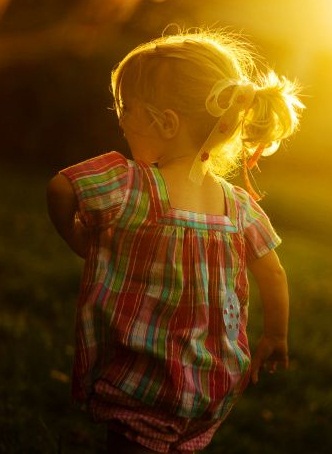
(Photo is of the NSW Schoolhouse Museum of Education in Sydney)

Waltzing with … Sunniva

25 Sunday Dec 2011

Posted by A.O. in Waltzing with ...

≈ 13 Comments

Tags

Anglo-Saxon names, Christmas names, name history, name meaning, name popularity, nicknames, saints names, scandinavian names

This blog post was originally published on December 25 2011, and revised and re-posted on December 23 2015.

From the very start I knew that I would have a name profile due on Christmas Day, and began thinking of suitable names for girls. Because Christmas is just after the Summer Solstice in Australia, and because Christmas is on a Sunday this year, I kept coming back to one name: Sunniva.

This lovely name is the Scandinavian form of the Anglo-Saxon Sunngifu, which means “gift of the sun”. As Christmas is a time for sharing gifts, and Australian Christmases can often be hot and sunny, and Christmas 2011 is on the Sun’s own day, it seemed perfect.

The story of Sunniva is one fraught with drama and high adventure. According to legend, there was once a 10th century Irish princess called Sunngifu, a virgin and very devout Christian. When her land was invaded by a pagan king who wished to marry her, she made a brave and rather desperate decision to escape. Along with a group of loyal companions, amongst them her brother Alban, she fled in a ship without oars or sails, trusting their destination to God.

After a few hairy encounters with Vikings, the pious company settled on the island of Selje, off the coast of Norway. They moved into an empty cave, and supported themselves with fishing and gathering wild foods, living a life of austerity and holiness. If you live in a comfortable house with a supermarket just down the road, this might sound a bit eccentric or at least cold and dismal, but Irish saints had a long and rich tradition of taking themselves off to remote windswept islands to worship in peace, so Sunniva and her crew were pretty normal by the standards of their time and place.

Unfortunately, the locals on the mainland believed these peaceful cave-dwellers were rustling their sheep and chowing down on ill-gotten roast mutton rather than the simple viands of nature. They came after them, intending to murder them as payback. Sunngifu and her company prayed to God to save them from the angry Norsemen. When the armed band arrived on the island, they found nobody there, and the cave sealed by a landslide. None of the exiles were ever seen alive again.

(This story may remind Australian readers both of Waltzing Matilda, with the accused sheep-thief preferring death to punishment by the authorities, and Picnic at Hanging Rock, which also ends with a mysterious disappearance in a cave which seals itself.)

Many years later, after reports of an unearthly light and heavenly fragrance in the area, King Olaf Tryggvason ordered that the cave be opened. Sunngifu’s body was found unharmed by the landslide and incorrupted, and as this was a clear sign of sainthood, King Olaf had a church built in her honour. Her relics were moved to Bergen Cathedral, where they performed another miracle by halting a fire (these useful relics disappeared at some point, unfortunately).

She became known in Scandinavia as Saint Sunniva, and is Norway’s first female saint. Saint Sunniva is the patron of Bergen, and the west coast of Norway. Her feast day is July 8 – appropriately enough, at the height of the northern hemisphere summer. The island of Selje is a place of pilgrimage, and you may see there the ruins of a Benedictine monastery dedicated to the saint, called Selje Abbey.

Sunniva has been well used as a girl’s name in Scandinavia, and is currently #68 in Norway, although falling in popularity, as it peaked at #32 in 2000.

Sunniva is pronounced SOON-ee-vah, but some people prefer to say it SUN-ee-va. Other popular pronunciations are soon-EE-va and sun-EE-va. You could also pronounce it soon-IE-va or sun-IE-va.

Sunniva has a happy meaning, well suited to summer and a land of sunshine.  It provides good ties with our English, Irish and Norwegian heritages (we have several popular celebrities of Norwegian ancestry, and bush poet Henry Lawson’s father was from Norway). It’s an unusual name in Australia, but doesn’t sound particularly strange, and isn’t hard to spell or pronounce, once you work out which pronunciation you’d like.

Attractive nicknames for Sunniva include Sue, Susie, Sunny, Eve, Eva, Evie, Neva, Neve, and Zuzu.

POLL RESULT
Sunniva received an approval rating of 81%, making it one of the highest-rated names of 2011. 30% of people loved the name Sunniva, while only one person hated it.

(Picture is from the cover of Emma’s Secret by Steena Holmes)

Waltzing With … Taiga

20 Sunday Nov 2011

Posted by A.O. in Waltzing with ...

≈ 9 Comments

Tags

fictional namesakes, Japanese name popularity, Japanese names, nature names, Russian names, unisex names

This post was first published on November 20 2011, and heavily edited and reposted on November 25 2015.

It’s been a little more than eight months since Japan was hit by the terrible earthquake off its eastern coastline – with a magnitude of 9.0, it was the strongest earthquake to ever hit Japan, and one of the five most powerful in the world since modern record-keeping began in 1900.

The earthquake triggered a massive tsunami, with waves reaching more than 40 metres (133 feet) high; as well as bringing destruction to life and property, the tsunami caused a number of nuclear accidents, which meant that hundreds of thousands of people had to be evacuated.

This could not help but evoke a response from people all around the world. We were shocked and appalled as we saw it unfold on our TV screens, and deeply moved by the plight of the Japanese people, who reacted so calmly and bravely to their national tragedy.

We had recently suffered a summer of terrible cyclones and floods, and the disaster in Japan put our own problems in perspective; suddenly things didn’t seem quite so terrible, suddenly we realised that things could have been a lot worse for us. Australia was one of the many countries who went to Japan’s assistance during the crisis, and one of the few that Japan specifically asked for help from.

Things are still pretty bad in the coastal regions of Japan which suffered the worst during the catastrophe. There are whole towns that have been evacuated, and it may be years before it is safe for people to return. Nuclear contamination is still a major issue, and people worry about whether food is safe to eat or not. There are many farming districts in the nuclear-affected areas of Japan, and it’s been devastating for the agricultural economy there.

Taiga is a name I heard of from Japanese families who had fled the disaster zone to live in Australia, although later on I met an Australian family with a small boy named Taiga in memory of an extended visit to Japan.

Note: Since 2011, the areas of Japan worst affected by the tsunami are still struggling to rebuild, and the path to recovery looks likely to be a very long and painful one.

Name Information
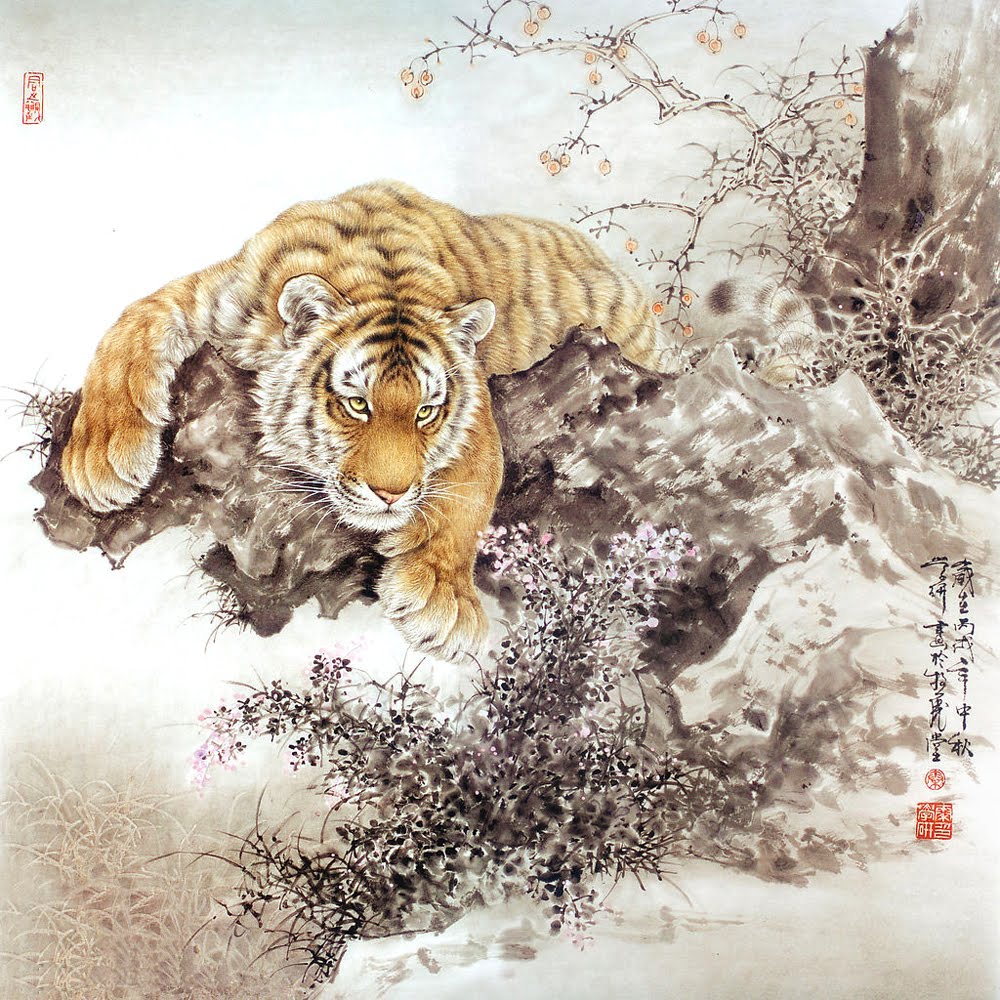
Taiga is a common name for boys in Japan. In Japanese, Taiga is pronounced TAH-ee-gah, but in English it is said TIE-gah. The Japanese are aware that it sounds similar to the English word tiger, and this may even be an attraction for some.

Depending on the kanji used, the name can be given a range of meanings, but the most commonly given is “large and graceful”, or “big and gracious”. It can also be translated as “big river”, and is the Romanised form of “tiger”. Despite these different meanings, when you put them together the overall impression is of something large and powerful, yet with all the majestic beauty and grace of a great river or a tiger.

By coincidence, taiga is also a word for the large coniferous forest areas which cover the far north of the planet, in Alaska, northern Canada, Russia, Poland, Scandinavia, northern Kazakhstan, northern Mongolia, and even the far north of Japan. The word for this is Russian, and ultimately from Turkic or Mongolian. Sometimes taiga is specifically used to designate the more barren part of the forested area. It’s pronounced TIE-guh.

I’m not sure how many Japanese girls are named Taiga, but there is a manga series for young readers called Toradora! where the lead female is a junior high school girl named Taiga. Beautiful yet very short, clumsy and socially maladept, her name is given to her in the sense of the word tiger – lovely, but very fierce!

This gives it a slight chance as a unisex name – if used as the Japanese transliteration of the word tiger, this makes it a different name than the Japanese boy’s name Taiga. And there’s no reason why a girl can’t be named after the forest area anyway, as forests are not intrinsically male or female in nature.

Taiga seems a very usable name – it sounds similar to an English word, and even references that word without actually being that word. Taiga can be a way to get the same sound and even the same meaning from a different spelling and origin.

I think Taiga is a far more interesting name than Tiger, as it has so many layers of meaning. It reminds me of the popular name Kai, which similarly has a European and a Japanese origin, although Taiga manages to bring the two cultures closer together.

Taiga gives the nickname Tai, which links it with other popular boy’s names like Tyson and Tyler; Taiga is unusual, yet a Tai in the playground will blend right in with the other boys named Ty and Tye.

POLL RESULTS
Taiga received an approval rating of 82%, making it one of the most highly-regarded names of 2011. 41% of respondents thought it was okay, and only 6% of people disliked it. The number of people who loved or hated it was exactly the same – 12%.

Waltzing With … Daisy

16 Sunday Oct 2011

Posted by A.O. in Waltzing with ...

≈ Comments Off on Waltzing With … Daisy

Tags

Aboriginal names, english names, famous namesakes, floral names, name history, name meaning, name popularity, names from songs, nature names, nicknames, plant names, retro names, UK name popularity, US name popularity

76610

This blog post was first published on October 16 2011, and completely rewritten on October 15 2015.   

Famous Namesake
Today it is the 152nd birthday of ethnographer Daisy Bates, who was born October 16 1859. Daisy migrated to Australia from Ireland as a young woman, and like many other immigrants, took the opportunity to reinvent herself. Her story was that she was born as Daisy O’Dwyer into a wealthy Irish Protestant family, and after being orphaned, was brought up to be a “lady” by her grandmother. Adopted by an aristocratic family, she seemed destined to lead a life of leisure, until a brush with TB sent her to Australia in order to recover her health.

In fact she was Margaret Dwyer, born into a poor Irish Catholic family, and brought up in an orphanage, where she was educated to be a governess. It may have been a sexual scandal that sent her across the world to Australia, and she seems to have been keen to seek a husband. Good looking with lovely dark eyes, a lively manner, and the gift of the gab, Daisy had little trouble attracting men, and she married three of them in rapid succession, including “Breaker” Morant (she didn’t bother getting divorced, so she was a serial bigamist). She took the surname of her second husband, Bates.

An unplanned pregnancy resulted in her son, and the process was so traumatic that she ever after had only distant relations with her husband and child. Her husband became even more estranged from her when she developed what was considered a bizarre interest in Aboriginal culture, and she finally left him to take up what was to be her life’s work.

Daisy spent forty years studying Aboriginal language, history, rituals, beliefs, and customs, and for much of that time lived in isolated areas, apparently always dressed in heavy dark Edwardian clothing. The usefulness (and even truthfulness) of her anthropological work has been much debated, but she was a pioneer in the field, being one of the first to live among the people she was studying and observe them at first hand, without trying to “educate” them or convert them to her own beliefs.

Although she was never sentimental or high-minded in any way about it (she was brutally frank that her interest in Aboriginal culture was a sport more than anything else), she did work towards Aboriginal welfare. She wrote with great feeling of their suffering at the hands of Europeans, and was able to identify that much of their misery was compounded by a lack of cultural awareness towards them.

She helped pave the way for greater attention to Indigenous health, and was prepared to defend Aboriginal women from sexual exploitation by white males, with a gun if necessary. She could be kind and generous towards Aboriginal people, paying for their needs from her own limited funds. Most importantly, her work has been an invaluable resource for those seeking Native Title claims.

In her lifetime, Daisy Bates was famous, but also seen as a stubborn, publicity-seeking eccentric, and remains a deeply controversial figure to this day. Many of her ideas about Indigenous Australians were paternalistic – one of her books is titled My Natives and I. She also saw Aborigines as a doomed race, and had an appalling hatred of people with mixed black and white ancestry, believing them to be completely worthless.

A staunch monarchist and imperialist, and a social-climbing, gossipy old snob, she loathed feminists, socialists, Catholics, and Germans – her views, not abnormal for her time, are now so out of fashion that they have alienated many, and this has helped lead to her neglect.

An interesting question is what the Aboriginal people themselves thought of her. She claimed that they called her Kabbarli, a word that can be translated as “grandmother”, to suggest a relationship that was both affectionate and respectful. It can also be translated as “crazy old bat”.

Name Information
Daisies are members of the aster family which grows widely over the world – everywhere except the polar regions. The word daisy comes from the Old English for “day’s eye”, as the English Daisy (Bellis perennis) opens when the sun rises, and closes in the evening. An English saying is that spring has not arrived until you can set your foot on a dozen daisies, while a Celtic tradition says that daisies are formed whenever a child dies so that they might comfort their grieving parents.

A well known divination is to discover if someone truly loves you by plucking daisy petals: he loves me, he loves me not, he loves me! Daisies were the flower of the love goddesses Freya and Venus, and it may not be a coincidence that daisies and daisy chains have long been gifts between sweethearts. In Roman legend, the wood nymph Belides transformed herself into a daisy to escape the attentions of Vertumnus, the god of seasons and plants, so that daisies are associated with chastity.

A Christian legend says daisies sprung from the tears wept by Mary Magdalene when she was forgiven of her sins. In Christian iconography, daisies symbolise the Virgin Mary; they were a favourite in medieval paintings and tapestries of the Virgin. Later they were used to symbolise the Christ Child. The purity of the Virgin Mary and the passion of Venus often seem to combine in medieval literature, so that daisies were used to symbolise the “good woman” who was equally sweet and sensual.

Daisy has been used as an independent girl’s name since at least the 17th century, and became popular in the 19th, along with other floral names. It is also used as a nickname for Margaret, because the French name for the Ox-eye Daisy is the marguerite. Because of this, it was used as a royal device by Marguerite de Navarre, the sister of Francis I of France, Margaret of Anjou, the wife of Henry VI, and Margaret Beaufort, the mother of Henry VII. King Louis IX of France wore a daisy engraved on his ring as a tribute to his wife, Marguerite of Provence.

Daisy was quite a popular nickname among the upper classes during the Edwardian era, as evidenced by Princess Margaret “Daisy” of Connaught, who became the queen of Sweden; society beauty Mary “Daisy”, Princess of Pless; fashion icon and heiress Marguerite “Daisy” Fellowes; and Frances “Daisy” Greville, the mistress of the Prince of Wales (later Edward VII), whose love for the bicycle craze of the 1890s is popularly believed to have inspired the music hall song about Daisy with a bicycle built for two.

Literary Daisys include Daisy Buchanan who arouses a life-long obsession in F. Scott Fitzgerald’s The Great Gatsby, and the enigmatic Annie “Daisy” Miller, from Henry James’ novella. Sweet Meg from Little Women is sometimes called Daisy, and when she has a daughter named Margaret, she is known as Daisy to differentiate her from her mother. All these fictional Daisys are American, and two more American sweethearts are Disney’s Daisy Duck and sassy Southern belle Daisy Duke, from the Dukes of Hazzard.

The name Daisy was #58 in the 1900s, and left the Top 100 in the 1920s. It dropped from the charts in the 1940s, made a minor come-back in the 1950s, then dropped out again the following decade. Daisy returned to the charts in the 1980s at #646, and climbed fairly steadily. It rejoined the Top 100 in 2013 at #90, making it one of the fastest-rising names of that year. Last year it left the national Top 100, although it still made the Top 100 in Queensland and Tasmania.

Daisy is most popular in the UK. It was in the Top 100 there from 1880 until the 1930s, then made a comeback in the 1990s, peaking in 2010 at #15. Currently it is #24. In the US, Daisy has never left the Top 1000. It was in the Top 100 from 1880 to 1908, and reached its lowest point in 1972 at #629. It is currently #180. Australia’s Daisy popularity may be closer to New Zealand, where Daisy has made the bottom of the Top 100 a few times without any signs of climbing.

Daisy is a wholesome retro name which manages to sound both pure and innocent, and cute and spunky. There is something demure about little Daisy, but also rather sexy: Venus has given her a certain sweetness that blows like a fresh spring breeze across the fields. Daisies may be common flowers, but the name Daisy is not overused, and shows no signs of shooting up in popularity. You may use Daisy as a nickname, but it is just fine as a name in its own right.

POLL RESULT
Daisy received an approval rating of 88%, making it one of the highest-rated names of 2011. 37% of people loved the name Daisy, and only one person hated it.

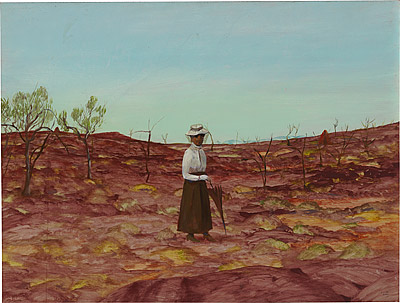
(Painting is Daisy Bates at Ooldea, by Sidney Nolan, 1950)

Waltzing With … Cruz

11 Sunday Sep 2011

Posted by A.O. in Waltzing with ...

≈ 8 Comments

Tags

car names, celebrity baby names, name combinations, name history, name meaning, name popularity, Spanish names, surname names, UK name popularity, unisex names, US name popularity

This blog post was first published on September 11 2011, and substantially revised and updated on September 18 2015.

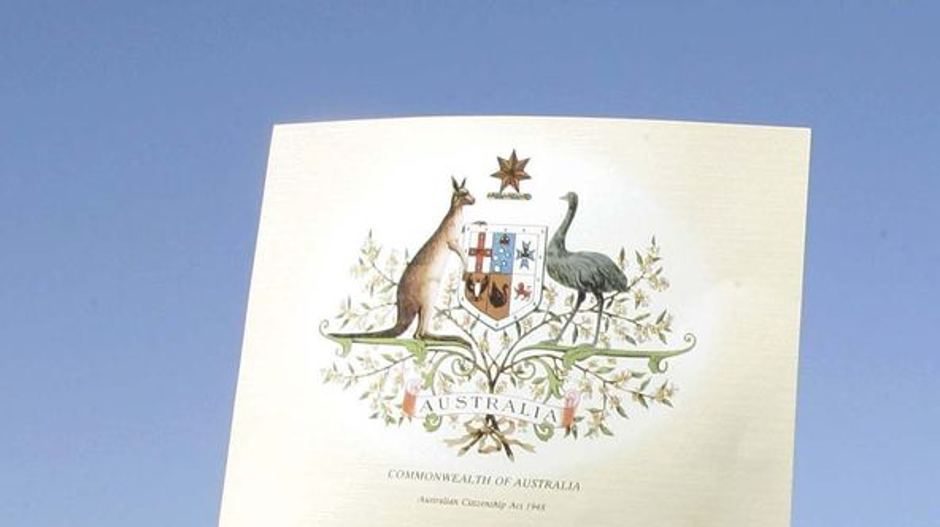
On Saturday September 17, Australia celebrates Australian Citizenship Day. The date was chosen because September 17 was the day that the Nationality and Citizenship Act 1948 was renamed, in 1973, The Australian Citizenship Act 1948. We have been celebrating Australian Citizenship Day since 2001, and it is organised by the Department of Immigration and Citizenship.

Australian Citizenship Day is one to think about what unites as Australians, to take pride in our national citizenship, and to celebrate our democratic values and commitment to a fair go, equality, and respect for each other. Local councils are encouraged to hold citizenship ceremonies and affirmation ceremonies, where you affirm your loyalty to Australia, just it case it had started waning in the interim.

Citizenship Day is one to remember that we are all Australian citizens, whether you were born here 80 years ago, or just took out citizenship. It seems like a great opportunity to look at a name that has only recently come to Australia from another land, and although many names have been welcomed to our shores, this one stood out as a success.

Name Information
Cruz is a common Spanish surname which means “cross”, coming from the Latin word crucis; it originated in Castile. Many places throughout Europe got their name from a prominent cross used as a marker; perhaps for a public meeting place or a market. This is the origin of the surname, and as there are people called Cruz in Spain, there are Crosses in Britain, Groses in France, Kreuzes in Germany, and so on. In the Christian era, the name took on religious significance, and in some cases the surname Cruz might have been bestowed on someone who carried a crucifix at festivals.

Cruz has been used as a personal name in Spain since the Middle Ages. You can often find it in name combinations such as Santa Cruz (“holy cross”) or Vera Cruz (“true cross”), to underline its Christian significance. In early records, it seems to have been commonly given to babies born during the Lenten and Easter seasons. The other key date for the name is around mid-September – The Feast of the Holy Cross is on September 14.

The name was originally given mostly, but not exclusively, to girls. However overall the name has been given fairly evenly to both sexes in Spain, but with females still ahead. In Latin America, records show it as unisex, but with males slightly ahead of females. The name isn’t popular in Spanish-speaking countries, and is often seen as rather dated for either gender.

The United States is the only English-speaking country where Cruz has much of a history, thanks to its significant Hispanic population. It has been on and off the US Top 1000 since records began in 1880, and has been continually on the charts for boys since 1980. It charted as a girl’s name a few times in the years leading up to World War II. Currently Cruz is #290 in the US, and fairly stable.

In the UK, the name Cruz gained publicity after English football star David Beckham chose it for his third son. Although it is presumed the Beckhams chose a Spanish name to honour David Beckham’s football team at the time, Real Madrid, and perhaps as a nod toward the tattoo of a cross David got in 2004, (apparently for vaguely religious reasons), Cruz seems much more of an “American-style” name, like his siblings Brooklyn and Harper, than one used in Spain. The name began charting in the UK after Cruz Beckham’s birth in 2005, and it is currently #381 and rising.

In Australia, Cruz is a celebrity baby name as well, as tennis champion Lleyton Hewitt, and his wife, actress Bec Cartwright, called their son Cruz in 2008. It seems to be a name which appeals to male sportsmen, because there are several other Australian athletes with sons named Cruz. Cruz shows up a few times in Australian historical records, always on people of Hispanic heritage, and often from countries such as the Philippines or islands such as Guam. In 2012, the name Cruz was #115 in Victoria, and would have been in the Top 100 if combined with the spelling Cruze.

Apart from the obvious star-factor of the name Cruz, I think it’s doing well in Australia because it’s short, simple, sounds very boyish to our ears, and the z-ending seems to give it a little pizzazz. It’s almost a “car” name in Australia, as we have the Holden Cruze, so this connection with sports and cars probably makes it seem blokey.

Perhaps it also reminds parents of the slang words cruise and cruisey, which seem to sum up our relaxed attitude and way of life. If anyone looks up the meaning and sees that it means “cross”, it will of remind them of our own Southern Cross, twinkling down at us from the night sky, and appearing on our national flag. In other words, it seems like a name well suited to Australian conditions, and is almost verging on the patriotic.

Cruz had been inducted as a citizen of Australia, affirmed his loyalties to our way of life, and proudly hung his certificate on the wall. Welcome to Australia, mate.

POLL RESULTS
Cruz received an approval rating of 58%. 29% of people disliked it, while only 9% loved it.

← Older posts
Newer posts →

Enter your email address to follow this blog

Categories

Archives

Recent Comments

A.O.'s avatarwaltzingmorethanmati… on Zarah Zaynab and Wolfgang…
Madelyn's avatarMadelyn on Zarah Zaynab and Wolfgang…
JD's avatardrperegrine on Can Phoebe Complete This …
A.O.'s avatarwaltzingmorethanmati… on Rua and Rhoa
redrover23's avatarredrover23 on Rua and Rhoa

Blogroll

  • Appellation Mountain
  • Baby Name Pondering
  • Babynamelover's Blog
  • British Baby Names
  • Clare's Name News
  • For Real Baby Names
  • Geek Baby Names
  • Name Candy
  • Nameberry
  • Nancy's Baby Names
  • Ren's Baby Name Blog
  • Sancta Nomina
  • Swistle: Baby Names
  • The Art of Naming
  • The Baby Name Wizard
  • The Beauty of Names
  • Tulip By Any Name

RSS Feed

  • RSS - Posts

RSS Posts

  • Celebrity Baby News: Melanie Vallejo and Matt Kingston
  • Names from the TV Show “Cleverman”
  • Can Phoebe Complete This Sibset?
  • Zarah Zaynab and Wolfgang Winter
  • Baby, How Did You Get That Name?
  • Celebrity Baby News: Media Babies
  • Celebrity Baby News: Adelaide Crows Babies
  • Celebrity Baby News: Chris and Rebecca Judd
  • Names at Work: Name News From the World of Business and Employment
  • Celebrity Baby News: Sporting Round Up

Currently Popular

  • Rare Boys Names From the 1950s
  • Arlo Robert Galafassi: A Son for Toni Collette and Dave Galafassi, a Brother for Sage Florence
  • The Top 100 Names of the 1930s in New South Wales
  • The Top 100 Names of the 1920s in New South Wales
  • Celebrity Baby News: Manu Feildel and Clarissa Werasena

Tags

celebrity baby names celebrity sibsets english names famous namesakes fictional namesakes honouring locational names middle names name combinations name history name meaning name popularity name trends nicknames popular names saints names sibsets surname names twin sets unisex names

Blog at WordPress.com.

Privacy & Cookies: This site uses cookies. By continuing to use this website, you agree to their use.
To find out more, including how to control cookies, see here: Cookie Policy
  • Subscribe Subscribed
    • Waltzing More Than Matilda
    • Join 517 other subscribers
    • Already have a WordPress.com account? Log in now.
    • Waltzing More Than Matilda
    • Subscribe Subscribed
    • Sign up
    • Log in
    • Report this content
    • View site in Reader
    • Manage subscriptions
    • Collapse this bar
 

Loading Comments...