• About
  • Best Baby Names
  • Celebrity Baby Names
  • Celebrity Baby Names – Current
  • Celebrity Baby Names – Past
  • Featured Boys Names
  • Featured Girls Names
  • Featured Unisex Names
  • Links to Name Data
  • Waltzing on the Web

Waltzing More Than Matilda

~ Names with an Australian Bias of Democratic Temper

Waltzing More Than Matilda

Yearly Archives: 2012

Waltzing With … Chrysanthe

13 Sunday May 2012

Posted by A.O. in Waltzing with ...

≈ 1 Comment

Tags

famous namesakes, flower names, French names, Greek names, name combinations, name history, name meaning, nature names, nicknames, plant names, rare names, saints names, unisex names

This blog post was first published on May 13 2012, and revised and re-posted on March 23 2015

Today is Mother’s Day, which is a special day for anyone who is a mother, or has ever had a mother or mother figure to care for them – hopefully that’s all of us.

Celebrations of motherhood are not a new idea; the ancient Greeks and Romans had festivals in honour of the mother goddess Cybele, and the Christian Church commemorates Mothering Sunday on the fourth Sunday in Lent. Although the mother being honoured on this day is the Virgin Mary, traditionally it was a day for people to spend with their own mum, and bring her flowers and cake.

The Mother’s Day we celebrate in May was started in the United States, and came out of the women’s peace movement. In 1868, Ann Jarvis tried to promote a pacifist Mother’s Day, and when she died in 1904, her vision was still just a dream. Ann’s daughter Anna Jarvis was determined to continue her mother’s campaign, and by 1914, US Congress had passed a law proclaiming the second Sunday in May would be called Mother’s Day.

Unfortunately for Anna and all her hard work, she soon became horrified by the commercialisation of Mother’s Day; greeting cards and boxes of chocolates were not at all what she had had in mind. For the rest of her life, she protested against it, and in the process was arrested for disturbing the peace. Anna spent all her savings trying to stop what she had accomplished, and died in poverty in 1948.

The tradition of giving gifts on Mother’s Day was begun in Australia by a Sydney woman named Janet Heyden. In 1924, Mrs Heyden made a visit to someone in a state women’s home, and was saddened to find so many neglected mothers. To cheer them up, she organised schoolchildren to help bring them gifts donated by local businesses.

Janet was also disappointed by the commercialism of her idea, but sensible enough to realise that more good than harm would come of it. She continued visiting lonely mothers and cheering their days until she died in 1960.

Name Information
The traditional flower to give your mum for Mother’s Day in Australia is the chrysanthemum, because it is an autumn flower, suitable for the season, and ends in mum. The flowers originate in China, where they symbolise cleansing and health, and when they were introduced to Europe, they were named chrysanthemums, meaning “golden flower” in Greek. The Ancient Greeks also had this flower name, but they used it to refer to the daisy-like weed we call the corn marigold, which has been brought to Australia and grows wild here too.

Chrysanthos or Chrysanthus is an Ancient Greek name meaning “golden flower”. Saint Chrysanthus was an early Christian martyr, the husband of the supposed Vestal Virgin named Daria who converted to Christianity. That part of the legend can’t be true, but nonetheless Chrysanthus and Daria were very popular saints, and the name was well known. There was a Roman governor in Britain in the 4th century named Chrysanthus, and Chrysanthos has been used in modern Greece.

Chrysanthe is the feminine form of Chrysanthus, and can also be spelled Chrysanthi (the more obviously Greek spelling). The name is pronounced kri-ZAN-thee. Chrysanthe is also the French form of Chrysanthus, so has been used as a male name in French-speaking countries, including French Canada.

Chrysanthe is a rare name, and has mostly been used in Greece, and by those of Greek heritage. It doesn’t show up in the data in either the US or the UK. However I have seen it used in Australia, and not only on people from a Greek background. A famous contemporary namesake is American/Australian composer and violinist Chrysanthe Tan, who is of Greek heritage, and may be giving the name some publicity.

There’s something a little extravagant about Chrysanthe – it’s gilded, artistic and showy. Yet it doesn’t sound much different to the more familiar Christina, Anthea, and Xanthe. It is tied by sound and meaning to the chrysanthemum flower, which makes it an ideal name for a daughter born on, or near, Mother’s Day.The traditional nickname is Chryssa, but you could also use Chrys, Chryssie, Thea, or Zan.

POLL RESULT
Chrysanthe received an approval rating of 65%. Opinions on the name were fairly evenly divided – 25% of people thought it was an okay name, while 18% of people hated it.

Saturday Sibsets: Four Families from Tasmania

12 Saturday May 2012

Posted by A.O. in Sibsets in the News

≈ 2 Comments

Tags

animal names, Arabic names, Australian Aboriginal names, english names, hebrew names, Maori names, nature names, nicknames, polynesian names, sibsets, unisex names, virtue names, vocabulary names

THE CIRCUS TROUPE

Kristy and Mark Sands run the Sands Family Circus. They began performing together in the mid-1990s, and initially planned on having two children, but ended up with a few more than that. All the children naturally learned circus skills, and became part of the act.

Jiemba (15) BOY – means “morning star” in the Wiradjuri language

Tohua (13) BOY – in Maori means “egg”; in Polynesia, a Tohua is a ceremonial meeting place

Spida (11) GIRL

Rain (9) BOY

Ooliki (3) BOY – I don’t know what his name means

Next child (due in July)

THE BABYSLING MUMPRENEUR

Anita Lincolne-Lomax turned her passion for attachment parenting into a business when she founded Babes in Arms several years ago. Babes in Arms sells baby carriers and baby slings throughout Australia and New Zealand, and last year Anita was named 2011 Mumpreneur of the Year by parenting website connect2mums.com.au, and Babes in Arms is a finalist in two categories of this year’s Australian Small Business Champion Awards. Her husband Ralph now works full-time in the company.

Tilli (8)

Jontae (5) – a variant of Jonte, a pet form of Jonathan

Aviya (3) – Hebrew name meaning “my father is Yahweh” (unisex)

Grace (7 months)

THE COOKS WHO COOK

Jo Cook is a chef and market curator, and food is her passion. A member of Slow Food Hobart, she runs Flavour Workshops for children, and volunteers at a primary school to work in their kitchen garden. Next she hopes to link up with the university to inspire a new generation to eat more mindfully and healthily. Of course, at home, the family connects around growing food, cooking meals and enjoying them together around the table.

Nina (10)

Charlie (8)

A FRESH START

Sarra Elradi came to Tasmania from Sudan with her four children to give them a better start in life. She had separated from her husband, and the family spent two years in Egypt, which they describe as “very tough”, because there was no one to help them. When they arrived in Australia, only Sarra’s eldest son could speak English, so they were on a steep learning curve; however they appreciate the education they are receiving and the opportunities that are available to them. Sarra’s daughters are both members of the Glenorchy Young Women’s Multicultural Group.

Elsawi BOY Arabic name meaning “servant of God”

Hanadi (15) GIRL Arabic name meaning “lovely fragrance”

Zeinab (12) GIRL Arabic name meaning “desert flower”

One other child

(Photo and story from The Hobart Mercury, May 11 2012)

Name Claiming

12 Saturday May 2012

Posted by A.O. in Names in the News

≈ 2 Comments

Tags

Deb Dempsey, McCrindle Research

When a social phenomenon becomes so widespread that everyone knows about it, it’s time for the papers to step in and cover it. In this case, the papers have decided it’s time to let us know that many parents are attempting to “reserve” their baby names in advance.

For some, it’s a simple matter of just telling everyone they know what name they have chosen for their impending offspring, with an implicit or express command that nobody else having a baby can use it.

Others send out official notices, get the name embossed and embroidered on everything they can find, and open a Facebook and Twitter account in their unborn baby’s name.

Social researcher Mark McCrindle (from the same company who did the national baby name popularity chart) says that this all part of the movement of wishing our children to be “unique”, and that naming then becomes akin to getting your own “brand”.

Parenting author Maggie Dent notes that this is a step away from tradition. In the past, parents kept their baby names a secret, and often didn’t name a baby until several days after birth, in an effort to get a feel for which name would suit them best.

Swinburne sociology lecturer Deb Dempsey, who is doing a study on baby naming, says that while many parents are still keeping the name a secret, others are going public, and even involving others in the decision, such as asking people on the Internet to help them choose between several different names.

Without disagreeing with any of these people, I would say that this is part of a greater trend – of growing acceptance toward pregnancy and children. While once women were expected to hide their pregnant body under smocks, and to leave their children at home with a babysitter if they went out, we now feel comfortable showing off our baby bumps (celebrities even show their pregnant bodies naked in magazines), and we can take our small children to restaurants and breastfeed in public.

In the same way, we feel more comfortable talking about pregnancy, and that includes sharing the baby names we are thinking of, and posting our ultrasounds on social media. We feel able to ask other people for their opinions, and post polls as to whether they like Madison or Kayla better.

When it comes to actually staking a claim on a name and forbidding others to use it, even if the name is an extremely common one, such as Cooper, or even if the person isn’t yet pregnant (something the papers didn’t cover), then I think that goes a bit past just wanting to be open and share.

A buzz word that gets thrown around a lot when discussing modern life is entitlement, and it is hard for me to understand how you can believe that you deserve the right to claim exclusive rights to any name in advance without a fairly decent-sized sense of self-entitlement attached. I am curious as to where that sense of self-entitlement comes from.

Adara and Asterix: Birth Announcements from the Melbourne “Age” (April)

11 Friday May 2012

Posted by A.O. in Birth Announcements

≈ 3 Comments

Tags

name combinations, sibsets, twin sets

Twins

Finn James and Isla Diana


Girls

Adara Grace

Annabel Tamara (Georgia)

Ashlyn Ciara

Chloe Maeve (Charlie, Sam, Holly)

Emilie Madeline

Lucinda Phillipa (Alice)

Makayla April (Kiera)

Rose Eliza

Zoe Chee Mei (Mia)


Boys

Archer Rory “Archie”

Asterix Serge Bernard

Bart Robert (Fred)

Dougal John McCallum (Archie)

Frederic George (Eliza)

George David (Henry, Zara)

Oliver James

Samuel Bryan

Thomas Ian

(Picture shows the Melbourne International Flower and Garden Show 2012, held at the Royal Exhibition Building and Carlton Gardens, and ending in April)

Scout Lake and Forrest Gray: Birth Announcements from the Melbourne “Herald Sun” (April)

11 Friday May 2012

Posted by A.O. in Birth Announcements

≈ 4 Comments

Tags

name combinations, sibsets, twin sets

Twins

Declan James and Harry William


Girls

Ada Ruby (Ryu)

Alliana Kaeli Matyse (Emmerson)

Arabella Sparkes

Charlotte Blythe (Arabella)

Clea Violet (Siearra)

Haylee Anna Jane

Keira Charli Pearl (Maisie)

Lenny Claire

Lily Mae Bianca

Neve Liliana (Asher)

Phoebe Clancy

Sadie Bluebelle (Noah)

Sarah Lauren Ruth (Lachlan)

Scout Lake

Seraphine Bailey (Althea)


Boys

Cale Patrick (Riley, Aidan)

Carter Ridley (Aiden)

Dan Harvey (Ned)

Forrest Gray (Tully)

Jack Vedder

Jake Henry Joseph (Levi)

Jeremy Lucas (Asha, Lachie)

Joakim Alexander (Viola)

Jude Jacobus

Kobe Alan Michel

Lennon Roy Christopher (Zachariah)

Manuel Rimon

Nero Vincenzo Salvatore

Torsten Thomas

Wilson Vaughan (Bonnie, Ginger)

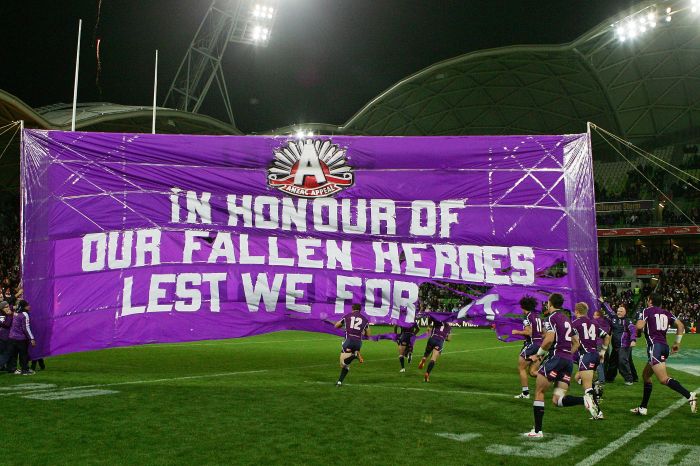
(Photo shows the start of the ANZAC Day match between NRL teams Melbourne Storm and the New Zealand Warriors).

Celebrity Baby News: Jessica Marais and James Stewart

10 Thursday May 2012

Posted by A.O. in Celebrity Baby News

≈ 4 Comments

Tags

celebrity baby names

Actress Jessica Marais, and her fiancé, actor James Stewart, welcomed their first child yesterday, May 9, at 5.41 pm. They have named their daughter Scout Edie.

Jessica was born in South Africa, and lived in Canada and New Zealand before her family moved to Perth, Western Australia, when she was 9. After graduating from the National Institute of Dramatic Art in 2007, she was cast in the role of Rachel Rafter on TV drama series, Packed to the Rafters. The show became an instant hit, and Jessica won the 2009 Logie for Most Popular New Female Talent, and the Graham Kennedy Award for Most Outstanding New Talent. Jessica left the show last year.

James played Jake Barton in Packed to the Rafters. The characters Rachel and Jake became an item, and pretty soon life followed art as Jessica and James began dating in early 2010.

Jessica and James, along with baby Scout, will relocate to the United States in about a month, where Jessica is filming Magic City, a TV series set in 1950s Miami.

UPDATE: Jessica confirms that Scout was named after the character from To Kill a Mockingbird, which is one of her favourite novels.

Famous Names: Blake

09 Wednesday May 2012

Posted by A.O. in Famous Names

≈ 9 Comments

Tags

english names, famous namesakes, fictional namesakes, name history, name meaning, name popularity, nicknames, Old English names, popular names, surname names, unisex names

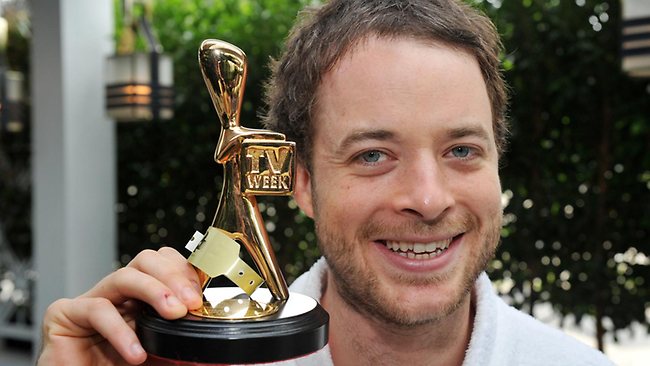
Comedian Hamish Blake has cropped up several times on the blog. His name was included in the post Boys Names That Only Chart in Australia, and we also took a look at how successful his name is. He’s had a dream run in the not-usually-lucrative field of comedy ever since he dropped out of a double degree in Science and Commerce to buddy up with Andy Lee as a comedic duo. Together they have had a ratings winning drivetime radio show filled with prank calls and the like, and several successful TV shows, most recently, Hamish and Andy’s Gap Year. Eventually it all paid off for at least one of them when Hamish won the Gold Logie for being the Most Popular Personality on Australian Television at this year’s Logie Awards.

Blake is an English surname which has two different origins of opposing meanings. Both of them began as nicknames. One is the Old English blæc, meaning “black”, referring to someone with black hair or a dark complexion. The other is from blāc, meaning “pale”, referring to someone with very blond hair or a fair complexion. One theory is that the two nicknames were ethnically based, with the first denoting the dark Celts, and the second denoting the fairer Jutes, who were from Jutland (today it’s Denmark, and the bits of Germany that join on to Denmark).

Although you’ve no doubt twigged that blæc became our English word black, it may not have immediately occurred to you that blāc is related to our English word bleak. Late in the Middle Ages, the two words were merged into blake, moving us closer toward the modern word black, but somehow immersing in it a word meaning the opposite. However, if you consider black and bleak together, they don’t seem quite so contradictory.

The Blakes are an Irish aristocratic family, dating back to the Norman Conquest of Ireland, so you could see the first name Blake as derived from this aristocratic surname. However, those of a literary bent are more likely to see it as honouring William Blake, the visionary English poet and painter who was a seminal influence on the Romantics. If you are something of a sci-fi fan, the name may remind you of Roj Blake, from the popular 1970s and ’80s TV series, Blake’s 7.

Blake reminds me of the much-loved illustrator Quentin Blake, as I was raised reading Roald Dahl‘s books, with the enchanting Mr Blake’s humorous drawings, which convey life and movement so effortlessly. My childish desire was to look as cheerfully plain and lank as the children that Quentin Blake drew; however to my disgust, my parents insisted on lots of fresh air, exercise and home grown produce, so that I remained obstinately tanned, rosy-cheeked and sturdy. Luckily I didn’t know enough about genetics to realise it was also their fault I wasn’t plain!

Another Blake from the era of the 1980s was Blake Carrington from American soap opera, Dynasty. This ruthlessly wealthy oil tycoon, whose life revolved around kidnappings, comas and the search for Nazi gold, seems to have given the name a rather “preppy” image in the United States. We don’t have the word preppy here, but as far as I can work out, it means “offensively middle-class”. Perhaps someone more knowledgeable can enlighten me on this one? I suspect that here its image is a bit more relaxed (although rebel Blake Dean from Home and Away managed to have a rather tortured time in Summer Bay, even without any Nazi gold).

Blake is often listed as a unisex name on international sites, although it is Top 100 for boys, and the only female Blake ever mentioned is actress Blake Lively from Gossip Girl. There is nothing especially boyish about the meaning of the name Blake, but its consonant-vowel-K sound has the same pattern as names such as Jack, Luke and Jake, giving it a masculine intonation (although it is a bit like Brooke, too). Although I could accept it as unisex, it’s seen as a male name in Australia, and you may get some resistance to using it for a girl. The similarity between Blake and the word bloke could well be keeping it in the boy’s club.

Blake first entered the charts in the 1950s, and took off in the 1970s (hmm, Blake’s 7, anyone?), so that it was Top 100 by the 1980s. It reached its peak in the 1990s, just outside the Top 20. Since then, it has fallen in popularity, although it is still in the Top 50 (and more popular in Australia than anywhere else in the world). Perhaps surprisingly, Hamish Blake doesn’t seem to have helped the popularity of the name, even though the name Hamish is doing pretty well for itself in the charts.

Although statistically Blake has passed its prime, to many it fits into that handy category of Popular But Not Too Popular Names, and has many namesakes from popular culture which have garnered it affection. It’s a nice, short, simple name which sounds sporty, surfer and skater, but still has some room for art and poetry. I tend to think its real strength is as a middle name, however.

Celebrity Baby News: Local Achievers

08 Tuesday May 2012

Posted by A.O. in Celebrity Baby News

≈ 4 Comments

Tags

celebrity baby names, celebrity sibsets

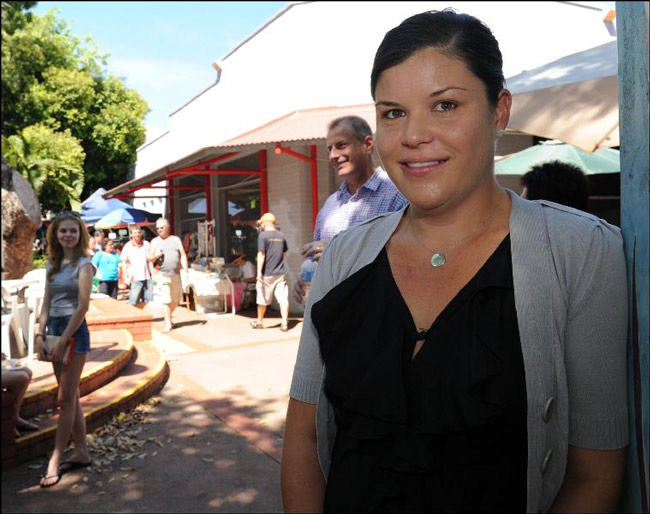
ALP candidate Natasha Fyles, and her husband Paul Archbold, welcomed their son Henry on April 22. Henry Archbold joins big brother Oliver. Natasha is a swimming coach in Darwin, in the Northern Territory, and was recently selected as the Labor candidate for Nightcliff.

Natasha revealed how she chooses baby names in an interview last December. She and her husband like strong names that have good nicknames available, and will also sound good with their surname and look good on official documents.

Meanwhile, another city, another state:

Runner Shannon Short welcomed her son Lucas at the end of last year. Shannon is a personal trainer at Cityfit Fitness Club in Bathurst, New South Wales. She is returning to competition running after taking a break to have Lucas, and is determined to recover her form.

Popular Names for Boys

06 Sunday May 2012

Posted by A.O. in Name Themes and Lists

≈ 23 Comments

Tags

Aramaic names, band names, Biblical names, car names, celebrity baby names, classic names, english names, famous namesakes, fictional namesakes, French names, germanic names, Greek names, hebrew names, honouring, Latin names, locational names, name history, name meaning, name popularity, nicknames, Old Norse names, popular culture, popular names, royal names, saints names, Scottish names, surname names

Follows on from Popular Names for Girls.

William

William is a solidly classic name which has never left the Top 50. It was the #1 name of the 1900s, and gradually decreased in popularity, hitting its lowest point during the 1970s, at #48. However, its fortunes were soon to recover, because in 1982, heir to the British throne Prince Philip, and his then wife, Diana, Princess of Wales, welcomed their first child and eldest son, William Arthur Philip Louis. Prince William was named after his father’s cousin and personal hero, Prince William of Gloucester, who died in an air crash ten years earlier. Prince William made his first visit to Australia as a baby, and this was an immediate help to the name’s popularity. By the time Prince William began university in 2001, the name was already in the NSW Top 10. It reached #1 in 2009, the year after Catherine Middleton began accompanying Prince William to official functions, and there it has remained. In 2011, Prince William made a much-appreciated visit to flood-affected areas of Australia, and shortly afterwards treated the world to a slap-up royal wedding. It’s likely this princely name will remain at the top for at least another year.

Jack

Jack is a classic name which has never left the charts. Top 100 during the 1900s-30s, it sunk to its lowest point in the 1970s, at #269. However, so rapid was its growth that it joined the Top 100 again during the 1980s – the same decade that pop singer John Farnham released his Whispering Jack album. Whispering Jack went to #1, and is the highest-selling album ever in Australia, having gone platinum 24 times over. By the 1990s, Jack was already Top 10, a decade when Leonardo di Caprio played water-logged lover Jack Dawson in the romantic movie Titanic, and teen heartthrob Daniel Amalam played bad boy Jack Wilson in soapie Home and Away. By the start of the 2000s, Jack was #2. It made #1 by 2004, the year that the TV show LOST began, with its hero Dr. Jack Shephard, and the year after Johnny Depp played Captain Jack Sparrow in the first Pirates of the Caribbean film. Jack remained in first place until 2008, the year that AC/DC released their single Big Jack. Jack the Lad may have had his day, but won’t be going anywhere fast, and is still the #1 name in some states.

Ethan

Ethan is a name from Hebrew which means “solid, enduring”. In the Old Testament, Ethan is said to have been a very wise man who wrote Psalm 89. Ethan first entered the charts in the 1970s, and took off during the 1980s, as film-maker Ethan Coen began his career, working in tandem with his brother Joel. At the end of the 1980s, actor Ethan Hawke got his big break in Dead Poets’ Society. By the 1990s, Ethan was a Top 100 name, and it was in this decade that Tom Cruise first played Ethan Hunt, the hero of the Mission Impossible films, Ethan Philips joined the cast of TV show Star Trek, and Ethan Rayne was introduced as a character on Buffy the Vampire Slayer. It was also during the 1990s that surfing champ Wendy Botha welcomed a son named Ethan. In 2006, Ethan joined the Top 10 – the year after the Ethan Group, an Australian IT company, won the BRW Fast 100. Singer Dannii Minogue, Kylie’s sister, welcomed a son named Ethan in 2010, and that probably won’t hurt the chances of this strong yet gentle-sounding name going higher still.

Oliver

Oliver is the English form of French name Olivier, but it’s unclear whether it’s the Norman form of Germanic Alfher, meaning “elf warrior”, or Old Norse Aleifr, meaning “ancestor’s descendant” (related to Olaf). The spelling was altered to make it seem as if the name came from the Latin oliva, meaning “olive tree”. A classic which has never left the charts, Oliver was Top 100 in the 1900s, but then sank into rare use. It recovered during the 1970s, the decade after the release of Oliver!, the musical based on Dickens’ novel, Oliver Twist. In this decade, actress Goldie Hawn welcomed a son named Oliver. The name gained ground during the 1980s, and was Top 100 during the 1990s. Late in the ’90s, the first Harry Potter book was published, featuring Harry’s Quidditch captain, Oliver Wood. In the 2000s, the books were turned into films, with Oliver Phelps playing the role of George Weasley. By 2006, the debut of TV show Hannah Montana, where Oliver Oken is the best guy-friend of the heroine, it was Top 20, and by 2008 it was Top 10. By 2010 it was Top 5; Oliver may go higher if you want some more.

Lucas

Lucas is the Latin form of Greek Loukas, on which English Luke is based. Lucas first entered the charts in the 1950s. There was noticeable growth during the 1970s, the decade that George Lucas made the first Star Wars movie, and then it remained stable for several decades in the very low 100s. However, in the 2000s it made the Top 100, and at this point it fairly raced up the charts. A possible help to the name was the television drama series, One Tree Hill, in which Chad Michael Murray plays the main protagonist, Lucas Scott. This brooding, blue-eyed, sporty yet bookish hero proved something of a hit with the female demographic. Meanwhile, Lucas Holden on Australian soap Home and Away was also a literary teenager, who ended up having a controversially steamy scene with his onscreen girlfriend. By 2006, the year that soccer star Lucas Neill played for Australia in the World Cup, it was in the Top 50. By 2007 it was Top 20, and by 2010 it was Top 10. The 2000s were kind to Lucas, and at this point, lucky Lucas seems almost certain to go to #1.

Noah

Noah is derived from the Hebrew name Noach, meaning “rest, comfort”. Noah is well known from the Old Testament story, where he builds an ark which saves his family and the animals of all species to survive the Great Flood, sent by God as a one-off punishment to wicked humanity. The name Noah entered the charts in the 1980s, the decade when Noah Hathaway gave an award-winning performance as boy-warrior Atreyu, in the fantasy film, The Neverending Story. Also in the 1980s, Australian actor Noah Taylor made his film debut as the main character in the critically acclaimed The Year My Voice Broke. Noah climbed steadily, then suddenly shot up during the 1990s, the decade that Boris Becker welcomed a son named Noah, so that it was in the Top 50 by the 2000s. Noah joined the Top 20 in 20005, the year after Ryan Gosling played the young version of Noah Calhoun, the devoted lover from romantic film, The Notebook. In 2006, Noah was in the Top 10. However, Noah has remained reasonably stable, with no signs of moving significantly up or down, and we must wait to see whether it sinks or swims.

Lachlan

Lachlan is a Scottish name which began as a nickname for someone from Norway. In Scotland, Norway was known as the “the land of the lochs”, or Lochlann. Lachlan Macquarie was born in the Hebrides, and became Governor of New South Wales in 1809. To the British government of the time, Australia was a penal colony for offloading the dregs of their society; convicts must be treated cruelly, former convicts exploited, and little money spent. The government fretted as Macquarie pardoned convicts, employed freed convicts in important positions, put up beautiful Georgian buildings, and spent lavishly on public works. Eventually the British booted him, but for giving us a future and sticking up for us, he is considered the father of our nation. Lachlan has been almost continuously in the charts, only dropping out in the 1930s, but was in rare use until it began rising in the 1960s. In 1971, media magnate Rupert Murdoch chose this name for his eldest son, and the name rose significantly. It was Top 100 by the 1980s, Top 20 by the 1990s, and Top 5 by the early 2000s. The position of this patriotic favourite has been stable for more than a decade.

Cooper

Cooper is an English surname which means “barrel-maker”. One of the most famous rivers in Australia is Cooper Creek, where doomed explorers Burke and Wills met their end, and Australian racing car driver Jack Brabham drove for the Cooper Car Company. Cooper first entered the charts in the 1980s, and made good ground during the 1990s, a decade when Bill Murray and Hugh Hefner both welcomed sons named Cooper. By the 2001, the name was in the Top 50, and then it soared. It got some serious sporting muscle as Quade Cooper joined the national men’s rugby union team, the Wallabies, and Cooper Cronk joined the national rugby league team. Cronk was also part of the Melbourne Storm team which won five Premierships or Minor Premierships within four years. Originally from Brisbane, he plays for the Queensland state side, which insists on winning the State of Origin series every year. Handsome, athletic and an extremely talented player, Mr Cronk seems like a big part of the reason the name Cooper is #1 in Queensland. Cooper made the Top 10 in 2007, and the Top 5 the following year, but now seems to be falling without reaching the top spot.

Thomas

Thomas is from an Aramaic word meaning “twin”, and in the New Testament, Saint Thomas was one of the Twelve Apostles. Thomas was his nickname; his real name was Judas. Presumably he was the twin of someone in the Biblical stories, or just a lookalike or kindred soul, but frustratingly, the Bible neglects to explain whose “twin” he was. People who like logical explanations for things often cite Thomas as their favourite Apostle, because when he heard that Jesus had been resurrected, he refused to believe it until he could see and touch Jesus for himself – hence the phrase, Doubting Thomas for a sceptical person. Thomas is a classic which has never left the Top 100. In the Top 5 of the 1900s, it gradually declined, and reached its lowest point in the 1970s, at #68. It climbed smoothly through the 1980s, the decade that saw Tom Cruise and Tom Hanks become stars. By the 1990s, it was in the Top 5, and maintained position in the 2000s as Tom Felton played Draco in the Harry Potter films, making many a teen girl switch to Team Slytherin. However, it may be very gradually going down now.

James

James is the Latinised form of Jacob, and must be one of the most successful names from the New Testament. The name of two of the apostles, this doubly saintly name is also a royal one in Britain, where there have been seven Scottish kings called James. The King James Version of the Bible was commissioned by King James I of England (James VI of Scotland), giving it yet another tie to this sacred book. In Australia, the most famous James is Captain James Cook, the explorer who discovered our continent. A classic which has never left the Top 20, James reached its lowest point in the 1960s and ’70s at #19. Recovery was so swift that it was Top 10 in the 1980s, and Top 5 in the 1990s. Since the 1970s, there have been many Jameses in the public eye, real and fictional. Actors James Woods, James Spader, James Marsters, and James Phelps; singers James Blundell, James Morrison and James Blunt (not to mention the band James); Captain James Kirk from Star Trek; and the inimitable James Bond. James is the name of Harry Potter’s father – his mum’s name Lily is also Top 10. Cool James is falling again, at glacial speed.

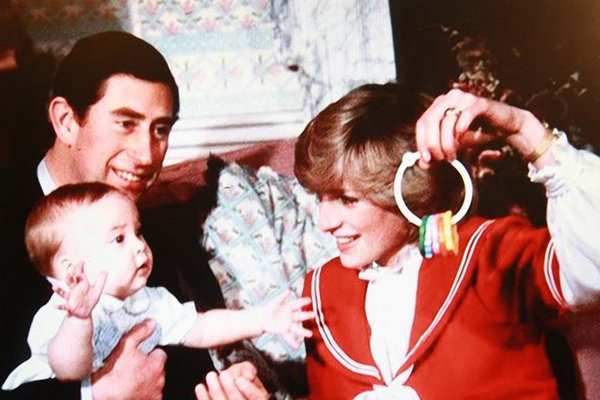
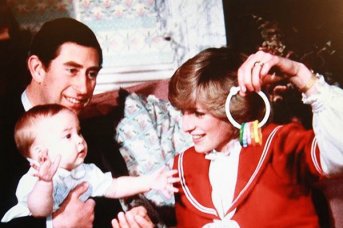
(Picture shows Prince William as a baby with his parents, Prince Philip and Diana, Princess of Wales; image from Royal Wedding)

Saturday Sibset from History: The Armytage Family of Como House

05 Saturday May 2012

Posted by A.O. in Historical Records, Sibsets in the News

≈ 7 Comments

Tags

historical records, name combinations, sibsets

Como House in South Yarra, Melbourne, is one of the few remaining large estates still existing in the suburbs. It was built in 1847, just over a decade after European settlement of the Port Phillip district. For almost a century, it was owned by the Armytage family, wealthy graziers and prominent members of Melbourne society. Originally, the grounds were 54 acres, but today the house is surrounded by 6.5 acres of gardens. Como House is owned by the National Trust of Victoria.

These are the names of the members of the Armytage family, fairly typical for the nineteenth century, and also an interesting look at a slice of Melbourne history.

Charles Henry (1824-1876)

Born and educated in Tasmania, Charles was wealthy by inheritance, and increased the family fortune through working a large sheep holding outside Geelong, named Fulham Station. He bought Como House for forty thousand pounds in 1864 as his family’s town house, hearing about the sale at his club while in Melbourne on business. When his family moved to Melbourne, they soon established themselves as one of the premier families in the Government House set. He died of a pancreatic disorder just after a year after lavish extensions to the house were completed.

Caroline Morell nee Tuckwell (1832-1909)

Caroline was from England; she emigrated to Australia as a teenager with her family. Caroline was used to managing the sheep station during her husband’s absences, and once wrote that the happiest part of her life was teaching the Aboriginal children and worker’s children alongside her own. After being widowed, and left with extensive properties and investments to manage, Caroline took her nine children, a retinue of servants and two cows on a world tour for four years. (The cows were to feed the baby). During the tour, she sent crate-loads of mirrors, vases, chandeliers and furniture back to Como House.

Charles Norman Learmouth (1857-1942)

Educated at Geelong Grammar, Charles attended Cambridge University in England while the rest of of the family were on a world tour. At university, he rowed in the Cambridge eight, and his team won the Grand Challenge Cup at Henley. Married Leila Matilda Buckland Halloran in 1890. Charles was called by his middle name, Norman, to distinguish him from his father.

Ada Elizabeth (1859-1939)

Ada worked for the Red Cross during World War I, and devoted her spare time to the Boy Scout movement. An avid photographer, Ada spent years documenting her home and her family. Ada and her sister Leila were the last surviving members of the children of Charles and Caroline, and they sold Como House and all its contents to the National Trust of Victoria in 1959 – the first house the National Trust bought. They also left an extensive archive of diaries, letters, journals and photographs.

George Herbert (1861-1925)

Educated at Toorak College in Melbourne, and Western College in Brighton, England. At school in England he proved a champion athlete and won the South of England School’s Cup two years in a row. He was managing partner at Fulham Station. Married Amelia Fanny Tyler in 1892.

Harold Augustus (1862-1926)

Educated at Geelong Grammar, Toorak College, and Western College. He managed several pastoral properties in the family’s possession, and was also part of the horse racing world.

Ethel Maud (1865-1872)

Died during a diphtheria epidemic, aged seven.

Ernest Adolphus (1867-1898)

Laura Evelyn (1869-1956)

Frail and artistic, Laura remained behind at Como House when her sisters Ada, Constance and Leila were away from Melbourne for eleven years, unable to leave Europe because of the First World War. She lived the life of a recluse from the 1920s onwards.

Constance Caroline (1871-1969)

During the round of parties and celebrations to mark the Federation of Australia in 1901, Constance met Captain Arthur Fitzpatrick, aide-de-camp to the Governor of Victoria. They were married on May 9 1906, and their wedding was the social event of the season, with the reception held at Como House. (Constance’s bridal photo was used for Girls Names from the Top 100 of the 1900s). Constance and Arthur went to live in England; however the marriage did not turn out well, and Arthur abandoned his wife, taking all her money with him. Constance went back to Australia in 1910, and thereafter lived the life of a spinster.

Frederick Felix Henry (1874-1910)

Died in London.

Leila Christina (1875-1965)

In 1891, Leila attended finishing school in Paris, and during this year, her mother and older sisters stayed in London. In 1894, she made her debut during the Melbourne Cup season at the ballroom of Como House. When War War I broke out, Leila joined the Voluntary Aid Detachment of the Red Cross, and was sent to an Australian military hospital in France. She was joined by her older sister Constance, where they worked as untrained nurses and ambulance drivers, picking up the wounded and the dying from the battlefields.

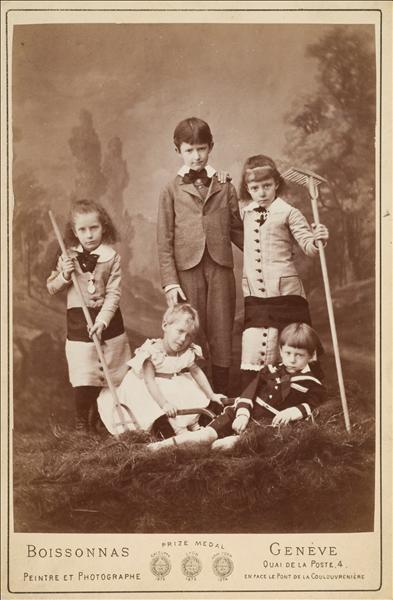
(Top photo shows Constance, Leila, Ernest, Laura and Frederick on their European tour c. 1878; iimage from Culture Victoria. Bottom photo shows Como House as it is today; image from Melbourne Fresh Daily).

← Older posts
Newer posts →

Enter your email address to follow this blog

Categories

Archives

Recent Comments

A.O.'s avatarwaltzingmorethanmati… on Zarah Zaynab and Wolfgang…
Madelyn's avatarMadelyn on Zarah Zaynab and Wolfgang…
JD's avatardrperegrine on Can Phoebe Complete This …
A.O.'s avatarwaltzingmorethanmati… on Rua and Rhoa
redrover23's avatarredrover23 on Rua and Rhoa

Blogroll

  • Appellation Mountain
  • Baby Name Pondering
  • Babynamelover's Blog
  • British Baby Names
  • Clare's Name News
  • For Real Baby Names
  • Geek Baby Names
  • Name Candy
  • Nameberry
  • Nancy's Baby Names
  • Ren's Baby Name Blog
  • Sancta Nomina
  • Swistle: Baby Names
  • The Art of Naming
  • The Baby Name Wizard
  • The Beauty of Names
  • Tulip By Any Name

RSS Feed

  • RSS - Posts

RSS Posts

  • Celebrity Baby News: Melanie Vallejo and Matt Kingston
  • Names from the TV Show “Cleverman”
  • Can Phoebe Complete This Sibset?
  • Zarah Zaynab and Wolfgang Winter
  • Baby, How Did You Get That Name?
  • Celebrity Baby News: Media Babies
  • Celebrity Baby News: Adelaide Crows Babies
  • Celebrity Baby News: Chris and Rebecca Judd
  • Names at Work: Name News From the World of Business and Employment
  • Celebrity Baby News: Sporting Round Up

Currently Popular

  • Celebrity Baby News: Jason Morrison and Heidi Tiltins
  • Girls Names of Australian Aboriginal Origin
  • Girls Names From Stars and Constellations
  • The Top 100 Names of the 1930s in New South Wales
  • Rare Girls Names From the 1940s

Tags

celebrity baby names celebrity sibsets english names famous namesakes fictional namesakes honouring locational names middle names name combinations name history name meaning name popularity name trends nicknames popular names saints names sibsets surname names twin sets unisex names

Blog at WordPress.com.

Privacy & Cookies: This site uses cookies. By continuing to use this website, you agree to their use.
To find out more, including how to control cookies, see here: Cookie Policy
  • Subscribe Subscribed
    • Waltzing More Than Matilda
    • Join 517 other subscribers
    • Already have a WordPress.com account? Log in now.
    • Waltzing More Than Matilda
    • Subscribe Subscribed
    • Sign up
    • Log in
    • Report this content
    • View site in Reader
    • Manage subscriptions
    • Collapse this bar

Loading Comments...