• About
  • Best Baby Names
  • Celebrity Baby Names
  • Celebrity Baby Names – Current
  • Celebrity Baby Names – Past
  • Featured Boys Names
  • Featured Girls Names
  • Featured Unisex Names
  • Links to Name Data
  • Waltzing on the Web

Waltzing More Than Matilda

~ Names with an Australian Bias of Democratic Temper

Waltzing More Than Matilda

Monthly Archives: October 2012

Famous Name: Mungo

31 Wednesday Oct 2012

Posted by A.O. in Famous Names

≈ 8 Comments

Tags

British names, famous namesakes, film references, K.M. Sheard, literary references, locational names, name history, name meaning, nicknames, popular culture, saints names, Scottish names
Blue Juniper from Baby Name Ponderings has been profiling names from horror films all October in the lead-up to Halloween, and here you can read about such fabulous finds as Amity, Romero, Dresden and Mockingbird. Perhaps this helped inspire me to do a name from an Australian horror film for October 31.

Lake Mungo came out a few years ago, but I only managed to catch it last year on DVD, after missing it on television. It’s one of those movies which is probably better to see on the small screen, because the film is made in the style of a TV documentary. This makes comparisons to The Blair Witch Project and Paranormal Activity inevitable, but I think it’s better than both of these, and avoids any annoying shaky camerawork.

It’s not a horror movie with buckets of blood, hordes of screaming teens, or bizarre demonic cults, but a supernatural mystery thriller that is extremely tense and uneasy to watch – it is definitely a “scary” film. It’s about the grieving process after death, about the secrets that people take to the grave, and about the images left behind when someone dies that haunt us. It also asks the viewer to try to decide which events in the film are “real” and which aren’t – a process made all the more difficult that the closer you look, the less sure you become.

What I loved most about Lake Mungo was its complete authenticity – it’s one of the realest films I have ever seen, and even though when I put the DVD on, I knew it was “just a movie”, during the course of watching it I even began to doubt that. Rumour has it that this film is going to be remade by Hollywood, but I urge you to watch the original instead. For starters, the distinctive Australian voice of the film would be lost.

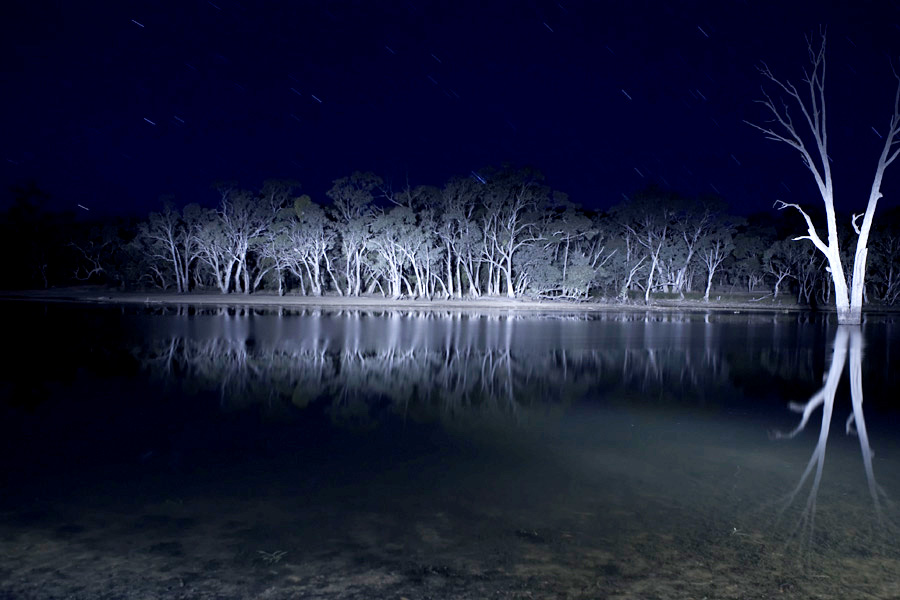
Although the movie is set in country Victoria, as the title suggests, Lake Mungo plays an important role. This is a salt lake in south-western New South Wales, which has been completely dry for several thousand years. Although geologically rich and part of the World Heritage listed Willandra Lakes region, it is most famous for the archaeological discoveries that were made there in the late 1960s and 1970s.

These were of human remains, the bones of a young woman and two men. The woman and one of the men had been ritually cremated and decorated with red ochre. The other man, of a later time period, had been carefully positioned in a shallow grave, his bones stained pink with the ochre surrounding him. The oldest archaeological site discovered in Australia, and amongst the oldest evidences of  cremation in the world, they demonstrate a culture which was sophisticated enough to have developed spiritual beliefs and elaborate funeral rites for their dead.

The dating of the remains has been difficult and controversial, but they are currently accepted as being at least 40 000 years old, and very possibly more. The bones have also been dated as being at around 68 000 thousand years. This was slightly upsetting for scientists, as it is thought that modern humans migrated from Africa around 60 000 years ago. 68 000 years would mean that the first humans to leave Africa went straight to Australia, which would involve at least some sea travel. This idea didn’t seem workable and it was revised down to 40 000 – however, some research hints that the older dating may not be as far fetched as first thought.

Even more controversially, when mitochondrial DNA testing of the bones was done, it was found that they were genetically different to Aborigines, and to all of us (although they would have looked much the same). As the theory is that modern humans came out of Africa (which explains why everyone on earth is very closely related), where did these Lake Mungo humans that weren’t closely related to us come from? Somewhere else, or is our genetic heritage more complex than first thought? This basically upset everyone, and as a result it seems to have been decided not to do any further research on them, lest we discover more upsetting things.

All in all, I think this makes Lake Mungo the most interesting place in Australia, and the remains that were found here the most fascinating things in Australia, and probably the world. There are secrets here more ancient and mysterious than anything you will see at Halloween.

Before it was declared a national park in 1979, the land Lake Mungo lies upon was part of Mungo sheep station. The station was named by the Cameron brothers who owned it, after St Mungo’s church in Scotland, of which they had seen a picture. It’s not known which St. Mungo’s church they named it after.

Mungo was the nickname of Saint Kentigern, who was born in the 6th century, in a British kingdom which is now part of Scotland. Of royal but illegitimate birth, he was brought up in Fife by Saint Serf, who was ministering to the Picts. Saint Serf is supposed to have given him his pet name Mungo, of which the meaning is unclear. It’s been suggested that it is British for “my dear one”, or “dearest”, based on similar-sounding words and phrases in Welsh.

K.M. Sheard says that the meaning of the name is linked to the saint’s real name, because Kentigern means “chief dog, lord hound” – a very common combination of words in ancient British names. She notes that Mungo looks to be derived from the British for “my dog”, which has close equivalents in Irish and Welsh. The name would thus have been an affectionate way of saying “my pet”, probably with connotations of “my dearest follower” or “my most loyal companion”.

According to legend, Saint Mungo performed four miracles, one of the most touching restoring to life Saint Serf’s pet robin. He is a patron saint of Scotland, and of the city of Glasgow, which has on its crest of arms images to represent the miracles of Saint Mungo. As such, it is a name with close ties to Scotland and the north of England, where the name was given in honour of the national saint.

You will find references to Saint Mungo in at least two works of fiction. In G.K. Chesterton’s Father Brown detective stories, Father’s Brown’s former parish was St. Mungo’s, in Essex. In the Harry Potter books by J.K. Rowling, the London hospital in the wizarding world is St. Mungo’s Hospital for Magical Maladies and Injuries. Rowling may have been influenced in her choice of saint because according to local traditions, Saint Mungo encountered the bard and prophet Merlin, cured him of madness, and converted him to Christianity.

In Australia, the MacCallums have produced four generations of intellectuals all named Mungo – the youngest a long-serving political commentator known for his staunchly pro-Labor views. The actor Mungo McKay has a horror connection, as he has been in the films Undead and Daybreakers. In Australian records, people called Mungo do mostly have Scottish surnames, and many in the 19th century seem to have been named in honour of Scottish explorer Mungo Park.

I can see that some people are going to have problems with the name Mungo, but there’s something rather endearing about the name and the saint, and it has several associations with mystery and magic. In Australia it connects us to the most ancient peoples of our land, and an enigma locked away forever. If you’re looking for a Scottish heritage choice with a fashionable O-ending, yet yearn for something out of the ordinary, Mungo may be one to consider.

(The picture is a publicity shot from the movie Lake Mungo, not a photo of the place Lake Mungo)
Celebrity Baby News: Two V8 Supercar Babies

30 Tuesday Oct 2012

Posted by A.O. in Celebrity Baby News

≈ 2 Comments

Tags

celebrity baby names, celebrity sibsets, honouring

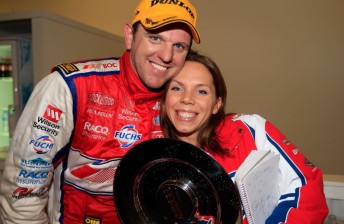
Jason Bright from Brad Jones Racing, and his fiancee Lucy Peacock, welcomed their first child on October 22, and have named their son Lennox Jay, to be nicknamed L-Jay or Lenny. The middle name is in honour of a family friend. Lucy is originally from England, and is the Media Manager for Brad Jones Racing.

Alex Davison from McElrea Racing, and his wife Mel, welcomed their son Luke Anthony on October 25. Luke Davison joins big sister Lily. Luke’s birth was announced by his grandfather, Richard Davison, an Australian Formula 2 champion. Richard’s father was Lex Davison, four times Australian Grand Prix winner, and his mother was racing driver Diana Davison, so Luke and Lily have some impressive racing genes behind them.

(Photo is of Jason and Lucy Bright, from BigPond Sport)

Celebrity Baby News: Cameron and Sarah Pedersen

30 Tuesday Oct 2012

Posted by A.O. in Celebrity Baby News

≈ 2 Comments

Tags

celebrity baby names, celebrity sibsets

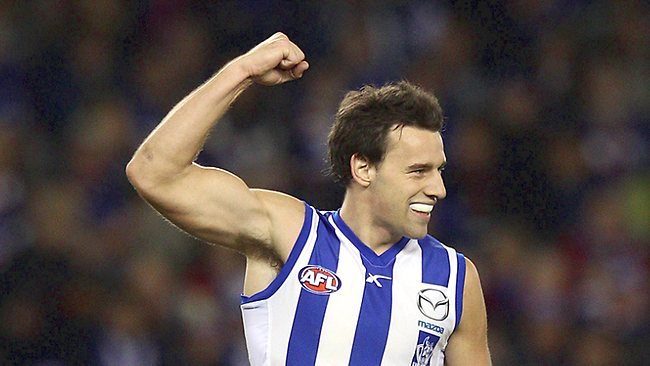
AFL footballer Cameron Pedersen, and his wife Sarah, welcomed their daughter Ruby Elizabeth three weeks ago. Ruby Pederson joins big sister Charlee, aged 1.

Cameron made his AFL debut last year for the North Melbourne Kangaroos, and has just been traded to the Melbourne Demons.

Celebrity Baby News: Sami Muirhead and Sam Bohner

30 Tuesday Oct 2012

Posted by A.O. in Celebrity Baby News

≈ 4 Comments

Tags

celebrity baby names, celebrity sibsets, honouring

Radio host Sami Muirhead, and her husband Sam Bohner, welcomed their son Nixon Sam on October 25. Nixon Bohner was born in the evening at Sunshine Coast Private Hospital, and weighed 4.3 kg (9 lb 8 oz). He joins big sister Avalon, aged 2. Nixon is Sami’s mother’s maiden name, and his middle name is after both his parents.

Sami is a breakfast radio announcer on Hot 91.1, regularly writes articles for local papers about parenting issues and her daily life, and has her own blog called Sami Chic. Sami’s full name is Samille.

Sam is a car salesman for the Crick Auto Group on the Sunshine Coast. Sam and Sami met through work, and were married in 2010 in a ceremony which had a Great Gatsby theme.

Celebrity Baby News: Brendon and Susan Grylls

30 Tuesday Oct 2012

Posted by A.O. in Celebrity Baby News

≈ 2 Comments

Tags

celebrity baby names, celebrity sibsets

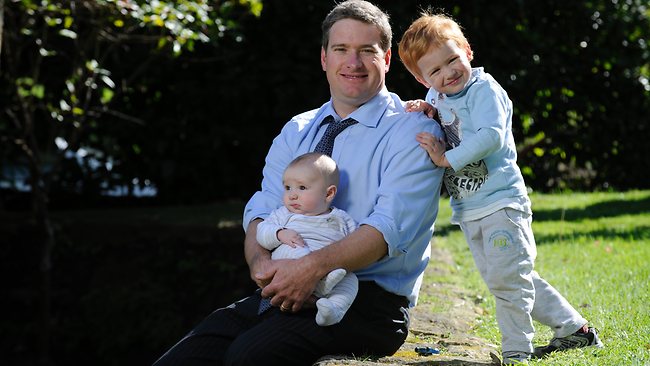
National Party leader Brendon Grylls, and his wife Susan, recently welcomed their son Jack. Jack Grylls is their third child, and has a big brother named Oliver.

Brendon is the Leader of the National Party of Western Australia, Minister of Regional Development and Minister for Lands. He entered politics in 2001 as the Minister for the seat of Merredin, and became the Member for Central Wheatbelt in 2008. He is credited with saving the National Party from oblivion in 2005, and also began the $1 billion-a-year Royalties for Regions program, which provides funding for regional development. Brendon considered retiring from politics, but with Susan’s encouragement, he is currently contesting the traditionally Labor seat of Pilbara.

Susan and Brendon have been together since they met at university fifteen years ago.

Name Update: Master Jack Waltzes In!

29 Monday Oct 2012

Posted by A.O. in Name Updates

≈ 2 Comments

Tags

honouring, middle names, sibsets

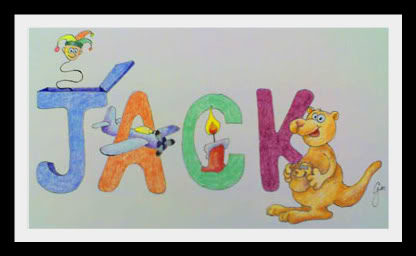
Anya and Tom were looking for a short vintage name to match with their daughter Isla, and they recently welcomed their son

JACK

The name Jack was one that big sis had picked for the baby, and she is tickled pink that she got to choose her brother’s name.

They weren’t sure what to do about a middle name, and in the end they put Anya’s surname in the middle position. It’s a very unusual (non-Anglo) name, and it sounds really amazing as a match for Jack.

Congratulations to Anya and Tom on the birth of their son – Jack is a perfect fit with Isla, and just slots in nicely with all the family names.

Names of Australian Male Paralympic Medalists

28 Sunday Oct 2012

Posted by A.O. in Name Themes and Lists

≈ 4 Comments

Tags

Anglo-Saxon names, Arabic names, Arthurian legends, Arthurian names, Cornish names, Croatian names, Disney names, english names, epithets, European name popularity, famous namesakes, French names, Gaelic names, germanic names, Irish names, K.M. Sheard, Latin names, locational names, mythological names, name history, name meaning, name popularity, names of organisations, Old Irish names, Old Norse names, Pictish names, popular culture, popular names, Roman names, royal names, saints names, Scottish names, South American name popularity, surname names, Welsh names

Bruno (Moretti)

Bruno Moretti won silver in table-tennis at the 1960 Paralympics, and a gold and two silvers in athletics at the 1964 Paralympics. Bruno is a Germanic name meaning “brown”. The name was used by the nobility in medieval Europe, and there are several saints named Bruno. One of them is Saint Bruno of Cologne, who was the son of Saint Matilda. He was Duke of Lotharingia and Archbishop of Cologne, and his court in Cologne was an intellectual and artistic centre. Bruno was also the given name of two popes – Gregory V and Leo IX. Bruno has a long history of use in Europe, and today is Top 100 in Croatia, Catalonia, Spain, and Chile. It’s also a common surname in Italy, and Giardano Bruno was a Dominican friar, philosopher, mathematician and astronomer, who suggested that the Sun was a star, and the universe had infinite worlds, populated by intelligent beings. He went down very badly with the Spanish Inquisition, who had him burned him at the stake. Today he is regarded as a martyr to science. Bruno is a warm cuddly-sounding name, and seems to be a popular choice for bears, both real and fictional.

Cody (Meakin)

Cody Meakin grew up playing both rugby union and Australian rules football; he broke his back in a rugby scrum, and while still in high school, became quadriplegic after a car accident. He took up wheelchair rugby in 2010, where he became an international champion. He won gold at the London Games this year. Cody is derived from the Gaelic surname Ó Cuidighthigh, meaning “son of Cuidightheach”. Cuidightheach is an Old Irish epithet meaning “helpful”. The most famous person with the surname must be “Buffalo Bill” Cody, an American frontiersman who became a celebrity for his Wild West touring shows; these introduced the concept of the American West to Britain and Europe. Buffalo Bill was a supporter of Native American rights, women’s rights and conservation, making him a very modern namesake, as well as giving the name Cody an “American West” feel. In the 1990 Disney film, The Rescuers Down Under, the boy from the Australian outback is named Cody. Cody first charted in the 1970s, and was top 100 by the 1990s. It peaked in the early 2000s at #59, and only left the Top 100 last year, when it dropped to #124.

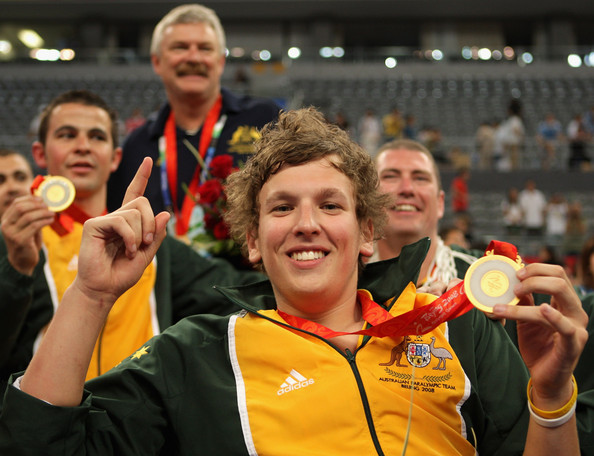
Dylan (Alcott)

Dylan Alcott has been paraplegic from birth due to a spinal tumour, and began playing wheelchair basketball in 2003. He won gold at the 2008 Paralympics, and silver at this year’s London Games. Dylan is a Welsh name which is difficult to translate exactly, but very roughly means “flood, wave, tide”. In Welsh mythology, Dylan Ail Don was a blond god of the sea, and his epithets were “son of the wave” and “son of the sea”. In the legends, he is killed, and it’s said that the sound of the waves is the sea lamenting his death. The name became well known outside Britain due to the Welsh poet Dylan Thomas, who was named after the god. In Welsh, his name is pronounced DUL-uhn, but Thomas himself preferred the Anglicised pronunciation of DIL-uhn. Thomas’ emotionally powerful yet tightly controlled verse was admired by a young American named Robert Zimmerman, who promptly changed his name to Bob Dylan. As Dylan went on to become a folk balladeer, protest singer and counter-cultural icon, the name Dylan ended up with a double helping of street cred. Dylan first charted in the 1960s and reached the Top 100 in the 1980s. It peaked in the early 2000s at #17, and is currently #41.

Erik (Horrie)

Erik Horrie was left paraplegic after a car accident in 2001, and became involved in wheelchair basketball, but last year switched to canoeing. He won a silver medal at the 2012 London Games, and also welcomed his son Lewis. Erik is derived from Old Norse, and interpreted as “only ruler, eternal ruler, eternal power”. It has been heavily used in the royal houses of Denmark, Norway and Sweden, the most famous to us being Erik the Red, who explored a little-known country, called it Greenland, and became its head chieftain. King Erik IX of Sweden is considered to be a saint, and according to legend was martyred while attending a church service. The name Erik was used in England by the Anglo-Saxons, and settlers from Scandinavia but only became popular in the form Eric in the 19th century, thanks to an earnestly moralising book called Eric, or Little by Little. Other fictional Eriks include the Phantom of the Opera and Erik the Viking from the Monty Python film.

Fabian (Blattman)

Fabian Blattman became paraplegic after a motorcycle accident, and took up wheelchair athletics to improve fitness. One of our most successful Paralympians, he has set several world records. He won a silver and bronze in 1992, a gold and a silver in 1996, and a gold, silver and bronze in 2000. The name Fabian is derived from the Roman family name Fabius, one of the most ancient noble houses of Rome. According to legend, the Fabii claimed descent from Hercules, and were shepherds who followed founding father Remus. Their name is said to be from the Latin word for “broad bean”, a vegetable that the Fabii were supposedly the first to cultivate. The surname Fabianus was given to freed slaves who had been owned by the Fabii, and Fabian is from this name. It was introduced to England by the Normans, but never became as popular there as its equivalents in Continental Europe. There is a 3rd century Saint Fabian, who was elected pope by a dove; despite this unorthodox beginning, he was highly-regarded and worked hard for the early church. The Fabian Society gives this name a left-wing edge; the socialist organisation took its name from the Roman general Fabius Maximus, who wore Hannibal down by attrition rather than engaging in head-on battle.

Jago (Mikulic)

Jago Mikulic was a blind athlete who competed at the 1976 Paralympics, and won a silver in javelin and a bronze in the pentathlon. Jago is a Croatian form of James or Jacob, and is said YAH-go. It can also be a Cornish form of those names, but is pronounced JAY-go in this case. However, the Welsh form Iago is very old and predates the common use of Biblical names in Britain; K.M. Sheard suggests that it may be from the Celtic word for “ice”. If so, this would give Cornish Jago another possible origin.

Kerrod (McGregor)

Kerrod McGregor was a track and field Paralympian who won two golds, three silvers and two bronzes at the 1984 Paralympic Games, one gold in 1988, and one silver in 1996. Kerrod is an English surname that can be derived from the village of Curridge in Berkshire, with the village’s name meaning “Cusa’s ridge”. Cusa was a common Anglo-Saxon name, but what it meant I have been unable to discover. Another possible origin is the hamlet of Kerridge in Cheshire, which means “key ridge” – Kerridge Ridge is one of the foothills of the Pennines. The surname seems to have been most common in Yorkshire. The name Kerrod is well known in Queensland from former NRL star Kerrod Walters, who had a twin brother named Kevin.

Nazim (Erdem)

Nazim Erdem was born in Turkey and came to Australia early in life. As a kid, he practised holding his breath under water as a little game with himself. At the age of 20 he dived into shallow water in an effort to impress some girls; he was underwater for two and a half minutes before being rescued, and his technique of holding his breath saved his life. After the accident, he was quadriplegic. He began playing wheelchair rugby in 1992, and won silver medals at the 200 and 2008 Paralympics, and a gold at the London Games. Nazim is an Arabic boy’s name which means “organiser, convenor”, and as a title, loosely corresponds to the word “mayor” in English. The name isn’t uncommon in Turkey, and Nâzım Hikmet was a charismatic Turkish writer, a leader of the literary avant-garde who was often arrested for his revolutionary political beliefs, and spent much of life in prison or exile. His poetry and his struggles for peace are widely admired in Turkey and outside it; some of his poems have been turned into songs by folk singers such as Joan Baez and Pete Seeger. The name is pronounced NAH-zim.

Rene (Ahrens)

Rene Ahrens won a bronze in discus in 1980 and 1988. René is the French form of the Latin Renatus, meaning “born again, reborn”, referring to the act of baptism, and a popular choice for early Christians. René was a name used by the French aristocracy, and the name is known to us through the philosopher René Descartes (“I think therefore I am”). There is a Saint René Goupil, a French missionary to Canada who is one of the rare North American martyrs. The name is pronounced reh-NAY. Although the feminine form Renee has been popular in Australia,  masculine Rene remains very rare here – no doubt partly because it could easily be confused with the girl’s name.

Tristan (Knowles)

Tristan Knowles lost his leg at the age of 9 as a result of cancer, and also lost a lung at the age of 11. He has been playing wheelchair basketball since 1999, and in 2002 was named the NSW Wheelchair Basketballer of the Year. He won silver in 2004, gold in 2008, and a silver at this year’s Paralympic Games in London. Tristan is a Cornish hero of Celtic folklore who is also one of King Arthur’s knights of the Round Table. He is best known as the lover of the beautiful Irish princess Iseult (or Isolde). Iseult was to marry Tristan’s uncle, King Mark of Cornwall, but she and Tristan accidentally drank a love potion that had been prepared for Mark and his bride to share. The two became hopelessly infatuated with each other and embarked on a passionate affair, until Tristan was banished from Cornwall by an understandably irate Uncle Mark. The story was enormously popular in the Middle Ages, and is one of the forerunners to the story of adulterous lovers Lancelot and Guinevere. The name Tristan was yet another revived in the Victorian era, thanks to Tennyson, and the poems he wrote based on Arthurian legends. In the story, Tristan’s name is supposed to be linked with triste, the French word for “sad”, to fit in with his tragic love life. However, it is a form of the Pictish name Drust, which means “riot, tumult”. Drust was a traditional name amongst the royalty of Scotland, and it’s quite a puzzler as to how a Cornish story ended up with a hero with a Scottish name. Some claim that Tristan was a real person, pointing to a 5th century stone in Cornwall, which is supposed to be the grave marker for someone named Drustanus, the son of Cunomorus. Titillatingly, Cunomorus is said to be King Mark himself, suggesting that Tristan and Iseult’s step-incest was even closer and creepier (although his uncle was also his adoptive father anyway). Tristan and Iseult are two literary characters I’ve never been able to warm to, as their actions are so selfish; perhaps the story is trying to tell us that nobody does very well out of an infatuated love affair, not even the lovers themselves. Tristan first charted in the 1960s, and has managed to reach #100 twice, in the 1980s and late 2000s. It’s currently #123.

(Photo of Dylan Alcott celebrating victory from Zimbio)

Saturday Historical Sibsets: Nine Generations of the Wells Family, from 1660-1960

27 Saturday Oct 2012

Posted by A.O. in Historical Records, Sibsets in the News

≈ 4 Comments

Tags

historical records, name combinations, sibsets, twinsets

This follows the direct family line of Claris Wells, who we met last week, tracing it from his great-great-great grandfather John Wells, who was born around 1660, and ending with his great-great grandson Brett, born in 1960. As we travel through history, we can see how family naming traditions were maintained, and altered, and how fashions in names changed during these three hundred years.

The Children of John and Elizabeth Wells (m. 1681) – Claris’ great-great-great grandparents, who came from Kent

John (1699-1709)

Thomas (b. 1703)

Robert (b. 1706)

Alexander (1709-1784)

John (1710-1800)

Elizabeth (b. 1714)

The Children of Alexander and Martha Wells (m. 1733) – Claris’ great-great grandparents

Elizabeth (1736-1737)

John (b. 1738)

Thomas (1740-1816)

Alexander (b. 1741)

Martha (1743-1743)

Robert (1745-1745)

Robert (1746-1812)

The Children of Alexander and Elizabeth Wells (m. 1764) – Claris great grandparents

Rose (1764-1829)

Thomas (b. 1766)

Thomas (b. 1773)

Mary Ann (b. 1774)

The Children of Thomas and Sarah Wells (m. before 1812) – Claris’ grandparents

Thomas (b. 1812)

Sarah (b. 1814)

John (b. 1816)

Alexander (1817-1863)

The Children of Alexander and Caroline Emily Wells (m. circa 1850) – Claris’ parents, who left Kent in 1857 and emigrated to Western Australia

Martha (1852-1936)

Alexander Thomas (b. 1855)

Alfred John Claris (1857-1937)

Amelia Ann (b. 1858)

Ellen – known as Eliza (1859-1937)

Emily (b. 1862)

Alexander (b. 1864)

The Children of Claris and Sarah Jane Wells (m. 1877) – Claris and his wife

Susan Maud (1878-1878)

Sarah Mary (1879-1952)

Alexander James (1881-1921)

Susannah Maud (1884-1972)

Eva Emily (1886-1943)

Clarence Alfred (1892-1953)

The Children of Clarence Alfred and Margot Linton Wells (m. ?) – Claris’ son and daughter-in-law

Douglas Howie (b. ?)

Hugo Clarence (b. 1919)

Undine Margot (b. 1921)

Bruce Alexander (1922-1927)

Ivor Stewart (b. 1925)

Marcus James Pierce (b. 1928)

Roderick Ramon (1932-1933)

Twins Rodney Brian and Neville Brice (b. 1933)

Haidee Clare (b. 1935)

Harold George (?)

The Children of Neville Brice and Dolores Wells (m. ?) – Claris’ grandson and granddaughter-in-law; their children are his great-great grandchildren

Donna Dianne (b. 1954)

Vicki Suzanne (b. 1955)

Kerry Janette (b. 1956)

Debbie Lee (b. 1958)

Gregory Mark (b. 1959)

Brett Ramon (b. 1960)

The records end in 1960 – I presume because we are now in the realm of living Wells family members who would like their privacy protected.

You can see how important handing down family names was, with the name of their direct ancestor, Alexander, being used in every generation until the 1950s. Claris Wells was the first not to use the name Thomas amongst his children, but he did start his own naming tradition. He named his son Clarence, and his grandson had Clarence as his middle name. This is another family tradition which didn’t last into the post-war era.

It also seemed to be a tradition for the names of children who did not survive to be used again for later siblings. This is something which has definitely gone out of fashion. You can see it changing with Claris‘ children, for his first child Susan did not live a year, and he gave his daughter Susannah a variation of her name instead of the name itself. Two of Claris‘ grandsons died young, Bruce and Roderick, but their names were not recycled for future siblings (although they did have a Rodney).

The “Alexander” branch of the family ended up in Western Australia, and another branch went to Canada, so the Wells family spread far from England. However, one branch of the family did remain in the Sevenoaks district of Kent, and stayed there until quite recently. The youngest Wellses in the records are a brother and sister in their early twenties, living in England.

One interesting thing I discovered by chance is that the Wells family has some distant connection with the Armytages of Como House, who we met in an earlier blog entry. It’s either a small world, or a small country.

Next week we will conclude the Wells family saga with some of the names from other branches of the family.

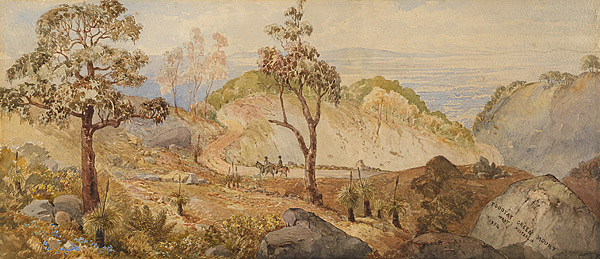
(The painting is of Toodyay, Greenmount, by Edward du Cane – 1854; image from the National Gallery of Australia)

Twins Isolde Celia and Arthur Bennett: Birth Announcements from Regional and Country Areas (September)

26 Friday Oct 2012

Posted by A.O. in Birth Announcements

≈ 6 Comments

Tags

name combinations, sibsets, twinsets


Twins

Archina Lee and Flynn Adam (Isabella)

Carter James and Brodie Owen

Charlee and Georgia

Frank Brendan and Louis Peter (George)

Isolde Celia and Arthur Bennett

Jacob Paul and Isobel Paige (Maddison, Daniel)

Peter William and Elijah George (Hannah)

Piper Mae and Farren Leonard (Mali)

Tadhg Graeme and Cogan William (Gabrielle, Bethany, Kasey)


Girls

Asha Sydney (Kai)

Cathareya

Ella Maree Dawn (Zaiden, Tyrell)

Esther Beatrice (Darby)

Evie Lydia Lyn (Archie)

Gertie Patricia (Hazel)

Grace Aurelia (Stirling, Ella)

Hannah Alexis Zoe

Jasmine Jayne Mavis (Rahni)

Jemma Arden (Danielle, Melissa)

Kahlia Rachael

Kate Honey

Koa Jane (Amali)

Leilah Lomani Anne (Malolo, Murgon, Ilai)

Lillian Grosvenor (Joe, Harrison)

Lucy Marina Pearl (Amelia)

Orla Gwendoline May

Persie Rita (Maple)

Porsha Lily

River Denise (Blaide, Jesse, Mia)

Rose Maree (Rocco, Ruby)

Sienna Rose Miki (Rylee, Ebony, Tayla)

Tameka Leigh

Winnie Mae (Georgia)

Zella Ruby


Boys

Alexander Charles William “Charlie”

Anthony Douglas Harry

Asher Samuel Hewage (Isaiah, Elijah)

Bailee Jamahl (Keenan, Isabella, Ahliyah, Bayde)

Carter Andrew Ronald

Cort Dean (Jhett)

Declan Tiger Stanley

Denver Stanley

Eden Ben (Willow)

Emerson Francis (Amelia)

Jamie Leigh (Jack)

Jensen Brian Leonard

Kade Gregory Stirling

Liam Lewis Major (Mitchell, Hayley, Jessica)

Loghan James (Sharmonique)

Matthew Farren Ray (Lachlan, Hannah)

Morgan Layth (Mikayla, Dakota, Sienna)

Raiyden Armour (Caitlin, Delaney, Harleah)

Raven Lars Adrian

Rhodey Trewin Campbell (Lily, Darbi)

Ruston Lloyd

Rydah Raymond George

Rylan Lewis Steven (Macy, Elsa)

Thomas Jobe Bruce (Zoe)

Uzziah Ananias (Jonah, Malachi)

(Picture shows a hot spring day at Coffs Harbour, NSW taken in September 2012; photo from the Coffs Coast Advocate)

Guest Blogging at Nameberry

25 Thursday Oct 2012

Posted by A.O. in Blog News

≈ 6 Comments

Tags

guest blog, Nameberry, Upswing Baby Names

I have a guest post at Nameberry up today, which has been entitled Aussie Names – Big there, not here. It takes a look at what names are common or familiar in Australia, but are little used or unknown in the United States.

A big thank you goes to Angie at Upswing Baby Names, who gave me invaluable advice on how some of the names might be perceived in America. Thank you also to Linda at Nameberry for the opportunity to share my thoughts.

← Older posts

Enter your email address to follow this blog

Categories

Archives

Recent Comments

A.O.'s avatarwaltzingmorethanmati… on Zarah Zaynab and Wolfgang…
Madelyn's avatarMadelyn on Zarah Zaynab and Wolfgang…
JD's avatardrperegrine on Can Phoebe Complete This …
A.O.'s avatarwaltzingmorethanmati… on Rua and Rhoa
redrover23's avatarredrover23 on Rua and Rhoa

Blogroll

  • Appellation Mountain
  • Baby Name Pondering
  • Babynamelover's Blog
  • British Baby Names
  • Clare's Name News
  • For Real Baby Names
  • Geek Baby Names
  • Name Candy
  • Nameberry
  • Nancy's Baby Names
  • Ren's Baby Name Blog
  • Sancta Nomina
  • Swistle: Baby Names
  • The Art of Naming
  • The Baby Name Wizard
  • The Beauty of Names
  • Tulip By Any Name

RSS Feed

  • RSS - Posts

RSS Posts

  • Celebrity Baby News: Melanie Vallejo and Matt Kingston
  • Names from the TV Show “Cleverman”
  • Can Phoebe Complete This Sibset?
  • Zarah Zaynab and Wolfgang Winter
  • Baby, How Did You Get That Name?
  • Celebrity Baby News: Media Babies
  • Celebrity Baby News: Adelaide Crows Babies
  • Celebrity Baby News: Chris and Rebecca Judd
  • Names at Work: Name News From the World of Business and Employment
  • Celebrity Baby News: Sporting Round Up

Currently Popular

  • Celebrity Baby News: Radio Babies
  • Saturday Celebrity Sibset: A Taste of Scotland - Leigh McClusky and Simon Haigh
  • The Top 100 Names of the 1920s in New South Wales
  • Girls Names From Stars and Constellations
  • Celebrity Baby News: Jacinta Allan and Yorick Piper

Tags

celebrity baby names celebrity sibsets english names famous namesakes fictional namesakes honouring locational names middle names name combinations name history name meaning name popularity name trends nicknames popular names saints names sibsets surname names twin sets unisex names

Blog at WordPress.com.

Privacy & Cookies: This site uses cookies. By continuing to use this website, you agree to their use.
To find out more, including how to control cookies, see here: Cookie Policy
  • Subscribe Subscribed
    • Waltzing More Than Matilda
    • Join 517 other subscribers
    • Already have a WordPress.com account? Log in now.
    • Waltzing More Than Matilda
    • Subscribe Subscribed
    • Sign up
    • Log in
    • Report this content
    • View site in Reader
    • Manage subscriptions
    • Collapse this bar
 

Loading Comments...