• About
  • Best Baby Names
  • Celebrity Baby Names
  • Celebrity Baby Names – Current
  • Celebrity Baby Names – Past
  • Featured Boys Names
  • Featured Girls Names
  • Featured Unisex Names
  • Links to Name Data
  • Waltzing on the Web

Waltzing More Than Matilda

~ Names with an Australian Bias of Democratic Temper

Waltzing More Than Matilda

Monthly Archives: June 2011

Midweek Sibset: The Very Big Family

29 Wednesday Jun 2011

Posted by A.O. in Sibsets in the News

≈ 9 Comments

Tags

sibsets

When Jeni and Ray got married, Jeni was 19, and didn’t want children. She was dismayed to find that her new husband, who had proposed marriage after 2 weeks of dating, wanted six kids.

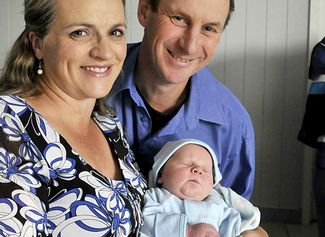
Fast-forward 22 years, and Jeni and Ray Bonnell have recently welcomed their new baby, Damian Ronald, into their life. Damian Bonnell was born in Toowoomba, Queensland, on Saturday June 4 2011 at 6.50 am, weighing in at 8 pounds 11 ounces, or just under 4 kg.

Damian is the fifteenth child born to Jeni and Ray, making them the largest nuclear family in Australia.

Jeni describes their family life as “loving” and “happily chaotic”, but much like everyone else’s, just with extra washing to do. Oh, and they drive their own bus. Other than that, it’s a normal routine of school, homework and chores, with church and a roast dinner on Sundays.

Damian’s brothers and sisters are Jesse (21), Brooke (20), Claire (17), Natalie (15), Karl (14), Samuel (12), Cameron (11), Sabrina (9), Timothy (8), Brandon (6), Eve (5), Nate (3), Rachel (2), and Eric (1).

Jesse and Brooke have moved out of home, but you can tell what a close family it is, because both of them bought houses right near their childhood home.

I know name collectors often say they would need to have more than a dozen children to use all their favourite names, so, er – here’s a chance to see what your life would look like if that happened!

When I see other families with lots of children, I’ve noticed that they often stick with an obvious theme to help choose baby names, such as all the names starting with the same letter, or all of them being from the Bible. Sometimes you can see that invention begins to run out, so that the first children have fairly standard names like Andrew and Emily, and then the names get steadily more random, so that the last ones are called Bobo, Hex and Glass or something.

Another naming issue for large families is that almost an entire generation can separate the first-born from the last-born, and if you always choose popular names, you’ll end up with your eldest children being called Darren and Brittany, and your youngest being called Kai and Sienna – total naming mis-match. This is something I see a lot, actually – it’s a dilemma for parents who have children in their early 20s, then have a couple more in their late 30s, because fashions in naming change the meantime.

I think that in general the Bonnells have avoided many of these pitfalls, and they certainly don’t seem to have had any problems running out of ideas for names. Which is a good thing, because the Bonnells say they would love to have more children!

Boys Names from the Top 100 of the 1930s

26 Sunday Jun 2011

Posted by A.O. in Name Themes and Lists

≈ 18 Comments

Tags

Anglo-Saxon names, animal names, aristocratic names, Arthurian names, Celtic names, classic names, english names, epithets, European name popularity, famous namesakes, fictional namesakes, Gaelic names, German names, germanic names, Greek names, Irish name popularity, Irish names, Latin names, mythological names, name history, name meaning, name popularity, name trends, names from films, names from television, nicknames, Old English names, Old Norse names, retro names, royal names, royal titles, saints names, Scottish names, Slavic names, Spanish names, UK name trends, US name trends, Welsh names

This post was first published on June 26 2011, and substantially revised and updated on June 25 2015.

Alfred
Anglo-Saxon name meaning “elf counsel”. The name became famous due to Alfred the Great, 9th century king of Wessex, who defended England against the Vikings, and was the first to call himself King of the Anglo-Saxons. Renowned for his love of learning, he encouraged education and reformed the legal system. Although not officially a saint, he is regarded as a Christian hero, and has a feast day in the Anglican Church. The name Alfred continued to be used even after the Norman Conquest, when many Anglo-Saxon names were discarded. It dwindled after the Middle Ages, but had a revival in the 19th century, and was chosen as the name of one of Queen Victoria’s sons – an earlier Prince Alfred was the son of King George III, and the current British family trace their ancestry back to Alfred the Great. Alfred is a classic name which has never left the charts. It was #14 in the 1900s, and #50 by the 1930s. Alfred left the Top 100 in the 1950s, and is currently around the 300s, its position apparently fairly stable. Popular in Scandinavia, Alfie, Fred, and Freddie give this venerable classic several cute nickname options.

Brian
Irish name, possibly from the Celtic bre, meaning “hill”, to suggest “high, great, exalted”. In Irish mythology, Brian is one of three brothers who are sent on a worldwide magical quest. In some versions, Brian is the clever one of the three, while his brothers are bumbling and easily pushed around. A famous namesake is Brian Boru, the first High King of Ireland, and founder of the O’Brien dynasty; he made the name common in Ireland. The name Brian was also used in Brittany, and became quite popular in East Anglia, where it was spread by Breton immigrants, and in the north of England, brought over by Scandinavian settlers who had lived in Ireland. It experienced a revival in the early 20th century. Brian is a classic name which has never left the charts. It was #169 in the 1900s, and joined the Top 100 in the 1920s. Peaking in the 1930s and ’40s at #7, Brian didn’t leave the Top 100 until the 1980s – Monty Python’s Life of Brian having turned it into a “joke name” didn’t help its fortunes. However, it’s been reasonably stable for about a decade, and is around the 300s. Brian remains a popular name in Ireland. This is a strong-sounding Irish classic still getting reasonable use.

Colin
Anglicised form of the Scottish name Cailean, meaning “whelp, pup, young dog” in Gaelic. It is also a medieval pet form of Col, short for Nicholas, so it’s an English name as well. Cuilén mac Ildulb was a 10th century King of the Scots, while Sir Colin Campbell (“Colin the Great”) was a 13th century cousin of Robert the Bruce, and one of the earliest known members of the Clan Campbell, ancestor of the Earls of Argyll. The name became traditional in the Campbell family because of him. Colin was #51 in the 1900s, and peaked in the 1930s at #14. It left the Top 100 in the 1980s, and although it stayed in use for many years afterwards, now seems to be quite rare. Colin is a traditional name which has a gentle and slightly poetic feel, and works well in the middle.

Edwin
Modern form of the Anglo-Saxon name Eadwine, meaning “rich friend”. The name was traditional amongst Anglo-Saxon royalty and nobility, with the most famous Edwin being a 7th century king of Northumbria who converted to Christianity; it was said that during his reign, the land was so peaceful that a woman with a new baby could walk across the country without being harmed (it tells you something that this was considered remarkable). He was canonised as a saint after his death. The name Edwin sunk in popularity after the Norman Conquest, but was revived in the 19th century during the Victorian enthusiasm for early English names. Edwin is a classic name which has never left the charts. It was #52 in the 1900s, and #88 by the 1930s. It left the Top 100 in the 1940s, and is currently around the 400s. A good alternative to popular Edward, while still having Eddie, Ed, Ned, and Ted as nicknames.

Frederick
English form of the Germanic name Friduric, translated as “peaceful ruler”; the modern German version is Friedrich. A favourite amongst European royalty, the name was traditional amongst the Holy Roman Emperors, with Frederick I also known as Frederick Barbarossa, meaning “red bearded” in Italian. Descended from two of Germany’s leading royal houses, he is regarded as the greatest of the medieval Holy Roman Emperors. Handsome, charismatic, and courtly, he was ambitious and skilful, greatly increasing Germany’s power base, and bringing back the Roman rule of law. According to medieval legend, he is not dead, but sleeps in a cave, waiting to return Germany to its former greatness. There are also a couple of medieval German saints named Frederick. The name was brought to England by the Normans after the Conquest, but it didn’t catch on. It was revived in the 18th century when the German House of Hanover inherited the British throne; Prince Frederick was the eldest son of King George II. Frederick is a classic name which has never left the charts. It was #8 in the 1900s, and #26 by the 1930s. It left the Top 100 in the 1960s, and sunk to its lowest level in the 1990s, at #459. Since then it has gradually increased in popularity, and is now around the low 200s. A distinguished name with friendly nicknames like Fred and Freddie, Frederick is already popular in the UK.

Ivan
Slavic form of John. A traditional Slavic name, there have been many famous Ivans in history, including six tsars of Russia, and many Croatian and Ukrainian leaders. St Ivan is a legendary hermit from Bohemia, while St Ivan of Rila is the patron saint of Bulgaria. Ivan continues to be a popular name in Eastern Europe, while the Spanish form Iván is popular in Spain and Latin America. Its long-term use in the English-speaking world may come from its similarity to the Welsh form of John, Ifan, so it can be seen as an Anglicised form of the Welsh name. Ivan is a classic name which has never left the charts. It was #117 in the 1900s, peaked in the 1910s at #97, and was #100 in the 1930s. It left the Top 100 in the 1940s and is currently around the low 300s, having been reasonably stable since the 1990s. That makes it a great cross-cultural choice which has remained both familiar and underused.

Lawrence
Variant of Laurence, and the usual surname form of the name. St Lawrence of Rome was a 3rd century Spanish saint who was archdeacon of Rome during a time of Christian persecution. There are many stories and legends about him. One is that he spirited the Holy Grail to Spain, where it remains in Valencia. Another is that the Emperor demanded that Lawrence hand over all the church’s goods. Lawrence hastily distributed everything the poor, then presented the city’s suffering, saying that these were the true treasures of the church. For this act of defiance, he was supposedly martyred by being roasted over a gridiron; after hours of pain, he remarked cheerfully: I’m well done. Turn me over! He is one of the most widely venerated saints, and his tomb a favourite pilgrimage site since the 4th century. Lawrence is a classic name which has never left the charts. It was #67 in the 1900s, peaked at #55 in the 1910s and ’20s, and was #61 in the 1930s. It left the Top 100 in the 1960s, and reached its lowest point in 2010 at #466. Since then it has risen again, and is now in the 200s, outstripping Laurence in popularity. This rugged-sounding classic comes with the nicknames Lawrie and Larry.

Lionel
Medieval pet form of Leon, a Greek name meaning “lion”; it could also be directly from Lion, which was used as a nickname in the Middle Ages. According to Arthurian legend, Sir Lionel was a Breton king, and knight of the Round Table. He features in the Grail Quest, where he is shown to be unworthy of the Grail, and more interested in fighting than the spiritual life. Lionel of Antwerp was a son of King Edward III, and reputedly a giant of a man, almost seven feet tall and of athletic build. It is through him that the House of York claimed the throne of England, and the name was a common one amongst the aristocracy. Lionel was #68 in the 1900s, peaked in the 1910s at #66, and was #73 by the 1930s. It left the Top 100 in the 1950s, and hasn’t charted since the 1980s. The name is rising in both the the UK and US, fitting in well with both popular Leo, and the trend for animal names. Definitely a worthy choice that has too often been overlooked!

Rex
The Latin word for “king”, and the title of the ancient kings of Rome (“Rex Romae“) – according to legend, the first king of Rome was Romulus. The Roman monarchs did not inherit kingship, but were elected to the role, and held absolute power. The word rex is ultimately from an ancient root meaning “to rule”, and it is related to the Sanskrit term Raja, the German word reich, and the English words rich, right, regal, royal, reign, and realm. Rex has been used as a personal name since the 17th century, but only came into common use in the 19th century. Rex was #138 in the 1900s, and entered the Top 100 in the 1920s. Peaking in the 1930s at #74, Rex left the Top 100 in the 1950s. It left the charts in the 1980s, but returned the following decade at #635. It has continued climbing, and is now around the 300s. No wonder Rex is making a comeback – it’s short and snappy, ends in the fashionable X (like Max), and sounds very masculine and confident.

Walter
English form of the ancient Germanic name Walthari, meaning “ruler of the army”. It was brought to England by the Normans and soon replaced its Old English version, Wealdhere. Mythologist Jacob Grimm theorised that the name may have originally been an epithet of one of the Germanic war gods, and be linked to the Norse god Tyr. The name was especially famous in the Middle Ages because of Walter of Aquitaine, a legendary king of the Visigoths; medieval poems tell of his military exploits, fighting one-handed against his foes. He may be based on a 5th century king of Aquitaine, Wallia – his name is probably from the Old Norse for “slaughter”. There is a 12th century English saint called Walter. Walter was #15 in the 1900s, and #46 by the 1930s. It left the Top 100 in the 1950s, and dropped off the charts in the 1990s. However, it made a comeback in 2011 after the hit TV show Breaking Bad aired in Australia, with ailing chemistry teacher turned criminal Walter White played by Bryan Cranston. His name was inspired by the American poet, Walt Whitman, and he is also often known as Walt. His teenage son is Walter White Jr, giving the name a younger image to match Walter Snr’s villainous smarts. Walter is currently around the 500s, and it is yet to be seen whether it continues rising now the show has finished. I hope so, because this retro name now seems fresh and unconventional.

POLL RESULTS
People’s favourite names were Walter, Frederick and Alfred, and their least favourites were Lionel, Ivan and Brian.

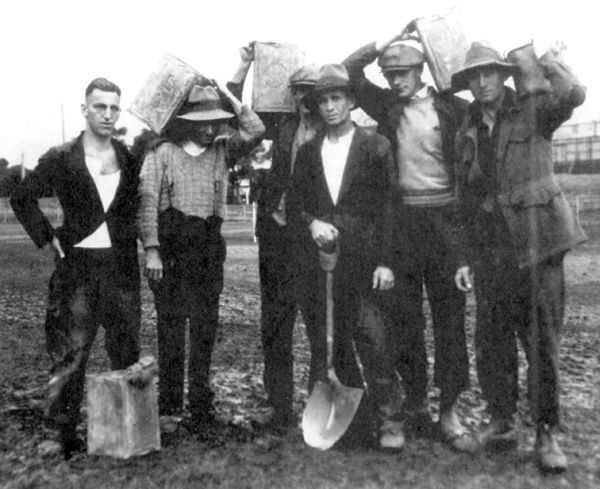
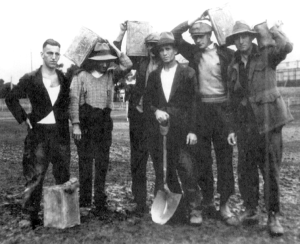
(Photo of men doing relief work during the Great Depression in 1933 from the National Library of Australia)
Celebrity Baby News: Garth and Leanne Tander

25 Saturday Jun 2011

Posted by A.O. in Celebrity Baby News

≈ 4 Comments

Tags

celebrity baby names

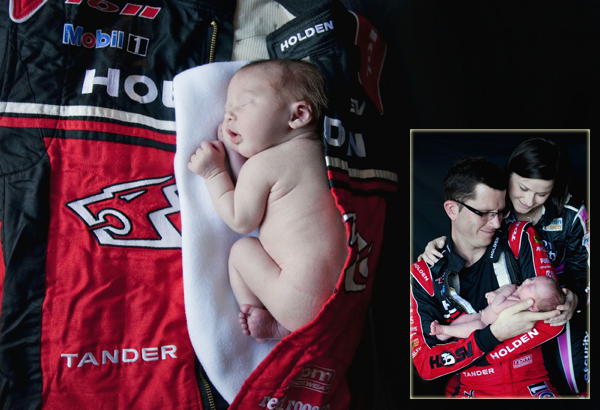
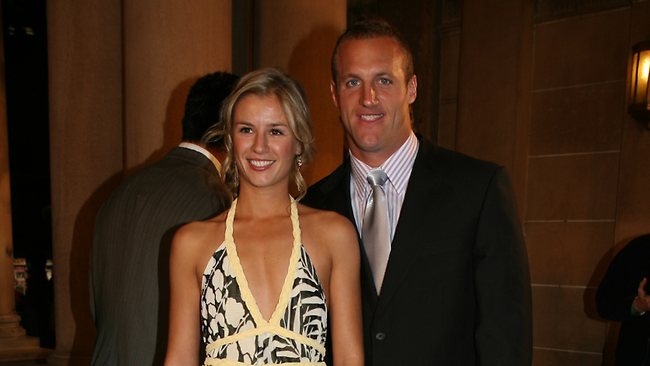
V8 motor racing champion Garth Tander, and his wife, fellow racing driver Leanne, have welcomed their first child, a daughter named Scarlett. Scarlett Tander was born at 8.45 am Friday 24 June, and weighed 7 lb 9 oz (3.5 kg).

This is the second celebrity baby called Scarlett we have had on the blog this year – the first one being Scarlett Mitchell, the daughter of Sam Mitchell.

Garth has raced with the Holden Racing Team since 2008. Leanne is also extremely successful in the sport, but will be taking maternity leave for 2011 to concentrate on motherhood. She is adamant that she is not retiring.

Celebrity Baby News: Michael and Lindy Klim

25 Saturday Jun 2011

Posted by A.O. in Celebrity Baby News

≈ 4 Comments

Tags

celebrity baby names

Swimmer Michael Klim, and his wife Lindy, welcomed their third child on Wednesday June 22; a baby girl named Frankie. Frankie Klim was born in a Melbourne hospital, and Michael has Tweeted that mother and baby are doing well.

Frankie joins big sister Stella (aged 5), and big brother Rocco (aged 3).

Michael and Lindy were married in April 2006; Lindy is a Balinese princess, and before her marriage was a model and fashion entrepreneur. Michael announced his return to swimming in January this year after retiring in June 2007.

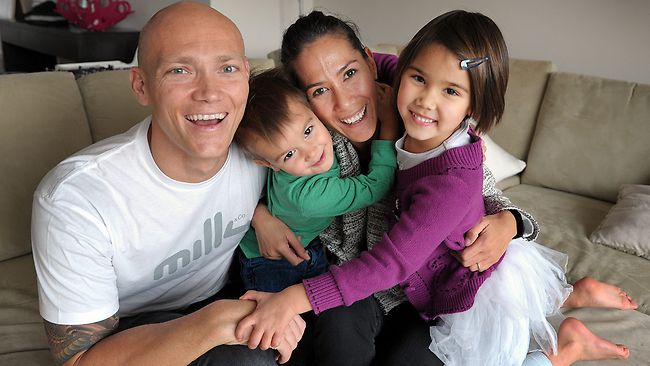
(Picture shows Michael and Lindy with Stella and Rocco).

Saturday Sibset: Michael Ennis and Family

25 Saturday Jun 2011

Posted by A.O. in Sibsets in the News

≈ 5 Comments

Tags

celebrity baby names, celebrity sibsets, name popularity, popular names, unique names

First cab off the rank for sibsets in the news are the children of Michael Ennis, who is the hooker for National Rugby League team, the Canterbury-Bankstown Bulldogs. Since 2009, he has also been hooker for the New South Wales Blues in the State of Origin series.

This story appeared in the sport section of The Daily Telegraph, dated June 17.

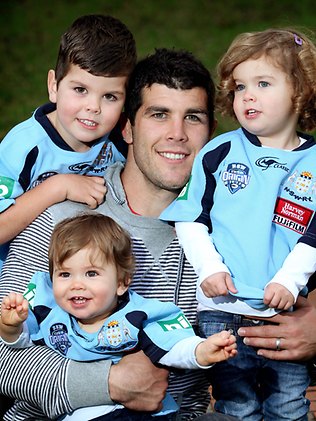
It shows Michael with his three children, all suitably dressed in Blues jerseys – Jack, aged 4; Kobyfox, aged 2; and baby Randy, who is 11 months old.

Michael and his wife Simone have picked interesting, and unexpected, names for their kids as a sibset. Jack is a perennial favourite, and #4 in New South Wales. Randy’s name has never been on the Top 100, and his middle name is Wolfe. Kobyfox seems to be a unique combination of the names Koby and Fox. I wonder if Jack has an animal as his middle name.

The point of the story is that none of the children are old enough to remember the last time New South Wales won State of Origin, way back in 2005. Having lost, then won, games in the series, New South Wales is hoping to win the third and deciding match against Queensland in Brisbane on July 6. Michael, well-known for being a “hands on” father, is planning to fly his whole family to the game, so that hopefully they can watch their dad, and their state team, win Origin for the first time in their young lives.

Let’s hope it’s a Blues win next month, so these kids can finally experience a New South Wales victory!

Celebrity Baby News: Daniel Kerr and Natasha Pozo

23 Thursday Jun 2011

Posted by A.O. in Celebrity Baby News

≈ 2 Comments

Tags

celebrity baby names

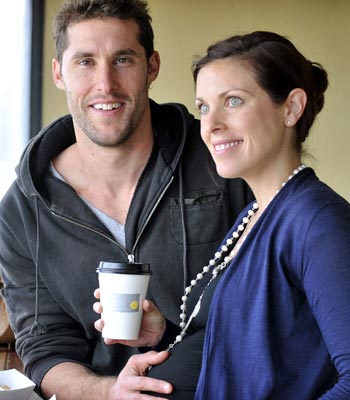
Daniel Kerr, midfielder for the West Coast Eagles, and his wife, former model Natsha Pozo, welcomed their first child, a daughter named Lola Violet, on June 22. Lola Violet Kerr is said to have weighed 6 pounds 6 ounces (almost 3 kg) at birth.

Daniel and Natasha were married at the beginning of last year; their wedding was held at Daniel’s old school, Aquinas College.

Girls Names from the Top 100 of the 1930s

19 Sunday Jun 2011

Posted by A.O. in Name Themes and Lists

≈ 37 Comments

Tags

Anglo-Saxon names, Biblical names, celebrity baby names, Christmas names, classic names, english names, European name popularity, famous namesakes, fictional namesakes, flower names, French names, Greek names, honouring, Italian names, Latin names, locational names, middle names, military events, mythological names, name history, name meaning, name popularity, name trends, names from movies, names from songs, nature names, nicknames, plant names, popular names, retro names, Roman names, royal names, saints names, Scottish names, Shakespearean names, Tatar names, unisex names, virtue names, vocabulary names

This blog post was first published on June 19 2011, and revised and updated on June 12 2015.

Alma
May be derived from the Latin almus, meaning “nourishing” – an epithet given to several Roman goddesses, including Ceres. Alma mater, meaning “nurturing mother”, is a Latin term often used to refer to one’s college or university: it was originally a title given to mother goddesses, and later to the Virgin Mary. The obscure 4th century Romano-British saint Alma Pompea, married to the semi-legendary King Hoel of Brittany, is an early example of the name. The name was given a boost after being used in Sir Edmund Spenser’s 1590 poem, The Faerie Queen; he seems to have been influenced by the Renaissance Italian word alma, meaning “soul”. The name became popular in the 19th century, after the Crimean War began with the Battle of Alma, when Anglo-French forces defeated the Russians near the River Alma – the river’s name is from a Tatar word meaning “wild apple”. After this date, babies of both sexes (but mostly girls) were named Alma in honour of the military victory. Alma was #24 in the 1900s, and #97 in the 1930s, leaving the Top 100 the following decade, and the charts in the 1960s. Alma made a mild comeback in 2011, and seems very contemporary, as it has been used in Brokeback Mountain and The Hunger Games. Already popular in Europe, Alma would make an interesting alternative to names such as Amelia, Anna, or Emma.

Audrey
Pet form of the Anglo-Saxon name Etheldreda, meaning “noble strength”; it was the name of a 7th century English princess and saint whose feast day is June 23. It became less common after the Middle Ages, because St Audrey Day Fairs sold low-quality necklaces that were disparagingly called tawdries – which is where we get the word for something cheap and tacky from. Audrey was revived in the 19th century when the Victorians rediscovered many Anglo-Saxon names. The name was already familiar, as Audrey is the simple but honest country girl in Shakespeare’s As You Like It. The Victorians were also in the middle of a Shakespeare revival, so Audrey was a dead cert for a comeback. Audrey was #156 in the 1900s, and peaked in the 1920s at #32. The name was #36 in the 1930s, but plummeted so that it was off the Top 100 by the following decade. It fell to a low of 0 in the 1980s, but climbed after the death of Audrey Hepburn until it reached the Top 100 again in 2008. Once tawdry Audrey now seems charming and stylish, and is currently #44 and climbing.

Elsie
Often said to be a pet form of Elizabeth, but technically a pet form of Elspeth, the Scottish form of the name, and was originally Elspie. The name Elsie can be found in songs and poems dating to the 17th century, and became a 19th century favourite. Elsie was #7 in the 1900s, #59 in the 1930s, and left the Top 100 in the 1940s. Elsie left the charts in the 1970s, but returned in the early 2000s at #731. It joined the Top 100 in 2013 at #91, and last year rose 26 places to #65 – an impressive performance. Sweet and unpretentious, Elsie is very much back in the game.

Hazel
Named for the hedgerow tree or shrub which produces edible nuts; the Celts equated hazelnuts with wisdom and poetic inspiration, and the Druids made staffs from hazel branches. It was considered to be one of the trees belonging to the fairies, and folk tales tell of its ability to protect from evil. Hazel has been used as a personal name since the 17th century, mostly for girls, and became popular in the 19th century when plant names were fashionable. Hazel was #45 in the 1900s, and peaked in the 1910s at #18; by the 1930s it was #55. Hazel left the Top 100 in the 1940s, and the charts by the 1970s, making a return in the late 2000s at #477, after Julia Roberts named her daughter Hazel. Last year Hazel had an outstanding debut as the fastest-rising name of 2014, rising #63 places to #88. One factor must surely be the romantic film The Fault in Our Stars, with its heartbreaking heroine Hazel Lancaster, although there have also been Hazels in the Heroes of Olympus series, and Gossip Girl.

Iris
Greek personification of the rainbow who served as messenger to the gods, and linked them to humanity. The name literally means “rainbow”, which is where the colourful iris flower got its name from – and the colourful irises in our eyes. Irises were used in the Middle Ages as a symbol of monarchy, as the fleur-de-lis pattern depicts. Religious pictures from the medieval period show the Virgin Mary holding an iris to symbolise purity and chastity. Filled with meaning and associations, the name was used by the 19th century British aristocracy for both females and males (because the Greeks called the iris flower a “hyacinth”, and Hyacinth was a male name), but quickly became used by all classes, and nearly always for girls. Iris was #62 in the 1900s, and peaked in the 1910s at #31; it was #72 by the 1930s. Iris left the Top 100 in the 1940s, and left the charts in the 1970s, although it returned in the 1980s at #748. Off the charts in the 1990s, Iris came back in the early 2000s at #551, and is now around the mid-200s and apparently stable. Almost always on the charts, Iris manages to be a “normal” name that is still underused. Hip and artistic, it has slightly dark or even punk undertones. It’s a floral name with a bit of bite.

Josephine
Anglicised form of Joséphine, a pet form of Joséphe, a French feminine form of Joseph; by the 19th century Joséphine had become the standard form of the name. It has been used by several of the royal houses of Europe, and is famous as the first wife of Napoleon Bonaparte, and thus the first Empress of the French. Joséphine was born Marie Joséphe, so it was the pet form of her middle name. Classic Josephine has always been on the charts. It was #86 in the 1900s, peaked in the 1910s at #76, and by the 1930s was #78. It left the Top 100 in the 1940s, and sunk to its lowest level in 2011 at #199, so it has never been out of the 200s. In 2012 it made an appearance again in the Top 100 at #93 after the birth of Princess Josephine, the daughter of Australian-born Princess Mary of Denmark, but has since stabilised into its usual place around the mid-100s. Josephine is a solid stayer with royal blood whose nicknames range from the sensible Jo to the cute Josie to the tomboy Joey to the froufrou Fifi to the cool Joss.

Joy
Refers to the emotion of extreme happiness and gladness. It was originally a Puritan virtue name dating from the 16th century, referring to rejoicing for the salvation of God – perhaps most famous from the hymn, Joy to the World, now often used as a Christmas carol. In fact, joy and Christmas have become so entwined that you could even see Joy as a name suitable for a baby born around late December. However, the name Joy has become secularised, and often linked to the joyful experience of welcoming a child into the world: babies have even been called “bundles of joy”. Joy entered the charts in the 1910s at #205, and was in the Top 100 by the following decade. It peaked in the 1930s and ’40s at #60, and left the Top 100 in the 1960s. Joy reached its lowest point in the 1990s at #802, but then increased slightly in popularity, and was stable in the 500s for some time. Its current position is not known for sure, but is in at least occasional use. Quite common in the middle position, Joy is a strong, simple name with a beautiful meaning, and the current trend for virtue names mean that it would be refreshing to see it up front.

Lillian
Most likely a pet form of Elizabeth dating to the Middle Ages: there is a medieval Scottish ballad about a lady named Lillian. The name became greatly more popular in the 19th century, to the point where it could be seen as another Victorian revival of a medieval name, and may have been understood as an elaboration of Lily, which also became fashionable in the 19th century as a flower name. Lillian is a classic name which has never left the charts. It was #35 in the 1900s, reached #86 by the 1930s, and left the Top 100 in the 1940s. It reached its lowest point in the 1970s at #562, and then climbed steeply, following in the footsteps of Lily, until it reached the Top 100 again in 2008 at #81. It is currently #86, so its position is stable. However, the high number of Lilys and Lillys (not to mention the Laylas and Lolas) mean that lovely Lillian may feel almost too on trend for some.

Marie
French form of Maria: in France it has sometimes used for males, especially as a middle name, but in English-speaking countries is almost always feminine. The name often reminds people of Queen Marie Antoinette, whose first two baptismal names were Maria Antonia – she was Austrian by birth. In the Middle Ages, Marie was commonly used in England, and predates the use of Mary. The medieval poet Marie de France lived and worked in England, possibly at the court of King Henry II – it is even thought that she may have been Henry’s own half-sister. The traditional English pronunciation of the name was MAH-ree (still used in the 20th century), but it is now usually said muh-REE. A name never out of common use for centuries, Marie was #71 in the 1900s, and peaked in the 1930s at #11 – perhaps Irving Berling’s hit song Marie, sung by Rudy Vallee, was an influence on its success at this time. Marie left the Top 100 in the 1960s, and fell off the charts in 2011. It is now only in occasional use, although a common middle name. Marie is still popular in Europe, and this is a pretty, traditional name that still seems very wearable.

Olive
English form of the Roman name Oliva, which refers to both the olive tree and its fruit. There is a legendary Italian martyr called Saint Oliva, known as Blessed Olive. The Crusaders introduced the name Olive to England in the 12th century; returning from the Holy Land, they often gave their children names of Biblical import in honour of their religious duty. Olives play a major role in the Bible, from the dove bringing an olive branch to Noah after the Flood, to Christ ascending to Heaven from the Mount of Olives. It was a name used for both males and females, and in fact I have seen a baby boy named Olive in the past few years – but overall Olive has been more common for girls. Olive became popular in the 19th century, along with other plant names. Olive was #26 in the 1900s, and was #73 by the 1930s. It left the Top 100 in the 1940s, and was off the charts by the 1960s. It returned in the late 2000s, after Australian actress Isla Fisher chose the name Olive for her eldest daughter. After a smooth rise, Olive joined the Top 100 in 2012, debuting at #94. It is currently #76, so rising sedately rather than steeply. Buoyed by the success of Olivia and Oliver, and with a V in the middle like other popular names, Olive should continue to do well.

POLL RESULTS
People’s favourite names were Hazel, Iris and Josephine, and their least favourites were Joy, Marie and Alma.

(Painting is Moira Madden, later Moira Hallenstein by Arthur Challen (1937); from the State Library of Victoria.

Celebrity Baby News: Darren and Alicia Glass

13 Monday Jun 2011

Posted by A.O. in Celebrity Baby News

≈ 6 Comments

Tags

celebrity baby names

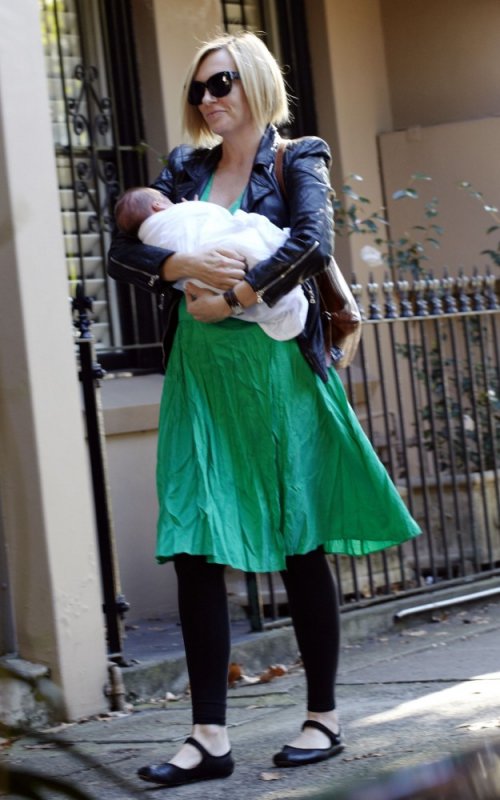
Darren Glass, captain of the AFL West Coast Eagles, and his wife Alicia, welcomed their second daughter, Zara, on April 23. Zara Glass’ birth was announced on Twitter.

Zara joins big sister Mila Elizabeth, who will be two on September 23.

Arlo Robert Galafassi: A Son for Toni Collette and Dave Galafassi, a Brother for Sage Florence

12 Sunday Jun 2011

Posted by A.O. in Celebrity Baby Names

≈ 2 Comments

Tags

celebrity baby names, created names, famous namesakes, fictional namesakes, Gaelic names, germanic names, honouring, Irish names, Italian names, locational names, Old English names, surname names, unisex names


Toni Collette is that rare creature – a born actress. At the age of 11 she faked appendicitis so convincingly that doctors performed surgery on her, even though medical tests all showed there was nothing wrong. She has a face which effortlessly transmits emotion to an audience, and the instinctive ability to inhabit a character so completely that few people actually know what Toni looks like in real life. (Much prettier than on camera, is the general verdict).

Born and raised in working class Blacktown, Sydney, she dropped out of the National Institute of the Dramatic Arts to work in film and theatre. At 21 she stole our hearts as the plump, naïve, ABBA-loving Muriel Heslop from Porpoise Spit, in P.J. Hogan’s cult film Muriel’s Wedding, and was then catapulted into the world of Hollywood, Broadway, fame, wealth and awards. She went on to star in films such as The Sixth Sense, About a Boy, and Little Miss Sunshine, and since 2009 has played the title role in the Spielberg-produced TV show, The United States of Tara.

In 2002, she met Dave Galafassi, the drummer for Sydney indie band Gelbison, at a barbeque. She describes him as “balanced, patient, and beautiful,” and says she knew straight away that he was “the one”. In January 2003, Toni and Dave were married at her country house in south-coast Broughton, near Berry. They had a Buddhist ceremony which lasted an entire weekend, and featured dancing monks, vegetarian banquets, and a fireworks display.

Their first child, Sage Florence, was born in Sydney on January 9 2008. When she announced her pregnancy the previous July, Toni noted, “It is strange that in the last three films I’ve done [my character has] been pregnant. I’m just like, what is the universe trying to tell me?”

In October last year, Toni and Dave announced they were happy to be expecting a second child, and Arlo Robert Galafassi arrived this Good Friday, April 22. Arlo made it “the greatest Friday”, was the statement from Toni and Dave. Like his sister, he was born in Sydney, where Toni was filming Mental with P.J. Hogan.

I never knew where the name Arlo came from, and after doing a little digging, I found out that nobody else really knows either! Behind the Name lists it as “meaning uncertain”, but notes that it may come from the fictional place name Arlo Hill in Sir Edmund Spenser’s 1590 poem, The Faerie Queen. It is theorised that Spenser created the name from the Irish place name Aherlow, which is Gaelic for “between two hills”. Wikipedia says that it is either a variation of the English surname Harlow, a variant of Harley or Arlene, or an Italian variant of Carlo. It seems to be a name which originated in America.

Toni Collette has confirmed that her son Arlo was named after the folksinger Arlo Guthrie, son of Woody Guthrie, of whom she and Dave are fans. The middle name Robert is after Toni’s father, Bob.

Toni Collette is very popular in Australia – an amazing feat in a country which enjoys despising its famous people. I think it’s because Toni has always seemed like a hard working actress, rather than a glamorous celebrity. She has lived all over the world, but chose to make her home in her native Sydney instead of relocating to Hollywood. Despite the Buddhism, meditation and astrology, she is always described as “down-to-earth”. Although she has had her share of personal problems, such as eating disorders and panic attacks, she doesn’t hawk them around the chat show circuit, or bring out tearfully brave books on “My Battle With X”. In fact, she’d rather not talk about them. She went to therapy, she got over it. End of story. She doesn’t analyse things, yap about herself, or witter on Twitter, and she seems to have a perpetually sunny attitude and toothy grin. You have to admit, that’s pretty refreshing.

Everyone appears to be completely enamored with her baby name choices as well – nearly every article on baby Arlo is followed by enthusiastic comments praising Arlo as a gorgeous name. Many people were quick to point out that they too, had a little Arlo (one female), and a couple said their Arlo was inspired by the character Arlo Glass on TV show 24. Clearly it’s a name doing well at the moment, and no doubt climbing up the charts. Just as Toni Collette manages to be the celebrity who seems like she could be just like you if talent hadn’t driven her determinedly in another direction, she’s won further esteem by choosing a baby name that’s just what everyone else would have chosen.

I don’t know if I’m quite so in love with the name Arlo; I’m not a huge fan of either folk music or 24, and I must confess I have a perverse side to me that quickly goes off names greeted with universal acclaim. However, I think it’s great with the middle name Robert, a brilliant match with sister Sage, and Arlo Galafassi just sounds wonderful. I also find myself intrigued by the possible connection to Edmund Spenser’s Faerie Queen. As context is everything, I hereby award Arlo Robert Galafassi a thumbs up!

Further Reading:

See the entry on Arlo at Appellation Mountain for more information on the name.

Check out Mer de Noms’ blog entry on The Faerie Queen for more Spenserian names.

Celebrity Baby News: Mark and Claudine Gasnier

06 Monday Jun 2011

Posted by A.O. in Celebrity Baby News

≈ 2 Comments

Tags

celebrity baby names, French names, polynesian names

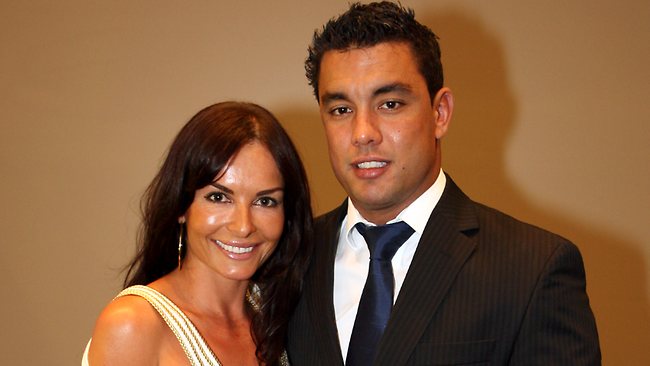
Mark Gasnier, from the NRL’s St. George Illawarra Dragons, and his wife Claudine, welcomed their first child on June 1 – a boy named Kalani Jean. Kalani Gasnier’s birth was announced on Twitter. Kalani is a unisex Hawaiian name meaning “heaven, sky”, and of course Jean is the French form of John. Jean is Claudine’s father’s name and John is Mark’s dad, so the middle name is after both grandfathers.

Claudine’s parents are French, and she and Mark spent two years in France while Gasnier played rugby union for a Paris team. Mark and Claudine were married in Sydney early last year.

Since Mark returned to the Dragons, he was been part of their victory in the 2010 Grand Final, when they became Premiers for the first time, and participated in their 2011 World Cup Challenge and Charity Shield wins. He was also selected to join the NSW Rugby League Team for the 2011 State of Origin series.

It was greatly feared that the baby might arrive early and interfere with the plans for State of Origin, but Kalani Jean was considerate enough to turn up on the arranged date so dad could play football.

← Older posts

Enter your email address to follow this blog

Categories

Archives

Recent Comments

A.O.'s avatarwaltzingmorethanmati… on Zarah Zaynab and Wolfgang…
Madelyn's avatarMadelyn on Zarah Zaynab and Wolfgang…
JD's avatardrperegrine on Can Phoebe Complete This …
A.O.'s avatarwaltzingmorethanmati… on Rua and Rhoa
redrover23's avatarredrover23 on Rua and Rhoa

Blogroll

  • Appellation Mountain
  • Baby Name Pondering
  • Babynamelover's Blog
  • British Baby Names
  • Clare's Name News
  • For Real Baby Names
  • Geek Baby Names
  • Name Candy
  • Nameberry
  • Nancy's Baby Names
  • Ren's Baby Name Blog
  • Sancta Nomina
  • Swistle: Baby Names
  • The Art of Naming
  • The Baby Name Wizard
  • The Beauty of Names
  • Tulip By Any Name

RSS Feed

  • RSS - Posts

RSS Posts

  • Celebrity Baby News: Melanie Vallejo and Matt Kingston
  • Names from the TV Show “Cleverman”
  • Can Phoebe Complete This Sibset?
  • Zarah Zaynab and Wolfgang Winter
  • Baby, How Did You Get That Name?
  • Celebrity Baby News: Media Babies
  • Celebrity Baby News: Adelaide Crows Babies
  • Celebrity Baby News: Chris and Rebecca Judd
  • Names at Work: Name News From the World of Business and Employment
  • Celebrity Baby News: Sporting Round Up

Currently Popular

  • Celebrity Baby News: Toby Allen and Darren Weller
  • Rare Boys Names From the 1950s
  • The Top 100 Names of the 1940s in New South Wales
  • Girls Names From Stars and Constellations
  • The Top 100 Names of the 1930s in New South Wales

Tags

celebrity baby names celebrity sibsets english names famous namesakes fictional namesakes honouring locational names middle names name combinations name history name meaning name popularity name trends nicknames popular names saints names sibsets surname names twin sets unisex names

Blog at WordPress.com.

Privacy & Cookies: This site uses cookies. By continuing to use this website, you agree to their use.
To find out more, including how to control cookies, see here: Cookie Policy
  • Subscribe Subscribed
    • Waltzing More Than Matilda
    • Join 517 other subscribers
    • Already have a WordPress.com account? Log in now.
    • Waltzing More Than Matilda
    • Subscribe Subscribed
    • Sign up
    • Log in
    • Report this content
    • View site in Reader
    • Manage subscriptions
    • Collapse this bar
 

Loading Comments...