• About
  • Best Baby Names
  • Celebrity Baby Names
  • Celebrity Baby Names – Current
  • Celebrity Baby Names – Past
  • Featured Boys Names
  • Featured Girls Names
  • Featured Unisex Names
  • Links to Name Data
  • Waltzing on the Web

Waltzing More Than Matilda

~ Names with an Australian Bias of Democratic Temper

Waltzing More Than Matilda

Tag Archives: US name popularity

Famous Names: Tully and Yasi

07 Saturday Jan 2012

Posted by A.O. in Famous Names

≈ 8 Comments

Tags

Australian name trends, created names, cyclone names, famous namesakes, Fijian names, Game of Thrones names, Irish names, locational names, name history, name meaning, names of rivers, nature names, pen names, rare names, Roman names, surname names, tree names, UK name popularity, unisex names, US name popularity

This blog entry was first posted on January 7 2012, and revised and republished on August 31 2016.

TULLY
On January 3, the town of Tully in Queensland celebrated the upgrade of its famous Golden Gumboot, which was damaged by Cyclone Yasi nearly a year ago. The tourist attraction is a 7.9 metre (26 feet) high gumboot, painted gold, built to commemorate the town’s 1950 highest recorded annual rainfall level of 7.9 metres (310 inches), earning Tully the distinction of being Australia’s wettest town.

When the Golden Gumboot was re-opened, it had received a fresh coat of paint and a new viewing platform. Fittingly, it rained heavily throughout the ceremony.

The town of Tully is named after the nearby Tully River, which received its name from Surveyor-General William Alcock Tully. William Tully was originally from Dublin, and arrived in Hobart as religious instructor on a convict ship in 1850 before embarking on a career of conscientious public service.

Tully is an Anglicised form of an Irish surname, originally MacTully, and having a host of variants, which is often derived from tuile, the Gaelic word for “flood”. Another theory is that it has been mistranslated from toile, meaning “will” (as in the will to keep going). However, some Tullys are so convinced of the first interpretation that they have hyper-Anglicised their surname to Flood.

The meaning of “flood” is very appropriate for the name of a river, and a town famous for its sogginess. In Game of Thrones, the Tully family is one of the Great Houses and as it is the principal house in the Riverlands and their ancestral home is Riverrun, perhaps George R.R. Martin also had the Irish surname and meaning in mind.

Tully has been used as a personal name since the late 18th century. Although the name can be found in early records from Ireland, it seems to have been more frequently used in the United States.

One inspiration for it may have been the Founding Father Alexander Hamilton, who wrote patriotic pamphlets under the pen name Tully – in his case, a reference to the Roman philosopher Marcus Tullius Cicero, whose name was occasionally Anglicised to Tully. The Tullia took their surname from the legendary Roman king Servius Tullius; the name is so ancient we do not know its meaning.

Tully has never been a common name. Last year in the US there were 8 boys named Tully with no girls listed with the name since 2013. In the UK the name has been in sporadic use, and in 2014 there were 4 baby boys named Tully. No girls are listed as having been given the name since 2009.

In Australia I have seen a roughly equal number of boys and girls with this name, and the name may be more evenly unisex here than elsewhere. One boost to the name for girls is women’s basketball champion Tully Bevilaqua, and after the attractive but controversial Tully Smyth competed on Big Brother in 2013, I heard many Australian parents refer to Tully as a “girl’s name”. Perhaps more importantly, it fits with the Australian trend for female names with a T-L pattern, such as Talia, Tilly, and Tallina.

YASI
The town of Tully was one of the worst affected by Cyclone Yasi, which hit the coast of northern Queensland early in the morning on February 3 2011. The town suffered extensive damage to its main street, and the area’s banana crops were completely flattened. Because Cyclone Yasi originated in Fiji, it was a Fijian cyclone forecaster called Misaeli Funaki who chose its name.

If you think naming a baby is difficult, spare a thought for the meteorologists who name cyclones. The cyclone had to start with Y, and nobody could think of an appropriate name for either gender.

So Mr Funaki suggested Yasi, which is the Fijian word for “sandalwood”. It didn’t have a history as a personal name in Fiji, but with no other candidates, his nomination was accepted by the ruling UN body. And so a new name was created.

Sandalwood is a tree with fragrant wood native to Asia and the Pacific. Australia has a sandalwood industry; the tree’s oil is used to make incense, soaps and cosmetics. Its antibacterial properties make it excellent as a skin cleanser, and Australian Aborigines eat its fruit as a bush food. Sandalwood is also used in the rituals of several eastern religions.

Yasi is neither used for boys or girls in Fiji. The cyclone forecasters were looking for a male name when they chose it, but they often resort to unisex names, and probably meant Yasi to be one. It’s commonly said to rhyme with Darcy, but seems to be more correctly pronounced YAH-zee.

During Cyclone Yasi, one doctor was apparently very keen for all babies born during the cyclone to be named Yasi, but there is no record of anyone following his advice. However you can find people around the world with the name Yasi, mostly female – perhaps a short form of names such Yasmin.

These are two short unisex names important to Australia’s history, especially connected with Queensland, rain, and storms. Tully is uncommon, but not unheard of, while Yasi is a true rarity, but not unusable.

POLL RESULTS
Tully received a very good approval rating of 70%. 46% of people thought it was a good name, while not one person hated it. Yasi was far less popular, with an approval rating of 22%. 53% of people weren’t keen on the name, and only one person loved it.

(Photo shows the Golden Gumboot in Tully, Queensland)
 

Famous Name: Douglas

03 Saturday Dec 2011

Posted by A.O. in Famous Names

≈ 22 Comments

Tags

aristocratic surnames, famous namesakes, locational names, name history, name meaning, name popularity, name trends, names of rivers, nicknames, Scottish names, surname names, UK name popularity, unisex names, US name popularity

doulass

This blog post was first published on December 3 2011, and substantially revised and reposted on December 10 2015.

Famous Namesake
Yesterday marked one hundred years since the Australasian Antarctic Expedition set sail from Hobart in the SY Aurora on December 2, 1911. It arrived at an unexplored region of Antarctica on January 8, 1912, and set up base camp. The site proved to be unrelentingly windy, with constant blizzards that made things hellish for the intrepid explorers.

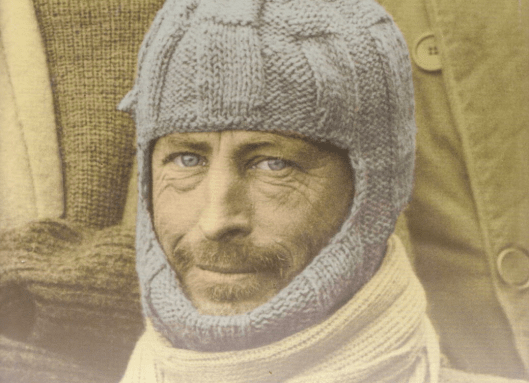
Douglas Mawson was one of the leaders on the expedition. A geologist and lecturer from the University of Adelaide, he had been asked to join Robert Scott’s British expedition to find the South Pole (Scott was famously beaten to the punch by Norwegian Roald Amundsen). Mawson turned him down, as he thought it would be better to take his own team, and lead an expedition to the unexplored bits of Antarctica, which was most of it.

Douglas was part of a three-man sledging team called the Far-Eastern Party, which included Belgrave Ninnis, the son of a British arctic explorer, and Swiss mountaineer Xavier Mertz.

The group was making excellent progress when Ninnis fell into a snow-covered crevasse that the other two men crossed without incident; he took with him six huskies, a tent, most of the food and other essential supplies, and was never seen again. The glacier they were traversing is now called Ninnis Glacier in his honour.

Mawson and Mertz continued their frozen nightmare, forced to eat their huskies to supplement their scant rations. Although both men were unwell, Mertz became seriously ill and died in less than a week. It is thought that he may have died of an overdose of Vitamin A from eating husky liver, which Mawson solicitously fed him, in the fond belief that he was giving Mertz the best of the provisions.

Other theories are that Mertz died from hypothermia, from the shock of eating meat after being a vegetarian, or from the psychological stresses of the journey – especially the death of Ninnis, as the two men had been exceptionally good friends.

In the days before he died, Mertz became weak, exhausted, dizzy and delirious, even biting off the tip of one of his own fingers. He had dysentery, nausea, and stomach pain; his skin peeled away and his hair fell out – not surprisingly, another of his symptoms was depression. Whatever he died from, his demise caused him terrible suffering.

Douglas Mawson sledged the last 100 miles alone, falling into a crevasse on the way and having to climb out using the harness, only to see the boat he was to have returned on disappearing over the horizon. He had to spend another year in Antarctica.

Douglas was knighted in 1914 and The American Geographical Society awarded him a medal in 1916. The work he did was ground-breaking, and led to Australia getting its own portion of Antarctica, from where we still do important research.

For decades Sir Douglas Mawson was regarded unquestioningly as a hero, and his image is on the snow-white Australian $100 note. More recently his part in the expedition has been scrutinised, and attracted criticism. However there is no doubting his strength, courage, and determination to survive against all odds. He is remembered as an enthusiastic and kind man who never boasted of his remarkable exploits.

Name Information
Douglas is an Anglicisation of Scottish surname Dubhghlas meaning “dark river”. It originally belonged to the Douglas Water, which is a river in South Lanarkshire in southern Scotland. On its shores is a village named Douglas after the river, and the Douglas family took the village’s name as their surname when they moved here in the 12th century.

The Clan Douglas was one of the most powerful families of Scotland in the Middle Ages, often holding the real power behind the throne. The heads of the House of Douglas held the titles of the Earl of Douglas and the Earl of Angus, sometimes known as the Black Douglas and the Red Douglas. Their family estate was Castle Douglas, which Sir Walter Scott fictionalised as Castle Dangerous in his novel of the same name.

The Douglases are said to be descended from a Flemish knight, and fought with William Wallace and Rober the Bruce in the Wars of Independence. Sir James Douglas was the first to be labelled the Black Douglas by the English for what they considered his dark deeds: it was a title taken up with pride. The Douglases intermarried with the House of Stuart, gaining a royal connection.

The Douglases became so powerful they were seen as a threat. In 1440 the teenaged William Douglas, the 16th Earl of Douglas, and his younger brother were invited to dine with the ten-year-old King James I of Scotland. While they ate, a black bull’s head – symbol of death – was placed before the young earl. The Douglas boys were then dragged outside, given a mock trial and beheaded, so Clan Douglas lay siege to Edinburgh Castle. Called the Black Dinner, it is the inspiration for the Red Wedding in Game of Thrones.

Douglas has been used as a personal name at least since the 16th century, and seemingly originates in England rather than Scotland. It was originally a unisex name, given equally to boys and girls, and by the 17th century was primarily a female name. A famous example is Douglas Sheffield, Baroness Sheffield, who had an affair with Robert Dudley, the favourite of Queen Elizabeth I, and had a son by him. In the 18th century Douglas became more common for males than females, so this is an example of a name that went from the girls to the boys.

The name is a traditional one in the Hamilton family, which married into the Douglases in the 17th century; although the Hamiltons’ surname is now Hamilton-Douglas, they are actually Douglases by descent. The head of Clan Douglas today is the Duke of Hamilton, Alexander Douglas Douglas-Hamilton.

Douglas was #59 in the 1900s, and peaked in the 1920s at #28, during the career peak of actor Douglas Fairbanks, known as The King of Hollywood in that era. It remained on the Top 100 until the 1970s, and disappeared from the charts in 2010, although returning the following year. It is apparently now in rare use.

In the US Douglas has always been on the Top 1000. It was on the Top 100 from the end of the 1920s to the end of the 1980s. It peaked in 1942 at #23 – two wartime namesakes are General Douglas Macarthur, and Douglas Fairbanks son, Douglas Fairbanks Jr, who became a highly decorated naval officer. It is currently #598 and falling.

In the UK, Douglas was on the Top 100 from the 1880s to the 1970s, peaking in the 1920s. Although it got as low as 508 in 2008, it has been climbing ever since, and is now #276. A current famous namesake is the handsome British actor Douglas Booth.

Douglas is a strong and rugged sounding classic name that is no longer in fashion, but still in use. British trends suggest that it is due for a comeback, and thanks to Douglas Booth, perhaps we can once again see Douglas as a romantic, dashing name, as it was in the 1920s because of Douglas Fairbanks. The nickname Doug seems very dated, but Dougie is cute, and even Gus seems possible.

POLL RESULTS
Douglas received an approval rating of 49%. 22% of people thought it wasn’t ready for a comeback, and 15% saw it as dorky and nerdy, although 17% saw it as strong and rugged. In contrast, 10% of people thought it was ready for a comeback, and saw it as a hip choice most parents weren’t clued into yet.

Famous Names: Barack

19 Saturday Nov 2011

Posted by A.O. in Famous Names

≈ 11 Comments

Tags

African names, Arabic names, Australian Aboriginal names, famous namesakes, hebrew names, name history, name meaning, name popularity, names of horses, rare names, surname names, Swahili names, UK name popularity, US name popularity


3675434-3x2-940x627

This blog post was first published on November 19 2011, and substantially rewritten and re-posted on November 19 2015.

Famous Namesake
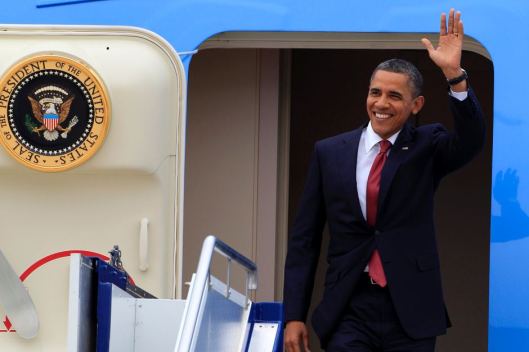
This year is the sixtieth anniversary of the ANZUS Treaty, the military alliance which binds Australia to the United States. Partly to commemorate this occasion, the President of the United States, Mr Barack Obama, made a brief two-day stopover trip to Australia on his way to Bali. He is the fifth American president to visit Australia since Lyndon Johnson arrived in 1966.

Spending two days in Canberra and Darwin, capital cities of our two Territories, he made an address to Parliament, laid a wreath on the Tomb of the Unknown Soldier and paid his respects to the 89 US sailors who perished aboard the USS Peary after being bombed by the Japanese in Darwin Harbour in 1942. It was also announced that a US military base would be stationed in Darwin.

Handsome and charismatic, with a constant friendly smile, the President could not help but make himself popular. Mr Obama has the charm and good manners that we tend to think of as very American, and he made lots of pleasant jokes about Australian slang and the Australian accent, while expressing his fondness for the nation and its people (and no fondness at all for Vegemite, which is an acquired taste).

While in Canberra, he made a visit to a high school and hugged an excited young girl. “He’s so kind … and warm,” she exclaimed. That’s how Barack Obama came across – kind, warm, genuine, funny, and very charming.

Note: President Obama made another visit to Australia in 2014, when he attended the G-20 summit in Brisbane. He gave a speech to students at the University of Queensland, which received thunderous applause from a young audience unused to hearing political leaders talk about climate change and gender equality.

Name Information
Barack is a Swahili variant of the Arabic word barak meaning “blessed”. The name comes from a Semitic root meaning “to kneel down”, with connotations of someone receiving a benediction while on bended knee. In Islam, the related term barakah (“blessing”) means a continuous spiritual presence and revelation providing a flow of blessings and grace to those close to God, such as saints and holy people.

The name is sometimes confused with the Hebrew name Barak, meaning “shining, lightning”. In the Old Testament, Barak was a military commander. In Arabic the equivalent word for “lightning” is buraq – you can see it in the name Al-Buraq, the mystical horse who took the prophet Muhammad on his Night Journey to the heavens on a journey between Jerusalem and Mecca and back.

The Hebrew equivalent of Barack is Baruch, meaning “blessed”. It is related to the Hebrew word berakhah, meaning “benediction, blessing”. In Judaism, berakhah is a blessing or thanksgiving given before enjoying or performing certain acts; for example, before eating: it acknowledges God as the source of all blessings. Baruch can be Latinised as the name Benedict, which is why the Dutch philosopher Baruch Spinoza, who was Jewish, is often known to us as Benedict Spinoza.

As both Arabic and Hebrew are Semitic languages, it is easy to see how such confusion arises over similar or even identical-looking names.

By coincidence, Barak is also an Australian name. The famous Aboriginal spokesman William Barak (sometimes known as King Billy) took his surname from his tribal name of Beruk, meaning “white grub in gum tree”.

President Obama was named after his father, Barack Obama Sr, who was a senior economist in the Kenyan government during the 1960s. Mr Obama Sr was raised in a Muslim family, but was converted to Christianity at the age of six while attending a missionary school.

Apparently his original name was Baraka (from the Islamic term for spiritual blessings and grace), but he changed his name to Barack to avoid the overtly religious connotations of his name. I’m not sure how valid a conversion is in such a young child (it sounds almost coerced), but in any case it didn’t take, and Mr Obama became an atheist. His son did become a Christian, however.

The name Barack has never charted in the United States. Last year 11 babies were named Barack, a number which has decreased since 69 being born in 2009 – the year that Barack Obama Jr became President of the United States. In the year before President Obama’s presidential campaign, just 5 babies were named Barack.

Barack can only be found in British data between 2008 and 2010, peaking in 2009 at 17 births. I haven’t found any Baracks in Australian data, but based on international trends, it may have had a small spike in 2009.

Barack must be the most interesting of the American presidents’ names, and has at least busted the myth that you need a “presidential-style” name to become president of the United States (something like Ulysses or Grover, I presume).

One of its biggest issues as a baby name must be that it is so closely tied to the current US president, and may feel like a “one person name” – especially considering the name’s unique family history.

It could also be confused with similar names, and the pronunciation is something of an issue: although I understand it as buh-RAHK, I have heard it said it in a variety of ways by overseas commentators, including Burrock and Barrack. However, this is a strong handsome name with a nice meaning that will certainly stand out from the crowd.

NAME POLL RESULTS: Barack received an approval rating of 60%. 25% of people thought it was too closely tied to the American president, making it a one person name. However, 14% saw it as strong and commanding, and a further 14% thought it was a name unusual enough to stand out from the crowd. Only one person thought it was too rare, while 3% of people were put off the name because of President Obama.

(Picture shows President Obama arriving in Canberra in 2011; photo from the ABC)

Waltzing With … Daisy

16 Sunday Oct 2011

Posted by A.O. in Waltzing with ...

≈ Comments Off on Waltzing With … Daisy

Tags

Aboriginal names, english names, famous namesakes, floral names, name history, name meaning, name popularity, names from songs, nature names, nicknames, plant names, retro names, UK name popularity, US name popularity

76610

This blog post was first published on October 16 2011, and completely rewritten on October 15 2015.   

Famous Namesake
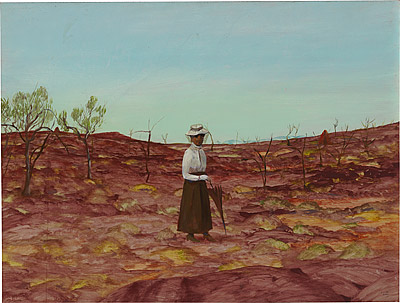
Today it is the 152nd birthday of ethnographer Daisy Bates, who was born October 16 1859. Daisy migrated to Australia from Ireland as a young woman, and like many other immigrants, took the opportunity to reinvent herself. Her story was that she was born as Daisy O’Dwyer into a wealthy Irish Protestant family, and after being orphaned, was brought up to be a “lady” by her grandmother. Adopted by an aristocratic family, she seemed destined to lead a life of leisure, until a brush with TB sent her to Australia in order to recover her health.

In fact she was Margaret Dwyer, born into a poor Irish Catholic family, and brought up in an orphanage, where she was educated to be a governess. It may have been a sexual scandal that sent her across the world to Australia, and she seems to have been keen to seek a husband. Good looking with lovely dark eyes, a lively manner, and the gift of the gab, Daisy had little trouble attracting men, and she married three of them in rapid succession, including “Breaker” Morant (she didn’t bother getting divorced, so she was a serial bigamist). She took the surname of her second husband, Bates.

An unplanned pregnancy resulted in her son, and the process was so traumatic that she ever after had only distant relations with her husband and child. Her husband became even more estranged from her when she developed what was considered a bizarre interest in Aboriginal culture, and she finally left him to take up what was to be her life’s work.

Daisy spent forty years studying Aboriginal language, history, rituals, beliefs, and customs, and for much of that time lived in isolated areas, apparently always dressed in heavy dark Edwardian clothing. The usefulness (and even truthfulness) of her anthropological work has been much debated, but she was a pioneer in the field, being one of the first to live among the people she was studying and observe them at first hand, without trying to “educate” them or convert them to her own beliefs.

Although she was never sentimental or high-minded in any way about it (she was brutally frank that her interest in Aboriginal culture was a sport more than anything else), she did work towards Aboriginal welfare. She wrote with great feeling of their suffering at the hands of Europeans, and was able to identify that much of their misery was compounded by a lack of cultural awareness towards them.

She helped pave the way for greater attention to Indigenous health, and was prepared to defend Aboriginal women from sexual exploitation by white males, with a gun if necessary. She could be kind and generous towards Aboriginal people, paying for their needs from her own limited funds. Most importantly, her work has been an invaluable resource for those seeking Native Title claims.

In her lifetime, Daisy Bates was famous, but also seen as a stubborn, publicity-seeking eccentric, and remains a deeply controversial figure to this day. Many of her ideas about Indigenous Australians were paternalistic – one of her books is titled My Natives and I. She also saw Aborigines as a doomed race, and had an appalling hatred of people with mixed black and white ancestry, believing them to be completely worthless.

A staunch monarchist and imperialist, and a social-climbing, gossipy old snob, she loathed feminists, socialists, Catholics, and Germans – her views, not abnormal for her time, are now so out of fashion that they have alienated many, and this has helped lead to her neglect.

An interesting question is what the Aboriginal people themselves thought of her. She claimed that they called her Kabbarli, a word that can be translated as “grandmother”, to suggest a relationship that was both affectionate and respectful. It can also be translated as “crazy old bat”.

Name Information
Daisies are members of the aster family which grows widely over the world – everywhere except the polar regions. The word daisy comes from the Old English for “day’s eye”, as the English Daisy (Bellis perennis) opens when the sun rises, and closes in the evening. An English saying is that spring has not arrived until you can set your foot on a dozen daisies, while a Celtic tradition says that daisies are formed whenever a child dies so that they might comfort their grieving parents.

A well known divination is to discover if someone truly loves you by plucking daisy petals: he loves me, he loves me not, he loves me! Daisies were the flower of the love goddesses Freya and Venus, and it may not be a coincidence that daisies and daisy chains have long been gifts between sweethearts. In Roman legend, the wood nymph Belides transformed herself into a daisy to escape the attentions of Vertumnus, the god of seasons and plants, so that daisies are associated with chastity.

A Christian legend says daisies sprung from the tears wept by Mary Magdalene when she was forgiven of her sins. In Christian iconography, daisies symbolise the Virgin Mary; they were a favourite in medieval paintings and tapestries of the Virgin. Later they were used to symbolise the Christ Child. The purity of the Virgin Mary and the passion of Venus often seem to combine in medieval literature, so that daisies were used to symbolise the “good woman” who was equally sweet and sensual.

Daisy has been used as an independent girl’s name since at least the 17th century, and became popular in the 19th, along with other floral names. It is also used as a nickname for Margaret, because the French name for the Ox-eye Daisy is the marguerite. Because of this, it was used as a royal device by Marguerite de Navarre, the sister of Francis I of France, Margaret of Anjou, the wife of Henry VI, and Margaret Beaufort, the mother of Henry VII. King Louis IX of France wore a daisy engraved on his ring as a tribute to his wife, Marguerite of Provence.

Daisy was quite a popular nickname among the upper classes during the Edwardian era, as evidenced by Princess Margaret “Daisy” of Connaught, who became the queen of Sweden; society beauty Mary “Daisy”, Princess of Pless; fashion icon and heiress Marguerite “Daisy” Fellowes; and Frances “Daisy” Greville, the mistress of the Prince of Wales (later Edward VII), whose love for the bicycle craze of the 1890s is popularly believed to have inspired the music hall song about Daisy with a bicycle built for two.

Literary Daisys include Daisy Buchanan who arouses a life-long obsession in F. Scott Fitzgerald’s The Great Gatsby, and the enigmatic Annie “Daisy” Miller, from Henry James’ novella. Sweet Meg from Little Women is sometimes called Daisy, and when she has a daughter named Margaret, she is known as Daisy to differentiate her from her mother. All these fictional Daisys are American, and two more American sweethearts are Disney’s Daisy Duck and sassy Southern belle Daisy Duke, from the Dukes of Hazzard.

The name Daisy was #58 in the 1900s, and left the Top 100 in the 1920s. It dropped from the charts in the 1940s, made a minor come-back in the 1950s, then dropped out again the following decade. Daisy returned to the charts in the 1980s at #646, and climbed fairly steadily. It rejoined the Top 100 in 2013 at #90, making it one of the fastest-rising names of that year. Last year it left the national Top 100, although it still made the Top 100 in Queensland and Tasmania.

Daisy is most popular in the UK. It was in the Top 100 there from 1880 until the 1930s, then made a comeback in the 1990s, peaking in 2010 at #15. Currently it is #24. In the US, Daisy has never left the Top 1000. It was in the Top 100 from 1880 to 1908, and reached its lowest point in 1972 at #629. It is currently #180. Australia’s Daisy popularity may be closer to New Zealand, where Daisy has made the bottom of the Top 100 a few times without any signs of climbing.

Daisy is a wholesome retro name which manages to sound both pure and innocent, and cute and spunky. There is something demure about little Daisy, but also rather sexy: Venus has given her a certain sweetness that blows like a fresh spring breeze across the fields. Daisies may be common flowers, but the name Daisy is not overused, and shows no signs of shooting up in popularity. You may use Daisy as a nickname, but it is just fine as a name in its own right.

POLL RESULT
Daisy received an approval rating of 88%, making it one of the highest-rated names of 2011. 37% of people loved the name Daisy, and only one person hated it.

(Painting is Daisy Bates at Ooldea, by Sidney Nolan, 1950)

Waltzing With … Cruz

11 Sunday Sep 2011

Posted by A.O. in Waltzing with ...

≈ 8 Comments

Tags

car names, celebrity baby names, name combinations, name history, name meaning, name popularity, Spanish names, surname names, UK name popularity, unisex names, US name popularity

This blog post was first published on September 11 2011, and substantially revised and updated on September 18 2015.

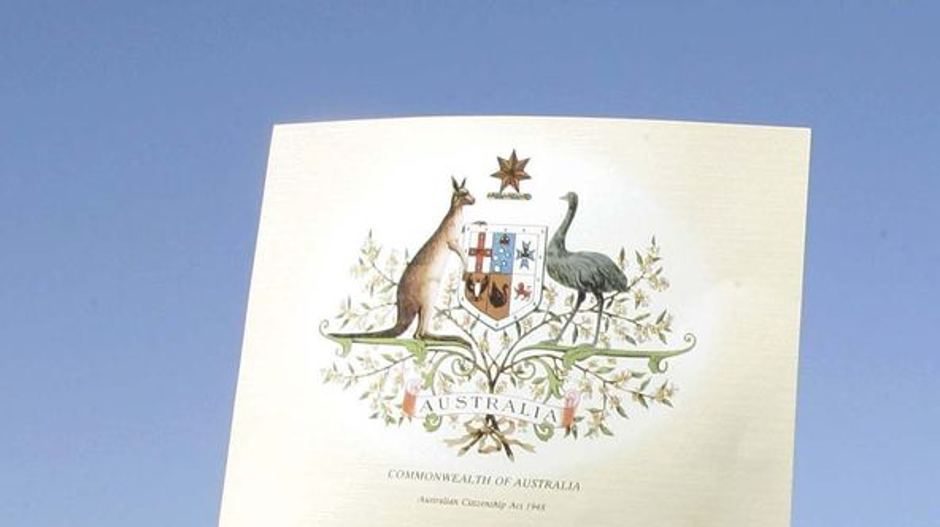
On Saturday September 17, Australia celebrates Australian Citizenship Day. The date was chosen because September 17 was the day that the Nationality and Citizenship Act 1948 was renamed, in 1973, The Australian Citizenship Act 1948. We have been celebrating Australian Citizenship Day since 2001, and it is organised by the Department of Immigration and Citizenship.

Australian Citizenship Day is one to think about what unites as Australians, to take pride in our national citizenship, and to celebrate our democratic values and commitment to a fair go, equality, and respect for each other. Local councils are encouraged to hold citizenship ceremonies and affirmation ceremonies, where you affirm your loyalty to Australia, just it case it had started waning in the interim.

Citizenship Day is one to remember that we are all Australian citizens, whether you were born here 80 years ago, or just took out citizenship. It seems like a great opportunity to look at a name that has only recently come to Australia from another land, and although many names have been welcomed to our shores, this one stood out as a success.

Name Information
Cruz is a common Spanish surname which means “cross”, coming from the Latin word crucis; it originated in Castile. Many places throughout Europe got their name from a prominent cross used as a marker; perhaps for a public meeting place or a market. This is the origin of the surname, and as there are people called Cruz in Spain, there are Crosses in Britain, Groses in France, Kreuzes in Germany, and so on. In the Christian era, the name took on religious significance, and in some cases the surname Cruz might have been bestowed on someone who carried a crucifix at festivals.

Cruz has been used as a personal name in Spain since the Middle Ages. You can often find it in name combinations such as Santa Cruz (“holy cross”) or Vera Cruz (“true cross”), to underline its Christian significance. In early records, it seems to have been commonly given to babies born during the Lenten and Easter seasons. The other key date for the name is around mid-September – The Feast of the Holy Cross is on September 14.

The name was originally given mostly, but not exclusively, to girls. However overall the name has been given fairly evenly to both sexes in Spain, but with females still ahead. In Latin America, records show it as unisex, but with males slightly ahead of females. The name isn’t popular in Spanish-speaking countries, and is often seen as rather dated for either gender.

The United States is the only English-speaking country where Cruz has much of a history, thanks to its significant Hispanic population. It has been on and off the US Top 1000 since records began in 1880, and has been continually on the charts for boys since 1980. It charted as a girl’s name a few times in the years leading up to World War II. Currently Cruz is #290 in the US, and fairly stable.

In the UK, the name Cruz gained publicity after English football star David Beckham chose it for his third son. Although it is presumed the Beckhams chose a Spanish name to honour David Beckham’s football team at the time, Real Madrid, and perhaps as a nod toward the tattoo of a cross David got in 2004, (apparently for vaguely religious reasons), Cruz seems much more of an “American-style” name, like his siblings Brooklyn and Harper, than one used in Spain. The name began charting in the UK after Cruz Beckham’s birth in 2005, and it is currently #381 and rising.

In Australia, Cruz is a celebrity baby name as well, as tennis champion Lleyton Hewitt, and his wife, actress Bec Cartwright, called their son Cruz in 2008. It seems to be a name which appeals to male sportsmen, because there are several other Australian athletes with sons named Cruz. Cruz shows up a few times in Australian historical records, always on people of Hispanic heritage, and often from countries such as the Philippines or islands such as Guam. In 2012, the name Cruz was #115 in Victoria, and would have been in the Top 100 if combined with the spelling Cruze.

Apart from the obvious star-factor of the name Cruz, I think it’s doing well in Australia because it’s short, simple, sounds very boyish to our ears, and the z-ending seems to give it a little pizzazz. It’s almost a “car” name in Australia, as we have the Holden Cruze, so this connection with sports and cars probably makes it seem blokey.

Perhaps it also reminds parents of the slang words cruise and cruisey, which seem to sum up our relaxed attitude and way of life. If anyone looks up the meaning and sees that it means “cross”, it will of remind them of our own Southern Cross, twinkling down at us from the night sky, and appearing on our national flag. In other words, it seems like a name well suited to Australian conditions, and is almost verging on the patriotic.

Cruz had been inducted as a citizen of Australia, affirmed his loyalties to our way of life, and proudly hung his certificate on the wall. Welcome to Australia, mate.

POLL RESULTS
Cruz received an approval rating of 58%. 29% of people disliked it, while only 9% loved it.

Famous Name: Nancy

06 Tuesday Sep 2011

Posted by A.O. in Famous Names

≈ 9 Comments

Tags

celebrity baby names, classic names, english names, famous namesakes, fictional namesakes, name history, name popularity, name trends, nicknames, UK name popularity, US name popularity

2829044-3x4-700x933

This blog post was first published on September 6 2011, and revised and updated on September 24 2015.

Famous Namesake
On August 7 2011, Australia’s most decorated servicewoman of World War II died. Nancy Wake was born in New Zealand in 1912, and her family moved to Australia when she was a baby. Not long after, her father abandoned the family and went back to New Zealand, selling their house in the process, thus leaving his wife and six children homeless and destitute.

Life must have been tough for young Nancy, but she was clearly a born survivor. A girl of spirit, she ran away from home at the age of 16 and worked as a nurse. When an aunt left her a £200 inheritance, she travelled to New York, and then London, where she became a journalist.

During the 1930s, she settled in Paris, and worked for the Hearst newspapers as European correspondent. One of her first assignments was to interview Adolf Hitler. She also witnessed first-hand the brutal persecution of Jews by the Nazis in Vienna, and vowed that if she could ever do something about it, she would.

In 1939 Nancy married Henri Fiocca, a handsome and wealthy French industrialist who she described as the love of her life. Six months later, Germany invaded France, and Henri and Nancy both joined the French Resistance. Nancy worked as a courier, smuggling food and messages to Resistance agents in Spain, and was able to assist more than a thousand escaped prisoners of war and Allied fliers out of France.

By 1942, the Gestapo had become aware of a significant Resistance agent who was proving a thorn in their side, and code-named her The White Mouse. She was #1 on the Gestapo’s “Most Wanted” list, and had a 5 million franc bounty on her head. Nancy escaped to England, where she trained as a spy in the French section of the British Special Operations Executive, who worked with local resistance groups in German-occupied territories.

She parachuted back into France in 1944 to help with D-Day preparations, and after D-Day was in charge of an army involved in combat against German troops. Never one to back down from a hard task, she once cycled 500 km in three days, crossing several German checkpoints, to find an operator to radio Britain and request new radio codes.

Attractive, vivacious and feisty, she drew admiration for being an “Australian bombshell” who was a crack shot with a cheerfully never-say-die attitude. One of her comrades, Henri Tardivat, said of her: She is the most feminine woman I know, until the fighting starts. Then she is like five men.

At the end of the war, Nancy discovered that her beloved husband Henri had been captured, tortured and executed by the Gestapo in 1943 for refusing to disclose her location. She never ceased to regret leaving France, and blamed herself for his death, believing that if she had stayed with him, he would have survived.

After the war, she was showered in international honours, including the George Medal, the Croix de Guerre, the Medaille de la Resistance, the Chevalier de Legion d’Honneur, and the US Medal of Freedom. Further honours came to her throughout her life, but none from Australia for many years. At first she refused all Australian recognition, then there was some bureaucratic tangles because technically Nancy was still a citizen of New Zealand.

Nancy probably didn’t help the process by getting unsuccessfully involved in Australian politics, and by telling them to stick their medals somewhere unmentionable. Rather belatedly, she was awarded the Companion Order of Australia in 2004; by that time she had left Australia permanently to live in London, after being widowed once more (this time after 40 years of marriage).

Nancy died three weeks away from her 99th birthday. On March 10 2013, her ashes were taken to the village of Verneix near Montluçon, in central France – the region she had used as her base while a Resistance fighter. Here the ashes were scattered in a private ceremony attended by close friends, in accordance with her wishes.

She said of herself: I hate wars and violence, but if they come, I don’t see why we women should just wave our men a proud goodbye and then knit them balaclavas.

Name Information
Nancy was originally a short form of Annis, the medieval English form of Agnes, and in use since the Middle Ages. However, by the time Nancy became commonly used as an independent name in the 18th century, it was derived from Nan, a short form of Ann or Anne.

There are many famous namesakes for this name. Anne “Nancy” Regan, former US First Lady; Nancy Astor, the first female MP in the British Parliament; boot-stomping singer Nancy Sinatra; witty author Nancy Mitford; voice actress of Bart Simpson, Nancy Cartright; punk lover Nancy Spungen; nobbled skater Nancy Kerrigan. It’s interesting how often famous Nancys end up being controversial in some way.

Fictional Nancys are just as strong characters as their real world counterparts. Smart girl detective Nancy Drew, an inspiration to powerful women such as Hilary Clinton. Piratical tomboy Nancy Blackett from Swallows and Amazons; her real name is Ruth, but pirates must be ruthless! Dreamworld heroine Nancy Thompson, who takes on the nightmarish Freddy Kruger. Poor degraded Nancy from Oliver Twist, who performs a noble act to save another, though it risks her own life.

Nancy is a classic name which has been almost continuously on the charts. It was #114 in the 1900s, joined the Top 100 the following decade, and peaked in the 1920s at #26. It left the Top 100 in the 1950s and has fallen gradually; currently it is around the 500s.

In the United States, Nancy was a Top 100 name in the late 19th century, and then again from the 1920s to the end of the 1970s – a very good run. It is has fallen steadily since then and is now #752. In the UK, Nancy was on the top 100 from the mid-19th century until World War II. In 1996 it was #251, and generally making upward progress. It joined the Top 100 again last year, and is currently #90. UK Prime Minister David Cameron has a daughter named Nancy, born in 2004.

Nancy is a wholesome yet spunky name which faded too quickly in Australia compared to other countries. It fits in perfectly with the current trend for cute short form names such as Maggie and Kitty, while having a clean classic feel. This is a spirited choice, suitable for those who want their daughters to be in the thick of the fight, not just waving and knitting on the sidelines.

POLL RESULT
Nancy received an approval rating of 56%. 30% of people thought the name was too dated and old-fashioned, but 16% said it was sweet and wholesome. Nobody was affected by the “nasty Nancy” label given to Nancy Spungen, but 6% were concerned about the phrase “negative Nancy”, and 4% were really bothered that “nancy” is slang for a homosexual or effeminate man.

(Image of Nancy Wake c 1945  from The Australian War Memorial, which houses the collection of all her war medals)

Waltzing With … Mary

07 Sunday Aug 2011

Posted by A.O. in Waltzing with ...

≈ 10 Comments

Tags

Biblical names, classic names, Egyptian names, famous namesakes, fictional namesakes, French names, hebrew names, Irish name popularity, Latin names, name history, name meaning, name popularity, royal names, saints names, UK name popularity, US name popularity

A050199_246x550This blog post was first published on August 7 2011, and revised and updated on August 13 2015.

Famous Namesake
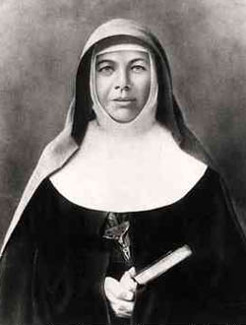
Tomorrow is the solemnity of Saint Mary of the Cross, otherwise known as Saint Mary MacKillop. It’s a special day for Australian Catholics, because Mary MacKillop is the only Australian to have ever been canonised as a saint.

Born in 1842, she was a nun who founded the order of the Sisters of Saint Joseph of the Sacred Heart, as well as several schools and welfare organisations across South Australia, Queensland and New South Wales. She had a special interest in educating the poor, especially in rural areas, but the Josephites also cared for parentless and neglected children, unmarried mothers, women escaping domestic violence, the elderly, and the dying, as well as prisoners and juvenile delinquents. The Josephites did not live in convents, but amongst the community, living as they did, and sharing their hard lives. The brown habits they wore gave them the very Australian nickname, “The Brown Joeys”.

Church politics often caused her stress, including a period of a few months when she was excommunicated for speaking out against child sex abuse within the church. During this time, she lived with a Jewish family and was sheltered by Jesuit priests. There was also an ugly smear campaign against her, including accusations that she was a drunkard. In fact, in an age where pain medication options were limited, she took alcohol on doctor’s orders for severe menstrual pain that left her bedridden for days each month.

Even during her lifetime, Mary MacKillop was regarded as a saint for her holiness and charitable works, and after she died on August 8 1909, people took earth from around her grave as a relic, until her remains were placed in a vault in a memorial chapel in Sydney, paid for by an admiring Presbyterian friend.

In 1925 the long process of having Mary MacKillop declared a saint was begun; she was beatified in 1995, and canonised on October 17 2010. She is the patron saint of Australia, and of the city of Brisbane.

Whatever your beliefs, it’s hard not to admire Mary MacKillop for her altruism and determination. She was greatly beloved by the poor, and accepted by the Aboriginal community as one of themselves. She was a fiery-tempered yet affectionate Scottish redhead with big blue eyes who believed in social justice and equality for all, and whose catchphrase was, “Never see a need without doing something about it”.

Name Information
Mary has long been a favourite for girls, due to it being the name of the mother of Jesus. In fact, there are a confusing number of women named Mary in the New Testament, because it was a name used in the royal family of Judea at the time, and extremely common. Mary is an English translation of the Latin and Greek forms of the Hebrew name Miryam.

The original Miryam was the older sister of Moses and Aaron in the Old Testament. It was she who hid Moses in the bullrushes when he was a baby to save his life, and then watched the Pharaoh’s daughter discover and adopt him. She cleverly suggested to this adoptive mother that she hire Miryam’s mother as a nurse, so that Moses was raised within his own family.

As Miryam was born in Egypt, it’s been suggested that her name comes from the Egyptian word for “love” or “beloved”, or even possibly from the Egyptian name Meritamen, meaning “beloved of Amun” – Amun being the chief god of the Egyptians. So this name, now seen as very Christian, may have ancient pagan roots.

Although Mary is a traditional English name, it didn’t become widely used in Britain until after the Conquest, when the Normans introduced the idea of using names of saints as personal names; before that, they were seen as too holy for an ordinary person to bear. It was introduced in the Latin form Maria and the French form Marie; only as the Middle Ages came to an end did Mary became standard.

The name gained royal credentials, with Mary I the first woman to successfully claim the throne of England, and rule as a king as well as queen – she was known as Bloody Mary for her brutal persecution of Protestants. Several kings had queens named Mary, and Mary, Queen of Scots, was an attractive and romantic figure who earns admiration for the brave manner she faced imprisonment and execution. Queen Mary II, of William and Mary fame, was named after her. Australia has its own royal Mary – Mary, Crown Princess of Denmark, born Mary Donaldson in Hobart.

Mary was the #1 name of the 1900s and 1910s, and remained in the Top 10 until the 1940s. It left the Top 50 in 1971, and the Top 100 in 1995. Since then, it has remained relatively stable, and is apparently not far out of the Top 100. That makes Mary a very safe choice – a classic name still in common and regular use without being popular.

Mary was even more popular in the US, remaining at #1 from the late 19th century to the early 1960s – a really staggering run of hypersuccess. It left the Top 10 in the 1970s, and the Top 50 in the early 2000s, dropping off the Top 100 in 2009. It is currently #120 and stable, a similar popularity to here.

In the UK, Mary was the #1 name from the middle of the 19th century to the 1920s, and remained in the Top 10 until the 1960s. It left the Top 50 during the 1970s, and was out of the Top 100 by the middle of the 1990s. Mary has fallen slightly faster in the UK than here or in the US, and is now #244, although still relatively stable. The only country where Mary is still popular is Ireland, where it is #81 and falling steadily.

Mary is gracious enough to be at ease in every level of society, as suitable for a saint or a princess as it is for a scientist or a politician, a soprano or a photographer, a sportswoman or a pilot. While it’s unlikely that your daughter will ever be a saint or a princess, it’s nice to think that if she does, her name will sound just fine with either title in front of it.

This is a timeless classic which sounds wonderful whatever your age, from wee baby Mary to great-grandma Mary. It’s short and simple without seeming cutesy or insubstantial, and is strong, wholesome, dignified, and completely unpretentious. As Australian author P.L. Travers taught us in Mary Poppins, it’s a name that carries just a hint of magic and mystery, and is practically perfect in every way!

POLL RESULT
Mary received an excellent approval rating of 85%, making it one of the highest-rated names of 2011. 34% of people loved the name Mary, and only 5% hated it.

Famous Name: Cadel

25 Monday Jul 2011

Posted by A.O. in Famous Names

≈ 15 Comments

Tags

famous namesakes, fictional namesakes, name history, name meaning, name popularity, rare names, Roman names, surname names, UK name popularity, US name popularity, Welsh names

This blog post was first published on July 25 2011, and revised and updated on July 23 2015.

Famous Namesake
On July 25 2011, Cadel Evans became the first Australian to win the Tour de France in the race’s 108-year history, only the second non-European to officially win it, and at 34, the oldest winner since World War II.

This gruelling 3 600 km (2 200 miles) cycle race lasts for three weeks, and finishes in Paris, with the climax of the final stage along the Avenue des Champs-Élysées. Traditionally the overall winner wears a ceremonial yellow jersey.

This was a great moment in our sporting history, and in Cadel’s home state of Victoria, everyone was urged to wear yellow to work as a show of support. When Cadel returned to Australia in August, there was a huge homecoming parade for him in Melbourne’s Federation Square, with tens of thousands of people dressed in yellow or waving yellow flags. He was also honoured with a state reception.

Cadel was made a Member of the Order of Australia in 2013, and has also been featured on the blog as a celebrity dad. In February 2015, he took part in the inaugural Cadel Evans Great Ocean Road Race and finished fifth, announcing his retirement as soon as the race finished. He is currently Global Ambassador for the BMC Racing Team.

Name Information
As you can probably tell from Cadel’s surname, he is of Welsh ancestry – his great-grandfather was from Wales. Cadel is a variant of the Welsh name Cadell, which is based on cad, the Welsh word for “battle”; there are several related names, such as Cadwalader, meaning “battle leader”. There is a recent fancy that the name is a Welsh form of the Roman name Catallus, although there doesn’t seem to be much evidence to support it.

There were several medieval Welsh kings and princes called Cadell. Cadell Ddyrnllwg was driven from his father’s kingdom by Irish pirates during the chaos of the 5th century. He lived amongst the peasants until a visit from Saint Germanus changed his fortunes. Saint Germanus laid siege to the capital, as it was held by Irish pagans, and Cadell offered the saint his humble hospitality. Saint Germanus had a premonition of disaster, and warned Cadell and his friends to get out of the city. That night the palace was struck by lightning and the resulting fire burned everyone alive, so without any annoying questions from insurance investigators, Cadell was able to regain his throne.

There is a famous explorer in Australian history with the surname Cadell – a Scotsman called Francis Cadell who was the first to explore and navigate the Murray River by steamship. A man who lived a life of adventure, he took part in the New Zealand land wars, where he staged a mutiny against his captain, and also was one of the first to explore the Northern Territory (where Cadel Evans was born), where the Cadell Strait bears his name. Later in life, he took up whaling, pearling, and trading in the East Indies, and was murdered near New Guinea; a fittingly violent end to an exciting life.

A fictional namesake is Cadel Piggot, the protagonist of the Evil Genius series of young adult books by Australian author Catherine Jinks. It’s about a boy who is very small with curly blonde hair and baby blue eyes, and an evil genius with a passion for IT. The series follows his exploits from the ages of 7 to 15 as he gradually develops a sense of right and wrong.

Since Cadel Evans’ historic win at the Tour de France, I have seen quite a few baby boys named Cadel, although the name is still rare in Australia. In the UK, there were 4 baby boys named Cadel in 2013, the name apparently rising slightly after Cadel Evans’ victory. In the US, there were 10 baby boys named Cadel in the US in 2014, down from 19 in 2012 and 17 in 2011. It seems that Cadel Evans did give the name a boost in the US after the 2011 Tour de France, but it has faded, as the name Cadel is now less used than it was in 2010, when there were 12 boys named Cadel.

Cadel fits in quite well with current trends in boy names, looking similar to Caden and Cade. Although at the start of his career, Cadel Evans had his name mispronounced as KAY-del, to sound like cradle without the R, I think by now everyone knows he says his name kuh-DEL (like Adele with a K at the front). This isn’t the British pronunciation, which is more like KAD-el. However, now that Evans has retired, it is unclear whether the name Cadel will continue gathering steam, or run out of puff.

POLL RESULTS
Cadel received an approval rating of 60%. 16% of people thought it was handsome or attractive, but an equal number believed it was too closely associated with Cadel Evans, and felt like a “one person name”. Few were willing to predict the name’s fortunes – 2% thought the name Cadel would continue growing in popularity, while 5% were fairly sure the name was a flash in the pan that would soon be forgotten.

Waltzing With … Florence

29 Sunday May 2011

Posted by A.O. in Waltzing with ...

≈ 15 Comments

Tags

celebrity sibsets, english names, famous namesakes, French names, Latin names, locational names, name history, name meaning, name popularity, New Zealand name popularity, nicknames, retro names, saints names, UK name popularity, unisex names, US name popularity

This blog post was first published on May 29 2011, and almost completely rewritten on May 28 2015.

Famous Namesake
Autumn is the traditional time of year for farm produce fairs, and on the last Sunday in May is held the Goomeri Pumpkin Festival. Goomeri is a small country town in southern Queensland; quiet and pleasant, it is known for its gourmet food industries.

The highlight of the Goomeri calendar is its Pumpkin Festival, in which they do almost everything to pumpkins, including eat them. There is the pumpkin shot-put, a pumpkin beer brewing competition, pumpkin judging contests, and the Great Australian Pumpkin Roll, in which up to 1000 pumpkins are rolled down Policeman’s Hill. There will of course be cooking demonstrations, food stalls, and all kinds of pumpkin-related culinary delights, including that old favourite, pumpkin scones.

Wen you see “pumpkin scones” and “Queensland” in the same paragraph, the name of only one person can come to mind – Florence Bjelke-Petersen. The widow of Queensland’s longest-serving Premier, Lady Florence Bjelke-Petersen has been a force in conservative politics, a part of Queensland history, and an Australian icon.

Florence was the wife of peanut farmer and Country Party member Johannes “Joh” Bjelke-Petersen, and after Joh became Premier of Queensland in 1968, Florence began to take on a bigger public role. The Queensland National Party increasingly promoted a Bjelke-Petersen “personality cult”, and Florence was a vital part of that.

Her down-to-earth sayings and common-sense attitudes became widely quoted by the media, and she published a cookbook which contained a recipe for her famous pumpkin scones. She was a Senator from 1981-1993; she worked for issues that affected Queensland and was popular with both sides of politics. When Joh Bjelke-Petersen was knighted in 1984, she became Lady Bjelke-Petersen – affectionately known as Lady Flo.

Lady Bjelke-Petersen is now in her nineties and still going strong. Although she no longer makes pumpkin scones, she reads the newspapers every day and has strong opinions on politics, as well as attending church every Sunday, and playing the organ each week for a local nursing home. In her youth, she always vowed she would be known by her full name, Florence, as she hated the short name Flo, but history intervened, and as often happens, she didn’t get much say in it.

Name Information
Florence began as the medieval English form of the Latin name Florentius, from florens, “flowering, flourishing, prospering”. There are several saints named Florentius, with the earliest being a 3rd century Roman soldier who was martyred in Italy. Florence could also be used as a French form of the female name Florentia; St Florentia was a 4th century hermit who was martyred in France.

In the Middle Ages, Florence was used as a name for both males and females, but by the 16th century had become overwhelmingly feminine in usage. Its connection with “flowering”, and similarity to the female name Flora were probably responsible.

Although the name Florence was already in reasonable use, it received a huge boost in the mid nineteenth century because of Florence Nightingale, the founder of modern nursing. Florence Nightingale came to prominence during the Crimean War of 1853-56, when she was hailed as a ministering angel, and called The Lady with the Lamp. It is notable that during the 1850s, the name Florence, which was steadily increasing in popularity at the time, suddenly skyrocketed, and continued rising for the rest of the century.

Florence Nightingale was born in the city of Florence, in Italy, and named after her birthplace. It was something of a family pattern, because her older sister, Frances Parthenope, was similarly named after the place of her birth, Parthenopolis, now part of Naples.

The city of Florence was established by the Romans, and originally named Fluentia, meaning “flowing” in Latin, because it was situated between two rivers – the Arno and the Greve. Later its name was corrupted to Florentia, meaning, as we already know, “flowering, flourishing”. Its new name suited it, because the city did indeed flourish and prosper, and by the 15th century was one of the largest and wealthiest cities of Europe. It is considered to be the birthplace of the Renaissance, and called “The Athens of the Middle Ages”; a beautiful city rich in history and culture, famous for its Renaissance art and architecture.

The name Florence was #5 in the 1900s, and fell until it left the Top 100 in the 1940s. It disappeared from the charts in the 1960s, making a minor comeback in the 1990s at #800, before dropping off the charts again in the early 2000s. In the late 2000s, Florence returned at #528 – this was the time that British indie band Florence + the Machine began its career, headed by flame-haired lead vocalist Florence Welch (Florence’s mother is a Professor of Renaissance Studies, so perhaps she was named with the Italian city in mind).

Since then, Florence has continued to rise, and is now in the 100s, almost certainly headed for the Top 100; it joined the New Zealand Top 100 in 2013. In the UK, Florence is even more popular, rising steadily through the 1990s to join the Top 100 in 2008, and is currently #29 and still rising. In the US, Florence hasn’t charted since the early 1980s; however the name is steadily rising, and last year 182 baby girls were given the name Florence.

Fashionable Florence is rising under the influence of British trends, and making friends everywhere – even people who profess to detest place names on people will forgivingly make an exception for Florence. As lovely as a Renaissance statue and as wholesome as pumpkin scones fresh from the oven, this retro name makes a stylish choice, and little wonder parents are eagerly snapping it up while it’s still hot.

POLL RESULTS
Florence received an approval rating of 80% from the public, making it one of the highest-rated names of the year. 40% of people loved the name Florence, while only 6% hated it.

(Photo of pumpkin scones from The Daily Telegraph)

Sydney Suburbs That Could Be Used as Boy’s Names

22 Sunday May 2011

Posted by A.O. in Name Themes and Lists

≈ 19 Comments

Tags

Anglo-Saxon names, aristocratic titles, Australian Aboriginal names, birth notices, British names, celebrity baby names, english names, famous namesakes, fictional namesakes, French names, Gaelic names, honouring, Irish names, literary names, locational names, modern classics, name history, name meaning, name popularity, names of businesses, nicknames, Old English names, Old Norse names, Old Welsh names, popular culture, saints names, Scottish names, surname names, unisex names, US name popularity, vocabulary names

KyleBay

This blog post was first published on May 22 2011, and substantially revised and updated on May 14 2015.

Auburn
Auburn is in Sydney’s western suburbs. The commercial district contains many Middle Eastern and Asian shops and restaurants, and is a focal point for migrant groups. Auburn has the oldest Hindu temple in Australia, which opened in 1977, and one of its busiest mosques – the Auburn Gallipoli Mosque, built by the Turkish community in honour of the Gallipoli conflict of 1915. Auburn is named after an Irish village in Oliver Goldsmith’s poem The Deserted Village; the first line of the poem is, Sweet Auburn, loveliest village of the plain. Auburn was a tiny place near Athlone in Westmeath, and doesn’t seem to exist any more – perhaps it was too deserted. Auburn simply means “red-brown”, and usually refers to dark red hair colours. Auburn has been used as a personal name since the 17th century, more often given to boys. It sounds similar to Aubrey, Aubin, and Auberon, and seems quite distinguished, while its literary ancestor gives it a sentimental air.

Bexley
Bexley is a suburb in Sydney’s south, in the St George area. It was originally a land grant to Thomas Sylvester in the 1810s, who sold it to James Chandler in 1822. Lydham Hall, the oldest residence in the area, was part of the 1822 sale. Chandler got fed up with the bushrangers, escaped convicts and other undesirables who infested his personal paradise, and sold it to Charles Tindell. By 1856 Tindell was subdividing the land into lots for homes, and by the late 19th century, Bexley was a thriving town. Its best days are behind it, for this suburb has been on the decline since the 1980s. James Chandler named it Bexley after his birthplace in London; the name comes from the Old English, meaning “box tree meadow”. In uncommon use as a personal name since the 16th century, mostly for boys, Bexley has the fashionable X-factor.

Camden
Camden is a historic town in the Macarthur Region, in the far south of Sydney. It’s pretty and semi-rural with a “gentleman farmer” atmosphere. The Camden area originally belonged to the Gandangara people; European explorers first arrived in 1795. In 1805, Governor King rather begrudgingly gave 5000 acres to John Macarthur, who had been promised land by Secretary of State, Lord Camden. (The descendants of John Macarthur still live in their ancestral home at Camden Park). Macarthur’s wool industry was so successful, a town was necessary in order to support it. Founded in 1840, by the 1880s it was a thriving concern. Camden was named after its sponsor, Lord Camden – his title is from a Gloucestershire place name meaning either “enclosed valley” or “valley of encampments” in Old English. In use since the 17th century, Camden sounds like familiar choices such as Cameron and Caden, while retaining a hint of its aristocratic past. It is in the Top 100 in the US, and I am seeing it more frequently in birth notices here.

Carlton
Carlton is the next suburb to Bexley. It is most famous for being the home of the St George Illawarra Dragons National Rugby League team. Carlton was originally heavily timbered, and given as a land grant to Captain John Towson in 1808. When the railway opened in 1884, the land was subdivided and people began moving to the area. Carlton is named after a suburb of Nottingham; I’m not sure why, but assume that it was Captain Towson’s birthplace. The place name Charlton is very common in the UK, and is a linguistic mix of Anglo-Saxon and Old Norse meaning “settlement of free men”. In use since the 17th century, this is a spin on classic Charles, and a variant of Charlton, that I have seen a bit of lately. Like popular Cooper, it is the name of an Australian brewery.

Colebee
Colebee is a fairly new suburb in Sydney’s far west. It is named after an Aboriginal guide, the son of a tribal chief, who assisted William Cox when he surveyed the land across the Blue Mountains. Colebee also tried to bring a peaceful resolution to the years of conflict that existed between Aborigines and white settlers in the area. For his efforts as a geographer and diplomat, he received the first grant of land that the British made to an indigenous person. He received 30 acres on the South Creek; an area which would later become known as Blacktown, and the location of the suburb of Colebee. The meaning of Colebee is not certain, but I have read a theory that it came from the local word for sea eagle (gulbi). Europeans were struck by the fact it sounded exactly like the English name Colby. If you are considering the name Colby, this spelling not only gives the nickname Cole, but is an important part of Sydney’s history.

Kyle
Kyle Bay is a tiny picturesque suburb in Sydney’s south, in the St George area, and takes its name from the bay on the north shore of the Georges River. It is named after local shipbuilder Robert Kyle, who was granted land here in 1853. Kyle is a Scottish surname from the district of Kyle in Ayrshire. The name is from a common place name, usually translated as from the Gaelic word caol, meaning “narrows, channel, strait”. As there are no channels or straits in this district, the name may come instead from the legendary British king Coel Hen (“Coel the Old”), otherwise known as Old King Cole. His name is possibly from the Old Welsh coel, meaning “belief, omen”. In use as a personal name since the 18th century at least, it was originally given to both sexes in its native Scotland, but is now considered to be a male name. Kyle first charted in the 1960s, debuting at #233; its use seems to be heavily influenced by the female name Kylie, which was popular in that decade. Rising swiftly, Kyle was a Top 100 name by 1980, peaked at #27 in 1998, and left the Top 100 in 2006 – the year after obnoxious shock jock Kyle Sandilands became a judge on Australian Idol. It’s now around the 200s, so it’s a modern classic still in reasonable use.

Miller
Miller is a south-west suburb in the Liverpool area. It was part of the Green Valley Housing Estate built in the 1960s, and the suburb was established in 1965. It is named after Peter Miller, an Irish immigrant who was one of the first settlers in the Green Valley area. His surname of Miller is an occupational one, indicating the bearer worked at or managed a corn mill. In use as a first name since at least the 16th century, it has mostly been given to boys, although I have occasionally seen it given to girls because it is a homophone of the popular girls’ name Milla. Miller is around the mid-200s for boys, so not an unusual choice as a name, although not common either, meaning it might very well hit that sweet spot between “too strange” and “too popular”.

Nelson
Nelson is a suburb in the north-west of Sydney, in the affluent Hills District. Governor William Bligh received a land grant in this area, and the suburb is named after Admiral Horatio Nelson, as Bligh served under his command during the Battle of Copenhagen in 1801. Just in case he hadn’t made it clear enough how much he admired Nelson, he called his property Copenhagen Farm in his further honour. Either Nelson had really impressed him, or he was a total crawler. The surname Nelson means “son of Neil” – Neil being from a Gaelic name which may mean either “champion” or “cloud”. It has been in use as a name for boys since at least the 16th century, but Horatio Nelson helped give the name a boost in the 19th. World leader Nelson Mandela and philanthropist Nelson Rockefeller give this heroic name a lot of clout.

Oran
Oran Park is a suburb of Camden, once the colonial estate of John Douglas Campbell, and for many years the home of the Oran Park Raceway, which regularly hosted major motorsport events. Since 2011 it has been developed for residential housing. Oran Park is named after the village of Oran in Scotland; its name comes from the Scottish Gaelic word for “song”. Oran is also an Anglicised form of the Irish boys’ name Odhran, meaning “sallow, pale green”. Saint Odhran was a follower of St Columba, associated with the island of Iona. There is a strange legend which says he willingly allowed himself to be sacrificed by being buried alive, in what sounds like a pagan ceremony to ensure a chapel could be built, and then popped his head out to tell everyone there was no heaven or hell! St Columba hastily covered Odhran more securely in earth before he gave any more alarming information about the afterlife, or lack thereof. Said like Orange without the ge (OR-an), this attractive Scottish or Irish heritage choice may appeal to nostalgic motorsport fans.

Richmond
Richmond is a historic town to the north-west of Sydney, on the Hawkesbury River flats near the foot of the Blue Mountains. The Darug people lived in this area when Europeans arrived in 1788; in 1789 it was explored by the British. The first settlers came to live here in 1794, and by 1799 it was providing half the grain produced in the colony. Because of its long history, Richmond has many heritage-listed buildings, and the University of Western Sydney dates back to 1891. Richmond was named by Governor Phillip, in honour of Charles Lennox, the Duke of Richmond, who was Master General of Ordance in the British government. His title comes from a town in Yorkshire, which was named after the town of Richemont in Normandy; its name simply means “rich hill”. Similar to both Richard and Edmond, this name has a casually expensive feel, and works well in the middle position.

POLL RESULTS
People’s favourite names were Miller, Camden and Nelson, and their least favourites were Colebee, Kyle and Carlton.

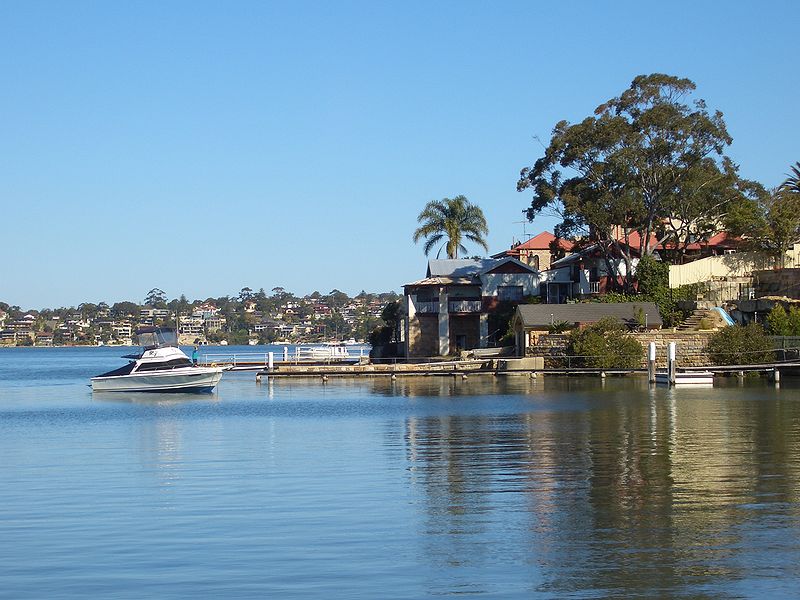
(Photo is of the waterfront at Kyle Bay)

← Older posts
Newer posts →

Enter your email address to follow this blog

Categories

Archives

Recent Comments

A.O.'s avatarwaltzingmorethanmati… on Zarah Zaynab and Wolfgang…
Madelyn's avatarMadelyn on Zarah Zaynab and Wolfgang…
JD's avatardrperegrine on Can Phoebe Complete This …
A.O.'s avatarwaltzingmorethanmati… on Rua and Rhoa
redrover23's avatarredrover23 on Rua and Rhoa

Blogroll

  • Appellation Mountain
  • Baby Name Pondering
  • Babynamelover's Blog
  • British Baby Names
  • Clare's Name News
  • For Real Baby Names
  • Geek Baby Names
  • Name Candy
  • Nameberry
  • Nancy's Baby Names
  • Ren's Baby Name Blog
  • Sancta Nomina
  • Swistle: Baby Names
  • The Art of Naming
  • The Baby Name Wizard
  • The Beauty of Names
  • Tulip By Any Name

RSS Feed

  • RSS - Posts

RSS Posts

  • Celebrity Baby News: Melanie Vallejo and Matt Kingston
  • Names from the TV Show “Cleverman”
  • Can Phoebe Complete This Sibset?
  • Zarah Zaynab and Wolfgang Winter
  • Baby, How Did You Get That Name?
  • Celebrity Baby News: Media Babies
  • Celebrity Baby News: Adelaide Crows Babies
  • Celebrity Baby News: Chris and Rebecca Judd
  • Names at Work: Name News From the World of Business and Employment
  • Celebrity Baby News: Sporting Round Up

Currently Popular

  • The Top 100 Names of the 1930s in New South Wales
  • The Top 100 Names of the 1940s in New South Wales
  • Rare Boys Names From the 1950s
  • Girls Names From Stars and Constellations
  • Celebrity Baby News: Alisa Camplin and Oliver Warner

Tags

celebrity baby names celebrity sibsets english names famous namesakes fictional namesakes honouring locational names middle names name combinations name history name meaning name popularity name trends nicknames popular names saints names sibsets surname names twin sets unisex names

Blog at WordPress.com.

Privacy & Cookies: This site uses cookies. By continuing to use this website, you agree to their use.
To find out more, including how to control cookies, see here: Cookie Policy
  • Subscribe Subscribed
    • Waltzing More Than Matilda
    • Join 517 other subscribers
    • Already have a WordPress.com account? Log in now.
    • Waltzing More Than Matilda
    • Subscribe Subscribed
    • Sign up
    • Log in
    • Report this content
    • View site in Reader
    • Manage subscriptions
    • Collapse this bar
 

Loading Comments...