• About
  • Best Baby Names
  • Celebrity Baby Names
  • Celebrity Baby Names – Current
  • Celebrity Baby Names – Past
  • Featured Boys Names
  • Featured Girls Names
  • Featured Unisex Names
  • Links to Name Data
  • Waltzing on the Web

Waltzing More Than Matilda

~ Names with an Australian Bias of Democratic Temper

Waltzing More Than Matilda

Tag Archives: patriotic names

Waltzing with … Anastasia

24 Sunday Nov 2013

Posted by A.O. in Waltzing with ...

≈ 7 Comments

Tags

Easter names, famous namesakes, Greek names, name combinations, name history, name meaning, name popularity, names from movies, patriotic names, retro names, royal names, saints names, sibsets, underused names

southern cross

On November 29, it will be the 159th anniversary of the first flying of the Eureka Flag at Bakery Hill, in the goldfields town of Ballarat in Victoria. This flag was that of the Ballarat Reform League, formed to protest the regulation of the gold diggings, with the goal of having miner’s licenses abolished. It was necessary to pay 8 pounds a year to dig for gold, and the license had to be paid whether the miners found any gold or not.

The Reform League tried to negotiate with the authorities, but they were treated as a rabble, and police reinforcements were brought in to quell them. On November 29 1854, a meeting was called, and the Reform League announced their peaceful tactics had not worked. The miners decided on open resistance, and burned their mining licenses in protest. The next day, they constructed a stockade, a makeshift wooden barricade, and prepared to defend it.

On December 1, the Eureka Flag was consecrated, and the miners swore a solemn oath upon it to stand by each other and defend their rights. Two days later came the Eureka Stockade, Australia’s first, and only, violent act of civil disobedience. A hopelessly one-sided battle, the rebels were swiftly and brutally overcome by the military, with more than twenty of the diggers killed. However, there was such public support for the captured rebels in Melbourne that the hated mining licenses were abolished, and there was a complete overhaul of the goldfields administration.

The Eureka Flag is thought to have been designed by a Canadian miner called Henry Ross, showing five eight-pointed stars of the Southern Cross on a dark blue background, joined together with a cross representing unity. The background was probably inspired by the blue work shirts worn by the miners. According to local legend, the flag was handstitched by three women of the Ballarat goldfields – Anastasia Withers, Anne Duke, and Anastasia “Annie” Hayes.

Anastasia Hayes was a fiery-tempered redhead who had survived the potato famine in Ireland, and was tough enough to cope with life on the goldfields. Her husband was one of the leaders of the Eureka Rebellion, and Anastasia had attended the political meetings with him. Still breast-feeding her last baby at the time, she gave medical aid to miners injured during the rebellion, including assisting with surgery. Later deserted by her husband, Anastasia brought up their six children alone, supporting herself as a teacher.

Anastasia Withers is said to have sacrificed her white lawn petticoat to make the stars for the Eureka Flag. Anne Duke is believed to have been one of the women who sewed the stars for the flag, and was inside the Eureka Stockade during the battle, hiding while she listened to bullets hit the cooking utensils in her tent. Heavily pregnant at the time, she gave birth just a few days later under a cart on the road to Bendigo. Henry Ross was killed during the Eureka Stockade, but the flag he designed has gone on to become a potent symbol of rebellion against oppressive authority.

Anastasia is the feminine form of Anastasios, meaning “resurrection” in Greek; the name was chosen by early Christians in honour of the resurrection of Christ. Saint Anastasia of Sirmium was a 4th century martyr, and the only saint who has their feast on Christmas Day. Because of the meaning, the name Anastasia is sometimes chosen for baby girls born during the Easter season.

Anastasia has been used in England since the Middle Ages, but was more common in Eastern Europe, where it has been used amongst royalty and nobility. The most famous of these is the Grand Duchess Anastasia Nikolaevna, youngest daughter of Nicholas II, the last emperor of Imperial Russia. Reportedly a lively and even mischievous teenager, she was executed by the Bolshevik secret police with the rest of her family in 1917.

However, there were persistent rumours she had managed to escape and gone into exile, and several women claimed to be Anastasia. It became one of the great urban legends of the twentieth century, the subject of many books and several films. Recent DNA testing has conclusively proven these rumours false, and the supposed Anastasias either imposters, or suffering from delusion. Anastasia, and all her family, have been canonised as martyrs by the Russian Orthodox Church.

Anastasia was #226 in the 1900s, but left the charts the following decade – perhaps the death of the Grand Duchess in 1917 made the name seem an unfortunate choice. Anastasia began ranking again in the 1950s at #484 – my guess is because of the 1956 film Anastasia, starring Ingrid Bergman, which hinted that Anastasia could still be alive. That slender hope was enough to resurrect the name Anastasia in the Australian charts.

The name Anastasia peaked in the early 2000s at #140, not long after the release of an animated movie called Anastasia in the late 1990s, loosely based on the 1956 film. It suffered a sharp drop in popularity in 2010, the year after it was confirmed that Anastasia had been killed during the Russian Revolution. Since then it has recovered somewhat, and is now #176 in New South Wales and #150 in Victoria.

Anastasia is a retro name, but doesn’t sound old-fashioned in the least, and has remained in constant use since the 1950s without ever becoming popular. For many years its fortunes have been tied to a mysterious member of the Russian Imperial family, but with her sad riddle finally solved, it can hopefully move on and be judged on its own merits.

Anastasia is a vital part of Australian history, and a very patriotic name. It is beautiful and elaborate, although too strong and meaningful to be “frilly”. But don’t let anyone tell you it’s a princessy name, or suggest that an Anastasia sounds fragile and dainty. Anastasia is a rebellious heroine; a woman tough enough to survive a battle, but still have the heart to care for the wounded. She isn’t afraid to get her hands dirty, or too prissy to tear up her own petticoat for the cause.

If you have a little Anastasia, she is part of a proud tradition, and you will be reminded of her name every time you see the shining stars of the Southern Cross.

Name Combinations for Anastasia

Anastasia Chloe, Anastasia Juliet, Anastasia Lucy, Anastasia Mathilde, Anastasia Paige, Anastasia Sophie

Sisters for Anastasia

Genevieve, Hermione, Isabelle, Madeleine, Seraphina, Temperance

Brothers for Anastasia

Calvin, Joseph, Kai, Lucas, Sebastian, Xander

POLL RESULT: Anastasia received an approval rating of 85%. 41% of people thought it was a good name, while 33% loved it.

Famous Names: Henry and Navy

23 Wednesday Oct 2013

Posted by A.O. in Famous Names

≈ 3 Comments

Tags

American names, classic names, colour names, english names, famous namesakes, germanic names, historical records, honouring, military terms, name history, name meaning, name popularity, nicknames, patriotic names, popular names, royal names, saints names, unisex names, vocabulary names

5000830-3x2-940x627

Early in October, the Royal Australian Navy International Fleet Review was held, celebrating the 100th anniversary of the first Royal Australian Navy fleet in Sydney Harbour, on October 4 1913. Around 40 warships from twenty countries, and 16 tall ships took part, with seven RAN ships symbolising the 1913 entry itself. A stunning fireworks display on the Harbour used huge projections on the Sydney Opera House to tell the story of our century-old navy.

Although the Governor General Quentin Bryce reviewed the Fleet as the Queen’s Representative, it is traditional to have a member of the royal family in attendance for the Review, and Prince Henry of England, otherwise known as Captain Wales, or Prince Harry, got the gig. It was his first official visit to Australia, and although only here for 36 hours, he made himself immensely popular.

The famous names this week are in honour of the Royal Australian Navy, and our royal visitor.

Henry is from the Germanic name Heimrich, meaning “home ruler”. It has been commonly used amongst European royalty, and there are many rulers of Germany, France, Spain and Portugal named Henry, or one of its equivalents. There have also been six Holy Roman Emperors named Henry, one of them a saint. Other saints named Henry include a legendary bishop of Sweden, and Henry of Coquet, a Danish hermit who lived on an island off the coast of Northumberland.

Henry is a traditional name in the British royal family, and there have been eight English kings named Henry. Henry I was the son of William the Conqueror, and probably named after his great-uncle, King Henry I of France. The last king named Henry was Henry VIII, who is best remembered for his six wives, and for the English Reformation, which saw the Church of England break away from the Roman Catholic Church and the pope’s authority. In his prime handsome and powerful, he is considered to be one of the most charismatic of English rulers.

There have been a few British princes named Henry, and Prince Harry may have been named after his great-uncle Prince Henry, the Duke of Gloucester, who was Governor-General of Australia, and married to Princess Alice, whose middle name was covered in Rare Royal Names for Girls.

Some people find it hard to understand why Harry is a short form of Henry. In the Middle Ages, Herry or Harry was how the name Henry was pronounced in England, so anyone named Henry was automatically a Harry once their name was said aloud. Today the medieval Harry is used as a pet form of Henry.

It is sometimes forgotten that Prince Harry’s official name is Henry, so that when he was introduced as an ambassador of the 2012 Olympic Games, some viewers wondered who this “Prince Henry” chap was. Bizarrely, one online news source (now removed) even reported that Prince Harry and Prince Henry of England attended the closing ceremony together (well, I guess they did, in a way).

Henry is a classic name in Australia which has never left the charts. It was #11 in the 1900s, and gradually fell until the left the Top 100 in the 1950s, hitting its lowest point in the 1970s at #265. Since then, it has gradually climbed, and was back on the Top 100 by the 1990s, where it has continued to increase in popularity. It isn’t shooting up dramatically, but making steady gains.

Currently it is #33 nationally, #27 in New South Wales, #23 in Victoria, #35 in Queensland, #17 in South Australia, #33 in Western Australia, #15 in Tasmania, #19 in the Northern Territory, and #10 in the Australian Capital Territory.

Henry is a handsome classic that seems intelligent and solidly unpretentious. It’s a popular name, and rising in popularity, but in a sensible, steady way. It seems unlikely at this point to match Prince Harry’s brother’s name, William, in the popularity stakes, and get to #1.

Navy is an English vocabulary name; the word navy refers to a fleet of military watercraft. Although navies have been used since ancient Greek and Roman times, navy is quite a modern word in English, dating back to around the 17th century, it is from the Old French meaning “fleet of ships” – ultimately from the ancient Greek for “ship”.

You can also see Navy as a colour name, since navy blue or navy is the very dark blue named after the traditional colour of naval uniforms.

Navy has been used as a personal name since the very late 18th century, and is first found in the United States, more specifically New England. The births of the first babies named Navy coincide with the establishment of the US Navy in 1794, so it seems to be a very patriotic name, and likely to be given to children of people connected with the navy itself.

Navy is much more common in the US than anywhere else, although rare in America too, and overall it has been given to boys and girls in fairly equal numbers. It is an extremely rare name in Australian historical records, and seems to be slightly more common as a girls name here; I have only ever seen Navy on girls, but so infrequently that it seems an entirely unisex name.

Rare, unisex, and rather modern, the name Navy would honour a naval connection in the family, or a family naval tradition.

POLL RESULTS: Henry received an astonishing approval rating of 95%. Navy received a more modest approval rating of 25%.

Waltzing with … Orange

17 Sunday Feb 2013

Posted by A.O. in Waltzing with ...

≈ 2 Comments

Tags

Banjo Paterson, Celtic names, colour names, Devon names, english names, famous namesakes, French names, fruit names, historical records, locational names, middle names, mythological names, name combinations, name history, name meaning, name trends, nature names, patriotic names, plant names, rare names, royal names, Sanskrit names, sibsets, surname names, tree names, unisex names, vocabulary names

Orange jacket Postcard autumn leavesToday is Banjo Paterson’s birthday, and as we have already covered his name, I thought it would be interesting to look at the name of his birthplace.

At the time of Paterson’s birth, his parents were living at Buckinbah Station, near the town of Yeoval (then known as Buckinbah). Because of the station’s isolation, Banjo’s mother Rose went to stay with her aunt and uncle, Rose and John Templer, at their homestead Narrambla, and it was here that she gave birth to her son. Narrambla is about 2 miles from the centre of Orange, and today lies on the city’s outskirts. Rose herself was born on a homestead near Orange, so it was rather a family tradition.

Orange is a city in the Central West region of New South Wales. It was founded in the early 1820s as a convict settlement, and farmers began settling in the area in 1829. The first discovery of gold in Australia was made in 1851 near Orange, leading to the gold rush. Orange became a trading centre for gold, and continued growing due to its good position for agriculture. It was declared a city in 1946. Orange is known for its fruit growing, especially apples, pears and stone fruits; ironically it is too cool to grow oranges in Orange. It is also a thriving wine making area, and has both gold and copper mining. It is a sister city to Orange in California.

Orange was first called Blackman’s Swamp, after John Blackman, the guide who brought the first explorers there. The name was changed to Orange by the Surveyor-General Sir Thomas Mitchell, in honour of William, Prince of Orange. Mitchell and the Prince had both been aides-de-camp to the Duke of Wellington during the Peninsular War in Spain in the early 19th century. The Prince of Orange later became the first King of the Netherlands.

The Prince’s title originally came from the Principality of Orange in the south of France. It began life as a settlement called Arausio, named after a local Celtic water god; the god’s name is said to mean “temple”, meaning the temples that are on the forehead, not a temple as in a building for worship.

The town’s name was corrupted into Orange, and by the Middle Ages, conflated with the word orange, which comes from the Sanskrit for “orange tree”, naranga. The colour was named after the fruit, and first used this way in the 16th century.

As a personal name, Orange has a longer history than you might imagine, for the girl’s names Orenge and Orengia are found in the 13th century. As this predates the name for the fruit, their etymology is extremely uncertain, and possibly has the same source as the French town, which first became a principality of the Holy Roman Empire in the 12th century.

The surname Orange is either from the place name, or derived from the female name, and when the English name Orange appears in the early 17th century, it may have been after the surname. The name first arises in Devon, and in the beginning was exclusively given to girls, although the name became unisex after William III of England, or William of Orange, gave it a masculine feel.

As a first name, Orange is extremely rare in Australian records, and given to only a few girls, but as a middle name is much more common, and given to boys in almost equal numbers as girls (the middle name Orange was sometimes combined with William in the case of boys, showing that William of Orange still had some naming clout).

Colour names for girls are popular at the moment, with many little girls named Scarlet or Jade; tree names such as Olive and Willow are in the girls’ Top 100, surnames such as Marlowe and Quinn are fashionable for girls, and it’s not unusual to see baby girls named after European cities, such as London or Vienna. Orange seems a more vibrant continuation of these trends. Indeed, you could see it as a hyper juiced-up Clementine.

Orange is such a bright, outgoing, fun colour that it seems very cheerful as a person’s name, but it also has a more serious side, because orange is connected to religion and spirituality. There’s a real yin/yang, East/West dichotomy with the name Orange. Is it as crazy as a clown’s wig? Or as serene as a meditating Buddhist monk?

Orange fruit gains its colour from carotenes, the same thing which makes deciduous leaves turn orange. By chance, the city of Orange is known for its spectacular displays of autumn leaves, and it is therefore known as “The Colour City” (also a play on its name). You might see Orange as a name that evokes the changing of the seasons, and the turn of the year.

Although Orange started life as a girl’s name, it did become unisex, and is so rare that it could be worn by either boys or girls. If you are shy about using this vivid name, it would make an eye-catching middle.

Orange is a bold choice as a baby name, though not without shades of subtlety, and it celebrates Australian geography and history. I think Orange is one of the more distinctive of the patriotic names, and has a real tang to it.

Name Combinations for Orange

Orange Beatrice, Orange Eliza, Orange Lily, Orange May, Orange Ruby, Orange Victoria

Brothers for Orange

Eden, Hartley, Fitzroy, Paterson, Sunny, Tennyson

Sisters for Orange

Audley, Breeza, Corindi, Junee, Kendall, Marinna

Note: Name combinations from historical documents; just for fun, sibsets include names of other towns in New South Wales

POLL RESULT: Orange received an approval rating of only 27% – the lowest-rated featured name of 2013, and the only one to score less than 50%. 40% of people hated the name Orange, and nobody loved it.

(Picture shows a postcard from the city of Orange)

Requested Famous Name: Banjo

14 Thursday Feb 2013

Posted by A.O. in Famous Names, Requested Names

≈ 10 Comments

Tags

aliases, Australian Aboriginal names, Australian names, Australian slang terms, english names, famous namesakes, historical records, musical instruments, name history, name meaning, names of horses, nicknames, patriotic names, pen names, pseudonyms, vocabulary names

146168-banjp-paterson-grapphicOn Sunday February 17 this year it will be the 149th birthday of Andrew Barton Paterson, affectionately known as “Banjo” Paterson. To celebrate, The Orange and District Historical Society will be throwing him a birthday party, with a car rally, picnic lunch in Banjo Paterson Park, poetry readings, stories of Banjo’s life, and walk around the historic property where he was born.

Because this is a name blog, I feel obliged to explain that Paterson was named Andrew after his Scottish-born father, and his middle name Barton was a family name from his mother’s side; he was related to Edmund Barton, who would later become Australia’s first prime minister. Because he and his dad had the same name, Paterson went by his middle name, and was always known as Barty to his friends and family.

Paterson lived with his grandmother while he was attending the prestigious Sydney Grammar School, and she encouraged in him a love of poetry. He was 21 when he first began submitting poems to The Bulletin, under the pseudonym of “The Banjo” (sometimes shortened to a simple “B”). Full of fierce nationalism and a desire for a fairer society, he had some aspirations to write fiery polemic, and had even written a political pamphlet. However, The Bulletin had other ideas.

In the late 19th century, there was a movement towards the British colonies of Australia becoming one country, a feeling that Australia should be a united nation, and Australians a united people. In the effort to provide Australia with a unifying mythology that would instil nationalistic pride, it seemed that the Australian bush and outback would be the symbol to draw everyone together.

The Bulletin suggested that Banjo Paterson try his hand at bush poetry in line with its nationalist editorial policy. Banjo had been born in the Central West, but spent most of his childhood and youth growing up on the family property near Yass, north of Canberra. It was here he learned to ride, and watched the horsemen from the Murrumbidgee River and Snowy Mountains country play polo and take part in picnic races. He gained a great love of horses, and an admiration for horsemanship.

When he wrote The Man from Snowy River, it was a poem of reckless horse-riding heroism which immediately captured the nation’s imagination, and which still has our heart. It made his name, and his first poetry collection, under the title The Man from Snowy River, is the most-sold collection of Australian bush poetry ever, and is still reprinted today. During his lifetime, Banjo Paterson was second only to Rudyard Kipling in popularity among living poets writing in English.

Banjo Paterson was a colleague and friend of Henry Lawson, but had a very different way of seeing the bush. In Banjo Paterson poems, the bush is a place of adventure, romance and beauty, populated by heroes who live in freedom amongst the gum trees, honest freckle-faced youths, and characters with funny names and odd yarns about them.

Australia is the Outback, and pioneers, and songs around the campfire under the starry sky, and swagmen camped by billabongs. It’s a country of warmth and humour, and although it never quite existed, like all good mythology it lives in our hearts and minds. Banjo Paterson gave us a dream of Australia – one from which we have never truly awakened.

When it comes to names from history, often times there is a tinge of tragedy to them; some sadness attached to the real person who bore them, or even a whiff of scandal. There is no darkness to the name Banjo – Paterson was a decent, highly intelligent man who cared very much about the less fortunate, but he was essentially a happy person who was popular and sociable, and liked sport and the outdoors.

He wore his fame easily, remained modest about his talents, and never had any scandal attached to him. He was able to fulfil many of his dreams, and those that were denied him didn’t set him back. He enjoyed the ordinary love of friends and family, as well as the extraordinary love and devotion given to him by his nation. He is the model of what we hope for and expect from our celebrities.

The equine-loving Paterson took his pen name name of The Banjo from that of a horse owned by his family. This always seems to be described as “a favourite horse”, or even “his favourite horse”, but I cannot find any original source for this. Paterson himself simply describes it, no doubt with affection, as a “so-called racehorse“.

The origin of the horse’s name is apparently lost to history, but the word banjo has a history as a slang word in Australia. Slang dictionaries suggest as possible meanings “frying pan”, and “shoulder of mutton”. Another meaning was “shovel used for mining”, which during World War I, became used for any military entrenching tool – in other words, there are some correlations between the slang terms banjo and digger!

A banjo is military slang for a bacon and egg roll, because the motion of constantly dealing with crumbs while eating is reminiscent of someone playing the banjo. And Banjo Paterson himself has added another slang term – a banjo is a $10 note, because Paterson’s picture is on it, along with the words to The Man from Snowy River (Henry Lawson was on the old $10 note).

The banjo is the descendant of musical instruments brought to Colonial America by African slaves, and long seen as a staple of country music, the music of the poor and downtrodden (the kind of people that Banjo Paterson cared about). It is not known where the word banjo comes from, but the most likely source is West Africa, where it may be the same word they used for bamboo.

There are quite a few men named Banjo in Australian records, with the name most common as a nickname or alias. Many must have been named in honour of the poet, with some families named Paterson apparently finding it hard to resist having their own “Banjo Paterson”. The name isn’t unusual in Aboriginal communities, where it is given as a nickname.

The name Banjo gained fresh impetus when actress Rachel Griffiths named her son Banjo Patrick in 2003; since then the name has received more use, with 12 baby boys named Banjo last year in Victoria alone.

Banjo is an uniquely Australian name; one which seems strange in other countries, yet cosy and familiar in our own. It’s patriotic and honours one of our most beloved national poets. It’s cute, cool, and has a very Aussie nickname too – Joey.

Thank you to Brooke for suggesting Banjo as a featured name.

POLL RESULT: Banjo received an approval rating of 86%, making it one of the most highly esteemed names of the year. It was seen as uniquely Australian and patriotic (36%), cool and different (30%), and cute and spunky (20%). The remaining 14% of people thought it was over the top, weird, or ridiculous.

(Picture shows Banjo Paterson with the score to Waltzing Matilda)

Famous Name: Jackson

23 Wednesday Jan 2013

Posted by A.O. in Famous Names

≈ 5 Comments

Tags

ACT name data, english names, famous namesakes, historical records, holiday names, locationa names, name history, name meaning, name popularity, name trends, nicknames, patriotic names, popular names, Scottish names, surname names, Victoria name data

Sydney_Harbour_Bridge_from_the_airOn Saturday January 26 it will be Australia Day, so we are looking forward to the long weekend. In Sydney, there will be many events in and around the harbour, with one of the most popular the Ferrython, where the Sydney ferries race against each other. Chartering a boat to spend Australia Day on the harbour, basking in sunshine under blue skies, must be one of the most perfect ways to spend Australia Day in Sydney.

It’s also very appropriate, because the early history of Sydney is centred on its harbour. The size of Port Jackson, in which Sydney Harbour is located, was one of the main things which convinced the British to set up base in this area. You may recall that Captain Arthur Phillip rated Port Jackson as “the finest harbour in the world”.

I was always taught that Port Jackson was the largest natural harbour in the world, but it turns out that this is a matter of disagreement. In fact, what with the difficulties in deciding what is classed as a harbour, and whether you count size by square kilometres, length of coastline, or water volume, it doesn’t seem possible to declare any natural harbour the largest in the world – although Port Jackson must be one of the world’s largest, at least.

Sydneysiders still firmly believe that Port Jackson is the finest natural harbour in the world, and many that it is the world’s most beautiful – and as beauty is very much in the eye of the beholder, this claim at least is difficult to dispute. I expect other cities feel the same way about their own harbours.

The first known European to come here was James Cook in 1770. Not being of a gushing nature, there is nothing in his ship’s log to indicate that he thought the harbour fine or beautiful, only recording that it “appeared to be a safe anchorage”.

He named it after Sir George Jackson, a fellow Yorkshireman, and Cook’s friend and patron. Jackson later got married and changed his surname to his wife’s, becoming Sir George Duckett. I can’t help but be thankful that this happened after the naming of Port Jackson, as Port Duckett doesn’t have quite the same ring to it – although like the island of Nantucket, it would no doubt be a boon to the authors of limericks.

Jackson is an English and Scottish surname meaning “son of Jack“, which must be one of the most straightforward name meanings. The surname Jackson can be found from the 14th century onwards, and was historically most common in the north of England.

Jackson was first used as a personal name in the early 17th century, and in the United States, may sometimes have been given in honour of the seventh president, Andrew “Stonewall” Jackson – before he was president, he was a national hero for defending New Orleans from the British. He had such a reputation for toughness  that his nickname was “Old Hickory”.

Although there are many examples of men named Jackson in Australian records, the name did not begin charting in Australia until the 1970s – around the time American teen idols, The Jackson 5, became a big hit. Jackson climbed steeply to make the Top 100 by the 1990s, and peaked in the early 2000s at #29. Since then it has gently declined in popularity, and was #40 in NSW for 2011.

Early results from 2012 name data in the ACT and Victoria suggest that Jackson is falling as the variant spelling Jaxon takes off. This spelling (also a legitimate surname), takes advantage of the fashionable X, while suggesting Jax as the nickname, rather than Jack.

While Jackson may not be quite as popular as it once was, this name makes a great one for a boy born on Australia Day, and is much more subtle than last year’s suggestion.

POLL RESULT: Jackson received an approval rating of 62%. More than half of people (56%) said the name Jackson was fine and handsome, although 22% believed it was too popular, and 17% saw it as boring. Nobody preferred the spelling Jaxon, or thought of Jackson as a patriotic name.

Their Rare Baby Name Isn’t Rare Enough!

19 Saturday Jan 2013

Posted by A.O. in Naming Assistance

≈ 7 Comments

Tags

choosing baby names, classic names, famous namesakes, locational names, name popularity, names of magazines, nicknames, patriotic names, rare names, sibsets, surname names, US name popularity

gulgong-35961Elise and Alex are expecting their third child, and had already decided that if it was a boy, his name would be Digby. Digby is a rare name; unfortunately, it has been used often enough amongst Elise and Alex’s circle that they no longer feel as enthusiastic about using it.

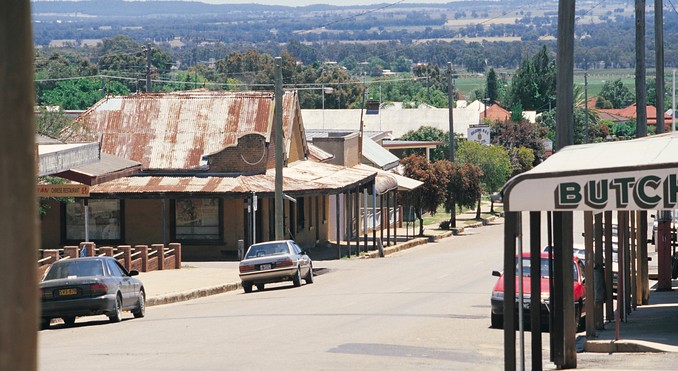
They are now looking for a new boy’s name, and would ideally like something which is uncommon without being particularly unusual, and would sound at home in a country community. They like surname names for boys, and don’t mind if the name they choose becomes popular later, just as long as it isn’t popular now.

They would like it to match with their son’s name, Law$on, and as their daughter’s name also starts with L, they don’t want another name starting with that letter. Elise and Alex’s surname starts with M and ends in S eg Matthews.

Names on their short list so far:

  • Banjo
  • Baxter
  • Fred

Names they’ve crossed off or can’t use for some reason:

Abraham, Angus/Gus, Benjamin/Ben, Cameron, Charles/Charlie, Elliot, Eustie, Fletcher, George, Guy, Hamish, Henry/Harry, Hugo, Jack, Jed, Luke, Remington, Samuel/Sam, Sawyer, Spencer, Stirling, Sullivan, Thomas/Tom, Wilbur, Wilhelm, William/Will, Winston

~ ~ ~ ~ ~ ~ ~ ~ ~ ~

I felt quite distraught on first reading your e-mail, because Digby is one of my favourite names too, and it’s so uncommon that it doesn’t seem fair that it’s become overly used in your corner of the world. Unfortunately, there’s no guarantee that choosing a name not on the Top 100, or even not ranked at all, ever, means you will be the only parents who like it. Underused doesn’t mean unused.

I grew up in a small town, so I understand why you want a name that nobody else is currently using. When you live in a small community, you see each so often on a daily basis that it almost feels like you’re one big family. Nobody really wants 8 Uncle Jacks and 13 cousins named Mia – not to mention all your brothers being named Sam.

You’ve already discovered that rare names can prove disconcertingly popular in pockets – the good news is that quite common names may be almost unheard of in your community. When I was born, my name was in the Top 50, and yet I was the only one, of any age, called Anna in our little town, or in all the towns surrounding us. It was only when I went to the city for holidays that I met other Annas – it just didn’t seem to be used in my region.

If you are concerned about too many other people choosing the same name, I wouldn’t worry too much about the overall popularity charts, but more about what’s popular and unpopular on a local level. Keep an eye on birth notices in your local paper, and also watch out for regional popularity lists (I have been putting these on Twitter as they come out).

The perfect name is probably one which your friends and neighbours think sounds “a bit different” the first time they hear it, but are used to within two days, and in two weeks time, are starting to really like it. That means you might want to consider a few names that you think sound a bit different at first!

It’s also a good idea to have several names on your list, in case someone else uses one you’ve picked out while you’re still pregnant. Luckily, you have plenty of time left to thoroughly explore your options.

YOUR SHORT LIST

Banjo

This is such a cool name, but for me, Banjo and Law$on are a little too much as brothers. Also, if your daughter’s name isn’t super-Aussie, I wonder if she might be a little left out of the theme?

Baxter

I think Baxter is a definite keeper. It’s got that perfect balance of being uncommon, yet sounding completely normal, and the nickname Bax fits in with familiar names like Max and Jax.

Fred

You’ve absolutely got me over a barrel on this one, because Fred is my dad’s name. To me Fred sounds kind and funny and sweet, just like my dad. Yes, I’m very biased. But being non-biased, I do think Fred sounds brilliant with your surname.

SUGGESTIONS

Archie

To me, Archie is very much like Digby – it’s cute and boyish, yet also sounds grown-up and dignified. Unfortunately, Archie is popular, increasing in popularity, and seems to be used more in the country than the city. However, I’m suggesting it because I love the way this sounds with your surname – it seems really happy and I just can’t help smiling when I hear it.

Arthur “Artie”

Arthur is one of those useful classic names which have been stable for decades (a “normal name”), yet also underused (“uncommon”). It’s very slowly increasing in popularity, but in no way trendy. The nickname Artie makes it seem like a replacement for Archie, for people worried about popularity. This is another name I think suits your surname

Dexter

Dexter is really similar in sound to Baxter, and has a similar level of popularity. I like this better with your surname, but I think Baxter makes a better sibset with your son’s name.

Huxley

Huxley reminds me both of Baxter and Digby – I feel as if someone who likes both these names might appreciate Huxley. And like Banjo, it has an Australian connection, because the naturalist T.H. Huxley travelled to Australia, which is where his scientific career began (he has a mountain named after him here). Huxley’s descendant Sir Leonard Huxley became a famous Australian physicist. You get the nickname Huck from Huxley, which somehow seems to tie in with Sawyer.

Beckett

Beckett is another name which reminds me of Baxter. It does have an Australian literary connection, because Beckett’s Budget was a famous men’s magazine of the 1920s and ’30s which combined hard journalism with saucy pictures (tame by today’s standards). Not quite as idealistic as Banjo, I admit!

Jasper

Jasper is another name which reminds me, in sound, of Baxter, yet somehow also has a little of Digby’s image. It might seem mad to consider this when it’s a Top 100 name, but when I thought about it, I couldn’t recall often seeing this name in birth announcements from rural areas. Could this be one of those names which are popular overall, but underused where you live?

Camden

I really like the sound of this surname, which as a place name, has played an important role in Australia’s colonial history. You’ve crossed Cameron off your list, so I wondered if Camden might appeal instead? This name, growing in popularity in the US, is extremely rare in Australia.

Theodore “Ted”

Like Arthur, Theodore is a classic, but rapidly growing in popularity, while still not a common name. I mostly thought of it because Ted is very much like Fred, and to me it sounds “country” but also quite patrician – Ted is  the gentleman farmer, while Fred is his trusty right-hand-man!

My favourites from your list are Baxter and Fred, and from my suggestions, I feel as if Huxley fits your criteria better than any other.

If you still feel unsure about your name list in 6-8 weeks time, write in to the blog again, and we’ll take another look at it. In the meantime, happy name hunting!

UPDATE: Elise and Alex decided to stick with Digby.

POLL RESULTS: The most popular choices for a new baby name were Fred, Archie, Arthur and Beckett, which each got around 10% of the vote.

(Photo is of Gulgong in New South Wales, the childhood home of Henry Lawson; in no way is this meant to identify where Elise and Alex live)

Can You Suggest an Australian-Themed Name for the Third Triplet?

18 Friday May 2012

Posted by A.O. in Naming Assistance

≈ 28 Comments

Tags

angel names, constellation names, famous namesakes, fictional namesakes, Greek names, holiday names, mythological names, name history, name meaning, name popularity, name trends, nature names, nicknames, patriotic names, plant names, Spanish names, surname names, themes for triplets, tree names, triplet sets, unisex names, US name popularity, vocabulary names

Gabbi is an ex-pat Aussie originally from Perth, in Western Australia; she lives in the United States with her husband and six children. The family will be welcoming children 7, 8 and 9 in a few months, because they are expecting fraternal triplets – two boys and a girl.

Now if Gabbi had been having boy-girl twins, there would be no naming problem, because they have already chosen gorgeous names for the girl and one boy baby: Clover and Jasper.

The names fit together perfectly, because both reference the number three (Jasper was one of the three wise men, and clovers usually have three leaves), and both are associated with luck or gifts. They both bring to mind particular colours as well, because jasper stones are red, and clover is of course green; furthermore, they are both connected to special days of the year (Epiphany on January 6, and St Patrick’s Day on March 17).

Gabbi is now very concerned that the third triplet receives a name which has a special meaning of its own: even if it doesn’t fit in exactly with Clover and Jasper, it needs to be meaningful and have its own significance, rather than just being an afterthought. She would love it if the third triplet receive a name which is connected to Australian culture and celebrates Gabbi’s heritage, without being anything too obvious, like Sydney or Jack.

Other name preferences

  • Nothing too popular – one of Gabbi’s sons has a name which became very popular, and she doesn’t want that to happen again. (Gabbi actually stipulated that the name had to be outside the 300s, but I thought that was too strict, especially considering Jasper is in the 200s, so I restricted myself to names outside the Top 250).
  • Nothing too unusual that will really stick out in America – no Bluegum or Gallipoli
  • Nothing too obviously political, he’s not a bumper sticker
  • The family has a long, complicated surname, so the name needs to be simple to spell and pronounce

Names that have already been considered and rejected

  • Alister (dislikes nn Al)
  • Archer (too trendy, dislikes nn Archie)
  • Asher (too popular)
  • Finn (too popular)
  • Flynn (too connected to its namesake, Erroll Flynn)
  • Jonah (too popular)
  • Micah (too popular)
  • Miller (loves the name, but not the beer connection in the US)
  • Sawyer (too popular, too often used as a girl’s name)
  • Sayer (worries it looks “made up”)
  • Zephyr (Gabbi’s husband has vetoed as “too weird”)

The other children in the family tend to have names which are fairly popular in Australia, but underused in the United States. They are quite “cute” sounding, and even if unisex, used far more by one gender than the other.

Although Gabbi is interested to see what names I come up with, she would also love blog-readers to contribute any thoughts or ideas they have.

MY SUGGESTIONS

Felix

I think this goes with Jasper and Clover rather nicely, and is by far my top choice for Triplet Number Three. Felix means “lucky”, and Australia Felix is the name given to lush pastureland; there’s also a Great Australian Novel called Australia Felix, by Henry Handel Richardson (like George Eliot, Henry was a woman). It also reminds me of Felix the Cat, which was an Australian-American creation, and in LA, Felix the Cat is used on a three-sided sign. Although Top 100 in Australia, Felix is only #311 in the US.

Phoenix

A similar sound to Felix, but it references the colour red, which fits with Jasper. In China, the phoenix is a symbol of luck, and has great significance in terms of immortality and resurrection. The Phoenix is one of the constellations of the Southern Hemisphere, and is most visible around Christmas time – I thought this fitted in rather nicely with Jasper’s Christmassy meaning. Although quite popular in Australia, it is only #388 in the United States. However, you may be bothered by the fact that it also charts for girls in America, and possibly Phoenix the city in Arizona is also an issue for you.

Orion

This is another constellation name, one which references the number 3, because Orion is famous for having three stars in his belt, and even the absolute beginner (or a small child) can locate them easily in the night sky. Like the Phoenix, Orion is another constellation which is most visible around Christmas time. The RAAF have a plane called the Orion, while in the USA, it is the name of a ship, and a rocket. Orion seemed like a name from Greek mythology which might be less “weird” than Zephyr. It is #471 in the US.

Finlay

This seemed like an obvious alternative to Flynn and Finn, with a similar sound and origin, yet not even on the Top 1000 in the US. Because Finlay is connected to the colour white, it also seems a nice match with Jasper and Clover. There’s a rather nice connection to Gabbi’s home state as well, because Garfield Finlay was a World War I flying ace who lived in Perth, Western Australia, before the war.

Rafael

Names starting with Raf- are very much on trend in Australia, yet not over-used in the United States. This is the Spanish form of Raphael, the name of a healing archangel, and seems just as special as Jasper and Clover to me. An Australian connection is that Raphael Aimbari was an Ori man who helped Australian soldiers on the Kokoda Campaign during World War II; there is a statue of him in Brisbane. I think Rafe makes a very dashing nickname. Rafael is #274 in the US, but has been stable for some time and isn’t climbing up the way Jasper is. Raphael is #668, but seems harder to spell than Rafael.

Lawson

There are said to be three great Australian poets – Banjo Paterson, C.J. Dennis, and Henry Lawson. Banjo seems too out-there for you, and Dennis is a bit old-fashioned, but Lawson seems like a nice Australian replacement for Sawyer (both surnames, similar vowel-sounds). The surname means “son of Laurence”, and the name Laurence is connected by meaning to the bay tree, a symbol of success. It’s a subtle nature-themed name which again makes me think of a colour. It’s #580 in the US.

Shepherd

Another surname; this one reminds me of the conservation organisation, Sea Shepherd, which operates in Australia and the US. Interestingly, Sea Shepherd has three ships in its main fleet. It is a subtle environmental name, reminding us that we are all guardians of life on earth. At the same time, it’s another “Christmas-themed” name to go with Jasper. This name hasn’t been on the US Top 1000 since the 19th century.

Franklin

Another environmental namesake, because the successful fight against the proposal to dam the Franklin River in the Tasmanian wilderness was a landmark in Australian environmental activism. Aptly, the surname Franklin means “free man”, and the call of the activists was to let the Franklin River run free. This has a wonderful American connection too, because of Benjamin Franklin. It also reminds me of the word frankincense, as brought by the Three Wise Men. The name is #504 in the US, but I somehow feel the nickname Frank isn’t going to appeal to you.

Ash

This is another nature name which references a colour, and seems like a replacement for Asher. In Australia, it reminds me of the Ash Wednesday bushfires, which like the Phoenix, became another symbol of resurrection, of rising from the ashes. It also reminds me of the mountain ash, the tallest of all eucalypt trees, and one of the tallest trees in the world. Ash isn’t on the US Top 1000, but may be too unisex for you. You might consider it for a middle name though.

Talon

This is another nature name which is on trend in Australia, but underused in the United States. The main reason it occurred to me is because an eagle’s claw has three talons which are used to hold prey (the fourth is used for balance). The Wedgetail Eagle is very important in Aboriginal mythology, as Bunjil the Wedgetail Eagle is a creator deity. Of course, the Bald Eagle is the national bird of the United States, making it an important symbol for both countries. Talon is #516 in the US.

Which of these names do you think is the best match with Jasper and Clover? Or maybe you have your own suggestion for Jasper and Clover’s brother. If so, let’s hear it! All ideas are welcome.

NOTE: The triplets’ names are Clover, Jasper and Ash!

Girls Names from Songs

06 Sunday Mar 2011

Posted by A.O. in Name Themes and Lists

≈ 39 Comments

Tags

American names, aristocratic names, Australian slang terms, British name trends, created names, famous namesakes, fictional namesakes, food names, French names, fruit names, gemstone names, germanic names, Hawaiian names, hebrew names, Latin names, name history, name meaning, name trends, names from films, names from songs, nature names, nicknames, Old Norse names, patriotic names, plant names, polynesian names, popular names, retro names, royal names, saints names, scandinavian names, Turkish names, UK name popularity, unisex names, vintage names, Yiddish slang


This list was first published on March 6 2011, and substantially revised and updated on March 12 2015.

Astrid
Goodbye (Astrid Goodbye) was a 1979 single for popular rock band Cold Chisel, written as an energetic set finisher. Songwriter Don Walker didn’t know anyone named Astrid, and thinks he probably heard of the name because of Bill Wyman’s partner, Astrid Lundstrom. Astrid is the modern form of Ástríðr, an Old Norse name which can be translated as “beloved of God”, or more freely as “divine beauty”. A traditional name amongst Scandinavian royalty since medieval times, it was the name of Canute the Great’s sister, giving it a slender English connection. It became well known in the English-speaking world because of popular Swedish children’s novelist Astrid Lindgren, the author of the Pippi Longstocking books, and has received fresh attention from Astrid Hofferson in the film How to Train Your Dragon. The name is often understood as being related to the word “star”, because it sounds like the Greek aster, which was exploited in a Dr Who special where Kylie Minogue played star-loving Astrid Peth. This attractive name is currently around the 500s.

Ayla
Ayla was a 1987 single for New Wave duo Flash and the Pan, comprised of music industry powerhouses and ex-Easybeats, Harry Vanda and George Young. The name Ayla has several possible origins. It can be a variant of the Hebrew name Elah, meaning “terebinth tree”, pronounced eh-LAH, or a Turkish name meaning “halo of light around the moon”, and often translated as “moonlight”. In Turkey, it is pronounced to sound like the name Isla. The name Ayla was also used for a beautiful, inventive, and spiritually gifted palaeolithic superwoman in the popular Earth Children  novel series by Jean M. Auel. In the books, Ayla is a Neanderthal attempt at the character’s real name, which isn’t given, but much longer; it is said like Kayla without the K. The name Ayla first joined the US Top 1000 in 1987, a year after Auel’s Clan of the Cave Bear was made into a film, starring Daryl Hannah. Despite being a flop, it seems to have catapulted Ayla to #593, and to have helped inspire the Flash and the Pan song. In Australia, Ayla joined the Top 100 in 2013, fitting in with popular names like Layla and Ava.

Clementine
Col Joye’s 1959 #1 hit single (Rockin’ Rollin’) Clementine is a hip retelling of the folk ballad, My Darling Clementine. In this version, the miner’s daughter Clementine is a jeep-driving “real down chick” who meets up with a “cat from the city” in a jumping joint where she hops, bops, and “digs that crazy rhythm”. Clementine is a French form of Clementina, the feminine form of Clement, from the Latin name Clemens, meaning “merciful, gentle”. Clement is a saint’s name, so Clementine would originally have been given with this in mind, and the name dates to the Middle Ages. It has a rather aristocratic image, with several French princesses named Clémentine, and Sir Winston Churchill’s wife was also called Clementine. A clementine is a small citrus fruit, but that isn’t an issue in Australia, where they are nearly always sold as mandarins. Clementine was quite a popular name in Australia in the 19th century, but has never been in the charts since Federation. There has been renewed interest in the name recently, with the quirky Clementine children’s book series by Sara Pennypacker, Clementine the moral compass in The Walking Dead video game, and free spirit Clementine in the film, Eternal Sunshine of the Spotless Mind. Expect to see more of this elegant vintage name in the future.

Evie
Stevie Wright is the former lead singer of legendary 1960s rock band The Easybeats. Australia’s first international pop star, he was the first forced to deal with the pressures of being famous and beautiful at a very young age, and the first to blaze, burn out, and come crashing down in spectacular fashion. Evie is his 1974 rock ballad of young love and new life blossoming, blooming, and then going appallingly wrong, and is the only 11-minute song to become a #1 hit. Evie is a pet form of Eve, or a short form of names like Evelyn. It’s been used as an independent name since the 18th century in America, and may have a Dutch influence. Evie first joined the charts in the early 2000s, after the song was covered by one-off supergroup The Wrights in 2004. It climbed so steeply that it was in the Top 100 by the late 2000s, and was #22 in 2013. It’s even more popular in the UK, so you can see this as part of the British nicknamey trend, as much as a tribute to an Australian classic.

Georgy
The Seekers were a folk group, and the first Australian band to achieve major success in the UK and US. Georgy Girl was the title song to the 1966 British movie of the same name, a Swinging Sixties coming-of-age tale about a naïve, frumpy young girl and her unconventional love affairs. The song went to #1 in Australia, and was The Seekers’ highest-charting single in the US, where it got to #2 and was used to advertise mineral water. Georgy can be used as a pet form of either the male name George, or the female names Georgia, Georgette, or Georgiana – the “Georgy Girl”in the song is named Georgina. Although Georgy has a long history of use for both sexes, it is far less common that the variant Georgie, which has charted for girls since the 1990s and is rising steeply in the 200s.

Leilani
Leilani, released 1982, was the début single by quirky rock group Le Hoodoo Gurus (later Hoodoo Gurus). The song’s narrative is loosely based on the plot of 1951 B-grade movie Bird of Paradise, and combines an exotic South Pacific setting with an oddly suburban mindset, and a fun faux-Polynesian chorus filled with Australian place names. Leilani is a Hawaiian name meaning “heavenly garland of flowers”, but often understood as “heavenly child”, pronounced lay-LAH-nee. It fits in with the trend for L-l names, such as Lillian, and is currently around the 300s. A very pretty Polynesian heritage choice which has the fashionable nickname Lani.

Matilda
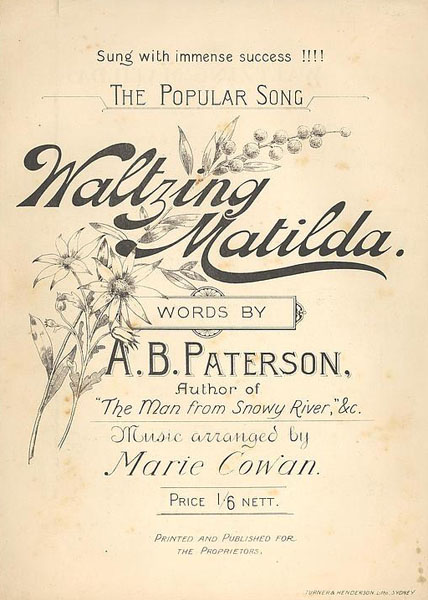
Waltzing Matilda was written by Banjo Paterson in 1895. The Matilda in the song isn’t a dancing girl, but is what swagmen called the bundle that they carried; to “waltz Matilda” is to walk while carrying a bundle. It is said that the swagman in the song was a real person called Samuel Hoffmeister who was involved in the Shearer’s Strike of that year, so it’s a political protest song (unintentionally). Waltzing Matilda is our unofficial national song and the lyrics are written on every Australian passport. Matilda is a Germanic name meaning “mighty in battle”. A traditional name amongst European royalty, it was literally brought over with the Conqueror to England, as it was the name of William I’s wife, the mother of William II and Henry I. Her grand-daughter was named after her, and she was married to a Holy Roman Emperor, so was the Empress Matilda. She tried to claim the throne of England as her father’s heir, but was never crowned queen, being named Lady of the English – her son instead became King Henry II. Saint Matilda was a medieval German queen whose son became a Holy Roman Emperor; she is the patron saint of large families. Matilda was #144 in the 1900s, and disappeared from the charts in the 1930s. It made a comeback in the 1980s, after Matilda the Kangaroo was chosen as the mascot for the 1982 Commonwealth Games, held in Brisbane and won by Australia. Matilda joined the Top 100 in the early 2000s, peaked in 2009 at #16, and by 2013 had only fallen to #18. A patriotic retro name choice that is extremely stable in the charts.

Rosie
Founded by the brothers of one of the Easybeats, AC/DC is Australia’s most successful rock band, and one of the most successful world-wide. Whole Lotta Rosie is their cheeky 1978 single, allegedly based on Bon Scott’s real life encounter with an obese Tasmanian woman. Rosie is a pet form of Rose which has a long history as an independent name; it can be used as a short form of any Rose- name, such as Rosalie, Rosamund, Rosetta, or Rosemary. Rosie was #229 in the 1900s, and left the charts in the 1930s. It made a come-back in the 1980s, reaching #749 and climbing steeply. It was in the mid-100s in Victoria in 2012. A sweet, fresh-faced retro name that is already Top 100 in Britain.

Ruby
Ruby Wednesday is an early song by rock band Eskimo Joe, released in 1999. A whimsical re-take on the Rolling Stones’ Ruby Tuesday, it made the Triple J Hottest 100 the year it came out. Ruby is a precious gemstone, whose name comes from the Latin for “red”. It’s been used as a girl’s name since the 17th century, but became popular in the 19th, when gemstone names became fashionable. Ruby was #21 in the 1900s, and had left the Top 100 by the 1930s. It disappeared from the charts in the 1950s, but came back in the 1980s at #548. It reached the Top 100 in 1996, peaked at #1 in 2012, and and by 2013 was #2. A spunky retro choice which has already reached maximum popularity, and is therefore expected to gradually fall.

Sadie
Sadie (The Cleaning Lady) was a 1967 novelty song and the first solo single for pop idol Johnny Farnham; it hit #1 and was the biggest-selling single by an Australian artist in the 1960s. Sadie is a pet form of Sarah, which seems to have originated in 18th century America. The name gained an especially Jewish image in 19th century England, where in Yiddish slang, a Sadie was a low status Jewish girl, sometimes with connotations of prostitution. It’s interesting how often Sadie is linked with that profession, such as Sadie Thompson in the W. Somerset Maughan’s Rain, while The Beatles’ Sadie adds another “sexy” image to the name. Sadie was #145 in the 1900s, and left the charts in the 1940s. It returned in the late 2000s at #566, and in Victoria is in the mid-100s, a similar popularity to that in the UK, while it is already a Top 100 name in the US. This sassy retro name looks set to go places.

POLL RESULTS
People’s favourite names were Evie, Matilda, and Clementine, and their least favourite were Ayla, Leilani, and Georgy.

Newer posts →

Enter your email address to follow this blog

Categories

Archives

Recent Comments

A.O.'s avatarwaltzingmorethanmati… on Zarah Zaynab and Wolfgang…
Madelyn's avatarMadelyn on Zarah Zaynab and Wolfgang…
JD's avatardrperegrine on Can Phoebe Complete This …
A.O.'s avatarwaltzingmorethanmati… on Rua and Rhoa
redrover23's avatarredrover23 on Rua and Rhoa

Blogroll

  • Appellation Mountain
  • Baby Name Pondering
  • Babynamelover's Blog
  • British Baby Names
  • Clare's Name News
  • For Real Baby Names
  • Geek Baby Names
  • Name Candy
  • Nameberry
  • Nancy's Baby Names
  • Ren's Baby Name Blog
  • Sancta Nomina
  • Swistle: Baby Names
  • The Art of Naming
  • The Baby Name Wizard
  • The Beauty of Names
  • Tulip By Any Name

RSS Feed

  • RSS - Posts

RSS Posts

  • Celebrity Baby News: Melanie Vallejo and Matt Kingston
  • Names from the TV Show “Cleverman”
  • Can Phoebe Complete This Sibset?
  • Zarah Zaynab and Wolfgang Winter
  • Baby, How Did You Get That Name?
  • Celebrity Baby News: Media Babies
  • Celebrity Baby News: Adelaide Crows Babies
  • Celebrity Baby News: Chris and Rebecca Judd
  • Names at Work: Name News From the World of Business and Employment
  • Celebrity Baby News: Sporting Round Up

Currently Popular

  • Celebrity Baby News: Jacinta Allan and Yorick Piper
  • Celebrity Baby News: Jacinta Allan and Yorick Piper
  • Celebrity Baby News: Craig Thomson and Zoe Arnold
  • Celebrity Baby News: Ed Husic and Bridget Tilley
  • The Top 100 Names of the 1940s in New South Wales

Tags

celebrity baby names celebrity sibsets english names famous namesakes fictional namesakes honouring locational names middle names name combinations name history name meaning name popularity name trends nicknames popular names saints names sibsets surname names twin sets unisex names

Blog at WordPress.com.

  • Subscribe Subscribed
    • Waltzing More Than Matilda
    • Join 517 other subscribers
    • Already have a WordPress.com account? Log in now.
    • Waltzing More Than Matilda
    • Subscribe Subscribed
    • Sign up
    • Log in
    • Report this content
    • View site in Reader
    • Manage subscriptions
    • Collapse this bar
 

Loading Comments...