• About
  • Best Baby Names
  • Celebrity Baby Names
  • Celebrity Baby Names – Current
  • Celebrity Baby Names – Past
  • Featured Boys Names
  • Featured Girls Names
  • Featured Unisex Names
  • Links to Name Data
  • Waltzing on the Web

Waltzing More Than Matilda

~ Names with an Australian Bias of Democratic Temper

Waltzing More Than Matilda

Tag Archives: name meaning

Famous Name: Kylie

07 Wednesday Mar 2012

Posted by A.O. in Famous Names

≈ 12 Comments

Tags

Australian Aboriginal names, famous namesakes, fictional namesakes, Irish names, name history, name meaning, name popularity, name trends

Last weekend was the annual Sydney Mardi Gras Gay and Lesbian Street Parade, which for several years now has been held on the first Saturday in March. The parade is the culmination of a gay and lesbian festival, and combines political protest with a celebration of gay cultures and lifestyles, then ends with one enormous shindig that proves nobody can party like Sydney.

Recently-out Magda Szubanski was in attendance, looking pleased and slightly nervous, and the guest of honour at the post-parade Mardi Gras Party was pop diva Kylie Minogue, who last appeared at Mardi Gras fourteen years ago. Kylie waived her $16 000 appearance fee and performed for free.

Kylie began her career as a child actor, failed to join the Young Talent Time cast, as her sister Dannii did, then shot to fame playing teenage mechanic Charlene Edna Mitchell on soap opera Neighbours. Her wedding to Scott Robinson, played by Jason Donovan, attracted 20 million viewers in the UK. This was enough to take her to Britain to begin her career as a pop singer.

At first she was treated scornfully by the critics, and disdainfully labelled “the singing budgie” for being small and chirpy. However, she has become one of the British pop industry’s great survivors – constantly re-inventing her image to become a sex symbol, and from early on appreciatively embraced by the gay community as one of their icons.

She has overcome breast cancer, and at the age of 43, is regarded as Britain’s most powerful celebrity, and been named one of the 100 Hottest Women of All Time. She currently lives in London’s once fashionable Chelsea.

According to baby name books, the name Kylie means “boomerang” in an Aboriginal language, and if you are prepared to dig a little deeper, we are told that the word kylie comes from the Nyungar language from south-west Western Australia, and there are place names ending with -kylee to indicate that (for example, that a river is shaped like a boomerang).

However, a rival theory is that kylie refers not to a boomerang, but to the hunting stick, which isn’t curved and doesn’t come back, being used to bring down prey. I have certainly seen these hunting sticks being identified as kylies in texts over a century old, so this idea is hardly a new one.

Unfortunately for both these theories, when I consulted a Nyungar dictionary, the word kylie isn’t in it. A boomerang is called a kirli (KEER-lee), and a throwing stick is called a dowak. It would seem that kylie was a non-Indigenous slight corruption of the word kirli, which is very similar to the word for boomerang in the Walpiri language of Central Australia – karli.

I’m not sure how settlers confused dowak for kylie though; perhaps they misunderstood what the Aborigines were telling them, or lacked the cultural context to see that a boomerang and a throwing stick were two different tools.

It’s easier to understand why Australians of British descent latched onto it as a personal name in the 1950s and ’60s. It fit in so well with the trend for similar-sounding names of Irish origin, such as Kerry and Kelly that were also growing in popularity – a trend that is still going strong, as names such as Keeley, Keira, Kirra and Kirrily attest. Kylie just had that familiar “Australian sound”. It also seems to have increased the popularity of the male name Kyle.

The name Kylie first hit the charts in the 1950s, was Top 100 by the 1960s when Kylie Minogue was born, and peaked in the 1970s as the #2 name of that decade. By the 1990s it had left the Top 100, and in the last year or two has left the charts altogether.

The plummeting popularity of the name Kylie in the 1990s must surely owe something to comedienne Mary-Anne Fahey’s iconic character Kylie Mole from The Comedy Company sketch show. This befreckled, hoydenish schoolgirl, stuck in the permanent bad mood of adolescence, not only popularised the word bogan, but her second-best friend Rebecca appeared with her on the show, played by Kylie Minogue. Although she struck a chord with us youngsters, she gave the name Kylie a certain image that parents probably didn’t wish to bestow upon their daughters.

Waltzing With …Toci

04 Sunday Mar 2012

Posted by A.O. in Waltzing with ...

≈ 4 Comments

Tags

Aztec names, holiday names, Mexican names, mythological names, Nahuatl names, name history, name meaning, Native American names, rare names

This blog post was first published on March 4 2012, and edited and republished on February 24 2016

Today is the first Sunday in March, which means it’s Clean Up Australia Day. This environmental effort encourages people to clean up their own communities, and the concept went global after Australia pitched the idea to the United Nations – hence the birth of Clean Up The World, whose clean-up campaign is held on the third weekend in September (the northern hemisphere autumn).

Cleaning up seems suitable for the Lenten season, when we are supposed to be ridding ourselves of bad habits, and pulling back from the excesses of Christmas and New Year. Although Lent is an important period on the Christian calendar, it must have seemed natural to our ancestors, since late winter/early spring was a time of cleansing and purification to both the ancient Romans and the ancient Celts. This season was also the natural time for them to do their spring cleaning, and may have been inspired by the spring rains washing the land.

In the southern hemisphere, Lent occurs in the late summer and autumn. However, many cultures hold their festivals of cleansing and purification in the autumn instead of the spring, tying them to the harvest and preparations for winter.

For example, the Aztecs of central Mexico had Ochpaniztli, the Month of Sweeping, corresponding to the first twenty days of September. They didn’t just have a Clean Up Day – for three weeks, not only houses were cleaned, but everyone pitched in and cleaned the entire city. They also took communal sweat baths, that were designed to cleanse the body, mind and spirit. Then they fasted – not for a mere forty days, like Lent, but for eighty days.

The presiding goddess of the Month of Sweeping was Toci, who was called The Mother of the Gods, and also Heart of the Earth. She was a goddess of healing, and venerated by healers and midwives. Another of her names was the “grandmother of sweat baths”, and she was also a war goddess. Her war epithet was Woman of Discord.

The Month of Sweeping was not only cleansing, but also a time for sowing corn, ritual dancing, and military ceremonies. It was a busy time of year. (If you have even a dim knowledge of Aztec society, you will be able to guess what else was performed during Ochpaniztli to honour Toci).

Another of her names was Tlazolteotl, a goddess of purification who could cleanse both the body and the spirit. People confessed their sins to Tlazolteotl through a priest, upon which they were forgiven (although people confess their sins during Lent too, the Aztecs did it only once in their lives; I don’t know what happened if you sinned after your confession).

Tlazolteotl sent people sexually transmitted diseases to punish them for lechery, but she would heal and forgive them too. She also inspired people with the desires to commit acts of lewdness … clearly she was a complicated goddess. She was called She Who Eats Sin, The Death Caused by Lust, and She of Two Faces. Slightly confusingly, under her two-faced designation, she was believed to consist of four different sisters representing different stages of a woman’s life: Tiacapan, Teicu, Tlaco and Xocotzin.

Toci means “our grandmother” in the Nahuatl language, as she was a very ancient goddess. It might seem strange to give a baby a name that means “grandmother”. And yet obviously we hope our baby daughters will grow up to be old and wise, and we don’t have any problems giving them the names of their grandmother, or our own grandmother. There are several names in Native American languages which mean “grandmother”, so they must have been seen as appropriate.

Toci only shows up a few time in the records as a name given to girls in Mexico, so this is a rarity even in its country of origin. English-speakers can pronounce the name something like TOH-see, to rhyme with Josie. Not only an interesting heritage choice, Toci has an elusive multicultural feel.

Toci does almost qualify as a truly unique name. It’s simple, it’s not frilly, and is difficult to turn into a nickname. Its meaning is venerable, and its history dark and mysterious. I don’t think for a moment that the average person would choose the name Toci, but for some reason it fascinates me.

POLL RESULTS
Toci received an approval rating of 43%. 40% of people disliked the name, and only 8% liked it.

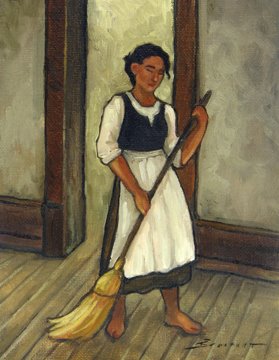
(Picture is Woman Sweeping the Floor, by Deb Schmit)

Famous Name: Kevin

29 Wednesday Feb 2012

Posted by A.O. in Famous Names

≈ 21 Comments

Tags

classic names, famous namesakes, international naming laws, Irish names, Mer de Noms, name history, name meaning, name perceptions, name popularity, name studies, saints names, The Name Station

Over at The Name Station, there is an article quoting two studies which demonstrate that Kevin is the worst possible name to have in Germany. For some reason, this name really gets up the noses of Central European schoolteachers and cyber-daters.

As it turns out, the Germans aren’t exactly Robinson Crusoe in this regard. According to Lou at Mer de Noms (niece of a Kevin), the French also look down their noses at the name Kevin, and say, Non, non, non! Across the Channel, Kevin is considered a chavvy (bogan) name, to the point where kev is a synonym of chav, innit?

And if we hop over the Pond, American TV shows such as Daria and South Park depict Kevins as either dumb jocks or disposable meaningless characters. Oddly enough, in the United States Kevin is disliked for the exact opposite reason as in Europe – far from being too lower-class and urban, Kevin is seen as too middle-class and suburban.

A persistent Internet rumour is that the name Kevin is banned in Mexico because it will lead to “teasing and ridicule”. Actually the Chihuahua state government forbids parents from using any non-Spanish name without a Spanish middle name, and for some reason, reporters always seem to use Kevin as an example, hence the confusion. That may say more about how the name Kevin is viewed by the reporters than how it is in Mexico.

Apparently vast tracts of the Northern Hemisphere are infected by an intense loathing of people named Kevin. Here, another group who has joined the We Hate Kevin Club is the Australian Labor Party Caucus, who on Monday morning voted against Kevin Rudd’s bid for the leadership, two votes to one. So much do they detest Kevin Rudd that they profess a preference to losing an election without Rudd than winning one with him.

Their vote in support of Julia Gillard is not so much a ringing endorsement of her leadership as it is a sign of their determination to vote for ABK – Anyone But Kevin.

Kevin Rudd was elected Prime Minister of Australia in a landslide victory in 2007, his supporters running with the slogan Kevin ’07. Soon his non-stop work ethic led to him being labelled Kevin 24/7, and his frequent diplomatic trips around the world Kevin 747. Some papers sneeringly called him Kevin 7-11 for catering to the public a little too readily, like a convenient corner shop, and rumour had it he was Kevin 007 – a double-agent leaking information that could damage his enemies.

However, his authoritarian work style and biting insults made him anything but loved by his Labor colleagues, who ousted him the minute his popularity slipped in the polls and replaced him with his Deputy, Julia Gillard. This was all done so quickly that Rudd supporters have some basis for seeing him as stabbed in the back, as happens so often in the workplace.

Since his dumping, there has remained the vague threat (or hope) that he would one day rise up and take back his power. When Julia Gillard’s own popularity plummeted to record lows, he suggested he might run for party leader (and thus Prime Minister).

Polls done in the lead-up to Monday morning’s ballot showed great public support for Kevin Rudd, with the majority of people preferring him to either Julia Gillard or Tony Abbot, the Opposition Leader. The Pro-Kevin lobby reached fever-pitch. He was treated like a rock star wherever he went, received messages from people all over the country in his support, and was proclaimed the People’s Prime Minister. However, the people’s support is useless without the support of your party. That’s politics.

Maybe the Germans, the French, the British, the North Americans, and possibly the Mexicans can’t stand Kevin, but it seems Australians are pretty okay with it. We elected a Kevin Prime Minister, even though Dame Edna Everage expressed some doubts about the idea (she was probably catering to the anti-Kevin prejudices of her chiefly British audience). And even though he’s gone, he was never voted out, and clearly a sizeable chunk of the population would like him back.

The media love the name Kevin as well – it’s so useful for catchphrases and headlines. Not only Kevin ’07, Kevin 24/7, Kevin 747, Kevin 7-11 and Kevin 007, but also in the headlines were Kevingate, The Kevinator, Good Heaven’s It’s Kevin, Kevin Heaven, Kevin in Heaven, A Kevinly Sign from Above, Knocking on Kevin’s Door, and Kevenge (an act of revenge committed by someone named Kevin).

Australians have never had problems with names of Irish origin (as the list of Famous Names is starting to make pretty obvious). Kevin is the Anglicised form of the Irish name Caoimhin, a form of the older Cóemgein, which can be translated as “gentle” or “handsome”. Saint Kevin is the patron saint of Dublin, and is sometimes called the Irish St Francis of Assisi for his love of animals and nature. According to legend, an angel turned up at his baptism and instructed that he should be called Kevin, which the bishop naturally felt obliged to go along with. Maybe Kevin truly is a name from heaven? (A more plausible tale is that his name was bestowed upon him by fellow monks in tribute to his sweet nature).

In Australia, Kevin is a classic name which has never left the charts since record-keeping began in 1900. It first joined the Top 100 in the 1910s, and peaked in the 1930s at #6. It remained a Top 100 name for nine decades until the early 2000s, when it just dipped out at #101. Currently it’s #154.

In Queensland, which is Mr Rudd’s home state, there were twice as many babies named Kevin last year than babies named Julia, his deposer. And I have noticed in the birth announcements how common Kevin is as a middle name for boys.

Are they being named after a father, an uncle, a grandfather … or a lost Prime Minister who may still return, like the once and future king? Rudd Redux?

NOTE: Kevin is a Top 100 name in at least nine different countries, two of which, France and the United States, supposedly despise it. Go figure. Maybe this whole anti-Kevin thing is a beat-up.

Saturday Sibset: The Children Born of Elvis and Silence

25 Saturday Feb 2012

Posted by A.O. in Sibsets in the News

≈ 8 Comments

Tags

African names, english names, famous namesakes, name meaning, Puritan names, Shona names, sibsets, unisex names, virtue names, vocabulary names, Zimbabwean names

Just as I began writing this article, Nameberry tweeted: Did you hear a name today you’d never heard before? Most days, my answer would be, Nope, pretty much the same old, but that day I could proudly say, Yes indeedy. Well actually I didn’t tweet back because I was too busy writing this, but I’m saying it now.

The Australia Day citizenship ceremonies are always a wonderful source for discovering new names. This is one where some of the childrens’ names were new to me, but the parents’ names were familiar. And yet it was the parents’ names that knocked me for six.

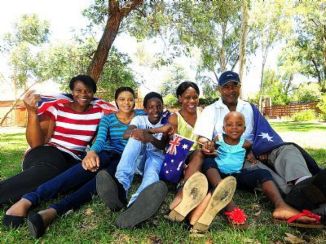
The Matanhire family moved here from Zimbabwe in 2006; they came from the predominantly Shona-speaking city of Mutare, whose name translates as “gold”. They started off in Melbourne, but are now happily settled in Adelaide.

The Matanhire family admit to being motivated by a spirit of adventure, loving to travel and see new places. Mrs Matanhire used to tour African countries as a nurse, educating other healthcare professionals about HIV and AIDS. When a relative who lived in Sydney told them how beautiful Australia was, it seemed like another adventure for them.

Mr Matanhire said becoming a citizen was like “taking a step into a new life”. “It feels very good, you feel like you can plan your life,” he said. Mrs Matanhire said becoming a citizen meant “you belong to the country; you belong to Australia”.

Elvis (aged 45): This is Mr Matanhire’s first name, which was covered as a Famous Name around the time of The King’s birthday anniversary. Once I would have thought this was too over-the-top for a regular person’s name, but now I actually love seeing it in general use. You pretty much assume the parents of anyone called Elvis were massive Presley fans, and this (rightly or wrongly) is how I am picturing Mr Matanhire’s mum and/or dad.

Silence (aged 41): Mrs Matanhire’s first name is a virtue name I saw covered at Names from the Dustbin. When I saw it, I admit to being quite horrified, because as a parent, the thought of your baby becoming completely silent is your worst nightmare. And as a Puritan name almost exclusively given to girls, it has connotations of women being forced into silence in an oppressive way. However, seeing it on an attractive, confident, well-travelled adult, who is clearly not being kept silent and in fact had to do a lot of talking as part of her career, I have softened a little. Now I can see a certain beauty in it, and it makes me think of the inner silence that comes through prayer and meditation.

Caroline (19): Usually the name Caroline doesn’t stand out in a family, but in this case it seems unusual compared to the others. Being the eldest born, I wonder if Caroline was given a family name.

Anesu (15): This is a Shona name which can be given to both boys and girls. For boys, it is the pet form of Isheanesu; for girls, the pet form of Anesuishe. In either case, it means “God is with us”. This Anesu is a boy.

Rumbidzai (4): A female name which means “praise”. I have read that it was originally a royal name, but don’t know if that’s correct. Rumbidzai was born in Australia, so is already a citizen.

Edret: Edret is Elvis’ sister who lives with the family; it’s possible she was the person who first suggested they come to Australia. Her name is a complete mystery to me, mostly because the Edrets I found online tended to be Hispanic men. Perhaps it is short for a longer name. Elvis and Edret make an impressive sibset.

Girls Names of Australian Aboriginal Origin

19 Sunday Feb 2012

Posted by A.O. in Name Themes and Lists

≈ 52 Comments

Tags

Australian Aboriginal names, famous namesakes, fictional namesakes, locational names, name history, name meaning

It is not difficult to find little lists of Aboriginal words that can be used as personal names, accompanied by their purported meanings; what is harder is to ascertain their origins. Even reliable baby name books are content to say that such-and-such a name comes from “an Aboriginal language”, without specifying which one. Often it seems that no-one knows: as languages became extinct, certain words and phrases were recorded for posterity, without any knowledge of which peoples the words were spoken by, and perhaps even without an understanding that there were different Indigenous peoples.

Historian Watkin Tench, a British officer who arrived on the First Fleet, noted that many Aboriginal names and words sounded pleasing and even familiar to the ears of English speakers, and recorded that the chaplain’s wife was so taken with the name of an Aboriginal woman she met named Milba that she christened her own baby, born in the new colony, Milba Maria Johnson.

It’s therefore not a new phenomenon for non-indigenous people to use words from Aboriginal languages as personal names, although some people may find the idea inappropriate or disrespectful. I’ve chosen names very conservatively, tending to pick out ones that are already in common use as personal names, as place names, or as business and organisation names.

You should also be aware that a word from one language may mean something completely different in another part of the country, so you may believe your child’s name means “desert flower”, but someone who speaks a different language may tell you that it means “swamp” or “elbow”. Hopefully it won’t be anything worse than those.

Names from Aboriginal languages tend to be easy for us to spell and pronounce. Because Aboriginal languages were not written down, they are now spelled exactly as they sound. The emphasis is placed very much as it is in familiar names, so that Kalinda is kuh-LIN-da, just like Amanda or Samantha. That could very well be due to European influence; I’m not sure.

This is my first Name List done under my resolution to rely on failed Google searches for blog entry ideas. “Aboriginal baby names” has been Googled many times to get to my blog, but I never felt that I knew enough about the subject to devote a blog entry to it. I still don’t know enough, but I now realise that waiting until I do know enough may mean never doing it at all.

Allira

This name is a corruption of the word allirea meaning “clear crystal quartz” and comes from the languages from around the Melbourne area of Victoria. There are extensive quartz supplies in the area around Melbourne, and Aborigines would have mined them for spear and knife edges. Quartz crystal was also used in rain-making ceremonies, and was both practical and spiritual in nature. However, in the language of the Arrernte people from Alice Springs, Allira means “niece”, and there is a character from legend with this name. Allira is not infrequently used as a brand name, which may be one reason why so many spelling variants exist for it: Alira, Allyra, Aleera, Aleerah, and so on. Another is probably to make the pronunciation clearer – uh-LEER-uh. Allira is commonly used as a girl’s name in Australia. Prominent people called Allira include glamour model Allira Cohrs, and surf Ironwoman Allira Richardson.

Bindi

Bindi is said to mean “little girl” in an Aboriginal dialect, and that is how it seems to be understood by Indigenous people, although I cannot discover what dialect it is from. Famous people with the name include Bindi Irwin, the daughter of conservationist Steve Irwin, and Aboriginal artist Bindi Cole. In the Nyungar language from the area around Perth in Western Australia, bindi bindi means “butterfly”, and I can imagine using just one of the bindis to make a name. There was a West Australian Aboriginal activist in the early twentieth century called Daisy Bindi, and her surname was taken from a nickname given to her by her husband. Something that usually crops up in relation to this name is that bindi, or bindii, is also the name of different types of noxious weed. These have nasty prickles that get stuck in your feet, and I presume it means “horrible spiky things” in some Indigenous language. These are an introduced species though, so the name of the plant only dates to the mid 19th century. Bindi isn’t an unusual name for girls to have in Australia.

Lowanna

In the Gumbaynggir language from mid-north New South Wales, this means “girl”. There is a village near Coffs Harbour called Lowanna. In one of the dialects from Tasmania, it meant “woman”. I have seen Indigenous people translate it as “beauty” or “beautiful woman”, but do not know which languages they are drawing upon. There was a school story for girls from the 1920s about a rich, worldly girl called Lowanna Laurenson who ends up working in films in America, and this may have brought the name to people’s attention. It’s a popular name for businesses and organisations, and is also a type of strawberry. A prominent person with this name is Lowanna Gibson, a figure skater from an Indigenous background, but I’ve seen quite a few Aboriginal girls and women with this name.

Kalinda

According to Australian Aboriginal Words and Place Names and Their Meanings by Sydney J. Endacott (1955), this word means, “See!”, as if someone is exclaiming at something they have espied and wish to draw other’s attention to it. Endacott’s little book is a pamphlet which lists all the words and their meanings, but doesn’t give any further information about them or their origins. Baby name books gloss it as “a lookout”, and some add with a touch of imagination, “a lookout over the sea”. It’s commonly used as a place name and organisation name, and is popular as a name for houses which have a nice view. A prominent person with this name is Kalinda Griffiths, who last year won the Northern Territory Young Australian of the Year Award. Kalinda is of part-Aboriginal heritage, and is carrying out research in Indigenous health. There’s also a left-wing writer called Kalinda Ashton.

Kirra

Kirra Beach is the name of a seaside suburb on the Gold Coast in Queensland, and kirra is said to mean either “leaf” or “boomerang” in a local language. According to The Australian Race by Edward M. Curr, kirra means “white cockatoo”; this is another book which gives lists of words and meanings, with no indication of which language or origin they are from. In the Murri language of southern Queensland, kirra means “to live”. This is a well used name in Australia, because it fits in so well with popular name such as Keira; Kirra-Lee is a common double name, and you can see how this fits in with Kirrily. Prominent people named Kirra include artist Kirra Jamison, and photographer Kirra Prendergast (both are from Byron Bay).

Maya

Maya (MY-uh) means “house, home” in the Jiwarli language of Western Australia’s Kimberley region. However, there are a number of similar words in other languages to denote some kind of hut or shelter, including maya or mia in Nyungar, and mya, mai, and mimi amongst the peoples of Victoria around Melbourne (often duplicated into maya-maya, mia-mia etc). It may help to explain why the names Maya and Mia are so popular in Australia – they have a native sound to our ears.

Merindah

This word means “beautiful”, and seems to be from one of the languages around the Sydney area, although I’m not sure which one. Apart from being used as a girl’s name, it is often used as a place name or name for businesses and houses as well. It sounds very similar to the name Miranda. It’s common to spell it Mirinda; however in the Kaurna language from the Adelaide area of South Australia, mirinda means “leech”. Prominent people named Merindah include Merindah Donnelly, who was nominated for NSW Young Australian of the Year for her work promoting social justice for Indigenous people, and photographer Merindah Bernoth.

Merri

Merri Creek is in southern Victoria and joins the Yarra River, which flows through the city of Melbourne. The point where the creek and river meet was traditionally an important meeting place for the Wurundjeri people, and it is thought to be where an important treaty between Indigenous Australians and Europeans took place. Unfortunately, this creek was very badly treated, and became heavily polluted, but efforts are now being made to turn things around, with some promising results. Its name comes from the local phrase merri merri, “very rocky”; the doubling of a word is usually an intensifier in Indigenous languages. Although the meaning is not particularly feminine, it sounds similar to the name Mary, and of course exactly like the English word merry. If you like the sound of Merry, but worry it seems too light and frivolous, Merri gives it a little more oomph. The pollution aspect I admit is not appealing, but things are changing, and it is a testament to the resilience of nature. Merri is a surprisingly tough little name.

Rianna

This means “small caterpillar” in a Tasmanian dialect. Caterpillars are important in the mythology of some Aboriginal cultures, because they are the precursor to the butterfly, which is seen as a soul of the departed. I haven’t been able to find out if they were especially important to the Tasmanians, but they may very well have been used as a food source. I haven’t seen anyone use Rianna in this way, but it seems to me an attractive name with a rather sweet meaning that isn’t too cutesy or pretty-pretty.

Tarni

Tarni-warra is an onomatopoeic word to describe the sound of the surf in the Kaurna language of South Australia. Tarni is therefore taken to mean “surf, wave, breaker”, and is often assumed to be one of the influences upon the name Tahnee. I can’t confirm that, but Tarni Warra is a common name for houses on or near the beach, and Tarni is used as a place and business name as well as a personal name. Prominent people named Tarni include ice hockey player Tarni Loreggian, and Tarni Carter who sings with rock band Radio Flyer, but it’s not difficult to find Australian women and girls with this name. It does not seem to be heavily used by Indigenous people.

Famous Name: Magda

15 Wednesday Feb 2012

Posted by A.O. in Famous Names

≈ 7 Comments

Tags

Aramaic names, famous namesakes, hebrew names, name history, name meaning, nicknames, saints names

Yesterday was Saint Valentine’s Day, a day for thinking about love and marriage, and for declaring your true feelings. It was the day that film and TV star Magda Szubanski chose to come out on national television and identify herself as “absolutely gay” to Channel 10’s The Project.

Although her family, friends and colleagues have known this for a long time, it has never before been made public knowledge. It was obviously something important that would make her decide to share this aspect of her life with the public after so many years, and in a statement to newspapers yesterday in support of Australians for Marriage Equality, Magda made an impassioned plea for gay marriage to be legalised.

“The law means that you could be a serial killer and have killed all of your spouses and yet you would still be considered fit to marry,” she said. “But if you are gay, then you are not worthy of these same rights.”

Her “coming out” comes a day after two separate bills to legalise same-sex marriage were introduced in federal parliament. Magda made it clear that she is currently single, and not expecting to get married any time soon.

Now aged fifty, Magda has been delighting audiences since her university days. A gifted comedienne, she created a number of memorable characters for television sketch shows such as ditzy sports reporter Pixie-Anne Wheatley, heavily made-up infomercial saleswoman Chenille, penny-pinching whiskey-swilling Scot, Mary Macgregor, and vile mother Lynne Postlethwaite.

On the popular sit-com Kath and Kim, Magda played netball nerd, Sharon Strzelecki, who was often the butt of her friend Kim’s jibes. As well as hosting several of her own shows, Magda has had roles in Hollywood films such as Babe, Happy Feet and The Golden Compass, and sci-fi TV show Farscape. The public have voted her Most Popular Comedy Personality three times at the Logie Awards, and she has won an AFI Award for her role on Kath and Kim.

In 2003 and 2004 she was voted the most recognisable Australian personality, which helped her become spokesperson for a number of companies, most recently, weight-loss company Jenny Craig, through which she lost 36 kg. Despite being overweight, she has always been a strong and energetic person who enjoys being active.

The Australian public love her for her quick wit, sense of fun, and lively personality, her enormous smile that lights up her face and her big loud infectious laugh. We love her most when she is unselfconsciously being herself, and Magda has been overwhelmed by the public support she has received since coming out yesterday.

Magda’s name is short for her full name Magdalene, which is the title of Saint Mary Magdalene. Mary Magdalene was a very important disciple of Jesus in the New Testament, and the only person privileged to first see the arisen Christ. The Catholic church places her on a short list of saints declared to be “equal to the Apostles”.

Traditionally, her name is said to mean that Mary came from the village of Magdala, which means “tower, fortress” in Hebrew. However, in Aramaic magdala means “high, great, magnificent”, so it’s possible her name was supposed to be “Mary the Great”. I have also seen the suggestion that the name was meant to denote that physically Mary Magdalene was taller than average.

Magda is a pet name commonly used in central and eastern Europe, and although she was born in England and her mum is Scottish, Magda’s father is from Poland, and was in the Polish Resistance during World War II.

Magda is a strong and beautiful name which has cultural ties to Europe, and honours one of the most prominent early Christian women. It also has the familiar nicknames Maddie and Maggie. However, like Edna and Ita, Magda Szubanski is very famous and has such a distinctive name that we would know her from her first name alone. Does her fame overpower the name, I wonder?

Short news report on Magda’s announcement:

Famous Names: Michael and Jane

04 Saturday Feb 2012

Posted by A.O. in Famous Names

≈ 9 Comments

Tags

angel names, english names, famous namesakes, hebrew names, name history, name meaning, name popularity, Old French names, saints names

It’s been a satisfying summer of test cricket for Australia, as we convincingly trounced India in all four matches. One nice thing is that we played on January 26, which is not only Australia Day, but also Independence Day in India, so we shared our national days.

One of the highlights was team captain Michael Clarke scoring a triple hundred, modestly declaring on 329, just a few runs shy of Don Bradman’s top score of 334. It was the 100th test match to be played at the Sydney Cricket Ground, and Clarke’s score was both the highest ever in an Australia vs India test series, and the highest ever at the SCG. He followed up the triple century with a double century in Adelaide.

The name Michael is from Hebrew, and is translated as “who is like God?” – a rhetorical question with the obvious answer of “No-one is like God”. It is therefore a symbol of humility. In the Bible, Michael is an archangel, and very important in both Jewish and Christian traditions. In the Old Testament, he is said to be the protector of Israel, and in the New Testament Michael is the leader of the angelic hosts who defeat Satan in a war in Heaven. Michael is also mentioned in the Koran.

Michael is venerated as a saint in the Roman Catholic and Eastern Orthodox faiths; he is a patron of the military and also the sick and suffering. Some Protestant denominations believe he is identical with either Jesus or Adam. He has made a number of apparitions, including, according to legend, at St Michael’s Mount in Cornwall, and Mont Saint Michel in Normandy.

Michael has long been popular in Ireland (it’s currently #12 there), and considered to be a typically Catholic name – so much so that Mick is disparaging slang for a Roman Catholic of Irish descent.  We also say taking the Mickey or taking the mick, which is Cockney rhyming slang from “Mickey Bliss” ie “taking the piss” (to tease or mock).

Michael is a classic name which has never been out of the Top 100. It was #44 in the 1900s, reached its lowest point in the 1920s at #66, peaked in the 1970s at #1, and is currently #38.

Unbelievably, as Michael Clarke hit his record-breaking triple century, he had no sponsorship on his bat, having just been dumped by a cash-strapped Dunlop Slazenger. The only markings on his bat were promotional stickers for Jane McGrath Day, or Pink Stumps Day.

Jane McGrath was the first wife of former cricket player Glenn McGrath; an English air hostess prior to marriage, she became an Australian citizen on Australia Day 2002. That was the same year she and Glenn founded the McGrath Foundation to raise money for breast cancer. She died in 2008 after battling breast cancer for more than a decade; she was 42 years old.

The McGrath Foundation has raised more than $12 million, and the third day of the first test match at the SCG each year is Jane McGrath Day. The stands are filled with tens of thousands of fans wearing pink to show their support, many guys sporting Real Men Wear Pink signs, and over a million dollars is expected to be raised by cricket clubs.

Jane is a feminine form of John, an Anglicisation of Old French Jehanne. Although in use since the Middle Ages, it only became the standard form in the 17th century after being taken up by the aristocracy; until then, Joan was the more common name. Plain Jane is 20th century slang for an average or ordinary looking woman, which must have irritated many a Jane over the years.

Jane peaked in the 1960s at #33, was out of the Top 100 by the 1990s, and quite recently dropped off the rankings altogether. Its real success is probably as a middle name.

Note: Michael Clarke later gained sponsorship by a little-known sporting goods company from Wollongong named Spartan.

Famous Name: Bob

31 Tuesday Jan 2012

Posted by A.O. in Famous Names

≈ 4 Comments

Tags

celebrity baby names, famous namesakes, name meaning, name trends, nicknames, palindromic names, vocabulary names

Last Sunday, Father Bob Maguire said his final mass at the church of Sts Peter and Paul’s in South Melbourne. At the age of 77, after nearly 40 years of service, he was forced to leave by the Catholic Church, which quotes canon law stating the official retirement age for priests is 75. He and his black standard poodle, Franklin, are temporarily homeless. At 77, Barry Humphries is awarded UK Australian of the Year; at the same age, Father Bob gets the boot.

Father Bob Maguire is one of the most famous and popular Catholic priests in Australia, and has devoted his life to helping others. His compassion, mischievous humour, bluntness, and eccentricities have made him loved by people from all religions, and none.

He has founded four charities, now amalgamated into the Father Bob Maguire Foundation, and inspired by a revolutionary approach to social justice. The Foundation’s workers are called The Bob Squad, and they care for the poor, the destitute, the homeless, and the mentally ill. Their catch cry is Viva la Bob!

Father has received an Order of Australia, and last year was named Victorian of the Year. Everyone thinks he’s super, except, apparently, the Catholic Church. Despite his massive popularity, Bob believes that the powers that be in the church hierarchy find him too much of a headache, because he has an unconventional approach to parish life which had him branded a maverick.

Some reasons the Church may have felt teased by Father Bob:

  • He put up a memorial on the parish front lawn to people who had died from drugs
  • He didn’t lock the church, because no matter how much stuff got stolen, he wanted it to be always available
  • People with mental illness or social problems were welcomed to church services
  • The collection plate was taken up by kids on roller skates
  • He gave the Occupy Melbourne protesters sanctuary
  • He said he would be happy to perform gay marriages in the church if that was legal
  • He publicly disagreed with the church’s ruling that secular songs not be permitted at Catholic funerals
  • Last year as an April Fool’s Day joke, he claimed that his church would be instituting “drive through confessionals” in order to keep pace with modern life
  • He has co-hosted a non-denominational religious TV programme with slightly controversial Jewish comedian John Safran
  • He finds parallel universes much more interesting to think about than life after death
  • When asked what Jesus might do if he were alive today, he quipped, “Get back in the tomb”

More than 1000 people attended Father Bob’s last mass, and many of them will not come to church again, because only Father Bob could make sense of it all for them. However, although he no longer has a church, he sees his Foundation as a “parish without borders”, and is also reaching people through his website, blog, Twitter, and his weekly radio spot on youth radio station Triple J.

I don’t presume to the theological qualifications which can judge whether Father Bob is a good Christian or not, but I do know he is a great Australian. And that (for the purposes of this blog) is more important.

Bob is a pet form of the name Robert, meaning “bright fame”. The old-fashioned nicknames for Robert were Hob, Dob and Nob, and Bob is a continuation of this trend to rhyme a name with others.

Bob is not only a palindrome, but also a vocabulary word. To bob means to “to move up and down”; it’s also the name for a short haircut, and pre-decimal slang for “a shilling” – a word still used by many older folk.

It’s well on trend as part of the vogue for 1930s nicknames, such as Bill, Joe, Sid, Dan and Jim. Knowing they will never call their child by a full form of the name, and loath to saddle them for life with a cutesy name like Billy, Joey or Danny, parents are opting for the simple monosyllabic nickname as an unpretentious choice.

As a middle name, Bob has even been used on a celebrity baby – name-fussy radio host Hayley Pearson called her son Austin Bob.

Waltzing with … Skyler

29 Sunday Jan 2012

Posted by A.O. in Waltzing with ...

≈ 5 Comments

Tags

American names, celebrity baby names, Dutch names, famous namesakes, fictional namesakes, name combinations, name history, name meaning, name popularity, name trends, nicknames, sibsets, surname names, UK name popularity, unisex names, US name popularity, US name trends

4c86fe452cad39ae2f1075e407eda5e1

This post was first published on January 29 2012, and heavily revised on February 10 2016.

Tomorrow school goes back in three different states and territories (Queensland has already been back a week), which means that the summer holidays are drawing to a close. I chose this name as suitable for the start of term, thanks to its educational meaning.

Name Information
Skyler is a variant of Schuyler; a Dutch surname of German origin meaning “scholar”, said SKIE-luh. This name was brought to what is now the United States by Dutch colonists, who settled in the east during the 17th century.

The Schuylers were a prominent New York family. Pieter Schuyler was the first mayor of Albany in New York, and a commander of the British forces at the Battle of La Prairie, near Montreal. His descendants were numerous and distinguished, including his grand-nephew Philip Schuyler, who was a general in the American Revolution and Senator for the state of New York. It is said that the first use of the names Schuyler and Skyler was in honour of this family.

Schuyler has only appeared on the US Top 1000 a smattering of times. It shows up first at the beginning of the twentieth century, and then again between the mid 1980s and mid 1990s, only charting as a male name, and never getting higher than the bottom of the Top 1000. Currently Schuyler is almost equally given to both sexes in the US – 17 girls and 15 boys last year.

Famous people with the name include Schuyler Colefax, the 17th US Vice-President, who was a distant cousin of Philip Schuyler, and Schuyler Wheeler, inventor of the electric fan. Schuyler has been chosen as a baby name by actors Michael J. Fox and Sissy Spacek – both times for daughters. The name is barely used outside the United States, and pronunciation would be a puzzle to most.

During the 1940s and 1950s there was a popular American radio and television series called Sky King, about an Arizona rancher and pilot called Schuyler “Sky” King. During the 1950s, the spelling variant Skyler begins showing up in the data. It’s tempting to imagine that people tuned into the show, and began spelling the name as it sounded, or in such a way as to make the nickname Sky more obvious.

Skyler joined the US Top 1000 in 1981 for boys, and for girls in 1990 – it began showing up in data as a girls name in the late 1970s, so it had a brisk rise as a girls name. Skyler peaked for boys in 1996 at #217, and is currently #351. For girls, it peaked in 2000 at #250, and is currently #302.

Famous Skylers include Skyler Green, a footballer who played for the Dallas Cowboys in the NFL, and actress Skyler Samuels, who played Gigi on Wizards of Waverley Place. A fictional Skyler is Skyler White from the TV series Breaking Bad, played by Anna Gunn. Fashion stylist Rachel Zoe has a son named Skyler.

In the UK, Skyler has charted for boys and girls since the late 1990s. Currently it is #406 for girls, while in 2014, there were 13 boys named Skyler. It is rising rapidly for both sexes.

Rising alongside Skyler is the variant Skylar. While it has never been higher for boys in the US than the 300s, and is currently #635, it is Top 100 for girls, being #48 and rising. A famous namesake is American singer and songwriter Skylar Grey, born Holly Hafermann – her stage name a reference to mysterious “grey skies”.

In the UK, Skylar is #212 for girls and rising steeply. It is occasionally used for boys, and in 2014 there were 5 baby boys named Skylar.

There are also spelling variants of Skyler/Skylar which are specifically feminine. Skyla is #531 in the US, #156 and rising in the UK, and in 2012 made the Top 100 in New Zealand. It is much more popular than Skylah, but that is rising rapidly as well.

Skyla and Skylah are much more common in Australia than any other spellings of Skyler, and the numbers in the UK and New Zealand suggest that this spelling makes the most sense for someone with a British/Commonwealth accent. I estimate that if Skyla and Skylah were added together, the name would be in the Australian Top 100 by now, or very close to it, while other spelling variants are extremely rare for either sex.

You can see that if all the different spellings of Skyler were added up, it would be an extremely common name in the English speaking world. So Skyla or Skylah may not be an original choice for girl, but a boy named Skyler would stand out in Australia. Some of the other spelling variants would be worth considering, although I think Schuyler will cause more problems than it is worth.

By now this name has become almost completely divorced from its true meaning, and we now connect it with such things as clear or cloudy skies, free-wheeling flight, and the wild blue yonder. The obvious nicknames are Sky and Skye, and it fits in with names like Shyla, Myla, Kayla, Kai, and Tyler. Its sound is at least part of the reason for its success.

POLL RESULTS
As a girl’s name Skyler received an approval rating of 52%. 38% of people thought it seemed okay, although only 5% of people actually loved it.

Skyler had a lower approval rating as a boy’s name, at 46%. 28% disliked Skyler on a boy, and only 4% loved it.

The favoured spelling of the name was Skyler, with 37% of the vote, although Schuyler was not far behind on 33%. The least popular was Skyla, which only one person voted for.

(Photo is of the NSW Schoolhouse Museum of Education in Sydney)

Famous Name: Edna

28 Saturday Jan 2012

Posted by A.O. in Famous Names

≈ 14 Comments

Tags

Biblical names, famous namesakes, fictional namesakes, hebrew names, Irish names, mythological names, name history, name meaning, name popularity, saints names

Each year on Australia Day, an Australian of the Year is chosen from amongst our highest achievers. The United Kingdom also chooses its own Australian of the Year, and we seem to send them so many people that there are plenty to choose from.

This year the winner was Barry Humphries, who, at the age of 77, accepted his award with the words, “It’s about time, really”.

Barry Humphries has created many comedy characters: vulgar Sir Les Patterson; gentle Sandy Stone; underground film-maker Martin Agrippa; sleazy trade unionist Lance Boyle; and failed tycoon Owen Steele, amongst others. But the most famous and successful is Dame Edna Everage.

Edna began in the 1950s as the average Melbourne housewife, and if she had stayed that way, would soon have become as quaint and irrelevant as a comic char or a music hall “turn”. The genius of Dame Edna is that she has continued to re-invent and update herself, whilst never losing the integrity of the character or even the back-story which accompanies her.

From her humble beginnings, she has evolved into a glamorous Gigastar, icon and diva in an ever-more extravagant wardrobe , while retaining the trademark wisteria-coloured hair, cats-eye spectacles, bunches of gladioli and cheery “Hello, possums!” greeting.

I feel her evolution owes a certain debt to Lady Thatcher at the the height of the powers – in particular the almost limitless self-confidence and meaningless charm, combined with an iron determination to remain “nice”.

Edna is a vehicle for Humphries to utilise his powers of satire against the cult of celebrity and modern vapidity, but also to make sly jests at the expense of his friends, and take gentle stabs at his enemies; sometimes, perhaps, even to slip in his real opinions on issues that he only dares to offer in the guise of Edna. As a result, you are never quite sure what Edna will say, and this glittering unpredictability is part of her fascination. It goes without saying that many of her sharpest barbs are aimed accurately at Australia.

Barry Humphries called his creation Edna after his childhood nanny, and Everage of course is the word average said in an Australian accent (or at least an Australian accent of the 1950s). Edna peaked in the 1910s in Australia, so in the 1950s she was supposed to be middle-aged, although by now the name sounds elderly – in fact, Edna must be nearing a century by now.

Edna is the name of several women in the Biblical apocrypha, including the wife of Methusaleh. It’s a Hebrew name translated as “pleasure”, and some believe the name for Eden comes from the same source, as if it was one of the “pleasure gardens” of the ancient Middle East.

However, in Ireland it has been used to Anglicise the name Edana; St Edana is an obscure saint from the west of Ireland. She may be linked to or named after a goddess called Eadaoin (AY-deen), and although it’s not at all certain, this name may be a feminine linguistic relative of Aidan.

In Australia, the Edana connection is far more likely as a source for Edna, as obscure Irish names are more common here than obscure Biblical ones.

Call me crazy, but I think if it wasn’t for La Grand Dame, Edna could be coming into vogue now, as others from her era have. It’s not too different from Edith, Edie and Eden, which are getting quite fashionable, it may be related to popular Aidan, and could ride on the back of Ed- male names, such as Edward and Eddie.

I won’t try to suggest Edna, but could I interest anyone in an Edana?

← Older posts
Newer posts →

Enter your email address to follow this blog

Categories

Archives

Recent Comments

A.O.'s avatarwaltzingmorethanmati… on Zarah Zaynab and Wolfgang…
Madelyn's avatarMadelyn on Zarah Zaynab and Wolfgang…
JD's avatardrperegrine on Can Phoebe Complete This …
A.O.'s avatarwaltzingmorethanmati… on Rua and Rhoa
redrover23's avatarredrover23 on Rua and Rhoa

Blogroll

  • Appellation Mountain
  • Baby Name Pondering
  • Babynamelover's Blog
  • British Baby Names
  • Clare's Name News
  • For Real Baby Names
  • Geek Baby Names
  • Name Candy
  • Nameberry
  • Nancy's Baby Names
  • Ren's Baby Name Blog
  • Sancta Nomina
  • Swistle: Baby Names
  • The Art of Naming
  • The Baby Name Wizard
  • The Beauty of Names
  • Tulip By Any Name

RSS Feed

  • RSS - Posts

RSS Posts

  • Celebrity Baby News: Melanie Vallejo and Matt Kingston
  • Names from the TV Show “Cleverman”
  • Can Phoebe Complete This Sibset?
  • Zarah Zaynab and Wolfgang Winter
  • Baby, How Did You Get That Name?
  • Celebrity Baby News: Media Babies
  • Celebrity Baby News: Adelaide Crows Babies
  • Celebrity Baby News: Chris and Rebecca Judd
  • Names at Work: Name News From the World of Business and Employment
  • Celebrity Baby News: Sporting Round Up

Currently Popular

  • Celebrity Baby News: Bernard Fanning and Andrea Moreno
  • Celebrity Baby News: Toby Allen and Darren Weller
  • Celebrity Baby News: NRL Babies
  • Famous Name: Humphrey
  • The Top 100 Names of the 1940s in New South Wales

Tags

celebrity baby names celebrity sibsets english names famous namesakes fictional namesakes honouring locational names middle names name combinations name history name meaning name popularity name trends nicknames popular names saints names sibsets surname names twin sets unisex names

Blog at WordPress.com.

Privacy & Cookies: This site uses cookies. By continuing to use this website, you agree to their use.
To find out more, including how to control cookies, see here: Cookie Policy
  • Subscribe Subscribed
    • Waltzing More Than Matilda
    • Join 517 other subscribers
    • Already have a WordPress.com account? Log in now.
    • Waltzing More Than Matilda
    • Subscribe Subscribed
    • Sign up
    • Log in
    • Report this content
    • View site in Reader
    • Manage subscriptions
    • Collapse this bar
 

Loading Comments...