• About
  • Best Baby Names
  • Celebrity Baby Names
  • Celebrity Baby Names – Current
  • Celebrity Baby Names – Past
  • Featured Boys Names
  • Featured Girls Names
  • Featured Unisex Names
  • Links to Name Data
  • Waltzing on the Web

Waltzing More Than Matilda

~ Names with an Australian Bias of Democratic Temper

Waltzing More Than Matilda

Tag Archives: Latin names

Girls Names from the Top 100 of the 1940s

01 Sunday Mar 2015

Posted by A.O. in Name Themes and Lists

≈ 10 Comments

Tags

animal names, aristocratic names, Biblical names, classic names, colour names, controversial names, created names, dated names, english names, fictional namesakes, French names, gemstone names, German names, Greek names, hebrew names, Latin names, middle names, mythological names, name history, name meaning, name popularity, nature names, nicknames, plant names, rare names, retro names, royal names, saints names, Spanish names, underused classics, unisex names, vocabulary names

029692

These are names of babies born during World War II, and the first baby boomers, born in the years just after the war. If you are an older parent, your own mother might have been born in this decade, while young parents may see 1940s names as “grandma” names. For those wanting a name that’s ahead of the curve, there are rich pickings from this time period.

Coral
Coral is a gemstone made from the polished shells or exoskeletons of coral polyps – originally, and typically, Corallium rubrum, from the Mediterranean. Because this species has a pink or red colouring, the word coral also refers to a pinkish colour. The ancient Romans believed coral would protect children, and it was common for baby toys and teething rings to be made from coral, even in the 19th century. Coral jewellery has been worn since prehistoric times, although it was the Victorian era which made coral fashionable. Today, with greater awareness of the environmental impact of harvesting coral, many jewellers will no longer sell coral items, and consumers are urged to boycott jewellery made from coral. The name Coral was #194 in the 1900s, and joined the Top 100 in the 1930s. It peaked in the 1940s at #79, left the Top 100 the following decade, and was off the charts by the 1980s, perhaps partly due to growing environmental concerns. Leaving aside the gemstone, you could see this name as a way to celebrate our beautiful coral reefs, and marine environment.

Daphne
In Greek mythology, Daphne was a naiad; a nymph of fresh water, and daughter of a river god. Acording to legend, she was so beautiful that the god Apollo pursued her. Just as he was about to catch her, she pleaded with her father to help her, and he turned her into a laurel tree – Daphne literally means “laurel”, and it’s also the scientific name for the plant. The laurel became sacred to Apollo, and wreaths of laurel were traditionally given to those who had achieved victory. The name Daphne has been use since the 18th century, when classical names became fashionable, but only became common in the 19th, because of the interest in botanical names. Daphne was #82 in the 1900s, and peaked in the 1920s at #22. It was #76 in the 1940s, left the Top 100 the following decade, and was off the charts by the 1970s. Recently it been in the charts again, and is around the 300s. Charming retro Daphne makes a distinguished choice, not a daffy one.

Frances
Feminine form of Francis, often given in tribute to St Francis of Assisi, although St Frances of Rome provides a medieval female saintly namesake. The name was commonly used by the British aristocracy, with examples such as Frances Cobham, a close friend of Elizabeth I, and Frances Grey, the mother of queen-for-nine-days Lady Jane Grey. The great Restoration beauty Frances Stewart, Duchess of Richmond and Lennox, drove King Charles II batty with desire, but she refused to become his mistress. Her lovely face was used as the model for Brittania on coins, medals, and statues, and can still be seen today. In common use since the 16th century at least, Frances is a classic name which has never disappeared from the charts. It was #52 in the 1900s, and peaked in the 1940s at #47, leaving the Top 100 in the 1970s. It sank into obscurity in the late 2000s, but had a boost at the start of this decade which saw it move into the 500s, and is now around the 200s. More solid than Francesca, Frances is a quiet achiever which gets royal glamour from being the middle name of Diana, Princess of Wales, and offers the cool nickname Frankie.

Irene
From the Greek Eirene, meaning “peace”. In Greek mythology, Eirene was the personification of peace, depicted as a beautiful young girl carrying symbols of plenty. Another mythological Eirene was a daughter of Poisedon. The name was in use in ancient Greece, and one Eirene was a famous artist. There are a number of saints named Irene, with Irene of Thessalonica martyred with her sisters Love and Purity, so personifications of theological virtues. Originally more popular in eastern Christianity, it was the name of a Byzantine Empress, and has been used by European royalty. The name was originally pronounced e-REE-nee, but is usually said IE-reen now. Irene is a classic name which has never left the charts. It was #19 in the 1900s, and peaked the following decade at #17. It was #56 in the 1940s, and left the Top 100 in the 1960s. It reached its lowest point in the late 2000s at #684, and since then become more popular, perhaps because it’s been used for several fictional characters in the past few years. Currently it’s around the 400s. This is a hip, underused classic with a lovely meaning.

Lois
In the New Testament, Lois was the pious grandmother of Saint Timothy. It’s not known what the name means: it may be from the Greek meaning “more desirable, more agreeable”, and understood as “the most beautiful, the best”. However, as Lois was Jewish, it could be an attempt to Hellenise a Hebrew name. Lois is also a male name – an Occitan and Galician form of Louis. The female name Lois has been in use since the 16th century, and was used by Puritan families. Lois Lane, Superman’s love interest, has given the name publicity for many decades, but more recently it has become a “mum name” on TV, with Lois Wilkerson from Malcolm in the Middle, and Lois Griffin from Family Guy. Lois joined the charts in the 1910s, debuting at #181. It joined the Top 100 in the 1930s, when it peaked at #84, and was #93 in the 1940s. It left the Top 100 the following decade, and was off the charts by the 1970s. Soft sounding Lois would make an interesting alternative to popular names such as Eloise.

Marlene
German name combining Maria/Marie and Magdalene, so it commemorates Mary Magdalene from the New Testament, the chief female disciple of Jesus Christ. The German pronunciation is mahr-LE-nuh, but it is often said MAHR-leen in English. The name became well known in the English speaking world because of iconic German-American film star Marlene Dietrich, whose real name was Marie Magdalene. The name Marlene rocketed into the Top 100 from nowhere in the 1930s when Dietrich became a star after appearing as the uberdesirable Lola Lola in Josef von Sternberg’s movie The Blue Angel. It both debuted and peaked at #63 in the 1930s. The name Marlene was #68 in the 1940s, when Dietrich did valuable war work, such as performing for the troops and raising war bonds. By the 1950s, when Dietrich became a cabaret star, the name Marlene had left the Top 100. It left the the charts in the 1980s, when Dietrich’s career was over. Despite being a dated name which spiked in popularity only briefly, Marlene still seems glamorous and sexy, fitting in with modern names such as Marley and Elena.

Pamela
Created by Sir Philip Sidney for his 16th century epic, the Arcadia; in the story, Pamela is an attractive main character. It is usually thought that Sidney based the name on the Greek for “all sweetness”. The name was given publicity by Samuel Richardson’s best-selling 18th century novel, Pamela, where a lovely teenaged maidservant is threatened with rape by her employer, but she successfully resists him, and is rewarded for her virtue by being allowed to marry him. Not only are there so many things wrong with that sentence, it was apparently based on a true story. Pamela was originally pronounced pa-MEE-luh, but PAM-eh-luh is more usual now. Pamela has been used since the 17th century, and an early namesake was Lady Edward Fitzgerald; although her real name was Stephanie, she named her eldest daughter Pamela. Pamela joined the charts in the 1910s, debuting at #310, and peaked in the 1940s at #9. It left the Top 100 in the 1970s, and hasn’t been on the charts since the early 2000s. This is an elegant literary name which is dated, but still seems very usable.

Ruth
In the Old Testament, Ruth was the loyal widowed daughter-in-law of Naomi, who famously offered to follow her mother-in-law wherever she went. Naomi married Ruth to one of her relatives, who called Ruth a “noble character”; she is one of the nicest people in the Bible, blessed with a loving spirit. Her name comes from the Hebrew ru’at, meaning “friend, companion” – it seems chosen for the story, as she was such a good friend to Naomi. Ruth is also an English word meaning “mercy, compassion” – it’s one of those words which only seems to be used in its negative form, as we often describe people as ruthless, but rarely ruthful. Ruth has been in common use throughout the modern era, and is a classic name which has never left the charts. It was #66 in the 1900s, and peaked in the 1920s at #41. It was #58 in the 1940s, and left the Top 100 in the 1970s. It’s currently around the 500s. An underused classic with two lovely meanings and a sweet namesake, this is a great name. After all, you can’t spell truth without Ruth!

Thelma
Popularised by Marie Corelli’s 1887 novel Thelma; in Corelli’s romance, Thelma is an enchantingly beautiful, snow-pure Norwegian princess who marries an English nobleman. The name Thelma had been in use since at least the 18th century, but the meaning is not known. One theory is that it is based on the Greek word thelema, meaning “will”, but there is no evidence to support it. It may be a variant of Selma, since Selma is a common name in Scandinavia even today, and Thelma was used in Norway before the novel was published. The name Thelma was also used in Spanish-speaking countries before Corelli’s novel, and Anselma (the long form of Selma) is a Spanish name. Thelma was #18 in the 1900s and peaked the following decade at #9. It was #96 in the 1940s, left the Top 100 by the following decade, and was off the charts by the 1970s. With the name Selma now receiving a boost from the film, could its clunky sister Thelma be in with a chance?

Valerie
English form of the French name Valérie, from the Latin name Valeria, the feminine form of Valerius, meaning “strong, healthy”. It comes from the same source as the name Valentine. St Valerie was a legendary French saint who was martyred by beheading, then went for a walk carrying her head. This was a popular thing for French saints to do in medieval legends, so the name Valerie got quite a boost. Valerie is a classic name which has never left the charts. It was #180 in the 1900s, and joined the Top 100 the following decade. Peaking in the 1930s at #12, it was #38 in the 1940s. It left the Top 100 in the 1960s, and has remained in uncommon use. It had a small boost at the start of this decade, when it was in the 400s. Valerie is a classic with a rather luscious feel to it. It makes a great middle name too.

POLL RESULTS
People’s favourite names were Daphne, Coral and Frances, and their least favourite were Marlene, Thelma, and Pamela.

(Picture shows members of the Women’s Auxiliary Air Force working on a RAAF plane; photo from the Australian War Memorial)

Waltzing With … Anna

08 Sunday Feb 2015

Posted by A.O. in Waltzing with ...

≈ 1 Comment

Tags

Anglo-Saxon names, aristocratic names, Biblical names, British names, classic names, Disney names, Disney princesses, Etruscan names, European name popularity, famous namesakes, fictional namesakes, Greek names, hebrew names, Irish names, Latin names, mythological names, name days, name history, name meaning, name popularity, names from films, names of cakes, popular names, Roman names, royal names, unisex names

Pavlova RM90_01

Famous Namesake
On Thursday February 12, it will be the 134th birthday of the Russian prima ballerina Anna Pavlova. At a time when the rules of classical ballet were rigidly enforced, the dainty Anna performed in a graceful, romantic style, with less emphasis on precision and acrobatics. The principal artist with the Imperial Ballet and the Ballets Russes, she formed her own company and became the first ballerina to tour as an international star.

It was during one of her tours to Australia and New Zealand in the 1920s that Anna Pavlova would be honoured with the creation of an iconic Australasian dish, and in the process spark a rivalry between the two Trans-Tasman nations, who both claim it as their national dessert.

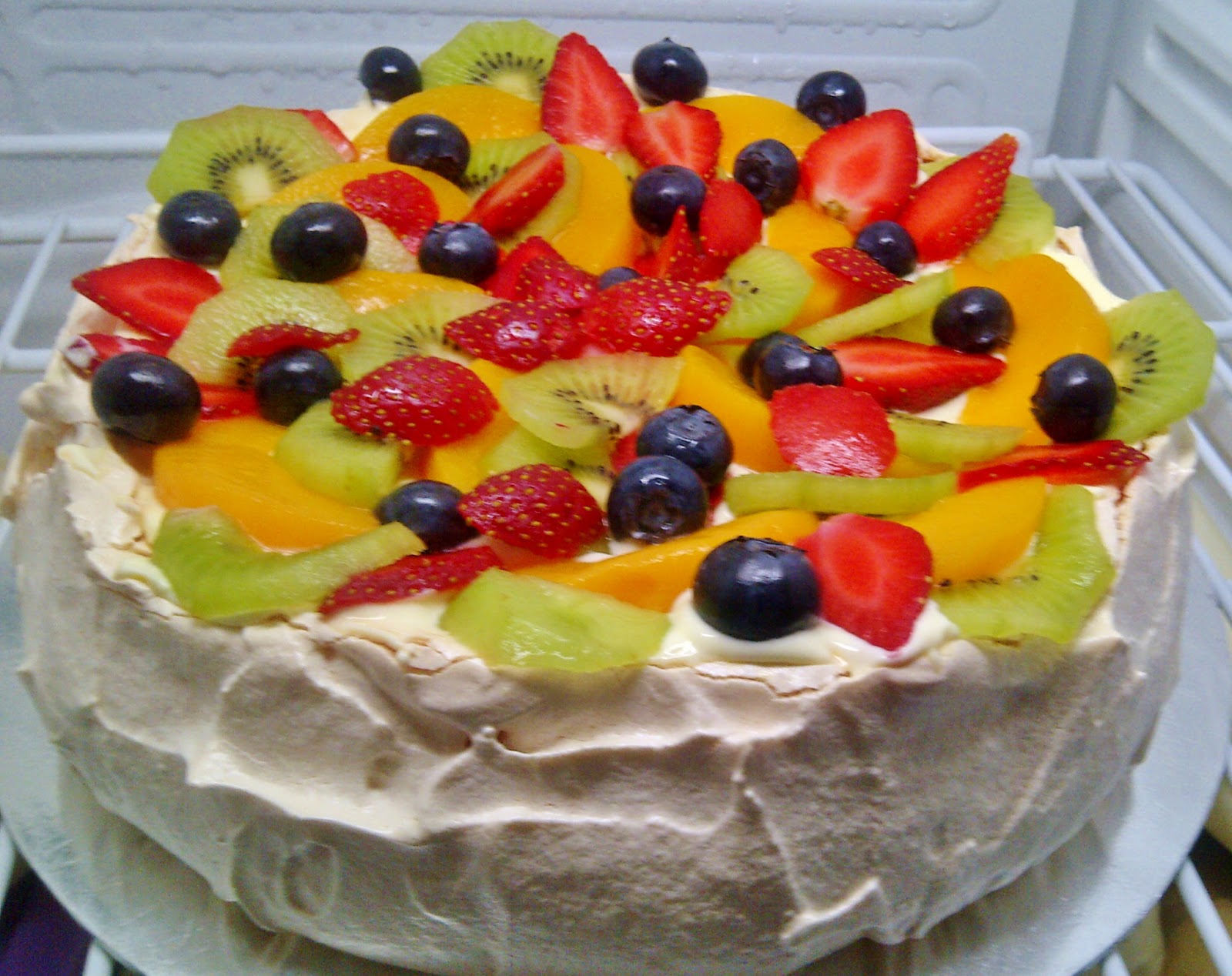
A pavlova is a meringue cake which has a crisp outer shell, and a soft marshmallow-y filling; a delectable, sweet, melt-in-your-mouth treat which is traditionally smothered in whipped cream and fresh summer fruit. Supposedly, the fragile pavlova was inspired by light-as-air Anna Pavlova, with its meringue casing designed to emulate the soft folds of her white ballet skirt.

Both New Zealand and Australia have some rather dubious stories as to how the pavlova first came to be made and named, but indefatigable research by a New Zealand food historian shows that it definitely originated in New Zealand, with a 1929 recipe being found in a New Zealand magazine. Meanwhile, it didn’t make an appearance in Australia until the early 1930s. So New Zealand gets the honours for inventing the pavlova, although it really does feel as if Australia has embraced the pavlova more heartily – it is a favourite choice to celebrate Australia Day.

I always have a pavlova for my Name Day cake: it not only reflects my name, Anna, but is perfect for a hot summery February Name Day. It’s also very appropriate, because my dad is from New Zealand and my mum born in Australia, so it symbolises the two countries coming together.

Name Information
Anna is the Latinised Greek form of the Hebrew name Hannah, meaning “favour, grace, graciousness”, sometimes translated more freely as “God has favoured me”, or “the grace of God”. The New Testament uses the Greek form Anna, in contrast to the Old Testament Hannah.

The Gospel of Luke tells of Anna the Prophetess, an old widow perhaps more than a century in age, who was very devout, and spent all her time fasting and praying. At the Presentation of Jesus in the Temple, celebrated as Candlemas in early February, she immediately recognised the infant Jesus as the redeemer, and gave thanks to God for having been allowed to see Jesus in her lifetime. Despite having a walk-on role in the Gospels, Anna is recognised as a saint.

According to Christian legend, the mother of the Virgin Mary was also named Anna (or Hannah), but she is usually referred to as Saint Anne in order to avoid confusion with Anna the Prophetess. The use of the name Anna was inspired by Saint Anne rather than the aged prophetess.

In classical mythology, Anna was the sister of Dido, Queen of Carthage; she appears in Virgil’s Aeneid. According to the poet Ovid, this Anna was the same being as the Roman goddess Anna Perenna, whose name refers to the “circle of the year” (per annum, in Latin). Her feast day marked the first full moon of the year, and people offered sacrifices so that the year should be successful.

Ovid relates that Anna escaped from Carthage to Italy, where she accidentally drowned and became a river nymph – he translated her name as meaning “perennial stream” (amnis perennis). Ovid says that the goddess was a tiny old woman who baked cakes, and that crude jokes and songs were sung at her festivals. She may have been a mother goddess, and originally Etruscan – if so, her name might be from the Etruscan nanas, meaning “to bear, to beget (a child)”.

Another mythological Anna is the half-sister of King Arthur, usually referred to as Morgause; in many stories she bears Arthur a son, to his downfall. Morgause seems to be a title, meaning “of the Orkneys”, so Anna would have been her personal name.

It may be that she is based on the Irish goddess Anu, sometimes called Ana or Annan. One possibility is that Anu is another name for the mother goddess Danu/Dana, while the war goddess the Morrigan was sometimes called Anand. The British had a winter storm goddess that they referred to as Gentle Annie or Annis, apparently from terror of her hideous powers (this is another link with the name Agnes in Britain). The name is speculated to come from the ancient Celtic anon, meaning “deity, spirit”.

While we’re looking at the name Anna in different cultures, it is worth mentioning that it is also a man’s name, because Anna (or Onna) was an Anglo-Saxon king. One theory is that his name was a nickname for Ethelmund, meaning “noble protection”, or one of the other Ethel- names. Don’t ask me how Anna is short for Ethelmund!

The name Anna has been in common use in the west since the Middle Ages, and has historically been more popular in Eastern Europe and Scandinavia, where it was used by the nobility. It was traditional in the Russian royal family, and the 18th century Empress Anna of Russia was a nasty piece of work. Apart from Anna Pavlova, another famous Russian Anna is the beautiful Anna Karenina, title character of the tragic novel by Leo Tolstoy, considered one of the greatest works of fiction ever written.

Anna is a classic name which has never left the charts. It was #208 in the 1900s, and sunk to its lowest level in the 1920s at #353. After that, it began climbing and joined the Top 100 in the 1950s at #89. The rise into popularity may have been influenced by the 1948 film version of Anna Karenina, starring Vivien Leigh, and helped along by the 1956 film The King and I, with Deborah Kerr in the role of Anna. These movies probably helped give Anna a touch of exoticism.

The King and I was based on the Broadway musical of the same name, in turn based on the book Anna and the King of Siam by Margaret Landon, from the memoirs of Anna Leonowens about her experiences as a royal teacher in Bangkok in the 1860s (Anna Leonowens lived for a few years in Western Australia). Anna and the King was made into a TV show in 1972, and although it flopped in the US, had a decent lifespan on Australian television as re-runs, giving the name Anna a fair amount of exposure during the 1970s.

Anna peaked at the start of the 1980s at #34, then gradually sank into the bottom half of the Top 100. It has not shown any signs of serious decline, but remained relatively stable. In 2013, Anna was #64 nationally, #60 in New South Wales, #81 in Victoria, #87 in Queensland, where it rejoined the Top 100 and was one of its fastest-rising names, #47 in Western Australia, and #71 in the Australian Capital Territory. Preliminary results for 2014 suggest Anna may have improved its position, and is one of Victoria’s fastest-rising names of last year.

One of the factors helping the name along must surely be Princess Anna from the 2013 hit Disney film Frozen, the younger sister of “snow queen” Elsa. Anna is an attractive heroine who is brave and hopeful, with a strong, loving heart. I know many little girls – and even some not so little ones – who adore Anna for being sweet and genuine, with an endearing awkwardness. I wonder how many baby Annas have had their name suggested by an older sister?

Anna is still popular and stable after many decades, and even shows signs of a recent boost. It is a popular name all over the world, but tends to be most popular in central and Eastern Europe, and is the #1 name in Austria. Last year blog readers voted Anna their favourite internationally recognisable girls’ name.

I have found Anna a very easy name to wear. It’s a common name never out of use, but has never been highly popular, so I don’t actually know many people with my name, although everyone has heard of it. Nobody has had any problems spelling it (I learned to write my name as a toddler in about a minute!), and everyone can pronounce it to my satisfaction, even those who don’t speak English. The biggest issue is that it sounds similar to other names, such as Hannah and Emma, which can cause a slight hold-up over the phone.

I can’t pretend that Anna is a very exciting name, but for such a short and simple one, I don’t think it is completely boring either. It’s a palindrome, which tickled me as a child, and it has quite an interesting history – it fascinates me that so many Annas from legend have been elderly women, sometimes with quite a dark side! Its “foreignness” made it popular in the mid twentieth century, and even now I think it has a slight touch of European exoticism: Disney chose it for a Scandinavian princess, after all.

POLL RESULT
Anna received a frankly unbelievable approval rating of 100%, making it the highest-rated girls name in the Waltzing With … category, the highest-rated girls name overall, and the highest-rated overall name of 2015. 46% of people loved the name Anna, and nobody disliked or hated it. I have trouble accepting that I have the perfect name, and can’t help thinking that everyone was too polite to say they didn’t like it!

(Picture shows a pavlova; photo from Just LilDaisy)

Names of Australian Prime Ministers

01 Sunday Feb 2015

Posted by A.O. in Name Themes and Lists

≈ 1 Comment

Tags

Anglo-Saxon names, aristocratic titles, Biblical names, birth notices, Christmas names, classic names, colour names, english names, famous namesakes, Gallo-Roman names, Greek names, holiday names, honouring, Italian names, Latin names, locational names, middle names, name history, name meaning, names of universities, nicknames, Occitan names, Roman names, saints names, Scottish name popularity, Scottish names, surname names, unisex names

voice-fed-r2-c1

Some people say you should give your son the kind of name that will sound good on a prime minister. Here’s ten names borne by prime ministers, as either first names, middle names, or surnames. Maybe one of them is right for your child.

Aloysius
Joseph Aloysius Lyons was the 10th prime minister, swapping from the Labor Party to lead the conservative United Australia Party. Genial and laidback, he was one of the most popular of our prime ministers, and the nation mourned when he died suddenly in 1939, becoming the first PM to die in office. He is the only Tasmanian prime minister, and his widow Dame Enid Lyons became the first woman to sit in the House of Representatives. Aloysius is the Latin form of Aloys, an old Occitan form of Louis, used to Latinise the Italian form, Luigi. Aloysius Gonzaga is a 16th century Italian saint from a noble family, who lost his life caring for plague victims not long after becoming accepted as a Jesuit. Because of the saint, Aloysius is seen as a specifically Catholic name, and is more common in the middle position. It has strong scientific credentials, as Aloysius Lilius was the first to propose the Gregorian calendar, and Dr Aloysius Alzheimer identified the first case of the disease which bears his name. Rich and flamboyant, Aloysius is usually pronounced al-uh-WISH-us in Australia.

Andrew
Andrew Fisher was the 5th prime minister, a Labor leader who served as PM three times. Originally from Scotland, he had a background working for the miner’s union. He was prime minister at the time of the Gallipoli campaign, and ultimately responsible for getting Australian troops out. Andrew is the English form of the Greek name Andreas, meaning “manly, brave”. The name came into common use because of Saint Andrew, one of the Apostles, and the brother of Saint Peter; Andrew was the first Apostle, who led the other disciples to Jesus. Tradition says Andrew preached around the Black Sea, and legend has it that he was crucified on an X-shaped cross, now called the St Andrew’s cross, or saltire. Saint Andrew is the patron of Scotland, where his relics are supposed to have been taken in the 6th century. The place of their safekeeping was renamed St Andrews, and the saltire is on the Scottish flag. Andrew is a classic which has never left the charts. It was #56 in the 1900s, and peaked in the 1970s at #4; it only left the Top 100 last year. A handsome classic with ties to Scotland, this name has had some recent bad publicity.

Christmas
Earle Christmas Grafton Page was the 11th prime minister, and leader of the Country Party, the forerunner to the National Party. He is our longest-serving federal parliamentarian, spending nearly 42 years in parliament, but was only prime minister as caretaker for three weeks after the death of Joseph Lyons. Christmas is the holiday in honour of the birth of Jesus Christ, literally meaning “Christ’s mass”. Christmas has been celebrated since the 4th century, with the December 25 date originating in Rome. While a Christian festival in origin, Christmas is commonly seen as a secular holiday that brings everyone together. Christmas has been given as a first name since at least the 16th century, and early examples were born around Christmas time. Originally Christmas was given fairly equally to boys and girls, but overall is historically much more common as a boy’s name. This may be because Christmas is also a surname, perhaps originally a nickname given to someone who organised Christmas festivities. A sweet middle name for a baby born during the Christmas season (although Earle Page was born in August), as a first name it can shorten to Chris, Christy, or Chrissie.

Deakin
Alfred Deakin was a leader in the movement towards federation who became the 2nd prime minister, serving as PM three times. The founder of the Commonwealth Liberal Party, he is honoured as a founding father by the modern Liberal Party. A man liked and admired by almost everyone, he is almost certainly Australia’s most spiritual prime minister. A sincere spiritualist, his diaries show that he prayed constantly for divine guidance, read scriptures and mystical works, and wanted his influence on the world to be one of light and truth. The surname Deakin is a variant of Deacon, an occupational surname for someone who served in the church ranking just below a priest, and whose duties included assisting the priest and carrying out parish work; the word is ultimately from the Greek for “servant”. A very old surname, it originates from Suffolk, and possibly dates to before the Norman Conquest. I have quite often seen Australian boys named Deakin (far more than ones named Deacon), and the prime minister may well be an inspiration, although Deakin University means it could be after an alma mater.

Fraser
Malcolm Fraser was the 22nd prime minister, who came to power after the controversial Dismissal of Gough Whitlam. He won three successive elections for the Liberal Party, and has had a distinguished retirement in roles for the UN and Care International. He is now estranged from the Liberal Party, and often speaks out on human rights issues. The Scottish Clan Fraser trace their origins to France, although the surname’s meaning is uncertain. One theory is that it is derived from a (now lost place name) La Frezeliere in Anjou. Another idea is that it comes from fraise, the French word for “strawberry”, and the Clan Fraser displays strawberries on its coat of arms. Although a charming notion, this is almost certainly folk etymology. Known for their skills as warriors, the Frasers fought with William Wallace and Robert the Bruce, and took part in the Battles of Bannockburn and Culloden; at the last, they were massacred in great numbers, and a great stone marks where the Frasers fell. This is a handsome name, popular in Scotland, that I quite often see in birth notices.

Grey
John Grey Gorton was the 19th prime minister and a Liberal leader, the only Senator to become PM. Although a popular man with a bit of a larrikin streak, he was a poor public speaker, and the media portrayed him as a buffoon, in contrast to the eloquent Opposition leader, Gough Whitlam. The surname Grey, a variant of Gray, could be a nickname given to someone with grey hair. It can also be a Norman name, coming from the place name Graye in Normandy; this is from the Gallo-Roman personal name Gratus, meaning “welcoming, pleasing”. This second origin seems to be the earliest, and comes from the north of England. Grey can also be given directly as a colour name – the colour grey is associated with modesty and humility, business and professional life, twilight and elves, and also ambiguity (shades of grey). The subdued Grey has been used as a personal name since at least the 16th century, and is historically more common for boys, although it works well in the middle for either sex.

Melbourne
Stanley Melbourne Bruce was the 8th prime minister, a leader of the conservative Nationalist Party. He oversaw the transfer of the national capital to Canberra, became the first PM to live at The Lodge, and modernised federal government administration. He later became an excellent ambassador and highly influential in British politics, taking a key role at the League of Nations. He was eventually raised to the peerage; the royal family attended his memorial service in London, although his ashes are scattered over Lake Burley Griffin in Canberra. Melbourne is the capital of Victoria, and considered our cultural capital. In the 19th century, it became the richest city in the world, and the second-largest after London, gaining the moniker of “Marvellous Melbourne”. Stanley Bruce was from a wealthy Melbourne family, and born in the 1880s when the city was booming and bustling, so the name was a badge of pride. Founded by John Batman from Tasmania, Melbourne was originally called Batmania, but almost immediately someone re-named it after the British prime minister William Lamb, 2nd Viscount Melbourne. A member of the Irish peerage, Lamb’s title was after his Derbyshire estate, Melbourne Hall; the nearby town of Melbourne means “mill stream”. A distinguished middle name, although Batmania has its attractions.

Paul
Paul Keating was the 24th prime minister, delivering a shock record fifth election victory for the Labor Party during the recession years of the 1990s. Cultured and intellectual with an acerbic wit and colourful range of insults, he loves Mahler and collects French antique clocks. Paul is the English form of the Roman name Paulus, meaning “small, humble” in Latin; it seems to have begun as a nickname, and gradually become accepted as a personal name. Although common in ancient Rome, the name has become widespread because of Saint Paul, the Apostle most responsible for spreading Christianity throughout the Western world. Both a Jew and a Roman citizen, the saint’s name was Saul, but his Roman name was Paulus. The New Testament tells of his dramatic conversion. A zealous persecutor of Christians, Saul had a vision on the road to Damascus where the resurrected Christ reproached him for his actions, leaving him temporarily blinded. From then on, he became an equally zealous Christian, and in the process, changed history. By tradition, Paul was martyred in Rome. Paul is a classic name which was #132 in the 1900s, and joined the Top 100 in the 1920s before peaking in 1967 at #3. It left the Top 100 in the early 2000s, and is currently in the mid-200s. A softer-sounding boy’s classic which works well as both a first and middle name.

Reid
Sir George Reid was the 4th prime minister, and leader of the conservative Free Trade Party. A humorous and entertaining orator, audiences flocked to his election meetings, although his enemies viewed him as a clown. After his term in office, he was appointed Australia’s first High Commissioner in London, where he made himself so popular that he was elected to the British House of Commons during World War I. The surname Reid is a variant of Read, Reade and Reed, and generally accepted as a Scottish form, as the reid spelling comes from Northumberland near the Scottish border. It is derived from read, the Old English word for “red”, and began as a nickname for someone with red hair or a ruddy complexion. Reid has been used as a first name since the 17th century, and was first used this way in Scotland. Strong, short and simple, I occasionally see this in birth notices, although more commonly as a middle name: I have even seen it chosen for a girl.

Winston
John Winston Howard was the 25th prime minister, winning a record number of seats for the Liberal Party at the 1996 election so that the party would have been able to govern in its own right. He served four terms as PM, spending almost twelve years in the role. The name Winston is strongly associated with inspirational wartime British prime minister, Sir Winston Churchill, who John Winston Howard is named for. Churchill was named after his 17th century ancestor Sir Winston Churchill, whose name was his mother’s maiden name: she was Sarah Winston, daughter of Sir Henry Winston of Gloucestershire. After this, the name became traditional in the Churchill family. There is an Anglo-Saxon personal name Wynstan, meaning “joy stone”, usually given as the origin of Winston. The Churchill’s Winston surname is probably from the village of Winstone in Gloucestershire, which means “Wynna’s stone”, with Wynna meaning “joy”, so having much the same meaning. However, if it ultimately comes from the village of Winston in Suffolk, it means “Wine’s settlement”, with Wine meaning “friend”, so “friend town”. Nice either way. This is fast becoming seen as a hip, sophisticated choice.

POLL RESULTS
People’s favourite names were Winston, Reid, and Fraser, and their least favourite were Paul, Melbourne and Christmas.

(Picture shows a poster for the centenary of Federation at an exhibition at Deakin University in Victoria)

Interesting Girls Names From the 2014 Birth Announcements

30 Sunday Nov 2014

Posted by A.O. in Name Themes and Lists

≈ 2 Comments

Tags

Arabic names, Biblical names, birth notices, celebrity baby names, controversial names, Disney names, epithets and titles, famous namesakes, fictional namesakes, flower names, French names, German names, germanic names, Greek names, hebrew names, Indian names, Latin American names, Latin names, locational names, mythological names, name history, name meaning, names from ballet, names from films, names of businesses, names of cocktails, nature names, nicknames, plant names, rare names, Roman names, saints names, Sanskrit names, Spanish names, surname names, unisex names, yoga names

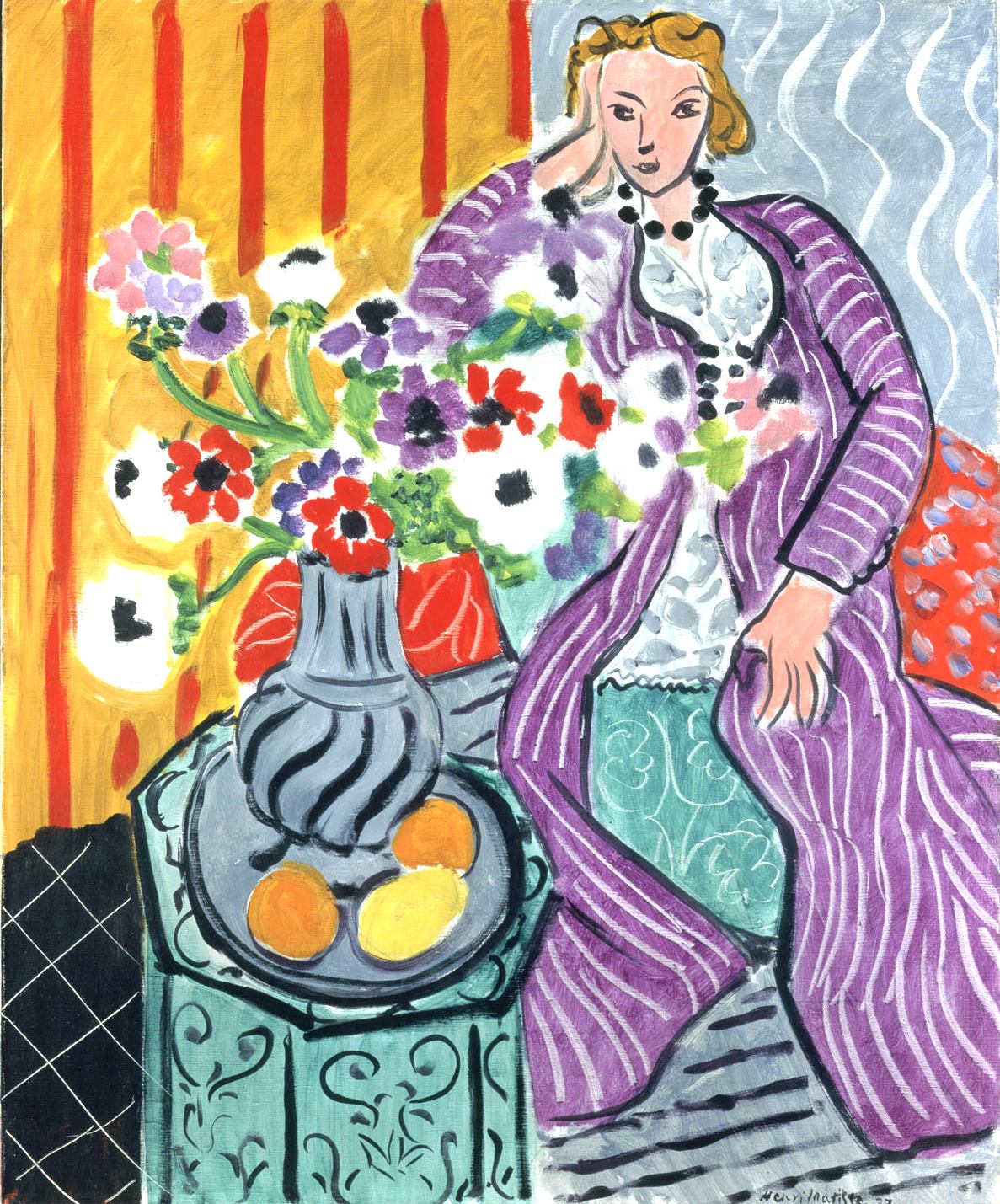
ArtworkGraphic19PurpleRobe

I’m always on the look-out for unusual names in the birth notices, and here are a dozen that are little used, but have intriguing histories. If you are looking for a rare yet genuine name, but fear choosing something too strange, you can take heart that these names have all been recently used by real life Australian parents.

Anjali
Sanskrit name meaning “divine offering”, from the word anj, meaning “to honour, to celebrate”. The Añjali Mudrā is a gesture of respect used in India as a greeting, where the palms join over the heart. If you go to yoga classes, you may greet each other with an Añjali Mudrā; it’s also part of several yoga positions. Anjali is quite a common name in India, and you may know the name as that of the wife of Indian cricket star, Sachin Tendulkar. A pretty Indian name that works very well in English-speaking countries, it is usually pronounced UN-juh-lee, although English-speakers may prefer an-JAH-lee.

Cataleya
Latin American form of cattleya, a type of South American tropical orchid with large, showy flowers. The orchid is named after English horticulturist William Cattley, who was the first European to successfully bring one into bloom. His surname comes from Catley in Herefordshire, meaning “wildcat wood”. Readers of Marcel Proust may recall that in Swann’s Way, the courtesan Odette wore a cattleya as decoration on her gown one evening, and her lover Swann removed it for her. As one thing led to another, they used cattleya as a private word between them for lovemaking. Cataleya was the highest-rising girls’ name in the United States last year, rocketing into the Top 500 from nowhere. The reason is the 2011 action film Colombiana, where the heroine is the assassin Cataleya, who leaves a cattleya as her calling card. Exotic and with a tough girl namesake, it is pronounced kah-tah-LAY-uh.

Damaris
In the New Testament, a woman named Damaris is mentioned as a convert of Saint Paul in Athens. Very little is known about her, although it is assumed she was a woman of high social status, but she is recognised as a saint in the Orthodox faith, and there is a street named after her in Athens. Her name is a matter of debate: the most popular theory is that is from the Greek word damalis, which literally means “heifer”, but is understood as “young girl”. Another is that it is derived from damar, the Greek word for “wife”. Once fashionable in 17th century England, this is a little-used biblical name that has gained modern glamour by American swimsuit model Damaris Lewis. The name is pronounced DAM-uh-ris.

Esperanza
Spanish form of the Latin name Sperantia, meaning “to hope”; esperanza is the Spanish vocabulary word for “hope”. The name got some publicity in 2010 because of Campamento Esperanza (“Camp Hope”), set up in Chile by friends and relatives after a cave-in at a mine; many weeks later their prayers were answered when all 33 miners were rescued. The following year, jazz singer Esperanza Spalding was named Best New Artist at the Grammy Awards. The name also has a motherly vibe, for Esperanza is the wife of Zorro, and mother of his beloved daughter Elena in The Mask of Zorro, while the mare who gives birth to the stallion Spirit in the animated movie is named Esperanza. Another famous mum is Oscar Wilde’s mother, who wrote under the pen name Speranza. Esperanza is a cool name that’s unusual, but not unfamiliar.

Farrah
Variant of Farah, a unisex Arabic name meaning “joy”. The name is well known because of the glamorous 1970s actress Farrah Fawcett, who passed away a few years ago. Farrah Fawcett posed for an iconic photograph wearing a red Speedo swimsuit, so there is an Australian connection to her. More recently, Farrah King from the hip hop outfit Cherish has given it fresh publicity. Soft and pretty, Farrah is an Arabic name which works well cross-culturally.

Fauve
Modern French name, which is pronounced to rhyme with the word mauve. Fauve literally means “wild beast” in French, referring to beasts of prey, and especially the big cats, such as lions and tigers. The word has a very artistic heritage, because in the early twentieth century, les Fauves were a group of modern artists who were known for their bold use of bright colours; they got their name because their work was criticised as looking like something a wild beast would produce. Henri Matisse is one of the most famous of this group. However, fauve has another meaning in French, and that is “yellowish-brown” – a tawny lion colour which would suit someone with dark blonde hair. Fauve is an uncommon name in France, and a rare one here, although not unheard of. It’s very daring, but also on trend.

Jerusha
In the Old Testament, Jerusha was the daughter of a high priest, and a queen of Judah, the wife of King Uzziah. Uzziah was considered one of the greatest rulers of the kingdom, but he became too proud, and began to usurp the role of the priests. Struck down with a disfiguring skin disease, he was replaced by his son Jotham, who is listed as one of the ancestors of Jesus in the New Testament. The name means “possession” in Hebrew, in the sense of something precious, and is said jeh-ROO-sha. A literary namesake is the teenage girl in the children’s book Daddy Long-Legs: she goes by the name Judy, although Roo would be a very Australian nickname.

Odette
French name which is a pet form of the Germanic names Oda or Odilia. These names may both be feminine forms of names which became the German name Otto, meaning “wealth”, although Odilia might instead mean “fatherland”. The name is forever associated with swans, because Princess Odette is the White Swan in the ballet Swan Lake; a sweet, gentle girl, she has been transformed into a swan, and can only take human form at night. Only true love can break the spell, but thanks to nefarious scheming by the baddies, Odette’s story ends in tragedy. Odette is a dated name in France, but to English-speakers, sounds glamorous and romantic. The Disney movie The Swan Princess, based on the ballet, makes it more accessible as well.

Persephone
In Greek mythology, Persephone was the daughter of the agriculture goddess Demeter, and she is central to one of the oldest myths. Legend says that Demeter kept her daughter hidden away from the other gods, so the two could live in companionship with nature. Hades, the god of death, fell in love with Persephone, and one day when she was gathering flowers, he kidnapped her and took her to live in the Underworld as his wife. Demeter was so grief-stricken that she neglected the earth, and nothing would grow: seeing that people were starving to death, Zeus demanded that Persephone be returned. However, Persephone had eaten a few pomegranate seeds in the Underworld, and having tasted its food, was obliged to spend several months of the year with Hades. While Persephone is underground, Demeter mourns for her, and it is winter: when she returns in spring, life is renewed. This ancient myth of death and rebirth comes from the Near East: many rituals and mystery traditions are associated with it, with special significance for girls and women. The name Persephone is interpreted as “female thresher of corn”, because she is an agricultural goddess, but another theory is that her name means “bringer of death”, as she is goddess of the Underworld. The Greeks had so many forms of her name that it would seem they had trouble pronouncing it, suggesting that her name was pre-Greek; it is said per-SEF-uh-nee. Beautiful and elaborate, primal to the human urge for life everlasting, this would be a wonderful choice for someone who thought that Penelope had become too popular to use.

Reeva
Variant of Riva, a pet form of Rivka, modern Hebrew form of the familiar name Rebecca. This comes from the Hebrew word ribhquh, which literally means “a connection”; it can thus be understood as “joining together, securing”. Reeva is also used as a name in India, a variant of Reva, which is Sanskrit for “one who moves”, and often translated as “swift, agile”. It is one of the epithets of Rati, the Hindu goddess of love. The name came into the public eye in a shocking way when South African model Reeva Steenkamp was shot and killed by her boyfriend, world renowned paralympian Oscar Pistorius, now serving a prison sentence for culpable homicide. Due to the notoriety of the high-profile legal trial, Reeva became the fastest-rising girls’ name in England and Wales last year. Reeva fits in with popular names like Ava and Eva, but the very public tragedy of Reeva Steenkamp’s death may make some parents uneasy about using it.

Sephora
Greek form of Zipporah, variant of the Hebrew name Tzipporah, meaning “bird”. In the Old Testament, Zipporah is mentioned as the daughter of the priest Jethro, and the wife of Moses. When Moses fled Egypt after killing an Egyptian man, he took refuge in the desert country of Midian, on the Arabian Peninsula. When Zipporah and her sisters went to water their flocks, they were driven off by shepherds who wanted the water for themselves, and Moses went to their defence. Moses ended up living with Jethro and working for him, and was given Zipporah in marriage. Zipporah had problems with the in-laws, because Moses’ sister Miriam criticised him for marrying a dark-skinned woman, but she was struck down with leprosy in punishment, showing that God approved of the marriage. Sephora is more popular in France than elsewhere, because of the Parisian cosmetics company of that name, but this lovely name isn’t common anywhere.

Vesper
Roman form of the Greek name Hesperus. In Greek mythology, Hesperus was the personalification of the Evening Star (the planet Venus as seen in the evening); his half-brother Phosphorus was the Morning Star. Vesper can be intepreted as “evening, supper time, west”, and Vespers is the name for the evening prayer service in the Christian church. You may know the poem Vespers by A.A. Milne, about Christopher Robin saying his nightly prayers: it was made part of the minature library collection for Queen Mary’s Doll House. Although a rare name in real life, Vesper has had several outings in the world of fiction. Vesper Lynd was James Bond’s lover in Casino Royale, played by Eva Green in the 2006 movie; her parents gave her the name because she was born on a “dark and stormy night”. The famous “shaken not stirred” martini that Bond invents is named the Vesper after her. Vesper has been picked used as a celebrity baby name – one is the daughter of American rock musician Sam Farrar, whose parents are Australian.

POLL RESULTS
The public’s favourite names were Persephone, Odette and Vesper, and their least favourite were Cataleya, Damaris and Jerusha.

(Picture shows Purple Robe and Anemones by Fauvist Henri Matisse – 1937)

Waltzing With … Constance

09 Sunday Nov 2014

Posted by A.O. in Waltzing with ...

≈ 3 Comments

Tags

aristocratic names, famous namesakes, fictional namesakes, French name popularity, Latin names, name history, name meaning, name popularity, nicknames, Old French names, Puritan names, rare names, Roman names, royal names, Shakespearean names, UK name popularity, US name popularity, virtue names

9-2508527-bun230914key1c_fct667x500x4.0x98.0_t620

This Tuesday is Remembrance Day, so today we will remember a World War I heroine. The Australian nurses who served in World War I have not always received the full recognition they deserve, but the award-winning television miniseries Anzac Girls, based on their stories, has brought these “other Anzacs” attention this year.

More than 5000 Australian nurses served during World War I, many of them in the sort of unofficial capacity that meant they are barely remembered today. They worked under gruelling conditions, underpaid, under-resourced, and often forced to improvise. They shared many of the soldiers’ hardships, including illness, physical danger, and psychological trauma.

Nurses were a vital part of the war effort, taking care of wounded soldiers, and offering comfort and cheer, giving them the courage to go back to the battlefield. No matter what horrors they saw, nurses had to remain cheerful, because the men depended on them. Many nurses became friends with their patients, meaning that losing one in battle brought deeper emotional strain. The Allied soldiers often commented that Australian nurses were amongst the kindest and most caring, and their professional standards were high.

Sister Constance Keys has been on the blog twice before – she was amongst a group of nurses whose photo was used for Girls Names from the 1910s, and a quote from one of her letters was used for the entry on Gallipoli. Constance Keys was a Brisbane nurse who enlisted in the Australian Army Nursing Service in 1914, serving in Egypt, England, France, and Belgium.

Constance treated casualties from Gallipoli, and for most of 1918 was right near the front line in northern France, where her nursing station was heavily bombed more than once. Conditions were wet and cold, greatly increasing the suffering of her patients, and making movement difficult. She and her staff treated those who had been gassed, coped with influenza outbreaks, and had many casualties who suffered from exhaustion as well as wounds.

Sister Keys was discharged from the AIF in 1920 as one of the most highly decorated nurses in the AANS. Twice mentioned in dispatches for bravery, she received the Royal Red Cross, first and second class, and was awarded the Médaille des Epidémies in recognition of her work for French refugees. After the war, she became a hospital matron, and married a Gallipoli veteran; during World War II she trained Red Cross volunteers and entertained soldiers.

After her death, her wartime diaries and letters came to light, as well as her autograph book, in which she managed to get the signature of King George V. They give a clear picture of a young woman who was not only courageous and compassionate, but determined to remain in good spirits.

Under fire, Constance was “only afraid of being afraid”, and in the English fogs, “apart from the constant feeling of loss, quite well”. She writes of her little troubles, such as not having enough food, her hair falling out, and being a “bushwhacker” in regard to fashion, all in bright and amusing terms. She was a caring nurse who wrote letters and postcards to soldiers with no mail, felt guilty that she could only afford to shout ten men to lemonade and not everyone, and took time to make mud pies with a “little French kid”.

Connie also enjoyed those moments of pleasure and fun that came her way, such as buying a lovely pair of buttoned boots in England, seeing exquisite Oriental artefacts in Cairo shop windows, a mess room in Belgium with a sweet-toned piano for her to play, going on leave in Cannes to wake up to eucalypts and wattles outside her window. But she always remained a Queensland girl who had forgotten the taste of mango, and longed for a slice of passionfruit cake.

Constance is the medieval Old French form of the Roman name Constantia, the feminine form of Constantius, derived from the name Constans. This Latin name means “constant, steadfast”, referring to someone steady and faithful in their purpose or feelings. It is the basis for the English word constancy.

Traditional amongst European royalty and nobility, this name literally came over with the Conqueror, because Constance was one of the children of William I, said to have been the most gifted of his daughters. Princess Constance was her mother’s favourite child, so she wasn’t offered in marriage until she was positively ancient by medieval standards – in her mid to late twenties. She married a duke of Brittany, but died not long afterwards, reputedly poisoned by her servants.

Constance has often been used by the British aristocracy. One example is Lady Constance Bulwer-Lytton, a suffragette who went by the alias Jane Warton so she wouldn’t receive special treatment. A vegetarian, campaigner for birth control, prison reformist, and supporter of Morris dancing, she never married, as her mother would not allow her to marry a man from a lower social class. She died from a heart attack and series of strokes in her fifties; it is thought from the force-feedings she endured while hunger-striking in prison.

Other upper-class Constances include the pacifist writer Lady Constance Malleson, who performed as an actress under the name Colette O’Niel, Lady Constance Gaskell, Lady in Waiting to Princess Marina, and (Constance) Gwladys Robinson, Marchioness of Ripon, a patron of the arts and friend of celebrities such as Oscar Wilde and Nellie Melba. This reminds me that Oscar Wilde’s wife was named Constance too.

Constance is a favourite choice for aristocrats in English fiction, such as P.G. Wodehouse’s imposing Lady Constance Keeble, and Lady Constance Chatterley who forms a close connection with her husband’s gamekeeper in D.H. Lawrence’s Lady Chatterley’s Lover. It is also a Shakespearean name, because the historical character Constance, Duchess of Brittany, who married a son of Henry II, appears in King John.

But Constance was not just a name for dames, duchesses, and dowagers. Being a virtue name, it was appreciated by the Puritans, and Constance Hopkins was a teenaged girl who sailed on the Mayflower as a pilgrim: she was a sister of the baby boy Oceanus who was born on the voyage, and often mentioned in name blogs. Constance married and had twelve children, who provided her with seventy four grand-children; she has many living descendents. So the name Constance has plenty of history in America too.

Constance left the US Top 1000 in 2000, is still falling, and last year there were 103 baby girls named Constance – the same number as those called Arwen. It is much more popular in the UK, where Constance is #267 and stable. Constance is most popular in France, where it is just outside the Top 100 and rising.

In Australia, Constance was #83 in the 1900s, and peaked in the 1920s at #76, before leaving the Top 100 in the 1930s. It dropped off the charts in the 1960s, and made a minor come-back in the 1990s at #751. I rarely see a baby named Constance, but it does get a bit of use as a middle name, where it makes a wonderful alternative to the popular Grace.

Constance is a beautiful, elegant traditional name; a strong, brave name for a woman, yet also modest and sensible. It’s in rare use now, but that may be a drawcard for those parents wanting a familiar name that isn’t common. The nickname Connie sounds dated, which probably helps explain its lack of popularity, but you could use something more modern, like Coco or Tansy. However, Constance doesn’t need a nickname in my opinion – it’s lovely all on its own.

POLL RESULT
Constance received an outstanding approval rating of 88%, making it the highest-rated of the featured names of the “Waltzing” category in 2014. 34% of people liked the name Constance, while 30% didn’t mind it. Only 1% (1 person) hated the name the Constance.

(Photo of Sister Constance “Connie” Keys from the Bundaberg News Mail)

Boys Names From Native Australian Flowers

02 Sunday Nov 2014

Posted by A.O. in Name Themes and Lists

≈ 7 Comments

Tags

Australian slang terms, birth notices, celebrity baby names, classic names, controversial names, english names, famous namesakes, fictional namesakes, flower names, Gaelic names, Greek names, honouring, Irish names, Latin names, locational names, mythological names, name history, name meaning, name trends, names from songs, names from television, nature names, nicknames, patriotic names, plant names, popular names, rare names, scandinavian names, scientific names, Scottish names, sibsets, surname names, tree names, underused classics, unique names, unisex names, Welsh names

Millstream-Chichester-National-Park-2013-05-15-003

This follows on from Girls Names From Native Australian Flowers. If you thought it would be hard for me to find floral boys’ names, you were right, and many hours were spent poring over gardening books and field guides. I did notice that several of the names come from plants that are traditionally used as female names, so this might be a way to find a boy’s name which honours a Daisy, Iris, or Lily, for example.

Bailey
Acacia baileyana is the scientific name for Cootamundra Wattle, a small tree with silvery-green leaves and masses of golden blossom in the spring. It is native to New South Wales around the town of Cootamundra, which holds a Wattle Time Festival every year when the wattle blooms. However, it is extremely adaptable, and will grow almost everywhere – if anything it grows a little too well, and can escape into the bush and become an invasive weed. Its scientific name honours Frederick Manson Bailey, a colonial botanist in Queensland. Bailey is an occupational surname originally designating someone who was a bailiff, the officer executing the decisions of a lower legal court (these days such duties are usually carried out by local councils). It has been used as a personal name since at least the 18th century, and Bailey has charted in Australia since the 1990s, when it was catapulted straight into the Top 50 from almost nowhere, debuting at #32 in 1997. It peaked in 2004-2005 at #27, and is currently #77. Although only popular for boys, Bailey is sometimes used for girls. Bailey provides a way for boys as well as girls to be named after the patriotic acacia tree.

Carex
Carex is the scientific name for grass-like plants commonly known as true sedges. Sedges are common all over the world, and nearly always found in wetlands; if you’ve ever walked around a swamp or lake, sedge is the dense stiff grassy stuff along the edge which might cut your hands if you try to gather it. Although sedges are not usually thought of as terrifically exciting – hardly anyone hopes for a bouquet of sedges on Valentine’s Day – they are vitally important to the ecology of our wetlands. Anyone working on a project to save a wetlands area will need native sedges to plant along lakes and riverbanks to stabilise the soil, and they are also around dams and garden ponds. They bloom in spring; the flowers are tiny, and appear on short spikes. I have seen a boy named Carex in a birth notice, and this is a daring and environmentally aware choice that is on trend for boy’s names ending in -x, like Felix and Max.

Eric
Banksia ericifolia is the scientific name for Heath Banksia, a medium to large shrub with eye-catching orange or red flowers which bloom in autumn or winter. Banksias are famous for their flower spikes; each spike can have hundreds or even thousands of individual flowers, looking overall like a large brush. Banksia ericifolia was one of the original banksia species collected by botanist Sir Joseph Banks around Botany Bay, and the subspecies ericifolia is native to the area around Sydney. It has been adopted as the city’s official plant, and can be seen in parks and public spaces. Heath Banksia is reasonably easy to grow; if your garden is too small for a regular Heath Banskia, there is a dwarf cultivar called “Little Eric”. The eric in ericifolia comes from Ericaceae, the family of heath and heather. The name Eric is an English form of the Scandinavian name Erik, usually translated as “eternal ruler”. Although known in England since the Middle Ages, it didn’t become popular until the 19th century, after the publication of a moralising children’s book called Eric, or Little by Little. Eric is a classic which has never left the charts. It was #21 in the 1900s, and peaked in the 1910s at #19. It didn’t leave the Top 100 until th 1970s, when it hit its lowest point of #149. Since then, Eric has improved slightly in popularity, and remains stable in the 100s – an extremely safe choice.

Evan
The Hawkesbury Daisy (Brachyscome multifida) grows on the east coast; it has matted foliage with the daisy flowers rising above it in mauve, pink, or white, blooming in autumn and winter. They are very popular garden plants, as they are are quite hardy and look great in borders and mass plantings. One of its cultivars is “Evan”, which was named after the son of the founder of the Australian Daisy Study Group. “Evan” is mauve with small flowers and compact foliage, easy to grow, and perfect for rockeries and hanging baskets. The name Evan is the Anglicised form of Iefan, a Welsh form of John. Evan is an underused classic in Australia – it has never left the charts, but never reached the Top 100 either. The highest it has ever been is #103 in the 1980s, and it’s never been lower than it was in the 1900s at #194, making it a handsome, solid choice which hasn’t been out of the 100s for well over a century. Evan is the poster boy for “normal but not overused” names.

Heath
Common Heath (Epacris impressa) is a small shrub native to south-east Australia; it has red, pink, or white tubular flowers which bloom from late autumn to early spring. A pink-flowered form called “pink heath” is the floral emblem for the state of Victoria. Common Heath is tricky to grow in the garden, and perhaps best enjoyed in its natural setting. Heath is an English surname which can refer to someone who lived on or near a heath, or was from one of the many English towns called Heath. Heath is an underused modern classic which has charted consistently since the 1960s without ever becoming popular. It peaked in the 1970s at #101, possibly because of Heathcliff from Emily Bronte’s Wuthering Heights, serialised on television that decade, and a hit song by Kate Bush in 1978. Actor Heath Ledger, born in 1979, was named after Heathcliff, with his sister Kate named after Catherine from the novel. Heath dropped to its lowest level in the 1990s at #279, but picked up the next decade when Heath Ledger’s film career took off, and gained momentum from Dan Ewing‘s performance as Heath Braxton in Home and Away. Heath is a strong, simple nature name which has long been associated with intense, hunky guys.

Orestes
Caladenia orestes is the scientific name for the Burrinjuck Spider-orchid, native to New South Wales. These small, delicate flowers with dark red colouring are listed as vulnerable, so count yourself lucky if you ever find one in the bush. In Greek mythology, Orestes was the son of Agamemnon Greek commander during the Trojan War. Their family had been placed under a curse, so that their line was a rich source of Greek tragedy. Agamemnon sacrificed his daughter Iphigenia to obtain fair winds to Troy; when he got home from the Trojan War, Agamemnon’s wife Clytemestra murdered him in retribution. When Orestes grew into a young man, he murdered his mother to avenge his father’s death. According to legend, Orestes was pursued by the Furies in punishment for his crime, but he got a good lawyer in the goddess Athena, who put his case before the gods and got him acquitted (slightly rigged, as Athena was one of the judges). He was often seen by Greek writers as a dutiful son to his father, and an example of someone forced by circumstances to commit a terrible act. The name Orestes means “of the mountains”, which is the reason for the orchid’s name. An unusual and possibly controversial choice.

Paterson
Patersonia is the scientific name for the Australasian flower commonly called Native Iris. It was named in honour of William Paterson, the first Lieutenant Governor of New South Wales, and most species are from Western Australia. Patersonia has small flowers that are usually mauve, and can look very attractive in the garden. Paterson is a common Scottish surname which means “son of the follower of Saint Patrick“, and the Clan Paterson is from Lowland Scotland. Sir William Paterson founded the Bank of England, but perhaps the most famous episode in the Clan’s history is when Sir Hugh Paterson entertained Bonnie Prince Charlie, and his niece nursed the prince through a bad cold, becoming his mistress and bearing him an illegitimate daughter. The name Paterson could honour our national poet Banjo Paterson, and would naturally shorten to Paddy. A possible issue is another flower, the attractive but toxic purple weed commonly known as Paterson’s Curse.

Smith
Syzygium smithiim is the scientific name for the Lilly Pilly, an ornamental tree which is a member of the myrtle family; its name honours botanist Sir James Edward Smith. Lilly Pilly is native to the east coast of Australia, and has glossy leaves and cream or pink flowers which bloom in spring and summer. However, it is best known for the fruit which follows the flower – attractive edible berries with a deep pink colour. Smith is the most common English surname, and originated in northern England and Scotland. Although it later came to specifically refer to a blacksmith, the word means any craftsman in metal, hence goldsmith or swordsmith, and more generally, any creator, hence wordsmith. Metalworkers have historically been seen as magical in their skill to transform through fire, and there are several smith gods and heroes, such as Vulcan and Wayland; Cain is said to have been the father of metalsmiths. The name always reminds me of J.R.R. Tolkien’s bittersweet fairy tale, Smith of Wooton Major. Smith has often been thought too common a surname to be used as a personal name, but gained recent familiarity through Sex and the City’s handsome Smith Jerrod (real name Jerry Jerrod). Hawthorn’s Sam Mitchell has a son named Smith.

Sturt
Sturt’s Desert Pea (Swainsona formosa) is native to the deserts of inland Australia, and highly recognisable from its striking deep red pea flowers. According to an Aboriginal legend, the flowers sprang from the blood of two murdered lovers and their child. Sturt’s Desert Pea is the floral emblem of South Australia, and is a popular subject for arts, crafts, and decorative motifs. Although it grows in such profusion in the harsh desert, Sturt’s Desert Pea is difficult to establish in the garden. It is named after the explorer Captain Charles Sturt, who recorded seeing masses of the flower during his explorations. The surname Sturt comes from the Old English for a promontory – a raised mass of land with a sharp slope on one side – and this could be given to someone who lived near such a landmark, or from a town named after one. Similar to Stuart, this is a lesser-used surname which is given meaning by the flower.

Tucker
Tuckeroo (Cupaniopsis anacardioides) is an Australasian flowering tree in the soapberry family. It has greenish-yellow flowers which bloom in winter, followed by orange berries in the spring and summer which are a source of food for native birds. Tuckeroo is a popular ornamental tree for gardens which gives good shade and looks attractive all year round, and is often grown along streets in coastal towns of New South Wales and Queensland. The English surname Tucker is an occupational one referring to someone who softened cloth for the wool industry by tramping on it in water; the word comes from the Old English for “to torment (the cloth)”. As an Irish derivation, Tucker comes from the Gaelic O’ Tuachair, meaning “son of the brave one”. Tucker seems problematic as a first name, breaking the rule of “no names that rhyme with rude words”, but it does have a very Australian meaning, as it is slang for “food”, derived from “to tuck in”. Some people might think that’s another problem with the name in Australia. I’m not sure … any takers for Tucker?

POLL RESULTS
The public’s favourite names were Heath, Evan and Tucker, and their least favourite were Carex, Orestes and Sturt.

(Picture shows Sturt’s Desert Pea; photo from Our Naked Australia)

Girls Names From Native Australian Flowers

26 Sunday Oct 2014

Posted by A.O. in Name Themes and Lists

≈ 16 Comments

Tags

colour names, english names, famous namesakes, fictional namesakes, flower names, French names, Greek names, historical records, honouring, Latin names, locational names, middle names, mythological names, name history, name meaning, name popularity, name trends, names from television, nature names, nicknames, plant names, popular names, Portuguese names, rare names, retro names, Roman names, scientific names, Scottish names, surname names, vocabulary names

BoroniaHeterophyllaLipstickCu600

Now that it’s spring, I have been taking advantage of the warmer weather and lighter evenings to get out into the garden more. I love the spring flowers, which make me think of floral names, so here are some from our native blooms.

Boronia
Boronia (bor-OH-nee-uh) is a native shrub whose cup-shaped, pink or red-hued flowers give off the most exquisite sweet scent; boronias are related to citrus trees, and the fragrance of boronia is slightly lemony. It is a popular ingredient for perfumes and scented oils, but oddly enough, quite a few people are unable to smell boronia at all. Boronias grow in many parts of Australia, but the Brown Boronia, considered to have the most magnificent scent of all, is from Western Australia. Many people find boronia difficult to grow, and might enjoy this plant more by walking through the bush in spring. The plant has given its name to a pleasant suburb of Melbourne, while Boronia Heights is a suburb of Logan. The boronia is named after Francesco Borone, who was the servant of botanist Sir James Smith, but became his talented and valued field assistant. Francesco died in a bizarre accident when he sleep-walked out the window while recovering from illness. When Sir James discovered the boronia several years later, he named it in Borone’s memory. There are quite a few people with the name Boronia in Australian historical records, mostly as a middle name. Bo would make a charming nickname.

Correa
Correa (KOR-ree-uh) is a small shrub related to the boronia, but its bell-shaped flowers have no fragrance; instead it is the leaves which have a fruity smell when crushed. Correa reflexa is known as Native Fuchsia, because of its long tubular petals which are often a dusky pink colour, although correa can come in a range of colours. Correa grows all over Australia, and is an easy garden plant to grow; it blooms in autumn and winter, making it a great plant to brighten up your garden during the cold months. Correa is named in honour of the Portuguese botanist José Correia da Serra; the Correia part of his name is a common Portuguese surname meaning “leather strap”, originally given to those who worked in the leather trade. Correa is a rare find in Australian historical records, and would make a distinctively Australian alternative to names such as Cora.

Daisy
Daisies are simple little picture-book flowers common all over the world; they are symbolic of childhood innocence. There are many types of daisy native to Australia; one of the most popular is the Paper Daisy, called the Everlasting in Western Australia. Small with crisp, papery petals, they are pink and white, and very easy to grow. The word daisy comes from the Old English for “day’s eye”, as English Daisies open when the sun rises and close in the evening. Daisy has been used as a girl’s name since the 16th century, and became popular in the 19th, along with other floral names. It is also used as a nickname for Margaret, because the French name for the Ox-eye Daisy is the Marguerite. The name Daisy was #58 in the 1900s, and left the Top 100 in the 1920s. It dropped from the charts in the 1940s, made a minor come-back in the 1950s, then dropped out again the following decade. Daisy returned to the charts in the 1980s at #646, and climbed fairly steadily. It rejoined the Top 100 last year at #90, making it one of the fastest-rising names of 2013. Wholesome yet also sexy, retro Daisy still sounds fresh … as a fresh a daisy!

Dianella
Dianella is commonly known as Blue Flax-lily, found in all states of Australia. These woodland plants grow in clumps with small, deep blue flowers that bloom in spring and summer; they are popular garden plants being hardy as well as decorative. The Perth suburb of Dianella was named after the flower, which grew in abundance there before development. Dianella is named after the Roman goddess Diana, goddess of the hunt, because she is associated with woodlands; the name Diana may mean “heavenly, divine”. Dianella seems like an interesting way to honour a Diana or Diane, while giving a nod to native flora, and offering popular Ella as the nickname. The name Dianella shows up several times in Australian historical records, always in South Australia for some reason.

Laurina
Hakea laurina, also known as Pincushion Hakea, is a large upright shrub or small tree from south-west Western Australia. The flowers are very striking, being deep pink or red, and shaped like globes with cream spikes coming out of them; they have a mild fragrance, but are best known for producing nectar, which is very attractive to birds. Hakea laurina blooms in autumn and winter, and this popular garden plant is easy to grow, being both drought-tolerant and frost-hardy. Laurina is simply based on the Latin Laurus, as its leaves are similar to those of the laurel tree. The name Laurina dates to the 18th century, and is an elaboration of the name Laura. It has recently been brought to attention through “Melbourne princess” Laurina Fleure, who was a contestant on this season of The Bachelor: although portrayed as a villain by the show’s producers, she gained a fan following and has been dubbed “Australia’s Carrie Bradshaw”.

Lilac
Lilac (Syringa vulgaris) is a small tree native to the Balkans, famous for its pale purple flowers, which have a beautiful sweet fragrance. Australia has a plant which is sometimes called Native Lilac, or Lilac Vine, and that is Hardenbergia violacea, also known as Purple Coral Pea, as it is member of the pea family. It is a hardy and vigorous climbing vine, capable of growing twenty feet; some varieties are low-growing shrubs. In winter it produces masses of showy violet pea-flower blooms, and is an easy to grow garden plant, popular for training over fences and pergolas. Lilac is a word from the French, which ultimately goes back to the Sanskrit for “dark blue”; it has been used as a girl’s name since the 19th century, when other flower names came into fashion. Lilac has never been a common name, but it is very pretty, and would be right on trend, fitting in with popular Lily and Lila, while having its own distinctive sound. It would also make a lovely middle name to match all those girls’ names ending with -a or an EE sound.

Lotus
The lotus flower (Nelumbo nucifera), sometimes known as Sacred Lotus, Red Lily, or Lotus Lily, is an aquatic plant native to Tropical Asia and Northern Australia; it is thought that the plants were brought to Australia many centuries before European settlement. There are many different varieties and cultivars, with one of them being the Waltzing Matilda Lotus, which is small with pink flowers. Lotus flowers can be easily grown all over Australia, but the native lotus will only be happy in warm areas. The Lotus is a very symbolic plant – as it is a stunning flower which grows out of slimy mud, you can see it as a message that life can be beautiful no matter what your origins or circumstances. In Hinduism, a lotus is often used to indicate divine beauty and spiritual growth; in Buddhism it represents purity and non-attachment to the material world. Asian literature sees the lotus as the ideal of feminine grace, beauty, and elegance. The lotus is also a peace symbol, and Aboriginal people from the Top End held up lotus leaves to strangers to show they meant no harm. With so many wonderful meanings for this lovely flower, it’s surprising how little Lotus has been used as an English name. Many will see it as having a hippie vibe, while others may see it as a car name.

Orchid
Orchids are extremely diverse plants found almost everywhere in the world except on glaciers; they grow in the Arctic, and on Macquarie Island near Antarctica. There are hundreds of types of orchids native to Australia. Orchids are grown for their often beautiful flowers, and excite a passion in those who cultivate and collect them that amounts to an obsession. The Cooktown Orchid (Dendrobium phalaenopsis) is the state emblem of Queensland, and grows naturally in the state’s tropical far north. It is considered to be Australia’s showiest orchid, with beautiful mauve flowers that bloom in the dry season. With care, it can be grown outdoors as far south as Brisbane; any lower than that and you need a glasshouse. Orchid has been used as a girl’s name since the 19th century, and despite the beauty of the orchid flower, it has remained in rare use. This may be because the ORK sound at the start is not considered attractive, or because the flower’s name comes from the Greek for “testicle”. Orchid is an unusual, sophisticated floral choice that starts with the fashionable O, but sounds quite distinct from today’s popular names.

Pandorea
Pandorea (pan-DOR-ee-uh) are climbing vines native to Australasia. Pandorea pandorana, otherwise known as Wonga-wonga Vine, is a popular garden plant, being an easy to grow vigorous climber with glossy leaves. The flowers are bell-shaped, bloom profusely in spring, and are naturally creamy-white with maroon markings, but cultivars come in a very wide range of colours. Hardy and adaptable, Wonga-wonga Vine grows all down the east coast, as well as in the central deserts, and is also native to several Pacific Islands. The wood of the vine was used by Aborigines of central Australia to make spears, and it appears in their mythology as a group of women with very thin and flexible bodies. The plant’s scientific name is after Pandora from Greek mythology, who legend says had a container filled with all the world’s evils, which she opened out of curiosity. It is usually thought the name came about because the Pandorea vine grows a pod which opens to reveal a multitude of seeds; supposedly the plant’s namer was reminded of “Pandora’s box” by the seed pod. The name Pandora has a lovely meaning – “all gifts”. If you are attracted to the name Pandora, but have doubts about the myth, or worry it’s too Avatar, or don’t like the -dora sound at the end, why not consider Pandorea as a floral alternative?

Violet
Violets are small violet-blue flowers, which symbolise modesty – we call a shy person a “shrinking violet”, and connect the flowers with pure femininity. They are associated with death and resurrection in Greek myth, and can be used to denote death which comes too soon, such as for Ophelia in Shakespeare’s Hamlet. Violet Day was commemorated in Australia to remember those who died during World War I; the last Violet Day was held in 1970. There are a few species of violet native to Australia – a favourite for gardeners is Viola banksii, which grows naturally in New South Wales. It has striking purple and white flowers, and is very easy to grow, forming an attractive groundcover. The word violet comes by way of the Latin viola, and simply refers to the colour. Violet has been used as a name since the 16th century in Scotland, influenced by the French name Violette. Violet was #22 in the 1900s, and left the Top 100 in the 1940s, before dropping off the charts in the 1960s. It didn’t return until the early 2000s, when it was #569; this follows the publication of Lemony Snicket’s Series of Unfortunate Events, starring pretty teen inventor Violet Baudelaire. After becoming a celebrity favourite, and having a staggeringly swift rise, it made the Top 100 in 2009 at #85, and was #51 last year, being the fastest-rising name in both Western Australia and Tasmania. This is a dainty retro name that has a dark side: its similarity to the words violence and violate act as a counterweight to its maidenly timidity.

POLL RESULTS
The public’s favourite names were Violet, Daisy and Lilac, and their least favourite were Orchid, Boronia and Pandorea.

(Photo shows a Pink Boronia (Boronia heterophylla), Pink Lipstick variety)

Waltzing With … Lucius

05 Sunday Oct 2014

Posted by A.O. in Waltzing with ...

≈ 3 Comments

Tags

aristocratic names, Arthurian names, Biblical names, Etruscan names, famous namesakes, fictional namesakes, Harry Potter names, imperial names, Latin names, name history, name meaning, name popularity, papal names, rare names, Roman names, royal names, royal titles, saints names, Shakespearean names, UK name popularity, US name popularity

y_Daybreak

Today is the start of Daylight Saving Time in New South Wales, Victoria, South Australia, Tasmania, and the Australian Capital Territory. Clocks went forward at 2 am this morning, so if you forgot, you are now an hour behind.

Because daylight saving becomes more pointless the closer you are to the equator, states which have tropical regions do not have daylight saving, and this means Queensland, Western Australia, and the Northern Territory. For everyone else, it’s a reminder we are moving towards summer and increasing hours of daylight, so it seems the perfect opportunity to look at a name connected with light.

Lucius was the most common name in ancient Rome times across all classes; it is usually said to be derived from the Latin word lux, meaning “light”. One theory is that it was given to children who were born at dawn, but the sheer number of people called Lucius makes this untenable. Another theory connects it to loukus, which originally meant “bright, shining”, although by the classical period it had come to mean “a cleared grove”.

Lucius is the name ascribed to an early Roman king, but it is probably a misunderstanding of Lucumo, the Etruscan word for “king”, which would be his title; the name Lucius was traditional in his family, suggesting another origin for the name. The Roman dictator Sulla, who served as an inspiration for Julius Caesar, was named Lucius Cornelius Sulla Felix. There were at least two Roman Emperors named Lucius: Lucius Dominitius Aurelianus (called Aurelian), and Lucius Aurelius Commodus (called Commodus).

Commodus was the son of the emperor Marcus Aurelius, and grandson of an emperor: he was the first emperor to be “born in the purple” (during his father’s reign). He is probably best known to us as the wicked emperor in the movie Gladiator, killed by Russell Crowe in the role of Maximus: although a fictional story, the real Commodus was eccentric and cruel, and assassinated by his wrestling partner, Narcissus.

The name Lucius was a favourite choice amongst early Christians because of the meaning of “light”, and there are several saints with the name. Saint Lucius of Cyrene is mentioned in the New Testament as a founder of the church in Antioch. There have been three popes named Lucius, and Pope Lucius I is also a saint.

Another Saint Lucius is a legendary 2nd century King of the Britons, who tradition credits with introducing Christianity to Britain by writing to the pope asking to be converted. His story became well known after it was included in the histories of Venerable Bede, and embellished by Geoffrey of Monmouth. For centuries it was an important myth of British Christianity, and although there’s no solid evidence he existed, some feel there must be a grain of truth to the legend. The church of St Peter Under Cornhill in London claims St Lucius as its founder.

The Roman philosopher and statesman known to us as Seneca had the full name Lucius Annaeus Seneca. He wrote many of his famous works while in exile, and later became an advisor to the Emperor Nero. This didn’t end well for him, as he was (probably wrongly) implicated in a plot against Nero, and forced to commit suicide. Early Christians greatly approved of him, and virtually hailed him as a humanist saint. According to medieval legend, he was converted to Christianity by Saint Paul, and is mentioned by writers such as Dante and Chaucer.

Despite all this heavy-duty Christian background, and even a British connection, Lucius has never been a common English name. It does seem to have had some history of use in Yorkshire, which has strong ties to the legendary Saint Lucius.

The name Lucius is a traditional one in the aristocratic Cary family, who bear the title Viscount Falkland. The 2nd Viscount fought on the Royalist side in the English Civil War and was killed in action. The current Viscount Falkland is named Lucius, and so is his son (a writer who goes by his middle name, Alexander), and his grandson.

Lucius has probably been used more often in America, and there are a number of famous politicians from the United States bearing this name. It’s also known from American writer and bon vivant, Lucius Beebe, and American sci-fi author Lucius Shepard.

Lucius isn’t too unusual a name in Australian historic records. Dr William Harvey, who was featured on the blog earlier this year, had a father named Lucius who was also a doctor, and it was his father’s death from tuberculosis which led Dr Harvey into specialising in thoracic medicine. A famous Australian with the name is musician Lucius Borich, the son of Kevin Borich, who was in the band The Party Boys.

Lucius doesn’t chart in Australia. 14 baby boys were named Lucius in England/Wales last year, while in the US (where Lucius peaked at #257 in the 19th century), 125 boys were named Lucius in 2013 – the same number as those called Hollis and Zephaniah.

If there seems a lack of real life Luciuses, fiction has stepped into the breach, for they abound in books, movies, TV programs, and video games. It’s no new phenomenon, for Lucius is the narrator of The Golden Ass by African author Apuleius; written in Latin in the 1st century, this comedy is sometimes regarded as the world’s first novel. Lucius is also in Arthurian legend, a fictional Emperor of Rome who King Arthur defeats, thus becoming not just King of Britain, but Emperor over all the West.

Lucius has been used as a character name twice by William Shakespeare, in Titus Andronicus and Julius Caesar. In fact, pretty much anyone who writes a story set in Roman times will include a Lucius somewhere, as it was the #1 name.

One of the best known fictional Luciuses of contemporary times is the slippery Lucius Malfoy from the Harry Potter series. Upper crust, corrupt, bigoted, and ready to slip over to the Dark Side whenever convenient, Lucius is a dyed-in-the-wool villain and general Mr Nastypants for most of the series. Only towards the end does he receive a lukewarm redemption.

His name, although suitably aristocratic, brings to mind Lucius from The Golden Ass, which is a book about witchcraft and magic – not to mention someone (literally) making an ass of themselves. However, just as Malfoy’s son’s name, Draco, means “serpent” and reminds us of the Devil, Lucius’ name is reminiscent of Lucifer, a name related to Lucius, meaning “light-bringer”, and which is often understood by Christianity as Satan’s name before his fall.

Unfortunately, some people think Lucius and Lucifer sound too similar for comfort. Stories that make the connection don’t help, such as the video game Lucius, Son of Lucifer, or the horror novel The Haunting of Sister Mary Francis, which has a character named Lucius Lucifer. On the plus side, that gives Lucius a bit of a “bad boy” edge.

An alternative is Lucian, which is derived from Lucius. Lucian is more popular in Australia than Lucius, being around the 500s, and fits in with the trend for boy’s names ending in N – Lucian almost seems like a fancier version of Lachlan.

Lucius can be pronounced either LOO-see-us, or LOO-shus. The ancient Romans said it more like LOO-ki-us, which perhaps suggests the three syllable pronunciation is more “correct”. Obvious nicknames are Lucky, Luke, Luc, Luca, Luce, Loosh, Lou, and Louie. I have seen a baby Lucius nicknamed Luci or Lucy by his family, which startled me, even though it makes perfect sense.

Handsome, intelligent, and with a rather upper-class image, Lucius does have a few issues, but seems like a name that someone could really fall in love with. It’s quite seductive – even luscious! I’ve noticed this name is often favoured by dads, suggesting that many guys appreciate the richness and power that stand behind it.

This is a rare boy’s name that is perfectly balanced between elegance and strength, brightness and darkness, history and magic, with lashings of Ancient Roman street cred and a bit of sex appeal to boot. Lucius could well be the name that lights up your life.

POLL RESULT
Lucius received a very good approval rating of 77%. 37% of people loved the name Lucius, while 25% of people didn’t mind it. Only around 5% of people hated the name.

(Photo shows daybreak at Delderfield, Marysville, in country Victoria)


Boys Names From Australian Children’s Literature

24 Sunday Aug 2014

Posted by A.O. in Name Themes and Lists

≈ 10 Comments

Tags

aristocratic names, aristocratic surnames, Australian slang terms, Biblical names, classic names, colour names, english names, famous namesakes, fictional namesakes, Gaelic names, German names, germanic names, Greek names, hebrew names, Irish names, Latin names, locational names, modern classics, mythological names, name history, name meaning, name popularity, names from songs, names from television, names of businesses, nature names, nicknames, Old Gaelic names, Persian names, plant names, popular names, retro names, royal names, saints names, Scottish names, surname names, tree names, underused classics, unisex names

Cyan Magenta Yellow Black

Darius
Odo Hirsch’s Darius Bell and the Glitter Pool (2009) tells the story of the Bells, a proud family fallen on hard times; plucky youngest son Darius must save the family’s estate. (Name nerd bonus info: Odo is the older form of the German name Otto). Darius is the Latin form of Dareios, the Greek form of the Persian name Dārayavahush, meaning “holding on to goodness”. This name was traditional amongst the Persian kings, and Darius I was known as Darius the Great, as he ruled over the Achaemenid Empire at the height of its power. Darius III was defeated by Alexander the Great, and there are a number of minor princes with the name. Darius is mentioned several times in the Old Testament, so it is a Biblical name as well (nobody is sure which historical Darius it means). Although rare, this name is known in Australia from NRL star Darius Boyd, while there is also a Darius in The Hunger Games trilogy. Darius is a cool-sounding name that might appeal to a broad range of people.

Felix
Terry Denton’s first picture book was Felix and Alexander (1985), about a little boy named Alexander who gets lost, and his toy dog Felix must find him. Felix is a Latin name meaning “fortunate”. It was first given as a nickname to the Roman general and statesman Lucius Cornelius Sulla, a free translation of the Greek nickname he acquired during his military campaigns – Epaphroditos, meaning “beloved of Aphrodite”. The Roman procurator Felix is mentioned in the New Testament, although not in a positive way – he imprisoned St Paul. Felix was a favourite name amongst early Christians, and there are heaps of saints named Felix, including the 7th century Felix of Burgundy, who introduced Christianity to East Anglia, and three popes. Two Australian connections are Felix the Cat, and Australia Felix, the name given to the lush farmland of western Victoria by explorer Sir Thomas Mitchell. Felix was #172 in the 1900s, and left the charts in the 1920s. It returned in the 1980s at #396 and climbed steadily; it’s been on and off the Top 100 since 2011. It’s now #86, and was one of the fastest-rising names last year. A hip retro favourite growing in recognition.

Harley
Sleepy Harley (2011), written by Karen Treanor and illustrated by Kelly Iveson, is a picture book about a cat named Harley who tries to find a place to nap in a Perth suburb. Harley is a surname which comes from a place name meaning “hare meadow” in Old English. The de Harley family were nobles whose history can be traced before the Conquest, and Sir Robert Harley, first Earl of Oxford, was from a prominent political family. One of them, William Cavendish-Bentinck, became British Prime Minister in the 18th and 19th centuries; he was the maternal great-great-great grandfather of Queen Elizabeth. The name will remind many of Harley-Davidson motorycles, giving Harley a pretty cool image. Harley was #212 in the 1900s, and went up and down before dropping off the charts in the 1950s. It returned in the 1970s at #462, and rose before peaking at #70 in 1992. It dropped again before starting to rise in the early 2000s, and is not far out of the Top 100. You could see Harley as an underused classic – in use for many years, but never very popular. I have occasionally seen Harley on girls as well.

Jude
Me and Jeshua (1984) by award-winning author Eleanor Spence is a historical novel about the childhood of Jesus of Nazareth, as seen through the eyes of his cousin Jude. Jude is a variant of the name Judas, Greek form of the Hebrew name Judah, meaning “praised”. In the New Testament, Jude is used for the Apostle whose name was Judas, to distinguish him from Judas Iscariot. Jude is also listed in the New Testament as one of the brothers of Jesus (Eleanor Spence follows a tradition they were cousins), but it is not clear if Jude the Apostle was Jesus’ brother. The Apostle Jude is usually connected with the Apostle Simon the Zealot, and according to tradition they were both martyred in Beirut. Jude is well known as the patron saint of lost causes, and this has made him one of the most venerated saints. Contemporary associations are the actor Jude Law, and the Beatles song Hey Jude. Jude can also be used as a girl’s name, short for Judith, as in the YA novel by Maureen McCarthy, Queen Kat, Carmel, and St. Jude Get a Life (1995). This attractive name has quietly been gaining in popularity, and last year joined the Top 100 in Victoria.

Leonard
The Lockie Leonard series by Tim Winton (1990-97) stars a surf rat named Lachlan “Lockie” Leonard who moves to the Western Australian town of Angelus (based on Albany). Leonard is a Germanic name which can be translated as “brave lion” or “brave as a lion”. St Leonard is a legendary 6th century saint, a Frankish nobleman at the court of Clovis I who could liberate prisoners from their chains when invoked. The Normans brought the name to England, although it didn’t become particularly common until the 19th century. Famous Australians with the name include distinguished chemist Leonard Lindoy, and hard-hitting post-war cricketer Leonard “Jock” Livingston, also a talented rugby league footballer. Leonard has been a popular name amongst Jews in the past, including Jock Livingston: other examples are Canadian folk singer Leonard Cohen and actor Leonard Nimoy. Leonard was #39 in the 1900s, and peaked in the 1910s at #35. It didn’t leave the Top 100 until the 1960s, and remained in steady but low use until getting a little boost after The Big Bang Theory, with main character Leonard Hofstadter, began airing in the late 2000s. Clunky cool, this underused classic provides a way to get the popular nickname Lenny.

Nathaniel
In Isobelle Carmody’s YA novel The Gathering (1993), Nathaniel Delaney is a teenager who moves to a grim seaside town and finds himself locked in a battle between the forces of Light and Dark. Nathaniel is a variant of Nathanael, the Greek form of Hebrew Netan’el, meaning “God has given”, nearly always understood as “gift of God”. In the Bible, Nathaniel is usually identified with the Apostle Bartholomew; as Bartholomew means “son of Talmai”, it is taken to be Nathaniel’s surname. Nathaniel was in use as an English name by the 16th century, and became more common after the Protestant Reformation. It was used amongst the aristocracy, and also became a favourite in America, with author Nathaniel Hawthorne a notable bearer. Nathaniel was #179 in the 1900s, and left the charts the following decade. It returned in the 1970s at #296, and climbed steadily until it reached the Top 100 last year at #79, making it one of the fastest-rising names of 2013. A handsome retro name that gives the popular nickname Nate, it’s well known from Australian actor Nathaniel Buzolic, from The Vampire Diaries, and Australian singer-songwriter Nathaniel Willemse, who was on The X-Factor.

Rafferty
The Rafferty series by Joan Woodberry (1959-62) are the adventures of an English boy named Rafferty who moves to a fishing village on the Queensland coast. Rafferty is a common Irish surname, an Anglicised form of O’Raithbheartaigh, meaning “son of Rabhartach”. The Old Gaelic personal name Rabhartach means “wielder of prosperity”. The name has a particular Australian resonance, due to iconic Australian actor John “Chips” Rafferty. He was seen as the quintessential Australian, and took part in a marketing campaign convincing British people to migrate to Australia in the 1950s – this might explain the choice of Rafferty’s name in Woodberry’s books. Another Australian reference is the slang term Rafferty’s rules, meaning “no rules at all”. It gives the name Rafferty a pleasantly raffish, lawless feel. This name is around the 200s in Australia, and although it is rising in the UK, is more popular here than anywher else. I have also begun to see a few girls named Rafferty.

Rowan
The Rowan of Rin fantasy series by Emily Rodda (1993-2003) takes place in a fictional world. Rowan is the unlikely hero, considered a bit of a wimpy weakling by the sturdy villagers of Rin, but when danger strikes, his resourcefulness and courage saves the day. Rowan is a Scottish name that’s an Anglicised form of Ruadhán, a pet form of Ruadh, Gaelic for “red”, often given as a nickname to a man with red hair. You may remember that the red-headed Scottish outlaw Raibeart “Ruadh” MacGregor is known as Rob Roy by the English. Rowan can also be unisex when named after the rowan tree; its English name comes from the Germanic for “to redden”, because of the tree’s red berries, so either way the meaning has a connection with the colour. A pleasant association with the tree is that according to folklore it has the power to ward off evil. The name Rowan has charted for boys since the 1940s, debuting at #205, and climbing until it peaked in the 1980s at #164. It’s now around the 300s-400s. Rowan is an underused modern classic which alludes to a vibrant colour, and a magical tree.

Silvander
Norman Lindsay is famous for writing and illustrating The Magic Pudding (1918), a comic fantasy deservedly recognised as a classic. For some reason, his other children’s book, The Flyaway Highway (1936), is neglected, even though it’s just as funny and fantastical. I loved this story, which relates how Egbert and Muriel Jane meet a “bloke with horns and cows’ hooves” named Silvander Dan, who take them on a journey down the Flyaway Highway. As a child, I thought that the name Silvander was made up for the book (although I’m afraid I was already junior name nerd enough to know what it meant). However, I’ve since found that Silvander was a literary name in the 18th century, and in most of the sources I’ve read, characters named Silvander are untrustworthy bounders! The name is derived from Silvanus, the Roman god of woods and fields, from the Latin silva, meaning “wood, forest”. Although an extremely rare name, it is just enough like Silas and Alexander to not be completely outrageous, and has an agreeably silvery sound. For those who like Leander and Evander, here is another to consider.

Theodore
I told myself I would not choose more than one book from a single author, but was forced to make an exception for Odo Hirsch, from whose oeuvre I could happily fill two lists. Antonio S and the Mystery of Theodore Guzman (1997) is his first novel, a charming story about a boy who lives in a grand old house, and is fascinated by a reclusive actor. (Name nerd bonus info: Odo Hirsch is the pen name of Dr David Kausman). Theodore is from the Greek name Theodorus, meaning “God’s gift”. Theodorus wasn’t uncommon in ancient times; ironically one of its famous bearers was the 4th century BC philosopher Theodorus the Atheist. Because of its meaning, the name was a popular choice for early Christians, and saints named Theodore are numerous, including a 7th century Archbishop of Canterbury and two popes. Theodore was also traditional mongst the Byzantine Emperors, and the Russian Tsars. Theodore was #116 in the 1900s, and reached its lowest point in the 1970s at #383. It began rising steeply in the 1990s, and last year joined the Queensland Top 100 at #79, making it one of the state’s highest-rising names. A sophisticated classic name which comes with cool short forms Theo and Ted, I’d call this underused except I’m not sure how long it will stay that way.

POLL RESULTS
The public’s favourite names were Theodore, Jude and Felix, and their least favourite were Leonard, Darius and Harley.

(Picture shows cover of Lockie Leonard – Human Torpedo by Tim Winton)

Girls Names from Australian Children’s Literature

17 Sunday Aug 2014

Posted by A.O. in Name Themes and Lists, Requested Names

≈ 10 Comments

Tags

astronomical names, Babylonian names, Biblical names, classic names, english names, Etruscan names, fictional namesakes, flower names, French names, Greek names, hebrew names, Irish names, Italian names, Latin names, Median names, middle names, month names, mythological names, name history, name meaning, name popularity, name trends, names from television, nature names, nicknames, plant names, popular names, retro names, Roman names, royal names, Semitic names, Shakespearean names, underused classics, underused names, unisex names

HarrietYoullDriveMeWild01

This week it is Children’s Book Week, which is run by the Children’s Book Council of Australia. Librarians and teachers everywhere will be thinking up exciting new ways to encourage children to read, while the CBC has awarded prizes to the best new Australian children’s books. I thought it would be fun to join in the celebrations, and many of the books chosen are classics and award winners.

Amaryllis
I know two characters with this name. One is Amaryllis “Ryl” Mereweather, from H.F. Brinsmead’s Pastures of the Blue Crane (1964), about a teenage girl who inherits an old shack in northern New South Wales. (Name nerd bonus info: H.F. Brinsmead stands for Hesba Fay – Hesba is derived from the Greek hesperus, meaning “western”). The other is in Sally Odger’s fantasy Amy Amaryllis (1992), about an ordinary Australian girl named Amy Day who switches identities with a girl named Amaryllis Loveday, from a magical world named Ankoor. Amaryllis is a Greek name meaning “to sparkle”, perhaps to suggest sparkling eyes. In Virgil’s pastoral poems, The Eclogues, Amaryllis is a beautiful shepherdess, and the poet makes a play on words to suggest that her name comes from Latin amor, “love”. The amaryllis flower is often known as “Easter lily” in Australia; it is named after the literary character, so this is not just a simple flower name. Unusual and lovely, Amaryllis comes with a host of possible nicknames, including Amy, Ryl, Rylla, Lily, Lissy, and Mary.

Beatrice
In Playing Beatie Bow (1980) by Ruth Park, Beatie Bow is a local legend, a game that children play to frighten each other. But when teenage loner Abigail watches the game, she is brought to the Sydney of one hundred years earlier by a strange girl named Beatrice “Beatie” Bow. This classic is a YA time-travel historical mystery adventure with a dash of romance, and so firmly grounded in The Rocks area of Sydney that you can follow every step of Abigail’s journey. (Name nerd bonus info: Abigail’s parents named her Lynette, but when her parents separate, she chooses Abigail for herself, because it’s an “old witch” name). Beatrice is the Italian form of Beatrix, very famous because of the beautiful muse in Dante’s Divine Comedy. The name has been used in England since the Middle Ages, including by royalty; Princess Beatrice of York was named after a daughter of Queen Victoria, but itwas used in the royal family long before. It’s also a Shakespearean name, because in the comedy Much Ado About Nothing, Beatrice is the witty heroine. Beatrice was #50 in the 1900s, and left the Top 100 in the 1930s; by the 1960s it had left the charts. It made a modest comeback in the 1990s, after the birth of Princess Beatrice, and has remained around the 500-600 level. This is an elegant retro name which has long remained underused. Bea is the usual nickname, although Beatrice Prior from the Divergent series goes by Tris.

Blossom
Little Ragged Blossom is one of the main characters in May Gibbs‘ Snugglepot and Cuddlepie series (1918-40), featuring her plump “gum nut babies”. Blossom is a poor little gum-blossom girl, alone in the world until she gains the friendship and protection of gum-nut boys Snugglepot and Cuddlepie. From then on, she is part and parcel of their adventures, and not infrequently plays the role of damsel in distress, such as when she needs rescuing from the wicked Banskia Men. Even now, I cannot see a gum tree in bloom without imagining the flowers as little blossom girls … The word blossom is used for flowers that grow in masses and clusters, especially on trees, and evokes spring and freshness. Blossom has been used as a girl’s name since the 18th century, and is probably more common as a nickname, such as aviation engineer Maxine “Blossom” Miles, or a middle name, such as jazz singer (Margrethe) Blossom Dearie. On television, Blossom was one of the Powerpuff Girls, and Blossom Rosso the floppy-hatted heroine of sitcom Blossom. Ultra-feminine, quirky and cool, could Blossom be the ultimate flower name?

Celia
Feeling Sorry for Celia (2000) is Jaclyn Moriarty’s side-splittingly comic début epistolary YA novel. Private school girl Elizabeth spends most of her time fretting over her best friend Celia, whose life is one self-caused drama after another. However, a pen-pal programme with the local public school teaches Elizabeth how real friendship works. Celia is the feminine form of Caelius, a Roman family name traditionally derived from caelum, Latin for “heaven”. However, the Caelii traced their ancestry to the Etruscan hero Caeles Vibenna, so the name probably isn’t Latin in origin. It may come from Cel, the Etruscan earth goddess who is the equivalent of Gaia; her name means “honoured”, and the Etruscans named the month of Celi (September) after her. I like the idea of an earthy goddess becoming connected with heaven. Shakespeare used the name for an attractive, serious character in As You Like It, and Ben Jonson wrote the poem Song to Celia, which became Drink To Me Only With Thine Eyes. These writers sparked interest in Celia as an English name in the 17th century. This literary name is both rare and traditional, and doesn’t seem out of place next to popular names like Olivia and Sienna.

Dot
Ethel C. Pedley’s posthumous novel Dot and the Kangaroo (1899) is about a five-year-old girl named Dot who wanders off into the bush and gets lost. She is befriended by a kangaroo who has lost her joey, and gives Dot some magic berries that allow her to understand the speech of animals. It has a strong conservationist message in regard to our native flora and fauna, which is still very much needed. The book was the first to show Australian animals in a genuine Australian setting, and became an immediate favourite. Dot is a short form of Dorothy which dates to medieval times, and has been used as an independent name at least since the 17th century. This adorably pert little name could honour a Dorothy, and also works well in the middle.

Esther
Ethel Turner’s Seven Little Australians (1894) is the only Australian book to be continuously in print for more than a century. Featuring a family of mischievous, lovable army brats who live in Sydney’s outer suburbs, it is surprising how little it has dated. Blended families, teen rebellion, obsession with body image, schoolgirl crushes, and discipline problems … all topics of interest more than a hundred years ago too. The seven little Australians are Meg, Pip, Judy, Nell, Bunty, Baby, and The General; their father is stern Captain Woolcot and stepmother (The General’s mother) is Esther. Esther is beautiful and sweet, but barely older than her eldest step-children, and incapable of really mothering them. Hilarious, heart-warming, and tragic, this is one of Australia’s best-loved children’s books. In the Bible, Esther was a Jewish queen of a Persian king; her story is the basis for the Jewish holiday of Purim. The meaning of Esther is much debated. It may be from a Semitic word meaning “star, morning star”, or a Median word meaning “myrtle” (the translation of her Hebrew name, Hadassah). Another theory is that it comes from the Babylonian fertility goddess Ishtar (Ishtar also represents the morning star, Venus). Esther was #73 in the 1900s, and left the charts in the 1920s. It reached its lowest point in the 1950s and ’60s at #379, but has climbed since then, and isn’t far outside the Top 100 in Victoria. This underused classic is very much on trend at present.

Harriet
Harriet, You’ll Drive Me Wild (2000) is a picture book written by kidlit doyenne Mem Fox, illustrated by Marla Frazee. Harriet Harris is a toddler who doesn’t mean to be naughty, but trouble follows in her wake without her even trying. Harriet’s mother is a calm woman who doesn’t like to yell, but Harriet pushes her to breaking point. The book helps explain to littlies why parents lose their cool. (Name nerd bonus info: Mem Fox’s full name is Merrion, but she has always gone by Mem). Harriet is the English form of Henriette, the feminine form of French Henri, and thus a feminine form of Harry. Harriet was #122 in the 1900s, and left the charts in the 1930s. It returned in the 1970s, and has been climbing ever since. Last year it was one of the fastest rising names of 2013, and joined the Top 100 at #89. Cute and spunky, it can be shortened to Hallie or Hattie – Hattie is a hen in Mem Fox’s Hattie and the Fox (1986).

Josie
Josephine Alibrandi, known as Josie to her friends, features in Melina Marchetta’s breakthrough YA novel, Looking for Alibrandi (1992). A coming of age story, its smart-mouth heroine is in her last year of school, dealing with boys, family, exams, mean girls, and her father, who left when she was a baby and has suddenly reappeared in her life. Looking for Alibrandi was an instant success upon publication, and has been called “the most stolen library book”. Josie is a short form of Josephine, used as an independent name since the 16th century. It has sometimes been given to boys, as a short form of Joseph or Josiah. Josie first ranked in the 1920s at #291, and left the charts in the 1940s. It returned in the 1970s, and climbed before peaking in 2009 at #175. This is an underused retro name which doesn’t sound old-fashioned, but sassy and stylish.

Liesel
Liesel Meminger is the young girl in Markus Zusak’s The Book Thief (2005), set in Nazi Germany during World War II, and narrated by Death himself. Liesel is illiterate at the start of the story, but through learning to read, discovers a lifelong love of words, and finds solace in stealing books to share with others. Against a backdrop of fear and horror, the story shows that books can feed the soul even in our darkest hours. The story does end up having an Australian connection, and a specific Australian setting is used in a very unexpected way. Liesel is a German pet form of Elisabeth, pronounced LEE-zel. Although it’s never charted in Australia, this charming name is very familiar because of Liesl from The Sound of Music, and swimmer Leisel Jones.

Norah
Norah Linton is the heroine of Mary Grant Bruce’s Billabong series (1910-42). Making her début in A Little Bush Maid at the age of twelve, Norah lives at Billabong Station in northern Victoria. She’s a hardy, spirited tomboy who loves horse-riding, camping, and fishing, and is a total daddy’s girl. The books haven’t aged too well, but Norah is an ancestor of other feisty, independent Australian heroines, such as Ryl Merewether and Josie Alibrandi. Norah is a variant of Nora, a pet form of names such as Honoria and Eleanor. It’s often thought of as particularly Irish, and records show many Norahs of the 18th century were born in Ireland. Hip and arty, Norah is fast growing in popularity in both the UK and US, and already popular in Europe, but almost unknown in Australia. It deserves serious consideration by those keen to get ahead of the trends.

Thank you to Manday for suggesting the name Liesel be featured on Waltzing More Than Matilda, and for recommending The Book Thief be added to this list.

POLL RESULTS
The public’s favourite names were Beatrice, Harriet and Norah, and their least favourite were Josie, Blossom and Dot.

(Picture shows cover of Harriet, You’ll Drive Me Wild, from Mem Fox’s website)

← Older posts
Newer posts →

Enter your email address to follow this blog

Categories

Archives

Recent Comments

A.O.'s avatarwaltzingmorethanmati… on Zarah Zaynab and Wolfgang…
Madelyn's avatarMadelyn on Zarah Zaynab and Wolfgang…
JD's avatardrperegrine on Can Phoebe Complete This …
A.O.'s avatarwaltzingmorethanmati… on Rua and Rhoa
redrover23's avatarredrover23 on Rua and Rhoa

Blogroll

  • Appellation Mountain
  • Baby Name Pondering
  • Babynamelover's Blog
  • British Baby Names
  • Clare's Name News
  • For Real Baby Names
  • Geek Baby Names
  • Name Candy
  • Nameberry
  • Nancy's Baby Names
  • Ren's Baby Name Blog
  • Sancta Nomina
  • Swistle: Baby Names
  • The Art of Naming
  • The Baby Name Wizard
  • The Beauty of Names
  • Tulip By Any Name

RSS Feed

  • RSS - Posts

RSS Posts

  • Celebrity Baby News: Melanie Vallejo and Matt Kingston
  • Names from the TV Show “Cleverman”
  • Can Phoebe Complete This Sibset?
  • Zarah Zaynab and Wolfgang Winter
  • Baby, How Did You Get That Name?
  • Celebrity Baby News: Media Babies
  • Celebrity Baby News: Adelaide Crows Babies
  • Celebrity Baby News: Chris and Rebecca Judd
  • Names at Work: Name News From the World of Business and Employment
  • Celebrity Baby News: Sporting Round Up

Currently Popular

  • Celebrity Baby News: Jacinta Allan and Yorick Piper
  • The Top 100 Names of the 1940s in New South Wales
  • Celebrity Baby News: Jacinta Allan and Yorick Piper
  • Celebrity Baby News: Jason Morrison and Heidi Tiltins
  • The Top 100 Names of the 1930s in New South Wales

Tags

celebrity baby names celebrity sibsets english names famous namesakes fictional namesakes honouring locational names middle names name combinations name history name meaning name popularity name trends nicknames popular names saints names sibsets surname names twin sets unisex names

Blog at WordPress.com.

Privacy & Cookies: This site uses cookies. By continuing to use this website, you agree to their use.
To find out more, including how to control cookies, see here: Cookie Policy
  • Subscribe Subscribed
    • Waltzing More Than Matilda
    • Join 517 other subscribers
    • Already have a WordPress.com account? Log in now.
    • Waltzing More Than Matilda
    • Subscribe Subscribed
    • Sign up
    • Log in
    • Report this content
    • View site in Reader
    • Manage subscriptions
    • Collapse this bar
 

Loading Comments...