• About
  • Best Baby Names
  • Celebrity Baby Names
  • Celebrity Baby Names – Current
  • Celebrity Baby Names – Past
  • Featured Boys Names
  • Featured Girls Names
  • Featured Unisex Names
  • Links to Name Data
  • Waltzing on the Web

Waltzing More Than Matilda

~ Names with an Australian Bias of Democratic Temper

Waltzing More Than Matilda

Tag Archives: honouring

Celebrity Baby News: Jess Sinclair and Chantelle Delaney

20 Thursday Nov 2014

Posted by A.O. in Celebrity Baby News

≈ 2 Comments

Tags

celebrity baby names, honouring

Chantelle Delaney Ladies Luncheon Crown Palladium cJ7gg9UEEFll

Former AFL player Jess Sinclair, and singer Chantelle Delaney, welcomed their first child on November 17 and have named their son Mason Nate. Mason Sinclair was born at 10.23 am, weighing 2.97 kg (6lb 6 oz) and 47.5 cm long. Mason’s name is a nod to Chantelle’s grandmother, May.

Jess played for the Fremantle Dockers from 1997-2000, and for the North Melbourne Kangaroos from 2001-2008. After retiring from AFL, Jess played for Heidelberg in the Northern Football League, and retired from playing last year. This year he began coaching St Mary’s Salesian in the Victorian Amateur Football Association.

Chantelle has been performing since she was a child, and regularly makes international radio and television appearances. In 2008 she took part in the Great Walk to Beijing to raise cancer awareness, and sang a duet with organiser Olivia Newton-John. Recently Chantelle has entertained the troops in East Timor and the Solomon Islands, and performed the national anthem at major sporting events. She is currently working on her debut album. Jess and Chantelle were married in 2009.

Royal Baby News: Lady Edwina Grosvenor and Dan Snow

18 Tuesday Nov 2014

Posted by A.O. in Celebrity Baby News

≈ 2 Comments

Tags

celebrity baby names, celebrity sibsets, honouring, middle names, royal names

article-1334244-0C486177000005DC-204_468x606

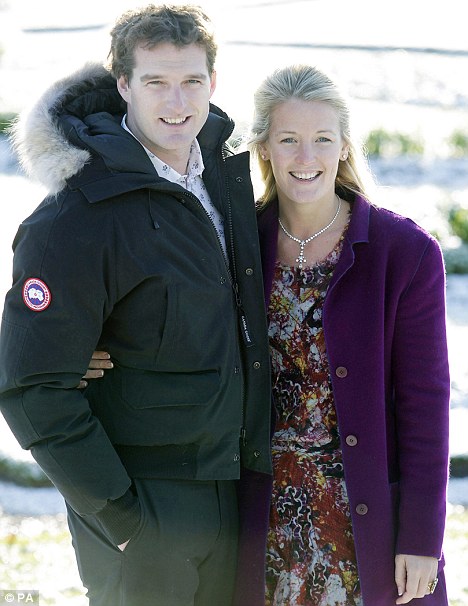
Lady Edwina Grosvenor, and her husband Dan Snow, welcomed their son Wolf Robert on September 9, a brother for Zia, aged 3.

Lady Edwina is a prison reformist and philanthropist. She is the daughter of the Duke of Westminster, the third richest man in Britain, who is significantly wealthier than the queen. Through her mother Natalia Phillips, Lady Edwina is a direct descendant of King George II, and thus has a right of succession to the British throne, although she is only distantly in line. A distant relation of both Queen Elizabeth and Prince Philip, she is also a direct descendant of the Russian author Alexander Pushkin, and Nicholas I of Russia. Princess Diana was Lady Edwina’s godmother, and her mother Natalia is godmother to Prince William.

Dan Snow is a television presenter who has made numerous history programmes for the BBC. Some of the programmes he has presented include Battlefield Britain, Britain’s Lost World, Rome’s Lost Empire, and Battle Castles. In My Family at War, he explored the role of his great-grandfather Thomas Snow, who was a military commander on the Somme during World War I. A political advocate for several causes, he was prominent in the Let’s Stay Together campaign to keep Scotland part of the Union. He and Lady Edwina were married in 2010, in a small private ceremony.

Dan Snow made this statement about the choice of Wolf’s name: Our son was born today, 2005 years to the day since his ancestors erupted out of the Teutoburger Wald and annihilated the mighty legions of Varus. Like those wild Germans, he came screaming out of the dawn mist, under a full moon, and so we named him Wolf.

The Battle of the Teutoburg Forest (Teutoburger Wald) took place in September 9 AD, when an alliance of Germanic tribes led by Arminius, chieftain of the Cherusci tribe, ambushed and annihilated three Roman legions and auxiliaries led by the Roman general Publius Quinctilius Varus. The result of the battle was that Germania remained independent and never became part of the Roman Empire. The date is a matter of speculation, but a full moon in September that year would have been late in the month – September 9 was two days after the new moon. There would been attacks at dawn during the course of the battle, which raged for days.

Wolf and his father Dan share the same middle name, which also happens to be the name of two of Wolf’s great-grandfathers, on both sides of his family.

(Photo of Lady Edwina Grosvenor and Dan Snow on their wedding day from the Daily Mail)

Celebrity Baby News: Sporting Babies

10 Monday Nov 2014

Posted by A.O. in Celebrity Baby News

≈ 3 Comments

Tags

celebrity baby names, honouring, middle names

1414964638149

Paralympian Kurt Fearnley, and his wife Sheridan, welcomed their first child in March and named their son Harry. Harry is Kurt’s middle name. Kurt is a wheelchair racer who took up the sport as a teenager; he has won three gold medals, six silver medals, and two bronze medals at Paralympic Games, as well as gold and silver at Commonwealth Games (including this year). He has won the New York City marathon five times (most recently this month), and the Chicago marathon three times. He climbed the Sydney Centrepoint Tower and crawled the Kokoda Trail in 2009, and competed in the Sydney to Harbour Yacht Race in 2011. An advocate for people with disabilities, he was awarded the Order of Australia in 2004.

NRL player Jack Wighton, and his partner Monisha, welcomed their their first child yesterday, November 9, and have named their daughter Aaliyah. Jack has played for the Canberra Raiders since 2012, and also been selected for the Indigenous All Stars and Country Origin.

AFL player Lachie Hansen, and his partner Prue, welcomed their son Ryder last year. Lachie has played for North Melbourne since 2007.

(Photo shows Kurt after winning the New York City marathon, with Sheridan and Harry)

Boys Names From Native Australian Flowers

02 Sunday Nov 2014

Posted by A.O. in Name Themes and Lists

≈ 7 Comments

Tags

Australian slang terms, birth notices, celebrity baby names, classic names, controversial names, english names, famous namesakes, fictional namesakes, flower names, Gaelic names, Greek names, honouring, Irish names, Latin names, locational names, mythological names, name history, name meaning, name trends, names from songs, names from television, nature names, nicknames, patriotic names, plant names, popular names, rare names, scandinavian names, scientific names, Scottish names, sibsets, surname names, tree names, underused classics, unique names, unisex names, Welsh names

Millstream-Chichester-National-Park-2013-05-15-003

This follows on from Girls Names From Native Australian Flowers. If you thought it would be hard for me to find floral boys’ names, you were right, and many hours were spent poring over gardening books and field guides. I did notice that several of the names come from plants that are traditionally used as female names, so this might be a way to find a boy’s name which honours a Daisy, Iris, or Lily, for example.

Bailey
Acacia baileyana is the scientific name for Cootamundra Wattle, a small tree with silvery-green leaves and masses of golden blossom in the spring. It is native to New South Wales around the town of Cootamundra, which holds a Wattle Time Festival every year when the wattle blooms. However, it is extremely adaptable, and will grow almost everywhere – if anything it grows a little too well, and can escape into the bush and become an invasive weed. Its scientific name honours Frederick Manson Bailey, a colonial botanist in Queensland. Bailey is an occupational surname originally designating someone who was a bailiff, the officer executing the decisions of a lower legal court (these days such duties are usually carried out by local councils). It has been used as a personal name since at least the 18th century, and Bailey has charted in Australia since the 1990s, when it was catapulted straight into the Top 50 from almost nowhere, debuting at #32 in 1997. It peaked in 2004-2005 at #27, and is currently #77. Although only popular for boys, Bailey is sometimes used for girls. Bailey provides a way for boys as well as girls to be named after the patriotic acacia tree.

Carex
Carex is the scientific name for grass-like plants commonly known as true sedges. Sedges are common all over the world, and nearly always found in wetlands; if you’ve ever walked around a swamp or lake, sedge is the dense stiff grassy stuff along the edge which might cut your hands if you try to gather it. Although sedges are not usually thought of as terrifically exciting – hardly anyone hopes for a bouquet of sedges on Valentine’s Day – they are vitally important to the ecology of our wetlands. Anyone working on a project to save a wetlands area will need native sedges to plant along lakes and riverbanks to stabilise the soil, and they are also around dams and garden ponds. They bloom in spring; the flowers are tiny, and appear on short spikes. I have seen a boy named Carex in a birth notice, and this is a daring and environmentally aware choice that is on trend for boy’s names ending in -x, like Felix and Max.

Eric
Banksia ericifolia is the scientific name for Heath Banksia, a medium to large shrub with eye-catching orange or red flowers which bloom in autumn or winter. Banksias are famous for their flower spikes; each spike can have hundreds or even thousands of individual flowers, looking overall like a large brush. Banksia ericifolia was one of the original banksia species collected by botanist Sir Joseph Banks around Botany Bay, and the subspecies ericifolia is native to the area around Sydney. It has been adopted as the city’s official plant, and can be seen in parks and public spaces. Heath Banksia is reasonably easy to grow; if your garden is too small for a regular Heath Banskia, there is a dwarf cultivar called “Little Eric”. The eric in ericifolia comes from Ericaceae, the family of heath and heather. The name Eric is an English form of the Scandinavian name Erik, usually translated as “eternal ruler”. Although known in England since the Middle Ages, it didn’t become popular until the 19th century, after the publication of a moralising children’s book called Eric, or Little by Little. Eric is a classic which has never left the charts. It was #21 in the 1900s, and peaked in the 1910s at #19. It didn’t leave the Top 100 until th 1970s, when it hit its lowest point of #149. Since then, Eric has improved slightly in popularity, and remains stable in the 100s – an extremely safe choice.

Evan
The Hawkesbury Daisy (Brachyscome multifida) grows on the east coast; it has matted foliage with the daisy flowers rising above it in mauve, pink, or white, blooming in autumn and winter. They are very popular garden plants, as they are are quite hardy and look great in borders and mass plantings. One of its cultivars is “Evan”, which was named after the son of the founder of the Australian Daisy Study Group. “Evan” is mauve with small flowers and compact foliage, easy to grow, and perfect for rockeries and hanging baskets. The name Evan is the Anglicised form of Iefan, a Welsh form of John. Evan is an underused classic in Australia – it has never left the charts, but never reached the Top 100 either. The highest it has ever been is #103 in the 1980s, and it’s never been lower than it was in the 1900s at #194, making it a handsome, solid choice which hasn’t been out of the 100s for well over a century. Evan is the poster boy for “normal but not overused” names.

Heath
Common Heath (Epacris impressa) is a small shrub native to south-east Australia; it has red, pink, or white tubular flowers which bloom from late autumn to early spring. A pink-flowered form called “pink heath” is the floral emblem for the state of Victoria. Common Heath is tricky to grow in the garden, and perhaps best enjoyed in its natural setting. Heath is an English surname which can refer to someone who lived on or near a heath, or was from one of the many English towns called Heath. Heath is an underused modern classic which has charted consistently since the 1960s without ever becoming popular. It peaked in the 1970s at #101, possibly because of Heathcliff from Emily Bronte’s Wuthering Heights, serialised on television that decade, and a hit song by Kate Bush in 1978. Actor Heath Ledger, born in 1979, was named after Heathcliff, with his sister Kate named after Catherine from the novel. Heath dropped to its lowest level in the 1990s at #279, but picked up the next decade when Heath Ledger’s film career took off, and gained momentum from Dan Ewing‘s performance as Heath Braxton in Home and Away. Heath is a strong, simple nature name which has long been associated with intense, hunky guys.

Orestes
Caladenia orestes is the scientific name for the Burrinjuck Spider-orchid, native to New South Wales. These small, delicate flowers with dark red colouring are listed as vulnerable, so count yourself lucky if you ever find one in the bush. In Greek mythology, Orestes was the son of Agamemnon Greek commander during the Trojan War. Their family had been placed under a curse, so that their line was a rich source of Greek tragedy. Agamemnon sacrificed his daughter Iphigenia to obtain fair winds to Troy; when he got home from the Trojan War, Agamemnon’s wife Clytemestra murdered him in retribution. When Orestes grew into a young man, he murdered his mother to avenge his father’s death. According to legend, Orestes was pursued by the Furies in punishment for his crime, but he got a good lawyer in the goddess Athena, who put his case before the gods and got him acquitted (slightly rigged, as Athena was one of the judges). He was often seen by Greek writers as a dutiful son to his father, and an example of someone forced by circumstances to commit a terrible act. The name Orestes means “of the mountains”, which is the reason for the orchid’s name. An unusual and possibly controversial choice.

Paterson
Patersonia is the scientific name for the Australasian flower commonly called Native Iris. It was named in honour of William Paterson, the first Lieutenant Governor of New South Wales, and most species are from Western Australia. Patersonia has small flowers that are usually mauve, and can look very attractive in the garden. Paterson is a common Scottish surname which means “son of the follower of Saint Patrick“, and the Clan Paterson is from Lowland Scotland. Sir William Paterson founded the Bank of England, but perhaps the most famous episode in the Clan’s history is when Sir Hugh Paterson entertained Bonnie Prince Charlie, and his niece nursed the prince through a bad cold, becoming his mistress and bearing him an illegitimate daughter. The name Paterson could honour our national poet Banjo Paterson, and would naturally shorten to Paddy. A possible issue is another flower, the attractive but toxic purple weed commonly known as Paterson’s Curse.

Smith
Syzygium smithiim is the scientific name for the Lilly Pilly, an ornamental tree which is a member of the myrtle family; its name honours botanist Sir James Edward Smith. Lilly Pilly is native to the east coast of Australia, and has glossy leaves and cream or pink flowers which bloom in spring and summer. However, it is best known for the fruit which follows the flower – attractive edible berries with a deep pink colour. Smith is the most common English surname, and originated in northern England and Scotland. Although it later came to specifically refer to a blacksmith, the word means any craftsman in metal, hence goldsmith or swordsmith, and more generally, any creator, hence wordsmith. Metalworkers have historically been seen as magical in their skill to transform through fire, and there are several smith gods and heroes, such as Vulcan and Wayland; Cain is said to have been the father of metalsmiths. The name always reminds me of J.R.R. Tolkien’s bittersweet fairy tale, Smith of Wooton Major. Smith has often been thought too common a surname to be used as a personal name, but gained recent familiarity through Sex and the City’s handsome Smith Jerrod (real name Jerry Jerrod). Hawthorn’s Sam Mitchell has a son named Smith.

Sturt
Sturt’s Desert Pea (Swainsona formosa) is native to the deserts of inland Australia, and highly recognisable from its striking deep red pea flowers. According to an Aboriginal legend, the flowers sprang from the blood of two murdered lovers and their child. Sturt’s Desert Pea is the floral emblem of South Australia, and is a popular subject for arts, crafts, and decorative motifs. Although it grows in such profusion in the harsh desert, Sturt’s Desert Pea is difficult to establish in the garden. It is named after the explorer Captain Charles Sturt, who recorded seeing masses of the flower during his explorations. The surname Sturt comes from the Old English for a promontory – a raised mass of land with a sharp slope on one side – and this could be given to someone who lived near such a landmark, or from a town named after one. Similar to Stuart, this is a lesser-used surname which is given meaning by the flower.

Tucker
Tuckeroo (Cupaniopsis anacardioides) is an Australasian flowering tree in the soapberry family. It has greenish-yellow flowers which bloom in winter, followed by orange berries in the spring and summer which are a source of food for native birds. Tuckeroo is a popular ornamental tree for gardens which gives good shade and looks attractive all year round, and is often grown along streets in coastal towns of New South Wales and Queensland. The English surname Tucker is an occupational one referring to someone who softened cloth for the wool industry by tramping on it in water; the word comes from the Old English for “to torment (the cloth)”. As an Irish derivation, Tucker comes from the Gaelic O’ Tuachair, meaning “son of the brave one”. Tucker seems problematic as a first name, breaking the rule of “no names that rhyme with rude words”, but it does have a very Australian meaning, as it is slang for “food”, derived from “to tuck in”. Some people might think that’s another problem with the name in Australia. I’m not sure … any takers for Tucker?

POLL RESULTS
The public’s favourite names were Heath, Evan and Tucker, and their least favourite were Carex, Orestes and Sturt.

(Picture shows Sturt’s Desert Pea; photo from Our Naked Australia)

Girls Names From Native Australian Flowers

26 Sunday Oct 2014

Posted by A.O. in Name Themes and Lists

≈ 16 Comments

Tags

colour names, english names, famous namesakes, fictional namesakes, flower names, French names, Greek names, historical records, honouring, Latin names, locational names, middle names, mythological names, name history, name meaning, name popularity, name trends, names from television, nature names, nicknames, plant names, popular names, Portuguese names, rare names, retro names, Roman names, scientific names, Scottish names, surname names, vocabulary names

BoroniaHeterophyllaLipstickCu600

Now that it’s spring, I have been taking advantage of the warmer weather and lighter evenings to get out into the garden more. I love the spring flowers, which make me think of floral names, so here are some from our native blooms.

Boronia
Boronia (bor-OH-nee-uh) is a native shrub whose cup-shaped, pink or red-hued flowers give off the most exquisite sweet scent; boronias are related to citrus trees, and the fragrance of boronia is slightly lemony. It is a popular ingredient for perfumes and scented oils, but oddly enough, quite a few people are unable to smell boronia at all. Boronias grow in many parts of Australia, but the Brown Boronia, considered to have the most magnificent scent of all, is from Western Australia. Many people find boronia difficult to grow, and might enjoy this plant more by walking through the bush in spring. The plant has given its name to a pleasant suburb of Melbourne, while Boronia Heights is a suburb of Logan. The boronia is named after Francesco Borone, who was the servant of botanist Sir James Smith, but became his talented and valued field assistant. Francesco died in a bizarre accident when he sleep-walked out the window while recovering from illness. When Sir James discovered the boronia several years later, he named it in Borone’s memory. There are quite a few people with the name Boronia in Australian historical records, mostly as a middle name. Bo would make a charming nickname.

Correa
Correa (KOR-ree-uh) is a small shrub related to the boronia, but its bell-shaped flowers have no fragrance; instead it is the leaves which have a fruity smell when crushed. Correa reflexa is known as Native Fuchsia, because of its long tubular petals which are often a dusky pink colour, although correa can come in a range of colours. Correa grows all over Australia, and is an easy garden plant to grow; it blooms in autumn and winter, making it a great plant to brighten up your garden during the cold months. Correa is named in honour of the Portuguese botanist José Correia da Serra; the Correia part of his name is a common Portuguese surname meaning “leather strap”, originally given to those who worked in the leather trade. Correa is a rare find in Australian historical records, and would make a distinctively Australian alternative to names such as Cora.

Daisy
Daisies are simple little picture-book flowers common all over the world; they are symbolic of childhood innocence. There are many types of daisy native to Australia; one of the most popular is the Paper Daisy, called the Everlasting in Western Australia. Small with crisp, papery petals, they are pink and white, and very easy to grow. The word daisy comes from the Old English for “day’s eye”, as English Daisies open when the sun rises and close in the evening. Daisy has been used as a girl’s name since the 16th century, and became popular in the 19th, along with other floral names. It is also used as a nickname for Margaret, because the French name for the Ox-eye Daisy is the Marguerite. The name Daisy was #58 in the 1900s, and left the Top 100 in the 1920s. It dropped from the charts in the 1940s, made a minor come-back in the 1950s, then dropped out again the following decade. Daisy returned to the charts in the 1980s at #646, and climbed fairly steadily. It rejoined the Top 100 last year at #90, making it one of the fastest-rising names of 2013. Wholesome yet also sexy, retro Daisy still sounds fresh … as a fresh a daisy!

Dianella
Dianella is commonly known as Blue Flax-lily, found in all states of Australia. These woodland plants grow in clumps with small, deep blue flowers that bloom in spring and summer; they are popular garden plants being hardy as well as decorative. The Perth suburb of Dianella was named after the flower, which grew in abundance there before development. Dianella is named after the Roman goddess Diana, goddess of the hunt, because she is associated with woodlands; the name Diana may mean “heavenly, divine”. Dianella seems like an interesting way to honour a Diana or Diane, while giving a nod to native flora, and offering popular Ella as the nickname. The name Dianella shows up several times in Australian historical records, always in South Australia for some reason.

Laurina
Hakea laurina, also known as Pincushion Hakea, is a large upright shrub or small tree from south-west Western Australia. The flowers are very striking, being deep pink or red, and shaped like globes with cream spikes coming out of them; they have a mild fragrance, but are best known for producing nectar, which is very attractive to birds. Hakea laurina blooms in autumn and winter, and this popular garden plant is easy to grow, being both drought-tolerant and frost-hardy. Laurina is simply based on the Latin Laurus, as its leaves are similar to those of the laurel tree. The name Laurina dates to the 18th century, and is an elaboration of the name Laura. It has recently been brought to attention through “Melbourne princess” Laurina Fleure, who was a contestant on this season of The Bachelor: although portrayed as a villain by the show’s producers, she gained a fan following and has been dubbed “Australia’s Carrie Bradshaw”.

Lilac
Lilac (Syringa vulgaris) is a small tree native to the Balkans, famous for its pale purple flowers, which have a beautiful sweet fragrance. Australia has a plant which is sometimes called Native Lilac, or Lilac Vine, and that is Hardenbergia violacea, also known as Purple Coral Pea, as it is member of the pea family. It is a hardy and vigorous climbing vine, capable of growing twenty feet; some varieties are low-growing shrubs. In winter it produces masses of showy violet pea-flower blooms, and is an easy to grow garden plant, popular for training over fences and pergolas. Lilac is a word from the French, which ultimately goes back to the Sanskrit for “dark blue”; it has been used as a girl’s name since the 19th century, when other flower names came into fashion. Lilac has never been a common name, but it is very pretty, and would be right on trend, fitting in with popular Lily and Lila, while having its own distinctive sound. It would also make a lovely middle name to match all those girls’ names ending with -a or an EE sound.

Lotus
The lotus flower (Nelumbo nucifera), sometimes known as Sacred Lotus, Red Lily, or Lotus Lily, is an aquatic plant native to Tropical Asia and Northern Australia; it is thought that the plants were brought to Australia many centuries before European settlement. There are many different varieties and cultivars, with one of them being the Waltzing Matilda Lotus, which is small with pink flowers. Lotus flowers can be easily grown all over Australia, but the native lotus will only be happy in warm areas. The Lotus is a very symbolic plant – as it is a stunning flower which grows out of slimy mud, you can see it as a message that life can be beautiful no matter what your origins or circumstances. In Hinduism, a lotus is often used to indicate divine beauty and spiritual growth; in Buddhism it represents purity and non-attachment to the material world. Asian literature sees the lotus as the ideal of feminine grace, beauty, and elegance. The lotus is also a peace symbol, and Aboriginal people from the Top End held up lotus leaves to strangers to show they meant no harm. With so many wonderful meanings for this lovely flower, it’s surprising how little Lotus has been used as an English name. Many will see it as having a hippie vibe, while others may see it as a car name.

Orchid
Orchids are extremely diverse plants found almost everywhere in the world except on glaciers; they grow in the Arctic, and on Macquarie Island near Antarctica. There are hundreds of types of orchids native to Australia. Orchids are grown for their often beautiful flowers, and excite a passion in those who cultivate and collect them that amounts to an obsession. The Cooktown Orchid (Dendrobium phalaenopsis) is the state emblem of Queensland, and grows naturally in the state’s tropical far north. It is considered to be Australia’s showiest orchid, with beautiful mauve flowers that bloom in the dry season. With care, it can be grown outdoors as far south as Brisbane; any lower than that and you need a glasshouse. Orchid has been used as a girl’s name since the 19th century, and despite the beauty of the orchid flower, it has remained in rare use. This may be because the ORK sound at the start is not considered attractive, or because the flower’s name comes from the Greek for “testicle”. Orchid is an unusual, sophisticated floral choice that starts with the fashionable O, but sounds quite distinct from today’s popular names.

Pandorea
Pandorea (pan-DOR-ee-uh) are climbing vines native to Australasia. Pandorea pandorana, otherwise known as Wonga-wonga Vine, is a popular garden plant, being an easy to grow vigorous climber with glossy leaves. The flowers are bell-shaped, bloom profusely in spring, and are naturally creamy-white with maroon markings, but cultivars come in a very wide range of colours. Hardy and adaptable, Wonga-wonga Vine grows all down the east coast, as well as in the central deserts, and is also native to several Pacific Islands. The wood of the vine was used by Aborigines of central Australia to make spears, and it appears in their mythology as a group of women with very thin and flexible bodies. The plant’s scientific name is after Pandora from Greek mythology, who legend says had a container filled with all the world’s evils, which she opened out of curiosity. It is usually thought the name came about because the Pandorea vine grows a pod which opens to reveal a multitude of seeds; supposedly the plant’s namer was reminded of “Pandora’s box” by the seed pod. The name Pandora has a lovely meaning – “all gifts”. If you are attracted to the name Pandora, but have doubts about the myth, or worry it’s too Avatar, or don’t like the -dora sound at the end, why not consider Pandorea as a floral alternative?

Violet
Violets are small violet-blue flowers, which symbolise modesty – we call a shy person a “shrinking violet”, and connect the flowers with pure femininity. They are associated with death and resurrection in Greek myth, and can be used to denote death which comes too soon, such as for Ophelia in Shakespeare’s Hamlet. Violet Day was commemorated in Australia to remember those who died during World War I; the last Violet Day was held in 1970. There are a few species of violet native to Australia – a favourite for gardeners is Viola banksii, which grows naturally in New South Wales. It has striking purple and white flowers, and is very easy to grow, forming an attractive groundcover. The word violet comes by way of the Latin viola, and simply refers to the colour. Violet has been used as a name since the 16th century in Scotland, influenced by the French name Violette. Violet was #22 in the 1900s, and left the Top 100 in the 1940s, before dropping off the charts in the 1960s. It didn’t return until the early 2000s, when it was #569; this follows the publication of Lemony Snicket’s Series of Unfortunate Events, starring pretty teen inventor Violet Baudelaire. After becoming a celebrity favourite, and having a staggeringly swift rise, it made the Top 100 in 2009 at #85, and was #51 last year, being the fastest-rising name in both Western Australia and Tasmania. This is a dainty retro name that has a dark side: its similarity to the words violence and violate act as a counterweight to its maidenly timidity.

POLL RESULTS
The public’s favourite names were Violet, Daisy and Lilac, and their least favourite were Orchid, Boronia and Pandorea.

(Photo shows a Pink Boronia (Boronia heterophylla), Pink Lipstick variety)

Famous Names: Buddy and Sonny

22 Wednesday Oct 2014

Posted by A.O. in Famous Names

≈ 4 Comments

Tags

birth notices, British name trends, celebrity baby names, celebrity sibsets, english names, famous namesakes, historical records, honouring, name history, name meaning, name popularity, nicknames, rare names, slang terms, UK name popularity, US name popularity, vocabulary names

928474-lance-franklin

It’s spring, which means that football season is definitely over now. If you’re a sad case like me, the second the Grand Final is over, you begin looking forward to next season, which is about five months away. You might also spend time looking back on the season which has just passed.

“Buddy” Franklin and “Sonny Bill” Williams are two footballing names I heard repeatedly throughout the 2014 season; every time I watched a sports update on television, or heard it on radio, it seemed as if either Buddy or Sonny would be mentioned at some point.

Lance “Buddy” Franklin is an AFL star, and the brother of netballer Bianca Giteau, who has been featured on the blog twice as a celebrity mum. Not only a leading goal-kicker and multiple medallist, Buddy has tons of celebrity glamour, due to dating Miss Universe Australia winner and model Jesinta Campbell.

The big story that had him constantly in the sporting news was that he swapped clubs, from Hawthorn to the Sydney Swans, and proved one of the Swan’s best players. In a nail-biting finish, Hawthorn and Sydney played each other in the Grand Final – could Hawthorn win without their star player?

Sonny William Williams, or Sonny Bill Williams, is a New Zealand rugby player and former boxer who has code-swapped into rugby league at times. He also has glamour for his many endorsements from fashion labels, and is one of Australia’s most marketable athletes. Last year he signed with the Sydney Roosters for two seasons, and helped take the Roosters to Premiership victory. Could he once again become a premiership winner in his last NRL season?

In the end, all the hype ended in a bit of a fizzle – the Sydney Swans lost, and although the Roosters were the Minor Premiers, they were knocked out during the finals and did not make it to another Grand Final.

Buddy is a slang word meaning “friend, companion” – the equivalent of the Australian favourite, mate. It may be an affectionate alteration of the word brother, but there is an 18th and 19th century English and Welsh dialect word butty, meaning “work-mate”, which was used by coal-miners, which seems more likely. This goes back to the 16th century term booty fellow, given to a partner that you share your booty or plunder with; booty of course means “gains, prizes”, often with connotations of being ill-gotten. Interestingly, we still sometimes jokingly introduce a friend as our partner in crime.

Buddy has been used as a (mostly male) personal name since at least the 18th century, and seems to have historically been much more popular in America. It isn’t always possible to tell from historic records whether Buddy was the person’s name, or a common-law nickname, but in at least several cases, it was the name they were christened with. There are a number of Buddys in Australian historical records, but in most (maybe all?) cases it seems to be either a nickname or a middle name.

Famous people named Buddy nearly always have it as a nickname, such as rock and roll pioneer Charles “Buddy” Holly, or NRL player Yileen “Buddy” Gordon. Fictional Buddys include Buddy Hobbes, the man who thought he was one of Santa’s elves in the Christmas comedy Elf, and Buddy Love, the arrogant alter ego in The Nutty Professor.

Buddy has been chosen as a baby name by two TV chefs – Bartolo “Buddy” Valastro from American show Cake Boss has a son named Buddy after his own nickname, and British chef Jamie Oliver welcomed his son Buddy Bear Maurice in 2010 (the name chosen by Jamie’s model wife Jools). Buddy Oliver still manages to make the occasional “crazy celebrity baby name list”, although his sisters Poppy Honey Rosie, Daisy Boo Pamela and Petal Blossom Rainbow are usually thrown in as a sort of package deal. Australian cricketer Michael Hogan has a son named Buddy.

Buddy has never charted in Australia, but I do see it in birth notices fairly often, mostly from Victoria. In the United States, Buddy peaked at #202 in the 1930s and left the charts in 1989; last year just 21 boys were named Buddy – the same number as those called Trigger. But in 2013, Buddy was #356 in England/Wales; the numbers began climbing the same year Buddy Oliver was born, although it seems to have slackened off slightly.

Sonny is even more straightforward as a slang term than Buddy, as it is a casual or affectionate way to address a young boy, from the word son. As a baby name, you could see Sonny meaning “my son”, or even as another form of Junior.

Sonny has been used as a boy’s name since at least the 17th century, and as with Buddy, it isn’t always possible to know whether it was the person’s given name or their nickname, but it does seem to have been the name they were christened with in many cases. There are many more Sonnys in Australian historical records than Buddys, and often it was a common-law nickname. This seems to have been given humorously in the case of a Thomas Fogg, who was dubbed Sonny Fogg. Sonny Day and Sonny Love may have been real names, however.

Sonny is a popular nickname amongst famous musicians, such as jazz legend Theodore “Sonny” Rollins, rapper Paul “Sonny” Sandoval from Christian metal band P.O.D., and Flower Child era pop singer Salvatore “Sonny” Bono, who was half of Sonny & Cher before becoming a conservative politician. However, Sonny is the real name of blues guitarist Sonny Landreth, and DJ Sonny Moore, who performs under the stage name Skrillex. Even in fiction, Sonny has a musical heritage, because James Baldwin’s story Sonny’s Blues centres on a young jazz musician.

Sonny has been chosen as a baby name by Sophie Ellis-Bextor from English rock band The Feeling, and by Noel Gallagher, from Britpop band Oasis. American actor Jason Lee also has a little boy named Sonny. Australian comedian Hamish Blake welcomed his son Sonny Donald last year, and NRL player Todd Lowrie welcomed son Sonny in 2011.

Sonny is not an unusual name in Australia, being around the mid-100s. In the United States, Sonny has been solidly on the Top 1000 since the 1920s, and peaked at #428 in the 1970s (perhaps under the influence of Sonny Bono, as Sonny & Cher became household names in this decade due to their successful variety shows on television). Currently Sonny is #842 in the US, and relatively stable. In England/Wales, Sonny became a Top 100 name last year, debuting at #90. It is possible it could also make the Top 100 here one day.

These are two cute, friendly, upbeat, boyish nicknamey names that have gained celebrity support and are very much in line with British trends. Some may see the names as a little too snuggly and huggable, but I think they could also seem cool, or even a bit bad boy.

POLL RESULTS
Buddy received an approval rating of 21%, while Sonny was better received with an approval rating of 53%.

(Picture shows Lance Franklin; photo from the Herald Sun)


Celebrity Baby News: Vineyard Babies

11 Saturday Oct 2014

Posted by A.O. in Celebrity Baby News

≈ 2 Comments

Tags

celebrity baby names, celebrity sibsets, honouring, names of wines

r0_3_1200_678_w1200_h678_fmax

Peter and Hannah Logan, from Logan family wine company in the Mudgee area, welcomed their daughter Clementine Frances last March, during the 2014 vintage. The middle name Frances is in honour of Peter’s mother. Peter is planning a Clementine label wine, probably a riesling. He already has wine labels named after Hannah, his father Malcolm, mother Frances, sister Kylie, and brother Greg; the Ridge of Tears label is named for the Clan Logan’s Gaelic battle cry.

Damien Stevens and Jodie Belleville, award-winning Hunter Valley winemakers who have recently opened the Hart & Hunter winery and cellar, welcomed their daughter Audrey this year, a little sister for Grace, aged 5 (Grace can be seen running through a vineyard on their website). Damien and Jodie are in partnership with their London-based friends, Dan and Elle Hart.

(Photo shows Peter and Hannah with Clementine)

Names Spotted at Home and Abroad: Name Story Special (Spring 2014)

08 Wednesday Oct 2014

Posted by A.O. in Names Spotted at Home and Abroad

≈ 2 Comments

Tags

choosing baby names, famous namesakes, For Real Baby Names, Greek names, honouring, Japanese names, locational names, middle names, mythological names, name combinations, names of businesses, nicknames, popular names, rare names, Shakespearean names, sibsets, street names, surname names, The Best Gift ofLife, unisex names

our-family_10

When I looked through my name files, I saw I had quite a collection of stories explaining how babies had received their names. I thought it would be worthwhile to see how other parents go about choosing baby names, as some of their solutions have been quite creative. (You may remember some of these names from the weekly Birth Announcements).

Footy Fever
Baby Aish Barker of Adelaide was named after a famous footballing family where three generations have played for Norwood Football Club. Dad is a massive Norwood fan, and always knew that this child would be called Aish, a name chosen in advance of the birth, regardless of the baby’s gender. Aish is a girl, and her big sister is Teegan. The Aish family feel honoured to have a baby named after them.

Reality Check
Amity McIntosh was born last Easter in Toowoomba, a sister to Dylan. She is named after Amity Dry, who got her big break after appearing on renovation reality show, The Block, in 2003; she and her husband were the winners that year. Through exposure gained on the show, Amity Dry got a recording contract, and has released two albums, as well as writing a musical play. You might remember that the name Amity has just reached the Top 100 in Queensland, so even though Ms Dry is from Adelaide, her name seems to have been a big hit north of the border.

His Name is History
Ethan Forbes Thomas was born in Sydney last autumn, the great-great-great grandson of William Thomas, the first Lord Mayor of Forbes, in country New South Wales. His parents were originally going to use the name William to honour the family connection, but there were already a lot of Williams in their family. They still wanted a name connected to their revered great-great, so chose the name of the town instead. The Thomas family have a strong connection to their family heritage in Forbes, and planned to have Ethan baptised in Forbes in September. Forbes is a very interesting town historically, as it was a gold-rush town in the 19th century. The bushranger Ben Hall was shot near there, and Ned Kelly‘s sister Kate lived in Forbes: she drowned saving an Aboriginal child during a flood, and is buried in the town’s cemetery.

Gender Swap Baby
Sebastian Carvajal was born on Mother’s Day in Melbourne, and was a “surprise baby”, because his parents were told at their ultrasound scan that their baby was a girl. They had therefore painted the nursery pink, bought girl baby clothes, and picked out the name Olivia, not to mention planning trips to the nail salon and dance classes. I remember reading that parents who opt to find out the sex of their baby in advance tend to have very set ideas about gender roles, and this seems like a good example – pink and dance classes for girls, blue and hobby cars for boys! I was interested that they had Olivia chosen for a girl and Sebastian for a boy, because Olivia and Sebastian are a couple in Shakespeare’s Twelfth Night.

Named After Mum’s Cheeks
Rosie Lyn Killalea was born in June in Sydney, and she is named that because her mum’s childhood nickname was Rosie, as she had rosy-red cheeks. Her middle name Lyn is after her great-grandmother, who passed away a year before Rosie was born. Rosie has inherited her mum’s pink cheeks.

Two Grandmothers in One Name
Lana Rosanna Krause was born in Rockhampton in July. Her middle name was chosen because her mother’s mum is named Annette and her father’s mum is named Rose.

Greek Mystery
Aeson Carter Small was born in August in Gladstone, just as his parents returned from holiday. When his parents first decided to start trying for a baby, they discovered that his mother was pregnant just two days later. They picked the name Aeson, because they believed that it was a translation from the Greek for “meant to be”, but I think they must have got it from some dodgy name book, because the meaning of Aeson isn’t known. In Greek myth, Aeson was the father of Jason, and he came to an unfortunate end.

He’s Cruz, Not Acacia
Cruz Zion Petterson, of Sutherland Shire, was born in the car on the way to the hospital. The car was parked on Fauna Place, just off Acacia Road in Sutherland, and some people thought he should have been named Acacia; however the Pettersons didn’t think either Acacia or Fauna were viable options for their son. I wonder if Cruz would have been called Acacia if he was a girl? Cruz wasn’t born in a Holden Cruze, but in a Mitsubishi 380. Cruz has a big sister named Starr and a big brother named Phoenix.

Names From The Best Gift of Life

The Best Gift of Life is a blog that Sarah from For Real Baby Names put me onto. It has interviews with mums, many of whom have interests in fashion, photography, and interior design, about their lives and their babies. One of the interview questions is about how they chose their baby’s name, so I thought I’d share some from Australian families.

Bambi – parents Vanessa and Sean liked the name, and knew she would be the cutest little girl.

Johnny Jay – named after mum Shaunyl’s grandfather, John James. Johnny honours Johnny Cash, one of Shaunyl’s favourite singers.

Kawa Leaf – parents are Dee and Desmond. Kawa means “river” in Japanese. Dee lived in Japan in her early twenties, and the name resonated with her; she is of Chinese heritage, and in Chinese Kawa translates as “family” + “fine painting”. The middle name Leaf was chosen because at the time of Kawa’s conception and during the pregnancy, the family were living in a garden nursery called New Leaf.

Peaches Wilde – parents Tess and Caleb had the name picked out even while they were dating. Peachy was mum’s nickname, so dad thought Peaches was perfect. The middle name Wilde was chosen because dad is a “wild hearted” stuntman, so the name honours both parents.

Ravi and Nova – two brothers born a year apart to Camille and Dean. Ravi‘s name was chosen at the 14 week mark of pregnancy, but Nova‘s took longer as most of their favourite names got “swiped”. Both parents like unusual names, and Camille comes from a family which includes Afrika, Harmony, India, Nimue and Joaquin, so different names blend in better.

Seb – named after the Spanish city of San Sebastian which his parents Karrie-Anne and Brent fell in love with on holiday. They were never going to call him Sebastian, so used the short form, Seb.

(Picture is of Peaches Wilde with her mother Tess; photo from The Best Gift of Life)

Celebrity Baby News: NRL Babies

22 Monday Sep 2014

Posted by A.O. in Celebrity Baby News

≈ 1 Comment

Tags

celebrity baby names, celebrity sibsets, honouring

Article Lead - wide6139686310k37iimage.related.articleLeadwide.729x410.10jy4f.png1411304586965.jpg-620x349

Ben Murdoch-Masila, and his partner, Roxy Mura, welcomed their daughter Acacia-Rose earlier this year [pictured]. Acacia-Rose is named in honour of Ben’s best friend, Mosese Fotuaika, who passed away in tragic circumstances last year: Ben and Mosese first met in a park in the Brisbane suburb of Acacia Ridge. Ben is originally from New Zealand, and has played rugby league in Australia since 2010. He signed with the Penrith Panthers this season, and they will be playing the Canterbury Bulldogs in the finals this weekend. Ben has also played for the Tongan national team.

Ben’s friend Mosese was also from New Zealand, and his fellow team mate at the Wests Tigers. Several months after Mosese’s death, his girlfriend and high school sweetheart Shanice Alaiasa gave birth to their daughter, who she named Taya – the name Mosese had chosen for her before she was born.

Ashley Harrison and his wife Majella welcomed their son William late last year, a brother for Ethan. Ashley made his debut in 2000 and played almost 300 games during his career; he played for several clubs, most recently the Gold Coast Titans, and was selected to play for Queensland in State of Origin, as well as the Prime Minister’s XIII and the NRL All-Stars. Ashley recently retired from the game because of a severe neck injury.

Ryan Stig, and his wife Andrea, welcomed a daughter named Norah Joy earlier this year. Ryan played for the Newcastle Knights, but was forced to stop playing in 2011 after developing a blood clot on his eye and chronic fatigue. He was recently diagnosed with Lyme Disease, and will be travelling to Germany for treatment this month.

Should They Pick Eva or Ivy? And What Do You Think About Lulu?

30 Saturday Aug 2014

Posted by A.O. in Naming Assistance

≈ 11 Comments

Tags

choosing baby names, honouring, middle names, nicknames, sibsets

images

Anne and Kenneth are expecting a baby girl in a few weeks, and as Anne has had some pregnancy complications, there is a possibility the baby could come early. Apart from her other concerns, she’s worried that they are running out of time to choose a baby name. Anne and Ken already have a son named Will.

After lengthy discussions, the only names Anne and Ken have agreed on are Eva and Ivy. Anne likes pretty, feminine names that have a cute nickname attached. That’s why Eva seems like a good option, because both Anne and Ken like the short form Evie, but want a formal name for it. Anne loves Ivy, but doesn’t like that it has no nickname – just as Will’s name doesn’t. It’s not a deal-breaker, but it does mean that she’s still considering other options.

Ken has always liked Lily, but it’s too similar to Will in sound to consider using. However, they like the idea of using it as a middle name for Eva – Eva Lily.

Other names Anne likes that have been vetoed by Ken:

Everly
Luella
Audrey
Layla
Sybella

Names that Ken likes which have been vetoed by Anne:

Aerin (because the spelling will need constant explanation)
Georgina (the name of a friend’s daughter)
Lily (clashes with Will)
Harper (Anne worries it’s a short-term name trend)

Both Anne and Ken like the name Lulu, but don’t think they could use it as a formal name as it seems so youthful. That’s why Anne suggested Luella, but Ken doesn’t care for it.

Will has a family name for his middle name, and ideally Anne would like their daughter to have a family name in the middle as well. The problem is that there aren’t too many family names that really work with the names they are considering. Her mother’s nickname is Cally, which might work, while her sister’s middle name, Elizabeth, seems like a possibility. Another family name under consideration is Amy. Anne hates her own name, both first and middle, and definitely doesn’t want it used.

However, Anne’s willing to give up on the idea of a family name if it doesn’t work out. She also wonders what people think about using two middle names?

Some name combinations she likes with Ivy are:

Ivy Lulu
Ivy Harper
Ivy Luella
Ivy Elizabeth

Neither Anne or Ken are happy with their own names, which is why they are so anxious to get their daughter’s name right. Their surname begins with C and ends with L eg Caldwell.

* * * * * * * * * *

Anne, I’m sorry to hear that you’ve had pregnancy complications, but try not to add running out of time to your list of worries. We get a really generous amount of time (60 days) to register a baby’s name in Australia after the birth, so nobody should need to feel panicked about finding a baby name.

And it sounds as if you and Ken are making great progress – you’ve agreed on Eva and Ivy, and you’ve both agreed that you like Lulu as a nickname, but would need a formal name for it. That gives you two definite front-runners, and the possibility of having a “Lulu-providing” name.

Eva Lily seems absolutely perfect for you, as it has a nickname, Evie, that you both like, and you can also use Ken’s choice of Lily in the middle, while Ivy Lily is problematic. Eva sounds lovely with your surname, and seems like a natural sister to Will. Eva was featured on the blog earlier this year, and was judged by voters as a stylish classic, feminine but not frilly, beautiful or pretty, and easy to spell and pronounce. That’s a big thumbs up from the public, and a thumbs up from me as well.

Although Ivy doesn’t have a nickname, I notice that you write that you LOVE the name Ivy, while you say that you LIKE Eva. Now maybe you didn’t want to keep using the same word to describe your feelings for each name, but that was enough to make me pause.

I wonder whether you prefer Ivy to Eva, and it’s the lack of a nickname that is stopping you from committing to it? Because if you’re a naturally nicknamey person, it seems as if almost child can have a nickname, no matter what it has on the birth certificate. I know a little girl named Mary-Ann, and she goes by … Sunny! Because has such a sunny smile. Nicknames don’t have to come from the name, they can be bestowed for any number of reasons.

Apologies if I’m reading too much into this, but Ivy is also a lovely name that sounds nice with your surname, and seems like it could easily be Will’s sister. And if Eva ends up being Evie most of the time, there really isn’t a lot of difference between Evie and Ivy.

I like the middle names you are considering for Ivy. Ivy Elizabeth is a nice way to honour your sister, and Elizabeth has tons of nickname options if you wanted a nickname – including Lily, and at a small stretch, Lulu. There was a celebrity baby named Ivy Elizabeth this year, which got a “perfect” rating from more than 60% of the public. Ivy Lillian also occurs to me. Ivy Harper is fresh and modern, but doesn’t sound quite right to me – maybe because it makes me picture someone trying to play the harp on a clump of ivy …

Ivy Luella seems like a good compromise with Ken (in the same way Eva Lily is a compromise on his name choice), and naturally gives you a Lulu nickname. Ivy Lulu is even more straightforward, if you can both agree on it as a middle name. I’m sure you’ve already thought of these, but names such as Lucinda, Louisa, Luna, and Eloise could also give the nickname Lulu, either at the front or in the middle.

I think Lulu is one of those cute nicknames that can be given simply as a mark of affection, like Mimi or Coco or Bunny. If you’re both really keen on Lulu, but can’t agree on a name which leads to Lulu, why not use it anyway? Ivy, nickname “Lulu”? Short for “Love u little ‘un” or anything you like, really!

As far as using two middle names, I’m totally in favour if it makes everything easier for you. For example, suppose you weren’t 100% happy with Ivy Elizabeth, or with Ivy Harper, but Ivy Elizabeth Harper just sounded perfect to you. Or you felt that Eva Lily was too short, but Eva Lily Amabel was a lovely balance, and also honoured Amy, or Ivy Luella Amabel gave you the option of Lulu Belle as a nickname, which idea pleased you. Then two middle names make perfect sense.

But if trying to co-ordinate two middle names and choose a first name as well stresses you out and makes you more anxious about everything, then forget about it. Keep it simple – and sometimes two middle names does actually simplify things.

Basically this what you have to do now:

– Choose between Eva nn “Evie” and Ivy. Focus on which one you love more, rather than which one seems most convenient.
– Possibly decide how committed you are to using Lulu, and think of ways you could get there, such as by middle name, or just using it because you want to. Don’t be afraid to be creative.
– Choose a middle name, or two middle names, to go with the name of your choice. If slotting a family name in causes you too much of a headache, then by all means don’t worry about it. I guarantee that in later life Will won’t be taunting his younger sister with, “I’ve got a family name as my middle name, and you’ve only got a middle name mum and dad really liked that co-ordinates well with your first name, so nyah, nyah nyah!”

That’s pretty much it. And there’s no real reason why you have to lock in all these decisions before your daughter is born. If you have a pretty good idea of the two or three names you will probably end up choosing between, the final decision can be made at the hospital, or even after taking her home and getting to know her for a bit. There’s a chance you’ll look at her and immediately know she’s an Eva and not an Ivy, or an Ivy and not an Evie, and if that doesn’t happen, then you’re still pretty much on track.

I know you don’t want your daughter to dislike her name, and although I can’t promise anything in that regard, you’re not making any obvious errors that I can see. Both names you are considering are pretty and stylish, and I don’t think her life is going to be any different whether you choose Eva or Ivy. In fact, they are so equally good, you could probably toss a coin over this.

I have no doubt at all that if you went into labour right this second, you would have very little drama in choosing a baby name once she was born. And if the worst happens, and you take her home and still can’t choose, write in to the blog again and we’ll have an emergency baby naming brainstorm!

UPDATE: The baby’s name was Ivy!

POLL RESULTS: The public were evenly divided between Ivy and Eva, with 50% of the vote going to both. Their choice for a middle name with Ivy was Ivy Elizabeth, which gained 60% of the vote – more than twice as much as the next name combination.

As far as the nickname Lulu went, 52% of people thought you needed a name such as Lucinda or Louisa to be nicknamed Lulu, 23% thought that it could be a nickname which had no relation to the name on the birth certificate, 19% thought that Lulu could be a nickname which came from the middle name, and 7% thought that the first name needed to be only vaguely alike, such as Elizabeth or Lillian, in order to receive the nickname Lulu.

(Picture is a poster for the Little Lulu TV show)

← Older posts
Newer posts →

Enter your email address to follow this blog

Categories

Archives

Recent Comments

A.O.'s avatarwaltzingmorethanmati… on Zarah Zaynab and Wolfgang…
Madelyn's avatarMadelyn on Zarah Zaynab and Wolfgang…
JD's avatardrperegrine on Can Phoebe Complete This …
A.O.'s avatarwaltzingmorethanmati… on Rua and Rhoa
redrover23's avatarredrover23 on Rua and Rhoa

Blogroll

  • Appellation Mountain
  • Baby Name Pondering
  • Babynamelover's Blog
  • British Baby Names
  • Clare's Name News
  • For Real Baby Names
  • Geek Baby Names
  • Name Candy
  • Nameberry
  • Nancy's Baby Names
  • Ren's Baby Name Blog
  • Sancta Nomina
  • Swistle: Baby Names
  • The Art of Naming
  • The Baby Name Wizard
  • The Beauty of Names
  • Tulip By Any Name

RSS Feed

  • RSS - Posts

RSS Posts

  • Celebrity Baby News: Melanie Vallejo and Matt Kingston
  • Names from the TV Show “Cleverman”
  • Can Phoebe Complete This Sibset?
  • Zarah Zaynab and Wolfgang Winter
  • Baby, How Did You Get That Name?
  • Celebrity Baby News: Media Babies
  • Celebrity Baby News: Adelaide Crows Babies
  • Celebrity Baby News: Chris and Rebecca Judd
  • Names at Work: Name News From the World of Business and Employment
  • Celebrity Baby News: Sporting Round Up

Currently Popular

  • Celebrity Baby News: Toby Allen and Darren Weller
  • Girls Names From Native Australian Flowers
  • Girls Names of Australian Aboriginal Origin
  • Celebrity Baby News: Katie Underwood and Darren McCoy
  • Celebrity Baby News: Victoria Samba and Mitch Hoare

Tags

celebrity baby names celebrity sibsets english names famous namesakes fictional namesakes honouring locational names middle names name combinations name history name meaning name popularity name trends nicknames popular names saints names sibsets surname names twin sets unisex names

Blog at WordPress.com.

Privacy & Cookies: This site uses cookies. By continuing to use this website, you agree to their use.
To find out more, including how to control cookies, see here: Cookie Policy
  • Subscribe Subscribed
    • Waltzing More Than Matilda
    • Join 517 other subscribers
    • Already have a WordPress.com account? Log in now.
    • Waltzing More Than Matilda
    • Subscribe Subscribed
    • Sign up
    • Log in
    • Report this content
    • View site in Reader
    • Manage subscriptions
    • Collapse this bar
 

Loading Comments...