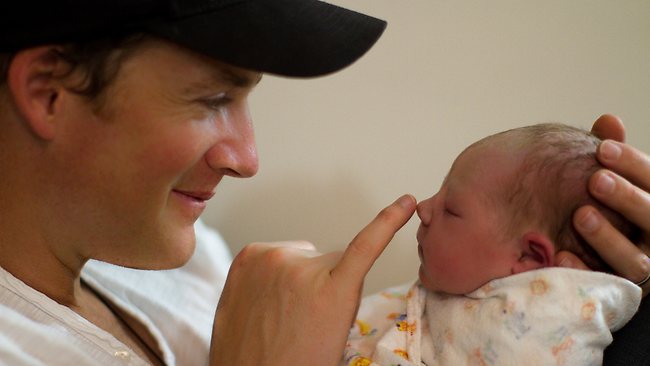
Twins Isolde Celia and Arthur Bennett: Birth Announcements from Regional and Country Areas (September)

Tags

, ,


Twins

Archina Lee and Flynn Adam (Isabella)

Carter James and Brodie Owen

Charlee and Georgia

Frank Brendan and Louis Peter (George)

Isolde Celia and Arthur Bennett

Jacob Paul and Isobel Paige (Maddison, Daniel)

Peter William and Elijah George (Hannah)

Piper Mae and Farren Leonard (Mali)

Tadhg Graeme and Cogan William (Gabrielle, Bethany, Kasey)


Girls

Asha Sydney (Kai)

Cathareya

Ella Maree Dawn (Zaiden, Tyrell)

Esther Beatrice (Darby)

Evie Lydia Lyn (Archie)

Gertie Patricia (Hazel)

Grace Aurelia (Stirling, Ella)

Hannah Alexis Zoe

Jasmine Jayne Mavis (Rahni)

Jemma Arden (Danielle, Melissa)

Kahlia Rachael

Kate Honey

Koa Jane (Amali)

Leilah Lomani Anne (Malolo, Murgon, Ilai)

Lillian Grosvenor (Joe, Harrison)

Lucy Marina Pearl (Amelia)

Orla Gwendoline May

Persie Rita (Maple)

Porsha Lily

River Denise (Blaide, Jesse, Mia)

Rose Maree (Rocco, Ruby)

Sienna Rose Miki (Rylee, Ebony, Tayla)

Tameka Leigh

Winnie Mae (Georgia)

Zella Ruby


Boys

Alexander Charles William “Charlie”

Anthony Douglas Harry

Asher Samuel Hewage (Isaiah, Elijah)

Bailee Jamahl (Keenan, Isabella, Ahliyah, Bayde)

Carter Andrew Ronald

Cort Dean (Jhett)

Declan Tiger Stanley

Denver Stanley

Eden Ben (Willow)

Emerson Francis (Amelia)

Jamie Leigh (Jack)

Jensen Brian Leonard

Kade Gregory Stirling

Liam Lewis Major (Mitchell, Hayley, Jessica)

Loghan James (Sharmonique)

Matthew Farren Ray (Lachlan, Hannah)

Morgan Layth (Mikayla, Dakota, Sienna)

Raiyden Armour (Caitlin, Delaney, Harleah)

Raven Lars Adrian

Rhodey Trewin Campbell (Lily, Darbi)

Ruston Lloyd

Rydah Raymond George

Rylan Lewis Steven (Macy, Elsa)

Thomas Jobe Bruce (Zoe)

Uzziah Ananias (Jonah, Malachi)

(Picture shows a hot spring day at Coffs Harbour, NSW taken in September 2012; photo from the Coffs Coast Advocate)

Guest Blogging at Nameberry

Tags

, ,

I have a guest post at Nameberry up today, which has been entitled Aussie Names – Big there, not here. It takes a look at what names are common or familiar in Australia, but are little used or unknown in the United States.

A big thank you goes to Angie at Upswing Baby Names, who gave me invaluable advice on how some of the names might be perceived in America. Thank you also to Linda at Nameberry for the opportunity to share my thoughts.

Matilda Magazine: Naming the Next Generation

Tags

, , , , , , , ,

Kate from Name Soiree and Sarah from For Real Baby Names have teamed up together to produce an online magazine for baby names, called Matilda. What a brilliant idea, and what a great name for it!

The first issue has just been released, and it looks fantastic. As well as articles about baby names, there’s also name consultations, name stories, personal stories and recipes. Abby from Appellation Mountain and Lou from Mer de Noms have contributed to the first issue, and I got to review some baby name blogs (read it to find out which ones).

The magazine’s website also has a blog, databases of girl and boy names, a name of the day, and polls. You should definitely go check it out, and if you like what you see, subscribe to the magazine to get updates, and also connect on Facebook.

Famous Name: Piper

Tags

, , , , , , , , , , , , , ,

Sydney was recently named the second most expensive city in the world, after Tokyo; luckily it was also revealed that Australians are now the richest people in the world, so we can afford it! The most expensive suburb in Sydney is Point Piper, where the median house value is $7.38 million, and the most expensive privately owned house in Australia, costing $70 million to build, is located here. Point Piper’s Wolsley Road is the tenth most expensive street in the world, with 16% of Australia’s priciest houses on this 1 km stretch.

Point Piper is a little piece of land which juts into Sydney Harbour, a small enclave of just eleven streets and 148 houses. As Sydney’s most exclusive suburb, it is only 4 km from the CBD and offers views of the Harbour Bridge and Opera House. Despite its size, it has two beaches and two yacht clubs. The suburb is named after Captain John Piper, a Scottish-born military officer of Cornish parentage and German descent who arrived in the colony in 1792 and became an immediate social success.

Piper’s career got off to an interesting start when he asked to be posted to the penal settlement in Norfolk Island after a scandalous love affair which ended with an illegitimate daughter in his care. Later he became acting commandment of Norfolk, and ruled it so kindly that even one of the convicts wrote home to say how outstandingly nice he was. While on Norfolk, he took as his mistress a teenage girl who was the daughter of convicts; they eventually married, but not before she had borne him four children (they had nine more).

He became very rich by collecting custom duties and excises, and after being granted land by the governor, built a mansion on the point which is now named after him in 1816 at a cost of £10,000 (about $11 million in today’s money). He continued gathering wealth, real estate and respectability, until he ran into financial difficulties in the 1820s, and was suspended from his position after mismanagement of funds was discovered.

Piper tried to drown himself in Sydney Harbour, but was rescued. He had to sell everything he owned to settle his debts, and moved to Bathurst, where he ran a farm and became a figure of local importance. When he ran into problems there as well, his friends bailed him out and bought him a riverside property, where he and his wife and numerous children could be comfortable. He was just so nice, you see – blithe, unsinkable, amiable, and eminently forgiveable for his lack of business acumen.

Piper is an English surname which refers to someone who played the bagpipes. Although we think of bagpipes as being uniquely Scottish, their origins go back to the ancient world; it’s said that the Roman emperor Nero could play them. Their use spread through Europe in the Middle Ages, with their first explicit mention in Britain being in Chaucer’s Canterbury Tales. However, it was in Scotland that bagpipe music became most sophisticated and highly developed.

The piper was a well-paid and highly-respected professional, who would have been employed by a great lord or chief; it was often a hereditary position. The piper’s job was to entertain his lord at home and while travelling; this sometimes included military service. While traditions of pipers rallying the troops before battle go back centuries, the first documented case is 1549, when they were played by the troops of the Earl of Argyll. Later, pipers could be employed by a town to play each day, as well as at fairs and other events.

There is a myth that in times of old only men were pipers, and one ancient saw is that a woman found playing the bagpipes would have her fingers cut off in punishment, but this simply isn’t true. There are many documented cases of women pipers, and they were employed as teachers in a famous piping school on the Isle of Skye. Today women pipers are still out-numbered by the men, but there are plenty of them, and they are equally good.

The surname Piper goes back to the 13th century, and seems to have historically been most common in Sussex in England. However, the personal name may predate the surname, for the name Pipere has been found in an Anglo-Saxon charter from Sussex, which could make Piper one of the oldest English names – and another possible source for the surname.

Piper, with the modern spelling, comes directly from the surname, and dates to the 18th century, when it was nearly always given to boys (although as a middle name, much more evenly divided between the sexes). The name became seen as a girl’s name when a teenager from Detroit changed her name from Rosetta Jacobs to Piper Laurie and got a contract in Hollywood.

Although Ms Laurie says in her autobiography that she had to change her name because it sounded “too Jewish”, she gives no clues as to where she got the name Piper Laurie from. It almost sounds like a girl’s name – Laurie Piper – backwards.

Piper Laurie was in The Hustler and Carrie, but would have become well-known here for her role in the miniseries The Thorn Birds, based on the best-selling novel by Australian author Colleen McCullough. The Thorn Birds was originally broadcast in 1983, and the name Piper first charts in Australia the same decade.

The name skyrocketed in the 1990s to reach #128 by the early 2000s; I can’t help feeling this has a lot to do with the character of Piper Halliwell in the TV show Charmed. The actress who played Piper, Holly Marie Combs, confessed to having a large and inexplicable fan base in Australia.

Piper made the Top 100 in 2009, and is currently #70 and rising. Although we think of this as an American-style name, it’s only been on the US Top 1000 since 1999, and is still not Top 100, although not far off at #110, so Piper has charted in Australia longer than in the US and is more popular here. Australian parents do seem quick to pick up on Hollywood names.

I saw someone on a name blog say Piper is a name which will please everyone, which seemed going a bit far. However, I do think it has a lot to recommend it. It references luxury real estate, an ancient form of music, a Hollywood star with an Aussie connection, and an appealing namesake with a history unusually free of tragedy.

It’s a very old Anglo-Saxon name, but seems bright and modern. It’s a surname name for girls that doesn’t have any “son of” or male-only occupation issues, or significant prior use as a male name. It’s a vocabulary word which everyone can spell, pronounce and understand, and it’s a popular but not too popular name that still has room for growth.

So while Piper may perhaps not please all people, if Piper pleases you, then you may be pleased enough with Piper to pick it!

(Photo of Point Piper from the Sydney Morning Herald)

Celebrity Baby News: Two February Babies

Tags

,

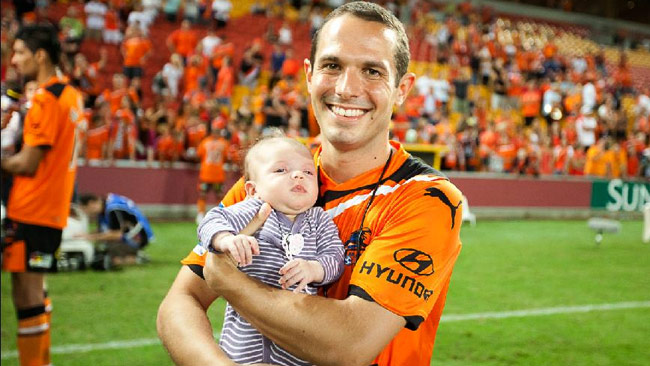
Soccer player Massimo Murdocca from the Brisbane Roar, and his wife Michelle, welcomed their first child on February 24, and named her Alessandra Catherine.

North Sydney Councillor MaryAnn Beregi, and her husband, welcomed their son Joseph in February. Joseph joined older siblings Oscar, aged 8, and Samantha, aged 4.

Names of Australian Female Paralympic Medalists

Tags

, , , , , , , , , , , , , , , , , , , , , , , , , , , , , , , , , , , ,

Amber (Merritt)

Amber Meritt was born with a club foot, and is originally from England; she came to Australia as a child (she’s now 19). She started playing wheelchair basketball in 2007, and won silver at the London Games. Amber is fossilised tree resin, and since prehistoric times has been valued as a gemstone. The word amber is derived from Arabic, and means ambergris, the waxy substance regurgitated by the sperm whale; it was only later realised these were different substances. Amber has been used as a girl’s name since the 17th century, but wasn’t popular until the 20th. The name became notorious in 1944, when the racy historical romance, Forever Amber, was published, with its heroine the sleep-her-way-to-the-top Amber St. Clare. Despite being condemned, and even banned here until 1958, the book was a bestseller, and made into a film. Amber was in rare use in the 1950s, and during the 1960s made #647 (about one Amber per year). It absolutely skyrocketed during the 1970s up to #135, peaked in the early 2000s at #49, and is now #91. This pretty gemstone name is still popular, and it’s all thanks to a “dirty” book! If looking for a nickname, Miss Merritt goes by Bambi.

Danae (Sweetapple)

Danae Sweetapple was blind from birth, and started swimming in 1990. She won a silver and two bronzes at the 1992 Paralympics. In Greek mythology, Danaë was a Greek princess and the mother of the hero Perseus. Her father shut her up in a bronze tower due to a prophecy that he would be killed by her son, but she was impregnated by Zeus, who came to her in the form of golden rain. The king had Danaë and Perseus cast into the sea, and they washed ashore onto an island, where a kind fisherman raised Perseus as his own son (as an adult, the prophecy was fulfilled when Perseus did kill his grandfather). Getting it on with a godly shower of gold was either supremely satisfying or very traumatising for Danaë, as she had no interest in mortal men afterwards, and never married or had further children. Her name is derived from the Danaans, one of the names the Greeks used for themselves, with the idea that they were partly descended from Danaus, a mythical prince of Egypt. I’m not sure how the Greeks would have said her name (nobody seems to agree), but not like the way it is usually said in Australia, which is dan-AY.

Elaine (Schreiber)

Elaine Schreiber won a bronze in table tennis, a gold in club throw, and a silver in javelin at the 1964 Paralympics, and a silver in table tennis at the 1968 Games. Elaine is a name shared by several characters in Arthurian legend, who are occasionally confused with each other. One of the most famous is the fair Elaine of Astolat, who dies of unrequited love for Sir Lancelot. The story inspired Tennyson’s poem, The Lady of Shalott, and it was only after the popularity of his poem that Elaine became a commonly-used English name. Elaine is an Old French variant of Helen. Elaine was #254 in 1900, joined the Top 100 in the 1920s, and peaked in the 1930s at #18. It left the Top 100 in the 1960s, and reached its lowest point in the late 2000s, when it was in rare use. Since then, it has been very gently rising, and is currently #457.

Gloria (Pascoe)

Gloria Pascoe developed epilepsy at the age of 9, and became totally blind by 55. At 61, she attended the 1980 Paralympics, where she took gold in lawn bowls. Gloria is the Latin for “glory, fame, renown”, and in Christian tradition it denotes the manifestation of God’s presence, often associated with a divine light. The name Gloria has been in use since at least the 16th century, but received a boost in popularity in the 19th from two literary works. One was Gloria, a romantic novel by popular American novelist E.D.E.N. Southworth in 1891; the other was George Bernard Shaw’s 1897 comedy of errors, You Never Can Tell. Both these works feature very attractive heroines who seem to have done the name more good than all of God’s glory. Gloria was #257 in 1900, Top 100 by the 1920s, and peaked in the 1930s at #23. It left the Top 100 in the 1960s, and hit its lowest point in 2009 when it was in rare use. Since then it has risen again, and is currently #427. If you’ve been paying attention, you will see this makes it the virtual twin of Elaine in terms of popularity.

Jemima (Moore)

Jemima Moore became paraplegic at the age of 6 from a virus, and is now 20. She won a silver medal in the 100 metres relay at the 2008 Paralympics, and attended the London Games. In the Bible, Jemima was the eldest of Job’s three daughters, and she and her sisters are described as being the fairest in the land. The name Jemima literally means “warm” in Hebrew, and can be translated as “day”. The name could actually be derived from Arabic, as there is an ancient land in Arabia who had a queen called Jemama; if so, Jemima from the Bible could be inspired by the queen of Arabic folklore. This does fit in with the Biblical story, because Job and his family were said to be from an Arabic country. The name Jemama means “turtledove”. It first charted in the 1960s, the same decade children’s show Playschool first broadcast, which has a rag doll named Jemima. Never in the Top 100, it peaked at #196 in the late 2000s and is currently #254 and stable. This is a fashionable name which has never gained popularity or lost cachet.

Lorraine (Dodd)

Lorraine Dodd became paraplegic at the age of 13, after contracting transverse myelitis. She attended the 1968 Paralympic Games, where she won three golds for swimming, and a silver and a bronze in athletics. Lorraine is a region in north-eastern France; its name comes from an earlier kingdom named Lotharingia, meaning “Lothar’s kingdom. Lothar I was a Frankish king and a great-grandson of Charlemagne; his name is Germanic and means “famous army”. As a personal name, Lorraine has been used since the 18th century, a century in which Lorraine first became part of France. It’s sometimes said to be a Catholic name, since St Joan of Arc was also known as The Maid of Lorraine. There was a World War I Battle of Lorraine, which probably boosted numbers, and the area’s importance during World War II reflects a peak in popularity at this time. Lorraine was in rare use in the 1900s, and reached the Top 100 in the 1930s. Peaking in the 1940s, it left the Top 100 in the 1970s, and hasn’t charted since the 1990s. You can see how Lorraine helped Lauren appear feminine, and Lauren also seems to have replaced Lorraine.

Madison (de Rozario)

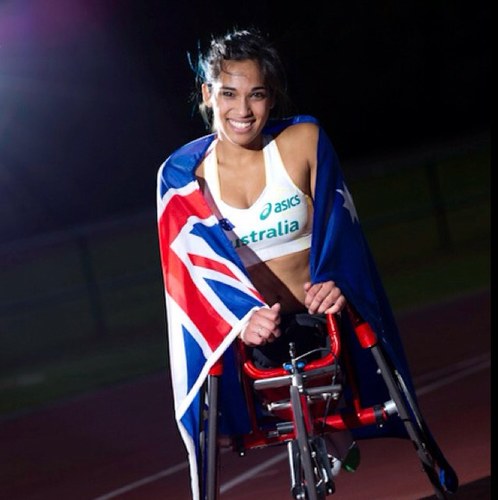
Madison de Rozario became paralysed by a rare neurological condition at the age of 3 and is now 18. She won silver in 2008 as the youngest Paralympian on the team, and was also at the London Games. Madison is a surname meaning “son of Matthew“, although in some rare cases it may be derived from “son of Maddy”, with Maddy being a pet form of Maud. It’s been used as a personal name since the 18th century, and seems to have been given almost exclusively to boys in the beginning. Although certainly used in England, it was much more common in America, where it may often have been given in honour of James Madison, the fourth president of the United States (I only found one man named Madison in Australian records). Madison is famous in baby name circles for only becoming popular, and only becoming common for girls, after the movie Splash in 1984. This romantic fantasy, a rewrite of The Little Mermaid, stars Daryl Hannah as the mermaid, who chooses her “human name” from a street sign for Madison Avenue in New York City, named after the former president – although Tom Hanks’ character tells her this isn’t a “real name”. Madison was #606 for the 1980s, with about three born each year. It then absolutely screeched up the charts to make #52 for the 1990s, and peaked in the early 2000s at #22. It sunk to #44 in 2010, then rose last year to make #41. It’s been a real success story, with its nickname Maddie fitting in with Madeline.

Priya (Cooper)

Priya Cooper was born with cerebral palsy, and spends most of her time in a wheelchair. She began swimming competitively while still at school, and is one of our greatest disabled swimmers, winning nine gold medals and breaking world records at the 1992, 1996 and 2000 Paralympics. She was twice team co-captain, and twice a flag-bearer at closing ceremonies. She has received many honours, and since retiring has become a spokesperson and fundraiser for several charities. Priya is an Indian girl’s name which means “dear, beloved” in Sanskrit. In Hindu legend, Priya was one of the daughters of King Daksha, a son of the god Brahma. The name is pronounced PREE-yuh, and has been rather a favourite in Australia for many years.

Siobhan (Paton)

Siobhan Paton is an intellectually disabled swimmer who holds thirteen world records, and won six gold medals at the 2000 Olympics. She was named Paralympian of the Year in 2000, and also received an Order of Australia. Siobhán is the Irish form of the Norman-French name Jehanne, a variant of Jeanne. There were several medieval queens named Siobhán. It is said that the twentieth century popularity of Siobhan owes a great deal to the actress Siobhán McKenna, who was born in Belfast. She was most famous as a stage actress, but also appeared in King of Kings (playing Mary), Of Human Bondage, and Dr Zhivago. Ms McKenna’s son, Donnacha O’Dea, was an Olympic swimmer for Ireland in 1968. Siobhan first charted in the 1950s, and during the 1960s was #571, which represents about one Siobhan a year. Use of the name increased sharply during the 1970s and ’80s, and it peaked in the 1990s at #211. It hasn’t charted since 2009, so this is another attractive name which has never made the Top 100. Pronunciation is an issue, because the usual Irish pronunciation is SHIV-on, but in Australia it’s usually said shi-VAWN.

Ursula (King)

Usula King was a swimmer who won a silver and two bronze at the 1984 Paralympics. The name Ursula means “little she-bear”, derived from the Latin ursa (which we know from constellations Ursa Major and Minor – the Great and Little Bears). According to legend, Saint Ursula was a Romano-British princess who was sent by her father to marry the pagan governor of Armorica (Brittany). Possibly to stall proceedings, she got all bridezilla and declared that before the wedding she must go all over Europe on a pilgrimage, taking an unbelievable 11 000 virgins with her as her handmaids. On their way to Cologne, they were besieged by Huns, who had a busy day beheading the lot of them. The story doesn’t fit with any known historic facts, and one theory is that Ursula is a Christianised form of the goddess Freya. However, Cologne has a magnificent basilica dedicated to St Ursula and her companions, and a little village in Wales also has a church in their honour, in the belief that Ursula was originally from Wales (in the legend, she is from the West Country). Because of the saint, the name came into use in medieval times, and got a little boost in the 20th century from beautiful Swedish actress Ursula Andress, who was the first Bond girl, in Dr No. It’s clunky by contemporary standards, but strangely alluring.

(Photo of Madison de Rozario from her Twitter account)

Saturday Historical Sibsets: The Siblings of the Sea-Born Babe

Tags

, , , , , ,

This is a story I read on Baby Names from Yesteryear, and with Zeffy’s blessing, I have investigated some of the history behind it.

On March 21 1857, a baby was born on board a convict ship, two days after leaving England for Western Australia. He was named Alfred John Claris Wells – Alfred and John were family names, but Claris was in honour of the ship he was born on, the Clara. It seems that he went by the name Claris in everyday life.

Claris’ parents weren’t convicts. His father, Alexander Wells, was a pensioner guard employed to watch over the convicts on board ship. These guards tended to be recruited from the rural working class, and offered farmland in Australia as an inducement. The Wells family had been in villages around Sevenoaks in Kent since at least the 17th century, and Alexander’s branch of it had lived in the village of Leigh for several generations.

Claris’ mother was named Caroline Emily Minnor Goulding, and she married Alexander when she was in her early twenties, while he was in his early thirties.

The Clara arrived in Fremantle, Western Australia on July 3 1857 with its one very small extra passenger. The Wells family was offered farmland in Newcastle (now called Toodyay), one of the first inland towns to be established in Western Australia. It’s in the Avon Valley about 85 km from Perth, and today at least, Toodyay is a very pleasant country town, an easy drive from the city and popular for weekends away. Back then, it would been just a village, and farming difficult, even with free convict labour offered as part of the deal.

Claris wasn’t the only child of Alexander and Emily. His siblings were:

Martha (1852-1936) She was born in Kent, and was five years old when she arrived in Australia. She was living in Fremantle when she died at a ripe old age.

Alexander Thomas (b. 1855) He was born in Kent, and seems to have died before the family came to Australia.

Amelia Ann (b.1858-?) Amelia is missing from some family records, which makes me suspect she died during early childhood.

Ellen – known as Eliza (1859-1937) Eliza married a local man named Alfred Hutchings when she was 20, and had twelve children. The Hutchings moved to Northam, a town very close to Toodyay.

Emily (b. 1862-?)

Alexander (1864-?)

Alexander Wells died in 1863 aged 45, leaving his widow Caroline in a fairly desperate situation. She was 34 years old, had at least three children still living, and must have been pregnant.

In 1864 she married a convict called Esau Wetherall, a name that wouldn’t look out of place in a novel by Thomas Hardy. Esau was born in London, and had lived in Somerset. At the age of 35, he was transported to Fremantle on the Scindian, sentenced to fifteen years for horse-stealing. He was in the first group of convicts to arrive in Western Australia, and because they weren’t really prepared for convicts at the time, they only sent those who had a record of good behaviour. While in Toodyay, he was accused of stealing a sheep and brought to trial, but was acquitted. At the time of his marriage to Caroline, he was 49.

Caroline and Esau had only one child together, a baby girl who was stillborn in 1865. This was Claris’ half-sister.

Esau had been married before – his first wife was Mary Mallaby, and they were married in Toodyay the same year that the Wells family had arrived, in 1857, just after Esau was granted his ticket of leave. Mary died in 1864, so like Caroline, Esau had been left widowed and no doubt in equally desperate circumstances.

Esau and Mary had five children together, and these were Claris’ step-siblings.

Sarah (1858-1874) Sarah died when she was only 16 years old.

Mary Ann (b. 1859-1941) Mary married a man named Donald Lee when she was 18, and had fourteen children. She lived her whole life in Toodyay.

Ellen – known as Elizabeth (1861-1941) Elizabeth married a man named Thomas McKnoe when she was 17 and had eleven children. She was living in Perth when she died.

Twins Edwin and Frederick (1864-1864) Mary left behind her newborn twins when she died, and it’s not surprising they only lived for a few months. It’s very possible that Mary died giving birth to the twins, or shortly after the birth.

So Claris Wells had six siblings, one half-sister and five step-siblings.

Esau Wetherall died in 1889, at the age of 73. Although he has numerous descendants living today, for many years the family was deeply ashamed of having convict ancestry, and he wasn’t talked about or even mentioned.

Caroline Wetherall died in 1905 at the age of 75. However, the Wells family continued through her son Claris, and next time I will follow his family line through all the generations.

NOTE: Passenger list for the Clara is here.

(Picture is of a painting of Fremantle Harbour in the 19th century, close to where the Clara would have docked when she arrived)

Rafferty Violet and Kalani Hugh: Birth Announcements from Adelaide (September)

Tags

, ,


Twins

Liam Nicholas and Riley Brandon

Patrick Raymond and Jonathan Richard


Girls

Ariarn Tundi (Kyran)

Aster Poppy (Tabitha)

Brigit Phyllis (Cameron, Regan, Gabrielle)

Briony Maeve (Aston)

Eilidh Amelia

Elizabeth Clara Rose

Harriet Isla (Isobel)

Iris Sophie Pearl (Levi, Ezra)

Layla Peri (Jeremy, Samuel)

Liana Brookleyn-Macy (Elle)

Lillian Mackenzie (Cadence)

Lotus Pearl (Elijah, Ruby, Noah)

Maryanne Joy (Aiden)

Matilda Clare May

Rafferty Violet (Lila, Joe)

Satine Chantel Louise

Scarlett Valentine (Eden)

Shakira Elise (Jayden)

Tatum Piper (Ryder)

Telia Kate


Boys

Anton Lee Thomas

Dashiell Baird

Edison Murray (Maya, Angus)

Ethan Allan

Hartley Matthew (Macy, Chase)

Henry Edwin John (Imogen, Beatrice)

Hugh Aloysius (Ruby, Patrick)

Jensen Ryder

Kalani Hugh

Leo Vasilios Francis (Christiana)

Malachy David (Bridie, William)

Mateo Mario (Massi)

Nicholas Ramsay

Oscar Lawrence Kingsley (Isabella)

Rawdon William

Rory Andreas (Imani)

Seth Adrian Jarryd (Kane, Dylan, Trae, Ethan)

Sid Isaac (Sheree, Ty, Sam)

Sonny Joel (Jake)

Zis (Chloe)

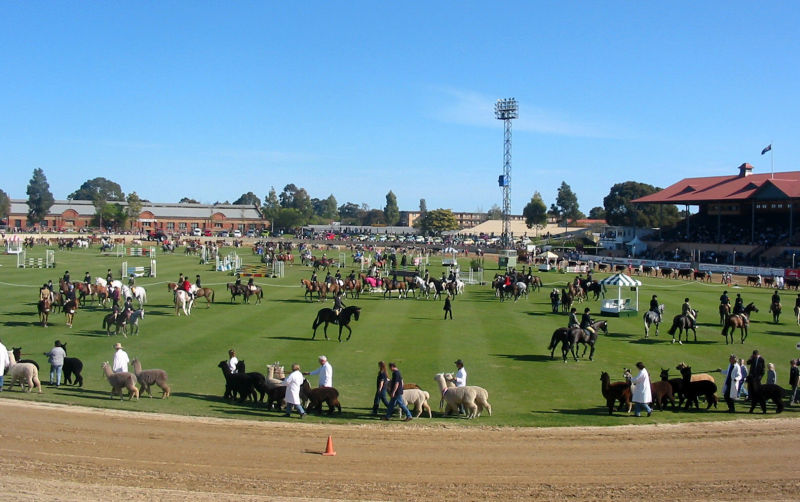
(Picture is of the Adelaide Royal Show, held in September; photo from There’s Nothing Like Australia)

Memphis Paul: Birth Announcements from Brisbane and Darwin (August/September)

Tags

,


Girls

Abby Elizabeth (Joshua)

Calista Eloise May (Aiden, Zachariah)

Cara Estelle

Chloe Rose (Camille)

Emma Grace (Jack, Charlotte)

Holly Jane (Rhys, Liam)

Jenna Jean (Keeley, Lachlan)

Jessica Ann (Jack)

Matilda Dolly

Scarlet Mary (Will)


Boys

Ben Stephen

Edison Clarke (Stella, Isla)

Harrison Dominic (Georgia)

Jameson Ronald

Joshua Samuel (Ethan, Hannah)

Leo Alfio (Mia, Eva)

Lochlann Reid (Sheridyn, Simon)

Louis George “Louie” (Will, Alexander)

Maxwell James Nigel (Blake, Olivia, Claudia)

Memphis Paul (Savannah)

(Picture is of trees lit up for the Darwin Festival; photo from the Au Review)

Celebrity Baby News: Jules and Anna Lund

Tags

,

Radio host Jules Lund, and his wife Anna, welcomed their daughter Indigo Ellen earlier this week. Indigo Lund joins big sister Billie, aged 2.

Jules is co-host of the radio show Fifi and Jules on the Today Network, which he presents with Fifi Box. He was one of the presenters on Channel 9’s travel programme Getaway, but has recently quit to spend more time with his family. He is keen to pursue television projects with his radio partner, Fifi, who is contracted to Channel 7.

Anna (nee Dusek) and Jules were married in 2009, and honeymooned in Italy and Croatia.

(Photo of Jules and Anna from Zimbio)