• About
  • Best Baby Names
  • Celebrity Baby Names
  • Celebrity Baby Names – Current
  • Celebrity Baby Names – Past
  • Featured Boys Names
  • Featured Girls Names
  • Featured Unisex Names
  • Links to Name Data
  • Waltzing on the Web

Waltzing More Than Matilda

~ Names with an Australian Bias of Democratic Temper

Waltzing More Than Matilda

Category Archives: Famous Names

Famous Names: Clyde and Campbell

06 Wednesday Aug 2014

Posted by A.O. in Famous Names

≈ 2 Comments

Tags

aristocratic surnames, birth notices, dated names, famous namesakes, Gaelic names, locational names, modern classics, name history, name meaning, name popularity, names of mascots, names of rivers, Scottish names, surname names, US name popularity
6388929879_8002efc401_z

The Glasgow Commonwealth Games ended on Sunday, a very friendly games where Glasgow gave everyone a warm welcome. It was the first time England had won since 1986, and those games were also held in Scotland. In fact, it was a great Games for the British, with England, Scotland (fourth), and Wales (thirteenth) all winning more medals than they ever had before, in something of an Olympian afterglow.

At the closing ceremony, the baton was passed on to Australia, because the next Commonwealth Games will be held on the Gold Coast in April 2018. Let’s hope we’ll have better uniforms for that. Oh and by the way – it poured with rain the last few days of the Glasgow Games, but our team was warm and dry in their jumpers and anoraks, so who’s laughing now?

Now the Games are over for four more years, this is the end of our Scottish names. I picked the name Clyde because that was the mascot for the Glasgow Games, a cheery looking thistle named after the River Clyde, which flows through the city of Glasgow.

As an Australian reference, I picked Campbell for the Campbell sisters, Cate and Bronte, who did so well in the swimming. Between them they won five gold medals, so as many as Wales, and if they were a country they would have come fourteenth in the medal tally. They were also on the team which set a world record for the women’s freestyle relay.

Clyde is a Scottish surname, given to those who lived along the River Clyde. The Clyde is the third largest river in Scotland, and has its source in the Lowther Hills, in Scotland’s Southern Uplands. It meanders west across the country, and empties into the Firth of Clyde, the largest and deepest coastal waters of the British Isles.

The river’s Gaelic name is Chluaidh, which probably means “cleansing”. It may be related to the Latin cloaca, “sewer, drain”. Clyde has been used as a first name for boys since around the 18th century.

One of my favourite Australian Clydes is Clyde Fenton, a flying doctor in the years before WW II, who piloted his own plane as well as serving as a medical officer in the Northern Territory. Known for his kind and determinedly helpful nature, as well as his great resilience, he was famous for his daring rescues, lively escapades, and madcap pranks, which usually got him into trouble with the authorities. Although fairly indifferent to his own personal safety, he surprisingly lived into his eighties.

The name Clyde was #104 in the 1900s, when Clyde Fenton was born, and peaked in the 1910s at #96. It left the Top 100 in the 1920s, and hasn’t charted since the 1950s. Although it’s a dated name, it has never been really popular, and perhaps isn’t as tied to a particular era as you might think. Interestingly, this name just reached the Top 1000 again in the US, so seems to be having a comeback there.

The name sounds big and capable to me – perhaps because of Clydesdale horses. These Scottish horses were so important in colonial Australia they were called “the breed that built Australia”.

Campbell is a Scottish surname. The Clan Campbell are one of the largest of the Highlands clans, and became one of the most powerful families in Scotland. The Campbells had a reputation for being good soldiers and fighters, but lacking in diplomacy and cunning. The chief of the clan is the Duke of Argyll, in the Peerage of Scotland. The current Duke is Torquil Campbell, and his son and heir is Archibald Campbell, who is around ten years old – I think you will remember that Archibald is a traditional name in the Campbell family.

The name Campbell comes from Cam Beul, a Gaelic nickname meaning “crooked mouth, wry mouth”. The first person given this nickname is said to have been Dugald on Lochawe in the 12th century, who supposedly had a habit of talking out of one side of his mouth.

The name was originally Cambel, but as early as the 14th century it began to be spelled with a p, perhaps because the Norman knights at the Scottish court who were responsible for administration misunderstood it as from the Norman-French camp bello, “beautiful plain”. Campbell has been used as a (mostly male) first name since the 17th century.

Campbell began charting in the 1960s, debuting at #302. This is the decade British speed enthusiast Donald Campbell made several attempts in Australia to break land and water speed records, finally achieving success in 1964, when he broke both the land speed record on Lake Eyre in South Australia, and the water speed record on Lake Dumbleyung in Western Australia.

The popularity of the name Campbell went up steeply in the 1990s, the decade when sound-alike Cameron reached its height and began falling, and peaked in the early 2000s at #181. In New South Wales it seems to be somewhere in the 300s, but in Victoria it is around the high 100s. In the past, it has managed to be a Top 100 name in Tasmania.

It would be interesting to see how Queensland premier Campbell Newman affects the popularity of the name, since politicians generally don’t give names a boost, and Campbell Newman is extremely unpopular, according to the polls. In fact, it will be interesting to see whether he is still premier at the next Commonwealth Games. I do see Campbell quite frequently in birth notices, but not in Queensland, I must admit.

(Premier Newman was born in the 1960s, just as the name Campbell hit the charts, and a year before Donald Campbell broke the speed records in Australia, so his parents were naming trail-blazers.)

Campbell is a strong, handsome Scottish choice which has managed to become a modern classic without ever becoming popular. This makes it a desirable option for parents seeking a name that is familiar without being common.

Two Scottish surnames-as-first-names – but which one is better?

POLL RESULTS
Clyde received an approval rating of 41%, while Campbell did rather better at 59%.

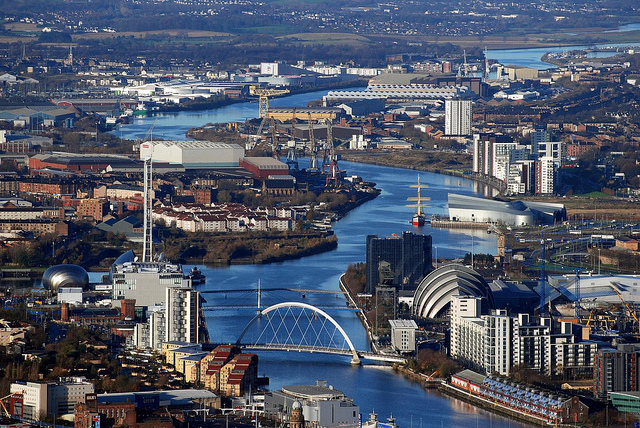
(Picture shows the River Clyde in Glasgow, taken from the air)

Famous Name: Fiona

30 Wednesday Jul 2014

Posted by A.O. in Famous Names

≈ 6 Comments

Tags

baby name books, created names, famous nameksakes, Gaelic names, Irish names, literary names, modern classic names, name history, name meaning, name popularity, names from films, names of personifications, pen names, pseudonyms, Scottish names

2014ARC_Lowry.jpg.496x605_q85

The Archibald Prize this year was won by Fiona Lowry, for her portrait of architect Penelope Seidler. The Art Gallery of NSW trustees, who are the judges of the Archibald, seemed to avoid controversy this year by awarding the $75 000 prize to an overwhelming favourite.

Fiona first saw Penelope Seidler six years ago at a gallery opening, and was struck by her beauty and presence; she decided then that she would like to paint her. The portrait was begun at Penelope’s home, Killara House, a heritage-listed Sydney icon which she designed with her husband, the famous modernist architect Harry Seidler.

Fiona’s paintings are made with an airbrush and a limited range of soft pastel colours, creating an often unsettling atmosphere seen through a fine mist. I can’t help thinking that Clarice Beckett would give a wry smile … and that once again, Penelope proves a winner!

The name Fiona was created by the 18th century Scottish poet James McPherson, and first used in his famous Ossian poems, which were a great influence on the Romantic movement, and instigator of the Gaelic revival. MacPherson pretended his poems were “translations” of ancient Gaelic poems, but could never produce the originals, and it is now agreed that while he based them on old ballads, many of the stories and characters are from his imagination.

In the Fingal section of the Ossian poems, MacPherson wrote: Let the sons of Fiona rise, on the lone plains of her lovely Ardan. Fiona is a not a person, but a feminine personification, like Erin or Brittania, or Lady Liberty. But a personification of what?

You may recall that the Irish hero Finn McCool’s warriors were called the Fianna. Although that looks as it means “Finn’s men”, fiann means “soldier, warrior, hero” in Old Irish, and fianna is its plural. Fianna can thus be translated as “war band”. Although the Fianna come from mythology, it is believed that such bands did exist in medieval Ireland; young men and women of the nobility who had not yet come into their inheritance and had no lands of their own.

Fiona is James MacPherson’s transcription of Fianna, which he may have written to make it look as if it was derived from Fionn, or Finn, meaning “fair, white”, in order to give his Fingal the status of the great Irish hero Finn McCool. You might see MacPherson’s “Fiona” as a personification of Celtic pride, independence, and fighting spirit.

Baby name books often try to claim Fiona as a feminine form of Finn or Fionn, but in medieval Gaelic, adding an -a to a name did not make it feminine. Instead -nat or –sech were used, so the feminine forms of Finn are Finnat and Finnsech (genuine medieval names). Just to confuse things, Fíona is a modern Irish name meaning “wine”. Although some people take Fiona as an Anglicisation of Fíona, it’s more that an Irish meaning was found for an existing name.

Fiona was used as a pseudonym by the Scottish writer William Sharp. Although already a distinguished poet, biographer, and literary editor, he chose to sometimes write romantic novels and poetry as Fiona McLeod – which he feared would not be accepted if it was known he was the author. William Sharp edited the Ossian poems, which is most likely where he found the name Fiona.

William Sharp had a love affair with a woman named Edith Wingate Rinder, and it was those works inspired by his passion for Edith that he attributed to “Fiona McLeod”. The poetry he wrote under the influence of this inspiration is considered his greatest work, and the Fiona McLeod novels proved so popular that they brought him financial success. You could say that “Fiona” was the name William gave his feminine side, and tapping into it unleashed a wave of creativity.

The secret of William Sharp’s dual identity only became publicly known after his death, when his wife revealed that her husband was the author of all works by Fiona McLeod. It was after Fiona McLeod became a popular novelist that the name Fiona became well known, so while James MacPherson may have created it, it was another Scottish writer who spread its use.

Fiona first charted in Australia in the 1950s, making an impressive début at just outside the Top 100 at #105. The reason for its sudden appearance on the charts is the 1954 film Brigadoon, based on the Broadway musical of the same name. It’s about two American men who are hunting in Scotland when they happen upon a miraculous village which rises out of the mists every hundred years for just one day. One of the men falls in love with a girl from the village named Fiona Campbell (Fiona McLaren in the original musical), played in the film by Cyd Charisse. The magic and romance of the story were clearly a hit with Australian audiences.

By 1960, Fiona was #57, by 1961 it was in the Top 50 at #47, and by 1967 it had just scraped into the Top 20. Fiona reached its peak in 1970 at #14, and was last in the Top 100 in 1986. A famous fictional Fiona during the 1970s was matriarch Fiona Cleary, from Colleen McCullough’s The Thorn Birds, although by this time the name was falling in popularity.

If you judge the name Fiona purely as a name nerd, you must admit it has some black marks against it. It’s a “made up” name, and furthermore, not even a name made up for a character – it’s basically the Khaleesi of the 18th century. It was popularised by a man pretending to be a woman, in part to obscure an extra-marital affair. It’s not the most promising name history of all time.

Fiona leapt into the charts out of nowhere due to popular culture – a musical film which was a box office success, but received lukewarm reviews. It was a “trendy” name that climbed in popularity very suddenly, then sank again at almost the same rate. It’s a “dated” name, in that it is dated to a particular era – you can be almost sure that someone named Fiona was born somewhere between Brigadoon and The Thorn Birds 1983 mini-series, and most likely between the late 1960s and mid-1970s (Fiona Lowry was born in 1974).

But isn’t it tiresome to always judge names through the lens of nerdism? Because in spite of all this, I think Fiona remains a pretty, delicate name with a fascinating literary history. It has a romance to it – a name created by a poet who changed the face of literature, made well known by a writer who had a talent he never knew existed until he fell in love, brought to popularity through a miraculous love affair.

I like the fact that such a gentle-sounding name has a war-like meaning; it’s a warrior princess of a name. Despite being dated, Fiona doesn’t sound particularly dated – it even has a fashionable OH sound in the middle. There are tons of Fionas in current popular culture, including Princess Fiona, the feisty green ogress from Shrek.

If you love the name Fiona, take heart – it is no longer plummeting in popularity, but relatively stable around the 300-400s, and can claim modern classic status. Furthermore, in the United States, which is much slower to appreciate British (especially Scottish) names, Fiona only began charting in the 1990s and has been gradually climbing ever since.

I have a family member who is a massive fan of the Shrek movies, and especially of Princess Fiona. Sometimes I think I will be a grandmother to a little Fiona, and the idea doesn’t displease me at all.

POLL RESULTS
Fiona received a very good approval rating of 72%. People saw the name Fiona as strong and feisty (23%), and beautiful or pretty (19%). However, 16% of people considered it too dated to be a baby name. The association with Shrek didn’t seem to be an issue, with twice as many people (10%), thinking it was a cool association than a problematic one (5%). Only one person thought the name Fiona was “too made up”.

(Painting is Penelope Seidler by Fiona Lowry)

Requested Famous Name: Annabelle

23 Wednesday Jul 2014

Posted by A.O. in Famous Names, Requested Names

≈ 3 Comments

Tags

aristocratic names, famous namesakes, honouring, Latin names, modern classic names, name history, name meaning, name popularity, name trends, names of boats, popular names, portmanteau names, Scottish names, UK name popularity, US name popularity

Annabelle_Rankin

Famous Namesake
On July 28, it will be the 106th birthday of pioneering stateswoman Dame Annabelle Rankin, who was the first woman from Queensland to sit in the Parliament of Australia, the second female Australian Senator, and second female parliamentarian for the Liberal Party.

Annabelle was the daughter of Colin Rankin, a Scottish-born Queensland politician who served in both the Boer War and First World War; Annabelle was named after her mother. Her father encouraged her to travel, and when she left school, she went to China, Japan, England, Scotland, and continental Europe. With a background in community involvement, she worked in the slums of London, and with refugees from the Spanish Civil War.

Back in Australia, Annabelle was a volunteer during World War II, serving at air raid shelters and hospitals, and organised the YWCA’s welfare efforts for servicewomen. Her responsibilities involved travelling to military bases in Queensland and New South Wales, and she accompanied Eleanor Roosevelt, First Lady of the United States of America, and Lady Gowrie, wife of the governor-general, on their visits to the troops.

After the war, she stood as a candidate for the Liberal-Country Party, and entered the Senate on July 1 1947. Annabelle was the first woman in the British Commonwealth to be appointed as an opposition whip, and was the whip in the Senate from 1951 to 1966.

Dame Annabelle was appointed Minister for Housing in 1966, becoming the first woman in Australia to administer a government department. As minister, she worked to provide housing for old age pensioners, and introduced a housing system for Aboriginal Australians and new migrants. As a newspaper of the time helpfully noted: “She tackles men’s problems too”.

After retiring from parliament in 1971, Dame Annabelle was appointed high commissioner to New Zealand – the first woman in Australian to lead a diplomatic mission. She supported several community organisations, including the Australian Red Cross Society, Country Women’s Association, Girl Guides, Victoria League, and Royal Commonwealth Society.

She was for many years the President of the Queensland branch of the Children’s Book Council of Australia, and the Dame Annabelle Rankin Award for services to children’s literature in Queensland is given in her honour. Another of her namesakes is the Annabelle Rankin, one of the ferries on Sydney Harbour.

Dame Annabelle was easily recognisable from her auburn hair and warm brown eyes, and combined a cheerful, friendly demeanour with a strong, uncompromising will, and apparently tireless energy. She was an excellent orator, and very capable of handling the occasional heckler (by no means were all the hecklers male, either).

While researching the name Annabelle, I noticed quite a few people seemed to think that the name Annabelle sounded “unprofessional”, and predicted that a woman named Annabelle could never be taken seriously in public life. If nothing else, the career of Annabelle Rankin proves this to be completely untrue.

Name Information
Annabelle is a variant of the name Annabel, which originated in Scotland during the Middle Ages. Although it is sometimes treated as a cross between Anna and Belle, this isn’t plausible as it pre-dates the common use of the name Anna in Scotland.

It’s assumed to be a variant of the Latin name Amabel, meaning “lovable” – the long form of Mabel, and close relation to familiar Amy. It may have been influenced by the name Agnes (“pure”), which was said (and often spelled) Annas at that time.

The Annabelle spelling probably has been influenced by Anna and Belle in the modern era, and is often understood as meaning “graceful and beautiful”. Although this isn’t very good etymology, the name is a bit of a hodge-podge, and you might feel free to translate it as you wish.

The names Annabel and Annabelle have long been favourites with the British peerage, both English and Scottish, which gives them a rather aristocratic air. I tend to feel that Annabel is a bit more “posh”, while others may think that the Frenchified Annabelle seems more stylish and “finished”.

Annabelle has charted in Australia since the 1970s, when it debuted at #580. Since the 1980s it has risen steeply, and it entered the Top 100 in 2000, at #92. It entered the Top 50 in 2007, when it reached #46, and although it wobbled a little here and there, it is now at the highest point it has ever been.

Currently it is #44 nationally, #35 in New South Wales, #50 in Victoria, #43 in Queensland, #47 in Western Australia, #61 in Tasmania, and #36 in the Australian Capital Territory.

Annabelle is also Top 100 and climbing in the US and the UK, but is more popular here than anywhere else, making Annabelle one of those unexpectedly Australian names. Annabelle is also Top 100 in New Zealand, but isn’t rising in popularity.

Annabel has charted in Australia since the 1960s, entering the rankings at #420, but while it also rose steeply during the 1980s, hasn’t become popular, and is still in the 100s. Annabel is only just outside the Top 100 in the UK, but is stable rather than rising, which is probably similar to the situation here. In the US, it is rising steeply, but only in the high 400s, so a long way off popularity.

Annabelle is a pretty, elegant, ultra-feminine name that’s well on its way to becoming a modern classic (while Annabel is already there). It fits in so smoothly with the trend for -belle and -bella names that it’s become quite popular, and may become more so.

Although it wasn’t originally linked to the names Anna and Belle, it might be used to honour people with those names, or similar names. Possible short forms abound, but all the the Annabelles I’ve ever met have only used their full name – it strikes me as one of those relatively long names that are somewhat nickname-resistant. There’s plenty to love about adorable Annabelle!

Thank you to Brooke for suggesting the name Annabelle to be featured on Waltzing More Than Matilda

POLL RESULTS
Annabelle received an approval rating of 62%. 20% of people preferred the name Annabel, but 16% thought Annabelle was beautiful and feminine. Only person thought the name Annabelle was too popular. I wonder if Annabel would have done better – perhaps we will feature it another time.

(Photo is of Dame Annabelle Rankin)

Famous Names: Franklin and Brindabella

02 Wednesday Jul 2014

Posted by A.O. in Famous Names

≈ 3 Comments

Tags

Australian Aboriginal names, english names, famous namesakes, locational names, name history, name meaning, names of mountains, names of stations, nicknames, surname names

FIUAERGS_zpsb558a123

In March, Canberra was named Australia’s most liveable city, scoring highly in design, cleanliness, outdoor recreation, education, and safety. This was in a survey of residents conducted by the Property Council of Australia.

Now data collected by the Organisation for Economic Co-operation and Development (OECD) shows that the Australian Capital Territory has the highest levels of well-being in the country, with perfect scores for income, safety, and civic engagement, and near-perfect scores for health, jobs, education, and access to services.

The OECD report highlighted the differences between regions in member countries, and unfortunately the report showed that Australia had the greatest regional inequality of any OECD country, with Tasmania doing the worst in terms of income (6.1 while the ACT is 10). And while the ACT scored 9.9 for health, and 10 for safety, the Northern Territory received 4.1 for health, and a truly dismal 1.4 for safety.

Because the OECD was examining the regions of each country separately, it also shows that the Australian Capital Territory is performing extremely well on a global scale – in fact, it is officially the best place to live in the world, with Canberra coming first, then Western Australia second, followed by three regions in Norway. (The study also showed places similar to the ACT were western Norway, Stockholm, New Hampshire, and South-East England).

However, even though the ACT is, we now learn, the greatest place on the planet, it probably won’t lead to millions of people flocking there in search of cleanliness and safety. Not only because there isn’t the infrastructure for millions of people, but because Australians love to despise their capital as cold, boring, sterile, and full of politicians.

As a result, when people move to Canberra, especially those who have come from other countries, they are often pleasantly surprised to find themselves in a setting of great natural beauty, within easy driving distance of both the beach and the ski slopes, and, well, somewhere generally safe and clean and all those things which sound boring, but are actually nice to have.

Most of the Australian Capital Territory is taken up with national parks, which is why it is called “the bush capital”, and so I am covering two names from the mountains of the ACT region.

Mount Franklin is one of the higher mountains in the Brindabella Ranges, on the border of the Australian Capital Territory and New South Wales. The mountain’s summit is on the ACT side, and it is 1646 metres (5400 feet) high. It was once the hub of Canberra’s ski community, and it is still open for cross-country ski-ing, snow play, and bush walking.

Mount Franklin is close to Brindabella Station, which was built by the pioneering Franklin family in the 19th century. It was the childhood home of the famous author and feminist Miles Franklin, whose autobiographical novel My Brilliant Career tells of a spirited young woman growing up in rural New South Wales. Under the pen name Brent of Bin Bin, she wrote a series of novels about a station called Bool Bool in the mountains of south-eastern New South Wales, based on Brindabella, and in later life, she wrote a memoir called Childhood at Brindabella. Brindabella Station is still a working farm, and it is possible for visitors to stay on the property.

The station is named after the Brindabella Range itself, part of the Australian Alps which can be seen to the south-west of the capital. The Brindabellas are often taken for granted by Canberrans, but they are beautiful in their diversity, from imposing high crags in the mist, to rolling farmland nestled snugly in sun-dappled valleys between dark forests. The play of light and cloud never stops moving across the ranges, and each day in the mountains seems to end with a spectacular sunset.

The name Brindabella is said to mean “two hopping mice” in a local Aboriginal language. Hopping mice are native Australian mice with long tails, large ears and strong back legs; they can hop about just like a rabbit or a kangaroo. Another theory is that brindy brindy meant “water running over rocks”, and that Europeans added a -bella at the end, to suggest “beautiful”.

Franklin is an English surname, which doesn’t denote an occupation so much as the person’s social status. In medieval England, a franklin was a free man – one not in servitude to anyone. It came to mean someone who owned land, but was not a member of the landed gentry or aristocracy. The franklin was the beginning of an English middle-class: those who owned property, and could even be quite well off, yet were not of noble lineage.

The word franklin comes from the Latin francus, meaning “free”, which is the origin of our English word frank, meaning “free, liberal, honest”. You might remember that frank comes from the Germanic tribe of the Franks, who conquered Gaul, which was named France in their honour. The country’s name was the inspiration for the name Francesco, so Franklin is a linguistic relative of the names Frank and Francis.

Franklin has been used as a boy’s name since the 17th century, and it has been used more often in the US, where it has never left the Top 1000. One of the name’s most famous namesakes is inventor Benjamin Franklin, one of the Founding Fathers of the United States, and another American namesake is the president Franklin D. Roosevelt.

Franklin and Brindabella seem like names which might appeal to those who love the outdoors, especially the mountains. At the same time, they might equally find favour with those who love Australian literature, and may be especially meaningful for those who have a connection with the area around the Brindabellas.

Although neither of them have ever charted in Australia, their short forms are on trend, because Franklin can be shortened to the fashionable Frank or Frankie, while Brindabella naturally shortens to popular Bella – although Brin would not sound strange as a nickname. You may recall the American-born triplet with a Canberran father named Brindabella, and I have also seen a baby named Bryndee-Bella, in apparent allusion to the mountain range.

POLL RESULTS
Franklin received a very good approval rating of 74%, but people were far less enthusiastic about Brindabella, with an approval rating of 20%, making it the lowest-rated girls’ name of 2014.

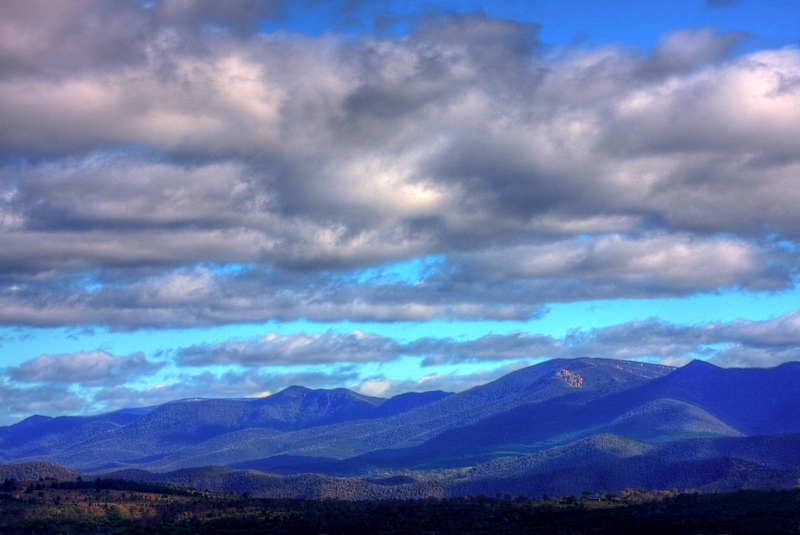
(Picture shows a view of the Brindabella Ranges, including Mount Franklin; photo from Weatherzone)


Famous Name: June

25 Wednesday Jun 2014

Posted by A.O. in Famous Names

≈ 1 Comment

Tags

Biblical names, english names, famous namesakes, Latin names, middle names, mythological names, name history, name meaning, name organisations, name popularity, names from songs, names of months, nicknames, Roman names, saints names, unisex names, US name popularity, US name trends

art-353-june-300x0

Here we are at the end of June, and our last chance to cover the name of this month. On Sunday, I covered the winter solstice, where I said how mild it was – June was all blue skies and sunshine then. Little did I know the very next day a blizzard would hit, with massive snowfalls in the mountains, and freezing, gale-force winds and heavy rain elsewhere. So winter has definitely started now.

June Wright was once Australia’s queen of crime fiction; her first novel, Murder in the Telephone Exchange, was the best-selling mystery novel of 1948 in Australia, outselling the latest Agatha Christie. It featured feisty telephonist-turned-amateur-detective Maggie Byrnes, and was set during a blazing hot February in post-war Melbourne. These were the days when young working ladies lived in boarding houses where gentleman callers were not permitted, and leaving your bedroom clad only in pyjamas and dressing gown was an absolute no-no.

June went on to write five more novels, including a second Maggie Byrne mystery where the post-war housing shortage leads her into another interesting case to solve. The Devil’s Caress, which has a female doctor as the detective, was described as making Murder in the Telephone Exchange look like a bedtime story, and her last three novels featured Mother Mary St. Paul, an unassuming yet strong-willed Catholic nun detective that June Wright based on the head of the maternity ward where she gave birth to twins.

While June’s wartime experience as a telephone operator was the inspiration for Murder in the Telephone Exchange, it was her career as housewife and mother to six children, one severely intellectually disabled, that was seized upon by the women’s magazines of the day, who brought out articles with titles like “Wrote Thriller With Baby on Her Knee” and “Books Between Babies”. The writer of dark, gory murder mysteries with strong female protagonists was careful to present herself as charming and and feminine, and pointed out that both housewives and writers had to be practical, disciplined, and used to monotony.

June’s last novel was published in 1966. Her husband had a nervous breakdown, and June went back to work as a telephonist to support the family, before she and her husband started a cleaning business together. Although there are no hints she regretted having to abandon her literary career, she lived a long life (she only passed away recently), and it’s hard not to think of the many years she could have kept writing under different circumstances.

June lapsed into literary obscurity, and her works have been out of print for many years. However, in February this year Murder in the Telephone Exchange was re-issued by Dark Passage, an imprint of US publisher Verse Chorus Press. They will be bringing out all her novels, including previously unpublished Duck Season Death.

I haven’t bought my own copy yet, but this is welcome news for lovers of vintage fiction, women’s fiction, and Australian crime fiction. I think the books would be especially interesting for Melburnians from a historical perspective.

The name June is after the sixth month of the year. The Romans called the month Junius, commonly believed to be named in honour of the goddess Juno, the wife of Jupiter and queen of the gods. Do you remember the Happy June group, who celebrated June Day on June 1 every day? Well, on the first day of June, the ancient Romans had a festival dedicated to Juno’s “birthday”, in her role as goddess of war and protector of the state. So in a way, there is a “June Day” just as much as a “May Day”.

Because Juno was the goddess of marriage, the month of June was thought an auspicious time for weddings. This makes a lot of sense in the northern hemisphere, where it is early summer: in the United States, June is the most popular month for weddings, and in Italy, June is still a popular month to be married. In Australia, November is the most popular month for weddings (just to confuse things, in the United Kingdom August is the traditional wedding month – in Italy this is considered incredibly bad luck and very unhealthy).

As June is the start of summer in the northern hemisphere, there the name June may seem ripe and womanly, full of vitality and promise – as the song says, June is Bustin’ Out All Over. Here June is the start of winter, and to me it seems cool and fresh as a mountain breeze, and pure as snow.

June has been commonly used as a girl’s name since the 19th century, and part of its appeal must have been that it sounded similar to popular names such as Joan and Jane. It would have also seemed like a “real name” because of Latin names such as Junia – Saint Junia is venerated in the Orthodox tradition, and is mentioned in the New Testament as having a leadership role in the early Christian church. In the US, June has also been used as a male name, derived from Junius.

In Australia, June began charting in the 1910s, debuting at #162, and climbing so steeply that it was #15 for the 1920s. It peaked in the 1930s at #10, fell until it left the Top 100 in the 1950s, and last charted in the 1970s.

June does not chart in either Australia or the UK, but in the US June is already in the 300s and rising very briskly after only re-joining the Top 1000 in 2008. The United States is leading the way, and I think this is an American name trend well worth considering.

June is sweet and charming, and has the fashionable OO sound in it, like Ruby and Lulu. This is a hip vintage choice, and also a simple nature name, like Wren or Rain. Not only can it be used to honour a relative named June, or for cases where June is a special month for you, this would make a great name for someone who wanted something that was traditional and “old-fashioned”, while still seeming fresh and underused.

June could be used as a short form of names such as Juniper, Junia or Juno, and is getting some use as a middle name, but it would be lovely to see it up front as the full name. Junie is the usual pet form.

POLL RESULTS
June received an excellent approval rating of 80%, making it one of the highest-rated names of 2014. People saw the name June as vintage and hip (26%), sweet and charming (23%), traditional yet fresh (15%), and pretty or cute (10%). However, 9% saw it as only a middle name. Only one person thought the name June was too trendy.

Famous Name: Isaac

18 Wednesday Jun 2014

Posted by A.O. in Famous Names

≈ 8 Comments

Tags

Biblical names, famous namesakes, hebrew names, name history, name meaning, name popularity, nicknames, popular names, retro names, saints names, slang terms

SirIsaacIsaacs

On June 6 it was the 159th birthday of Sir Isaac Isaacs, who is famous for being the first Australian-born Governor-General of Australia. He is also our first Jewish Governor-General.

The appointment of Sir Isaac Isaacs in 1930 by Prime Minister James Scullin was a controversial one at the time, because it was fiercely opposed by the British government. They didn’t have anything much against Sir Isaacs personally (apart from being a bit old and unknown to them), but were greatly offended by the idea of an Australian representing the British monarch. However, Scullin stuck to his guns and eventually King George V agreed to the appointment with great reluctance.

This landmark moment led to the Statute of Westminster 1931 and the formal separation of the Crowns of the Dominions. From now on, the monarch would be bound by constitutional convention to accept the advice of the Australian Prime Minister on Australian constitutional matters.

Despite the stain of his Australianness, Sir Isaac Isaacs did everything he could to make himself agreeable. He was an ardent monarchist and, although very proud to be an Australian, a strong supporter of the British Empire. He agreed to accept a lower salary, and conducted himself very frugally, which went down well during the Great Depression. He was the first Governor-General to live permanently at Government House in Canberra, and the public approved of this, as well as his general air of austere dignity, while following his duties with obvious enjoyment.

I’d like to be able to say that after Sir Isaacs, all Governor-Generals were Australian, but conservative governments immediately reverted to appointing British Governor-Generals. There was only one more Australian-born Governor-General until 1965 – since then, they have all been Australian-born, except Sir Ninian Stephen, who emigrated here as a child.

Isaac has one of the better known name stories in the Bible, and is one of the few characters in the Bible to be named directly by God.

When the patriarch and prophet Abraham was ninety-nine years old, God made a covenant with him, that he would be a “father of many nations”, and that his descendants would possess the land of Canaan forever. As Abraham and his wife Sarah did not have any children, God promised he would bless them, so that Sarah would soon bear a son.

Abraham laughed when he heard that, for by the time the baby was due to be born, he would be one hundred years old, and Sarah would be ninety. Sarah secretly listened to this prophecy, and had a good chuckle to herself at the idea that a very old couple would be able to conceive a child together, and a woman long past her child-bearing years could give birth.

Despite their scepticism, the prophecy was fulfilled, and Abraham and Sarah had a son together. They gave him the name that God had chosen, which was Yitzhak, meaning “laughter” in Hebrew. In English the name is Isaac.

The other key story about Isaac is that during his childhood, God commanded Abraham to build an altar in the wilderness and sacrifice his son on it. However, just at the point the knife was raised above Isaac, an angel appeared and told Abraham that it had just been a test of his faith, and that he should sacrifice a ram which happened to be around at the time instead. Because of Abraham’s show of faith, and Isaac’s obedient willingness to be sacrificed, God blessed them both many times over.

Christians have tended to see Isaac as a forerunner of Christ, and both Jews and Christians see him as a model for the martyr, who goes willingly to the slaughter for his faith. Isaac is venerated as a saint in Catholicism, and revered by Muslims as a prophet of Islam.

The story of Abraham and Isaac has made Biblical commentators uncomfortable enough that they feel it needed to be explained. Some Jewish writers felt that human sacrifice was so revolting that God couldn’t possibly have requested it even as a test, and suggested that it must have been a delusion of Abraham’s imagination, or even some trickery by Satan. Others thought that Isaac was in fact sacrificed, but that God had resurrected him straight away.

Modern philosophers don’t seem to feel that the story shows God in a very attractive light. Some scholars believe that it preserves an ancient memory of a tradition of child sacrifice, with the “happy ending” tacked on later, when such sacrifice was viewed with abhorrence and needed to be explained away.

Isaac has been used as an English name in the Middle Ages, and became more common after the Protestant Reformation. One of its most famous namesakes is Sir Isaac Newton, the mathematician and scientific genius. This gives Isaac a rather brainy image – and Sir Isaac Isaacs was very intelligent too.

For many years, the name Isaac was particularly associated with Jewish people – to such an extent that even in the twentieth century, Jews were referred to in a derogatory way as ike or ikey (short for Isaac), in the same way that Catholics were called micks (short for Michael).

Isaac was #147 in the 1900s, and left the charts in the 1920s. It didn’t return until the 1970s, when its position was #326. It climbed very steeply in the 1980s, and joined the Top 100 in 1991 at #86. After pottering along in the bottom third of the Top 100, it suddenly gave a massive jump in 1997, when it made #25. Is it a coincidence that the teen pop band Hanson, with singer Isaac Hanson as the singer, had their biggest success in 1997? Hmm! Or should I say MMMBop?

After this Hanson-led surge of popularity, Isaac settled down, but remained in the Top 50; it has been fairly steadily climbing since 2005. It is currently #19 nationally, #14 in New South Wales, #28 in Victoria, #34 in Queensland, #23 in Western Australia, #41 in Tasmania, #17 in the Northern Territory, and #31 in the Australian Capital Territory.

In a rather cheeky post, I suggested that if Isaac kept climbing, it could be the #1 name by 2028. I’m not sure if it will, but it is a good strong name, and many people find the meaning of “laughter” attractive. In the Bible, Isaac was a true “miracle baby”, born to two people very late in life who never expected to be parents, making it an excellent choice for couples blessed with a surprise or against-the-odds baby. As well as the traditional Ike or Ikey, you could also use Iggy or Zac as the nickname, should you want one.

POLL RESULT
Isaac received an excellent approval rating of 84%, making it one of the highest-rated names of 2014. People saw the name Isaac as cute on a boy, but solid on a man (29%), strong and handsome (20%), intelligent and professional (16%), and having a very attractive meaning (12%). However, 8% were put off the name by the Bible story of Abraham and Isaac. Nobody thought the name Isaac sounded creepy or evil.

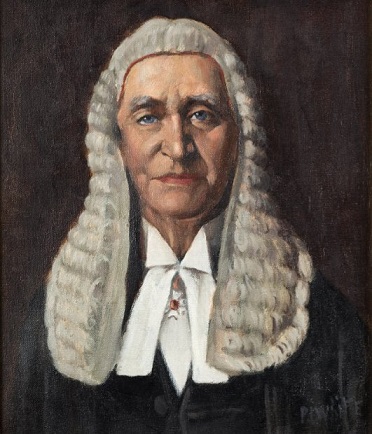
(Picture shows a portrait of Sir Isaac Isaacs from the Victorian Bar’s collection)

Famous Name: Honoré

11 Wednesday Jun 2014

Posted by A.O. in Famous Names

≈ 2 Comments

Tags

celebrity baby names, famous namesakes, food names, French names, Latin names, middle names, nicknames, royal names, saints names, street names, unisex names

vb-31

On June 6 it was the 70th anniversary of D-Day – the beginning of the invasion of Normandy by the Allied forces during World War II. D-Day was a turning point in the war, as the Normandy invasion provided a decisive victory for the Allied forces. More than 3000 Australians fought in the campaign, mostly in the air force.

D-Day veterans from all over the world gathered at the beaches of Normandy for the D-Day commemorations, and Australian former pilots Robert Cowper, Stuart Davis, Phillip Elger, Francis Evans, Ronald Houghton, Billy Purdy, and Frederick Riley joined the Australian Prime Minister on his visit to France for the official international ceremony. Six of these men were awarded France’s highest decoration, the Legion of Honour, for their part in D-Day’s aerial assault (Robert Cowper had already received the Legion of Honour in 2012).

The day after the commemorations, the Prime Minister continued his tour of France by visiting a town near Amiens, the scene of a 1918 battle on the Western Front which was a crucial turning point in World War I. Two Australian brigades took part in the counter-attack, with many losing their lives in the successful attempt to secure the town of Villers-Bretonneux, ending the German offensive in the Somme, and keeping the town out of enemy hands for the rest of the war.

After World War I, money donated by school children in Victoria was used to build a new school in Villers-Bretonneux, called the Victoria School. A plaque at the school pledges Australian friendship with France, and in the playground, and above every blackboard, is written Do not forget Australia. The townspeople never have forgotten: kangaroos decorate the town hall where the Australian flag flies, a service is held every Anzac Day, and the town maintains a war memorial to commemorate all Australians who died on the Western Front with no known grave.

To thank the people of Villers-Bretonneux for their kindness and warm welcome given to all Australian visitors to their town, and in recognition of the D-Day veterans given the Legion of Honour, today I am covering a name from northern France associated with honour.

Honoré is a French form of the Latin name Honoratus, meaning “esteemed, distinguished, honoured”. There are two French saints named Honoratus, and I will look at the one who was a 6th century bishop of Amiens – not only because of where he was born, but because he is most often called St. Honoré (the other one tends to be known as St. Honorat).

St Honoratus of Amiens was born in the Somme to a noble family, and is said to have been virtuous from birth. Because he was so humble, he didn’t want to become a bishop, considering himself unworthy of the role, but once he had been elected, a beam of light descended on his forehead and he found himself anointed with a mysterious sacred oil. That pretty much sealed the deal.

Legend says that when his hometown heard he been proclaimed bishop, his childhood nursemaid, who was baking bread at the time, refused to believe it. She said that she would believe the news only if the wooden shovel she was using to put the loaves of bread in the oven put down roots and turned into a tree.

Sure enough, when she planted the shovel in the ground, it turned into a mulberry tree which produced both flowers and fruit. The tree was still being shown to visitors in the 16th century, which is an extradordinarily long lifespan (some might say, suspiciously long) for a mulberry tree.

The cult of St Honoratus really took off after 1060 when the saint’s body was exhumed, and many miracles were said to have occurred. Reputedly, processions of his relics managed to prevent both droughts and floods, ensuring good wheat harvests, and therefore happy bakers.

In 1202, a baker donated land to the city of Paris to build a chapel in honour of St Honoratus. It became one of the richest chapels in the city, and gave its name to the rue du Faubourg Saint-Honoré, now one of the most fashionable streets in the world, as it is filled with high-end boutiques.

In 1400 the bakers of Paris established their guild in the church of St Honoratus, and in 1659 Louis XIV ordered that every baker celebrate the feast day of St Honoratus on May 16, and give donations in the saint’s name to benefit the community. Even in modern France, bakers hold bread and pastry festivals on May 16, and during that week, bakers hold their annual meeting.

You may know the name of St. Honoré from the Gateau St. Honoré, a classic French dessert which has a puff pastry base with a ring of choux pastry around the edge. On top are small cream puffs dipped in caramelised sugar, and traditionally it is filled with crème pâtissière and whipped cream. It’s a popular birthday cake in France, and is also traditionally served at first communion parties.

The cake is said to have been created in the 19th century by the famous pastry chef Monsieur Chiboust, who named it both in honour of the saint, and because his own shop was on Rue St. Honoré in Paris – the street gaining its name from the church dedicated to St. Honoratus.

Honoré was a traditional name in the royal family of Monaco, and one its most famous namesakes is 19th century French novelist Honoré de Balzac. This is also an Australian celebrity baby name, because radio host Kate Langbroek has a son named Art Honore.

Honoré is an elegant, sophisticated boy’s name which could honour your French heritage, a connection to France, or even a family tradition of baking. The name is pronounced on-eh-RAY or o-no-RAY, making Onni or Ray fairly natural nicknames for an English-speaker. Although it might seem too challenging as a baby name in Australia, we have grown accustomed to Remy as a name here, so why not another French saint? Something to think about it is that, like Remy, Honoré has historically been used as a unisex name in Australia.

POLL RESULT
Honoré received an approval rating of 56%. 22% of people thought it was too feminine to be used as a boy’s name, but 17% saw it as a great French heritage choice. Only one person believed the name Honoré was too closely associated with the Gateau St. Honoré dessert.

(Photo shows the plaque at the Victoria School in Villers-Bretonneux)

Famous Names: Azalea and Amethyst

04 Wednesday Jun 2014

Posted by A.O. in Famous Names

≈ 16 Comments

Tags

Anne of Green Gables, birth notices, dog names, english names, famous namesakes, flower names, gemstone names, Greek names, locational names, name history, name meaning, nature names, pet names, plant names, rap names, screen names, stage names, street names, US name trends

May-purpleazalea

Australian rapper and model Iggy Azalea has been in the news recently, as she performed at the Billboard Music Awards last month. Her song Fancy recently reached #1 on the Billboard Top 100 in the same week that Ariana Grande’s Problem, which features Azalea, made #2. This makes Iggy Azalea the first act to reach #1 and #2 simultaneously since the Beatles did it in 1964 with I Wanna Hold Your Hand, and She Loves You.

Iggy grew up in the hippie town of Mullumbimby in northern New South Wales, and began rapping at the age of fourteen after developing an obsession with Tupac when she was eleven. Unsuccessful and unpopular at school, Iggy dropped out. Shortly before her sixteenth birthday, she left for a “holiday” in the United States, during which she phoned her parents and broke it to them that she wasn’t coming home, but going to seek her fortune as a professional rapper. She lived in the southern states, and developed a southern American accent for professional purposes.

As a rapper in America, Iggy was at first unsuccessful and unpopular, but Mullumbimby had accustomed her to this, and it didn’t faze her. Later she moved to Los Angeles, and began uploading her own videos to YouTube: her career began to grow when her first official music video, for her song Pu$$y, went viral. Her first studio album, The New Classic, was released in April this year and debuted at #3 on the Billboard charts, also making #1 on Billboard’s Top R&B/Hip-Hop albums, and Top Rap Albums. She is the first non-American female rapper to reach the summit of these charts.

We are told that screen names are no longer necessary in Hollywood, but stage names are still common in the world of rap and hip-hop. Iggy Azalea invented hers using the old chestnut of combining her pet dog’s name with the name of the street she grew up on (her family still lives on Azalea Street in Mullumbimby). While some people might use this method and end up with something uninspiring, like Pickles Main or Mr. Bunny Wunny Commercial Estate, Iggy Azalea got pretty lucky with hers, although her real name of Amethyst Kelly seems marketable enough.

I have been seeing quite a few Azaleas and Amethysts in birth notices in the past few years, and wonder whether Amethyst Kelly aka Iggy Azalea has had an effect? I haven’t seen any girls named Iggy though.

The azalea is a flowering ornamental shrub native to Asia, Europe and North America; it is a member of the rhododendron family. Azaleas bloom in the spring, and have beautiful frilly flowers in shades of pink, purple, and white.

Its name comes from the Greek for “dry”, because it grows in dry soil and is tough enough to thrive in harsh conditions. In Chinese culture, azaleas are a symbol of womanhood and love for the home. Azalea festivals are held in Japan, China, Korea, and in many cities of the United States; the azalea is the state wildflower of Georgia in the US.

Azalea has been used as a girl’s name since the 18th century, originating in both Britain and the US. Although there is some dispute as to when azaleas were introduced to England from the Americas, they were definitely imported by the early 18th century. Azalea first turns up in Ohio in the US, where there is a small town named Azalea, so it can be seen as a place name. The name Azalea is currently rising in popularity in the United States.

As a name, Azalea seems flouncy and feminine, and also quite tough – the “dry” meaning seems very appropriate in Australia. It can be pronounced either uh-ZAY-lee-uh or uh-ZAYL-yuh, and fits in with trendy names such as Zalia and Zahlia, so that it seems a little exotic but doesn’t sound particularly strange. Zay or Zaylie could be used as short forms.

An amethyst is a semi-precious gemstone which is a violet-shaded quartz, ranging from a pinkish colour to a deep purple. The name comes from Greek, and means “not intoxicated”, due to a belief that amethysts were a protection against drunkenness.

The ancient Greeks and Romans drank wine from cups made from amethyst, thinking this would stop them being affected by alcohol. In medieval times, amethyst amulets were worn in battle, in the belief that they had healing properties, and kept the wearer cool-headed; they are supposed to have the ability to dispel illusions.

Amethysts are mined all over the world, with the highest quality coming from Brazil and Sri Lanka. You can fossick for amethysts yourself in Australia, with the most promising locations being in northern Queensland. You can also find “desert amethysts” – very old glass bottles which have baked in the sun until they turn a pretty violet colour.

Amethysts seem to capture the imagination of writers, and there are many stories and poems about them, even in ancient times. If you have read the Anne of Green Gables books by L.M. Montgomery, you will remember that as a child, Anne thought that diamonds would be “purply-sparkling” like amethysts and was disappointed to find they were colourless. One of her fancies was that amethysts were the souls of good violets.

Amethyst has been used as a personal name since the 19th century, when other gemstone names were fashionable; it can be shortened to Amy. Although amethysts are not rare or valuable, there is something pure and wholesome about them, even spiritual. As Anne says: “I think amethysts are just sweet”.

Two pretty nature names starting with A, both belonging to the same person. Which one do you prefer?

POLL RESULT
Azalea received a very good approval rating of 74%, but people were less enthusiastic about Amethyst, which had an approval rating of 43%.

azalea-st

(Top photo shows purple azalea flowers; bottom photo shows Azalea Street in Mullumbimby)

Famous Name: Harvey

28 Wednesday May 2014

Posted by A.O. in Famous Names, Requested Names

≈ 7 Comments

Tags

birth notices, Breton names, english names, famous namesakes, French names, Gaelic names, Gallic names, Irish names, mythological names, name history, name meaning, name popularity, Old Breton names, popular names, retro names, saints names, surname names, UK name trends, US name trends


world-no-tobacco-day-rose-graphicFamous Namesake
On May 31 it will be World No Tobacco Day, encouraging smokers to abstain from tobacco for just 24 hours. World No Tobacco Day was started by the UN’s World Health Organization in 1987, and each year there is a new theme: this year it is “Raise taxes on tobacco”. Should you wish to celebrate No Tobacco Day by giving up smoking, information and support can be gained from a number of government and community services.

The number of Australian smokers has dropped dramatically since World War II. In 1945, about three-quarters of men and a quarter of women smoked every day. Today it’s 16% of men and 13% of women, with numbers continuing to fall, making us one of the most successful countries at reducing smoking in the English-speaking world. That can be attributed to vigorous public anti-tobacco campaigns running since the 1980s.

Australia’s campaign against smoking began with William Harvey, a distinguished thoracic physician who devoted his lengthy career to the study and treatment of tuberculosis after his father (also a doctor) contracted the disease. Harvey had the satisfaction of seeing TB become less common, due to better testing and treatment, but over time he became concerned at the growing incidence of lung cancer.

In 1965 he helped found the Australian Council on Smoking and Health as part of his campaign against smoking, and was its president from 1966 to 1975. This didn’t make him popular with some, especially tobacco companies, who continued to deny there was any link between smoking and disease. However, William Harvey had been a POW during World War II who continued caring for his patients even as disease threatened his own life. He didn’t believe in giving up.

He visited schools and sporting bodies, he wrote to the newspapers, and he persuaded other doctors and medical organisations to join him in his campaign against tobacco. One of his achievements was the banning of cigarette vending machines in hospitals. Progress seemed slow, but he persisted, saying that he had great faith in “the inevitability of gradualness”. A devoted family man, Harvey was a keen gardener and surfer into his twilight years, and played golf, tennis and bowls. He passed away suddenly in 1981 at the age of 84 – a good advertisement for a life of healthy non-smoking.

William Harvey didn’t live to see the big government campaigns against smoking of the 1980s, but their existence and determination owe a great debt to his dedication and energy. And if I can reveal my hand, I have friends and family members who have given up smoking, and as a result I have got to spend many more years with them, or seen them live happier, healthier lives. Every one of them was convinced to give up by anti-smoking campaigns, so from the bottom of my heart, I thank you William Harvey.

Name Information
Harvey is an English surname, and one of the earliest recorded. It is derived from the Breton personal name Huiarnuiu derived from the Old Breton name Huiarnviu, meaning “blazing iron”. The Gallic form of the name is Hervé, and St Hervé (or St Harvey) is one of Brittany’s most popular saints.

Hervé was born blind, and was a 6th century hermit and bard known for his humility. According to legend, he had the power to cure animals, and was always accompanied by a wolf. The story goes the wolf had eaten the ox that the saint used for ploughing, and St Hervé made such an eloquent sermon that the wolf volunteered to pull the plough instead, in penitence.

One of the followers of William the Conqueror during the Conquest was named Hereueu, another form of the Breton name. Use of the name as a surname followed almost immediately after the arrival of men with the first name, and is first found in Norfolk, where the Harvey family were granted lands for their services at the Battle of Hastings.

In Ireland, Harvey was used to Anglicise the Gaelic surname O’hAirmheadhaigh, meaning “grandson of Airmed”. Airmed is a goddess from Irish mythology, known for being a healer during a great battle. As she wept over the grave of her brother, who had been slain by her father, all the healing herbs of the world sprang up, watered by her tears. Airmed gathered them into her cloak, but her father scattered the herbs, so that no person can ever know all the secrets of herbalism – only Airmed. Her name is identical to a word meaning “a measure of grain”, although I’m not sure if that is the origin of the name.

Harvey was also used to Anglicise the Gaelic surname Ó hEarchaidh, meaning “son of Earchadh”. Earchadh is an Irish name that I have seen translated as “noble warrior”. By the way, William Harvey was very proud of his Irish Protestant heritage, so his surname was Irish, although most likely of English origin rather than Gaelic.

The name Harvey was #167 in the 1900s, and peaked in the 1940s at #141 – perhaps because of a family of cricketers from Victoria with the surname Harvey who flourished around this time. Harvey disappeared from the charts from the 1960s to the 1980s, but made a comeback in the 1990s when it ranked at #581.

Interestingly, this was the time when retail chain Harvey Norman, co-founded by maverick businessman Gerry Harvey, became a “superstore” business, with massive expansion. The name Harvey zoomed up the charts to make #314 for the early 2000s and #243 for the late 2000s. Harvey peaked in 2010 at #149, and then began dipping the next year – this coincides with Gerry Harvey’s unpopular campaign to make consumers pay Goods and Services Tax on items bought online from overseas websites.

Although Harvey is in the 100s in New South Wales, it is a Top 100 name in Victoria. Harvey entered the Victorian Top 100 in 2010, debuting at #100, and last year made #64. If you are in Victoria you probably think of Harvey as a popular and rising name, while in other states, Harvey may seem fashionable but underused. It is not clear at present if other states will follow Victoria’s lead, but as Harvey is Top 100 in the UK, and rising in the US, international trends suggest Harvey’s popularity here may be increasing.

Harvey is a cute, spunky name for boy, but there’s also something strong and masculine about it. This retro name has been underused for most of its history, and is now making a comeback – in at least one state, it is more popular now than at any other time. This may give some parents the jitters. Although it has only ever charted as a boy’s name, I have seen Harvey on a few girls in birth notices, and the Irish goddess does give this some legitimacy as a name for both genders.

POLL RESULT
Harvey received an excellent approval rating of 75%, making it one of the highest-rated names for 2014. People saw the name Harvey as strong and manly (20%), cute and boyish (16%), and traditional without being stuffy (13%). However, 11% were reminded too strongly of Harvey Norman stores. There was a strong preference for Harvey being reserved for boys only, with 18% saying it was only suitable for boys, and just 2% believing it could be used for both genders.

Thank you to Vanessa for suggesting the name Harvey be featured on Waltzing More Than Matilda.

Famous Name: Grace

21 Wednesday May 2014

Posted by A.O. in Famous Names

≈ 6 Comments

Tags

British name popularity, classic names, colour names, contemporary classics, english names, famous namesakes, germanic names, Latin names, middle names, mythological names, name history, name meaning, name popularity, New Zealand name popularity, nicknames, popular names, royal names, saints names, theological names, virtue names, vocabulary names

Thumbnail_320

Last month it was the 121st birthday of Grace Cossington Smith, one of the most important Australian artists of the 20th century, and a contemporary of Clarice Beckett.

Grace was born in Sydney, and studied under Antonio Dattilo Rubbo, an inspiring and extremely supportive art teacher who encouraged his students to experiment; he affectionately called Grace “Mrs Van Gogh”. Her painting The Sock Knitter, showing her sister knitting socks for the war effort, is considered to be Australia’s first post-Impressionist painting, and she exhibited in galleries from 1915.

Her paintings are notable for their bright patterns and vibrant energy, using careful square brushstrokes to create images of colour shimmering through sunlight. She painted scenes of Sydney, and is famous for her iconic representations of the Harbour Bridge, showing the bridge’s construction. Grace’s Sydney was bustling, busy, exciting; filled with crowds, colour and sunshine. Later in life, she became known for her still lifes and interiors.

Art museums began buying Grace’s work in the 1940s, but she did not become famous until the 1960s, and in 1973 was appointed an Order of the British Empire as an exhibition of her work toured with the Art Gallery of New South Wales. Grace was 81, and let it be known that she would have welcomed recognition a little earlier. She received her OBE while in a nursing home, and by then was too frail to paint any more.

Grace is an English word which can be understood in several different ways. We might think of grace in terms of physical elegance and poise, but there is also social grace, where a person is charming and well-mannered.

The theological concept of Divine Grace is present in several religions. In Christianity, it means the undeserved love and mercy given to us by God – a gift that allows us a share in divinity. Although there are many theological disagreements, nearly all Christians believe that the grace of God is necessary for salvation, and that it is through divine grace that we are able to resist sin.

The word grace comes from the Latin gratia, meaning “kindness, favour, esteem”, ultimately from an ancient root which means “praise, welcome”. The word is related to grateful. Both the secular and spiritual senses of the word grace have connotations of effortlessness – no matter how many lessons in physical movement or etiquette you might have, you can only appear graceful if it seems natural and easy for you. And the grace of God comes not through our own efforts, but is a gift that we are freely given without earning it.

The English name Grace was not originally linked to either of these meanings, but from a Germanic name Grece, meaning “grey”, and pronounced like Grace. However, it quickly became associated with the Latin Gratia or Gracia, to suggest “charming, pleasant”, and it is thought that women with these names would have been known as Grece or Grace in everyday life.

St Gracia of Lerida may have been an influence on the name’s development; she was the daughter of a Spanish Muslim caliph who converted to Christianity and was martyred in the 12th century. Born Zaida, she took Gracia as her Christian name, and is sometimes known as St Grace. There is also an obscure pre-Norman English saint named Grace connected with St Probus of Cornwall; some speculate that she was his wife, and others that she was a great lady who supported him in his ministry. There doesn’t seem to be any evidence that she ever existed.

In Greek mythology, the Graces are goddesses of charm, beauty, nature, creativity, and fertility, patronesses of amusements and festivities. Despite this seemingly frivolous purview, in some mysterious way they were connected to the Underworld and the secrets of the afterlife – perhaps a taste of the joys which might await us on the other side. In Renaissance art, they are usually depicted as three beautiful young women who are either naked or lightly draped in diaphanous garments, and often embracing each other or clasping hands.

These attractive figures might have influenced the choice of the name Grace from the late Middle Ages, but it is usually thought that after the Reformation, Grace would have been given by Puritans as a virtue name, with the religious meaning in mind.

Grace is a classic name which has never left the charts. It was #29 in the 1900s, left the Top 100 in the 1940s, and reached its lowest point in the 1970s at #373. It then began climbing steeply, around the time of Princess Grace of Monaco’s death, and reached the Top 100 in 1988 at #89.

By 1991, Grace was in the Top 50 at #45, and in the Top 20 by 1998 at #13 – the highest point it had ever gained historically. Grace reached the Top 10 in 2002 at #9, however it did not stay there long, and stabilised just outside the Top 10, where it remains today.

Currently Grace is #12 nationally, #11 in Victoria, #14 in New South Wales, #12 in Queensland, #11 in Western Australia, #9 in Tasmania, #11 in the Northern Territory and #10 in the Australian Capital Territory. Highly popular in all states and territories, it is also a Top 100 name in other English-speaking countries, and is most popular in Northern Ireland and Ireland at #3 and #4 respectively. Its popularity in Britain and New Zealand is much the same as here.

Grace is a true timeless classic; a solid choice as an English name which has never gone out of fashion or fallen into disuse in nearly a thousand years. Yet it is more popular now that it has been at any other time in Australia’s history, making it a contemporary classic which feels both traditional and up-to-date.

Grace is a beautiful name with simple elegance; sophisticated and unpretentious, and even more popular as a middle name. It’s a saint, a princess, a goddess, and millions upon millions of ordinary women throughout the ages. There may be many little girls named Grace, but that’s no reason why your daughter cannot join their ranks. Gracie is a common pet form, and quite a few parents are choosing this as the name on the birth certificate.

POLL RESULT
Grace received an excellent approval rating of 83%, making it one of the highest-rated names of 2014. People saw the name Grace as a beautiful timeless classic (29%), simple yet sophisticated (18%), suitable for all ages (18%), and intelligent and professional (11%). However, 6% thought it was too popular. Nobody thought the name Grace was harsh or ugly.

(Picture shows Church Interior by Grace Cossington Smith, c 1941)


← Older posts
Newer posts →

Enter your email address to follow this blog

Categories

Archives

Recent Comments

A.O.'s avatarwaltzingmorethanmati… on Zarah Zaynab and Wolfgang…
Madelyn's avatarMadelyn on Zarah Zaynab and Wolfgang…
JD's avatardrperegrine on Can Phoebe Complete This …
A.O.'s avatarwaltzingmorethanmati… on Rua and Rhoa
redrover23's avatarredrover23 on Rua and Rhoa

Blogroll

  • Appellation Mountain
  • Baby Name Pondering
  • Babynamelover's Blog
  • British Baby Names
  • Clare's Name News
  • For Real Baby Names
  • Geek Baby Names
  • Name Candy
  • Nameberry
  • Nancy's Baby Names
  • Ren's Baby Name Blog
  • Sancta Nomina
  • Swistle: Baby Names
  • The Art of Naming
  • The Baby Name Wizard
  • The Beauty of Names
  • Tulip By Any Name

RSS Feed

  • RSS - Posts

RSS Posts

  • Celebrity Baby News: Melanie Vallejo and Matt Kingston
  • Names from the TV Show “Cleverman”
  • Can Phoebe Complete This Sibset?
  • Zarah Zaynab and Wolfgang Winter
  • Baby, How Did You Get That Name?
  • Celebrity Baby News: Media Babies
  • Celebrity Baby News: Adelaide Crows Babies
  • Celebrity Baby News: Chris and Rebecca Judd
  • Names at Work: Name News From the World of Business and Employment
  • Celebrity Baby News: Sporting Round Up

Currently Popular

  • Rare Boys Names From the 1950s
  • The Top 100 Names of the 1940s in New South Wales
  • Girls Names From Stars and Constellations
  • Celebrity Baby News: Livinia Nixon and Alistair Jack
  • Celebrity Baby News: Jacinta Allan and Yorick Piper

Tags

celebrity baby names celebrity sibsets english names famous namesakes fictional namesakes honouring locational names middle names name combinations name history name meaning name popularity name trends nicknames popular names saints names sibsets surname names twin sets unisex names

Blog at WordPress.com.

Privacy & Cookies: This site uses cookies. By continuing to use this website, you agree to their use.
To find out more, including how to control cookies, see here: Cookie Policy
  • Subscribe Subscribed
    • Waltzing More Than Matilda
    • Join 517 other subscribers
    • Already have a WordPress.com account? Log in now.
    • Waltzing More Than Matilda
    • Subscribe Subscribed
    • Sign up
    • Log in
    • Report this content
    • View site in Reader
    • Manage subscriptions
    • Collapse this bar
 

Loading Comments...