• About
  • Best Baby Names
  • Celebrity Baby Names
  • Celebrity Baby Names – Current
  • Celebrity Baby Names – Past
  • Featured Boys Names
  • Featured Girls Names
  • Featured Unisex Names
  • Links to Name Data
  • Waltzing on the Web

Waltzing More Than Matilda

~ Names with an Australian Bias of Democratic Temper

Waltzing More Than Matilda

Category Archives: Famous Names

Famous Names: Bowie and Pluto

20 Thursday Aug 2015

Posted by A.O. in Famous Names

≈ 2 Comments

Tags

astronomical names, Disney names, dog names, english names, famous namesakes, Gaelic names, Greek names, historical records, Irish names, middle names, mythological names, name trends, names of weapons, nicknames, rare names, Scottish names, slave names, stage names, surname names, UK name popularity, unisex names, US name popularity
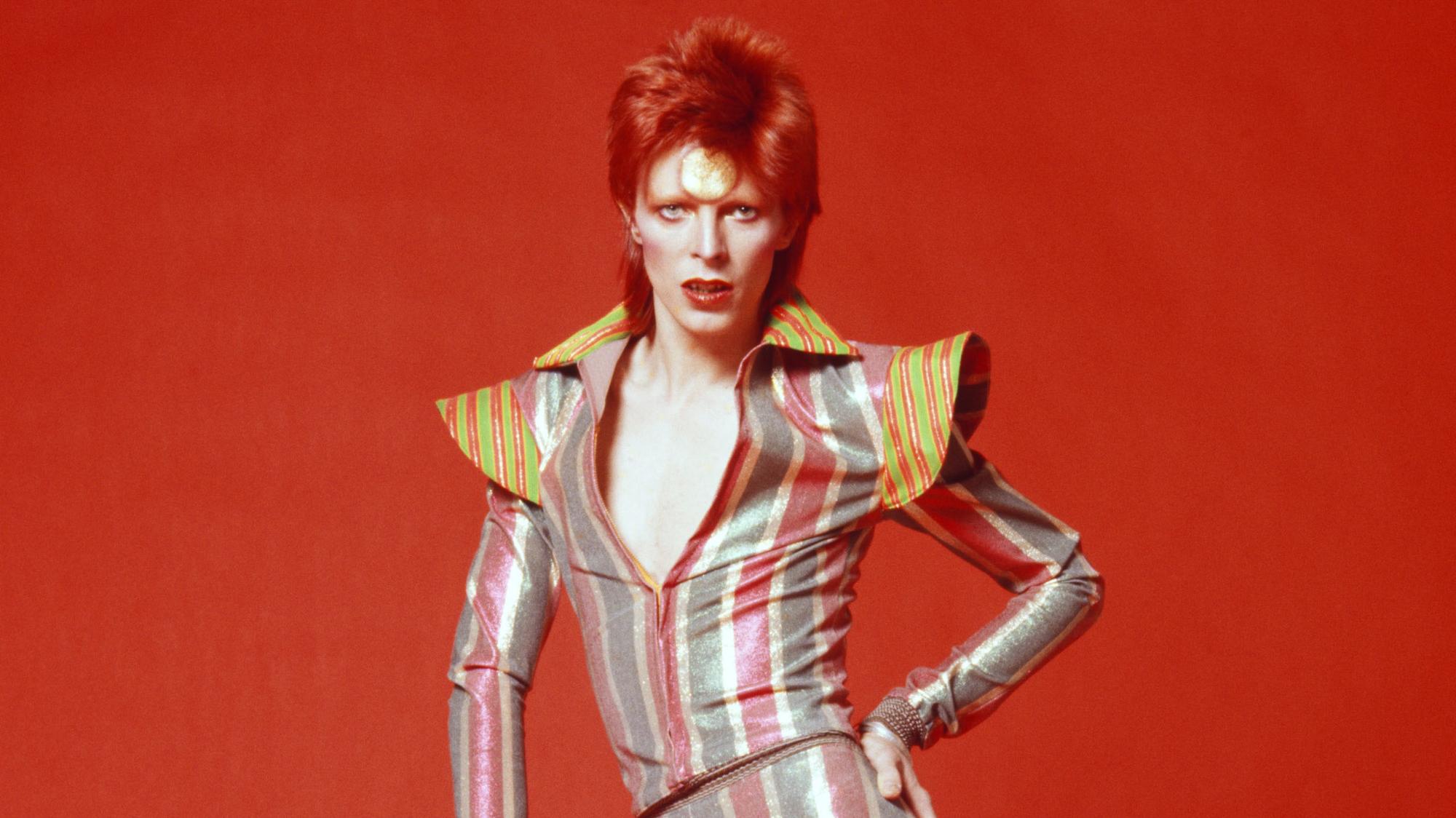
get-ready-for-david-bowie-to-take-over-melbourne-1432194284

Names in the News
On July 14 this year NASA’s New Horizons space probe made its closest encounter with the dwarf planet Pluto. Australia was the first place on Earth to receive images of Pluto from New Horizons, at the CSIRO’s Canberra Deep Space Communication Complex at Tidbinbilla. The CDSCC has been tracking New Horizons since it was launched in 2006, and it will take more than a year to receive all the data.

Two days later, the David Bowie Is touring exhibition opened at Melbourne’s Australian Centre for the Moving Image, and broke all records for ticket sales before anyone stepped inside the doors. First staged at the Victoria and Albert Museum in London, it has already been seen by more than 1 million people around the world. The show includes costumes, video, photographs, and items from Bowie’s own collection, including notes and sketches.

David Bowie has a special significance in Melbourne. His first Australian tour was in 1978, and the biggest concert of his career to that point was at the Melbourne Cricket Ground. People queued for three weeks to buy tickets, and the fact that it poured with rain did nothing to dampen the spirits of 40 000 fans. His experiences in Australia in the 1970s inspired the music video for Let’s Dance, filmed in Sydney and outback Carinda).

Besides having key Australian events at around the same time, there isn’t an obvious connection between Bowie and Pluto. Except that Bowie has had so many references to space in his music – Space Oddity, Ashes to Ashes, Ziggy Stardust, Moonage Daydream, The Stars (Are Out Tonight), Life on Mars?, Star Man – that it doesn’t seem too much of a stretch to cover these names together.

BOWIE
Scottish surname derived from the Gaelic nickname Buidhe, meaning “yellow”, to denote someone blond or fair haired. It has also been used to Anglicise the Irish surname Ó Buadhaigh, meaning “son of Buadhach”, with Buadhach meaning “victorious”, although more commonly that’s Anglicised to Boyce. In rare cases it may be a variant of the English surname Bye, from the Old English for “bend”, referring to someone who lived on a river bend.

The Bowie surname originates from Kintyre in western Scotland, and the Bowie family were early colonists to America, with John Bowie Snr one of the founders of Maryland in the early 18th century. He was the grandfather of James “Jim” Bowie, who played a prominent role during the Texas Revolution, and died at the Battle of the Alamo in 1836.

The thick heavy blade known as a Bowie knife is named after Jim, who carried a hunting knife with him and had a reputation as a skilled knife fighter. His brother Rezin Bowie is supposed to have been the creator of the Bowie knife, although Bowie family history relates that it was Rezin’s blacksmith who created the knife.

David Bowie was born David Jones, and first performed as Davie Jones, which risked being confused with Davy Jones from The Monkees. He chose his stage name after seeing the movie The Alamo in 1963, with Richard Widmark as Jim Bowie; allegedly he wanted a name with a “cutting” feel to it, like Mick Jagger’s, and the Bowie knife gave it some edge. He deliberately chose the name of a famous American, as American music and culture had first inspired him.

Bowie has been used as a personal name since the 18th century, and originated in Scotland. Mostly used as a middle name, it was first given as a family name, but in 19th century America increasingly given to honour Jim Bowie: it was particularly found in the southern states. The name Bowie has been given to both sexes, but mostly to boys.

Jagger, Lennon, and Hendrix are reasonably common names, but even with the fame of David Bowie, the name Bowie is in rare use. It doesn’t chart in Australia, while in the UK there has been a smattering of Bowies on the charts since 2003; in 2013 there were 5 baby boys named Bowie. In the US last year, there were 59 baby boys named Bowie and 30 baby girls (numbers rose considerably for boys, but fell for girls).

It is slightly puzzling why Bowie isn’t used more. It sounds like familiar names like Beau, Bohdi, and Brodie, is a counterpoint to popular Archer, and as a knife it fits the trend for weaponry names like Blade.

One issue is that the pronunciation is slightly confused. In the US, Bowie tends to be said BOO-ee, the usual pronunciation of the surname and the Bowie knife. The British sometimes say the first syllable of David Bowie’s surname like the bough of a tree, whereas Bowie himself says it like bow and arrows.

PLUTO
In Greek mythology, Pluto is the god of the Underworld and the afterlife. His earlier name was Hades, but gradually this was used to mean the Underworld itself. Pluto is the Latinised form of the Greek Plouton, meaning “wealth, riches”, and the name is sometimes glossed as “giver of wealth”.

It makes sense that Pluto should be associated with wealth, because he has dominion over all the precious metals, gems, and resources under the earth, and all crops planted in soil. He was a god of abundance, and from early on was associated with agricultural fertility – which is why he was the natural husband for the agricultural goddess Persephone. Pluto and Persephone were revered as a divine couple with knowledge of the mysteries of birth and rebirth.

In the Christian era, there was often a horror of gods of death and the Underworld, who tended to be associated with Satan or demons. Pluto’s image, never a particularly cheerful one, became positively macabre, with Hades a place of torment. In Dante’s Inferno, Pluto rules the fourth circle of Hell, where those who have squandered their wealth are sent. Medieval English writers sometimes conflated Hades with Fairyland, giving Pluto a magical elf-king quality.

The dwarf planet Pluto was discovered in 1930 by a young astronomer named Clyde Tombaugh who had just started working at the Lowell Observatory in Arizona. It was named by an eleven-year-old Oxford schoolgirl named Venetia Burney. She made the suggestion to her grandfather Falconer Madan, retired from the University of Oxford’s Bodleian Library. He had the connections to ensure that Venetia’s idea got to the right people, they unanimously agreed, and Venetia was paid £5 (around $450 in today’s money). A big help was that the first two letters were PL – the initials of Percival Lowell, who had founded the observatory.

When Walt Disney studios created a pet dog for Mickey Mouse in 1930, he was named Pluto – apparently after the planet, although nobody is able to confirm that. So Pluto went from being a god name to a dog name!

Pluto is a gloomy god, a dwarf planet, a cartoon dog … but the name has also been rarely used for humans. The name is first found in colonial America in the 18th century, as a slave name. Pluto can be found in Australian historical records (Pluto Riches and Pluto Surprise are two interesting finds), and was also given to Aboriginal servants. Overall, Pluto has mostly been used in the United States. Use of the name, always low, fell after 1930 and never recovered, although it isn’t clear whether parents were put off by the astronomical body or the Disney character.

Pluto is probably too much of a space oddity to use as a first name, but would make a memorable middle.

Two rare names from the stars: which one will rate better?

POLL RESULTS
The name Bowie received an approval rating of 50%. 42% of people weren’t keen on it, although 17% loved it.

The name Pluto was much less popular, with an approval rating of 15%. 46% of people weren’t keen on it, and only 7% thought it was a good name.

(Picture of David Bowie in 1973 by Masayoshi Sukita; photo from Urban Walkabout)
Famous Name: Darcy

12 Wednesday Aug 2015

Posted by A.O. in Famous Names

≈ 3 Comments

Tags

animal names, aristocratic surnames, english names, famous namesakes, Gaelic names, Irish names, locational names, name history, name meaning, name popularity, names from songs, popular names, scientific names, surname names, UK name popularity, unisex names, US name popularity

colin

Famous Namesakes
This month it will be the 95th birthday of Darcy Dugan, who was born in Sydney on August 29 1920. Although Darcy was a career criminal who committed many armed hold-ups, he gained folk hero status as the most notorious prison escape artist in New South Wales.

Darcy spent 44 years in prison, with a death sentence commuted to life imprisonment, and made six escapes from custody in all. Legend has it that his trademark was to scrawl Gone to Gowings on his cell wall before each escape – Gowings was a popular department store, and in the slang of the time, to go to Gowings meant “to leave in haste”.

Dugan’s experience of prison brutality and police corruption led him to become a campaigner for prison reform: after being released he worked towards the rehabilitation of ex-prisoners. Darcy died in 1991, and his memoir Bloodhouse was published a few years ago, the manuscript only to be released once he and all his enemies were dead.

Another literary namesake is the author D’Arcy Niland, who wrote numerous short stories, and several successful novels, including The Shiralee, about a swagman on the road with his little girl, Buster. Niland knew this subject well, for he had wandered around rural New South Wales with his father during the Great Depression.

The writer was born Darcy Niland in 1917, and named after the Australian boxer Les Darcy, who had died the year Niland was born. D’Arcy Niland, a keen boxer himself, began researching a book about Les Darcy, which was eventually completed by his widow Ruth Park, and son-in-law Rafe Champion, both successful writers. As Darcy Dugan was only a few years younger than Niland, I suspect he was probably named after the boxer as well.

Name Information
Darcy can be a variant of D’Arcy, an English surname of French origin: it comes from the village of Arcy in Normandy, which means “bear town”. In Ireland, the name Darcy is usually from the same source, brought over by the Normans. Occasionally it is an anglicisation of the Gaelic name O’Dorchaidhe, meaning “son of the dark one”, although this is generally anglicised to Dorsey.

Darcy is an aristocratic name, with the Darcy family of Yorkshire holding noble titles since the 17th century, although the family had been prominent since the Middle Ages. The 4th and final Earl of Holdernesse was Robert Darcy, an 18th century diplomat: he was said to have been the last direct descendant of the Norman barons still in the Peerage.

His daughter Lady Amelia married “Mad Jack” Byron, the father of poet Lord Byron. Their daughter Augusta Leigh is supposed to have been in a relationship with her half-brother, and bore him a child called by her middle name Medora, after a character in one of Byron’s poems.

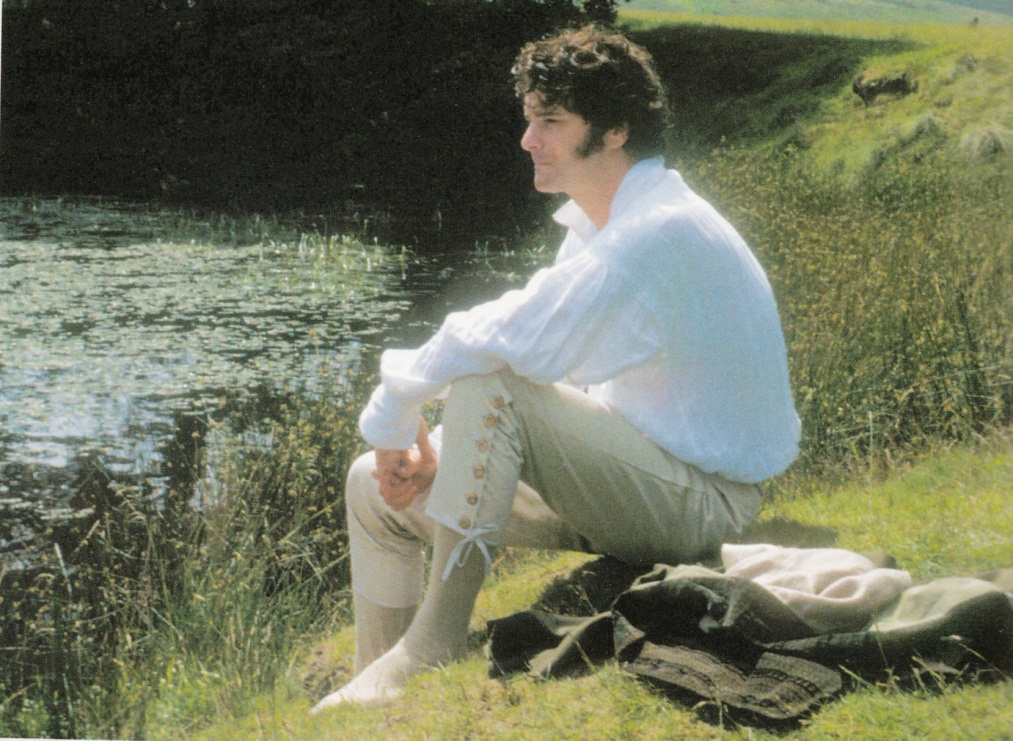
Many readers will be reminded of a purely fictional aristocrat: Mr Fitzwilliam Darcy from Jane Austen’s Pride and Prejudice. Tall, dark, handsome, rich, and aloof, he both attracts and irritates the spirited heroine Elizabeth Bennet, but she learns that Darcy can be generous and noble-spirited (and has a gorgeous estate).

Mr Darcy has entranced generations of women, been depicted on screen by actors such as Sir Laurence Olivier and Colin Firth, and inspired modern works of fiction, including Lost in Austen and Bridget Jones’ Diary. Scientists have even named a male sex pheromone Darcin in honour of the romantic hero (it attracts female mice, not witty damsels).

Jane Austen is believed to have named Fitzwilliam Darcy after both Robert Darcy and William Fitzwilliam, 4th Earl of Fitzwilliam, an important 18th century statesman and one of the richest people in Britain. Perhaps she saw her hero as continuing the line of Norman barons, while also claiming some distant share of royal blood through his Fitzwilliam ancestry.

She was presumably not to know the scandalous direction the Darcy connection would take: it may amuse some readers to know that when Medora Leigh was born a year after Pride and Prejudice was published, she was baptised Elizabeth. This is just possibly not a coincidence – Augusta Leigh was a Jane Austen fan, and Lord Byron owned a copy of Pride and Prejudice.

Darcy has been used as a personal name at least since the 17th century, and originated in Yorkshire, influenced by the aristocratic Darcy family. It was originally nearly always given to boys, but overall, Darcy has more often been a girls’ name.

Australia is apparently the only country where Darcy is primarily a male name. From the 1900s, it is listed on the charts as a unisex name, and first charted as a boys’ name in the 1950s at #319 – around the time Darcy Dugan became famous.

It went off the charts altogether in the 1960s and ’70s, returning in the 1980s at #434, when Darcy Dugan was released from prison, and D’Arcy Niland’s The Shiralee was made into a mini-series. It then climbed steeply, making the Top 100 for the first time in 1997 at #77 (not long after the Pride and Prejudice mini-series). It never got any higher than its initial position, remaining in the bottom quarter of the Top 100.

Last year it dropped off the national Top 100, and the Top 100 in Victoria, Queensland and the Australian Capital Territory. It is currently #97 in New South Wales and #87 in Tasmania. Darcy is around the 400s as a girls’ name, but if you included variants such as Darci and Darcie would be somewhat higher.

Darcy joined the UK Top 100 for the first time in 2013; it is #93 for girls and rising. In the UK, 28 baby boys were named Darcy as opposed to 588 baby girls. Darcey is even more popular for girls in the UK, at #84 and rising – the ballerina Darcey Bussell (born Marnie Crittle) has been a major influence on the name. Darcey is one of her middle names, while Bussell is the surname of her Australian adoptive stepfather – her biological father was the Australian designer John Crittle, descended from the first free settler to Australia. Spelling variants make this name even more common for girls in Britain.

In the US, Darcy has not charted since the mid 1990s. It peaked for girls at #349 and for boys at #869, both in 1968 (the song Darcy Farrow was released in 1967 by George Hamilton IV, about a girl named Darcy; the same year the sci-fi novel Too Many Magicians was published, featuring a detective named Lord Darcy, so it was on the radar for both genders). Last year in the US there were 183 baby girls named Darcy and 12 boys, but if you include spelling variants it is even more overwhelmingly a female name.

With such manly namesakes as Les Darcy, Darcy Dugan, and D’Arcy Niland, you can see how this unisex name became all-boy in Australia. But is it possible for it to follow international trends and become a girls’ name in the future? In a word, yes. It is currently falling in use for boys while climbing for girls, and has never peaked higher than #77. Ashley peaked at #60 for boys, and became far more common as a girls’ name, so it’s happened before. In the meantime, this is a name that seems just right for either a Mister Darcy or a Miss Darcy.

POLL RESULTS
Darcy received a creditable approval rating of 70%. People saw Darcy as cute and spunky (15%), cool and classy (12%), and romantic and dreamy (10%). However, 7% thought it seemed downmarket and lower class – as opposed to the 6% who saw it as yuppy and snobbish!

72% of people thought Darcy was better as a boy’s name, while 28% preferred it as a name for girls.

(Photo shows Colin Firth as Mr Darcy in the 1995 TV mini-series of Pride and Prejudice)

Famous Names: Bronwyn and Dolores

05 Wednesday Aug 2015

Posted by A.O. in Famous Names

≈ 5 Comments

Tags

controversial names, dated names, famous namesakes, fictional namesakes, Harry Potter names, Marian titles, modern names, name history, name meaning, name popularity, name trends, names from films, nicknames, Spanish names, UK name popularity, US name popularity, Welsh names

BronwynBishopDolores

Famous Namesake
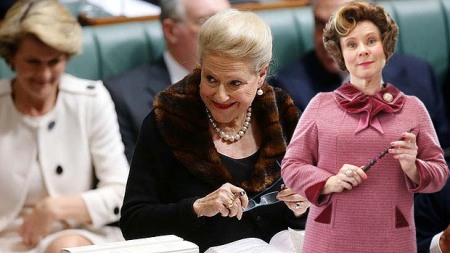
Bronwyn Bishop resigned as Speaker of the House two days ago, after a furore over her use of travel allowances. Usually when someone is caught out abusing the system they quickly hand in their notice and quietly slip away before too many questions can be raised. However Ms Bishop refused to admit she had done anything wrong and resisted all pressure to resign for three weeks, which meant we had plenty of time to hear about her extravagant travel expenses.

They included a $6000 private flight from Sydney to Nowra for a Liberal party fundraiser, and more than $1000 on a limo so she could attend a theatre premiere in her home city. There was also the $600 return flight to attend colleague Sophie Mirabella’s wedding in Albury, and $130 000 spent on overseas travel to Europe and Asia, including $1000 a day on private limos.

The one that really left people gobsmacked was a $5000 chartered helicopter to take her from Melbourne to a Liberal party fundraiser in Geelong and back – a trip which takes only about an hour each way by road. Referred to as Choppergate, this was the scandal that brought Ms Bishop down. She wasn’t a first-timer at this: in the 1980s she once hired a helicopter at taxpayer’s expense to transport her from a fete to a dog show.

Ironically, back in the 1990s Bronwyn Bishop rose to fame as the face of public accountability when she was on the Senate estimates and joint public accounts committee. This sounds dull and usually was – an assessment of government departments and where they spent their appropriations. Under Bishop, committee meetings became virtual show trials where senior public servants were routinely interrogated, hectored, and taunted for their spending habits.

When Bronwyn Bishop was appointed Speaker in 2013, the Opposition described her as Dolores Umbridge, after the infamous headmistress from the Harry Potter series. This didn’t refer to a penchant for hair ribbons or interest in fluffy kittens, but indicated a fear she was to be a corrupt tool of government. This turned out to be not unfounded, for in her term of office Ms Bishop showed considerable bias, ejecting 393 Opposition members from the house, but only 7 of her own party.

Bronwyn Bishop was appointed to the role of Speaker by the Prime Minister, who describes her as a close personal friend, and himself as her ideological love child. This has turned out to be yet another damaging captain’s call, and no doubt the next Speaker will be the choice of his party.

It’s been a spectacular fall from grace for the longest-serving woman in Parliament, who once boasted she would be a future Prime Minister. Now the Prime Minister admits her parliamentary career is at an end.

BRONWYN
Bronwyn is a variant of Bronwen, a modern Welsh name meaning “white breasted, fair breasted”. The meaning is possibly less important than the fact it is very similar to the medieval Welsh name Branwen, meaning “fair raven”; in Welsh legend, Branwen was the sister of Brân the Blessed. Both Bronwen and Bronwyn have been used since the 19th century.

There is a popular notion that Bronwyn is the masculine form of Bronwen, since in Welsh the suffix -wyn is usually attached to masculine names. In fact, you can get into some quite nasty arguments about it on baby name forums, with angry people telling you that you have ignorantly given your daughter Bronwyn a specifically male name.

However if you look at the records, Bronwyn was always used as a girl’s name in Wales right from the start, with the -wyn spelling just a variant, not an indication of gender. Interestingly, the few examples of men named Bronwyn I found, dating from the 20th century, were all from outside Wales. I suspect their parents read up on the Welsh language and “corrected” Bronwyn from feminine to masculine, possibly being a bit too clever in the process and giving their sons a traditionally female name.

While Bronwen was originally by far the more common spelling in the 19th century, Bronwyn overtook it in the 20th. It was popularised by the 1941 film How Green Was My Valley, with Anna Lee in the role of Bronwyn, the narrator’s sister-in-law that he loves. The film is based on the 1939 novel by author Richard Llewellyn, and is set in a Welsh mining village. In the book the sister-in-law’s name is Bronwen, and I’m not sure why Hollywood decided to spell her name with a Y. Perhaps they thought it looked more feminine.

The name Bronwyn first joined the charts in the 1940s, coinciding with the release of the film; it made its debut at #143. (Bronwyn Bishop was born in 1942, the year after the film came out). By the 1950s it had joined the Top 100 and peaked in 1964 at #53. It left the Top 100 in 1980, and hasn’t charted since the late 2000s.

For some reason, Bronwyn has only been popular in Australia: it doesn’t seem to have ever been a Top 100 name in the UK, and has never even charted in the US. In 2013, there were 23 baby girls named Bronwyn in England/Wales, and last year there were 49 baby girls named Bronwyn in the US. Numbers of Bronwyns seem fairly stable in both countries.

Bronwen has never charted in Australia. In the UK in 2013 Bronwens and Bronwyns were roughly equal (21 babies named Bronwen), while in the US there were 6 Bronwens, a lot less popular than Bronwyn.

Although Bronwyn is now a dated name, the sound of it seems to have led to the popularity of similar-sounding Bronte, which joined the Top 100 just as Bronwyn slipped off the charts. Perhaps even the rise of Bonnie owe something to Bronwyn, since a common nickname for Bronwyn is Bronnie.

DOLORES
Dolores is a Spanish name meaning “pain, sorrow”. It is taken from one of the titles of the Virgin Mary, Nuestra Senora de Dolores, or Our Lady of Sorrows. The title refers to the Seven Sorrows of Mary, which are seven sad events in Mary’s life connected with her son Jesus. They begin with his Presentation in the Temple, and the prophecies made about him, and end with his body being placed in the tomb.

The feast day for Our Lady of Sorrows began in the Middle Ages, and was originally the third Sunday after Easter; today it is September 15. It’s possible that the name Dolores was first given to girls born around this feast day, although I can’t find any evidence for this.

The feast was rarely celebrated until the 16th century, and by the 17th century Dolores had become a common name in Spanish-speaking countries, although occasionally also used by Catholics in other countries. It came into common use in the English-speaking world in the 19th century, and was a particular favourite with Irish Catholics.

Dolores has never charted in Australia. In the United States, Dolores joined the Top 100 during the 1920s, the era when Mexican actress Dolores del Rio flourished as a Hollywood star. The first Latin American actress to become famous internationally, Dolores was exquisite, elegant, and gracious.

The name left the US Top 100 in the 1940s, after Dolores de Rio was accused of Communism during the McCarthy era, and continued her career in her homeland. The name left the charts in the 1980s, after Dolores del Rio’s death, but Dolores is still remembered as one of the classic Hollywood beauties, and a great lady.

During Ms del Rio’s heyday this name must have been exotic and glamorous, but now seems dated and frumpy. The evil Dolores Umbridge from Harry Potter has not helped its image: her name was chosen because it sounds similar to the English word dolorous, which can be understood as “causing pain or grief” (it has the same Latin source as the name Dolores). However, Lola is a popular pet form of Dolores, and I can see Lolita, Dolly and Lolly becoming fashionable in the future.

Two names connected with Hollywood beauties which have fallen from favour, but are probably more influential on current trends that we give them credit for. Which one will score higher, I wonder?

POLL RESULTS
Bronwyn received an approval rating of 44%. 39% of people weren’t keen on the name Bronwyn, while 18% loved it.

Dolores received an even lower approval rating of 28%. 40% of people weren’t keen on the name Dolores, while 10% loved it.

(Photo from the ABC website)

Famous Name: Winifred

29 Wednesday Jul 2015

Posted by A.O. in Famous Names

≈ 8 Comments

Tags

Anglo-Saxon names, famous namesakes, middle names, name history, name meaning, name popularity, nicknames, pen names, saints names, UK popularity, vintage names, Welsh names

mp_mecca_1

Famous Namesake
Ramadan finished on July 18, and recently we saw a story in the news mentioning converts to Islam. That gave me the idea to cover one of Australia’s early Muslim converts. Her name was Jane Winifred Oaten, but she always went by her middle name.

Winifred came to Australia from London as a child around 1890, her father making a desperate attempt to break the poverty cycle through migration. Life in Australia got off to rough start before she even left, as her mother walked off the ship prior to sailing. Winifred and her father lived in severe hardship trying to wrest a miserable living from a block of land in Queensland infested with prickly pear. At an early age she was sent out to low-paid domestic service as her father succumbed to alcoholism and depression.

When barely 17 Winifred married an itinerant shearer named Charles Steger. It was an unhappy partnership, and she was forced to desert her husband and their four children after he threatened to shoot her. She worked as a barmaid, then married an “Afghan” cameleer named Ali Nuby (although Muslin cameleers were collectively known as Afghans in Australia, Winifred’s husband was actually Indian).

A kind and decent man, Ali was the great love of Winifred’s life, and she took her husband’s religion to become a Muslim; the marriage would not have been legal, as her first husband was still alive. After Ali’s death, she supported herself and their three children by working as a washerwoman in Oodnadatta, South Australia.

Winifred entered an arranged marriage to another Indian cameleer named Karum Bux, and she and her husband made a pilgrimage to Mecca, through India, in 1927. This was to prove a turning point for her. When she returned, she wrote a series of articles for a newspaper called Arabian Days: The Wanderings of Winifred the Washerwoman, under the pen name of Bebe Zatoom.

According to the articles, Winifred the Washerwoman had a most exciting time on the way to Mecca. She met Mahatma Ghandi and King Ibn Sa’ud of Arabia, and in Bombay (Mumbai), she stayed in the palace of the Khalifat, the supreme Muslim body in India, which appointed her their Australasian secretary. Pretty heady stuff for an Oodnadatta washerwoman.

She soon separated from her third husband, and the very next year after her pilgrimage was asked to become governess to the royal family of Afghanistan. By the time she got there, the king had unfortunately been overthrown, but she travelled to the Afghanistan border to find the king, and escort his queen back to Bombay. Once again, on her return she supplied a newspaper with her “reliable first-hand impressions” of these events.

Winifred the Washerwoman was soon turning out weekly serial stories called Star Dust and Soap Bubbles, and another series in a different paper as a man named Sapphire Bill from the Northern Territory. Winifred wrote 14 unpublished novels based on her life in the outback: three of them were later serialised in newspapers without payment.

In her 1969 autobiography, Winifred claimed she was born in China to unknown parents, and had been raised in a convent where she met her husband Ali. The pilgrimage to Mecca was undertaken with Ali, conveniently deleting two husbands from her life story. Winifred kept writing into her nineties, and died at the ripe old age of 98. However, as she had lied about her age, she received a telegram from the queen commemorating her 100th birthday a year before her death.

At a time when women had few choices, and poor uneducated working class women had even less, Winifred managed to lead the life that she wanted through her writing. Living in poverty and drudgery, Winifred’s make believe helped her survive a harsh environment, and it’s little wonder she preferred fantasy and fiction. Her conversion to Islam brought her romance and adventure, giving her an exoticism and glamour that no other washerwoman has ever matched.

Name Information
Winifred is the Anglicised form of the Welsh name Gwenfrewi, meaning “blessed reconciliation”; the name has become known because of a Welsh saint. According to legend, Saint Winifred was the daughter of a Welsh nobleman, while her mother was the sister of Saint Beuno, and related to royalty.

The story goes that as a teenager she was attacked in a fit of drunken lust by a local prince named Caradoc, who began to tear off her clothes. When Winifred fought back, Caradoc became so infuriated that he cut her head off. The head rolled downhill, and where it stopped, a healing spring appeared. Good old Uncle Beuno put her head back on her body, and restored her to life. Seeing Caradoc still lounging around with a “like whatever” attitude, Saint Beuno called on Heaven to punish him, and the ground promptly opened up and swallowed the would-be murderer.

Saint Beuno sat on a particular stone in the pool which had formed around the spring that had opened up from Saint Winifred’s head. Here Saint Beuno made an oath in the name of God that whoever should be in that spot and ask for something three times in the name of Saint Winifred should have their prayer granted, as long as it was good for their soul.

Saint Winifred’s Well is located in the town of Holywell, in the north-east of Wales. It has been known since Roman times, and after Winifred’s supposed decapitation in 660 was a place of pilgrimage. It is called the Lourdes of Wales, as so many remarkable cures have occurred there, and has long been named as one of the Seven Wonders of Wales. It features in the medieval poem Sir Gawain and the Green Knight.

Richard the Lionheart prayed here for the success of his crusade, while Henry V gave thanks at the well for his great victory at Agincourt. James II visited the well with his wife Mary of Modena, after several attempts in producing an heir. Shortly afterwards, Mary became pregnant with James, Prince of Wales. Queen Victoria visited the well as a child.

People of all faiths, or none, are welcome here, whether to pray for help, or to see a place of great historical interest, as it is only site in Britain to be a place of continuous pilgrimage for thirteen centuries.

Although the legend cannot be true, Saint Winifred was a real person who was a nun and abbess. Historical records pay great attention to a prominent scar on her neck, so perhaps Caradoc really did have a go at her. His brother Owain is said to have killed Caradoc in revenge for some hideous crime, and that might be it.

If you are wondering how Gwenfrewi turned into Winifred, when the name became used in England in the 16th century, Gwenfrewi was altered to look like the male name Winfred, which is Anglo-Saxon and means “friend of peace”.

Winifred was #39 in the 1900s, and left the Top 100 in the 1930s. It hasn’t charted since the 1950s. However, this seems like a name which is due for a comeback. It was voted the popular name of the 1900s that blog readers most wanted to be revived, and the short form Winnie is very hip at the moment. I do see an occasional baby named Winifred, and the fashionable Winter must be of help.

International trends suggest that Winifred, although rare, is growing in usage. There were 35 baby girls named Winifred in the UK in 2013, which is only just outside the Top 1000. The numbers of Winifreds are rising briskly in Britain. In the US there were 99 girls named Winifred (about the same number as Cleo, Rosalind and Priscilla), and the numbers are rising there too.

The name Winifred commemorates a saint connected with healing waters and prayers granted. It also recalls one of the outback’s colourful eccentrics who became the heroine of her own adventure story. I think this vintage name is adorable, seeming soft and innocent on a little girl, but mature and intellectual on a grown woman. It deserves serious consideration. Besides Winnie, nicknames include Win or Wynne, Freda, Fred, and Freddie.

POLL RESULTS
Winifred received a decent approval rating of 68%. People saw the name Winifred as strong yet whimsical (18%), a vintage name deserving of a comeback (18%), and hip and different (13%). However, 12% thought it was dated and old-fashioned, and not ready for a comeback (too late!). Only one person thought the name Winifred sounded creepy and evil.

(Picture is of the city of Mecca, where Winifred Steger’s life changed direction)

Famous Name: Atlas

01 Wednesday Jul 2015

Posted by A.O. in Famous Names

≈ 1 Comment

Tags

astronomical names, Berber names, famous namesakes, Greek names, historical records, locational names, mythological names, name history, name meaning, name popularity, names of mountains, scientific names, UK name popularity, US name popularity

961765-1c41258c-1892-11e5-8706-97259cdfe878

Name in the News
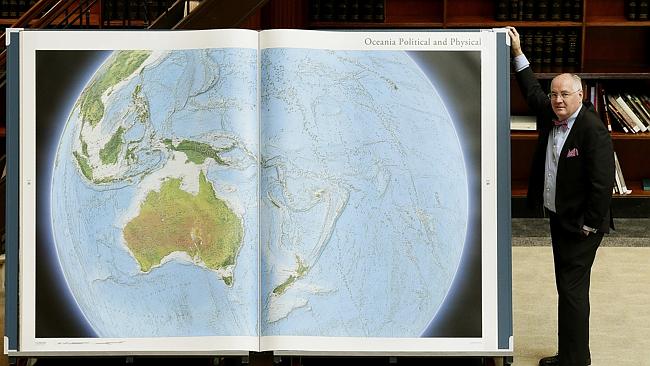
A Sydney publisher has put Australia (and the rest of the world) on the map after bringing out the world’s largest atlas. The happily-named Gordon Cheers first dreamed up the atlas 25 years ago, after seeing the huge Klencke Atlas at the British Library, presented to King Charles II in 1660.

The Earth Platinum atlas weighs 150 kg, is 1.8 metres tall and 2.7 metres across when it is open; it is 128 pages long, and each page needs two people to turn it. There are 61 pages of maps compiled by a team of 88 cartographers, showing maps of the continents and oceans, and very detailed regional maps.

As well as a double-page layout of the world’s flags, there are 27 photographic image of famous locations. One of them also broke the record for the world’s largest image in a book – it’s a picture of the Shanghai skyline made from over 12 000 photos. Last year the Earth Platinum atlas was recognised by the International Map Industry Association, and it has also entered the Guinness Book of World Records.

Only 31 copies of the limited edition atlas were produced, each one costing $100 000. One copy belongs to the British Library, who plans to exhibit it for six days each year. Officially launched on June 26, the only copy of Earth Platinum in Australia can be seen at the State Library of New South Wales until July 19.

Name Information
In Greek mythology, Atlas was one of the Titans, the ancient gods who preceded the Olympians, and who were the children and grandchildren of the earth goddess Gaia, and the sky god Uranus. The younger generation of gods, led by Zeus, waged war against their elders, and eventually prevailed, gaining dominion over the world.

Atlas was one of the leaders of the Titans during the war, and was given a special punishment – for all eternity, he was condemned to stand at the western edge of the earth (Gaia) and hold up the heavens (Uranus) on his shoulders, so that the twain should never meet.

Once the sky was able to lie upon the earth each night and mate with her, and from these couplings were born the Titans: now Zeus demanded that Atlas keep them separated forever, so that they could conceive no further gods. In other words, Atlas was to be used as a contraceptive device for deities.

Another tale tells of a giant named Atlas who tried to drive away the hero Perseus, fearing that he would steal the golden apples from Atlas’ garden. For this he was turned to stone by the head of the Medusa, becoming the Atlas Mountains in northern Africa.

This contradicts another story, where the hero Heracles had to fetch the golden apples from Hera’s garden, which was tended by Atlas’ daughters, the nymphs called the Hesperides. Heracles asked Atlas to fetch him the apples, offering to hold the sky up while he ran the errand. Atlas tried to trick Heracles into taking on the job permanently, but Heracles asked Atlas if he could just hold up the sky for a few minutes while he arranged his cloak as padding for his shoulders. Once Atlas took the heavens again, Heracles grabbed the golden apples and hoofed it, leaving Atlas holding the baby.

There is a nicer ending to the story, where Heracles built the Pillars of Hercules, the peaks flanking the Strait of Gibraltar near Spain; one of the pillars is the Rock of Gibraltar. Heracles told Atlas that from now on, the Pillars would hold up the heavens, liberating Atlas from his burdensome task.

It is not certain what the name Atlas means. The Roman poet Virgil translated it as related to “enduring”, possibly because he knew that a local name for the Atlas Mountains was Douris. Etymologists tend to interpret it as meaning “uphold, support”, although the name may actually be pre-Greek. The name of the Atlas Mountains is thought to be derived from a Berber word simply meaning “mountain”.

The Atlantic Ocean is named after Atlas, because it was seen as the western edge of the world. The mythical doomed Atlantis, vaguely located beyond the Pillars of Hercules in the Atlantic Ocean, means “island of Atlas”.

Plato says that the first king of Atlantis was named Atlas (not the Titan, but a son of Poseidon), and some believe that he based him on a legendary North African king named Atlas, a skilled astronomer and inventor of the first celestial globe, which mapped the constellations. The connection with North Africa and the heavens suggests the legendary king was inspired by the Titan.

It was 16th century geographer and cartographer Gerardus Mercator who first used the word atlas to mean a collection of maps, dedicating his own atlas to honour King Atlas, the legendary African astronomer. However, he conflated the king with the Titan Atlas, and even before that it had become traditional to show Atlas holding up the celestial spehere on early maps. Because of the connection with maps, we sometimes think of Atlas as holding up a globe of the world, although it is a puzzle how Atlas could stand on the earth while holding up the world.

Atlas has further connections to the heavens, because it is a star system in the constellation of the Pleiades, which is often called the Seven Sisters. The Titan Atlas was the father of seven sea-nymphs, and after he was sent off to carry the heavens, there was nobody around to take care of his daughters. The girls were pursued by the hunter Orion, so Zeus first turned them into doves, and then into stars so their father might see them in the sky and be comforted.

Another story is that the sisters committed suicide in despair at their father’s fate, and were immortalised as stars. Because astronomy places Atlas in the constellation as well, it seems he truly was liberated by Heracles, and can now be with his daughters for all time, protecting them from Orion, who you may still see pursuing the sisters across the night sky.

One of Saturn’s moons is named Atlas, because it appears to hold up the rings of Saturn, as if carrying them on its shoulders. It was decided that the major moons of Saturn would be given the names of Titans, as Saturn is the Roman name for Cronos, the head of the Titans. The name Atlas has also been given to one of the craters on our own moon (it’s right near Hercules).

Atlas has been used as a personal name since the 18th century, and became more common in the 19th century, especially in the United States. There are quite a few Atlases in Australian records, both male and female, and used as a first and middle name fairly equally.

Atlas made a couple of appearances on the US Top 1000 in the 19th century, and began charting again in 2013; it is currently #646 and rising. Actress Anne Heche welcomed a son Atlas in 2009, which seems to have increased interest in the name. In 2013, 12 baby boys were named Atlas in the UK, the name rising steeply since 2011. There is evidence that the name Atlas is growing in popularity in Australia too, although like the UK, still in rare use.

Atlas is a powerful, indeed a Titanic name, reminding us of famous strongman Charles Atlas. It suggests the brawn to hold up the heavens, and the fortitude to carry a load on his shoulders without complaining. However, not only are mythological names on trend, we are more comfortable now bestowing big names on little babies, and giving them something to aspire to.

And Atlas isn’t just a dumb muscle man – he’s a philosopher king who studied the cosmos, and glittering stars in one of the most familiar of our summer constellations. The name Atlas has also been chosen for several comic book and video game characters, giving it a bit of geek chic.

In short, if you are among the growing number of parents who are drawn to Atlas, you will be getting a strong yet simple name with a mountain of history, a world of legend, and an ocean of science behind it. Not to mention one heck of a lot of geography!

POLL RESULTS
Atlas received a decent approval rating of 65%. 17% of people thought it was too closely associated with the book of maps, but 16% saw it as strong and powerful, and another 16% as cool and different.

Famous Names: Jedda and Rosalie

24 Wednesday Jun 2015

Posted by A.O. in Famous Names

≈ 7 Comments

Tags

animal names, Australian Aboriginal names, bird names, celebrity baby names, ethnonyms, European name popularity, famous namesakes, fictional namesakes, flower names, French names, historical records, international name trends, Latin names, locational names, name history, name meaning, name popularity, names from movies, nature names, nicknames, plant names, saints names, screen names, UK name popularity, US name popularity

JEDDA

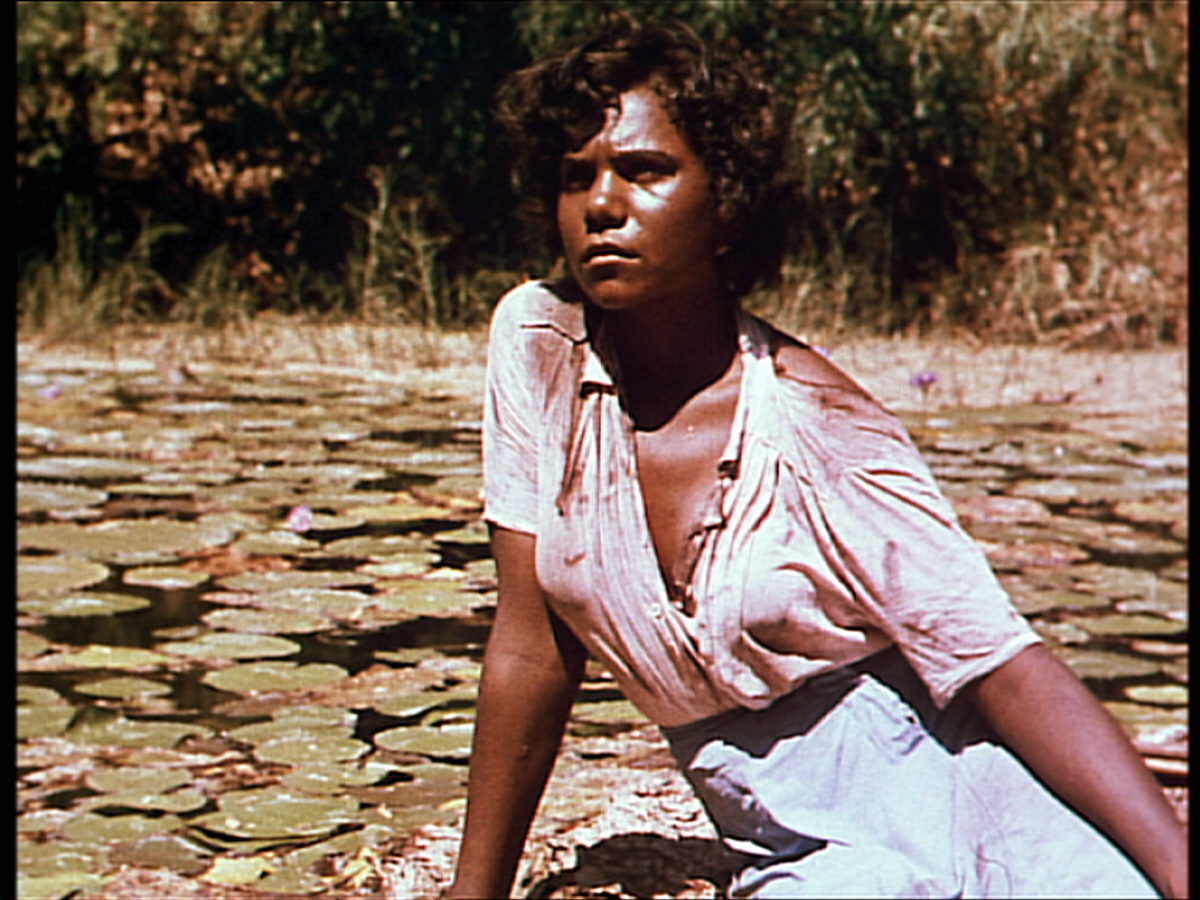
Last month the Australian film Jedda returned to the Cannes film festival, sixty years after it was first shown there in 1955. Jedda was the work of distinguished film-makers Charles and Elsa Chauvel; the first Australian feature film to be shot in colour, and the first to have Aboriginal actors in lead roles.

In the film, Jedda is an Aboriginal girl who is brought up by a white couple on a cattle station after her mother dies. She is raised in European ways, and forbidden to learn about her own culture, kept separated from the other Aborigines on the station.

When she gets older, Jedda finds herself strangely drawn to an Aboriginal man living in the bush, and following the traditional ways of his people. He abducts her, but when they come to his tribal lands, Jedda discovers that their relationship is forbidden by Aboriginal law. It’s a Romeo and Juliet scenario, and as with Shakespeare’s tale, it ends in tragedy for the star-crossed lovers.

The role of Jedda was given to Rosalie Kunoth, an Aboriginal teenager from the Northern Territory, who was studying in Alice Springs. The Chauvels gave her the screen name Ngarla for the film, which they thought looked more “authentic”. Ngarla was the name of Rosalie’s mother’s people – the Ngarla are from the Pilbara region of Western Australia. This was distressing to Rosalie, as it was culturally inappropriate.

The filming was challenging for Rosalie in many ways, and when she attended the premiere (sitting in the white section of a segregated cinema), was horrified by the film’s eroticism. Rosalie was an Anglican nun for ten years; she then left the order, married, and eventually returned to the Northern Territory. Now a respected Aboriginal elder, Rosalie Kunoth-Monks has spent her life working as an Indigenous activist, taking on leadership roles in her community. She has a daughter named Ngarla.

Jedda was a groundbreaking film in Australian cinema history, especially significant as it gained international attention and respect at a time when Australian cinema was practically nonexistent. As well as its other “firsts”, it was the first Australian film to be shown at Cannes, and nominated for the Palme d’Or.

Although it has dated in some ways, it remains a powerful and heartbreaking story. Jedda was created in opposition to the assimilationist policies of the 1950s, and the film is still relevant in light of the Stolen Generations. It helped inspire Indigenous film-maker Tracey Moffatt, whose Night Cries is a re-imagined “what might have been” sequel to Jedda.

JEDDA
In the movie Jedda, Aboriginal servants name the baby Jedda when she arrives, because she “flies in” like a “jedda bird”. Jedda appears to be from the Noongar word djida or jida, meaning “bird” (more specifically a wren), even though Noongar people are from south-west Western Australia, and the film is set in the Northern Territory. In the film, the identification with Jedda as a bird connects her to flight, to freedom and capture, and also to the spirit world.

Australian records show the name Jedda in sporadic use as far back as the 19th century, including by Indigenous Australians. I can only speculate as to where their names might have come from; in the case of Europeans, maybe as a variant of the name Jetta. It is possible that Indigenous women born before the film was made took (or were given) the name Jedda after its release. In addition, I have seen Indigenous women named Djida and Jida.

Jedda is also a plant name, as the jedda bush is native to the Cape York Peninsula region of far north Queensland. It is named after Jedda Creek, which is where it was first found, but I have not been able to discover the origin of the creek’s name – it may even have been named after the film.

Jedda is in use as a personal name for both Indigenous and non-Indigenous Australians, and is a popular name for homes, businesses, and streets. It is often used as a name for animals too, and in particular I have encountered quite a few horses named Jedda. This may be why in the children’s novel, Hating Alison Ashley by Robin Klein, the heroine’s sister Jedda pretends she is a horse. I’ve seen the name given to a boy, and it does have a bit of a unisex vibe, as it shortens to Jed.

Jedda is an Australian name made famous by a classic film, and appealing to both Indigenous and non-Indigenous parents. Although traditionally female, it could even be used for both sexes. It tends to be seen as slightly dated, yet it has never been common and is similar to Gemma, Jenna, Jed, and Jett.

ROSALIE
French form of the Latin name Rosalia, derived from rosa, meaning “rose”. Saint Rosalia was a medieval hermit who tradition says was a Norman noblewoman led by angels to live in a cave in Sicily. The saint became known in 1624, when she is supposed to have miraculously cured a plague. The saint’s name Rosalie was given to a young nun named Jeanne-Marie Rendu, and she became Blessed Sister Rosalie, who performed a lifetime of charity in the slums of 19th century Paris, and was mourned by the city when she died.

The name Rosalie came into common use in the 18th century, and was especially used in France, Germany, and Central Europe. It only became common in the English-speaking world in the 19th century, possibly because of the French courtesan Rosalie Duthé, who became the mistress of French kings and aristocrats. As a young woman she moved to London to escape the French Revolution, and gained the immensely rich George Wyndham, 3rd Earl of Egremont, as a lover. Beautiful and golden-tressed, Rosalie was apparently not overburdened with brains, and it is theorised that she is the originator of the “dumb blonde” stereotype.

The name Rosalie first joined the charts in the 1910s, debuting at #268. The name peaked in the 1940s at #141, probably because of the 1937 movie Rosalie, starring Eleanor Powell as a princess in disguise: Cole Porter’s song Rosalie is from the movie. Rosalie dropped off the charts in the early 2000s, but returned in 2009 at #519, the year after the first Twilight film was released, with Nikki Reed in the role of Rosalie Hale. Rosalie is described as being “the most beautiful person in the world”, which must have been a drawcard. The name Rosalie is apparently now in rare use again.

In the US, Rosalie returned to the Top 1000 in 2009, under the influence of Twilight. It is now #310 and rising. In the UK, the name Rosalie suddenly began rising steeply in 2009, and is now #394. Rosalie is also in the 300s in France, and is a popular name in The Netherlands, at #79.

Rosalie is a pretty, charming, European-style name with that touch of fairy-tale magic which has seen it chosen in films for a student princess and a vampire beauty. As Rose- names are becoming increasingly fashionable, it is a bit surprising that Australia seems to to be lagging behind the international trends – although it might just be that our data-collection is lagging.

I have seen quite a few birth notices for baby girls named Rosalee, Rosaleigh, Rosa-Lee and so on, and wonder if the spelling is an issue for some parents. Perhaps they worry that Rosalie will be said with the end rhyming with Lorelei, or just don’t like the idea of a name that ends in -lie. This makes me wonder if there are more Rosalies out there than meets the eye. A fantastic underused traditional choice, in any case.

POLL RESULTS
Jedda received an approval rating of 53%. 39% of people weren’t keen on the name Jedda, while 16% loved it.

Rosalie received a very good approval rating of 76%, making it one of the highest-rated names of 2015. 39% of people loved the name Rosalie, and only 4% thought it was a terrible name.


Famous Name: Milo

17 Wednesday Jun 2015

Posted by A.O. in Famous Names

≈ 6 Comments

Tags

animal names, brand names, European name popularity, famous namesakes, food names, germanic names, Greek names, locational names, name history, name meaning, names from films, rare names, UK name popularity, US name popularity

10432144_888450784521840_5322624102103057321_n

Famous Namesake
The formula for Milo was changed recently, leading to an outpouring of complaints to the company – but only in New Zealand. Apparently they’ve had the vanilla removed, and this doesn’t affect Australia, as we didn’t have any vanilla to start with. I knew that Milo was sold all over the world (it’s very big in Malaysia, I’ve heard), but didn’t realise that every country gets their own formulation of Milo.

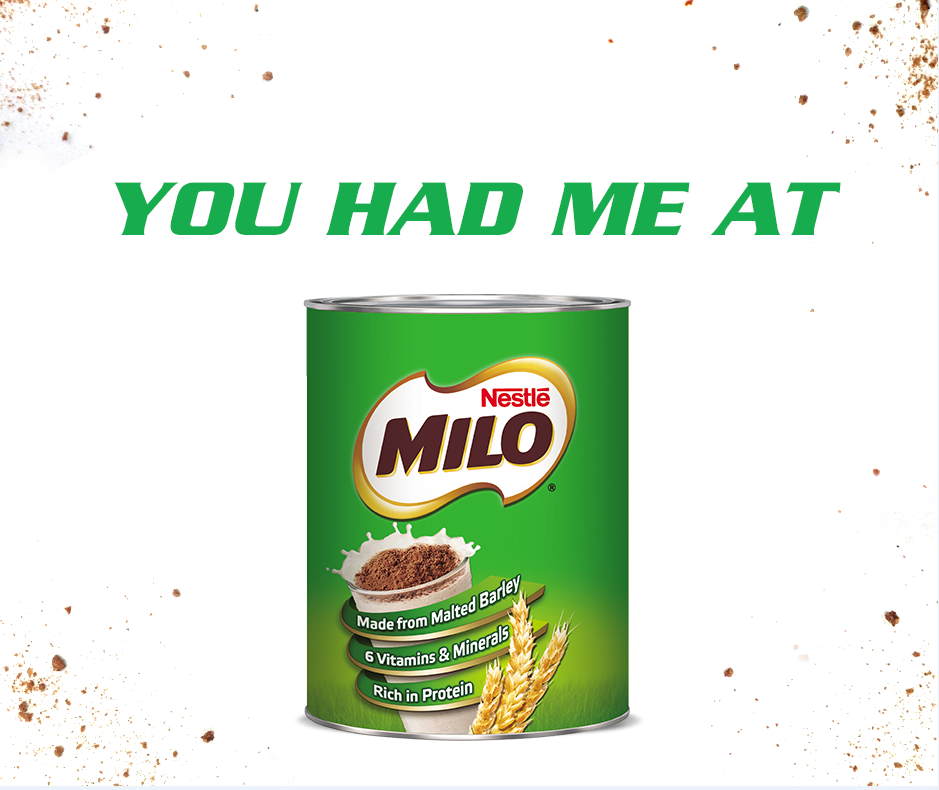
Milo is a cocoa powder and malt drink sold in a bright green tin. It was created by Australian inventor Thomas Mayne and launched at the 1934 Royal Easter Show, in an attempt to improve the diets of Australian children. Rich in carbohydrates and an easy way to add calories, Milo has a host of vitamins added to it – a boon to Depression-era parents worried about their malnourished tots.

Even though our diets are no longer very deficient in calories, carbohydrates and vitamins, Milo is still popular, and marketed as a nutritious energy drink. You can also buy Milo chocolate bars and Milo breakfast cereal, rather less convincingly flogged to parents as a healthy option that will fill your kids with the sort of powerful energy needed to win sporting events sponsored by Milo.

Milo has an appealing crunchy texture which Thomas Mayne tried very hard to eradicate, until he discovered that people liked it. Instead of dissolving completely in milk, Milo will sit on top, forming a crust that can be eaten – in Australia, chocolate milkshakes are already crunchy …. You can use Milo to cook with (Milo banana bread is pretty good), although a favourite way to enjoy Milo is sprinkled on top of vanilla ice cream.

Milo is named after Milo of Croton, an ancient Greek wrestling champion who won six times at the Olympic Games, and numerous other titles. His hometown of Croton, in Sicily, was famous for producing great athletes. A legend in his own lifetime, he was said to be of superhuman strength, and likened to the demigod Hercules – he supposedly took part in a great military victory dressed in a lion-skin.

Just as Milo of Croton was a sporting hero who performed mighty feats of endurance, so too are you supposed to become strong and athletic by drinking Milo. However, its real strength is as a cultural icon that generations of us have grown up drinking. Rather than shuffling into slippers and becoming a nostalgic comfort food, 81-year-old Milo continues to pull on its running shoes and go and go and go!

Name Information
The ancient Greek name Milo, as held by Milo of Croton, and the inspiration for the chocolate drink, is believed to be from milou, a pre-Hellenic word for “sheep”. Could you get a name meaning more appropriate for an Australian or New Zealand child, as sheep farming has been so important to both countries? In modern Greek, Milo means “apple”, and you will sometimes see the name translated that way.

Even if you haven’t heard of Milo of Croton, you must surely have heard of the Venus de Milo, the 2nd century marble statue of Aphrodite which was found on the island of Milos (also called Milo and Melos) in the 19th century. It is now in the Louvre in Paris, admired as the height of feminine grace and beauty, although without any arms.

There are many folk tales as to how the Greek island received its name. One is that it was named after Milos, the son of a river god, who colonised the island under the direction of the goddess Aphrodite. He was so handsome that three goddesses vied for his affection, and he was eventually rewarded with the apple that Paris of Troy awarded to Aphrodite as the most beautiful of all. Another is that he was a handsome young man who was a close friend of the god Adonis: when Adonis died, he hung himself on an apple tree in despair. These both sound like the modern “apple” meaning has influenced the stories.

Another has a feminine source for the name, telling of a Cretan maiden named Melis who threw herself into the sea to escape an unwanted lover. She drowned, but the waves carried her to the island of Milos, where she was worshipped as a nymph. Her name comes from the ancient Greek for “bee”, the source of Melissa: bee goddesses were worshipped on Crete.

Despite these romantic etymologies offered for the island, sheep were a vital part of the island’s economy even in prehistoric times, and a ram was the island’s symbol, used on coins. It is far more likely that the island was named after these important animals. It is unclear to me if people named Milo were named after the island, but given the apparent antiquity of its name, it doesn’t seem implausible.

Milo is also a Germanic name, of uncertain meaning. It may come from an ancient Germanic root meaning “mild, gentle”, or is possibly even related to those Slavic names formed from the root milu, meaning “grace, favour”, or “dear”. The name was introduced to England by the Normans in the form Miles, which was Latinised back to Milo – although a person documented as Milo would presumably have been known as Miles in everyday life.

Milo is #311 and rising in the US, and #159 and rising in the UK. Also rising in France and the Netherlands, it is a popular name in Sweden at #58.

The name Milo is rare in Australia because of the chocolate-flavoured drink, even though there’s nothing negative about the drink Milo, and Coco is a hip name which sounds exactly like cocoa. A straw poll I conducted suggested that many people still connect it with the classic children’s movie, Milo and Otis – not only was that a long time ago now, but Otis is in reasonable use, and very fashionable!

Milo is a boy’s name that sounds rather cute, but has a powerfully masculine namesake, suggesting it could work well on both a little boy and a grown man. I think it makes a hip choice, and suspect that if it wasn’t for the drink in the familiar green tin, it would be rising in line with international trends. Anyone worried about the drink might prefer to give it a more European pronunciation – MEE-lo.

POLL RESULTS
Milo received a decent approval rating of 66%. 24% of people thought Milo was hip and cool, and 21% saw it as a name that was adorable on a little boy and handsome on a grown man. However, 15% believed it was too closely associated with the chocolate drink and associated products. Only one person thought it was strong and sexy, only one thought it was nerdy, and just one thought it didn’t seem masculine enough for a boy’s name.

(Photo from Milo’s Facebook page)

Famous Name: Humphrey

10 Wednesday Jun 2015

Posted by A.O. in Famous Names

≈ Comments Off on Famous Name: Humphrey

Tags

animal names, aristocratic names, Disney names, famous namesakes, fictional bears, fictional namesakes, germanic names, honouring, Irish names, name history, name meaning, names from television, nicknames, Old English names, rare names, royal names, saints names, Shakespearean names, surname names, UK name popularity, US name popularity, vintage names

PH_greenguideJAN2_wide_networking-20140101124709427910-620x349

Famous Namesake
May 24 marked the 50th anniversary of Humphrey B. Bear‘s first television appearance, on the Channel Nine’s children’s program, Here’s Humphrey in 1965. I cannot say it was Humphrey’s birthday, because he is eternally four years old, and can never age.

He was originally named Bear Bear, but feeling that this perhaps lacked some imagination, the makers of the show ran a competition, and he was renamed Humphrey B. Bear, with his middle initial standing for Bear. I’m not sure whether the contest winner had ever heard of Walt Disney’s Humphrey Bear (who debuted in 1950), but the coincidence is remarkable.

In the show, the honey-loving Humphrey lives in a tree-house in the middle of the magic forest, and loves to explore, play, dance, spend time with friends, and use his imagination. Humphrey is prone to accidents and often makes mistakes – as the theme song says, He’s a funny old fellow who gets in all manner of strife. Humphrey never speaks, but has a companion and assistant who serves as narrator.

Here’s Humphrey is one of the most successful programs for preschoolers in Australia, and is second only to Playschool for longevity. It won Logies for Best Children’s Series, and Humphrey himself has won a number of awards, including Citizen of the Year in 1994. He still makes frequent public appearances, including to sick children in hospitals, and to promote road safety.

Humphrey made generations of children smile, but there was an inner sadness to the outwardly happy bear. The first performer to play Humphrey, often considered the best of all time, was a talented actor, dancer and playwright named Edwin Duryea – aptly nicknamed “Teddy”.

Constrained by the anonymity of the role, he came to resent it, and led a lonely life. Teddy died a few years ago, and with no known family, was given a pauper’s funeral (Channel Nine wouldn’t pay to bury the actor who had made Humphrey a star). There are no photos of Edwin as Humphrey, as it is considered sacrilege to dispel the illusion that Humphrey isn’t “real”.

There is no doubt that playing Humphrey could be challenging: the bear suit is very hot, just for a start. That may not be a problem in Humphrey’s future, as discussions are underway to turn Humphrey B. Bear into an animated series – and if it goes ahead, he will have a voice at last!

Name Information
Humphrey is derived from the ancient Germanic name Hunfrid, which probably means “to grant peace”, but is often translated as “peaceful warrior”.

There is a 9th century French saint called St Hunfrid, and because of him the name Humphrey was introduced to England by the Normans, where it quickly overtook the Old English form, Hunfrith. In Ireland, it was used to Anglicise Amhlaoibh, which is the Irish form of Olaf.

The name Humphrey was a common one amongst the Norman aristocracy, and one of the first bearers to come to England was the strikingly named Humphrey with the Beard, who fought at the Battle of Hastings. His nickname came about because it was unusual for Normans to have a beard at that time – the fashion was for a clean-shaven look. Bearded Humphrey was the founder of the noble de Bohun family, and his name became traditional amongst the Bohuns.

One of their line was Humphrey of Lancaster, called the “son, brother, and uncle of kings”. He was the son of King Henry IV by his wife Mary de Bohun, the brother of Henry V, and the uncle of Henry VI. Romantic and chivalrous, he was a successful military strategist and diplomat, and a scholarly patron of the arts. Popular with the public, he was disgraced when his second wife was found guilty of witchcraft (she consulted an astrologer and sought herbal fertility treatment). He appears as a character in Shakespeare’s Henry VI – one of the few historical people to be shown in an almost completely positive light.

A famous namesake of modern times is American film star Humphrey Bogart, an iconic leading man of the 1940s who appeared in such classics as The Maltese Falcon and Casablanca. He usually played a cynical tough-guy character, who would prove in the end to have his heart generally in the right place. A true screen legend, he is often regarded as the greatest Hollywood actor of all time. Humphrey Bogart was named for his mother’s maiden name – he was the son of artist Maud Humphrey.

The name Humphrey is a favourite for all kinds of animals, both in real life and in fiction. One example is the cat Humphrey, who was chief mouser at Number 10 Downing Street for many years, until apparently ousted by the Blairs. Cat Humphrey was named after Sir Humphrey Appleby, the urbanely Machiavellian bureaucrat from Yes, Minister and Yes, Prime Minister. The name has also been given to a real life humpback whale, and a camel on The Simpsons, because the name starts with the word hump.

Although never going out of use, the name Humphrey peaked in the 19th century, and isn’t very common. It has never charted in Australia, and is rarely seen today, although there are many examples in historical records. In England/Wales, Humphrey peaked in the 1860s in the mid-100s; in 2013, 20 baby boys were named Humphrey. In the US, Humphrey peaked in 1893 at #650, leaving the Top 1000 a year or two later. Last year less than 5 babies received the name Humphrey in the US.

Humphrey is a rare vintage name, and one that seems rather cuddly and lovable – which is probably why it’s often been chosen for animals, such as friendly bears! It’s an interesting, upper class, and somehow quite a sweet name, but I’m not sure if Humphrey B. Bear is much help to it. Apart from the familiar song about the “funny old fellow”, there has been a rather mean tendency to poke fun at the iconic bear, and even to make lewd jokes at his expense. With the possibility of Humphrey returning in animated form, will this help give the name more publicity, or make it less appealing?

POLL RESULTS
Humphrey received an approval rating of 32%. People saw the name Humphrey as old-fashioned and comical (19%) and too strongly associated with Humphrey B. Bear (15%), while 18% found the “hump” in the name off-putting. However 8% of people thought it was a vintage charmer.

Famous Names: Guy and Vienna

27 Wednesday May 2015

Posted by A.O. in Famous Names

≈ 1 Comment

Tags

aristocratic names, Celtic names, famous namesakes, fictional namesakes, French names, germanic names, Italian names, Latin names, locational names, name history, name meaning, name popularity, Norman-French names, saints names, surnames names, UK name popularity, US name popularity

AUSTRIA EUROVISION SONG CONTEST 2015

This year was the 60th anniversary of Eurovision, hosted by last year’s winner, Austria, and the finals held in Vienna on May 23. The contest was won by Sweden, with heavily favourited Måns Zelmerlöw’s Heroes storming to victory, the sixth time Sweden has been the winner. Austria was the wooden spooner this time, with not a single point – the first time a host country has received zero points. (Seriously what happened, the song wasn’t that bad?).

The big excitement for Australia was that we were finally allowed to compete, chosen as a wildcard entrant, and being given an automatic slot in the final (if you’re wondering how you receive this honour, you pay for it, with SBS stumping up the costs). We sent pop star (and twice-time celebrity dad) Guy Sebastian, performing Tonight Again, written especially for Eurovision. We came a creditable fifth, and Tonight Again is tearing up the iTunes chart in Europe, predicted to be one of the biggest hits of the northern summer.

In fact, Australia impressed enough that they haven’t ruled out asking us back next year. The theme of Eurovision 2015 was “Building Bridges”, and maybe they can build a bridge all the way to Oz.

GUY
Guy is the Norman-French form of the Germanic name Wido, a short form of names such as Witold and Widukind, based on the word witu, meaning “wood”. It was introduced to England by the Normans, and was a fairly popular name. There are a couple of saints named Guy, and the name was also used to Anglicise the name of Saint Vitus, whose Latin name means “life”.

Another influence may have been the legendary medieval hero Guy of Warwick. In the story, Guy falls in love with a fair lady named Felice, who is much posher than him. In order to win her, he must prove his worth by battling dragons, giants, huge wild boars, and a particularly savage cow. After marrying Felice, he soon feels remorseful for his acts of violence, and goes on pilgrimage to the Holy Land, eventually ending his long life as a hermit in a cave. It all sounds a bit pointless to us cynical moderns, but Guy was greatly admired, and the name Guy became traditional in the Beauchamp family, the earls of Warwick.

The name had already become relatively uncommon when it was chosen for Guy Fawkes in the 16th century, and it is conjectured that the name was slightly more popular in Yorkshire because of a famous local judge named Sir Guy Fairfax (records show Guy was still getting some use in Warwick, because of the legendary hero, and was a particular favourite in Gloucestershire, where there was a noble family named Guy – whose surname came, not from the personal name, but from the French place name Guise).

Guy Fawkes is infamous for his role in the Gunpowder Plot, where a small group of Catholics planned to assassinate the Protestant King James I and his government by blowing up Parliament House with gunpoweder. They would then kidnap King James’ nine-year-old daughter, Princess Elizabeth, and place her on the throne as a Catholic monarch (Elizabeth Stuart was a Protestant, but the conspirators planned to raise her as a Catholic and marry her to a Catholic when she was old enough).

It was an outrageous plan, fortunately foiled by the Plotters themselves, when they sent out letters to Catholic parliamentarians, telling them to stay away lest they get blown sky high. The letters were thought to be a hoax, but the king ordered the cellars under the parliament to be searched just in case, and Guy Fawkes was discovered there shortly after midnight on November 5 in 1605, along with enough gunpowder to reduce the House of Lords to rubble, and a fuse ready for lighting.

At first Fawkes was steadfast in his refusal to name his co-conspirators, or to reveal his identity, earning the king’s admiration. However he didn’t admire him enough not to have him tortured, and after several days of it Fawkes was eventually broken. The Plotters were all found guilty of high treason and sentenced to be hung, drawn, and quartered. Fawkes asked forgiveness of the king and the state before breaking his neck on the noose before he could be hung.

The first Guy Fawkes Night was held on November 5, when the people were encouraged to light bonfires to celebrate the king’s escape from assassination, and it went swimmingly enough that it was officially designated a day of thanksgiving until the mid 19th century. Bonfires were later supplemented by fireworks, and the custom was to burn an effigy (often of the pope). In modern times, effigies have included unpopular public figures, such as Margaret Thatcher, but the classic “guy” is of Guy Fawkes himself.

You would think that would-be domestic terrorist Guy Fawkes would have doomed the name Guy for good and all, but in fact the name became more popular after his death. It received a boost from William Harrison Ainsworth’s popular 1841 historical novel Guy Fawkes, which showed Fawkes in a sympathetic light, and urged toleration of faith at a time of anti-Catholic sentiment.

After this, Guy Fawkes often appeared as an action hero in pulp fiction, and the Fawkes mask has become a symbol of protest against tyranny, used by the Occupy movement, Anonymous, and WikiLeaks, amongst others. In Ray Bradbury’s Fahrenheit 451, the protagonist is named Guy, a state book-burner who eventually rebels. In the Harry Potter series, Fawkes was a phoenix, the pet of Dumbledore, and extremely loyal; the Order of the Phoenix is a secret organisation headed by Dumbledore intended to fight the tyrannical reign of Voldemort.

Guy’s name has entered the English language – originally a bizarrely-dressed person was called a guy, after the effigies on Guy Fawkes Day, dressed in old clothes. Now a guy just means any man, a bloke, a dude, a feller. More generally, it can just mean a person, because it’s possible to address a group of people of either or both genders as “you guys”.

The name Guy was #201 in the 1900s, and left the charts in the 1920s, not returning until the 1940s, at #224; perhaps British World War II hero Guy Gibson, of “dam busters” fame, was a help. Guy peaked in the 1970s at #113, and then steadily fell. It hasn’t charted since the late 2000s. Guy has similarly fallen out of fashion in the UK and US; it was #560 in England/Wales in 2013, while last year 156 boys were named Guy in the US.

Guy is a handsome name, but the word guy to mean a man or a person has not been a help to its dwindling use. However, this is an underused traditional name, connected with heroes and antiheroes alike, and has a rebellious, even bad boy, link. Give your son this name, and he might just consider himself the luckiest Guy in the world.

VIENNA
Vienna is the capital of Austria, and one of the great cities of Europe. Vienna is called The City of Music, for many great composers have lived and worked here, including Mozart, Haydn, Beethoven, Schubert, Brahms, and Mahler. It is also called The City of Dreams, as the home of pioneering psychoanalyst Sigmund Freud. A beautiful baroque city and major cultural centre, it has been ranked as the city with the world’s best quality of life.

The name English-speakers use for the city is Vienna, the Italian form of the official German name Wien. As the site of Vienna was settled by Celts, it is thought to come from the Celtic root windo, meaning “white, fair” (the basis for the Irish Fionn and the Welsh Gwyn). Another theory is that it comes from the Celtic Vedunia, meaning “forest stream” – the stream would presumably be the River Wien which runs through Vienna. Others believe that it comes from the Roman settlement, fortified in 15 BC and given the Celtic name Vindobona, which might mean something like “white land, fair land”.

The name Vienna must have been in some use in the Middle Ages, for St Francis of Paola’s mother was named Vienna da Fuscaldo. It’s been in use as an English name since the 18th century, and can be found in Italy at the same time, probably because of the saintly connection. Modern namesakes include Joan Crawford’s gutsy saloon-keeper character in the 1950s western, Johnny Guitar, and American indie singer-songwriter Vienna Teng (real name Cynthia Shih).

Vienna is around the 600s in Australia. In 2013, Vienna ranked #882 in England/Wales, while in the US, 253 girls were named Vienna last year – not too far removed from the Top 1000.

While Vienna is by no means common, there’s a feeling that it is on its way up – and you can see why. Pretty and elegant, this is a modern-sounding multicultural name that actually has a long history. Fitting in with the trend for V names, it sounds like an updated version of Sienna, and seems like a choice that might be widely admired. Could Eurovision give it a boost?

POLL RESULTS
Guy received an approval rating of 42%. 47% of people weren’t keen on the name Guy, while 15% loved it.

Vienna received a slightly higher approval rating of 48%. 39% of people weren’t keen on the name Vienna, while 13% loved it.

(Photo of Guy Sebastian at Eurovision from SBS)

Famous Name: Diana

20 Wednesday May 2015

Posted by A.O. in Famous Names

≈ Comments Off on Famous Name: Diana

Tags

aristocratic names, Biblical names, European name popularity, famous namesakes, honouring, Latin names, modern classics, mythological names, name history, name meaning, name popularity, rare names, Roman names, royal names, Shakespearean names, UK name popularity, US name popularity

168

Famous Namesake
The birth of Princess Charlotte Elizabeth Diana has many people wondering if Charlotte can get to #1 – it would be an easy feat in Australia, as its just been deposed by Olivia, and could regain its throne by going up just one spot in the rankings. It feels as if I am already seeing more Charlottes in birth notices, so who knows!

The princess’ name also invites the question of whether her middle name, Diana, may become more popular as either a first or a middle name. It is well known that the name Diana honours Princess Charlotte’s grandmother Diana, Princess of Wales – Lady Diana Spencer before her marriage, and dubbed “Lady Di” by the press.

Famous for her beauty and charisma, Diana gained respect for her charity work, and sympathy for her unhappy marriage and divorce. Her life, lived under intense scrutiny, ended shockingly in a car crash, leading to an outpouring of public grief. Years later, her memory is still fresh, and she continues to be a subject of fascination for the media.

Diana’s name is a traditional one in the Spencer family, and she was named after a distant 18th century ancestor, who was also Lady Diana Spencer. Tall, fair, charismatic, and attractive, it was hoped this earlier Lady Diana would marry the Prince of Wales, Frederick, the son of King George II. These plans came to naught, and she married a future Duke of Bedford instead.

The parallels between these two namesakes are striking: both grew up at the stately home of Althorp, both socialised with the royal family, both were intended brides of a Prince of Wales, and both unexpectedly died young – the earlier Lady Diana of TB at 25.

Another Lady Diana Spencer born in the 18th century was known as Lady Di, and a Lady of the Bedchamber to Queen Charlotte. A talented artist, she was most famous for the unhappiness of her first marriage, which was marked by infidelity, and ended in divorce. Days later, she married again, to a celebrated wit who was a great-grandson of King Charles II. It was out of the frying pan and into the fire, as her second husband was evil-tempered, a drug fiend, and extremely filthy in his habits. He died begging her pardon for the life of misery he had given her.

While Princess Charlotte’s first two names connect her equally to her royal and commoner families, her third name is a link to her famous grandmother, not just a style icon and People’s Princess, but a beloved mother still deeply missed by her sons. It’s also a connection to her aristocratic Spencer line. Diana has already been used as a middle name twice to honour Diana, Princess of Wales – for Princess Charlotte, and for Diana’s niece, Charlotte Diana Spencer – and perhaps there will be more family namesakes in the future.

Name Information
In Roman mythology, Diana is the goddess of the hunt, having power over wild animals. Associated with countryside and woodlands, oak groves are sacred to her. She is a goddess of the moon, the twin sister of the sun god Apollo. Diana is also a goddess of women, childbirth and midwifery, although a maiden goddess. She is the Roman equivalent of Artemis.

On the one hand, Diana is inaccessible like the chill light of the moon, ever virgin, dwelling far away on sacred mountains, deep in the woods. On the other, she bestowed divine authority onto kings, with her own priest taking the role of King of the Grove. Women worshipped her when they wished to become pregnant, and during pregnancy, as they prayed to her for an easy delivery. Thus this seemingly cold distant goddess helped the survival of humanity.

Diana was one of the most widely worshipped and ancient of the Roman gods, pre-dating the city, and originating amongst the Latin tribes of the Alban Hills. She was the especial patron of the lower classes, with slaves being able to claim asylum in her temples. Diana is portrayed as young and beautiful, often dressed for the hunt in a short tunic and boots, carrying her bows and arrows, and accompanied by a deer or hunting dogs.

The name Diana is believed to come from the Latin dius, meaning “sky”, from an ancient root meaning “bright sky, daylight”. Related to it are the Latin words deus, meaning “god”, die, meaning “day, daylight”, and diurnal, meaning “day time”. The name is usually translated as “divine, deity”.

The goddess Diana is mentioned in the New Testament, because of Ephesus in present-day Turkey, the location of The Temple of Diana. It was one of the Seven Wonders of the Ancient World, and the man who compiled the list considered the Temple of Diana to be the greatest of them all, outstripping the pyramids of Egypt and the hanging gardens of Babylon in its beauty and brilliance.

In the Acts of the Apostles, the Ephesian craftsmen who earned their living making shrines of the goddess felt their livelihoods threatened by St Paul’s preaching of Christianity, and organised a spirited protest march, shouting the catchy slogan, Great is Diana of the Ephesians! In the short term, the situation by was smoothed over by a city bureaucrat.

In the long term, Christianity didn’t do the worship of Diana any favours, although when the Temple of Diana was eventually destroyed, it was by pagan Goths, not Christians. However, worship of the goddess Diana is alive and well, and still practised in various strains of modern Wicca and witchcraft.

Diana has been a favourite in the arts for centuries, featured in many paintings and sculptures. Referenced numerous times in Shakespeare, she actually appears in both Pericles and All’s Well That Ends Well. Neither has her fame diminished. Her myth was the basis for Wonder Woman, and she is a character in the Sailor Moon series, as well as featuring in several video games.

Diana has been used as an English name since at least the 16th century. It has been something of a favourite amongst the English aristocracy, with a famous example being Lady Diana Cooper (nee Manners). Beautiful, witty, and glamorous, her parents hoped that she would one day marry the Prince of Wales (later Edward VIII) – what is it with Dianas being matched up with Princes of Wales? Instead she married a future ambassador to France. Lady Diana had a glittering career as a socialite, writer, and actress, and was often referenced in Jazz Age literature.

The name Diana first charted in the 1910s, debuting at #301; this was the decade when Lady Diana Cooper first came to prominence as a member a group of aristocrats and intellectuals, and coincides with the publication of Anne of Green Gables, where Diana Barry is Anne’s pretty and loyal best friend. It rose steadily, and joined the Top 100 in the 1930s, peaking the following decade at #59 – the time when Lady Diana Cooper became a celebrated hostess in postwar France.

The name remained stable through the 1950s and ’60s, under the influence of sexy British actresses, Diana Dors and Diana Rigg, but left the Top 100 in the 1970s, and continued falling – Diana, Princess of Wales, did not halt its downward progress. The name had a slight boost in 2009, the year after Diana’s inquest found there was no evidence of foul play in her death, but hasn’t charted since 2011.

Diana is still only #297 in the US, although falling, while in the UK it is #358, and rose in 2013. A popular name in Spain and Poland, it is most popular in Hungary, at #75.

Diana is a beautiful, elegant name, with a history that is divine, noble, and even royal. It seems to have become prematurely dated in Australia, as the name remains in use in other countries, and is popular in Europe. I wonder if the name has become too firmly attached to Diana, Princess of Wales, with her luminous fame and life tragically cut short. Will the baby princess help give Diana a boost, or will it merely underline it as a name reserved for Diana’s family?

POLL RESULTS
Diana received a decent approval rating of 60%. 19% of people thought the name Diana was beautiful and elegant, but 15% believed it was too strongly associated with Diana, Princess of Wales. Nobody thought the name Diana was ugly and frumpy.

← Older posts
Newer posts →

Enter your email address to follow this blog

Categories

Archives

Recent Comments

A.O.'s avatarwaltzingmorethanmati… on Zarah Zaynab and Wolfgang…
Madelyn's avatarMadelyn on Zarah Zaynab and Wolfgang…
JD's avatardrperegrine on Can Phoebe Complete This …
A.O.'s avatarwaltzingmorethanmati… on Rua and Rhoa
redrover23's avatarredrover23 on Rua and Rhoa

Blogroll

  • Appellation Mountain
  • Baby Name Pondering
  • Babynamelover's Blog
  • British Baby Names
  • Clare's Name News
  • For Real Baby Names
  • Geek Baby Names
  • Name Candy
  • Nameberry
  • Nancy's Baby Names
  • Ren's Baby Name Blog
  • Sancta Nomina
  • Swistle: Baby Names
  • The Art of Naming
  • The Baby Name Wizard
  • The Beauty of Names
  • Tulip By Any Name

RSS Feed

  • RSS - Posts

RSS Posts

  • Celebrity Baby News: Melanie Vallejo and Matt Kingston
  • Names from the TV Show “Cleverman”
  • Can Phoebe Complete This Sibset?
  • Zarah Zaynab and Wolfgang Winter
  • Baby, How Did You Get That Name?
  • Celebrity Baby News: Media Babies
  • Celebrity Baby News: Adelaide Crows Babies
  • Celebrity Baby News: Chris and Rebecca Judd
  • Names at Work: Name News From the World of Business and Employment
  • Celebrity Baby News: Sporting Round Up

Currently Popular

  • Rare Boys Names From the 1950s
  • Celebrity Baby News: Livinia Nixon and Alistair Jack
  • Girls Names From Stars and Constellations
  • The Top 100 Names of the 1940s in New South Wales
  • Saturday Celebrity Sibset: A Taste of Scotland - Leigh McClusky and Simon Haigh

Tags

celebrity baby names celebrity sibsets english names famous namesakes fictional namesakes honouring locational names middle names name combinations name history name meaning name popularity name trends nicknames popular names saints names sibsets surname names twin sets unisex names

Create a free website or blog at WordPress.com.

Privacy & Cookies: This site uses cookies. By continuing to use this website, you agree to their use.
To find out more, including how to control cookies, see here: Cookie Policy
  • Subscribe Subscribed
    • Waltzing More Than Matilda
    • Join 517 other subscribers
    • Already have a WordPress.com account? Log in now.
    • Waltzing More Than Matilda
    • Subscribe Subscribed
    • Sign up
    • Log in
    • Report this content
    • View site in Reader
    • Manage subscriptions
    • Collapse this bar
 

Loading Comments...