• About
  • Best Baby Names
  • Celebrity Baby Names
  • Celebrity Baby Names – Current
  • Celebrity Baby Names – Past
  • Featured Boys Names
  • Featured Girls Names
  • Featured Unisex Names
  • Links to Name Data
  • Waltzing on the Web

Waltzing More Than Matilda

~ Names with an Australian Bias of Democratic Temper

Waltzing More Than Matilda

Category Archives: Famous Names

Famous Name: Abel Tasman

19 Wednesday Sep 2012

Posted by A.O. in Famous Names

≈ 6 Comments

Tags

Akkadian names, Arabic names, Biblical names, birth notices, Dutch names, english names, famous namesakes, German names, hebrew names, honouring, locational names, Maori names, mythological names, name history, name meaning, names of seas, New Zealand names, nicknames, Slavic names, star names, surname names, TV commercials, US name popularity
Last Wednesday, September 12, commemorated the founding of the colony of Tasmania. Although it doesn’t seem to be celebrated in Tasmania, I thought we’d look at the man who gave his name to the state. I chose this topic several months ago, but unfortunately this recent story in the news is giving Abel Tasman a somewhat controversial image at present.

I feel like a mother who has just sent out 300 cards announcing her new daughter’s name as Sahara, then opens the paper to read with horror the headline: Murder at Sahara strip club provides clue to cocaine ring: our paper investigates the seedy underworld of the Sahara, knowing that for months the name Sahara is going to be associated with some very shady dealings. This happens to the best of parents, and possibly even the best of bloggers. However, let us continue.

Abel Tasman was the first known European to reach Tasmania and New Zealand. A Dutch seafarer, he undertook his voyages as an employee of the United East India Company (VOC) – the first multinational corporation in the world, and the first to issue stock. They were based in Batavia, now known as Jakarta, in Indonesia. This company despatched Tasman on a mission to obtain knowledge of “all the totally unknown provinces of Beach”.

That was his first problem: Beach didn’t exist. It was supposedly the northernmost part of Terra Australis, and that didn’t exist either. In fact, they had misread Marco Polo’s handwriting, which said Lohach, and referred to south Thailand, which Polo had assured all and sundry was a kingdom rich with gold. Sent off to find a non-existent kingdom of gold on an imaginary continent with faulty maps based on a vital error, Abel Tasman did the best he could under the circumstances.

On December 3 1642, he formally claimed Tasmania, which he dutifully named Van Diemen’s Land, after Anthonie Van Diemen, the Governor-General of the Dutch East Indies, and Tasman’s patron (Diemen is a homophone of demon). Battling against very rough seas, he managed to reach New Zealand ten days later, which he thought was connected to Argentina (the map’s fault again). A second voyage gave him the chance to map the north coast of Australia, which he called New Holland, and make observations of the land and its people.

From the point of view of the VOC, Tasman’s voyages were a failure. He hadn’t found Beach, located tons of gold, met anyone to trade with, or discovered new shipping routes. Although the Dutch had discovered Australia in 1606, they weren’t sufficiently impressed to follow it up, and so it was free for the British to claim many years later.

Abel Tasman did manage to make it to Thailand a few years later, although I’m sure he never realised he’d arrived in “Beach” after all. The lack of gold, it’s being called Siam, the way he was only there as a courier to deliver letters to the king – all these things helped disguise the fact he had reached his dream destination after all.

Abel was the second son of Adam and Eve in the Old Testament, and described as a shepherd, while his older brother Cain was a crop farmer. Famously, Abel is the first person in the Bible to die, while his brother Cain becomes the first murderer. The Bible doesn’t provide a motive for Cain’s actions, but it is usually assumed to be jealousy, since God was pleased by Abel’s offering from his flock, while not having a high regard for Cain’s produce. This story tends to irk vegetarians, and does make God seem rather like a capricious judge on Masterchef, but there is more to the story than meets the eye.

The archetypal simplicity of this tale of brother against brother has made an enormous impact, and been dramatised in modern stories, such as John Steinbeck’s East of Eden. Something in it speaks straight to our bones – primal emotions of rage, envy and betrayal; a deep sense of the fundamental injustice of the universe; the uneasy knowledge that those closest to us are the ones most likely to hurt us, even harm us.

Scholars believe the tale represents conflict between nomadic shepherds and settled farmers in the Middle East, at a time when agriculture was beginning to take over from hunter-gathering (this probably did sometimes end in bloodshed). Sadly, the story also serves as a commentary on the violence and hatred that has existed between religions who worship the same God, as Cain and Abel did (this still ends in bloodshed).

The name Abel is derived from the Hebrew name Hevel, often translated as “breath, vapour”, with connotations of “waste”, to indicate the transient nature of Abel’s existence. However, the name may simply mean “herdsman” to indicate his role in the story; a similar word still exists in modern Arabic. Another theory is that is based on the Akkadian word for “son”, which seems more likely as a person’s name, and fits in with modern scholarship identifying the story as based on a Sumerian myth.

Back in June, I mentioned Abel as a name I had encountered on a baby during the autumn, and considered it a rare sighting. Well, I have to eat my words, because over winter I met or heard of three new babies named Abel, and have seen a few more in birth notices. Clearly it’s a name on the rise, and in the US Abel is #237, jumping 56 places last year. With Old Testament names for boys growing in popularity, Abel is a solid, underused choice, and one that connects directly to early Australian history.

Tasman is a Dutch form of the German surname Tessmann, derived from both Slavic and German. Slavonic personal names such as Techmir, meaning “consolation”, become Tess in German. The -mann part of the name usually means “servant of”. So Tasman means “servant of Techmir”. English forms include Tesmond or Tessyman.

In Australia, Abel Tasman has given his name to the state of Tasmania, and also the Tasman Sea, which is the stretch of ocean between the east coast of Australia and the west coast of New Zealand (affectionately known as “The Ditch“). The Maori name for it is Te Tai-o-Rehua, which means “the sea of Antares”, the star Antares being associated with the height of summer, and considered a god of kindness and enjoyment. Many more places bear Abel Tasman’s name in New Zealand.

The name Tasman has a long history of use in Australia, and is most common in the state of Tasmania, which naturally feels a strong connection to it. It is turning up regularly in birth notices at the moment, and may be receiving more attention because there is currently a TV advertisement for Uncle Toby’s instant oats, with the little blond boy in the commercial being named Tasman.

This makes a fantastic name for a family which has one side from Australia and the other from New Zealand, with a baby Tasman joining both sides. The name is considered masculine in Australia, but feminised forms such as Tasmyn are thought suitable for girls. Usual nicknames are Tas, Taz or Tazzy.
UPDATE: I’ve just been informed that the reason the name Abel is skyrocketing is because of the TV show, Sons of Anarchy, where someone has a baby named Abel – thank you Twitter.

UPDATE: Thank you to blog reader Madelyn, who tells me that American actress Amy Poehler has a son named Abel.

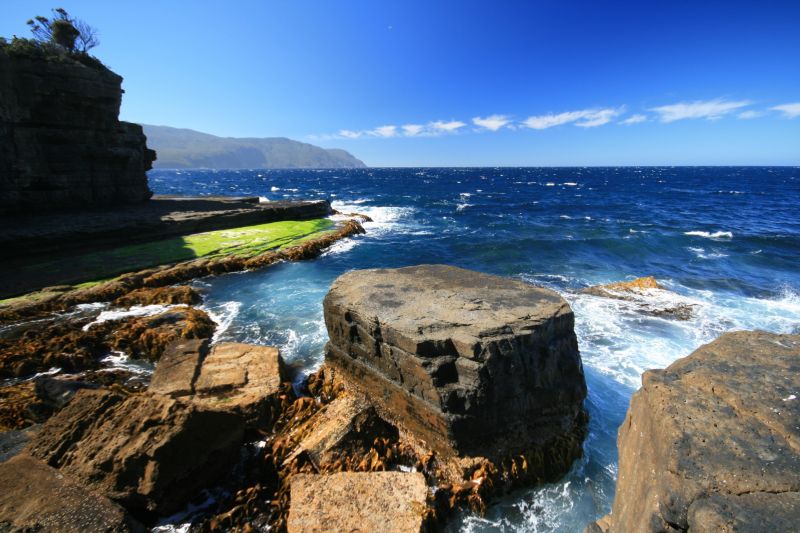
(The picture shows a view of the Tasman Sea from Tasman National Park in southern Tasmania, on the other side of the bay where Abel Tasman claimed Tasmania; photo from There’s Nothing Like Australia)

Famous Name: London

12 Wednesday Sep 2012

Posted by A.O. in Famous Names

≈ 6 Comments

Tags

Arthurian legends, British names, celebrity baby names, Celtic names, Disney names, english names, fictional namesakes, germanic names, J.R.R. Tolkien, locational names, mythological names, name history, name meaning, Old English names, Roman names, surname names, unisex names, US name popularity

The Olympics and Paralympics have come to a triumphant end, climaxing with a a concert, grand parade and a spectacular fireworks display which lit up the sky over the Thames and Tower Bridge. The sporting festival has been a golden summer for the city of London, which has gained new confidence after putting on a fantastic Olympic Games, followed by the most successful Paralympics Games ever. The city of London itself looked richly alluring, with its parks and gardens in leaf under the sun, or its historic buildings looking grand yet discreet in the grey drizzle.

I know many people who couldn’t wait to visit London, or visit it again, after watching the coverage of the Olympic Games, and it’s a city which has drawn many Australians to it, for holidays, to work, and sometimes to live permanently. Since the post-war era, it seems as if we have been sending Australians to Britain in droves, and most of them seem to end up in London. They give us a bunch of convicts, and in return they get Barry Humphries, Kylie Minogue and a ton of drunk Aussie backpackers. Whether this is a fair trade or not only history can decide.

London was first established as a town around 47 AD by the Romans, who called it Londinium. It is almost certain that they based it on a local name for the area, which may be Celtic, or perhaps even older. What that name may have signified has taxed the brains of etymologists for many years, with none of them coming up with a theory that has gained widespread acceptance.

The very first theory put forward was by medieval chronicler Geoffrey Monmouth in his History of the Kings of Britain. He asserted that the name is derived from the name of King Lud, who once ruled the area. It would thus mean “Lud’s fortress”, although there is no evidence of Londinium ever being fortified, and in fact seems to have been built as a civic and mercantile centre; perhaps “Lud’s valley” would be more accurate. The name Lud may be connected to a mythological figure named Llud Llaw Eraint, who is the Welsh version of a British god named Nodens.

Nodens was a Celtic god of the sea, hunting, dogs, and healing, and a patron of amputees, and there is a ruined temple complex in his honour in Gloucestershire, while other artefacts connected to him have been found in Lancashire and on Hadrian’s Wall. He is sometimes identified with the Fisher King of medieval myth, who features so enigmatically in Arthurian legend.

J.R.R. Tolkien derived the name Nodens from a Germanic root meaning “acquire, own, utilise” from an earlier word with connotations of “catch, entrap”. This would certainly fit in with Nodens as a god of hunting, and at this point most scholars seem to be in general agreement with the meaning proposed by Tolkien.

Several places in Britain and Ireland derive their names from Nodens, and it doesn’t seem too far-fetched that London might too. The reason Geoffrey of Monmouth’s theory has been given short shrift is that like many medieval chroniclers, his work is quite fanciful, and riddled with errors in etymology. For example, he latched onto Lud as the origin of London because of Ludgate in the London Wall; most likely it’s a corruption of the Old English for “swing gate”. However, even though Geoffrey of Monmouth got a lot of things wrong, he may have been drawing on genuine traditions of London being sacred to Nodens in ancient times.

According to Geoffrey of Monmouth, the Romans built a temple to Lud, but if so, it remains elusive. There are statues of Lud and his sons, once adorning Ludgate, which are now on a church porch in Fleet Street, while a pub at Ludate Circus was once called Old King Lud. Although the building now houses a Leon restaurant, medallions commemorating King Lud can still be seen on its roofline and over its doors. So King Lud aka Nodens still maintains a presence in London town.

If I may stick my own ignorant oar into the debate, I can’t help noticing that names of places near a river nearly always have a meaning connected to it. As Nodens was a god of the sea, and the part of the Thames near London is a tidal river, this notion of mine does not cancel out the idea that it was connected to Nodens in some way. The Museum of London tells us that finds of prehistoric artefacts dredged from the Thames provide copious evidence that they were placed there as votive offerings, and that the deity presiding over the river was worshipped.

Could this hypothetical deity have been Nodens? Possibly, but it’s all getting very speculative, so I think we have reached the end of our investigations for now. In my uneducated opinion, London’s name is probably connected to its river, and quite possibly to the deity presiding over it, who may very well be Nodens. Apart from that I can say no more, except that Britain’s capital is a vital part of its ancient and rich mythology.

London has been used as a first name since at least the 17th century, and was first given to boys, most likely from the surname London, after the city. It’s possible that even early Londons were named directly in honour of the city, as many were born in London districts.

From very early on, London was used for both genders, and although I can easily understand it as a unisex name, I have slightly more trouble comprehending why it has become so much more popular for girls. While cities such as Paris and Florence have a certain “feminine” vibe, to me, London has quite a “masculine” feel – solid, serious, the seat of business and government. The name London also fits the pattern for many of our popular male names – two syllables, ending with an -n, such as Aidan, Mason, Logan or Nathan. In fact it’s only one letter different from a male name – Landon, while its last three letters form a male nickname – Don.

I have been told that the reason for this is the character of London Tipton, from the Disney TV series, The Suite Life of Zack & Cody. However in the US the name was always more popular for girls, even before the show came on air – although its popularity as a girl’s name certainly increased markedly after the show started. I suspect that for many parents, London seemed like a more “classy” version of the name Paris, whose image had become slightly tarnished. Intriguingly, Miss Paris Hilton apparently plans to name her first-born daughter London; I wonder what effects that might have, if it ever happened?

London has charted as a baby name for both sexes in the US for over ten years, and currently it’s #560 for boys and #94 for girls. Although it’s not such a popular name in Australia (although it’s seen more use than you might expect), I wouldn’t be surprised if a similar gender disparity wasn’t apparent here too. Early this year we welcomed celebrity baby London Joy Polak, partly named in honour of the city, where her grandfather was from.

Despite its long history, London still seems a very “modern” name, and one that would be especially suitable for anyone who has a connection to the city. I think it works well as a name for both boys and girls, and matches nicely with a wide variety of middle names. Although the thought of your child sharing their name with Paris Hilton’s future offspring might give some people second thoughts.

NOTE: Not all Australian backpackers in London are drunk, at least not all the time, but that is the not totally undeserved reputation they carry.

Famous Name: Sapphire

05 Wednesday Sep 2012

Posted by A.O. in Famous Names

≈ 4 Comments

Tags

celebrity baby names, english names, gemstone names, Greek names, historical records, name history, name meaning, name popularity, nature names, nicknames, opinions on names, popular culture, popular names, rare names, stripper names

The Australian movie The Sapphires was released here on August 9, after making it’s premiere at the Cannes Film Festival in May, where it received a resounding ten-minute standing ovation. The film is set in 1968, and the plot involves four sisters from a remote Aboriginal mission who are given the opportunity to go to Vietnam as entertainers to the troops – billed as The Sapphires. It’s based on a true story, with the screenwriter’s mum and auntie serving as the inspiration, as they performed as part of a quartet during the war. The “original Sapphires” are thrilled by the film’s portrayal of them, and the movie is making the Indigenous community they work in proud of their achievements.

The Sapphires has received mostly warm reviews from critics, and became the highest-earning Australian film on its opening weekend. I can see why it’s winning the hearts of audiences, because it’s charmingly unpolished, and is one of those feel-good movies where you end up laughing, crying, singing and tapping your feet. Serious topics such as racial prejudice are touched on (in fact are essential to the plot), but they don’t overshadow what is basically a light-hearted comedy-drama. Chris O’Dowd is hilarious, Jessica Mauboy’s singing fantastic, and Deborah Mailman is, as always, luminously charismatic.

If you are a fan of these warm-hearted underdogs-put-on-a-show stories and also love soul music, I urge you to check this movie out when it comes to your own part of the world. It’s being compared to Dreamgirls, but I can’t actually see they have much in common – the movie is probably closer to The Commitments. Of course what I spent most of the movie doing (in between laughing, crying, singing, tapping my feet, and trying to make sure no major popcorn disasters took place) was wondering how Sapphire could work as a name.

The name Sapphire is after the gemstone, which comes from the Greek meaning “blue stone”. However, the Greeks were most likely referring to lapis lazuli. Sapphires can actually come in a range of colours, but never red – red sapphires are called rubies.

In ancient Persia, sapphires were said to be a manifestation of heaven, and there is a tradition that the original Ten Commandments given to Moses by God were written on sapphire (although the Bible itself merely says that God could be seen standing on something that looked like a pavement of “clear sapphire”). In the Middle Ages, sapphires were said to have healing properties, and they have long been popular as royal jewels. Sapphires are favourites amongst the British royal family for their personal jewellery, as well as the Crown Jewels; Princess Anne and Princess Diana both had sapphire engagement rings, and Diana’s was inherited by Catherine, Duchess of Cambridge.

Sapphires have been mined in Australia for over a century, and commercially for more than fifty years. Australia was once the leading source of gem-quality sapphires, but we were overtaken by Madagascar; even today, many sapphires sold as coming from Asia are actually from Australia. Many Australian sapphire mines are in central Queensland, and indeed there is a mining town in that state named Sapphire, although the best are said to be found in the New England region of New South Wales. You can also have a go fossicking for your own sapphires – in New South Wales, you don’t even need a license to do so.

Sapphire has been used as an uncommon personal name for centuries, and got a boost in popularity around the early twentieth century, when other gemstone names such as Ruby and Emerald became fashionable. Not surprisingly, records show that most Australians named Sapphire came from New England or central Queensland, so here it seems to have local significance connected to the mining trade.

If you look online for opinions on the name Sapphire, you are almost certain to find the phrase “stripper name” attached to it. Granted, there are strippers with the stage name Sapphire – then again, there are strippers named Ruby, Lola, Angie, Madison, Abby, Victoria, Lucy, Alicia, Katie, Sarah, Rebecca, Elizabeth and basically any vaguely “girly” contemporary name you can think of. There are strippers using my own name, and nobody has ever assumed I simply must be a stripper with a sexy name like Anna, or shoved money down my bra and asked me to dance around a pole.

In fact, when Ruby became fashionable a few years ago, some of the most common complaints about it was that it sounded “trashy”, “stripperish”, and “too sexy”. Well, guess what? Ruby is now one of the most popular name for girls, being in the Top 10 of every state, and #1 in several states; it’s also been used as a baby name by several celebrities. It seems more like a cute little girl name that a sexy one, and the chances of all those thousands of young Rubys growing up to become strippers is statistically improbable.

If you love Ruby, but worry it’s too popular, you might might want to consider this beautiful gemstone name. Whether you have an attachment to Indigenous culture, Australian film, soul music, the gemstone trade, fossicking, sapphire mining areas, the Sapphire Coast in southern New South Wales, or simply love these deep blue jewels, Sapphire makes a lovely and unusual choice. Some may like Saffy as a nickname.

NOTE: Information on stripper’s names from Australian businesses online.

Famous Names: Ned Kelly

29 Wednesday Aug 2012

Posted by A.O. in Famous Names

≈ 12 Comments

Tags

African names, African-American names, American names, Anglo-Saxon names, Australian idioms, banned names, birth announcements, British Baby Names, Cornish names, English name trends, english names, famous namesakes, folk etymology, Google, Irish names, locational names, middle names, name history, name meaning, name popularity, nicknames, popular culture, Scottish slang, surname names, unisex names, US name popularity

On August 2 this year, it was reported that the descendants of notorious bushranger Edward “Ned” Kelly were about to receive his remains, 132 years after he was hanged for murder. At that time, the bodies of executed prisoners were buried in unmarked graves in Melbourne Gaol, and Kelly was one of them. In 1929, he and several others were re-buried in Pentridge Prison during renovations to Melbourne Gaol, and last year scientists were able to identify Ned Kelly’s skeleton from a group of twenty-four at Pentridge, by comparing his DNA to that of living members of the Kelly family. The Kellys can now give Ned a private burial.

Ned Kelly was the son of an Irish convict, and gained notoriety as a horse thief and cattle rustler before being convicted of bank robbing and murder. He was hanged on November 11 1880. He looms large in the Australian imagination, and is widely seen as a folk hero, and a symbol of Irish-Australian resistance against the ruling classes and police corruption. There is in the Ned Kelly legend a particular type of Australian masculinity which is admired: physically powerful, ballsy, defiant, daring, anti-authority, and an under-dog. The phrase, As game as Ned Kelly, is the ultimate praise for bravery, and his legend has spawned countless folk stories and ballads – not to mention a few films.

The name Ned is a pet form of names starting with Ed-, such as Edward and Edmund. It has been used as a nickname since at least the 14th century, and as an independent name since the 17th century. One theory is that it began life as a contraction of the affectionate “mine Ed“, which became understood as “my Ned”. Although this can’t be verified (and Elea at British Baby Names remains slightly sceptical), the story does add a layer of sweetness to the name.

It is among the first names that crossed the pond, because a baby named Ned was born in the English colony of Virginia, so it became a British and American name almost simultaneously. It has often appeared in American popular culture, such as Ned Flanders on The Simpsons and Ned Dorsey from 1990s sit-com Ned and Stacey. All-American girl detective Nancy Drew even had a boyfriend named Ned Nickerson. (Ned and Nancy! Adorable!). Ned was on the US Top 1000 until the mid-1970s.

Like Kevin in England and Bevan in Australia, it’s a name with a bad rep elsewhere, because in Scotland ned is slang for a hooligan or petty criminal. Given our own history with the name, this seems unlikely to put Australian parents off. Here solid unpretentious Ned will always be associated with folk hero Ned Kelly, but as it’s currently fashionable as an upper-class name in England, this makes it seem quite chic as well.

Kelly is an Anglicisation of the Irish surname Ó Ceallaigh, meaning “son of Ceallach”. Ceallach is often interpreted as meaning “bright headed”, but it may mean “church-going”, as the Irish word for church is ceall. It can also be seen as an Anglicisation of Ó Cadhla, meaning “son of Cadhla”, with the male name Cadhla meaning “attractive, graceful”.

Outside Ireland, the surname Kelly can be from place names in Scotland (in this case, probably from the Anglo-Saxon meaning “calf hill”) and in Devon, the latter derived from the Cornish word for “grove”. However, it is much more common as an Irish surname.

Kelly has been used as a first name since at least the late 17th century, and is another name which seems to have been used in Britain and America almost at the same time. It appears to have quickly become far more common in America as an Irish heritage name.

Although the name was first given to boys, in a relatively brief space of time the name seems to have been accepted as unisex, with roughly even numbers of males and females named Kelly in colonial America. Quite a few of the early American Kellys arrived directly from Ireland itself, and these were just as likely to be female, if not more so.

I don’t know why, but the name seems to have been commonly given to the sons and daughters of Christianised black African indentured servants in early colonial America. I would be fascinated to know the reason for this, and wonder if there is an African name Keli that seemed familiar to both cultures. Or perhaps working alongside Irish indentured servants gave them a fondness for the name.

Kelly first shows up on the US Top 1000 in 1880 as a male name, and first appears there for females in 1944. It grew in popularity for both sexes, but really took off as a girl’s name in the 1950s with the fame of glamorous Hollywood actress Grace Kelly (of Irish background). After she became Princess Grace of Monaco, the name simply bounded up the popularity charts.

Kelly peaked for both boys and girls in the late 1960s, but then lost ground as a boy’s name, while maintaining a female presence; it even managed to peak again for girls in the 1970s. Kelly hasn’t ranked as a boy’s name in the US for ten years, while it is now #335 for girls, and falling.

In Australia, the history of the name is much shorter, and it only ever charted for girls. It first appears in the charts in the 1950s at #560 (about one Kelly per year). By the following decade, it was already in the Top 100, and peaked in the 1970s at #13. It left the Top 100 in the early 2000s, and last year just ten baby girls named Kelly were born in New South Wales, giving it a ranking of #641.

Amongst the most common Google searches used to reach my blog are those enquiring about using Kelly as a boy’s name, and many of these are from Australia. With Kelly becoming rare as a name for girls, and the fame of American world surfing champion Kelly Slater (of Irish background) lifting its profile internationally as a male name, this seems the perfect time for Kelly to step up and gain more use for boys in Australia.

I hope that these assiduous Googlers are giving serious thought to choosing Kelly as their son’s name. I scan the birth notices for Kelly, and this year I have only seen it used as a middle name for boys. However, Kelly Slater himself uses his middle name (his first name is Robert), so these babies do have the choice to go by the name Kelly when they get older.

NOTE: Although you are free to call your child Ned, or Kelly, it is, bizarrely, forbidden in New South Wales to name a baby Ned Kelly. This makes Ned Kelly one of Australia’s rare illegal names.

(The picture is from Sidney Nolan’s series of paintings of Ned Kelly in his armour 1946-47. These images are some of the most iconic and recognisable of Australian artworks. Taken from ABC News).

Famous Name: Adelaide

22 Wednesday Aug 2012

Posted by A.O. in Famous Names

≈ 15 Comments

Tags

celebrity baby names, famous namesakes, Frankish names, French names, germanic names, honouring, locational names, name history, name meaning, name popularity, nicknames, retro names, royal names, saints names, US name popularity

Tomorrow the city of Adelaide will welcome their Olympic athletes home with a street parade. That’s a good enough excuse as any to cover the name Adelaide, which has been sitting in my Request file for many months now.

Adelaide is the capital of South Australia, and it’s a pleasant coastal city which has been voted the Most Liveable and judged Most Affordable capital city in Australia. It was planned in the 19th century as the capital of a British province of free settlers, and is the only state capital not to have a history of convict settlement – something of which it is still very proud.

Its early history was marked by a commitment to religious freedom and political civil liberties, which led to its nickname of The City of Churches. Despite this moniker, the last census revealed that almost a third of Adelaideans had no religious affiliation at all, making it one of our least religious cities.

From early on, Adelaide attracted many European immigrants escaping religious persecution, most notably from Germany. The Germans brought with them the vine cuttings which were planted to found the famous wineries of the Barossa Valley. After World War II, there were many more immigrants, including Italian, Greek, Dutch, and Polish. The names in the birth notices from Adelaide tell me that South Australians remain very aware of their cultural heritage, because there are always lots of German and Italian baby names.

Adelaide is famous for its many festivals, celebrating music, art, theatre, comedy, sport, food, wine and just about anything else you can think of. When not having a festival, Adelaide tends to be on the sedate side, although quite sophisticated for a small city. If you enjoy somewhere quiet and clean, with good food and wine, attractive beaches, plenty of parkland, lots of outdoor activities and generally friendly people, you will like Adelaide. Please don’t drink the water though; it’s not unsafe but it tastes like it is.

The name Adelaide is from the French form of the Germanic name Adalheidis, meaning “noble kind”. The Frankish nobility were keen to stress their daughters’ high-born pedigree, as it made them more marriageable, and thus names starting with Adel- abound.

There are several Adelaides from history amongst the ruling classes of Europe, including Adelaide of Aquitane, who married Hugh Capet, elected king of France and the founder of one of the most important royal dynasties of that country. Saint Adelaide was the wife of the Holy Roman Emperor Otto, and she ruled the Empire for several years as her grandson’s guardian. (Saint Adelaide’s daughters were Emma and Matilda, which both sound very contemporary).

The name wasn’t particularly common in England until the 19th century, when William IV, then the Duke of Clarence, married Princess Adelaide of Saxe-Meiningen, a small state of Germany. Adelaide was less than half William’s age, and had to accept his ten illegitimate children as part of the bargain, but despite this, the couple were devoted to each other, and led a life of domestic harmony.

After William became king and Adelaide queen consort, the name got a huge boost. The English people loved Adelaide – she was dignified, modest, charitable, and gained public sympathy for being unable to produce a surviving heir. However, she was very fond of her niece, who would one day reign as Queen Victoria. Queen Victoria’s first child had Adelaide as one of her middle names, in her aunt’s honour.

It is this Adelaide that the city of Adelaide is named after; the city was founded in 1836, just a few years after Adelaide became queen. The city has never forgotten its royal namesake: there is a bronze statue of Queen Adelaide in the foyer of the Town Hall, and the Queen Adelaide Club provides an exclusive social club for women.

Each year the city celebrates Queen Adelaide’s birthday on August 13, held in the Queen Adelaide Room of the Town Hall. There is a tea party given, and everyone who bears the name Adelaide is invited to attend as an honoured guest. This year, on Queen Adelaide’s 220th birthday, 30 Adelaides came, up from 22 last year; the eldest was in her eighties, and the youngest only 17 days old. Over the past 15 years, more than 50 girls in South Australia have been named Adelaide.

In New South Wales, Adelaide was #132 in the 1900s, and then sank in popularity until it was out of regular use between the 1930s and the 1970s. During the 1980s, it was #792, representing about one Adelaide born each year. During the 1990s, it increased to #447, and continued rising. It peaked in 2010 at #154, and last year suddenly dropped to #232, so it may be losing popularity before reaching its 1900s ranking.

Australian actress Rachel Griffiths and artist Andrew Taylor welcomed a daughter named Adelaide Rose in 2005. As Adelaide Taylor was born in Los Angeles, she became part of a growing trend, because her name joined the US Top 1000 the year she was born. It has continued to rise, and is currently #407. I wonder if beleaguered MP Craig Thomson having a baby girl named Adelaide in 2011 damaged the brand in NSW – it was going so well until last year?

This is a stylish, ladylike name that manages to sound both “old fashioned” and contemporary. It’s never been on the Top 100, and doesn’t seem likely to join it at this stage. You could use Addie as a nickname, in which case it would blend right in with all the Addisons and Madisons, but many would prefer Ada, Adele, Dell, Della, or no nickname at all.

Famous Names: Sally and Malcolm

15 Wednesday Aug 2012

Posted by A.O. in Famous Names

≈ 4 Comments

Tags

english names, famous namesakes, fictional namesakes, hebrew names, Italian names, Latin names, name history, name meaning, name popularity, nicknames, royal names, Scottish names, Shakespearean names, vocabulary words

The 2012 Olympics came to an end on the weekend, and today our athletes came home, to be met by huge crowds at the airport, which included the Prime Minister and Leader of the Opposition. Although the London Olympics had many critics and doubters before they began, from the stunning Opening Ceremony onwards, all was forgotten as everyone agreed that London had done a bang-up job hosting the Summer Olympics.

Everything had gone smoothly, athletes were well taken care of, the historic capital looked grand and stately, the weather was good, and the wonderful volunteers ensured that, above all, it was a friendly and fun Olympics where people felt free to relax and enjoy themselves. No wonder that Rio has said that it watched and learned from London, as it prepares for its own hosting gig in 2016.

There were so many memorable moments from the Olympics, but from an Australian perspective, I am choosing two athletes who, for me, were the stand outs from our team. The first is hurdler Sally Pearson, simply because her race, which ended in a photo-finish, was nail-bitingly close. Nearly everyone I’ve spoken to has nominated Sally’s gold medal win as the most exciting of the Olympics. Sally not only set an Olympic record, she joined a select group of athletes who were world champions when they won at the Olympics, and is the first Australian woman to win Olympic gold in athletics since Cathy Freeman.

The other is sailor Malcolm Page, because our sailing team did so well at the Olympics, and it’s obvious their training regime really paid off. Malcolm is the first Australian sailor to win two gold medals at consecutive Olympic Games, and he was chosen as the Australian flag-bearer for the Closing Ceremony. Just as Sally was named the IAFF Female Athlete of the Year in 2011, Malcolm was inducted into the Australian Institute of Sport’s “Best of the Best”. Two sportspeople at the top of their game, and here’s a closer look at their names.

The name Sally is a pet form of Sarah, a Hebrew name meaning “princess”. It’s been used as an independent name since the 16th century, and seems to have been first used in the southern coastal areas of England. Since then, it has become a short form of almost any similar name, including the Italian male name Salvatore. It is also, by coincidence, an English vocabulary word, for sallies is an old word for “willow trees”, as in the W.B Yeats poem, Down by the Salley Gardens (the Latin for “willow” is Salix). In military terms, a sally is a sudden attack on an enemy, and we use this word to also mean to attack someone verbally in a witty way. To sally also means to rush off or venture out – very suitable for a sportswoman!

Like Jack, Sally is a name we are familiar with from dozens of cultural references. Sally has appeared in many popular songs, from the nursery rhyme Sally Goes Round the Sun, the traditional Sally in Our Alley, to the blues song Mustang Sally to the rock and roll Long Tall Sally. There is the traditional English fairground game, Aunt Sally, in which a ball is thrown to knock off a wooden woman’s head. We know many a fictional Sally, from wayward Sally Bowles in Cabaret, to Charlie Brown’s sister in the Peanuts cartoon, to the good-looking but annoying Sally Hayes in Catcher in the Rye, the Sally who was met by Harry in the romantic comedy, and the little sister of Dick and Jane in the vintage reading books.

Sally first entered the charts in the 1920s, and was Top 100 by the 1950s; it peaked in the 1970s at #53, and left the Top 100 in the 1990s. Currently it’s #492, and fell last year after a sharp rise in 2010. Sally is one of the most popular names Googled to reach my blog, and I can see the attraction – it’s a fresh, spunky little name that seems clean and wholesome, but not exactly goody-two-shoes. It’s girlish without being girly, and a fuss-free way to wear a princess name without sounding the slightest bit princessy.

Malcolm is the Anglicised form of the Scottish name Máel Coluim, meaning “devotee of Saint Columba”. Columba is a Latin name meaning “dove”. It was a common name amongst medieval royalty in Scotland, which has a long line of King Malcolms. The most well known is Malcolm III, for it is claimed that he is the historical person on which the character of Malcolm in Shakespeare’s Macbeth is based, and who becomes king of Scotland after Macbeth is killed. Although his second wife, Margaret, is recognised as a saint, King Malcolm does not seem to have been very religious.

Scottish-born Malcolm Young is famous in Australia as the brains behind rock band AC/DC, but although the name of his younger brother Angus is a popular favourite, Malcolm’s name has languished. Malcolm was #81 for the 1900s, and peaked in the 1950s at #52. It left the Top 100 in the 1980s, and hasn’t charted since 2009.

Part of the reason may be that Malcolm is a name well known in politics, which rarely seems to do a name any favours. Liberal Party Prime Minister Malcolm Fraser came to power in 1975, a time which saw a definite plummet in popularity for the name Malcolm. In recent times, Malcolm Turnbull has been the Liberal Party Leader of the Opposition, and is currently Shadow Minister for Communications and Broadband. He is known for being Australia’s wealthiest parliamentarian, and is the only sitting politician to make the BRW Rich List. Since he was elected in 2004, the name Malcolm has gone out of regular use altogether.

So although Scottish names for boys continue to be fashionable choices in Australia, the related name Callum, which is the Scottish form of Columba, has taken over from Malcolm – soaring in popularity during the 1980s as Malcolm sank. Is it purely coincidence that the 1980s was a decade in which Malcolm Fraser’s party suffered the worst defeat of a non-Labour party since Federation, and he was discovered in a confused condition in a seedy hotel in Memphis, wearing only a towel? I cannot help but feel neither of these things improved the prospects of the name Malcolm.

Famous Name: Gale

08 Wednesday Aug 2012

Posted by A.O. in Famous Names

≈ 3 Comments

Tags

astronomical names, Baby Name Ponderings, famous namesakes, idioms, legal terms, locational names, middle names, name history, name meaning, nature names, nicknames, Norman names, Norman-French names, Old English names, plant names, popularity, surname names, The Hunger Games, unisex names, US name popularity, vocabulary names, weather terms

On August 6 the Curiosity rover, which had been launched by NASA at the end of November last year, successfully landed on the planet Mars. As with the 1969 moon landing, Australian scientists played a crucial role in this international endevour, and NASA administrator Charlie Balden made special mention of the Canberra Deep Space Communications Complex at Tidbinbilla, which is part of NASA’s Deep Space Network. Tidbinbilla was the only space station which was facing Mars for the descent, making it uniquely positioned to transit data from Mars to the Earth.

Curiosity landed on the Gale crater, which is believed to be more than 3 billion years old. The main goal of the mission is to determine whether life could ever have existed on Mars, and it is thought by some scientists that the Gale crater could have contained water at some point. If they are correct, this would make life on Mars a real possibility.

The Gale crater is named after Walter Frederick Gale, an early twentieth century amateur astronomer from Sydney. A banker by profession, Walter Gale made several important astronomical observations, including discovering seven comets. He also examined the surface of Mars, and was a keen supporter of the idea that the planet could contain life.

The surname Gale can be from an Old English nickname for someone who was cheerful, merry or fun-loving by nature. The Normans had a male personal name Geil, meaning the same thing, and that can be another source of the name. Another possibility is that is from the Norman-French word for “gaol”, perhaps denoting someone who worked as a gaoler, or even lived near a gaol. The surname Gale is mostly found in the southern coastal areas of England, but it is also commonly found in Yorkshire, leading to the possibility that there it may be from the Norse word geil, meaning “deep ravine”.

As a vocabulary word, gale has more meanings than you may suspect. It is an old dialect word meaning “to sing”, with connotations of “charm, enchant”, but also referring to birdsong. Gale Day is an old legal term, meaning the day that a tenant’s rent was due to be paid. Sweet gale is another name for the bog myrtle (Myrica gale); a shrub which typically grows in peat bogs. Its sweet scent has seen it used to flavour beer, and to make perfumes, and it’s one of the plants traditionally used in Royal wedding bouquets.

Of course, when we hear the word gale, we most likely think of a strong wind, especially those which feature in storms. It may also remind us of the phrase gales of laughter, which seems to tie in pretty neatly with its original meaning of “cheerful, merry”.

Gale was originally a male name, and taken directly from the surname. It isn’t found as a female name on the US charts until the 1930s – not surprisingly, this correlates with the rise in popularity of the female Gail, used as a short form of Abigail (Gail was also used for boys as a variant of Gale). In the US, despite the popularity of Gail as a girl’s name, male and female Gales existed together until the name disappeared from the charts for both sexes around the same time – 1969 for boys, and 1970 for girls.

In Australia, Gail was a popular girl’s name which peaked in the 1950s at #26, and I suspect for people born around that era, and perhaps a decade or so later, Gale would sound feminine to their ears. However, Gail hasn’t been on the charts since the 1990s, and Abby is the popular short form of Abigail today. If you look on the current Top 100 for the name that sounds most like Gale, it’s a male one – Gabriel.

Gale is an interesting name that by meanings, associations and sound, manages to present itself as both masculine and feminine, depending on how you think of it. I do like the idea of using it as a boy’s name, because English names are lacking male forms which have connotations of joy and happiness, compared to the numbers of female ones. Perhaps also because the Gale Crater is on the planet Mars, a name associated with masculinity for thousands of years.

However, this name is up for grabs by both genders, and does honour a great Australian star-gazer. If you can only think of this as meaning “a strong wind”, it would be on trend as one of the one-syllable nature name, which go so well in the middle position.

UPDATE: Blue Juniper from Baby Name Ponderings has reminded me that of course, Gale Hawthorne is one of the main characters in The Hunger Games trilogy. The best friend and hunting partner of protagonist Katniss Everdeen, Gale is played by Australian actor Liam Hemsworth in the film version. (Liam is the younger brother of Chris Hemsworth).

As Blue Juniper points out, this gives a current-day Gale much more of a masculine edge.

Famous Name: Lauren

01 Wednesday Aug 2012

Posted by A.O. in Famous Names

≈ 7 Comments

Tags

famous namesakes, Mer de Noms, name history, name popularity, popular culture, unisex names, US name popularity

Last Friday night in London was the opening ceremony of the 2012 Olympics, and wasn’t it a corker? I got up at 5.30 am on Saturday to watch it, and was glued to the screen in wonder, and sometimes fits of laughter at its cheekiness. Our own Lou from Mer de Noms was front and centre for this historic event, as she is volunteering at the Games over the summer. She chummed up with her seatmate, a friendly Londoner named Osama, who you can hear on her video of the event.

The Australian flag bearer during the Parade of Nations was basketball star Lauren Jackson. She is the first female flag bearer from Australia for quite some time, as the last four standard-bearers have been male. Indeed, beach volleyball player and five-time Olympian Natalie Cook threatened to boycott the ceremony if a woman wasn’t chosen. I’m not sure whether her threats influenced the decision-making or not, but during the ruckus which followed, it turned out that the men’s basketball players fly business class, while the women’s national team, which have a higher ranking worldwide, has to fly economy, due to lower funding.

Maybe there was an uncomfortable feeling amongst sports administrators that female athletes were getting rather ripped off. This neglect is an utter disgrace, because Australia has been blessed with scores of talented sportswomen, and without them, our medal tally at any Olympics would look pretty lame. I think choosing a female flag-bearer was the absolute least that they could do.

Lauren Jackson was an admirable choice. The daughter of two national basketball players, and the granddaughter of another, she has been playing since the age of four and competing since six. She joined the under-20 national team when only 14, and the women’s national team at 16. She plays for the Seattle Storm in the WMBA, and has also played basketball in Russia, Spain and Korea. Widely acknowledged as Australia’s best basketball player, London is her fourth Olympics, and she has three Olympic silver medals so far. Can she make it gold in 2012 with the help of her team? Only time will tell.

The name Lauren began life as a male name, a short form of Laurence. However, that all changed with Hollywood star Lauren Bacall. Born Betty Joan Perske, she was working as a fashion model under the name Betty Bacall when Nancy Hawks, the wife of director Howard Hawks, spotted her on the cover of Harper’s Bazaar. Once she passed her first audition, the elegant socialite Nancy took her under her wing and taught her how to behave, speak and dress for success. Nancy also changed her name from girl-next-door Betty to the more stylish Lauren.

Lauren Bacall’s first movie, the wartime romance To Have and Have Not, came out in 1944. At this time, Lauren was #772 for boys on the US Top 1000. The very next year, Lauren had entered the US charts as a girl’s name at #355. Lauren wasn’t a popular boy’s name (it had never been in the Top 500) and Betty Perske’s screen name finished it off. It hasn’t charted for boys in the US since 1989.

In Australia, we were obviously just as taken with Lauren Bacall, and the name Lauren was #357 for the 1940s in New South Wales. It rose through the 1950s and ’60s, and took off during the 1970s, to become the #9 name of the 1980s in New South Wales, and the #5 name of the 1980s in Victoria. Perhaps as Ms Bacall’s career gracefully waned, the name became less closely associated with its famous namesake, helping its popularity grow – or maybe it was a matter of a generation who had grown up watching Bacall becoming parents.

Because of its high popularity, there are many successful Australian women named Lauren, and many of them seem to be involved in sport, such as sprinter Lauren Hewitt, netball player Lauren Nourse, and Olympic gymnast Lauren Mitchell, who was covered at Ebony’s blog, babynameobsessed. In the field of entertainment, we have Lauren Newton, daughter of Bert Newton, singer Lauren Buckley who competed on Australian Idol, and Lauren Brain, who is a member of Dave Hughes‘ radio show.

Lauren maintained its Top Ten status for the 1990s, peaking as the #7 name in New South Wales, but dipping to #8 in Victoria. It has been declining since then, and last year it disappeared from the Top 100 altogether as it dropped to #109. This puts us out of step with the rest of the English-speaking world, because Lauren is still Top 100 in the United States, Canada, New Zealand, England/Wales, Scotland, Northern Ireland and Ireland.

It’s a shame that we have tired of Lauren so easily compared to other countries. Part of the reason may be because its fortunes were closely tied with its twin name, Laura. Both names rose at the same time at similar rates, and fell at similar rates too. Laura is currently #118 – just nine places lower than Lauren.

It seem unlikely that Laura and Lauren can stage a comeback – but if Lauren lifts even a little in the rankings next year, I will attribute it to the Olympian Lauren Jackson.

Famous Name: Apollo

25 Wednesday Jul 2012

Posted by A.O. in Famous Names

≈ 5 Comments

Tags

Babylonian names, epithets and titles, famous namesakes, fictional namesakes, Greek names, honouring, locational names, middle names, mythological names, name history, name meaning, name trends, Sumerian names, title names

Last Friday marked the anniversary of the first moon landing, which took place on July 20 1969. The NASA spaceflight programme responsible was famously named Apollo, and the name was chosen in 1960, during the administration of President Eisenhower.

It was named after the Greek god of the sun by NASA manager Abe Silverstein, and he later said that he named it as carefully as if he was naming his baby. Dr Silverstein had been reading a book of Greek mythology, and was struck by an illustration of the god Apollo riding his chariot across the sun; this seemed in line with the grand scale of the project they had in mind.

It became far grander after the election of President John F. Kennedy, for while Eisenhower was on the fence about the whole space thing, Kennedy had made winning the Space Race against the Soviet Union a key campaign promise. Like many people on their way to power, President Kennedy hadn’t considered how much such a promise would cost, and when he found out the price, he also started to go a bit lukewarm on the idea.

Once the Soviet Union became the first to send a man (cosmonaut Yuri Gargarin) into space in 1961, it all suddenly seemed a lot more pressing, and President Kennedy vowed that the United States must be the first nation to land a man on the moon, and would do so by the end of the decade.

Even some people at NASA thought this was going a bit far, and wondered if the President understood how difficult it would be. No he didn’t, but that’s what leaders are for – to come up with big impossible dreams, and then let the brainiacs sort out the technical details.

As we all know, they did manage to get to the moon by the end of the 1960s, on spaceflight Apollo 11, and history was made – not just American history, but world history. Around the globe, 500 million people watched the moon landing on their TV sets, and Australia played a vital role in the television broadcast of the moon landing.

The images broadcast from the moon were received by three tracking antennae – one in California, one in the delightfully named Honeysuckle Creek near Canberra, and one in Parkes, New South Wales. The very first television pictures were received by Honeysuckle Creek, and then NASA alternated between California and Parkes, trying to find the best quality pictures. Less than ten minutes into the broadcast, the signals from Parkes were so superior that NASA stayed with them for the rest of the two-and-a-half hour television broadcast.

The behind-the-scenes of the television broadcast seems to have been very confused. One of the biggest mysteries to me is how NASA managed to lose all the footage we sent them. They didn’t throw them in a cupboard and forget about them, they actually taped over them. I mean, this isn’t the family holiday to Fiji we’re talking about, it’s the freaking moon landing! With baffling carelessness, they also lost the back-up copy Australia sent them. After an exhaustive search, a bootleg copy of the original broadcast was found in Australia in time for the fortieth anniversary of the moon landing. Phew!

The god Apollo who had inspired the name of the space programme was one of the most important and complex in the Greek and Roman pantheon. Always depicted as a handsome and gloriously athletic young man, he was the god of many things – light, the sun, prophecy, healing, music and poetry amongst them. I think of him as a very appropriate god for Australia, because (apart from all the sunshine he’s blessed us with), he was also a god who ruled colonists, and protected flocks and herds. As a former colony with a strong interest in farming, it’s a wonder we don’t celebrate him more often in official imagery.

His name is so ancient that the meaning of it is now very obscure. The Greeks themselves tried to link the name to Greek words that sounded similar such as those for “destroy”, “redeem”, “purification”, “simple” and “ever-shooting”. The name was connected to the word apella, meaning “assembly”; the Apella was a Spartan political meeting held on each full moon, aptly enough. This word originally meant “a wall, a fence”, so you can see that the Greeks saw the political process as being protected by the god, just as he protected flocks of animals. Apollo’s earliest role seems to have been as a protector against evil.

The name is likely to be older than Greek, as there are a number of gods from the Middle East with similar-sounding names. The official title of the Babylonian sun god Nergal was Aplu Enlil, meaning “son of Enlil”. Enlil means “lord of the storm”, and he was the chief god of the Sumerians. Not only does Aplu sound like Apollo, but the parallels between chief storm gods Enlil and Zeus, and their sons, sun gods Nergal and Apollo are obvious. If so, the name Apollo simply means “the son of”, like the Gaelic prefix Mac.

The meaning is far less important than what it symbolises, for classical Greece made Apollo the principle of light, harmony, order and reason. This is the Apollo who presided over contests of music, art and literature, and who inspired the greatest composers and poets. But he had a darker side too from his Eastern origins, which were shamanistic and oracular. His Delphic priestesses sometimes perished in their efforts to hear his divine voice, people who died suddenly were said to have been struck down by the god, and he also brought plague and pestilence as a mark of his displeasure. He demonstrates that everything being light, bright, clear and intellectual are not enough – we also need intuition, awe and mystery in our psychological make-up.

Apart from the god and the space programme, the name may remind you of fictional characters Apollo Creed, from the Rocky movies, and Captain Apollo from Battlestar Galactica. A famous example of a real life Apollo from our own region is the Samoan-New Zealand rugby player Apollo Perelini, a relative of Australian soccer star Tim Cahill. Perelini got his name because he was born the day the Apollo 11 space project was launched – July 16 1969. His middle name is 11. An Australian link is the tourist town of Apollo Bay on the Victorian coast, so named because the ship Apollo sheltered from a storm there.

Apollo is a strong, handsome and spectacular name which commands attention. It’s garnering some interest and perhaps greater use, as it fits in with the trends for mythological names and names ending in O. I suspect this might be a name where many people love the sound and associations, but fear that calling their son after such a divine figure may seem a little hubristic. If so, it makes a brilliant middle name. Many parents are becoming a bit more daring with boy’s names, and if you prefer names without a built-in nickname, Apollo is one to consider.

Famous Name: King

04 Wednesday Jul 2012

Posted by A.O. in Famous Names

≈ 8 Comments

Tags

english names, famous namesakes, Gaelic names, illegal names, Irish names, name history, name meaning, surname names, title names, US name popularity, vocabulary names

It’s a big week in North America, because Canada Day was on July 1, and today is Independence Day in the United States. I thought we’d look at the name of someone from our history who hailed from the North American continent, and is one of the most colourful and mysterious characters in Australian politics – King O’Malley.

According to his own account, King O’Malley was brought up by an uncle and aunt in New York, and began working in their bank. He then became an insurance salesman, and according to him, was an extremely successful one who worked his way across the United States. In Texas, he founded his own church, with the extravagant title of the Waterlily Rockbound Church – the Redskin Church of the Cayuse Nation. The story he told was that he performed many miracles, and married a beautiful young devotee, who unfortunately soon died of tuberculosis.

O’Malley was told he had contracted the disease himself, and had six months to live. Apparently, going to Australia was #1 on his bucket list, and he arrived here around 1888, being perhaps thirty years old (there is no birth certificate to verify his age). Far from dying, he established himself (once again?) as a successful and well-known insurance agent. His interest in politics grew, and in 1896 he announced he would be running for the South Australian state parliament.

This was a bit awkward, because he had told everyone he was an American, which made him ineligible as a candidate. He changed his story, and said that, now he thought of it, he had actually been born in Quebec, Canada, making him a British citizen. He had merely been raised in the United States. It seems nobody asked to see any paperwork, and he was duly elected as an Independent.

Soon after the election, a man who had known him in the US claimed that O’Malley was an American citizen who had fled the country on embezzlement charges. O’Malley sued, but refused to allow himself to be cross-examined. He won his case, but people surely had to be a little suspicious that financial scandal was the cause of his migration to Australia. This might be why he had trouble getting re-elected.

Nothing daunted, he moved to Tasmania and joined the Australian Labor Party, where he began to make his mark, being elected to Australia’s first national parliament in 1901. In fact, one of his lasting legacies is that the ALP spells Labour the American way. He convinced them it looked more modern, and differentiated the party from the labour movement. He was also a leading proponent of the need for a national bank, and the government founded the Commonwealth Bank in 1911.

Made responsible for the planning of the national capital, he at first said that Canberra was so dry a crow on vacation would need to bring its own water bottle, but then became an enthusiastic supporter. He approved the designs for the city by fellow American, Walter Burley Griffin.

Today a suburb of Canberra, O’Malley, is named after him, and there is also an Irish pub in the capital named King O’Malley’s which sports a picture of him on its signboard. This is something of an inside joke, as O’Malley was a member of the temperance movement, and introduced prohibition to the city of Canberra – something which made him extremely unpopular.

His political career ended after World War I, at least partly because of his pacifist views. Although only 59, he retired, and spent the rest of his life building up and embellishing his own legend, telling tall stories of his feats that were eagerly believed by his trusting supporters. He died in 1953, which would make him ninety-five by his own reckoning – it’s hard not to wonder if he put his age up a bit in order to fit in more years in which his exploits could have occurred. He was honoured with a state funeral.

O’Malley was an arresting character with a mischievous, mocking personality that many people found almost instantly annoying. His politics were considered radical to the point of charlatanism, and his oratorical style was a cross between P.T. Barnum and a revivalist preacher, with a rich range of original expressions, such as calling alcohol stagger-juice, and pubs drunkeries.

The secret to his success was that he was a massive hit with the ladies, and had no trouble at all getting the female vote. Tall, fashionably-dressed, flamboyant and loquacious, women went slightly ga-ga around him. He also had a number of policies which appealed to women, such as trying to pass a law that barmaids couldn’t be too attractive.

His commitment to women’s interests was probably genuine. When he married, he bought his wife several cottages so that she could be financially independent and have her own career, and after his death, he left in his will a trust fund for scholarships for female students of Home Economics.

O’Malley told so many stories about himself that I’m not sure the truth about him can be found now; I don’t think we even know who he really was. He had the hubris to give himself American Independence Day, July 4, as his birthday, although at other times it seemed to be July 2. It is now believed that he was from Kansas, that place about which another American story-teller would create a dream of a magical land with a fraudulent ruler in its Emerald City. King O’Malley was our Wizard of Oz – a mountebank, but a harmless one. He was a bounder, a fraud, a rapscallion, and a politician. But I repeat myself.

The name King is usually taken from the surname, which comes directly from the English word king, originally meaning a tribal chieftain. It’s very unlikely the ancestors of people named King were actually royal – the name may have denoted people who worked in the king’s household as his servants, or given as a nickname to someone who acted in a regal and perhaps arrogant manner.

In America, the surname King was often given to Irish immigrants to Anglicise an Irish name, such as Conroy (although the –roy in Conroy sounds like the French roi, meaning “king”, the name means “son of the keeper of hounds” or “servant of the keeper of hounds” in Gaelic). This seems significant in light of King O’Malley’s Irish surname.

King O’Malley claimed to be the son of Irish immigrant William O’Malley and Ellen King, with the implication that he had received his mother’s maiden name as his first name. This cannot be verified, as no such people can be found in the US census of the time. King may have been his middle name, or he may have made it up. Soon after his arrival in Australia, he styled himself as the Arizona Kicker King – the Arizona Kicker was a newspaper that O’Malley purported to have worked for.

It may sound fantastically over-the-top to us, but the name King was on the US Top 1000 from 1880 until the mid-1960s, and recently made a comeback in 2006. Since then use has steadily increased, and it is currently #389 (just one position behind Phoenix).

Although King Vidor was a famous Hollywood director, I wonder whether use of the name might be inspired by iconic civil rights leader, Martin Luther King. Jesus Christ is also known as The King of Kings in Christianity, which might give it a religious connotation.

King is one of those names that are not permitted to be registered in Australia, as King is an official title as well as a word. It might be possible to use it as a middle name though, and if King is a name in your family, that could give you a personal connection to it.

(Picture of King O’Malley from the ACT Museum and Art Gallery)

← Older posts
Newer posts →

Enter your email address to follow this blog

Categories

Archives

Recent Comments

A.O.'s avatarwaltzingmorethanmati… on Zarah Zaynab and Wolfgang…
Madelyn's avatarMadelyn on Zarah Zaynab and Wolfgang…
JD's avatardrperegrine on Can Phoebe Complete This …
A.O.'s avatarwaltzingmorethanmati… on Rua and Rhoa
redrover23's avatarredrover23 on Rua and Rhoa

Blogroll

  • Appellation Mountain
  • Baby Name Pondering
  • Babynamelover's Blog
  • British Baby Names
  • Clare's Name News
  • For Real Baby Names
  • Geek Baby Names
  • Name Candy
  • Nameberry
  • Nancy's Baby Names
  • Ren's Baby Name Blog
  • Sancta Nomina
  • Swistle: Baby Names
  • The Art of Naming
  • The Baby Name Wizard
  • The Beauty of Names
  • Tulip By Any Name

RSS Feed

  • RSS - Posts

RSS Posts

  • Celebrity Baby News: Melanie Vallejo and Matt Kingston
  • Names from the TV Show “Cleverman”
  • Can Phoebe Complete This Sibset?
  • Zarah Zaynab and Wolfgang Winter
  • Baby, How Did You Get That Name?
  • Celebrity Baby News: Media Babies
  • Celebrity Baby News: Adelaide Crows Babies
  • Celebrity Baby News: Chris and Rebecca Judd
  • Names at Work: Name News From the World of Business and Employment
  • Celebrity Baby News: Sporting Round Up

Currently Popular

  • Rare Boys Names From the 1950s
  • The Top 100 Names of the 1940s in New South Wales
  • Girls Names From Stars and Constellations
  • Celebrity Baby News: Livinia Nixon and Alistair Jack
  • Celebrity Baby News: Jacinta Allan and Yorick Piper

Tags

celebrity baby names celebrity sibsets english names famous namesakes fictional namesakes honouring locational names middle names name combinations name history name meaning name popularity name trends nicknames popular names saints names sibsets surname names twin sets unisex names

Blog at WordPress.com.

Privacy & Cookies: This site uses cookies. By continuing to use this website, you agree to their use.
To find out more, including how to control cookies, see here: Cookie Policy
  • Subscribe Subscribed
    • Waltzing More Than Matilda
    • Join 517 other subscribers
    • Already have a WordPress.com account? Log in now.
    • Waltzing More Than Matilda
    • Subscribe Subscribed
    • Sign up
    • Log in
    • Report this content
    • View site in Reader
    • Manage subscriptions
    • Collapse this bar
 

Loading Comments...