• About
  • Best Baby Names
  • Celebrity Baby Names
  • Celebrity Baby Names – Current
  • Celebrity Baby Names – Past
  • Featured Boys Names
  • Featured Girls Names
  • Featured Unisex Names
  • Links to Name Data
  • Waltzing on the Web

Waltzing More Than Matilda

~ Names with an Australian Bias of Democratic Temper

Waltzing More Than Matilda

Category Archives: Famous Names

Famous Names: Aneurin and Fortunato

09 Wednesday Jan 2013

Posted by A.O. in Famous Names

≈ 4 Comments

Tags

British names, famous namesakes, fictional namesakes, Italian names, Latin names, name history, name meaning, nicknames, Roman names, saints names, Welsh names
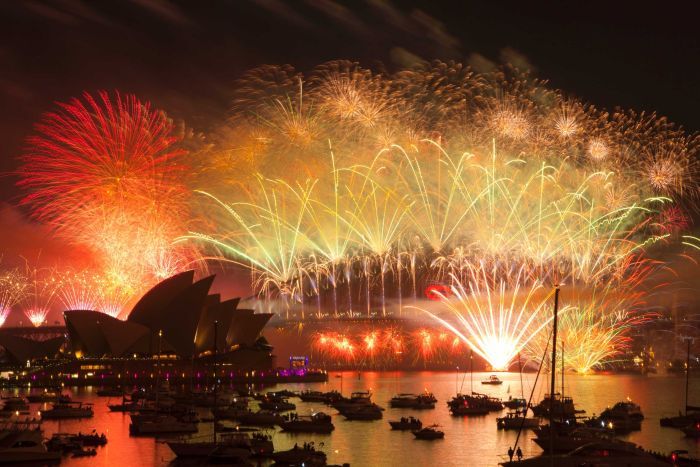
4448972-3x2-700x467New Year’s Eve is celebrated in Sydney with a huge firework display on the Harbour, the Harbour Bridge forming the centrepiece. Each year’s theme is displayed across the Bridge in words and pictures; for 2013 the theme was Embrace, asking us to embrace love, Sydney, possibilities, and the moment, illustrated by a butterfly and a pair of red lips.

Being one of the earliest places in the world to greet the New Year, the Sydney fireworks are amongst the first celebrations that people see, so they really do try to put on a show. Sydneysiders firmly believe their NYE firework display is the best in the world, although this year Abu Dhabi insisted theirs was clearly superior. I think London was my favourite, although Sydney was definitely the best city with a harbour fireworks display (sorry Hong Kong!).

Such an enormous spectacle necessitates a team of people working on it, but someone has to have their name at the top, and in this case it was Aneurin Coffey, the producer, Fortunato Foti, the director, and Kylie Minogue, the creative ambassador. As we have already covered Kylie in an earlier blog entry, when Ms Minogue was ambassador for the Sydney Mardi Gras, we are going to look at the names of Messrs Coffey and Foti instead.

Aneurin Coffey, originally from Perth, has been in event management and production co-ordination for many years, and been involved with the Sydney fireworks since the late 1990s. Fortunato Foti comes from a long line of pyrotechnicians; the Foti family have been creating firework displays since the 18th century in Italy. Fortunato’s grandfather Celestino migrated to Sydney in the 1950s, after being interned here during the war.

As you can imagine, in the lead-up to the Big Bang, these two gentlemen were often interviewed on the news and in newspapers, which is how I came to hear their intriguing names.

Aneurin is a variant of the name Aneirin, which has an important role in Welsh literature. Aneirin was a British bard in the Dark Ages, believed to have been a poet at a court which today is Edinburgh, and possibly the son of a queen of West Yorkshire. His best known work, Y Gododdin, is a series of elegies for warriors who fell in battle; there is a chance that it contains the earliest reference to King Arthur, although it isn’t certain. Revered in his own era, and rediscovered in Tudor times, he is still highly-regarded today.

The meaning of Aneirin is not certain, and it may be the British form of the Latin name Honorius, meaning “honourable, noble”. The name would have been familiar to Britons as that of the Emperor Honorius, under whose rule Rome was sacked in 410. There is a famous story that in this same year, Britain asked for Roman help against barbarian incursions, and Honorius, who had problems of his own, replied by telling them that Britain must guard itself. It is from this moment that the end of Roman control in Britain is dated.

From the 18th century, Aneirin’s name began to be spelled Aneurin, presumably to make it look as if it was derived from the Welsh for “all gold”. The name is usually pronounced a-NY-rihn, and the Welsh politician Aneurin Bevan, founder of the National Health Service, used Nye as his nickname.

The name has been mostly used in Wales, and by those with Welsh heritage. A contemporary namesake is attractive young Welsh actor Aneurin Barnard, who has won an award for his stage work, but also appears in films, and made guest appearances on TV shows such as Shameless.

Fortunato is the Italian form of the Latin name Fortunatus, meaning “fortunate, blessed”. There are several saints called Fortunatus, including Fortunatus the Apostle, listed as one of the Seventy Disciples of Christ, and mentioned by Saint Paul. Fortunatus also appears in literature as the hero of a German tale from the 16th century, who meets the goddess of Fortune and is given endless riches. Despite his charmed life, his heirs are unable to share his wealth, for they do not have the wisdom and honour to manage it.

Fortunato is not uncommon as an Italian surname, and there are quite a few streets and businesses in Australia bearing this name. A young namesake is Fortunato Caruso, who plays Australian rules football for West Adelaide.

The beginning of a new year, whatever it may bring, is always filled with hope for the future. Here are two rare names associated with luck, honour, gold and riches – good omens for the year ahead.

All the best for 2013!

POLL RESULTS: Aneurin received an approval rating of 23%, while Fortunato received a more favourable approval rating of 37%. More than 45% of people said they hated both names. One nice person said they loved both.

(Picture shows the fireworks on Sydney Harbour, January 1 2013; photo from ABC News)
Famous Names: Neptune and Taylor

12 Wednesday Dec 2012

Posted by A.O. in Famous Names

≈ 1 Comment

Tags

astronomical names, english names, Etruscan names, fairy tales, famous namesakes, historical records, honouring, Indo-European names, Irish names, Italian names, Latin words, locational names, mythological names, name combinations, name history, name meaning, name popularity, names of ships, nicknames, Roman names, surname names, UK name popularity, unisex names, US name popularity

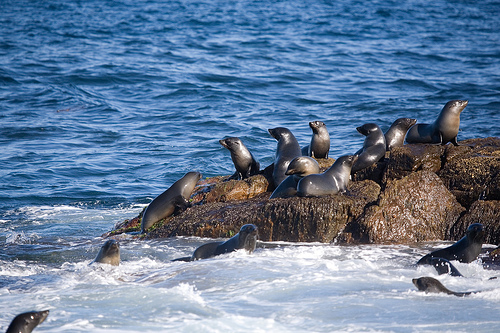
seals on neptuneAt the end of November, the Premier of South Australia announced that the Neptune Islands Group Marine Park would be renamed the Neptune Islands Group (Ron and Valerie Taylor) Marine Park. This is no mere change of name, for a network of 19 marine parks has taken effect in order to protect the seas from over-fishing. The premier noted that the southern oceans had more diversity than the Great Barrier Reef, and contained many plants and animals that cannot be found anywhere else.

The marine park has been named in honour of Ron and Valerie Taylor; divers, film-makers, shark experts, and conservationists who were ardent proponents of preserving marine habitats. Their skills in underwater filming were used on such films as Jaws and The Blue Lagoon, but more importantly, they wrote books and made documentaries to highlight the beauty and fragility of marine ecology. They won many awards for both photography and conservation. Ron passed away this year, and Valerie continues to be an advocate for marine protection.

The Neptune Islands, near Port Lincoln, were named by the navigator and cartographer Matthew Flinders in 1802. Rugged and remote, they seemed to him inaccessible, as if they would would always belong to King Neptune.

Neptune is the English form of Neptunus, the Roman god of fresh water springs, lakes, rivers, and the sea; he is the Roman equivalent of the Greek god Poisedon. He was worshipped in a festival that fell at the height of summer, when rainfall was at its lowest, and water most needed and valuable. As you know, his name has been given to the eighth planet from the Sun.

The meaning and origin of his name is obscure, with etymologists in disagreement over which language/s Neptune might be derived from. The general view is that it means something like “moistness”, “damp, wet”, “clouds, fog”, or “to water, irrigate”.

Another theory is that it is from the Italian town of Nepi, north of Rome, which was anciently known as Nepet or Nepete. This town is famous for its mineral springs, and traditionally connected to the god Neptune, who would presumably have approved of its watery wonders.

The town’s name is Etruscan, from the Etruscan name for Neptune, which was Nethuns. This may be related to the Irish god Nechtan, who had a sacred well, and thus another liquid connection. In fact there are several Indo-European deities with similar names and aqueous roles, and it is speculated that their names may go back to an ancient word meaning “nephew, grandson”.

One of the ships of the Second Fleet was called Neptune, and unfortunately it had the worst reputation of all for its appalling mistreatment of convicts.

Neptune sounds as if it should be ultra rare in Australian name records, but there are quite a few from the 19th century – at least quite a few more than I expected to find. It was mostly used in the middle, such as Cecil Neptune, and Samuel Caesar Neptune, but you can also find men named Neptune Persse and Neptune Frederick. Two of them rejoiced in the full names of Neptune Love and Neptune Blood; I believe the name Neptune is traditional in the Blood family.

Neptune would be very unusual as a baby name today, and I can’t quite imagine what you would use as a nickname – Neppy sounds too much like “nappy” to me. At the very least, please not Tuna.

A complete change of pace brings us to the name Taylor, a very common English surname referring to someone who made clothes as their occupation; the word tailor is ultimately from the Latin talea, meaning “a cutting”. In the Middle Ages, tailoring was a high-status craft, as only the wealthy could afford to have their clothing professionally made, and tailors could command good fees. Both men and women were employed as tailors.

There are many folk tales and fairy stories about tailors, and nearly always the tailor is depicted as being extremely clever, and confidently able to outwit others. Tailors having to be so precise and painstaking in their work, and no doubt with plenty of diplomatic skill to handle their rich clients, they must have gained a reputation for being as sharp as pins and as smooth-talking as silk.

The earliest Taylor-as-a-first-name I can find in the records is from the 16th century, and it was on a female. This may be an error in transcription, as subsequent early Taylors seem to be male (with plenty of girls who had Taylor as a middle name). In the United States, Taylor has always charted as a boy’s name, and only charts for girls from the late 1970s onwards, but is currently Top 100 for girls, and in the 300s for boys. In the UK, it only charts for boys, where it is barely on the Top 100 and falling.

In Australia, Taylor has charted for both boys and girls since the 1980s, when it was #383 for boys and #785 for girls. It peaked for both sexes in the 1990s, when it was #38 for girls and #130 for boys. At the moment, Taylor is only just outside the Top 100 for girls at #108, is #251 for boys, and falling for both sexes.

So that’s a quick survey of Taylor popularity around the world: Top 100 for girls in the US, Top 100 for boys in the UK, and not on the Top 100 at all in Australia.

Here are two very different names which evoke the sea and honour its protectors, as well as having a strong connection to the history of South Australia.

(Picture shows seals on Neptune Island; photo from Flickr)

Famous Names: Sandy and Sable

28 Wednesday Nov 2012

Posted by A.O. in Famous Names

≈ 2 Comments

Tags

African-American names, animal names, colour names, english names, French names, French vocabulary words, Google Earth, Google Maps, historical records, Hurricane Sandy, Mer de Noms, name combinations, name history, name meaning, name trends, names of hurricanes, names of ships, nature names, nicknames, Paradise Lost, rare names, Southern Surveyor, The New York Times, Times Atlas of the World, unisex names, University of Sydney, US National Geophysical Data Center, vocabulary names, Wikipedia

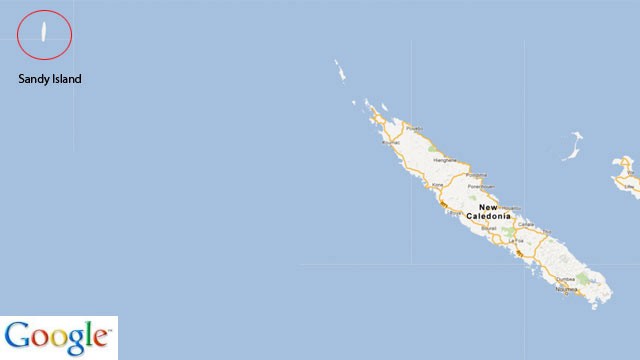
A group of Australian scientists from the University of Sydney have undiscovered an island that was supposed to be in between Australia and New Caledonia.

Sandy Island showed up on Google Earth and Google Maps, as well as marine and scientific maps all over the world, including the US National Geophysical Data Center. According to the maps, Sandy Island was about 16 miles long and 3 miles wide – just slightly bigger than Manhattan.

Geologists on the Southern Surveyor, an Australian maritime research vessel, were puzzled by the island which appeared on their weather maps, yet navigation charts showed that the water in that area was very deep – 1400 metres (4620 feet). They decided that they had to go check it out, and found nothing there except sea. The scientists recorded the information so that maps can be changed.

According to the Wikipedia article on Sandy Island, the island was erased from Google Maps on November 26, but although the name Sandy Island doesn’t show up in the search bar, when I looked in the Coral Sea I found the phantom island quite easily, but there was no name attached to it.

If I zoomed in on the island, it simply disappeared, and if I switched to satellite, the island showed up as a black streak surrounded by blue streaks, looking remarkably like someone had scribbled on it with two different felt-tip pens.

Interestingly, if Sandy Island had existed, it would have been in French territorial waters – and the island is not on any recent French government charts. Perhaps because of this, the Times Atlas of the World deleted Sandy Island from its maps after 1999.

The history of the discovery of Australia involved – indeed, was dependent on – faulty maps, necessitating voyages to check out what was here or not, so it makes a strange sort of sense that now Australians must voyage forth to check faulty maps for themselves.

The episode shows that this part of the world is still not well known, and incompletely charted. It’s not quite a matter of Here be dragons, but the reply from most of the map-providers when the error was pointed out was along the lines of, Well it is in the middle of nowhere …

Tens of thousands of years of human occupation, and centuries since the first mapping, and we’re still close to the middle of nowhere. Which is rather exciting – what else in our region is still waiting to be discovered, or undiscovered?

Apart from the Pythonesque nuttiness of this story (no wonder the geologists got the giggles as they sailed through the invisible island), the thing that got my attention was the name Sandy, which has been in the news internationally since Hurricane Sandy hit the north-east coast of the United States in late October, after devastating the Caribbean.

According to this article in The New York Times, names of hurricanes can help to influence the way we name our babies. It’s not as simple as everyone suddenly choosing Sandy as a baby name, but it seems that once we hear a word or a name many times, we instinctively like names that sound similar to it. So experts are expecting a spike in the numbers of babies of 2012 whose names begin with an S, as well as those with an and sound in them, and ones that end in -ee.

There was a story in the Australian press, about an expat couple in New York, whose baby arrived at the height of Sandy’s fury. The parents did consider calling their new daughter Sandy, but in the end chose Sophie. The analysts would be rubbing their hands, because they chose a two-syllable name that starts with S and ends with an -ee sound, just like Sandy.

Sandy is a unisex name which is short for Alexander or Alexandra, but also for any name related to them, such as Alistair, Sander, Alessandra, Sanette, Sandrine, or Sandra. You could use it as a short form of Cassandra, Santos, Sanford, Sandon, Santiago or any similar name. Sandy is a traditional pet name for people with reddish or sandy-blonde hair, and you could see it as a vocabulary, colour, and nature name meaning “sand-coloured, like sand, covered in sand”.

However, another possibility occurred to me while reading about The Case of the Non-Existent Island. On a French chart from 1875, the island is called Île de Sables, which is French for Sandy Island. Because of this, The Times Atlas of the World partly Anglicised the name back again to Sable Island.

While in French, sable means “sand”, the same word in English means something quite different. (I feel that I must be channelling Lou from Mer de Noms, who quite often finds name inspiration in French words). I should point out that the two words are said differently: in French, SAH-bluh; in English, SAY-buhl.

A sable is a species of marten (a relative of minks, weasels and ferrets) which is found mostly in Eurasia and still hunted in Russia. The pelt of the animal has been highly valued since medieval times, because the fur of the sable feels soft whichever way you stroke you; it’s not possible to “go against the grain”.

Because of the animal’s colour, the word sable is also a literary way to say “black”, such as when John Milton refers to “a sable cloud” in Paradise Lost. It amuses me that sandy and sable are opposites as colours, with one signifying a pale shade and the other one that is very dark.

Sable can also be used as a personal name, with the first one I can find in the records dating to the 17th century. It’s used for both boys and girls, although from the beginning more often a female name – maybe because it seems like it could be short for names such as Isabel or Sabella.

Sable is more common in the United States, where it has sometimes been used amongst African-Americans as a positive and beautiful word to denote darkness (similar to the name Ebony, which doesn’t have that connotation here).

In Australia, it appears rarely in the records, nearly always as a female name. One of my favourite combinations for this name was Brightie Sable. It also belonged to a 1900s French immigrant to Australia, who had the French form – Sablé.

So if you feel subconsciously influenced to use a name similar to Sandy, or would like to be part of a name trend, then Sable or Sablé seem like possibilities to choose from, and may please trend analysts immensely.

(Satellite image from Google Maps)

Famous Name: Eclipse

21 Wednesday Nov 2012

Posted by A.O. in Famous Names

≈ 2 Comments

Tags

astronomical names, english names, Greek names, historical records, name combinations, name history, name meaning, names of ships, Nancy's Names, nature names, nicknames, rare names, unisex names, vocabulary names

An eclipse is when an astronomical body is obscured, either by passing into the shadow of another body, or having another body pass between it and the viewpoint. The word comes from the ancient Greek ékleipsis, meaning “abandonment, downfall or darkening of a heavenly body”.

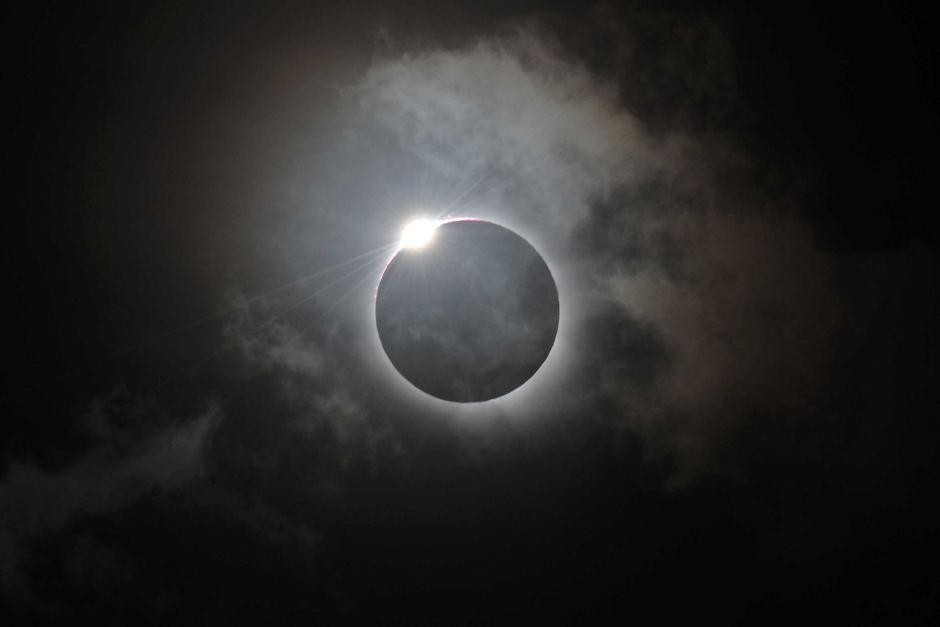
Although there are several different types of eclipse possible in the universe, the ones we can see from Earth are the solar and lunar eclipses. We tend to get more excited by solar eclipses, when the Moon appears to pass in front of the Sun, blotting out its light temporarily. The most impressive of all is a total eclipse of the Sun, when the Moon appears to perfectly cover the Sun, so that it disappears from view.

A total eclipse of the Sun can only be viewed along a very narrow band of the Earth’s surface, and on November 13, a total eclipse could be seen in far north-eastern Australia. Although many had gloomily predicted that cloud cover would ruin the eclipse-enjoying experience, just before dawn the clouds obligingly parted, and the Moon passed in front of the Sun. For two minutes it became darker and colder, the birds stopped singing, and tens of thousands of spectators from all over the world gaped in wonder, just as our ancestors did thousands of years ago.

Many indigenous groups, including in Arnhem Land, were watching the event, which has deep spiritual meaning for them. Most Aboriginal cultures believe the Sun is female and the Moon male. In their myths, the Sun is in love with the Moon, but he doesn’t return her feelings, so she chases him around the sky. Occasionally she manages to catch him, and in a jealous rage tries to kill him, but the Moon convinces the spirits which hold up the sky to save him, which they always do.

However, another version is that a solar eclipse marks those rare times when the Sun-woman is hidden by the Moon-man while he relents and makes loves to her, while a similar tale is that a spirit man covers the Earth with his hand to leave it in darkness, so that the Sun and Moon may have privacy together.

In Queensland, the celebrations for the eclipse included a Solar Eclipse Marathon in Port Douglas, and a week long Eclipse Festival at the remote Palmer River Roadhouse. More than 50 000 tourists arrived from Europe, North America and Asia, with some hotels booked out three years in advance. The eclipse was big news, and big business. And why shouldn’t they party? It was the first time in the past thousand years that this part of Australia had experienced a total solar eclipse.

Eclipse can be found as a unisex name in occasional use since the late 18th century. According to blogger Nancy Man at Nancy’s Names, the births of many of those given the name Eclipse can be correlated with either solar or lunar eclipses.

In Australian records, there are only a small number of people listed as having the name Eclipse, and it is exclusively used as a middle name. It is balanced between the sexes, with three women and two men having Eclipse as part of their name. My favourite combinations were Pearl Eclipse and Thomas Eclipse Vivian.

Only a year of birth is given, so it isn’t possible to correlate their dates of birth with eclipses, but it is reasonable to assume that it might have been the inspiration for at least some births. However, there was also a convict ship called Eclipse, although it doesn’t seem to match up with any of the places or dates of birth in the records in any obvious way.

Scientist Dr Natalie Dillon from Mareeba attended the eclipse viewing this year and said:

When it goes dark and the temperature drops, you get a sense of the fragility of life. I just feel in awe. It is like the Moon has wiped a cloth over the face of the Sun and we can start afresh.

An eclipse is a rare celestial event, and one which fills us with a mixture of awe and dread, as well as great joy and a sense of renewal when the light of the Sun is returned. It reminds us how much we need the Sun, and gives us a brief uneasy taste of what Earth would be like without it – chill, dim and silent.

The basis of the word eclipse is the Greek for “I leave behind”. To eclipse someone means to cast them into your shadow, to surpass others with your superior talents or skills – to leave them behind, so that they can never catch up.

As a name, Eclipse has power, a certain foreboding, and perhaps a touch of arrogance. It is little seen, and that gives it an even greater significance. Perhaps it’s not surprising it has been timidly tucked away in the middle.

Nicknames for Eclipse include Clip, Clipper and Clipsie, which give it a much friendlier and more approachable sound.

What do you think – a viable baby name, or a little too much?

Famous Name: Poppy

14 Wednesday Nov 2012

Posted by A.O. in Famous Names

≈ 7 Comments

Tags

english names, famous namesakes, flower names, German names, name history, name image, name meaning, name popularity, nature names, nicknames, plant names, popular names, Remembrance Day, surname names, The Wizard of Oz, UK name popularity, unisex names, US name popularity, vocabulary names

Last week I covered the name Bede for Remembrance Day, partly with the idea that it had “been in my Request file for ages”. When I went to cross if off the list, I found it wasn’t there at all – it seems I imagined it. So today I’m going to make up for it by covering a Remembrance Day name that really has been in my Request file for ages (I double checked!).

It has long been tradition to associate November 11 with poppy flowers. During the First World War, red corn poppies (Papaver rhoeas) were among the first plants to spring up on the battlefields of northern France and Belgium, blooming between the trenches and no man’s lands on the Western Front. In soldier’s folklore, the red of the poppies came from the blood of their fallen comrades soaking the ground, and were perhaps a poignant reminder that life went on regardless.

The sight of poppies on the battlefield at Ypres in 1915 inspired Lieutenant Colonel John McCrae, of Canada, to write the poem In Flanders Fields. An American woman named Moina Michael, who worked for the YMCA, read McCrae’s poem just before the Armistice, and was so moved that she wrote a poem in response, and promised to wear a red poppy as a way of keeping faith.

At an international YMCA conference in 1918, Moina spoke about the poem and the poppies, and Anna Guérin, the French YMCA secretary, took the idea further by selling poppies to raise money for widows, orphans, and needy veterans and their families.

The poppy soon became widely accepted throughout the allied nations as the flower of remembrance to be worn on Armistice Day, and the Australian Returned Soldiers and Sailors Imperial League (the forerunner to the RSL) first sold poppies for Armistice Day in 1921, with the money going to children’s charities and the League’s own welfare work. Today you can still buy a poppy pin from the RSL to help veterans of war.

At the Australian War Memorial in Canberra, it is customary on Remembrance Day to place a poppy on the Roll of Honour, as a small personal tribute to the memory of a particular person. Another ritual is to lay a single poppy flower on the Tomb of the Unknown Australian Soldier at the Memorial.

Even before World War I, poppies had a long history as symbols of sleep and death – sleep because poppy seeds have since ancient times been used as sedatives, and death because the colour of poppies reminds people of blood, or possibly because if over-prescribed, a poppy-induced sleep may become permanent. Today, poppies are still grown to obtain opium, morphine and codeine for medicinal use, with Australia being one of the major producers of poppy crops.

In Greek myths, poppies were given as offerings for the dead, with the suggestion that they were also a promise of resurrection in the life to come. The symbol of the mother goddess Demeter, she is depicted carrying both sheaves of wheat and poppies, and it has been theorised that the taking of opium was part of her worship in the sacred Mysteries.

These twin symbols of sleep and death were put to good effect in what must be one of the most famous images of poppies in literature and cinema – the field of scarlet poppies in The Wizard of Oz, the poison scent of which sends Dorothy into such a deep sleep that she is in danger of dying from it.

The English word poppy is ultimately derived from Latin, but the meaning is not known for sure; it may be from the word for “to feed”, because as anyone who has munched a poppy seed muffin or a bread roll topped with poppy seeds can tell you, poppies are yummy.

Poppy can be found as an English name as early as the 18th century, and the first examples are male, taken from the surname. This is derived from a German name Poppo or Boppo, used as a pet form of the name Bodebert, meaning “bright messenger”. However, by the 19th century, it was firmly established as a female name and associated with the flower, coming into common use along with other floral names.

Poppy only entered the Australian popularity charts in the 1980s, and in the 1990s was #602. It skyrocketed during the 2000s to reach the Top 100 by 2009, debuting at #69. Last year it was #79, and with such a brief history behind it, it is far too soon to make any predictions about its future.

Poppy is even more popular in the UK, where it has been Top 100 since the 1990s, and is currently in the Top 20. However, it has never been in the US Top 1000 at all. Last year 130 baby girls were named Poppy in the United States.

I think one of my first clues to how differently names are seen in other countries is that I kept reading in name forums from American contributors advising that Poppy might sound adorable on a little girl, but can you imagine a woman in her thirties named Poppy? Um yes, easily – Australian actress Poppy Montgomery must be in her mid-thirties by now. Poppy seems to suit her equally well as it does a toddler.

Another popular Poppy putdown is The name doesn’t sound serious enough, your daughter will never become a businesswoman, doctor or lawyer if you name her Poppy. Oh really? Then how did Poppy King manage to start her own cosmetics company? How did Doctor Poppy Sindhusake become senior lecturer in the school of medicine at the University of Western Sydney? And how did Poppy Matters start her practice in family law? By what occult means did they crash through this poppy-red ceiling to make the grade? Unless such a ceiling does not exist …

Some complain that the name, with its cheeky sound and link to a flaunting red colour, sounds too cute and flippant for a woman’s name – how will she ever be taken seriously, they fret? My own thought is that with its associations to such a solemn day, its death symbolism, and connection to drugs, it’s a jolly good thing that Poppy sounds so cheerful and light-hearted in order to offset what could otherwise seem rather gloomy.

Poppies are colourful, sturdy little flowers that bloom and blow easily in our gardens and the “pop” sound in their name makes us think of pop music, pop art and pop-up books – things that seem bright and lively and youthful. But beneath it is something dark and ancient and powerful. It stands for death, and life rising again, and the blood of heroes, and eternal flame, and rows of crosses in northern France, and keeping the faith. It is a memory in honour of those who died in foreign fields.

Do not underestimate Poppy. She is spunky and sprightly, but also strong and deep and enigmatic. She can survive almost anywhere, and, not content in being merely decorative, is useful too. She can feed the hungry, she can allay pain, she can understand sacred mysteries. Sometimes she can even be dangerous.

She can run her own business, or become a doctor, or lawyer, or politician, or anything else she wants to be. And she will sound fabulous when she is forty!

(Picture is of poppies growing in the Somme, northern France; photo from Keynsham People)

Famous Name: Bede

07 Wednesday Nov 2012

Posted by A.O. in Famous Names

≈ 5 Comments

Tags

Anglo-Saxon names, Australian Dictionary of BIography, birth notices, english names, famous namesakes, historical records, name history, name meaning, name popularity, Old English names, popular names, royal names, saints names

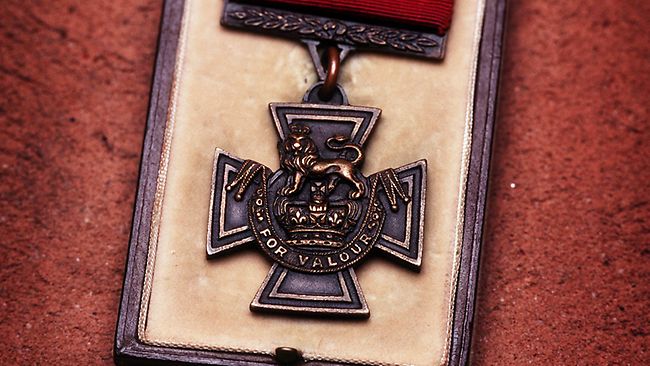
On November 1, Corporal Daniel Keighran became the third Australian soldier serving in Afghanistan to receive the Victoria Cross, the highest military decoration awarded for bravery in Australia. Corporal Keighran is the first member of the Royal Australian Regiment, and the 99th Australian, to receive a VC, and did so with great modesty and humility. Daniel’s wife Kathryn had no idea of the courage her husband had displayed under fire in battle two years ago until she learned he was about to be decorated for it. The Victoria Cross was awarded in a ceremony at Government House in Canberra.

Watching this story on the news reminded me to look at the list of those Australians awarded the Victoria Cross in the past, as I wanted to cover the name of a World War I hero for Armistice Day, which is on Sunday. As I ran my eye down the list, one name stuck out because it has been in my Request file for ages, and I briefly covered it in my article at Nameberry a short time ago. So it was quite an easy choice for me to select Bede as this week’s Famous Name.

Corporal Thomas James Bede Kenny, always known as Bede, was born in Sydney in 1896. The son of a butcher, he had just begun training as a chemist’s assistant when he enlisted with the Australian Imperial Force in 1915. He initially served in Egypt, then was sent to northern France in 1916 to take part in the second phase of the battle of Pozières, in the battalion bombing platoon.

It was in the spring of 1917, as British and Australians captured the outpost villages of the Hindenberg Line, that he performed the acts of valour that were to earn him the Victoria Cross. In the attack on Hermies, his platoon came under heavy fire from a machine-gun post which caused severe casualties. Bede rushed at the enemy single-handed, hurling three bombs, the last of which knocked out the post. He then took the surviving Germans prisoner, his actions contributing significantly to the success of the operation.

Later he was injured in battle and invalided home to Australia, arriving in Sydney to a hero’s welcome a few weeks before the Armistice. He was offered the chance to join the military police, and rejected it immediately, as for some reason he had a great dislike of them.

In civilian life, he worked as a salesman, and was happily married; he is remembered as a popular man with many friends, and a fondness for innocent pranks. He was left partially deaf from the war, and also suffered the effects of trench foot throughout his life. The great tragedy of his life was the deaths of two of his three children, which he never recovered from.

Like Corporal Keighran, Corporal Kenny never talked about his wartime experiences, and the only sign that he was proud of his military service was that he always led the VC winners at the Sydney Anzac Day marches. He died in 1953, and by a cruel irony, his pallbearers were military policemen.

The most famous person with the name Bede is the 7th/8th century English saint, Venerable Bede. Although it is not certain, it is thought that his Anglo-Saxon name, Beda, is from the Old English word bēd, meaning “prayer”. If so, it’s possible that his parents chose a religious life for him from his birth. The name wasn’t a common one, but interestingly, one of the kings of Lindsey, in England’s north, was named Beda; as Venerable Bede was from this area, it’s tempting to wonder if he was named after an ancestor, or a famous local namesake.

Venerable Bede is most famous for his prolific writing career, eventually completing over sixty books, most of which have survived. He wrote on a wide variety of subjects, including science, history, grammar, hagiography and theology; his best known work is An Ecclesiastical History of the English People, which begins with Caesar’s invasion of Britain, and ends with Bede’s own times. His use of AD to refer to events after the birth of Christ helped it become standard. He was also a teacher, a music lover, and was said to be accomplished at singing and poetry recitation, even writing some poetry of his own.

Bede is the only Englishman to be declared a Doctor of the Church; he is also the only Englishman to be mentioned in Dante’s Paradiso, where he appears amongst the theologians and doctors of the church. He is regarded as a saint in both the Catholic and Anglican churches.

If you are thinking that Bede (pronounced BEED) sounds a lot like the word bead, you would be correct. That’s because the Old English word bede, meaning “prayer” is the source of the modern word bead – because beads are used as a means of keeping count of prayers, a practice in Christianity which dates to the 5th century (although prayer beads are ancient and used in many religions). Because of this, you will sometimes see the name Bede interpreted as “bead” or “prayer bead”.

Bede isn’t a common name in Australia; at the same time, it isn’t all that unusual either. There are plenty of Bedes in the records, and if you go to the Australian Dictionary of Biography, you will find quite a few famous Australians with Bede as part of their name. What you primarily notice is that these Bedes tend to be from Catholic backgrounds (and some High Anglicans), and that Bede is usually one of their middle names. It is also the name of Bede Durbidge, who won Surfer of the Year a few years ago, giving the name a more cool laidback image.

I can imagine some people thinking that Bede sounds weird and ungainly; something only a staunchly Catholic family would use; a name best suited to leaving in the middle position. Which sounds perfectly reasonable – except that less than half a century ago, there was another boy’s name that seemed weird and ungainly, was used almost exclusively by Catholics, and generally relegated to the middle position, usually after Francis.

That name was Xavier, which is now #22 and rising. Could Bede be the Xavier of the future?

It’s a very old name with a solid history of use in Australia, part of the Catholic tradition, and with spiritual associations. It’s short yet substantial, clunky yet surprisingly cool. It’s the name of our heroes, our leaders, our intellectuals, our athletes, our artists, our businessmen, and for many of us, our dads and uncles and grandfathers too.

Wherever it might be headed, I see this name often enough in birth notices to know that it is not going away, which gives me a strange feeling of comfort.

(Photo of the Victoria Cross from The Australian)

Famous Name: Mungo

31 Wednesday Oct 2012

Posted by A.O. in Famous Names

≈ 8 Comments

Tags

British names, famous namesakes, film references, K.M. Sheard, literary references, locational names, name history, name meaning, nicknames, popular culture, saints names, Scottish names

Blue Juniper from Baby Name Ponderings has been profiling names from horror films all October in the lead-up to Halloween, and here you can read about such fabulous finds as Amity, Romero, Dresden and Mockingbird. Perhaps this helped inspire me to do a name from an Australian horror film for October 31.

Lake Mungo came out a few years ago, but I only managed to catch it last year on DVD, after missing it on television. It’s one of those movies which is probably better to see on the small screen, because the film is made in the style of a TV documentary. This makes comparisons to The Blair Witch Project and Paranormal Activity inevitable, but I think it’s better than both of these, and avoids any annoying shaky camerawork.

It’s not a horror movie with buckets of blood, hordes of screaming teens, or bizarre demonic cults, but a supernatural mystery thriller that is extremely tense and uneasy to watch – it is definitely a “scary” film. It’s about the grieving process after death, about the secrets that people take to the grave, and about the images left behind when someone dies that haunt us. It also asks the viewer to try to decide which events in the film are “real” and which aren’t – a process made all the more difficult that the closer you look, the less sure you become.

What I loved most about Lake Mungo was its complete authenticity – it’s one of the realest films I have ever seen, and even though when I put the DVD on, I knew it was “just a movie”, during the course of watching it I even began to doubt that. Rumour has it that this film is going to be remade by Hollywood, but I urge you to watch the original instead. For starters, the distinctive Australian voice of the film would be lost.

Although the movie is set in country Victoria, as the title suggests, Lake Mungo plays an important role. This is a salt lake in south-western New South Wales, which has been completely dry for several thousand years. Although geologically rich and part of the World Heritage listed Willandra Lakes region, it is most famous for the archaeological discoveries that were made there in the late 1960s and 1970s.

These were of human remains, the bones of a young woman and two men. The woman and one of the men had been ritually cremated and decorated with red ochre. The other man, of a later time period, had been carefully positioned in a shallow grave, his bones stained pink with the ochre surrounding him. The oldest archaeological site discovered in Australia, and amongst the oldest evidences of  cremation in the world, they demonstrate a culture which was sophisticated enough to have developed spiritual beliefs and elaborate funeral rites for their dead.

The dating of the remains has been difficult and controversial, but they are currently accepted as being at least 40 000 years old, and very possibly more. The bones have also been dated as being at around 68 000 thousand years. This was slightly upsetting for scientists, as it is thought that modern humans migrated from Africa around 60 000 years ago. 68 000 years would mean that the first humans to leave Africa went straight to Australia, which would involve at least some sea travel. This idea didn’t seem workable and it was revised down to 40 000 – however, some research hints that the older dating may not be as far fetched as first thought.

Even more controversially, when mitochondrial DNA testing of the bones was done, it was found that they were genetically different to Aborigines, and to all of us (although they would have looked much the same). As the theory is that modern humans came out of Africa (which explains why everyone on earth is very closely related), where did these Lake Mungo humans that weren’t closely related to us come from? Somewhere else, or is our genetic heritage more complex than first thought? This basically upset everyone, and as a result it seems to have been decided not to do any further research on them, lest we discover more upsetting things.

All in all, I think this makes Lake Mungo the most interesting place in Australia, and the remains that were found here the most fascinating things in Australia, and probably the world. There are secrets here more ancient and mysterious than anything you will see at Halloween.

Before it was declared a national park in 1979, the land Lake Mungo lies upon was part of Mungo sheep station. The station was named by the Cameron brothers who owned it, after St Mungo’s church in Scotland, of which they had seen a picture. It’s not known which St. Mungo’s church they named it after.

Mungo was the nickname of Saint Kentigern, who was born in the 6th century, in a British kingdom which is now part of Scotland. Of royal but illegitimate birth, he was brought up in Fife by Saint Serf, who was ministering to the Picts. Saint Serf is supposed to have given him his pet name Mungo, of which the meaning is unclear. It’s been suggested that it is British for “my dear one”, or “dearest”, based on similar-sounding words and phrases in Welsh.

K.M. Sheard says that the meaning of the name is linked to the saint’s real name, because Kentigern means “chief dog, lord hound” – a very common combination of words in ancient British names. She notes that Mungo looks to be derived from the British for “my dog”, which has close equivalents in Irish and Welsh. The name would thus have been an affectionate way of saying “my pet”, probably with connotations of “my dearest follower” or “my most loyal companion”.

According to legend, Saint Mungo performed four miracles, one of the most touching restoring to life Saint Serf’s pet robin. He is a patron saint of Scotland, and of the city of Glasgow, which has on its crest of arms images to represent the miracles of Saint Mungo. As such, it is a name with close ties to Scotland and the north of England, where the name was given in honour of the national saint.

You will find references to Saint Mungo in at least two works of fiction. In G.K. Chesterton’s Father Brown detective stories, Father’s Brown’s former parish was St. Mungo’s, in Essex. In the Harry Potter books by J.K. Rowling, the London hospital in the wizarding world is St. Mungo’s Hospital for Magical Maladies and Injuries. Rowling may have been influenced in her choice of saint because according to local traditions, Saint Mungo encountered the bard and prophet Merlin, cured him of madness, and converted him to Christianity.

In Australia, the MacCallums have produced four generations of intellectuals all named Mungo – the youngest a long-serving political commentator known for his staunchly pro-Labor views. The actor Mungo McKay has a horror connection, as he has been in the films Undead and Daybreakers. In Australian records, people called Mungo do mostly have Scottish surnames, and many in the 19th century seem to have been named in honour of Scottish explorer Mungo Park.

I can see that some people are going to have problems with the name Mungo, but there’s something rather endearing about the name and the saint, and it has several associations with mystery and magic. In Australia it connects us to the most ancient peoples of our land, and an enigma locked away forever. If you’re looking for a Scottish heritage choice with a fashionable O-ending, yet yearn for something out of the ordinary, Mungo may be one to consider.

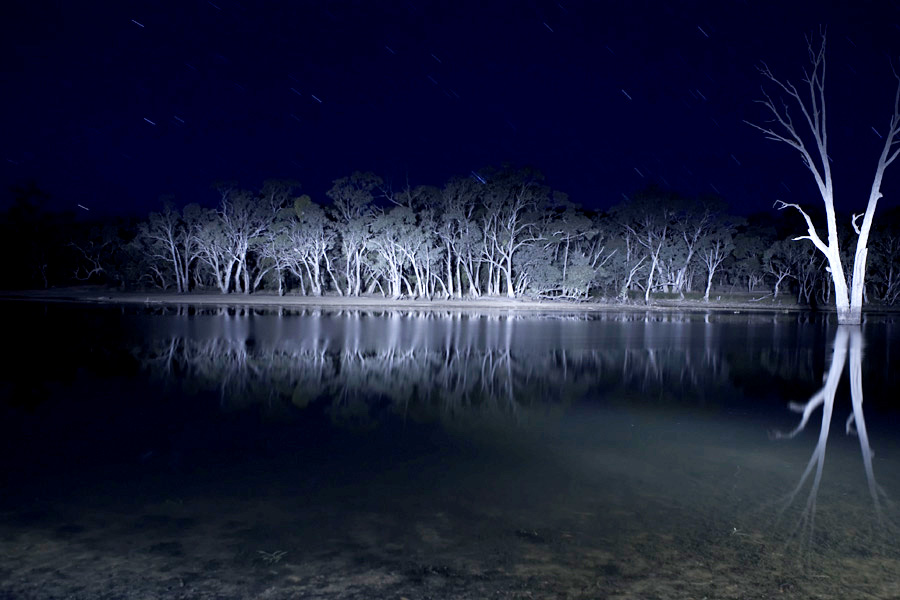
(The picture is a publicity shot from the movie Lake Mungo, not a photo of the place Lake Mungo)

Famous Name: Piper

24 Wednesday Oct 2012

Posted by A.O. in Famous Names

≈ 12 Comments

Tags

Anglo-Saxon names, english names, famous namesakes, Hollywood names, locational names, musical names, name history, name meaning, name popularity, popular culture, popular names, surname names, unisex names, US name popularity, vocabulary names

Sydney was recently named the second most expensive city in the world, after Tokyo; luckily it was also revealed that Australians are now the richest people in the world, so we can afford it! The most expensive suburb in Sydney is Point Piper, where the median house value is $7.38 million, and the most expensive privately owned house in Australia, costing $70 million to build, is located here. Point Piper’s Wolsley Road is the tenth most expensive street in the world, with 16% of Australia’s priciest houses on this 1 km stretch.

Point Piper is a little piece of land which juts into Sydney Harbour, a small enclave of just eleven streets and 148 houses. As Sydney’s most exclusive suburb, it is only 4 km from the CBD and offers views of the Harbour Bridge and Opera House. Despite its size, it has two beaches and two yacht clubs. The suburb is named after Captain John Piper, a Scottish-born military officer of Cornish parentage and German descent who arrived in the colony in 1792 and became an immediate social success.

Piper’s career got off to an interesting start when he asked to be posted to the penal settlement in Norfolk Island after a scandalous love affair which ended with an illegitimate daughter in his care. Later he became acting commandment of Norfolk, and ruled it so kindly that even one of the convicts wrote home to say how outstandingly nice he was. While on Norfolk, he took as his mistress a teenage girl who was the daughter of convicts; they eventually married, but not before she had borne him four children (they had nine more).

He became very rich by collecting custom duties and excises, and after being granted land by the governor, built a mansion on the point which is now named after him in 1816 at a cost of £10,000 (about $11 million in today’s money). He continued gathering wealth, real estate and respectability, until he ran into financial difficulties in the 1820s, and was suspended from his position after mismanagement of funds was discovered.

Piper tried to drown himself in Sydney Harbour, but was rescued. He had to sell everything he owned to settle his debts, and moved to Bathurst, where he ran a farm and became a figure of local importance. When he ran into problems there as well, his friends bailed him out and bought him a riverside property, where he and his wife and numerous children could be comfortable. He was just so nice, you see – blithe, unsinkable, amiable, and eminently forgiveable for his lack of business acumen.

Piper is an English surname which refers to someone who played the bagpipes. Although we think of bagpipes as being uniquely Scottish, their origins go back to the ancient world; it’s said that the Roman emperor Nero could play them. Their use spread through Europe in the Middle Ages, with their first explicit mention in Britain being in Chaucer’s Canterbury Tales. However, it was in Scotland that bagpipe music became most sophisticated and highly developed.

The piper was a well-paid and highly-respected professional, who would have been employed by a great lord or chief; it was often a hereditary position. The piper’s job was to entertain his lord at home and while travelling; this sometimes included military service. While traditions of pipers rallying the troops before battle go back centuries, the first documented case is 1549, when they were played by the troops of the Earl of Argyll. Later, pipers could be employed by a town to play each day, as well as at fairs and other events.

There is a myth that in times of old only men were pipers, and one ancient saw is that a woman found playing the bagpipes would have her fingers cut off in punishment, but this simply isn’t true. There are many documented cases of women pipers, and they were employed as teachers in a famous piping school on the Isle of Skye. Today women pipers are still out-numbered by the men, but there are plenty of them, and they are equally good.

The surname Piper goes back to the 13th century, and seems to have historically been most common in Sussex in England. However, the personal name may predate the surname, for the name Pipere has been found in an Anglo-Saxon charter from Sussex, which could make Piper one of the oldest English names – and another possible source for the surname.

Piper, with the modern spelling, comes directly from the surname, and dates to the 18th century, when it was nearly always given to boys (although as a middle name, much more evenly divided between the sexes). The name became seen as a girl’s name when a teenager from Detroit changed her name from Rosetta Jacobs to Piper Laurie and got a contract in Hollywood.

Although Ms Laurie says in her autobiography that she had to change her name because it sounded “too Jewish”, she gives no clues as to where she got the name Piper Laurie from. It almost sounds like a girl’s name – Laurie Piper – backwards.

Piper Laurie was in The Hustler and Carrie, but would have become well-known here for her role in the miniseries The Thorn Birds, based on the best-selling novel by Australian author Colleen McCullough. The Thorn Birds was originally broadcast in 1983, and the name Piper first charts in Australia the same decade.

The name skyrocketed in the 1990s to reach #128 by the early 2000s; I can’t help feeling this has a lot to do with the character of Piper Halliwell in the TV show Charmed. The actress who played Piper, Holly Marie Combs, confessed to having a large and inexplicable fan base in Australia.

Piper made the Top 100 in 2009, and is currently #70 and rising. Although we think of this as an American-style name, it’s only been on the US Top 1000 since 1999, and is still not Top 100, although not far off at #110, so Piper has charted in Australia longer than in the US and is more popular here. Australian parents do seem quick to pick up on Hollywood names.

I saw someone on a name blog say Piper is a name which will please everyone, which seemed going a bit far. However, I do think it has a lot to recommend it. It references luxury real estate, an ancient form of music, a Hollywood star with an Aussie connection, and an appealing namesake with a history unusually free of tragedy.

It’s a very old Anglo-Saxon name, but seems bright and modern. It’s a surname name for girls that doesn’t have any “son of” or male-only occupation issues, or significant prior use as a male name. It’s a vocabulary word which everyone can spell, pronounce and understand, and it’s a popular but not too popular name that still has room for growth.

So while Piper may perhaps not please all people, if Piper pleases you, then you may be pleased enough with Piper to pick it!

(Photo of Point Piper from the Sydney Morning Herald)

Famous Name: Peter

17 Wednesday Oct 2012

Posted by A.O. in Famous Names

≈ 5 Comments

Tags

Aramaic names, Biblical names, classic names, famous namesakes, fictional namesakes, French names, Greek names, name history, name meaning, name popularity, nicknames, Old French names, saints names, surname names

On October 11, Federal Parliament voted to apologise to Olympian Peter Norman for the treatment he received at the 1968 Mexico City Games. You may think that this apology was slightly overdue; its tardiness perhaps seems even more glaring when you learn Peter passed away on October 3 2006.

Peter Norman was a sprinter who was Australian champion in the 200 metres five times over. On October 16, he won the silver medal in the 200 metres at the 1968 Summer Olympics. His time of 20.06 seconds still stands as the Australian record, and would have won gold at the 1976, 1980 and 2000 Olympics. However, Peter is more famous for what happened during the medal ceremony.

The other medal winners were American athletes Tommie Smith (gold) and John Carlos (bronze), with Tommie setting a world record time of 19.83 seconds. At the medal ceremony, as Tommie and John faced the American flag and heard The Star Spangled Banner, they raised their fists in a Black Power salute, and bowed their heads, as part of a protest on behalf of the civil rights movement.

Peter knew what his fellow athletes were planning, because they told him just after the race, and asked him if he would stand in solidarity with them on behalf of the Olympic Project for Human Rights. They asked him if he believed in human rights, if he believed in God. Peter, who was a member of the Salvation Army, and vehemently opposed to racism, said, “I’ll stand with you”.

John expected Peter to look frightened at what was about to happen, instead he says, he saw only love in his eyes. It was Peter’s own idea to wear the OPHR badge, which he had seen a white American athlete wearing.

The fallout from The Salute affected all three of the athletes. Tommie and John were deemed to have broken the code that the Olympics must remain apolitical, and expelled from the Games. Back in America, they were criticised heavily in the media, abused by the public, and their families received death threats. The athletic establishment tended to ostracise them, and both faced some tough times.

In recent years there have been some efforts to recognise them: a statue was erected in their honour at San Jose State University, where they were students, in 2005, and both received Arthur Ashe Courage Awards in 2008. (Peter asked not to have his statue at San Jose, instead requesting that his place be left empty so that any person could stand there and represent him).

In 1968, Peter was reprimanded by the Australian Olympic Committee, and vilified by the Australian press. Despite qualifying for the 1972 Olympics, he was not selected, and in fact this is the only Games in which no Australian sprinters participated. This is seen as the death knell of his athletic career. His name is omitted from Australian books and lists which compile the “100 Greatest Athletes” or “100 Greatest Sporting Moments”.

The AOC dispute this version of events vigorously. According to them, Peter received nothing more than a fatherly chat and some free tickets to a hockey game after The Salute incident. They claim that despite qualifying in 1972, and running a time faster than the eventual gold medal winner that year, he was nursing an undeclared injury which prevented his selection.

Even as late as 2000, Peter was not asked to take part in the Sydney Olympics – a major international sporting event in which practically every other former Australian athlete was invited to play some sort of role. I’m not sure what excuse the AOC has for that. Maybe his invitation got lost in the post.

Tommie, John and Peter were all martyrs for a cause, and to supporters of the civil rights movement, they were also heroes. Sadly for Peter, in his own country his gesture against racial inequality went unrecognised during his lifetime. All three men remained life-long friends, and both Tommie and John were pall-bearers at Peter’s funeral.

The US Track and Field Association named the day of his funeral, October 9 2006, as Peter Norman Day. Shamefully, Australian sporting bodies have never done anything to acknowledge him, and refused to endorse the parliamentary apology.

This year, John Carlos said, “There’s no-one in the nation of Australia that should be honoured, recognised, appreciated more than Peter Norman for his humanitarian concerns, his character, his strength and his willingness to be a sacrificial lamb for justice”.

Australia is very ready, sometimes perhaps too ready, to celebrate physical courage. It seems we are very slow to reward moral courage, and Peter Norman remains one of our forgotten heroes.

The name Peter is derived from the Greek Petros, meaning “rock”, a translation of the Aramaic Cephas in the New Testament. Peter is one of the most famous of the New Testament names, as it is the name of the most prominent apostle. It’s actually a nickname or code name given to him by Jesus, because his real name was Simon (it seems very much like calling him Rocky).

Famously, Jesus puns by addressing Peter, and saying “On this rock I build my church”, to indicate that he was giving Peter the role of leading the early Christian church. Catholics see Peter as the first pope for this reason, and the impressive St Peter’s Basilica in Vatican City was built in his honour. According to tradition, Peter was martyred in Rome by being crucified upside-down.

It is entirely due to Peter the Apostle that the name Peter spread throughout the Christian world. It was introduced to England by the Normans in the Old French form Piers; I bet you can guess that this is the basis for the French name Pierre, but I wonder if you also realised it was the origin of the English name and surname Pierce? By the 15th century, the modern day spelling of Peter was established.

Like Jack, Peter is a name which we all seem to have grown up with, reciting the tongue twister about Peter Piper who picked a peck of pickled peppers, or the nursery rhyme about Peter the Pumpkin Eater who had a wife and couldn’t keep her. We were told the stories of Peter Rabbit and Peter Pan, listened to Peter and Wolf, and may have known Peter Pevensie from The Lion, the Witch and the Wardrobe, Peter the goat-herd in Heidi, or Peter Parker from the Spiderman comics. Because of this, there is something very cosy and comforting about the name Peter to me.

Peter is a classic name in Australia which has never left the charts. It was #64 in the 1900s, and peaked as the #1 name of the 1950s. It only left the Top 100 in 2009, and is currently stable at #125. Peter isn’t an unusual name today, and it was very popular when Peter Norman was born, in 1942.

Sometimes reading name blogs I am uneasy that we (and I am very much including myself here) are often too eager to suggest an unexpected name over one that is more common. The story of Peter Norman teaches me that someone with an ordinary name may still do something extraordinary, and our name does not need to stand out in order for us to stand up for what we believe. It’s worth keeping in mind.

NOTE: Some information from Salute (2008), a critically acclaimed documentary by Matt Norman, Peter’s nephew, and highly recommended viewing. Matt is currently working on a dramatised version called 1968.

Famous Name: Jobe

26 Wednesday Sep 2012

Posted by A.O. in Famous Names

≈ 2 Comments

Tags

Biblical names, birth notices, english names, English words, famous namesakes, French words, middle names, name history, name meaning, nicknames, sibsets, surname names

On Monday evening, the Australian Football League held its presentation night, with the highest honour, the Brownlow Medal for the fairest and best player, going to Jobe Watson of Essendon. Jobe comes from a footballing family, with his father being the great Tim Watson, who played for Essendon for many years, and is now a popular media personality. He was Victorian Father of the Year in 1993. Jobe’s uncle Larry also played for Essendon, and unfortunately his cousin Jake was a promising young player until he unexpectedly died during a game. Football was the family business, Essendon the family firm.

Jobe was drafted to Essendon in 2002 under the father-son rule, which allows preferential recruiting access to sons of senior players. He was considered a bit chubby, too slow, and a poor kicker; his woes were compounded by a succession of injuries. It looked as if he was always to remain in the shadow of his famous father, until both his coach and his dad handed him the blunt advice that he had to step up to prove himself. After that, things turned around, and in 2009 he was named the club’s fairest and best and became team captain. 2012 was an outstanding season for Jobe, who not only won the Brownlow, but also the Lou Richards medal for most valuable player.

While rewards can come easily for those blessed with natural talent, others have to work at it, and it makes success all the sweeter when it is won. Now if only Jobe Watson’s struggling team could do better, as they didn’t even make the top eight for this season.

Jobe is an English surname, with a number of possible origins. The most obvious one is that it is based on the personal name Job. As Job was given rather a bad time in the Bible, it is theorised that that the surname could be based on an Old French nickname based on the name meaning “sad wretch”, given to someone who was especially unlucky (or perhaps made too much of his misfortunes). Another theory is that because one of Job’s many trials was being cursed with boils, that it was a nickname given to someone with boils or skin disfigurations. I would have thought that if this was the case, the surname would be a lot more common than it is!

Apart from the Biblical namesake, it could also be an occupational surname with the same meaning as Cooper, because a jobbe was a four-gallon jug. Oddly enough, it strikes me that Jobe and Cooper would sound quite good together as brothers. Further insulting theories are that it could have been a nickname for a heavy drinker, or for someone fat and round, like a big jug. Finally, it could be an occupational surname for someone who made jubes or jupes – a jupe was a loose woollen jacket or tunic for men. The word comes from the Spanish, and ultimately from Arabic.

You might wonder whatever happened to jupes: it is the basis for the word jumper, originally a loose woollen smock worn by labouring men, and standard garb for Australian miners during the Gold Rush era. We now use the word for a wool pullover, while in the United States it retained its old meaning of a woollen smock or pinafore dress, which became women and children’s clothing. Men’s tailored jackets still have jupe panels in them, while in France, the word for apron or skirt is jupe. So one way or another, most of us are still wearing jupes!

The Jobe surname, if not originating in these places, seems to have been prevalent from early on in the West Country areas of Cornwall and Devon, and in Sussex. Today, it is most common in the Tyneside area of England in the far north, but with plenty of Jobes still in Cornwall. Many Jobes who emigrated to Australia seem to be either from Cornwall or Northumberland, although it’s not a common surname.

I have been seeing quite a few baby boys in birth notices called Jobe lately, and the Brownlow Medal will probably give it some more publicity. Actually there’s a footballer in another code with the name, because Jobe Wheelhouse is a soccer player who is the captain of the Newcastle Jets.

Both Jobes are footballers, midfielders, team captains, and have a surname starting with W; interestingly, both have had injury problems, and turned their careers around, because Jobe Wheelhouse was likewise rated poorly in the beginning, but is now a very impressive player. It almost seems to echo the Biblical story rather spookily, as poor old Job was put through the wringer, but carried on like a trouper, and rewarded lavishly in the end.

I think this is quite an attractive name; it’s not flashy, but seems solid, honest, and hard-working. I actually like the sound of the name Job, but the miserable meaning of the name (“persecuted”), worrying story attached to the Biblical character, and  fact that it looks exactly like the word job (with sexual and scatological references) would definitely put me off using it.

Jobe seems to be a way of getting the same sound, while having a subtly different feel, and a range of possible meanings of which you are free to ignore the insulting ones. It’s an alternative to the popular Jacob, or to nickname Joe, and would also make a good middle name.

← Older posts
Newer posts →

Enter your email address to follow this blog

Categories

Archives

Recent Comments

A.O.'s avatarwaltzingmorethanmati… on Zarah Zaynab and Wolfgang…
Madelyn's avatarMadelyn on Zarah Zaynab and Wolfgang…
JD's avatardrperegrine on Can Phoebe Complete This …
A.O.'s avatarwaltzingmorethanmati… on Rua and Rhoa
redrover23's avatarredrover23 on Rua and Rhoa

Blogroll

  • Appellation Mountain
  • Baby Name Pondering
  • Babynamelover's Blog
  • British Baby Names
  • Clare's Name News
  • For Real Baby Names
  • Geek Baby Names
  • Name Candy
  • Nameberry
  • Nancy's Baby Names
  • Ren's Baby Name Blog
  • Sancta Nomina
  • Swistle: Baby Names
  • The Art of Naming
  • The Baby Name Wizard
  • The Beauty of Names
  • Tulip By Any Name

RSS Feed

  • RSS - Posts

RSS Posts

  • Celebrity Baby News: Melanie Vallejo and Matt Kingston
  • Names from the TV Show “Cleverman”
  • Can Phoebe Complete This Sibset?
  • Zarah Zaynab and Wolfgang Winter
  • Baby, How Did You Get That Name?
  • Celebrity Baby News: Media Babies
  • Celebrity Baby News: Adelaide Crows Babies
  • Celebrity Baby News: Chris and Rebecca Judd
  • Names at Work: Name News From the World of Business and Employment
  • Celebrity Baby News: Sporting Round Up

Currently Popular

  • Rare Boys Names From the 1950s
  • The Top 100 Names of the 1940s in New South Wales
  • Girls Names From Stars and Constellations
  • Celebrity Baby News: Livinia Nixon and Alistair Jack
  • Celebrity Baby News: Jacinta Allan and Yorick Piper

Tags

celebrity baby names celebrity sibsets english names famous namesakes fictional namesakes honouring locational names middle names name combinations name history name meaning name popularity name trends nicknames popular names saints names sibsets surname names twin sets unisex names

Blog at WordPress.com.

Privacy & Cookies: This site uses cookies. By continuing to use this website, you agree to their use.
To find out more, including how to control cookies, see here: Cookie Policy
  • Subscribe Subscribed
    • Waltzing More Than Matilda
    • Join 517 other subscribers
    • Already have a WordPress.com account? Log in now.
    • Waltzing More Than Matilda
    • Subscribe Subscribed
    • Sign up
    • Log in
    • Report this content
    • View site in Reader
    • Manage subscriptions
    • Collapse this bar
 

Loading Comments...