• About
  • Best Baby Names
  • Celebrity Baby Names
  • Celebrity Baby Names – Current
  • Celebrity Baby Names – Past
  • Featured Boys Names
  • Featured Girls Names
  • Featured Unisex Names
  • Links to Name Data
  • Waltzing on the Web

Waltzing More Than Matilda

~ Names with an Australian Bias of Democratic Temper

Waltzing More Than Matilda

Yearly Archives: 2012

Names of Australian Female Paralympic Medalists

21 Sunday Oct 2012

Posted by A.O. in Name Themes and Lists

≈ 8 Comments

Tags

Arabic names, Arthurian legends, Arthurian names, astronomical names, Biblical names, english names, ethnonyms, famous namesakes, fictional namesakes, French names, gemstone names, germanic names, Greek names, hebrew names, honouring, Indian names, Irish names, Latin names, locational names, military events, mythological names, name history, name meaning, name popularity, names of dolls, nature names, nicknames, Norman-French names, Old French names, popular names, royal names, saints names, Sanskrit names, street names, surname names, unisex names, vocabulary names
Amber (Merritt)

Amber Meritt was born with a club foot, and is originally from England; she came to Australia as a child (she’s now 19). She started playing wheelchair basketball in 2007, and won silver at the London Games. Amber is fossilised tree resin, and since prehistoric times has been valued as a gemstone. The word amber is derived from Arabic, and means ambergris, the waxy substance regurgitated by the sperm whale; it was only later realised these were different substances. Amber has been used as a girl’s name since the 17th century, but wasn’t popular until the 20th. The name became notorious in 1944, when the racy historical romance, Forever Amber, was published, with its heroine the sleep-her-way-to-the-top Amber St. Clare. Despite being condemned, and even banned here until 1958, the book was a bestseller, and made into a film. Amber was in rare use in the 1950s, and during the 1960s made #647 (about one Amber per year). It absolutely skyrocketed during the 1970s up to #135, peaked in the early 2000s at #49, and is now #91. This pretty gemstone name is still popular, and it’s all thanks to a “dirty” book! If looking for a nickname, Miss Merritt goes by Bambi.

Danae (Sweetapple)

Danae Sweetapple was blind from birth, and started swimming in 1990. She won a silver and two bronzes at the 1992 Paralympics. In Greek mythology, Danaë was a Greek princess and the mother of the hero Perseus. Her father shut her up in a bronze tower due to a prophecy that he would be killed by her son, but she was impregnated by Zeus, who came to her in the form of golden rain. The king had Danaë and Perseus cast into the sea, and they washed ashore onto an island, where a kind fisherman raised Perseus as his own son (as an adult, the prophecy was fulfilled when Perseus did kill his grandfather). Getting it on with a godly shower of gold was either supremely satisfying or very traumatising for Danaë, as she had no interest in mortal men afterwards, and never married or had further children. Her name is derived from the Danaans, one of the names the Greeks used for themselves, with the idea that they were partly descended from Danaus, a mythical prince of Egypt. I’m not sure how the Greeks would have said her name (nobody seems to agree), but not like the way it is usually said in Australia, which is dan-AY.

Elaine (Schreiber)

Elaine Schreiber won a bronze in table tennis, a gold in club throw, and a silver in javelin at the 1964 Paralympics, and a silver in table tennis at the 1968 Games. Elaine is a name shared by several characters in Arthurian legend, who are occasionally confused with each other. One of the most famous is the fair Elaine of Astolat, who dies of unrequited love for Sir Lancelot. The story inspired Tennyson’s poem, The Lady of Shalott, and it was only after the popularity of his poem that Elaine became a commonly-used English name. Elaine is an Old French variant of Helen. Elaine was #254 in 1900, joined the Top 100 in the 1920s, and peaked in the 1930s at #18. It left the Top 100 in the 1960s, and reached its lowest point in the late 2000s, when it was in rare use. Since then, it has been very gently rising, and is currently #457.

Gloria (Pascoe)

Gloria Pascoe developed epilepsy at the age of 9, and became totally blind by 55. At 61, she attended the 1980 Paralympics, where she took gold in lawn bowls. Gloria is the Latin for “glory, fame, renown”, and in Christian tradition it denotes the manifestation of God’s presence, often associated with a divine light. The name Gloria has been in use since at least the 16th century, but received a boost in popularity in the 19th from two literary works. One was Gloria, a romantic novel by popular American novelist E.D.E.N. Southworth in 1891; the other was George Bernard Shaw’s 1897 comedy of errors, You Never Can Tell. Both these works feature very attractive heroines who seem to have done the name more good than all of God’s glory. Gloria was #257 in 1900, Top 100 by the 1920s, and peaked in the 1930s at #23. It left the Top 100 in the 1960s, and hit its lowest point in 2009 when it was in rare use. Since then it has risen again, and is currently #427. If you’ve been paying attention, you will see this makes it the virtual twin of Elaine in terms of popularity.

Jemima (Moore)

Jemima Moore became paraplegic at the age of 6 from a virus, and is now 20. She won a silver medal in the 100 metres relay at the 2008 Paralympics, and attended the London Games. In the Bible, Jemima was the eldest of Job’s three daughters, and she and her sisters are described as being the fairest in the land. The name Jemima literally means “warm” in Hebrew, and can be translated as “day”. The name could actually be derived from Arabic, as there is an ancient land in Arabia who had a queen called Jemama; if so, Jemima from the Bible could be inspired by the queen of Arabic folklore. This does fit in with the Biblical story, because Job and his family were said to be from an Arabic country. The name Jemama means “turtledove”. It first charted in the 1960s, the same decade children’s show Playschool first broadcast, which has a rag doll named Jemima. Never in the Top 100, it peaked at #196 in the late 2000s and is currently #254 and stable. This is a fashionable name which has never gained popularity or lost cachet.

Lorraine (Dodd)

Lorraine Dodd became paraplegic at the age of 13, after contracting transverse myelitis. She attended the 1968 Paralympic Games, where she won three golds for swimming, and a silver and a bronze in athletics. Lorraine is a region in north-eastern France; its name comes from an earlier kingdom named Lotharingia, meaning “Lothar’s kingdom. Lothar I was a Frankish king and a great-grandson of Charlemagne; his name is Germanic and means “famous army”. As a personal name, Lorraine has been used since the 18th century, a century in which Lorraine first became part of France. It’s sometimes said to be a Catholic name, since St Joan of Arc was also known as The Maid of Lorraine. There was a World War I Battle of Lorraine, which probably boosted numbers, and the area’s importance during World War II reflects a peak in popularity at this time. Lorraine was in rare use in the 1900s, and reached the Top 100 in the 1930s. Peaking in the 1940s, it left the Top 100 in the 1970s, and hasn’t charted since the 1990s. You can see how Lorraine helped Lauren appear feminine, and Lauren also seems to have replaced Lorraine.

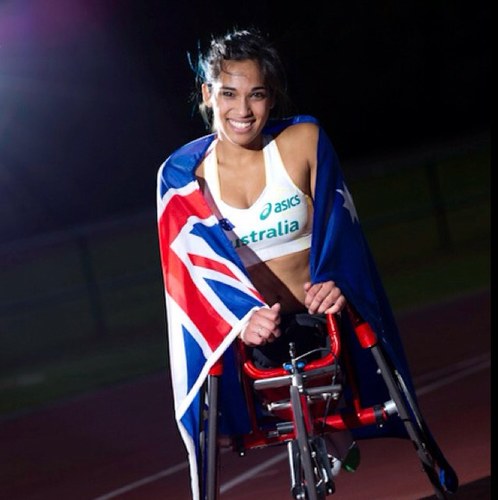
Madison (de Rozario)

Madison de Rozario became paralysed by a rare neurological condition at the age of 3 and is now 18. She won silver in 2008 as the youngest Paralympian on the team, and was also at the London Games. Madison is a surname meaning “son of Matthew“, although in some rare cases it may be derived from “son of Maddy”, with Maddy being a pet form of Maud. It’s been used as a personal name since the 18th century, and seems to have been given almost exclusively to boys in the beginning. Although certainly used in England, it was much more common in America, where it may often have been given in honour of James Madison, the fourth president of the United States (I only found one man named Madison in Australian records). Madison is famous in baby name circles for only becoming popular, and only becoming common for girls, after the movie Splash in 1984. This romantic fantasy, a rewrite of The Little Mermaid, stars Daryl Hannah as the mermaid, who chooses her “human name” from a street sign for Madison Avenue in New York City, named after the former president – although Tom Hanks’ character tells her this isn’t a “real name”. Madison was #606 for the 1980s, with about three born each year. It then absolutely screeched up the charts to make #52 for the 1990s, and peaked in the early 2000s at #22. It sunk to #44 in 2010, then rose last year to make #41. It’s been a real success story, with its nickname Maddie fitting in with Madeline.

Priya (Cooper)

Priya Cooper was born with cerebral palsy, and spends most of her time in a wheelchair. She began swimming competitively while still at school, and is one of our greatest disabled swimmers, winning nine gold medals and breaking world records at the 1992, 1996 and 2000 Paralympics. She was twice team co-captain, and twice a flag-bearer at closing ceremonies. She has received many honours, and since retiring has become a spokesperson and fundraiser for several charities. Priya is an Indian girl’s name which means “dear, beloved” in Sanskrit. In Hindu legend, Priya was one of the daughters of King Daksha, a son of the god Brahma. The name is pronounced PREE-yuh, and has been rather a favourite in Australia for many years.

Siobhan (Paton)

Siobhan Paton is an intellectually disabled swimmer who holds thirteen world records, and won six gold medals at the 2000 Olympics. She was named Paralympian of the Year in 2000, and also received an Order of Australia. Siobhán is the Irish form of the Norman-French name Jehanne, a variant of Jeanne. There were several medieval queens named Siobhán. It is said that the twentieth century popularity of Siobhan owes a great deal to the actress Siobhán McKenna, who was born in Belfast. She was most famous as a stage actress, but also appeared in King of Kings (playing Mary), Of Human Bondage, and Dr Zhivago. Ms McKenna’s son, Donnacha O’Dea, was an Olympic swimmer for Ireland in 1968. Siobhan first charted in the 1950s, and during the 1960s was #571, which represents about one Siobhan a year. Use of the name increased sharply during the 1970s and ’80s, and it peaked in the 1990s at #211. It hasn’t charted since 2009, so this is another attractive name which has never made the Top 100. Pronunciation is an issue, because the usual Irish pronunciation is SHIV-on, but in Australia it’s usually said shi-VAWN.

Ursula (King)

Usula King was a swimmer who won a silver and two bronze at the 1984 Paralympics. The name Ursula means “little she-bear”, derived from the Latin ursa (which we know from constellations Ursa Major and Minor – the Great and Little Bears). According to legend, Saint Ursula was a Romano-British princess who was sent by her father to marry the pagan governor of Armorica (Brittany). Possibly to stall proceedings, she got all bridezilla and declared that before the wedding she must go all over Europe on a pilgrimage, taking an unbelievable 11 000 virgins with her as her handmaids. On their way to Cologne, they were besieged by Huns, who had a busy day beheading the lot of them. The story doesn’t fit with any known historic facts, and one theory is that Ursula is a Christianised form of the goddess Freya. However, Cologne has a magnificent basilica dedicated to St Ursula and her companions, and a little village in Wales also has a church in their honour, in the belief that Ursula was originally from Wales (in the legend, she is from the West Country). Because of the saint, the name came into use in medieval times, and got a little boost in the 20th century from beautiful Swedish actress Ursula Andress, who was the first Bond girl, in Dr No. It’s clunky by contemporary standards, but strangely alluring.

(Photo of Madison de Rozario from her Twitter account)

Saturday Historical Sibsets: The Siblings of the Sea-Born Babe

20 Saturday Oct 2012

Posted by A.O. in Sibsets in the News

≈ 8 Comments

Tags

Baby Names from Yesteryear, historical events, historical records, honouring, name combinations, names of ships, sibsets

This is a story I read on Baby Names from Yesteryear, and with Zeffy’s blessing, I have investigated some of the history behind it.

On March 21 1857, a baby was born on board a convict ship, two days after leaving England for Western Australia. He was named Alfred John Claris Wells – Alfred and John were family names, but Claris was in honour of the ship he was born on, the Clara. It seems that he went by the name Claris in everyday life.

Claris’ parents weren’t convicts. His father, Alexander Wells, was a pensioner guard employed to watch over the convicts on board ship. These guards tended to be recruited from the rural working class, and offered farmland in Australia as an inducement. The Wells family had been in villages around Sevenoaks in Kent since at least the 17th century, and Alexander’s branch of it had lived in the village of Leigh for several generations.

Claris’ mother was named Caroline Emily Minnor Goulding, and she married Alexander when she was in her early twenties, while he was in his early thirties.

The Clara arrived in Fremantle, Western Australia on July 3 1857 with its one very small extra passenger. The Wells family was offered farmland in Newcastle (now called Toodyay), one of the first inland towns to be established in Western Australia. It’s in the Avon Valley about 85 km from Perth, and today at least, Toodyay is a very pleasant country town, an easy drive from the city and popular for weekends away. Back then, it would been just a village, and farming difficult, even with free convict labour offered as part of the deal.

Claris wasn’t the only child of Alexander and Emily. His siblings were:

Martha (1852-1936) She was born in Kent, and was five years old when she arrived in Australia. She was living in Fremantle when she died at a ripe old age.

Alexander Thomas (b. 1855) He was born in Kent, and seems to have died before the family came to Australia.

Amelia Ann (b.1858-?) Amelia is missing from some family records, which makes me suspect she died during early childhood.

Ellen – known as Eliza (1859-1937) Eliza married a local man named Alfred Hutchings when she was 20, and had twelve children. The Hutchings moved to Northam, a town very close to Toodyay.

Emily (b. 1862-?)

Alexander (1864-?)

Alexander Wells died in 1863 aged 45, leaving his widow Caroline in a fairly desperate situation. She was 34 years old, had at least three children still living, and must have been pregnant.

In 1864 she married a convict called Esau Wetherall, a name that wouldn’t look out of place in a novel by Thomas Hardy. Esau was born in London, and had lived in Somerset. At the age of 35, he was transported to Fremantle on the Scindian, sentenced to fifteen years for horse-stealing. He was in the first group of convicts to arrive in Western Australia, and because they weren’t really prepared for convicts at the time, they only sent those who had a record of good behaviour. While in Toodyay, he was accused of stealing a sheep and brought to trial, but was acquitted. At the time of his marriage to Caroline, he was 49.

Caroline and Esau had only one child together, a baby girl who was stillborn in 1865. This was Claris’ half-sister.

Esau had been married before – his first wife was Mary Mallaby, and they were married in Toodyay the same year that the Wells family had arrived, in 1857, just after Esau was granted his ticket of leave. Mary died in 1864, so like Caroline, Esau had been left widowed and no doubt in equally desperate circumstances.

Esau and Mary had five children together, and these were Claris’ step-siblings.

Sarah (1858-1874) Sarah died when she was only 16 years old.

Mary Ann (b. 1859-1941) Mary married a man named Donald Lee when she was 18, and had fourteen children. She lived her whole life in Toodyay.

Ellen – known as Elizabeth (1861-1941) Elizabeth married a man named Thomas McKnoe when she was 17 and had eleven children. She was living in Perth when she died.

Twins Edwin and Frederick (1864-1864) Mary left behind her newborn twins when she died, and it’s not surprising they only lived for a few months. It’s very possible that Mary died giving birth to the twins, or shortly after the birth.

So Claris Wells had six siblings, one half-sister and five step-siblings.

Esau Wetherall died in 1889, at the age of 73. Although he has numerous descendants living today, for many years the family was deeply ashamed of having convict ancestry, and he wasn’t talked about or even mentioned.

Caroline Wetherall died in 1905 at the age of 75. However, the Wells family continued through her son Claris, and next time I will follow his family line through all the generations.

NOTE: Passenger list for the Clara is here.

(Picture is of a painting of Fremantle Harbour in the 19th century, close to where the Clara would have docked when she arrived)

Rafferty Violet and Kalani Hugh: Birth Announcements from Adelaide (September)

19 Friday Oct 2012

Posted by A.O. in Birth Announcements

≈ 9 Comments

Tags

name combinations, sibsets, twinsets


Twins

Liam Nicholas and Riley Brandon

Patrick Raymond and Jonathan Richard


Girls

Ariarn Tundi (Kyran)

Aster Poppy (Tabitha)

Brigit Phyllis (Cameron, Regan, Gabrielle)

Briony Maeve (Aston)

Eilidh Amelia

Elizabeth Clara Rose

Harriet Isla (Isobel)

Iris Sophie Pearl (Levi, Ezra)

Layla Peri (Jeremy, Samuel)

Liana Brookleyn-Macy (Elle)

Lillian Mackenzie (Cadence)

Lotus Pearl (Elijah, Ruby, Noah)

Maryanne Joy (Aiden)

Matilda Clare May

Rafferty Violet (Lila, Joe)

Satine Chantel Louise

Scarlett Valentine (Eden)

Shakira Elise (Jayden)

Tatum Piper (Ryder)

Telia Kate


Boys

Anton Lee Thomas

Dashiell Baird

Edison Murray (Maya, Angus)

Ethan Allan

Hartley Matthew (Macy, Chase)

Henry Edwin John (Imogen, Beatrice)

Hugh Aloysius (Ruby, Patrick)

Jensen Ryder

Kalani Hugh

Leo Vasilios Francis (Christiana)

Malachy David (Bridie, William)

Mateo Mario (Massi)

Nicholas Ramsay

Oscar Lawrence Kingsley (Isabella)

Rawdon William

Rory Andreas (Imani)

Seth Adrian Jarryd (Kane, Dylan, Trae, Ethan)

Sid Isaac (Sheree, Ty, Sam)

Sonny Joel (Jake)

Zis (Chloe)

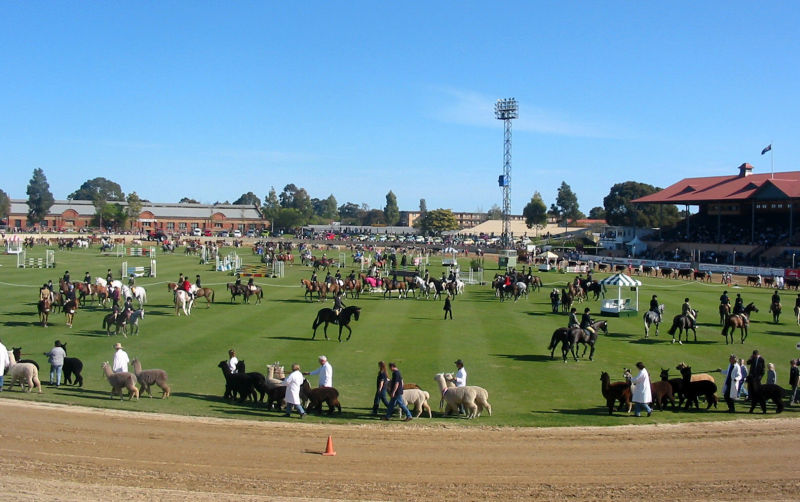
(Picture is of the Adelaide Royal Show, held in September; photo from There’s Nothing Like Australia)

Memphis Paul: Birth Announcements from Brisbane and Darwin (August/September)

19 Friday Oct 2012

Posted by A.O. in Birth Announcements

≈ 1 Comment

Tags

name combinations, sibsets


Girls

Abby Elizabeth (Joshua)

Calista Eloise May (Aiden, Zachariah)

Cara Estelle

Chloe Rose (Camille)

Emma Grace (Jack, Charlotte)

Holly Jane (Rhys, Liam)

Jenna Jean (Keeley, Lachlan)

Jessica Ann (Jack)

Matilda Dolly

Scarlet Mary (Will)


Boys

Ben Stephen

Edison Clarke (Stella, Isla)

Harrison Dominic (Georgia)

Jameson Ronald

Joshua Samuel (Ethan, Hannah)

Leo Alfio (Mia, Eva)

Lochlann Reid (Sheridyn, Simon)

Louis George “Louie” (Will, Alexander)

Maxwell James Nigel (Blake, Olivia, Claudia)

Memphis Paul (Savannah)

(Picture is of trees lit up for the Darwin Festival; photo from the Au Review)

Celebrity Baby News: Jules and Anna Lund

18 Thursday Oct 2012

Posted by A.O. in Celebrity Baby News

≈ 2 Comments

Tags

celebrity baby names, celebrity sibsets

Radio host Jules Lund, and his wife Anna, welcomed their daughter Indigo Ellen earlier this week. Indigo Lund joins big sister Billie, aged 2.

Jules is co-host of the radio show Fifi and Jules on the Today Network, which he presents with Fifi Box. He was one of the presenters on Channel 9’s travel programme Getaway, but has recently quit to spend more time with his family. He is keen to pursue television projects with his radio partner, Fifi, who is contracted to Channel 7.

Anna (nee Dusek) and Jules were married in 2009, and honeymooned in Italy and Croatia.

(Photo of Jules and Anna from Zimbio)

Celebrity Baby News: Mitch Lewis and Sarah Collard

18 Thursday Oct 2012

Posted by A.O. in Celebrity Baby News

≈ 1 Comment

Tags

celebrity baby names

Sports presenter Mitch Lewis, and his fiancee Sarah Collard, welcomed their first child this morning and have named their son James Christopher. James Lewis was born at 12.29 am, and his birth was announced on radio and Twitter.

Mitch is the son of NRL legend Wally Lewis, and the older brother of actor Lincoln Lewis. They are both very excited, as they have become a grandfather and an uncle for the first time. Mitch is a presenter on Channel 9 Sports and Nova FM radio, and the host of Broncos Insider.

Sarah is a nurse, and expressed surprise on Twitter that the public might be interested in her new baby. I’m pretty sure many of them will be.

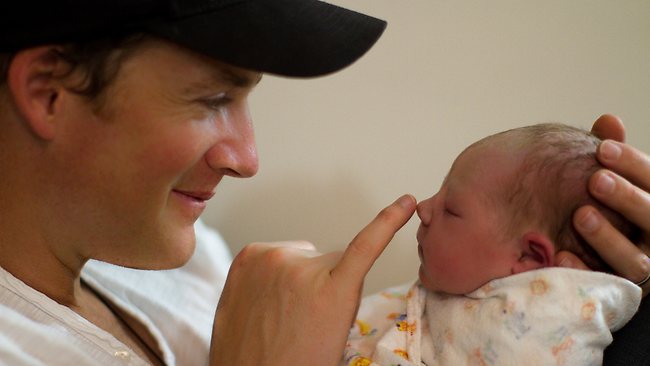
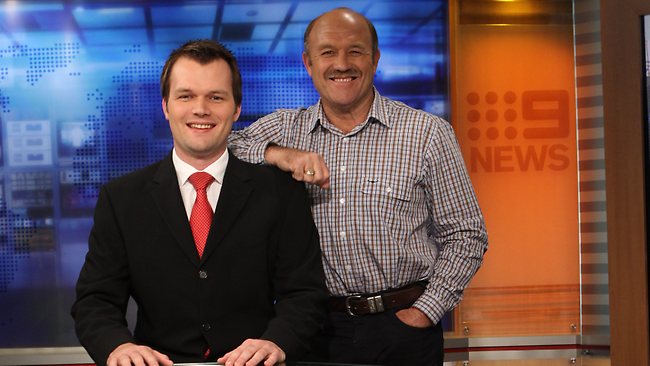
(Top photo shows Mitch with his father Wally; bottom photo shows Lincoln holding his nephew James)

Celebrity Baby News: Luke and Lauren Hodge

18 Thursday Oct 2012

Posted by A.O. in Celebrity Baby News

≈ Comments Off on Celebrity Baby News: Luke and Lauren Hodge

Tags

celebrity baby names, celebrity sibsets

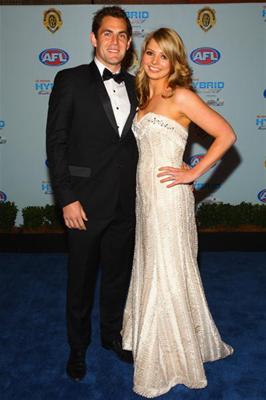
AFL star Luke Hodge, and his wife Lauren, welcomed their son Chase Brady on October 3. Chase Hodge was born at 12.15 pm weighing 3.9 kg (8lb 11oz), and joins big brother Cooper, aged 4. Luke is the captain of the Hawthorn Hawks, who made it to the Grand Final this year, but were narrowly beaten by the Sydney Swans. Lauren (nee Kirkman) and Luke were married in 2009.

(Photo from FiveAA website)

Celebrity Baby News: Leila McKinnon and David Gyngell

18 Thursday Oct 2012

Posted by A.O. in Celebrity Baby News

≈ 4 Comments

Tags

celebrity baby names, nicknames

497286-leila-mckinnonChannel 9 presenter Leila McKinnon, and her husband David Gyngell, welcomed their first child on October 17, and have named their son Edmund (who will be known as Ted). Ted Gyngell was born in the early hours of the morning at Prince of Wales Private Hospital in Randwick, weighing 3.01 kg (6 lb 10 oz), and 51 cm long.

Leila was born in Iran to an English mother and New Zealander father, and grew up in Queensland. She began her journalism career in 1993 at WIN Television, and joined the Channel Nine Network in 1995. Leila is a co-host on Weekend Today, and regularly fills in on Channel 9 News and A Current Affair. She and David were married in a beach ceremony at Byron Bay in 2004.

David is the son of Bruce Gyngell, the first man to appear on Australian television, and a second cousin of the comedian Kim Gyngell. David’s great-great grandfather did the fireworks for the wedding for Queen Victoria and Prince Albert, and his great-grandfather was the first cider-maker in Australia. David is also the best friend of James Packer, the former owner of Channel 9 (David and James first met at school, and their fathers were also best friends). David is in his second stint as CEO of Channel 9 after resigning in 2005, and relocating to Los Angeles. Ratings suffered during his absence, and he returned to the job in 2007. David was in crisis talks over debt negotiations for Channel 9 when he had to rush off to hospital to be by his wife’s side.

UPDATE: Leila reveals that Ted is a nickname they gave their baby in the womb, even before they knew it was a boy, and they wanted a name which could have Ted as its short form. Leila always wanted an old name which dated from before the Norman Conquest, and says that sometimes they call their boy Edmund the Magnificent.

Famous Name: Peter

17 Wednesday Oct 2012

Posted by A.O. in Famous Names

≈ 5 Comments

Tags

Aramaic names, Biblical names, classic names, famous namesakes, fictional namesakes, French names, Greek names, name history, name meaning, name popularity, nicknames, Old French names, saints names, surname names

On October 11, Federal Parliament voted to apologise to Olympian Peter Norman for the treatment he received at the 1968 Mexico City Games. You may think that this apology was slightly overdue; its tardiness perhaps seems even more glaring when you learn Peter passed away on October 3 2006.

Peter Norman was a sprinter who was Australian champion in the 200 metres five times over. On October 16, he won the silver medal in the 200 metres at the 1968 Summer Olympics. His time of 20.06 seconds still stands as the Australian record, and would have won gold at the 1976, 1980 and 2000 Olympics. However, Peter is more famous for what happened during the medal ceremony.

The other medal winners were American athletes Tommie Smith (gold) and John Carlos (bronze), with Tommie setting a world record time of 19.83 seconds. At the medal ceremony, as Tommie and John faced the American flag and heard The Star Spangled Banner, they raised their fists in a Black Power salute, and bowed their heads, as part of a protest on behalf of the civil rights movement.

Peter knew what his fellow athletes were planning, because they told him just after the race, and asked him if he would stand in solidarity with them on behalf of the Olympic Project for Human Rights. They asked him if he believed in human rights, if he believed in God. Peter, who was a member of the Salvation Army, and vehemently opposed to racism, said, “I’ll stand with you”.

John expected Peter to look frightened at what was about to happen, instead he says, he saw only love in his eyes. It was Peter’s own idea to wear the OPHR badge, which he had seen a white American athlete wearing.

The fallout from The Salute affected all three of the athletes. Tommie and John were deemed to have broken the code that the Olympics must remain apolitical, and expelled from the Games. Back in America, they were criticised heavily in the media, abused by the public, and their families received death threats. The athletic establishment tended to ostracise them, and both faced some tough times.

In recent years there have been some efforts to recognise them: a statue was erected in their honour at San Jose State University, where they were students, in 2005, and both received Arthur Ashe Courage Awards in 2008. (Peter asked not to have his statue at San Jose, instead requesting that his place be left empty so that any person could stand there and represent him).

In 1968, Peter was reprimanded by the Australian Olympic Committee, and vilified by the Australian press. Despite qualifying for the 1972 Olympics, he was not selected, and in fact this is the only Games in which no Australian sprinters participated. This is seen as the death knell of his athletic career. His name is omitted from Australian books and lists which compile the “100 Greatest Athletes” or “100 Greatest Sporting Moments”.

The AOC dispute this version of events vigorously. According to them, Peter received nothing more than a fatherly chat and some free tickets to a hockey game after The Salute incident. They claim that despite qualifying in 1972, and running a time faster than the eventual gold medal winner that year, he was nursing an undeclared injury which prevented his selection.

Even as late as 2000, Peter was not asked to take part in the Sydney Olympics – a major international sporting event in which practically every other former Australian athlete was invited to play some sort of role. I’m not sure what excuse the AOC has for that. Maybe his invitation got lost in the post.

Tommie, John and Peter were all martyrs for a cause, and to supporters of the civil rights movement, they were also heroes. Sadly for Peter, in his own country his gesture against racial inequality went unrecognised during his lifetime. All three men remained life-long friends, and both Tommie and John were pall-bearers at Peter’s funeral.

The US Track and Field Association named the day of his funeral, October 9 2006, as Peter Norman Day. Shamefully, Australian sporting bodies have never done anything to acknowledge him, and refused to endorse the parliamentary apology.

This year, John Carlos said, “There’s no-one in the nation of Australia that should be honoured, recognised, appreciated more than Peter Norman for his humanitarian concerns, his character, his strength and his willingness to be a sacrificial lamb for justice”.

Australia is very ready, sometimes perhaps too ready, to celebrate physical courage. It seems we are very slow to reward moral courage, and Peter Norman remains one of our forgotten heroes.

The name Peter is derived from the Greek Petros, meaning “rock”, a translation of the Aramaic Cephas in the New Testament. Peter is one of the most famous of the New Testament names, as it is the name of the most prominent apostle. It’s actually a nickname or code name given to him by Jesus, because his real name was Simon (it seems very much like calling him Rocky).

Famously, Jesus puns by addressing Peter, and saying “On this rock I build my church”, to indicate that he was giving Peter the role of leading the early Christian church. Catholics see Peter as the first pope for this reason, and the impressive St Peter’s Basilica in Vatican City was built in his honour. According to tradition, Peter was martyred in Rome by being crucified upside-down.

It is entirely due to Peter the Apostle that the name Peter spread throughout the Christian world. It was introduced to England by the Normans in the Old French form Piers; I bet you can guess that this is the basis for the French name Pierre, but I wonder if you also realised it was the origin of the English name and surname Pierce? By the 15th century, the modern day spelling of Peter was established.

Like Jack, Peter is a name which we all seem to have grown up with, reciting the tongue twister about Peter Piper who picked a peck of pickled peppers, or the nursery rhyme about Peter the Pumpkin Eater who had a wife and couldn’t keep her. We were told the stories of Peter Rabbit and Peter Pan, listened to Peter and Wolf, and may have known Peter Pevensie from The Lion, the Witch and the Wardrobe, Peter the goat-herd in Heidi, or Peter Parker from the Spiderman comics. Because of this, there is something very cosy and comforting about the name Peter to me.

Peter is a classic name in Australia which has never left the charts. It was #64 in the 1900s, and peaked as the #1 name of the 1950s. It only left the Top 100 in 2009, and is currently stable at #125. Peter isn’t an unusual name today, and it was very popular when Peter Norman was born, in 1942.

Sometimes reading name blogs I am uneasy that we (and I am very much including myself here) are often too eager to suggest an unexpected name over one that is more common. The story of Peter Norman teaches me that someone with an ordinary name may still do something extraordinary, and our name does not need to stand out in order for us to stand up for what we believe. It’s worth keeping in mind.

NOTE: Some information from Salute (2008), a critically acclaimed documentary by Matt Norman, Peter’s nephew, and highly recommended viewing. Matt is currently working on a dramatised version called 1968.

The Geography of Sydney Baby Names

16 Tuesday Oct 2012

Posted by A.O. in Names in the News

≈ 6 Comments

Tags

classic names, famous namesakes, modern classic names, popular names, retro names, surnames names

A news story I quoted on the weekend said that when it comes to the most popular names, each region of New South Wales tended to be quite similar. This story, on the other hand, says that there are subtle differences between the names chosen in different areas.

At Westmead Hospital in Sydney’s west, the most popular names are Joshua, Ethan and Lucas for boys, and Olivia, Mia and Chloe for girls.

At the Royal Hospital in Randwick in the eastern suburbs, the most popular names for boys are William, Alexander and James, and for girls, Isabella, Sophie and Grace.

On the upper-class north shore, boys were most likely to be called Oliver, Thomas or Jack, and girls Chloe, Charlotte or Emily.

In the southern suburban areas of Sutherland Shire and St. George, the most popular boy’s names are Lucas, Benjamin and Christian, and the most popular girls Olivia, Amelia and Zoe. (Overseas readers may be interested to know that the Australian equivalent of Jersey Shore is set in Sutherland Shire).

The article says that this means that in the west, they choose “Hollywood movie star” names, while in the east, they opt for more “conservative, traditional or Biblical” names. I find this quite confusing, because Joshua, Ethan and Chloe are names from the Bible, and from the other group, only James is Biblical.

And whether a name is “Hollywood” seems rather subjective, because of course there is Will Smith, Alexander Skarsgard, James Dean, Isabella Rosselini, Sophie Monk and Grace Kelly! I couldn’t actually see why the west was more “Hollywood” than the east.

The ones from the eastern suburbs hospital do tend to be names which have charted since 1900, and the ones from the west are all modern classics. So perhaps we can say, very vaguely and generally, that people in more affluent areas of Sydney are more likely to prefer classic and retro names, while working-class areas prefer modern classics.

However, the working-class choice was Sophia, which is a retro name charting since 1900, while affluent choice Sophie is a modern classic, so it’s not cut-and-dried by any means. Both areas liked James, Chloe and Isabella, so there are several name choices which apparently suit all classes.

Away from Sydney, on the Central Coast and in Newcastle, the popular boys were Cooper, Noah, Riley, Lachlan and Tyler, and the most common girls Ruby, Sienna, Ava and Ella. Interestingly, if you live somewhere regional and coastal, you do seem more likely to call your son Cooper or Riley, and the addition of Tyler makes it seem this is where surnames-as-first-names rule.

Rather typically, neither of the articles from Sydney bothers to look at other regions of New South Wales or even acknowledges they exist. I would have been very interested to see the popular names from other regional centres.

← Older posts
Newer posts →

Enter your email address to follow this blog

Categories

Archives

Recent Comments

A.O.'s avatarwaltzingmorethanmati… on Zarah Zaynab and Wolfgang…
Madelyn's avatarMadelyn on Zarah Zaynab and Wolfgang…
JD's avatardrperegrine on Can Phoebe Complete This …
A.O.'s avatarwaltzingmorethanmati… on Rua and Rhoa
redrover23's avatarredrover23 on Rua and Rhoa

Blogroll

  • Appellation Mountain
  • Baby Name Pondering
  • Babynamelover's Blog
  • British Baby Names
  • Clare's Name News
  • For Real Baby Names
  • Geek Baby Names
  • Name Candy
  • Nameberry
  • Nancy's Baby Names
  • Ren's Baby Name Blog
  • Sancta Nomina
  • Swistle: Baby Names
  • The Art of Naming
  • The Baby Name Wizard
  • The Beauty of Names
  • Tulip By Any Name

RSS Feed

  • RSS - Posts

RSS Posts

  • Celebrity Baby News: Melanie Vallejo and Matt Kingston
  • Names from the TV Show “Cleverman”
  • Can Phoebe Complete This Sibset?
  • Zarah Zaynab and Wolfgang Winter
  • Baby, How Did You Get That Name?
  • Celebrity Baby News: Media Babies
  • Celebrity Baby News: Adelaide Crows Babies
  • Celebrity Baby News: Chris and Rebecca Judd
  • Names at Work: Name News From the World of Business and Employment
  • Celebrity Baby News: Sporting Round Up

Currently Popular

  • Celebrity Baby News: Mick and Angie Molloy
  • Rare Boys Names From the 1950s
  • Girls Names of Australian Aboriginal Origin
  • The Top 100 Names of the 1930s in New South Wales
  • Celebrity Baby News: Jason Morrison and Heidi Tiltins

Tags

celebrity baby names celebrity sibsets english names famous namesakes fictional namesakes honouring locational names middle names name combinations name history name meaning name popularity name trends nicknames popular names saints names sibsets surname names twin sets unisex names

Blog at WordPress.com.

Privacy & Cookies: This site uses cookies. By continuing to use this website, you agree to their use.
To find out more, including how to control cookies, see here: Cookie Policy
  • Subscribe Subscribed
    • Waltzing More Than Matilda
    • Join 517 other subscribers
    • Already have a WordPress.com account? Log in now.
    • Waltzing More Than Matilda
    • Subscribe Subscribed
    • Sign up
    • Log in
    • Report this content
    • View site in Reader
    • Manage subscriptions
    • Collapse this bar

Loading Comments...