• About
  • Best Baby Names
  • Celebrity Baby Names
  • Celebrity Baby Names – Current
  • Celebrity Baby Names – Past
  • Featured Boys Names
  • Featured Girls Names
  • Featured Unisex Names
  • Links to Name Data
  • Waltzing on the Web

Waltzing More Than Matilda

~ Names with an Australian Bias of Democratic Temper

Waltzing More Than Matilda

Category Archives: Famous Names

Famous Name: George Alexander Louis

31 Wednesday Jul 2013

Posted by A.O. in Famous Names

≈ 16 Comments

Tags

Biblical names, classic names, epithets, famous namesakes, French names, German names, germanic names, Greek names, honouring, middle names, name combinations, name history, name meaning, name popularity, royal names, saints names, sturdy classics, underused classics
18388_662259277118346_1655646202_n

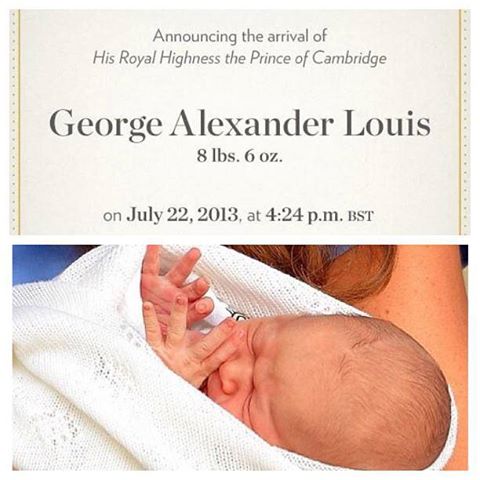
The Prince of Cambridge was born more than a week ago, and he is still big news around the globe. As future kings are born only once in a generation or so, this makes Prince George the most famous baby in the world, and it seems like an opportune time to take a look at his names.

George is derived from the Greek name Georgios, translated as “farmer”. Because it literally means “worker of the earth”, it specifically refers to the cultivation of crops.

The name George became known throughout Europe because of Saint George. According to tradition, he was a 3rd century Roman soldier from a noble Christian Greek family in Palestine. His military career went swimmingly until he was asked to sacrifice to the Roman gods, and when he refused, he was tortured and beheaded. He is venerated by Christians as a martyr.

Much later, the legend of Saint George saving a princess from a dragon was tacked on to the story. This medieval legend came from the Eastern church, and seems to be an attempt to Christianise pagan myths such as Perseus. It was brought to Europe by the Crusaders, and became a medieval romance. Saint George is the patron saint of England, and his flag, a red cross on a white background, forms part of the Union Jack.

Despite Saint George being the patron of England, his name did not become particularly common there until George I, who was German-born, took the throne of Great Britain in 1714. The name became a traditional one in the royal family, and there have been six British kings named George; the most recent the father of the present queen; he was born Albert Frederick Arthur George, and reigned under his last middle name.

George is a common name amongst many of the royal houses of Europe, and Prince Philip’s grandfather was George I of Greece, with Prince Charles having George as his last middle name. There has only been one other Prince of Cambridge, and the first one was also named George.

The name George is a sturdy classic in Australia which has never left the Top 100. It was at its peak in the 1900s and 1910s at #4, and has never been lower than #72, which it reached in the early 2000s. Currently it is #71 nationally, #64 in New South Wales,#69 in Victoria, #79 in Queensland, #48 in Tasmania and #50 in the Australian Capital Territory.

Alexander is the Romanised form of the Greek name Alexandros, translated as “defender of men, protector of men”. It first turns up in Greek mythology as the epithet of Paris, prince of Troy, who gained it while only a child, rescuing cattle from thieves while working as a cow-herd. There was a slightly earlier real life ruler of Troy named Alexander, and it’s possible the fictional Paris ended up with his name.

Just as George is a traditional name in the British royal family, Alexander was traditional in the Macedonian royal family, and the man who made the name famous for all time was Alexander III of Macedon, otherwise known as Alexander the Great. A young man of boundless ambition, Alexander conquered much of the known world, including Persia and Egypt, and invaded India before being turned back by his own men, who were getting pretty sick of his let’s-conquer-the-whole-world attitude.

Alexander was a history-maker, a great commander who never lost a battle, a role model for the empire-building Romans, and whose military strategy is still used today. He was a figure of romance, with legends being written about him even in his own lifetime. And he took power while still a teenager, dying in his early thirties, so he is always remembered as youthful, vaunting and energetic.

The name Alexander, and its many variants, spread throughout the world. There are early Christians named Alexander mentioned in the New Testament, several saints named Alexander, and many popes.

Alexander I of Scotland was named after Pope Alexander II, who gave his blessing for the Norman Conquest, and there were two more Alexanders after him in the Scottish royal family. There has never been an English king named Alexander, but the name isn’t uncommon in the royal family, and it’s especially seen use as a middle name.

In Australia, Alexander is another sturdy classic which has never left the Top 100. It was #29 in the 1900s, and sunk to its lowest level in the 1950s and ’60s at #89. It is currently enjoying some of its highest levels of popularity, being #16 nationally, #14 in New South Wales, #9 in Victoria, #20 in Queensland, #21 in South Australia, #21 in Western Australia, #26 in Tasmania and #17 in the Australian Capital Territory.

Louis is the French form of the old Germanic name Chlodowech, Latinised as Clovis, and whose modern German form is Ludwig. It means “famous warrior”. The 5th century Clovis I was the first king of the Franks to unite all the Frankish tribes under one ruler, so that they were now ruled by a single king, with kingship descending onto his heirs. He was also the first Christian ruler of Gaul.

Having created the Frankish monarchy, it’s little wonder that his name was such a big hit with French rulers, with 19 kings of France bearing the name Louis (the last one only managed a few minutes before he abdicated). The first one was Louis the Pious, son of Charlemagne, who was not only king of France but also co-ruler of the Holy Roman Empire – Louis was a traditional name amongst the Emperors as well.

Louis IX, or Saint Louis, is the only French monarch to be canonised, and Louis XIV was known as Louis the Great, or the Sun King, one of the most powerful monarchs to ever rule France. It all went wrong for Louis XVI, who was executed during the French Revolution. The other Louis the Somethings were kings in name only, as the throne had been abolished and France was no longer a monarchy.

Although so strongly associated with the French crown, Louis has been well-used as a middle name in the British royal family – in fact George I’s full name was Georg Ludwig, or George Louis. Louis is the final middle name of Prince Edward, who may have gained it from one of his godfathers, Louis, Prince of Hesse and Rhine, and Prince William, who is said to bear it in honour of Louis, Lord Mountbatten, a mentor to Prince Charles.

Louis has several pronunciations, for in French it is said loo-EE, and in English it can either be pronounced LOO-ee or LOO-is. The royal family use the LOO-ee pronunciation. Somebody recently wrote into the blog, worrying that if she called her son Louis, people might say it LOO-is by mistake, which doesn’t seem unlikely.

The name Louis is an underused classic in Australia which has never left the charts, yet never become popular. It was #101 for the 1900s, and reached its lowest point in the 1970s at #290. Since then it has continued climbing, and is currently #113 and still going strong.

George, Alexander and Louis are excellent names for a king-to-be, and great names for any boy. All classics, these are names which have stood the test of time, and been borne by men who were not just part of history, but changed history. They are names of kings and warriors and saints, defenders of the realm, and those who sought new worlds to conquer. Yet they have been borne by so many ordinary people as well that no particular expectations come with them.

These are names perfect for a prince – are any of them perfect for your little prince?

POLL RESULTS: George received an approval rating of 66% , Alexander of 88%, and Louis of 69%.

(Photo of Prince George from Facebook)

Famous Name: Julia

03 Wednesday Jul 2013

Posted by A.O. in Famous Names

≈ 5 Comments

Tags

Biblical names, classic names, famous namesakes, Latin names, mythological names, name history, name meaning, name popularity, names of months, Old Latin names, Roman names, saints names, Shakespearean names, surname names

349237-julia-gillardJulia Gillard, who became Australia’s first female prime minister in 2010, is our prime minister no longer. Just as she became prime minister by ousting Kevin Rudd, so she was deposed in her turn when Kevin staged his long-threatened comeback and was reinstated.

Her name deserves to be covered as a “famous name” because she made Australian history by dint of her sex. As well as being the first woman prime minister, she is the first Australian PM to never be married; she is in a domestic relationship with her partner, Tim Mathieson. She is the first prime minister since Billy Hughes (1915-23) to be born overseas, because she is originally from Wales; Welsh politician Aneurin Bevan is one of her political heroes.

Much has been made of the fact that Ms Gillard is childless by choice, and an atheist, but that isn’t too unusual for an Australian prime minister. Stanley Bruce, James Scullin, Ben Chifley and John McEwen didn’t have children either, and Gough Whitlam, John Curtin, John Gorton and Bob Hawke all identified as either atheists or agnostics. She isn’t even the first redheaded prime minister – James Scullin had red hair.

Kevin Rudd also made history by returning as prime minister, because he is the first to do so since Robert Menzies in 1949, and is only the second Labor prime minister to ever do so – Andrew Fisher was the last, in 1914.

Even for those who do not agree with Julia Gillard’s politics or policies, it is admirable how hard she has worked, and what she has managed to achieve. Operating from a minority government which was tipped to do very little, she managed to get almost 500 pieces of legislation through parliament during her time in office, requiring great diplomacy and bipartisan support. (Here’s another history factoid: the last hung parliament was in 1940).

Throughout her term in office, Julia Gillard was often pilloried and treated vilely by opposition supporters. She proved to be extremely courageous and tough in the face of it, and always remained graceful under  fire. Unfortunately, her strength and dignity was probably misread by the electorate as coldness and formality, and her government failed to sell its many successes to the public.

Nevertheless, Julia Gillard has left an impressive legacy behind, including a model for other women to reach for high political office in Australia. A pity her opponents have made it unlikely any of them will want it.

The Iulia or Julia was one of the most ancient and noble families of ancient Rome, and their most famous member is Gaius Julius Caesar, the dictator who ruled the Roman Republic and helped bring about the Roman Empire. Julius Caesar gave his name to July, which makes Julia a suitable name to cover this month.

The Julii came from one of the leading houses of the Alban Hills near Rome, and gained their name from a mythical ancestor named Iulus. When it became fashionable in Rome to claim a divine origin for your noble family, the Julii decided that they were descended from Ascanius, the son of Aeneas, who according to legend founded the ancient city of Alba Longa. Aeneas was the son of a prince named Anchises, from a kingdon near Troy, and the goddess Venus. To make things easier, their ancestor Iulus was identified as being the same person as Ascanius.

The meaning of Iulus can’t be known for sure, due to its great antiquity, but it is possibly related to the name of the god Jupiter, identified as meaning “O father sky-god” in Old Latin. On the top of Monte Cavo, the dominant peak of the Alban Hills, was a very ancient shrine to Jupiter, suggesting that he had been their most important deity since time immemorial.

There are several famous women named Julia who were members of the Julia family. One was the mother of Mark Antony, another the aunt of Julius Caesar, while Julius Caesar had two older sisters named Julia, and also called his only daughter Julia, a lady renowned for great beauty and virtue.

The name Julia wasn’t uncommon in the Roman Empire, and there were many first century queens and princesses bearing the name. Saint Paul mentions an early Christian named Julia living in Rome, and there are at least two saints named Julia, who were martyrs. Julia is a character in William Shakespeare’s Two Gentlemen of Verona, another of his cross-dressing girls, and this time with a very fickle lover.

Julia is a classic name in Australia, which has never left the charts. It was #119 in the 1900s, and got as low as #205 in the 1920s before rising. It reached the top 100 in 1995 at #99, and peaked in 2000 at #64 before suddenly dropping out of the Top 100 the following year.

Since then, it has been on the decline (with a small upward blip in 2010, when Julia Gillard became the first female Prime Minister), and is currently #211, the lowest point it has ever reached. It is #153 in Victoria, the state where Julia Gillard launched her political career, and in Queensland, Mr Rudd’s home state, there are fewer babies called Julia than Kevin.

Politics rarely seems to do baby names any favours, and the name Julia appears to be rapidly losing popularity. Yet it is a classic which has never been out of the 200s, so it doesn’t seem dated. Simple and elegant, Julia travels well internationally, and on the right person, this can be a jewel of a name.

POLL RESULT: Julia received an approval rating of 72%. People saw the name Julia as classy and elegant (34%), and simple and understated (15%). However, 12% thought it was frumpy and middle-aged. 2% of people were put off the name because of Julia Gillard.

(Photo of Julia Gillard from news.com.au)

Famous Name: Charlotte

19 Wednesday Jun 2013

Posted by A.O. in Famous Names

≈ 9 Comments

Tags

Banjo Paterson, birth notices, Elisabeth Wilborn, famous namesakes, fictional namesakes, food names, French names, germanic names, locational names, name history, name meaning, name popularity, names from movies, names from songs, names from television, names of bands, names of ships, nicknames, popular names, retro names, royal names, The Man from Snowy River, vintage names

Charlotte-Pass-NSW-AustraliaThe Winter Solstice is just a couple of days away, and the weather has been noticeably chillier in most places for about a month. I like lots of things about winter, but find I have to keep reminding myself of them as the weather gets colder. To convince myself it wasn’t so bad, I looked up the coldest temperature ever recorded in Australia, and found it was minus 23.4 degrees Celsius (around minus 10 Fahrenheit), on June 29 1994, at Charlotte Pass in New South Wales. That made today seem more bearable.

Charlotte Pass is in the Snowy Mountains, and nearby Charlotte Pass Village is the highest permanent settlement in Australia at 1760 m (5777 feet). It is in this region you will find the country that Banjo Paterson wrote about in The Man from Snowy River, although you are far more likely to be hurtling down a ski slope than mooning over poetry here, because Charlotte Pass is Australia’s oldest and snowiest ski resort. It can snow at any time of year, and snow may lie on the ground for days, even in the middle of summer. The pass and village are named after Charlotte Adams, who became the first European woman to climb Mount Kosciuszko in 1881.

Charlotte is a feminine form of Charles; I think technically it’s the feminine form of Charlot, a French short form of Charles (it ends in an -oh sound, like Carlo). Charles is derived from a Germanic name meaning “man”, and it is something of a puzzler whether Charlotte should be translated as meaning the same thing, or does a feminine ending on the name turn it into its opposite, so that it now means “woman”? Is a man-ette a woman, I wonder? I’m not so sure (it doesn’t seem at all flattering to women, if so), but I will leave you to figure this gender confusion out for yourselves, dear readers.

Charlotte has been commonly used amongst European royalty; one was Charlotte of Savoy, who married Louis XI of France and was the mother of Charles VIII. The name became popularised in Britain in the 18th century because of Charlotte of Mecklenberg-Strelitz, who married George III, and whose daughter was named Charlotte after her. George III’s son, George IV, had only one legitimate child who was named Charlotte, and she died young, deeply mourned by the British public. Since then, the British royal family hasn’t seemed as keen on this name for its heirs to the throne.

Princess Charlotte Bay in far north Queensland is named after this unfortunate royal, and another Australian connection is that one of the First Fleet ships was named Charlotte. Rebel convict Mary Bryant named her daughter Charlotte after the ship she came here on. The Charlotte was later lost in the Canadian Arctic, and it recently had a fictional resurrection in the adventure film National Treasure, where the first clue to the treasure is found on the Charlotte.

Famous Australians named Charlotte include Charlotte Barton, who wrote the first children’s book to be published in Australia. Charlotte “Lottie” Leal and Charlotte Austin were both community leaders and benefactors, while Charlotte Sargent was a pastry-cook and co-founder of Sargent’s Pies. Charlotte “Lottie” Lyell was Australia’s first film star, and a pioneering film-maker.

Another exciting namesake is Charlotte Badger, a convict regarded as Australia’s first female pirate. She was a member of the notorious crew who commandeered the Venus and took it to New Zealand. The bawdy drinking song, The Good Ship Venus, references this historical event, and also refers to Charlotte … born and bred a harlot. Because of this, it is often surmised that Charlotte Badger is the original “Charlotte the Harlot“. This connection to Charlotte makes some parents uneasy, but I would be chuffed to share my name with an infamous pirate.

Some other musical connections to the name are Perth band Charlotte’s Web, who named themselves after the classic children’s book about the touching friendship between a pig and a spider. Similarly, US band Good Charlotte named themselves after a children’s book about an unlucky little girl named Charlotte, whose positive qualities are not discovered for some time.

Good Charlotte’s Joel Madden is currently living in Australia and a judge on The Voice, so you’ve probably been hearing of them a lot. For some reason, the band name’s always reminds me of the thriller Hush … Hush, Sweet Charlotte, where Bette Davis plays the mentally fragile Charlotte Hollis.

Charlotte was #96 in the 1900s, and left the Top 100 in the 1910s. It disappeared from the charts completely in the 1940s and ’50s; it’s rather surprising that Charlotte isn’t strictly a classic, but rather a retro name in Australia.

In the 1960s, Charlotte made a return at #513, representing just 2 babies named Charlotte per year. The name climbed steeply during the 1980s, and by 1995 was Top 100 at #87. By 1998, Charlotte had made the Top 50 at #37. By 2001 it joined the Top 20 at #17, in 2003 it debuted in the Top 10 at #10, and in 2005 it made the Top 5 at #2. In a decade, it had risen 85 places.

Nationally, Charlotte is #1, and it is #2 in New South Wales, #2 in Victoria, #1 in Queensland, #1 in South Australia, #1 in Western Australia, #2 in Tasmania, #10 in the Northern Territory, and #1 in the Australian Capital Territory. From the birth notices I have seen so far this year, it looks likely to wear the crown again in 2013.

Charlotte is extremely popular, and no wonder. It’s pretty and elegant, yet sounds sensible and professional. It’s been worn by a tragic princess, a snowy mountain climber, a mystery ship, a coral bay, a genius spider, a pie maker, a film star, a deranged Southern belle and a saucy pirate wench.

That’s an impressive diversity of Charlottes, and I haven’t touched upon Charlotte Bronte, Charlotte Church, Charlotte Rampling, Charlotte Perkins Gilman, or the various Charlottes from Sex and the City, McLeod’s Daughters, All Saints, Rugrats or Revenge. I haven’t even mentioned the pudding named Charlotte, which has a fascinating history of its own.

Baby name style queen Elisabeth Wilborn picked Charlotte as her favourite Top 100 name, which is an impressive commendation. She can’t get past the popularity, but maybe you can, because despite its rapid ascent, Charlotte seems like a name that will wear well. The unisex nickname Charlie had a surge of popularity which now seems to be dying down, but vintage Lottie is the current fashionable short form.

POLL RESULT: Charlotte received an approval rating of 69%. 33% of people saw the name Charlotte as elegant and classy, but 23% thought it was much too popular.

(Photo shows the sun rising over Charlotte Pass)

Famous Name: Ruby

29 Wednesday May 2013

Posted by A.O. in Famous Names

≈ 7 Comments

Tags

english names, famous namesakes, fictional namesakes, gemstone names, Latin names, locational names, name history, name meaning, name popularity, names from television, nature names, nicknames, Norman-French names, Old Norse names, popular names, retro names, stage names, surname names, unisex names

6da7f547404dd4d8481fbb78ea9b6745Yesterday was the birthday of Ruby Payne-Scott, who was born 101 years ago in 1912, and a pioneer in radio physics and radio astronomy, as well as an advocate for women’s rights. Her extraordinary scientific mind became obvious early in life, when she entered the University of Sydney aged just 16, where she graduated with double first-class honours in mathematics and physics, and won the mathematics prize, as well as gaining a scholarship in physics. She was the third female graduate in physics at the university.

The Depression wasn’t a good time to be job-searching, but Ruby found work at the Cancer Research Institute where she completed her masters thesis on radiation. After a brief stint of teaching, she applied to Australian Wireless Amalgamated, a huge company that ran all the wireless services, and was the first woman they hired in a research capacity. AWA weren’t keen on hiring women at all, even as cleaners or typists, but they took Ruby on as librarian; she was soon a full-time research physicist.

During World War II, she was one of a group of young engineers from AWA hired by the government to conduct research on a secret new defensive weapons system – radar. She came into close contact with group leader Joseph Pawsey, and both became fascinated with reports of extra-terrestrial radio signals; they conducted the first experiment in radio astronomy in the southern hemisphere in 1944. After the war, she was one of a team at the CSIR (later the CSIRO) formed to survey “cosmic static” from astronomical objects. As a result, Australia became a global leader in radio astronomy, with Ruby the first female radio astronomer in the world.

Ruby was feisty and self-confident, very outspoken about her political views, which were that women should be equal to men, and scientific research should be independent. This got her labelled a communist, and “loud and unstable”, but she continued to press for equal treatment.

One thing she kept quiet was that she had married a telephone mechanic named Bill Hall in 1944, because until 1966, married women were expected to resign from the public service, and could not be employed on a permanent basis. When news of her marriage got out in 1950, she was reduced to temporary status and lost her pension and other benefits. She was forced to resign in 1951 when she became pregnant with her first child, and with no maternity leave or childcare, her brilliant career ended at the age of 39.

By the standards of her day, Ruby had it all. A highly-paid and rewarding scientific career, outside interests which included bushwalking and home renovation, a happy marriage, two children (who grew up to be a renowned mathematician and a distinguished artist), and, when her children were older, a return to teaching, where she was greatly admired by students who had no idea of her earlier achievements.

In her honour, the CSIRO initiated the Payne-Scott Awards to support researchers who need to take time off after the birth of a child. She was a bright star in her field, and because of Ruby and women like her, it’s possible to want equal pay, and the choice to work and have a family without being called a loud, unstable communist.

Ruby is a precious gemstone which is a variety of the mineral corundum, and comes in a range of red colours (when corundum is blue, it is called Sapphire). Its name comes from ruber, the Latin for “red”, and the most valuable rubies have the deepest red colour with a hint of blue. For centuries the main source of rubies was Myanmar (Burma), and today most rubies are either from Burma or Thailand. Rubies have always been especially valued in Asia, where they are seen as bringing good fortune.

Ruby has been used as a girl’s name since at least the 17th century, but was used as a pet form of Reuben since the Middle Ages. When Ruby was established as a girl’s name, it was sometimes given to boys, perhaps after the surname, which can come from the town of Roubaix in Normandy; its name means “stream on the plain”. Another possibility for the surname is that it is from the town of Roby in Lancashire, meaning “settlement by the boundary marker” in Old Norse. Ruby became popular for girls in the 19th century, when other gemstone names were fashionable.

Ruby was #21 in the 1900s, and had left the Top 100 by the 1930s. It disappeared from the charts between the 1950s and the 1970s, but came back in the 1980s at #548. One of the 1980s-born Rubys is model and TV host Ruby Rose, born Ruby Rose Lagenheim.

Ruby zoomed up the charts at such a dizzying speed that by 1996 it was already in the Top 100, debuting at #75. By 1998 it was in the Top 50 at #44, and by 2003 it was #20. Ruby made her Top 10 début in 2010, at #2, and last year she was #1. According to this article, Ruby is particularly popular on the Central Coast and in Newcastle.

Currently Ruby is #1 in New South Wales, #3 in Victoria, #3 in Queensland, #2 in South Australia, #3 in Western Australia, #1 in Tasmania, #4 in the Northern Territory and #2 in the Australian Capital Territory. Nationally Ruby is #2.

When a new baby was added to the Rafter family on popular family drama, Packed to the Rafters, she was named Ruby, and one of the babies portraying the character is also named Ruby. In fiction and real life, Ruby is big news.

Last year, Ruby was the name most commonly searched for to reach my blog, and no wonder people love it, because it’s a warm, vibrant name that is womanly yet spunky. However, it’s certainly had some detractors along the road to massive popularity.

It’s been called an old lady name, a hooker name, a trashy name … but the one that irritates me the most is when people refer to Ruby as a “dumb girl” name. I even saw one online pundit prophesy that your daughter would not get a degree if she was named Ruby!

Ruby Scott-Payne is proof that you can be named Ruby, and get as many degrees as you want. A Ruby can be brainy, bright, brilliant, strong, smart, sassy … and she can reach for the stars.

More information on Ruby Payne-Scott can be gained by reading her in-depth biography – Under the Radar: The First Woman in Radio Astronomy, Ruby Payne-Scott by William Miller Goss and Richard X. McGee

POLL RESULT: Ruby received an approval rating of 66%. People saw the name Ruby as cute and spunky (25%), but also thought it was too popular (20%). Nobody thought the name Ruby sounded like a “stripper name”.

(Picture is a detail from a poster featuring Ruby Payne-Scott designed by Amy Blue; by clicking on this link, you can “appreciate” the picture, or “like” it on Facebook etc)

Famous Name: Chelsea

22 Wednesday May 2013

Posted by A.O. in Famous Names

≈ 4 Comments

Tags

American names, celebrity baby names, english names, locational names, military events, modern classics, name history, name meaning, name popularity, names from songs, Old English names, popular names, UK name popularity, unisex names, US name popularity

article-2327391-19E40B7A000005DC-627_964x610Australian horticultural team, Flemings, have made history by taking out the top prize at the prestigious Chelsea Flower Show this year. It is the first time anyone from Australia has ever won Best in Show.

The winning garden is a landscape showing a gorge with giant boulders, ferns, wildflowers, and a billabong fed by a series of waterfalls. Overlooking it is a studio in the shape of a giant waratah flower, and the accompanying soundtrack is a chorus of Australian frogs. The garden promotes sustainability by collecting rainwater run-off and being powered by solar panels.

The judges were unanimous in voting for Flemings’ Trailfinders Australian Garden, designed by Phillip Johnson, and it was praised for its lush greenery, exuberant spirit and environmental message. Flemings will go out on a high, as this is their last year at Chelsea.

2013 is the centenary year of the Royal Horticultural Society Chelsea Flower Show (although the Society have been holding spring flower shows since the 1830s). More than a hundred thousand people visit the Chelsea Flower Show each year, with many chances of celebrity-spotting, and royal-spotting, as the royal family are patrons of the Show.

Chelsea is a district of West London which began as a Saxon village some miles from the town of London. The name of the area is from the Old English for “chalk wharf”, indicating a landing place for boats on the River Thames, and suggesting that it was used for the shipment of chalk.

The Manor of Chelsea is first mentioned in the Domesday Book as being a gift to the Abbot of Westminster during Anglo-Saxon times. King Henry VIII acquired the manor, and two of his wives lived at the manor house, as well as his daughter Elizabeth, destined to be Queen Elizabeth I. By the 17th century, it was a popular locale for the ultra-wealthy, and called “a village of palaces”, but still rural in nature, serving London as a market garden until the 19th century.

Chelsea gained a bohemian reputation in the 19th century, when it was an artist’s colony for painters such as Dante Gabriel Rossetti and poets such as Leigh Hunt. The area around around Cheyne Walk was the heart of the Pre-Raphaelite movement. Right into the first decades of the twentieth century, it was a place for radicals, artists, poets and bohemians.

Oscar Wilde began his career living in an artistic boarding house in Chelsea and feminist activist Sylvia Pankhurst had a house on Cheyne Walk. The occult Order of the Golden Dawn had members active in the area, including Pamela Colman Smith, who painted the designs for the Rider-Waite tarot cards.

However, it was the era of Swinging London in the 1960s and 1970s that really put Chelsea in the public consciousness as a cool place to be. This was centred around the King’s Road, where you could find groovy psychedelic fashion boutiques that catered to super-slim model Twiggy and the Rolling Stones.

The Chelsea Drugstore was a hip hangout that combined a pharmacy with a record store and a soda fountain; it features in the lyrics of Rolling Stones hit, You Can’t Always Get What You Want. In the 1970s, Vivienne Westwood and Malcolm McLaren ran their boutique SEX, which became a focal point for the punk movement; habitués of the store were formed by McLaren into punk band The Sex Pistols.

The hipness of Chelsea rapidly faded. Today it is inhabited by more investment bankers than avant-garde painters, you’re more likely to shop at The Gap in the King’s Road than a crazy boutique, and The Chelsea Drugstore has been replaced by a McDonalds.

Chelsea is first found as a personal name in the United States during the late 18th century, and was given equally to boys and girls. There is a city near Boston named Chelsea (named after the place in London), and the Battle of Chelsea Creek was fought here in 1775 during the American Revolution. American forces made one of their first captures of a British ship, which was a great boost to their morale. Perhaps Chelsea was originally given as a name in honour of this battle.

During the 19th century, Chelsea was much more commonly given to boys and in the first half of the 20th century, numbers of boys and girls named Chelsea became more even. It was in the 1960s, at the height of (London) Chelsea’s chicness, that the pendulum swung and Chelsea became overwhelmingly feminine.

In 1969, Chelsea made the US charts, debuting at #707. This was the same year that Joni Mitchell released Chelsea Morning – this time inspired by Chelsea in New York City, also named after Chelsea in London.

The song describes Mitchell’s room in Chelsea, with light filtering through a stained glass mobile. As the song has the phrase Wake up pretty baby in it, it probably helped cement Chelsea as feminine, although the name had been heading there anyway. Bill and Hillary Clinton named their daughter Chelsea after Mitchell’s song.

Chelsea first charted in Australia in the 1970s, debuting at #337. By the 1990s it was in the Top 100, where it remains to this day. Chelsea peaked in 2009 at #26, and since then has been gradually declining. Currently it is #34 in New South Wales, #47 in Victoria, #29 in Queensland, #42 in South Australia, #33 in Western Australia, #42 in Tasmania and #48 in the Australian Capital Territory, so it has yet to move out of the Top 50 in any state.

Australians have had an enduring affection for Chelsea unmatched by any other country, for it left the US Top 100 in 1999, and the UK Top 100 in 2005. (In both countries, it quickly fell, and is now around the #200 mark).

I’m not sure why, but for some reason, Chelsea seems to suit Australian conditions. Perhaps the -sea on the end subconsciously reminds us of the beach? There is a Chelsea in Australia too – a seaside suburb of Melbourne which does happen to have a beach.

Like the district of London, the name Chelsea has moved firmly into the mainstream and become a modern classic. It’s a simple, friendly and unpretentious choice which isn’t frilly or fussy.

POLL RESULT: Chelsea received an approval rating of 41%. People saw Chelsea as downmarket (21%), but also pretty or cute (15%). 13% of people could not shake the association with Chelsea Football Club and/or Chelsea buns. Only one person thought Chelsea could still be used as a boys name.

(Picture shows the winning garden at the Chelsea Flower Show; photo from The Daily Mail)

Famous Names: Asher and Hamish

16 Thursday May 2013

Posted by A.O. in Famous Names

≈ 7 Comments

Tags

Assyrian names, Biblical names, famous namesakes, fictional namesakes, hebrew names, Irish names, mythological names, name history, name meaning, name popularity, names from movies, names from television, popular names, Scottish names, Semitic names, tribal names, unisex names

4615398-16x9-512x288Last month the Logie Awards were held to honour those deemed most excellent or most popular in the TV industry (the public votes on the “popular” categories via the TV Week website). The Gold Logie for most popular personality on Australian television overall went to actress Asher Keddie, for her work in popular thirty-something drama Offspring (she also won Most Popular Actress).

Comedian Hamish Blake won the Gold Logie last year, but this year had to be satisfied with Most Popular TV Presenter, for Hamish and Andy’s Euro Gap Year and Hamish and Andy’s Caravan of Courage: Australia vs New Zealand.

We’ve already seen Asher Keddie and Hamish Blake on the blog before – Asher for her award-winning role playing Ita Buttrose, and we covered Hamish’s surname, Blake, a year ago. So this seemed like a good opportunity to cover both their first names.

In the Bible, Asher is one of the sons of Jacob and the founder of one of the twelve tribes of Israel. Because Asher’s mother is said to be one of Jacob’s handmaids, rather than one of his wives, some scholars believe this means the tribe of Asher had non-Israelite origins, of which there is some evidence from outside sources.

The tribe of Asher was believed to be especially blessed, for they were very wealthy, produced an abundance of sons and beautiful daughters, and had a reputation for great wisdom. This fits very well with the Hebrew meaning of Asher given in the Bible: “happy, blessed, fortunate”.

However, meanings of names given in the Old Testament are nearly always just folk etymology, and Asher may be named after Asherah, the Semitic mother goddess; she was worshipped as the consort of Yahweh before the Israelites became monotheistic. Her ancient name may mean “straight, upright”, with reference to trees, or “holy place, shrine”, or perhaps “lady”. It is pronounced uh-SHEER-uh.

Another possibility is that Asher is after the East Semitic god Ashur, which means “the whole of heaven”. He was the major Assyrian deity, and seems to have been a god of the weather – both sunshine and tempests.

An interesting theory put forward is that the tribe of Asher descended from the Uash people, one of the mysterious Peoples of the Sea who were seafaring raiders. As nobody is quite sure where the Uash people came from (they may have been Trojans), I doubt that the meaning of their name is even known.

So quite a range of attractive meanings to choose from, and quite possibly the real meaning is so ancient and mysterious as to be unknowable.

Although usually listed as a boy’s name, in Australia the name Asher is unisex, and in Victoria at least (Asher Keddie’s home state), is given fairly equally to boys and girls (it is #168 for boys and #195 for girls).

Apart from Ms Keddie herself, another reason for its unisex status here is that in an Australian accent, this is said the same way as the girl’s Asha. And if you believe the name Asher is related to Asherah, then it has a feminine meaning.

Hamish is an Anglicised form of Seumas, the Scottish form of James, and obviously based on the Irish form of the name, Séamas. The Scottish pronunciation SHAY-mas is similar to how Hamish is said – HAY-mish. (Hamish shouldn’t remind you of ham any more than James reminds you of jam).

Apart from all the famous Hamishes (on the blog alone we have already had Hamish Blake, Hamish Rosser and Hamish McLachlan) there are several Hamishes in fiction, including Hamish Campbell in Braveheart, and TV detective Hamish Macbeth, played by Robert Carlyle. Another detective connection is that Hamish is the middle name of Dr. John Watson, Sherlock Holmes’ sidekick.

Hamish first charted in Australia in the 1950s, and from the 1980s onwards, rose steadily to make the Top 100 in the early 2000s. It peaked in 2010 at #60, and since then has been on a decline. Currently it is #85 in New South Wales, #58 in Victoria, #77 in Queensland, #28 in Tasmania and #67 in the Australian Capital Territory.

Apart from its obvious Scottish heritage associations, Hamish is often seen as a rather upper class name in Australia. It’s still popular, and outside New South Wales at least, is probably set to have a fairly gentle decline.

POLL RESULT: Hamish received an approval rating of 81%, and Asher a slightly higher approval rating of 83%. This makes Hamish and Asher two of the most highly-rated names of the year.

(Photo is of Asher Keddie with her Logie)

Requested Famous Name: Shaun

08 Wednesday May 2013

Posted by A.O. in Famous Names, Requested Names

≈ Comments Off on Requested Famous Name: Shaun

Tags

famous namesakes, fictional namesakes, historical records, Irish Gaelic words, Irish names, name history, name popularity, Norman-French names

223011-shaun-micallef

Famous Namesake
If you are a fan of comedian Shaun Micallef you must be very happy (at least on Wednesdays), because he is in two TV shows on two different channels on the same night. On the ABC at 8 pm, he hosts his own satirical news programme, Shaun Micallef’s Mad as Hell, and on Channel Ten at 8.30 pm, he co-stars with Kat Stewart in the comedy-crime-mystery series, Mr and Mrs Murder. Unfortunately, your happiness will end soon, as one series wraps up tonight, and the other next week.

Like Rebel Wilson, Shaun is trained in law, although unlike Rebel he actually got to the practising part of it, and worked as a solicitor in insurance. Somehow this failed to keep him entertained, and he did a bit of comedy on the side. Eventually Shaun’s wife got sick of him banging on about how he’d much rather work full-time in comedy; she circled a day on the calendar and told him that he had to quit his job and become a comedian by that date, or shut up about it forever. He opted not to shut up, and went into TV comedy as a writer and performer.

Shaun’s style of comedy is cerebral and surreal in a Pythonesque sort of way, and he seems like a cross between George Clooney and John Cleese, veering an erratic silver-haired path between charm and rudeness. Now that his early audiences have grown up, got mortgages and become TV executives, his style of humour has moved further into the mainstream, and he has won several awards. I think his best work was on the short-lived Micallef Tonight, his absurdist chat show which was unfortunately cancelled on flimsy pretexts.

Shaun is of Irish and Maltese heritage, which explains why he has an Irish first name and a Maltese surname. He went on genealogy show Who Do You Think You Are? in order to learn more about both sides of his ancestry, which was a surprisingly emotional experience for this aloof performer.

Name Information
The name Shaun is a variant of the Irish name Seán. When the Normans conquered England in 1066, they brought the name Jehan or Johan with them, pronounced something like DZUH-an – the DZ is like that in the word adze. In English, this was spelled Jean, and pronounced John.

When the Norman English conquered Ireland a century later, the Irish nobility were replaced by Norman aristocrats, many of whom were named Jehan or the Anglicised John. In Ireland, the name became Seán, said SHAWN, which is closer to the modern French pronunciation of Jean than it is to the English pronunciation of John. Once Anglicised, Seán dropped the accent mark to become Sean, which was further Anglicised to Shawn and Shaun.

Now, some people will object that there is no need to further Anglicise Sean – we all know the proper way to pronounce it, which is SHAWN, and Sean is the only correct English form of Irish Seán. However, it’s not quite that simple.

The little mark over the letter a in the name Seán is called a síneadh fada (or just plain fada), and it indicates that the vowel sound has lengthened into an AW sound, so that the name is pronounced SHAWN. However, in Northern Ireland the name is Séan, with the fada over the e to indicate that it has lengthened into an AY sound, and is pronounced SHAYN.

So when you see an Anglicised Sean, how do you know which way to say it – like Seán, or like Séan? We turn it into two different names, Sean and Shane, for the two different Irish pronunciations.

But this is just a useful convention, for without any fada, Sean would be pronounced neither SHAWN nor SHANE, but more like SHAN (by coincidence, shan is the Irish Gaelic word for “old”). We agree to overlook this, for the sake of convenience, but convenience isn’t exactly correctness.

In fact, depending upon their regional accent, people in Ireland may say Sean as SHAWN, SHAYN, SHON, SHEN or SHAHN, so you can see that we are not being entirely accurate when we insist that Sean is always said SHAWN.

The phonetic spellings Shawn and Shaun make things clear, and both were used in Ireland from around the 18th century, with Shawn the older form. Shaun is much more commonly found in historical records than Shawn, both worldwide and in Australia, although both are far outstripped by Sean.

Sean and Shaun began charting in Australia in the 1950s, when Irish names became fashionable, with Shawn following in the 1960s. Shaun debuted higher in the 1950s at #195, to Sean’s #209. Shawn’s debut was at #203 the following decade.

Sean and Shawn peaked in the 1970s at #44 and #144 respectively, and Shaun in the 1980s at #48. Currently Sean is #145, Shaun is #521, and Shawn #586 in New South South Wales. In Victoria, Sean is #183, Shawn is #639, and Shaun doesn’t rank at all.

Apart from Shaun Micallef, Shaun is a name well used in humour, for Shaun the Sheep is a funny animated kid’s show, and Shaun of the Dead a zombie comedy movie. Meanwhile, skater Shaun White and Australian motorcycle racer Shaun Geronimi help give this name a laid back, sporty feel.

Despite debuting higher and peaking later, Shaun hasn’t had the staying power of Sean, but it’s still a cute Irish boy’s name that won’t seem unusual in a class of Liams and Connors.

Thank you to Sarah for suggesting her son’s name to be featured on the blog.

POLL RESULT: Shaun received a decent approval rating of 70%. People saw Shaun as an Irish name well suited to Australia (21%), relaxed and friendly (14%), and easy to pronounce (14%). However, spelling was an issue, for 12% worried that it might get confused with Sean or Shawn, and a further 12% only liked the name spelled Sean. Only one person thought the name was dated.

(Photo of Shaun Micallef from Adelaide Now)

Famous Name: Rebel

01 Wednesday May 2013

Posted by A.O. in Famous Names

≈ 2 Comments

Tags

birth notices, celebrity sibsets, english names, famous namesakes, historical records, Hollywood names, middle names, name history, name meaning, Old French words, popular culture, royal names, unisex names, vocabulary names

omRebel Wilson seems to be in the papers ever time I open it. Just in the past few weeks, she’s hosted the MTV Awards (and won a couple of them too), attended an official function at the White House, a Vanity Fair party, and a Hollywood première, been chosen to appear in Kung Fu Panda 3, had a glamorous makeover, is tipped to have a sex scene in upcoming Pain & Gain, performed on Late Night, and been interviewed on The View and BET.

Browsing through the headlines, I read that she is funny and wonderful, wows on the red carpet, has captivated audiences everywhere, loves being a gay icon, is now a certified international star, a great dancer and the toast of Hollywood, and it’s a proven scientific fact that she is the greatest living thing on the planet and reviewers wish she could star in every film. I am also reliably informed by some pundit that if you don’t love Rebel Wilson, you’re stupid.

It seems that Rebel has “arrived” in Hollywood, and in the uncertain world of acting, comedy and entertainment, she has gained enough success to be counted as a famous person.

It’s all a long way from her beginnings on Australian television, playing the controlling wife Toula on the SBS comedy Pizza. I could appear very clever by claiming that I always knew that Rebel would make it in Hollywood, but I can’t, because I didn’t. It never crossed my mind, even as I noted that she was a scene-stealer on the show, and by far the funniest thing about the TV special Pizza World.

To be fair, I don’t think anyone else from her early days predicted it either. A maths whiz who went on to study law, she spent a year in South Africa as a Rotary Youth Ambassador. She claims that while suffering hallucinations during a bout of malaria, she saw herself winning an Oscar. After that, she pursued acting, and when she got laughs during a serious performance, realised she had a gift for comedy.

So far, there’s been no Oscar, but she has received an acting scholarship funded by Nicole Kidman, got her big break in Bridesmaids after she wrote and starred in her own TV show, Bogan Pride, and won the MTV Movie Award for Best Breakthrough Performance in Pitch Perfect – past alumni of this award include George Clooney, Jennifer Garner, Isla Fisher and Zac Efron.

Rebel’s parents named her after a girl who sang at their wedding, and Ms Wilson’s siblings are named Ryot, Liberty and Annachi (her brother Ryot and sister Liberty have been contestants on The Amazing Race).

Professional dog showers with a surprisingly conservative streak, the Wilsons gave all their children middle names from English royalty – Rebel’s is after the present queen, and at school she was known as Elizabeth. I recently saw a birth notice for a little Rebel Elizabeth, so maybe this is a name combination which works well.

A rebel is someone who resists or defies authority, often with connotations of doing so violently. The word comes from Old French, and is ultimately from the Latin for “I fight back”.

The name Rebel became much more common in the American southern states after the American Civil War. The soldiers in the Confederate army were known as the Rebels, and personified as Johnny Rebel or Johnny Reb. It could thus be seen as a patriotic name for some Americans, and was given to both sexes, but mostly boys.

In Australia, it appears rarely in the records, mostly in the middle, and is much more common as a girl’s name. There is a female Australian film producer named Rebel Russell-Penfold, and mum Rebel Wylie writes for Kidspot.

Tough baby names like Bandit, Rocket, Blade and Maverick are fashionable, and the classic teen movie Rebel Without a Cause, western TV show The Rebel, and pop song He’s a Rebel give this name a certain retro rockabilly vibe (rebels were clearly a real fad of the 1950s and early ’60s).

Although unisex, it tends to read female in Australia, and the current success of Rebel Wilson only strengthens that. I think it can still work as a boy’s name though – it certainly doesn’t have an ultra-feminine meaning, and The Rebels is a popular name for sports teams, and also a biker club.

If you fancy the idea of having your own little Rebel, it’s a name which is on trend, and a little different without being too strange. The recent success of Rebel Wilson means that most people have heard of it, although some parents may fear that the larger-than-life comedienne could overshadow the name.

POLL RESULT: Rebel received an approval rating of 32%. People saw the name Rebel as unprofessional (19%), ridiculous (17%), and over the top (16%). However, 13% thought it was different and cool. 12% thought Rebel Wilson made the name seem more usable, while 3% were put off the name by the actress.

Famous Name: Gallipoli

24 Wednesday Apr 2013

Posted by A.O. in Famous Names

≈ 3 Comments

Tags

Anzac Day names, controversial names, Greek names, historical records, locational names, middle names, military events, name history, name meaning, names of battlefields, Turkish names

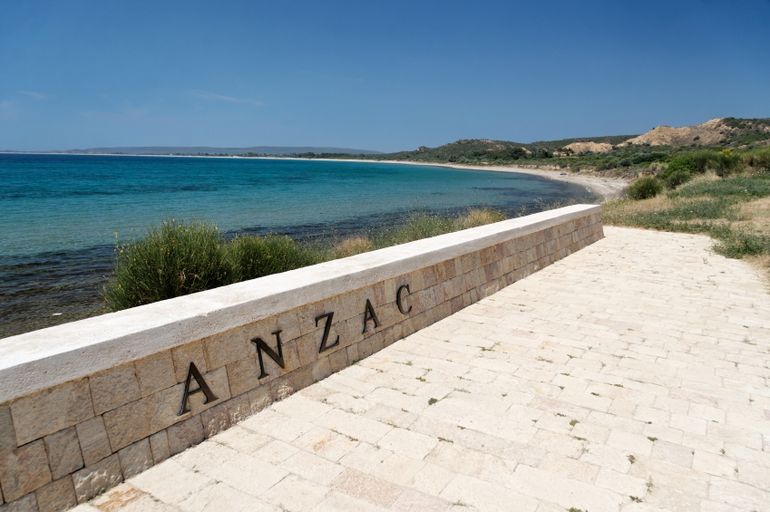
anzac-cove-gallipoli-photo_1343753-770tallGallipoli is a peninsula in Turkey, where the Gallipoli campaign took place between April 25 1915 and January 9 1916 during the First World War. The Australian and New Zealand forces, the Anzacs, landed at dawn at what is now known as Anzac Cove on April 25. The Turkish forces, the Ottomans, defended their territory with a fierce determination, but by evening, the Anzacs had managed to hold a tiny triangle of land about 2 km long and 1 km wide, which they called Anzac.

In his memoir, A Fortunate Life, Albert Facey described his experience of landing at Anzac Cove:

Suddenly all hell broke loose … bullets were thumping into us in the rowing boat. Men were being hit and killed all around me … The boat touched bottom some thirty yards from the shore so we had to jump out and wade in to the beach … The Turks had machine guns sweeping the strip of beach where we landed – there were many dead already when we got there. Bodies of men who had reached the beach ahead of us were lying all along the beach and wounded men were screaming for help. We couldn’t stop for them – the Turkish fire was terrible and mowing into us … we all ran for our lives over the strip of beach.

The Ottomans fought bravely, but there too few of them to drive the Anzacs back into the sea. The commander Mustafa Kemal issued this order to the 57th Infantry Regiment:

I do not order you to fight, I order you to die. In the time which passes until we die, other troops and commanders can come forward and take our places.

They followed their orders. The entire regiment was wiped out by the Anzacs, every man of it either killed, or so badly wounded he could not continue fighting. The modern Turkish army does not have a 57th Regiment, as a mark of respect.

By April 29, the first casualties from Gallipoli reached the Australian hospital near Cairo, in Egypt. Sister Constance Keys of the Australian Nursing Service wrote home:

The greatest number of men we came over with are either killed or wounded. The whole battalion was practically cut to pieces.

The Gallipoli campaign continued for eight more months, with nearly half a million casualties, and more than 100 000 deaths. This includes around 60 000 Turks and 53 000 British and French soldiers, including more than 8500 Australians and 2721 New Zealanders.

In the end, the campaign was a crushing defeat for the Allied forces, and one of the greatest victories for the Turks. It gave them a national identity and fostered their spirit of independence just as much as it did for Australians.

Today there are many cemeteries and war memorials on the Gallipoli Peninsula. Each year on Anzac Day, April 25, commemorative services are held at Gallipoli for the war dead, conducted by Turkey, Australia, New Zealand, Britain and France.

Gallipoli is considered sacred ground to many Australians, consecrated by the blood of those who fell there. Increasingly, it is seen as a place of pilgrimage, with many young people travelling to Gallipoli as a rite of passage.

The Macedonian city of Callipolis was founded in the 5th century BC on the Dardanelles Strait; its name comes from the Greek word kallipolis, meaning “beautiful city”. Also known as Gallipoli, it gives its name to the peninsula it sits on, and its Turkish name is Gelibolu. It is pronounced guh-LIP-uh-lee.

According to Australian historical records the name Gallipoli was given to just two girls during World War I, both of whom died in infancy. I wonder if this name was considered so sacred that it could only be bestowed on those destined for death.

As a middle name, it was given more often, and to equal numbers of males and females. People such as Mercia Gallipoli, Sydney Gallipoli, Brittania Gallipoli and Anzac Gallipoli flourished and increased, and some have only recently left us.

Although place names are becoming increasingly fashionable as baby names, I cannot recommend Gallipoli as a first name. Its extreme rarity, the problems with spelling and pronunciation, and difficulties shortening it to a usable nickname are some of the least problems it faces. In the middle, it seems easier to live with.

To me the main problem with Gallipoli as a first name is its heaviness. It was the scene of battles where many lives were lost, and much blood shed; a place of great suffering and enormous sacrifice. Gallipoli is a place of death – heroic deaths, brave deaths; corpse upon corpse of them. Many dead in the water before they even reached land; many lives given solely to buy others time.

There’s also the uncomfortable fact that we went to Gallipoli as invaders. We invaded someone else’s country, on the orders of another country, and we slaughtered their people. Another uncomfortable fact is that our side lost the campaign, and lost badly. Even more uncomfortably, this hideous loss was a waste of time, resources and life. The Allies achieved nothing from it, and the Turkish people who successfully defended their land were on the losing side of the war.

The name Gallipoli conjures up many emotions. National pride, gratitude for sacrifices made, deep sadness at loss of life, horror at what was endured, anger at the futility of war. And also forgiveness, respect, shared grief, and friendship between nations who were once enemies.

There’s been several quotes in this entry, and I will end with one more, from Turkey’s first president, Mustafa Kemal Ataturk, which is now inscribed on a monument at Gallipoli:

Those heroes that shed their blood and lost their lives… You are now lying in the soil of a friendly country. Therefore rest in peace. There is no difference between the Johnnies and the Mehmets to us where they lie side by side here in this country of ours… You, the mothers who sent their sons from far away countries wipe away your tears; your sons are now lying in our bosom and are in peace. After having lost their lives on this land they have become our sons as well.

POLL RESULT: Gallipoli received an approval rating of 15%, making it one of the least favourite names of the year. People had some real problems with the name Gallipoli, seeing it as having too many issues (31%), too weird (28%), too controversial (13%), and too sad (13%). Only 10% thought Gallipoli was usable as a baby name, and nobody thought it was beautiful.

(Photo is of Anzac Cove, Gallipoli)

Famous Name: Thor

17 Wednesday Apr 2013

Posted by A.O. in Famous Names

≈ 2 Comments

Tags

Ancient Germanic names, birth notices, celebrity baby names, historical records, mythological names, name history, name meaning, name trends, Nameberry, names from movies, Old English names, scandinavian names

kinopoisk.ruThe Hollywood movie Thor came out a couple of years ago; last year it was followed by The Avengers, and a sequel will be coming out at the end of this year. The movie character is based on the Marvel Comics superhero, created by the famous Stan Lee, and the films place ancient gods in the modern world, interacting with humans and having spectacular magic vs science showdowns.

The Australian connection to this story is that Thor is played by Chris Hemsworth, who appeared on the blog as a celebrity dad last year, after welcoming daughter India Rose with his lovely wife Elsa. Thor‘s world premiere was held in Sydney.

In Norse mythology, Thor is the god of thunder, lightning, storms, oak trees, strength, healing and fertility. He is a protector of humanity, and the god who makes things holy. He is generally depicted as a large, muscular, red-haired and red-bearded man with fierce eyes, wielding a hammer that can pretty much smash through, well, everything.

Medieval epics describe Thor’s exploits in battle, and his fearsome wrath with anyone who crosses him. He is no steroidal oaf though, and capable of outwitting others and being clever with words; he sits as a judge at the foot of the World Tree. It is foretold that at the world’s destruction, Thor will do battle with his arch-enemy The Great Serpent and slay it, but will succumb to its venom and meet his end.

I think it’s too tempting for us moderns to imagine Thor as some sort of beefcake with anger management problems, but to his worshippers he was a source of strength and protection for their homes and possessions, giving security to family and community, and warding off plague and famine.

As the product of a divine marriage between the sky god Odin, and the earth mother Fjörgyn, he was a potent fertility symbol, and like lightning, he was a conduit between the heavens and the earth. The storms he brought with him watered the fields and made life grow.

Thor was worshipped by Germanic peoples, including those in Anglo-Saxon England, and the Vikings of Scandinavia, but it is from Norse mythology that most of our information about him is gained. His name is derived from an Ancient Germanic word for “thunder”; the Old English form of Thor is Thunor (pronounced THOO-nor), which makes the connection even more obvious.

It is a testament to his vast popularity how many names used in Britain there were that derived from Thor. A few that have survived into modern times, although rare, are Thora, a feminised form of Thor; Thurstan, meaning “Thor’s stone”; and Torquil, meaning “Thor’s cauldron”. His name is also in Thursday, meaning “Thor’s day”.

In Scandinavia the name Thor isn’t uncommon, and is pronounced TOR. Some famous Thors you may have heard of are Norwegian ethnographer Thor Heyerdahl (who crossed the Pacific on a raft named Kon-Tiki), Norwegian cyclist Thor Hushovd, Danish poker player Thor Hansen, Venezuelan human rights activist Thor Halvorssen, and Belgian singer Thor Salden.

Although the name Thor continued to be occasionally used in Britain, it is much more common in the United States, which has had significant migration from Scandinavia. Quite a few people named Thor can be found in Australian records, and most of them have Scandinavian surnames, or emigrated here from Scandinavia.

I recently saw a birth announcement for a baby boy named Thor, born in Tasmania; remarkably there was a Loki announced that same week, and an Odyn the following week.

Not long ago, Nameberry announced Thor was shaping up as one of the hot names of 2013 (along with other mythological names), and at the end of last year, told us that Scandinavian would be the ethnic name group most likely to rise in popularity. Meanwhile Abby’s Nameberry Nine this week pointed out that boy’s names are getting cooler all the time – even her little girl has noticed.

If you are considering the name Thor for your son, it is not only strong and interesting, with an ancient history that plugs in to European culture, but also right on trend.

With the Chris Hemsworth movies in the public consciousness, Thor is a name we’re all more familiar with, and for dads who hanker after a tough cool baby name, they might find it easier to persuade their partners if they have been smitten by Hemsworth’s hunkiness.

POLL RESULT: Thor received an approval rating of 59%. People were divided on the name Thor, with 16% thinking it was unusual, but something we’ve all heard of, while the same percentage thought it was over the top. 11% thought the god Thor gave the name greater substance and dignity, while 8% thought the god made the name seen heavy and oppressive. 7% considered that the movie made the name seem more accessible, while 5% saw the movie as making the name geekier.

← Older posts
Newer posts →

Enter your email address to follow this blog

Categories

Archives

Recent Comments

A.O.'s avatarwaltzingmorethanmati… on Zarah Zaynab and Wolfgang…
Madelyn's avatarMadelyn on Zarah Zaynab and Wolfgang…
JD's avatardrperegrine on Can Phoebe Complete This …
A.O.'s avatarwaltzingmorethanmati… on Rua and Rhoa
redrover23's avatarredrover23 on Rua and Rhoa

Blogroll

  • Appellation Mountain
  • Baby Name Pondering
  • Babynamelover's Blog
  • British Baby Names
  • Clare's Name News
  • For Real Baby Names
  • Geek Baby Names
  • Name Candy
  • Nameberry
  • Nancy's Baby Names
  • Ren's Baby Name Blog
  • Sancta Nomina
  • Swistle: Baby Names
  • The Art of Naming
  • The Baby Name Wizard
  • The Beauty of Names
  • Tulip By Any Name

RSS Feed

  • RSS - Posts

RSS Posts

  • Celebrity Baby News: Melanie Vallejo and Matt Kingston
  • Names from the TV Show “Cleverman”
  • Can Phoebe Complete This Sibset?
  • Zarah Zaynab and Wolfgang Winter
  • Baby, How Did You Get That Name?
  • Celebrity Baby News: Media Babies
  • Celebrity Baby News: Adelaide Crows Babies
  • Celebrity Baby News: Chris and Rebecca Judd
  • Names at Work: Name News From the World of Business and Employment
  • Celebrity Baby News: Sporting Round Up

Currently Popular

  • Rare Boys Names From the 1950s
  • The Top 100 Names of the 1940s in New South Wales
  • Girls Names From Stars and Constellations
  • Celebrity Baby News: Livinia Nixon and Alistair Jack
  • Celebrity Baby News: Jacinta Allan and Yorick Piper

Tags

celebrity baby names celebrity sibsets english names famous namesakes fictional namesakes honouring locational names middle names name combinations name history name meaning name popularity name trends nicknames popular names saints names sibsets surname names twin sets unisex names

Create a free website or blog at WordPress.com.

Privacy & Cookies: This site uses cookies. By continuing to use this website, you agree to their use.
To find out more, including how to control cookies, see here: Cookie Policy
  • Subscribe Subscribed
    • Waltzing More Than Matilda
    • Join 517 other subscribers
    • Already have a WordPress.com account? Log in now.
    • Waltzing More Than Matilda
    • Subscribe Subscribed
    • Sign up
    • Log in
    • Report this content
    • View site in Reader
    • Manage subscriptions
    • Collapse this bar
 

Loading Comments...