• About
  • Best Baby Names
  • Celebrity Baby Names
  • Celebrity Baby Names – Current
  • Celebrity Baby Names – Past
  • Featured Boys Names
  • Featured Girls Names
  • Featured Unisex Names
  • Links to Name Data
  • Waltzing on the Web

Waltzing More Than Matilda

~ Names with an Australian Bias of Democratic Temper

Waltzing More Than Matilda

Tag Archives: name meaning

Diminutive Names for Girls – 2

21 Sunday Sep 2014

Posted by A.O. in Name Themes and Lists

≈ 6 Comments

Tags

aristocratic names, celebrity baby names, famous namesakes, fictional namesakes, French names, Greek names, international name trends, Italian names, mythological names, name history, name meaning, name popularity, name trends, names from movies, names from television, names of mascots, popular names, retro names, royal names, saints names, Spanish names, unisex names
907393-underbelly-razor

It’s been more than a year since we had a list of short form names, and as this is a huge growth area, it’s time for another.

Ada
Short form of Adelaide and related names. It has been an independent name since the Middle Ages, and was used by royalty and the nobility; an example is the Ada who was reputedly the sister of Charlemagne. There is also a 7th century St Ada, who was a French nun and abbess. Ada was especially popular during the 19th century, and a famous namesake from this era is (Augusta) Ada King, Countess of Lovelace, a daughter of Lord Byron and his only child born in wedlock – nearly always known as Ada Lovelace. Ada was a gifted mathematician who produced an algorithm designed to be used by a machine; in effect, the first computer program. A famous contemporary example is Australian actress Ada Nicomedou. Ada was #40 in the 1900s, and left the Top 100 in the 1920s; it was off the charts by the 1950s. Ada made a comeback in the 1990s at #845, and is currently around the 300s. Fitting in perfectly with the trend for short simple names like Ava, and for traditional old-fashioned names like Elsie, this is a hip retro short form that not too many people are using.

Bella
Short form of Isabella, and other names ending in -bella, such as Annabella or Arabella. However, many people connect it to the Italian word for “beautiful”, and understand it that way. Bella has been an independent name since the Middle Ages, and has had particular use by Jewish families from Russia and Central Europe – two examples are American feminist Bella Abzug, and writer Bella Rosenfeld, the wife of Russian-French artist Marc Chagall. A famous Australian namesake is actress Bella Heathcote, best known for her role on Neighbours a few years ago. Bella first joined the charts in the 1990s at #541, rising on the heels of Isabella, which began its impressive ascent in the 1980s. Bella entered the Top 100 in 2002, debuting at #99; it peaked in 2010 at #41, and is currently #48 nationally. Like Isabella, Bella’s success is often attributed to the Twilight series, although as you can see, it was rising and even popular before the first novel was released in 2005. Stephenie Meyer’s Bella Swan (an irritating character name because it describes the story’s outcome) probably did help though, if only by increasing visibility.

Demi
Short form of the Greek name Demetria, the feminine form of Demetrius, which is derived from the name of the agricultural goddess Demeter. The goddess’ name is often translated as “earth mother” or “barley mother”. Demi is also sometimes connected with the French word demi, meaning “half”, to suggest “small” (as in half-pint). This name has a big dose of star power, thanks to Hollywood actress Demi Moore, and from a generation younger, pop singer and actress Demteria “Demi” Lovato. The name is usually pronounced duh-MEE, but English-speakers sometimes prefer it to be said to rhyme with Emmie. Demi is around the 500s in Australia, and is rising in the US, but falling in the UK, so international trends are at odds on this one.

Ellie
Short form of any name starting with El-, such as Eleanor, Ellen, Elizabeth, or Eloise, and long used as an independent name. It is well known from British pop singer Elena “Ellie” Goulding, and a favourite in the world of fiction. Fictional namesakes include the dainty little girl in The Water Babies, Ellie Linton, heroine of John Marsden’s Tomorrow When the War Began, Eleanor “Ellie” Arroway, brainy heroine of Carl Sagan’s Contact, adventurous Ellie Frederickson from Up, the woolly mammoth from the Ice Age series, and strong matriarch Eleanor “Miss Ellie” Ewing, from Dallas. Ellie joined the charts in the 1980s at #349, and was in the Top 100 as early as 1993, at #98. It managed to get in again a decade later in 2003, at #72, and has remained fairly stable in the bottom half of the Top 100 ever since. Currently it is #56. Ellie fits in perfectly with popular names like Ella, and is well-used without being overly common or rising alarmingly.

Frankie
Unisex nickname that in the case of boys is a pet form of Francis, Francesco, Francisco, Frank, or Franklin, and in the case of girls, of Frances, Francesca, Francisca, or Francine. Famous male Frankies include American crooner Frankie Valli, British comedian Frankie Howerd, American actor Frankie Muniz, who played the title role in Malcolm in the Middle, and Australian kick-boxer Frankie Georgi. A famous female Frankie is British pop singer Frankie Sandford, and the name has been chosen for their daughters by several celebrities, including Drew Barrymore, and in Australia by rugby league star Johnathan Thurston, weather presenter Sara Cumming, and news presenter Rebecca Morse. In the US, Frankie only charts for boys, while in the UK, it charts for both sexes, but is only popular as a boy’s name. In Australia, Frankie is a unisex name, and significantly more common for girls. The reason for its increasingly feminine image here is no doubt because of the hip women’s fashion magazine, frankie.

Gigi
French nickname for any name with a G sound, such as Georgine or Ghislaine. Its most famous namesake is the charming Parisian schoolgirl in Colette’s 1942 novella, Gigi, who is being trained to be a courtesan by her family. Their plans go awry when the gamine Gigi attracts a wealthy older man, and becomes his wife instead of his mistress. It has been turned into a musical and a couple of films, including the 1958 Hollywood production starring Leslie Caron as Gigi, which is surprisingly faithful to the book, except for discreetly upping Gigi’s age from twelve to around sixteen, and adding songs like Thank Heavens For Little Girls. Gigi’s name is short for Gilberte, by the way. In Italy it is a male nickname, short for Luigi. An Australian with this name is actress Gigi Edgely, who has starred in Farscape. A flirty French Lolita, Gigi is currently a hip girl’s name in the style of Coco. It was recently chosen as a celebrity baby name by swimmer Geoff Huegill.

Millie
Short for any name with a mil sound, such as Millicent, Mildred, Camilla, Emilia, or Amelia, and is also spelled Milly. You can see Millie as a vintage charmer, all bonnets and hoop skirts, but there’s also something a little Swinging Sixties about it, thanks to My Boy Lollipop, sung by Millie Small, and the 1967 film Thoroughly Modern Millie, starring Julie Andrews. It has a very Australian connection as Millie the Echidna was one of the official mascots for the Sydney Olympics (her name is short for Millenium). Millie was #196 in the 1900s, and left the charts in the 1930s. It returned in the 1990s at #501, had a definite upsurge after the 2000 Olympics, and in 2011 was only just outside the Top 100, its highest point ever gained. It fits in perfectly with popular names like Milla and Mila, and is right on trend for sprightly vintage names, so it feels as if popularity must be just around the corner for suddenly modern-again Millie.

Stevie
Unisex nickname for either the boys’ name Stephen or Steven, or the girl’s name Stephanie; these are Greek in origin, and mean “crown”. Stevie has been an independent name since the Middle Ages, and although you might think of it as very modern for girls, it’s been a female name since the 18th century. Famous male Stevies include Stevie Wonder, Stevie Ray Vaughan, and Australia’s first international pop star, Stevie Wright. A famous female one is English novelist and confessional poet Stevie Smith, whose real name was Florence, and who gained her nickname from a perceived resemblance to jockey Steve Donaghue. However, the most well known female example is singer-songwriter Stevie Nicks, and it is no doubt her popularity in the 1970s and 1980s which made Stevie seem more feminine. In Australia, Stevie can be only be found in current use as a girl’s name, and it’s around the 300s. While writing this, I realised what a musical name Stevie is – look at all those namesakes from the world of pop and rock!

Tess
Short form of Teresa or Theresa, a rather mysterious name, because the various meanings suggested for it are always Greek, but the name itself is of Spanish origin. Nobody has been able to explain this to my satisfaction. Tess has a very famous literary namesake, the beautiful, tormented title character of Thomas Hardy’s rural tragedy, Tess of the D’Urbervilles. Tess Harding is the celebrated journalist trying to cope with marriage as well as a career in rom-com classic Woman of the Year (1941), with Tess played by Katharine Hepburn in her first outing with Spencer Tracy. Another Tracy connection is the adorably-named Tess Trueheart, eventual wife of comic strip detective, Dick Tracy. Tess Mcleod is one of the sisters in Australian drama series McLeod’s Daughters, played by the popular Bridie Carter. Last year comedian Dave Hughes welcomed a daughter named Tess Clementine, voted the most popular celebrity baby name of 2013. Tess joined the charts in the 1980s at #352, and peaked in the early 2000s at #209. Simple yet strong, pert and practical, Tess is a short and stylish choice.

Tilly
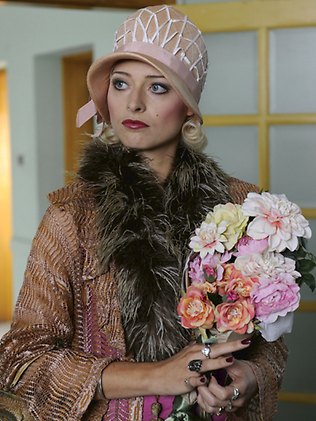
Short for Matilda, this can also be spelled Tillie. Apart from being a short form of a patriotic name, Tilly has a notorious namesake in Australia. Tilly Devine was an infamous figure of the Sydney underworld between the two world wars, who became known first as a prostitute, then as a brothel madam and gang member. Her wealth was legendary – she owned real estate, luxury cars, gold and diamonds, threw lavish parties, and always travelled first class. Operating out of Woolloomooloo, Tilly was known as the “Queen of the ‘Loo”, and in the 1953 travelled to London for the coronation of Queen Elizabeth II. Tilly’s story, and her violent gang war with rival vice queen Kate Leigh, was covered in Channel Nine’s drama series, Underbelly: Razor. Tilly is around the 100s in Australia, so not rare at all, while Tillie does not chart. It is something of a puzzle as to why Millie is preferred to Milly, but Tilly preferred to Tillie. Tilly is a sweet and spunky short form in line with British name trends, with an Australian identity all its own.

Thank you to Brooke for suggesting the name Millie be featured on Waltzing More Than Matilda.

POLL RESULTS

The public’s favourite names were Ada, Tess and Millie, and their least favourite were Frankie, Stevie and Bella.

(Photo shows New Zealand actress Chelsie Preston Crayford as Tilly Devine in Underbelly: Razor)

Famous Name: Bruce

17 Wednesday Sep 2014

Posted by A.O. in Famous Names

≈ 7 Comments

Tags

aristocratic surnames, classic names, famous namesakes, fictional namesakes, locational names, name history, name meaning, name popularity, names from songs, names from television, Norman-French names, popular culture, royal names, Scottish names, surname names, UK popularity, US popularity

288848_1250988033522_full

When the name Acacia was featured for Wattle Day, I mentioned that Monty Python made gentle fun of our national flower with their Bruces Sketch, where all the philosophy faculty at the (fictional) University of Woolloomooloo are named Bruce. This seems to be the origin of the notion that Bruce is a particularly Australian name.

Barry Humphries has said that the inspiration for the Bruces Sketch was his Barry Mackenzie character, who began life as a comic strip in Private Eye. Barry Humphries’ television series, The Barry Humphries Scandals, was a precursor to Monty Python, and Eric Idle has cited Humphries as one of his comedy influences.

It’s rumoured, not implausibly, that Humphries himself suggested the name Bruce as an Australian signifier, either directly or indirectly. The name Bruce peaked in Australia in the 1930s, and in Britain slightly later, in the 1940s. Even at its height in the UK, it was only around the bottom of the Top 100, so it wasn’t nearly as common there.

Humphries was born in 1934, so had peers called Bruce. The most obvious example is Australian director Bruce Beresford (born 1940), who directed the Barry Mackenzie films. Like Barry Humphries, Bruce went to England in search of career opportunities, but was unable to break into the British film industry, and found success at home, with movies like Breaker Morant and Puberty Blues, and in North America with Driving Miss Daisy, and Black Robe.

The connection between Barry and Bruce continued when Humphries took the role of a great white shark named Bruce in the animated film, Finding Nemo. The American film-makers named Bruce, primarily not as an Australian reference, but after the shark in Jaws, whose models were all called Bruce after Steven Spielberg’s lawyer. Bruce the Shark does have an Australian accent though, and uses ockerisms like “Good on ya, mate!”.

From the United States, the name Bruce gained a different stereotype, being associated with homosexuality. The reasons are unclear, but one of the most popular theories is that it’s connected to the campy Batman television shows of the 1960s, as Batman’s real name is Bruce Wayne. Another is that it is from the 1960s parody song Big Bruce, where Bruce is a camp hairdresser.

Apart from these reasons, it does seem that the “tough guy” names of one generation are often seen as effeminate, dorky, or otherwise laughable by the next. Something to think about should you be considering one of today’s rugged baby names, such as Axel, Blade, Diesel, or Rowdy.

Bruce is a Scottish surname of Norman-French origin. The Clan Bruce are from Kincardine on the Firth of Forth in Scotland, and trace their origins from the French de Brus or de Bruis, coming from Breux in Normandy (now Brix), sometimes said to mean “the willow lands”. This history and etymology is now considered doubtful, due to lack of evidence.

The first of the family on record to come to Britain was Robert de Brus, who accompanied King Henry I there after the Battle of Tinchbray in 1106. He was granted large tracts of land in Yorkshire, and named 1st Lord of Annandale by King David I of Scotland in 1124. A family legend says that the first of their line was Robert de Brus, who came over with William the Conqueror but this is more wishful thinking than fact.

Of course the most famous member of Clan Bruce was Robert the Bruce, King of the Scots from 1306 to 1329, claiming royal blood as great-great-great-great grandson of David I. One of the most famous warriors of his generation, he led Scotland during the Wars of Scottish Independence against England. He fought successfully during his reign to regain Scotland’s place as an independent nation, with a great victory at the Battle of Bannockburn. Today he is remembered in Scotland as a national hero.

According to a popular legend, while on the run from the English, Robert the Bruce took shelter in a cave. Here he whiled away the lonely hours watching a spider trying to connect one area of the cave’s roof to another using its web. Each time the spider would fail, but kept trying until at last it succeeded Inspired by the plucky little arachnid, Robert the Bruce returned to defeat the English, winning more supporters, and eventual victory. If you ever read this story as a child, it probably ended by saying the moral was :”If at first you don’t succeed, try, try, and try again”.

This story was first told by Sir Walter Scott in in his Tales of a Grandfather: Being Stories of the History of Scotland (1828), and it is believed to have been adapted from a story about Sir James Douglas, Robert the Bruce’s ally and lieutenant. However, the story is very old, being similar to Jewish tales about King David, and Persian stories about Tamerlane and an ant. Apparently people love the idea of beleaguered rulers being inspired by small creatures with exoskeletons.

Robert the Bruce was the high point of the Clan Bruce, although Robert’s son David also became King of Scotland. Various Bruces did historically worthy things, and one of the most famous is Thomas Bruce, 7th Earl of Elgin, who was ambassador to the Ottoman Empire in the 18th and 19th centuries. He spent most of his fortune taking sculptures from the Parthenon in Athens, which was falling into ruins: today they are known as the Elgin Marbles, and on display in the British Museum.

Bruce has been used as a first name since the 17th century, and was used in both England and Scotland. Although it has plenty of history, Bruce didn’t become a huge success as a boy’s name until the 20th century, which gives it a rather modern feel.

In Australia, Bruce is a classic name which has never left the charts. It was #85 in the 1900s, and peaked in the 1930s at #22. It didn’t leave the Top 100 until the 1970s – perhaps Monty Python wasn’t a help to it, or perhaps after many decades its time of popularity was up. Although uncommon, Bruce has remained stable for years around the 400-500s.

So how Australian is the name Bruce really? Well, apart from the Monty Python sketch (which is, you know, fiction), it peaked earlier here than elsewhere, and peaked much higher than in Britain. However, it peaked only a little higher than in the US, where it is also a classic, and peaked at #25 during the 1950s. Its current popularity in Australia is little different to that in the UK and US, so possibly not quite as Australian as you might have thought!

POLL RESULTS
Bruce received an approval rating of 32%. People saw the name Bruce as too dated (25%), too stereotypically ocker (19%), and too boring (14%). However, 8% of people thought it was strong and handsome. Only one person thought the name Bruce was sexy.

(Photo shows Bruce from Finding Nemo)

Famous Name: Laniakea

10 Wednesday Sep 2014

Posted by A.O. in Famous Names

≈ 2 Comments

Tags

American names, astronomical names, Hawaiian names, locational names, name history, name meaning, nicknames, polynesian names

SPACE-TRIANGULUM-GALAXY-MESSIER 33

Do you remember being very young and beginning to discover how where you lived fit into the world? Maybe you realised the number on your front gate was part of your address, or found that the street you lived on was one of many streets in a suburb, and that suburb was in a city with thousands or even millions of people. Perhaps you saw Australia on a world map for the first time, and could see its relation to other countries – didn’t it look far away from anywhere else?

In time you learned that you were on a planet called Earth, and when you were taught about the solar system, discovered that the Earth was really quite small, and a long, long way away from other planets. And that we all revolved around a Sun which was a star, not a very big one, and one of around 100 thousand million in the Milky Way – one of more than a 100 billion galaxies in our universe.

I don’t know about you, but when I learned all this in astronomy class, it totally blew my mind. The same way it blew my mind when I was a toddler and began to gradually understand that our farm was one of many in our hamlet, and that we were all part of a town 25 km away, and the regional centre was 50 km away, and the state capital 300 km away, and the nation’s capital a great distance, and the next country even further than that, across the sea. It made me feel very small and a long way from everything.

And when you were little, did you ever write down your address in this fashion: My Bedroom, 11 Acacia Road, Seaforth, Manly, Northern Beaches, Sydney, Cumberland County, New South Wales, Australia, Oceania, Southern Hemisphere, The Earth, The Solar System, The Milky Way, The Universe? Now there’s an another element to add to the address.

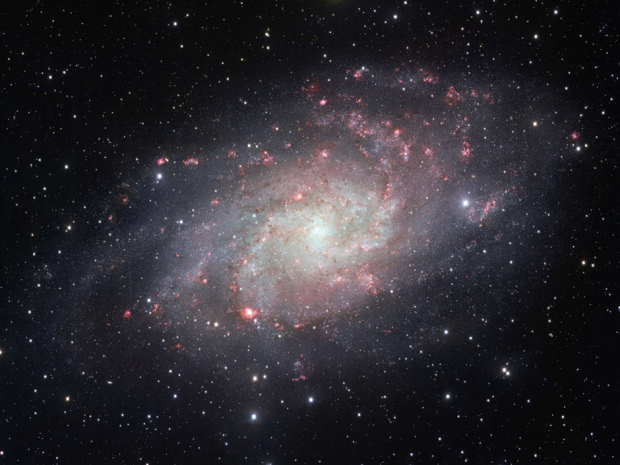
Astronomers have known for ages that the Milky Way is part of a larger cosmic structure, but it was too hard to figure where one group of galaxies ended and the next began. Recently a team of astronomers at the University of Hawaii, led by Brent Tully, have gathered measurements allowing scientists to define superclusters of galaxies. Their work, published this month in Nature, describes the vast group of galaxies to which the Milky Way belongs.

The name of our particular galactic supercluster is Laniakea, which is 520 million light years in diameter, and contains one hundred million billions Suns spread across 100 000 galaxies. The Milky Way is right on the fringes of Laniakea, on the edge of a vast empty region of space known as the Local Void, but we are constantly pulled towards a gravitational force in Laniakea’s centre which scientists have dubbed The Great Attractor.

Within the Laniakea Supercluster, we are part of the Virgo Local Supercluster, and beyond it are the neighbouring superclusters of Hercules, Coma, and Perseus-Pisces. Just as with the original problem of defining the edges of galaxies, it is not yet clearly known where the edges of Laniakea end and the edges of these other superclusters begin.

One surprise was that the Laniakea Supercluster is being pulled by a larger concentration of galaxies called the Shapley Supercluster, so we may be part of even greater structures that are yet to be discovered. Thus our universe expands as knowledge and comprehension grows.

Brent Tully, who has helped create our new map of the Milky Way’s environs, says: Seeing a map gives you a sense of place. For me, having that sense of place and seeing the relationship of things is very important in terms of understanding it. Thanks to Tully and his team, we have gained another insight into our place in the universe – and how small we are, and what a long way from everything.

The name Laniakea was suggested by Nawa’a Napoleon, associate professor of Hawaiian Language at Kapiolani Community College. The Hawaiian name can be translated in a number of ways, including “open skies”, “wide sky”, or “wide horizons”, but in this case it is understood as “immeasurable heavens”. The name was chosen to honour Polynesian navigators who studied the heavens in order to navigate the Pacific Ocean.

Laniakea is pronounced LAN-ee-uh-KAY-uh in the video from Nature I watched, although I have seen it written as la-NEE-uh-KAY-uh. It is well known in Hawaii, as it is the name of a surf beach famous for its sea turtles, and the name has been used for numerous businesses in the area. It does get very occasional use as a personal name, and although it is technically unisex, seems to have only been given to girls. Lani, Nia, and Kea are the obvious nicknames.

This is an elaborate Polynesian name which is unusual, but seems very usable in Australia, which has a significant Pacific Islander population, and where several Polynesian names are familiar. The short forms are very much on trend here.

While Laniakea has had some use as a Hawaiian name for girls, Hawaii has shared the name with the whole planet, and it now belongs to all of us. It’s not just a beautiful beach on the shores of a great ocean, but a multitude of galaxies whirling through the immensity of space, the “immeasurable heavens”. And it is our home.

POLL RESULTS
Laniakea received a very good approval rating of 72%. People saw the name Laniakea as beautiful or pretty (21%), having a cool cosmic connection (20%), and having a fantastic meaning (19%). However, 15% of people thought it was too long and complex. Only one person thought the astronomical background made the name Laniakea seem geeky.

Famous Name: Opal

03 Wednesday Sep 2014

Posted by A.O. in Famous Names

≈ 7 Comments

Tags

english names, gemstone names, historical records, name history, name meaning, names of sporting teams, nature names, patriotic names, products with human names, rare names, vocabulary names

opalcard-westernsyd_760x428

Monday was the first day of spring, but Sydneysiders weren’t focused on Wattle Day: for them it was Opal Day. The Opal card is the automated ticketing system smartcard for Sydney public transport, trialled for two years, and replacing a confusing system of fourteen different paper tickets. September 1 was the official date that paper tickets would be phased out.

All other major Australian capitals have automated public transport ticketing systems, but for some reason the Opal card was very hard to implement, and getting it off the ground took twenty years and defeated eight successive governments. It was gloomily warned that the new system would cause complete chaos, while conspiracy theorists were sure it was designed to increase fares, or even part of a police state surveillance plot.

However, the roll-out went quite smoothly on the morning of September 1. There weren’t massive queues, or gates needing to be locked against hordes of angry commuters, and people who hadn’t ordered an Opal card online simply bought one from a kiosk. Some people found the Opal card was actually saving them money. Its success means a sigh of relief from Transport Minister Gladys Berejiklian.

The Opal card is based on Hong Kong’s Octopus card, and London’s Oyster card. The name Octopus suggests that you can travel in multiple directions, like the limbs of an octopus, while Oyster is an allusion to “the world is your oyster”. Although it starts with the same letter, Opal doesn’t have any clever hidden meaning to it – the opal is our national gemstone, while the black opal is the state gemstone of New South Wales.

Opal is a precious gemstone that is one of the most spectacular; a single stone can flame intensely with every colour of the spectrum, out-shining even the diamond. The highest quality specimens will sell for the same amount as the most valuable diamonds, rubies and emeralds, although such opals are very rare.

Opal is a common substance, found throughout the world, often of a milky white appearance (opal miners call it potch). Common opal can be pretty once cut and polished, but it is not valuable. Precious opal has what is called “play-of-colour” – that stunning multi-coloured iridescence.

97% of the world’s precious opal is produced in Australia, and Australia’s opal fields are larger than all those in the rest of the world combined. What makes Australian opals so valuable is not just their brilliance, but their stability. In other countries, opal is often found in volcanic rock and has high water content, meaning it tends to crack during cutting and polishing. In Australia, opals are found in the outback desert, once a vast inland sea.

South Australia is the major source of opal, producing more than 80% of the world’s supply. The town of Coober Pedy is mainly associated with opal mining, and the world’s largest and most valuable opal, the “Olympic Australis” was found here in 1956 (the year Australia hosted the Olympic Games for the first time, hence its name).

Lightning Ridge in New South Wales is the main source of black opal, the most valuable type of Australian opal. Despite their name they are not black, but have a predominantly dark background, so the rainbow colours of the opal stand out more strongly.

Boulder opal is the second-most valuable type of opal, where thin veins of precious opal fill cracks in ironstone boulders. The dark backing of the ironstone means that the opal shines in a similar way to a black opal. Boulder opal is found in Queensland, including the town of Winton.

The precious gemstone has given its name to our national women’s basketball team, known as The Opals. They are an internationally successful team, and Lauren Jackson plays for them.

According to official sources, Indigenous Australians called opal “fire of the desert”, and their legends tell that the opal’s colour was created when a rainbow touched the earth. Like other gemstones, opals had spiritual value as that which a spirit ancestor left behind as a sign of his or her presence. They could thus be imbued with that ancestor’s powerful spiritual energy.

The word opal comes from the Roman name for the gemstone, opalus. It is believed this is most likely from the Sanskrit word upalus, meaning “gem, jewel”. The Romans believed the opals they bought were from exotic India, but this was an ancient marketing ploy, as they were really from where Hungary is today. The Romans valued opals highly, and saw them as symbols of hope and innocence.

In the Middle Ages, opals were believed to be very lucky, and thought vital for good eyesight. Blonde women wore opals in the belief it would keep their hair colour bright, and one odd superstition was that you could make yourself invisible by holding an opal wrapped in fresh bay leaves. I imagine some embarrassment must have been caused to anyone who tried this!

The modern superstition that opals are unlucky appears to come from Sir Walter Scott’s 1829 novel, Anne of Geierstein – even though the novel never actually says that there is anything unfortunate about the gemstones. In the story, a mysterious sorcerer’s daughter named Lady Hermione, who always wore opals in her hair, appears to be under some sort of enchantment.

When a few drops of holy water are sprinkled on her head, they quench the radiance of the opals, and Hermione faints. She is carried to her room for a lie down, and the next day nothing is found of her but a heap of ashes on her bed. Later it turns out the opal turned pale to warn its owner of impending doom, not because it was cursed.

Nonetheless, the novel does seem to have affected people’s feelings about opals, because in the year of its publications, opal prices plunged, and the European opal market took many years to recover. It is also thought diamond cartels helped spread these rumours, because the discovery of high quality opals in Australia were a distinct threat to their livelihood. Hungarian opal miners told people that Australian opals must be fakes, as they were certainly too good to be true!

Queen Victoria swam against the superstitious tide, for she loved opals and wore them throughout her reign. She gave them as gifts to her daughters and friends, so that opals became highly-regarded and fashionable, thanks to the British court. The royal family have a fine collection of opals, including the “Andamooka opal” from South Australia, presented to Elizabeth II in 1954.

Opal was used as a girl’s name as early as the 16th century, but became much more common in the Victorian era, when gemstone names were in fashion. In Australia records, the name Opal is particularly associated with South Australia, and in particular, areas where opals are mined.

Although our national floral emblem gets a reasonable amount of use, our national gemstone is very rare as a name. Yet it is really rather beautiful, and its O initial even seems fashionable. Short and simple, it has a hip and quirky vibe, while the stunning gemstone gives it a very patriotic feel. Retro Ruby has climbed and climbed – could Opal have a better chance in its wake?

POLL RESULTS
Opal received an outstanding approval rating of 86%, making it one of the highest-rated names of 2014, and tying with Hope to become the favourite girls name in the Famous Name section. People saw Opal as an unusual and refreshing choice (26%), hip and quirky (25%), beautiful or pretty (15%), and sweet and simple (15%). However, 5% thought of it as an “old lady name”. Nobody thought that the name Opal seemed unlucky.

(Photo of Opal card from NSW government website)

How to Dot Com Your Baby Name, and Other Name Stories in the News

02 Tuesday Sep 2014

Posted by A.O. in Names in the News

≈ 3 Comments

Tags

Awesome Baby Name, domain names, Facebook, Game of Thrones names, name data, name meaning, name studies, name trends, nicknames, popular names, royal baby names, Twitter

Modern Baby Names

Mastering Your Baby’s Domain
Baby names in the digital age have become so complicated that some parents now make sure their child has their own e-mail account, Twitter handle, Facebook page, and website before they are born.

And since it gets frustrating finding the baby name you want to register has already been taken, you can do a sort of “reverse look up”, where you use a website that will tell you which names are still available. Such a website is the misleadingly-titled Awesome Baby Name, which suggests names based on domain availability.

Naturally I had to give this a try, and it’s easy enough. You type in your surname, and say you want a boy, girl, or “whatever” name, and receive a list of ten names that haven’t been taken yet. If you don’t like the ten they offer (and you probably won’t), they offer to sell you another 100 names for $3. You would be crazy to actually make this purchase, since every time you use it you get another ten names, and by simply clicking it again and again would soon find 100 names all on your own for free.

The site promises to find you the “very best matches” possible, but in fact it’s just a random list of names that may or may not sound even half decent when matched with your surname. The names have a very American bias – I was offered quite a lot of Hispanic names, and names currently trending in the US, like Jayceon. I’m not sure how the algorithm works, but I tried it with fifteen very different surnames, and each one offered the name Colton.

I was quite pleased by most of the boys names I was offered (except Colton, a name I now utterly loathe from having it thrust on me so many times): Alistair, Axel, Declan, Jude, Matthias, Maximilian, and Thaddeus seemed nice. Girls names were uniformly terrible. They were either dated, like Megan and Julie, very modern like Kyra and Brylee, or variant spellings, like Kaitlynne and Brooklynn. Maybe all the good girls’ names are already taken?

The “whatever” button is a complete waste of time: it doesn’t give you unisex options, as I thought, but just five girls names and five boys names.

Our surname is relatively uncommon, so that almost every name could be matched with it and still not be registered, and yet I wasn’t offered even one Top 100 name. Furthermore, different surnames didn’t get you a different range of names: I was offered relatively uncommon names, no matter if I said I was named Smith or Hetherington-Smitherswaithe. I wonder if the surname has been factored in at all?

The About on the page says it started as a joke, but doesn’t say whether it still is one or not, or how funny the joke turned out to be. I rate it as Mildly Amusing.

Names at Work
Could your name be holding back at work, muses Kochie’s Business Builders in Yahoo Finance? Short answer, from researchers at the University of Melbourne, is yes. They found that people with simple, easy to pronounce names had an advantage in the workplace, and would be more likely to be elected to political office.

Dr Simon Laham, from the University of Melbourne’s School of Psychology, said research findings revealed that it wasn’t the length of a name, or how “foreign” it seemed, or how unusual (or even made up) it was, but its pronounceability that made the difference.

It’s quite interesting, because we’re often told that names have to be familiar, recognisable, “non-ethnic”, or short for people to feel comfortable with them, but it seems that isn’t really that important, as long as they can intuitively guess the pronunciation. This might be something to bear in mind when choosing names.

Worried about your hard to pronounce name and how it’s ruining your career? KBB suggests using a nickname or short form of your name for easy communication, but sensibly comments that your skills and experience are far more important. An article on names which says your name is less important than who you are and what you do! Let’s hope this trend continues.

Capital, By George
There was royal baby name spotting during the royal visit in Canberra in April. The Canberra Times had a light-hearted look at a few baby Georges around town, including a George Louis, a George Middleton, and a Giorgio. The name George appears to be on the rise in the ACT, with 14 registrations in 2012 climbing to 22 in 2013. Between Prince George’s birth and his visit to Australia, 15 Georges were registered in our capital. What that means for the 2014 data is anyone’s guess.

Mothers of Dragons in the West
And those other royal names … Perth Now tells us that baby names from Game of Thrones are rising in Western Australia. Unfortunately, no actual data to support this plausible theory, but a couple of anecdotes instead. Fascinated by the mother who chose Khaleesi for her daughter in 2012, because “it had some sort of history”. I guess almost every name has some sort of history … in this case, a purely imaginary one! The meaning of “queen” was also a drawcard.

Names All Over the World
The Essential Baby website has got a little map of popular names from around the world. It doesn’t cover every country, but it does look at several regions. Africa and the Middle East are completely missing (I guess they have bigger issues than putting out birth name data). Worth a look to see how different the Top Tens are around the world.

Waltzing With … Acacia

31 Sunday Aug 2014

Posted by A.O. in Waltzing with ...

≈ 9 Comments

Tags

english names, flower names, Greek names, historical records, name history, name meaning, name popularity, nature names, patriotic names, plant names, saints names, tree names

Floral Emblem Golden Wattle

Tomorrow is the official first day of spring, which means it is also Wattle Day. The Golden Wattle (Acacia pycnantha) is Australia’s official national flower, proclaimed as our floral emblem on September 1 1988, and marked by planting a Golden Wattle in the National Botanic Gardens by then Prime Minister’s wife, Hazel Hawke. Four years later, September 1 was officially declared National Wattle Day, and it is traditional to celebrate by wearing a sprig of wattle (any type of wattle; it doesn’t have to be Golden Wattle).

Long before that date, wattle had been an unofficial national flower by popular choice. A wreath or sprig of wattle appears on many official government documents, including the Commonwealth Coat of Arms, the Order of Australia, and the Governor-General’s crest. Our national colours of green and gold (so difficult to co-ordinate on sporting uniforms) are inspired by the green leaves and golden bloom of the wattle.

Wattle is a symbol of remembrance for us too. During World War I, mothers sent their sons sprigs of wattle as a reminder of all they were fighting for back home, and has been used to mourn and remember loss of Australian life, such as in ceremonies for the victims of the Bali bombings. You may have noticed that when the first victims of MH17 were brought to the Netherlands, the Australian Governor-General’s wife wore a sprig of wattle.

As early as 1838, Tasmania encouraged wearing Silver Wattle (Acacia dealbata) sprigs to celebrate the discovery of its island. In the nationalistic fervour which preceded Federation, a Wattle Club was founded by naturalist Archibald Campbell, promoting a Wattle Day demonstration each September 1. Outings into the bush to revel in the glories of an Australian spring were part of his plan, and patriotic Wattle Days continued to be celebrated until World War II.

Australian love of wattle has been satirised in Monty Python’s Flying Circus, with the immortal lines of the Australian philosopher Bruce: “This here’s the Wattle, the emblem of our land. You can stick it in a bottle, you can hold it in your hand.” These words have been used to promote a Wattle Day Festival in Victoria this year!

Acacia is the genus which contains wattle trees and shrubs. Its name, pronounced uh-KAY-shuh, comes from the Greek akis, “thorn”, because most acacia species outside Australia are thorny, although nearly all Australian acacias don’t have thorns. There are around 1300 species of acacia, and almost a thousand of them are native to Australia, with over 98% of these unique to Australia. The others can be found in all continents except Europe and Antarctica; they are particularly widespread in Africa, and were first observed by Europeans along the Nile River.

Acacia is not just an important symbol to Australia. According to Easton’s Bible Dictionary, acacia may have been the “burning bush” Moses encountered in the wilderness, and a table of acacia wood was part of the Tabernacle he built for the Ark of the Covenant. In Egyptian mythology, acacia is the Tree of Life, and in Christian tradition, the crown of thorns worn by Jesus Christ were made from acacia. Freemasonry uses acacia as a symbol of resurrection and immortality, while in Asia, acacia incense is believed to drive away ghosts and demons.

It’s powerful stuff. In fact, it is said that the first plant to bloom in Hiroshima after its bombing in 1945 was a wattle tree. Resurrection indeed! Every Wattle Day, Hiroshima’s Acacia Appreciation Society sends hundreds of yellow ribbons to the Australian National Botanic Gardens as a gesture of friendship and appreciation.

The name wattle comes from Old English, the word Anglo-Saxons gave to interlaced branches and twigs used to form fences, walls, and roofs. Wattle and daub is a construction technique, used since prehistoric times, for filling the spaces between the wattle with a combination of wet soil, clay, sand, animal dung, and straw, which is then allowed to dry until it hardens.

When British settlers to Sydney made their own wattle and daub buildings, they used acacia trees as the wattle, so gave the name to the plants. (I remember reading about wattle and daub houses in Neolithic Britain when I was in primary school history class, and wondering where they got the wattle trees from!). The uses of acacia are too many to list, but one worth mentioning is that Australian Aborigines often make boomerangs from its wood.

Wattles grow all over Australia, and are numerous in the desert, although uncommon in dense rainforest and alpine regions. In southern Australia, wattles tend to flower in springtime, while in the north, many species come into bloom in the autumn and winter. Because of this, it is said that on any given day in Australia, there will be a wattle blossoming somewhere.

Acacia has a long history as a personal name, for it is the feminine form of the Greek name Acacius. This comes from a different Greek derivation – akakia, meaning “without guile, innocent”. Byzantine emperors held a purple silk roll filled with dust called the akakia: it symbolised human mortality. There are several saints named Acacius, and quite a number of other notables from the early Christian era. Acacia has been a particular favourite amongst Spanish-speaking people, who bestowed it as a saint’s name.

Acacia came into use as an English name in the 19th century, when flower and plant names were the fashion. Golden and Silver Wattle was introduced to Europe in the mid-19th century; Silver Wattle became a great favourite in the south of France, where it blooms around Candlemas and is a harbinger of spring and golden sunshine. Outside Australia, wattle is often known as mimosa.

There are several people named Acacia in Australian records, going back to the mid-19th century, and it is almost certain their names were given patriotically – one is even named Acacia Golden, as if to signify Golden Wattle. Another is named Marginata Acacia; marginata is a species of eucalyptus tree. That reminds me that I saw a woman named Acacia Silver on the news, which reminded me of Silver Wattle: as she was an environmentalist, her name was so appropriate that I wondered if she’d chosen it herself.

In Australia, the name Acacia is around the 300-400s, while in England/Wales it is #1639 (18 babies last year), and in the US, 80 baby girls were named Acacia, the same number as ones called Adah, Jazlene, Legacy, Saoirse, Story, and Zarah. While Acacia isn’t a bizarre name in other English-speaking countries, it’s definitely far better known and higher-charting in Australia, which makes perfect sense. As with the trees, Acacia isn’t uniquely Australian, but is more widely found here, and has a particular meaning to us.

Wattles are perhaps not the most beautiful of trees – rather than being slender and elegant, or solid and imposing, most of them are short and scrubby. And yet when they come into bloom, there is no more cheering sight on a grey late winter’s day than their riotous mass of bright yellow fuzzy blossom. I cannot help but smile when I see a wattle tree in full fragrant bloom abuzz with bees, a promise of the sunshine that is soon to come. That’s why I have Golden Wattle as my avatar, and Silver Wattle decorating my blog: to keep me smiling every day.

Familiar without being common, the name Acacia has a rich and interesting history, and is a very patriotic choice. It evokes the beauty of spring and the Australian bush, it’s a remembrance for those we mourn, and rises from the ashes of death with new life and hope. Pretty and floral, bright and burning, silver and golden – could this sunshiney name hit your personal sweet spot?

POLL RESULT
Acacia received an excellent approval rating of 84%. 34% of people loved the name Acacia, and 30% liked it. Only 2% of people hated the name.

Famous Name: Abigail

27 Wednesday Aug 2014

Posted by A.O. in Famous Names

≈ 2 Comments

Tags

Baby Center Australia, Biblical names, famous namesakes, hebrew names, modern classics, name history, name meaning, name popularity, name trends, nicknames, popular names

240445686_2a7e0eaeb7

This month marks 37 years since the soap opera Number 96 left Australian television. It was wildly popular in the 1970s, and one of the country’s most controversial TV shows, featuring nudity and sex scenes, and covering topics such as racism, drug use, rape, adultery, and homosexuality. It was the world’s first TV show to depict a long-term gay male relationship as normal and a “non-issue”.

All the cast of Number 96 became household names, and one of its biggest drawcards was actress Abigail Rogan, who was originally from England, and always known by just her first name. Sultry, blonde, and curvaceous, she was Australia’s #1 sex symbol of the 1970s. She left the show in 1973, and although her acting career lasted another twenty years, she was never again the big star that Number 96 made her.

Having recently covered the classic children’s novel Playing Beatie Bow in the Girls Name from Australian Children’s Literature list, you might remember the main character was named Lynette, but chose a new name for herself. Because her grandmother says she looks like “a little witch”, she asks her mother to suggest “an old witch name” for her, and eventually her mum says Abigail, which is accepted. Her mother reacts with horror, saying Abigail is “so plain, so knobbly, so … so awful”.

Playing Beatie Bow was published in 1980, and the story takes place in 1973, so it seems strange Abigail is seen as a plain, knobbly, awful name suitable for an old witch. Presumably the “witch” comment is because of Abigail Williams in Arthur Miller’s play The Crucible, but the actress Abigail, in the top-rating TV show of the day, had given it a sex kitten image by 1973. Even today, I sometimes hear older people say that Abigail is “too sexy” a name for a little girl.

In the Old Testament, Abigail was the beautiful wife of Nabal, a wealthy but surly man who owned land and livestock around the town of Carmel in Judea. At the time, David, who was destined to be king, was living in the wilderness with a band of men. They had all been outlawed by King Saul, and provided protection to the local shepherds.

During the festivities surrounding the sheep shearing season, David sent a small group of men to Nabal to remind him that his profits from the wool trade were so great partly because of the protection they had been giving his shepherds, along with many fine compliments as to Nabal’s nobility and high lineage, and asking for provisions. Nabal didn’t feel like ponying up the protection food to the Outlaw Mafia, and sent back an extremely rude reply.

Uh oh. Nobody insults Don David, the Sheep Father! Seeing things were going to get sticky, one of David’s men privately saw Nabal’s wife Abigail, telling her of the situation, and explaining what a great job they’d been doing protecting the shepherds (for food out of the kindness of their hearts ). Being not only beautiful, but also intelligent, Abigail saw what a stupendous goof Nabal had made.

While David was on the march with 400 armed men, ready to give Nabal what for, Abigail went to meet him with a retinue of servants laden with provisions. She pleaded with David to accept the gifts she had brought with her, asking that there be no bloodshed, offering to take the blame for Nabal’s actions on herself, and telling David that God would make his dynasty long-lasting, and that David was both sinless, and divinely protected.

Because of her intervention, David realised he was about to commit a terrible deed, and sent Abigail home with many blessings for her advice. Abigail did not tell Nabal what she had done until the following day, as Nabal had been carousing a little too heavily at the sheep-shearing festival to be able to listen. When she did tell him the news, the shock (or the carousing) gave him a heart attack or a stroke, and he died ten days later.

When David heard about Nabal’s death, he realised that God had struck him dead in punishment, and asked Abigail to marry him. She replied by bowing to him with her face on the floor and saying, “Let your handmaid be a servant to wash the feet of the servants of my lord”. Let’s hope he didn’t take that literally; I feel a simple “Yes please that will be lovely” would have sufficed. Because she called herself a handmaid, abigail became a common term for a waiting woman, in use from around the 17th century to the early 20th century.

The Bible praises Abigail for her beauty and brains, and she is seen as a prophet because she recognised David as a future king. She was certainly very brave in confronting a vengeful man leading his own personal army, and a skilled diplomat who had a way with words (a necessary knack for the wife of a grouch like Nabal). Abigail’s name also has a beautiful meaning: it’s from the Hebrew avi (“father”), and gil (“joy”), and can be translated as “father’s joy”.

Abigail first joined the Australian charts in the 1960s, debuting at #652. It rose in the 1970s (a boost from the actress?), then fell to #686 in the 1980s, its lowest point. It began rising steeply in the 1990s, and joined the Top 100 in 2001 at #88. By 2007 it was in the Top 50 at #48, and peaked in 2010 at #24. Currently it is #28 nationally, #28 in New South Wales, #27 in Victoria, #24 in Queensland, #27 in Western Australia, #74 in Tasmania, and #23 in the Australian Capital Territory.

Gail, a short form of Abigail, was on the charts from the 1930s to the 1980s, peaking in the 1950s at #26. However, it is the Ab- shortenings which have been successful more recently, as Abby, Abbie, and Abbey all began charting in the 1980s. Abbey reached highest, rising steeply to peak in the early 2000s at #39, while Abby peaked at the same time at the more modest #75 (but Abby is now the more popular). Abbie peaked at #144 in 2009, and if all spellings were added together, Abigail short forms would be in the Top 50, so a lot more popular than they might otherwise seem.

A while back, I picked Abigail as having the potential to eventually reach #1 – with the data I now have at hand, I can see that probably isn’t going to happen, as it has already peaked. Just to confuse things though, Abigail was one of the fastest-rising names at Baby Center Australia last year, so if you’re in that demographic, you may indeed feel there are more baby Abigails around lately.

But isn’t it interesting that Abigail is popular at all? So many of the popular girls names now are soft and fluid, and yet Abigail is quite strong-sounding, perhaps even harsh to some ears, while Abigail is few people’s chosen Bible heroine.

Strangely enough, in some ways Roxanne, which was covered last week and doesn’t chart at all, seems more like the currently fashionable girl’s names than Abigail! Although Abigail is a beautiful and sophisticated choice, I suspect it’s mostly because of Abigail’s cute short forms that it’s managed to become such a favourite.

POLL RESULTS
Abigail received an excellent approval rating of 75%, making it one of the highest-rated names of 2014. People saw the name Abigail as beautiful or pretty (24%), strong and wholesome (18%), and intelligent and professional (17%). However, 8% of people thought it was harsh and ugly. Nobody thought the name Abigail was “too sexy”.

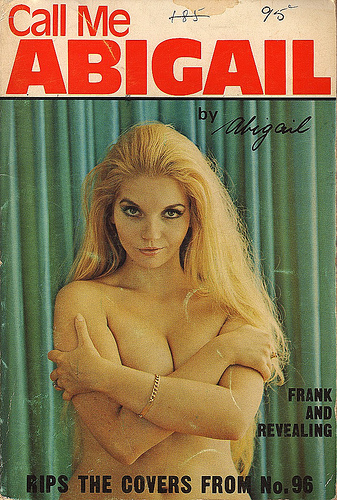
(Picture shows cover of Abigail’s 1973 best-selling “scandalous” autobiography, Call Me Abigail; copies can now sell for hundreds of dollars to collectors)

Boys Names From Australian Children’s Literature

24 Sunday Aug 2014

Posted by A.O. in Name Themes and Lists

≈ 10 Comments

Tags

aristocratic names, aristocratic surnames, Australian slang terms, Biblical names, classic names, colour names, english names, famous namesakes, fictional namesakes, Gaelic names, German names, germanic names, Greek names, hebrew names, Irish names, Latin names, locational names, modern classics, mythological names, name history, name meaning, name popularity, names from songs, names from television, names of businesses, nature names, nicknames, Old Gaelic names, Persian names, plant names, popular names, retro names, royal names, saints names, Scottish names, surname names, tree names, underused classics, unisex names

Cyan Magenta Yellow Black

Darius
Odo Hirsch’s Darius Bell and the Glitter Pool (2009) tells the story of the Bells, a proud family fallen on hard times; plucky youngest son Darius must save the family’s estate. (Name nerd bonus info: Odo is the older form of the German name Otto). Darius is the Latin form of Dareios, the Greek form of the Persian name Dārayavahush, meaning “holding on to goodness”. This name was traditional amongst the Persian kings, and Darius I was known as Darius the Great, as he ruled over the Achaemenid Empire at the height of its power. Darius III was defeated by Alexander the Great, and there are a number of minor princes with the name. Darius is mentioned several times in the Old Testament, so it is a Biblical name as well (nobody is sure which historical Darius it means). Although rare, this name is known in Australia from NRL star Darius Boyd, while there is also a Darius in The Hunger Games trilogy. Darius is a cool-sounding name that might appeal to a broad range of people.

Felix
Terry Denton’s first picture book was Felix and Alexander (1985), about a little boy named Alexander who gets lost, and his toy dog Felix must find him. Felix is a Latin name meaning “fortunate”. It was first given as a nickname to the Roman general and statesman Lucius Cornelius Sulla, a free translation of the Greek nickname he acquired during his military campaigns – Epaphroditos, meaning “beloved of Aphrodite”. The Roman procurator Felix is mentioned in the New Testament, although not in a positive way – he imprisoned St Paul. Felix was a favourite name amongst early Christians, and there are heaps of saints named Felix, including the 7th century Felix of Burgundy, who introduced Christianity to East Anglia, and three popes. Two Australian connections are Felix the Cat, and Australia Felix, the name given to the lush farmland of western Victoria by explorer Sir Thomas Mitchell. Felix was #172 in the 1900s, and left the charts in the 1920s. It returned in the 1980s at #396 and climbed steadily; it’s been on and off the Top 100 since 2011. It’s now #86, and was one of the fastest-rising names last year. A hip retro favourite growing in recognition.

Harley
Sleepy Harley (2011), written by Karen Treanor and illustrated by Kelly Iveson, is a picture book about a cat named Harley who tries to find a place to nap in a Perth suburb. Harley is a surname which comes from a place name meaning “hare meadow” in Old English. The de Harley family were nobles whose history can be traced before the Conquest, and Sir Robert Harley, first Earl of Oxford, was from a prominent political family. One of them, William Cavendish-Bentinck, became British Prime Minister in the 18th and 19th centuries; he was the maternal great-great-great grandfather of Queen Elizabeth. The name will remind many of Harley-Davidson motorycles, giving Harley a pretty cool image. Harley was #212 in the 1900s, and went up and down before dropping off the charts in the 1950s. It returned in the 1970s at #462, and rose before peaking at #70 in 1992. It dropped again before starting to rise in the early 2000s, and is not far out of the Top 100. You could see Harley as an underused classic – in use for many years, but never very popular. I have occasionally seen Harley on girls as well.

Jude
Me and Jeshua (1984) by award-winning author Eleanor Spence is a historical novel about the childhood of Jesus of Nazareth, as seen through the eyes of his cousin Jude. Jude is a variant of the name Judas, Greek form of the Hebrew name Judah, meaning “praised”. In the New Testament, Jude is used for the Apostle whose name was Judas, to distinguish him from Judas Iscariot. Jude is also listed in the New Testament as one of the brothers of Jesus (Eleanor Spence follows a tradition they were cousins), but it is not clear if Jude the Apostle was Jesus’ brother. The Apostle Jude is usually connected with the Apostle Simon the Zealot, and according to tradition they were both martyred in Beirut. Jude is well known as the patron saint of lost causes, and this has made him one of the most venerated saints. Contemporary associations are the actor Jude Law, and the Beatles song Hey Jude. Jude can also be used as a girl’s name, short for Judith, as in the YA novel by Maureen McCarthy, Queen Kat, Carmel, and St. Jude Get a Life (1995). This attractive name has quietly been gaining in popularity, and last year joined the Top 100 in Victoria.

Leonard
The Lockie Leonard series by Tim Winton (1990-97) stars a surf rat named Lachlan “Lockie” Leonard who moves to the Western Australian town of Angelus (based on Albany). Leonard is a Germanic name which can be translated as “brave lion” or “brave as a lion”. St Leonard is a legendary 6th century saint, a Frankish nobleman at the court of Clovis I who could liberate prisoners from their chains when invoked. The Normans brought the name to England, although it didn’t become particularly common until the 19th century. Famous Australians with the name include distinguished chemist Leonard Lindoy, and hard-hitting post-war cricketer Leonard “Jock” Livingston, also a talented rugby league footballer. Leonard has been a popular name amongst Jews in the past, including Jock Livingston: other examples are Canadian folk singer Leonard Cohen and actor Leonard Nimoy. Leonard was #39 in the 1900s, and peaked in the 1910s at #35. It didn’t leave the Top 100 until the 1960s, and remained in steady but low use until getting a little boost after The Big Bang Theory, with main character Leonard Hofstadter, began airing in the late 2000s. Clunky cool, this underused classic provides a way to get the popular nickname Lenny.

Nathaniel
In Isobelle Carmody’s YA novel The Gathering (1993), Nathaniel Delaney is a teenager who moves to a grim seaside town and finds himself locked in a battle between the forces of Light and Dark. Nathaniel is a variant of Nathanael, the Greek form of Hebrew Netan’el, meaning “God has given”, nearly always understood as “gift of God”. In the Bible, Nathaniel is usually identified with the Apostle Bartholomew; as Bartholomew means “son of Talmai”, it is taken to be Nathaniel’s surname. Nathaniel was in use as an English name by the 16th century, and became more common after the Protestant Reformation. It was used amongst the aristocracy, and also became a favourite in America, with author Nathaniel Hawthorne a notable bearer. Nathaniel was #179 in the 1900s, and left the charts the following decade. It returned in the 1970s at #296, and climbed steadily until it reached the Top 100 last year at #79, making it one of the fastest-rising names of 2013. A handsome retro name that gives the popular nickname Nate, it’s well known from Australian actor Nathaniel Buzolic, from The Vampire Diaries, and Australian singer-songwriter Nathaniel Willemse, who was on The X-Factor.

Rafferty
The Rafferty series by Joan Woodberry (1959-62) are the adventures of an English boy named Rafferty who moves to a fishing village on the Queensland coast. Rafferty is a common Irish surname, an Anglicised form of O’Raithbheartaigh, meaning “son of Rabhartach”. The Old Gaelic personal name Rabhartach means “wielder of prosperity”. The name has a particular Australian resonance, due to iconic Australian actor John “Chips” Rafferty. He was seen as the quintessential Australian, and took part in a marketing campaign convincing British people to migrate to Australia in the 1950s – this might explain the choice of Rafferty’s name in Woodberry’s books. Another Australian reference is the slang term Rafferty’s rules, meaning “no rules at all”. It gives the name Rafferty a pleasantly raffish, lawless feel. This name is around the 200s in Australia, and although it is rising in the UK, is more popular here than anywher else. I have also begun to see a few girls named Rafferty.

Rowan
The Rowan of Rin fantasy series by Emily Rodda (1993-2003) takes place in a fictional world. Rowan is the unlikely hero, considered a bit of a wimpy weakling by the sturdy villagers of Rin, but when danger strikes, his resourcefulness and courage saves the day. Rowan is a Scottish name that’s an Anglicised form of Ruadhán, a pet form of Ruadh, Gaelic for “red”, often given as a nickname to a man with red hair. You may remember that the red-headed Scottish outlaw Raibeart “Ruadh” MacGregor is known as Rob Roy by the English. Rowan can also be unisex when named after the rowan tree; its English name comes from the Germanic for “to redden”, because of the tree’s red berries, so either way the meaning has a connection with the colour. A pleasant association with the tree is that according to folklore it has the power to ward off evil. The name Rowan has charted for boys since the 1940s, debuting at #205, and climbing until it peaked in the 1980s at #164. It’s now around the 300s-400s. Rowan is an underused modern classic which alludes to a vibrant colour, and a magical tree.

Silvander
Norman Lindsay is famous for writing and illustrating The Magic Pudding (1918), a comic fantasy deservedly recognised as a classic. For some reason, his other children’s book, The Flyaway Highway (1936), is neglected, even though it’s just as funny and fantastical. I loved this story, which relates how Egbert and Muriel Jane meet a “bloke with horns and cows’ hooves” named Silvander Dan, who take them on a journey down the Flyaway Highway. As a child, I thought that the name Silvander was made up for the book (although I’m afraid I was already junior name nerd enough to know what it meant). However, I’ve since found that Silvander was a literary name in the 18th century, and in most of the sources I’ve read, characters named Silvander are untrustworthy bounders! The name is derived from Silvanus, the Roman god of woods and fields, from the Latin silva, meaning “wood, forest”. Although an extremely rare name, it is just enough like Silas and Alexander to not be completely outrageous, and has an agreeably silvery sound. For those who like Leander and Evander, here is another to consider.

Theodore
I told myself I would not choose more than one book from a single author, but was forced to make an exception for Odo Hirsch, from whose oeuvre I could happily fill two lists. Antonio S and the Mystery of Theodore Guzman (1997) is his first novel, a charming story about a boy who lives in a grand old house, and is fascinated by a reclusive actor. (Name nerd bonus info: Odo Hirsch is the pen name of Dr David Kausman). Theodore is from the Greek name Theodorus, meaning “God’s gift”. Theodorus wasn’t uncommon in ancient times; ironically one of its famous bearers was the 4th century BC philosopher Theodorus the Atheist. Because of its meaning, the name was a popular choice for early Christians, and saints named Theodore are numerous, including a 7th century Archbishop of Canterbury and two popes. Theodore was also traditional mongst the Byzantine Emperors, and the Russian Tsars. Theodore was #116 in the 1900s, and reached its lowest point in the 1970s at #383. It began rising steeply in the 1990s, and last year joined the Queensland Top 100 at #79, making it one of the state’s highest-rising names. A sophisticated classic name which comes with cool short forms Theo and Ted, I’d call this underused except I’m not sure how long it will stay that way.

POLL RESULTS
The public’s favourite names were Theodore, Jude and Felix, and their least favourite were Leonard, Darius and Harley.

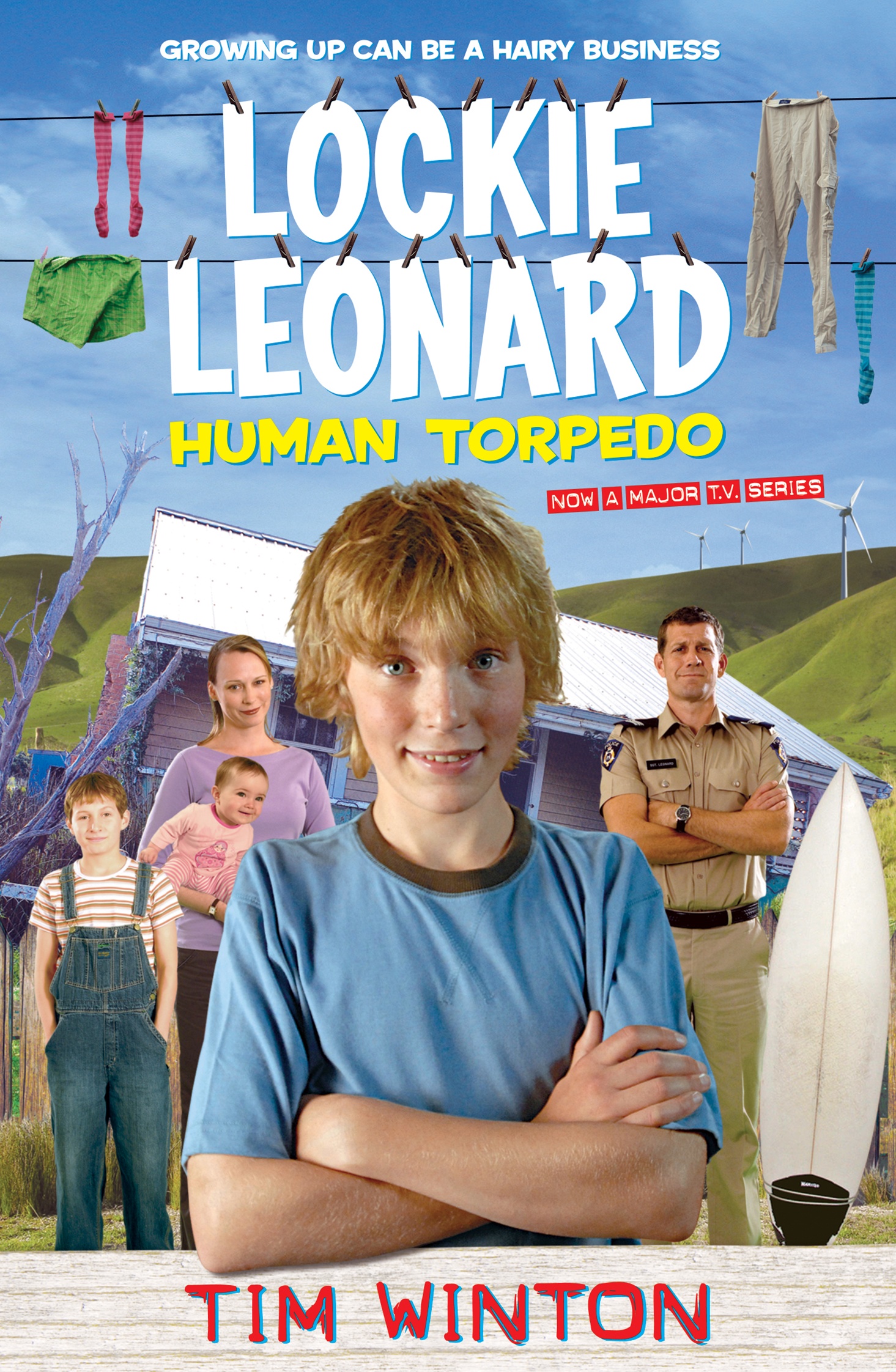
(Picture shows cover of Lockie Leonard – Human Torpedo by Tim Winton)

Famous Name: Roxanne

20 Wednesday Aug 2014

Posted by A.O. in Famous Names

≈ 3 Comments

Tags

Appellation Mountain, Babynameobsessed, Bactrian names, celebrity baby names, famous namesakes, fictional namesakes, French names, Iranian names, Latinised names, name history, name meaning, name popularity, names from movies, names from songs, names from television, royal names

tumblr_mdn8en8PGI1qa13pro1_1280Ebony at Babynameobsessed has a series called Names From My Childhood, and Abby recently had a post on girls names from 1980s television at Appellation Mountain. So I thought I would cover a 1980s name from my TV-watching childhood.

I was slightly hampered as a young television viewer, because I grew up in a rural area which only had one channel, and my family’s home was in some kind of TV black spot which meant we couldn’t get any television reception at all. However, I had friends and relatives within walking and cycling distance, so rather than get home from school and slump in front of the box, I got home from school, jumped on my bike, pedalled furiously, then slumped in front of the box.

Of course, I had to pretty much watch whatever other people had on, and my young cousins used to tune in to the long-running puppet show Mr Squiggle, where a cheery pencil-nosed man from the moon turned children’s squiggles into recognisable pictures. Mr Squiggle had a human assistant, and as it was on air for fifty years, you can tell someone’s age from the assistant they watched. Baby Boomers loved Miss Pat, Gen Xers were Miss Jane fans, while for my cousins it was Roxanne all the way.

Slightly embarrassing to admit, but while Abby was (apparently) watching Dallas and Dynasty, I was enjoying kiddie puppet shows!

Roxanne is a variant of Roxane, a French form of Roxana. Roxana is the Latinised form of the name Roshanak; a Bactrian name derived from the Avestan language of East Iran, meaning “bright, shining, radiant”. It can be understood as “luminous beauty”, “lovely flame”, or “shining star”, and this is one of the many names which have the meaning of “light” behind them. Roshanak is still a common girl’s name in Iran.

The name has become well known to us due to one woman – a Bactrian princess who became the wife of Alexander the Great. Roxana was from the ancient city of Balkh, now a small town in northern Afghanistan, and she met Alexander when he conquered the fort she was hiding in.

It is said that Alexander fell for Roxana on sight, and according to the Macedonians she was the one of the loveliest women they had seen in Asia. Despite strong opposition from his generals, Alexander married Roxana.

Instead of marrying purely for political ends, Alexander married for love, because he is said to have been infatuated with the beautiful Roxana. For her part, Roxana was pleased that her new husband didn’t force himself upon her at once, but actually made an effort to get to know her as a person (which tells you what marriage in the ancient world was generally like).

After Alexander died, Roxana bore him a posthumous son, also Alexander. To protect her position and that of her son, she murdered Alexander’s second wife Stateira, married for reasons of diplomacy, and probably his third wife as well, who was Stateira’s cousin. Roxana and her son were assassinated themselves in the power struggles following Alexander’s death.

Roxana’s romantic story was told in Nathaniel Lee’s 17th century tragedy, The Rival Queens, or the Death of Alexander the Great. The play was a huge hit right into the 19th century, and actresses who were jealous of each other were often cast in the lead roles, to add extra spice to the performance.

The name received a further boost from Daniel Defoe’s 18th century novel, Roxana, about a woman who falls into prostitution but gains freedom by marrying for money. Although a murderer and a prostitute/gold digger may not seem like appealing namesakes, they were strong, independent female characters, and Roxana became established as an English name in the 18th century.

The French form became well known through Edmond Rostand’s 19th century play Cyrano de Bergerac, where Roxane is the beautiful woman Cyrano longs for and woos for another, falsely believing she could never love an “ugly” man like himself.

Roxanne first ranked in the charts in the 1950s, after the 1950 film version of Cyrano de Bergerac, with Mala Powers in the role of Roxane; Roxanne debuted at #364 that decade. Roxanne was #282 in the 1960s, sank to #424 in the 1970s, and peaked in the 1980s at #272.

The 1980s put the focus on the name Roxanne for a few reasons. The hit song Roxanne was recorded by The Police in 1978 and re-released in 1979; Sting was inspired to write the song by the prostitutes around the band’s hotel in Paris. An old poster for Cyrano de Bergerac was hanging in the hotel’s foyer, which is where the name Roxanne came from. Not only popular in the charts of 1979-80, the pop classic Roxanne has been inducted into the Grammy Hall of Fame, and was remixed into El Tango de Roxanne in Moulin Rouge.

In the mid-1980s, the world of hip-hop went through The Roxanne Wars, where a series of “answer records” were released, inspired by UTFO’s Roxanne, Roxanne. Because of UTFO’s non-appearance at a show, teenager (Lolita) Roxanne Shante brought out Roxanne’s Revenge in answer. There were perhaps as many 100 answer records during the Roxanne Wars, and even a dance, as referenced in Do the Roxanne. So chances are you know at least one 1980s song with Roxanne in the title!

You might not think that a prostitute and a (rather silly and contrived) musical rivalry would be of much help to a name’s popularity, but as we’ve seen, a prostitute and a rather silly and contrived stage rivalry is exactly how Roxana became established in the 18th century. History repeats.

And keeps repeating. Towards the end of the 1980s, the movie Roxanne came out with Daryl Hannah in the title role: a clever rom-com remake of Edmond Rostand’s Cyrano de Bergerac, which gave the tragedy an upbeat ending. In the movie, Roxanne is a brainy astronomer.

After the 1980s, the name Roxanne plummeted, and left the charts completely in the early 2000s. You might say this name is dated, and could claim it as a trendy name, but as Roxanne never became popular, it still seems usable – in fact celebrity parents Toby Allen and Darren Weller chose it as their daughter’s name.

Roxanne has a fashionable X in it, while the -anne at the end makes it seem like one of the many Anne names. I have seen a couple of babies named Roxy, maybe influenced by celebrity mum Roxy Jacenko, and Rocky would make a cool tough-girl nickname.

POLL RESULTS
Roxanne received an approval rating of 51%. 16% of people saw Roxanne as too dated and 1980s, but 15% thought it was strong and sexy.


Girls Names from Australian Children’s Literature

17 Sunday Aug 2014

Posted by A.O. in Name Themes and Lists, Requested Names

≈ 10 Comments

Tags

astronomical names, Babylonian names, Biblical names, classic names, english names, Etruscan names, fictional namesakes, flower names, French names, Greek names, hebrew names, Irish names, Italian names, Latin names, Median names, middle names, month names, mythological names, name history, name meaning, name popularity, name trends, names from television, nature names, nicknames, plant names, popular names, retro names, Roman names, royal names, Semitic names, Shakespearean names, underused classics, underused names, unisex names

HarrietYoullDriveMeWild01

This week it is Children’s Book Week, which is run by the Children’s Book Council of Australia. Librarians and teachers everywhere will be thinking up exciting new ways to encourage children to read, while the CBC has awarded prizes to the best new Australian children’s books. I thought it would be fun to join in the celebrations, and many of the books chosen are classics and award winners.

Amaryllis
I know two characters with this name. One is Amaryllis “Ryl” Mereweather, from H.F. Brinsmead’s Pastures of the Blue Crane (1964), about a teenage girl who inherits an old shack in northern New South Wales. (Name nerd bonus info: H.F. Brinsmead stands for Hesba Fay – Hesba is derived from the Greek hesperus, meaning “western”). The other is in Sally Odger’s fantasy Amy Amaryllis (1992), about an ordinary Australian girl named Amy Day who switches identities with a girl named Amaryllis Loveday, from a magical world named Ankoor. Amaryllis is a Greek name meaning “to sparkle”, perhaps to suggest sparkling eyes. In Virgil’s pastoral poems, The Eclogues, Amaryllis is a beautiful shepherdess, and the poet makes a play on words to suggest that her name comes from Latin amor, “love”. The amaryllis flower is often known as “Easter lily” in Australia; it is named after the literary character, so this is not just a simple flower name. Unusual and lovely, Amaryllis comes with a host of possible nicknames, including Amy, Ryl, Rylla, Lily, Lissy, and Mary.

Beatrice
In Playing Beatie Bow (1980) by Ruth Park, Beatie Bow is a local legend, a game that children play to frighten each other. But when teenage loner Abigail watches the game, she is brought to the Sydney of one hundred years earlier by a strange girl named Beatrice “Beatie” Bow. This classic is a YA time-travel historical mystery adventure with a dash of romance, and so firmly grounded in The Rocks area of Sydney that you can follow every step of Abigail’s journey. (Name nerd bonus info: Abigail’s parents named her Lynette, but when her parents separate, she chooses Abigail for herself, because it’s an “old witch” name). Beatrice is the Italian form of Beatrix, very famous because of the beautiful muse in Dante’s Divine Comedy. The name has been used in England since the Middle Ages, including by royalty; Princess Beatrice of York was named after a daughter of Queen Victoria, but itwas used in the royal family long before. It’s also a Shakespearean name, because in the comedy Much Ado About Nothing, Beatrice is the witty heroine. Beatrice was #50 in the 1900s, and left the Top 100 in the 1930s; by the 1960s it had left the charts. It made a modest comeback in the 1990s, after the birth of Princess Beatrice, and has remained around the 500-600 level. This is an elegant retro name which has long remained underused. Bea is the usual nickname, although Beatrice Prior from the Divergent series goes by Tris.

Blossom
Little Ragged Blossom is one of the main characters in May Gibbs‘ Snugglepot and Cuddlepie series (1918-40), featuring her plump “gum nut babies”. Blossom is a poor little gum-blossom girl, alone in the world until she gains the friendship and protection of gum-nut boys Snugglepot and Cuddlepie. From then on, she is part and parcel of their adventures, and not infrequently plays the role of damsel in distress, such as when she needs rescuing from the wicked Banskia Men. Even now, I cannot see a gum tree in bloom without imagining the flowers as little blossom girls … The word blossom is used for flowers that grow in masses and clusters, especially on trees, and evokes spring and freshness. Blossom has been used as a girl’s name since the 18th century, and is probably more common as a nickname, such as aviation engineer Maxine “Blossom” Miles, or a middle name, such as jazz singer (Margrethe) Blossom Dearie. On television, Blossom was one of the Powerpuff Girls, and Blossom Rosso the floppy-hatted heroine of sitcom Blossom. Ultra-feminine, quirky and cool, could Blossom be the ultimate flower name?

Celia
Feeling Sorry for Celia (2000) is Jaclyn Moriarty’s side-splittingly comic début epistolary YA novel. Private school girl Elizabeth spends most of her time fretting over her best friend Celia, whose life is one self-caused drama after another. However, a pen-pal programme with the local public school teaches Elizabeth how real friendship works. Celia is the feminine form of Caelius, a Roman family name traditionally derived from caelum, Latin for “heaven”. However, the Caelii traced their ancestry to the Etruscan hero Caeles Vibenna, so the name probably isn’t Latin in origin. It may come from Cel, the Etruscan earth goddess who is the equivalent of Gaia; her name means “honoured”, and the Etruscans named the month of Celi (September) after her. I like the idea of an earthy goddess becoming connected with heaven. Shakespeare used the name for an attractive, serious character in As You Like It, and Ben Jonson wrote the poem Song to Celia, which became Drink To Me Only With Thine Eyes. These writers sparked interest in Celia as an English name in the 17th century. This literary name is both rare and traditional, and doesn’t seem out of place next to popular names like Olivia and Sienna.

Dot
Ethel C. Pedley’s posthumous novel Dot and the Kangaroo (1899) is about a five-year-old girl named Dot who wanders off into the bush and gets lost. She is befriended by a kangaroo who has lost her joey, and gives Dot some magic berries that allow her to understand the speech of animals. It has a strong conservationist message in regard to our native flora and fauna, which is still very much needed. The book was the first to show Australian animals in a genuine Australian setting, and became an immediate favourite. Dot is a short form of Dorothy which dates to medieval times, and has been used as an independent name at least since the 17th century. This adorably pert little name could honour a Dorothy, and also works well in the middle.

Esther
Ethel Turner’s Seven Little Australians (1894) is the only Australian book to be continuously in print for more than a century. Featuring a family of mischievous, lovable army brats who live in Sydney’s outer suburbs, it is surprising how little it has dated. Blended families, teen rebellion, obsession with body image, schoolgirl crushes, and discipline problems … all topics of interest more than a hundred years ago too. The seven little Australians are Meg, Pip, Judy, Nell, Bunty, Baby, and The General; their father is stern Captain Woolcot and stepmother (The General’s mother) is Esther. Esther is beautiful and sweet, but barely older than her eldest step-children, and incapable of really mothering them. Hilarious, heart-warming, and tragic, this is one of Australia’s best-loved children’s books. In the Bible, Esther was a Jewish queen of a Persian king; her story is the basis for the Jewish holiday of Purim. The meaning of Esther is much debated. It may be from a Semitic word meaning “star, morning star”, or a Median word meaning “myrtle” (the translation of her Hebrew name, Hadassah). Another theory is that it comes from the Babylonian fertility goddess Ishtar (Ishtar also represents the morning star, Venus). Esther was #73 in the 1900s, and left the charts in the 1920s. It reached its lowest point in the 1950s and ’60s at #379, but has climbed since then, and isn’t far outside the Top 100 in Victoria. This underused classic is very much on trend at present.

Harriet
Harriet, You’ll Drive Me Wild (2000) is a picture book written by kidlit doyenne Mem Fox, illustrated by Marla Frazee. Harriet Harris is a toddler who doesn’t mean to be naughty, but trouble follows in her wake without her even trying. Harriet’s mother is a calm woman who doesn’t like to yell, but Harriet pushes her to breaking point. The book helps explain to littlies why parents lose their cool. (Name nerd bonus info: Mem Fox’s full name is Merrion, but she has always gone by Mem). Harriet is the English form of Henriette, the feminine form of French Henri, and thus a feminine form of Harry. Harriet was #122 in the 1900s, and left the charts in the 1930s. It returned in the 1970s, and has been climbing ever since. Last year it was one of the fastest rising names of 2013, and joined the Top 100 at #89. Cute and spunky, it can be shortened to Hallie or Hattie – Hattie is a hen in Mem Fox’s Hattie and the Fox (1986).

Josie
Josephine Alibrandi, known as Josie to her friends, features in Melina Marchetta’s breakthrough YA novel, Looking for Alibrandi (1992). A coming of age story, its smart-mouth heroine is in her last year of school, dealing with boys, family, exams, mean girls, and her father, who left when she was a baby and has suddenly reappeared in her life. Looking for Alibrandi was an instant success upon publication, and has been called “the most stolen library book”. Josie is a short form of Josephine, used as an independent name since the 16th century. It has sometimes been given to boys, as a short form of Joseph or Josiah. Josie first ranked in the 1920s at #291, and left the charts in the 1940s. It returned in the 1970s, and climbed before peaking in 2009 at #175. This is an underused retro name which doesn’t sound old-fashioned, but sassy and stylish.

Liesel
Liesel Meminger is the young girl in Markus Zusak’s The Book Thief (2005), set in Nazi Germany during World War II, and narrated by Death himself. Liesel is illiterate at the start of the story, but through learning to read, discovers a lifelong love of words, and finds solace in stealing books to share with others. Against a backdrop of fear and horror, the story shows that books can feed the soul even in our darkest hours. The story does end up having an Australian connection, and a specific Australian setting is used in a very unexpected way. Liesel is a German pet form of Elisabeth, pronounced LEE-zel. Although it’s never charted in Australia, this charming name is very familiar because of Liesl from The Sound of Music, and swimmer Leisel Jones.

Norah
Norah Linton is the heroine of Mary Grant Bruce’s Billabong series (1910-42). Making her début in A Little Bush Maid at the age of twelve, Norah lives at Billabong Station in northern Victoria. She’s a hardy, spirited tomboy who loves horse-riding, camping, and fishing, and is a total daddy’s girl. The books haven’t aged too well, but Norah is an ancestor of other feisty, independent Australian heroines, such as Ryl Merewether and Josie Alibrandi. Norah is a variant of Nora, a pet form of names such as Honoria and Eleanor. It’s often thought of as particularly Irish, and records show many Norahs of the 18th century were born in Ireland. Hip and arty, Norah is fast growing in popularity in both the UK and US, and already popular in Europe, but almost unknown in Australia. It deserves serious consideration by those keen to get ahead of the trends.

Thank you to Manday for suggesting the name Liesel be featured on Waltzing More Than Matilda, and for recommending The Book Thief be added to this list.

POLL RESULTS
The public’s favourite names were Beatrice, Harriet and Norah, and their least favourite were Josie, Blossom and Dot.

(Picture shows cover of Harriet, You’ll Drive Me Wild, from Mem Fox’s website)

← Older posts
Newer posts →

Enter your email address to follow this blog

Categories

Archives

Recent Comments

A.O.'s avatarwaltzingmorethanmati… on Zarah Zaynab and Wolfgang…
Madelyn's avatarMadelyn on Zarah Zaynab and Wolfgang…
JD's avatardrperegrine on Can Phoebe Complete This …
A.O.'s avatarwaltzingmorethanmati… on Rua and Rhoa
redrover23's avatarredrover23 on Rua and Rhoa

Blogroll

  • Appellation Mountain
  • Baby Name Pondering
  • Babynamelover's Blog
  • British Baby Names
  • Clare's Name News
  • For Real Baby Names
  • Geek Baby Names
  • Name Candy
  • Nameberry
  • Nancy's Baby Names
  • Ren's Baby Name Blog
  • Sancta Nomina
  • Swistle: Baby Names
  • The Art of Naming
  • The Baby Name Wizard
  • The Beauty of Names
  • Tulip By Any Name

RSS Feed

  • RSS - Posts

RSS Posts

  • Celebrity Baby News: Melanie Vallejo and Matt Kingston
  • Names from the TV Show “Cleverman”
  • Can Phoebe Complete This Sibset?
  • Zarah Zaynab and Wolfgang Winter
  • Baby, How Did You Get That Name?
  • Celebrity Baby News: Media Babies
  • Celebrity Baby News: Adelaide Crows Babies
  • Celebrity Baby News: Chris and Rebecca Judd
  • Names at Work: Name News From the World of Business and Employment
  • Celebrity Baby News: Sporting Round Up

Currently Popular

  • Celebrity Baby News: Toby Allen and Darren Weller
  • Rare Boys Names From the 1950s
  • Girls Names From Native Australian Flowers
  • Girls Names of Australian Aboriginal Origin
  • The Top 100 Names of the 1920s in New South Wales

Tags

celebrity baby names celebrity sibsets english names famous namesakes fictional namesakes honouring locational names middle names name combinations name history name meaning name popularity name trends nicknames popular names saints names sibsets surname names twin sets unisex names

Blog at WordPress.com.

Privacy & Cookies: This site uses cookies. By continuing to use this website, you agree to their use.
To find out more, including how to control cookies, see here: Cookie Policy
  • Subscribe Subscribed
    • Waltzing More Than Matilda
    • Join 517 other subscribers
    • Already have a WordPress.com account? Log in now.
    • Waltzing More Than Matilda
    • Subscribe Subscribed
    • Sign up
    • Log in
    • Report this content
    • View site in Reader
    • Manage subscriptions
    • Collapse this bar
 

Loading Comments...