• About
  • Best Baby Names
  • Celebrity Baby Names
  • Celebrity Baby Names – Current
  • Celebrity Baby Names – Past
  • Featured Boys Names
  • Featured Girls Names
  • Featured Unisex Names
  • Links to Name Data
  • Waltzing on the Web

Waltzing More Than Matilda

~ Names with an Australian Bias of Democratic Temper

Waltzing More Than Matilda

Tag Archives: historical records

Names of Australian Male Paralympians

10 Monday Sep 2012

Posted by A.O. in Historical Records

≈ Comments Off on Names of Australian Male Paralympians

Tags

historical records

Aaron (2)

Abebe

Adam (2)

Adrian

Ahmed

Andrew (4)

Andy

Antonio

Ashley

Bart

Ben (5)

Bill

Blake

Brad (2)

Bradley

Brendan (2)

Brett (2)

Bryce (2)

Cameron (3)

Carl

Chris (3)

Cody

Damien

Daniel (3)

Darren (3)

David

Dean

Dennis

Dominic

Dylan

Eric

Erik

Evan

Gabriel

Gavin

Gerrard

Grant (2)

Greg (2)

Guy

Hamish

Heath

Ian

Jack

Jake

James

Jannik

Jason (2)

Jay

Jeremy (2)

John (2)

Jon (2)

Jonathan

Josh

Justin

Kieran

Kurt

Leigh

Lindsay

Luke

Mark

Marty

Matthew (5)

Michael (7)

Mitchell (3)

Nathan (2)

Nazim

Nicholas

Nick

Nigel

Patrick

Paul

Peter

Reagan

Rheed

Richard (3)

Rick

Rob

Robbie

Rod

Roy

Russell

Ryan (2)

Ryley

Sam (5)

Scott (2)

Sean (2)

Sebastian

Shannon

Shaun (2)

Shawn

Simon

Stephen (2)

Steve

Steven

Stuart

Thomas

Tige

Tim

Timothy

Toby

Todd

Tristan

Troy

Tyson

Wade

There will be more Olympian and Paralympian name stories coming during 2012

Names of Australian Female Paralympians

10 Monday Sep 2012

Posted by A.O. in Historical Records

≈ 1 Comment

Tags

historical records

Congratulations to all our athletes and coaches at the London Paralympics Games – the most successful paralympic team in Australian history!

Alexandra

Amanda (3)

Amber

Angelique

Angie

Annabelle

Brandie

Bridie

Brydee

Carlee

Carol

Charlotte

Christie

Christine

Claire

Clare

Cobi

Courtney

Daniela

Deahnne

Elise

Ellie

Erinn

Esther

Felicity

Gemma

Georgia (2)

Grace

Hannah

Jacqueline

Jamie

Jane

Janel

Jayme

Jemima

Jenni

Jennifer

Jessica

Joann

Joany

Jodi (2)

Julie

Kara

Kate

Kath

Katherine

Kathleen

Kathryn

Katie

Katrina

Katy

Kayla

Kelly

Kerry

Kirrilee

Kristy

Kylie

Leanne

Libby

Liesl

Lindy

Lisa

Louise

Madeleine

Madison

Maddison

Marayke

Meica

Mel

Melanie (2)

Melissa (2)

Michelle (3)

Morgan

Natalie

Nerice

Nicole (3)

Noni

Prue

Rachael (2)

Rachel

Rebecca

Rosemary

Sarah (4)

Sharon

Shelley (2)

Simone

Stephanie (2)

Susan

Tahlia

Tanya

Taylor

Teigan

Tina

Torita

Tyan

Famous Name: Sapphire

05 Wednesday Sep 2012

Posted by A.O. in Famous Names

≈ 4 Comments

Tags

celebrity baby names, english names, gemstone names, Greek names, historical records, name history, name meaning, name popularity, nature names, nicknames, opinions on names, popular culture, popular names, rare names, stripper names

The Australian movie The Sapphires was released here on August 9, after making it’s premiere at the Cannes Film Festival in May, where it received a resounding ten-minute standing ovation. The film is set in 1968, and the plot involves four sisters from a remote Aboriginal mission who are given the opportunity to go to Vietnam as entertainers to the troops – billed as The Sapphires. It’s based on a true story, with the screenwriter’s mum and auntie serving as the inspiration, as they performed as part of a quartet during the war. The “original Sapphires” are thrilled by the film’s portrayal of them, and the movie is making the Indigenous community they work in proud of their achievements.

The Sapphires has received mostly warm reviews from critics, and became the highest-earning Australian film on its opening weekend. I can see why it’s winning the hearts of audiences, because it’s charmingly unpolished, and is one of those feel-good movies where you end up laughing, crying, singing and tapping your feet. Serious topics such as racial prejudice are touched on (in fact are essential to the plot), but they don’t overshadow what is basically a light-hearted comedy-drama. Chris O’Dowd is hilarious, Jessica Mauboy’s singing fantastic, and Deborah Mailman is, as always, luminously charismatic.

If you are a fan of these warm-hearted underdogs-put-on-a-show stories and also love soul music, I urge you to check this movie out when it comes to your own part of the world. It’s being compared to Dreamgirls, but I can’t actually see they have much in common – the movie is probably closer to The Commitments. Of course what I spent most of the movie doing (in between laughing, crying, singing, tapping my feet, and trying to make sure no major popcorn disasters took place) was wondering how Sapphire could work as a name.

The name Sapphire is after the gemstone, which comes from the Greek meaning “blue stone”. However, the Greeks were most likely referring to lapis lazuli. Sapphires can actually come in a range of colours, but never red – red sapphires are called rubies.

In ancient Persia, sapphires were said to be a manifestation of heaven, and there is a tradition that the original Ten Commandments given to Moses by God were written on sapphire (although the Bible itself merely says that God could be seen standing on something that looked like a pavement of “clear sapphire”). In the Middle Ages, sapphires were said to have healing properties, and they have long been popular as royal jewels. Sapphires are favourites amongst the British royal family for their personal jewellery, as well as the Crown Jewels; Princess Anne and Princess Diana both had sapphire engagement rings, and Diana’s was inherited by Catherine, Duchess of Cambridge.

Sapphires have been mined in Australia for over a century, and commercially for more than fifty years. Australia was once the leading source of gem-quality sapphires, but we were overtaken by Madagascar; even today, many sapphires sold as coming from Asia are actually from Australia. Many Australian sapphire mines are in central Queensland, and indeed there is a mining town in that state named Sapphire, although the best are said to be found in the New England region of New South Wales. You can also have a go fossicking for your own sapphires – in New South Wales, you don’t even need a license to do so.

Sapphire has been used as an uncommon personal name for centuries, and got a boost in popularity around the early twentieth century, when other gemstone names such as Ruby and Emerald became fashionable. Not surprisingly, records show that most Australians named Sapphire came from New England or central Queensland, so here it seems to have local significance connected to the mining trade.

If you look online for opinions on the name Sapphire, you are almost certain to find the phrase “stripper name” attached to it. Granted, there are strippers with the stage name Sapphire – then again, there are strippers named Ruby, Lola, Angie, Madison, Abby, Victoria, Lucy, Alicia, Katie, Sarah, Rebecca, Elizabeth and basically any vaguely “girly” contemporary name you can think of. There are strippers using my own name, and nobody has ever assumed I simply must be a stripper with a sexy name like Anna, or shoved money down my bra and asked me to dance around a pole.

In fact, when Ruby became fashionable a few years ago, some of the most common complaints about it was that it sounded “trashy”, “stripperish”, and “too sexy”. Well, guess what? Ruby is now one of the most popular name for girls, being in the Top 10 of every state, and #1 in several states; it’s also been used as a baby name by several celebrities. It seems more like a cute little girl name that a sexy one, and the chances of all those thousands of young Rubys growing up to become strippers is statistically improbable.

If you love Ruby, but worry it’s too popular, you might might want to consider this beautiful gemstone name. Whether you have an attachment to Indigenous culture, Australian film, soul music, the gemstone trade, fossicking, sapphire mining areas, the Sapphire Coast in southern New South Wales, or simply love these deep blue jewels, Sapphire makes a lovely and unusual choice. Some may like Saffy as a nickname.

NOTE: Information on stripper’s names from Australian businesses online.

Saturday Sibset from History: The Armytage Family of Como House

05 Saturday May 2012

Posted by A.O. in Historical Records, Sibsets in the News

≈ 7 Comments

Tags

historical records, name combinations, sibsets

Como House in South Yarra, Melbourne, is one of the few remaining large estates still existing in the suburbs. It was built in 1847, just over a decade after European settlement of the Port Phillip district. For almost a century, it was owned by the Armytage family, wealthy graziers and prominent members of Melbourne society. Originally, the grounds were 54 acres, but today the house is surrounded by 6.5 acres of gardens. Como House is owned by the National Trust of Victoria.

These are the names of the members of the Armytage family, fairly typical for the nineteenth century, and also an interesting look at a slice of Melbourne history.

Charles Henry (1824-1876)

Born and educated in Tasmania, Charles was wealthy by inheritance, and increased the family fortune through working a large sheep holding outside Geelong, named Fulham Station. He bought Como House for forty thousand pounds in 1864 as his family’s town house, hearing about the sale at his club while in Melbourne on business. When his family moved to Melbourne, they soon established themselves as one of the premier families in the Government House set. He died of a pancreatic disorder just after a year after lavish extensions to the house were completed.

Caroline Morell nee Tuckwell (1832-1909)

Caroline was from England; she emigrated to Australia as a teenager with her family. Caroline was used to managing the sheep station during her husband’s absences, and once wrote that the happiest part of her life was teaching the Aboriginal children and worker’s children alongside her own. After being widowed, and left with extensive properties and investments to manage, Caroline took her nine children, a retinue of servants and two cows on a world tour for four years. (The cows were to feed the baby). During the tour, she sent crate-loads of mirrors, vases, chandeliers and furniture back to Como House.

Charles Norman Learmouth (1857-1942)

Educated at Geelong Grammar, Charles attended Cambridge University in England while the rest of of the family were on a world tour. At university, he rowed in the Cambridge eight, and his team won the Grand Challenge Cup at Henley. Married Leila Matilda Buckland Halloran in 1890. Charles was called by his middle name, Norman, to distinguish him from his father.

Ada Elizabeth (1859-1939)

Ada worked for the Red Cross during World War I, and devoted her spare time to the Boy Scout movement. An avid photographer, Ada spent years documenting her home and her family. Ada and her sister Leila were the last surviving members of the children of Charles and Caroline, and they sold Como House and all its contents to the National Trust of Victoria in 1959 – the first house the National Trust bought. They also left an extensive archive of diaries, letters, journals and photographs.

George Herbert (1861-1925)

Educated at Toorak College in Melbourne, and Western College in Brighton, England. At school in England he proved a champion athlete and won the South of England School’s Cup two years in a row. He was managing partner at Fulham Station. Married Amelia Fanny Tyler in 1892.

Harold Augustus (1862-1926)

Educated at Geelong Grammar, Toorak College, and Western College. He managed several pastoral properties in the family’s possession, and was also part of the horse racing world.

Ethel Maud (1865-1872)

Died during a diphtheria epidemic, aged seven.

Ernest Adolphus (1867-1898)

Laura Evelyn (1869-1956)

Frail and artistic, Laura remained behind at Como House when her sisters Ada, Constance and Leila were away from Melbourne for eleven years, unable to leave Europe because of the First World War. She lived the life of a recluse from the 1920s onwards.

Constance Caroline (1871-1969)

During the round of parties and celebrations to mark the Federation of Australia in 1901, Constance met Captain Arthur Fitzpatrick, aide-de-camp to the Governor of Victoria. They were married on May 9 1906, and their wedding was the social event of the season, with the reception held at Como House. (Constance’s bridal photo was used for Girls Names from the Top 100 of the 1900s). Constance and Arthur went to live in England; however the marriage did not turn out well, and Arthur abandoned his wife, taking all her money with him. Constance went back to Australia in 1910, and thereafter lived the life of a spinster.

Frederick Felix Henry (1874-1910)

Died in London.

Leila Christina (1875-1965)

In 1891, Leila attended finishing school in Paris, and during this year, her mother and older sisters stayed in London. In 1894, she made her debut during the Melbourne Cup season at the ballroom of Como House. When War War I broke out, Leila joined the Voluntary Aid Detachment of the Red Cross, and was sent to an Australian military hospital in France. She was joined by her older sister Constance, where they worked as untrained nurses and ambulance drivers, picking up the wounded and the dying from the battlefields.

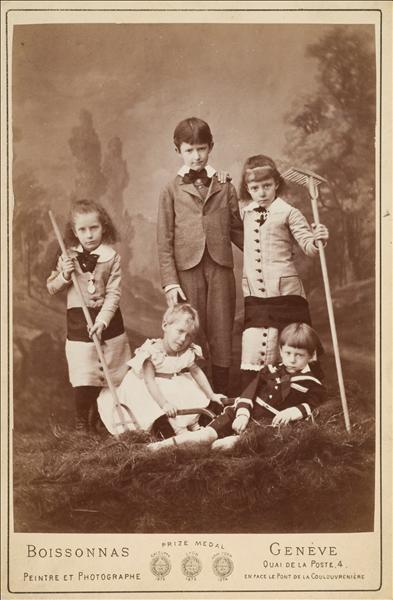
(Top photo shows Constance, Leila, Ernest, Laura and Frederick on their European tour c. 1878; iimage from Culture Victoria. Bottom photo shows Como House as it is today; image from Melbourne Fresh Daily).

Requested Name: Anzac

25 Wednesday Apr 2012

Posted by A.O. in Requested Names

≈ 14 Comments

Tags

birth announcements, historical events, historical records, holiday names, honouring, middle names, military events, name combinations, name history, name meaning, nicknames, unisex names

Today is ANZAC Day, one of the most solemn and significant days on the Australian and New Zealand calendars. Originally a commemoration for the Australian and New Zealand Army Corps (ANZACs) who fought at Gallipoli during World War I, today it also honours all those who served and died for their country during military operations.

It marks the anniversary of the first major military action fought by Australian and New Zealand forces in 1915, as part of World War I. The Gallipoli Campaign took place on a peninsula near the Dardanelles in what is now Turkey, and was an attempt by the British and French to capture Constantinople (now Istanbul), and secure a safe route to Russia. The attempt was a failure for the Allies, and resulted in the loss of many lives.

While great military victories are often commemorated as national days of celebration, Australia and New Zealand instead remember this bitter military failure. Although Australia had been independent for thirteen years, and New Zealand for seven, when World War I broke out, many in both countries still thought of themselves as British (they had been, only a few years previous), and had a great deal of faith in the British Empire.

The miserable failure of the Gallipoli Campaign did much to shake that faith in British superiority. The stories of courage and heroism from the ANZACs bolstered a feeling of national pride, and a national identity which until then had been lacking. It is popularly said that although Australia officially became a nation in 1901, we only psychologically separated ourselves from Britain in 1915.

There is a long tradition of giving children a name to honour military events, and Anzac is another of these. Although the name Anzac is protected by the government to ensure it is not misused, it is permitted to use it on people. It would make a very patriotic name, especially for a child born on or near ANZAC Day.

Through reading the historical records, Anzac seems to have been most often given as a middle name. When used as a first name, it was almost always given to boys. As a middle name, it was much more even, but still more often given to boys than girls.

Although there seems to be have been a spate of baby Anzacs after the Gallipoli Campaign, it is a name still in use today, and I last saw a baby named Anzac in a birth announcement less than two years ago (a boy). For girls, Anne or Annie could be used as a nickname, and Zac seems most likely for a boy.

Some Anzac Name Combinations From the World War I Era

Female

Alma Anzac Myrtle

Annie Anzac

Anzac Cavel Vardon

Clover Anzac

Dardandella Anzac

Maple Anzac

Verdun Anzac Jane


Male

Anzac Gallipoli Claude

Anzac Kitchener

Lalbert Anzac

Valentine Anzac

Vivian Anzac Jasper

William Anzac France

Winston Anzac

Thank you to Larkin for suggesting the name Anzac back in early December, and waiting so patiently for ANZAC Day to arrive so that it could be covered!

(Image shows the Beach Cemetery at Anzac Cove, containing the remains of allied troops who died during the Battle of Gallipoli. Most of the graves are from the Australian Imperial Forces, and the first graves were dug here on the day of landing, April 25 1915)

Waltzing With … Valentine

13 Sunday Feb 2011

Posted by A.O. in Waltzing with ...

≈ 2 Comments

Tags

birth notices, famous namesakes, fictional namesakes, French name popularity, French names, historical records, holiday names, Latin names, locational names, middle names, name combinations, name history, name meaning, names from films, papal names, rare names, Roman names, saints names, Shakespearean names, UK name popularity, unisex names, US name popularity

great-barrier-reef

Name Story
As tomorrow is St. Valentine’s Day, I thought I would focus on the name connected with this day for lovers.

The history of how the name became associated with a day for sweethearts is rather murky. The feast of Saint Valentine was first established in 496 by Pope Gelasius I, and he freely admitted that nobody had a clue who Valentine was or what he had done apart from give up his life for his faith and been buried on February 14; traditionally in 269.

There were so many martyrs called Valentine that the compilers of hagiographies didn’t know which Valentine Gelasius meant – hardly surprising as he didn’t either – but managed to whittle it down to two candidates: a bishop and a priest. Saint Valentine seemed doomed to be relegated to the ranks of the obscure minor saints.

Then the Italian archbishop and chronicler Jacobus de Voragine compiled The Golden Legend around 1260. This bestseller of the Middle Ages gave the reader a little story about each saint on the liturgical calendar. It included a brief biography of Saint Valentine which portrayed him as a priest who refused to deny Christ before the Emperor Claudius in the year 280.

Before he was decapitated for his obstinacy, he restored the sight of his gaoler’s blind daughter as a show of Christ’s power. (The daughter was also deaf, but The Golden Legend remains mute as to whether that was similarly healed). This legend became more and more romantically embroidered until Saint Valentine was a priest imprisoned for marrying Christian couples, was in love with the blind daughter he healed, and sent her a card signed, “From your Valentine.”

A popular notion is that the church introduced Valentine’s Day as a Christian substitute for the pagan festival of Lupercalia. You will read this all over the place as if it is an established fact. Actually it has pretty much zero evidence to support it, and was first suggested by two 18th century antiquarians (one a priest).

The idea that Saint Valentine’s Day was a day set aside for lovers dates back to a poem written by Geoffrey Chaucer in 1382, in which he pretended it was an ancient tradition. Fake ancient traditions being all the rage in medieval Europe, it quickly became fashionable to write poems and perform other romantic acts for your beloved on February 14.

Older Australians sometimes grumble about the Americanisation of Valentine’s Day, but if that means you get a card, flowers, and a box of chokkies instead of nothing, then hurray for Americanisation say I! The big event that happened here on Valentine’s Day was the decimalisation of our currency in 1966 – mm, romantic.

I wish you all a happy Saint Valentine’s Day, for although the whole thing turns out to be as fake as a decimalised three dollar bill, it’s as real as really real to everyone who gets a flutter in their heart when they receive a poem, card or SMS signed, From your Valentine.

Name Information
Valentine is from the Roman name Valentinus, derived from the Latin valens, meaning “strong, vigorous, healthy, powerful.” The name was popular in ancient Rome; you can tell how common it was from the fact that there are eleven saints called Valentine, and three called Valens. There has also been a Pope Valentine, a member of the Roman nobility who died just five weeks after being consecrated.

The medieval romance Valentine and Orson tells of twin brothers who are abandoned in the woods as babies. While Valentine is brought up as a knight at a royal court, Orson is raised by bears and becomes a wild man of the woods, until he is tamed by Valentine, and becomes his servant. There are two Valentines in the plays of William Shakespare: one a main character in Two Gentlemen of Verona, the other a bit part in Twelfth Night. Valentine is the sort of romantic, fairy-tale name which has seen it chosen for sci-fi, fantasy, and video games.

In use as an English name since the Middle Ages, Valentine is more often given to boys, although girls named Valentine are relatively common (relative to the number of overall Valentines, I mean). In France, Valentine is a girl’s name, the feminine form of Valentinus, said with the accent on the last syllable instead of the first. It is a Top 100 girl’s name in France, and may have been given a boost from the character named Valentine, a student and model, in the film Three Colours: Red.

Valentine was on the US Top 1000 for boys from 1880, and didn’t leave it permanently until the mid-1950s. It’s only charted twice for girls – once in 1885, and once in 1917. In 2013, there were 32 baby girls given the name Valentine, and 35 boys, making the name almost evenly unisex in the United States. The same situation exists in the UK, where there were 9 girls and 8 boys named Valentine in 2013.

Valentine has never charted in Australia, and is in rare use (the Italian form Valentino is far more common), but I do see it as a middle name for both sexes in birth notices, especially around Valentine’s Day. There are thousands of Valentines in Australian historical records, mostly male, although as a middle name more evenly given to both sexes. The name seems fairly multicultral, given to men with British, Italian, German, and Jewish surnames.

Some romantic name combinations from Australia which took my eye were Valentine Orson, Valentine Giovanni, Cecil Endymion Valentine, Percival Valentine, Capel Arthur Valentine, Lemuel Reginald Valentine Fitzgerald, Ethelbert Valentine, Valentine Aubrey Hamilton, and Saint Valentine, and for girls Evangeline Valentine, Delice Frances Valentine, Lila Valentine, Fairy Valentine, Queenie Valentine, and Valentine Lovely.

Famous Australians named Valentine include war hero Valentine Stacy, scientist Valentine Anderson, and radio and TV pioneer Valentine McDowall (born on Valentine’s Day). Convict Valentine Marshall was transported to Tasmania as a teenager for taking part in political riots, but sadly for romance, he later got in trouble for spouse abuse.

More recently, Valentine Trainor invented the sport of Ironman, and Valentine Jones was the guitarist for Billy Thorpe and the Aztecs. Of course, you will see the name of a famous Valentine every time you go the movies at a Hoyts cinema – Val Morgan, the head of Val Morgan Advertising. He handed his name down to his son, William Valentine Morgan.

The suburb of Valentine in Lake Macquare is named after Henry Valentine Joseph Geary, a property developer and mine owner in the area. Meanwhile Valentine Creek in the Snowy Mountains may have been discovered on a Valentine’s Day – the Valentine Hut nearby was originally painted red with white hearts, a motif which even went as far as the toilet seat.

A famous female Valentine was Valentine Leeper, an eccentric teacher born in Melbourne on February 14 in 1900. She became known for writing influential letters on subjects such as education, the ordination of women, international politics and indigenous affairs. She had her own radio show for many years, where she shared little-known facts and her own opinions in equal measure, and if alive today, would surely be a busy blogger and tireless tweeter.

Ms Leeper’s birth date is important in Australian cultural history, because Valentine’s Day in 1900 is the date on which the main events occur in Joan Lindsay’s 1967 novel, Picnic at Hanging Rock. An unsolved mystery about the disappearance of three schoolgirls and their eccentric teacher at Hanging Rock in Victoria, it was made into a successful and much-loved film by Peter Weir. Much later, Lindsay published the final chapter which was to explain everything, although it is still an ambiguous ending, open to interpretation.

Valentine is a name that has a strong meaning, but an elegant and slightly fanciful image. It is a name that will always be associated with love and romance, and would be a perfect choice for a baby born on or near Valentine’s Day. It can be given to both boys and girls, and many parents would probably prefer it tucked away in the middle. Nicknames include Val, Valley or Valli, Nina, and Tina, although the fashionable Lenny also seems possible.

POLL RESULT
Valentine received an excellent approval rating of 84%, making it one of the highest-rated names of the year. 31% of people thought it was a great name, and only 6% of people hated it.

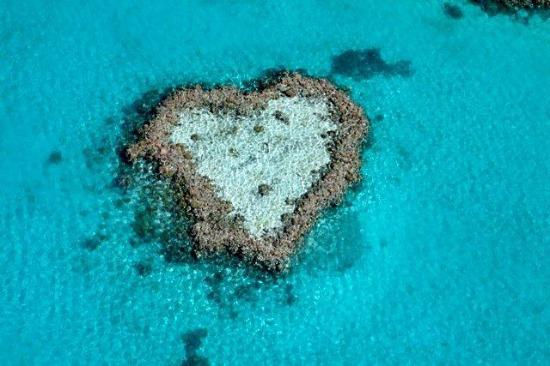
(Photo shows Heart Reef in the Whitsunday Islands)

Newer posts →

Enter your email address to follow this blog

Categories

Archives

Recent Comments

A.O.'s avatarwaltzingmorethanmati… on Zarah Zaynab and Wolfgang…
Madelyn's avatarMadelyn on Zarah Zaynab and Wolfgang…
JD's avatardrperegrine on Can Phoebe Complete This …
A.O.'s avatarwaltzingmorethanmati… on Rua and Rhoa
redrover23's avatarredrover23 on Rua and Rhoa

Blogroll

  • Appellation Mountain
  • Baby Name Pondering
  • Babynamelover's Blog
  • British Baby Names
  • Clare's Name News
  • For Real Baby Names
  • Geek Baby Names
  • Name Candy
  • Nameberry
  • Nancy's Baby Names
  • Ren's Baby Name Blog
  • Sancta Nomina
  • Swistle: Baby Names
  • The Art of Naming
  • The Baby Name Wizard
  • The Beauty of Names
  • Tulip By Any Name

RSS Feed

  • RSS - Posts

RSS Posts

  • Celebrity Baby News: Melanie Vallejo and Matt Kingston
  • Names from the TV Show “Cleverman”
  • Can Phoebe Complete This Sibset?
  • Zarah Zaynab and Wolfgang Winter
  • Baby, How Did You Get That Name?
  • Celebrity Baby News: Media Babies
  • Celebrity Baby News: Adelaide Crows Babies
  • Celebrity Baby News: Chris and Rebecca Judd
  • Names at Work: Name News From the World of Business and Employment
  • Celebrity Baby News: Sporting Round Up

Currently Popular

  • Celebrity Baby News: Toby Allen and Darren Weller
  • Girls Names From Native Australian Flowers
  • Girls Names of Australian Aboriginal Origin
  • Celebrity Baby News: Katie Underwood and Darren McCoy
  • Celebrity Baby News: Victoria Samba and Mitch Hoare

Tags

celebrity baby names celebrity sibsets english names famous namesakes fictional namesakes honouring locational names middle names name combinations name history name meaning name popularity name trends nicknames popular names saints names sibsets surname names twin sets unisex names

Blog at WordPress.com.

Privacy & Cookies: This site uses cookies. By continuing to use this website, you agree to their use.
To find out more, including how to control cookies, see here: Cookie Policy
  • Subscribe Subscribed
    • Waltzing More Than Matilda
    • Join 517 other subscribers
    • Already have a WordPress.com account? Log in now.
    • Waltzing More Than Matilda
    • Subscribe Subscribed
    • Sign up
    • Log in
    • Report this content
    • View site in Reader
    • Manage subscriptions
    • Collapse this bar
 

Loading Comments...