Famous Name: Gallipoli

Tags

, , , , , , , , , ,

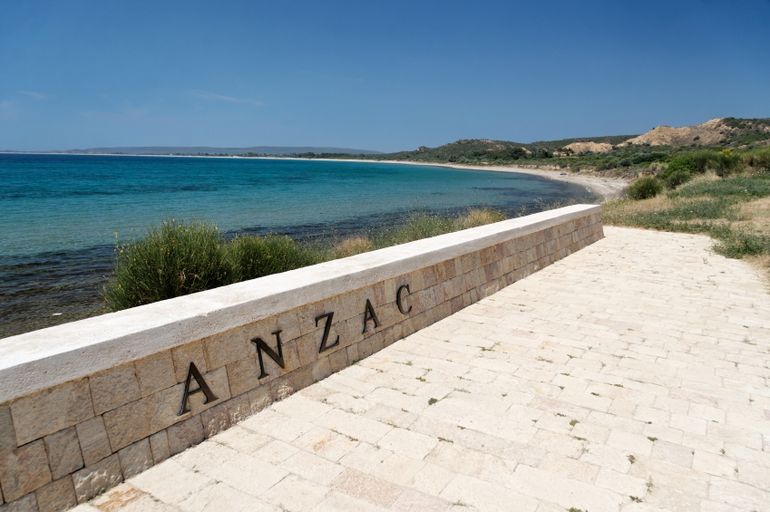
anzac-cove-gallipoli-photo_1343753-770tallGallipoli is a peninsula in Turkey, where the Gallipoli campaign took place between April 25 1915 and January 9 1916 during the First World War. The Australian and New Zealand forces, the Anzacs, landed at dawn at what is now known as Anzac Cove on April 25. The Turkish forces, the Ottomans, defended their territory with a fierce determination, but by evening, the Anzacs had managed to hold a tiny triangle of land about 2 km long and 1 km wide, which they called Anzac.

In his memoir, A Fortunate Life, Albert Facey described his experience of landing at Anzac Cove:

Suddenly all hell broke loose … bullets were thumping into us in the rowing boat. Men were being hit and killed all around me … The boat touched bottom some thirty yards from the shore so we had to jump out and wade in to the beach … The Turks had machine guns sweeping the strip of beach where we landed – there were many dead already when we got there. Bodies of men who had reached the beach ahead of us were lying all along the beach and wounded men were screaming for help. We couldn’t stop for them – the Turkish fire was terrible and mowing into us … we all ran for our lives over the strip of beach.

The Ottomans fought bravely, but there too few of them to drive the Anzacs back into the sea. The commander Mustafa Kemal issued this order to the 57th Infantry Regiment:

I do not order you to fight, I order you to die. In the time which passes until we die, other troops and commanders can come forward and take our places.

They followed their orders. The entire regiment was wiped out by the Anzacs, every man of it either killed, or so badly wounded he could not continue fighting. The modern Turkish army does not have a 57th Regiment, as a mark of respect.

By April 29, the first casualties from Gallipoli reached the Australian hospital near Cairo, in Egypt. Sister Constance Keys of the Australian Nursing Service wrote home:

The greatest number of men we came over with are either killed or wounded. The whole battalion was practically cut to pieces.

The Gallipoli campaign continued for eight more months, with nearly half a million casualties, and more than 100 000 deaths. This includes around 60 000 Turks and 53 000 British and French soldiers, including more than 8500 Australians and 2721 New Zealanders.

In the end, the campaign was a crushing defeat for the Allied forces, and one of the greatest victories for the Turks. It gave them a national identity and fostered their spirit of independence just as much as it did for Australians.

Today there are many cemeteries and war memorials on the Gallipoli Peninsula. Each year on Anzac Day, April 25, commemorative services are held at Gallipoli for the war dead, conducted by Turkey, Australia, New Zealand, Britain and France.

Gallipoli is considered sacred ground to many Australians, consecrated by the blood of those who fell there. Increasingly, it is seen as a place of pilgrimage, with many young people travelling to Gallipoli as a rite of passage.

The Macedonian city of Callipolis was founded in the 5th century BC on the Dardanelles Strait; its name comes from the Greek word kallipolis, meaning “beautiful city”. Also known as Gallipoli, it gives its name to the peninsula it sits on, and its Turkish name is Gelibolu. It is pronounced guh-LIP-uh-lee.

According to Australian historical records the name Gallipoli was given to just two girls during World War I, both of whom died in infancy. I wonder if this name was considered so sacred that it could only be bestowed on those destined for death.

As a middle name, it was given more often, and to equal numbers of males and females. People such as Mercia Gallipoli, Sydney Gallipoli, Brittania Gallipoli and Anzac Gallipoli flourished and increased, and some have only recently left us.

Although place names are becoming increasingly fashionable as baby names, I cannot recommend Gallipoli as a first name. Its extreme rarity, the problems with spelling and pronunciation, and difficulties shortening it to a usable nickname are some of the least problems it faces. In the middle, it seems easier to live with.

To me the main problem with Gallipoli as a first name is its heaviness. It was the scene of battles where many lives were lost, and much blood shed; a place of great suffering and enormous sacrifice. Gallipoli is a place of death – heroic deaths, brave deaths; corpse upon corpse of them. Many dead in the water before they even reached land; many lives given solely to buy others time.

There’s also the uncomfortable fact that we went to Gallipoli as invaders. We invaded someone else’s country, on the orders of another country, and we slaughtered their people. Another uncomfortable fact is that our side lost the campaign, and lost badly. Even more uncomfortably, this hideous loss was a waste of time, resources and life. The Allies achieved nothing from it, and the Turkish people who successfully defended their land were on the losing side of the war.

The name Gallipoli conjures up many emotions. National pride, gratitude for sacrifices made, deep sadness at loss of life, horror at what was endured, anger at the futility of war. And also forgiveness, respect, shared grief, and friendship between nations who were once enemies.

There’s been several quotes in this entry, and I will end with one more, from Turkey’s first president, Mustafa Kemal Ataturk, which is now inscribed on a monument at Gallipoli:

Those heroes that shed their blood and lost their lives… You are now lying in the soil of a friendly country. Therefore rest in peace. There is no difference between the Johnnies and the Mehmets to us where they lie side by side here in this country of ours… You, the mothers who sent their sons from far away countries wipe away your tears; your sons are now lying in our bosom and are in peace. After having lost their lives on this land they have become our sons as well.

POLL RESULT: Gallipoli received an approval rating of 15%, making it one of the least favourite names of the year. People had some real problems with the name Gallipoli, seeing it as having too many issues (31%), too weird (28%), too controversial (13%), and too sad (13%). Only 10% thought Gallipoli was usable as a baby name, and nobody thought it was beautiful.

(Photo is of Anzac Cove, Gallipoli)
Celebrity Baby News: Livinia Nixon and Alistair Jack

Tags

,

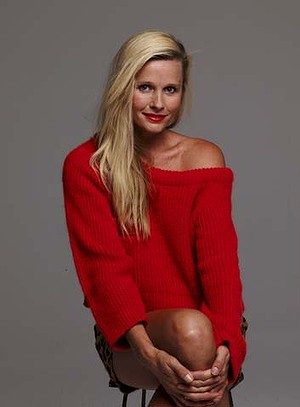
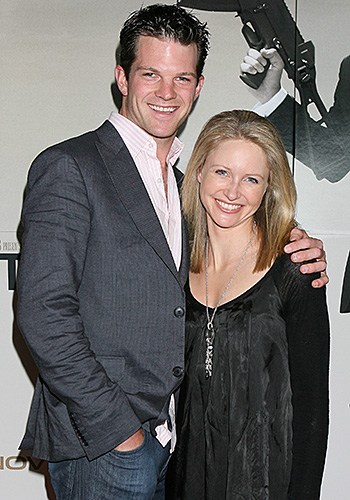
Alistair-Jack-and-Livinia-Nixon-6380654Television presenter Livinia Nixon, and her husband Alistair Jack, welcomed their son Ted on April 8. Ted Jack joins big brother Henry, aged 3.

Livinia has been a popular presenter on Channel Nine for many years, hosting children’s television, game shows, variety shows, and special events. She currently presents the weather on Nine News Melbourne and Nine Afternoon News. Alistair is a Melbourne builder, and he and Livinia were married in 2009.

Look like celebrity baby Edmund “Ted” Gyngell has set a new name trend, although slightly worryingly, Livinia follows a parody of the crude teddy bear from the movie Ted on Twitter. I really hope she didn’t name her son after a Twitter parody account.

Celebrity Baby News: Samantha and Luke Wyllie

Tags

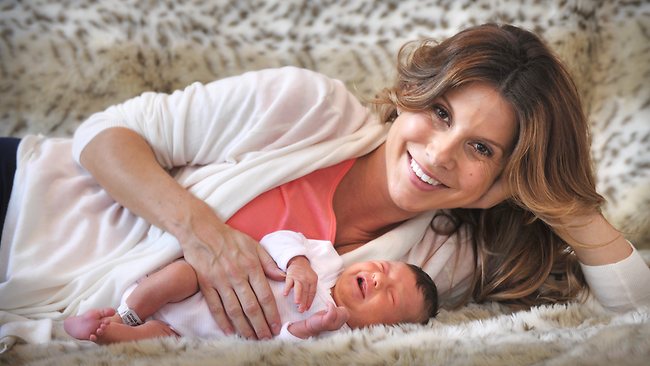
275672-samantha-wyllieSocialite Samantha Wyllie, and her husband Luke, welcomed their first child on May 4 last year, and named their daughter Skyla Faith.

Luke is heir to the Wyllie Group property development fortune, and he and Samantha are considered one of Perth’s most glamorous couples, with an extravagant lifestyle. Samantha is a former dental nurse, and she and Luke were married in 2010.

Boys Names Which Rose in Popularity in 2012

Tags

, , , , , , , , , , , , , , , , , , , , , , , , , , , ,

586419-river-boysThese are the boys’ names which became markedly more popular last year. I think the list lacks the depth of the one for girls, with far less diversity. There is only one classic name for boys, and eight of the names are surnames – six of these ending in N. While the girls’ list shows names which are currently trending, I think a couple of these could be legitimately identified as trendy.

Braxton

Braxton is without doubt 2012’s Name of the Year, joining the national Top 50 from nowhere. It was the #1 fastest-rising name nationally, in New South Wales and South Australia; made the top 5 fastest-rising names in Victoria, Queensland, and Western Australia; and went up in Tasmania and the Australian Capital Territory. Currently it is #31 in Australia, #51 in NSW, #81 in Victoria, #25 in Queensland, #44 in SA, #34 in WA, #65 in Tasmania and #70 in the ACT. Braxton is an English surname of disputed origin. It is a corruption of an English place name; perhaps Branxton in Northumberland, meaning “Branoc’s settlement” (Branoc is a Celtic personal name derived from the word for “raven”). Braxton has been used as a personal name since the late 18th century, and originated in the United States – Carter Braxton was one of the signatories to the American Declaration of Independence. Here it is known from the Braxton brothers on soapie Home and Away; three members of a thuggish surfer gang, and sexually desirable “bad boys” (based on the real-life Bra Boys). The characters were introduced in 2011, and last year Steve Peacocke won a Logie for his role of Darryl “Brax” Braxton. Braxton is new to the charts, although short form Brax had been in the Top 100 before. I wonder if it will keep going, or will parents hit the panic button after its massive surge in popularity?

Jaxon

Jaxon was the #1 fastest-rising name in Victoria and Tasmania, made the top 5 fastest-rising names in New South Wales and South Australia, and increased in popularity in Western Australia and the Australian Capital Territory. Currently it is #37 in Australia, #54 in NSW, #52 in Victoria, #42 in Queensland, #31 in SA, #17 in WA, #33 in Tasmania and #92 in the ACT. Jaxon is a variant of the surname Jackson; although sometimes derided as a “mis-spelled Jackson”, it is a legitimate surname particularly associated with East Anglia, and possibly with the Puritans. Jaxon has been used as a first name since the 17th century, and originated in Norfolk – then an area with a high Puritan population. Jaxon has charted in Australia since the 1990s, and rose steeply to make the Top 100 in 2011. It continues to capitalise on its trendy X, and may even overtake big brother Jackson. It’s interesting that it is most popular in Western Australia, for there is a large construction company in that booming state named Jaxon.

Mason

Mason was the #1 fastest-rising name in Queensland; it increased in popularity nationally, and in every state and territory. Currently it is #15 in Australia, #24 in NSW, #18 in Victoria, #15 in Queensland, #10 in SA, #12 in WA, #8 in Tasmania, #15 in the NT and #28 in the ACT. Mason first charted in the 1980s, and rose steadily to make the Top 100 by the mid-2000s. Mason is an occupational surname for someone who worked as a stonemason. The Mason family settled in Kent, on lands granted to them by William the Conqueror for their part in the Battle of Hastings. Mason has been used as a first name for boys since at least the 16th century, and originated in East Anglia; it possibly had Puritan significance. It’s much more common in the United States, where the distinguished Mason family played a prominent role in American politics. George Mason IV was one of the Founding Fathers of the United States, and an author of the Bill of Rights. Recently it has been often used as a celebrity baby name, boosting and cementing its popularity.

Hunter

Hunter was the #1 fastest-rising name in Western Australia, amongst the top 5 fastest-rising names nationally and in Queensland, and increased in popularity in New South Wales, Victoria, South Australia, Tasmania and the Australian Capital Territory. It is currently #24 in Australia, #35 in NSW, #39 in Victoria, #19 in Queensland, #27 in SA, #22 in WA, #7 in Tasmania and #50 in the ACT. Hunter is a surname based on the English word for a man who hunts professionally, and originated in Scotland. The Clan Hunter were from Normandy and settled in Ayrshire in the 11th century; experts in hunting and fieldcraft, they were invited there by King David I, who had been brought up in a Norman court. Hunter has been used as a personal name since the early 18th century, and seems to have been most popular in the northern counties of England. The Hunter Valley is the area around the city of Newcastle; the Hunter River is named after Governor John Hunter, and as his surname suggests, he was a Scotsman. Hunter has charted in Australia since the 1990s, and made the Top 100 by the late 2000s. It shows no signs of losing steam.

Hudson

Hudson was in the top 5 fastest-rising names nationally, in New South Wales, Victoria and Western Australia, and increased in popularity in South Australia and Tasmania. Currently it is #43 in Australia, #74 in NSW, #50 in Victoria, #45 in Queensland, #36 in SA, #31 in WA, and #67 in Tasmania. Hudson is an English surname which means “son of Hudde”. Hudde can be an old nickname for Hugh or Richard, or it can be derived from the common Old English name Huda; the surname is traditionally associated with Yorkshire. Hudson has been used as a first name since the early 17th century; although these births coincide with English explorer Henry Hudson’s first voyages, it can’t be known whether he inspired them. Hudson was new to the charts last year, having gained massive popularity after pop singer Guy Sebastian welcomed his son in 2012. The inspiration for Hudson Sebastian’s name came from the Hudson River in New York, (named after Henry Hudson), as Guy and his wife Jules love New York City. However, it has an Australian connection as well, because Sir Hudson Fysh, a World War I hero, founded Qantas, so Hudson could be used to honour a family tradition in the aviation industry.

Flynn

Flynn was in the top 5 fastest-rising names in Victoria and South Australia, and increased in popularity nationally, in New South Wales, Western Australia, Tasmania and the Australian Capital Territory. It is currently #41 in Australia, #46 in NSW, #36 in Victoria, #34 in Queensland, #43 in SA, #35 in WA, #22 in Tasmania and #28 in the ACT. Flynn has been in the charts since the 1990s, and after hitting a plateau for a few years, it suddenly shot up into the middle of the Top 100 in 2011, after Miranda Kerr and Orlando Bloom welcomed their son Flynn. Flynn is a common Irish surname which is an Anglicised form of the Old Gaelic Ó Floinn, meaning “son of Flann”. Flann means “red, ruddy” in Irish Gaelic, and is the name of one of the High Kings of Tara. The name is strongly associated with swashbuckling Tasmanian actor Erroll Flynn, known for his success with the ladies. He helped inspire the character of Flynn Rider from the Disney film Tangled. Interestingly, Flynn is most popular in Tasmania.

Archer

Archer was in the top 5 fastest-rising names in South Australia and the Australian Capital Territory; it also increased in popularity in New South Wales, Victoria and Tasmania. Currently it is #92 in NSW, #47 in Victoria, #61 in Queensland, #47 in SA, #47 in Tasmania and #46 in the ACT. The name was new to the Top 100 this year. Archer is an occupational surname denoting a professional bowman, and was brought to England at the time of the Norman Conquest; the Archer family settled in Wiltshire. Archer has been used as a first name since the 17th century, and seemed to be much more common in the southern counties surrounding London. Archer may remind you of legendary bowmen such as Robin Hood and William Tell, or it could remind you of the zodiac sign Sagittarius, called The Archer. In Australia, the Archer River is on the Cape York Peninsula in far north Queensland, and the first horse to win the Melbourne Cup was named Archer. Archer’s popularity is growing partly because it’s a great way to get the popular nickname Archie.

Eli

Eli was in the top 5 fastest-rising names in Australia, and increased in popularity in Western Australia, Tasmania and the Australian Capital Territory. Currently it is #34 in Australia, #53 in NSW, #83 in Victoria, #27 in Queensland, #48 in SA, #38 in WA, #32 in Tasmania and #27 in the ACT. Eli has been in the charts since the 1970s, and reached the Top 100 in the late 2000s; since then it has gliding smoothly upward. Eli is a Hebrew name meaning “ascent”, and in the Old Testament, Eli was a high priest who is regarded as a judge and prophet in Judaism, and the teacher of the prophet Samuel. In Scandinavia, Eli is a girl’s name, used as a short form like Ellie, and pronounced EE-lee. Some Australian namesakes include rally driver Eli Evans, Olympian hockey player Eli Matheson, soccer player Eli Babalj, and kickboxer Eli “Mad Dog” Madigan. At a time when Old Testament boys’ names are slumping, Eli stands out as a Biblical success story, and tended to rise when Elijah did too.

Patrick

Patrick was in the top 5 fastest-rising names in South Australia, and increased in popularity nationally, in New South Wales, Victoria, Western Australia, Tasmania, and the Australian Capital Territory. Currently it is #42 in Australia, #47 in NSW, #34 in Victoria, #53 in Queensland, #35 in SA, #47 in WA, #53 in Tasmania, and #25 in the ACT. In Australia, Patrick is a sturdy classic which has never left the Top 100. It was #36 in the 1900s, and peaked in the 1990s at #34; the lowest it has ever been is #68, in 2009. Patrick is from the Latin name Patricius, meaning “nobleman”, and its fame today is entirely down to one man – Saint Patrick. Saint Patrick was a 5th century Romanised Briton brought up in a Christian family. As a teenager, he was captured and carried off as a slave to Ireland, where he remained for six years. He managed to escape back to Britain, but returned to Ireland as an ordained bishop to undertake missionary work. Called the Apostle of Ireland, he is the major patron saint of Ireland, and such a vital part of Irish identity that his feast day on March 17 is seen as a celebration of Irish culture.

Harrison

Harrison was in the top 5 fastest-rising names in Queensland, and increased in popularity nationally and in South Australia. Currently it is #22 in Australia, #25 in NSW, #26 in Victoria, #16 in Queensland, #13 in SA, #27 in WA, #34 in Tasmania and #40 in the ACT. Harrison has charted since the 1980s, and skyrocketed into the middle of the Top 100 during the 1990s. It peaked at #23 in the early 2000s, then fell before starting to climb again, so it’s now on its second wind. Harrison is a surname meaning “son of Harry”, with Harry itself being a short form of Henry. Harrison has been used as a first name since the 16th century, and over time became greatly more popular in the United States than in Britain. This may be because of the Harrison family of Virginia, who were related to King Edward I. They managed to produce numerous state governors, as well as two presidents – Benjamin Harrison and William Henry Harrison. The popularity of Harrison as a first name is probably due to actor Harrison Ford – the name began charting just after he starred in the first Star Wars movie, and boomed during the Indiana Jones series.

POLL RESULT: People’s favourite names were Flynn, Archer, and Patrick, and their least favourite were Braxton, Mason, and Jaxon.

(Photo shows the Braxton brothers from Home and Away)

Rebel and Mace

Tags

,

explore-cities-alice-springs-alice-springsGirls

Ada Joyce

Ameika Sian Kaye

Astrid Catherine Amy

Billie Pearl (Tanner, Crawford)

Chanelle Chrystal Ellen

Ellamae Nellie (Honey)

Estelle Victoria

Frida Florentina

Grace Everdeen (Ella)

Isabel Beatrice (Henrietta, Mimi)

Ita Paige (Ella, Chloe)

Lulu Ho (Illy, Mimi)

Poppy Jewel (Darby)

Quinn Gracyn (Lucy)

Rebel Elizabeth (Aemon, Kai)


Boys

August Richard

Braxton Clint (Cooper)

Dexter Sebastian

Fernando James

Jude Louis William (Liv)

Kallan Nash (Mia )

Lewis Arnhem

Mace Kevin

Morgan Liam

Olson James (Lennox)

Parker Quaid

Rayce Keif

Ryder Brendan Herb (Ella, Indiana, Blayne)

Tao Yuan

Wyatt Angus (Riley, Dallas)


Most popular names this week

Girls: Poppy and Scarlett

Boys: Jack

(Photo shows camel-trekking near Alice Springs)

Celebrity Baby News: Sporting Babies

Tags

, , , ,

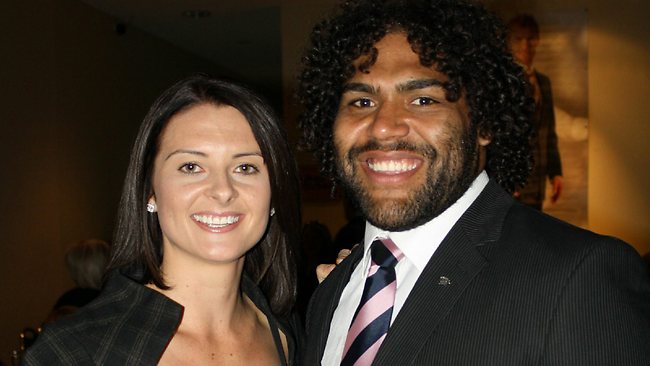
255240-sam-and-rachel-thaidayNRL star Sam Thaiday, and his wife Rachel, welcomed their first child on April 10, and have named their daughter Gracie Willow. Gracie Thaiday was born at 6.30 pm, and she wasn’t named straight away, as Sam and Rachel wanted to spend some time with her before making the decision. One of the names on their shortlist was Wednesday Thursday Thaiday (Thaiday is pronounced to rhyme with Friday). Sam is captain of the Brisbane Broncos, and has also played for Queensland, the Australian national squad, the Prime Minister’s XIII, and the Indigenous All Stars (he is of Torres Strait Islander descent). Tomorrow he will be playing for Australia against New Zealand in the Anzac Day Test.

NRL player Glenn Hall, and his wife Kylie, welcomed their son Hendrix on April 10, just a few hours before the Thaidays welcomed their daughter Gracie. Hendrix Hall has a brother Lachlan, who died before he was born. Glenn plays for the North Queensland Cowboys.

NRL star Daly Cherry-Evans, and his partner Vessa Rockliff, welcomed their first child two months ago, and have named their daughter Navi. Daly and Vessa must have had quite a few comments and questions on their daughter’s name, because Daly says that people are “reading too much into it”. Navi Cherry-Evans’ name is a variant of Navy, and said exactly the same way. Daly plays for the Manly-Warringah Sea Eagles, and is also a member of the national squad.

NRL player Beau Ryan, and his wife Kara, welcomed their first child in January, and have named their daughter Remi. Beau and Kara are childhood sweethearts, and were married in October last year. As well as playing for the Cronulla Sharks, Beau also does comedy segments on Channel Nine’s The Footy Show, and Remi’s birth was recently announced on the show.

Rugby union player Luke Burgess, and his wife Emilie, welcomed their first child in November last year and have named their daughter Freya. Freya’s name is right on trend for mythological Scandinavian names, and is already gaining notice in Australia. Luke has played for both the Canberra Brumbies and the New South Wales Waratahs and is a member of the national squad, and in 2011 he signed with French team Stade Toulousain. Luke will be returning to Australia to play for the Melbourne Rebels in the 2014 season.

AFL player Jed Anderson, and his partner Nicky, welcomed their first child last week and have named their son Elijah. Jed, who is still a teenager, just made his début with the Hawthorn Hawks. Elijah Anderson was born in his parents’ home town of Darwin.

Rally driver Eli Evans, and his wife Madeline, welcomed their first child before Easter, and have named their son James. Eli is the younger brother of driver Simon Evans, drives for Honda, and recently won the Quit Forest Rally in Western Australia.

(Photo shows Sam and Rachel Thaiday)

Famous Name: Thor

Tags

, , , , , , , , , , ,

kinopoisk.ruThe Hollywood movie Thor came out a couple of years ago; last year it was followed by The Avengers, and a sequel will be coming out at the end of this year. The movie character is based on the Marvel Comics superhero, created by the famous Stan Lee, and the films place ancient gods in the modern world, interacting with humans and having spectacular magic vs science showdowns.

The Australian connection to this story is that Thor is played by Chris Hemsworth, who appeared on the blog as a celebrity dad last year, after welcoming daughter India Rose with his lovely wife Elsa. Thor‘s world premiere was held in Sydney.

In Norse mythology, Thor is the god of thunder, lightning, storms, oak trees, strength, healing and fertility. He is a protector of humanity, and the god who makes things holy. He is generally depicted as a large, muscular, red-haired and red-bearded man with fierce eyes, wielding a hammer that can pretty much smash through, well, everything.

Medieval epics describe Thor’s exploits in battle, and his fearsome wrath with anyone who crosses him. He is no steroidal oaf though, and capable of outwitting others and being clever with words; he sits as a judge at the foot of the World Tree. It is foretold that at the world’s destruction, Thor will do battle with his arch-enemy The Great Serpent and slay it, but will succumb to its venom and meet his end.

I think it’s too tempting for us moderns to imagine Thor as some sort of beefcake with anger management problems, but to his worshippers he was a source of strength and protection for their homes and possessions, giving security to family and community, and warding off plague and famine.

As the product of a divine marriage between the sky god Odin, and the earth mother Fjörgyn, he was a potent fertility symbol, and like lightning, he was a conduit between the heavens and the earth. The storms he brought with him watered the fields and made life grow.

Thor was worshipped by Germanic peoples, including those in Anglo-Saxon England, and the Vikings of Scandinavia, but it is from Norse mythology that most of our information about him is gained. His name is derived from an Ancient Germanic word for “thunder”; the Old English form of Thor is Thunor (pronounced THOO-nor), which makes the connection even more obvious.

It is a testament to his vast popularity how many names used in Britain there were that derived from Thor. A few that have survived into modern times, although rare, are Thora, a feminised form of Thor; Thurstan, meaning “Thor’s stone”; and Torquil, meaning “Thor’s cauldron”. His name is also in Thursday, meaning “Thor’s day”.

In Scandinavia the name Thor isn’t uncommon, and is pronounced TOR. Some famous Thors you may have heard of are Norwegian ethnographer Thor Heyerdahl (who crossed the Pacific on a raft named Kon-Tiki), Norwegian cyclist Thor Hushovd, Danish poker player Thor Hansen, Venezuelan human rights activist Thor Halvorssen, and Belgian singer Thor Salden.

Although the name Thor continued to be occasionally used in Britain, it is much more common in the United States, which has had significant migration from Scandinavia. Quite a few people named Thor can be found in Australian records, and most of them have Scandinavian surnames, or emigrated here from Scandinavia.

I recently saw a birth announcement for a baby boy named Thor, born in Tasmania; remarkably there was a Loki announced that same week, and an Odyn the following week.

Not long ago, Nameberry announced Thor was shaping up as one of the hot names of 2013 (along with other mythological names), and at the end of last year, told us that Scandinavian would be the ethnic name group most likely to rise in popularity. Meanwhile Abby’s Nameberry Nine this week pointed out that boy’s names are getting cooler all the time – even her little girl has noticed.

If you are considering the name Thor for your son, it is not only strong and interesting, with an ancient history that plugs in to European culture, but also right on trend.

With the Chris Hemsworth movies in the public consciousness, Thor is a name we’re all more familiar with, and for dads who hanker after a tough cool baby name, they might find it easier to persuade their partners if they have been smitten by Hemsworth’s hunkiness.

POLL RESULT: Thor received an approval rating of 59%. People were divided on the name Thor, with 16% thinking it was unusual, but something we’ve all heard of, while the same percentage thought it was over the top. 11% thought the god Thor gave the name greater substance and dignity, while 8% thought the god made the name seen heavy and oppressive. 7% considered that the movie made the name seem more accessible, while 5% saw the movie as making the name geekier.

Girls Names Which Rose in Popularity in 2012

Tags

, , , , , , , , , , , , , , , , , , , , , , , , , , , , , , ,

213495458_f0e01eb1bf_z-Cotswold-Cottage-2These names became noticeably more popular in Australia last year. If you are considering using any of them, don’t panic. Most are making solid progress rather than madly storming upward. It would be foolish to reject them based on their current popularity, and silly to fret if you chose one of these names in 2012.

The list indicates the diversity of girls’ names at present, with a mix of classic and modern; places and nature; Hollywood and royalty. There’s something for nearly everyone amongst these popular names.

Ivy

Ivy was the fastest-rising girl’s name both nationally and in Western Australia last year, and made the top 5 fastest-rising names in South Australia, Queensland and the Australian Capital Territory. It became more popular across the board in 2012, and nationally rose 18 places. This is its second time around in the Top 100 – Ivy was #17 in the 1900s, and didn’t leave the Top 100 until the 1940s. It vanished from the charts in the 1970s, but reappeared in the 1990s. Ivy soared during the 2000s, making the Top 100 by the end of that decade. It is currently #22 in Australia, #21 in NSW, #27 in Victoria, #25 in Queensland, #22 in SA, #28 in WA, #44 in Tasmania, and #30 in the ACT. Ivy is named for the plant, and like its namesake, is presently climbing; Beyonce‘s daughter Blue Ivy may have given the name publicity. Chances are we’ll be seeing more of this fresh, pretty retro name, which sounds similar to popular Ava, Eva and Evie.

Savannah

Savannah was in the top 5 fastest-rising names in South Australia, went up 9 places nationally, and increased in popularity in New South Wales, Victoria, Queensland, Western Australia and Tasmania. It is currently #35 in Australia, #38 in NSW, #74 in Victoria, #28 in Queensland, #43 in SA, #35 in WA and #94 in Tasmania. Savannah first charted in the 1990s, and climbed until it reached the Top 100 at the end of the 2000s. Savannah is an alternate spelling of the word savanna, referring to grasslands that have scattered trees, or where the trees are open to the sky; large tracts of northern Australia are savanna. The word comes from the Spanish sabana, derived from the Arawak (Native American) word zabana, which originally meant a treeless grassy plain. Savannah is a place name in the United States, most famously the city in Georgia. The city’s name comes from the Savannah River, which may be derived from the Shawnee people, or from Native American words for “southerner” or “salt”. The city featured in 1990s soap, Savannah, which probably accounts for its début in the charts that decade. While I imagine Savannah originally got its foot in the door because it sounds like Susannah, here it fit in with those other hip names of the ’90s, Ava and Sienna. Like Harper, this is another American South-inspired name, but also a royal one, because the queen’s first great-granddaughter is named Savannah.

Harper

Harper was the fastest-rising name in Tasmania and Victoria, made the top 5 fastest-rising names in South Australia and Western Australia, and became more popular in every state. Currently it is #39 in Australia, #37 in NSW, #29 in Victoria, #36 in Queensland, #44 in SA, #29 in WA, and #31 in Tasmania. Harper began as a surname from the English word for a professional harp player. The surname  originates from the west coast of Scotland, and is especially associated with the Clan Buchanan. The name also has Christian overtones, for heaven is said to be filled with the sound of harp music. Harper has been used as a first name since the 17th century, and was originally given to boys. The fame of (Nelle) Harper Lee, author of To Kill a Mockingbird, gave it a feminine slant. Harper only began charting in 2011, after David and Victoria Beckham welcomed their first daughter. Harper Beckham was named by her brothers after a character in Wizards of Waverley Place (although Victoria Beckham also happened to be working for Harper’s Bazaar at the time). The Beckhams said they wanted a name to honour their time in the United States, and chose this American-style name. Many Australians have followed in their footsteps.

Alice

Alice was the #1 fastest-rising name in South Australia, and has just joined the Top 20 in the Northern Territory, so it has gained popularity in central Australia. Intriguingly, the town of Alice Springs is in the middle of the Australia, offering food for thought. Alice also went up in popularity nationally, in Victoria, and in Tasmania. It is currently #43 in Australia, #49 in NSW, #34 in Victoria, #53 in Queensland, #34 in SA, #49 in WA, #41 in Tasmania, #20 in the NT and #43 in the ACT. Alice is a classic name which has never left the charts. It was #4 in the 1900s, and just missed out on the Top 100 in the 1940s, at #105. It reached its lowest point in the 1960s at #265, then began climbing, reaching the Top 100 for the second time in the 1990s. Since the beginning of the 2000s it has made staid but steady progress up the charts, and become middle name de jour. Alice is from the Old French name Aalis, short for Adelais, which is a short form of the Germanic name Adelheidis, meaning “noble kind” (which Adelaide is based on). Alice became popular in the Middle Ages, and got a boost during the 19th century after Queen Victoria had a Princess Alice. It’s been a favourite in fiction ever since Lewis Carroll penned Alice in Wonderland, and is the name of a main character in the Twilight series. Sensible, yet with a touch of magic, sweet Alice is one to keep your eye on.

Willow

Willow was in the top 5 fastest-rising names in Western Australia, went up  nationally, and increased in popularity in New South Wales, Victoria and the Australian Capital Territory. It is currently #44 in Australia, #43 in NSW, #33 in Victoria, #39 in Queensland, #32 in WA, #73 in Tasmania and #68 in the ACT. Willow first charted in the 1990s, and rose precipitously to make the Top 100 by the late 2000s. Willow is named for the genus of small trees and shrubs which symbolise both wisdom and deep loss. It has been used as a personal name since the 18th century, and was originally given equally to boys and girls. It has only ever charted for girls in Australia, but is still occasionally used for boys. The 1988 fantasy film Willow, which possibly played a role in Willow joining the charts in the ’90s, has a hero named Willow. In 2011, pop singer Pink welcomed a daughter named Willow, and that doesn’t seem to have done this name any harm. Flower names mostly didn’t do well in 2012; Ivy and Willow show that greenery is more appreciated than petals at present.

Mackenzie

Mackenzie made the top 5 fastest-rising lists in New South Wales and Victoria, and increased its popularity in other states and the Australian Capital Territory. Currently it is #46 in Australia, #57 in NSW, #44 in Victoria, #45 in Queensland, #33 in SA, #37 in WA, #45 in Tasmania, and #48 in the ACT. Mackenzie has charted since the 1990s, and zoomed up the charts to make the Top 100 by the early 2000s. It dipped out of the Top 100 in 2009, but was back the next year. Mackenzie is a Scottish surname, an Anglicised form of of the Gaelic Mac Coinnich, meaning “son of Coinneach” (Coinneach is the original form of Kenneth). The Clan Mackenzie is from the Highlands, and of Celtic origin; they trace their clan name back to the pagan god Cernunnos. Mackenzie has been used as a first name since the 18th century in Scotland; it was nearly always given to boys in the beginning, but not exclusively so. Mackenzie first charted in the US as a female name, popularised by actress (Laura) Mackenzie Phillips, who was in American Graffiti. Since then there have been other Mackenzies on our screens; most recently, Mackenzie Foy played Renesmee in Breaking DawnPart 2. 

Audrey

Audrey made the national Top 50 last year, and according to my estimate, rose almost as many places as Ivy. However, it’s harder to see where the gains were made than it is with Ivy, although Audrey made significant increases in New South Wales and Victoria, and modest ones in Tasmania and the Australian Capital Territory. Currently it is #50 in Australia, #36 in NSW, #32 in Victoria, #55 in Queensland, #96 in Tasmania and #35 in the ACT. Like Ivy and Alice, Audrey has been Top 100 before. Although it was #156 in the 1900s, it made the Top 100 the following decade, and shot up to peak at #32 in the 1920s. It sank faster than it had risen, and was #197 in the 1940s, reaching its lowest point in the 1980s with a ranking of #0. Since then it has climbed, and reached the Top 100 again at the end of the 2000s. It looks likely to overtake its earlier peak, but Audrey seems to be under the radar at present. This is one of those names which is probably more popular than you think, and has an Australian connection, for the famous Skipping Girl Vinegar neon sign in Melbourne is affectionately known as Little Audrey.

Mila

Mila was the #1 fastest-rising name in the Australian Capital Territory, and grew more popular in New South Wales, Western Australia and Tasmania. It is currently #59 in NSW, #46 in Victoria, #65 in Queensland, #44 in WA, #70 in Tasmania, and #48 in the ACT. Mila only began charting in 2011, so has been extremely successful in a brief space of time. The fame of Hollywood actress Mila Kunis must have had an impact; Mila entered the charts the year after Ms Kunis appeared in Black Swan. Mila is a short form of Slavic names containing the element mil, meaning “gracious, dear”. Mila Kunis’ full name is Milena, which is the feminine form of the Slavic name Milan, meaning something like “dear one”, and often translated as “sweetheart”. Mila sounds similar to other popular names such as Mia and Milla, and at the moment is doing very well.

Freya

Freya is a name just beginning to make an impression, for it joined the Top 100 in Tasmania and the Australian Capital Territory last year, and was in the top 5 fastest-rising names in Tasmania. Both these regions have small population sizes, so you can be forgiven for being a little sceptical; Freya is currently #174 in NSW and #129 in Victoria. Freya is the English spelling of the Old Norse goddess Freyja – her name means “lady”, and was originally an epithet. In Norse mythology, Freyja is a goddess of love, sex, beauty, fertility, sorcery, gold, war and death. Immensely beautiful and clever, she rules over a field in the afterlife. The name Freya has been popular in the UK for several years now, and is well known here due to Tasmanian actress Freya Stafford; it doesn’t seem too far-fetched that we should follow Britain’s lead, but we shall have to wait and see.

Josephine

Josephine just managed to squeeze onto the Top 100 in New South Wales last year. That may not sound impressive, but the amount Josephine climbed was phenomenal – it went up 99 places, far outstripping Ivy’s mere 18. For that reason alone, it deserves a place on this list. Josephine is a solid classic which has never been off the charts, or left the Top 200; on the other hand it has never enjoyed high popularity either. It was #86 for the 1900s, and peaked the following decade at #76. It just failed to reach the Top 100 of the 1940s at #103, and dipped in the 1980s to make #172. Its progress has been up and down, but never too high or low, and it reached its lowest point in the charts in 2011, at #199. It has more than made up for this by getting back to the Top 100 in 2012, where it hasn’t been since the 1930s. Currently it is #100 in NSW and #105 in Tasmania. Josephine has recently made its mark as a royal and celebrity baby name, with Josephine chosen for the daughter of Prince Frederik and Princess Mary of Denmark, and also the grand-daughter of former prime minister Kevin Rudd. Will Josephine continue its ascent? Historically it’s unlikely, for Josephine seems most comfortable in the low to mid 100s, and may very well drop back this year. Stay tuned!

POLL RESULT: People’s favourite names were Alice, Ivy, and Freya, and their least favourite were Harper, Savannah, and Mackenzie.

Pepi and Serendipity

Tags

, , ,

2936282147_68ecc4c701Twins

Maisie Emerson and Talon Darius

Marco and Anton (Bella, Georgia)

Tevita William Gary and Tevita Leonardo Enzo (Arabella)


Girls

Aenid Anne (Felicity, Elise)

Angel Crystal (Summer, Orlando)

Annabelle Grace Elshadai

Arya Matisse (Layne)

Carys Helena

Emerald Alea (Amber)

Jocelyn Ann (Jenni, Jayden)

Kahlea Nicole (Kyle)

Margaret Rose

Pepi Patricia (Maisy, Mac, Louis)

Serendipity Joan (Lorelai)

Sydney Glenys (Ebony)

Valentina Pauline (Rory)

Vaydah Angel (Tajiah, Harlee)

Willow Alice Twiggy (Cosby, Star)


Boys

Albert Ronald (Chantilly)

Alfie Olivier (William)

Arthur Amos

Dexter David

Hector Ross (Cody, Jackson, Oliver)

Jasper Lyndon

Jordie Craig (Charlie, Indie)

Joseph Jan

Kevin Patrick (Deklin, Abby)

Odyn Gregory (Oskar)

Stefan Loui (Alessia)

Tanachok James (Em, Irena)

Tobias Kenneth “Toby”

Tyson Jet (Toby)

Will Stephen Morrell


Most popular names this week

Girls: Lucy

Boys: Benjamin

(Photo shows Melbourne skyline, including the antique Skipping Girl Vinegar sign)