Celebrity Baby News: Gemma Ward and David Letts

Tags

, , ,

gemma-ward-boyfriend-david-letts

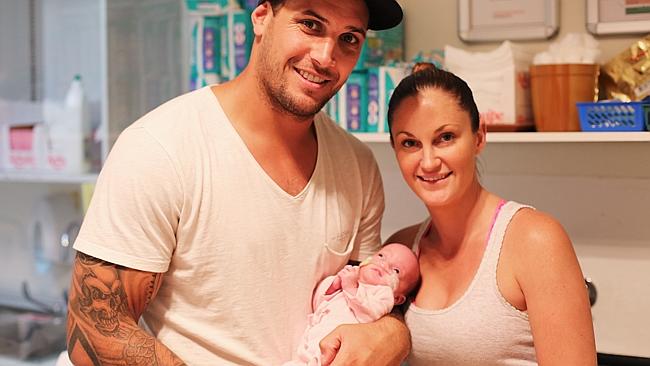
Supermodel and actress Gemma Ward, and her partner David Letts, recently welcomed their first child and have reportedly named their daughter Naia. Nai’a is a Hawaiian name meaning “dolphin”, and as the baby is said to have been born in Hawaii, it is tempting to wonder if she was given a name to reflect her birthplace.

Gemma became a model at the age of 14 when she was scouted at a modelling competition that she attended as a spectator, and ended up signed with New York modelling agency IMG. At 16 she became the youngest model to appear on American Vogue magazine, and her fragile appearance inspired the “baby doll look”. At 17, she replaced Kate Moss as the face of Calvin Klein’s Obsession Night perfume campaign, appeared on the cover of TIME Magazine‘s Style & Design issue, and on the cover of Vogue China. At 18, she became the first model ever to appear on the cover of Teen Vogue, and at 19, appeared on the first ever cover of Vogue India. Gemma has been on a break from modelling since 2008 – a decision she explained was precipitated by the death of her boyfriend, actor Heath Ledger. She has since appeared in a few films, including Pirates of the Caribbean: On Stranger Tides and The Great Gatsby. Recently, Gemma signed with IMG Australia, leading to speculation she may be about to return to modelling.

David is a professional photographer and model who once played rugby. His brothers Michael and Jake play for the national rugby team of the Philippines.

The name of Gemma and David’s daughter hasn’t been officially confirmed yet, so I will add updates if there are further developments.

Famous Name: Diamantina

Tags

, , , , , , ,

Ancher-Mortlock-Woolley-joins-Conrad-Gargett-Riddel-415086-xl

On December 10, it will mark 154 years since Lady Diamantina Bowen arrived in Queensland. Lady Bowen was the wife of Queensland’s first governor, Sir George Bowen, whose history and surname we looked at in Brisbane Suburbs That Could Be Used as Boys Names.

Lady Bowen was born in the beautiful Ionian Islands of Greece as the Contessa Diamantina di Roma, one of a large aristocratic family descended from Venetians who had occupied the Ionian Islands for centuries as part of the Republic of Venice. Diamantina’s father was President of the Ionian Senate, and had been appointed Poet Laureate of the islands by Queen Victoria, as the Ionian Islands were then a British Protectorate.

Diamantina grew up in a privileged world, was well-educated, and familiar with government, politics and diplomacy. She was described as pretty, slender and graceful, with an attractiveness which came from her expression rather than her features. She was softly-spoken, and had a slight accent when speaking in English; in private, she spoke Italian. Despite their Italian origins, the di Roma family were members of the Greek Orthodox faith.

Diamantina married Sir George Bowen, government secretary to the islands, in 1856, and came to Brisbane three years later with her husband and baby daughter. The Bowens were met by a crowd of 4000 people, waving both the Union Jack and the Greek flag in welcome. Brisbane was enormously excited by their arrival, and there was a 21-gun salute, triumphal arch, fireworks, and days and days of speeches, proclamations, and general celebrations in their honour.

One of the ladies who presented Diamantina with a bouquet described her as a “beautiful Greek fairy princess … stepped out of a poetry book”. The poor fairy princess had endured agonising sea sickness to get there, and being pregnant, possibly morning sickness as well; it must have been an ordeal for her to stand there in the heat and humidity through all the official events.

Brisbane itself must have been something of a culture shock to Diamantina, because although it was a prosperous and thriving community, it was also a pioneering one, and would have seemed rough and dusty, with lumpy roads, and an unreliable water supply.

However, Lady Bowen fulfilled her duties as Queensland’s first lady admirably. She became a celebrated hostess,  and her balls and dinner parties were the highlight of the social scene. She held a weekly salon, and her graciousness is credited with raising the general tone of Brisbane society.

Diamantina was an accomplished pianist and singer, and her interest in music led to her to become a patroness of the arts. When their official residence was ready, the Bowens had an elegant and spacious sandstone mansion to entertain in. Diamantina personally supervised the layout of the grounds, and assisted with the development of the surrounding Royal Botanic Gardens.

Diamantina was also a tireless worker for charity. She started the first Sunday School for children, and helped found the Lady Bowen Lying-In Hospital, Brisbane’s first maternity hospital, and forerunner to the Royal Brisbane Women’s Hospital. She was also a patron of an orphanage, and of a hospital for the incurably ill. At a time marked by religious bias, Lady Bowen befriended the Sisters of Mercy, and became a patroness of their fund-raising efforts.

Diamantina was greatly admired in Brisbane, and became a great favourite. She was dignified without being aloof, and reserved without being cold, but most of all kind-hearted and compassionate, with a genuine desire to be accessible. I suspect it was because of his wife that Sir George was asked to stay on a further two years after his term of office ended.

When the Bowens finally left after eight years, 120 of Brisbane’s married women presented Diamantina with a diamond necklace, and 120 of its single women gave her a gold bracelet studded with emeralds. Diamantina must have made several close personal connections in Brisbane, because we are told that she wept bitterly as she left, becoming so distraught that she had to be carried to the ship to New Zealand, where Sir George had been appointed governor-general.

Diamantina had many namesakes in Queensland – not only Roma Street and Lady Bowen Park in Brisbane, but the town of Roma, the Diamantina River, and Diamantina Island are just a few that come to mind.

Diamantina returned to Australia when Sir George became governor of Victoria. Now in her mid-life, Diamantina’s manner had become impressively regal, and she was seen as exotic, fascinating, and elegant. A Melbourne gossip columnist noted her dazzling black eyes, flawless creamy complexion, and lovely figure. She inspired awe and respect, but never again did she seem quite so loved as she had been in Queensland, where she was a figure of poetry and romance.  

Diamantina is a variation of the Greek name Diamanto, meaning “diamond”. The name is used in both Greece and Italy, and can be pronounced dee-uh-man-TEE-nuh or dy-uh-man-TEE-nuh. The obvious nicknames are Di, Dee and Tina, although Diamond, Mandy and Monti seem possible as well. Lady Bowen’s eldest daughter had Diamantina as her middle name, and she went by Nina, which appeals to me most of all.

Diamantina is a pretty and elaborate girl’s name which belonged to one of the most charming ladies to grace our shores. Diamantina was a heroine to the Greek community in Queensland, and this could be a Greek heritage choice, or a Queensland heritage choice. If the name Diamond seems too hard or crude, Diamantina may seem softer and more elegant.

POLL RESULT: Diamantina received an approval rating of 42%. 36% of people thought it was too fussy and frilly, although 21% saw it as romantic and fairytale.

(Picture shows the governor’s official residence, now Old Government House, in the grounds of Queensland University of Technology, where it is used for functions)

Celebrity Baby News: Casey Tutungi and Bridget Ure

Tags

741786-concert-for-casey

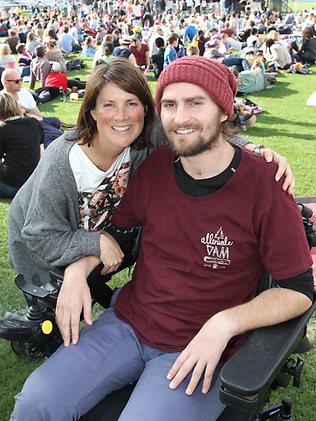
Former Australian rules footballer Casey Tutungi, and his fiancee Bridget Ure, welcomed their first child on November 28, and have named their daughter Asta.

Casey used to play for Geelong’s VFL side, then became the coach of South Barwon in the Geelong Football League. His spine was injured during an on-field collision in the last minutes of a game against St Joseph’s in June this year, and he has been left a quadriplegic. He is receiving treatment at the Royal Talbot Rehabilitation Centre in Kew, Melbourne.

There have been several fund-raising efforts on his behalf, and a website has been set up to help pay for Casey’s medical treatment and equipment.

Name Update: August Arrived in November!

Tags

,

welcome-august-expecting-you-facebook-cover

Olivia and Dale were considering the name August for their son, and wrote in to the blog to ask if many people would connect the name to the month.

Their son arrived a couple of weeks ago, and after a little hesitation, they decided to go with the name they picked out, and so

AUGUST LEANDER JAMES

has arrived, baby brother to Innes and Abigail.

August’s parents absolutely love his name, and I’m so glad they went with it, because this is such a handsome name and name combination. It was very well received in the polls, with 81% of respondents approving of it, and none strongly disapproving, so I’m guessing this will be a widely popular choice.

Choosing Boy Names That Won’t Become Girl Names

Tags

, , , , , , , , , ,

tie

boys names that can’t be used for girls

That was the search term someone used to reach the blog some time ago, and ever since I have been wondering how to answer it.

There is no name that can’t be used for girls in Australia, as we don’t have any naming laws in regard to gender. It might be rare to meet a woman named Jeffrey or Andrew, but there’s no prohibition against it.

However, I do think it’s possible to choose a name for your son that is unlikely to be used for many girls. In other words, you can pick out a name which is seen as masculine rather than unisex, and which has a low probability of becoming seen as unisex, or even feminine, in the future.

1. Choose a Classic Name

Classic boys names have the advantage of possessing a long, yet recent, history of being used primarily for boys, which tends to put a masculine stamp on them. When I looked at classic names in Australia, I found that only two of them went from unisex to gender-specific – and both went to the boys (the names were Darcy and Francis).

There are lots of classic names, and they come in all styles, and are at all levels of popularity, so there’s quite a range to choose from. A classic boys name such as William, Arthur, Vincent, Duncan, Leonard, or Frederick would be an extremely safe choice for someone worried about their son’s name being chosen for girls.

2. Choose a Popular Name

When I looked at unisex names from the 2012 Victorian data, it became apparent that names are only truly unisex (used for roughly equal numbers of boys and girls) when they are at a low level of popularity. Once a name becomes popular, it only seems to do so for one gender or another – there are few names which reach the Top 100 for both sexes at once, and when they do, it’s a situation which doesn’t seem to last long.

Therefore, a popular name seems like a safe choice when picking a name to ensure that it has already been chosen for one specific gender over another. And the more popular it is, the safer a choice it probably is, because names that have switched from boy to girl in popularity haven’t peaked any higher than #60 for boys, and most of them didn’t even peak in the Top 100.

So if you’re a bit worried, pick something in the Top 100, like Declan or Hugo, and if you’re very worried, pick a Top 50 name, like Oscar or Sebastian.

3. Choose a Rare Name

A boys name seems to need a reasonable level of familiarity in order to become acceptable for use on girls: at this point, it starts to seem “cute” or “spunky” on a girl. Choosing a male name that is little used even for boys seems like a reasonable insurance policy against it becoming used by girls. So perhaps a name like Benedict or Wolfgang might seem like a good choice.

4. Choose a Name Strongly Associated with a Very Famous Man

Elvis is technically a unisex name, and in the 1920s and ’30s, it was almost entirely used for girls in Australia. But once Elvis Presley appeared on the scene in the 1950s, Elvis was a boy’s name. Other names associated with famous men include Aristotle, Banjo, Barack, Butch, Hannibal, Leonardo, Moses, Muhammad, Napoleon, and Winston.

Just make sure that the man has a high level of recognition, so that most adults would recognise him by his first name alone. If you have to explain who he was, then he’s not famous enough to ensure his name stays masculine.

And surnames don’t count – think of all the girls named Presley or Cassidy!

5. Buy a Time Machine ….

… so you can visit the future and make sure that nobody has used the name for a highly successful character in popular culture, or it doesn’t belong to a hugely famous actress who goes on to win Academy Awards for the next sixty years.

Yes, I’m joking. You can’t predict with any certainty what the future will bring (so why fret about it?). However, I do think if you choose one of the previous four options, you will have done a fair bit towards future-proofing your son’s name.

It’s not likely anyone will write a blockbuster about a spunky heroine named Leonardo, or that there will be a gorgeous movie actress named William, but even if those things happen, it’s even less likely that those names would be picked for baby girls by the general populace.

So there you go. Four simple steps you can take to make it less likely that anyone will use your son’s name for their daughter.

However, I sense many of you do not like this advice very much. You don’t want a classic name, you don’t want a name in the Top 50, you don’t want a name that’s hardly ever seen, and you definitely don’t want a name tied to someone mega famous.

Like a vast bulk of parents, what you really want is one of those fashionable boys names that are familiar but not popular. Something that seems fresh and new, yet so on trend that it blends in seamlessly with all the other kids in the playground.

However, by choosing something fresh and new, you are by definition taking a risk. You risk Axel  becoming popular, Arlo becoming stale and boring, and Ari becoming more common for girls.

Now I could go on to give further advice, such as to avoid surnames (what if Harland is the next Harper?), or anything which can be shortened to a girly nickname (what if all the Maddoxes become Maddies?), or anything ending in -lee (what if Finley becomes the new Ashley?), or anything which sounds even vaguely like a girl’s name (is Ezra too similar to Eliza?).

But I’m not going to, because

a) it sounds crazy paranoid

b) it would be foolish to avoid using your favourite name based on something which might happen in the future

c) risks make life exciting, colourful and worth living

and

d) I would prefer that femininity isn’t seen as something which taints a name so that males can no longer use it.

If you want a name used almost entirely for boys, that is likely to stay that way for a long while, then you have good options.

But I hope that we can also embrace risk and change and diversity, and live in a more accepting world that doesn’t divide us so sharply into pink or blue – a world where we all have more name choices, rather than less.

Celebrity Baby News: Allannah Zitserman and Stavros Kazantzidis

Tags

,

art-353-Festival-300x0

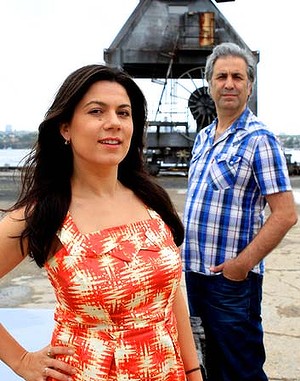
Film makers Allannah Zitserman and Stavros Kazantzidis welcomed their daughter Lula Ophelia on March 7. Lula Kazantzidis joined big sister Mila, aged 2. Allannah and Stavros are award-winning film makers and founders of the Dungog Film Festival in the Hunter Valley region.

(Photo of Allannah and Stavros from The Sydney Morning Herald)

Celebrity Baby News: Rugby Babies

Tags

, , ,

675940-0e5d15c4-58aa-11e3-8753-b885d06300c5

Rugby league legend Mal Meninga, and his wife Amanda, welcomed their son Elijah Henry Brooklyn on February 14. Mal has two adult children from his first marriage, while Amanda has a son from a previous relationship. Mal played for Souths Magpies in the Brisbane Rugby League, then for the Canberra Raiders in the National Rugby League, where, as captain, he led them to three Grand Final victories. He was also captain of the Australian squad and of the Queensland State of Origin team. After retiring as a player, he coached the Canberra Raiders, then the Queensland Maroons in State of Origin, taking them to eight consecutive wins. He has received the Order of Australia for services to rugby league, and been inducted into the Sport Australia Hall of Fame, and the Australian Rugby League Hall of Fame. The main grandstand at Canberra Stadium is named in his honour.

Newcastle Knights NRL player Jeremy Smith, and his wife Jody, welcomed their daughter Cali in late September [pictured]; Cali arrived on the night of the Knight’s semi-final against Melbourne – one of the biggest upset wins of the season. Cali was born 12 weeks premature, and the Smiths hope to have her home from hospital by Christmas. Jeremy withdrew from the Rugby League World Cup in order to take care of his family while Jody was in hospital. Cali Smith joins older siblings Marly, aged 8, Evie, aged 2, and Jeremy JuniorJJ“, aged 1 – JJ’s birth was announced on the blog last year.

St. Illawarra NRL player Kyle Stanley, and his fiancee Niketa Patterson, welcomed their son Koah last year. Kyle belongs to a famous family which has produced many rugby union and rugby league players. He spent all of the 2013 season in rehabilitation after a knee injury, but is ready to play in 2014. The name Koah was chosen by Niketa for its Hawaiian meaning of “brave”.

Rugby union player Sekope Kepu, who plays for the national Wallabies team, and his wife Anna, welcomed their son Isaiah in March. Isaiah Kepu is brother to Faith-Rose, aged 4, Israel, aged 1, and Wesley, who was stillborn in 2011.

Luella Poppy and Ramona Scout

565748-remembrance

Girls

Amelia Aree

Claudia Margaret (Patrick)

Elsa Lee (Ruby, Mabel)

Juno May (Vincent)

Luella Poppy (Ollie)

Mayah Loxley (Macklin)

Olive Levina Elizabeth (Matilda)

Ramona Scout

Sadie Maree (Lola)

Sofie Chrislyn (Koby)

Wynter Lilliana

Zara Jean Fox


Boys

Beau Rowan

Bodhi Jack (Sharna, Tarkyn, Kaiden)

Flynn Gerrit

Hurley Caltun (Indee)

Jarrah Liam

Jedd Billie (Jack, Rylee)

Luca Matthias (Dion, Noah)

Luke John Winton (Ella, Jake)

Oliver Mischa Willis (Thomas)

Stefano Vince (Catrina, Michala)

Tiernan Alic (Jaredan, Kylen, Hayley, Finley)

Zavier Hemi (Jamie, Summer, Tahlia, Jirra, Kai)


Most popular names this week

Girls: Matilda

Boys: William

(Photo shows Lucy Keating of Melbourne with poppy flowers on Remembrance Day)

Celebrity Baby News: Mary Coustas and George Betsis

Tags

,

1_mary-georg-620x414

Actress and comedian Mary Coustas and her husband George Betsis welcomed their daughter Jamie on November 28. In August, Mary went public about her long struggle with infertility, involving IVF treatment, multiple miscarriages, and the stillbirth of Jamie’s sister Stevie, so the arrival of a healthy baby is incredibly good news at last.

Mary is best-known for her character Effie Stephanidis, a stereotypical second-generation Greek-Australian with big hair and the catch phrase “How embarrassment”. Mary started out in the stage show Wogs Out of Work, then appeared in the television sit-com Acropolis Now as Effie. “Effie” also had an interview show, called Effie, Just Quietly, and a chat show, Greeks on the Roof, as well as a novelty single with Norman Gunston, and a book: Effie’s Guide to Being Up Yourself. Mary has also played dramatic roles on television, and done voice-over work. Recently Mary brought out a book called All I Know: A Memoir of Love, Loss and Life.

George Betsis is an advertising executive. He has a son named Tomas “Tom” (Jamie’s brother) from a previous relationship to mezzo-soprano Priscilla Dunstan, who developed the Dunstan Baby Language system of understanding baby’s cries. Priscilla now lives in Los Angeles, and she and George have since been in a custody dispute over Tomas, with George claiming he has been denied access to his son. George and Mary were married in the Greek Orthodox Church in Rose Bay in 2005.

(Photo of Mary and George from Essential Baby)

Famous Names: Narcissus and Echo

Tags

, , , , , , , , , , , , , , , ,

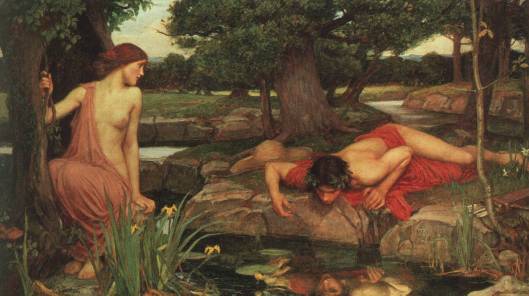
EchoandnarcissusAs you probably know, a selfie is a photo that someone has taken of themselves, usually with a phone or webcam, for the purpose of being uploaded to social media. Last week, the Oxford English Dictionary named selfie as the Word of the Year for 2013, noting that use of the word has increased by 17 000% in the past 12 months.

Research from the OED has shown that the word selfie is of Australian origin, with the first recorded use of it in an ABC Online forum in 2002. A user named Hopey posted a photo of his bottom lip, which had been injured when he fell over while drunk, apologising for the photo’s poor quality, as it was only “a selfie”.

Judy Pearsall from the OED explains: “In early examples, the word was often spelled with a -y, but the -ie form is more common today and has become the accepted spelling. The use of the diminutive -ie suffix is notable, as it helps to turn an essentially narcissistic enterprise into something rather more endearing. Australian English has something of a penchant for -ie words –barbie for barbecue, firie for firefighter, tinnie for a can of beer – so this helps to support the evidence for selfie having originated in Australia.”

To celebrate this Australian word being so warmly embraced by the rest of the world, there were just two names that came to mind, suggested by Judy’s appraisal of a selfie as “essentially narcissistic”, and because a photograph is a visual echo of its subject.

In Greek mythology, Narcissus was a stunningly handsome young hunter, the son of a river-god and a nymph. Many admired him, but he proudly spurned them all, even driving his suitors to suicide – Narcissus is said to have cruelly placed a sword in the hands of one despairing fellow, with the obvious suggestion of what he was to do with it.

The best known version of his story is given by the Roman poet Ovid in his Metamorpheses. He tells of a talkative mountain nymph named Echo, whose chattering tongue annoyed the goddess Juno one too many times.

Echo had a habit of waylaying Juno with one of her long-winded stories while Juno’s hubby Jupiter enjoyed himself with some nymph or other, giving the nymph plenty of time to escape Juno’s wrath. Juno cursed Echo’s voice, so that she could never speak until someone else did, and when they did, Echo could only repeat what they said, or even just the last few words of their speech.

The luckless Echo happened to see Narcissus wandering in the woods, and fell madly in love with his beauty. She longed to eloquently tell him of her passion, but could only repeat his own phrases back to him, which just annoyed Narcissus. She embraced him, and he angrily told her to get her hands off – he would rather die than be caressed by such a thing.

The rejected Echo was so ashamed and unhappy that she ran into the mountains and hid herself in the wilderness, until she wasted away with unrequited passion. Only her voice was left, which you can still hear in the hills sometimes – a voice which repeats your own phrases back to you, called an echo.

Meanwhile the gorgeous Narcissus continued to reject many nymphs and youths, always in the nastiest way possible, until one of his victims lifted their hands to heaven and implored the gods that one day Narcissus might fall in love, and his love be denied, so that he could know the pain of rejection in his turn. The prayer was answered by Nemesis, the goddess of divine retribution, who punishes arrogance.

One day, hot and tired from hunting in the heat of midday, Narcissus stopped by a pool in the forest to get a drink. Seeing his own reflection in the pool, he became entranced by its beauty – those starry eyes! Those flowing golden locks! That ivory skin and rose-leaf complexion! Those sweet pouting lips! Yep, the vain Narcissus had fallen head over heels at last – with his own image.

He tried to embrace the stranger in the water, and to kiss him, but although the reflection seemed as eager as he, smiling whenever he did, and offering his lips in return, Narcissus just ended up with his face in the pool, wet and ridiculous. Tortured by his love, he longed to die, and wasted away by the pool, consumed by hopeless desire for himself.

The nymph Echo, now a mere disembodied voice, still loved Narcissus, even as his beauty withered away with neglect. She watched over him, and pitied him in his plight, managing to whisper a sad “Farewell!” to him as Narcissus died and said goodbye to his reflection. Death brought him no relief, for in the afterlife he continued to miserably roam, gazing at his reflection in the underworld River Styx.

When Narcissus’ grieving sisters came to collect him for his funeral, they found his body had disappeared, and in its place was a beautiful narcissus flower, its drooping head still looking into the pool at its own reflection. Narcissus is a genus of spring bulbs native to the woodlands of Europe, West Asia and North Africa. Coming in a range of colours from white through the yellows to dark orange, we call some varieties daffodil or jonquil.

The meaning of Narcissus is not known – the Greeks understood it as meaning “I grow numb”, as if it was related to the words narcotic and narcolepsy. However, this isn’t accepted by scholars, who believe it is more likely an attempt to understand a word originally from another language, most likely one from the Near East. Although legend says the flower’s name came from the mythological character, it is almost certainly the other way around, with Narcissus named after the flower.

The name Narcissus wasn’t uncommon in ancient Greece. Narcissus was a wrestler who assassinated the Emperor Commodus, and is one of the inspirations for the movie Gladiator starring Russell Crowe, while another Narcissus was the slave of the Emperor Claudius, became his personal secretary, and had a lot of influence over him. There are several saints named Narcissus – Narcissus of Athens is mentioned in the New Testament as one of the Seventy Disciples of Christ, and an assistant to Saint Andrew.

In modern times, men named Narcissus were more likely named after one of the saints than the mythological character. However, Narcissus is actually far more common as a female name, because of the flower. One of its many issues is that it has given rise to the term narcissism, to describe inflated self-regard – although some degree of narcissism is probably normal and healthy, when it goes overboard it is seen as a psychological disorder.

The word Echo is from the Greek and means “sound”. Just as with Narcissus, the mythological nymph is named after the word, and not the other way around. There is a Marvel superheroine named Echo (she’s deaf), and Echo is the lead character in the television drama series, Dollhouse. An Australian connection is Echo Point in the Blue Mountains, a wonderful place to hear echoes. Because an echo is a vocabulary word as well as a character, it has sometimes been given as a name to boys, and OH- ending names are fashionable for both sexes. One of the issues with the name Echo is that there is a car called the Toyota Echo.

Can you imagine ever using one of these names from Greek mythology?

POLL RESULT: Narcissus received an approval rating of 13%, making it the lowest-rated boys name of the year, and the lowest-rated name overall. Echo did much better, with an approval rating of 58%.

(Picture shows the 1903 painting Echo and Narcissus by John William Waterhouse, illustrating the story by Ovid )