Celebrity Baby News: Media Babies

Tags

,

1399721180024.jpg-620x349

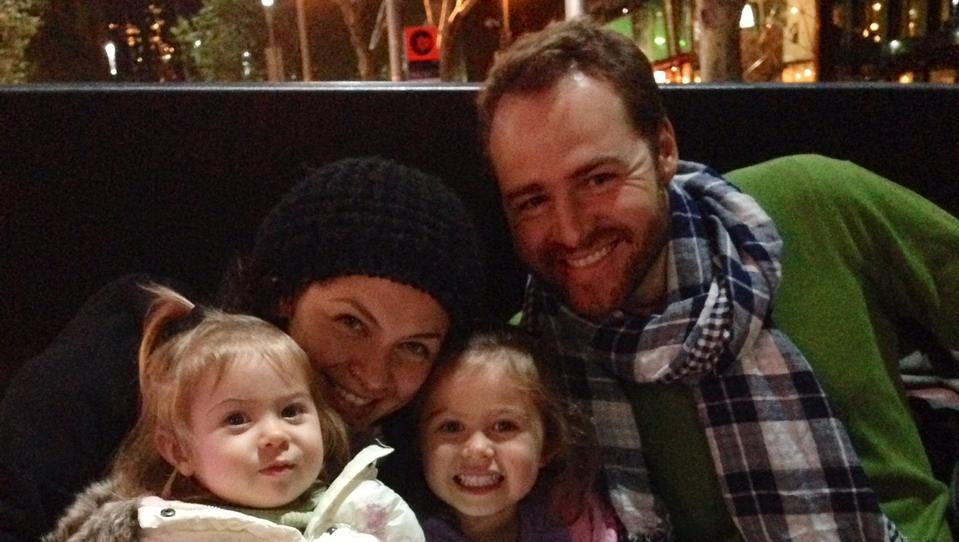
Editor Neil Breen, and his wife, writer Lizzie Meryment, welcomed their son on the weekend of June 7-8, and have named him Harry Daniel. Harry joins big sisters Juliet and Matilda. Neil is the food editor at the Sunday Telegraph, while Lizzie is a food writer for the same publication.

Channel 10 chief programmer Beverley McGarvey welcomed her daughter Scarlett in April. Beverley is originally from the UK, and has worked in television in England, Ireland, and New Zealand.

News presenter Janice Petersen, and her husband, musician Julian Hamilton, welcomed their daughter Arkie around a year ago. Arkie joined big sister Odessa, now aged 4. Janice is the co-host of World News on SBS, and Julian is a singer, songwriter and keyboardist in the electronica duo, The Presets.

Freelance writer Antoinette Lattouf, and her husband Danny, welcomed their daughter Halena about two years ago. Antoinette appears as a guest panellist on Channel Ten’s morning show, Studio 10, writes for The Hoopla, and works at the SBS news room. Danny works for Microsoft.

(Photo shows Antoinette and Janice with their children, along with Wendy Kingston, Eliza Harvey, and Sarah Cumming, who have already been featured on the blog)

Famous Name: Fiona

Tags

, , , , , , , , , , , , , ,

2014ARC_Lowry.jpg.496x605_q85

The Archibald Prize this year was won by Fiona Lowry, for her portrait of architect Penelope Seidler. The Art Gallery of NSW trustees, who are the judges of the Archibald, seemed to avoid controversy this year by awarding the $75 000 prize to an overwhelming favourite.

Fiona first saw Penelope Seidler six years ago at a gallery opening, and was struck by her beauty and presence; she decided then that she would like to paint her. The portrait was begun at Penelope’s home, Killara House, a heritage-listed Sydney icon which she designed with her husband, the famous modernist architect Harry Seidler.

Fiona’s paintings are made with an airbrush and a limited range of soft pastel colours, creating an often unsettling atmosphere seen through a fine mist. I can’t help thinking that Clarice Beckett would give a wry smile … and that once again, Penelope proves a winner!

The name Fiona was created by the 18th century Scottish poet James McPherson, and first used in his famous Ossian poems, which were a great influence on the Romantic movement, and instigator of the Gaelic revival. MacPherson pretended his poems were “translations” of ancient Gaelic poems, but could never produce the originals, and it is now agreed that while he based them on old ballads, many of the stories and characters are from his imagination.

In the Fingal section of the Ossian poems, MacPherson wrote: Let the sons of Fiona rise, on the lone plains of her lovely Ardan. Fiona is a not a person, but a feminine personification, like Erin or Brittania, or Lady Liberty. But a personification of what?

You may recall that the Irish hero Finn McCool’s warriors were called the Fianna. Although that looks as it means “Finn’s men”, fiann means “soldier, warrior, hero” in Old Irish, and fianna is its plural. Fianna can thus be translated as “war band”. Although the Fianna come from mythology, it is believed that such bands did exist in medieval Ireland; young men and women of the nobility who had not yet come into their inheritance and had no lands of their own.

Fiona is James MacPherson’s transcription of Fianna, which he may have written to make it look as if it was derived from Fionn, or Finn, meaning “fair, white”, in order to give his Fingal the status of the great Irish hero Finn McCool. You might see MacPherson’s “Fiona” as a personification of Celtic pride, independence, and fighting spirit.

Baby name books often try to claim Fiona as a feminine form of Finn or Fionn, but in medieval Gaelic, adding an -a to a name did not make it feminine. Instead -nat or –sech were used, so the feminine forms of Finn are Finnat and Finnsech (genuine medieval names). Just to confuse things, Fíona is a modern Irish name meaning “wine”. Although some people take Fiona as an Anglicisation of Fíona, it’s more that an Irish meaning was found for an existing name.

Fiona was used as a pseudonym by the Scottish writer William Sharp. Although already a distinguished poet, biographer, and literary editor, he chose to sometimes write romantic novels and poetry as Fiona McLeod – which he feared would not be accepted if it was known he was the author. William Sharp edited the Ossian poems, which is most likely where he found the name Fiona.

William Sharp had a love affair with a woman named Edith Wingate Rinder, and it was those works inspired by his passion for Edith that he attributed to “Fiona McLeod”. The poetry he wrote under the influence of this inspiration is considered his greatest work, and the Fiona McLeod novels proved so popular that they brought him financial success. You could say that “Fiona” was the name William gave his feminine side, and tapping into it unleashed a wave of creativity.

The secret of William Sharp’s dual identity only became publicly known after his death, when his wife revealed that her husband was the author of all works by Fiona McLeod. It was after Fiona McLeod became a popular novelist that the name Fiona became well known, so while James MacPherson may have created it, it was another Scottish writer who spread its use.

Fiona first charted in Australia in the 1950s, making an impressive début at just outside the Top 100 at #105. The reason for its sudden appearance on the charts is the 1954 film Brigadoon, based on the Broadway musical of the same name. It’s about two American men who are hunting in Scotland when they happen upon a miraculous village which rises out of the mists every hundred years for just one day. One of the men falls in love with a girl from the village named Fiona Campbell (Fiona McLaren in the original musical), played in the film by Cyd Charisse. The magic and romance of the story were clearly a hit with Australian audiences.

By 1960, Fiona was #57, by 1961 it was in the Top 50 at #47, and by 1967 it had just scraped into the Top 20. Fiona reached its peak in 1970 at #14, and was last in the Top 100 in 1986. A famous fictional Fiona during the 1970s was matriarch Fiona Cleary, from Colleen McCullough’s The Thorn Birds, although by this time the name was falling in popularity.

If you judge the name Fiona purely as a name nerd, you must admit it has some black marks against it. It’s a “made up” name, and furthermore, not even a name made up for a character – it’s basically the Khaleesi of the 18th century. It was popularised by a man pretending to be a woman, in part to obscure an extra-marital affair. It’s not the most promising name history of all time.

Fiona leapt into the charts out of nowhere due to popular culture – a musical film which was a box office success, but received lukewarm reviews. It was a “trendy” name that climbed in popularity very suddenly, then sank again at almost the same rate. It’s a “dated” name, in that it is dated to a particular era – you can be almost sure that someone named Fiona was born somewhere between Brigadoon and The Thorn Birds 1983 mini-series, and most likely between the late 1960s and mid-1970s (Fiona Lowry was born in 1974).

But isn’t it tiresome to always judge names through the lens of nerdism? Because in spite of all this, I think Fiona remains a pretty, delicate name with a fascinating literary history. It has a romance to it – a name created by a poet who changed the face of literature, made well known by a writer who had a talent he never knew existed until he fell in love, brought to popularity through a miraculous love affair.

I like the fact that such a gentle-sounding name has a war-like meaning; it’s a warrior princess of a name. Despite being dated, Fiona doesn’t sound particularly dated – it even has a fashionable OH sound in the middle. There are tons of Fionas in current popular culture, including Princess Fiona, the feisty green ogress from Shrek.

If you love the name Fiona, take heart – it is no longer plummeting in popularity, but relatively stable around the 300-400s, and can claim modern classic status. Furthermore, in the United States, which is much slower to appreciate British (especially Scottish) names, Fiona only began charting in the 1990s and has been gradually climbing ever since.

I have a family member who is a massive fan of the Shrek movies, and especially of Princess Fiona. Sometimes I think I will be a grandmother to a little Fiona, and the idea doesn’t displease me at all.

POLL RESULTS
Fiona received a very good approval rating of 72%. People saw the name Fiona as strong and feisty (23%), and beautiful or pretty (19%). However, 16% of people considered it too dated to be a baby name. The association with Shrek didn’t seem to be an issue, with twice as many people (10%), thinking it was a cool association than a problematic one (5%). Only one person thought the name Fiona was “too made up”.

(Painting is Penelope Seidler by Fiona Lowry)

Celebrity Baby News: Artistic Babies

Tags

, ,

Patrice_Tipoki_Arkins_2

Snowy Mountains artist Zoe Young, and her partner Reg, have a baby son named Wilbur, “Wilbi” for short. Zoe won a scholarship to the National Art School and graduated in 2012; last year she won the John Broscoe Memorial Prize, and will be holding two exhibitions in the autumn. Zoe was recently named as one of the finalists in the Archibald Prize, with a portrait of Winter Olympian, Torah Bright.

Musical theatre actress Patrice Tipoki, and her husband Richard Arkins, had a baby daughter about 18 months ago named Adelaide; Adelaide joined big sister Elisabeth, aged about 4 and 1/2. Patrice was born in New Zealand and came to Australia as a young child; she comes from a family with a history in the entertainment industry.

Patrice has been involved in musical theatre since the age of seven, when she played one of the royal children in The King and I, and became one of the youngest students ever accepted into the Western Australian Academy of the Performing Arts. After roles in The Lion King and We Will Rock You, she was named as understudy for the role of Elphaba in the Australian production of Wicked. Currently Patrice is playing Fantine in Les Misérables. Richard is a chiropractor.

(Photo of Patrice and Richard with their daughters Elisabeth and Adelaide from Mormon News Room)

Names Spotted at Home and Abroad (Winter 2014)

Tags

, , , , , , , , , , , , , , , , , , ,

image-tools

Anzac Day for Baby Anzac
After I covered the name Anzac on the blog, I received several e-mails from people insisting that it was illegal for babies to be named Anzac in Australia, and that my post should be altered to reflect that. I have seen babies in birth notices with this name, but my correspondents refused to believe me, as I had no proof of this (which is fair enough – imagine if I believed all the people who said they knew twins called Lemonjello and Orangejello).

Because of this healthy scepticism, I am posting a story about a baby named Anzac Judd from Bowraville, near Nambucca Heads in northern New South Wales. Unfortunately, it’s a sad story, because Anzac passed away from a spinal disease when only a few months old. On Anzac Day this year, Bowraville held a golfing and bowls day in Anzac’s memory, and even though the circumstances are heartbreaking, it shows that Anzac Day can mean more to you when you have a baby Anzac.

Danger is His Middle Name for a Reason
Robbie Danger Russell of Darwin was born with an extremely rare and little-understood genetic condition that meant doctors held out little hope of him surviving birth. Robbie did survive, despite multiple medical conditions, and at one year of age, still has the eyesight doctors expected him to have lost by now, although his prognosis is still very poor. Robbie’s mother Jennifer seems to have chosen the middle name Danger as a sign of the hazards that lay ahead of him, and that he lives with every day.

Quick Silver
I know readers love to know what fashionable people are naming their children, so here’s a quick profile of interior stylist Sibella Court who has a little shop in Paddington, and a daughter named Silver with her partner Ben Harper. Silver is pretty, and very much like mum’s name, but Silver Harper is a little race-horsey for my tastes.

And if you’d like to know what is in style, Sibella recommends vases of fruit and foliage, black walls, random surfboards, painter’s ladders, 1950s seashell collections, Union Jacks, vintage life-vests, and subway tiles. But for goodness sakes, don’t do any of this, because the story is from March, and that’s all TOTALLY LAST SEASON.

Sibella also had a pet pig named Wilbur, but pigs either went out of style, or now it’s bacon, the story didn’t really explain. Love the name Wilbur though!

Is it Just Hype?
I read a story about one of the many families who were victims of financial fraud committed by the Commonwealth Bank, and who were able to win their case in court, under the most difficult of circumstances.

One of the family, Tegan Couper of Shellharbour, is pictured with her baby son Hype. It’s a very unusual name, almost a virtue name really. I kept wondering if it was short for something, but could only think of Hyperion, which seemed even less likely, in a way.

Supposedly Seen – Sheen
Brisbane comedienne Mel Buttle wrote a piece about her childhood pet, a beloved dog named Benny, which she named after a boy named Ben she liked at school. In case we don’t think that’s an impressive naming story, she said she knows a baby who was named Sheen, after Charlie Sheen.

Not sure if that’s just a joke, but Sheen doesn’t seem that bad (if you put aside the Charlie Sheen part for a moment). The Irish surname Sheen is derived from a personal name which meant “peaceful”, and it almost sounds like a masculine form of Sheena, or a variant of Shane, as well as the appeal of English word sheen, meaning “lustre”.

Mel’s new dog is named Molly.

The Gods on Television
There was a new television program on ABC1 this autumn called The Gods of Wheat Street. Set in Casino in New South Wales, it’s about an Aboriginal family named Freeburn who have to let go of the past after their mother Eden‘s death, with the help of a bit of magic. Head of the family is Odin, and his siblings are Ares, Isolde, and Tristan, while Odin’s daughters are named Electra and Athena. The names may possibly help the trend for mythological names (and seem informed by said trend).

Waltzing with … Archibald

Tags

, , , , , , , , , , ,

resize

The Commonwealth Games opened in Glasgow on July 23, so the blog is featuring a few Scottish names; today it’s Archibald. Everyone is talking about the cute Scottish terriers in tartan coats who stole the show at the Commonwealth Games Opening Ceremony, each one of them leading in a national team. I think it was a moment where we all went Awwwww ….

The Scottie dogs were perhaps the only ones whose outfits were not scrutinised, because everyone wants to see whose team uniforms are the best, and worst. Australia traditionally fails dismally in the fashion stakes, and this year we were true to form, sending our team in unpopular outfits which were criticised as looking like something home-made for a Star Trek convention.

I presume the Games Committee sent everyone a cover letter to let them know that Glasgow summers are usually mild, and can have the odd wet day. The Australian designer seems to have understood that as code for “you are entering a polar hell with perpetual torrents of rain”, as everyone was sent equipped with anoraks, woolly jumpers, scarves, snow hats, and who knows what else. As Glasgow is currently in a heatwave, this has led to well-deserved international derision.

But like good hosts, Scotland has saved us from being the worst-dressed team by tactfully showing up in a lurid tartan mixture of bright blue, turquoise, fuschia, navy, caramel and mustard. Thanks Scotland – now our green anoraks with lemon piping, lumpy lime green jumpers, and baggy pants are only second place for ugliest uniform.

The Games have got off to a good start for Australia – we’re currently on top of the medal table by a whisker, we’ve set several world records, and two of the Hockeyroos took a selfie with the queen in the background, and it went viral, so our horrible uniforms haven’t held us back.

Archibald comes from the Germanic elements ercan (“genuine”) and bald (“bold”), and usually translated as “truly bold”. The first part of it was altered to make it seem as if it was derived from Greek archos, meaning “master”.

The Normans introduced the name to Britain, and it quickly became popular in Scotland, where it was used to Anglicise the Gaelic name Gille Easbuig, meaning “servant of the bishop” (it’s also Anglicised to Gillespie). Archibald is a traditional name in the Clan Campbell, as their founder was named Gille Easbuig.

As you would expect, there are quite a few Archibalds in Scottish history, including the fearsome-sounding Archibald the Grim, a 14th century Earl of Douglas and Lord of Galloway. The most powerful magnate in Scotland, he stood in higher stead even than the king. Because of him, the name Archibald became traditional in the Douglas family as well.

The name Archibald is well known in Australia due to the Archibald Prize, which is awarded for portrait painting. It was founded in 1921 from a bequest from J.F. Archibald, the co-owner and editor of The Bulletin in the days of its greatest influence.

J.F. Archibald was an interesting character from a naming perspective – he was baptised John Feltham Archibald, but changed his name to Jules Francois (pronounced FRANK-wa). This was considered rather pretentious, and everyone just called him “Archie”. He also professed to be Scottish, part-French, and Jewish, when he was actually Irish Catholic, which likewise afforded his peers great amusement.

The Archibald Prize is known as “the face that stops the nation”, as it is Australia’s favourite art award. It’s very accessible, especially as many of the portraits are of celebrities, and gets a lot of coverage in the media. Many people are interested to know who wins the Archibald, and generally there is widespread criticism or condemnation for whoever the judges choose. Indeed, the Archibald has been almost continuously controversial, with several protests, disputes, and legal actions throughout its history.

The Archibald Prize also offers two categories that are judged by non-experts: the People’s Choice Award voted by the viewing public, and the Packing Room Prize, awarded by the staff who install the portraits in the gallery. These prizes are more likely to be awarded to portraits of celebrities. It is possible to win the main prize and the other categories, but that rarely happens, and nobody has ever won all three at once.

The Archibald is so famous that it has inspired two parallel art institutions. One of them is the Salon des Refusés (Salon of Rejects – shades of J.F. Archibald!), an exhibition showing works which have been rejected for the Archibald. The prize for this is a People’s Choice Award.

The other is the Bald Archy Prize, a spoof art competition for satirical portraits; the winner is supposedly chosen by a sulphur-crested cockatoo named Maude. Absurdist and irreverent, you can see the appeal to the Australian sense of humour; it’s an extremely popular art award, and heaps of fun. This year’s winner was a portrait of Mitchell Johnson in the guise of Miley Cyrus’ Wrecking Ball – a cheeky comment on his devastating performance in the Ashes.

The name Archibald was #57 in the 1900s, and left the Top 100 in the 1920s; it left the charts in the 1950s. However, since the late 2000s, Archibald has made a slight comeback, and managed to chart several times around the 400-500s. In 2010, there were 11 babies named Archibald in New South Wales, and in 2012, there were 7 babies named Archibald born in Victoria.

The reason for this mild revival? The short form Archie, which has been Top 100 since 2007, and is rising in popularity. If you want a long form for Archie, and you think Archer is too popular or too trendy or too modern or too surnamey, that pretty much leaves Archibald.

Once upon a time, Archibald was perhaps rather fusty – a great-grandfather name smelling strongly of mothballs. But with the revival of vintage names, discerning parents may think it’s time for it to be taken out of storage.

And why not? Archibald is a clunky yet strong name with a long history, and has an aristocratic image. It makes a great Scottish heritage choice, and also references one of Australia’s favourite cultural institutions. Honouring an Archibald in your family has never seemed so possible.

Archibald would look dignified on a CV, and even a possible future knighthood makes Sir Archibald rather pleasing. Yet what could be friendlier and more democratic than simple Archie or Archy for everyday use?

POLL RESULT
Archibald received an approval rating of 53%. 24% of people disliked the name, and a further 24% hated it. However, 20% of people loved the name.

(Photo of Scottish terrier at the Commonwealth Games opening ceremony from the Daily Record)

Dakota Jo and Dardanelles Victor

Tags

, ,

anzac cove

Twins
Scarlett Eliora and Taj Ezekiel (Holly, Reef)
Sophie Catherine and Sienna Sue (Charlie, Poppy)

Girls
Alice Maeve (Darcy)
Dakota Jo (Paige, Ebony)
Eilidh Anne
Eva Betty
Fauve Flora May
Florence Grace (Allegra)
Logan Jane
Lucienne Winter
Matilda Alyss (Karli, Diggah, Husky)
Maya Jaime
Naomi Mary (Owen)
Nela Rose
Nevada
Priya Thakuri (Taj)
Quinn Frances (Charlie)
Samara Joy (Ashleigh)
Stella Kirsten Dawn (Jasper, Jonah, Flynn)
Tiafu (Cobie)
Verity Teresa
Violet Cassandra Bobby (Nicola, Jamie, Holly)

Boys
Arlen John (Zachary)
Beniah Peter
Boston Jack Keith
Charles Langley “Charlie”
Dardanelles Victor (Augustus)
Ellis Walter (Macy, Chase, Hartley)
Hamish Cameron
Hudson William
Jadran
Jasper Arthur Claude (Oscar)
Louie John (Mae)
Makoto Birtles “Mako” (Joshua, Caleb)
Micah Antoni
Nachi Jeffry
Odin Emmett (Grady)
Quade Michael (Adelle)
Reed Phoenix
Tate Gavin
Theo Sam
William Steele (Ella, Gracie, Lachlan, James)

(Photo shows Anzac Cove, on the Gallipoli Peninsula, on the Dardanelles Strait, in Turkey)

Celebrity Baby News: Football Babies

Tags

659823-b38a7736-0d94-11e4-b520-c4b498d9eaca

NRL footballer Kevin Proctor, and his partner Leesa, recently welcomed their first child, and have named their daughter Zara. Originally from New Zealand, Kevin has played with the Melbourne Storm since 2008, and has just signed a new four-year contract with them. He also plays for the New Zealand national team.

AFL footballer Michael “Spud” Firrito, and his wife Bonnie, welcomed their first child in September last year, and named their son Lenny. Michael has been with the North Melbourne Kangaroos since 2003, and has played over 200 games for them. He was also chosen to represent Australia in 2008.

(Photo shows Kevin and Zara Proctor)

Requested Famous Name: Annabelle

Tags

, , , , , , , , , , , , , ,

Annabelle_Rankin

Famous Namesake
On July 28, it will be the 106th birthday of pioneering stateswoman Dame Annabelle Rankin, who was the first woman from Queensland to sit in the Parliament of Australia, the second female Australian Senator, and second female parliamentarian for the Liberal Party.

Annabelle was the daughter of Colin Rankin, a Scottish-born Queensland politician who served in both the Boer War and First World War; Annabelle was named after her mother. Her father encouraged her to travel, and when she left school, she went to China, Japan, England, Scotland, and continental Europe. With a background in community involvement, she worked in the slums of London, and with refugees from the Spanish Civil War.

Back in Australia, Annabelle was a volunteer during World War II, serving at air raid shelters and hospitals, and organised the YWCA’s welfare efforts for servicewomen. Her responsibilities involved travelling to military bases in Queensland and New South Wales, and she accompanied Eleanor Roosevelt, First Lady of the United States of America, and Lady Gowrie, wife of the governor-general, on their visits to the troops.

After the war, she stood as a candidate for the Liberal-Country Party, and entered the Senate on July 1 1947. Annabelle was the first woman in the British Commonwealth to be appointed as an opposition whip, and was the whip in the Senate from 1951 to 1966.

Dame Annabelle was appointed Minister for Housing in 1966, becoming the first woman in Australia to administer a government department. As minister, she worked to provide housing for old age pensioners, and introduced a housing system for Aboriginal Australians and new migrants. As a newspaper of the time helpfully noted: “She tackles men’s problems too”.

After retiring from parliament in 1971, Dame Annabelle was appointed high commissioner to New Zealand – the first woman in Australian to lead a diplomatic mission. She supported several community organisations, including the Australian Red Cross Society, Country Women’s Association, Girl Guides, Victoria League, and Royal Commonwealth Society.

She was for many years the President of the Queensland branch of the Children’s Book Council of Australia, and the Dame Annabelle Rankin Award for services to children’s literature in Queensland is given in her honour. Another of her namesakes is the Annabelle Rankin, one of the ferries on Sydney Harbour.

Dame Annabelle was easily recognisable from her auburn hair and warm brown eyes, and combined a cheerful, friendly demeanour with a strong, uncompromising will, and apparently tireless energy. She was an excellent orator, and very capable of handling the occasional heckler (by no means were all the hecklers male, either).

While researching the name Annabelle, I noticed quite a few people seemed to think that the name Annabelle sounded “unprofessional”, and predicted that a woman named Annabelle could never be taken seriously in public life. If nothing else, the career of Annabelle Rankin proves this to be completely untrue.

Name Information
Annabelle is a variant of the name Annabel, which originated in Scotland during the Middle Ages. Although it is sometimes treated as a cross between Anna and Belle, this isn’t plausible as it pre-dates the common use of the name Anna in Scotland.

It’s assumed to be a variant of the Latin name Amabel, meaning “lovable” – the long form of Mabel, and close relation to familiar Amy. It may have been influenced by the name Agnes (“pure”), which was said (and often spelled) Annas at that time.

The Annabelle spelling probably has been influenced by Anna and Belle in the modern era, and is often understood as meaning “graceful and beautiful”. Although this isn’t very good etymology, the name is a bit of a hodge-podge, and you might feel free to translate it as you wish.

The names Annabel and Annabelle have long been favourites with the British peerage, both English and Scottish, which gives them a rather aristocratic air. I tend to feel that Annabel is a bit more “posh”, while others may think that the Frenchified Annabelle seems more stylish and “finished”.

Annabelle has charted in Australia since the 1970s, when it debuted at #580. Since the 1980s it has risen steeply, and it entered the Top 100 in 2000, at #92. It entered the Top 50 in 2007, when it reached #46, and although it wobbled a little here and there, it is now at the highest point it has ever been.

Currently it is #44 nationally, #35 in New South Wales, #50 in Victoria, #43 in Queensland, #47 in Western Australia, #61 in Tasmania, and #36 in the Australian Capital Territory.

Annabelle is also Top 100 and climbing in the US and the UK, but is more popular here than anywhere else, making Annabelle one of those unexpectedly Australian names. Annabelle is also Top 100 in New Zealand, but isn’t rising in popularity.

Annabel has charted in Australia since the 1960s, entering the rankings at #420, but while it also rose steeply during the 1980s, hasn’t become popular, and is still in the 100s. Annabel is only just outside the Top 100 in the UK, but is stable rather than rising, which is probably similar to the situation here. In the US, it is rising steeply, but only in the high 400s, so a long way off popularity.

Annabelle is a pretty, elegant, ultra-feminine name that’s well on its way to becoming a modern classic (while Annabel is already there). It fits in so smoothly with the trend for -belle and -bella names that it’s become quite popular, and may become more so.

Although it wasn’t originally linked to the names Anna and Belle, it might be used to honour people with those names, or similar names. Possible short forms abound, but all the the Annabelles I’ve ever met have only used their full name – it strikes me as one of those relatively long names that are somewhat nickname-resistant. There’s plenty to love about adorable Annabelle!

Thank you to Brooke for suggesting the name Annabelle to be featured on Waltzing More Than Matilda

POLL RESULTS
Annabelle received an approval rating of 62%. 20% of people preferred the name Annabel, but 16% thought Annabelle was beautiful and feminine. Only person thought the name Annabelle was too popular. I wonder if Annabel would have done better – perhaps we will feature it another time.

(Photo is of Dame Annabelle Rankin)

Name News: What Names Would You Choose For These Celebrity Twins?

Tags

, , , , , , , , ,

1235-734-09_X_Marks_The_Spot

X Marks the Spot for Future Celebrity Twins
A reader named Alison has kindly sent in an interview with Shannon Bennett, head chef at Melbourne’s Vue de Mond and judge of the ABC Delicious Produce Awards. You may remember Shannon, and his wife, actress Madeleine West, as the celebrity parents of four children named Phoenix, Hendrix, Xascha, and Xanthe.

Shannon explains in the interview that Phoenix was named after the restaurant where he and Madeleine met (Fenix, in Melbourne). Hendrix was in honour of Jimi Hendrix, who Madeleine is a big fan of. By this time, they noticed that they were getting a theme of the letter X in their children’s names, and decided to run with it for their daughters Xascha and Xanthe. However, the big news is that Shannon and Madeleine are expecting twins in November!

Alison wants to know: what do you think the Bennett twins might be called, given that we know they will have the letter X prominently in their names?

We don’t know whether they will be two boys, two girls, or one of each; nor do we know whether they will continue the theme-so-far of names ending in X for boys, and starting with X for girls, or will they mix it up a little?

My guess is Felix and Xavier for two boys, and Ximena and Lux for two girls – I seem to be betting that they will mix up up the first letter-last letter theme for twins.

Post your suggestions for the names of the Bennett twins, and we’ll see if any of us came anywhere close in four months time!

Dad Won the World Cup Baby Name Bet
Sydney couple Kathleen Vrinat, and her fiancé William Porkert, put their future baby name up as a bet for the World Cup. Kathleen is a supporter of Argentina, while William supports the German team, and as both their teams made the Grand Final in Rio, they decided that whoever’s team was victorious would get naming rights to their first-born child.

William already has some ideas, and is considering using names from the German football team, such as Andre, Manuel, or Mario – he points out that Andre is unisex, so could be used for either a boy or a girl, while Manuela is a feminine form of Manuel. Sadly, nobody seems very keen on the name Manuela, including Kathleen.

Kathleen was so distraught when she found out Germany won that she was sent home from work as her constant crying was distracting her colleagues. She says she will follow through with the bet, although she is now considering delaying having children. William hopes she’ll put the second child’s name up on a bet too.

The Rugby League Baby
Mother of seven Kirstie Nowland was watching her son Ivi at a junior rugby league game when her contractions started. She had had several dreams about giving birth at a football game, but her mother Kim dismissed them, putting them down to constant football attendance and the baby being overdue. Kirstie didn’t want to leave before the game finished, but it seemed that if she didn’t call for an ambulance soon, the baby would be born in the stands.

She was taken to Blacktown Hospital and gave birth 30 minutes later, but was upset she hadn’t got to see her son score before she left. The first thing she asked Ivi when she saw him was whether his team won, and he reassured her, “Yes mum; I scored, and we flogged St Mary’s 54-4”. Being a good rugby league mum, she knew that was the only thing that mattered.

Ivi plays for the Western City Tigers, and in honour of the triumphant team, Kirstie called the new baby Tiga Lilly. Tiga has a very memorable name story.

Sued Because of Her Baby’s Name
Baby name theft is a topic that gets bandied about a lot, but it’s very serious when a business believes that their “baby name” has been stolen. Canberra mum Neda Lutekic has a toddler named Zara, and when she started her own line of baby clothing, she named it Zarabumba after her little girl. Multinational fashion retailer Zara has now launched legal action against her, even though her inspiration wasn’t the store, but her daughter. Be careful that your baby’s name doesn’t sound like a big company before using it as inspiration for your own business.

There’s An App For That
Practical Parenting magazine has a gallery of baby naming apps you can download from iTunes. The most intriguing is one you can only test if you are actually pregnant, because it allows your unborn baby to pick its own name by registering its level of “enthusiasm” for each name from its movements. It doesn’t sound very scientific, but does sound fun, and you’ve got the perfect comeback if your child complains about their name in the future.

POLL RESULTS
People’s favourite choices for a baby name taken from players in the German football team were Roman, Matthias, and Bastian. The least favourite was Shkodran, which didn’t receive a single vote.

Thank you to Alison for the information on the forthcoming Bennett twins – all Australian baby name news gratefully accepted!

Perth Suburbs That Could Be Used As Boys Names

Tags

, , , , , , , , , , , , , , , , , , , , , , , , , , , , , , , , , , ,

2725210-01

Ashby
Ashby is a residential northern suburb, first developed in the late 1990s. It is named after the original landowner, Mr E.E. Ashby, who lived here before World War I. Ashby is a surname which means “farm among the ash trees” in a mixture of Old English and Old Norse; it is more common in Lincolnshire, Leicestershire and the East Midlands, which have a history of Scandinavian influence. Ashby has been used as a name for boys since the 17th century, and seems to have been especially popular amongst Puritan families. The town of Ashby-de-la-Zouch in Leicestershire was an important centre for Puritan preaching and education, which may be an inspiration for the name. Ashby isn’t rare in Australian records, although more common as a middle name, and has occasionally been given to girls. I saw this is a boy’s middle name in a birth notice, and thought this might make an appealing Ash- name for boys, which seems more obviously masculine than Ashley. Unfortunately, it could easily be confused with Ashley too.

Bentley
Bentley is 8 km south of the city, and is the location of the main campus of Curtin University. The area has been settled since 1830, and was developed in the post-war period with government housing, including homes for returned servicemen. Today Bentley is very varied: it has a light industrial area, but part of it is still used for grazing. The suburb is named after John Bentley, a veteran of the Crimean War who arrived in the Swan River Colony as a pensioner guard, and supervised convicts building what is now the Albany Highway. Bentley is a surname after the common English place name, meaning “bent-grass meadow”; bent-grass refers to rushes or reeds. Bentley has been used as a boy’s name since the 17th century, and has recently leaped up the charts in the United States to become a Top 100 name. Its jump in popularity is attributed to a baby named Bentley on reality show 16 and Pregnant. In Australia, Bentley is around the high 100s, which is still a lot more popular than it is in the UK. People often connect the name to the luxury car company, founded in 1919 by W.O. Bentley.

Bertram
Bertram is a new suburb of the City of Kwinana, in Perth’s south (for more information, see Leda in Perth Suburbs That Could Be Used As Girls Names). It is named after an assisted migrant from the 1920s, who came here under the group settlement scheme. Bertram is a Germanic name which means “bright raven”; it was introduced to Britain by the Normans. A famous Australian namesake is Sir Bertram Stevens, who was Premier of New South Wales in the years before the Second World War. Bertram has been quite a popular name in fiction, including the main character of Shakespeare’s All’s Well That Ends Well. Unfortunately, Bertram is not, on the face of it, a very sympathetic character, although he gets his regulation happy ending anyway. Another fictional Bertram is Bertie Wooster, from P.G. Wodehouse’s Jeeves books; a good-natured idler, this Bertram is not without charm, although perhaps not the most sturdy namesake. The short form Bertie would be very cute though.

Carlisle
Carlisle is south of the CBD, and close enough to offer views of the city. Originally farmland, it was developed in the late 19th century, and is a fairly typical older suburb. The name Carlisle was chosen by the suburb’s ratepayers, who called it after the northern English city of Carlisle in Cumbria. Their logic was that just as Cumbrian Carlisle is famously near the border between England and Scotland, so was Australian Carlisle right on the border between the city of Perth and its suburbs. However, it is interesting to note that one of the landowners at the time was named Carlisle; it is possible his surname put the idea in the ratepayers’ minds. Carlisle is an ancient city which was one of the most heavily fortified towns of pre-Roman Briton: its name means “stronghold of the god Lugus”. Lugus was one of the most prominent of the Celtic gods, and the Romans identified him with Mercury, as he was known as a god of trade and skill. Carlisle has been used as a boy’s name since the 18th century, and was originally used most often in Cumbria. It has recently received some interest since the name was chosen for one of the more sympathetic vampires in the Twilight series.

Falcon
Falcon is one of the suburbs of Mandurah, a coastal city 45 km from Perth, within the metropolitan area. It is popular with tourists and retirees, making it the least affordable city in Australia. Falcon has a number of beaches, and is named after Falcon Bay, which is pronounced FAWL-kin, rather than FAL-kin – an earlier English pronunciation of the word. Falcon was a yacht whose crew won a silver medal at the 1956 Olympics in Melbourne, and many of Falcon’s streets are named for yachts. Falcon has been used as a boy’s name since medieval times – there is even an obscure St. Falcon, and Falcon was the middle name of Antarctic explorer Robert Scott. The name may be from the Latin Falco, meaning “falcon”, or derived from the Germanic name Fulco, meaning “people”. I did find a few Falcons born in Australia, and for some reason they were nearly all South Australian. In Australia, this name will remind people strongly of the car, the Ford Falcon, and perhaps also the slang term in rugby league for being accidentally hit in the head by the ball. I’m not sure whether the pronunciation will make any difference.

Murdoch
Murdoch is in the south, and the home of Murdoch University. The university is named in honour of Sir Walter Murdoch, a former chancellor of the University of Western Australia, and its founding Professor of English. Sir Walter was a essayist famous for his wit and intelligence, and an active proponent of international peace and justice, political freedom, women’s rights, and affordable childcare. His great-nephew is the media mogul Rupert Murdoch. The surname Murdoch is the Anglicised form of two Gaelic personal names that became conflated with one another, and were written as Muireadhach. One name was Muiredach, meaning “mariner”, and the other was Murchad, meaning “sea warrior”. Muireadhach was a traditional name amongst the Earls of Monteith, and Murdoch has seen particular use in their seat of Perthshire. Murdoch is commonly found in Australian records amongst Scottish families, but although we have enthusiastically embraced Lachlan, Murdoch has been less successful. Fun fact: Murdoch was an early name crush for a particular Australian blogger, which makes you wonder if this could have been a contender without the prominent Murdoch family.

Samson
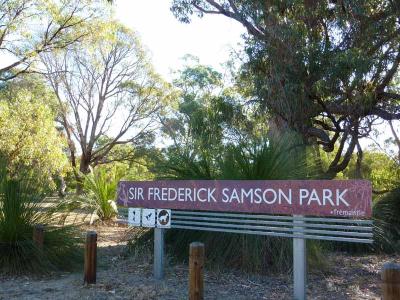
Samson is a small suburb of Fremantle, a southern port city in the Perth metropolitan area. The suburb was only developed in the 1970s, as before this it had belonged to the army, and was a military camp during World War II. The suburb is named after the Samson family, who have been prominent in the Fremantle area for nearly two centuries. Sir Frederick Samson was mayor of Fremantle for twenty years, from the 1950s to the 1970s, and his home, Samson House, is one of Fremantle’s landmarks. The suburb of Samson contains Sir Frederick Samson Park, Fremantle’s only bush reserve. Sir Frederick was the grandson of Lionel Samson, a wealthy Jewish merchant who settled in the Swan River Colony in 1829 and became one of its most successful pioneers. Popular for his charm and wit, respected for his integrity, the business he founded is still run by the Samson family, making it Western Australia’s oldest family business. Samson is one of the most famous characters in the Old Testament, a judge of the Israelites known for his superhuman strength. His name is from the Hebrew for “man of the sun”, leading some scholars to suspect he was originally a sun god, or demi-god. Samson was in use as an English name during the Middle Ages, and there is a Welsh St Samson, one of the Apostles of Brittany. This is a very masculine name which provides another way to get the popular short form Sam.

Sawyer
Sawyers Valley is on the eastern fringe of Perth’s outer suburbs, and 40 km from the city. Its name came about because it was originally a saw mill and timber processing area. It’s now a semi-rural suburb in the bush-covered hills surrounding Perth. Sawyer is an occupational surname for someone who sawed wood for a living – and in the days when most things were made of wood, an important trade. Sawyer has been used as a personal name since the 17th century, mostly as a male name. In Australian records, I can only find it as a man’s first name, although not unusual as a female middle name. Sawyer doesn’t chart in Australia, but has been in the US Top since 1991; it had a huge jump up the charts after Steven Spielberg chose the name for his son in 1992. In America, it is a unisex name, but more common for boys. Although it is in rare use here, I have seen it a few times, on both sexes. Its most famous namesake is Tom Sawyer, the young scamp from the stories by Mark Twain, while it has also been alias for Josh Holloway’s character on Lost.

Stirling
Stirling is a residential suburb 10 km north of the city. The area has a multicultural history, because in the 1920s it attracted retired Chinese miners from the goldfields, returned servicemen from the First World War, and many Italian migrant. It became a successful market gardening region producing almost every vegetable possible, some for export. Even after development in the 1960s and ’70s, the suburb remains one of Perth’s most ethnically diverse, with a third of the population having Italian heritage, and many from Macedonian, Greek and Asian backgrounds. The suburb is named after James Stirling, who was the first governor of Western Australia, and who lobbied for a colony to be founded on the Swan River. Stirling is a Scottish Clan name which comes from the city of that name in central Scotland; it is known as the “Gateway to the Highlands”. The meaning of its name is not known, although folk etymology says that it is from the Gaelic for “place of battle”. Another theory is that it is British, and means “dwelling place of Melyn”; the name Melyn is said to mean “yellow-skinned, sallow-skinned”. Stirling has been used as a boy’s name since the 18th century, and was first used this way in Stirlingshire. I have seen this name quite a few times in birth notices, and it’s one with a great deal of dignity.

Warwick
Warwick is in the northern suburbs of Perth, and a large section of it is still native bushland. It originally belonged to a railway company, and is named after Warwick Road, the major road which goes through it, and pre-dates the suburb’s development. It may have been inspired by Warwick Road in London. The name Warwick comes from the English city of Warwick in the Midlands; its name means “dwellings by the weir” in Old English, as the River Avon flows through it. It’s pronounced WOR-ik. The Earl of Warwick is one of the most prestigious titles in the British peerage, and Guy of Warwick a legendary English hero, which may help explain why Warwick has been used as a boy’s name since at least the 16th century. However, it seems to have originated in Devon, in the seat of a family named Warwick who belonged to the minor nobility. Warwick first charted in the 1910s at #203, joining the Top 100 in the 1940s, where it peaked at #80. It left the Top 100 in the 1960s, and hasn’t charted since the 1990s. Famous Australians with this name include the racing driver Warwick Brown, and flamboyant former AFL star, Warwick Capper.

POLL RESULTS
The public’s favourite names were Sawyer, Samson and Ashby, and their least favourite were Stirling, Warwick and Murdoch.

(Photo shows the entrance to Sir Frederick Samson Park, in Samson)