Royal Baby Meltdown, Name Discrimination, and Other Name Stories in the News

Tags

, , , , , , , ,

ImageResizer

Royal Baby 2.0
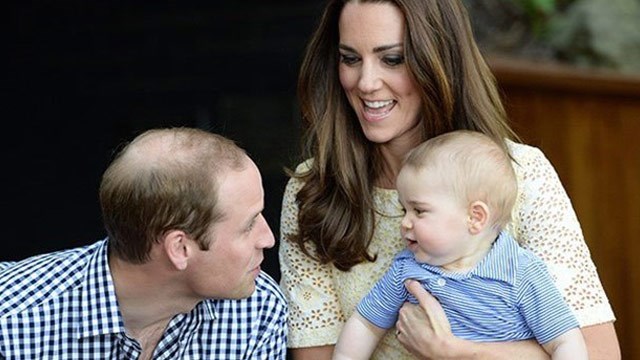
Yes, it’s another baby expected by the Duke and Duchess of Cambridge, due in April next year. The Internet goes wild, bookies make billions, name bloggers all collapse from guessing until our brains explode. So far, punters are gunning for a brown-haired girl, and the most popular names for the prince or princess, younger sibling to George, are James for a boy, and Elizabeth for a girl.

I am very sceptical of an Elizabeth, as the queen has apparently made it clear she is not interested in having a namesake (royal babies with Elizabeth as their middle name are supposedly named after the queen’s mother, not Elizabeth II). To me, George and James are too similar-sounding as brothers, and surely the heir to the throne needs a distinctive name, if only for publicity purposes? However, the Duke and Duchess may not agree with my name advice.

You can read plenty of baby name predictions online (most of them are just recycling their guesses for Prince George, with the name George removed). I won’t be doing anything in regard to the name until much closer to the royal birth, as I think it is far too early. They aren’t even at the twelve-week mark yet, and the duchess is ill with severe morning sickness. Give them some space, people!

Last time, my bizarre method of tracking royal baby names turned out to be unexpectedly successful (for a boy, anyway; it might have been totally wrong if George had been a girl), but next time we might try something completely different, and see how that goes.

Utter Drivel Bogan
Kidspot have brought out a rather cringe-making article on “bogan baby names”, which they pretend is all in good fun.

Clare asked on her Scoop page whether this was as controversial or potentially offensive as calling names “chavvy”? I would say, yes Clare, it is: it’s like an article about chavvy names, redneck names, ghetto names, and the like. Despite protestations to the contrary, articles like these are intended to be offensive, and they certainly seem mean-spirited.

Apart from being copied from other sources, the article has some real clangers, such as saying Zaiden is “made up”, when it’s an elaboration of the Arabic name Zaid. Or listing the name Princ’ess, which isn’t even allowed in Australia.

Jorja Fights Back!
One person who took exception to Kidspot’s article was Jorja Orreal, whose name happened to feature on the list of “bogan names”. She loves her name, and her mother says it is not bogan at all, but very pretty. Jorja was named thus because her mum noticed that best-selling author Sidney Sheldon dedicated several of his novels to his wife at the time, actress Jorja Curtright. As she points out, how could the man behind I Dream of Jeannie possibly be associated with something in poor taste?

Jorja believes her name actually looks like a name, rather than Georgia, which is also a country and an American state, and seems more feminine. Unfortunately, she then loses every bit of my sympathy she might have mustered by going on to trash the names that she thinks are really bogan. Thanks to her intervention, my comments on the Kidspot article were much less severe.

Reach the Top of Your Game with a Creative Name
Almost everyone agrees: “creative” names are a terrible idea. Received wisdom is that it’s better to be a Chloe than a Kloey, James looks more professional than Jaymezz, and a traditional name like Elizabeth or William will gain greater esteem than a modern concoction like Neveah or Latrell. Essential Baby examines this idea by seeing if it stands up in the modern workplace.

In fact, there’s a lot to be said for “creative” names, perhaps most of all that they tend to be memorable, and can also be a great ice-breaker. Interviews with a couple of creatively-named people in business demonstrate that their names have been an asset to their careers. It seemed to me that their attitude to their names was really important, because they expected people to have trouble spelling their names, and were relaxed about the idea that people might find them amusing. Could those people skills have been gained through constant negotiations with others over their names?

Paul Barbaro, a spokesman from a recruitment agency, believes the idea that a “classic” baby name has prestige is an old and outdated one, and that people today are much less judgemental, being used to a wide variety of names (someone alert Kidspot to this valuable information!). He suggests that unusual names are now the norm, and that it can be helpful to have a name that is a little different, or globally recognised.

However, language expert Roly Sussex, from the University of Queensland, appears to be unconvinced. He can’t think of many people in public life with an unusual name, and thinks it would be far better to have a name that everyone knows how to spell and pronounce. But perhaps his attitudes really are outdated.

Should You Change Your “Ethnic” Name?
Roly Sussex thought that people with ethnic names were more likely to be successful if they anglicised their names, or used a nickname.

While I’m not sure if it will help you become successful in the long-term, the sad news is that it will probably help you to get a foot in the door. Researchers from the Australian National University submitted 4000 fictitious CVs for entry level jobs, and found that people with a Middle Eastern name need to submit 64% more applications that one with an Anglo-Saxon name to gain a job interview, while those with Chinese names need to submit 68% more applications, Indigenous names 35% more, and Italian names 12% more.

The study also showed that name discrimination was not evenly applied, and there could be differences when other factors were changed. For example, men of all minority ethnic groupings found it harder to get interviews than women; waitstaff and data entry jobs were the most likely to discriminate against ethnic minority males.

The city the person is in makes a difference too, with Sydney the most biased city against people with ethnic names – a Chinese person in Brisbane must submit 57% more applications, while in Sydney, it is a whopping 92% more. There was no evidence of discrimination against Italians in Melbourne, which has a relatively high Italian population.

Middle Eastern job seekers fared better when they applied for jobs with a non-Anglo employer or in ethnically diverse neighbourhoods. Interestingly, while a Chinese employer was much more likely to give someone with a Chinese name a callback, Italian employers were significantly less likely to offer someone with an Italian name an interview!

The entry level job that appeared to have the least amount of discrimination was customer service: your name doesn’t seem to make much difference when it comes to getting an interview in this field.

And there is some good news to go along with this rather depressing research. A study conducted by the University of Melbourne this year found that ethnic minority jobseekers were much more discriminated against during the application process than they were once they had actually secured a position.

Some people who did use an English name or an English nickname to find work felt comfortable enough to revert back to their real name in the workplace, and some were even encouraged to do so by their fellow colleagues. So if you write Rick on your resume, it doesn’t mean you can’t become Rashid again once you have been successful in your interview.

Famous Name: Laniakea

Tags

, , , , , , ,

SPACE-TRIANGULUM-GALAXY-MESSIER 33

Do you remember being very young and beginning to discover how where you lived fit into the world? Maybe you realised the number on your front gate was part of your address, or found that the street you lived on was one of many streets in a suburb, and that suburb was in a city with thousands or even millions of people. Perhaps you saw Australia on a world map for the first time, and could see its relation to other countries – didn’t it look far away from anywhere else?

In time you learned that you were on a planet called Earth, and when you were taught about the solar system, discovered that the Earth was really quite small, and a long, long way away from other planets. And that we all revolved around a Sun which was a star, not a very big one, and one of around 100 thousand million in the Milky Way – one of more than a 100 billion galaxies in our universe.

I don’t know about you, but when I learned all this in astronomy class, it totally blew my mind. The same way it blew my mind when I was a toddler and began to gradually understand that our farm was one of many in our hamlet, and that we were all part of a town 25 km away, and the regional centre was 50 km away, and the state capital 300 km away, and the nation’s capital a great distance, and the next country even further than that, across the sea. It made me feel very small and a long way from everything.

And when you were little, did you ever write down your address in this fashion: My Bedroom, 11 Acacia Road, Seaforth, Manly, Northern Beaches, Sydney, Cumberland County, New South Wales, Australia, Oceania, Southern Hemisphere, The Earth, The Solar System, The Milky Way, The Universe? Now there’s an another element to add to the address.

Astronomers have known for ages that the Milky Way is part of a larger cosmic structure, but it was too hard to figure where one group of galaxies ended and the next began. Recently a team of astronomers at the University of Hawaii, led by Brent Tully, have gathered measurements allowing scientists to define superclusters of galaxies. Their work, published this month in Nature, describes the vast group of galaxies to which the Milky Way belongs.

The name of our particular galactic supercluster is Laniakea, which is 520 million light years in diameter, and contains one hundred million billions Suns spread across 100 000 galaxies. The Milky Way is right on the fringes of Laniakea, on the edge of a vast empty region of space known as the Local Void, but we are constantly pulled towards a gravitational force in Laniakea’s centre which scientists have dubbed The Great Attractor.

Within the Laniakea Supercluster, we are part of the Virgo Local Supercluster, and beyond it are the neighbouring superclusters of Hercules, Coma, and Perseus-Pisces. Just as with the original problem of defining the edges of galaxies, it is not yet clearly known where the edges of Laniakea end and the edges of these other superclusters begin.

One surprise was that the Laniakea Supercluster is being pulled by a larger concentration of galaxies called the Shapley Supercluster, so we may be part of even greater structures that are yet to be discovered. Thus our universe expands as knowledge and comprehension grows.

Brent Tully, who has helped create our new map of the Milky Way’s environs, says: Seeing a map gives you a sense of place. For me, having that sense of place and seeing the relationship of things is very important in terms of understanding it. Thanks to Tully and his team, we have gained another insight into our place in the universe – and how small we are, and what a long way from everything.

The name Laniakea was suggested by Nawa’a Napoleon, associate professor of Hawaiian Language at Kapiolani Community College. The Hawaiian name can be translated in a number of ways, including “open skies”, “wide sky”, or “wide horizons”, but in this case it is understood as “immeasurable heavens”. The name was chosen to honour Polynesian navigators who studied the heavens in order to navigate the Pacific Ocean.

Laniakea is pronounced LAN-ee-uh-KAY-uh in the video from Nature I watched, although I have seen it written as la-NEE-uh-KAY-uh. It is well known in Hawaii, as it is the name of a surf beach famous for its sea turtles, and the name has been used for numerous businesses in the area. It does get very occasional use as a personal name, and although it is technically unisex, seems to have only been given to girls. Lani, Nia, and Kea are the obvious nicknames.

This is an elaborate Polynesian name which is unusual, but seems very usable in Australia, which has a significant Pacific Islander population, and where several Polynesian names are familiar. The short forms are very much on trend here.

While Laniakea has had some use as a Hawaiian name for girls, Hawaii has shared the name with the whole planet, and it now belongs to all of us. It’s not just a beautiful beach on the shores of a great ocean, but a multitude of galaxies whirling through the immensity of space, the “immeasurable heavens”. And it is our home.

POLL RESULTS
Laniakea received a very good approval rating of 72%. People saw the name Laniakea as beautiful or pretty (21%), having a cool cosmic connection (20%), and having a fantastic meaning (19%). However, 15% of people thought it was too long and complex. Only one person thought the astronomical background made the name Laniakea seem geeky.

Popular Here, There and Everywhere: Baby Names That Travel Well

Tags

, , , , , , , , ,

images

Happy Father’s Day! Because dads mean the world to us, today we’ll be looking at names that are popular in many parts of the world.

While some people shy away from popular names, there’s a lot to be said for having a name that is familiar in many countries. It makes travel and working overseas that little bit easier, and if you have a particular cultural background, it’s nice to know relatives in your country of origin will be easily able to understand your child’s name. Even if your child never leaves Australia’s shores, it’s a global village, and they will most likely meet, study, and work with people who have come here from other countries.

To me, a name with high international recognition needed to be popular in as many regions as possible, so that as a mimimum, it needed to be Top 100 in the English-speaking countries of Australia, New Zealand, England/Wales, Scotland, Northern Ireland, Ireland, Canada, and the USA. It also needed to be popular in Western Europe, Eastern Europe, and Northern Europe (Scandinavia).

I’ve included common and popular international variants of names, as long as I thought an English-speaker could easily identify them, and short forms as well. You need to remember that even in cases where the name is spelled identically, it probably won’t be said in exactly the same way, but most people are fine with that. In many countries, my name is said AHN-ah, rather than AN-a, and to me this is not only perfectly comprehensible, but makes my name sound warmer and more exotic.

International name data came from Behind the Name, Essential Baby, and Nancy’s Baby Names.

BOYS

Alexander/Alexandar/Aleksander
I have treated these variants as the same name, because certain countries regard them so in their popularity charts. This means that Alexander is popular in the English-speaking world, as well as in Western Europe, including Austria and the Netherlands. It is a favourite in Eastern Europe, solidly popular across most of Scandinavia, and a familiar name in South America. Alexander is Top 10 in Belarus, Bulgaria, Germany, Iceland, Malta, Norway, Scotland, Sweden, and the USA, and most popular in Russia, where it is #2. So far so good, but what makes Alexander such an international winner is the widespread popularity of its short forms and variants. Just look at Alex, which is popular in Australia, Belgium, Bulgaria, Czech Republic, England/Wales, Hungary, Ireland, New Zealand, Northern Ireland, Scotland, Slovenia, South America, Spain, and Sweden, and Top 10 in Armenia and Catalonia, while Xander is popular in Belgium. Alejandro is popular in Catalonia and South America, and Top 10 in Spain. Alexandre is popular in Belgium and France, and Alessandro Top 10 in Italy and Switzerland. Further east, Alexandru is Top 10 in Moldova, while Iskander and Eskandar are familiar names in Iran and Arabic countries. Credit Alexander the Great, who conquered the known world more than 2000 years ago, and whose name is famous in both east and west.

Daniel
As well as being popular in the English-speaking world, all-rounder Daniel is popular right across Europe, where it performs well in Eastern Europe, and is Top 100 in every Scandinavian country. It’s also a popular name in South America. Daniel is Top 10 in Iceland, Ireland, Latvia, Moldova, Northern Ireland, Russia, Scotland, South America, and the USA, and is the #1 name in Spain. Short form Danny is popular in Ireland and Northern Ireland, Danijel is popular in Croatia, while Daniil, the Russian form, is Top 10 in Belarus.

David
David is popular in the English-speaking world, and widely across Western Europe, including Belgium, France, and the Netherlands. It also does well in Eastern Europe, and is popular in two Scandinavian countries, Norway and Sweden. Furthermore, it is a popular name in South America. David is Top 10 in Austria, Croatia, Hungary, Spain, and Switzerland, and most popular in Moldova and Brazil, making #2 in two hemispheres. When it comes to international variants, Dawid is popular in Poland, Davide is Top 10 in Italy, while Davit is the #1 name in Armenia.

Adam
Being the oldest name in the Book does give you widespread recognisability, which is why you can find Adam fairly evenly through the English-speaking world, and in many countries of Western, Eastern, and Northern Europe. Adam is Top 10 in Belgium, the Czech Republic, Hungary, and Ireland, and is most popular in Malaysia at #3. The Turkish form Adem is popular in Turkey, and in Bosnia and Herzegovina.

Samuel
Samuel is popular in the English-speaking, and widely across Western Europe, including Austria, France, Malta, the Netherlands, and Spain. In Eastern Europe it’s popular in the Cezch Republic and Hungary, while in Scandinavia Samuel is popular in Finland, Norway, and Sweden. Samuel is Top 10 in New Zealand and South America as a whole, and most popular in Canada, where it is #5. Short form Sam is popular in Belgium, Ireland, the Netherlands, New Zealand, Northern Ireland, Scotland, and Sweden. Of its international variants, Samuele is Top 10 in Switzerland, and Samvel is Top 10 in Armenia.

Runners-up: Benjamin, Oliver, and Liam.

GIRLS

Sophia/Sofia
I have treated Sophia and Sofia as one name, since several countries do so when calculating their most popular names – including Australia. Sophia/Sofia is the queen of international names; poular around the globe, and familiar in a host of countries. As well as the English-speaking world, it is popular right across Europe, the whole of South America, and in Malaysia as well. Sophia/Sofia is a Top 10 name in Australia, Canada, Chile, Finland, Germany, Malaysia, Moldova, Norway, Spain, and Switzerland, and is the #1 name in Brazil, Denmark, Italy, Latvia, Russia, South America as a whole, and the USA. Furthermore, it has several international variants, such as Zsofia, which is Top 10 in Hungary, and Zofia, which is Top 10 in Poland. It sounds similar to the unrelated Arabic name Saafiya, giving it a very high recognition factor.

Emma
Emma is popular in the English-speaking world, and across the whole of Europe, including France, Germany, Italy, and Spain. It charts in several Eastern European countries and is Top 100 in every part of Scandinavia. It is also highly popular in South America. Emma is Top 10 in Austria, Canada, Denmark, Iceland, Ireland, Italy, Malta, South America as a whole, and the USA, and is # 1 in Belgium, Finland, France, Norway, and Switzerland. Its international variant Ema, often pronounced exactly the same way as Emma, is popular in Bosnia and Herzegovina, and the Czech Republic, and Top 10 in Croatia and Slovenia.

Anna
Popular in the English-speaking world, and in Western Europe, where it charts in France, Germany, Italy, the Netherlands, and Spain. Anna also does well in Scandinavia, and is a particular favourite in Eastern Europe. Top 10 in Armenia, Belarus, the Czech Republic, Germany, Hungary, Iceland, Latvia, and Russia, it makes #1 in Austria. The international variant Ana is popular in Bosnia and Herzegovina, Catalonia, Spain, and South America as a whole, and is Top 10 in Croatia and Slovenia. The many international variants and pet forms give this a high recognition factor, and there are several similar-sounding names in Arabic and Asian languages as well.

Ella
Ella is popular in the English-speaking world, and in Europe, including Austria, Belgium, the Netherlands, Croatia, the Czech Republic, Slovenia and Demark. It is Top 10 in Canada, Finland, Ireland, Northern Ireland, New Zealand, Norway, Scotland, and Sweden, and #1 in Malta. The similar Ela, often pronounced the same way, is popular in Bosnia and Herzegovina, Croatia, and Slovenia, as well in Turkey, where it means “hazel-coloured, honey-brown”.

Eva
Eva is popular in the English-speaking world, and in several European countries, including Austria, France, the Netherlands, Spain, Croatia, Iceland, and Norway. It is a Top 10 name in Northern Ireland and Switzerland, and most popular in Slovenia, at #2.

Runners-up: Mia, Olivia, and Sarah/Sara

Looking at the names, you can see certain themes at work. The big tip to finding an internationally popular girls name seems to be something short and simple that is easily pronounced in a variety of languages and accents. For boys’ names, the Bible is a unifying factor. In her recent interview at Baby Names from the Bible, Clare noted that one of the appealing things about biblical names is that so many people around the world share in a tradition of names handed down for thousands of years.

POLL RESULTS: People’s favourite international names were Alexander and Anna. Alexander received more than 50% of the vote, while Anna received more than 30% of the vote.

Celebrity Baby News: Dan and Marni Ewing

Tags

, ,

ImageResizer

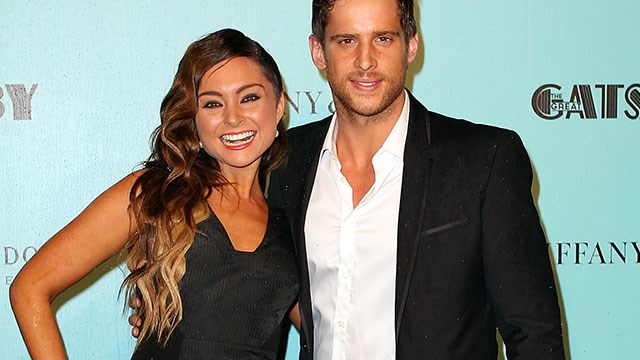
Actor Dan Ewing, and his wife Marni, welcomed their first child recently, and have named their son Archer Grason.

Dan has had small parts in movies, such as Superman Returns, and been in a few musicals, including playing Judas in Jesus Christ Superstar. He has had roles in several television shows, including Blue Water High, Rescue: Special Ops, and Power Rangers RPM. However, he is best known for his starring role on soap opera Home and Away, where he played bad boy gang member Heath Braxton. After Dan joined the show in 2011, the name Braxton soared in popularity, and I have also seen quite a few Heaths in birth notices. This was his second time on the show – he had a guest role as Reuben Humphries in 2007. Dan left Home and Away this year, with his last on-screen appearance in July. Since then, he has gone to live in the US to pursue further career opportunities. Marni and Dan were married in 2012.

Opal-May and Tierre

Tags

,

opals_s8

Girls
Annabeth Joanne
Armani Maeve (Asher)
Aurah Breeze
Daisy Celestial
Elkie Willow (Pippa)
Emily Athena (Zoe)
Esther Kathleen
Evangeline Nancy (Jude)
Gracie Diana
Greta Rose (Ava)
Hishira Jeneth
Isla Beatrice (Violet, Odin, Ryder)
Jennifer Phillipa
Lucy Pearl (Campbell, Ivy)
Millicent Peta (Harper)
Opal-May Evelynn
Polly Phyllis Miller (Marley)
Primrose Mollie (Iris, Audrey)
Sabannah Natalie (Jayla, Bella, Abel)
Sage Hazel
Scarlet Imogen Poppy (Hunter, Ryder, Lucas)
Stevie Lois
Tierre Margaret (James, William, Savanah)
Vivien Grace
Willow Jade

Boys
Anderson Joe
Beau Maxwell
Benjamin Darwin (Maximilian, Matilda)
Cruz Zion (Starr, Phoenix)
Curtis Parker (Scarlett, Miller)
Deakin Francis (Zade, Logan)
Edgar John
Ezekiel Mark
Fyfe Lewis
Henry Roland (William)
Jaigo (Tully, Archie, Kane, Ryan, Taite)
Jimmy Frank (Billy, Annie)
Jonte Quinn (Kaylan, Ashtyn)
Lachie Hedley Scott (Zach)
Lane Bailey
Leon Blake
Lou Jude
Maverick James Clinton
Noah Logan Gino
Oscar Hugo Maximus – surname is Harm (Charlie)
Percy Jobe (Kiarn, Ziggy, Jagger)
Piers Frederick
Quade Henry (Cedella, Solly)
Roy Patrick
Seth Lyel

(Photo shows opals in Coober Pedy, South Australia)

Famous Name: Opal

Tags

, , , , , , , , , ,

opalcard-westernsyd_760x428

Monday was the first day of spring, but Sydneysiders weren’t focused on Wattle Day: for them it was Opal Day. The Opal card is the automated ticketing system smartcard for Sydney public transport, trialled for two years, and replacing a confusing system of fourteen different paper tickets. September 1 was the official date that paper tickets would be phased out.

All other major Australian capitals have automated public transport ticketing systems, but for some reason the Opal card was very hard to implement, and getting it off the ground took twenty years and defeated eight successive governments. It was gloomily warned that the new system would cause complete chaos, while conspiracy theorists were sure it was designed to increase fares, or even part of a police state surveillance plot.

However, the roll-out went quite smoothly on the morning of September 1. There weren’t massive queues, or gates needing to be locked against hordes of angry commuters, and people who hadn’t ordered an Opal card online simply bought one from a kiosk. Some people found the Opal card was actually saving them money. Its success means a sigh of relief from Transport Minister Gladys Berejiklian.

The Opal card is based on Hong Kong’s Octopus card, and London’s Oyster card. The name Octopus suggests that you can travel in multiple directions, like the limbs of an octopus, while Oyster is an allusion to “the world is your oyster”. Although it starts with the same letter, Opal doesn’t have any clever hidden meaning to it – the opal is our national gemstone, while the black opal is the state gemstone of New South Wales.

Opal is a precious gemstone that is one of the most spectacular; a single stone can flame intensely with every colour of the spectrum, out-shining even the diamond. The highest quality specimens will sell for the same amount as the most valuable diamonds, rubies and emeralds, although such opals are very rare.

Opal is a common substance, found throughout the world, often of a milky white appearance (opal miners call it potch). Common opal can be pretty once cut and polished, but it is not valuable. Precious opal has what is called “play-of-colour” – that stunning multi-coloured iridescence.

97% of the world’s precious opal is produced in Australia, and Australia’s opal fields are larger than all those in the rest of the world combined. What makes Australian opals so valuable is not just their brilliance, but their stability. In other countries, opal is often found in volcanic rock and has high water content, meaning it tends to crack during cutting and polishing. In Australia, opals are found in the outback desert, once a vast inland sea.

South Australia is the major source of opal, producing more than 80% of the world’s supply. The town of Coober Pedy is mainly associated with opal mining, and the world’s largest and most valuable opal, the “Olympic Australis” was found here in 1956 (the year Australia hosted the Olympic Games for the first time, hence its name).

Lightning Ridge in New South Wales is the main source of black opal, the most valuable type of Australian opal. Despite their name they are not black, but have a predominantly dark background, so the rainbow colours of the opal stand out more strongly.

Boulder opal is the second-most valuable type of opal, where thin veins of precious opal fill cracks in ironstone boulders. The dark backing of the ironstone means that the opal shines in a similar way to a black opal. Boulder opal is found in Queensland, including the town of Winton.

The precious gemstone has given its name to our national women’s basketball team, known as The Opals. They are an internationally successful team, and Lauren Jackson plays for them.

According to official sources, Indigenous Australians called opal “fire of the desert”, and their legends tell that the opal’s colour was created when a rainbow touched the earth. Like other gemstones, opals had spiritual value as that which a spirit ancestor left behind as a sign of his or her presence. They could thus be imbued with that ancestor’s powerful spiritual energy.

The word opal comes from the Roman name for the gemstone, opalus. It is believed this is most likely from the Sanskrit word upalus, meaning “gem, jewel”. The Romans believed the opals they bought were from exotic India, but this was an ancient marketing ploy, as they were really from where Hungary is today. The Romans valued opals highly, and saw them as symbols of hope and innocence.

In the Middle Ages, opals were believed to be very lucky, and thought vital for good eyesight. Blonde women wore opals in the belief it would keep their hair colour bright, and one odd superstition was that you could make yourself invisible by holding an opal wrapped in fresh bay leaves. I imagine some embarrassment must have been caused to anyone who tried this!

The modern superstition that opals are unlucky appears to come from Sir Walter Scott’s 1829 novel, Anne of Geierstein – even though the novel never actually says that there is anything unfortunate about the gemstones. In the story, a mysterious sorcerer’s daughter named Lady Hermione, who always wore opals in her hair, appears to be under some sort of enchantment.

When a few drops of holy water are sprinkled on her head, they quench the radiance of the opals, and Hermione faints. She is carried to her room for a lie down, and the next day nothing is found of her but a heap of ashes on her bed. Later it turns out the opal turned pale to warn its owner of impending doom, not because it was cursed.

Nonetheless, the novel does seem to have affected people’s feelings about opals, because in the year of its publications, opal prices plunged, and the European opal market took many years to recover. It is also thought diamond cartels helped spread these rumours, because the discovery of high quality opals in Australia were a distinct threat to their livelihood. Hungarian opal miners told people that Australian opals must be fakes, as they were certainly too good to be true!

Queen Victoria swam against the superstitious tide, for she loved opals and wore them throughout her reign. She gave them as gifts to her daughters and friends, so that opals became highly-regarded and fashionable, thanks to the British court. The royal family have a fine collection of opals, including the “Andamooka opal” from South Australia, presented to Elizabeth II in 1954.

Opal was used as a girl’s name as early as the 16th century, but became much more common in the Victorian era, when gemstone names were in fashion. In Australia records, the name Opal is particularly associated with South Australia, and in particular, areas where opals are mined.

Although our national floral emblem gets a reasonable amount of use, our national gemstone is very rare as a name. Yet it is really rather beautiful, and its O initial even seems fashionable. Short and simple, it has a hip and quirky vibe, while the stunning gemstone gives it a very patriotic feel. Retro Ruby has climbed and climbed – could Opal have a better chance in its wake?

POLL RESULTS
Opal received an outstanding approval rating of 86%, making it one of the highest-rated names of 2014, and tying with Hope to become the favourite girls name in the Famous Name section. People saw Opal as an unusual and refreshing choice (26%), hip and quirky (25%), beautiful or pretty (15%), and sweet and simple (15%). However, 5% thought of it as an “old lady name”. Nobody thought that the name Opal seemed unlucky.

(Photo of Opal card from NSW government website)

How to Dot Com Your Baby Name, and Other Name Stories in the News

Tags

, , , , , , , , , , ,

Modern Baby Names

Mastering Your Baby’s Domain
Baby names in the digital age have become so complicated that some parents now make sure their child has their own e-mail account, Twitter handle, Facebook page, and website before they are born.

And since it gets frustrating finding the baby name you want to register has already been taken, you can do a sort of “reverse look up”, where you use a website that will tell you which names are still available. Such a website is the misleadingly-titled Awesome Baby Name, which suggests names based on domain availability.

Naturally I had to give this a try, and it’s easy enough. You type in your surname, and say you want a boy, girl, or “whatever” name, and receive a list of ten names that haven’t been taken yet. If you don’t like the ten they offer (and you probably won’t), they offer to sell you another 100 names for $3. You would be crazy to actually make this purchase, since every time you use it you get another ten names, and by simply clicking it again and again would soon find 100 names all on your own for free.

The site promises to find you the “very best matches” possible, but in fact it’s just a random list of names that may or may not sound even half decent when matched with your surname. The names have a very American bias – I was offered quite a lot of Hispanic names, and names currently trending in the US, like Jayceon. I’m not sure how the algorithm works, but I tried it with fifteen very different surnames, and each one offered the name Colton.

I was quite pleased by most of the boys names I was offered (except Colton, a name I now utterly loathe from having it thrust on me so many times): Alistair, Axel, Declan, Jude, Matthias, Maximilian, and Thaddeus seemed nice. Girls names were uniformly terrible. They were either dated, like Megan and Julie, very modern like Kyra and Brylee, or variant spellings, like Kaitlynne and Brooklynn. Maybe all the good girls’ names are already taken?

The “whatever” button is a complete waste of time: it doesn’t give you unisex options, as I thought, but just five girls names and five boys names.

Our surname is relatively uncommon, so that almost every name could be matched with it and still not be registered, and yet I wasn’t offered even one Top 100 name. Furthermore, different surnames didn’t get you a different range of names: I was offered relatively uncommon names, no matter if I said I was named Smith or Hetherington-Smitherswaithe. I wonder if the surname has been factored in at all?

The About on the page says it started as a joke, but doesn’t say whether it still is one or not, or how funny the joke turned out to be. I rate it as Mildly Amusing.

Names at Work
Could your name be holding back at work, muses Kochie’s Business Builders in Yahoo Finance? Short answer, from researchers at the University of Melbourne, is yes. They found that people with simple, easy to pronounce names had an advantage in the workplace, and would be more likely to be elected to political office.

Dr Simon Laham, from the University of Melbourne’s School of Psychology, said research findings revealed that it wasn’t the length of a name, or how “foreign” it seemed, or how unusual (or even made up) it was, but its pronounceability that made the difference.

It’s quite interesting, because we’re often told that names have to be familiar, recognisable, “non-ethnic”, or short for people to feel comfortable with them, but it seems that isn’t really that important, as long as they can intuitively guess the pronunciation. This might be something to bear in mind when choosing names.

Worried about your hard to pronounce name and how it’s ruining your career? KBB suggests using a nickname or short form of your name for easy communication, but sensibly comments that your skills and experience are far more important. An article on names which says your name is less important than who you are and what you do! Let’s hope this trend continues.

Capital, By George
There was royal baby name spotting during the royal visit in Canberra in April. The Canberra Times had a light-hearted look at a few baby Georges around town, including a George Louis, a George Middleton, and a Giorgio. The name George appears to be on the rise in the ACT, with 14 registrations in 2012 climbing to 22 in 2013. Between Prince George’s birth and his visit to Australia, 15 Georges were registered in our capital. What that means for the 2014 data is anyone’s guess.

Mothers of Dragons in the West
And those other royal names … Perth Now tells us that baby names from Game of Thrones are rising in Western Australia. Unfortunately, no actual data to support this plausible theory, but a couple of anecdotes instead. Fascinated by the mother who chose Khaleesi for her daughter in 2012, because “it had some sort of history”. I guess almost every name has some sort of history … in this case, a purely imaginary one! The meaning of “queen” was also a drawcard.

Names All Over the World
The Essential Baby website has got a little map of popular names from around the world. It doesn’t cover every country, but it does look at several regions. Africa and the Middle East are completely missing (I guess they have bigger issues than putting out birth name data). Worth a look to see how different the Top Tens are around the world.

Waltzing With … Acacia

Tags

, , , , , , , , , , ,

Floral Emblem Golden Wattle

Tomorrow is the official first day of spring, which means it is also Wattle Day. The Golden Wattle (Acacia pycnantha) is Australia’s official national flower, proclaimed as our floral emblem on September 1 1988, and marked by planting a Golden Wattle in the National Botanic Gardens by then Prime Minister’s wife, Hazel Hawke. Four years later, September 1 was officially declared National Wattle Day, and it is traditional to celebrate by wearing a sprig of wattle (any type of wattle; it doesn’t have to be Golden Wattle).

Long before that date, wattle had been an unofficial national flower by popular choice. A wreath or sprig of wattle appears on many official government documents, including the Commonwealth Coat of Arms, the Order of Australia, and the Governor-General’s crest. Our national colours of green and gold (so difficult to co-ordinate on sporting uniforms) are inspired by the green leaves and golden bloom of the wattle.

Wattle is a symbol of remembrance for us too. During World War I, mothers sent their sons sprigs of wattle as a reminder of all they were fighting for back home, and has been used to mourn and remember loss of Australian life, such as in ceremonies for the victims of the Bali bombings. You may have noticed that when the first victims of MH17 were brought to the Netherlands, the Australian Governor-General’s wife wore a sprig of wattle.

As early as 1838, Tasmania encouraged wearing Silver Wattle (Acacia dealbata) sprigs to celebrate the discovery of its island. In the nationalistic fervour which preceded Federation, a Wattle Club was founded by naturalist Archibald Campbell, promoting a Wattle Day demonstration each September 1. Outings into the bush to revel in the glories of an Australian spring were part of his plan, and patriotic Wattle Days continued to be celebrated until World War II.

Australian love of wattle has been satirised in Monty Python’s Flying Circus, with the immortal lines of the Australian philosopher Bruce: “This here’s the Wattle, the emblem of our land. You can stick it in a bottle, you can hold it in your hand.” These words have been used to promote a Wattle Day Festival in Victoria this year!

Acacia is the genus which contains wattle trees and shrubs. Its name, pronounced uh-KAY-shuh, comes from the Greek akis, “thorn”, because most acacia species outside Australia are thorny, although nearly all Australian acacias don’t have thorns. There are around 1300 species of acacia, and almost a thousand of them are native to Australia, with over 98% of these unique to Australia. The others can be found in all continents except Europe and Antarctica; they are particularly widespread in Africa, and were first observed by Europeans along the Nile River.

Acacia is not just an important symbol to Australia. According to Easton’s Bible Dictionary, acacia may have been the “burning bush” Moses encountered in the wilderness, and a table of acacia wood was part of the Tabernacle he built for the Ark of the Covenant. In Egyptian mythology, acacia is the Tree of Life, and in Christian tradition, the crown of thorns worn by Jesus Christ were made from acacia. Freemasonry uses acacia as a symbol of resurrection and immortality, while in Asia, acacia incense is believed to drive away ghosts and demons.

It’s powerful stuff. In fact, it is said that the first plant to bloom in Hiroshima after its bombing in 1945 was a wattle tree. Resurrection indeed! Every Wattle Day, Hiroshima’s Acacia Appreciation Society sends hundreds of yellow ribbons to the Australian National Botanic Gardens as a gesture of friendship and appreciation.

The name wattle comes from Old English, the word Anglo-Saxons gave to interlaced branches and twigs used to form fences, walls, and roofs. Wattle and daub is a construction technique, used since prehistoric times, for filling the spaces between the wattle with a combination of wet soil, clay, sand, animal dung, and straw, which is then allowed to dry until it hardens.

When British settlers to Sydney made their own wattle and daub buildings, they used acacia trees as the wattle, so gave the name to the plants. (I remember reading about wattle and daub houses in Neolithic Britain when I was in primary school history class, and wondering where they got the wattle trees from!). The uses of acacia are too many to list, but one worth mentioning is that Australian Aborigines often make boomerangs from its wood.

Wattles grow all over Australia, and are numerous in the desert, although uncommon in dense rainforest and alpine regions. In southern Australia, wattles tend to flower in springtime, while in the north, many species come into bloom in the autumn and winter. Because of this, it is said that on any given day in Australia, there will be a wattle blossoming somewhere.

Acacia has a long history as a personal name, for it is the feminine form of the Greek name Acacius. This comes from a different Greek derivation – akakia, meaning “without guile, innocent”. Byzantine emperors held a purple silk roll filled with dust called the akakia: it symbolised human mortality. There are several saints named Acacius, and quite a number of other notables from the early Christian era. Acacia has been a particular favourite amongst Spanish-speaking people, who bestowed it as a saint’s name.

Acacia came into use as an English name in the 19th century, when flower and plant names were the fashion. Golden and Silver Wattle was introduced to Europe in the mid-19th century; Silver Wattle became a great favourite in the south of France, where it blooms around Candlemas and is a harbinger of spring and golden sunshine. Outside Australia, wattle is often known as mimosa.

There are several people named Acacia in Australian records, going back to the mid-19th century, and it is almost certain their names were given patriotically – one is even named Acacia Golden, as if to signify Golden Wattle. Another is named Marginata Acacia; marginata is a species of eucalyptus tree. That reminds me that I saw a woman named Acacia Silver on the news, which reminded me of Silver Wattle: as she was an environmentalist, her name was so appropriate that I wondered if she’d chosen it herself.

In Australia, the name Acacia is around the 300-400s, while in England/Wales it is #1639 (18 babies last year), and in the US, 80 baby girls were named Acacia, the same number as ones called Adah, Jazlene, Legacy, Saoirse, Story, and Zarah. While Acacia isn’t a bizarre name in other English-speaking countries, it’s definitely far better known and higher-charting in Australia, which makes perfect sense. As with the trees, Acacia isn’t uniquely Australian, but is more widely found here, and has a particular meaning to us.

Wattles are perhaps not the most beautiful of trees – rather than being slender and elegant, or solid and imposing, most of them are short and scrubby. And yet when they come into bloom, there is no more cheering sight on a grey late winter’s day than their riotous mass of bright yellow fuzzy blossom. I cannot help but smile when I see a wattle tree in full fragrant bloom abuzz with bees, a promise of the sunshine that is soon to come. That’s why I have Golden Wattle as my avatar, and Silver Wattle decorating my blog: to keep me smiling every day.

Familiar without being common, the name Acacia has a rich and interesting history, and is a very patriotic choice. It evokes the beauty of spring and the Australian bush, it’s a remembrance for those we mourn, and rises from the ashes of death with new life and hope. Pretty and floral, bright and burning, silver and golden – could this sunshiney name hit your personal sweet spot?

POLL RESULT
Acacia received an excellent approval rating of 84%. 34% of people loved the name Acacia, and 30% liked it. Only 2% of people hated the name.

Should They Pick Eva or Ivy? And What Do You Think About Lulu?

Tags

, , , ,

images

Anne and Kenneth are expecting a baby girl in a few weeks, and as Anne has had some pregnancy complications, there is a possibility the baby could come early. Apart from her other concerns, she’s worried that they are running out of time to choose a baby name. Anne and Ken already have a son named Will.

After lengthy discussions, the only names Anne and Ken have agreed on are Eva and Ivy. Anne likes pretty, feminine names that have a cute nickname attached. That’s why Eva seems like a good option, because both Anne and Ken like the short form Evie, but want a formal name for it. Anne loves Ivy, but doesn’t like that it has no nickname – just as Will’s name doesn’t. It’s not a deal-breaker, but it does mean that she’s still considering other options.

Ken has always liked Lily, but it’s too similar to Will in sound to consider using. However, they like the idea of using it as a middle name for Eva – Eva Lily.

Other names Anne likes that have been vetoed by Ken:

Everly
Luella
Audrey
Layla
Sybella

Names that Ken likes which have been vetoed by Anne:

Aerin (because the spelling will need constant explanation)
Georgina (the name of a friend’s daughter)
Lily (clashes with Will)
Harper (Anne worries it’s a short-term name trend)

Both Anne and Ken like the name Lulu, but don’t think they could use it as a formal name as it seems so youthful. That’s why Anne suggested Luella, but Ken doesn’t care for it.

Will has a family name for his middle name, and ideally Anne would like their daughter to have a family name in the middle as well. The problem is that there aren’t too many family names that really work with the names they are considering. Her mother’s nickname is Cally, which might work, while her sister’s middle name, Elizabeth, seems like a possibility. Another family name under consideration is Amy. Anne hates her own name, both first and middle, and definitely doesn’t want it used.

However, Anne’s willing to give up on the idea of a family name if it doesn’t work out. She also wonders what people think about using two middle names?

Some name combinations she likes with Ivy are:

Ivy Lulu
Ivy Harper
Ivy Luella
Ivy Elizabeth

Neither Anne or Ken are happy with their own names, which is why they are so anxious to get their daughter’s name right. Their surname begins with C and ends with L eg Caldwell.

* * * * * * * * * *

Anne, I’m sorry to hear that you’ve had pregnancy complications, but try not to add running out of time to your list of worries. We get a really generous amount of time (60 days) to register a baby’s name in Australia after the birth, so nobody should need to feel panicked about finding a baby name.

And it sounds as if you and Ken are making great progress – you’ve agreed on Eva and Ivy, and you’ve both agreed that you like Lulu as a nickname, but would need a formal name for it. That gives you two definite front-runners, and the possibility of having a “Lulu-providing” name.

Eva Lily seems absolutely perfect for you, as it has a nickname, Evie, that you both like, and you can also use Ken’s choice of Lily in the middle, while Ivy Lily is problematic. Eva sounds lovely with your surname, and seems like a natural sister to Will. Eva was featured on the blog earlier this year, and was judged by voters as a stylish classic, feminine but not frilly, beautiful or pretty, and easy to spell and pronounce. That’s a big thumbs up from the public, and a thumbs up from me as well.

Although Ivy doesn’t have a nickname, I notice that you write that you LOVE the name Ivy, while you say that you LIKE Eva. Now maybe you didn’t want to keep using the same word to describe your feelings for each name, but that was enough to make me pause.

I wonder whether you prefer Ivy to Eva, and it’s the lack of a nickname that is stopping you from committing to it? Because if you’re a naturally nicknamey person, it seems as if almost child can have a nickname, no matter what it has on the birth certificate. I know a little girl named Mary-Ann, and she goes by … Sunny! Because has such a sunny smile. Nicknames don’t have to come from the name, they can be bestowed for any number of reasons.

Apologies if I’m reading too much into this, but Ivy is also a lovely name that sounds nice with your surname, and seems like it could easily be Will’s sister. And if Eva ends up being Evie most of the time, there really isn’t a lot of difference between Evie and Ivy.

I like the middle names you are considering for Ivy. Ivy Elizabeth is a nice way to honour your sister, and Elizabeth has tons of nickname options if you wanted a nickname – including Lily, and at a small stretch, Lulu. There was a celebrity baby named Ivy Elizabeth this year, which got a “perfect” rating from more than 60% of the public. Ivy Lillian also occurs to me. Ivy Harper is fresh and modern, but doesn’t sound quite right to me – maybe because it makes me picture someone trying to play the harp on a clump of ivy …

Ivy Luella seems like a good compromise with Ken (in the same way Eva Lily is a compromise on his name choice), and naturally gives you a Lulu nickname. Ivy Lulu is even more straightforward, if you can both agree on it as a middle name. I’m sure you’ve already thought of these, but names such as Lucinda, Louisa, Luna, and Eloise could also give the nickname Lulu, either at the front or in the middle.

I think Lulu is one of those cute nicknames that can be given simply as a mark of affection, like Mimi or Coco or Bunny. If you’re both really keen on Lulu, but can’t agree on a name which leads to Lulu, why not use it anyway? Ivy, nickname “Lulu”? Short for “Love u little ‘un” or anything you like, really!

As far as using two middle names, I’m totally in favour if it makes everything easier for you. For example, suppose you weren’t 100% happy with Ivy Elizabeth, or with Ivy Harper, but Ivy Elizabeth Harper just sounded perfect to you. Or you felt that Eva Lily was too short, but Eva Lily Amabel was a lovely balance, and also honoured Amy, or Ivy Luella Amabel gave you the option of Lulu Belle as a nickname, which idea pleased you. Then two middle names make perfect sense.

But if trying to co-ordinate two middle names and choose a first name as well stresses you out and makes you more anxious about everything, then forget about it. Keep it simple – and sometimes two middle names does actually simplify things.

Basically this what you have to do now:

– Choose between Eva nn “Evie” and Ivy. Focus on which one you love more, rather than which one seems most convenient.
– Possibly decide how committed you are to using Lulu, and think of ways you could get there, such as by middle name, or just using it because you want to. Don’t be afraid to be creative.
– Choose a middle name, or two middle names, to go with the name of your choice. If slotting a family name in causes you too much of a headache, then by all means don’t worry about it. I guarantee that in later life Will won’t be taunting his younger sister with, “I’ve got a family name as my middle name, and you’ve only got a middle name mum and dad really liked that co-ordinates well with your first name, so nyah, nyah nyah!”

That’s pretty much it. And there’s no real reason why you have to lock in all these decisions before your daughter is born. If you have a pretty good idea of the two or three names you will probably end up choosing between, the final decision can be made at the hospital, or even after taking her home and getting to know her for a bit. There’s a chance you’ll look at her and immediately know she’s an Eva and not an Ivy, or an Ivy and not an Evie, and if that doesn’t happen, then you’re still pretty much on track.

I know you don’t want your daughter to dislike her name, and although I can’t promise anything in that regard, you’re not making any obvious errors that I can see. Both names you are considering are pretty and stylish, and I don’t think her life is going to be any different whether you choose Eva or Ivy. In fact, they are so equally good, you could probably toss a coin over this.

I have no doubt at all that if you went into labour right this second, you would have very little drama in choosing a baby name once she was born. And if the worst happens, and you take her home and still can’t choose, write in to the blog again and we’ll have an emergency baby naming brainstorm!

UPDATE: The baby’s name was Ivy!

POLL RESULTS: The public were evenly divided between Ivy and Eva, with 50% of the vote going to both. Their choice for a middle name with Ivy was Ivy Elizabeth, which gained 60% of the vote – more than twice as much as the next name combination.

As far as the nickname Lulu went, 52% of people thought you needed a name such as Lucinda or Louisa to be nicknamed Lulu, 23% thought that it could be a nickname which had no relation to the name on the birth certificate, 19% thought that Lulu could be a nickname which came from the middle name, and 7% thought that the first name needed to be only vaguely alike, such as Elizabeth or Lillian, in order to receive the nickname Lulu.

(Picture is a poster for the Little Lulu TV show)

Chace Less and Rush McLaren

Tags

, ,

redfern25607_wideweb__470x312,0

Twins
Chloe Marylin and Wesley Reginald
Kade Dean and Rylan Charles
Mali and Sierra-Leone

Girls
Amity June
Annabelle Lily
April Eloise
Arialla Mary
Ayla Sulana-Jean (Charlotte, Jack)
Belinda Emily (Jessica)
Brielle Stacey
Henley Jane (Isabella)
Eadie Monica
Elsie Margaret (Hunter, Milla)
Estelle Francesca (Rylan)
Eve Lila
Georgina Rose (Matilda Dolly)
Iona Elizabeth (William)
Isobel Sydney
Katerina (Emmanuel, Angela, Vassiliki)
Luella Joan
Madison Jude (Kadence)
Molly Amelia Mae
Poppy Faith
Wilma Grace (Alice)

Boys
Art Liam
Boston Jagger Gordon
Chace Less (Abby, Brodie)
Coast Jaxon
Dexter John (Roxanna)
Eddie Ryder (Jamie, Layla)
Fidelis
Fletcher Marcus (Jameson Ronald)
Franklin Haydn (Max, Eleanor)
George Hindley Francis
Jacoby Philip
Jock William (Isobel)
Kai Andres
Lachlan Tomadini
Roman James (Scarlett)
Rush McLaren
Sidney Desmond (Angus)
Sonny Abel (Noah)
Taidhg Riley (Naisen, Lewis)
Tate Cullen (Bodie)
Zander Zayne (Amaya)

(Picture shows a young player from the Redfern All Blacks, the oldest Aboriginal Rugby League Football Club in the country, believed to date back to the 1930s; photo from the Sydney Morning Herald)