Famous Name: Gough

Tags

, , , , , , , ,

971657_10151752994791789_804766665_n

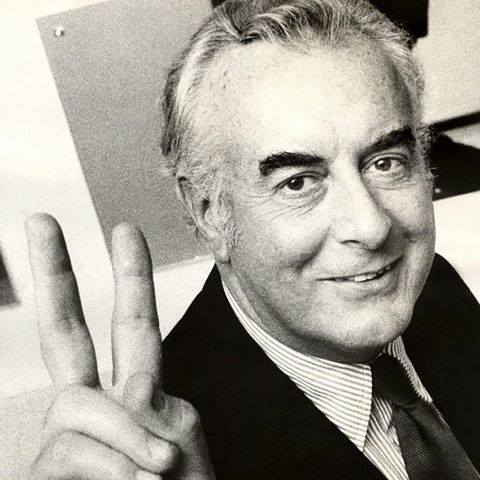
November 11 is Remembrance Day, but it’s important in Australian history for another reason: the constitutional crisis of 1975, when Labor Prime Minister Gough Whitlam was dismissed from office by Governor-General Sir John Kerr. The Opposition had used its control of the Senate to block supply bills which had been passed by the lower house – a move which was within the letter of the law, but went against parliamentary tradition. Without supply, the government was unable to finance itself, and effectively stymied.

The Governor-General took the highly unusual step of breaking the deadlock by dismissing Gough Whitlam without any warning, and installing Opposition Leader Malcolm Fraser as caretaker prime minister until an election could be held. Known as “The Dismissal”, Tuesday November 11 1975 was a day of high drama, with the proclamation read from the steps of Parliament House to a crowd of angry ALP supporters, all booing furiously, until it finished with the traditional sign-off, “God save the queen”.

Gough Whitlam then made his famous speech, which began, Well may we say “God save the queen”, because nothing will save the Governor-General, went on to call Malcolm Fraser Kerr’s cur, and ended by urging his followers to maintain the rage until polling day. These statements became Labor catch phrases, even battle cries, although as it transpired, not enough people maintained sufficient rage, as the Coalition won the pre-Christmas election in a record victory. By some accounts, the Coalition senators would have eventually caved in, rendering The Dismissal unnecessary.

Edward Gough Whitlam, always known by his middle name, was the 21st Prime Minister of Australia, and an enduring icon of the Labor Party. Tall, cultured, articulate, and witty, he modernised the ALP, and after it had spent 23 years in the political wilderness, was able to turn the party from one of protest into a viable alternative government.

Elected in 1972 under the simple but effective slogan It’s Time, Gough Whitlam was a whirlwind of change in the nation, enacting a record number of bills during his three years in office. Troops were withdrawn from the Vietnam War, and draft-dodgers released from prison; a universal health care system was brought in, now called Medicare.

The Family Court was created, Legal Aid established, the death penalty abolished, and no-fault divorce brought in. The Department of Aboriginal Affairs was established, the Racial Discrimination Act enacted, the Aboriginal Land Rights Act passed, and the prime minister handed back traditional lands in the Northern Territory to their original owners. Whitlam was the first prime minister to visit communist China, granted independence to Papua New Guinea, changed Australia’s stance on South Africa’s apartheid policy, and fought against nuclear testing in the Pacific.

His list of achievements roll on and on like the credits of an epic movie. He supported women’s rights, appointing a women’s advisor to the Prime Minister, pushing for equal pay, bringing in welfare for mothers, and increased access to contraception. He supported young people, ending conscription, lowering the voting age to 18, introducing youth radio 2JJ, and abolishing university fees. He supported the arts and the environment, gave us our own national anthem, dumped the out-dated system of knights and dames, got rid of radio and TV licenses, and connected homes to sewerage. Gough brought Australia into the modern age.

After they had both left parliament, former prime ministers Gough Whitlam and Malcolm Fraser made friends and even worked together on political causes, but Whitlam never spoke to Kerr again. Gough Whitlam became an elder statesman in the ALP, and was the first person to be given life membership of the party. The oldest Australian former prime minister thus far, he passed away this year on October 21 aged 98, and his state memorial service was held on November 5, attended by the current, and six former living prime ministers.

Gough is a Welsh surname meaning “red”; the name would have been given to someone with a ruddy complexion or red hair. The surname may pre-date the Norman Conquest, and originates from the Powys region. It is pronounced to rhyme with cough.

Gough has been used as a personal name since the 17th century, mostly for males. It isn’t uncommon in Australian historical records, although far more frequently found as a middle name than a first (just as with Gough Whitlam). Although it isn’t particularly strange, it is very closely associated with the former prime minister, and some Australians may think of it as a “one person name”.

I am sure that at this point I would have warned parents of the obvious pitfalls of using the name Gough on a baby – except that I know someone, have known them very well for a long time in fact, named Gough. He was born during Gough Whitlam’s term of office, and his parents named him in honour of the prime minister, for whom they had an enormous respect.

As it turned out (and this is something else I would have warned about), their son did not share their ideals when he grew up, and his politics are much further to the right than theirs. It sounds as if Gough’s parents did everything wrong, making a foolish and perhaps even selfish decision to saddle their son with a name which might cause him embarrassment in the future.

But the truth is that Gough loves his name, and although he has a perfectly serviceable middle name that he could have used instead, nothing would induce him to be called anything but Gough. Like many people with unusual names, he finds it a wonderful ice-breaker, and nobody ever forgets his name. And because it’s such a famous name, everyone knows how to spell and pronounce it too, which isn’t always the case with unusual names.

That he more or less views Gough Whitlam as a blot on the politico-historical landscape is a source of great amusement to him, and he says people no more expect him to be left-wing than they would expect someone named Elvis to be a great singer. He doesn’t feel that he is under any pressure to emulate Gough Whitlam in any way, but I suppose some might wonder if he has unconsciously fought against his name by taking a very different path (although he has a strong ethic of service to his community, like the former PM).

So I can’t in all conscience warn you that you are making a mistake in choosing the name Gough for your baby. It might have more advantages than you’d initially imagine, and there is no evidence that it will ruin your child’s life or cause name bullying. Perhaps now that Gough Whitlam has passed away after a long and honourable lifetime of public service, it seems even more usable than it did in the early 1970s.

However, I am still fairly sure that even if you insist that your son is named for your great-grandfather Frank Gough who married his cousin Annie Gough and called his first child Gough Gough, everyone will assume that he is really named after Gough Whitlam and that you have outed yourself as a “true believer”. Not that there’s any dishonour in that.

POLL RESULTS
Gough received an approval rating of 46%. 36% of people thought it sounded too much like cough or off, but 15% saw it as strong and unforgettable. 4% of people were put off the name by Gough Whitlam.

(Photo of Gough Whitlam from the Sydney Morning Herald)

Celebrity Baby News: Leona Edmiston and Jeremy Ducker

Tags

, ,

LN-Cover-Leona3-20140805180506450995-300x0

Fashion designer Leona Edmiston, and her husband Jeremy Ducker, welcomed twin girls named Dusty and Dylan in 2012. The twins were born in the United States via surrogate, and somehow I missed the story at the time.

Leona studied fashion design at East Sydney Technical College, and began her first label in 1983 with fellow designer Peter Morrissey, which was very hip. In 2001 she began her self-named solo label, and also designs children’s clothes on the Little Leona label. Leona has had several shows at Fashion Week, and sells in stores in Australia, the US, and the UK, as well as on her own website. She was recently honoured with the In Style and Audi Women of Style fashion award. Jeremy is a former lawyer and Leona’s business partner; they have been married for thirteen years.

(Photo of Leona and Jeremy with the twins from the Sydney Morning Herald)

Celebrity Baby News: Sporting Babies

Tags

, ,

1414964638149

Paralympian Kurt Fearnley, and his wife Sheridan, welcomed their first child in March and named their son Harry. Harry is Kurt’s middle name. Kurt is a wheelchair racer who took up the sport as a teenager; he has won three gold medals, six silver medals, and two bronze medals at Paralympic Games, as well as gold and silver at Commonwealth Games (including this year). He has won the New York City marathon five times (most recently this month), and the Chicago marathon three times. He climbed the Sydney Centrepoint Tower and crawled the Kokoda Trail in 2009, and competed in the Sydney to Harbour Yacht Race in 2011. An advocate for people with disabilities, he was awarded the Order of Australia in 2004.

NRL player Jack Wighton, and his partner Monisha, welcomed their their first child yesterday, November 9, and have named their daughter Aaliyah. Jack has played for the Canberra Raiders since 2012, and also been selected for the Indigenous All Stars and Country Origin.

AFL player Lachie Hansen, and his partner Prue, welcomed their son Ryder last year. Lachie has played for North Melbourne since 2007.

(Photo shows Kurt after winning the New York City marathon, with Sheridan and Harry)

Waltzing With … Constance

Tags

, , , , , , , , , , , , , , , , ,

9-2508527-bun230914key1c_fct667x500x4.0x98.0_t620

This Tuesday is Remembrance Day, so today we will remember a World War I heroine. The Australian nurses who served in World War I have not always received the full recognition they deserve, but the award-winning television miniseries Anzac Girls, based on their stories, has brought these “other Anzacs” attention this year.

More than 5000 Australian nurses served during World War I, many of them in the sort of unofficial capacity that meant they are barely remembered today. They worked under gruelling conditions, underpaid, under-resourced, and often forced to improvise. They shared many of the soldiers’ hardships, including illness, physical danger, and psychological trauma.

Nurses were a vital part of the war effort, taking care of wounded soldiers, and offering comfort and cheer, giving them the courage to go back to the battlefield. No matter what horrors they saw, nurses had to remain cheerful, because the men depended on them. Many nurses became friends with their patients, meaning that losing one in battle brought deeper emotional strain. The Allied soldiers often commented that Australian nurses were amongst the kindest and most caring, and their professional standards were high.

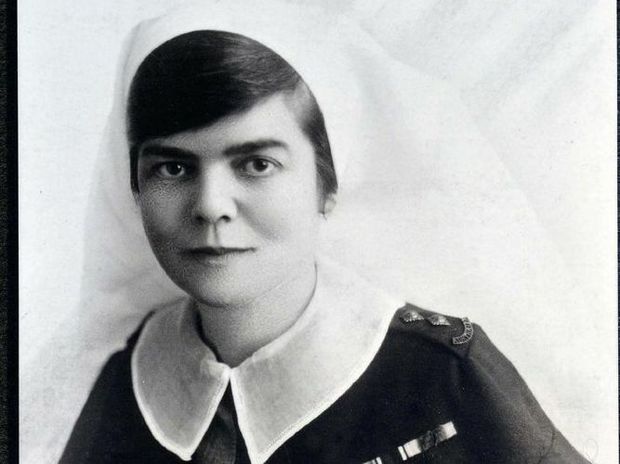
Sister Constance Keys has been on the blog twice before – she was amongst a group of nurses whose photo was used for Girls Names from the 1910s, and a quote from one of her letters was used for the entry on Gallipoli. Constance Keys was a Brisbane nurse who enlisted in the Australian Army Nursing Service in 1914, serving in Egypt, England, France, and Belgium.

Constance treated casualties from Gallipoli, and for most of 1918 was right near the front line in northern France, where her nursing station was heavily bombed more than once. Conditions were wet and cold, greatly increasing the suffering of her patients, and making movement difficult. She and her staff treated those who had been gassed, coped with influenza outbreaks, and had many casualties who suffered from exhaustion as well as wounds.

Sister Keys was discharged from the AIF in 1920 as one of the most highly decorated nurses in the AANS. Twice mentioned in dispatches for bravery, she received the Royal Red Cross, first and second class, and was awarded the Médaille des Epidémies in recognition of her work for French refugees. After the war, she became a hospital matron, and married a Gallipoli veteran; during World War II she trained Red Cross volunteers and entertained soldiers.

After her death, her wartime diaries and letters came to light, as well as her autograph book, in which she managed to get the signature of King George V. They give a clear picture of a young woman who was not only courageous and compassionate, but determined to remain in good spirits.

Under fire, Constance was “only afraid of being afraid”, and in the English fogs, “apart from the constant feeling of loss, quite well”. She writes of her little troubles, such as not having enough food, her hair falling out, and being a “bushwhacker” in regard to fashion, all in bright and amusing terms. She was a caring nurse who wrote letters and postcards to soldiers with no mail, felt guilty that she could only afford to shout ten men to lemonade and not everyone, and took time to make mud pies with a “little French kid”.

Connie also enjoyed those moments of pleasure and fun that came her way, such as buying a lovely pair of buttoned boots in England, seeing exquisite Oriental artefacts in Cairo shop windows, a mess room in Belgium with a sweet-toned piano for her to play, going on leave in Cannes to wake up to eucalypts and wattles outside her window. But she always remained a Queensland girl who had forgotten the taste of mango, and longed for a slice of passionfruit cake.

Constance is the medieval Old French form of the Roman name Constantia, the feminine form of Constantius, derived from the name Constans. This Latin name means “constant, steadfast”, referring to someone steady and faithful in their purpose or feelings. It is the basis for the English word constancy.

Traditional amongst European royalty and nobility, this name literally came over with the Conqueror, because Constance was one of the children of William I, said to have been the most gifted of his daughters. Princess Constance was her mother’s favourite child, so she wasn’t offered in marriage until she was positively ancient by medieval standards – in her mid to late twenties. She married a duke of Brittany, but died not long afterwards, reputedly poisoned by her servants.

Constance has often been used by the British aristocracy. One example is Lady Constance Bulwer-Lytton, a suffragette who went by the alias Jane Warton so she wouldn’t receive special treatment. A vegetarian, campaigner for birth control, prison reformist, and supporter of Morris dancing, she never married, as her mother would not allow her to marry a man from a lower social class. She died from a heart attack and series of strokes in her fifties; it is thought from the force-feedings she endured while hunger-striking in prison.

Other upper-class Constances include the pacifist writer Lady Constance Malleson, who performed as an actress under the name Colette O’Niel, Lady Constance Gaskell, Lady in Waiting to Princess Marina, and (Constance) Gwladys Robinson, Marchioness of Ripon, a patron of the arts and friend of celebrities such as Oscar Wilde and Nellie Melba. This reminds me that Oscar Wilde’s wife was named Constance too.

Constance is a favourite choice for aristocrats in English fiction, such as P.G. Wodehouse’s imposing Lady Constance Keeble, and Lady Constance Chatterley who forms a close connection with her husband’s gamekeeper in D.H. Lawrence’s Lady Chatterley’s Lover. It is also a Shakespearean name, because the historical character Constance, Duchess of Brittany, who married a son of Henry II, appears in King John.

But Constance was not just a name for dames, duchesses, and dowagers. Being a virtue name, it was appreciated by the Puritans, and Constance Hopkins was a teenaged girl who sailed on the Mayflower as a pilgrim: she was a sister of the baby boy Oceanus who was born on the voyage, and often mentioned in name blogs. Constance married and had twelve children, who provided her with seventy four grand-children; she has many living descendents. So the name Constance has plenty of history in America too.

Constance left the US Top 1000 in 2000, is still falling, and last year there were 103 baby girls named Constance – the same number as those called Arwen. It is much more popular in the UK, where Constance is #267 and stable. Constance is most popular in France, where it is just outside the Top 100 and rising.

In Australia, Constance was #83 in the 1900s, and peaked in the 1920s at #76, before leaving the Top 100 in the 1930s. It dropped off the charts in the 1960s, and made a minor come-back in the 1990s at #751. I rarely see a baby named Constance, but it does get a bit of use as a middle name, where it makes a wonderful alternative to the popular Grace.

Constance is a beautiful, elegant traditional name; a strong, brave name for a woman, yet also modest and sensible. It’s in rare use now, but that may be a drawcard for those parents wanting a familiar name that isn’t common. The nickname Connie sounds dated, which probably helps explain its lack of popularity, but you could use something more modern, like Coco or Tansy. However, Constance doesn’t need a nickname in my opinion – it’s lovely all on its own.

POLL RESULT
Constance received an outstanding approval rating of 88%, making it the highest-rated of the featured names of the “Waltzing” category in 2014. 34% of people liked the name Constance, while 30% didn’t mind it. Only 1% (1 person) hated the name the Constance.

(Photo of Sister Constance “Connie” Keys from the Bundaberg News Mail)

Celebrity Baby News: NRL Babies

Tags

,

978648-3e2a4460-1877-11e4-85ab-b94874755dbc

Adam Reynolds and his partner Tallara Simon-Phillips welcomed their third child in July, and have named their son Kobe. Kobe joins big sister Nakylah and Aaliyah. Adam began his professional career in 2012 with the South Sydney Rabbitohs, and was named Rookie of the Year and Members Choice Player of the Year for that season. Adam has also been selected for the NRL All Stars and City Origin. This year the Rabbitohs won the NRL Grand Final, ending a 43-year premiership drought for the team.

Ben Barba, and his partner Ainslie Curry, welcomed their third child recently and have named their daughter Blaise. Blaise joins older siblings Bodhi and Bronte, so the B theme continues. Ben began his professional career in 2008, and signed with the Brisbane Broncos for the 2014 season; rumour has it that he will be going to the Cronulla Sharks next year. He has also played for the Indigenous All Stars. Ben’s older brother Aaron used to play in the Queensland Cup competition, while his younger brother Marmim played with the Gold Coast Titans last year.

(Photo shows Adam with his family)

Celebrity Baby News: Queensland Media Babies

Tags

,

10731490_658627974255428_1494516032_n

News presenter Eva Milic, and her husband Marcus Dore, welcomed their daughter Gabriella about a year ago, a little sister for their eldest daughter, Lucia. Eva is a presenter on Nine Morning News Queensland and Nine Afternoon Queensland, and Marcus is a property developer.

Journalist Christina Ongley, and her husband, known only as The Farmer, welcomed their first child over a year ago, and named their son Digby. Christina is the former editor of the Bundaberg News Mail.

(Photo of Eva, Marcus, Lucia and Gabriella from Instagram)

Saskia and Sebastian

Tags

, ,

australia-south-australia-barossa-valley-2

Twins
Kade and Kane
Melanie and Megan

Girls
Anna Aurelie
Arlie May
Bianca Jade
Chloe Gwenda (Samuel, Elijah)
Danica Jane (Charlotte, Jensen)
Emersen Kenzlee Claire (Zander, McKinlee)
Francesca Anne
Gracie Belle (Alexia, Lylah)
Hallie Grace (River, Flynn)
Isabella Constance (Montana, Thomas)
Lucy Elaine (Alice, Anna, Victoria)
Molly Ashwell
Neave Beth (Aden, Patrick)
Olivia Gray (James, William)
Romi Marley
Rosie Breda
Saskia Willow (Lachie)
Sienna Rose Helene
Tiarlee Lyn
Winter Joyce

Boys
Alexander Eric (Silka)
Archer Grayson
Bodhi Petro (Jaxx)
Bryce Rylan
Chayse Winter
Connor Ellery (Iyah Louise)
Dwyer Leslie Marshall (Annabelle, Samuel)
Eddie Samuel
Francis Billy (Harriet)
Georg (Ede, Antonia, Soeren)
Hugo Frederick
Jaie Julian (Jayden)
Kaeden Erroll Patrick
Marcus Amani Blake
Randall Oliver
Reuben Leon (Gemima, Matilda)
Sebastian Michael (Leo, Amahli)
Sergio Enrico (Tiago)
Taye Anthony (Brock, Kade)
Zayd Fraser John

(Photo shows vineyards in the Barossa Valley, South Australia)

Famous Name: Edward

Tags

, , , , , , , , , , , , ,

ART11354

This year is the centenary of World War I, and just a few days ago there were commemorative celebrations for the first Australian troops to leave for the battlefields of Gallipoli. Because of this, I have chosen the name of one of our war heroes.

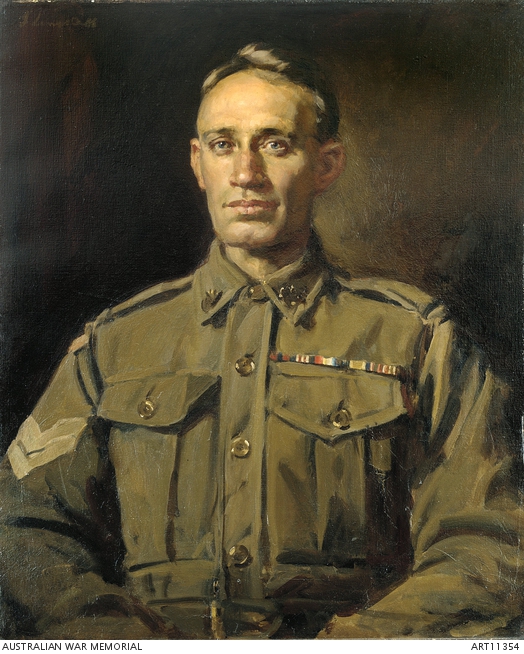
Edward Picton was a shearer and drover from country New South Wales when war broke out in 1914, and by the end of that year he had embarked with the 7th Light Horse Regiment. He saw active service in Gallipoli, and distinguished himself in the campaigns of Sinai and Palestine. Twice he was decorated for capturing prisoners under heavy shelling, and his commanding officer praised him as reliable, full of dash and pluck, and cool under fire.

In early 1918, he received a severe wound which left him with a permanent limp, and was taken prisoner himself; reported as missing in action, he was taken to Turkey to endure many months as a POW, and returned to Australia after the Armistice. Despite his age and disabilities, he also signed up during World War II and served in Egypt and Syria. Although one of the the most decorated soldiers of the Australian Light Horse’s famous 1917-18 campaign, he remained modest, and lived a quiet life with his family.

The name Edward is derived from the Old English ead “wealthy” (or poetically, “blessed, happy”) and weard “guardian, watchman” (the origin of our English word warden), and is usually translated as something like “rich guardian”.

The name was a traditional one amongst Anglo-Saxon royalty and nobility, as were other Ed- names, which emphasised their inherited wealth and power. An early example is the Anglo-Saxon king Edward the Elder, the son of Alfred the Great; he was a successful ruler who is said to have been extremely handsome and intelligent.

Two other pre-Conquest English kings named Edward became saints: Edward the Martyr, whose short reign ended with his murder, and Saint Edward the Confessor, who was one of the patron saints of England until he was replaced by Saint George.

It was because of Saint Edward the Confessor that the name Edward also became traditional amongst the Norman kings, because Henry III named his eldest son Edward in honour of the country’s patron saint, and he became Edward I. Thus Edward became one of those rare Anglo-Saxon names which continued to flourish after the Conquest.

There have been eight English kings named Edward since 1066, with the last one being Edward VIII, who famously abdicated in 1936, the first year of his reign, to marry the American socialite Wallis Simpson.

The name, although perhaps not auspicious for a king any more, is still in use by the British royal family, with a notable example being Prince Edward, Earl of Wessex, the youngest child of Queen Elizabeth, who is currently visiting Australia. The queen has a cousin named Edward – Prince Edward, Duke of Kent. The Duke of Kent was born a year before Edward VIII’s abdication, and I wonder if he would have been given a different name if born a year after the abdication?

If you are a fan of the Anne of Green Gables books, you will know they are mostly set on Prince Edward Island, Canada’s smallest province. They are named after Prince Edward, Duke of Kent and Strathearn, who was Queen Victoria’s father.

Edward is a name which has been something of a favourite in romantic fiction, including the dutiful Edward Ferrars in Jane Austen’s Sense and Sensibility, and the Byronic Edward Rochester in Charlotte Bronte’s Jane Eyre. Mr Rochester was one of the models for another romantic love interest, the vampire Edward Cullen from the Twilight series. There’s also Prince Edward from the movie Enchanted, and from a very different fairy tale, the strangely gifted Edward Scissorhands.

Edward is a classic which has never been off the charts, and barely been out of the Top 100 in Australia. It was at its height in the 1900s at #10, and hit its lowest point in the late 2000s at #103 (it did rise after Twilight). Currently it is #59 nationally, #53 in New South Wales, #39 in Victoria, #83 in Queensland, #30 in Tasmania, and #32 in the Australian Capital Territory, where it was one of the fastest-rising names of 2013.

I must admit to having great affection for the name Edward, because it was the first name I ever bestowed on a human, at the age of three. It is my brother’s name, and my parents allowed me to choose his name, in the hope that this would prove a great bonding experience, as I’d been very jealous and grizzly about the whole “new baby brother” deal.

I chose the name Edward after my favourite literary character, Winnie-the-Pooh – well I was only three! As Pooh fans will know, Winnie-the-Pooh, who was named after a real bear named Winnipeg and a swan named Pooh, is identified in the poetry book When We Were Very Young as having Edward Bear as his official name.

The budding name nerd in me was thrilled at learning someone’s real name, and excited that there were such things as real names. My mum explained that Edward was the “proper name” for Teddy, so the name meant “teddy bear”. That discovery about nicknames coming from names blew my mind. No wonder I couldn’t get enough of Winnie-the-Pooh.

I may have also been drawn to the name because one of the “big boys” in our community (about eleven) was called Edward, and he had apparently impressed me as being very kind and gentle. Perhaps I saw Edward as a “nice guy” name – the kind of person I would want as a brother. If so, my wish came true, as my brother Edward is gentle and kind too, and has devoted his life to helping others. He’s definitely one of the good guys.

Of course I didn’t get things all my own way. My idea was that my brother’s whole name would be Edward Bear, like Winnie-the-Pooh, and that his nickname would be Teddy. My parents said Bear wasn’t a proper name, and the middle name was James, after my dad. Teddy was vetoed, as to my parents’ generation, it was a synonym for thug, and his nickname eventually became, without any particular forethought that I noticed, Eddie. It was an early lesson in name compromise, and that once you’ve named someone, you lose creative control of the project.

My parents’ master plan did not work, and despite naming him, I was a complete brat towards my baby brother, locked in sibling rivalry hell. However, it didn’t last long, as my mother got pregnant again almost immediately, and in an astonishingly short time, there was another baby. Either the shock of having two baby brothers pulled me up, or I had turned four and was now a lot more mature. My parents chose their youngest child’s name themselves (I didn’t get a second gig), and ironically his nickname became Bear, which had nothing to do with his name at all. Talk about name theft!

(I don’t have clear memories of being three, and have drawn on the recollections of my parents and sister for this, but I do remember Winnie-the-Pooh, and the moment of actually announcing Edward’s name. I don’t remember being a massive fangirl of older-boy-Edward, but my family assures me that I was a great admirer; I don’t remember him from the age of three, but obviously I grew up around him and have many later memories. I only recall throwing one jealous tantrum over Eddie, but I’ve been told I was a right little monster).

So there you have it – a handsome classic which is a solid, reliable choice, yet still has some dashing romance to it, as well as teddy bear huggability. Even as a toddler I could tell it was a great name, and it has served my brother well for many years. Highly recommended!

POLL RESULTS
Edward received an excellent approval rating of 83%, making it one of the highest-rated names of 2014. People saw the name Edward as a handsome and elegant classic (31%), noble and gentlemanly (18%), dashing and romantic (13%), and having great nickname options (13%). However, 7% of people thought it was too stuffy and old-fashioned. Nobody thought the name Edward seemed stuck-up or snobbish.

(Portrait of Corporal Edward Picton from the Australian War Memorial)

Boys Names From Native Australian Flowers

Tags

, , , , , , , , , , , , , , , , , , , , , , , , , , , , , , , , , , , ,

Millstream-Chichester-National-Park-2013-05-15-003

This follows on from Girls Names From Native Australian Flowers. If you thought it would be hard for me to find floral boys’ names, you were right, and many hours were spent poring over gardening books and field guides. I did notice that several of the names come from plants that are traditionally used as female names, so this might be a way to find a boy’s name which honours a Daisy, Iris, or Lily, for example.

Bailey
Acacia baileyana is the scientific name for Cootamundra Wattle, a small tree with silvery-green leaves and masses of golden blossom in the spring. It is native to New South Wales around the town of Cootamundra, which holds a Wattle Time Festival every year when the wattle blooms. However, it is extremely adaptable, and will grow almost everywhere – if anything it grows a little too well, and can escape into the bush and become an invasive weed. Its scientific name honours Frederick Manson Bailey, a colonial botanist in Queensland. Bailey is an occupational surname originally designating someone who was a bailiff, the officer executing the decisions of a lower legal court (these days such duties are usually carried out by local councils). It has been used as a personal name since at least the 18th century, and Bailey has charted in Australia since the 1990s, when it was catapulted straight into the Top 50 from almost nowhere, debuting at #32 in 1997. It peaked in 2004-2005 at #27, and is currently #77. Although only popular for boys, Bailey is sometimes used for girls. Bailey provides a way for boys as well as girls to be named after the patriotic acacia tree.

Carex
Carex is the scientific name for grass-like plants commonly known as true sedges. Sedges are common all over the world, and nearly always found in wetlands; if you’ve ever walked around a swamp or lake, sedge is the dense stiff grassy stuff along the edge which might cut your hands if you try to gather it. Although sedges are not usually thought of as terrifically exciting – hardly anyone hopes for a bouquet of sedges on Valentine’s Day – they are vitally important to the ecology of our wetlands. Anyone working on a project to save a wetlands area will need native sedges to plant along lakes and riverbanks to stabilise the soil, and they are also around dams and garden ponds. They bloom in spring; the flowers are tiny, and appear on short spikes. I have seen a boy named Carex in a birth notice, and this is a daring and environmentally aware choice that is on trend for boy’s names ending in -x, like Felix and Max.

Eric
Banksia ericifolia is the scientific name for Heath Banksia, a medium to large shrub with eye-catching orange or red flowers which bloom in autumn or winter. Banksias are famous for their flower spikes; each spike can have hundreds or even thousands of individual flowers, looking overall like a large brush. Banksia ericifolia was one of the original banksia species collected by botanist Sir Joseph Banks around Botany Bay, and the subspecies ericifolia is native to the area around Sydney. It has been adopted as the city’s official plant, and can be seen in parks and public spaces. Heath Banksia is reasonably easy to grow; if your garden is too small for a regular Heath Banskia, there is a dwarf cultivar called “Little Eric”. The eric in ericifolia comes from Ericaceae, the family of heath and heather. The name Eric is an English form of the Scandinavian name Erik, usually translated as “eternal ruler”. Although known in England since the Middle Ages, it didn’t become popular until the 19th century, after the publication of a moralising children’s book called Eric, or Little by Little. Eric is a classic which has never left the charts. It was #21 in the 1900s, and peaked in the 1910s at #19. It didn’t leave the Top 100 until th 1970s, when it hit its lowest point of #149. Since then, Eric has improved slightly in popularity, and remains stable in the 100s – an extremely safe choice.

Evan
The Hawkesbury Daisy (Brachyscome multifida) grows on the east coast; it has matted foliage with the daisy flowers rising above it in mauve, pink, or white, blooming in autumn and winter. They are very popular garden plants, as they are are quite hardy and look great in borders and mass plantings. One of its cultivars is “Evan”, which was named after the son of the founder of the Australian Daisy Study Group. “Evan” is mauve with small flowers and compact foliage, easy to grow, and perfect for rockeries and hanging baskets. The name Evan is the Anglicised form of Iefan, a Welsh form of John. Evan is an underused classic in Australia – it has never left the charts, but never reached the Top 100 either. The highest it has ever been is #103 in the 1980s, and it’s never been lower than it was in the 1900s at #194, making it a handsome, solid choice which hasn’t been out of the 100s for well over a century. Evan is the poster boy for “normal but not overused” names.

Heath
Common Heath (Epacris impressa) is a small shrub native to south-east Australia; it has red, pink, or white tubular flowers which bloom from late autumn to early spring. A pink-flowered form called “pink heath” is the floral emblem for the state of Victoria. Common Heath is tricky to grow in the garden, and perhaps best enjoyed in its natural setting. Heath is an English surname which can refer to someone who lived on or near a heath, or was from one of the many English towns called Heath. Heath is an underused modern classic which has charted consistently since the 1960s without ever becoming popular. It peaked in the 1970s at #101, possibly because of Heathcliff from Emily Bronte’s Wuthering Heights, serialised on television that decade, and a hit song by Kate Bush in 1978. Actor Heath Ledger, born in 1979, was named after Heathcliff, with his sister Kate named after Catherine from the novel. Heath dropped to its lowest level in the 1990s at #279, but picked up the next decade when Heath Ledger’s film career took off, and gained momentum from Dan Ewing‘s performance as Heath Braxton in Home and Away. Heath is a strong, simple nature name which has long been associated with intense, hunky guys.

Orestes
Caladenia orestes is the scientific name for the Burrinjuck Spider-orchid, native to New South Wales. These small, delicate flowers with dark red colouring are listed as vulnerable, so count yourself lucky if you ever find one in the bush. In Greek mythology, Orestes was the son of Agamemnon Greek commander during the Trojan War. Their family had been placed under a curse, so that their line was a rich source of Greek tragedy. Agamemnon sacrificed his daughter Iphigenia to obtain fair winds to Troy; when he got home from the Trojan War, Agamemnon’s wife Clytemestra murdered him in retribution. When Orestes grew into a young man, he murdered his mother to avenge his father’s death. According to legend, Orestes was pursued by the Furies in punishment for his crime, but he got a good lawyer in the goddess Athena, who put his case before the gods and got him acquitted (slightly rigged, as Athena was one of the judges). He was often seen by Greek writers as a dutiful son to his father, and an example of someone forced by circumstances to commit a terrible act. The name Orestes means “of the mountains”, which is the reason for the orchid’s name. An unusual and possibly controversial choice.

Paterson
Patersonia is the scientific name for the Australasian flower commonly called Native Iris. It was named in honour of William Paterson, the first Lieutenant Governor of New South Wales, and most species are from Western Australia. Patersonia has small flowers that are usually mauve, and can look very attractive in the garden. Paterson is a common Scottish surname which means “son of the follower of Saint Patrick“, and the Clan Paterson is from Lowland Scotland. Sir William Paterson founded the Bank of England, but perhaps the most famous episode in the Clan’s history is when Sir Hugh Paterson entertained Bonnie Prince Charlie, and his niece nursed the prince through a bad cold, becoming his mistress and bearing him an illegitimate daughter. The name Paterson could honour our national poet Banjo Paterson, and would naturally shorten to Paddy. A possible issue is another flower, the attractive but toxic purple weed commonly known as Paterson’s Curse.

Smith
Syzygium smithiim is the scientific name for the Lilly Pilly, an ornamental tree which is a member of the myrtle family; its name honours botanist Sir James Edward Smith. Lilly Pilly is native to the east coast of Australia, and has glossy leaves and cream or pink flowers which bloom in spring and summer. However, it is best known for the fruit which follows the flower – attractive edible berries with a deep pink colour. Smith is the most common English surname, and originated in northern England and Scotland. Although it later came to specifically refer to a blacksmith, the word means any craftsman in metal, hence goldsmith or swordsmith, and more generally, any creator, hence wordsmith. Metalworkers have historically been seen as magical in their skill to transform through fire, and there are several smith gods and heroes, such as Vulcan and Wayland; Cain is said to have been the father of metalsmiths. The name always reminds me of J.R.R. Tolkien’s bittersweet fairy tale, Smith of Wooton Major. Smith has often been thought too common a surname to be used as a personal name, but gained recent familiarity through Sex and the City’s handsome Smith Jerrod (real name Jerry Jerrod). Hawthorn’s Sam Mitchell has a son named Smith.

Sturt
Sturt’s Desert Pea (Swainsona formosa) is native to the deserts of inland Australia, and highly recognisable from its striking deep red pea flowers. According to an Aboriginal legend, the flowers sprang from the blood of two murdered lovers and their child. Sturt’s Desert Pea is the floral emblem of South Australia, and is a popular subject for arts, crafts, and decorative motifs. Although it grows in such profusion in the harsh desert, Sturt’s Desert Pea is difficult to establish in the garden. It is named after the explorer Captain Charles Sturt, who recorded seeing masses of the flower during his explorations. The surname Sturt comes from the Old English for a promontory – a raised mass of land with a sharp slope on one side – and this could be given to someone who lived near such a landmark, or from a town named after one. Similar to Stuart, this is a lesser-used surname which is given meaning by the flower.

Tucker
Tuckeroo (Cupaniopsis anacardioides) is an Australasian flowering tree in the soapberry family. It has greenish-yellow flowers which bloom in winter, followed by orange berries in the spring and summer which are a source of food for native birds. Tuckeroo is a popular ornamental tree for gardens which gives good shade and looks attractive all year round, and is often grown along streets in coastal towns of New South Wales and Queensland. The English surname Tucker is an occupational one referring to someone who softened cloth for the wool industry by tramping on it in water; the word comes from the Old English for “to torment (the cloth)”. As an Irish derivation, Tucker comes from the Gaelic O’ Tuachair, meaning “son of the brave one”. Tucker seems problematic as a first name, breaking the rule of “no names that rhyme with rude words”, but it does have a very Australian meaning, as it is slang for “food”, derived from “to tuck in”. Some people might think that’s another problem with the name in Australia. I’m not sure … any takers for Tucker?

POLL RESULTS
The public’s favourite names were Heath, Evan and Tucker, and their least favourite were Carex, Orestes and Sturt.

(Picture shows Sturt’s Desert Pea; photo from Our Naked Australia)

What Do You Think of Arrow as a Baby Name?

Tags

, , , , , , , , , , , ,

Arrow-Flying-Through-Air

Courtney and Joel are expecting a baby next month, and although they have agreed on a girl’s name together, are having more difficulty deciding on a name for a boy.

Courtney thinks of her name as “typically 1980s”, and has often had to share her name with someone in her classroom or workplace, so she likes the idea of her child having something a bit more unusual so they can have their name to themselves. However, Joel thinks that unusual names can be a burden for a child, and would prefer something reasonably common.

Meaning is extremely important to Courtney, and she wants the name to be relevant to their lives: they already have a son named Israel, which has a strong meaning, and reflects their faith.

Should they have another boy, Courtney’s choice for their son’s name is Arrow. She likes that it’s a unique name, and has connotations of strength; there are several Bible verses she likes about arrows, so that it would seem to be another name with a religious meaning. Joel worries that Arrow is just too different.

Courtney wants to know if Arrow is too unusual, and whether people think Israel and Arrow would work as a brotherly sibset?

* * * * * * * * * *

It’s the age old debate on baby names – should our children’s names make them stand out, or fit in? Most of us want something in the middle, and agonise over finding a name that manages to both stand out and fit in simultaneously.

And of course everyone has their own opinion on what makes a baby name “too unusual”. Some people think even Top 100 names are a little out there, while others think almost any name they’ve ever seen on a real person is “too common”.

Although you say that you and Joel are at odds when it comes to unusual names, it seems to me Joel must be fairly open-minded. You have a son named Israel, and that is not a common name in Australia – although it’s not unheard of, and famous people like Israel Folau give it plenty of publicity, I estimate there would be less than six Israels born in any state per year. That’s quite a low amount.

Perhaps Joel liked Israel because it’s a name from the Bible, with a history of many thousands of years, so that everyone has heard of Israel, even if they don’t know anyone with the name. Maybe it hit a sweet spot, so that Israel was neither too common for you, nor too strange for Joel.

Arrow is even less common than Israel, but it’s not unheard of as a baby name. I have seen a few children named Arrow, and it’s getting some use as a middle name – including Bobby Arrow, the son of radio host Tim Ross. The name does have some history, being used since the 18th century, and can be found in Australian historical records from the 19th century, although mostly as a middle name – there are only a couple of people with the first name Arrow.

To me, a name that is very rare is not necessarily a “weird” name. A couple of weeks ago, a blog reader named Michelle asked about two rare girls’ names her partner was keen on, Maida and Maeva. I have seen even less children with these names than those called Arrow (in fact, I’ve seen exactly zero babies named Maida or Maeva), but they fit in really well with current trends in girls names, and would not seem strange amongst classmates named Maeve, Mia, Maya, and Mae.

That’s a good way to get a baby name that’s both uncommon but not too strange – find one that is in rare use, but fits in with contemporary name trends. It may get attention for being out of the ordinary, but hopefully most people will find it refreshing rather than confronting. Could Arrow be one of those rare-yet-on-trend names?

I think Arrow fits in with the trends rather well. From the bounding popularity of Archer, and solid performance of Fletcher (maybe even Beau, which sounds like Bow), it would seem that names connected with archery are on the rise. Furthermore names connected with weaponry in general are doing extremely well, because I regularly see boys (and occasionally girls) with names like Hunter, Gunner, Colt, Blade, Gauge, Bowie, Sabre, and Steele.

I’m a bit skittish about the trend for “weapons as baby names”, but Arrow seems much more than just a weapon. It’s connected to tales of derring-do, like Robin Hood and William Tell, and romance, because of Cupid’s arrows of love. It’s also a superhero name because of the Green Arrow – another hot baby name trend, and in the public consciousness because of the television series, Arrow.

And you are drawn to Arrow for reasons of faith, because arrows are mentioned in the Bible, where it describes “the Lord’s arrow of victory”, which “will flash like lightning”. In the Bible, arrows often symbolise the judgement of God. Arrows also symbolise having a clear direction to follow, swiftness and protection, and also mental alertness and toughness.

The name Arrow is on trend because of its sound too – names starting with Ar- are very fashionable, as witnessed by Archer, Ari, Ariel, Aria, Ariana, Aryan, Arthur, and Arlo. Names ending with an O sound are fashionable too, like Hugo, Indigo, Django, Marlowe, and Arlo again. Arrow doesn’t sound that much different to Arlo, when you think about it.

One of the reasons that makes simple English vocabulary names easy to bear is that everyone knows how to spell and pronounce them; unless you fiddle around with the spelling, there’s no headache involved. People might be surprised by the name Arrow, but there’s no cumbersome explanations necessary.

I think Israel and Arrow work really well as brothers. They’re both unusual names that are still very familiar, at least as a nation and a noun. They’re strong and meaningful, and Arrow really takes Israel is an interesting direction, while Israel possibly makes it clearer that Arrow has been chosen for biblical reasons.

So to me Arrow is not too strange as a name, and I briefly mentioned it on the blog as a name which seemed as if it had a lot of potential. But what about Joel – could Arrow ever hit his sweet spot the way that Israel did?

UPDATE: The baby’s name was Gabriel!

POLL RESULTS
84% of people polled believed that Arrow wasn’t too unusual a name to use on a baby. 34% thought it was a bit unusual, but people would soon get used to it, while 19% admitted the name was too unusual for them to use, but that they would find it interesting on someone else’s child. 10% thought it was a very unusual name, but they considered that positive, as it made the name cool and different, and another 10% didn’t think it was really that unusual, as it fitted in so well with current name trends. 11% didn’t think Arrow was unusual in the least. 10% thought that Arrow probably was too unusual, as they couldn’t imagine it on a real person, while 6% thought it was a really weird name.

81% of people polled were in favour of Israel and Arrow as a sibset. 37% thought it was okay, 26% thought it was a good choice that worked well, while 18% saw it as a perfect match. 14% thought it wasn’t so good, and might need a rethink, while 5% considered it a complete mismatch.