• About
  • Best Baby Names
  • Celebrity Baby Names
  • Celebrity Baby Names – Current
  • Celebrity Baby Names – Past
  • Featured Boys Names
  • Featured Girls Names
  • Featured Unisex Names
  • Links to Name Data
  • Waltzing on the Web

Waltzing More Than Matilda

~ Names with an Australian Bias of Democratic Temper

Waltzing More Than Matilda

Category Archives: Waltzing with …

Waltzing With … Winter

22 Sunday Jun 2014

Posted by A.O. in Waltzing with ...

≈ 6 Comments

Tags

birth notices, english names, Gaelic names, German-Jewish names, historical records, Irish names, middle names, name history, name meaning, name popularity, nature names, season names, surname names, UK name trends, unisex names, US name trends, vocabulary names
flat,550x550,075,f (1)

Yesterday was the winter solstice, so we are now embarking on the coldest part of the year. In Hobart they celebrated the winter solstice with an icy nude swim at sunrise, and declared that being half frozen to death was quite exhilarating.

It’s been a fairly mild winter so far (hopefully in Hobart too), although winter still came as a shock to me as we’d had such a warm autumn. There’s lots to enjoy about winter: the grass which was dry and brown in summer is now a lush green; the sunshine is warm, but doesn’t burn; the clear blue skies of winter are more beautiful than in summer.

I look forward to making soup, walking for miles without getting hot and sweaty, footy season, weekends ski-ing, and cold nights at home by the fire. I love the eerie look of trees looming through fog, waking up to find a glitter of ice on the lawn, snow capping the mountains, or falling softly on the house like icing sugar.

Of course, I also hate going to work in the pitch dark, finding the frost has killed all the vegetables in the garden, everyone tracking mud and dead leaf mush into the house, and miserable grey days where the sun doesn’t appear until 3.30 pm, then sets at 4. But on a sunny winter Sunday, it’s easy to forget all that.

I planned to do the name Winter today back in January, but yesterday a blog reader considered the name Winter for one of her twin daughters, and on Friday there was a boy with Winter as one of his middle names, so what with the winter solstice, this does seem like the weekend for Winter.

Winter is an English word derived from Ancient Germanic. The original meaning is not known for sure: it may come from an ancient word for “water”, possibly to denote “wet season”.

The English surname Winter started out as a nickname for someone who was of a cold or miserable “wintry” temperament – not very flattering! As an Irish surname, Winter can be an Anglicisation of the Gaelic Mac Giolla Gheimhridh, meaning “son of the servant of Gheimhridh”, with the personal name Gheimhridh meaning “winter”. Winter can also be a German-Jewish surname after the season. The surname is frequently spelled Wynter, making this a variant spelling with a long history.

Winter has been used as a first name since at least the 16th century, and according to early records, most people named Winter were born during the winter months. Later records don’t seem to show much correlation between the name Winter being chosen and the season of birth.

Winter is historically much more common as a male name, suggesting that the surname was more influential than the season. These days, Winter is more often thought of as a female name, and it charts in the United States as a girl’s name only, where it is rising. In the UK, Winter is more common for girls (more than three times as many Winters are girls), but is rising steeply for both sexes. Interestingly, the less common spelling Wynter has been much more evenly given to both sexes through history (although still more common for males).

Winter was in the 200s in Victoria in 2012 – there were almost as many baby girls named Winter just in this state as in the whole of the UK. I see Winter used mostly as a girl’s name in Australian birth notices, but it seems more common as a boy’s name in the middle position, showing its great versatility.

Even though Winter is currently more common as a girl’s name, it still seems very usable for boys. It sounds similar to Winston, is a surname, and the season of winter isn’t generally thought of as particularly feminine. It is sometimes personalised as Old Man Winter or Father Winter, and another “winter character” of folklore is Jack Frost. This always reminds me of the Australian bird, the Jacky Winter – another boyish-sounding winter connection.

I can think of two famous female characters connected to winter, and they are both from the fairy tales of Hans Christian Anderson. One of them is the beautiful yet deadly Ice-Maiden, and the other is the Snow Queen. Although the Snow Queen is a seemingly malevolent character, she is an attractive one: beautiful, strong, and intelligent, she is a “queen bee”. Because of these two characters, we call an alluring yet frosty woman an “ice maiden” or “snow queen”, and rumour has it that Anderson based both these characters on the opera singer Jenny Lind, and her rejection of him.

The Snow Queen recently received a reboot in the Disney film Frozen, with a completely different plot and characters from Anderson’s fairy tale. The stranger-danger theme of a beautiful cold woman in a sleigh seducing, abducting, and imprisoning a little boy had already been co-opted by C.S. Lewis for The Lion, the Witch and the Wardrobe, so something different was necessary.

Frozen has been a huge hit, with its appealing characters, fun dialogue, heart-warming coming-of-age story, and catchy songs. As Ebony from Babynameobsessed has pointed out, that has had an effect on the naming world. The name Elsa is becoming more popular, Arendelle suddenly seems usable as a baby name, and perhaps we can expect more winter-inspired names such as Snow, Frost, Ivy, June … and Winter.

Winter is a clean-sounding name that conjures up the purity of virgin snow, mysterious fog descending on the earth like a white blanket, the crisp sparkle of morning frost. Or maybe it reminds you of invigorating hikes in the cold air, and the thrill of downhill ski-ing, or of hot cocoa drunk before a blazing fire, and snuggling under the quilts at night while listening to a storm roaring outside.

When I think of stories connected with winter, apart from ice maidens, snow queens, white witches and frost fairies, I think of the white bear in the tale East o’ the Sun and West o’ the Moon, of the frost giants of Norse legend, of William Shakespeare’s comedy The Winter’s Tale, with its frozen queen, and Mark Helprin’s New York fantasy, Winter’s Tale.

There are so many fantasy stories about winter, perfect for recounting before the fire on cold nights, that there seems something magical it. Anything is possible in a winter wonderland – it’s a season of miracles.

POLL RESULT
Winter received an extremely good approval rating of 78%. 28% of people loved the name, while a further 24% liked it. Less than 10% of people hated the name.

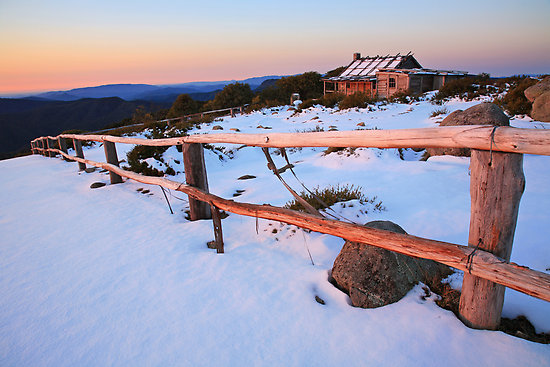
(Picture shows Craig’s Hut at Thredbo, New South Wales; photo from Red Bubble)

Waltzing with … Forrest

18 Sunday May 2014

Posted by A.O. in Waltzing with ...

≈ 3 Comments

Tags

english names, famous namesakes, fictional namesakes, name history, name meaning, nature names, rare names, Scottish names, surname names

OLYMPUS DIGITAL CAMERA

The name Forrest has been so often in the newspapers lately that I thought it must be time to cover it. The reason it’s in the papers is because of mining magnate Andrew “Twiggy” Forrest, the 9th richest person in the country, with a fortune of $3.66 billion.

The head of the Fortescue Metals Group, Andrew has recently bought massive pastoral holdings in the Pilbara, making him one of Western Australia’s biggest landowners. He also recently bought Harvey Beef, the biggest beef exporter in Western Australia, and the only one which exports to China.

Andrew is a prominent philanthropist; he and his wife Nicola are the first Australians to pledge half their wealth to charity while living. He has made large contributions to Indigenous employment, charities for children and the homeless, disaster relief, and his alma mater Hale School – the oldest private boy’s school in Western Australia, whose Forrest Library is named in Andrew’s honour.

Last October, Andrew announced he would donate $65 million towards higher education in Western Australia – one of the nation’s highest philanthropic donations. He has also become known for his fight against modern slavery, launching a global campaign with the support of the Pope, Archbishop of Canterbury, and Grand Imam of al-Azhar.

Andrew likes to be seen as apolitical, but has friends on both sides of politics, and has made donations to the WA Labor Party. He has also been vehement in his opposition to the mining tax, and urged the Federal Government to strip welfare payments from teenagers if they are not in school, work, or training. This week’s budget demonstrated the power of his political influence.

Andrew Forrest is the great-great nephew of Sir John Forrest, an explorer and who became the first premier of Western Australia; he was the first professional politician in Western Australia and never lost an election. Sir John has many sites named after him, including John Forrest National Park, Western Australia’s oldest national park. This must be a rare example of a forested area named after someone named Forrest.

John’s brother Alexander was also an explorer and politician, with significant investments in land and mining. Their brother David was Andrew Forrest’s great-grandfather. David was the first manager of Minderoo Station in the Pilbara, which was bought by the Forrest brothers in 1878, and owned by them until it was sold by Andrew’s father Donald in 1998 due to drought and debt. Andrew, who had once worked as a jackaroo at the station, bought back the family property in 2009.

Forrest is a surname which is easy to translate, as it comes from the Old French word forest. Today we might see Forest as a tranquil nature name, perhaps even slightly hippy. In a time when national forests are protected, they seem a haven where we can all enjoy their natural beauty.

However, the original meaning of forest in Norman England was quite different. The word referred to large tracts of heath and woodland reserved for the sole use of the king and, by invitation, the aristocracy. At the height of afforestation in the Middle Ages, a third of southern England was set aside, with a certain amount of ordinary people getting booted out of their homes to make way for these forests.

Forests were not for communing with nature and tree-hugging, they were for royals and nobles to hunt wild animals, and there could be harsh penalties for anyone else who entered them, especially if they were there to poach game. The word forest comes from the Latin for “outside” – not because forests are outdoors, but because they were outside the laws of the land, and the law offered you no protection if you were caught in one. That’s why outlaws (such as fictional Robin Hood) lived in the forest, and why they were taking such a daring risk in doing so.

The surname Forrest would have been held by someone who lived near a royal forest, or someone who worked in one, perhaps as a gamekeeper or warden (a lot of security staff was needed to protect the game). Although widely used in Britain, the surname became particularly associated with Scotland because of the Clan Forrester, which originated in the Edinburgh region. Sir John Forrests’ parents were emigrants from Scotland, who came to Australia as servants of a prominent colonial physician.

Forrest has been used as a first name as early as the 16th century, and originated in England rather than Scotland. It has been most used in the United States, but the name isn’t uncommon in Australian records, and Forrests from Western Australia may have been named after (or been part of) the famous Forrest family.

The most famous fictional Forrest is surely Forrest Gump, from the book and movie of the same name. In the story, Gump is named after his ancestor Nathan Bedford Forrest, a popular yet highly controversial Confederate General who was accused of war crimes and became one of the early members of the Ku Klux Klan. Unlike his rather wily and unscrupulous ancestor, Forrest Gump is naive and good-hearted.

Forrest has never charted in Australia, but its meaning and history almost make it seem traditional: this is a good example of a name that is very unusual, yet not in the slightest bit strange or confusing. The Forrest dynasty gives it depth and dignity, while the modern understanding of forests resonates with Australians, thanks to our mythology of the bush.

Forests may remind us of freedom and toughness, and the literal meaning of “outside the law” of wild bushrangers. They might also remind us of the fight to save our native forests, a struggle which seems more vital now than ever.

POLL RESULT
Forrest received an extremely good approval rating of 78%. 31% of people said they didn’t mind it, while 25% thought it was a good name. Less than 10% of people hated the name.

(Photo shows a view through wandoo trees in John Forrest National Park, overlooking Perth)

Waltzing With … Sunday

13 Sunday Apr 2014

Posted by A.O. in Waltzing with ...

≈ 2 Comments

Tags

baby name stealing, celebrity baby names, celebrity sibsets, days of the week names, Easter names, english names, famous namesakes, holiday names, name history, name meaning, name popularity, nicknames, Old English names, rare names, slave names, unisex names

Heide_1_at_Heide_Gallery

In a week it will be Easter, which is always on the first Sunday after the full moon following March 21. This computation was agreed upon in the 4th century, although it was apparently already an old tradition in Rome. The Gospels tell us that the Resurrection of Christ took place on a Sunday, and from then on the day had special significance for Christians.

In the New Testament Sunday is called the Lord’s Day, and early Christians gathered for worship then. This was formalised in the 4th century, and may have been easier to implement because Sunday was already a public holiday in the Roman Empire. It is because of Christianity, and in particular because of Easter, that Sunday is regarded as a holiday – technically every Sunday of the Christian year is “Easter”, because it commemorates the Resurrection.

The English word Sunday comes from Old English, and simply means “sun’s day”. It is derived from the Germanic translation of the Latin term dies solis, meaning “day of the sun”, and in turn, this translates the Ancient Greek, heméra helíou.

The Ancient Greeks named each day of the week after the sun, the moon, and the five known planets, which were associated with gods; an idea they got from the Egyptians. The Romans followed this pattern, as did the Germanic peoples. It seems to be an Indo-European custom, because in most Indian languages, the word for Sunday is also linked with sun gods. So although Sunday has strong Christian associations, the English word has a long pagan history.

Sunday has been used as a personal name since at least the 18th century, and was possibly used for babies born on a Sunday. The first American named Sunday I can find was African-American, and in her case it may have been a slave name. The name Sunday was originally given fairly evenly to boys and girls, although today Sunday is usually thought of as a female name. Its unisex status is still active – in 2012 we had a celebrity baby boy called Sunday.

Sunday has become a celebrity baby name in Australia, since radio host Kate Langbroek chose it for her eldest daughter, Sunday Lil Lewis, in 2005. Kate’s daughter was named after celebrated art patron Sunday Reed, born Lelda Sunday Baillieau. She was from a wealthy and privileged background, and her second husband was John Reed. Together the couple gave both friendship and financial support to modern artists such as Sidney Nolan and Charles Blackman. Sidney Nolan became Sunday’s lover, and he painted his famous Ned Kelly series in the Reeds’ dining room.

The Reeds’ home near Heidelberg was named Heide, and it later became the Heide Museum of Modern Art. There was a kitchen garden at Heide, and many years later, Kate Langbroek ate from a rockmelon which Sunday Reed had planted there. It seems to have been something of an epiphanous moment for Kate, and served as the inspiration for her daughter’s name.

In 2008, actress Nicole Kidman and her husband, country music star Keith Urban, named their eldest daughter Sunday Rose. This caused Kate Langbroek a certain amount of consternation, who declared that the Kidman-Urbans had “stolen” her baby name.

What may have made it more irritating for Kate was that news sources reported that Sunday Rose had also been named after Sunday Reed. Nicole’s father Dr Antony Kidman was quoted as saying that he and Nicole’s mother had suggested the name Sunday after reading about Sunday Reed.

Meanwhile, baby name conspiracy theorists believed that the name Sunday had been chosen for its Christian significance. They saw the choice of the name Sunday as a declaration of Nicole Kidman’s Catholic faith, and a public rejection of her ex-husband’s devotion to the Church of Scientology.

By Nicole Kidman’s testimony, neither of these stories was correct, and they simply liked the name Sunday. Furthermore, what made the name special to them was that Sunday was the couple’s day to spend together – it was a name that symbolised love and the end of loneliness. It was also the day of the week they got married.

Although some people still see Sunday as a religious name, it’s important to remember that Sundays have secular significance too. Sunday is a holiday, a day of freedom from work, a day for sports and games, for beaches and barbecues, for friends and family. A great day for visiting art museums, too!

When the name of Nicole and Keith’s daughter was announced, I was surprised to see how many people online thought of it as a “wacky celebrity baby name”, like Audio Science or Pilot Inspektor. There often seemed to be disdain or even hostility towards it. In Australia, most people seem to like the name, except those who think that Sunday Rose sounds too much like “Sunday roast”.

Now Canadian comedian Mike Myers has a daughter named Sunday – Sunday Molly. However, Mike’s son is named Spike, which may just cement the idea that Sunday is the sort of crazy baby name that parents who like the name Spike might choose.

The name Sunday has only been on the US Top 1000 once, in the 1960s, and is extremely rare in the UK. Sunday has never charted in Australia, and between 2002 and 2007 there were 36 babies named Sunday born in Victoria. While Kate Langbroek hasn’t managed to keep the name to herself, her fear was that after the birth of Sunday Rose, the popularity of the name would snowball and there would be a “plague of Sundays”. Her baby name nightmare hasn’t eventuated – yet it does feel as if the name Sunday is slowly gathering momentum.

Sunday is a rare name, but still in occasional use, and you must not expect to be the only parent in the world, or even the state, with a little Sunday. It’s a day of the week with a simple meaning, and many layers of associations that are pagan, Christian and secular, but overall tied to the light and life from the sun – a name of warmth and happiness. Sunny or Sunnie is the obvious nickname, which brings the name right back to its origins.

POLL RESULT
Sunday received an excellent approval rating of 80%. 31% of people thought it was a good name, while 28% thought it was a great name. Less than 5% of people hated the name Sunday.

(Photo shows the original 19th farmhouse at the Heide Museum of Modern Art in Melbourne, which became a focal point for progressive art and culture: the Reeds made it their home from 1935 to 1967)

Waltzing with … Bran

09 Sunday Mar 2014

Posted by A.O. in Waltzing with ...

≈ 2 Comments

Tags

animal names, Arthurian names, bird names, British names, english names, epithets and titles, fictional namesakes, Game of Throne names, germanic names, Irish names, mythological names, name combinations, name history, name meaning, nicknames, Old English names, saints names, sibsets, surname names, UK name popularity, Welsh names

360029

There always seems to be lots of crows and ravens around at the end of summer, finishing off the remains of those creatures who have not survived the blazing heat and drought – a very important job that we don’t appreciate as much as we should. This put me in mind to write about a name connected to these highly intelligent birds, who feature in many mythologies, for as carrion birds, they are often seen as harbingers of death, with mysterious knowledge of the afterlife.

Brân the Blessed is a heroic figure from Welsh mythology; a giant, probable god, and High King of Britain. Legends tell of how he travelled to Ireland with a host of warriors in order to rescue his sister Branwen, who was being mistreated by her husband, an Irish king. The battle was brutal, and only seven men from the rescue party survived: Branwen herself died of a broken heart.

Brân was mortally wounded in the foot, and told his men to cut off his head, so that it could be returned to Britain. They took the head to “White Hill”, thought to be where the Tower of London now stands. The head was buried there, facing France, because as long as it remained, Britain would be protected from invasion. King Arthur later dug the head up, declaring that only his strength was needed to protect the land. This was seen as a disastrous decision, because when Arthur had gone, the land was invaded by the Saxons.

Brân is connected to many figures from British legend. He is seen as a forerunner to King Arthur as High King of Britain, and many have noted his similarity to the mysterious Fisher King of Arthurian legend, who is sometimes identified as a man named Bron. The Fisher King had a wounded leg, and in some tales, the Grail he possessed had the power to restore the fallen – a parallel with Brân, who had a cauldron that could bring warriors back to life. Some stories report that Percivalfound a severed head in the Fisher King’s castle instead of the Grail.

Others scholars see Brân as connected to the Irish hero Bran mac Febail, who embarked on a journey to the Otherworld, and when he returned, so many years had passed that the Irish people know him only as a legend. After telling his story, he sailed away across the sea, never to return. The tale was an apparent inspiration for the Voyage of Saint Brendan, a legendary quest the saint undertook to the Isle of the Blessed, or Saint Brendan’s Isle. Although this may not immediately remind you of Brân the Blessed, in British legends, a voyage to Ireland (in the west) is often an allegory for a journey to the Otherworld – and Brân did die there.

The severed head of Brân the Blessed is important, because some believe the human head played a significant role in Celtic religion. Greek historians tell how Celtic warriors could cut off the heads of their enemies in battle, and that these heads would be embalmed and placed on display. Archeologists theorise that ownership of a head gave one power over the dead person, or that the head was venerated as the seat of the soul and a symbol of the Otherworld.

The head of Brân the Blessed possessed powers of mystical protection, and some connect this to the ravens in the Tower of London, because the name Brân means “crow, raven” in Welsh. There are seven ravens at the Tower, and according to tradition, they protect the Crown and the Tower. Superstition warns that should the ravens of the Tower be lost or fly away, the Crown will fall and Britain with it.

Supposedly the ravens have been kept at the tower since the 17th century, but historical evidence points to them being a Victorian innovation, possibly a gift from an earl with links to Druidic scholarship who consciously chose them as representations of Brân the Blessed. Another theory is that they were simply pets of the 19th century Tower staff. And alas for the superstition, the Tower records show that just after World War II, there were no ravens left (an apparent crow-napping), yet the monarchy and Britain have managed to soldier on.

The Welsh name Bran, from Brân, is said BRAHN, while the Irish Bran, of the same derivation and meaning, is said BRAN. The name Brendan, the saint whose legend was influenced by that of Bran mac Febail, comes from the Welsh word for “prince”. This is rather interesting, because another theory about Brân the Blessed was that his name was actually a title: to be understood as meaning The Raven in the sense of The Prince, The Chieftain (as King Arthur’s father was known as The Pendragon, head dragon or war leader).

A character named Bran from contemporary fiction is Bran Stark, from George R.R. Martin’s A Song of Fire and Ice; in the television drama series A Game of Thrones, he is played by Isaac Hempstead-Wright. Despite his mythologically rich name, Bran is just short for Brandon, an English surname which comes from several places named Brandon in the United Kingdom.

Most of these come from the Old English for “gorse hill”, although Brandon in Lincolnshire means “steep hill”. However, there are places in Ireland with Brandon in their name, and these are said to be connected to Saint Brendan, although they don’t seem to have contributed to the surname. The surname Brandon also exists in continental Europe, and in these cases, it may be derived from the Germanic name Brando, meaning “sword”. The English surname does seem to be older than these though, and predates the Norman Conquest.

Bran is a strong, simple name from legend and literature with layers upon layers of evocative meaning and association. It has limited use in the UK, and is elsewhere almost unknown. If you are worried that it is too much like the cereal husks, you can use the Welsh pronunciation, or even the Arthurian Bron. Another possibility is the Irish surname name Brannan or Brannon, which in some cases means “son of Bran”. The girls name Branwen (sister of Bran) means “fair raven”.

POLL RESULT
Bran received a respectable approval rating of 69%. 28% of people liked the name, while 20% loved it.

(Photo is of an Australian raven, one of several Corvid species native to Australia)

Waltzing with …. Candelaria

02 Sunday Feb 2014

Posted by A.O. in Waltzing with ...

≈ 5 Comments

Tags

Canarian names, Marian titles, name history, name meaning, name trends, nicknames, Spanish names

Candlemas

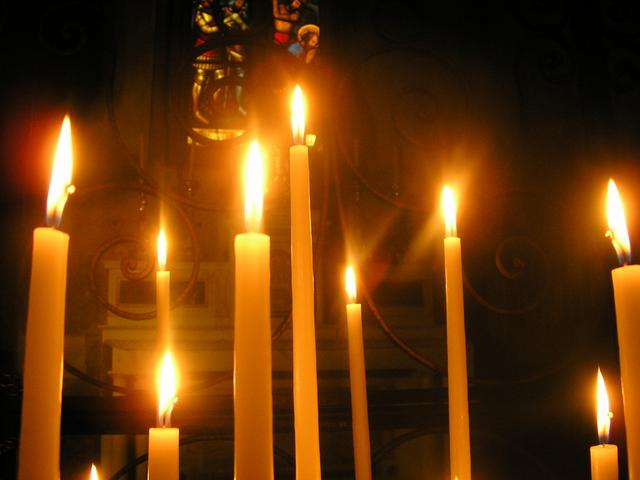
Today is the Feast of Candlemas, which commemorates the presentation of Jesus at the Temple and the Purification of Mary. Traditionally, there is a blessing of the candles to be used by the church that year, followed by a procession around the church with the congregation holding lighted candles, singing hymns of praise. People can also ask for a blessing on their own personal candles.

The feast follows the story given in the Gospel of Luke, where Mary and Joseph took the infant Jesus to the Temple in Jerusalem 40 days after his birth for Mary’s ritual purification after childbirth, and the redemption of a first-born son, according to the Law of Moses. Luke notes that Mary and Joseph sacrificed a pair of pigeons or doves, which was the option offered to the poor – wealthy people sacrificed a lamb.

While in the Temple, the Holy Family encountered an elderly pair of prophets named Simeon and Anna, who prayed for Jesus, prophesying that he would redeem Israel and bring enlightenment to the world. This is significant as the first public recognition of Jesus as a future religious leader, and his first entry into a house of religion.

We know that the Presentation of Jesus at the Temple has been celebrated by the Christian church since at least the 4th century, but its connection with candles only seems to have begun in the Middle Ages. As candles don’t play any role in the Gospel story, one might suspect that the custom began because in Europe, early February marks the midpoint of winter, when it starts to become noticeably lighter. Because Jesus was prophesied to be a “light … to the Gentiles”, there was a natural link between celebrating the return of the sun’s light with the “light of the world”.

Candlemas has many secular traditions associated with it, especially ones connected with agriculture; as the half-way point of winter, Candlemas was a handy reference point. Farmers were meant to have half their winter grain stores left by Candlemas, and it was the date that poultry was supposed to begin laying. It was also the traditional day to bring cattle in from the hay meadows so that the land could be prepared for another crop.

Weather lore is also a Candlemas tradition. In Britain, a saying is: If Candlemas Day is clear and bright, winter will take another flight. If Candlemas bring cloud or rain, winter is gone and will not come again. In the United States, they have the German tradition of Groundhog Day on Candlemas, when folklore says groundhogs will only come out of their burrow if it is cloudy, meaning that spring is on its way; if it is sunny, the groundhog will retreat back into the burrow for six more snoozy weeks of hibernation. In France, they think the opposite is true: a cloudy Candlemas means forty more days of winter, and in Italy, Candlemas is supposed to be the last cold day of the season.

In Australia, we cannot share in these wintry traditions, and as Candlemas often falls during the bushfire season of total fire bans, it would be foolhardy, not to mention illegal, to be messing around with lighted candles at this time. However, Candlemas is also supposed to mark of the end of the Christmas season, and this probably works better in Australia than Europe now, because it is around this time of the year that the Christmas holidays end.

There is a name especially associated with this festival. Candelaria is a Spanish name meaning “Candlemas”, which can be given in honour of the day. It can also be seen as a reference to Our Lady of Candelaria, one of the titles of the Virgin Mary. The Virgin of Candelaria is especially venerated in the Canary Islands, and we learned about this mysterious figure when we covered the name Chaxiraxi late last year. Her feast day is August 15, but she has another on February 2, linking her to Candlemas.

Candelaria is a rather gorgeous Spanish girl’s name, another of the many names which reference light, and in this case, a promise of approaching spring (or in Australia, the promise of cooler weather, which can’t come soon enough for my liking).

Candelaria may seem extravagant to some, and others may worry that the word “candle” is too obvious within it, but it could be used as a middle name if it seems too spectacular as a first name. I think it would be a marvellous name for anyone born around this time of year, and may be especially attractive to those with Spanish or Canarian heritage. The nickname Candy seems dated, but Aria would be smack bang on trend.

POLL RESULT
Candelaria received an approval rating of 42%. 32% of people hated the name, while only 7% loved it.

Waltzing with … Barton

29 Sunday Dec 2013

Posted by A.O. in Waltzing with ...

≈ 4 Comments

Tags

english names, honouring, name combinations, name history, name meaning, names of Prime Ministers, nicknames, sibsets, surname names

centennial_park

Soon it will be New Year’s Day – the first day of 2014, with a whole calendar of days ahead to fill. Australians have something else to celebrate: the 113th anniversary of the Federation of Australia, which took place on January 1 1901.

Federation was the process by which the six British colonies of New South Wales, Victoria, Queensland, Tasmania, South Australia, and Western Australia were united as one nation – the Commonwealth of Australia. Unfortunately, we don’t celebrate this momentous occasion, having stayed up late New Year’s Eve, and we already have a public holiday anyway, so instead Australia Day is our national holiday.

The movement towards Federation began in the late 19th century, when enough people had been born in Australian to identify as “Australian” rather than British (even though they were still British subjects). Nationalism was celebrated in songs and poetry, with Banjo Paterson one of the poets who led the way, and technology had improved enough that people could travel and communicate across the country.

Despite this, it was hard to get everyone interested in being federated, as there were so many issues to resolve. At one time, it was thought New Zealand and Fiji might want to join, but for some reason they didn’t (New Zealand showed interest, took a raincheck and never called us back). Smaller colonies were convinced that big ones like New South Wales and Victoria would end up running the show, while the labour movement worried that it might distract everyone from industrial reform.

There was also the problem of what model we were to follow in federating the colonies. The United States had managed to unify their colonies – but they did so through a bloody revolution, and becoming a republic. Canada seemed a promising candidate, but it was thought to be too highly centralised, which brought out the paranoia of smaller colonies all over again. Switzerland was another possibility, but it had pretty much followed the American model anyway.

In the end, the United States was the obvious model, and we did a bit of a mix-and-match – using the US Constitution as a guide, while retaining the Westminster system, and passing on the revolution and the republic. Like the United States, Australia leaves a few big things in the hands of the federal government, while allowing the states the freedom to handle a whole raft of smaller things. We both have a Lower House and a Senate, and the most obviously American thing of all – our colonies became states, not provinces or cantons or counties or regions or departments.

One of the early supporters of Federation was a New South Wales lawyer and politician named Edmund Barton (Toby to his friends since childhood, for reasons I have been unable to ascertain). Barton had early on shown political promise when he umpired a cricket match between England and New South Wales which turned ugly, resulting in international cricket’s first riot (Banjo Paterson was amongst the rioters who invaded the pitch). Barton showed presence of mind in defusing the situation, and it is thought this helped him first become elected to the Legislative Assembly.

Barton was leader of the federal movement in New South Wales, and addressed nearly 300 meetings in both city and country, helped draft the Constitution, travelled to London to explain the federation bill to the British Government, and campaigned for federalism when the issue went to referendum. It was a total no-brainer to practically everyone that when a caretaker Prime Minister was appointed, it should be Barton, the leading federalist of the oldest state.

However it wasn’t quite so clear-cut to the first Governor-General, Lord Hopetoun, who asked the Premier of New South Wales, Sir William Lyne, to become the first Prime Minister. He doesn’t seem to have asked anyone’s opinion or gauged the public mood, and everybody had a fit, because Sir William had been the main opponent of federalism until he suddenly changed sides at the last minute once he realised that federation was definitely happening. Hopetoun blindly followed the protocol used by Canada, and it was such a disastrous decision that it has gone down in history as The Hopetoun Blunder.

After some rather tense negotiating, Lyne handed back his commission and Hopetoun swore Edmund Barton in as Australia’s first Prime Minister in Centennial Park, Sydney, on New Year’s Day 1901, and all his ministry as well – which included Sir William Lyne as Minister for Home Affairs.

One of the first tasks was to organise the first general election, which took place on March 29-30, and was different to today’s elections – voting was voluntary (about 60% voted), the first-past-the-post system was used, and every state had its own laws, so in some places women and Aborigines were allowed to vote, and in others they weren’t. No party won outright, but Barton’s Protectionist Party was able to govern with the support of the Labor Party, and it was felt that the nation’s first election had gone extremely well.

I remember some years ago (I think for the Centenary of Federation), there was a television advertisement which noted that many Australians didn’t know who their first prime minister was, although most knew that George Washington was the first president of the United States. Rather than decrying this failure in our education, the advertisement tried to make it seem like a good thing – apparently the lack of war made our first prime minister’s name forgettable.

Which is nonsense: plenty of other countries gained their first leaders without bloodshed, and I’m sure they know who they were. The Australian citizenship test used to ask who the first prime minister was, but this is no longer required. Feeble. (The US citizenship test still asks who the first US president was). No excuses – all Australians should know Edmund Barton was our first PM.

Barton is an English surname which comes from places named Barton in Lancashire, Staffordshire, Yorkshire and Kent, meaning “barley farm” in Old English. The one in Lancashire seems to be the earliest source of the surname. Barley was one of the first grains ever domesticated, and a staple food for peasants during medieval times. In fact, the word barn means “barley house”.

You may recall that A.B. “Banjo” Paterson, national poet and cricket rioter, was related to Edmund Barton through his mother, who was born Rose Barton. Paterson’s initials stood for Andrew Barton, and as his father was named Andrew, he went by his middle name, being known as Barty to his friends. The name Barton would be a good way to honour not only our first prime minister, but our favourite poet as well. You could use the Simpsonian Bart as the nickname, but I favour Paterson’s choice of Barty, which fits in with popular choices like Archie.

Name Combinations for Barton

Barton Aloysius, Barton Earle, Barton George, Barton Oswald, Barton Ramsay, Barton Thomas

Brothers for Barton

Arthur, Griffith, Reid, Stanley, Theodore, Winston

Sisters for Barton

Adelaide, Eliza, Ivy, Lucinda, Nell, Pearl

Note: Middle names and sibling names taken from names related to the Federation of Australia, and the lives of the early Prime Ministers

POLL RESULT: Barton received an approval rating of 53%. 29% of people thought it was a good name, but nobody loved it.

(Photo shows crowds filling Centennial Park in Sydney for the Federation Day celebrations of 1901)

Waltzing with … Anastasia

24 Sunday Nov 2013

Posted by A.O. in Waltzing with ...

≈ 7 Comments

Tags

Easter names, famous namesakes, Greek names, name combinations, name history, name meaning, name popularity, names from movies, patriotic names, retro names, royal names, saints names, sibsets, underused names

southern cross

On November 29, it will be the 159th anniversary of the first flying of the Eureka Flag at Bakery Hill, in the goldfields town of Ballarat in Victoria. This flag was that of the Ballarat Reform League, formed to protest the regulation of the gold diggings, with the goal of having miner’s licenses abolished. It was necessary to pay 8 pounds a year to dig for gold, and the license had to be paid whether the miners found any gold or not.

The Reform League tried to negotiate with the authorities, but they were treated as a rabble, and police reinforcements were brought in to quell them. On November 29 1854, a meeting was called, and the Reform League announced their peaceful tactics had not worked. The miners decided on open resistance, and burned their mining licenses in protest. The next day, they constructed a stockade, a makeshift wooden barricade, and prepared to defend it.

On December 1, the Eureka Flag was consecrated, and the miners swore a solemn oath upon it to stand by each other and defend their rights. Two days later came the Eureka Stockade, Australia’s first, and only, violent act of civil disobedience. A hopelessly one-sided battle, the rebels were swiftly and brutally overcome by the military, with more than twenty of the diggers killed. However, there was such public support for the captured rebels in Melbourne that the hated mining licenses were abolished, and there was a complete overhaul of the goldfields administration.

The Eureka Flag is thought to have been designed by a Canadian miner called Henry Ross, showing five eight-pointed stars of the Southern Cross on a dark blue background, joined together with a cross representing unity. The background was probably inspired by the blue work shirts worn by the miners. According to local legend, the flag was handstitched by three women of the Ballarat goldfields – Anastasia Withers, Anne Duke, and Anastasia “Annie” Hayes.

Anastasia Hayes was a fiery-tempered redhead who had survived the potato famine in Ireland, and was tough enough to cope with life on the goldfields. Her husband was one of the leaders of the Eureka Rebellion, and Anastasia had attended the political meetings with him. Still breast-feeding her last baby at the time, she gave medical aid to miners injured during the rebellion, including assisting with surgery. Later deserted by her husband, Anastasia brought up their six children alone, supporting herself as a teacher.

Anastasia Withers is said to have sacrificed her white lawn petticoat to make the stars for the Eureka Flag. Anne Duke is believed to have been one of the women who sewed the stars for the flag, and was inside the Eureka Stockade during the battle, hiding while she listened to bullets hit the cooking utensils in her tent. Heavily pregnant at the time, she gave birth just a few days later under a cart on the road to Bendigo. Henry Ross was killed during the Eureka Stockade, but the flag he designed has gone on to become a potent symbol of rebellion against oppressive authority.

Anastasia is the feminine form of Anastasios, meaning “resurrection” in Greek; the name was chosen by early Christians in honour of the resurrection of Christ. Saint Anastasia of Sirmium was a 4th century martyr, and the only saint who has their feast on Christmas Day. Because of the meaning, the name Anastasia is sometimes chosen for baby girls born during the Easter season.

Anastasia has been used in England since the Middle Ages, but was more common in Eastern Europe, where it has been used amongst royalty and nobility. The most famous of these is the Grand Duchess Anastasia Nikolaevna, youngest daughter of Nicholas II, the last emperor of Imperial Russia. Reportedly a lively and even mischievous teenager, she was executed by the Bolshevik secret police with the rest of her family in 1917.

However, there were persistent rumours she had managed to escape and gone into exile, and several women claimed to be Anastasia. It became one of the great urban legends of the twentieth century, the subject of many books and several films. Recent DNA testing has conclusively proven these rumours false, and the supposed Anastasias either imposters, or suffering from delusion. Anastasia, and all her family, have been canonised as martyrs by the Russian Orthodox Church.

Anastasia was #226 in the 1900s, but left the charts the following decade – perhaps the death of the Grand Duchess in 1917 made the name seem an unfortunate choice. Anastasia began ranking again in the 1950s at #484 – my guess is because of the 1956 film Anastasia, starring Ingrid Bergman, which hinted that Anastasia could still be alive. That slender hope was enough to resurrect the name Anastasia in the Australian charts.

The name Anastasia peaked in the early 2000s at #140, not long after the release of an animated movie called Anastasia in the late 1990s, loosely based on the 1956 film. It suffered a sharp drop in popularity in 2010, the year after it was confirmed that Anastasia had been killed during the Russian Revolution. Since then it has recovered somewhat, and is now #176 in New South Wales and #150 in Victoria.

Anastasia is a retro name, but doesn’t sound old-fashioned in the least, and has remained in constant use since the 1950s without ever becoming popular. For many years its fortunes have been tied to a mysterious member of the Russian Imperial family, but with her sad riddle finally solved, it can hopefully move on and be judged on its own merits.

Anastasia is a vital part of Australian history, and a very patriotic name. It is beautiful and elaborate, although too strong and meaningful to be “frilly”. But don’t let anyone tell you it’s a princessy name, or suggest that an Anastasia sounds fragile and dainty. Anastasia is a rebellious heroine; a woman tough enough to survive a battle, but still have the heart to care for the wounded. She isn’t afraid to get her hands dirty, or too prissy to tear up her own petticoat for the cause.

If you have a little Anastasia, she is part of a proud tradition, and you will be reminded of her name every time you see the shining stars of the Southern Cross.

Name Combinations for Anastasia

Anastasia Chloe, Anastasia Juliet, Anastasia Lucy, Anastasia Mathilde, Anastasia Paige, Anastasia Sophie

Sisters for Anastasia

Genevieve, Hermione, Isabelle, Madeleine, Seraphina, Temperance

Brothers for Anastasia

Calvin, Joseph, Kai, Lucas, Sebastian, Xander

POLL RESULT: Anastasia received an approval rating of 85%. 41% of people thought it was a good name, while 33% loved it.

Waltzing with … Eugene

20 Sunday Oct 2013

Posted by A.O. in Waltzing with ...

≈ 1 Comment

Tags

famous namesakes, Greek names, historical records, name history, name meaning, unisex names

sydney opera house

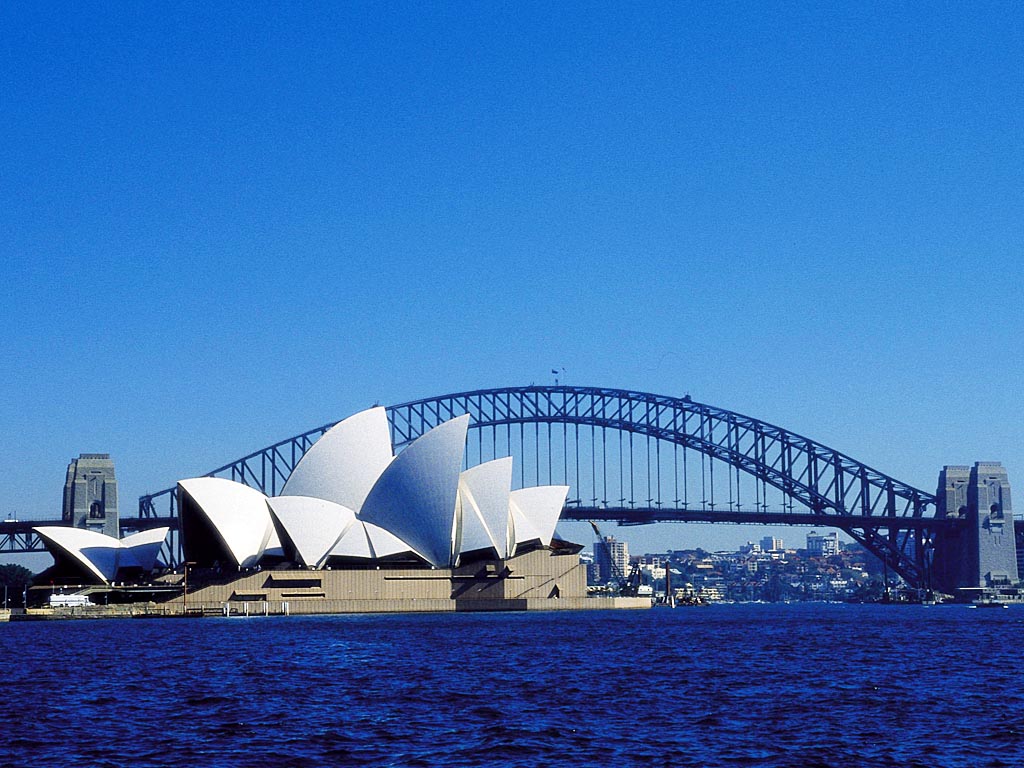
Today is the fortieth anniversary of the opening of the Sydney Opera House, officially opened by Queen Elizabeth on October 20 1973. Set on Bennelong Point, right near the Harbour Bridge, it is surrounded on three sides by the harbour, and flanked by the Royal Botanic Gardens. The Opera House’s distinctive design, featuring a roof of white “shells”, makes it an icon. It is instantly recognisable; a symbol of Sydney, and of Australia itself.

Despite its name, the Opera House isn’t just for opera, but is a performing arts complex. It was designed by Danish architect Jørn Utzon, who won the competition to design it in 1957. Unfortunately, in what seems to be a familiar story with foreign architects in Australia, Utzon was treated very badly after a change of state government, and eventually forced to resign from the project, never to return to Australia.

The project finished ten years late, and cost more than fourteen times its budget; Utzon wasn’t invited to the opening ceremony, nor was his name mentioned. The Sydney Opera House Trust later repented of its treatment of Jørn Utzon, and in the 1990s they reconciled with him, and he was appointed a design consultant for future work.

Utzon won the Pritzker Architecture Prize in 2003 for the Sydney Opera House, the Opera House’s Utzon Room was named in his honour in 2004, the Opera House was named a World Heritage Site in 2007, and after Jørn Utzon died in 2008, the Opera House held a state memorial service for him in the Concert Hall.

The story of Jørn Utzon is familiar in Australia. What many people don’t know is the name of the man who ensured we had a Sydney Opera House at all.

Eugene Goossens was an Englishman of Belgian descent, from a musical family. A prize-winning musician, he was an associate of the Royal College of Music, and had been a violinist in London before forming his own orchestra and becoming a conductor. For many years he taught and conducted in the United States, and when he left, nine American composers collaborated on a tribute in his honour.

Eugene came to Sydney in 1946, and was the first chief conductor of the Sydney Symphony Orchestra, and the director of the NSW Conservatorium of Music. It was in 1948 that he proclaimed, “Sydney must have an opera house!”. He successfully lobbied the NSW government, and controversially insisted it be located at Bennelong Point, which was being used for an ugly tram shed; the government wanted the opera house next to Wynard train station.

Eugene was a colossus of Sydney’s cultural landscape, who earned more than the Prime Minister, and used his celebrity to make classical music popular in Sydney. However, his life changed forever in the early 1950s when he met Rosaleen Norton, the “Witch of King’s Cross”. I must ask you to refresh your memory by re-reading the entry for Thorn, or if you didn’t bother reading it the first time, take a look now, otherwise the rest of this post is going to be confusing.

Eugene had a secret interest in the occult and erotica, and was fascinated by Rosaleen’s paintings, which exuded blatant sexuality while accessing pagan archetypes. The two of them embarked on a passionate affair, and Eugene was not just Rosaleen’s lover, but also a member of her coven. Together, they and other self-described witches took part in magical sex rites. Eugene wrote love letters to Rosaleen, telling her to destroy them, but she never did.

The police had been investigating Rosaleen for many years, and been collecting evidence against her, including photos of her taking part in rituals, considered pornographic at the time. It wasn’t long before they knew that Eugene was also taking part in these activities. Before they could arrest him, Eugene had left on a European concert tour, which included a visit to Buckingham Palace, where he was knighted.

When Sir Eugene returned to Australia in 1956, the police searched his luggage and found 1000 pornographic images, as well as masks and incense for rituals. Eugene now made a terrible mistake. He hadn’t been arrested or charged, and could have refused to answer any questions. Instead, he naively agreed to a police interview without a lawyer. Perhaps he thought a simple chat would clear the whole mess up – instead, they confronted him with the photographs and letters.

Rather than deny everything or pretend it had all been a silly joke, Eugene made a remarkably full and frank confession. He was now looking at a charge of scandalous conduct, which could bring a prison sentence of several years. His fall came swiftly – stood down from his positions and left to face the music alone, he was found guilty, and fined £100 for breaching the Customs Act. Although never charged for scandalous conduct, word soon got around as to what lay behind his court case.

Sir Eugene resigned, and left Australia in disgrace on his 63rd birthday, his career in ruins, and his wife on the next plane to America. He never recovered from the scandal, and died six years later, after suffering poor health. But a decade on, his vision became a reality. Although there was no reconciliation for Eugene, his portrait was hung in the Opera House library, there is a bust of him in the Opera House foyer, and the ABC named its main concert venue after him. In such ways we have tried to atone for once again taking down a foreign genius.

So when you look at the Sydney Opera House, blazing out pure and white against the brilliant blue harbour, remember that it is intimately connected with illegal sex and dark magic, and that we owe it to a man seen as a pervert and a disgrace. Thus are all things bound up strangely, one with another.

Eugene is the English form of Eugenios, from the Greek meaning “well born”, meaning born into a wealthy, noble, or highly-regarded family. The word eugenics comes from the same source, to indicate that only those of good “stock” should be permitted to reproduce.

Although there are several saints named Eugene, and four popes, the name never took off the way some other saints names have, and it wasn’t common during the Middle Ages. It received a boost in the 17th and 18th centuries, due to Prince Eugene of Savoy, one of the most successful military commanders in European history, and the greatest Austrian general of all time. However, the name was more popular in continental Europe than in Britain.

I was surprised to see from the historical records that Eugene was used as a female name much more often than I expected, and that in Australian records, numbers of male and female Eugenes were almost even. It did take me aback that Eugene was basically a unisex name in Australia.

Eugene is a name that, for many years, has had a rather dorky, uncool image. It’s a name that people seem to love bashing on blogs and forums. But I think it sounds very elegant – I see it as an intellectual name rather than a nerdy one. And the nickname Gene is pretty cool. Looking for something different, but with history and style? Maybe Eugene is the name you’ve been searching for.

Name Combinations for Eugene

Eugene Francis, Eugene Joseph, Eugene Redmond, Eugene Spencer, Eugene Victor, Eugene Walter

Brothers for Eugene

Basil, Giles, Nicholas, Quentin, Rufus, Wilfred

Sisters for Eugene

Adela, Clematis, Gertrude, Mary, Susanna, Thais

POLL RESULT: Eugene received an approval rating of 54%. 28% of people thought it was okay, but 26% disliked it.

Waltzing with … Augusta

15 Sunday Sep 2013

Posted by A.O. in Waltzing with ...

≈ 3 Comments

Tags

epithets and titles, famous namesakes, fictional namesakes, historical records, honouring, imperial titles, Latin names, middle names, name combinations, names of boats, nicknames, Roman names, royal names, sibsets

Lady Augusta_steamer

September 17 marks the maiden voyage of the first paddle-steamer down the Murray River, in 1853. The Murray is Australia’s longest river at 2508 km long; it has its source in the Alps, meanders across the southern inland plains where it forms most of the border between Victoria and New South Wales, and ends at Lake Alexandrina in South Australia, which empties into the Southern Ocean near Goolwa.

Europeans first discovered the Murray in 1824, and Captain Charles Sturt became the first explorer to follow the river’s course down to Lake Alexandrina, in 1828-29. In 1851, the South Australian government offered 2000 pounds reward to the first steamship to reach the junction of the Murray and Darling Rivers, at Wentworth.

The Scottish explorer Francis Cadell, who had already navigated part of the Amazon and sailed to China and Singapore by this time, heard about the reward in 1852. Nobody had claimed the money yet, and Cadell was determined to give it a shot. He had a steamer built in Sydney, and during its construction, did a test run on the Murray in a canvas boat.

Just to make things more exciting, a British-born Australian named William Randell who had lived near the Murray River also threw his hat in the ring. He built his own steamboat in 1852, even though he had no experience in boat construction, and had never seen a paddle-steamer before. He was the first person to actually put a steamboat in the river. Randell didn’t even know about the reward until later – it was a personal goal.

Cadell had much greater flair for public relations. While Randell named his craft Mary Ann after his mother, Cadell cannily called his the Lady Augusta, in honour of the South Australian governor’s wife, Lady Augusta Sophia Young (the town of Port Augusta in South Australia is also named after this lady). On the Lady Augusta‘s maiden voyage, Cadell took as his passengers the governor and his wife, members of the Legislative Council, and a journalist to give him a good write-up.

Cadell set out from Goolwa on August 25 1853. For most of the way he and Randell were neck-and-neck; however, on September 17, the Lady Augusta arrived in Swan Hill a few hours before the Mary Ann.

Swan Hill is 1000 miles from the sea, and although they were still ages from Wentworth, the governor decided the contest was over, and Cadell had won. He was deemed the first person to successfully navigate the Murray River in a practicable steamboat, and the governor arranged for gold medals to be awarded to Cadell, the Legislative Council, and himself. He then gave Cadell another 2000 pounds to build another boat.

William Randell kept going, and although he didn’t reach Wentworth either, he went further than Cadell. Due to a general feeling that Randell had been treated unjustly, he was given 300 pounds, and then another 400 when public sentiment continued to mutter about it. In fact neither Cadell or Randell had fulfilled the requirements of the contest, and this must surely rank as one of the unfairest competitions of all time.

Both Francis Cadell and William Randell attracted investors and went into business running steamships on the Murray, and because of their efforts, the Murray was opened up as an avenue of transportation. Perhaps it doesn’t really matter that Francis Cadell was the first official steamboat navigator of the Murray River in the Lady Augusta. I still think it stinks though.

Augusta is the feminine form of Augustus, from the Latin for “great, venerable, majestic”. Just as Augustus was used as a title by the Roman emperors, Augusta was a title bestowed upon some women attached to the imperial families of Rome and the Greek dynasties. It was the highest honour that could be conferred, signalling not only power, but a goddess-like status – indeed, many goddesses were given the title of Augusta.

The first woman to receive the title was Livia Drusilla, the widow of the Emperor Augustus, who became known as Julia Augusta. By all accounts she was very proud and regal, with a commanding personality. She had a lot of political influence, and enjoyed wielding power and being showered with honours. She was a direct ancestor of a dynasty of emperors, including Tiberius (her son), Caligula, Claudius and Nero.

The name Augusta was introduced to Britain in the 18th century through the Hanoverian rulers. George III gave the name Augusta to his sixth child and second daughter, Augusta Sophia. The town of Augusta on Western Australia’s south-west coast is named after her, and I fancy that Lady Augusta might have been too. Princess Augusta was named after her grandmother, Princess Augusta of Saxe-Gotha – Augusta, Georgia, in the United States, which hosts The Masters golf tournament, is named after her.

Augusta has been a traditional name in the British royal family, and was common amongst the aristocracy. However, we often think of it as a comically “difficult” old lady name. Oscar Wilde may have begun it, in his comedy, The Importance of Being Earnest, where Lady Bracknell is the main characters’ haughty Aunt Augusta.

Growing up, it seemed that every second children’s book had an Aunt Augusta in it, who would be crabby, or eccentric, or snooty, or fun-suppressing. The name almost seemed to be code for such an aunt, in the same way you would expect a fictional lab assistant named Igor to be hunch-backed and attached to a mad scientist. J.K. Rowling followed this English kidlit tradition by giving Neville Longbottom a dominating, hard-to-please grandma named Augusta.

And before I could even read anything much, life followed (or preceded?) art by giving me a Great Aunt Augusta who, in true literary fashion, was stern and austere, hated noise, mess and light, thought that children should be neither seen or heard, and scared the stuffing out of me when I was four.

For ages it didn’t seem possible to me that you could name a baby Augusta; it didn’t seem so much an “old lady name” as an “old bag name”. But Augusta was once an elegant young lady’s name, and could be again. With August a stylish choice for boys and girls, and Gus a fashionable name for boys, Augusta’s chances look better than they have in a long time.

Augusta isn’t the right choice for me as a family name, but maybe it is for you. Maybe your Great-Aunt Augusta was warm and loving and made you cinnamon buns, or cool and funny and gave you rides on her motorbike, you lucky punk. Point is, it could be the perfect name for someone else.

Augusta is a rare vintage name which still seems patrician and dignified, but comes with spunky nicknames Gus and Gussie, and the quirky Augie and Oggy. It would also make a sensational middle name. I don’t think Augusta’s everyone cup of tea and biscuit, but I imagine those who are drawn to it would be passionate supporters. You can’t fall halfheartedly in love with Augusta – she’s too strong for that.

Name Combinations for Augusta

Augusta Caroline, Augusta Geraldine, Augusta Harriet, Augusta Florence, Augusta Mabel, Augusta Ottilie

Brothers for Augusta

Charles, Ernest, Frederick, Henry, Leopold, Octavius

Sisters for Augusta

Beatrice, Cecilia, Elizabeth, Georgiana, Helena, Victoria

Note: The name combinations are from Australian historical records, while the siblings are from the British royal family.

POLL RESULT: Augusta received an approval rating of 77%. 29% of people loved the name, and a further 29% liked it.

(Photo is of the Lady Augusta on the Murray River; image from the State Library of South Australia)

Waltzing with … Benedict

11 Sunday Aug 2013

Posted by A.O. in Waltzing with ...

≈ 6 Comments

Tags

famous namesakes, honouring, Latin names, middle names, name combinations, nicknames, papal names, rare names, saints names, sibsets

StateLibQld_1_80007_Ben_Chifley

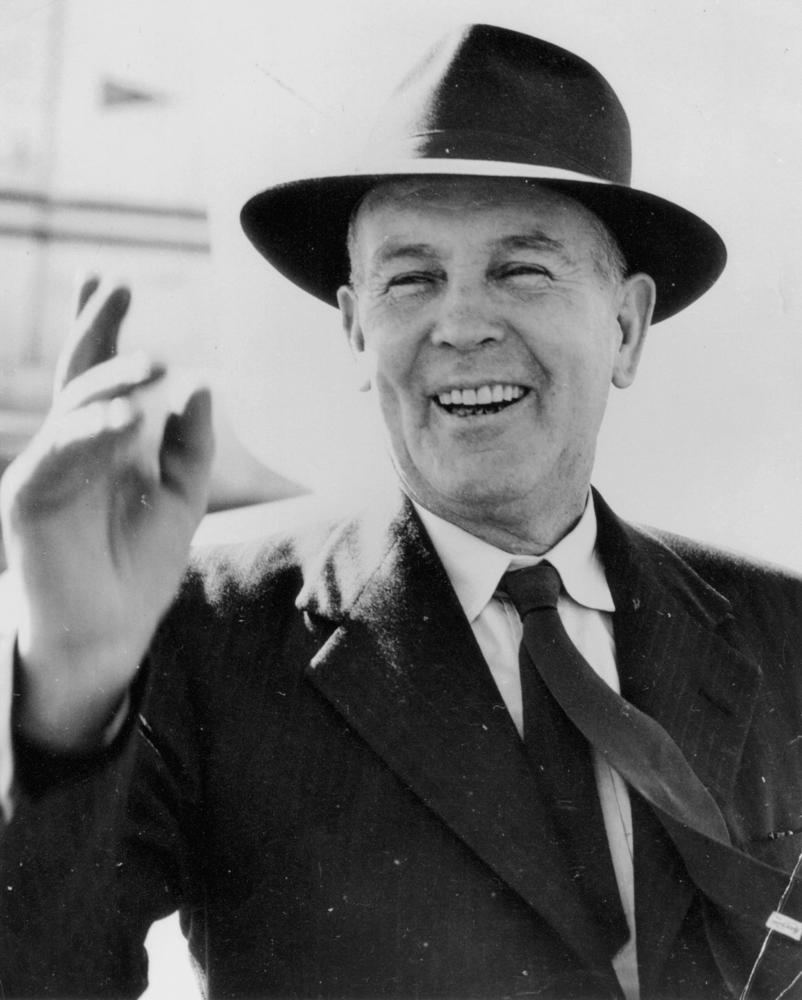
On Thursday August 15, it will be Victory in the Pacific Day, which commemorates the day that Japan surrendered in 1945, effectively ending World War II. In Australia, Labor leader and Prime Minister Ben Chifley announced the news in a radio broadcast at 9.30 am on Wednesday August 15 1945, with the words, Fellow citizens, the War is over. Australian cities and towns erupted into spontaneous celebration, and by evening, the jubilant crowds were the largest to have ever gathered in the nation’s history.

One of Australia’s iconic images from history is the “dancing man” who was filmed by MovieTone News dancing happily in Elizabeth Street in Sydney on August 15 1945. Several men have claimed to be the Dancing Man, and the image remains an enduring symbol of the nation’s joy that the war was over at last. A well-attended church service of thanksgiving was held in the Domain that afternoon, and with the next two days declared holidays, there were Victory parades all over the country.

When Ben Chifley announced the war was over, he had only been Prime Minister for a month. He led Australia into the post-war era, with the promise of “sane and progressive government” and was successful in moving us to a peace-time economy. Servicemen and women were eased back into civilian life, and public works such as the Snowy Mountains Hydro-electricity Scheme meant that unemployment was virtually nil. This demand for labour opened the door for assisted migration schemes, which were to change Australia forever.

Chifley brought in many welfare initiatives, including unemployment benefits, sickness benefits, fairer pensions and, against a legal challenge by doctors, what was to become the Pharmaceutical Benefits Scheme, which subsidises the cost of essential medicines. His promises to improve equality in wealth, income and opportunities came to fruition during the prosperity of the 1950s and ’60s.

Ben’s full name was Joseph Benedict Chifley, and his second name was suggested by the Mother Superior of Saint Benedict’s Convent in Queanbeyan, where his mother Mary had worked as a servant. He grew up in a Catholic community, but defied the papal decree that Catholics could not marry outside their religion when he wed Elizabeth McKenzie, a Presbyterian. Although he continued attending mass, he considered himself to be outside the Catholic church, and labour politics became his true religion – one which he followed with an evangelical zeal.

He is most famous for his “Light on the Hill” speech, which he gave at a Labor conference in 1949, towards the end of his term as Prime Minister (and not long before his life ended). He spoke of the many people in the labour movement, including himself, who worked not for personal gain, but in order to bring better conditions for others.

He said: I try to think of the Labor movement … as a movement bringing something better to the people, better standards of living, greater happiness to the mass of people. We have a great objective – the light on the hill – which we aim to reach by working for the betterment of mankind.

For his idealism, his humanity, and his vision, Ben Chifley is counted amongst the nation’s greatest Prime Ministers. So much of the Australia we know today began with Chifley’s aspirations for a future he would never live to see.

Benedict is derived from the Latin name Benedictus, meaning “blessed”. It was a name commonly chosen by Christians for its meaning, and there are several saints named Benedictus or Benedict.

The most famous of these is Benedict of Nursia, a 6th century saint, who, according to tradition, was the son of a Roman noble. While still a very young man, he turned away from the pleasures of the world and became a hermit in a cave in the Subiaco region. He attracted many disciples, and eventually founded the famous monastery of Monte Cassino, which is in the mountains halfway between Rome and Naples.

Near the end of his life, he wrote his Rule of Benedict, which lays down the precepts for the organisation of communities of monks under an abbot. Compared to other works of this nature, Benedict’s is notable for its moderation and practicality, which made it very popular. He wrote a Monasteries for Beginners, and (unlike more zealous Rules which barely allow food or sleep), his Rule is possible for anyone to follow.

Benedict’s Rule has been used for 1500 years; the foundational document for thousands of religious communities in the Middle Ages, it is still in use today, and is the most common Rule used by monastries and monks. As the father of Western monasticism, Benedict’s importance to history can hardly be overstated. During the early medieval period, monasteries became respositories for learning, and centres of education. Because of Benedict’s influence, when the Middle Ages ended, there was enough knowledge retained to build on for the future.

Due to Saint Benedict of Nursia’s importance, many others entering the religious life (especially Benedictines) chose Benedict as their name, and it has been a favourite choice for popes. There have been sixteen Pope Benedicts, the most recent being the current Roman Pontiff Emeritus, Benedict XVI, who chose his papal name in honour of Benedict of Nursia, and of Pope Benedict XV, who had worked for peace during the First World War.

Pope Benedict said in one of his early sermons that with his life and work, Saint Benedict exercised a fundamental influence on the development of European civilisation and culture, and helped Europe emerge from “the dark night of history” that followed the fall of the Roman empire. For his role of preserving European culture, Saint Benedict was named patron protector of Europe by Pope Paul VI in 1964.

Benedict has never charted in Australia, so if you would like a rare name with a positive meaning that can mingle with the crowds as simple Ben, then Benedict seems like a good choice. It’s weighty and dignified, and honours one of the great Prime Ministers, who changed Australia, as well as a saint who changed western civilisation. It’s a name heavy with significance and history, yet actor Benedict Samuel reminds us how well this name can suit a young person.

Name Combinations for Benedict

Benedict Alexander, Benedict Jude, Benedict Leonard, Benedict Nathaniel, Benedict Sebastian, Benedict Vincent

Brothers for Benedict

Constantine, Dominic, Felix, Gabriel, Ignatius, Xavier

Sisters for Benedict

Agnes, Caroline, Eloise, Genevieve, Lucia, Margaret

POLL RESULT: Benedict received an approval rating of 80%. 33% of people liked it, and 27% of people loved it.

← Older posts
Newer posts →

Enter your email address to follow this blog

Categories

Archives

Recent Comments

A.O.'s avatarwaltzingmorethanmati… on Zarah Zaynab and Wolfgang…
Madelyn's avatarMadelyn on Zarah Zaynab and Wolfgang…
JD's avatardrperegrine on Can Phoebe Complete This …
A.O.'s avatarwaltzingmorethanmati… on Rua and Rhoa
redrover23's avatarredrover23 on Rua and Rhoa

Blogroll

  • Appellation Mountain
  • Baby Name Pondering
  • Babynamelover's Blog
  • British Baby Names
  • Clare's Name News
  • For Real Baby Names
  • Geek Baby Names
  • Name Candy
  • Nameberry
  • Nancy's Baby Names
  • Ren's Baby Name Blog
  • Sancta Nomina
  • Swistle: Baby Names
  • The Art of Naming
  • The Baby Name Wizard
  • The Beauty of Names
  • Tulip By Any Name

RSS Feed

  • RSS - Posts

RSS Posts

  • Celebrity Baby News: Melanie Vallejo and Matt Kingston
  • Names from the TV Show “Cleverman”
  • Can Phoebe Complete This Sibset?
  • Zarah Zaynab and Wolfgang Winter
  • Baby, How Did You Get That Name?
  • Celebrity Baby News: Media Babies
  • Celebrity Baby News: Adelaide Crows Babies
  • Celebrity Baby News: Chris and Rebecca Judd
  • Names at Work: Name News From the World of Business and Employment
  • Celebrity Baby News: Sporting Round Up

Currently Popular

  • Rare Boys Names From the 1950s
  • The Top 100 Names of the 1920s in New South Wales
  • Celebrity Baby News: Ross Stevenson and Sarah Fallshaw
  • Arlo Robert Galafassi: A Son for Toni Collette and Dave Galafassi, a Brother for Sage Florence
  • The Top 100 Names of the 1940s in New South Wales

Tags

celebrity baby names celebrity sibsets english names famous namesakes fictional namesakes honouring locational names middle names name combinations name history name meaning name popularity name trends nicknames popular names saints names sibsets surname names twin sets unisex names

Create a free website or blog at WordPress.com.

Privacy & Cookies: This site uses cookies. By continuing to use this website, you agree to their use.
To find out more, including how to control cookies, see here: Cookie Policy
  • Subscribe Subscribed
    • Waltzing More Than Matilda
    • Join 517 other subscribers
    • Already have a WordPress.com account? Log in now.
    • Waltzing More Than Matilda
    • Subscribe Subscribed
    • Sign up
    • Log in
    • Report this content
    • View site in Reader
    • Manage subscriptions
    • Collapse this bar
 

Loading Comments...