• About
  • Best Baby Names
  • Celebrity Baby Names
  • Celebrity Baby Names – Current
  • Celebrity Baby Names – Past
  • Featured Boys Names
  • Featured Girls Names
  • Featured Unisex Names
  • Links to Name Data
  • Waltzing on the Web

Waltzing More Than Matilda

~ Names with an Australian Bias of Democratic Temper

Waltzing More Than Matilda

Category Archives: Waltzing with …

Waltzing With … Victoria

28 Sunday Jun 2015

Posted by A.O. in Waltzing with ...

≈ Comments Off on Waltzing With … Victoria

Tags

classic names, European name popularity, famous namesakes, Latin names, locational names, Marian titles, mythological names, name history, name meaning, names of businesses, popular names, royal names, saints names, Spanish names, UK name popularity, US name popularity
portland

Famous Namesake
July 1 will mark the 164th anniversary of the independence of Victoria. When the British settled Australia in 1788, they claimed the entire eastern side of Australia as the Colony of New South Wales. The area now known as Victoria was first settled in 1803, partly due to French explorer Nicolas Baudin, who had spent several weeks surveying Bass Strait.

Governor Philip Gidley King got nervous that the French could be planning to establish their own settlement and challenge the British claim to Australia. Rather than risk a future where we might say Bonjour over a croissant or ride clean, efficient trains, the British formed a settlement at Port Phillip. It didn’t work out, and a year later they all nicked off to Tasmania. They tried again in 1826 (after another French explorer started hovering around), but that only lasted a year as well.

Paranoid government had failed, so it was capitalism’s turn to give it a go. Entrepreneurs arrived from Tasmania in 1834-35 to form settlements at Portland and Port Phillip (later Melbourne), which soon became prosperous, thriving communities, although at a devastating cost to the Indigenous inhabitants. Wealthy pastoralists took possession of vast tracts of fertile land, and soon Melbourne was the centre of Australia’s wool trade.

With such power and influence behind it, the Port Phillip District began lobbying for independence by 1840. In 1850 the colony was separated from New South Wales, and named Victoria, after Queen Victoria, and officially founded on July 1 1851. That same year, gold was discovered around Ballarat and Bendigo, sparking one of the largest gold rushes the world has ever seen. Wealth was about to begin pouring into its coffers, and Melbourne to become one of the great cities of the world.

The colony was off to a flying start, soon to to become the state we all know and love. The most beautiful state in Australia, ranging from lush pasture to snowy mountain ranges to golden beaches, it has charming country towns and a sophisticated, quirky capital. You can even get excellent croissants there. Viva la Victoria!

Name Information
Victoria was the Roman personification of victory in battle; her name is the Latin word for “victory”. In her older form, she was known as the goddess Vica Pota, translated by the Romans as meaning “conquering and gaining mastery”.

Victoria symbolised victory over death, and she chose who would be successful on the battlefield, so it was very important to get on her good side. Because of this, she was a popular goddess with many temples in her honour, worshipped by those who returned from war in triumph. She can often be seen on Roman coins and jewellery, and it is common to depict Victoria driving a chariot, probably because Nike, the Greek goddess of victory, was the charioteer for Zeus when he went into battle.

Victoria (or Nike) was depicted as a beautiful woman in flowing garments with large wings sprouting from her shoulders, so that she could fly over battlefields, giving encouragement to the conqueror and proclaiming messages of glory from on high. Statues of her in this mode are called winged victories, such as the Winged Victory of Samothrace. Later this image became Christianised, as it became the rule to portray angels, especially in church architecture, as graceful women with wings, a direct inspiration from the winged victories.

Victoria is also the feminine form of the Roman name Victor, meaning “victor, conqueror”. Like Victor, it was a popular choice for early Christians, symbolising victory over sin and death, and there are quite a few Christian martyrs named Victoria. Some are identified as women of the nobility, and others as servants, so it seems to have been used by all classes in the Roman Empire.

The name Victoria has long had a particular association with Spain, because it also one of the titles of the Virgin Mary: Nuestra Señora de Victoria, or Our Lady of Victory. In 1571, Pope Pius V instituted a feast day for Our Lady of Victory, after a coalition of southern European forces, led by Spain, defeated the fleet of the Ottoman Empire at the Battle of Lepanto.

Although well used in Continental Europe and popular in Spain, Victoria didn’t become common in Britain until the 19th century, when Queen Victoria took the throne in 1937 – there was an enormous jump in use between the 1820s and the 1840s, although it still wasn’t a popular name in England during Victoria’s reign.

Victoria is a classic name which has never left the charts. It was #124 in the 1900s, and sunk until it reached its lowest level ever in the 1930s, at #0. Victoria came back strongly, and was already #155 in the 1940s – perhaps the war era made the idea of commemorating victory very appealing. Victoria made the Top 100 in 1960 at #97, but for most of the 1960s and ’70s was just outside the Top 100. It made good headway in the 1980s, and peaked in 1991 at #49. It left the Top 100 in 2008, but remained within close reach, and was back again in 2010.

Currently it is #80 nationally, #59 in New South Wales, #74 in Victoria, and #85 in the Australian Capital Territory. It appears very stable – it hasn’t been far outside since the Top 100 since the 1950s, and has only once made it into the Top 50. That makes it a safe choice which has never been highly popular, yet has remained common for more than half a century.

Victoria is a popular name around the world, but is most popular in the US at #19. Its popularity in the UK is similar to that in Australia. Not just popular in English-speaking countries, Victoria is a Top 100 name in Western Europe, Eastern Europe, and Scandinavia; still a favourite in Spain, it is also popular in Latin America. Meanwhile international variants such as Viktoria, Victorija, Victorie, Victoire, Vitoria, and Vittoria are popular in a host of countries. That makes Victoria an internationally recognised name that works cross-culturally.

Victoria is a classic traditional girl’s name that’s popular, but not too popular. It’s a long, feminine name that doesn’t seem frilly or elaborate, but clean and professional. It’s well known internationally without seeming exotic. It has a strong meaning connecting it to power and success, which is quite unusual for a girl’s name.

Victoria is a goddess, an angel, a saint, and a winner of battles. Many people will connect her with a queen, and there’s no doubt that Victoria is royal to her fingertips. She’s classy, and every inch a lady, but Victoria’s Secret makes her seem rather sexy too. A fun nickname would be Plum, from the Victoria Plum, like the writer Plum Sykes. My preference is for the lively Vita, inspired by another author from Kent, Vita Sackville-West.

POLL RESULT
Victoria received an outstanding approval rating of 91%, making it one of the highest-rated names of 2015. 33% of people thought the name Victoria was okay, and only 3% hated it.

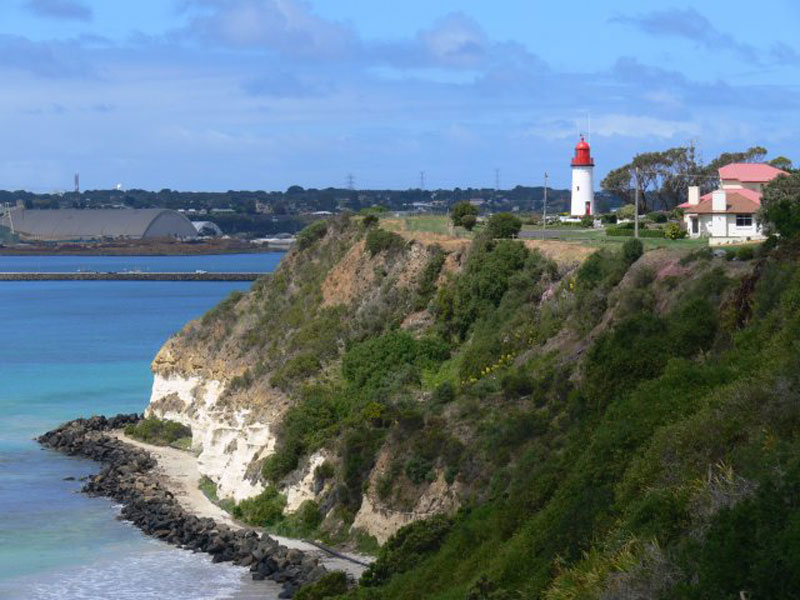
(Photo shows Portland, the first permanent European settlement in Victoria)

Waltzing With … Ignatius

24 Sunday May 2015

Posted by A.O. in Waltzing with ...

≈ 3 Comments

Tags

celebrity baby names, famous namesakes, name history, name meaning, name popularity, nicknames, Roman names, saints names, Spanish names, UK name popularity, US name popularity

BC-Flame-Photo

Today is Pentecost, which marks the end of the Easter season – its name means “the fiftieth”, because it is 50 days after Easter Sunday. It is the Greek name for the Hebrew festival of Shavuot, or the Feast of Weeks, a harvest festival which also commemorates the traditional anniversary of Moses receiving the Ten Commandments from God. In this case, the name comes from being 50 days after Passover.

Pentecost became a key date in Christianity because of an event related in the New Testament. The Acts of the Apostles states that about 120 of the disciples of Jesus were gathered together to celebrate the Feast of Weeks, 50 days after the Resurrection of Christ, and ten days after he ascended into Heaven. By tradition, it was the large upper room in which the Last Supper took place, and which the disciples continued to use as a place for meeting and prayer.

The Bible records that suddenly there came a noise like a mighty wind which filled the entire house, and upon each of them sat something which looked like a tongue of fire. They were all filled with the Holy Spirit, and were able to speak in different languages. This drew a large crowd, to whom the Apostles preached, and which was so impressed by the demonstration that about three thousand people were baptised, forming the beginnings of the Christian church.

A major feast day from the very earliest times, Pentecost is celebrated as a joyous occasion, and can be seen as the “birthday” of the church. The colour red is used to symbolise the Holy Spirit descending as fire, and there may be red banners, flowers, candles, balloons, and other decorations. Doves are also a prominent motif in reference to the Holy Spirit. Pentecost is a popular day to be baptised or confirmed, and as it occurs during spring in the northern hemisphere, this affirmation of youth and new life seems very appropriate.

In Britain, Pentecost became known as Whitsun, perhaps because of the white clothes worn by those preparing for baptism or confirmation (another interpretation is that it is from the “wit” given to the disciples by the Holy Spirit). In England, Whitsun was historically a major holiday, incorporating some of the traditions of the pagan summer festival, Beltane; there might be parades, music and singing, morris dancing, sports and games, and village fairs. The time around Pentecost is still often celebrated by pagans.

In the southern hemisphere, Pentecost arrives during late autumn or early winter, but this ties in quite well with the original idea of a harvest festival, as there are often food and fresh produce fairs at this time of year. Autumn is also the breeding season for several species of native doves, giving another connection to the day. Bright red autumn leaves and red poinsettia flowers can be used as decorations, and to feel a mighty wind, there are freezing gusts in some areas, freshened with snow!

So we say farewell to Easter, which ends with a bang, not a whimper, and look forward to the cold days and nights of winter.

Name Information
Ignatius is derived from the Roman family Egnatius, of unknown meaning, and presumed to be of Etruscan origin, although the Egnatia were Samnites from southern Italy, so may be Oscan instead. From early on, folk etymology connected it to the Latin word ignis, meaning “fire”, which makes it a good choice to cover for Pentecost.

There were quite a number of prominent Romans with the name Egnatius, and it rather amuses me that the first ever fire fighting service was organised in ancient Rome by Egnatius Rufus – Rufus means “red”, of course. Publius Licinius Egnatius Gallienus was the Emperor Gallienus, the son of the Emperor Valerian. A father and son of the Egnatii were killed with a single blow as enemies of the state, and died locked together, each trying to shield the other from harm.

There are a number of saints named Ignatius, with the earliest being Ignatius of Antioch, a first century bishop believed to be a disciple of St John the Apostle. He was one of the church’s earliest theologians, and is important to Catholicism, as he was the first known writer to use to word catholic, meaning, “universal” to describe Christianity (although from his phrasing, it would seem to have been a term already widely in use).

One of the most famous of saints of this name is Ignatius of Loyola, a 16th century Spanish knight who was converted while recovering from battle. He founded the Society of Jesus (the Jesuits), and was a church leader during the Counter-Reformation. Known for his zeal and complete devotion to the church, he was brought before the Inquisition a couple of times due to concerns he might be overdoing it (being too religious was one of the many things the Inquisition tried to stamp out). He wrote a book of simple prayers and meditations that is still used for spiritual retreats by both Catholics and non-Catholics.

Ignatius of Loyola is the main influence on the use of the name Ignatius, which is somewhat ironic, as his name wasn’t really Ignatius. He was named Íñigo, a Spanish name recently covered on the blog meaning “my dear one”, but used the Roman name Ignatius instead as he thought it would be more widely understood. Writers on Ignatius of Loyola often connect the “fiery” meaning of his name with the saint’s “fiery” zeal, overlooking the fact that Ignatius wasn’t his real name, and “fiery” isn’t the real meaning of Ignatius.

Ignatius (said ig-NAY-shus) has been used as an English name since at least the 16th century, in honour of St Ignatius of Loyola. A few Australian examples are Depression-era politician Ignatius Boyle, headmaster Ignatius O’Connor, rugby player Ignatius “Iggy” O’Donnell, and former pop singer and events director Ignatius Jones (born Juan Ignacio Trápaga, the brother of childrens’ presenter Monica Trapaga). Actress Cate Blanchett has a son named Ignatius.

Ignatius is around the 400s and is more popular in Australia than in the UK or the US, allowing for differences in population size. In 2013, 4 boys were named Ignatius in England/Wales, while last year 40 boys were given the name Ignatius in the US.

Ignatius isn’t a common name, but isn’t rare enough to seem strange or outrageous either. Australia’s strong Irish heritage gives the name plenty of recognition, and being chosen as a celebrity baby name certainly hasn’t hurt. Once seen as a Catholic name, Ignatius is beginning to be appreciated by a wider variety of parents, just as happened with Xavier, and now makes a rather hip choice. Iggy is the obvious nickname, but Nate and Ace are also possibilities.

POLL RESULT
Ignatius received a very good approval rating of 79%, making it one of the highest-rated names of 2015. 35% of people thought the name Ignatius was okay, and only 5% hated it.

Waltzing With … Rosemary

19 Sunday Apr 2015

Posted by A.O. in Waltzing with ...

≈ 2 Comments

Tags

Anzac Day names, celebrity baby names, Christmas names, famous namesakes, food names, holiday names, honouring, modern classics, name history, name meaning, name popularity, names from movies, names of herbs, nature names, plant names, portmanteau names, UK name popularity, US name popularity

gallipoli-rosemary-jim-molan

It will be Anzac Day this weekend, the centenary of the first Anzac landing at Gallipoli on April 25 1915. As well as services all over Australia and New Zealand, there will also be Anzac Day ceremonies in Turkey, and at Villers-Brettoneux in northern France.

The rosemary plant has long been connected with Anzac Day ceremonies, and it is traditional to wear a sprig in your coat lapel, pinned to your breast, or held in place by war medals. They are often sold by Legacy and the RSL. It is not known when this tradition first started, but it may date back to the very first Anzac Day commemoration in 1916.

According to the ancient Greeks, who drew on the work of Arabic physicians, rosemary improved the memory (students would wear it in their hair during exams), so it became associated with remembrance. Rosemary was thrown into graves or sprigs worn by mourners as a sign the departed person would never be forgotten (and to ward off the smell), and it’s famously referenced in Ophelia’s speech in Shakepeare’s Hamlet, where she says, “There’s rosemary, that’s for remembrance”.

Interestingly, rosemary’s connection with memory is more than mere superstition, because modern science has found that inhaling rosemary oil does significantly enhance memory, and that even small doses of rosemary improve cognitive function in the elderly.

While the connection with rosemary and remembrance for the dead is one that goes back thousands of years, it takes on a particular significance for Anzac Day, because rosemary grows wild on the Gallipoli Peninsula. The scent of rosemary, whether it is pinned to your clothes, planted in a garden as a memorial, or sprinkled over a traditional Anzac Day lamb roast, is the perfect mark of remembrance and commemoration.

Lest we forget.

Name Information
Rosemary can be seen as a combination of the names Rose and Mary, or as a reference to the aromatic herb. The plant rosemary has nothing to do with roses, because its name comes from the Latin ros marinus, meaning “dew of the sea”. This is because it grows naturally in dry coastal Mediterranean climates.

According to legend, Aphrodite was draped in rosemary as she rose from the sea foam. Perhaps because of this, and the association with everlasting memory and fidelity, rosemary was associated with love in the Middle Ages, and it was traditional for brides to wear rosemary wreaths, and for guests to wear a sprig of rosemary at a wedding – even now it’s said that a bit of rosemary in the wedding bouquet brings the bride good luck.

There are many love superstitions involving rosemary in folklore, including the charming one that a newly married couple should plant a rosemary branch in their garden together: if the branch takes root and flourishes, it is a good omen for their wedded life.

There are Christian legends about rosemary too. One tells how the flowers of the rosemary plant were originally white; the Virgin Mary spread her blue cloak on the bush while she rested, and when she removed it, the flowers had miraculously turned blue as a reward for their humble service. Another legend says that she placed the linen from the baby Jesus to dry on the bush, and ever after the plant carried a fresh aroma, while a legend from Spain says that the Virgin Mary sheltered beneath a rosemary plant during the escape to Egypt. It is sometimes called Mary’s rose because of these stories.

Rosemary was one of the plants associated with Christmas. Being an evergreen plant, it was suitable for winter time decorations, and rosemary has a habit of being able to flower even in cold weather. Christmas hot wines and ales were sometimes flavoured with rosemary, which was considered salubrious as well as festive. Rosemary was also a popular New Year’s gift in times past.

Whether it was because of the connection to the Virgin Mary, or because rosemary has such a strong, healthy odour, it was also seen as a protective plant: according to folklore, by planting rosemary in the garden you were safe from witches, although in Sicily they say fairies will live in rosemary. It is said that rosemary will not grow in the garden of an evil person.

With such strong connections to female power, the superstition developed that if rosemary thrived in a garden, it was a sign that the wife of the house was the boss! As rosemary is hardy and easy to grow, you would need to be a very bad gardener for your rosemary to do poorly, but my husband still likes to teasingly point out our healthy rosemary plants as a sign of who rules the home. He’s only joking, but in the past, some men would rip the rosemary from the kitchen garden in an effort to control their wives.

Rosemary’s history is connected to royalty, because according to tradition, it was introduced to England in the 14th century by Joan of Valois, Countess of Hainault. She sent cuttings of it to her daughter, Queen Phillipa, the wife of Edward III, along with instructions on how to grow it, and information on its many benefits. Rosemary was probably brought by the Romans many centuries before, but Queen Phillipa may have re-introduced it, or at least given it a solid royal seal of approval.

Although Rosemary was used as a personal name as early as the 17th century, it didn’t become common until the 19th, when flower and plant names were fashionable. It seems to have been a particular favourite with Catholic families, no doubt in reference to the Virgin Mary.

Famous Rosemarys include Princess Rosemary of Salm-Salm, cabaret singer Rosemary Clooney, actress Rosemary Harris, and children’s author Rosemary Sutcliffe. Famous Australian Rosemarys include poet Rosemary Dobson, gardener Rosemary “Bea” Bligh, human rights activist Rosemary Gillespie, director Rosemary Blight (The Sapphires), nutritionist Rosemary Stanton, and paralympian Rosemary Little.

Rosemary first entered the charts in the 1920s, when it debuted at #220 – it may have been a celebrity baby name, for the tragic Rose Marie, called “Rosemary”, had recently been born to prominent Boston businessman Joseph P. Kennedy. By the following decade it was already in the Top 100. It peaked in the 1950s at #60, when Rosemary Clooney’s career began, and left the Top 100 by the 1970s (it went down rapidly after horror movie Rosemary’s Baby, and real life horror story Rosemary West).

After this, it sunk in popularity until the late 2000s, when it recovered slightly, and is now around the 400s. At present, it appears to be fairly stable. In the US, Rosemary has been almost continually in the Top 1000, and is now in the 500s and rising, while in the UK it has been steadily falling, and is now in the 700s.

Rosemary is a modern classic with a vintage vibe, and US data suggests it may become one of the 1950s names which becomes fashionable in the future. You may think of it as a name to honour a Rose and a Mary simultaneously, or even as a name suitable for a baby girl born around Anzac Day.

It doesn’t really have a sweet old-fashioned feel, for the herb rosemary gives it a tang. Its connection to weddings and Christmas helps it feel festive, while its association with mourning and funerals adds depth.

Rosemary is strong, clear-minded, clean, and healthy – as fresh as a sea breeze, as lusty as a goddess rising from the waves, as pretty as a bride, as practical as a housewife, as dignified as a queen, as dear as memory, and as solemn as the grave made sweet by her scent.

POLL RESULT
Rosemary received an excellent approval rating of 89%, making it one of the highest-rated names of 2015. 37% of people thought the name Rosemary was okay, and only 3% hated it.

(Photo of rosemary at Anzac Cove from Friends of Gallipoli)

Waltzing With … Matthew

15 Sunday Mar 2015

Posted by A.O. in Waltzing with ...

≈ 2 Comments

Tags

animal names, Biblical names, classic names, famous namesakes, hebrew names, Irish names, locational names, name history, name meaning, name popularity, names of cats, names of ships, nature names, patriotic names, popular names, saints names

Flinders-with-map-72-dpi

Famous Namesake
Tomorrow it will be the 241st birthday of the English explorer Matthew Flinders, who was the first to circumnavigate Australia.

He’s a historical figure that Australia has taken to its heart, and it’s very difficult not to find him almost immediately endearing. As a schoolboy, he read Robinsoe Crusoe and became enamoured of a desire to go to sea; apparently against all advice, he joined the navy at the age of fifteen. He never lost his love for Defoe’s novel – one of the last letters he ever wrote was to order a copy of the new edition.

Matthew first came to New South Wales in 1795, as midshipman on the Reliance, where he made a good impression as navigator and cartographer, became excellent friends with the ship’s surgeon, George Bass, and gained a black and white cat. Born on the ship, the kitten fell overboard, but was able to swim back and climb a rope to safety. Matthew saw it was intelligent with a strong survival instinct, and named it Trim after the butler in Lawrence Sterne’s Tristram Shandy, because of the cat’s faithful and affectionate nature.

Flinders and Bass made expeditions to Botany Bay and up the Georges River, from Port Jackson to Lake Illawarra, and to Moreton Bay, where their arrival on Coochiemudlo Island is still celebrated each year on Flinders Day.

The daring duo were sent to find a passage from the mainland to Tasmania (then Van Diemen’s Land). The passage they found is named Bass Strait, and its largest island is Flinders Island. Matthew charted all the islands, and he and George Bass were the first to circumnavigate Tasmania.

Matthew’s work gained the attention of the great scientists of the day, especially Sir Joseph Banks, who convinced the Admiralty to send Flinders to chart the entire coastline of New Holland. Matthew was promoted to commander, and given a slightly dilapidated ship called the Investigator (England was at war with France, and the navy was saving the really good ships for fighting).

Flinders wed his childhood friend Ann Chappell while in England (he named Mount Chappell Island in Bass Strait after her). Newly married, but with an expedition to command where women were strictly forbidden, he tried to smuggle Ann onto the Investigator. Sir Joseph Banks found out, and put an immediate stop to it. Ann was left at home: however, Matthew was allowed take Trim on the voyage.

The circumnavigation of Australia started on Cape Leeuwin in Western Australia, and continued eastward across the Great Australian Bight. Flinders ran into French explorer Nicolas Baudin in South Australia; although hostilities had temporarily ceased between England and France, both men thought their countries were still at war, but peacefully exchanged discoveries with each other. Matthew named the place where they met Encounter Bay.

Although circumnavigation was completed, it was not possible for Matthew to chart the entire coast, due to problems with the ship. Once back in Sydney in 1803, the Investigator was judged unseaworthy, and as he was unable to continue his work, Matthew set sail again on a ship called the Porpoise, which only made it as far as the Great Barrier Reef: the place was named Wreck Reef as a result. Flinders made it across open seas back to Sydney in the ship’s cutter, and (still accompanied by Trim), took command of the Cumberland to get home.

The Cumberland was also in poor condition, and Flinders was forced to put in at the Isle de France (now called Mauritius), just three months after Nicolas Baudin had died there. War had broken out with France again a few months previously, but Matthew Flinders thought that being on an important scientific mission, having a French passport, and knowing Nicolas Baudin would afford him diplomatic immunity.

The French governor disagreed, and detained Matthew there for years, even after Napoleon told him to release Flinders. Trim, who proved such a comfort to him, disappeared in mysterious circumstances, and the heartbroken Matthew believed he had been killed and eaten by the island’s slaves (not the first brave explorer to have met this fate, if true).

Finally, Matthew returned to England in 1810, his wife having waited more than nine years to see him again. Now in very poor health after his harsh imprisonment on Mauritius, he worked on completing his atlas.

It was during his voyages that Matthew Flinders began to use the name Australia to refer to the continent he was exploring. He wasn’t the first to use the name, but previously geographers used it for the whole South Pacific region.

Sir Joseph Banks, who had been such an interfering nuisance by not letting Ann accompany her husband Matthew on the Investigator, now turned out to disapprove of the name Australia. Despite Matthew’s objections, his book came out under the title A Voyage to Terra Australis. The final proofs came to him on his death bed, but by then he was unconscious; he died the day after his book was published, having never regained consciousness.

A Voyage to Terra Australis was the first book to use the name Australia for our continent, as Matthew Flinders was sure that there was no other great landmass in the area it could apply to. With his gift for nomenclature, he noted that the name Australia was “more agreeable to the ear” than any other. His chosen name stuck, and it was Governor Lachlan Macquarie who recommended that it be officially adopted, which took place in 1824.

Amongst all the places in Australia which Matthew charted, he never named one after himself, but that has been well and truly remedied, with more than a hundred places bearing the name Flinders – from the Flinders Ranges to Flinders Bay to the suburb of Flinders in Canberra, not to mention Melbourne’s Flinders Street, the Flinders Highway, and Adelaide’s Flinders University. There are more statues of Matthew Flinders in Australia than of any other man, and the only person to outdo him is Queen Victoria.

Even Trim the cat has not been forgotten, as he has a bronze statue at the Mitchell Library in Sydney, while the library has a cafe named after him, and sells a wide variety of Trim-related merchandise at their gift shop. Author Bryce Courtenay wrote a novel called Matthew Flinders’ Cat, in memory of the pet that Matthew Flinders called “the best and most illustrious of his race … and best of creatures … ever the delight and pleasure of his fellow voyagers”.

Name Information
Matthew is the English form of Matthaios, the Greek form of the Hebrew name Matityahu, meaning “gift of Yahweh”, and almost always translated as “gift of God”.

The name became common because of the Apostle Matthew. Matthew was one of the first to join Jesus’ ministry, and is described in the New Testament as a publican. In Roman times, this meant a public contractor, who was responsible for collecting duties and taxes. It’s possible that Matthew collected the taxes of the Hebrews on King Herod’s behalf.

Publicans were very unpopular – not only because nobody likes paying taxes, but because they were seen as traitors collaborating with the Roman Empire. It’s significant that Jesus chose a publican as one of his followers, because it suggests he was actively seeking out people on the fringes of Hebrew society, and those despised by others.

The New Testament mentions a tax collector named Levi who was called to join Jesus, and it is tempting to think that Levi and Matthew were the same person, but this is never made explicit. If so, he may have been born Levi, and taken (or been given) the name Matthew to symbolise his new life.

According to Christian tradition, Matthew was the author of The Gospel of Matthew; as a publican, he would probably have been literate enough to have written it. However, most modern scholars believe that the Gospel was written later, by someone who strove to emphasise that Jesus was part of Jewish tradition. This makes it seem as if it may have been written for a Jewish Christian community, to ensure that their Jewish laws were not lost in a church that was gradually losing touch with its Hebrew roots. It’s possible such a community would have venerated Matthew as a leader of a former generation, and kept records of his teachings and stories.

Tradition says that Matthew preached to Jewish communities in Judea, before travelling through other countries of the Middle East and eastern Europe: so many conflicting countries are mentioned that one wonders if he ever left Judea at all. He is regarded as a martyr, although no specific martyrdom is given for him, and many doubt this belief. Saint Matthew is the patron of accountants, bankers, tax collectors, and public servants (all important jobs which still don’t make you very popular).

Matthew has been in use as a name since the Middle Ages, and in Ireland has been used to Anglicise the Irish name Mathúin, meaning “bear”.

Never out of common use in the post-medieval era, Matthew is a classic which has remained on the charts since Federation, and never been out of the Top 200. It was #89 in the 1900s, and left the Top 100 in the 1910s, reaching its lowest point in the 1940s at #161. It climbed steeply to re-join the Top 100 by the 1960s, and peaked in the 1980s as the #1 name of the decade. It has fallen very gradually since then, and is still in the Top 50. Currently it is #48 nationally, #41 in New South Wales, #56 in Victoria, #55 in Queensland, #35 in Western Australia, #83 in Tasmania, and #55 in the Australian Capital Territory.

Matthew is a popular name in all English-speaking countries, but most popular in Northern Ireland, where it is in the Top 10. Its popularity in Australia is very similar to that in New Zealand and England/Wales.

Matthew is not only a strong, handsome, timeless classic, it honours a man who was daring enough to follow a childhood dream, and courageous enough to sail through seas unknown. He had the determination and tenacity to see through painstaking, detailed scientific work, and endured shipwreck, starvation and attack on his voyage, as well as cruel imprisonment which shortened his life.

Most importantly, he was the man who named us – we could not be Australia without him, making Matthew one of the most Australian names possible for a boy.

POLL RESULT
Matthew received an outstanding approval rating of 92%, making it one of the highest-rated names of 2015. 44% of people thought the name Matthew was okay, and only one person hated it.

(Photo shows the Matthew Flinders memorial, including his cat Trim, which was unveiled at Australia House last year, and is at Euston Station in London, above where Matthew Flinders is rumoured to be buried. Flinders University helped pay for the statue.)

Waltzing With … Anna

08 Sunday Feb 2015

Posted by A.O. in Waltzing with ...

≈ 1 Comment

Tags

Anglo-Saxon names, aristocratic names, Biblical names, British names, classic names, Disney names, Disney princesses, Etruscan names, European name popularity, famous namesakes, fictional namesakes, Greek names, hebrew names, Irish names, Latin names, mythological names, name days, name history, name meaning, name popularity, names from films, names of cakes, popular names, Roman names, royal names, unisex names

Pavlova RM90_01

Famous Namesake
On Thursday February 12, it will be the 134th birthday of the Russian prima ballerina Anna Pavlova. At a time when the rules of classical ballet were rigidly enforced, the dainty Anna performed in a graceful, romantic style, with less emphasis on precision and acrobatics. The principal artist with the Imperial Ballet and the Ballets Russes, she formed her own company and became the first ballerina to tour as an international star.

It was during one of her tours to Australia and New Zealand in the 1920s that Anna Pavlova would be honoured with the creation of an iconic Australasian dish, and in the process spark a rivalry between the two Trans-Tasman nations, who both claim it as their national dessert.

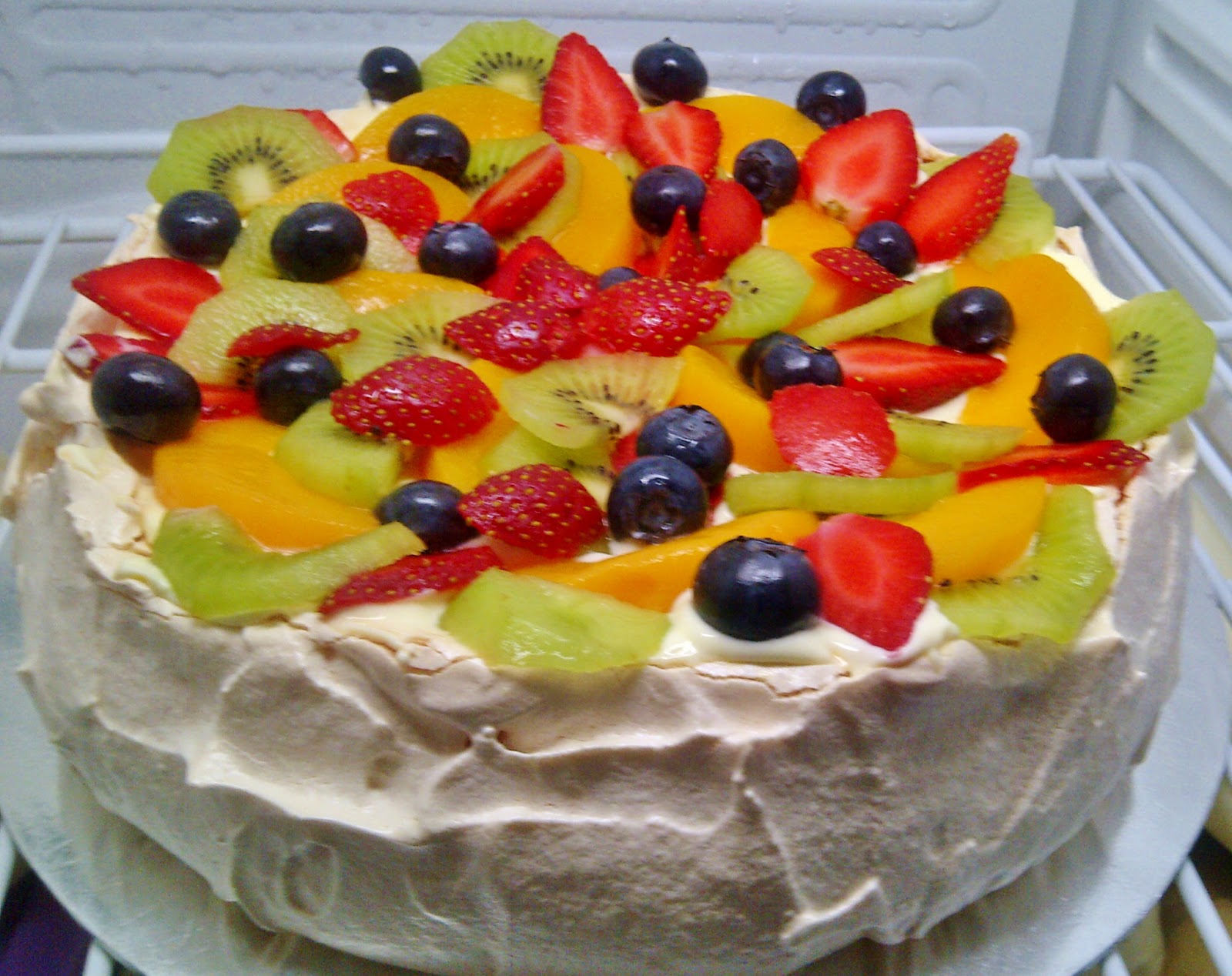
A pavlova is a meringue cake which has a crisp outer shell, and a soft marshmallow-y filling; a delectable, sweet, melt-in-your-mouth treat which is traditionally smothered in whipped cream and fresh summer fruit. Supposedly, the fragile pavlova was inspired by light-as-air Anna Pavlova, with its meringue casing designed to emulate the soft folds of her white ballet skirt.

Both New Zealand and Australia have some rather dubious stories as to how the pavlova first came to be made and named, but indefatigable research by a New Zealand food historian shows that it definitely originated in New Zealand, with a 1929 recipe being found in a New Zealand magazine. Meanwhile, it didn’t make an appearance in Australia until the early 1930s. So New Zealand gets the honours for inventing the pavlova, although it really does feel as if Australia has embraced the pavlova more heartily – it is a favourite choice to celebrate Australia Day.

I always have a pavlova for my Name Day cake: it not only reflects my name, Anna, but is perfect for a hot summery February Name Day. It’s also very appropriate, because my dad is from New Zealand and my mum born in Australia, so it symbolises the two countries coming together.

Name Information
Anna is the Latinised Greek form of the Hebrew name Hannah, meaning “favour, grace, graciousness”, sometimes translated more freely as “God has favoured me”, or “the grace of God”. The New Testament uses the Greek form Anna, in contrast to the Old Testament Hannah.

The Gospel of Luke tells of Anna the Prophetess, an old widow perhaps more than a century in age, who was very devout, and spent all her time fasting and praying. At the Presentation of Jesus in the Temple, celebrated as Candlemas in early February, she immediately recognised the infant Jesus as the redeemer, and gave thanks to God for having been allowed to see Jesus in her lifetime. Despite having a walk-on role in the Gospels, Anna is recognised as a saint.

According to Christian legend, the mother of the Virgin Mary was also named Anna (or Hannah), but she is usually referred to as Saint Anne in order to avoid confusion with Anna the Prophetess. The use of the name Anna was inspired by Saint Anne rather than the aged prophetess.

In classical mythology, Anna was the sister of Dido, Queen of Carthage; she appears in Virgil’s Aeneid. According to the poet Ovid, this Anna was the same being as the Roman goddess Anna Perenna, whose name refers to the “circle of the year” (per annum, in Latin). Her feast day marked the first full moon of the year, and people offered sacrifices so that the year should be successful.

Ovid relates that Anna escaped from Carthage to Italy, where she accidentally drowned and became a river nymph – he translated her name as meaning “perennial stream” (amnis perennis). Ovid says that the goddess was a tiny old woman who baked cakes, and that crude jokes and songs were sung at her festivals. She may have been a mother goddess, and originally Etruscan – if so, her name might be from the Etruscan nanas, meaning “to bear, to beget (a child)”.

Another mythological Anna is the half-sister of King Arthur, usually referred to as Morgause; in many stories she bears Arthur a son, to his downfall. Morgause seems to be a title, meaning “of the Orkneys”, so Anna would have been her personal name.

It may be that she is based on the Irish goddess Anu, sometimes called Ana or Annan. One possibility is that Anu is another name for the mother goddess Danu/Dana, while the war goddess the Morrigan was sometimes called Anand. The British had a winter storm goddess that they referred to as Gentle Annie or Annis, apparently from terror of her hideous powers (this is another link with the name Agnes in Britain). The name is speculated to come from the ancient Celtic anon, meaning “deity, spirit”.

While we’re looking at the name Anna in different cultures, it is worth mentioning that it is also a man’s name, because Anna (or Onna) was an Anglo-Saxon king. One theory is that his name was a nickname for Ethelmund, meaning “noble protection”, or one of the other Ethel- names. Don’t ask me how Anna is short for Ethelmund!

The name Anna has been in common use in the west since the Middle Ages, and has historically been more popular in Eastern Europe and Scandinavia, where it was used by the nobility. It was traditional in the Russian royal family, and the 18th century Empress Anna of Russia was a nasty piece of work. Apart from Anna Pavlova, another famous Russian Anna is the beautiful Anna Karenina, title character of the tragic novel by Leo Tolstoy, considered one of the greatest works of fiction ever written.

Anna is a classic name which has never left the charts. It was #208 in the 1900s, and sunk to its lowest level in the 1920s at #353. After that, it began climbing and joined the Top 100 in the 1950s at #89. The rise into popularity may have been influenced by the 1948 film version of Anna Karenina, starring Vivien Leigh, and helped along by the 1956 film The King and I, with Deborah Kerr in the role of Anna. These movies probably helped give Anna a touch of exoticism.

The King and I was based on the Broadway musical of the same name, in turn based on the book Anna and the King of Siam by Margaret Landon, from the memoirs of Anna Leonowens about her experiences as a royal teacher in Bangkok in the 1860s (Anna Leonowens lived for a few years in Western Australia). Anna and the King was made into a TV show in 1972, and although it flopped in the US, had a decent lifespan on Australian television as re-runs, giving the name Anna a fair amount of exposure during the 1970s.

Anna peaked at the start of the 1980s at #34, then gradually sank into the bottom half of the Top 100. It has not shown any signs of serious decline, but remained relatively stable. In 2013, Anna was #64 nationally, #60 in New South Wales, #81 in Victoria, #87 in Queensland, where it rejoined the Top 100 and was one of its fastest-rising names, #47 in Western Australia, and #71 in the Australian Capital Territory. Preliminary results for 2014 suggest Anna may have improved its position, and is one of Victoria’s fastest-rising names of last year.

One of the factors helping the name along must surely be Princess Anna from the 2013 hit Disney film Frozen, the younger sister of “snow queen” Elsa. Anna is an attractive heroine who is brave and hopeful, with a strong, loving heart. I know many little girls – and even some not so little ones – who adore Anna for being sweet and genuine, with an endearing awkwardness. I wonder how many baby Annas have had their name suggested by an older sister?

Anna is still popular and stable after many decades, and even shows signs of a recent boost. It is a popular name all over the world, but tends to be most popular in central and Eastern Europe, and is the #1 name in Austria. Last year blog readers voted Anna their favourite internationally recognisable girls’ name.

I have found Anna a very easy name to wear. It’s a common name never out of use, but has never been highly popular, so I don’t actually know many people with my name, although everyone has heard of it. Nobody has had any problems spelling it (I learned to write my name as a toddler in about a minute!), and everyone can pronounce it to my satisfaction, even those who don’t speak English. The biggest issue is that it sounds similar to other names, such as Hannah and Emma, which can cause a slight hold-up over the phone.

I can’t pretend that Anna is a very exciting name, but for such a short and simple one, I don’t think it is completely boring either. It’s a palindrome, which tickled me as a child, and it has quite an interesting history – it fascinates me that so many Annas from legend have been elderly women, sometimes with quite a dark side! Its “foreignness” made it popular in the mid twentieth century, and even now I think it has a slight touch of European exoticism: Disney chose it for a Scandinavian princess, after all.

POLL RESULT
Anna received a frankly unbelievable approval rating of 100%, making it the highest-rated girls name in the Waltzing With … category, the highest-rated girls name overall, and the highest-rated overall name of 2015. 46% of people loved the name Anna, and nobody disliked or hated it. I have trouble accepting that I have the perfect name, and can’t help thinking that everyone was too polite to say they didn’t like it!

(Picture shows a pavlova; photo from Just LilDaisy)

Waltzing With … Paddington

14 Sunday Dec 2014

Posted by A.O. in Waltzing with ...

≈ Comments Off on Waltzing With … Paddington

Tags

Anglo-Saxon names, animal names, english names, fictional namesakes, historical records, locational names, middle names, name history, name meaning, names from movies, names of bears, names of railway stations, nicknames, Old English names, surname names

878C4533-F2F5-0278-FDA4E92FE00A3CE8_m

Family movies as a Christmas season treat is a tradition I really look forward to, and already we have been to see two films based on children’s books with Australian stars: Alexander and the Terrible, Horrible, No Good, Very Bad Day, with Ed Oxenbould as the hero Alexander, and Paddington, with Nicole Kidman as the villain Millicent.

Paddington is surely Britain’s favourite illegal immigrant – a polite stowaway bear from darkest Peru with a penchant for marmalade sandwiches, who is found by the Brown family at a railway station, with a note reading: Please look after this bear. The Browns take the bear home to 32 Windsor Gardens and name him Paddington, after the railway station where they found him (his Peruvian name of Pastuso is apparently too difficult for English-speakers to pronounce).

Michael Bond was inspired to write the Paddington stories by a lonely-looking teddy bear he bought as a present for his wife, and named after the railway station close to their home. The first book was written in the 1950s, and Michael Bond was influenced by his memories of evacuated children during the war, often left at railway stations with a label around their necks to identify them. Surely he was also influenced by increased post-war immigration to London – Paddington’s best friend is a Hungarian shopkeeper.

Without giving away too many spoilers, the movie has all the warm-hearted charm and humour of the books, including lots of jokes for the adults watching. However, it has a touch more darkness and a lot more adventure (much needed, as the books’ big adventures tend to revolve around going to the shops or the cinema). Somehow the movie manages to have some of the books’ sadness, because despite the comedic chaos, there was always a poignancy to Paddington’s situation.

Paddington is a district of central London which began as a Saxon village on the city’s outskirts. Even in the early 19th century, Paddington was surrounded by open fields and meadows.

For many years, the area had a dark connection, because it was in this neighbourhood that the notorious Tyburn Tree, or gallows, was set up. This was the main place for public executions from medieval times to the late 18th century, a spectacle which attracted thousands. A “Paddington Fair Day” meant an execution day, while “to dance the Paddington Frisk” meant to be hanged.

Paddington’s development began in the 19th century, with the canal and the railway station. Paddington Station was designed by the famous engineer Isambard Kingdom Brunel, and today there is a statue of Paddington Bear on platform 1. You can also buy a Paddington Bear stuffed toy from Paddington station, with a label asking you to please take care of this bear. These toys were first created by Jeremy Clarkson’s mother, making enough money to send Jeremy to a private school, and also providing him with his first job as Paddington Bear salesman.

The Victorian era was Paddington’s heyday, when it was described as a “city of palaces”. With its grand terraced houses overlooking Hyde Park, and its garden squares, it became a highly fashionable address. Many famous people have lived in Paddington, including Robert Browning and Winston Churchill, and more recently, Emma Thompson and Tony Blair.

The name Paddington is believed to mean “Padda’s farm”. Padda doesn’t seem to have been a common Anglo-Saxon name, but enough examples exist to show it is genuine. The meaning is not certain (it may be a variant spelling or shortening of another name), but one theory is that it came from the Old English word pad, meaning “toad”. Toads were considered magical creatures in ancient Europe (we still think of witches and wizards as having toads for familiars), and this makes me wonder if the name Paddington is a little more mystical than it might appear at first sight.

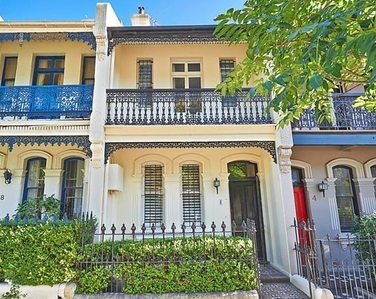
Paddington is also an inner-city suburb of Sydney, about 3 km from the CBD, and named after the London area because of its similarly close proximity to the city centre. When the Victoria Barracks army base was built here in the 19th century, the village of Paddington sprung up to house artisans and labourers who worked to build the barracks. It grew rapidly, with large estates filled with terraced housing, and by the early twentieth century was thriving.

During the Great Depression, Paddington became a slum, but after World War II its fortunes changed as European migrants moved in to the suburb, finding it cheap and conveniently located. In the 1960s, students and artists arrived to add bohemian flair, and it also became part of the gay “scene”, with the first Mardi Gras parade marching proudly down Oxford Street in 1978.

As the suburb became gentrified, Paddington’s Victorian architecture meant that it was protected as a heritage area, and these days “Paddo” is fashionable and upmarket. The main streets are filled with art galleries, trendy stores, boutiques, antiques, and interior designers, while artists and craftspeople hawk their wares every weekend at Paddington Market.

There is another Paddington in Brisbane, which is likewise inner city, and has a similar history to the one in Sydney. There is also a gold mine in Western Australia called Paddington.

The name Paddington is not often found in historical records, but use goes back to the 18th century, and is almost certainly prompted by the surname Paddington rather than directly after the place in London. It is much more common as a middle name, and in Australian records, is found extremely rarely, and only as a middle name.

So that’s Paddington – a rare name, but a genuine one, with some history of use even in Australia. It is very closely associated with the famous bear, but that might be exactly the reason a Paddington fan wants to use the name, and Paddington is such a nice bear. In Australia it will remind people of the Sydney suburb, but again, it’s a fashionable area with positive associations.

When I did a couple of minutes idle searching online, I found not just one, but two people considering the name Paddington for a baby – one of them Australian. I have to admit their tentative idea was shot down pretty hard by others, so there doesn’t seem to be much support for the idea of a baby named Paddington.

However, I think it could make an awesome middle name, and if you have your heart set on a little Paddington, Paddy would make a cute nickname. Far be it from me to tell people not to name children after fictional bears.

POLL RESULT
Paddington received an approval rating of 63%. 36% of people didn’t mind the name Paddington, but 24% disliked it. Less than 10% of people loved the name.

(Photo shows terrace housing in Paddington, Sydney)

Waltzing With … Constance

09 Sunday Nov 2014

Posted by A.O. in Waltzing with ...

≈ 3 Comments

Tags

aristocratic names, famous namesakes, fictional namesakes, French name popularity, Latin names, name history, name meaning, name popularity, nicknames, Old French names, Puritan names, rare names, Roman names, royal names, Shakespearean names, UK name popularity, US name popularity, virtue names

9-2508527-bun230914key1c_fct667x500x4.0x98.0_t620

This Tuesday is Remembrance Day, so today we will remember a World War I heroine. The Australian nurses who served in World War I have not always received the full recognition they deserve, but the award-winning television miniseries Anzac Girls, based on their stories, has brought these “other Anzacs” attention this year.

More than 5000 Australian nurses served during World War I, many of them in the sort of unofficial capacity that meant they are barely remembered today. They worked under gruelling conditions, underpaid, under-resourced, and often forced to improvise. They shared many of the soldiers’ hardships, including illness, physical danger, and psychological trauma.

Nurses were a vital part of the war effort, taking care of wounded soldiers, and offering comfort and cheer, giving them the courage to go back to the battlefield. No matter what horrors they saw, nurses had to remain cheerful, because the men depended on them. Many nurses became friends with their patients, meaning that losing one in battle brought deeper emotional strain. The Allied soldiers often commented that Australian nurses were amongst the kindest and most caring, and their professional standards were high.

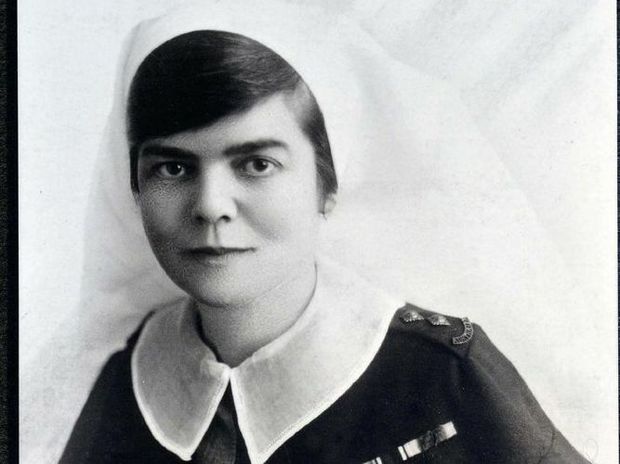
Sister Constance Keys has been on the blog twice before – she was amongst a group of nurses whose photo was used for Girls Names from the 1910s, and a quote from one of her letters was used for the entry on Gallipoli. Constance Keys was a Brisbane nurse who enlisted in the Australian Army Nursing Service in 1914, serving in Egypt, England, France, and Belgium.

Constance treated casualties from Gallipoli, and for most of 1918 was right near the front line in northern France, where her nursing station was heavily bombed more than once. Conditions were wet and cold, greatly increasing the suffering of her patients, and making movement difficult. She and her staff treated those who had been gassed, coped with influenza outbreaks, and had many casualties who suffered from exhaustion as well as wounds.

Sister Keys was discharged from the AIF in 1920 as one of the most highly decorated nurses in the AANS. Twice mentioned in dispatches for bravery, she received the Royal Red Cross, first and second class, and was awarded the Médaille des Epidémies in recognition of her work for French refugees. After the war, she became a hospital matron, and married a Gallipoli veteran; during World War II she trained Red Cross volunteers and entertained soldiers.

After her death, her wartime diaries and letters came to light, as well as her autograph book, in which she managed to get the signature of King George V. They give a clear picture of a young woman who was not only courageous and compassionate, but determined to remain in good spirits.

Under fire, Constance was “only afraid of being afraid”, and in the English fogs, “apart from the constant feeling of loss, quite well”. She writes of her little troubles, such as not having enough food, her hair falling out, and being a “bushwhacker” in regard to fashion, all in bright and amusing terms. She was a caring nurse who wrote letters and postcards to soldiers with no mail, felt guilty that she could only afford to shout ten men to lemonade and not everyone, and took time to make mud pies with a “little French kid”.

Connie also enjoyed those moments of pleasure and fun that came her way, such as buying a lovely pair of buttoned boots in England, seeing exquisite Oriental artefacts in Cairo shop windows, a mess room in Belgium with a sweet-toned piano for her to play, going on leave in Cannes to wake up to eucalypts and wattles outside her window. But she always remained a Queensland girl who had forgotten the taste of mango, and longed for a slice of passionfruit cake.

Constance is the medieval Old French form of the Roman name Constantia, the feminine form of Constantius, derived from the name Constans. This Latin name means “constant, steadfast”, referring to someone steady and faithful in their purpose or feelings. It is the basis for the English word constancy.

Traditional amongst European royalty and nobility, this name literally came over with the Conqueror, because Constance was one of the children of William I, said to have been the most gifted of his daughters. Princess Constance was her mother’s favourite child, so she wasn’t offered in marriage until she was positively ancient by medieval standards – in her mid to late twenties. She married a duke of Brittany, but died not long afterwards, reputedly poisoned by her servants.

Constance has often been used by the British aristocracy. One example is Lady Constance Bulwer-Lytton, a suffragette who went by the alias Jane Warton so she wouldn’t receive special treatment. A vegetarian, campaigner for birth control, prison reformist, and supporter of Morris dancing, she never married, as her mother would not allow her to marry a man from a lower social class. She died from a heart attack and series of strokes in her fifties; it is thought from the force-feedings she endured while hunger-striking in prison.

Other upper-class Constances include the pacifist writer Lady Constance Malleson, who performed as an actress under the name Colette O’Niel, Lady Constance Gaskell, Lady in Waiting to Princess Marina, and (Constance) Gwladys Robinson, Marchioness of Ripon, a patron of the arts and friend of celebrities such as Oscar Wilde and Nellie Melba. This reminds me that Oscar Wilde’s wife was named Constance too.

Constance is a favourite choice for aristocrats in English fiction, such as P.G. Wodehouse’s imposing Lady Constance Keeble, and Lady Constance Chatterley who forms a close connection with her husband’s gamekeeper in D.H. Lawrence’s Lady Chatterley’s Lover. It is also a Shakespearean name, because the historical character Constance, Duchess of Brittany, who married a son of Henry II, appears in King John.

But Constance was not just a name for dames, duchesses, and dowagers. Being a virtue name, it was appreciated by the Puritans, and Constance Hopkins was a teenaged girl who sailed on the Mayflower as a pilgrim: she was a sister of the baby boy Oceanus who was born on the voyage, and often mentioned in name blogs. Constance married and had twelve children, who provided her with seventy four grand-children; she has many living descendents. So the name Constance has plenty of history in America too.

Constance left the US Top 1000 in 2000, is still falling, and last year there were 103 baby girls named Constance – the same number as those called Arwen. It is much more popular in the UK, where Constance is #267 and stable. Constance is most popular in France, where it is just outside the Top 100 and rising.

In Australia, Constance was #83 in the 1900s, and peaked in the 1920s at #76, before leaving the Top 100 in the 1930s. It dropped off the charts in the 1960s, and made a minor come-back in the 1990s at #751. I rarely see a baby named Constance, but it does get a bit of use as a middle name, where it makes a wonderful alternative to the popular Grace.

Constance is a beautiful, elegant traditional name; a strong, brave name for a woman, yet also modest and sensible. It’s in rare use now, but that may be a drawcard for those parents wanting a familiar name that isn’t common. The nickname Connie sounds dated, which probably helps explain its lack of popularity, but you could use something more modern, like Coco or Tansy. However, Constance doesn’t need a nickname in my opinion – it’s lovely all on its own.

POLL RESULT
Constance received an outstanding approval rating of 88%, making it the highest-rated of the featured names of the “Waltzing” category in 2014. 34% of people liked the name Constance, while 30% didn’t mind it. Only 1% (1 person) hated the name the Constance.

(Photo of Sister Constance “Connie” Keys from the Bundaberg News Mail)

Waltzing With … Lucius

05 Sunday Oct 2014

Posted by A.O. in Waltzing with ...

≈ 3 Comments

Tags

aristocratic names, Arthurian names, Biblical names, Etruscan names, famous namesakes, fictional namesakes, Harry Potter names, imperial names, Latin names, name history, name meaning, name popularity, papal names, rare names, Roman names, royal names, royal titles, saints names, Shakespearean names, UK name popularity, US name popularity

y_Daybreak

Today is the start of Daylight Saving Time in New South Wales, Victoria, South Australia, Tasmania, and the Australian Capital Territory. Clocks went forward at 2 am this morning, so if you forgot, you are now an hour behind.

Because daylight saving becomes more pointless the closer you are to the equator, states which have tropical regions do not have daylight saving, and this means Queensland, Western Australia, and the Northern Territory. For everyone else, it’s a reminder we are moving towards summer and increasing hours of daylight, so it seems the perfect opportunity to look at a name connected with light.

Lucius was the most common name in ancient Rome times across all classes; it is usually said to be derived from the Latin word lux, meaning “light”. One theory is that it was given to children who were born at dawn, but the sheer number of people called Lucius makes this untenable. Another theory connects it to loukus, which originally meant “bright, shining”, although by the classical period it had come to mean “a cleared grove”.

Lucius is the name ascribed to an early Roman king, but it is probably a misunderstanding of Lucumo, the Etruscan word for “king”, which would be his title; the name Lucius was traditional in his family, suggesting another origin for the name. The Roman dictator Sulla, who served as an inspiration for Julius Caesar, was named Lucius Cornelius Sulla Felix. There were at least two Roman Emperors named Lucius: Lucius Dominitius Aurelianus (called Aurelian), and Lucius Aurelius Commodus (called Commodus).

Commodus was the son of the emperor Marcus Aurelius, and grandson of an emperor: he was the first emperor to be “born in the purple” (during his father’s reign). He is probably best known to us as the wicked emperor in the movie Gladiator, killed by Russell Crowe in the role of Maximus: although a fictional story, the real Commodus was eccentric and cruel, and assassinated by his wrestling partner, Narcissus.

The name Lucius was a favourite choice amongst early Christians because of the meaning of “light”, and there are several saints with the name. Saint Lucius of Cyrene is mentioned in the New Testament as a founder of the church in Antioch. There have been three popes named Lucius, and Pope Lucius I is also a saint.

Another Saint Lucius is a legendary 2nd century King of the Britons, who tradition credits with introducing Christianity to Britain by writing to the pope asking to be converted. His story became well known after it was included in the histories of Venerable Bede, and embellished by Geoffrey of Monmouth. For centuries it was an important myth of British Christianity, and although there’s no solid evidence he existed, some feel there must be a grain of truth to the legend. The church of St Peter Under Cornhill in London claims St Lucius as its founder.

The Roman philosopher and statesman known to us as Seneca had the full name Lucius Annaeus Seneca. He wrote many of his famous works while in exile, and later became an advisor to the Emperor Nero. This didn’t end well for him, as he was (probably wrongly) implicated in a plot against Nero, and forced to commit suicide. Early Christians greatly approved of him, and virtually hailed him as a humanist saint. According to medieval legend, he was converted to Christianity by Saint Paul, and is mentioned by writers such as Dante and Chaucer.

Despite all this heavy-duty Christian background, and even a British connection, Lucius has never been a common English name. It does seem to have had some history of use in Yorkshire, which has strong ties to the legendary Saint Lucius.

The name Lucius is a traditional one in the aristocratic Cary family, who bear the title Viscount Falkland. The 2nd Viscount fought on the Royalist side in the English Civil War and was killed in action. The current Viscount Falkland is named Lucius, and so is his son (a writer who goes by his middle name, Alexander), and his grandson.

Lucius has probably been used more often in America, and there are a number of famous politicians from the United States bearing this name. It’s also known from American writer and bon vivant, Lucius Beebe, and American sci-fi author Lucius Shepard.

Lucius isn’t too unusual a name in Australian historic records. Dr William Harvey, who was featured on the blog earlier this year, had a father named Lucius who was also a doctor, and it was his father’s death from tuberculosis which led Dr Harvey into specialising in thoracic medicine. A famous Australian with the name is musician Lucius Borich, the son of Kevin Borich, who was in the band The Party Boys.

Lucius doesn’t chart in Australia. 14 baby boys were named Lucius in England/Wales last year, while in the US (where Lucius peaked at #257 in the 19th century), 125 boys were named Lucius in 2013 – the same number as those called Hollis and Zephaniah.

If there seems a lack of real life Luciuses, fiction has stepped into the breach, for they abound in books, movies, TV programs, and video games. It’s no new phenomenon, for Lucius is the narrator of The Golden Ass by African author Apuleius; written in Latin in the 1st century, this comedy is sometimes regarded as the world’s first novel. Lucius is also in Arthurian legend, a fictional Emperor of Rome who King Arthur defeats, thus becoming not just King of Britain, but Emperor over all the West.

Lucius has been used as a character name twice by William Shakespeare, in Titus Andronicus and Julius Caesar. In fact, pretty much anyone who writes a story set in Roman times will include a Lucius somewhere, as it was the #1 name.

One of the best known fictional Luciuses of contemporary times is the slippery Lucius Malfoy from the Harry Potter series. Upper crust, corrupt, bigoted, and ready to slip over to the Dark Side whenever convenient, Lucius is a dyed-in-the-wool villain and general Mr Nastypants for most of the series. Only towards the end does he receive a lukewarm redemption.

His name, although suitably aristocratic, brings to mind Lucius from The Golden Ass, which is a book about witchcraft and magic – not to mention someone (literally) making an ass of themselves. However, just as Malfoy’s son’s name, Draco, means “serpent” and reminds us of the Devil, Lucius’ name is reminiscent of Lucifer, a name related to Lucius, meaning “light-bringer”, and which is often understood by Christianity as Satan’s name before his fall.

Unfortunately, some people think Lucius and Lucifer sound too similar for comfort. Stories that make the connection don’t help, such as the video game Lucius, Son of Lucifer, or the horror novel The Haunting of Sister Mary Francis, which has a character named Lucius Lucifer. On the plus side, that gives Lucius a bit of a “bad boy” edge.

An alternative is Lucian, which is derived from Lucius. Lucian is more popular in Australia than Lucius, being around the 500s, and fits in with the trend for boy’s names ending in N – Lucian almost seems like a fancier version of Lachlan.

Lucius can be pronounced either LOO-see-us, or LOO-shus. The ancient Romans said it more like LOO-ki-us, which perhaps suggests the three syllable pronunciation is more “correct”. Obvious nicknames are Lucky, Luke, Luc, Luca, Luce, Loosh, Lou, and Louie. I have seen a baby Lucius nicknamed Luci or Lucy by his family, which startled me, even though it makes perfect sense.

Handsome, intelligent, and with a rather upper-class image, Lucius does have a few issues, but seems like a name that someone could really fall in love with. It’s quite seductive – even luscious! I’ve noticed this name is often favoured by dads, suggesting that many guys appreciate the richness and power that stand behind it.

This is a rare boy’s name that is perfectly balanced between elegance and strength, brightness and darkness, history and magic, with lashings of Ancient Roman street cred and a bit of sex appeal to boot. Lucius could well be the name that lights up your life.

POLL RESULT
Lucius received a very good approval rating of 77%. 37% of people loved the name Lucius, while 25% of people didn’t mind it. Only around 5% of people hated the name.

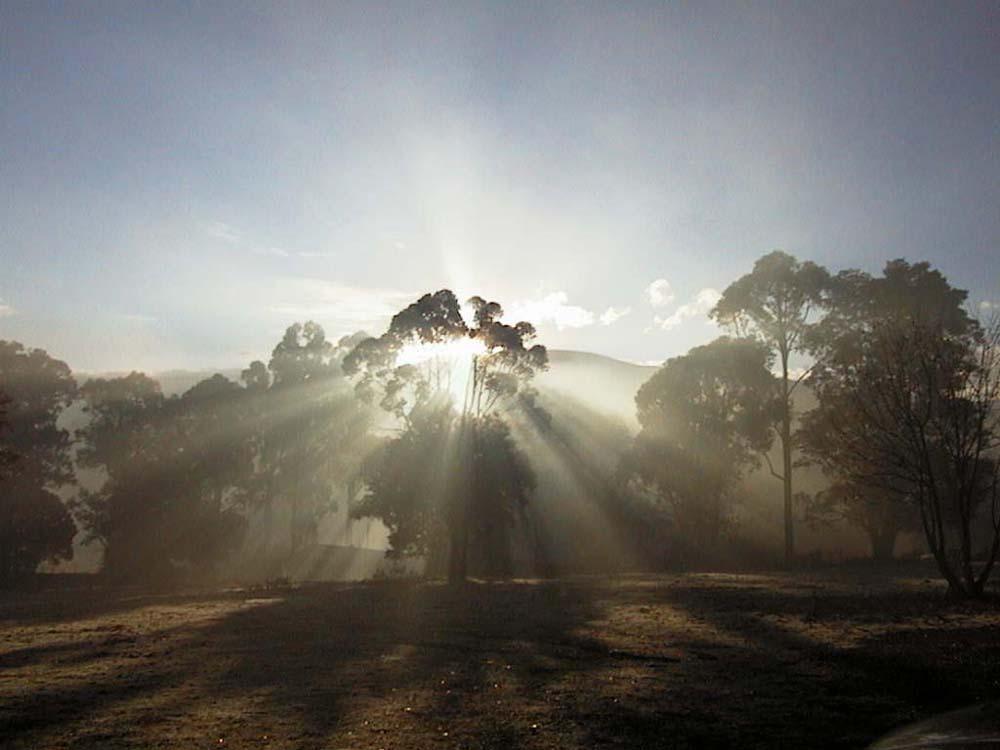
(Photo shows daybreak at Delderfield, Marysville, in country Victoria)


Waltzing With … Acacia

31 Sunday Aug 2014

Posted by A.O. in Waltzing with ...

≈ 9 Comments

Tags

english names, flower names, Greek names, historical records, name history, name meaning, name popularity, nature names, patriotic names, plant names, saints names, tree names

Floral Emblem Golden Wattle

Tomorrow is the official first day of spring, which means it is also Wattle Day. The Golden Wattle (Acacia pycnantha) is Australia’s official national flower, proclaimed as our floral emblem on September 1 1988, and marked by planting a Golden Wattle in the National Botanic Gardens by then Prime Minister’s wife, Hazel Hawke. Four years later, September 1 was officially declared National Wattle Day, and it is traditional to celebrate by wearing a sprig of wattle (any type of wattle; it doesn’t have to be Golden Wattle).

Long before that date, wattle had been an unofficial national flower by popular choice. A wreath or sprig of wattle appears on many official government documents, including the Commonwealth Coat of Arms, the Order of Australia, and the Governor-General’s crest. Our national colours of green and gold (so difficult to co-ordinate on sporting uniforms) are inspired by the green leaves and golden bloom of the wattle.

Wattle is a symbol of remembrance for us too. During World War I, mothers sent their sons sprigs of wattle as a reminder of all they were fighting for back home, and has been used to mourn and remember loss of Australian life, such as in ceremonies for the victims of the Bali bombings. You may have noticed that when the first victims of MH17 were brought to the Netherlands, the Australian Governor-General’s wife wore a sprig of wattle.

As early as 1838, Tasmania encouraged wearing Silver Wattle (Acacia dealbata) sprigs to celebrate the discovery of its island. In the nationalistic fervour which preceded Federation, a Wattle Club was founded by naturalist Archibald Campbell, promoting a Wattle Day demonstration each September 1. Outings into the bush to revel in the glories of an Australian spring were part of his plan, and patriotic Wattle Days continued to be celebrated until World War II.

Australian love of wattle has been satirised in Monty Python’s Flying Circus, with the immortal lines of the Australian philosopher Bruce: “This here’s the Wattle, the emblem of our land. You can stick it in a bottle, you can hold it in your hand.” These words have been used to promote a Wattle Day Festival in Victoria this year!

Acacia is the genus which contains wattle trees and shrubs. Its name, pronounced uh-KAY-shuh, comes from the Greek akis, “thorn”, because most acacia species outside Australia are thorny, although nearly all Australian acacias don’t have thorns. There are around 1300 species of acacia, and almost a thousand of them are native to Australia, with over 98% of these unique to Australia. The others can be found in all continents except Europe and Antarctica; they are particularly widespread in Africa, and were first observed by Europeans along the Nile River.

Acacia is not just an important symbol to Australia. According to Easton’s Bible Dictionary, acacia may have been the “burning bush” Moses encountered in the wilderness, and a table of acacia wood was part of the Tabernacle he built for the Ark of the Covenant. In Egyptian mythology, acacia is the Tree of Life, and in Christian tradition, the crown of thorns worn by Jesus Christ were made from acacia. Freemasonry uses acacia as a symbol of resurrection and immortality, while in Asia, acacia incense is believed to drive away ghosts and demons.

It’s powerful stuff. In fact, it is said that the first plant to bloom in Hiroshima after its bombing in 1945 was a wattle tree. Resurrection indeed! Every Wattle Day, Hiroshima’s Acacia Appreciation Society sends hundreds of yellow ribbons to the Australian National Botanic Gardens as a gesture of friendship and appreciation.

The name wattle comes from Old English, the word Anglo-Saxons gave to interlaced branches and twigs used to form fences, walls, and roofs. Wattle and daub is a construction technique, used since prehistoric times, for filling the spaces between the wattle with a combination of wet soil, clay, sand, animal dung, and straw, which is then allowed to dry until it hardens.

When British settlers to Sydney made their own wattle and daub buildings, they used acacia trees as the wattle, so gave the name to the plants. (I remember reading about wattle and daub houses in Neolithic Britain when I was in primary school history class, and wondering where they got the wattle trees from!). The uses of acacia are too many to list, but one worth mentioning is that Australian Aborigines often make boomerangs from its wood.

Wattles grow all over Australia, and are numerous in the desert, although uncommon in dense rainforest and alpine regions. In southern Australia, wattles tend to flower in springtime, while in the north, many species come into bloom in the autumn and winter. Because of this, it is said that on any given day in Australia, there will be a wattle blossoming somewhere.

Acacia has a long history as a personal name, for it is the feminine form of the Greek name Acacius. This comes from a different Greek derivation – akakia, meaning “without guile, innocent”. Byzantine emperors held a purple silk roll filled with dust called the akakia: it symbolised human mortality. There are several saints named Acacius, and quite a number of other notables from the early Christian era. Acacia has been a particular favourite amongst Spanish-speaking people, who bestowed it as a saint’s name.

Acacia came into use as an English name in the 19th century, when flower and plant names were the fashion. Golden and Silver Wattle was introduced to Europe in the mid-19th century; Silver Wattle became a great favourite in the south of France, where it blooms around Candlemas and is a harbinger of spring and golden sunshine. Outside Australia, wattle is often known as mimosa.

There are several people named Acacia in Australian records, going back to the mid-19th century, and it is almost certain their names were given patriotically – one is even named Acacia Golden, as if to signify Golden Wattle. Another is named Marginata Acacia; marginata is a species of eucalyptus tree. That reminds me that I saw a woman named Acacia Silver on the news, which reminded me of Silver Wattle: as she was an environmentalist, her name was so appropriate that I wondered if she’d chosen it herself.

In Australia, the name Acacia is around the 300-400s, while in England/Wales it is #1639 (18 babies last year), and in the US, 80 baby girls were named Acacia, the same number as ones called Adah, Jazlene, Legacy, Saoirse, Story, and Zarah. While Acacia isn’t a bizarre name in other English-speaking countries, it’s definitely far better known and higher-charting in Australia, which makes perfect sense. As with the trees, Acacia isn’t uniquely Australian, but is more widely found here, and has a particular meaning to us.

Wattles are perhaps not the most beautiful of trees – rather than being slender and elegant, or solid and imposing, most of them are short and scrubby. And yet when they come into bloom, there is no more cheering sight on a grey late winter’s day than their riotous mass of bright yellow fuzzy blossom. I cannot help but smile when I see a wattle tree in full fragrant bloom abuzz with bees, a promise of the sunshine that is soon to come. That’s why I have Golden Wattle as my avatar, and Silver Wattle decorating my blog: to keep me smiling every day.

Familiar without being common, the name Acacia has a rich and interesting history, and is a very patriotic choice. It evokes the beauty of spring and the Australian bush, it’s a remembrance for those we mourn, and rises from the ashes of death with new life and hope. Pretty and floral, bright and burning, silver and golden – could this sunshiney name hit your personal sweet spot?

POLL RESULT
Acacia received an excellent approval rating of 84%. 34% of people loved the name Acacia, and 30% liked it. Only 2% of people hated the name.

Waltzing with … Archibald

27 Sunday Jul 2014

Posted by A.O. in Waltzing with ...

≈ 11 Comments

Tags

adult name changes, aristocratic names, famous namesakes, Gaelic names, germanic names, honouring, name popularity, name trends, names of awards, nicknames, retro names, Scottish names

resize

The Commonwealth Games opened in Glasgow on July 23, so the blog is featuring a few Scottish names; today it’s Archibald. Everyone is talking about the cute Scottish terriers in tartan coats who stole the show at the Commonwealth Games Opening Ceremony, each one of them leading in a national team. I think it was a moment where we all went Awwwww ….

The Scottie dogs were perhaps the only ones whose outfits were not scrutinised, because everyone wants to see whose team uniforms are the best, and worst. Australia traditionally fails dismally in the fashion stakes, and this year we were true to form, sending our team in unpopular outfits which were criticised as looking like something home-made for a Star Trek convention.

I presume the Games Committee sent everyone a cover letter to let them know that Glasgow summers are usually mild, and can have the odd wet day. The Australian designer seems to have understood that as code for “you are entering a polar hell with perpetual torrents of rain”, as everyone was sent equipped with anoraks, woolly jumpers, scarves, snow hats, and who knows what else. As Glasgow is currently in a heatwave, this has led to well-deserved international derision.

But like good hosts, Scotland has saved us from being the worst-dressed team by tactfully showing up in a lurid tartan mixture of bright blue, turquoise, fuschia, navy, caramel and mustard. Thanks Scotland – now our green anoraks with lemon piping, lumpy lime green jumpers, and baggy pants are only second place for ugliest uniform.

The Games have got off to a good start for Australia – we’re currently on top of the medal table by a whisker, we’ve set several world records, and two of the Hockeyroos took a selfie with the queen in the background, and it went viral, so our horrible uniforms haven’t held us back.

Archibald comes from the Germanic elements ercan (“genuine”) and bald (“bold”), and usually translated as “truly bold”. The first part of it was altered to make it seem as if it was derived from Greek archos, meaning “master”.

The Normans introduced the name to Britain, and it quickly became popular in Scotland, where it was used to Anglicise the Gaelic name Gille Easbuig, meaning “servant of the bishop” (it’s also Anglicised to Gillespie). Archibald is a traditional name in the Clan Campbell, as their founder was named Gille Easbuig.

As you would expect, there are quite a few Archibalds in Scottish history, including the fearsome-sounding Archibald the Grim, a 14th century Earl of Douglas and Lord of Galloway. The most powerful magnate in Scotland, he stood in higher stead even than the king. Because of him, the name Archibald became traditional in the Douglas family as well.

The name Archibald is well known in Australia due to the Archibald Prize, which is awarded for portrait painting. It was founded in 1921 from a bequest from J.F. Archibald, the co-owner and editor of The Bulletin in the days of its greatest influence.

J.F. Archibald was an interesting character from a naming perspective – he was baptised John Feltham Archibald, but changed his name to Jules Francois (pronounced FRANK-wa). This was considered rather pretentious, and everyone just called him “Archie”. He also professed to be Scottish, part-French, and Jewish, when he was actually Irish Catholic, which likewise afforded his peers great amusement.

The Archibald Prize is known as “the face that stops the nation”, as it is Australia’s favourite art award. It’s very accessible, especially as many of the portraits are of celebrities, and gets a lot of coverage in the media. Many people are interested to know who wins the Archibald, and generally there is widespread criticism or condemnation for whoever the judges choose. Indeed, the Archibald has been almost continuously controversial, with several protests, disputes, and legal actions throughout its history.

The Archibald Prize also offers two categories that are judged by non-experts: the People’s Choice Award voted by the viewing public, and the Packing Room Prize, awarded by the staff who install the portraits in the gallery. These prizes are more likely to be awarded to portraits of celebrities. It is possible to win the main prize and the other categories, but that rarely happens, and nobody has ever won all three at once.

The Archibald is so famous that it has inspired two parallel art institutions. One of them is the Salon des Refusés (Salon of Rejects – shades of J.F. Archibald!), an exhibition showing works which have been rejected for the Archibald. The prize for this is a People’s Choice Award.

The other is the Bald Archy Prize, a spoof art competition for satirical portraits; the winner is supposedly chosen by a sulphur-crested cockatoo named Maude. Absurdist and irreverent, you can see the appeal to the Australian sense of humour; it’s an extremely popular art award, and heaps of fun. This year’s winner was a portrait of Mitchell Johnson in the guise of Miley Cyrus’ Wrecking Ball – a cheeky comment on his devastating performance in the Ashes.

The name Archibald was #57 in the 1900s, and left the Top 100 in the 1920s; it left the charts in the 1950s. However, since the late 2000s, Archibald has made a slight comeback, and managed to chart several times around the 400-500s. In 2010, there were 11 babies named Archibald in New South Wales, and in 2012, there were 7 babies named Archibald born in Victoria.

The reason for this mild revival? The short form Archie, which has been Top 100 since 2007, and is rising in popularity. If you want a long form for Archie, and you think Archer is too popular or too trendy or too modern or too surnamey, that pretty much leaves Archibald.

Once upon a time, Archibald was perhaps rather fusty – a great-grandfather name smelling strongly of mothballs. But with the revival of vintage names, discerning parents may think it’s time for it to be taken out of storage.

And why not? Archibald is a clunky yet strong name with a long history, and has an aristocratic image. It makes a great Scottish heritage choice, and also references one of Australia’s favourite cultural institutions. Honouring an Archibald in your family has never seemed so possible.

Archibald would look dignified on a CV, and even a possible future knighthood makes Sir Archibald rather pleasing. Yet what could be friendlier and more democratic than simple Archie or Archy for everyday use?

POLL RESULT
Archibald received an approval rating of 53%. 24% of people disliked the name, and a further 24% hated it. However, 20% of people loved the name.

(Photo of Scottish terrier at the Commonwealth Games opening ceremony from the Daily Record)

← Older posts
Newer posts →

Enter your email address to follow this blog

Categories

Archives

Recent Comments

A.O.'s avatarwaltzingmorethanmati… on Zarah Zaynab and Wolfgang…
Madelyn's avatarMadelyn on Zarah Zaynab and Wolfgang…
JD's avatardrperegrine on Can Phoebe Complete This …
A.O.'s avatarwaltzingmorethanmati… on Rua and Rhoa
redrover23's avatarredrover23 on Rua and Rhoa

Blogroll

  • Appellation Mountain
  • Baby Name Pondering
  • Babynamelover's Blog
  • British Baby Names
  • Clare's Name News
  • For Real Baby Names
  • Geek Baby Names
  • Name Candy
  • Nameberry
  • Nancy's Baby Names
  • Ren's Baby Name Blog
  • Sancta Nomina
  • Swistle: Baby Names
  • The Art of Naming
  • The Baby Name Wizard
  • The Beauty of Names
  • Tulip By Any Name

RSS Feed

  • RSS - Posts

RSS Posts

  • Celebrity Baby News: Melanie Vallejo and Matt Kingston
  • Names from the TV Show “Cleverman”
  • Can Phoebe Complete This Sibset?
  • Zarah Zaynab and Wolfgang Winter
  • Baby, How Did You Get That Name?
  • Celebrity Baby News: Media Babies
  • Celebrity Baby News: Adelaide Crows Babies
  • Celebrity Baby News: Chris and Rebecca Judd
  • Names at Work: Name News From the World of Business and Employment
  • Celebrity Baby News: Sporting Round Up

Currently Popular

  • Rare Boys Names From the 1950s
  • The Top 100 Names of the 1920s in New South Wales
  • Celebrity Baby News: Ross Stevenson and Sarah Fallshaw
  • The Top 100 Names of the 1940s in New South Wales
  • Arlo Robert Galafassi: A Son for Toni Collette and Dave Galafassi, a Brother for Sage Florence

Tags

celebrity baby names celebrity sibsets english names famous namesakes fictional namesakes honouring locational names middle names name combinations name history name meaning name popularity name trends nicknames popular names saints names sibsets surname names twin sets unisex names

Blog at WordPress.com.

Privacy & Cookies: This site uses cookies. By continuing to use this website, you agree to their use.
To find out more, including how to control cookies, see here: Cookie Policy
  • Subscribe Subscribed
    • Waltzing More Than Matilda
    • Join 517 other subscribers
    • Already have a WordPress.com account? Log in now.
    • Waltzing More Than Matilda
    • Subscribe Subscribed
    • Sign up
    • Log in
    • Report this content
    • View site in Reader
    • Manage subscriptions
    • Collapse this bar
 

Loading Comments...