• About
  • Best Baby Names
  • Celebrity Baby Names
  • Celebrity Baby Names – Current
  • Celebrity Baby Names – Past
  • Featured Boys Names
  • Featured Girls Names
  • Featured Unisex Names
  • Links to Name Data
  • Waltzing on the Web

Waltzing More Than Matilda

~ Names with an Australian Bias of Democratic Temper

Waltzing More Than Matilda

Category Archives: Famous Names

Famous Name: Roald

14 Wednesday Mar 2012

Posted by A.O. in Famous Names

≈ 6 Comments

Tags

famous namesakes, locational names, nicknames, Nook of Names, Norwegian names, Old Norse names, surname names, Viking names
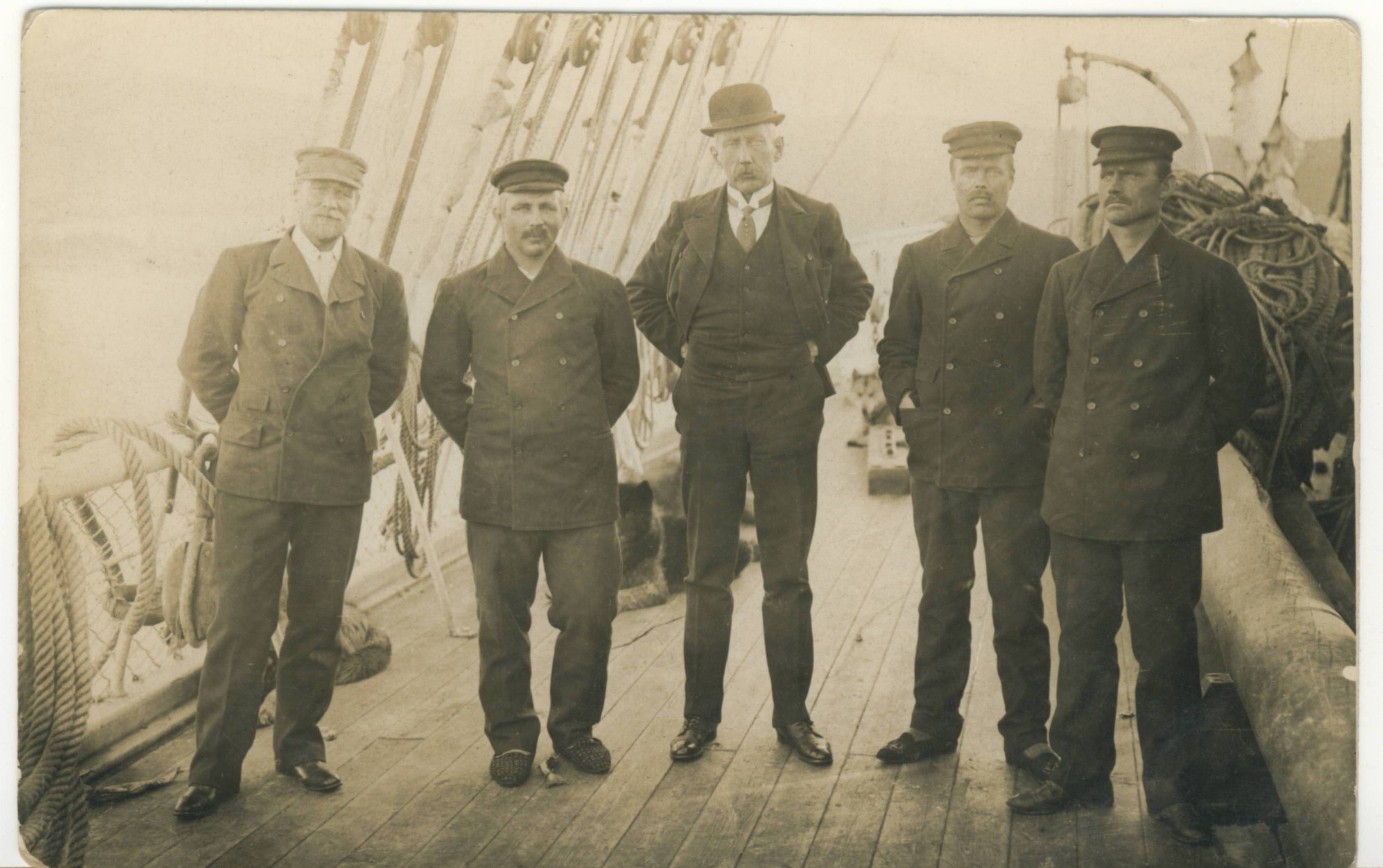
March 7 this year marked the centenary of an important event in history. One hundred years ago on this date, Norwegian explorer Roald Amundsen sailed into Hobart, having led the expedition which first reached the geographic South Pole, on December 14 1911.

You would think that such an achievement would be greeted with parades and brass bands as they disembarked, and the men of the expedition would be celebrating with wine, women and song. However, Amundsen and his crew behaved very mysteriously. The men remained on board their ship, the Fram, while Amundsen posed as an ordinary sailor, and booked himself into Hadley’s Hotel, where they gave him a crummy room and treated him like a tramp.

Roald Amundsen sent coded telegrams of his feat to his brother and the King of Norway, but had to maintain his silence. Under the terms of several media deals he had made, he couldn’t go public until the contracted newspapers in London, Paris, Berlin and Oslo had published their exclusive stories.

On March 10 he broke his silence, and the Hobart media learned to their chagrin that the biggest story in the world had been right under their noses, and they’d been pipped at the post by the European papers. The hotel suddenly couldn’t do enough for their guest.

Tasmania has always had a special relationship with Antarctica, being the last port of call before you reach the frozen wastes, and Hobart was a pivotal part of the great age of Antarctic exploration. Today it is a base for Australian and French supply ships, and the Institute of Marine and Antarctic Research is currently under construction on the city’s waterfront.

To celebrate Amundsen’s centennial, last weekend the city of Hobart re-enacted the historic moment that the Norwegian explorer sent that vital telegram, ending with the unveiling of a commemorative plaque at the General Post Office from whence the telegram was first sent. There was also a Huskies Picnic, with husky displays, and other Amundsen-related fun.

Roald is the modern form of the Old Norse name Hróðvaldr or Hróaldr, meaning “famous ruler”. These Viking names seem to turn up in the historical records fairly frequently, and a nobleman named Hróaldr is said to have been one of the first Norse settlers in Iceland. According to Kay at Nook of Names, it is one of the possible origins for the English surname Rowett, and it is also behind the English surname Rolston. Roald is a place name in Norway.

This name is quite familiar to most people because of the author Roald Dahl, who was born in Wales to Norwegian parents, and named after the polar explorer, Roald Amundsen. Although Roald Dahl wrote adult fiction, he is best known and loved for his children’s books, which have become modern classics.

Titles such as Charlie and the Chocolate Factory, Matilda, The Witches, James and the Giant Peach, and Fantastic Mr Fox have been enjoyed by children as both books and movies. There are very few children who are not delighted by the dark comedy of Mr Dahl’s storytelling; some of them may be heartened to learn that Roald Dahl was only an average student at school, and considered an atrocious writer.

I think this name sounds very strong and even heroic (Roald Dahl himself was a World War II fighter ace). The pronunciation is a slight issue, because the Norwegian way to say it is ROO-all, but the English way is ROE-ald. Either way, there is a danger of it becoming slurred into the word rule or rolled. You get a very Australian nickname, Roo, from the Norwegian pronunciation.

Whether you would like to honour a polar explorer, a popular author, Norwegian heritage, Viking ancestry, or a connection with Antarctic research, Roald seems an excellent and unusual choice.

(The photo is of Amundsen with his crew on board the Fram; he is the one in the middle wearing a bowler hat. The photo is held by the Nasjonalbiblioteket in Oslo).

Famous Name: Kylie

07 Wednesday Mar 2012

Posted by A.O. in Famous Names

≈ 12 Comments

Tags

Australian Aboriginal names, famous namesakes, fictional namesakes, Irish names, name history, name meaning, name popularity, name trends

Last weekend was the annual Sydney Mardi Gras Gay and Lesbian Street Parade, which for several years now has been held on the first Saturday in March. The parade is the culmination of a gay and lesbian festival, and combines political protest with a celebration of gay cultures and lifestyles, then ends with one enormous shindig that proves nobody can party like Sydney.

Recently-out Magda Szubanski was in attendance, looking pleased and slightly nervous, and the guest of honour at the post-parade Mardi Gras Party was pop diva Kylie Minogue, who last appeared at Mardi Gras fourteen years ago. Kylie waived her $16 000 appearance fee and performed for free.

Kylie began her career as a child actor, failed to join the Young Talent Time cast, as her sister Dannii did, then shot to fame playing teenage mechanic Charlene Edna Mitchell on soap opera Neighbours. Her wedding to Scott Robinson, played by Jason Donovan, attracted 20 million viewers in the UK. This was enough to take her to Britain to begin her career as a pop singer.

At first she was treated scornfully by the critics, and disdainfully labelled “the singing budgie” for being small and chirpy. However, she has become one of the British pop industry’s great survivors – constantly re-inventing her image to become a sex symbol, and from early on appreciatively embraced by the gay community as one of their icons.

She has overcome breast cancer, and at the age of 43, is regarded as Britain’s most powerful celebrity, and been named one of the 100 Hottest Women of All Time. She currently lives in London’s once fashionable Chelsea.

According to baby name books, the name Kylie means “boomerang” in an Aboriginal language, and if you are prepared to dig a little deeper, we are told that the word kylie comes from the Nyungar language from south-west Western Australia, and there are place names ending with -kylee to indicate that (for example, that a river is shaped like a boomerang).

However, a rival theory is that kylie refers not to a boomerang, but to the hunting stick, which isn’t curved and doesn’t come back, being used to bring down prey. I have certainly seen these hunting sticks being identified as kylies in texts over a century old, so this idea is hardly a new one.

Unfortunately for both these theories, when I consulted a Nyungar dictionary, the word kylie isn’t in it. A boomerang is called a kirli (KEER-lee), and a throwing stick is called a dowak. It would seem that kylie was a non-Indigenous slight corruption of the word kirli, which is very similar to the word for boomerang in the Walpiri language of Central Australia – karli.

I’m not sure how settlers confused dowak for kylie though; perhaps they misunderstood what the Aborigines were telling them, or lacked the cultural context to see that a boomerang and a throwing stick were two different tools.

It’s easier to understand why Australians of British descent latched onto it as a personal name in the 1950s and ’60s. It fit in so well with the trend for similar-sounding names of Irish origin, such as Kerry and Kelly that were also growing in popularity – a trend that is still going strong, as names such as Keeley, Keira, Kirra and Kirrily attest. Kylie just had that familiar “Australian sound”. It also seems to have increased the popularity of the male name Kyle.

The name Kylie first hit the charts in the 1950s, was Top 100 by the 1960s when Kylie Minogue was born, and peaked in the 1970s as the #2 name of that decade. By the 1990s it had left the Top 100, and in the last year or two has left the charts altogether.

The plummeting popularity of the name Kylie in the 1990s must surely owe something to comedienne Mary-Anne Fahey’s iconic character Kylie Mole from The Comedy Company sketch show. This befreckled, hoydenish schoolgirl, stuck in the permanent bad mood of adolescence, not only popularised the word bogan, but her second-best friend Rebecca appeared with her on the show, played by Kylie Minogue. Although she struck a chord with us youngsters, she gave the name Kylie a certain image that parents probably didn’t wish to bestow upon their daughters.

Famous Name: Kevin

29 Wednesday Feb 2012

Posted by A.O. in Famous Names

≈ 21 Comments

Tags

classic names, famous namesakes, international naming laws, Irish names, Mer de Noms, name history, name meaning, name perceptions, name popularity, name studies, saints names, The Name Station

Over at The Name Station, there is an article quoting two studies which demonstrate that Kevin is the worst possible name to have in Germany. For some reason, this name really gets up the noses of Central European schoolteachers and cyber-daters.

As it turns out, the Germans aren’t exactly Robinson Crusoe in this regard. According to Lou at Mer de Noms (niece of a Kevin), the French also look down their noses at the name Kevin, and say, Non, non, non! Across the Channel, Kevin is considered a chavvy (bogan) name, to the point where kev is a synonym of chav, innit?

And if we hop over the Pond, American TV shows such as Daria and South Park depict Kevins as either dumb jocks or disposable meaningless characters. Oddly enough, in the United States Kevin is disliked for the exact opposite reason as in Europe – far from being too lower-class and urban, Kevin is seen as too middle-class and suburban.

A persistent Internet rumour is that the name Kevin is banned in Mexico because it will lead to “teasing and ridicule”. Actually the Chihuahua state government forbids parents from using any non-Spanish name without a Spanish middle name, and for some reason, reporters always seem to use Kevin as an example, hence the confusion. That may say more about how the name Kevin is viewed by the reporters than how it is in Mexico.

Apparently vast tracts of the Northern Hemisphere are infected by an intense loathing of people named Kevin. Here, another group who has joined the We Hate Kevin Club is the Australian Labor Party Caucus, who on Monday morning voted against Kevin Rudd’s bid for the leadership, two votes to one. So much do they detest Kevin Rudd that they profess a preference to losing an election without Rudd than winning one with him.

Their vote in support of Julia Gillard is not so much a ringing endorsement of her leadership as it is a sign of their determination to vote for ABK – Anyone But Kevin.

Kevin Rudd was elected Prime Minister of Australia in a landslide victory in 2007, his supporters running with the slogan Kevin ’07. Soon his non-stop work ethic led to him being labelled Kevin 24/7, and his frequent diplomatic trips around the world Kevin 747. Some papers sneeringly called him Kevin 7-11 for catering to the public a little too readily, like a convenient corner shop, and rumour had it he was Kevin 007 – a double-agent leaking information that could damage his enemies.

However, his authoritarian work style and biting insults made him anything but loved by his Labor colleagues, who ousted him the minute his popularity slipped in the polls and replaced him with his Deputy, Julia Gillard. This was all done so quickly that Rudd supporters have some basis for seeing him as stabbed in the back, as happens so often in the workplace.

Since his dumping, there has remained the vague threat (or hope) that he would one day rise up and take back his power. When Julia Gillard’s own popularity plummeted to record lows, he suggested he might run for party leader (and thus Prime Minister).

Polls done in the lead-up to Monday morning’s ballot showed great public support for Kevin Rudd, with the majority of people preferring him to either Julia Gillard or Tony Abbot, the Opposition Leader. The Pro-Kevin lobby reached fever-pitch. He was treated like a rock star wherever he went, received messages from people all over the country in his support, and was proclaimed the People’s Prime Minister. However, the people’s support is useless without the support of your party. That’s politics.

Maybe the Germans, the French, the British, the North Americans, and possibly the Mexicans can’t stand Kevin, but it seems Australians are pretty okay with it. We elected a Kevin Prime Minister, even though Dame Edna Everage expressed some doubts about the idea (she was probably catering to the anti-Kevin prejudices of her chiefly British audience). And even though he’s gone, he was never voted out, and clearly a sizeable chunk of the population would like him back.

The media love the name Kevin as well – it’s so useful for catchphrases and headlines. Not only Kevin ’07, Kevin 24/7, Kevin 747, Kevin 7-11 and Kevin 007, but also in the headlines were Kevingate, The Kevinator, Good Heaven’s It’s Kevin, Kevin Heaven, Kevin in Heaven, A Kevinly Sign from Above, Knocking on Kevin’s Door, and Kevenge (an act of revenge committed by someone named Kevin).

Australians have never had problems with names of Irish origin (as the list of Famous Names is starting to make pretty obvious). Kevin is the Anglicised form of the Irish name Caoimhin, a form of the older Cóemgein, which can be translated as “gentle” or “handsome”. Saint Kevin is the patron saint of Dublin, and is sometimes called the Irish St Francis of Assisi for his love of animals and nature. According to legend, an angel turned up at his baptism and instructed that he should be called Kevin, which the bishop naturally felt obliged to go along with. Maybe Kevin truly is a name from heaven? (A more plausible tale is that his name was bestowed upon him by fellow monks in tribute to his sweet nature).

In Australia, Kevin is a classic name which has never left the charts since record-keeping began in 1900. It first joined the Top 100 in the 1910s, and peaked in the 1930s at #6. It remained a Top 100 name for nine decades until the early 2000s, when it just dipped out at #101. Currently it’s #154.

In Queensland, which is Mr Rudd’s home state, there were twice as many babies named Kevin last year than babies named Julia, his deposer. And I have noticed in the birth announcements how common Kevin is as a middle name for boys.

Are they being named after a father, an uncle, a grandfather … or a lost Prime Minister who may still return, like the once and future king? Rudd Redux?

NOTE: Kevin is a Top 100 name in at least nine different countries, two of which, France and the United States, supposedly despise it. Go figure. Maybe this whole anti-Kevin thing is a beat-up.

Famous Name: Gunner

22 Wednesday Feb 2012

Posted by A.O. in Famous Names

≈ 8 Comments

Tags

dog names, english names, famous namesakes, military terms, scandinavian names, slang terms, stage names, vocabulary names

Sunday February 19 marked the 70th anniversary of the bombing of Darwin by the Japanese. Both the first and the single largest attack against Australia by a foreign power, it is often referred to as “Australia’s Pearl Harbor”. However, Darwin was bombed more heavily than Pearl Harbor, and almost 100 air raids were to follow. Numbers of the dead are disputed, but the official toll is just under 300, with maybe 300 to 400 injured. Amongst the casualties were men on the USS Peary, whose memorial President Obama visited in Darwin last year.

One of the lesser-known heroes of the Darwin air raids was a young black and white kelpie, who was found distressed and with a broken leg under a bombed mess hut on February 19 1942. He was taken to a field hospital, and immediately inducted into the Australian Air Force so that he could receive medical treatment. He was named Gunner, and given the serial number 0000.

Leading Aircraftman Percy Westcott, one of two men who found Gunner, became the dog’s master and handler. I think Gunner was just expected to be a pet and a mascot for the air base, and probably a much-needed distraction for the men. However, about a week after he came to live with them, Gunner began to demonstrate his remarkable hearing skills.

Time and time again, Gunner would whine and jump whenever he heard Japanese aircraft approaching. Long before the air raid siren sounded, Gunner would become agitated and head for shelter. He was able to warn Air Force personnel that the Japanese planes were coming up to 20 minutes before they appeared on the radar, and was so reliable that Percy was given permission to sound an alarm whenever Gunner gave his signal.

You’d think that living on an airbase, Gunner would soon get used to the sound of planes taking off and landing, but he only behaved like this when he heard Japanese planes – Allied ones didn’t faze him at all.

Gunner was accepted as a full member of the Air Force: he slept under Percy’s bunk, showered with the men, attended the movies with them, and regularly went up with pilots during practice flights.

Percy was posted to Melbourne 18 months later, and Gunner remained with the RAAF in Darwin, being cared for by the Air Force butcher, who had access to plenty of meat to feed Gunner. It’s not known what happened to Gunner when the war ended; I hope he lived a long happy life.

In the Air Force, the gunner is the person who operates the machine gun or cannon during air battles, although a Gunner is also any non-commissioned member of the air force in a Regiment. It’s often used as a slang term in several different ways, including in sport – for example, the word Gunner describes a certain specialist in gridiron, and the Gunners is a nickname for Arsenal Football Club. Gunners is also slang for a fans of the rock band Guns ‘n’ Roses.

Gunner has been used as a stage name in professional wrestling, such as by Gunner Scott (real name Brent Albright). It also sounds like the Scandinavian name Gunnar, which combines the elements for “war” and “warrior” together, to sound extra-warlike.

I’m not sure I would have suggested this as a possible baby name, except that I saw a baby called Gunner Phoenix in an Adelaide birth announcement last month.

I can see this as a wonderful way to honour a military connection in a family. Gunner sounds all boy … although according to some people, it sounds all dog! But we have established that the line between dog and human names has become increasingly blurred, and if you were going to give your baby the name of a dog, then what cooler canine than an Australian kelpie who became a wartime hero?

(Gunner’s story appears in the book Animal Heroes, by Anthony Hill. Photo of Gunner with Percy held by the Australian War Memorial)

Famous Name: Magda

15 Wednesday Feb 2012

Posted by A.O. in Famous Names

≈ 7 Comments

Tags

Aramaic names, famous namesakes, hebrew names, name history, name meaning, nicknames, saints names

Yesterday was Saint Valentine’s Day, a day for thinking about love and marriage, and for declaring your true feelings. It was the day that film and TV star Magda Szubanski chose to come out on national television and identify herself as “absolutely gay” to Channel 10’s The Project.

Although her family, friends and colleagues have known this for a long time, it has never before been made public knowledge. It was obviously something important that would make her decide to share this aspect of her life with the public after so many years, and in a statement to newspapers yesterday in support of Australians for Marriage Equality, Magda made an impassioned plea for gay marriage to be legalised.

“The law means that you could be a serial killer and have killed all of your spouses and yet you would still be considered fit to marry,” she said. “But if you are gay, then you are not worthy of these same rights.”

Her “coming out” comes a day after two separate bills to legalise same-sex marriage were introduced in federal parliament. Magda made it clear that she is currently single, and not expecting to get married any time soon.

Now aged fifty, Magda has been delighting audiences since her university days. A gifted comedienne, she created a number of memorable characters for television sketch shows such as ditzy sports reporter Pixie-Anne Wheatley, heavily made-up infomercial saleswoman Chenille, penny-pinching whiskey-swilling Scot, Mary Macgregor, and vile mother Lynne Postlethwaite.

On the popular sit-com Kath and Kim, Magda played netball nerd, Sharon Strzelecki, who was often the butt of her friend Kim’s jibes. As well as hosting several of her own shows, Magda has had roles in Hollywood films such as Babe, Happy Feet and The Golden Compass, and sci-fi TV show Farscape. The public have voted her Most Popular Comedy Personality three times at the Logie Awards, and she has won an AFI Award for her role on Kath and Kim.

In 2003 and 2004 she was voted the most recognisable Australian personality, which helped her become spokesperson for a number of companies, most recently, weight-loss company Jenny Craig, through which she lost 36 kg. Despite being overweight, she has always been a strong and energetic person who enjoys being active.

The Australian public love her for her quick wit, sense of fun, and lively personality, her enormous smile that lights up her face and her big loud infectious laugh. We love her most when she is unselfconsciously being herself, and Magda has been overwhelmed by the public support she has received since coming out yesterday.

Magda’s name is short for her full name Magdalene, which is the title of Saint Mary Magdalene. Mary Magdalene was a very important disciple of Jesus in the New Testament, and the only person privileged to first see the arisen Christ. The Catholic church places her on a short list of saints declared to be “equal to the Apostles”.

Traditionally, her name is said to mean that Mary came from the village of Magdala, which means “tower, fortress” in Hebrew. However, in Aramaic magdala means “high, great, magnificent”, so it’s possible her name was supposed to be “Mary the Great”. I have also seen the suggestion that the name was meant to denote that physically Mary Magdalene was taller than average.

Magda is a pet name commonly used in central and eastern Europe, and although she was born in England and her mum is Scottish, Magda’s father is from Poland, and was in the Polish Resistance during World War II.

Magda is a strong and beautiful name which has cultural ties to Europe, and honours one of the most prominent early Christian women. It also has the familiar nicknames Maddie and Maggie. However, like Edna and Ita, Magda Szubanski is very famous and has such a distinctive name that we would know her from her first name alone. Does her fame overpower the name, I wonder?

Short news report on Magda’s announcement:

http://www.youtube.com/watch?v=uyQaM0hvgSI

Famous Names: Ita and Cleo

08 Wednesday Feb 2012

Posted by A.O. in Famous Names

≈ 16 Comments

Tags

celebrity baby names, famous namesakes, Greek names, Irish names, nicknames, popular culture, saints names, unisex names

The Australian Academy of Cinema and Television Arts was established last year as a subsidiary of the Australian Film Institute; its job is to administer the AACTA Awards, which replace the old AFI Awards. Every news report on television seemed to feel it necessary to point out that AACTA is said just like the word actor, which I think most of us would have understood without help, seeing as they just said it aloud to us.

The Australian Academy has been deliberately set up in a similar way to the American Academy of Motion Picture Arts and Sciences, and the awards ceremony has been moved to late January, in order to fit in with the prize-giving season in the United States, which holds the Golden Globes and the Academy Awards in January and February. The AACTA Awards ceremony has been moved to Sydney and held at the Opera House, possibly because that seems more Hollywood than Melbourne. The AACTA statuette has also been remodelled, with some commenting that it looks like a flamboyant Australian Oscar.

Amongst the prize-winners was Asher Keddie, who won the Switched on Audience Choice Award for Best Performance in a Television Drama, for her role as Ita Buttrose in the mini-series Paper Giants: The Birth of Cleo. I must confess to not voting in this contest, or even knowing it existed until too late (obviously I’m not a very switched on audience member), but I do approve of the choice, as I thought Ms Keddie did an excellent job of portraying famous editor, Ms Buttrose.

Ita Buttrose, like Barry Humphries and Father Bob, is another super septuagenarian. She was named after her maternal grandmother, Ita Clare Rodgers (nee Rosenthal). Her ambition since the age of 11 was to be a journalist, and she began working as a copy girl at 15. Ita was a force in the Australian media for many years, including as youngest editor of The Australian Woman’s Weekly, the largest magazine in Australia. She became the first woman to edit a major metropolitan newspaper, the Daily Telegraph. Always perfectly presented, cultured and refined, she is instantly recognisable for her trademark lisp. She’s been granted several awards and honours, and supports a multitude of causes, from AIDS to Alzheimer’s. Ita is also an author of many practical books; her latest is a guide to etiquette.

Ita (IE-ta) is an Anglicisation of the Irish name Íte (EE-ta). Saint Ita of Killeedy was a 6th century Irish nun who headed a community of women. One of their tasks was to run a school for small boys; among her students was Saint Brendan the Navigator. According to tradition, Ita was of royal blood and baptised Deirdre; the name Ita she chose herself from the Old Irish word ítu, “thirst”. This was to signify her thirst for divine goodness. Today it sounds mildly vampiric.

Ita Buttrose became the founding editor of Cleo magazine in 1972, and made it an instant success – the first edition sold out in two days. Cleo was something new in Australian publishing: a magazine for women that spoke openly about sexuality. There were articles on masturbation, abortion, contraception and sex toys, and a nude centrefold – the first model for the centrefold was actor Jack Thompson. It made the sexual revolution accessible to the average woman. In Paper Giants, the title Cleopatra is suggested for the magazine, as befitting a strong yet sexual woman, but Cleo is chosen because it fits better on the masthead. It intrigues me that Cleo sounds similar to Ita’s middle name – Clare – and wonder whether she unconsciously selected a title that sounded like her own name. Cleo is also the name of Ita’s pet dog (Clare is her grand-daughter).

Cleo is usually thought of as being a short form of Cleopatra, but it can be short for any name beginning with Cleo-, such as Cleophas. It is therefore a unisex name, and there are several prominent men named Cleo, including American motorcyclist and World War I flying ace Cleo Pineau. The father of Elizabeth Short, the Black Dahlia murder victim, was named Cleo. It is from the Greek for “glory, fame, pride”. This gorgeous little name is right on trend for o-enders, and was also a celebrity baby name last year. It would make a great alternative to popular Chloe.

Famous Names: Michael and Jane

04 Saturday Feb 2012

Posted by A.O. in Famous Names

≈ 9 Comments

Tags

angel names, english names, famous namesakes, hebrew names, name history, name meaning, name popularity, Old French names, saints names

It’s been a satisfying summer of test cricket for Australia, as we convincingly trounced India in all four matches. One nice thing is that we played on January 26, which is not only Australia Day, but also Independence Day in India, so we shared our national days.

One of the highlights was team captain Michael Clarke scoring a triple hundred, modestly declaring on 329, just a few runs shy of Don Bradman’s top score of 334. It was the 100th test match to be played at the Sydney Cricket Ground, and Clarke’s score was both the highest ever in an Australia vs India test series, and the highest ever at the SCG. He followed up the triple century with a double century in Adelaide.

The name Michael is from Hebrew, and is translated as “who is like God?” – a rhetorical question with the obvious answer of “No-one is like God”. It is therefore a symbol of humility. In the Bible, Michael is an archangel, and very important in both Jewish and Christian traditions. In the Old Testament, he is said to be the protector of Israel, and in the New Testament Michael is the leader of the angelic hosts who defeat Satan in a war in Heaven. Michael is also mentioned in the Koran.

Michael is venerated as a saint in the Roman Catholic and Eastern Orthodox faiths; he is a patron of the military and also the sick and suffering. Some Protestant denominations believe he is identical with either Jesus or Adam. He has made a number of apparitions, including, according to legend, at St Michael’s Mount in Cornwall, and Mont Saint Michel in Normandy.

Michael has long been popular in Ireland (it’s currently #12 there), and considered to be a typically Catholic name – so much so that Mick is disparaging slang for a Roman Catholic of Irish descent.  We also say taking the Mickey or taking the mick, which is Cockney rhyming slang from “Mickey Bliss” ie “taking the piss” (to tease or mock).

Michael is a classic name which has never been out of the Top 100. It was #44 in the 1900s, reached its lowest point in the 1920s at #66, peaked in the 1970s at #1, and is currently #38.

Unbelievably, as Michael Clarke hit his record-breaking triple century, he had no sponsorship on his bat, having just been dumped by a cash-strapped Dunlop Slazenger. The only markings on his bat were promotional stickers for Jane McGrath Day, or Pink Stumps Day.

Jane McGrath was the first wife of former cricket player Glenn McGrath; an English air hostess prior to marriage, she became an Australian citizen on Australia Day 2002. That was the same year she and Glenn founded the McGrath Foundation to raise money for breast cancer. She died in 2008 after battling breast cancer for more than a decade; she was 42 years old.

The McGrath Foundation has raised more than $12 million, and the third day of the first test match at the SCG each year is Jane McGrath Day. The stands are filled with tens of thousands of fans wearing pink to show their support, many guys sporting Real Men Wear Pink signs, and over a million dollars is expected to be raised by cricket clubs.

Jane is a feminine form of John, an Anglicisation of Old French Jehanne. Although in use since the Middle Ages, it only became the standard form in the 17th century after being taken up by the aristocracy; until then, Joan was the more common name. Plain Jane is 20th century slang for an average or ordinary looking woman, which must have irritated many a Jane over the years.

Jane peaked in the 1960s at #33, was out of the Top 100 by the 1990s, and quite recently dropped off the rankings altogether. Its real success is probably as a middle name.

Note: Michael Clarke later gained sponsorship by a little-known sporting goods company from Wollongong named Spartan.

Famous Name: Bob

31 Tuesday Jan 2012

Posted by A.O. in Famous Names

≈ 4 Comments

Tags

celebrity baby names, famous namesakes, name meaning, name trends, nicknames, palindromic names, vocabulary names

Last Sunday, Father Bob Maguire said his final mass at the church of Sts Peter and Paul’s in South Melbourne. At the age of 77, after nearly 40 years of service, he was forced to leave by the Catholic Church, which quotes canon law stating the official retirement age for priests is 75. He and his black standard poodle, Franklin, are temporarily homeless. At 77, Barry Humphries is awarded UK Australian of the Year; at the same age, Father Bob gets the boot.

Father Bob Maguire is one of the most famous and popular Catholic priests in Australia, and has devoted his life to helping others. His compassion, mischievous humour, bluntness, and eccentricities have made him loved by people from all religions, and none.

He has founded four charities, now amalgamated into the Father Bob Maguire Foundation, and inspired by a revolutionary approach to social justice. The Foundation’s workers are called The Bob Squad, and they care for the poor, the destitute, the homeless, and the mentally ill. Their catch cry is Viva la Bob!

Father has received an Order of Australia, and last year was named Victorian of the Year. Everyone thinks he’s super, except, apparently, the Catholic Church. Despite his massive popularity, Bob believes that the powers that be in the church hierarchy find him too much of a headache, because he has an unconventional approach to parish life which had him branded a maverick.

Some reasons the Church may have felt teased by Father Bob:

  • He put up a memorial on the parish front lawn to people who had died from drugs
  • He didn’t lock the church, because no matter how much stuff got stolen, he wanted it to be always available
  • People with mental illness or social problems were welcomed to church services
  • The collection plate was taken up by kids on roller skates
  • He gave the Occupy Melbourne protesters sanctuary
  • He said he would be happy to perform gay marriages in the church if that was legal
  • He publicly disagreed with the church’s ruling that secular songs not be permitted at Catholic funerals
  • Last year as an April Fool’s Day joke, he claimed that his church would be instituting “drive through confessionals” in order to keep pace with modern life
  • He has co-hosted a non-denominational religious TV programme with slightly controversial Jewish comedian John Safran
  • He finds parallel universes much more interesting to think about than life after death
  • When asked what Jesus might do if he were alive today, he quipped, “Get back in the tomb”

More than 1000 people attended Father Bob’s last mass, and many of them will not come to church again, because only Father Bob could make sense of it all for them. However, although he no longer has a church, he sees his Foundation as a “parish without borders”, and is also reaching people through his website, blog, Twitter, and his weekly radio spot on youth radio station Triple J.

I don’t presume to the theological qualifications which can judge whether Father Bob is a good Christian or not, but I do know he is a great Australian. And that (for the purposes of this blog) is more important.

Bob is a pet form of the name Robert, meaning “bright fame”. The old-fashioned nicknames for Robert were Hob, Dob and Nob, and Bob is a continuation of this trend to rhyme a name with others.

Bob is not only a palindrome, but also a vocabulary word. To bob means to “to move up and down”; it’s also the name for a short haircut, and pre-decimal slang for “a shilling” – a word still used by many older folk.

It’s well on trend as part of the vogue for 1930s nicknames, such as Bill, Joe, Sid, Dan and Jim. Knowing they will never call their child by a full form of the name, and loath to saddle them for life with a cutesy name like Billy, Joey or Danny, parents are opting for the simple monosyllabic nickname as an unpretentious choice.

As a middle name, Bob has even been used on a celebrity baby – name-fussy radio host Hayley Pearson called her son Austin Bob.

Famous Name: Edna

28 Saturday Jan 2012

Posted by A.O. in Famous Names

≈ 14 Comments

Tags

Biblical names, famous namesakes, fictional namesakes, hebrew names, Irish names, mythological names, name history, name meaning, name popularity, saints names

Each year on Australia Day, an Australian of the Year is chosen from amongst our highest achievers. The United Kingdom also chooses its own Australian of the Year, and we seem to send them so many people that there are plenty to choose from.

This year the winner was Barry Humphries, who, at the age of 77, accepted his award with the words, “It’s about time, really”.

Barry Humphries has created many comedy characters: vulgar Sir Les Patterson; gentle Sandy Stone; underground film-maker Martin Agrippa; sleazy trade unionist Lance Boyle; and failed tycoon Owen Steele, amongst others. But the most famous and successful is Dame Edna Everage.

Edna began in the 1950s as the average Melbourne housewife, and if she had stayed that way, would soon have become as quaint and irrelevant as a comic char or a music hall “turn”. The genius of Dame Edna is that she has continued to re-invent and update herself, whilst never losing the integrity of the character or even the back-story which accompanies her.

From her humble beginnings, she has evolved into a glamorous Gigastar, icon and diva in an ever-more extravagant wardrobe , while retaining the trademark wisteria-coloured hair, cats-eye spectacles, bunches of gladioli and cheery “Hello, possums!” greeting.

I feel her evolution owes a certain debt to Lady Thatcher at the the height of the powers – in particular the almost limitless self-confidence and meaningless charm, combined with an iron determination to remain “nice”.

Edna is a vehicle for Humphries to utilise his powers of satire against the cult of celebrity and modern vapidity, but also to make sly jests at the expense of his friends, and take gentle stabs at his enemies; sometimes, perhaps, even to slip in his real opinions on issues that he only dares to offer in the guise of Edna. As a result, you are never quite sure what Edna will say, and this glittering unpredictability is part of her fascination. It goes without saying that many of her sharpest barbs are aimed accurately at Australia.

Barry Humphries called his creation Edna after his childhood nanny, and Everage of course is the word average said in an Australian accent (or at least an Australian accent of the 1950s). Edna peaked in the 1910s in Australia, so in the 1950s she was supposed to be middle-aged, although by now the name sounds elderly – in fact, Edna must be nearing a century by now.

Edna is the name of several women in the Biblical apocrypha, including the wife of Methusaleh. It’s a Hebrew name translated as “pleasure”, and some believe the name for Eden comes from the same source, as if it was one of the “pleasure gardens” of the ancient Middle East.

However, in Ireland it has been used to Anglicise the name Edana; St Edana is an obscure saint from the west of Ireland. She may be linked to or named after a goddess called Eadaoin (AY-deen), and although it’s not at all certain, this name may be a feminine linguistic relative of Aidan.

In Australia, the Edana connection is far more likely as a source for Edna, as obscure Irish names are more common here than obscure Biblical ones.

Call me crazy, but I think if it wasn’t for La Grand Dame, Edna could be coming into vogue now, as others from her era have. It’s not too different from Edith, Edie and Eden, which are getting quite fashionable, it may be related to popular Aidan, and could ride on the back of Ed- male names, such as Edward and Eddie.

I won’t try to suggest Edna, but could I interest anyone in an Edana?

Famous Name: Australia

26 Thursday Jan 2012

Posted by A.O. in Famous Names

≈ 17 Comments

Tags

english names, holiday names, Latin names, locational names, name history, name meaning, rare names, unisex names

FAMOUS PLACE
Today is Australia Day, which commemorates the landing of the First Fleet in Sydney Cove on January 26 1788. The date was first celebrated by emancipated convicts and their families, who had grown to love their new land, and identified themselves as Australian rather than British. It was the popular Governor Lachlan Macquarie who first declared it an official holiday in New South Wales.

When you think about it, it’s a funny date to choose for our national public holiday, because the landing of the First Fleet wasn’t the foundation of Australia, or even the foundation of Sydney or New South Wales (which took place on February 7 1788). It would be more logical to celebrate Federation Day, the day in 1901 when all the colonies were united, and we were given the right to self-govern – our Independence Day, in fact.

Unfortunately, the worthy bureaucrats who helped forge us into one nation chose the most bureaucratically sensible day to begin our independence – January 1. Apparently they never thought we might have something else to celebrate on that date: a little thing called New Year’s Day.

Despite other days being suggested, in the end we stuck with January 26, and by 1935, it had been called Australia Day. It wasn’t until 1994 that it was accepted by all state and been made a national public holiday.

It’s the biggest celebration in Australia, but is also a controversial one, as it is a celebration of European arrival in Australia – a narrative which ignores our Indigenous history and culture. Let’s hope we can find a way to make Australia Day a holiday to bring us all together and include all Australians.

NAME INFORMATION
Even before anyone knew Australia existed, there was Terra Australis Incognita (Latin for “unknown southern land”). The ancients hypothesised that there must be a land mass in the south to balance all the land in the north.

This idea persisted into the Renaissance, and it began showing up on maps as Terra Australis or Australia, even though it was fictitious. Travellers’ tales of actually reaching this land, or at least seeing it in the distance or hearing about it down the pub, resulted in the British government ordering Captain James Cook to investigate.

It was discovered that this mammoth land-mass, envisaged as stretching from South America and including Antarctica, just didn’t exist. There were lots of small countries and islands, and there was Australia, which is biggish, but by no means a great super-continent covering most of the southern hemisphere. Being the biggest thing they managed to find, it was decided the place we live now must be Terra Australis, or at least be given the name of that legendary land.

It was explorer Matthew Flinders who pushed for the name Australia as early as 1804, and in his charts, notes that the sound of Australia “is more agreeable to the ear”. The term gradually caught on, and once again the enlightened Lachlan Macquarie stepped in, and recommended that the name be formally adopted, which the British Admiralty agreed to in 1824. (You can see why the name Lachlan has prospered).

Australia has been occasionally used as a personal name since the 19th century, and has been nearly always given to girls – as a middle name it is more gender-flexible. It is very rarely given to babies today, even in the middle.

In Australia the name would have been bestowed for patriotic reasons, while in other nations it is not possible to be certain that the name had anything to do with the country at all. In Latin America, for example, the name could have been given simply from the Spanish or Portuguese for “southern”, while in the US it could have at least sometimes been from the Latin for “south”.

Australia is probably the most patriotic name you could choose, and it certainly makes a statement. It’s a part of history – not just our history, but world history and ancient history. It was chosen by Lachlan Macquarie and judged aurally pleasing by Matthew Flinders. It has classical etymology, and it’s a name for a nation that rose out of legend.

← Older posts
Newer posts →

Enter your email address to follow this blog

Categories

Archives

Recent Comments

A.O.'s avatarwaltzingmorethanmati… on Zarah Zaynab and Wolfgang…
Madelyn's avatarMadelyn on Zarah Zaynab and Wolfgang…
JD's avatardrperegrine on Can Phoebe Complete This …
A.O.'s avatarwaltzingmorethanmati… on Rua and Rhoa
redrover23's avatarredrover23 on Rua and Rhoa

Blogroll

  • Appellation Mountain
  • Baby Name Pondering
  • Babynamelover's Blog
  • British Baby Names
  • Clare's Name News
  • For Real Baby Names
  • Geek Baby Names
  • Name Candy
  • Nameberry
  • Nancy's Baby Names
  • Ren's Baby Name Blog
  • Sancta Nomina
  • Swistle: Baby Names
  • The Art of Naming
  • The Baby Name Wizard
  • The Beauty of Names
  • Tulip By Any Name

RSS Feed

  • RSS - Posts

RSS Posts

  • Celebrity Baby News: Melanie Vallejo and Matt Kingston
  • Names from the TV Show “Cleverman”
  • Can Phoebe Complete This Sibset?
  • Zarah Zaynab and Wolfgang Winter
  • Baby, How Did You Get That Name?
  • Celebrity Baby News: Media Babies
  • Celebrity Baby News: Adelaide Crows Babies
  • Celebrity Baby News: Chris and Rebecca Judd
  • Names at Work: Name News From the World of Business and Employment
  • Celebrity Baby News: Sporting Round Up

Currently Popular

  • Rare Boys Names From the 1950s
  • The Top 100 Names of the 1940s in New South Wales
  • Girls Names From Stars and Constellations
  • Celebrity Baby News: Jacinta Allan and Yorick Piper
  • Celebrity Baby News: Livinia Nixon and Alistair Jack

Tags

celebrity baby names celebrity sibsets english names famous namesakes fictional namesakes honouring locational names middle names name combinations name history name meaning name popularity name trends nicknames popular names saints names sibsets surname names twin sets unisex names

Blog at WordPress.com.

Privacy & Cookies: This site uses cookies. By continuing to use this website, you agree to their use.
To find out more, including how to control cookies, see here: Cookie Policy
  • Subscribe Subscribed
    • Waltzing More Than Matilda
    • Join 517 other subscribers
    • Already have a WordPress.com account? Log in now.
    • Waltzing More Than Matilda
    • Subscribe Subscribed
    • Sign up
    • Log in
    • Report this content
    • View site in Reader
    • Manage subscriptions
    • Collapse this bar
 

Loading Comments...