
• About
  • Best Baby Names
  • Celebrity Baby Names
  • Celebrity Baby Names – Current
  • Celebrity Baby Names – Past
  • Featured Boys Names
  • Featured Girls Names
  • Featured Unisex Names
  • Links to Name Data
  • Waltzing on the Web

Waltzing More Than Matilda

~ Names with an Australian Bias of Democratic Temper

Waltzing More Than Matilda

Tag Archives: Roman names

Boys Names from Video Games

17 Sunday Apr 2011

Posted by A.O. in Name Themes and Lists

≈ 10 Comments

Tags

Anglo-Saxon names, animal names, Arabic names, aristocratic titles, astronomical names, bird names, celebrity baby names, controversial names, english names, famous namesakes, fictional namesakes, Greek names, hebrew names, Irish names, Japanese names, Latin names, mythological names, name history, name meaning, name trends, names from video games, nature names, nicknames, Roman names, slang terms, Spanish names, surname names, tree names, unisex names, vocabulary names

This post was first published on April 17 2011, and heavily edited on April 23 2015.

Altair
Altaïr Ibn-La’Ahad is the protagonist of the first game in the Assassin’s Creed series. Born in the Holy Land in 1165 to an Arabic Muslim father and Italian Christian mother, he joins the medieval secret society of the Assassins. Due to his superior abilities, he quickly gains the title of Master Assassin, but Altaïr becomes overconfident and arrogant, and must be taken down a peg or two. He goes on to have further adventures in later games. Mysteriously cloaked and hooded, he is dark, rather handsome, and has an intense expression. Altair is Arabic for “the flying eagle”, and it is the name of the brightest star in the Aquila constellation. It is pronounced al-TAH-yir, but English-speakers will probably prefer al-TARE instead, and this pronunciation is accepted by astronomers as equally correct. Not only an extremely popular name for people and places in video games, Altair is commonly used to name aeroplanes and rockets too, adding to its flighty, space-age image.

Ash
Ash Ketchum is the main protagonist of the Pokémon (“Pocket Monsters”) series; a ten-year old boy with shaggy dark hair covered by a baseball cap, brown eyes, and a snub nose. A true Pokémon obsessive, he always has a fanatical look in his eyes. He has no other interests apart from Pokémon, and only makes friends with children and adults who share his hobby. His original Japanese name was Satoshi (“clear-thinking, wise”), after creator Satoshi Tajiri. The character is based on Tajiri’s memories of himself as a child, when he was a keen insect collector. The English name Ash was taken from one of the possible default names that can be chosen in the original Pokémon game. Ash can be short for names such as Ashley, Asher, or Ashton, a vocabulary name for the residue of something burned, or a nature name after the ash tree. As the Professors in the Pokémon universe all have tree names (Oak, Juniper, Rowan etc), I think the game-makers probably had the last option in mind. This is a simple, attractive nature name, and although it is technically unisex, I have only seen it on boys so far.

Kain
Kain is an arrogant nobleman who becomes a vampire lord in the Legacy of Kain series, an anti-hero who is morally ambivalent at best, yet provides his world’s only hope. There has been a trend in popular culture to present male vampires as romantically desirable, but Kain is not a pretty-boy vamp, but the stuff of nightmares, and not suitable for taking to senior prom. Kain is the Greek form of the Hebrew name Cain, which is used in the Greek version of the Old Testament. In the Old Testament, Cain was a son of Adam and Eve, and committed the first murder by killing his brother Abel in a fit of furious jealousy. This theme also plays a role in the Legacy of Kain story. In the Bible the name Cain is interpreted as “begotten, acquired”, but modern etymologists think it is most likely from an ancient South Arabian word for “metalsmith”. In the Bible, Cain is said to have been the ancestor of a nation who became the first metalworkers, so that does mesh with the Biblical narrative. Although Cain is a controversial character, this name fits in so well with current name trends that it has had reasonable use over the years: a big help is that it’s a homophone of Kane, the Anglicised form of Irish Cathan, meaning “battle”. Famous Australian namesakes include fantasy writer Kain Massin, and actor Kain O’Keefe.

Link
Link is the hero of The Legend of Zelda game series [pictured]. Usually he is young with fair hair and blue eyes, and he is always dressed in green tights and tunic, and has pointed ears. Link is humble, polite and brave, as befits a true hero, and is possessed with a burning sense of justice. He travels through the land, defeating creatures, evil forces, and baddies in order to save Princess Zelda and her kingdom. Despite having minimal facial expression and speaking mostly in grunts, Link is one of the most popular video game characters of all time. Creator Shigeru Miyamato wanted to call him Chris or Christo after his godfather, but this was changed by Nintendo (I wonder if it seemed too Messianic for them?). Instead Link was chosen, because the character is the player’s link to the world of the video game. You might also think of a baby Link as being the link that brings your family together. The name Link doesn’t seem that unusual, because it is already used as a short form of Lincoln.

Maximo
In the Maximo duology, Maximo is a gallant knight who goes out into the world leaving his castle and kingdom in the care of a trusted friend. Unfortunately, little does he know that his pal is, in fact, an evil super-villain. While Maximo tools around in blissful ignorance, this dastardly creep takes over Maximo’s kingdom, and forces Maximo’s girlfriend, Princess Sophia, into marriage with him. Maximo returns home to find his kingdom and his life in ruins. It’s a completely awful day for him, but rather than sit at home crying and eating chocolate, he bravely goes in search of his lost love.
Maximo is the Spanish form of the Roman family name Maximus, from the Latin for “greatest”. Although the Spanish pronunciation is MAHK-see-mo, I’m guessing most English-speakers would say it MAKS-uh-mo, and use the popular Max as a nickname. A Spanish heritage choice that puts a cool spin on fashionable Maximus.

Raiden
Raiden is a thunder god in the Mortal Kombat series, an immortal with many supernatural abilities, and a distinctly hands-on approach. He looks like an enormous, muscular man with eyes filled with lightning and long iron-grey hair. Raiden is a variant of Raijin, the name for the god of thunder and storms in the Shinto religion and Japanese mythology. His name means “thunder god”. He is a popular folk figure who appears in many stories, and his name has been used in several other Japanese video games. The name is pronounced RAH-ee-den, but in English, is meant to be said RY-den. However, the temptation to pronounce it RAY-den, to fit in with the trend for Aiden, Braden, Caden and Hayden type names, is often too strong to resist. I have seen this name used quite a bit on boys in Australia, and mostly their parents have gone with the RAY-den pronunciation.

Ryu
Ryu is the lead character of the Street Fighter series, and an enormously strong Japanese martial artist. Powerful and uber-masculine with huge muscles, his karate outfit is casually tattered. During the game series, it turns out that Ryu has a touch of evil in his psychological make-up which can be exploited by the bad guys. However, Ryu is mentally strong enough to fight off their brainwashing attempts. What a trouper. Naturally he is far too butch to hang out with girls or anything wet like that, but he does have a rather super chum called Ken. Ryu is Japanese for “dragon”, and it is also a suffix to denote a particular school of thought, usually used for martial arts. It’s a popular name in Japanese video games. Ryu is difficult for English-speakers to pronounce correctly. It’s said as one-syllable – RYOO. I have seen this name used on several Australian boys in honour of the game character, but they have either been called RY-oo or ROO (like a kangaroo). This does fit in with familiar names such as Ryan and Reuben.

Snow
Snow Villiers is the leader of an anti-government rebel group in Final Fantasy XIII who gets engaged to a cute pink-haired girl. Their wedding plans are put on ice once his fiancée is turned into a block of crystal. He has to save the world and his sweetheart, while trying to convince his future sister-in-law he’s a decent bloke. Snow is a Nordic giant – 6 foot 7 with a powerful physique, fair skin, pale blond hair, blue eyes, and a light stubble beard. Despite his wintry appearance, he is warm-hearted, fiery-tempered, and optimistic. In the game, the name Snow denotes the character’s affinity for water and ice spells. Snow is a nature name and surname in use as a personal name since the 16th century, and is one of those rare names that has been almost equally given to boys and girls over time. Names connected with the winter and cold are currently on trend, and this one works for both sexes, and as either a first or middle name. It’s a hip alternative to fashionable Winter, but a possible drawback is that it is also a slang term for cocaine.

Sparrow
In Fable II, Sparrow is a poor orphan child who finds out they are descended from a heroic line. Sparrow can be played as either a male or female character, so the name is deliberately unisex. The name Sparrow is after the small brown bird, one of the most familiar birds in the world. Sparrows are often used to denote something common, or of low value, and they are the emblem of the London Cockneys. The New Testament tells us that God cares even for the worthless sparrow, so we know the most insignificant person is valued and worthy of divine love, and Saint Francis preached sermons to these birds. According to the ancient Greeks, sparrows were sacred to the goddess Aphrodite and a symbol of enduring love, while in Christian legend, the sparrow was the only bird who witnessed the Crucifixion. Sparrow has been used as a name since the 17th century, and is historically more common for boys; Pirates of the Caribbean has given it a swashbuckling air. It became a celebrity baby name when Nicole Richie and Joel Madden had a son called Sparrow in 2009. A humble name that’s on trend, and has more behind it than at first glance.

Thane
In Mass Effect 2, Thane Krios is a member of an alien species who are humanoid with reptilian features. An expert assassin dying of an incurable lung disease, he joins an apparent suicide mission to give purpose to what’s left of his life and atone for all the murder he’s committed. Despite his chosen profession, he is a deeply spiritual man following a polytheistic religion. The name Thane is an Anglo-Saxon title of nobility, and is from the Old English thegn meaning “servant, retainer”. A thane was an attendant to a king or noble lord who had military duties as part of their service (similar to a knight). In medieval Scotland it was the name for a hereditary tenant of the Crown; Macbeth held this title in Shakespeare’s play. The name has been used since the 16th century, and a famous namesake is English actor and dancer Thane Bettany, father-in-law to Jennifer Connolly, and step-uncle to Sophie Rhys-Jones, the wife of Prince Edward. This is one of those rare names that have a strong history, and don’t sound strange, being similar to familiar names like Dane and Zane.

POLL RESULTS
People’s favourite names were Ash, Sparrow, and Link, and their least favourite were Kain, Raiden, and Ryu.
Waltzing With … Valentine

13 Sunday Feb 2011

Posted by A.O. in Waltzing with ...

≈ 2 Comments

Tags

birth notices, famous namesakes, fictional namesakes, French name popularity, French names, historical records, holiday names, Latin names, locational names, middle names, name combinations, name history, name meaning, names from films, papal names, rare names, Roman names, saints names, Shakespearean names, UK name popularity, unisex names, US name popularity

great-barrier-reef

Name Story
As tomorrow is St. Valentine’s Day, I thought I would focus on the name connected with this day for lovers.

The history of how the name became associated with a day for sweethearts is rather murky. The feast of Saint Valentine was first established in 496 by Pope Gelasius I, and he freely admitted that nobody had a clue who Valentine was or what he had done apart from give up his life for his faith and been buried on February 14; traditionally in 269.

There were so many martyrs called Valentine that the compilers of hagiographies didn’t know which Valentine Gelasius meant – hardly surprising as he didn’t either – but managed to whittle it down to two candidates: a bishop and a priest. Saint Valentine seemed doomed to be relegated to the ranks of the obscure minor saints.

Then the Italian archbishop and chronicler Jacobus de Voragine compiled The Golden Legend around 1260. This bestseller of the Middle Ages gave the reader a little story about each saint on the liturgical calendar. It included a brief biography of Saint Valentine which portrayed him as a priest who refused to deny Christ before the Emperor Claudius in the year 280.

Before he was decapitated for his obstinacy, he restored the sight of his gaoler’s blind daughter as a show of Christ’s power. (The daughter was also deaf, but The Golden Legend remains mute as to whether that was similarly healed). This legend became more and more romantically embroidered until Saint Valentine was a priest imprisoned for marrying Christian couples, was in love with the blind daughter he healed, and sent her a card signed, “From your Valentine.”

A popular notion is that the church introduced Valentine’s Day as a Christian substitute for the pagan festival of Lupercalia. You will read this all over the place as if it is an established fact. Actually it has pretty much zero evidence to support it, and was first suggested by two 18th century antiquarians (one a priest).

The idea that Saint Valentine’s Day was a day set aside for lovers dates back to a poem written by Geoffrey Chaucer in 1382, in which he pretended it was an ancient tradition. Fake ancient traditions being all the rage in medieval Europe, it quickly became fashionable to write poems and perform other romantic acts for your beloved on February 14.

Older Australians sometimes grumble about the Americanisation of Valentine’s Day, but if that means you get a card, flowers, and a box of chokkies instead of nothing, then hurray for Americanisation say I! The big event that happened here on Valentine’s Day was the decimalisation of our currency in 1966 – mm, romantic.

I wish you all a happy Saint Valentine’s Day, for although the whole thing turns out to be as fake as a decimalised three dollar bill, it’s as real as really real to everyone who gets a flutter in their heart when they receive a poem, card or SMS signed, From your Valentine.

Name Information
Valentine is from the Roman name Valentinus, derived from the Latin valens, meaning “strong, vigorous, healthy, powerful.” The name was popular in ancient Rome; you can tell how common it was from the fact that there are eleven saints called Valentine, and three called Valens. There has also been a Pope Valentine, a member of the Roman nobility who died just five weeks after being consecrated.

The medieval romance Valentine and Orson tells of twin brothers who are abandoned in the woods as babies. While Valentine is brought up as a knight at a royal court, Orson is raised by bears and becomes a wild man of the woods, until he is tamed by Valentine, and becomes his servant. There are two Valentines in the plays of William Shakespare: one a main character in Two Gentlemen of Verona, the other a bit part in Twelfth Night. Valentine is the sort of romantic, fairy-tale name which has seen it chosen for sci-fi, fantasy, and video games.

In use as an English name since the Middle Ages, Valentine is more often given to boys, although girls named Valentine are relatively common (relative to the number of overall Valentines, I mean). In France, Valentine is a girl’s name, the feminine form of Valentinus, said with the accent on the last syllable instead of the first. It is a Top 100 girl’s name in France, and may have been given a boost from the character named Valentine, a student and model, in the film Three Colours: Red.

Valentine was on the US Top 1000 for boys from 1880, and didn’t leave it permanently until the mid-1950s. It’s only charted twice for girls – once in 1885, and once in 1917. In 2013, there were 32 baby girls given the name Valentine, and 35 boys, making the name almost evenly unisex in the United States. The same situation exists in the UK, where there were 9 girls and 8 boys named Valentine in 2013.

Valentine has never charted in Australia, and is in rare use (the Italian form Valentino is far more common), but I do see it as a middle name for both sexes in birth notices, especially around Valentine’s Day. There are thousands of Valentines in Australian historical records, mostly male, although as a middle name more evenly given to both sexes. The name seems fairly multicultral, given to men with British, Italian, German, and Jewish surnames.

Some romantic name combinations from Australia which took my eye were Valentine Orson, Valentine Giovanni, Cecil Endymion Valentine, Percival Valentine, Capel Arthur Valentine, Lemuel Reginald Valentine Fitzgerald, Ethelbert Valentine, Valentine Aubrey Hamilton, and Saint Valentine, and for girls Evangeline Valentine, Delice Frances Valentine, Lila Valentine, Fairy Valentine, Queenie Valentine, and Valentine Lovely.

Famous Australians named Valentine include war hero Valentine Stacy, scientist Valentine Anderson, and radio and TV pioneer Valentine McDowall (born on Valentine’s Day). Convict Valentine Marshall was transported to Tasmania as a teenager for taking part in political riots, but sadly for romance, he later got in trouble for spouse abuse.

More recently, Valentine Trainor invented the sport of Ironman, and Valentine Jones was the guitarist for Billy Thorpe and the Aztecs. Of course, you will see the name of a famous Valentine every time you go the movies at a Hoyts cinema – Val Morgan, the head of Val Morgan Advertising. He handed his name down to his son, William Valentine Morgan.

The suburb of Valentine in Lake Macquare is named after Henry Valentine Joseph Geary, a property developer and mine owner in the area. Meanwhile Valentine Creek in the Snowy Mountains may have been discovered on a Valentine’s Day – the Valentine Hut nearby was originally painted red with white hearts, a motif which even went as far as the toilet seat.

A famous female Valentine was Valentine Leeper, an eccentric teacher born in Melbourne on February 14 in 1900. She became known for writing influential letters on subjects such as education, the ordination of women, international politics and indigenous affairs. She had her own radio show for many years, where she shared little-known facts and her own opinions in equal measure, and if alive today, would surely be a busy blogger and tireless tweeter.

Ms Leeper’s birth date is important in Australian cultural history, because Valentine’s Day in 1900 is the date on which the main events occur in Joan Lindsay’s 1967 novel, Picnic at Hanging Rock. An unsolved mystery about the disappearance of three schoolgirls and their eccentric teacher at Hanging Rock in Victoria, it was made into a successful and much-loved film by Peter Weir. Much later, Lindsay published the final chapter which was to explain everything, although it is still an ambiguous ending, open to interpretation.

Valentine is a name that has a strong meaning, but an elegant and slightly fanciful image. It is a name that will always be associated with love and romance, and would be a perfect choice for a baby born on or near Valentine’s Day. It can be given to both boys and girls, and many parents would probably prefer it tucked away in the middle. Nicknames include Val, Valley or Valli, Nina, and Tina, although the fashionable Lenny also seems possible.

POLL RESULT
Valentine received an excellent approval rating of 84%, making it one of the highest-rated names of the year. 31% of people thought it was a great name, and only 6% of people hated it.

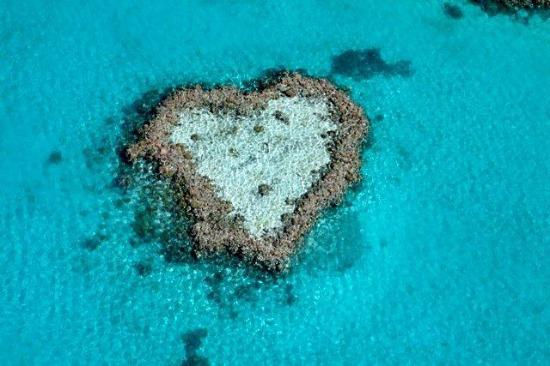
(Photo shows Heart Reef in the Whitsunday Islands)

Newer posts →

Enter your email address to follow this blog

Categories

Archives

Recent Comments

A.O.'s avatarwaltzingmorethanmati… on Zarah Zaynab and Wolfgang…
Madelyn's avatarMadelyn on Zarah Zaynab and Wolfgang…
JD's avatardrperegrine on Can Phoebe Complete This …
A.O.'s avatarwaltzingmorethanmati… on Rua and Rhoa
redrover23's avatarredrover23 on Rua and Rhoa

Blogroll

  • Appellation Mountain
  • Baby Name Pondering
  • Babynamelover's Blog
  • British Baby Names
  • Clare's Name News
  • For Real Baby Names
  • Geek Baby Names
  • Name Candy
  • Nameberry
  • Nancy's Baby Names
  • Ren's Baby Name Blog
  • Sancta Nomina
  • Swistle: Baby Names
  • The Art of Naming
  • The Baby Name Wizard
  • The Beauty of Names
  • Tulip By Any Name

RSS Feed

  • RSS - Posts

RSS Posts

  • Celebrity Baby News: Melanie Vallejo and Matt Kingston
  • Names from the TV Show “Cleverman”
  • Can Phoebe Complete This Sibset?
  • Zarah Zaynab and Wolfgang Winter
  • Baby, How Did You Get That Name?
  • Celebrity Baby News: Media Babies
  • Celebrity Baby News: Adelaide Crows Babies
  • Celebrity Baby News: Chris and Rebecca Judd
  • Names at Work: Name News From the World of Business and Employment
  • Celebrity Baby News: Sporting Round Up

Currently Popular

  • The Top 100 Names of the 1930s in New South Wales
  • Rare Boys Names From the 1950s
  • The Top 100 Names of the 1940s in New South Wales
  • Girls Names From Stars and Constellations
  • Celebrity Baby News: Caroline Craig and Callum Finlayson

Tags

celebrity baby names celebrity sibsets english names famous namesakes fictional namesakes honouring locational names middle names name combinations name history name meaning name popularity name trends nicknames popular names saints names sibsets surname names twin sets unisex names

Blog at WordPress.com.

Privacy & Cookies: This site uses cookies. By continuing to use this website, you agree to their use.
To find out more, including how to control cookies, see here: Cookie Policy
  • Subscribe Subscribed
    • Waltzing More Than Matilda
    • Join 517 other subscribers
    • Already have a WordPress.com account? Log in now.
    • Waltzing More Than Matilda
    • Subscribe Subscribed
    • Sign up
    • Log in
    • Report this content
    • View site in Reader
    • Manage subscriptions
    • Collapse this bar
 

Loading Comments...