• About
  • Best Baby Names
  • Celebrity Baby Names
  • Celebrity Baby Names – Current
  • Celebrity Baby Names – Past
  • Featured Boys Names
  • Featured Girls Names
  • Featured Unisex Names
  • Links to Name Data
  • Waltzing on the Web

Waltzing More Than Matilda

~ Names with an Australian Bias of Democratic Temper

Waltzing More Than Matilda

Tag Archives: controversial names

Famous Name: Gallipoli

24 Wednesday Apr 2013

Posted by A.O. in Famous Names

≈ 3 Comments

Tags

Anzac Day names, controversial names, Greek names, historical records, locational names, middle names, military events, name history, name meaning, names of battlefields, Turkish names
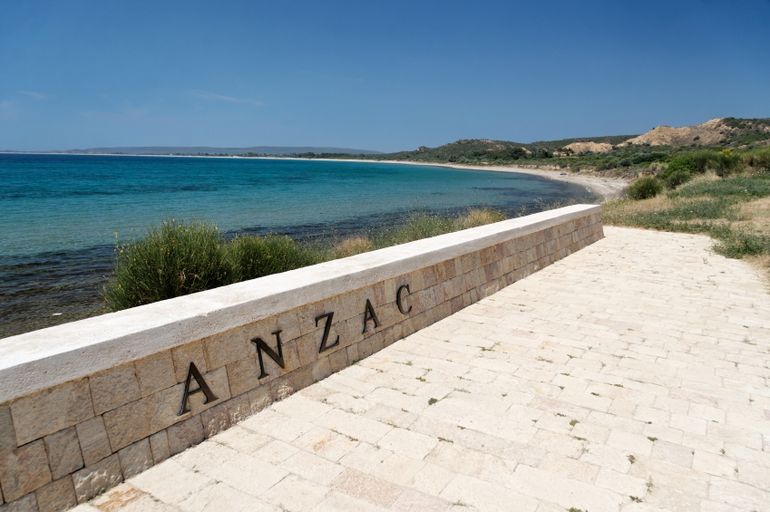
anzac-cove-gallipoli-photo_1343753-770tallGallipoli is a peninsula in Turkey, where the Gallipoli campaign took place between April 25 1915 and January 9 1916 during the First World War. The Australian and New Zealand forces, the Anzacs, landed at dawn at what is now known as Anzac Cove on April 25. The Turkish forces, the Ottomans, defended their territory with a fierce determination, but by evening, the Anzacs had managed to hold a tiny triangle of land about 2 km long and 1 km wide, which they called Anzac.

In his memoir, A Fortunate Life, Albert Facey described his experience of landing at Anzac Cove:

Suddenly all hell broke loose … bullets were thumping into us in the rowing boat. Men were being hit and killed all around me … The boat touched bottom some thirty yards from the shore so we had to jump out and wade in to the beach … The Turks had machine guns sweeping the strip of beach where we landed – there were many dead already when we got there. Bodies of men who had reached the beach ahead of us were lying all along the beach and wounded men were screaming for help. We couldn’t stop for them – the Turkish fire was terrible and mowing into us … we all ran for our lives over the strip of beach.

The Ottomans fought bravely, but there too few of them to drive the Anzacs back into the sea. The commander Mustafa Kemal issued this order to the 57th Infantry Regiment:

I do not order you to fight, I order you to die. In the time which passes until we die, other troops and commanders can come forward and take our places.

They followed their orders. The entire regiment was wiped out by the Anzacs, every man of it either killed, or so badly wounded he could not continue fighting. The modern Turkish army does not have a 57th Regiment, as a mark of respect.

By April 29, the first casualties from Gallipoli reached the Australian hospital near Cairo, in Egypt. Sister Constance Keys of the Australian Nursing Service wrote home:

The greatest number of men we came over with are either killed or wounded. The whole battalion was practically cut to pieces.

The Gallipoli campaign continued for eight more months, with nearly half a million casualties, and more than 100 000 deaths. This includes around 60 000 Turks and 53 000 British and French soldiers, including more than 8500 Australians and 2721 New Zealanders.

In the end, the campaign was a crushing defeat for the Allied forces, and one of the greatest victories for the Turks. It gave them a national identity and fostered their spirit of independence just as much as it did for Australians.

Today there are many cemeteries and war memorials on the Gallipoli Peninsula. Each year on Anzac Day, April 25, commemorative services are held at Gallipoli for the war dead, conducted by Turkey, Australia, New Zealand, Britain and France.

Gallipoli is considered sacred ground to many Australians, consecrated by the blood of those who fell there. Increasingly, it is seen as a place of pilgrimage, with many young people travelling to Gallipoli as a rite of passage.

The Macedonian city of Callipolis was founded in the 5th century BC on the Dardanelles Strait; its name comes from the Greek word kallipolis, meaning “beautiful city”. Also known as Gallipoli, it gives its name to the peninsula it sits on, and its Turkish name is Gelibolu. It is pronounced guh-LIP-uh-lee.

According to Australian historical records the name Gallipoli was given to just two girls during World War I, both of whom died in infancy. I wonder if this name was considered so sacred that it could only be bestowed on those destined for death.

As a middle name, it was given more often, and to equal numbers of males and females. People such as Mercia Gallipoli, Sydney Gallipoli, Brittania Gallipoli and Anzac Gallipoli flourished and increased, and some have only recently left us.

Although place names are becoming increasingly fashionable as baby names, I cannot recommend Gallipoli as a first name. Its extreme rarity, the problems with spelling and pronunciation, and difficulties shortening it to a usable nickname are some of the least problems it faces. In the middle, it seems easier to live with.

To me the main problem with Gallipoli as a first name is its heaviness. It was the scene of battles where many lives were lost, and much blood shed; a place of great suffering and enormous sacrifice. Gallipoli is a place of death – heroic deaths, brave deaths; corpse upon corpse of them. Many dead in the water before they even reached land; many lives given solely to buy others time.

There’s also the uncomfortable fact that we went to Gallipoli as invaders. We invaded someone else’s country, on the orders of another country, and we slaughtered their people. Another uncomfortable fact is that our side lost the campaign, and lost badly. Even more uncomfortably, this hideous loss was a waste of time, resources and life. The Allies achieved nothing from it, and the Turkish people who successfully defended their land were on the losing side of the war.

The name Gallipoli conjures up many emotions. National pride, gratitude for sacrifices made, deep sadness at loss of life, horror at what was endured, anger at the futility of war. And also forgiveness, respect, shared grief, and friendship between nations who were once enemies.

There’s been several quotes in this entry, and I will end with one more, from Turkey’s first president, Mustafa Kemal Ataturk, which is now inscribed on a monument at Gallipoli:

Those heroes that shed their blood and lost their lives… You are now lying in the soil of a friendly country. Therefore rest in peace. There is no difference between the Johnnies and the Mehmets to us where they lie side by side here in this country of ours… You, the mothers who sent their sons from far away countries wipe away your tears; your sons are now lying in our bosom and are in peace. After having lost their lives on this land they have become our sons as well.

POLL RESULT: Gallipoli received an approval rating of 15%, making it one of the least favourite names of the year. People had some real problems with the name Gallipoli, seeing it as having too many issues (31%), too weird (28%), too controversial (13%), and too sad (13%). Only 10% thought Gallipoli was usable as a baby name, and nobody thought it was beautiful.

(Photo is of Anzac Cove, Gallipoli)

Does This Baby Name Have Too Much Baggage?

16 Saturday Feb 2013

Posted by A.O. in Naming Assistance

≈ 3 Comments

Tags

choosing baby names, controversial names, name combinations, nicknames

Baby kneeling, packing the suitcaseKylie is pregnant with her second child, and doesn’t yet know the sex, so she is making name lists for both boys and girls.

She would love to add Azaria to her girls’ list, but isn’t quite sure. She wonders if it is still too soon to use the name Azaria, because of Azaria Chamberlain, and worries that she would be condemning her daughter to a lifetime of dingo jokes.

Kylie also likes the names Gaia and Juniper, but not nearly as much as Azaria.

The full name would be Azaria Lucienne, and the nickname would be Azra. Kylie isn’t interested in giving the name an unusual spelling in order to make it seem different to the original.

~ ~ ~ ~ ~ ~ ~

Kylie, this is a very interesting question, because it touches on that sensitive issue of whether some names are too controversial, or have too much baggage to be usable.

Nearly all of us feel that that there are least some names that should be “off limits”, and many people can get quite worked up at the thought of such names being given to a child. The trouble is that we don’t all agree on what these “off limits” names are!

There’s no right or wrong answer to this one, because different people are going to have different opinions. That’s really all I can give you – an opinion.

It is more than a generation since Azaria Chamberlain died, and last year the long drawn-out legal case finally came to an end. I tend to feel that by now, enough time has gone by and enough closure has been gained that we should be ready to move on. There must be a few people who agree with this, because some parents have already chosen this pretty name for their daughters in recent years.

I don’t think someone named Azaria would have a lifetime of dingo jokes ahead of her. For one thing, I haven’t actually heard a dingo joke since the 1990s. For another, the children being born now, your child’s peers, won’t know about Azaria Chamberlain, and when (or if) they learn of it, they won’t find it funny at all.

And while I can easily believe there are adults moronic enough to find a dingo joke funny, I have trouble imagining one so utterly bereft of brain cells that they would find it amusing to repeat it to a little girl named Azaria, or her parents.

I do think some older people might find the name Azaria a bit confronting at first, but I also think that if they actually knew a child called Azaria, they would soon stop associating the name with the Chamberlain case, and associate it with the child they know.

However, it doesn’t really matter what I think. What’s important is what you think. Do you feel that enough time has gone by? Do you feel comfortable using the name Azaria? And how does your partner feel about it?

Being practical, you don’t even know if you’re having a girl yet, and are just making lists of names that you like. You love the name Azaria, and it fits beautifully with the middle name you have chosen. I would leave it on the list at least until you know the sex of the baby. Give yourself more time to think this over before you decide.

NAME UPDATE: The baby was a boy, and his name is Kaelan!

POLL RESULTS
78% of people were generally okay with the idea of a baby named Azaria. 39% thought that it would be a little strange at first, but that people would soon get used to the idea, while another 39% couldn’t see anything wrong with it at all.

22% people weren’t in favour. 11% thought the name wasn’t usable yet, but might be in another 25 years, while 3% thought that just another 5 years could make all the difference to the name’s fortunes. A pessimistic 3% didn’t think the name could ever be used again, while 5% just weren’t sure whether it was a good idea or not.

Names Spotted at Home and Abroad (Spring Edition)

22 Saturday Dec 2012

Posted by A.O. in Names Spotted at Home and Abroad

≈ 12 Comments

Tags

adult name changes, backwards names, brand names, car names, choosing baby names, classic names, controversial names, created names, english names, famous namesakes, fictional namesakes, French names, gemstone names, Greek names, guinea pig names, honouring, linguistic terms, Maori names, meteorological names, name combinations, name meaning, name sociology, names from movies, names of art styles, names of musical styles, names of pets, names of wines, naming traditions, nature names, plant names, saints names, Sanskrit names, sibsets, tree names, Twitter, unisex names, virtue names, vocabuary names

528324_419521648119669_1365182918_nA nurse saved the life of her daughter’s guinea pig Snowflake by giving it mouth-to-mouth. Her little girl is named Fauve, which in French literally means “wild beast”. In the early twentieth century, les Fauves were avant-garde artists whose style was characterised by wild brushstrokes and vibrant colours. Fauve as a name is as bold as the art it is named after, but still seems on trend.

A bittersweet baby story. Nei Nei Anderson, daughter of Pippin, is just about to have her first Christmas, but she never got to meet her father Jahminn, who died from cancer before she was born. Nei Nei is named after her Maori grandmother; neinei is the Maori word for a New Zealand tree whose Latin name is Dracophyllum traversii. These small trees can live up to 500-600 years.

Elvina Robson [pictured] was born very prematurely, and her little life hung in the balance for a while, but she is ready for her first Christmas too. Elvina’s mum and dad are Emma and Brendan, and her siblings are Marguerite, 16, Gilbert, 12, Lucy, 10, Walter, 4, Angelique, 3 and Stella (deceased). A very lovely and original sibset.

A baby who arrived in a great hurry was named Patience Mezzino. Her name was chosen before her birth, and turned out to be rather ironic.

I have been hoping to see a baby Diamond born in the Queen’s Diamond Jubilee Year, and finally I have. Diamond Andre Thomas Thompson arrived very unexpectedly, but that did not stop his mum Regine from attending her graduation ceremony the next day. Regine now has a Masters in Maritime and Logistics Management. Diamond’s dad is named Paul, and his big sister is Herleen, aged 3.

Hermione Quinn Penning was born just outside the local rubbish tip. Not the most glamorous start to life, but what a beautiful name parents Kelly and Travis picked out. Hermione’s older sister is Elena, aged 3.

Kellie-Anne, and her ex-partner Trent Ford, came up with their son’s name when they saw the back of of a Holden Commodore ute with Storm written on the back of it. They couldn’t afford the ute, but they could name their son after it, so they named him Storme Hunter Ford. Storme’s younger brother is Levi Ryder, who was named after a pair of jeans. Name inspiration can be found everywhere!

A gym for babies aged 2 months and over has opened on the Sunshine Coast. One of its first clients was a baby boy named Horizen Earle. The name seems to ask that he reach for the horizon – but in a totally Zen way. It somehow seems very Sunshine Coast!

A couple who each run their own winery have welcomed their first child, and their daughter is named Peggy Mignonne. Mignonne is French for “cute”, and I think this is an adorable name combination. Charles Mignon is a famous brand of French champagne, and Peggy’s Hill is a wine produced in Australia, but I don’t know whether they put two wine names together or not.

A gorgeous sibset I saw in the paper – Sebastian, Raphael and Augustine, sons of Emily and Mark Wolfenden. Emily and Mark have both donated kidneys to save Sebastian and Raphael’s lives; unfortunately Augustine did not survive.

Names of Adults

Peter Drouyn was a champion surfer in the 1960s and 1970s, but always felt different. Today she is Westerly Windina – she chose her new name because she had such happy memories of surfing in westerly winds. Ms Windina is now a lawyer.

Supreme Court Judge, Justice Emilios Kyrou, has a name which came as a shock to his parents. Born in a small Greek village, it was tradition there that the godparent would choose the baby name and have it baptised, and the name would be kept secret from the parents until announced by the local priest. Traditionally, the first-born son would be named after his paternal grandfather. However, Emilios’ godmother had other ideas, and named him after the hero of a best-selling romantic novel. Parents not pleased. His younger brother, now a doctor, was named Theodoros after grand-dad instead.

Names from Television

Did you watch Life at 7 on the ABC? The series has been following a group of children since they were babies, and now in this series they are seven years old, and for the first time, speak for themselves to us as they learn to navigate the world. The boys are Wyatt, Declan, Joshua, Jara’na and Daniel, and the girls are Haleema, Shine, Anastasia, Sofia and Loulou.

On the news, there was a young man who was the unfortunate victim of some white collar crime. He was called Armand d’Armagnac, and he was as romantic and exotic-looking as his name – but his Australian accent made it clear he probably wasn’t a French count after all.

Another news story: it was announced that the new head of Swimming Australia was a businessman named Barclay Nettlefold. His first name is said BARK-lee, like the British bank founder. I feel that just by telling you his name, you automatically know he is from a prominent family and a keen yachtsman.

Names from Real Life

I was persuaded to escort two young ladies to a posh hotel which throws children’s high tea parties each afternoon during the school holidays. I was informed by some mummy blog or other that only the hippest mothers and their progeny would be there (fathers, and most sons, seem to give it a miss). I was interested to see what the cool people are naming their kids; mostly they just seemed to have the same names as everyone else. However, I did manage to overhear a Bee/Bea, an Aspen, and a pair of sisters named Cleo/Clio and Isis. A rare and very small boy was named Roland.

Two brothers I met elsewhere were called Ziggy and Dash, which struck me as pleasingly zippy.

I also encountered a baby boy named Urban; I was too shy to ask his parents if he was named after the popes, or the cityscape, or the musical style, or Keith Urban.

Do some baby names seem controversial to you? I met a little boy named Aryan, which simply means “noble”, and is related to the Sanskrit name Arya. It refers to the Indo-Iranian languages, which together have one billion speakers, stretching from Russia to Sri Lanka. It really shouldn’t be any different from calling your daughter India or Persia. And yet …

I did part of my Christmas shopping with my friend Claire, who is in her 30s. As we joined the queue to pay, we heard someone talking to their baby girl in her stroller – the baby’s name was Claire. The plump grey-haired lady who served us had a name badge that said “Claire”. When I got home, I switched on the news and a pretty young reporter named Claire was covering the story. And the name Claire suited ALL of them perfectly! Go classic names.

On Twitter, Name Sociology mentioned the name Evolet, which is a character from the movie 10, 000 BC, and is “t(h)e love” written backwards. It reminded me of a woman I used to work with whose name was Evol, which is Love backwards. Sounds like a nice idea, except that until I saw her name written down, I thought she was called Evil.

Names of Babies Born to People I Know or Know Of:

Girls: Mary, Phoebe, Roma, Sanna

Boys: Boaz, Castel, Phoenix

If you are able to read this, it means the world probably hasn’t ended, yay! However, something has started – Christmas holidays – and I won’t be around much until January 7. Have a very merry Christmas season, and a happy New Year!

(Photo from The Blue Mountains Gazette Facebook page)

The People’s Choice of Boy’s Names

23 Sunday Sep 2012

Posted by A.O. in Name Themes and Lists

≈ 15 Comments

Tags

African-American names, alphanumeric names, American slang, anagram names, Anglo-Saxon names, animal names, aristocratic names, Australian Aboriginal names, Australian slang terms, banned names, bird names, birth notices, Bonds Baby Search, celebrity baby names, computer hacker names, controversial names, created names, english names, famous namesakes, germanic names, Google, Greek names, historical records, Indian names, J.R.R. Tolkien, locational names, Maori names, meteorological names, middle names, mythological names, name history, name meaning, nature names, nicknames, Old English names, Old Norse, polynesian names, popular culture, royal names, saints names, scandinavian names, slang terms, Spanish dialect words, surname names, tree names, unisex names, US name popularity, vintage names, vocabulary words, Welsh names

Adolf

A form of the Germanic name Adalwolf, meaning “noble wolf”. The Old English form is Æthelwulf, and there are a few famous men of this name in English history, most notably the father of Alfred the Great. The name was often used amongst the royal houses of northern Europe, and the Latinised form Adolphus turns up in the monarchy of the United Kingdom. There is a saint called Adolf of Osnabrück, a 9th century German monk. Up until the mid-twentieth century, the name was common in central and northern Europe, and can be found in Australia due to immigration from Germany and Scandinavia. The reason this name has been included is because barely a day goes by without someone Googling: “Is it legal to call your child Adolf?”, to which I can say, yes, it is legal here, and you can find quite a few Australians in the records with this name – including ones born during and shortly after World War II. I have met a man named Adolf (born around the early 1960s), and I believe he was named after his grandfather. The other chestnut is, “Is it legal to call your child Adolf Hitler in Australia?” to which I reply, Why would you want to do that? Seriously, why? As the name Ned Kelly is banned because he is considered too wicked, I’m pretty sure Adolf Hitler would also be illegal here.

Buster

This spunky name has more history than you might think. In England, it was first used in the middle position; Buster is a variant of the surname Bustard, after the bird. In 18th century America, it seems to have been more common for African-Americans, and may have started as a pet name in the sense of “breaker”. Later it took on the meaning of “unusual, prodigious, amazing”. Buster is used to address males in the same way as pal or fella (“Now listen up, buster”). This comes from the Spanish dialect busté, meaning “you”. It’s gone on to have negative connotations. One of the most famous men with this name is actor Joseph “Buster” Keaton, who started his career in vaudeville as a small child. He claimed to have received his nickname as a toddler from Harry Houdini, after falling down a flight of stairs unhurt. Houdini allegedly remarked, “That was a real buster!”, meaning “a fall with the potential to cause injury”. So Keaton’s name indicated he was tough enough to take a tumble. Buster Brown was a cartoon strip boy who was an angelic-looking blond prankster. In Australian slang, come a buster means to fall or fail by misfortune, while buster is a term for a strong wind – especially the Southerly Buster. This is a name Sydneysiders give to the abrupt cool change that sometimes blows in from the south during the warmer months. Vintage name Buster has recently become rather an Australian favourite for boys, although in the novel, The Shiralee, by D’arcy Niland, Buster is a little girl.

Chester

Chester is a city in Cheshire, England, founded by the Romans as a fortress in 79; its size has led some historians to speculate that the Romans intended it to be the capital, rather than London. Its current name comes from the Old English Ceaster, meaning “Roman fort”, and its early history was very military, with wars seemingly constant. Even King Arthur is supposed to have won a major battle here, and it was the last city to fall to the Normans during the Conquest. Today it’s a thriving modern city which still tries to preserve its historic buildings. Chester has been used as a personal name since the 16th century, probably after the surname, although early births in Cheshire suggest they may have been named directly for the city itself. Although it’s been a popular name in the US in its time, and only left the Top 1000 in the mid-1990s, for some reason it never caught on in a big way here. I was surprised to see it on a baby in the Bonds Baby Search Competition this year. For some reason, this baby name is often Googled, although the slang term chester is an impediment to its use.

Digby

An English surname from a place name meaning “settlement by the ditch”, derived from a combination of Old English and Old Norse. The name seems to have been first given in honour of the aristocratic Digby family, Anglo-Irish peers whose family seat in Coleshill, Warwickshire was granted to them by Henry VII. It is from the town of Coleshill that the personal name originates in the 17th century. One of the most famous of this clan was Sir Kenelm Digby, a Catholic philosopher considered a great eccentric for his exuberant personality and fascination with science, which extended to studying alchemy, astrology and magic (not considered incompatible with science then); he was the first person to note the importance of oxygen to plants. A man of action as well as thought, he became a privateer, and killed a man in a duel; he also wrote several cookbooks, invented the modern wine bottle and managed to fit in a secret romance to a famous beauty which led to their marriage. A true all-rounder. This name regularly appears in birth notices here, especially from Victoria, and may be encouraged by comedienne Cal Wilson, who welcomed a son named Digby a few years ago. People seem to either loathe this name or find it irresistibly cute; I must confess to being in the second category.

Elfyn

This is the Welsh form of the Old English name Ælfwine, meaning “elf friend”; it went out of use after the Norman Conquest. J.R.R. Tolkien liked to think of the name as meaning “friend of the elves”, and invented two fictional characters with this name who formed close bonds with elves. Modern forms include Alvin and Elvin, both taken from the surname form of the name. There are several famous people in Wales with Elfyn as either their first name or surname, including young rally driver Elfyn Evans and poet Menna Elfyn. For reasons I cannot explain, it is Googled several times a week.

Jharal

Jharal Yow Yeh is an NRL star who plays for the Brisbane Broncos. An Aboriginal Australian from the Margany people of Queensland, he also has Torres Straits Islander, Vanuatuan and Chinese heritage. Now aged 22, he has been playing for the Broncos since 2009, for the Indigenous All-Stars since 2010, and for both the Queensland state team, the Maroons, and the Australian national side, the Kangaroos, since last year. Early this season he sustained a serious leg injury, and is still recovering. People Google Jharal’s name all the time, asking for its meaning, and often querying whether it’s of Indigenous origin. In fact, his name was created for him by his grandmother. His mother couldn’t decide what to call him, so she asked nana Iris to name him. Iris cleverly arranged the letters of all the strongest men in her family into a name, and came up with Jharal. It is taken from the initials of James, Harold, Anthony, Reece, Arthur and Linc. The name is pronounced JHUH-rahl, and Iris says that most people think it is an Indian name. In fact, by coincidence, a jharal is a mountain goat from India. Names created for celebrities often seem too unique for others to use, but I have seen Jharal a few times in birth notices recently. Looking for a nickname? Jharal is known to his family as Joe.

Koa

This unisex name has several different origins. There is a Hawaiian male name Koa meaning “strong, brave, fearless”, and it’s also the name of a Hawaiian tree, the Acacia koa. The wood was traditionally used to make dug-out canoes and certain types of surfboards. In Maori, the word koa means “happiness”. In the Kaurna language of South Australia, the word koa means “crow”, and the Koa people come from south-east Queensland, so it’s also a tribal name. There has been a sudden proliferation of this name in Australian birth notices, and that might be because Tom Dumont from No Doubt welcomed a son named Koa last year. However, I am beginning to see far more girls named Koa in birth notices than boys. This may be because of model and actress Koa Whelan, a contestant on this year’s dating show, Please Marry My Boy. I think this works equally well for boys and girls, although the first meaning is male only.

Neo

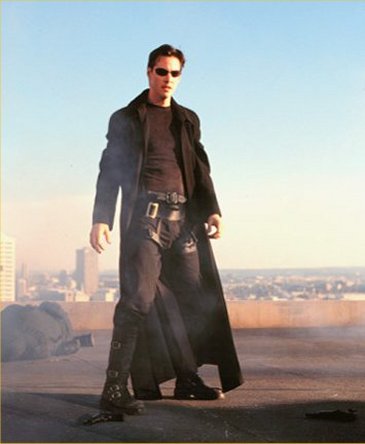
This is from an Ancient Greek prefix meaning “new, young, fresh”. It turns up in words such as neonatal, meaning “pertaining to the newborn”, or neologism, meaning “a freshly coined word”. The name has become well-known since 1999 because Neo is the protagonist of the cyberpunk Matrix film series. In the films, the character’s name is Thomas Anderson, and Neo is his computer hacker identity (Anderson does have the letters N, E and O in it). Neo is also an anagram of One, and the films seek to discover whether Neo is “The One”, a Messiah-like figure who will be able to rescue humanity. The films have become cult classics, and intermingle a range of philosophical and spiritual ideals from the East and the West – it’s even spawned its own religion, Matrixism. From the amount of times that people have Googled neo baby name or neo for a boy, there are quite a few parents considering using this name. Neo fits right in with current trends, and doesn’t sound any stranger than Leo. It is very strongly associated with the film character though. However, Australians have a solid history of gaining name inspiration from the movies, and most of The Matrix series was filmed in Sydney, giving it an Australian connection.

Rune

A Scandinavian name derived from Old Norse meaning “secret”. The runes are the letters of the runic alphabets, which were used to write different Germanic languages, dating from at least the first or second century AD. Runic inscriptions seem to have been for magical and divinatory use, and perhaps their knowledge was restricted to an elite in early times. According to Norse mythology, the runes were originally stolen from the god Odin. They are part of English history, because the Anglo-Saxons had their own runic alphabet. If you have read The Hobbit, you will have seen Anglo-Saxon runes used on a dwarven map; Tolkien later invented his own runic alphabet which appears in The Lord of the Rings. Rune stones are  used for divination today, often in a similar way to tarot cards. The name isn’t unusual in Scandinavia, and you may know the name from the Polish speedway rider Rune Holta, born in Norway. I think this is a simple, attractive name with layers of history and meaning.

Zephyr

A zephyr is a light, warm wind. It comes from the name Zephyrus, who was the Greek god of the west wind – the gentlest of breezes, which served as a harbinger of spring. He married both Iris, the goddess of the rainbow, and Chloris, the goddess of flowers – who is also seen as a deity of spring (and named Flora by the Romans). Children may know the name as that of a bat in the Silverwing book series, and, in the form Zephir, as the monkey in the Babar the Elephant stories. Grown ups may be reminded of The Zephyr Song by the Red Hot Chilli Peppers. If you take the name as derived directly from the god, then it is male, but if you accept it as a nature name and vocabulary name, it is unisex. It only seems to be Googled to my blog as a male name however. Pronounced ZEF-uhr, this name is unsual but not outrageous; it seems like a breezy alternative to popular Z names like Zachary, Zeke or Zane. The obvious nickname is Zeff or Zeffy.

(Picture shows actor Keanu Reeves in his role of Neo from The Matrix; Sydney skyline in background)

Boys Names from Video Games

17 Sunday Apr 2011

Posted by A.O. in Name Themes and Lists

≈ 10 Comments

Tags

Anglo-Saxon names, animal names, Arabic names, aristocratic titles, astronomical names, bird names, celebrity baby names, controversial names, english names, famous namesakes, fictional namesakes, Greek names, hebrew names, Irish names, Japanese names, Latin names, mythological names, name history, name meaning, name trends, names from video games, nature names, nicknames, Roman names, slang terms, Spanish names, surname names, tree names, unisex names, vocabulary names

This post was first published on April 17 2011, and heavily edited on April 23 2015.

Altair
Altaïr Ibn-La’Ahad is the protagonist of the first game in the Assassin’s Creed series. Born in the Holy Land in 1165 to an Arabic Muslim father and Italian Christian mother, he joins the medieval secret society of the Assassins. Due to his superior abilities, he quickly gains the title of Master Assassin, but Altaïr becomes overconfident and arrogant, and must be taken down a peg or two. He goes on to have further adventures in later games. Mysteriously cloaked and hooded, he is dark, rather handsome, and has an intense expression. Altair is Arabic for “the flying eagle”, and it is the name of the brightest star in the Aquila constellation. It is pronounced al-TAH-yir, but English-speakers will probably prefer al-TARE instead, and this pronunciation is accepted by astronomers as equally correct. Not only an extremely popular name for people and places in video games, Altair is commonly used to name aeroplanes and rockets too, adding to its flighty, space-age image.

Ash
Ash Ketchum is the main protagonist of the Pokémon (“Pocket Monsters”) series; a ten-year old boy with shaggy dark hair covered by a baseball cap, brown eyes, and a snub nose. A true Pokémon obsessive, he always has a fanatical look in his eyes. He has no other interests apart from Pokémon, and only makes friends with children and adults who share his hobby. His original Japanese name was Satoshi (“clear-thinking, wise”), after creator Satoshi Tajiri. The character is based on Tajiri’s memories of himself as a child, when he was a keen insect collector. The English name Ash was taken from one of the possible default names that can be chosen in the original Pokémon game. Ash can be short for names such as Ashley, Asher, or Ashton, a vocabulary name for the residue of something burned, or a nature name after the ash tree. As the Professors in the Pokémon universe all have tree names (Oak, Juniper, Rowan etc), I think the game-makers probably had the last option in mind. This is a simple, attractive nature name, and although it is technically unisex, I have only seen it on boys so far.

Kain
Kain is an arrogant nobleman who becomes a vampire lord in the Legacy of Kain series, an anti-hero who is morally ambivalent at best, yet provides his world’s only hope. There has been a trend in popular culture to present male vampires as romantically desirable, but Kain is not a pretty-boy vamp, but the stuff of nightmares, and not suitable for taking to senior prom. Kain is the Greek form of the Hebrew name Cain, which is used in the Greek version of the Old Testament. In the Old Testament, Cain was a son of Adam and Eve, and committed the first murder by killing his brother Abel in a fit of furious jealousy. This theme also plays a role in the Legacy of Kain story. In the Bible the name Cain is interpreted as “begotten, acquired”, but modern etymologists think it is most likely from an ancient South Arabian word for “metalsmith”. In the Bible, Cain is said to have been the ancestor of a nation who became the first metalworkers, so that does mesh with the Biblical narrative. Although Cain is a controversial character, this name fits in so well with current name trends that it has had reasonable use over the years: a big help is that it’s a homophone of Kane, the Anglicised form of Irish Cathan, meaning “battle”. Famous Australian namesakes include fantasy writer Kain Massin, and actor Kain O’Keefe.

Link
Link is the hero of The Legend of Zelda game series [pictured]. Usually he is young with fair hair and blue eyes, and he is always dressed in green tights and tunic, and has pointed ears. Link is humble, polite and brave, as befits a true hero, and is possessed with a burning sense of justice. He travels through the land, defeating creatures, evil forces, and baddies in order to save Princess Zelda and her kingdom. Despite having minimal facial expression and speaking mostly in grunts, Link is one of the most popular video game characters of all time. Creator Shigeru Miyamato wanted to call him Chris or Christo after his godfather, but this was changed by Nintendo (I wonder if it seemed too Messianic for them?). Instead Link was chosen, because the character is the player’s link to the world of the video game. You might also think of a baby Link as being the link that brings your family together. The name Link doesn’t seem that unusual, because it is already used as a short form of Lincoln.

Maximo
In the Maximo duology, Maximo is a gallant knight who goes out into the world leaving his castle and kingdom in the care of a trusted friend. Unfortunately, little does he know that his pal is, in fact, an evil super-villain. While Maximo tools around in blissful ignorance, this dastardly creep takes over Maximo’s kingdom, and forces Maximo’s girlfriend, Princess Sophia, into marriage with him. Maximo returns home to find his kingdom and his life in ruins. It’s a completely awful day for him, but rather than sit at home crying and eating chocolate, he bravely goes in search of his lost love.
Maximo is the Spanish form of the Roman family name Maximus, from the Latin for “greatest”. Although the Spanish pronunciation is MAHK-see-mo, I’m guessing most English-speakers would say it MAKS-uh-mo, and use the popular Max as a nickname. A Spanish heritage choice that puts a cool spin on fashionable Maximus.

Raiden
Raiden is a thunder god in the Mortal Kombat series, an immortal with many supernatural abilities, and a distinctly hands-on approach. He looks like an enormous, muscular man with eyes filled with lightning and long iron-grey hair. Raiden is a variant of Raijin, the name for the god of thunder and storms in the Shinto religion and Japanese mythology. His name means “thunder god”. He is a popular folk figure who appears in many stories, and his name has been used in several other Japanese video games. The name is pronounced RAH-ee-den, but in English, is meant to be said RY-den. However, the temptation to pronounce it RAY-den, to fit in with the trend for Aiden, Braden, Caden and Hayden type names, is often too strong to resist. I have seen this name used quite a bit on boys in Australia, and mostly their parents have gone with the RAY-den pronunciation.

Ryu
Ryu is the lead character of the Street Fighter series, and an enormously strong Japanese martial artist. Powerful and uber-masculine with huge muscles, his karate outfit is casually tattered. During the game series, it turns out that Ryu has a touch of evil in his psychological make-up which can be exploited by the bad guys. However, Ryu is mentally strong enough to fight off their brainwashing attempts. What a trouper. Naturally he is far too butch to hang out with girls or anything wet like that, but he does have a rather super chum called Ken. Ryu is Japanese for “dragon”, and it is also a suffix to denote a particular school of thought, usually used for martial arts. It’s a popular name in Japanese video games. Ryu is difficult for English-speakers to pronounce correctly. It’s said as one-syllable – RYOO. I have seen this name used on several Australian boys in honour of the game character, but they have either been called RY-oo or ROO (like a kangaroo). This does fit in with familiar names such as Ryan and Reuben.

Snow
Snow Villiers is the leader of an anti-government rebel group in Final Fantasy XIII who gets engaged to a cute pink-haired girl. Their wedding plans are put on ice once his fiancée is turned into a block of crystal. He has to save the world and his sweetheart, while trying to convince his future sister-in-law he’s a decent bloke. Snow is a Nordic giant – 6 foot 7 with a powerful physique, fair skin, pale blond hair, blue eyes, and a light stubble beard. Despite his wintry appearance, he is warm-hearted, fiery-tempered, and optimistic. In the game, the name Snow denotes the character’s affinity for water and ice spells. Snow is a nature name and surname in use as a personal name since the 16th century, and is one of those rare names that has been almost equally given to boys and girls over time. Names connected with the winter and cold are currently on trend, and this one works for both sexes, and as either a first or middle name. It’s a hip alternative to fashionable Winter, but a possible drawback is that it is also a slang term for cocaine.

Sparrow
In Fable II, Sparrow is a poor orphan child who finds out they are descended from a heroic line. Sparrow can be played as either a male or female character, so the name is deliberately unisex. The name Sparrow is after the small brown bird, one of the most familiar birds in the world. Sparrows are often used to denote something common, or of low value, and they are the emblem of the London Cockneys. The New Testament tells us that God cares even for the worthless sparrow, so we know the most insignificant person is valued and worthy of divine love, and Saint Francis preached sermons to these birds. According to the ancient Greeks, sparrows were sacred to the goddess Aphrodite and a symbol of enduring love, while in Christian legend, the sparrow was the only bird who witnessed the Crucifixion. Sparrow has been used as a name since the 17th century, and is historically more common for boys; Pirates of the Caribbean has given it a swashbuckling air. It became a celebrity baby name when Nicole Richie and Joel Madden had a son called Sparrow in 2009. A humble name that’s on trend, and has more behind it than at first glance.

Thane
In Mass Effect 2, Thane Krios is a member of an alien species who are humanoid with reptilian features. An expert assassin dying of an incurable lung disease, he joins an apparent suicide mission to give purpose to what’s left of his life and atone for all the murder he’s committed. Despite his chosen profession, he is a deeply spiritual man following a polytheistic religion. The name Thane is an Anglo-Saxon title of nobility, and is from the Old English thegn meaning “servant, retainer”. A thane was an attendant to a king or noble lord who had military duties as part of their service (similar to a knight). In medieval Scotland it was the name for a hereditary tenant of the Crown; Macbeth held this title in Shakespeare’s play. The name has been used since the 16th century, and a famous namesake is English actor and dancer Thane Bettany, father-in-law to Jennifer Connolly, and step-uncle to Sophie Rhys-Jones, the wife of Prince Edward. This is one of those rare names that have a strong history, and don’t sound strange, being similar to familiar names like Dane and Zane.

POLL RESULTS
People’s favourite names were Ash, Sparrow, and Link, and their least favourite were Kain, Raiden, and Ryu.

Newer posts →

Enter your email address to follow this blog

Categories

Archives

Recent Comments

A.O.'s avatarwaltzingmorethanmati… on Zarah Zaynab and Wolfgang…
Madelyn's avatarMadelyn on Zarah Zaynab and Wolfgang…
JD's avatardrperegrine on Can Phoebe Complete This …
A.O.'s avatarwaltzingmorethanmati… on Rua and Rhoa
redrover23's avatarredrover23 on Rua and Rhoa

Blogroll

  • Appellation Mountain
  • Baby Name Pondering
  • Babynamelover's Blog
  • British Baby Names
  • Clare's Name News
  • For Real Baby Names
  • Geek Baby Names
  • Name Candy
  • Nameberry
  • Nancy's Baby Names
  • Ren's Baby Name Blog
  • Sancta Nomina
  • Swistle: Baby Names
  • The Art of Naming
  • The Baby Name Wizard
  • The Beauty of Names
  • Tulip By Any Name

RSS Feed

  • RSS - Posts

RSS Posts

  • Celebrity Baby News: Melanie Vallejo and Matt Kingston
  • Names from the TV Show “Cleverman”
  • Can Phoebe Complete This Sibset?
  • Zarah Zaynab and Wolfgang Winter
  • Baby, How Did You Get That Name?
  • Celebrity Baby News: Media Babies
  • Celebrity Baby News: Adelaide Crows Babies
  • Celebrity Baby News: Chris and Rebecca Judd
  • Names at Work: Name News From the World of Business and Employment
  • Celebrity Baby News: Sporting Round Up

Currently Popular

  • Celebrity Baby News: Jacinta Allan and Yorick Piper
  • Celebrity Baby News: Jacinta Allan and Yorick Piper
  • The Top 100 Names of the 1940s in New South Wales
  • The Top 100 Names of the 1930s in New South Wales
  • Celebrity Baby News: Josh and Amie Frydenberg

Tags

celebrity baby names celebrity sibsets english names famous namesakes fictional namesakes honouring locational names middle names name combinations name history name meaning name popularity name trends nicknames popular names saints names sibsets surname names twin sets unisex names

Create a free website or blog at WordPress.com.

Privacy & Cookies: This site uses cookies. By continuing to use this website, you agree to their use.
To find out more, including how to control cookies, see here: Cookie Policy
  • Subscribe Subscribed
    • Waltzing More Than Matilda
    • Join 517 other subscribers
    • Already have a WordPress.com account? Log in now.
    • Waltzing More Than Matilda
    • Subscribe Subscribed
    • Sign up
    • Log in
    • Report this content
    • View site in Reader
    • Manage subscriptions
    • Collapse this bar
 

Loading Comments...