
• About
  • Best Baby Names
  • Celebrity Baby Names
  • Celebrity Baby Names – Current
  • Celebrity Baby Names – Past
  • Featured Boys Names
  • Featured Girls Names
  • Featured Unisex Names
  • Links to Name Data
  • Waltzing on the Web

Waltzing More Than Matilda

~ Names with an Australian Bias of Democratic Temper

Waltzing More Than Matilda

Tag Archives: Irish names

Sydney Suburbs That Could Be Used as Boy’s Names

22 Sunday May 2011

Posted by A.O. in Name Themes and Lists

≈ 19 Comments

Tags

Anglo-Saxon names, aristocratic titles, Australian Aboriginal names, birth notices, British names, celebrity baby names, english names, famous namesakes, fictional namesakes, French names, Gaelic names, honouring, Irish names, literary names, locational names, modern classics, name history, name meaning, name popularity, names of businesses, nicknames, Old English names, Old Norse names, Old Welsh names, popular culture, saints names, Scottish names, surname names, unisex names, US name popularity, vocabulary names
KyleBay

This blog post was first published on May 22 2011, and substantially revised and updated on May 14 2015.

Auburn
Auburn is in Sydney’s western suburbs. The commercial district contains many Middle Eastern and Asian shops and restaurants, and is a focal point for migrant groups. Auburn has the oldest Hindu temple in Australia, which opened in 1977, and one of its busiest mosques – the Auburn Gallipoli Mosque, built by the Turkish community in honour of the Gallipoli conflict of 1915. Auburn is named after an Irish village in Oliver Goldsmith’s poem The Deserted Village; the first line of the poem is, Sweet Auburn, loveliest village of the plain. Auburn was a tiny place near Athlone in Westmeath, and doesn’t seem to exist any more – perhaps it was too deserted. Auburn simply means “red-brown”, and usually refers to dark red hair colours. Auburn has been used as a personal name since the 17th century, more often given to boys. It sounds similar to Aubrey, Aubin, and Auberon, and seems quite distinguished, while its literary ancestor gives it a sentimental air.

Bexley
Bexley is a suburb in Sydney’s south, in the St George area. It was originally a land grant to Thomas Sylvester in the 1810s, who sold it to James Chandler in 1822. Lydham Hall, the oldest residence in the area, was part of the 1822 sale. Chandler got fed up with the bushrangers, escaped convicts and other undesirables who infested his personal paradise, and sold it to Charles Tindell. By 1856 Tindell was subdividing the land into lots for homes, and by the late 19th century, Bexley was a thriving town. Its best days are behind it, for this suburb has been on the decline since the 1980s. James Chandler named it Bexley after his birthplace in London; the name comes from the Old English, meaning “box tree meadow”. In uncommon use as a personal name since the 16th century, mostly for boys, Bexley has the fashionable X-factor.

Camden
Camden is a historic town in the Macarthur Region, in the far south of Sydney. It’s pretty and semi-rural with a “gentleman farmer” atmosphere. The Camden area originally belonged to the Gandangara people; European explorers first arrived in 1795. In 1805, Governor King rather begrudgingly gave 5000 acres to John Macarthur, who had been promised land by Secretary of State, Lord Camden. (The descendants of John Macarthur still live in their ancestral home at Camden Park). Macarthur’s wool industry was so successful, a town was necessary in order to support it. Founded in 1840, by the 1880s it was a thriving concern. Camden was named after its sponsor, Lord Camden – his title is from a Gloucestershire place name meaning either “enclosed valley” or “valley of encampments” in Old English. In use since the 17th century, Camden sounds like familiar choices such as Cameron and Caden, while retaining a hint of its aristocratic past. It is in the Top 100 in the US, and I am seeing it more frequently in birth notices here.

Carlton
Carlton is the next suburb to Bexley. It is most famous for being the home of the St George Illawarra Dragons National Rugby League team. Carlton was originally heavily timbered, and given as a land grant to Captain John Towson in 1808. When the railway opened in 1884, the land was subdivided and people began moving to the area. Carlton is named after a suburb of Nottingham; I’m not sure why, but assume that it was Captain Towson’s birthplace. The place name Charlton is very common in the UK, and is a linguistic mix of Anglo-Saxon and Old Norse meaning “settlement of free men”. In use since the 17th century, this is a spin on classic Charles, and a variant of Charlton, that I have seen a bit of lately. Like popular Cooper, it is the name of an Australian brewery.

Colebee
Colebee is a fairly new suburb in Sydney’s far west. It is named after an Aboriginal guide, the son of a tribal chief, who assisted William Cox when he surveyed the land across the Blue Mountains. Colebee also tried to bring a peaceful resolution to the years of conflict that existed between Aborigines and white settlers in the area. For his efforts as a geographer and diplomat, he received the first grant of land that the British made to an indigenous person. He received 30 acres on the South Creek; an area which would later become known as Blacktown, and the location of the suburb of Colebee. The meaning of Colebee is not certain, but I have read a theory that it came from the local word for sea eagle (gulbi). Europeans were struck by the fact it sounded exactly like the English name Colby. If you are considering the name Colby, this spelling not only gives the nickname Cole, but is an important part of Sydney’s history.

Kyle
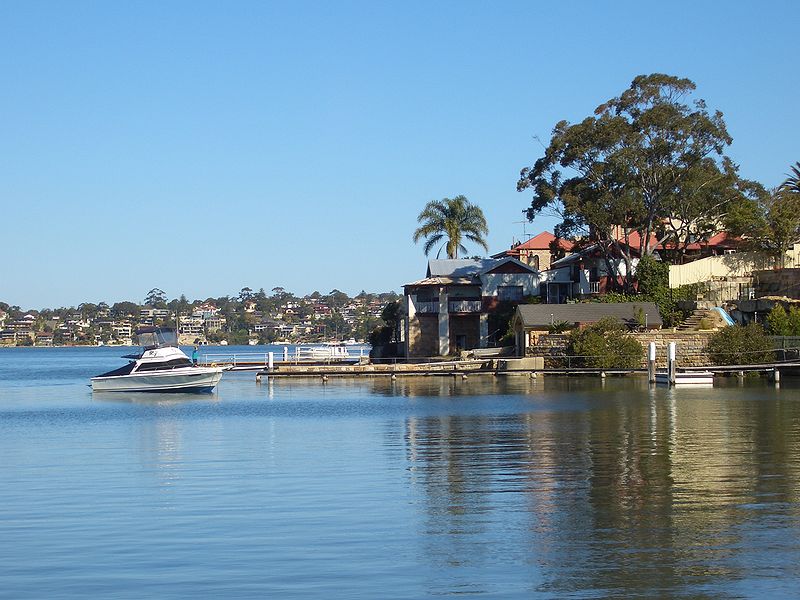
Kyle Bay is a tiny picturesque suburb in Sydney’s south, in the St George area, and takes its name from the bay on the north shore of the Georges River. It is named after local shipbuilder Robert Kyle, who was granted land here in 1853. Kyle is a Scottish surname from the district of Kyle in Ayrshire. The name is from a common place name, usually translated as from the Gaelic word caol, meaning “narrows, channel, strait”. As there are no channels or straits in this district, the name may come instead from the legendary British king Coel Hen (“Coel the Old”), otherwise known as Old King Cole. His name is possibly from the Old Welsh coel, meaning “belief, omen”. In use as a personal name since the 18th century at least, it was originally given to both sexes in its native Scotland, but is now considered to be a male name. Kyle first charted in the 1960s, debuting at #233; its use seems to be heavily influenced by the female name Kylie, which was popular in that decade. Rising swiftly, Kyle was a Top 100 name by 1980, peaked at #27 in 1998, and left the Top 100 in 2006 – the year after obnoxious shock jock Kyle Sandilands became a judge on Australian Idol. It’s now around the 200s, so it’s a modern classic still in reasonable use.

Miller
Miller is a south-west suburb in the Liverpool area. It was part of the Green Valley Housing Estate built in the 1960s, and the suburb was established in 1965. It is named after Peter Miller, an Irish immigrant who was one of the first settlers in the Green Valley area. His surname of Miller is an occupational one, indicating the bearer worked at or managed a corn mill. In use as a first name since at least the 16th century, it has mostly been given to boys, although I have occasionally seen it given to girls because it is a homophone of the popular girls’ name Milla. Miller is around the mid-200s for boys, so not an unusual choice as a name, although not common either, meaning it might very well hit that sweet spot between “too strange” and “too popular”.

Nelson
Nelson is a suburb in the north-west of Sydney, in the affluent Hills District. Governor William Bligh received a land grant in this area, and the suburb is named after Admiral Horatio Nelson, as Bligh served under his command during the Battle of Copenhagen in 1801. Just in case he hadn’t made it clear enough how much he admired Nelson, he called his property Copenhagen Farm in his further honour. Either Nelson had really impressed him, or he was a total crawler. The surname Nelson means “son of Neil” – Neil being from a Gaelic name which may mean either “champion” or “cloud”. It has been in use as a name for boys since at least the 16th century, but Horatio Nelson helped give the name a boost in the 19th. World leader Nelson Mandela and philanthropist Nelson Rockefeller give this heroic name a lot of clout.

Oran
Oran Park is a suburb of Camden, once the colonial estate of John Douglas Campbell, and for many years the home of the Oran Park Raceway, which regularly hosted major motorsport events. Since 2011 it has been developed for residential housing. Oran Park is named after the village of Oran in Scotland; its name comes from the Scottish Gaelic word for “song”. Oran is also an Anglicised form of the Irish boys’ name Odhran, meaning “sallow, pale green”. Saint Odhran was a follower of St Columba, associated with the island of Iona. There is a strange legend which says he willingly allowed himself to be sacrificed by being buried alive, in what sounds like a pagan ceremony to ensure a chapel could be built, and then popped his head out to tell everyone there was no heaven or hell! St Columba hastily covered Odhran more securely in earth before he gave any more alarming information about the afterlife, or lack thereof. Said like Orange without the ge (OR-an), this attractive Scottish or Irish heritage choice may appeal to nostalgic motorsport fans.

Richmond
Richmond is a historic town to the north-west of Sydney, on the Hawkesbury River flats near the foot of the Blue Mountains. The Darug people lived in this area when Europeans arrived in 1788; in 1789 it was explored by the British. The first settlers came to live here in 1794, and by 1799 it was providing half the grain produced in the colony. Because of its long history, Richmond has many heritage-listed buildings, and the University of Western Sydney dates back to 1891. Richmond was named by Governor Phillip, in honour of Charles Lennox, the Duke of Richmond, who was Master General of Ordance in the British government. His title comes from a town in Yorkshire, which was named after the town of Richemont in Normandy; its name simply means “rich hill”. Similar to both Richard and Edmond, this name has a casually expensive feel, and works well in the middle position.

POLL RESULTS
People’s favourite names were Miller, Camden and Nelson, and their least favourites were Colebee, Kyle and Carlton.

(Photo is of the waterfront at Kyle Bay)

Boys Names from Video Games

17 Sunday Apr 2011

Posted by A.O. in Name Themes and Lists

≈ 10 Comments

Tags

Anglo-Saxon names, animal names, Arabic names, aristocratic titles, astronomical names, bird names, celebrity baby names, controversial names, english names, famous namesakes, fictional namesakes, Greek names, hebrew names, Irish names, Japanese names, Latin names, mythological names, name history, name meaning, name trends, names from video games, nature names, nicknames, Roman names, slang terms, Spanish names, surname names, tree names, unisex names, vocabulary names

This post was first published on April 17 2011, and heavily edited on April 23 2015.

Altair
Altaïr Ibn-La’Ahad is the protagonist of the first game in the Assassin’s Creed series. Born in the Holy Land in 1165 to an Arabic Muslim father and Italian Christian mother, he joins the medieval secret society of the Assassins. Due to his superior abilities, he quickly gains the title of Master Assassin, but Altaïr becomes overconfident and arrogant, and must be taken down a peg or two. He goes on to have further adventures in later games. Mysteriously cloaked and hooded, he is dark, rather handsome, and has an intense expression. Altair is Arabic for “the flying eagle”, and it is the name of the brightest star in the Aquila constellation. It is pronounced al-TAH-yir, but English-speakers will probably prefer al-TARE instead, and this pronunciation is accepted by astronomers as equally correct. Not only an extremely popular name for people and places in video games, Altair is commonly used to name aeroplanes and rockets too, adding to its flighty, space-age image.

Ash
Ash Ketchum is the main protagonist of the Pokémon (“Pocket Monsters”) series; a ten-year old boy with shaggy dark hair covered by a baseball cap, brown eyes, and a snub nose. A true Pokémon obsessive, he always has a fanatical look in his eyes. He has no other interests apart from Pokémon, and only makes friends with children and adults who share his hobby. His original Japanese name was Satoshi (“clear-thinking, wise”), after creator Satoshi Tajiri. The character is based on Tajiri’s memories of himself as a child, when he was a keen insect collector. The English name Ash was taken from one of the possible default names that can be chosen in the original Pokémon game. Ash can be short for names such as Ashley, Asher, or Ashton, a vocabulary name for the residue of something burned, or a nature name after the ash tree. As the Professors in the Pokémon universe all have tree names (Oak, Juniper, Rowan etc), I think the game-makers probably had the last option in mind. This is a simple, attractive nature name, and although it is technically unisex, I have only seen it on boys so far.

Kain
Kain is an arrogant nobleman who becomes a vampire lord in the Legacy of Kain series, an anti-hero who is morally ambivalent at best, yet provides his world’s only hope. There has been a trend in popular culture to present male vampires as romantically desirable, but Kain is not a pretty-boy vamp, but the stuff of nightmares, and not suitable for taking to senior prom. Kain is the Greek form of the Hebrew name Cain, which is used in the Greek version of the Old Testament. In the Old Testament, Cain was a son of Adam and Eve, and committed the first murder by killing his brother Abel in a fit of furious jealousy. This theme also plays a role in the Legacy of Kain story. In the Bible the name Cain is interpreted as “begotten, acquired”, but modern etymologists think it is most likely from an ancient South Arabian word for “metalsmith”. In the Bible, Cain is said to have been the ancestor of a nation who became the first metalworkers, so that does mesh with the Biblical narrative. Although Cain is a controversial character, this name fits in so well with current name trends that it has had reasonable use over the years: a big help is that it’s a homophone of Kane, the Anglicised form of Irish Cathan, meaning “battle”. Famous Australian namesakes include fantasy writer Kain Massin, and actor Kain O’Keefe.

Link
Link is the hero of The Legend of Zelda game series [pictured]. Usually he is young with fair hair and blue eyes, and he is always dressed in green tights and tunic, and has pointed ears. Link is humble, polite and brave, as befits a true hero, and is possessed with a burning sense of justice. He travels through the land, defeating creatures, evil forces, and baddies in order to save Princess Zelda and her kingdom. Despite having minimal facial expression and speaking mostly in grunts, Link is one of the most popular video game characters of all time. Creator Shigeru Miyamato wanted to call him Chris or Christo after his godfather, but this was changed by Nintendo (I wonder if it seemed too Messianic for them?). Instead Link was chosen, because the character is the player’s link to the world of the video game. You might also think of a baby Link as being the link that brings your family together. The name Link doesn’t seem that unusual, because it is already used as a short form of Lincoln.

Maximo
In the Maximo duology, Maximo is a gallant knight who goes out into the world leaving his castle and kingdom in the care of a trusted friend. Unfortunately, little does he know that his pal is, in fact, an evil super-villain. While Maximo tools around in blissful ignorance, this dastardly creep takes over Maximo’s kingdom, and forces Maximo’s girlfriend, Princess Sophia, into marriage with him. Maximo returns home to find his kingdom and his life in ruins. It’s a completely awful day for him, but rather than sit at home crying and eating chocolate, he bravely goes in search of his lost love.
Maximo is the Spanish form of the Roman family name Maximus, from the Latin for “greatest”. Although the Spanish pronunciation is MAHK-see-mo, I’m guessing most English-speakers would say it MAKS-uh-mo, and use the popular Max as a nickname. A Spanish heritage choice that puts a cool spin on fashionable Maximus.

Raiden
Raiden is a thunder god in the Mortal Kombat series, an immortal with many supernatural abilities, and a distinctly hands-on approach. He looks like an enormous, muscular man with eyes filled with lightning and long iron-grey hair. Raiden is a variant of Raijin, the name for the god of thunder and storms in the Shinto religion and Japanese mythology. His name means “thunder god”. He is a popular folk figure who appears in many stories, and his name has been used in several other Japanese video games. The name is pronounced RAH-ee-den, but in English, is meant to be said RY-den. However, the temptation to pronounce it RAY-den, to fit in with the trend for Aiden, Braden, Caden and Hayden type names, is often too strong to resist. I have seen this name used quite a bit on boys in Australia, and mostly their parents have gone with the RAY-den pronunciation.

Ryu
Ryu is the lead character of the Street Fighter series, and an enormously strong Japanese martial artist. Powerful and uber-masculine with huge muscles, his karate outfit is casually tattered. During the game series, it turns out that Ryu has a touch of evil in his psychological make-up which can be exploited by the bad guys. However, Ryu is mentally strong enough to fight off their brainwashing attempts. What a trouper. Naturally he is far too butch to hang out with girls or anything wet like that, but he does have a rather super chum called Ken. Ryu is Japanese for “dragon”, and it is also a suffix to denote a particular school of thought, usually used for martial arts. It’s a popular name in Japanese video games. Ryu is difficult for English-speakers to pronounce correctly. It’s said as one-syllable – RYOO. I have seen this name used on several Australian boys in honour of the game character, but they have either been called RY-oo or ROO (like a kangaroo). This does fit in with familiar names such as Ryan and Reuben.

Snow
Snow Villiers is the leader of an anti-government rebel group in Final Fantasy XIII who gets engaged to a cute pink-haired girl. Their wedding plans are put on ice once his fiancée is turned into a block of crystal. He has to save the world and his sweetheart, while trying to convince his future sister-in-law he’s a decent bloke. Snow is a Nordic giant – 6 foot 7 with a powerful physique, fair skin, pale blond hair, blue eyes, and a light stubble beard. Despite his wintry appearance, he is warm-hearted, fiery-tempered, and optimistic. In the game, the name Snow denotes the character’s affinity for water and ice spells. Snow is a nature name and surname in use as a personal name since the 16th century, and is one of those rare names that has been almost equally given to boys and girls over time. Names connected with the winter and cold are currently on trend, and this one works for both sexes, and as either a first or middle name. It’s a hip alternative to fashionable Winter, but a possible drawback is that it is also a slang term for cocaine.

Sparrow
In Fable II, Sparrow is a poor orphan child who finds out they are descended from a heroic line. Sparrow can be played as either a male or female character, so the name is deliberately unisex. The name Sparrow is after the small brown bird, one of the most familiar birds in the world. Sparrows are often used to denote something common, or of low value, and they are the emblem of the London Cockneys. The New Testament tells us that God cares even for the worthless sparrow, so we know the most insignificant person is valued and worthy of divine love, and Saint Francis preached sermons to these birds. According to the ancient Greeks, sparrows were sacred to the goddess Aphrodite and a symbol of enduring love, while in Christian legend, the sparrow was the only bird who witnessed the Crucifixion. Sparrow has been used as a name since the 17th century, and is historically more common for boys; Pirates of the Caribbean has given it a swashbuckling air. It became a celebrity baby name when Nicole Richie and Joel Madden had a son called Sparrow in 2009. A humble name that’s on trend, and has more behind it than at first glance.

Thane
In Mass Effect 2, Thane Krios is a member of an alien species who are humanoid with reptilian features. An expert assassin dying of an incurable lung disease, he joins an apparent suicide mission to give purpose to what’s left of his life and atone for all the murder he’s committed. Despite his chosen profession, he is a deeply spiritual man following a polytheistic religion. The name Thane is an Anglo-Saxon title of nobility, and is from the Old English thegn meaning “servant, retainer”. A thane was an attendant to a king or noble lord who had military duties as part of their service (similar to a knight). In medieval Scotland it was the name for a hereditary tenant of the Crown; Macbeth held this title in Shakespeare’s play. The name has been used since the 16th century, and a famous namesake is English actor and dancer Thane Bettany, father-in-law to Jennifer Connolly, and step-uncle to Sophie Rhys-Jones, the wife of Prince Edward. This is one of those rare names that have a strong history, and don’t sound strange, being similar to familiar names like Dane and Zane.

POLL RESULTS
People’s favourite names were Ash, Sparrow, and Link, and their least favourite were Kain, Raiden, and Ryu.

Flynn Christopher Bloom: A Son for Miranda Kerr and Orlando Bloom

27 Sunday Feb 2011

Posted by A.O. in Celebrity Baby Names

≈ 9 Comments

Tags

celebrity baby names, famous namesakes, Greek names, honouring, Irish names, popular culture

From the moment we knew of his existence, he was the most eagerly-awaited celebrity baby of 2011. How could he not be, with the parents that he had?

Miranda Kerr was our country town girl made good due to her girl-next-door dimpled beauty. A supermodel who wore undies and flogged face cream for a living, and also managed to be intelligent, politically caring and spiritually aware, she won hearts with her down-to-earth personality. Last June she became engaged to Orlando Bloom, a good-looking English movie star who shares her Buddhist ideals and has vague ties with Australia, which seemed eminently suitable.

They married with suspicious haste only a month later, provoking much speculation that the couple were already expecting a baby. By August, it was confirmed that Miranda was pregnant and due in a few months. Baby name obsessives were soon feverishly wondering what name they would choose for it. Would it be an Australian name? An English name? A Hollywood name? A fashion name? A Buddhist name? Or would it be something romantic, literary and Latinate like Miranda and Orlando’s own names?

We all awaited the presence of Johnny Sparrow Legolas or Lotus Pearl Victoria with bated breath.

Baby Bloom entered the world on January 6 2011 and it was a boy! It was a natural birth, and Miranda endeared herself to the female public further by saying that giving birth to a 10 pound baby without drugs is an extremely painful, protracted and difficult process. This was refreshing after uber-model Gisele Bündchen’s smug and unconvincing claim that natural birth “didn’t hurt in the slightest” (cue 99% of mothers all foaming at the mouth simultaneously).

We waited to hear what name they had chosen for him … and waited … and waited. Miranda’s mum explained that they had a long list of names and were still trying to decide which one to use. Even in the midst of our impatience, it seemed touching that despite their beauty, wealth, fame and spiritual enlightenment, the Blooms had the same “heck the baby’s arrived and we still don’t know what to call him” issues shared by many other couples.

On January 19, Miranda revealed the baby’s name to be Flynn on her blog. It was a name that was Australian and Hollywood and fashion world, for it is the surname of Australian actor Erroll Flynn – the star of 1930s/40s swashbuckling derring-do flicks very much like the Pirates of the Caribbean movies that Orlando himself has starred in. Erroll Flynn was born in Tasmania, the state in which Orlando Bloom’s maternal grandparents lived at one time. In addition, another Australian supermodel, Elle McPherson, has named one of her sons Arpad Flynn Alexander.

Just possibly, he was named after a more recent Hollywood connection – Flynn Rider is the (assumed) name of the handsome prince in the Disney animated musical Tangled, which came out about six weeks before Flynn Bloom’s birth. There has been a recent fad for naming girl babies after Disney princesses – could the Blooms be the start of a new trend for calling boys after Disney princes?

The names of the other Disney princes are Ferdinand, Charming, Philip, Eric, Aladdin, John, Shang and Naveen – hmm, maybe it’s the start of a new trend of Disney providing prince names we may actually want to use! Mind you, Flynn Rider’s real name is Eugene – perhaps the Disney princes could all start choosing cool fake names for themselves.

It was only a couple of weeks ago that Flynn Bloom’s middle name became known: Christopher. Miranda explained on Facebook that they had chosen his middle name to honour her first boyfriend, who had been killed in a car accident when he was still a teenager.

Many people will say that naming a baby in honour of an ex is absolutely not on, but I think this is really touching, and clearly Orlando Bloom is far too mature and secure to worry about his son sharing a name with his wife’s dead ex.

I must confess to having a great affection for the name Flynn, which I think is simple, cute and spunky. It’s also just dropped off the Top 100 in Australia, and Miranda and Orlando’s choice could very well bring it back up there again.

However, I’m not sure it really goes that well with the surname Bloom. Both names are one syllable and end with a N/M sound, so they are a little too similar to mesh well, in my opinion. Also, to me the name sounds as if it is saying “in bloom” – although I can’t decide is that is a problem or not! Being in bloom is such a positive thing, after all.

From polling and surveying people at a couple of sites, I get the impression most people think that Flynn Bloom is a bit too short and abrupt, and share my concerns about the awkwardness of the full name, although in general they liked the name Flynn itself.

Overall, I give Flynn Christopher Bloom a thumbs up and a warm welcome to the world. You’re in like Flynn, Baby Bloom!


Newer posts →

Enter your email address to follow this blog

Categories

Archives

Recent Comments

A.O.'s avatarwaltzingmorethanmati… on Zarah Zaynab and Wolfgang…
Madelyn's avatarMadelyn on Zarah Zaynab and Wolfgang…
JD's avatardrperegrine on Can Phoebe Complete This …
A.O.'s avatarwaltzingmorethanmati… on Rua and Rhoa
redrover23's avatarredrover23 on Rua and Rhoa

Blogroll

  • Appellation Mountain
  • Baby Name Pondering
  • Babynamelover's Blog
  • British Baby Names
  • Clare's Name News
  • For Real Baby Names
  • Geek Baby Names
  • Name Candy
  • Nameberry
  • Nancy's Baby Names
  • Ren's Baby Name Blog
  • Sancta Nomina
  • Swistle: Baby Names
  • The Art of Naming
  • The Baby Name Wizard
  • The Beauty of Names
  • Tulip By Any Name

RSS Feed

  • RSS - Posts

RSS Posts

  • Celebrity Baby News: Melanie Vallejo and Matt Kingston
  • Names from the TV Show “Cleverman”
  • Can Phoebe Complete This Sibset?
  • Zarah Zaynab and Wolfgang Winter
  • Baby, How Did You Get That Name?
  • Celebrity Baby News: Media Babies
  • Celebrity Baby News: Adelaide Crows Babies
  • Celebrity Baby News: Chris and Rebecca Judd
  • Names at Work: Name News From the World of Business and Employment
  • Celebrity Baby News: Sporting Round Up

Currently Popular

  • Celebrity Baby News: Toby Allen and Darren Weller
  • Girls Names From Native Australian Flowers
  • Girls Names of Australian Aboriginal Origin
  • The Top 100 Names of the 1920s in New South Wales
  • Rare Boys Names From the 1950s

Tags

celebrity baby names celebrity sibsets english names famous namesakes fictional namesakes honouring locational names middle names name combinations name history name meaning name popularity name trends nicknames popular names saints names sibsets surname names twin sets unisex names

Blog at WordPress.com.

Privacy & Cookies: This site uses cookies. By continuing to use this website, you agree to their use.
To find out more, including how to control cookies, see here: Cookie Policy
  • Subscribe Subscribed
    • Waltzing More Than Matilda
    • Join 517 other subscribers
    • Already have a WordPress.com account? Log in now.
    • Waltzing More Than Matilda
    • Subscribe Subscribed
    • Sign up
    • Log in
    • Report this content
    • View site in Reader
    • Manage subscriptions
    • Collapse this bar
 

Loading Comments...