Celebrity Baby News: Lions Babies

Tags

,

Black_Son-hero

Two players from the AFL’s Brisbane Lions have recently welcomed sons.

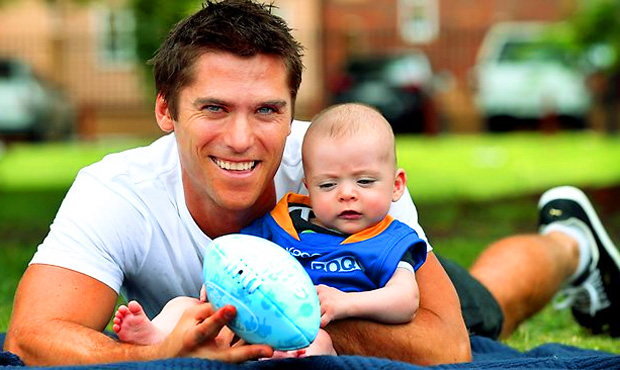
Simon Black, and his wife Catherine, welcomed their second child on January 3, and have named their son Lucas. Lucas Black was born at 11:54 pm, and weighed 3.7 kg (8lb 2 oz). Lucas joins big brother Lachlan, aged 2 (Lachlan’s birth was announced on the blog).

Co-captain Jed Adcock, and his wife Hayley, welcomed their second child on September 10 last year, and have named their son Archie Edward. Archie Adcock weighed 2.8 kg (6lb 4oz) and was 51 cm in length. He joins big sister Lily, aged nearly 3 (Lily’s birth was mentioned on the blog).

(Photo shows Simon Black with his son Lachlan)

Famous Names: Mitchell and Mervyn

Tags

, , , , , , , , , , , , ,

Mitchell Johnson Media Session

It is a glorious summer: beautiful weather, cloudless blue skies, golden sunshine, and best of all – victory in that ancient international cricketing rivalry, the Ashes. Having lost to England during the northern summer of 2013, Australia was itching to get revenge back on home soil, and we did.

For whatever reason, England failed to perform in Australia and had already lost the Ashes 3-0 by Christmas. The series finished 5-0 to Australia, only the third time in history such a whitewash has been achieved, and England lost all 10 wickets in every innings of the Test series – the first time either side has forfeited 100 wickets in Ashes history. Little wonder we celebrated wildly at the Fan Day at the Opera House yesterday, having taken down the team which was ranked #1 in the world and were favourites to win.

Mitchell Johnson was awarded Man of the Series, the fast bowler having taken 37 wickets – the most in an Ashes series in Australia since the late 1970s. Even more remarkably, this was a comeback with a vengeance, because not so long ago, Mitchell was battling injury, his self-confidence destroyed by the jeering of England’s fan base, the Barmy Army (a jingle about Mitchell Johnson is still their most popular song, and I use the word “song” extremely loosely).

Quite apart from his Barmy Army-silencing performance (and I use the word “silencing” with great poetic licence), Mitchell’s value during the Ashes was as a psychological weapon, because he seemed to strike fear into the English batsman. His secret? Maybe it was his training, the confidence brought about by fatherhood, or a pep talk by a war hero, but nearly everyone was convinced it was his moustache. No, seriously.

Mitchell grew a moustache for Movember to raise money for men’s health, but was urged not to shave it off at the end of the month by selector Mervyn “Merv” Hughes, who sports an impressive moustache himself. A public campaign and $10 000 donation from Gillette convinced Mitchell to keep the mo, and it seemed to work.

I was following the Ashes on the BBC, and was interested to see how much that moustache affected the English: it was the “menacing mo”, “the terrifying tash”, “the malicious moustache”, “the fearsome face-fuzz”, or the “horrid horseshoe”, and Mitchell became the “pantomime villain”. Add one moustache, and suddenly this shy, quiet man had become a bowling nightmare to the English.

Unfortunately, Mitchell says the magic mo must go for now, but confirms he will be growing it back when we take on South Africa later in the summer. I just hope it hasn’t lost its mystique by then.

Mitchell is an English surname of several origins. It is said that the first people with this surname came from Mitcham in Surrey (now in the outer suburbs of London), with Mitcham meaning “big town, large settlement”. Mitchell can also be derived from the male name Michel, a Middle English nickname for a large person, meaning “big”. The Normans had the name Michel, but in their case it was a form of the name Michael.

The surname Mitchell must have moved north during the medieval period, as it became particularly associated with Scotland. The Gaelic form of the name is based on the name Michael. In Ireland, Mitchell is used to Anglicise the Irish surname Ó Maoilmhichil, from the clan name Uí Mhaoilmhichil, meaning “devotees of the Archangel Michael”.

The surname Mitchell is one very well known in Australia, for Sir Thomas Livingstone Mitchell was a 19th explorer of Australia. Originally from Scotland, he joined the British army, where he distinguished himself during the Napoleonic Wars, then became a surveyor in New South Wales. He explored New South Wales, Victoria and Queensland, and published two books which included close and sympathetic observations of the Aboriginal people he encountered.

He is also remembered for the invention of the boomerang propeller, and being the last man in Australia to challenge anyone to a duel (both marksmen missed, so nobody was hurt). Many things are named after him, including the town of Mitchell and the Mitchell River in Queensland, the Mitchell Highway between Queensland and New South Wales, and Major Mitchell’s Cockatoo, a very beautiful bird with soft pink and grey markings, much admired by Sir Thomas Mitchell.

Mitchell has been used as a boys name since at least the 16th century, and turns up early in Scotland. There are many men named Mitchell in Australian records, and lots of them emigrated from Scotland or have Scottish surnames.

The name Mitchell has charted in Australia since the 1940s. It climbed gently until the 1980s (the decade when Mitchell Johnson was born), when it suddenly shot into the Top 25 from virtually nowhere. It peaked in the 1990s at #12, and is still stable in the Top 100. Currently it is #45 nationally, #77 in New South Wales, #53 in Victoria, #51 in Queensland, #41 in South Australia, #37 in Western Australia, and #91 in Tasmania.

Australia is the only country in the world where the name Mitchell is still in the Top 100, and with the success of Mitchell Johnson, I don’t see it going anywhere soon. It’s an Australian modern classic with a lot of history, and a name we hold dear.

Mervyn is derived from the Welsh name Merfyn, of uncertain meaning. It is sometimes said to be a variation of the Welsh name Myrddin (“sea fortress”), from whence we get Merlin, but it may mean “big”, and is often translated as meaning something along the lines of “famous to the marrow”. There was a medieval Welsh king named Merfyn.

The name Mervyn was #66 in Australia in the 1900s, and peaked in the 1920s at #44 before declining and leaving the Top 100 in the 1950s. It hasn’t charted since the 1970s. It may be dated, but it is a uniquely Australian name, because in no other country (not even Wales) did it ever become popular.

Two names more Australian than you might have thought – but which one do you prefer?

POLL RESULTS
Mitchell received a respectable approval rating of 68%, while people were less enthusiastic about Mervyn, with an approval rating of 22% – not one person loved the name Mervyn.


Celebrity Baby News: Manly Babies

Tags

Jamie Buhrer

Two players from the NRL’s Manly-Warringah Sea Eagles have recently welcomed daughters.

Kieran Foran, and his partner Rebecca Pope, welcomed their first child today, and have named their daughter Emerson Jane. Kieran has played his entire career with Manly, and also plays for the New Zealand national team.

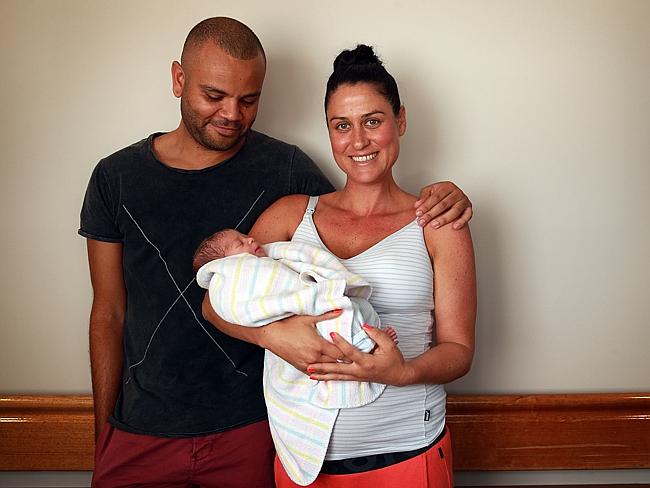
Jamie Buhrer, and his partner Grace Adler, welcomed their first child last November, and have named their daughter Isla. Jamie made his NRL debut in 2010 for the Sea Eagles. Last year he was chosen for both City Origin, and for New South Wales in the State of Origin series.

(Photo shows Jamie and Grace)

Could These Be The Top 100 Names of the Future?

Tags

, ,

imagesThese are my picks for names to keep an eye on, based on certain names that kept turning up in birth announcements, but are not yet on the national Top 100.

GIRLS

Would Already Be Top 100 If Combined Spellings Were Counted

  • Alana/Alanna/Alannah – Alana is already Top 100 in Victoria
  • Lexi/Lexie
  • Indi/Indie/Indy
  • Macey/Maci/Macie/Macy
  • Mali/Mahli/Marlee/Marley/Marli/Marlie

On Track to Reach the Top 100

  • Bonnie – maybe as soon as this year, already Top 100 in Victoria
  • Harriet – maybe as soon as this year, already Top 100 in Victoria
  • Billie – maybe as soon as this year, already Top 100 in Victoria
  • April – maybe as soon as next year, only just outside the Top 100
  • Asha – maybe as soon as next year, only just outside the Top 100
  • Pippa – probably within the next couple of years, already Top 100 in some states
  • Elsie – probably within the next couple of years
  • Maggie – perhaps within the next couple of years
  • Florence – perhaps within the next 5 years
  • Freya – perhaps within the next 5 years
  • Kaylee – perhaps within the next 5 years
  • Adeline – perhaps within the next 10 years
  • Georgie – perhaps within the next 10 years
  • Mabel – perhaps within the next 10 years

Possible Future Top 100 Names

  • Anastasia
  • Felicity
  • Maisie
  • Peyton/Payton
  • Darci/Darcie/Darcy
  • Zahlee/Zahli/Zali/Zarli
  • Amity
  • Makenna
  • Everley
  • Indigo

Long Shots

  • Clementine
  • Cleo
  • Emmeline
  • Susannah

BOYS

Would Already Be Top 100 If Combined Spellings Were Counted

  • Louis/Lewis
  • Caden/Cayden/Kaden/Kayden
  • Cobi/Cobie/Coby/Kobi/Kobe/Koby

On Track to Reach the Top 100

  • Spencer – maybe as soon as this year, already Top 100 in Victoria
  • Zane – probably within the next couple of years
  • Vincent – perhaps within the next couple of years
  • Jimmy – perhaps within the next 5 years
  • Theodore – perhaps within the next 5 years

Possible Future Top 100 Names

  • Jude
  • Cruz
  • Ari
  • Axel
  • Jax
  • Xander/Zander
  • Asher
  • Sonny
  • Parker
  • Nash
  • Lenny
  • Kade
  • Alfie
  • Cohen
  • Sidney
  • Maximus

Long Shots

  • Camden
  • Layne

NOTE: The future of boys names is much less predictable, because in a lot of ways parents are more conservative when naming girls. Girls tended to have traditional names with a history that could be tracked, while boys much more likely to have “new” names that have only recently come into common use. On the other hand, when girls were given unusual names, they tended to be much more out there than a boy with an unusual name.

The Waltzing More Than Matilda Top 100 Baby Names of 2013

Tags

,

You will not seen another Top 100 like this one. It is a list of names I most commonly saw in birth notices and newspaper stories during 2013, and the numbers are not an absolute tally of sightings of each name – which would have brought on a nervous breakdown – but how many times I saw a particular name in a single week. (So for a name to get a tally of 4, I would have seen two examples within the same week, twice in the year).

These non-unique names are definitely weighted in a particular direction, which explains why they won’t look like the national Top 100 for last year. I counted all variant spellings as a single name, so that the many spellings of names like Marley and Kayden were taken into account.

The papers overwhelmingly reflect what people of European descent name their children, so that Muhammad, which is a Top 100 name, was only seen once in an entire year. Most of the names are from the east coast of Australia, with a concentration in Victoria (Victorians seem much more keen on birth notices), and there is a strong representation from rural, regional and outer suburban areas.

Even so, it came as a surprise how different it looked to the official version – names like Amity and Nash were suddenly in the Top 100, while rising names like Rose and Declan don’t make the cut. I suspect all of us have our own Top 100 in our heads, which is why some people are surprised to find Olivia is a popular name, and wonder why Matthew doesn’t rank higher when they see it everywhere.

This is my personal Top 100 – perhaps not statistically valid, but still worth sharing, I think. How does it compare to your own personal Top 100?

GIRLS                                                          BOYS

  1. Charlotte 134
  2. Sophie 95
  3. Amelia 85
  4. Mia 80
  5. Ava 75
  6. Ruby 72
  7. Chloe 70
  8. Lucy 58
  9. Grace 54
  10. Ella 51
  11. Isla 51
  12. Isabel/Isabelle/Isobel 50
  13. Olivia 50
  14. Lily/Lilly 49
  15. Matilda 46
  16. Zoe 45
  17. Scarlett 44
  18. Madison/Maddison 43
  19. Emily 41
  20. Isabella 39
  21. Evie 37
  22. Ivy 34
  23. Georgia 33
  24. Sofia/Sophia 32
  25. Madeleine/Madeline 26
  26. Annabel/Annabelle 25
  27. Sienna 24
  28. Emma 22
  29. Layla 22
  30. Imogen 20
  31. Summer 20
  32. Addison 19
  33. Hannah 19
  34. Lila 19
  35. Eliza 18
  36. Mackenzie 18
  37. Alexis 17
  38. Harper 17
  39. Stella 17
  40. Abby/Abbey/Abbie 16
  41. Charlee/Charli/Charlie 16
  42. Indiana 16
  43. Maya 16
  44. Michaela/Mikayla 15
  45. Milla 14
  46. Alyssa 12
  47. Hayley 12
  48. Indi/Indie/Indy 12
  49. Jessica 12
  50. Tahlia/Talia 12
  51. Willow 12
  52. Eloise 11
  53. Poppy 11
  54. Savannah 11
  55. Abigail 10
  56. Ellie 10
  57. Elsie 10
  58. Macy 10
  59. Taylor/Tayla 10
  60. Zara 10
  61. Aaliyah 9
  62. Audrey 9
  63. Bella 9
  64. Molly 9
  65. Alannah 8
  66. Claire/Clare 8
  67. Evelyn 8
  68. Kaylee 8
  69. Lacey 8
  70. Marley 8
  71. Paige 8
  72. Phoebe 8
  73. Harriet 7
  74. Heidi 7
  75. Lara 7
  76. Peyton 7
  77. Rachel 7
  78. Violet 7
  79. Amber 6
  80. Aria 6
  81. Holly 6
  82. Lola 6
  83. Mila 6
  84. Pippa 6
  85. Bonnie 5
  86. Eden 5
  87. Lauren 5
  88. Makenna 5
  89. Alice 4
  90. Amity 4
  91. April 4
  92. Caitlin 4
  93. Chelsea 4
  94. Darcy 4
  95. Ebony 4
  96. Elise 4
  97. Elizabeth/Elisabeth 4
  98. Everly 4
  99. Georgie 4
  100. Jade 4
  1. Jack 119
  2. William 113
  3. Thomas 101
  4. Oliver 93
  5. Lachlan 87
  6. Noah 84
  7. Cooper 77
  8. Max 71
  9. Jackson/Jaxon 69
  10. James 68
  11. Henry 60
  12. Harrison 54
  13. Harry 54
  14. Ethan 50
  15. Charlie 49
  16. Flynn 47
  17. Oscar 46
  18. Riley 45
  19. Joshua 44
  20. Lucas 44
  21. Mason 43
  22. Benjamin 42
  23. Liam 40
  24. Jacob 37
  25. Isaac 36
  26. Nate 34
  27. Xavier 34
  28. Archie 32
  29. Hunter 31
  30. Samuel 30
  31. Levi 30
  32. Angus 29
  33. Logan 29
  34. Alexander 28
  35. Hudson 28
  36. Patrick 28
  37. Darcy 25
  38. Mitchell 25
  39. Edward 24
  40. Louis/Lewis 24
  41. Archer 23
  42. Hamish 23
  43. Leo 23
  44. Aidan/Aiden 22
  45. Lincoln 21
  46. Chase 19
  47. Luca 19
  48. Zac 19
  49. Beau 18
  50. Braxton 17
  51. Caleb 17
  52. Sebastian 17
  53. Elijah 16
  54. Connor 15
  55. Toby 14
  56. Daniel 13
  57. George 13
  58. Kobe/Koby 13
  59. Ryan 13
  60. Ashton 12
  61. Austin 12
  62. Finn 12
  63. Blake 11
  64. Kai 11
  65. Nicholas 11
  66. Spencer 11
  67. Nash 10
  68. Ryder 10
  69. Tyler 10
  70. Billy 9
  71. Brody/Brodie 9
  72. Hugo 9
  73. Jake 9
  74. Luke 9
  75. Brayden 8
  76. Caden/Kaden/Kayden 8
  77. Charles 8
  78. Dylan 8
  79. Eli 8
  80. Hayden 8
  81. Maxwell 8
  82. Owen 8
  83. Sam 8
  84. Xander/Zander 8
  85. Axel 7
  86. Jesse 7
  87. Joel 7
  88. Rory 7
  89. Callum 6
  90. Cody 6
  91. Hugh 6
  92. Jimmy 6
  93. Marcus 6
  94. Matthew 6
  95. Michael 6
  96. Rhys/Reece 6
  97. Tom 6
  98. Tyson 6
  99. Zane 6
  100. Anthony 5

E-Book: International Baby Names for Australian Parents

Tags

, , , ,

1412792_38719213

For a long time I’ve been aware that many Australian parents, as in other countries, are hoping to find a baby name which is little used, yet isn’t considered weird or bizarre either. I wondered how I could help parents find such names – what information might prove useful to them? 

It was easy to know what names are unusual in Australia: I could look through the data and find names that have never ranked here. A much harder task was to decide which of these names were not weird, and still usable.

Eventually, it occurred to me that if a name that was rare here was familiar or popular in other countries, it simply couldn’t be said to be a “bizarre” name. So I began searching for names which ranked overseas, but had never charted in Australia.

I added another “safety measure” to my list: they had to be names I had seen recently used for Australian babies. The only names I would accept were those I had personally seen in Australian use for babies born within the past five years.

No names I had heard of from friends or acquaintances; no names of elderly relatives or people I’d been to school with. They were names I had seen on babies and toddlers in real life, in birth notices, and in newspaper and magazine stories.

It was meant to be a blog entry, and as the list grew I thought it could be an entire blog series. By the end, I realised I’d written a short book.

There are 200 names, and each name has its own entry for meaning, history, famous namesakes, fictional namesakes and celebrity baby names, with an emphasis on Australian examples. Each entry also gives overseas rankings for the name. 

I’m making it available as a PDF document for sale at $1.99 through PayPal. Feel like buying it right now? Press this button! It will be sent to the e-mail address associated with your PayPal account.

Buy Now Button

I’ve also found that writing baby name books is quite addictive, and I’m currently working on something slightly more ambitious. Stay tuned!

Polly Catherine and Charlie Ace

Tags

, ,

845127-5eb51d40-7246-11e3-b21a-c1acf4d34253


Twins

Memphis and Scarlette

Ruby and Saphria


Girls

Eloise Ada (Charlie)

Grace Dorothy Valencia (Zoe, Lexi)

Hazel Skye (Florence)

Holland

Ivy Pearl (Lucy, Molly)

Krimsin

Lennox Lacey

Melody Ann

Polly Catherine (Oscar)

River Mae

Vada Jay (Ava, Fenn, Seth, Coen)

Xanthe Estelle (Erin, Mia, Cecily)


Boys

Boston Jae

Charlie Ace

Dane Rolland (Neve)

Elwood Wilson

Felix Jose (Saskia)

Javi Pax

Kelsey Lucas

Lachlan Bruce

Maverick Moses (Logan)

Mohammed Aayan

Tomislav Mirko

Zayn Isa (Ebs)

(Photo shows New Year’s fireworks display on Sydney Harbour)


Celebrity Baby News: Luke Carroll and Danica Sarno

388477-90761268-7290-11e3-a630-33dd96ee6490

Actor Luke Carroll, and his partner Danica Sarno, welcomed their first child on January 1, and have named their son Enzo Jett. Enzo Carroll was born at the Royal Hospital for Women in Randwick about 12.40 am, making him Sydney’s first baby for 2014. Luke also has a teenaged son named Marley from a previous relationship.

Luke started out in guest roles on television shows such as Lift Off and Ocean Girl, before finding fame in the 2002 film Australian Rules, where he played the Aboriginal star of an AFL team. Since then he has regular roles on television, including Home and Away, and appeared in other films, including The Alice and Stoned Bros. He co-hosted a travel show for SBS with Cathy Freeman called Going Bush and hosted the 2009 Indigenous award show, The Deadlys. Currently he is a presenter on children’s show Playschool, and is rehearsing for a new play called Black Diggers.

Danica grew up in Randwick, as did Luke, with both attending schools in the area. She has been a camp counsellor in California.

Celebrity Baby News: Zoe Tuckwell-Smith and Damon Gameau

Tags

Tropfest_2012_(6902288911)

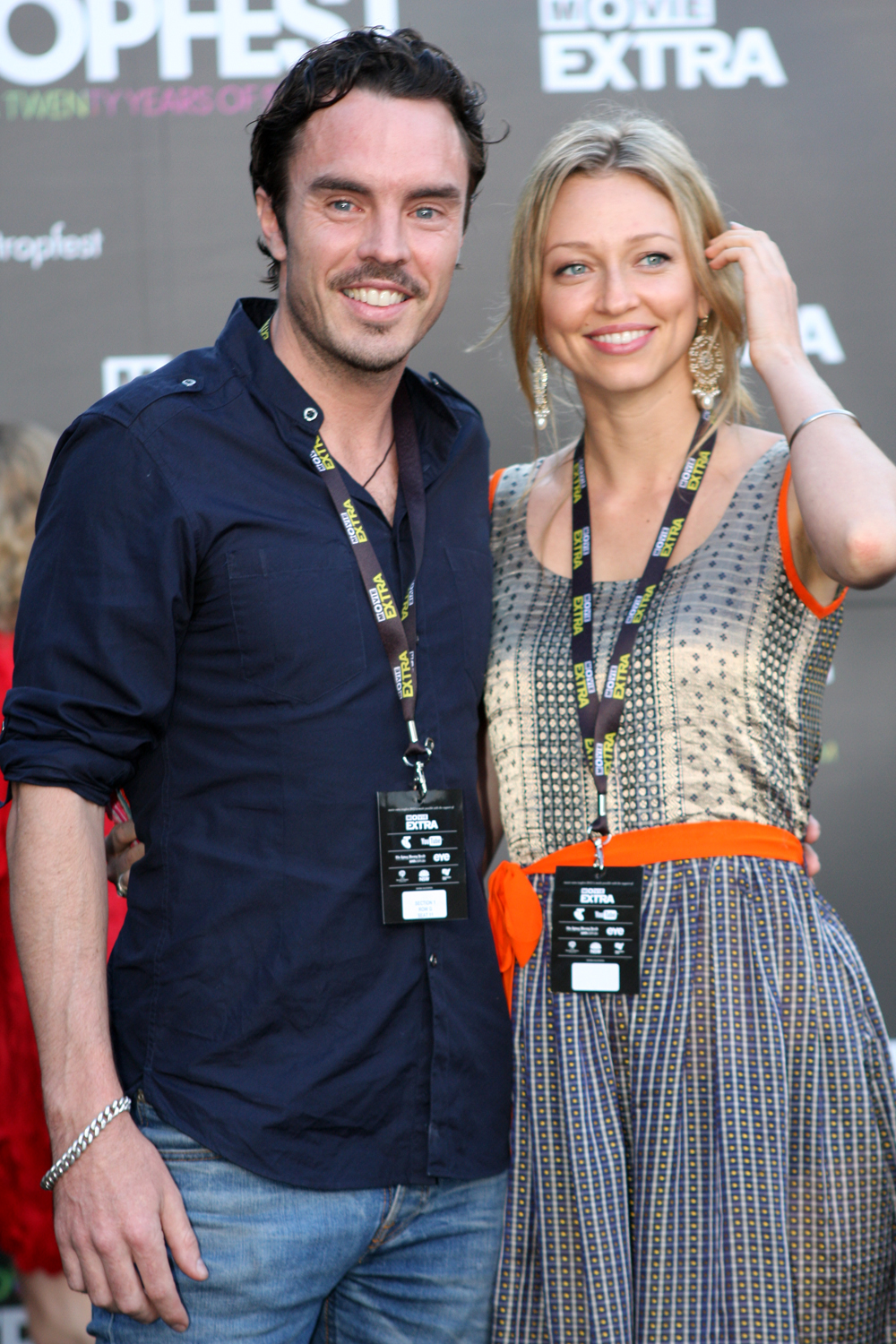
Actress Zoe Tuckwell-Smith, and her partner, actor Damon Gameau, welcomed their first child last November, and have named their daughter Velvet. Velvet Gameau’s birth and name were announced on Instagram.

Zoe is a NIDA graduate, and has been appearing in films and on television since 2004. She is best known for starring as Rebecca “Bec” Gilbert on the popular drama series Winners and Losers, which has made her a household name.

Damon is also a NIDA graduate who appeared in the award-winning drama series Love My Way, and the true crime mini-series Underbelly: A Tale of Two Cities. He has had a small part on US sit-com How I Met Your Mother, and was a regular on Irish drama series RAW. He has appeared in films The Tracker, Balibo and Thunderstruck, and received a Best Actor Award at the Sydney Underground Film Festival for his role in Vermin. Damon is also a film director, and his films One and Animal Beatbox have been shown at Tropfest, with Animal Beatbox taking the top prize.

Velvet is a luxurious baby name I covered this year (around the time of Velvet Gameau’s birth), and I’m interested to see whether more people might be tempted to choose this name now. It’s certainly a great way to start off the baby naming year!

(Photo of Zoe and Damon at Tropfest from Zimbio)

Waltzing with … Barton

Tags

, , , , , , , ,

centennial_park

Soon it will be New Year’s Day – the first day of 2014, with a whole calendar of days ahead to fill. Australians have something else to celebrate: the 113th anniversary of the Federation of Australia, which took place on January 1 1901.

Federation was the process by which the six British colonies of New South Wales, Victoria, Queensland, Tasmania, South Australia, and Western Australia were united as one nation – the Commonwealth of Australia. Unfortunately, we don’t celebrate this momentous occasion, having stayed up late New Year’s Eve, and we already have a public holiday anyway, so instead Australia Day is our national holiday.

The movement towards Federation began in the late 19th century, when enough people had been born in Australian to identify as “Australian” rather than British (even though they were still British subjects). Nationalism was celebrated in songs and poetry, with Banjo Paterson one of the poets who led the way, and technology had improved enough that people could travel and communicate across the country.

Despite this, it was hard to get everyone interested in being federated, as there were so many issues to resolve. At one time, it was thought New Zealand and Fiji might want to join, but for some reason they didn’t (New Zealand showed interest, took a raincheck and never called us back). Smaller colonies were convinced that big ones like New South Wales and Victoria would end up running the show, while the labour movement worried that it might distract everyone from industrial reform.

There was also the problem of what model we were to follow in federating the colonies. The United States had managed to unify their colonies – but they did so through a bloody revolution, and becoming a republic. Canada seemed a promising candidate, but it was thought to be too highly centralised, which brought out the paranoia of smaller colonies all over again. Switzerland was another possibility, but it had pretty much followed the American model anyway.

In the end, the United States was the obvious model, and we did a bit of a mix-and-match – using the US Constitution as a guide, while retaining the Westminster system, and passing on the revolution and the republic. Like the United States, Australia leaves a few big things in the hands of the federal government, while allowing the states the freedom to handle a whole raft of smaller things. We both have a Lower House and a Senate, and the most obviously American thing of all – our colonies became states, not provinces or cantons or counties or regions or departments.

One of the early supporters of Federation was a New South Wales lawyer and politician named Edmund Barton (Toby to his friends since childhood, for reasons I have been unable to ascertain). Barton had early on shown political promise when he umpired a cricket match between England and New South Wales which turned ugly, resulting in international cricket’s first riot (Banjo Paterson was amongst the rioters who invaded the pitch). Barton showed presence of mind in defusing the situation, and it is thought this helped him first become elected to the Legislative Assembly.

Barton was leader of the federal movement in New South Wales, and addressed nearly 300 meetings in both city and country, helped draft the Constitution, travelled to London to explain the federation bill to the British Government, and campaigned for federalism when the issue went to referendum. It was a total no-brainer to practically everyone that when a caretaker Prime Minister was appointed, it should be Barton, the leading federalist of the oldest state.

However it wasn’t quite so clear-cut to the first Governor-General, Lord Hopetoun, who asked the Premier of New South Wales, Sir William Lyne, to become the first Prime Minister. He doesn’t seem to have asked anyone’s opinion or gauged the public mood, and everybody had a fit, because Sir William had been the main opponent of federalism until he suddenly changed sides at the last minute once he realised that federation was definitely happening. Hopetoun blindly followed the protocol used by Canada, and it was such a disastrous decision that it has gone down in history as The Hopetoun Blunder.

After some rather tense negotiating, Lyne handed back his commission and Hopetoun swore Edmund Barton in as Australia’s first Prime Minister in Centennial Park, Sydney, on New Year’s Day 1901, and all his ministry as well – which included Sir William Lyne as Minister for Home Affairs.

One of the first tasks was to organise the first general election, which took place on March 29-30, and was different to today’s elections – voting was voluntary (about 60% voted), the first-past-the-post system was used, and every state had its own laws, so in some places women and Aborigines were allowed to vote, and in others they weren’t. No party won outright, but Barton’s Protectionist Party was able to govern with the support of the Labor Party, and it was felt that the nation’s first election had gone extremely well.

I remember some years ago (I think for the Centenary of Federation), there was a television advertisement which noted that many Australians didn’t know who their first prime minister was, although most knew that George Washington was the first president of the United States. Rather than decrying this failure in our education, the advertisement tried to make it seem like a good thing – apparently the lack of war made our first prime minister’s name forgettable.

Which is nonsense: plenty of other countries gained their first leaders without bloodshed, and I’m sure they know who they were. The Australian citizenship test used to ask who the first prime minister was, but this is no longer required. Feeble. (The US citizenship test still asks who the first US president was). No excuses – all Australians should know Edmund Barton was our first PM.

Barton is an English surname which comes from places named Barton in Lancashire, Staffordshire, Yorkshire and Kent, meaning “barley farm” in Old English. The one in Lancashire seems to be the earliest source of the surname. Barley was one of the first grains ever domesticated, and a staple food for peasants during medieval times. In fact, the word barn means “barley house”.

You may recall that A.B. “Banjo” Paterson, national poet and cricket rioter, was related to Edmund Barton through his mother, who was born Rose Barton. Paterson’s initials stood for Andrew Barton, and as his father was named Andrew, he went by his middle name, being known as Barty to his friends. The name Barton would be a good way to honour not only our first prime minister, but our favourite poet as well. You could use the Simpsonian Bart as the nickname, but I favour Paterson’s choice of Barty, which fits in with popular choices like Archie.

Name Combinations for Barton

Barton Aloysius, Barton Earle, Barton George, Barton Oswald, Barton Ramsay, Barton Thomas

Brothers for Barton

Arthur, Griffith, Reid, Stanley, Theodore, Winston

Sisters for Barton

Adelaide, Eliza, Ivy, Lucinda, Nell, Pearl

Note: Middle names and sibling names taken from names related to the Federation of Australia, and the lives of the early Prime Ministers

POLL RESULT: Barton received an approval rating of 53%. 29% of people thought it was a good name, but nobody loved it.

(Photo shows crowds filling Centennial Park in Sydney for the Federation Day celebrations of 1901)