• About
  • Best Baby Names
  • Celebrity Baby Names
  • Celebrity Baby Names – Current
  • Celebrity Baby Names – Past
  • Featured Boys Names
  • Featured Girls Names
  • Featured Unisex Names
  • Links to Name Data
  • Waltzing on the Web

Waltzing More Than Matilda

~ Names with an Australian Bias of Democratic Temper

Waltzing More Than Matilda

Category Archives: Waltzing with …

Waltzing with … Layla

07 Sunday Jul 2013

Posted by A.O. in Waltzing with ...

≈ 3 Comments

Tags

Arabic names, fictional namesakes, name combinations, name history, name meaning, name popularity, name trends, names from songs, popular names, sibsets

Layla-And-Other-Assorted-Love-Songs-Remastered-Super-Deluxe-Edition-CD3-coverThis Tuesday is the start of Ramadan, the ninth month of the Islamic calendar, and considered the holiest of the year. During Ramadan, Muslims are expected to fast during daylight hours, and abstain from smoking and sexual relations between sunrise and sunset. They are also encouraged to donate to charity or do volunteer work, and to read the Qur’an.

Muslim history in Australia predates 1788, for traders and fishermen from Indonesia are believed to have had contact with Indigenous Australians hundreds of years before European settlement, leaving their mark in language, culture and even genetics on the peoples of northern Australia.

However, Muslim emigration is usually dated from the mid-19th century, when Central Asians were brought here to work as camel-drivers in the desert – they were known as Afghans, although they were mostly from India. The train from Adelaide to Darwin is called The Ghan in their memory, and the first mosque was built in 1861 in South Australia for the “Afghan” community.

Immigration from Muslim countries increased during the 1970s, and today about 1.5 million Australians identify as Muslim, or 2.2% of the population. It is an ethnically, culturally and linguistically diverse religious group, with Lebanese-Australian Muslims the largest group within it (although most Lebanese-Australians are Christian). Around half of Muslims in Australia live in Sydney.

The most blessed night during Ramadan is Laylat al-Qadr, which can be translated as Night of Destiny (August 3 this year). It commemorates the night when Muslims believe Allah revealed the Qur’an to the prophet Muhammad, and it is a night to pray for blessings and salvation.

Layla means “night” in Arabic. It is sometimes interpreted by Arabic writers as “one who works by night”, with connotations of matters which are kept hidden or secret. Others see it as a name describing a dark beauty, or suitable for someone born during the hours of night – or even for a girl born on Laylat al-Qadr.

The name Layla is prominent in Arabic literature because of a medieval love story (supposedly based on real events) whose title can be roughly translated as Crazy for Layla. According to the legend, Qays and Layla were from the same Arabian tribe, and fell in love. The smitten Qays began obsessively composing poems in his sweetheart’s honour, to the point where he gained a reputation as being not quite right in the head. As a result, he acquired the moniker Majnun (“madman”).

When Majnun asked for Layla’s hand in marriage, her father refused, because he didn’t want a poetry-mad nutter as a son-in-law, and married her off to someone more stable. Poor lovesick Majnun began wandering alone in the desert, and could occasionally be sighted muttering poems to himself or writing what was presumed to be more poetry in the sand with a stick. Layla became ill and eventually died; some said she had died of a broken heart. Majnun was found dead in the wilderness in 688, near Layla’s grave. His last poems were carved on a rock near Layla’s final resting place.

The story is best known from the work of the 12th century Persian poet Nizami Ganjavi, who adapted it into a long narrative poem called Leyli o Majnun (“Layla and the Madman”). Nizami Gangavi’s poem is considered a literary masterpiece, and brings the story vividly to life. In his version, the lovers fell for each other while still in school, and were not permitted to marry because of a feud between their families – very much like Romeo and Juliet.

The romance was extremely popular, and mystics used it to illustrate spiritual truths, so that Majnun became a symbol not only for poets and lovers, but also for those seeking higher truths. Layla and Manjun are often referenced in literature, and the story has gained wide appeal in India, where it has inspired many films.

The story of Layla gained a new audience in 1970, when Eric Clapton’s song Layla was released. Based on his infatuation with model Pattie Boyd, then married to George Harrison, it uses the story of Layla and Majnun to illustrate madly despairing unrequited love. Another song from the same album, I Am Yours, quotes directly from Nizami Gunjavi. Unlike Layla and Majnun, Eric and Pattie did later wed, but the marriage didn’t last.

Layla has charted since the 1980s, when it debuted at #752. It was #353 for the 1990s, and #147 for the early 2000s. Layla entered the Top 100 in 2004, when it got to #98, and made the Top 50 in 2009, at #47. Currently it is #38 nationally, #28 in New South Wales, #42 in Victoria, #32 in Queensland, #32 in South Australia, #24 in Western Australia, #36 in Tasmania, and #35 in the Australian Capital Territory.

Layla has zoomed up the charts to become established as a popular girls name. Apart from its musical heritage, it fits in with the trend for girls name with an AY sound in them, such as Ava, Hayley and Kayla, and also with the L-L trend, such as that found in Lily, Lila and Lola. That means a Layla may be the only one in her class, but the other girls around her could have similar-sounding names.

Layla is pretty and simple with a nice meaning and a very romantic history, and it works well cross-culturally too. It’s popular, but its position has stabilised, so it’s not rocketing upwards any longer. If you have fallen deeply in love with the name Layla, then I don’t think anyone will think you are crazy for choosing it.

Name Combinations for Layla

Layla Carys, Layla Elise, Layla Jade, Layla Peri, Layla Scarlett, Layla Zoe

Brothers for Layla

Fabian, Jett, Ryder, Skandar, Tariq, Xavier

Sisters for Layla

Aaliyah, Evie, Jasmine, Sophie, Willow, Zara

Note: Middle names and sibling names partially based on real life examples

POLL RESULT: Layla received an approval rating of 94%, making it the highest-rated featured girls name of 2013. 34% of people liked it, and nobody hated it.

(Picture is of the cover of the album, Layla and Other Assorted Love Songs, by Derek and the Dominoes)

Waltzing with … Fletcher

02 Sunday Jun 2013

Posted by A.O. in Waltzing with ...

≈ 6 Comments

Tags

english names, Errol Flynn, famous namesakes, name combinations, name history, name meaning, name popularity, Old French names, popular names, sibsets, surname names, UK name popularity, US name popularity

Bounty-paintingBounty Day is on June 8th, and this year the festivities will be held on the 10th because it’s a weekend. Bounty Day is a major holiday on Norfolk Island, and celebrates the day that the descendants of the mutineers on the Bounty arrived on the island. The mutiny on the Bounty in 1789 is a tale which has often been told in books, movies, songs and TV shows, yet continues to be a subject of debate, with the relationship between Captain William Bligh and head mutineer Fletcher Christian at its centre.

There has been a tendency to portray Captain Bligh as a cruel tyrant who flogged his men into mutiny, but records show that his rule was generally mild and enlightened. For whatever reason, he and his master’s mate, Fletcher Christian, failed to get along. During the voyage, the ship’s crew enjoyed a lengthy stay on Tahiti, and its relaxed lifestyle seem to have made a return to naval discipline appear intolerable to the men; Bligh’s acid tongue, quick temper and insulting manner probably didn’t help.

Fletcher led the mutiny against Bligh while the ship was near Tonga, and took control of the Bounty, while Bligh and his loyalists were set afloat. The mutineers spent time in Tahiti, where Fletcher married Maimiti, the daughter of a local chief. From there, they kidnapped several of the locals and took them to Pitcairn Island, at that time uninhabited and incorrectly mapped. Once there, they sunk and burned the Bounty so that nobody could leave.

Perhaps they thought they had found an island paradise, but Pitcairn Island became plagued by murder, rape, slavery, alcoholism and insurrection. During one conflict, Fletcher Christian was reportedly killed, leaving behind his pregnant wife and their sons, Thursday October and Charles; his daughter Mary Ann was born after his death. Thursday and Charles are the ancestors of almost everyone with the surname Christian on Pitcairn and Norfolk Island, and the Christians are one of Norfolk Islands first families.

Norfolk Island was once a penal colony, and after the convicts had been repatriated to Tasmania, it was resettled in 1856 by people from Pitcairn Island, whose population (the descendants of mutineers and their Tahitian wives) had grown too large for it. Norfolk Island became part of the Commonwealth of Australia in 1901.

[If you have been worried about Captain Bligh all this time – don’t be. That capable seaman navigated his way to Timor across 3618 nautical miles of sea in 47 days, and made his way back to England, where he reported the mutiny to the Admiralty. Later he was appointed Governor of New South Wales, where he must have rubbed people up the wrong way again, as the Rum Rebellion saw him arrested and imprisoned by the rebels. Once all that mess had been sorted out, he was promoted].

Fletcher is an English surname which is an occupational name for an arrowsmith, someone who makes arrows. The word is derived from the Old French fleche, meaning “arrow”. It takes a great deal of skill to make arrows correctly, and during medieval times, the role of the fletcher became highly respected and well-paid.

The Fletchers trace their descent from Jean de la Fleche, a Norman noble who was granted lands in Yorkshire by William the Conqueror. Jean’s descendant, Sir Bernard Fletcher, moved to Scotland, where he was granted lands by King David I. The Fletchers forged strong relationships with the Campbells, the Stewarts and the McGregors; one of the Fletchers is said to have saved the life of Rob Roy McGregor when he was wounded. The Fletcher line continued their involvement in arrowsmithing for royalty and the nobility for several centuries.

The most famous Australian with the first name Fletcher is probably Sir (David) Fletcher Jones, the son of a Cornish miner who started his own highly successful menswear business in the 1920s. Fletcher Jones is credited with transforming men’s fashion in Australia, which gives this name a conservative, yet stylish, feel.

Fletcher began charting in New South Wales in the 1990s, when it debuted at #365. It peaked in 2009 at #156, and is currently stable at #178. Fletcher is #152 in Victoria, and is significantly more popular in Tasmania, where it is in the Top 100 at #56.

Given the connection between the islands of Pitcairn, Norfolk and Tasmania, it seems apt that Fletcher Christian’s forename should be most popular there. Another Tasmanian connection to the name is that Errol Flynn’s first film role was playing Fletcher Christian in In the Wake of the Bounty.

The name Fletcher is more popular in Australia than elsewhere – in the US, Fletcher is #790 and rising, and in the UK it is #253 and rising.

As surnames for boys become ever more popular, Fletcher is another which seems as if it has plenty of room for growth. The flipside to Archer, it connects us to an enigmatic adventurer who founded an island dynasty, and continues to haunt our imaginations.

POLL RESULT: Fletcher received an approval rating of 88%. 32% of people liked it, and 28% loved it.

Waltzing with … May

28 Sunday Apr 2013

Posted by A.O. in Waltzing with ...

≈ 11 Comments

Tags

anagram names, birth notices, double names, famous namesakes, flower names, middle names, month names, mythological names, name combinations, name popularity, nature names, nicknames, plant names, popular names, retro names, sibsets

eucalyptus-flower-bookIt will be May very soon, and whenever that month comes around, it reminds me of one of my favourite Australian authors from childhood – May Gibbs. Born in England, May grew up in Western Australia, and it was while riding her pony around the bush as a little girl that she began writing stories and drawing pictures based on the native flora.

After going to art school, she became a professional illustrator in the early twentieth century, and was most famed for her “gumnut babies” – plump little cherubs scantily dressed in gumnuts, gumblossom and gumleaves. She even produced postcards of the gumnut babies to support the war effort during WW I, and her house was called Nutcote.

Later she wrote stories to accompany her enchanting drawings, the best-known being the Snugglepot and Cuddlepie series. Adults are charmed by the stories’ sense of fun, but for small children, they are filled with adventure and excitement, and can even be frightening, due to the villains of the story, the wicked Banksia Men. Without being sickly or sentimental, the subtle message of the stories is always that we must care for each other, and for the world around us.

After growing up with May Gibbs’ picture books, it is impossible to walk through the Australian bush and not see it differently; she gave us our own fairy tales and our own mythology of nature. And because many eucalyptus trees flower in autumn (not to mention some banksia species), you can see “gumnut babies” and “banksia men” for yourself in May.

The name May appears to have begun life as a short form of names such as Mary and Margaret, but very soon was associated with the fifth month of the year.

The month of May is generally said to be named by the Romans in honour of the goddess Maia, whose name may mean “greater”. She probably didn’t have a connection to the Greek goddess Maia originally, but the two goddesses became gradually merged into one. Maia was a mother goddess, an earth goddess, and encouraged growth and abundance. May is in the spring in the northern hemisphere, so readily suggests the idea of fecundity.

The poet Ovid said that the month was named for the ancestors, also connected to the word for “greater”; I’m not sure if this was his own idea or one in wide circulation in his day. On the first of May, the Romans sacrificed both to the goddess Maia and to the ancestor spirits who were guardians of the city.

The first of May has quite a history as a day of celebration. In Ireland, it is the Celtic festival of Beltane, which marks the beginning of the summer; this is observed by Neo-Pagans around the world. Related to this is May Day, a European celebration of spring and fertility which often involves dancing around a phallic Maypole decorated in blooms, and choosing a Queen of the May, as if still honouring a spring goddess. In Catholic tradition, the month of May is sacred to the Virgin Mary and the flowering of her spirituality; a continuation of the devotion to floral mother figures.

Another floral connection is the word mayflower, which can refer to several different flowering species, but traditionally is the hawthorn, also known as may, mayblossom, may tree or may thorn. The hawthorn is one of the flowers associated with Beltane, and in Ireland you can make wishes on the maytree during this festival. It is also said that they are inhabited by fairies, especially if you see a lone hawthorn bush out in the wild. To bring us back full circle, hawthorn was sacred to the goddess Maia.

The name May was at its highest popularity in the 1900s, when it was #41 for the decade, and had left the Top 100 by the 1930s. It left the charts entirely between the 1960s and 1980s, but has remained in modest use since the 1990s. Currently it is #557 (11 births) in New South Wales and #489 (10 births) in Victoria.

I should have said in modest use as a first name, because May gets a real workout in the middle position. You can’t read through a few pages of birth notices without seeing name combinations such as Charlotte May, Emma May, Harper May, Pippa May and Zara May – not to mention double names like Gracie-May, Ella-May and Lily-May.

You might say that other names are similarly popular in the middle, such as Elizabeth, Grace and Rose – and Alice is quickly joining their ranks. However, all these names are in the Top 100 and either rising or stable, so they are clearly not being neglected as first names.

Poor May lies in the doldrums, with parents preferring Maya and Mia. Even May’s big sister Mary and anagram twin Amy are much more popular, and April is far more common as a name than the following month.

Yet there is something so simple and sweet about May; it sounds old-fashioned without being the least bit musty. If you would like an underused retro name which still seems fresh and youthful, why not consider rescuing May from the middle, and putting her front, rather than centre?

Name Combinations for May

May Amelia, May Elizabeth, May Kathleen, May Luella, May Sophia, May Victoria

Brothers for May

Charlie, George, Harry, Samuel, Tobias, William

Sisters for May

Alice, Clara, Lillian, Nettie, Rose, Sadie

POLL RESULT: May received an approval rating of 93% – just 1% behind the highest-rated girls name, Layla. 37% of people liked the name May, and 35% loved it.

Waltzing with … Neville

24 Sunday Mar 2013

Posted by A.O. in Waltzing with ...

≈ 2 Comments

Tags

aristocratic names, dated names, english names, famous namesakes, fictional namesakes, Harry Potter names, honouring, locational names, middle names, name combinations, name history, name meaning, name popularity, nicknames, Old French names, sibsets, surname names

Bonner - 700_tcm16-37336Today is Palm Sunday, which commemorates the triumphal ride into Jerusalem by Jesus about a week before the Resurrection. The people hailed him as if he were a victorious king, laying palm branches in his path. We already know that James Cook named the Whitsunday Islands and Trinity Beach after important days in Easter-tide, and on Palm Sunday 1770, he named the Palm Islands in northern Queensland after the day. After World War I Palm Island became an Aboriginal settlement, where the government maintained a repressive control over the Indigenous population.

On March 28 it will be 91 years since Aboriginal activist and Jagera elder Neville Bonner was born, and another tie-in with this time of year is that Neville once lived on Palm Island. Born on a small Aboriginal island settlement in northern New South Wales, he never knew his father and received almost no formal education. After working as a farm labourer, he moved to Palm Island with his family in 1946, and became assistant overseer of the settlement.

His time on Palm Island gave him both an interest and experience in politics, and after moving to Ipswich in 1960, he became the president of moderate indigenous rights organisation One People of Australia League, and an office holder in the Liberal Party. He was the first indigenous Australian politician, and elected senator in his own right four times.

Neville was appointed to the board of the ABC, and the council of Griffith University, which also awarded him an honorary doctorate. In 1979 he was named Australian of the Year, and in 1984 appointed as Officer of the Order of Australia. After his death, the Neville Bonner Memorial Scholarship was created for Indigenous students to take honours in political science. There is a Queensland electorate and a Canberra suburb of Bonner, named after him.

Neville is an English surname which was introduced to Britain by the Normans, and refers to a French place name in Normandy, either Neuville or Neville. Both places mean “new settlement” in Old French, and are common names of towns in France.

The House of Neville is an aristocratic English family which can trace its lineage back to Anglo-Saxon times. Although they married into the Norman nobility and assumed a Norman surname, the male line of the family had been ruling landowners in Northumbria since before the Conquest, with their ancestral seat near Durham, and were already wealthy and powerful in their own region.

The Nevilles continued to gain power, often appointed to prestigious royal offices and administrative roles. Ralph Neville was one of the founding members of the Peerage of England, being one of those summoned to sit in the House of Lords when it was established in 1294, and by the 14th century the family owned large tracts of the north of England.

They married into the royal family, but lost a great deal of power by getting involved in the War of the Roses, and also backing the wrong horse by supporting Mary, Queen of Scots instead of Elizabeth I (the Nevilles also claimed descent from one of the royal families of Scotland). Although their glory days were over, the Nevilles continued gaining earldoms and baronies through a junior line of the family, and they are still members of the peerage.

Neville can be found used as a first name from the 16th century, but remained extremely rare until the 18th century. Given that the Nevilles were so powerful in the north, you might expect to find the name greatly more common there than in the southern counties, but that doesn’t seem to be the case. It did appear to originate in Lincolnshire though, which is one of the many areas where the Nevilles owned estates and had loyal political supporters.

In Australia, Neville just squeezed onto the Top 100 of the 1900s at #99. It continued rising and peaked in the 1920s (when Neville Bonner was born) at #30; it didn’t leave the Top 100 until the 1960s, missing out by only a few places at #104. Neville hasn’t charted at all here since the 2000s.

It is sometimes suggested that the character of Neville Longbottom from the Harry Potter books could help raise the popularity of this name; however, it seems that almost as soon as the first book was published, Neville disappeared from the charts altogether.

The trouble was that Neville Longbottom, although a good person and loyal Gryffindor, was not necessarily an attractive character to parents. Chubby, unpopular and low on self-esteem, he seemed to be dogged by the chronic bad luck suffered by the self-conscious and unconfident. He lost and forgot things, had minor accidents, was bullied by both students and teachers, and was a mediocre student except in Herbology.

In the fifth book, The Order of the Phoenix, it was revealed that Neville’s parents, brave and gifted warriors in the fight against Voldemort, had been tortured to madness and permanently institutionalised. Although this evoked enormous sympathy for Neville, it didn’t help to make his name seem more usable. Nobody was saying, “Yes, I’d love to name my child after a character with insane parents, I can really relate to that”.

With Harry’s encouragement, Neville’s skills as a wizard improve and his courage grows. Once out of Harry’s shadow, he becomes the leader of the resistance group at Hogwarts, the protector of those younger and weaker, and a vital part of Voldemort’s downfall. He is the story’s alternate hero – brave, noble, kind, selfless, and pure-hearted.

Is this late blooming enough to rehabilitate Neville as a name? Or will parents continue to think of the awkward klutz that Neville is for most of the book series?

Neville is a dated name, but we have seen other old-fashioned names come back into use and even become popular. It’s a little clunky, and a tad geeky, but also solid and dignified. I often see Neville used as a middle name to honour a great-grandparent, and I wonder when someone might feel brave enough to use it up front again. Older people will find it almost irresistible to use the long-popular nickname “Nifty” Neville, but the standard Nev still sounds surprisingly dashing.

Name Combinations for Neville

Neville Anthony, Neville Charles, Neville Frederick, Neville John, Neville Peter, Neville Winston

Brothers for Neville

Edwin, George, Harold, Ralph, Stanley, Theodore

Sisters for Neville

Cecily, Emma, Flora, Isabel, Peggy, Susan

POLL RESULT: Neville received an approval rating of 69%. 26% of people liked the name Neville, and only 4% hated it.

(Photo shows Senator Neville Bonner 1979; image from the National Archives of Australia)

Waltzing with … Orange

17 Sunday Feb 2013

Posted by A.O. in Waltzing with ...

≈ 2 Comments

Tags

Banjo Paterson, Celtic names, colour names, Devon names, english names, famous namesakes, French names, fruit names, historical records, locational names, middle names, mythological names, name combinations, name history, name meaning, name trends, nature names, patriotic names, plant names, rare names, royal names, Sanskrit names, sibsets, surname names, tree names, unisex names, vocabulary names

Orange jacket Postcard autumn leavesToday is Banjo Paterson’s birthday, and as we have already covered his name, I thought it would be interesting to look at the name of his birthplace.

At the time of Paterson’s birth, his parents were living at Buckinbah Station, near the town of Yeoval (then known as Buckinbah). Because of the station’s isolation, Banjo’s mother Rose went to stay with her aunt and uncle, Rose and John Templer, at their homestead Narrambla, and it was here that she gave birth to her son. Narrambla is about 2 miles from the centre of Orange, and today lies on the city’s outskirts. Rose herself was born on a homestead near Orange, so it was rather a family tradition.

Orange is a city in the Central West region of New South Wales. It was founded in the early 1820s as a convict settlement, and farmers began settling in the area in 1829. The first discovery of gold in Australia was made in 1851 near Orange, leading to the gold rush. Orange became a trading centre for gold, and continued growing due to its good position for agriculture. It was declared a city in 1946. Orange is known for its fruit growing, especially apples, pears and stone fruits; ironically it is too cool to grow oranges in Orange. It is also a thriving wine making area, and has both gold and copper mining. It is a sister city to Orange in California.

Orange was first called Blackman’s Swamp, after John Blackman, the guide who brought the first explorers there. The name was changed to Orange by the Surveyor-General Sir Thomas Mitchell, in honour of William, Prince of Orange. Mitchell and the Prince had both been aides-de-camp to the Duke of Wellington during the Peninsular War in Spain in the early 19th century. The Prince of Orange later became the first King of the Netherlands.

The Prince’s title originally came from the Principality of Orange in the south of France. It began life as a settlement called Arausio, named after a local Celtic water god; the god’s name is said to mean “temple”, meaning the temples that are on the forehead, not a temple as in a building for worship.

The town’s name was corrupted into Orange, and by the Middle Ages, conflated with the word orange, which comes from the Sanskrit for “orange tree”, naranga. The colour was named after the fruit, and first used this way in the 16th century.

As a personal name, Orange has a longer history than you might imagine, for the girl’s names Orenge and Orengia are found in the 13th century. As this predates the name for the fruit, their etymology is extremely uncertain, and possibly has the same source as the French town, which first became a principality of the Holy Roman Empire in the 12th century.

The surname Orange is either from the place name, or derived from the female name, and when the English name Orange appears in the early 17th century, it may have been after the surname. The name first arises in Devon, and in the beginning was exclusively given to girls, although the name became unisex after William III of England, or William of Orange, gave it a masculine feel.

As a first name, Orange is extremely rare in Australian records, and given to only a few girls, but as a middle name is much more common, and given to boys in almost equal numbers as girls (the middle name Orange was sometimes combined with William in the case of boys, showing that William of Orange still had some naming clout).

Colour names for girls are popular at the moment, with many little girls named Scarlet or Jade; tree names such as Olive and Willow are in the girls’ Top 100, surnames such as Marlowe and Quinn are fashionable for girls, and it’s not unusual to see baby girls named after European cities, such as London or Vienna. Orange seems a more vibrant continuation of these trends. Indeed, you could see it as a hyper juiced-up Clementine.

Orange is such a bright, outgoing, fun colour that it seems very cheerful as a person’s name, but it also has a more serious side, because orange is connected to religion and spirituality. There’s a real yin/yang, East/West dichotomy with the name Orange. Is it as crazy as a clown’s wig? Or as serene as a meditating Buddhist monk?

Orange fruit gains its colour from carotenes, the same thing which makes deciduous leaves turn orange. By chance, the city of Orange is known for its spectacular displays of autumn leaves, and it is therefore known as “The Colour City” (also a play on its name). You might see Orange as a name that evokes the changing of the seasons, and the turn of the year.

Although Orange started life as a girl’s name, it did become unisex, and is so rare that it could be worn by either boys or girls. If you are shy about using this vivid name, it would make an eye-catching middle.

Orange is a bold choice as a baby name, though not without shades of subtlety, and it celebrates Australian geography and history. I think Orange is one of the more distinctive of the patriotic names, and has a real tang to it.

Name Combinations for Orange

Orange Beatrice, Orange Eliza, Orange Lily, Orange May, Orange Ruby, Orange Victoria

Brothers for Orange

Eden, Hartley, Fitzroy, Paterson, Sunny, Tennyson

Sisters for Orange

Audley, Breeza, Corindi, Junee, Kendall, Marinna

Note: Name combinations from historical documents; just for fun, sibsets include names of other towns in New South Wales

POLL RESULT: Orange received an approval rating of only 27% – the lowest-rated featured name of 2013, and the only one to score less than 50%. 40% of people hated the name Orange, and nobody loved it.

(Picture shows a postcard from the city of Orange)

Waltzing with … Sullivan

13 Sunday Jan 2013

Posted by A.O. in Waltzing with ...

≈ 1 Comment

Tags

celebrity baby names, famous namesakes, fictional namesakes, historical records, Irish names, mythological names, name combinations, name history, name meaning, name popularity, names from television, nicknames, royal names, sibsets, surname names, UK popularity, US popularity

thesullivansfamilynewWe are now about halfway through the summer holidays. Despite your best intentions that every day of the holidays will be productive, rewarding, and jam-packed with memorably fun activities, there always seems to come at least one day where you find yourselves slumped in front of the air conditioner watching non-ratings season re-runs on TV. Perhaps this is what has inspired me to cover a name from Australian television.

The Sullivans is one of Australia’s most successful soap operas. First aired in 1976, it centred on an ordinary middle-class Melbourne family, and the effects that World War II had on it. The war gave endless opportunities for dramatic plot-lines; various members of the Sullivan family, and their friends and neighbours, went off to battle, worked as nurses, opposed the war, developed psychological problems, married people from different countries, got divorced, committed suicide, were lost at sea, ran the black market, went to prison, were interned as enemy aliens, shot by the Nazis, killed by bombs during the London Blitz, and had to adapt to peace-time conditions.

The show’s producers went to great lengths to ensure historical and cultural accuracy. Not only did the sets use authentic period furniture, but even the weather in the show mirrored that which actually occurred on each day during the war. This attention to detail and high production standards, not to mention a new nostalgia for the recent past, made the show a success.

A consistent ratings winner which gained the acclaim of the critics, it won five Logie Awards in 1978 and was the first Australian drama series to be sold overseas; more than 45 countries broadcast The Sullivans, where it was most popular in the United Kingdom. It made a star of Lorraine Bayly, who played dignified matriarch Grace Sullivan, and employed dozens of Australasian actors in supporting roles. Like all good soaps, it provided a testing ground for young actors, and it was on the set of The Sullivans that later big names such as Mel Gibson, Kerry Armstrong, Kylie and Dannii Minogue, Sam Neill, Gary Sweet and Sigrid Thornton gained early experience.

Ratings for the show suffered after fan favourite Grace Sullivan was killed off, and as time went on, the war finished and most of the main characters were dead or had otherwise been written out. There was some talk of continuing the story into the 1950s and showing how Australia changed in the post-war era, but it was decided to let it come to an end in 1983.

Sullivan is an Anglicisation of the Irish surname O’Sullivan, which means “grandson of Súilleabhán”. The meaning of Súilleabhán is disputed, but one theory is that it means “dark eyed”. There are also Sullivans whose family name is derived from Súileacháin, meaning “quick eyed”.

The O’Sullivans originated in County Tipperary, and the original Súilleabhán was a direct descendant of one of the kings of Munster, so his dynasty is of royal blood. The O’Sullivans also claim descent from the first Celts to colonise Ireland, migrating there from northern Spain in 800 BC.

Although this story is mythological, it does have some truth to it, for DNA studies show that the Celts of Britain and Ireland (all Celts, not just the O’Sullivans!) are descended from a tribe of Iberian fisherfolk who migrated there about 6000 years ago, and formed what is considered to be the indigenous population of the British Isles. In fact, nearly everyone in Britain is descended from them, and any of us who have British and Irish ancestry are too.

Famous Australians Sullivans include Pat Sullivan, who helped create Felix the cat; Victoria Cross recipient Arthur Sullivan; Olympic swimmer Eamon Sullivan; and Paralympic athlete Tim Sullivan. Actor Sullivan Stapleton, who starred in Animal Kingdom, is a rare example of it as a first name.

Sullivan has never charted in Australia, and only a few with the name can be found in old records, although it is reasonably common as a middle name. In 2012, there were 16 baby boys given the name Sullivan in Victoria. In the US, it is #524 and rising briskly up the rankings; in England/Wales, it is #970, and also trending upward.

Last year country music singer Melinda Schneider welcomed a son named Sullivan James Gable, and this may help raise the name’s profile in Australia.

Sullivan is a name from Australian popular culture, and more specifically, it is one from Melbourne, where The Sullivans was set and filmed. It feels modern, yet at the same time rather nostalgic, looking back to the 1970s and ’80s – who in turn were looking back with nostalgia at the 1940s.

Irish-surnames-as-first names are a great favourite in Australia, as in other countries where a significant proportion of the population claim Irish heritage. For those wanting something more unexpected than old favourites like Ryan or Darcy, I think Sullivan fits the bill of being something that’s recognised as a “real name”, while still underused. Sully or Van could be used as nicknames.

Name Combinations for Sullivan

Sullivan James, Sullivan Kelly, Sullivan Lucas, Sullivan Maddox, Sullivan Patrick, Sullivan Thomas

Brothers for Sullivan

Beckett, Cooper, Finlay, Oscar, Ronan, Toby

Sisters for Sullivan

Aisling, Emerson, Isla, Kenzie, Maeve, Violet

Note: Middle names and sibling names partially based on real life examples

POLL RESULT: Sullivan received an approval rating of 96% – the highest-rated featured boys name of 2013, and the highest-rated overall. 40% of people thought it was okay, and nobody disliked it.

(Picture is a publicity shot from The Sullivans; photo from fan site)

Waltzing With … Meira

09 Sunday Dec 2012

Posted by A.O. in Waltzing with ...

≈ Comments Off on Waltzing With … Meira

Tags

hebrew names, holiday names, name history, name meaning, name trends, rare names

menorah

This post was first published on December 9 2012 and revised and re-posted on June 29 2016.

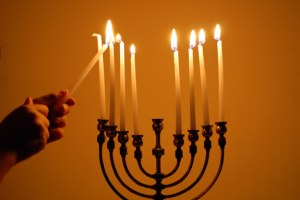
Today is the first day of the eight-day Jewish holiday of Hanukkah (with the day beginning at sunset yesterday, according to the Jewish calendar). It celebrates the re-dedication of the Second Temple in Jerusalem in the 2nd century BC, and Hanukkah literally means “dedication” or “establishing”.

According to tradition, there was only a single container of ritual olive oil to use, enough for one day, yet miraculously the oil lasted for eight days – in the meantime they got some more oil ready. Because of this, Hanukkah traditions are to light candles each day in a menorah, a candelabra which which holds eight candles for each day of the festival (and an extra one to provide available light). It is also traditional to eat foods cooked in oil, such as doughnuts, and potato pancakes, called latkes.

The first Jews to arrive in Australia were convicts with at least 15 on the First Fleet, and by the early 19th century, immigration from Britain and Germany meant that organised communities could exist in Sydney and Melbourne. The first synagogue was built in Sydney in 1844, with others soon following in other metropolitan centres. The gold rush rush of the mid-19th century attracted more Jewish immigrants, and numbers were swelled by refugees from the 1890s pogroms of Russia and Poland.

During the 1930s, 8000 Jews took up the Australian government’s offer of a visa for “victims of oppression” so they could escape Nazi Germany, and after the Second World War there was further European immigration from displaced person’s camps. Since then, more immigrants have arrived from Egypt, Iraq, South Africa and the former Soviet Union. At the last census, more than 97 000 people identified themselves as Jewish, with 80% of them living in Sydney or Melbourne.

Australia is the only country in the world, besides Israel, whose founding members included Jews. This meant that Jewish people were treated as equal citizens from the beginning, and were free to contribute in and help develop our scientific, economic and cultural life.

One of the first theatres in Australia was founded by Barnett Levey, whose mansion Waverley gave its name to the suburb. The composer Isaac Nathan was the first well-known European musician to settle in Australia, and the first to attempt a serious study of Aboriginal music. Sir Isaac Isaacs was the first Australian-born Governor-General in 1931, and during World War I, Sir John Monash led Australian troops in Gallipoli and on the Western Front. Both Isaacs and Monash have Canberra suburbs named in their honour, and Monash’s face is on the $100 bill.

Name Information
Meira is the feminine form of the Hebrew name Meir, meaning “(one who) illuminates”. Because Hanukkah is also known as The Festival of Lights, names that mean light, or which refer to light, clarity or brightness, are considered traditional choices for babies born during Hanukkah, or near that time.

The Israeli pronunciation of the name is something like meh-EER-ah, but it can be Anglicised to the simpler MEER-ah. If you wish to highlight this as a specifically Jewish name and don’t want it to be confused with other names, then I would go with the former pronunciation. However, if you prefer a name which blends in easily, then the second one would work very well.

The name is not a common one: last year there were 53 baby girls in the US named Meira, and in 2014 there were 5 babies given the name the name in the UK. Neither is it common in Israel for babies, being rather out of fashion.

But although Meira is not a stylish choice in Israel, it is right on trend in Australia, fitting in perfectly with Milla, Mila, Mira, Miranda and Almira, which are all rising in popularity. The name sounds similar to ones that are English, Latinate, Indian, Spanish, Arabic, Slavic, and Scandinavian, giving it a very multicultural feel.

Not only do we need light to exist, but in almost every culture light stands as a symbol for goodness, and most religions see it as a gift from, or an expression of, Divinity. As we get closer each day to the Summer Solstice, when the sun’s light reaches its peak, it’s easy to appreciate the blessings light brings us.

Names whose meanings and associations are connected to light nearly always seem beautiful, encouraging the bearer to let their own light shine the brighter.

POLL RESULTS
Meira received an excellent approval rating of 87%, making it one of the highest-rated names of 2012. 35% of people thought the name was okay, and only one person hated it.

Waltzing With … Archer

04 Sunday Nov 2012

Posted by A.O. in Waltzing with ...

≈ 8 Comments

Tags

Australian idioms, english names, famous namesakes, fictional namesakes, horse names, name combinations, name history, name meaning, New Zealand name popularity, nicknames, popular names, surname names, UK name popularity, US name popularity, vocabulary names

This article was first posted on November 4 2012, and revised and re-published on June 16 2016.

Famous Namesake
On Tuesday it is Melbourne Cup Day, which, more than any other day on the calendar, holds Australia in thrall. On the second Tuesday in November, at 3 pm, the nation collectively holds its breath while its most famous horse race, the Melbourne Cup, is run at Flemington in Melbourne.

It’s known as “the race that stops a nation”, because at 3 pm you are expected to drop whatever you’re doing to tune in and watch the Melbourne Cup. Workplaces and schools may take the afternoon off to hold Melbourne Cup lunches, or at the very least switch a TV on just before 3 pm. It’s a day when almost everyone will place a bet on the race – even if it’s just putting a dollar on the favourite, or taking part in the office sweep. In Melbourne, the day of the race is a public holiday.

American author Mark Twain went to the 1895 Melbourne Cup and commented, Nowhere in the world have I encountered a festival of people that has such a magnificent appeal to the whole nation. The Cup astonishes me. More than 110 000 people attend the race, and it’s a huge fashion-fest, with ladies frocking up, and gentlemen wearing formal suits. Others relish the opportunity to dress in outrageous costumes. It’s a day to eat, drink, gamble and be merry – a big, bright, boozy, and rather garish carnival.

The Melbourne Cup itself is the jewel in the crown of the Spring Racing Carnival, and is said to be the richest and most prestigious “two mile” handicap in the world. The prize money is over $6 million, and the trophy itself is a hand-crafted golden cup worth $125 000. It’s the biggest prize in any Australian sporting event.

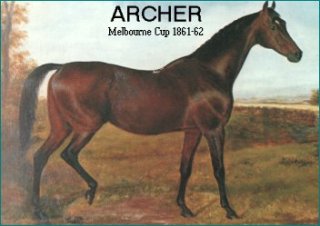
The first Melbourne Cup was run in 1861, and the winner that year was a horse named Archer. Race horses are often named quite logically, and Archer’s sire was William Tell. Born near Braidwood, in country New South Wales, he was trained near Nowra. Archer was a large horse, standing over 16 hands high with a powerful body. He ran badly in his first two races, and was rated poorly, until he won seven races in 1861, and was entered in the Melbourne Cup.

The first Melbourne Cup was action-packed. Three horses fell during the race (two of them died), two jockeys suffered broken bones, and one horse bolted off the course entirely, but the race gamely continued, and Archer won by six lengths in a time of 3 minutes and 52 seconds – the slowest in which a horse has ever won the Melbourne Cup.

He set another record the following year by winning the Melbourne Cup again; until the 1930s, he was the only horse to have won back-to-back Melbourne Cups. He was meant to enter in 1863 as well, but unfortunately there was a mix-up with telegrams and he didn’t manage to make the deadline in time.

Many legends have sprung up around Archer, such as that he had to walk all the way from Sydney to Melbourne in order to take part in the race, and that his jockey, Johnny Cutts, was an Aborigine from the Nowra area. Neither of these stories is true – Archer travelled to the race by steamship and rail, and Johnny Cutts wasn’t Aboriginal, and was from Sydney. The phrase since Archer won the Cup has entered our language, to refer to a long time distant.

Name Information
Archer is an English occupational surname referring to someone who uses a bow and arrows. The surname was introduced to Britain by the Normans, and by the end of the Middle Ages the Norman-French word archer had replaced the English bowman.

People have been hunting and fighting with bow and arrows since the Stone Age, and there are many famous archers in world mythology. During the Middle Ages, professional archers were rare, and most archers during war were recruited from the peasantry so archery was often seen as a lower-class pursuit. However, by the 14th century archers were used effectively in battle, making it a more attractive option. The use of firearms made archers obsolete, and the last recorded use of them in battle in England was in 1642.

The last known person to die from a British archer in battle was in 1940, when a German was killed during the retreat from Dunkirk by a delightfully eccentric officer named Jack Churchill, who insisted on fighting throughout World War II with bow, arrows and a sword; he also played the bagpipes while setting off grenades, to add to the effect. Incredibly brave and highly decorated, Churchill, known as Mad Jack, was later a military instructor in Australia, where he became an enthusiastic surfer. A shame we didn’t manage to keep him, as this man is now my personal hero!

Archer has been used as a personal name since the 17th century, and an early namesake was the British MP Sir Archer Croft, 2nd Baronet – Archer was his mother’s maiden name. Another who had Archer as a family name was the 18th century American politician Archer Mathews, a founder of Lewisburg in Virginia. In the 19th century, escaped slave Archer Alexander served as the model for the Emancipation Memorial in Lincoln Park, built by T.S. Eliot’s grandfather.

Archer joined the Australian Top 100 in 2012, and since then has continued rising. Currently it is #39 nationally, #49 in New South Wales, #27 in Victoria, #33 in Queensland, #29 in South Australia, #51 in Tasmania, and #38 in the Australian Capital Territory. It was one of the fastest rising names in Victoria last year.

Archer was a Top 1000 name in the US in the late 19th century, but spent many years off the charts until it returned in 2009. It has risen steeply since then, and is now #289. In the UK Archer has been in the Top 500 since 2012 and is currently #359. Archer is Top 100 in New Zealand – the only other country besides Australia where Archer is popular, although its popularity is highest in Australia.

No wonder this handsome name is so popular – it feels both vintage and contemporary, and fits in with the trend for names with an AR sound, and names connected with hunting and weaponry. One of its attractions is that it provides a way to get the popular nickname Archie without using Archibald, although Arch is another possibility.

Archer is a name from Australian history which celebrates the biggest sporting event of the year – one that almost everyone will participate in. It’s a name from the hunt and battlefield, but also referencing daring archers, from Robin Hood to the Hunger Games, and perhaps even comedy super-spy Sterling Archer from the animated show.

Could Archer follow its equine namesake and gallop to the #1 position on the charts? The odds are against it, but chances are it will continue cantering along the home stretch.

POLL RESULT
Archer received an outstanding approval rating of 93%, making it one of the most popular names of 2012. 36% of people loved the name Archer, and nobody hated it.

Waltzing With … Octavia

30 Sunday Sep 2012

Posted by A.O. in Waltzing with ...

≈ 6 Comments

Tags

celebrity baby names, famous namesakes, fictional namesakes, honouring, name combinations, name history, name meaning, name trends, names from television, Roman names, Shakespearean names, sibsets, UK name popularity, US name popularity

OLYMPUS DIGITAL CAMERA

This blog post was first published on September 30 2012, and revised and re-posted on June 1 2016.

It’s a long weekend in New South Wales, South Australia and the ACT, and in those places, Monday will be Labour Day, celebrating the Australian labour movement. This vibrant and influential strand in Australian politic began in the early 19th century with the first craft unions, who banded together to seek higher wages and lower working hours.

This was in the days when any servant who left their employment without their master’s permission would be hunted down as a bushranger, and even taking off from work for an hour would see you put in prison. In those times, a fifth of the prison population were there for that reason.

It was in August 1855 that the Stonemasons Associations in Sydney went on strike, demanding to work only eight hours each day. They won their cause and celebrated with a victory dinner on October 1. The following year, the stonemasons of Melbourne formed a protest march to demand an eight-hour working day; they were the first organised group in Australia to achieve their goal with no loss of pay.

The goal of “eight hours labour, eight hours recreation, eight hours rest” was one that unionists had been working towards since the early 19th century, and in 1916 it became law in Victoria, but didn’t come in nationally until the 1920s, with the forty-hour week enshrined in 1948.

It would be nice to say that was the end of the workers’ struggle, but the forty-hour week is still under threat. Indeed, thanks to e-mail and mobile phones sometimes it feels as if we never leave work at all. So tomorrow please switch off your laptop, and have your calls sent to voicemail, because we deserve at least one day a year free from employment.

In honour of the Eight Hour Movement we will look at a name connected to the number eight.

Name Information
Octavia is the feminine form of Octavius, a Roman family meaning “eighth”, from the Latin octavus, and taken from a personal name. Although the personal name is believed to have been given to an eighth child, it’s also thought that it could have been bestowed on those born in the eighth month (originally, October).

The Octavii originated from the town Velletri, in the Alban Hills just south of Rome. The area belonged to the Volsci people, who in ancient times were one of the most dangerous enemies of the Romans. The famous warrior queen Camilla was one of the Volsci.

The most famous member of this family is the Emperor Augustus, whose original name was Gaius Octavius Thurinus. Coincidentally, he went on to give his name to the month of August, which is the modern-day eighth month. Augustus had both a sister and a half-sister named Octavia, and the younger one, his sister, was the wife of Mark Antony.

The marriage was one of political convenience, but Octavia appears to have been a loyal and faithful wife. Famously, Mark Antony abandoned her and their children to take up with the fascinating Queen Cleopatra; he divorced her and not long after, committed suicide. Octavia was left as sole caretaker of their children, as well as the children from her first marriage, and she was also guardian to Mark Antony’s children to one of his previous wives, and to those he had by Cleopatra.

While Cleopatra was seen as the alluring temptress, glamorous, brilliantly intellectual and powerful, Octavia was cast in the role of the good wife and mother, who does what is best for her husband, her family, and Roman society. In his play Antony and Cleopatra, Shakespeare portrays poor Octavia as short and round-faced with brown hair, to ensure the dichotomy between the two is even sharper. I’m not sure what is supposed to be so hideous about being short, round-faced and brown-haired (sounds quite cute), but to the Elizabethans it meant “ugly”.

She may not have been the sexy one, but the Romans esteemed Octavia for her strength of character and nobility, and when she died, she was given a state funeral and several honours, including being one of the first Roman women to have coins minted in her image. Her great-granddaughter was named Octavia after her, and this young lady was so beloved by the Roman people that they rioted to protest her cruel treatment at the hands of her psychotic husband, Nero. Unhappy marriages yet great popularity was the fate of these Roman Octavias.

Octavia has been used as an English name since the 17th century, becoming more common in the 19th. A famous namesake from the Victorian era was social reformer Octavia Hill, who worked towards housing for the poor; she was named Octavia because she was her father’s eighth daughter. An American namesake from this era was socialite Octavia Le Vert, a lavish hostess and supporter of the arts. More recently we might think of actress Octavia Spencer, from The Help.

In the US, Octavia was on the Top 1000 from the 19th century until the 1930s, then returned in the 1970s. This coincided with the career of African-American science-fiction novelist Octavia E. Butler, who began writing in 1971. Octavia’s final novel in her Parable series was published in 1998, the last time Octavia was on the Top 1000. In the 20th century, the name never got any higher than #484 in 1987.

In 2015, 173 girls were named Octavia – a huge increase on the previous year, when 71 babies were given the name. Rebellious teen Octavia Blake on The 100, played by Marie Avgeropoulos, may be an inspiration in its sudden rise. In the UK in 2014, 26 baby girls were named Octavia.

Octavia could be used for an eighth child or grandchild, or for a baby born in August or October. Both these months celebrate milestones in the Sydney labour movement, and the number eight is the cornerstone of the Eight Hour Movement. Earlier this year, Labor MP Michelle Rowland welcomed a daughter named Octavia, a very suitable name for someone in labour politics.

The meaning of the name is connected to music, because an octave is the interval between one musical pitch and another and each scale has eight notes. In addition, the Octavia is a sound effects pedal used by Jimi Hendrix. The number eight is important in several spiritual or philosophical systems, such as Judaism, Wicca, Hinduism, Buddhism, and Taoism, and to the Chinese, the number eight symbolises prosperity and good luck.

Boosted by science fiction, Octavia may be a rarity, but doesn’t sound too unusual next to popular Olivia and Ava. Octavia is dignified, formal, strong, intelligent, and slightly clunky – a beautiful name with its own elegance.

POLL RESULT
Octavia received an excellent approval rating of 84%, making it one of the highest-rated names of 2012. 36% of people loved the name Octavia, and only one person hated it.

(Picture is of the Eight Hour Day Monument in Melbourne; photo from Monument Australia).

Waltzing With … Darwin

26 Sunday Aug 2012

Posted by A.O. in Waltzing with ...

≈ 1 Comment

Tags

Anglo-Saxon names, english names, famous namesakes, locational names, name history, name meaning, surname names, UK name popularity, US name popularity

This blog post was first published on August 26 2012, and revised and re-posted on May 18 2016.

Famous City, Famous Namesake
Today is the last day of the Darwin Festival, a Top End cultural extravaganza of art, music, dance, comedy, film, theatre, cabaret, and festivities. The city of Darwin is known for its laid-back lifestyle and unique multicultural mix, with people of over fifty nationalities living side-by-side and intermingling.

If you attended the festival, you could have learnt how to make Chinese dumplings, watched an Aboriginal drag queen, got a make-over at an African beauty salon staffed by children, picnicked with teddy-bears, been seduced at a Bollywood burlesque show, swum at a pool party, gone to a Rio-style cabaret, and attended a rock concert in someone’s back yard.

Darwin is the capital of the Northern Territory, the smallest Australian capital, and the most northerly of our capital cities. It looks towards Asia, across the Timor Sea, and is geographically closer to the capital cities of five other countries than it is to the capital of its own.

It has the highest Indigenous population of any capital city, with perhaps 10% of the city’s residents being Aboriginal, and has a significant Asian population from China, Indonesia, Vietnam and the Philippines. Darwin swelters in tropical heat year-round, and is one of the most lightning-prone areas of the world. Having been bombed by the Japanese in World War II, and flattened by Cyclone Tracey in 1974, it’s been rebuilt twice and looks very modern.

The first British person to see Darwin harbour was Lieutenant John Stokes in 1839, who was on HMS Beagle. The ship’s captain, John Wickham, named the port after naturalist Charles Darwin, who had sailed with them on the Beagle‘s previous voyage. Charles Darwin had spent almost five years sailing the world on the Beagle, and it was his adventure of a lifetime.

He accumulated enough specimens to make his reputation and keep him occupied for years, not to mention surviving an earthquake and discovering a new species of dolphin. In Australia, he found the platypus and kangaroo-rat so odd that it seemed to him two distinct Creators must have been at work making life on earth – a radical thought for someone who had just finished studying to become a clergyman (not surprisingly, he went with a scientific career instead).

Darwin returned to England a celebrity, but what he didn’t do on his trip was discover evolution, for that idea was decades old, and familiar to Darwin’s own grandfather, Erasmus. What he did (when he got home) was come up with natural selection as a means to help explain the mechanism behind evolutionary theory.

His masterwork On the Origin of Species proved a bestseller, but Darwin avoided using the word evolution in case it proved too controversial, and only vaguely alluded to humans being part of the evolutionary framework. However, it resonated with both the scientific community and popular imagination, inspired the ideas of others, and made evolutionary theory an established part of the modern world-view.

Name Information
The English surname Darwin has two separate meanings. Originally it was from the Anglo-Saxon personal name Deorwine, meaning “dear friend”. Later it was taken from the town of Darwen, which stands on the river of that name in Lancashire. The river’s original name seems to have been Darwent, from the British meaning “valley thickly grown with oaks”. The surname Darwin is most often found in the north of England, suggesting the origin from the town is more common.

Darwin has been used as a personal name since at least the 18th century, and in England was first associated with Lincolnshire. Charles Darwin was descended from the Darwins of Lincolnshire, and he inherited the family estate there, which came down to him through his grandfather.

Even in the 19th century, a link with Lincolnshire continued, but the name became more common in the Midlands, a focal point for the Darwin family as it married into the Wedgwood family, famous for its pottery. So many Darwins went on to do interesting and worthy things that it isn’t possible to say everyone called Darwin had their name inspired by Charles Darwin – it might well have been another admired family member.

The name Darwin has always been more common in the United States, where it was first associated with the New England area. Although some of the towns and natural features in America called Darwin are named in honour of Charles Darwin, unlike in other countries, several are named are local people whose first name was Darwin.

The name Darwin has been on and off the US Top 1000 since the 19th century, with a long continuous stretch from the early 20th century until the mid 1990s. It peaked in 1938 at #279. It has been on the Top 1000 again since 2001; it is currently #876 and generally fairly stable. In the UK, the name Darwin has been generally rising, and 27 baby boys were given the name Darwin in 2014.

In Australia, Darwin is extremely rare as a first name, and only slightly more common as a middle name. Although it can be found a handful of times in records, most Australians probably think of it as a “modern” name. While Adelaide and Sydney are accepted as baby names here, I suspect for many people Darwin seems more of a “place” name than a “person” name. However, Darwin is genuinely Australian, and honours a wonderful namesake – a great thinker and humanitarian scientist who changed our world forever.

POLL RESULT
Darwin received a decent approval rating of 68%. 26% of people thought the name was okay, and 14% hated it.

(Picture of a storm over Darwin from the NT News; the photo was snapped from Darwin’s Evolution Building)

← Older posts
Newer posts →

Enter your email address to follow this blog

Categories

Archives

Recent Comments

A.O.'s avatarwaltzingmorethanmati… on Zarah Zaynab and Wolfgang…
Madelyn's avatarMadelyn on Zarah Zaynab and Wolfgang…
JD's avatardrperegrine on Can Phoebe Complete This …
A.O.'s avatarwaltzingmorethanmati… on Rua and Rhoa
redrover23's avatarredrover23 on Rua and Rhoa

Blogroll

  • Appellation Mountain
  • Baby Name Pondering
  • Babynamelover's Blog
  • British Baby Names
  • Clare's Name News
  • For Real Baby Names
  • Geek Baby Names
  • Name Candy
  • Nameberry
  • Nancy's Baby Names
  • Ren's Baby Name Blog
  • Sancta Nomina
  • Swistle: Baby Names
  • The Art of Naming
  • The Baby Name Wizard
  • The Beauty of Names
  • Tulip By Any Name

RSS Feed

  • RSS - Posts

RSS Posts

  • Celebrity Baby News: Melanie Vallejo and Matt Kingston
  • Names from the TV Show “Cleverman”
  • Can Phoebe Complete This Sibset?
  • Zarah Zaynab and Wolfgang Winter
  • Baby, How Did You Get That Name?
  • Celebrity Baby News: Media Babies
  • Celebrity Baby News: Adelaide Crows Babies
  • Celebrity Baby News: Chris and Rebecca Judd
  • Names at Work: Name News From the World of Business and Employment
  • Celebrity Baby News: Sporting Round Up

Currently Popular

  • Rare Boys Names From the 1950s
  • The Top 100 Names of the 1920s in New South Wales
  • Celebrity Baby News: Ross Stevenson and Sarah Fallshaw
  • The Top 100 Names of the 1940s in New South Wales
  • Arlo Robert Galafassi: A Son for Toni Collette and Dave Galafassi, a Brother for Sage Florence

Tags

celebrity baby names celebrity sibsets english names famous namesakes fictional namesakes honouring locational names middle names name combinations name history name meaning name popularity name trends nicknames popular names saints names sibsets surname names twin sets unisex names

Create a free website or blog at WordPress.com.

Privacy & Cookies: This site uses cookies. By continuing to use this website, you agree to their use.
To find out more, including how to control cookies, see here: Cookie Policy
  • Subscribe Subscribed
    • Waltzing More Than Matilda
    • Join 517 other subscribers
    • Already have a WordPress.com account? Log in now.
    • Waltzing More Than Matilda
    • Subscribe Subscribed
    • Sign up
    • Log in
    • Report this content
    • View site in Reader
    • Manage subscriptions
    • Collapse this bar
 

Loading Comments...