
• About
  • Best Baby Names
  • Celebrity Baby Names
  • Celebrity Baby Names – Current
  • Celebrity Baby Names – Past
  • Featured Boys Names
  • Featured Girls Names
  • Featured Unisex Names
  • Links to Name Data
  • Waltzing on the Web

Waltzing More Than Matilda

~ Names with an Australian Bias of Democratic Temper

Waltzing More Than Matilda

Category Archives: Requested Names

Requested Famous Name: Naomi

27 Wednesday Feb 2013

Posted by A.O. in Famous Names, Requested Names

≈ 3 Comments

Tags

Biblical names, classic names, famous namesakes, hebrew names, Japanese names, name history, name meaning, name popularity, unisex names
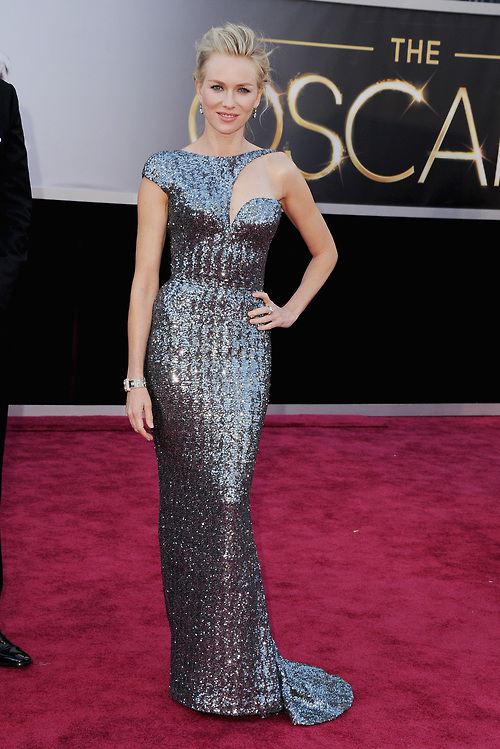
85th Annual Academy Awards - Arrivals

Name in the News
The 85th Academy Awards ceremony was held on February 24, and as with every year at this time, there was intense speculation in the Australian media as to whether any Australians would manage to win an Oscar.

One who was under consideration was actress Naomi Watts, who was born in England and came to Australia as a teenager, where she attended high school in Sydney (Nicole Kidman was one of her classmates). Her first acting jobs were in Australia, gaining experience in film and television. In the 1990s she moved to Los Angeles to continue her career; her big break came when she was chosen as the star of Mulholland Drive.

This year, she was nominated for the Academy Award for Best Actress, for her role of Maria Bennett in The Impossible. She lost to Jennifer Lawrence, but has won several other awards for the film, as well as being judged one of the best-dressed on the red carpet at the Oscars.

Name Information
Naomi is a Hebrew name interpreted as “pleasant, agreeable, sweet”. In the Old Testament, Naomi is a central character in The Book of Ruth, and despite the lovely meaning of her name, things went so wretchedly for her that she told others to call her Mara, meaning “bitterness”.

Because of a famine in Judea, Naomi and her family travelled to the land of Moab, where her husband and both her sons died, leaving her alone with her daughters-in-law Orpah and Ruth. Although her daughters-in-law were foreigners and pagans, they did not desert Naomi, and when she told them she was going back to her own people at Bethlehem, both girls offered to accompany her.

Naomi managed to convince Orpah that she should return to her family and her own customs, but Ruth famously says:

Entreat me not to leave thee, or to return from following after thee: for whither thou goest, I will go; and where thou lodgest, I will lodge: thy people shall be my people, and thy God my God: Where thou diest, will I die, and there will I be buried: the LORD do so to me, and more also, if ought but death part thee and me.

Naomi must have been a pretty wonderful mother-in-law to have evoked such love and loyalty. As mother-in-laws tend to get a bad rap, she really stands out as something special.

When Naomi returned to Bethlehem with Ruth (the famine was over by then), both of them were destitute, and poverty and misery had changed Naomi’s appearance so much that she was barely recognisable; no wonder that she felt she had been treated bitterly and deserved a bitter name.

However, she made lemonade from the lemons life had given her. She arranged for one of her husband’s relatives to marry Ruth, and after the happy couple had a child, she became the little boy’s nanny, caring for him as devotedly as if he had been her own son. I hope the rest of her life was as pleasant as her name.

Naomi is a Japanese name too, most frequently translated as “honest and beautiful” or “beautiful above all”. It is said differently to the Hebrew name, for while we generally pronounce Naomi as nay-OH-mee, the Japanese name is said something like NOW-mee. Although it is a unisex name, it seems to be much more common as a female name in Japan. You will often see Naomi suggested as a cross-cultural baby name for couples where one person is Japanese and the other from an English-speaking country.

Naomi is a classic girl’s name in Australia which has never left the charts. In rare use in the 1900s, it reached the Top 100 in the 1970s, and peaked in the 1980s at #67. It left the Top 100 in the early 2000s, and since then has been up and down the popularity charts in the 100s – most recently up, when it reached #152 in 2011.

As Naomi peaked in the 1970s and ’80s, it would be easy to dismiss it as a “mum” name. However, it never reached the Top 50, and is still in the 100s; it hasn’t been lower than the 100s since the 1950s. I think it manages to avoid being dated by never becoming highly popular, nor uncommon, so it seems very usable. I feel as if this name could belong to someone of almost any age group.

Despite being a familiar name, Naomi still seems slightly unusual, even exotic. It doesn’t sound like other Old Testament girls’ names which have reached the Top 100, like Deborah, Sarah, Rachel, Rebecca or Hannah. These seem solid and homely, perhaps to some ears, even stodgy. If you had never heard the name Naomi before, I wonder if you would guess it to be a name from the Bible? I might have picked it as Polynesian or Native American, if I didn’t know otherwise.

Naomi is a classic name with a distinctive sound and even a distinctive narrative, for the Old Testament Naomi has a Bible story quite unlike other Biblical heroines. I think this is a great choice of baby name for someone who wants something slightly different, yet not at all obscure.

Thank you to Brooke for suggesting Naomi as a featured name.

POLL RESULT
Naomi received an excellent approval rating of 84%, making it one of the best-liked names of the year. The name Naomi was seen as beautiful and distinctive (24%), still suitable as a baby name (17%), a good cross-cultural choice (15%), having an inspiring Bible story (15%), and a pretty classic (13%). However, 9% were put off by the fact that the name is “I moan” backwards. Nobody thought the Bible story of Naomi was depressing.

(Picture shows Naomi Watts at the 2013 Oscars)

Requested Name: Dimity

20 Wednesday Feb 2013

Posted by A.O. in Requested Names

≈ 10 Comments

Tags

english names, fabric names, famous namesakes, fictional namesakes, historical records, name history, name meaning, nicknames, rare names, Russian names, vocabulary names

il_fullxfull.248146234

Dimity is a type of corded fabric, which since the 18th century has been made with cotton. The name was applied to two different types of corded cotton – one a heavy material used for bedcovers and curtains, and the other a lightweight, sheer fabric, often white with gingham checks, used for women’s dresses, skirts, blouses and lingerie. People usually think of the second meaning when they talk about dimity. The word comes from the medieval Latin dimitum, derived from the Greek dimitos, meaning “double thread”.

There is a great daintiness and femininity to the fabric, but at the same time it is surprisingly tough because of its double weave. These days, dimity is often part of vintage fashion and considered a lovely “old-fashioned” textile.

Its image in the past was twofold. On the one hand, it was seen as very ladylike and respectable, so that in her diaries, the novelist Virginia Woolf used the word in the sense of “niminy-piminy”, to indicate an overly refined and fussy femininity. On the other, it had rather a saucy side, because in Victorian tableau vivants of an erotic nature, the women wore body stockings and were draped in see-through dimity to preserve their modesty.

Information on the history of Dimity as a girl’s name is rather thin, but it seems to be much more common in Britain and Australian than elsewhere, and to be a name from the 20th century. The earliest Dimity I could find in the records dates to World War I, with an apparent peak in the years after World War II, from the late 1940s to the early 1960s.

Although the name can be found in records from the United States, it’s a bit confusing, because there the name seems to have been used as a short form of the Russian name Dimitrya. I can’t even tell if the women were actually called Dimity in real life, or if this is used as a shorthand for Dimitrya by the people writing  the records. So although the English name Dimity might have a history of use in the US, it is not possible for me to be sure.

The whimsical and lightly tripping sound of the name Dimity has made it very suitable for fiction, with Australian children’s author Bob Graham penning Dimity Dumpty, about the sister of Humpty Dumpty, and American children’s author Jane Yolen writing of Dimity Duck, the friend of Frumity Frog.

Another American author, Nancy Atherton, has an entire series about an Aunt Dimity who manages to solve mysteries from beyond the grave. Interestingly, Ms Atherton’s novels are set in Britain rather than her homeland, and she also has to explain to her readers how to pronounce the name Dimity (DIM-uh-tee). This lends weight to the notion that the name Dimity is less familiar in the United States.

I get the impression that in times past, Dimity was seen as rather upper-class, and like Verity, had the image of being a Head Girl/Debating Team Captain/Pony Club Champion sort of a name. These days I think it seems much more accessible, with the number of successful women named Dimity in the public eye giving it greater exposure. I suspect that the popularity of the similar-sounding Trinity may also broaden its appeal.

Famous namesakes include news reporter Dimity Clancey, opera singer Dimity Shepherd, ballerina Dimity Azoury, violinist Dimity Hall, United Nations Women Australia board member Dimity Hodge, and speech pathologist Dr Dimity Dornan, who has been honoured for her lifetime working with deaf and hearing-impaired children. There seems to be many successful women called Dimity, considering that the name is apparently quite rare.

Dimity is a dainty, feminine name with a hint of whimsy, but not one to be underestimated. Like the fabric it is named after, there is a strength to delicate Dimity. Although it is an uncommon name, it isn’t unfamiliar in Australia, and has many high-achieving namesakes.

Thank you to Brooke for suggesting Dimity as a featured name.

POLL RESULT: Dimity received an approval rating of 69%. People saw it as poetic and whimsical (20%), delightful (19%), delicate but strong (15%) and dainty and demure (10%). However, its detractors thought it was too odd and eccentric (10%), or even “frightful” (8%). Nobody thought Dimity was a lower-class name.

(Picture is of a 1930s-style white dimity dress)

Requested Famous Name: Banjo

14 Thursday Feb 2013

Posted by A.O. in Famous Names, Requested Names

≈ 10 Comments

Tags

aliases, Australian Aboriginal names, Australian names, Australian slang terms, english names, famous namesakes, historical records, musical instruments, name history, name meaning, names of horses, nicknames, patriotic names, pen names, pseudonyms, vocabulary names

146168-banjp-paterson-grapphicOn Sunday February 17 this year it will be the 149th birthday of Andrew Barton Paterson, affectionately known as “Banjo” Paterson. To celebrate, The Orange and District Historical Society will be throwing him a birthday party, with a car rally, picnic lunch in Banjo Paterson Park, poetry readings, stories of Banjo’s life, and walk around the historic property where he was born.

Because this is a name blog, I feel obliged to explain that Paterson was named Andrew after his Scottish-born father, and his middle name Barton was a family name from his mother’s side; he was related to Edmund Barton, who would later become Australia’s first prime minister. Because he and his dad had the same name, Paterson went by his middle name, and was always known as Barty to his friends and family.

Paterson lived with his grandmother while he was attending the prestigious Sydney Grammar School, and she encouraged in him a love of poetry. He was 21 when he first began submitting poems to The Bulletin, under the pseudonym of “The Banjo” (sometimes shortened to a simple “B”). Full of fierce nationalism and a desire for a fairer society, he had some aspirations to write fiery polemic, and had even written a political pamphlet. However, The Bulletin had other ideas.

In the late 19th century, there was a movement towards the British colonies of Australia becoming one country, a feeling that Australia should be a united nation, and Australians a united people. In the effort to provide Australia with a unifying mythology that would instil nationalistic pride, it seemed that the Australian bush and outback would be the symbol to draw everyone together.

The Bulletin suggested that Banjo Paterson try his hand at bush poetry in line with its nationalist editorial policy. Banjo had been born in the Central West, but spent most of his childhood and youth growing up on the family property near Yass, north of Canberra. It was here he learned to ride, and watched the horsemen from the Murrumbidgee River and Snowy Mountains country play polo and take part in picnic races. He gained a great love of horses, and an admiration for horsemanship.

When he wrote The Man from Snowy River, it was a poem of reckless horse-riding heroism which immediately captured the nation’s imagination, and which still has our heart. It made his name, and his first poetry collection, under the title The Man from Snowy River, is the most-sold collection of Australian bush poetry ever, and is still reprinted today. During his lifetime, Banjo Paterson was second only to Rudyard Kipling in popularity among living poets writing in English.

Banjo Paterson was a colleague and friend of Henry Lawson, but had a very different way of seeing the bush. In Banjo Paterson poems, the bush is a place of adventure, romance and beauty, populated by heroes who live in freedom amongst the gum trees, honest freckle-faced youths, and characters with funny names and odd yarns about them.

Australia is the Outback, and pioneers, and songs around the campfire under the starry sky, and swagmen camped by billabongs. It’s a country of warmth and humour, and although it never quite existed, like all good mythology it lives in our hearts and minds. Banjo Paterson gave us a dream of Australia – one from which we have never truly awakened.

When it comes to names from history, often times there is a tinge of tragedy to them; some sadness attached to the real person who bore them, or even a whiff of scandal. There is no darkness to the name Banjo – Paterson was a decent, highly intelligent man who cared very much about the less fortunate, but he was essentially a happy person who was popular and sociable, and liked sport and the outdoors.

He wore his fame easily, remained modest about his talents, and never had any scandal attached to him. He was able to fulfil many of his dreams, and those that were denied him didn’t set him back. He enjoyed the ordinary love of friends and family, as well as the extraordinary love and devotion given to him by his nation. He is the model of what we hope for and expect from our celebrities.

The equine-loving Paterson took his pen name name of The Banjo from that of a horse owned by his family. This always seems to be described as “a favourite horse”, or even “his favourite horse”, but I cannot find any original source for this. Paterson himself simply describes it, no doubt with affection, as a “so-called racehorse“.

The origin of the horse’s name is apparently lost to history, but the word banjo has a history as a slang word in Australia. Slang dictionaries suggest as possible meanings “frying pan”, and “shoulder of mutton”. Another meaning was “shovel used for mining”, which during World War I, became used for any military entrenching tool – in other words, there are some correlations between the slang terms banjo and digger!

A banjo is military slang for a bacon and egg roll, because the motion of constantly dealing with crumbs while eating is reminiscent of someone playing the banjo. And Banjo Paterson himself has added another slang term – a banjo is a $10 note, because Paterson’s picture is on it, along with the words to The Man from Snowy River (Henry Lawson was on the old $10 note).

The banjo is the descendant of musical instruments brought to Colonial America by African slaves, and long seen as a staple of country music, the music of the poor and downtrodden (the kind of people that Banjo Paterson cared about). It is not known where the word banjo comes from, but the most likely source is West Africa, where it may be the same word they used for bamboo.

There are quite a few men named Banjo in Australian records, with the name most common as a nickname or alias. Many must have been named in honour of the poet, with some families named Paterson apparently finding it hard to resist having their own “Banjo Paterson”. The name isn’t unusual in Aboriginal communities, where it is given as a nickname.

The name Banjo gained fresh impetus when actress Rachel Griffiths named her son Banjo Patrick in 2003; since then the name has received more use, with 12 baby boys named Banjo last year in Victoria alone.

Banjo is an uniquely Australian name; one which seems strange in other countries, yet cosy and familiar in our own. It’s patriotic and honours one of our most beloved national poets. It’s cute, cool, and has a very Aussie nickname too – Joey.

Thank you to Brooke for suggesting Banjo as a featured name.

POLL RESULT: Banjo received an approval rating of 86%, making it one of the most highly esteemed names of the year. It was seen as uniquely Australian and patriotic (36%), cool and different (30%), and cute and spunky (20%). The remaining 14% of people thought it was over the top, weird, or ridiculous.

(Picture shows Banjo Paterson with the score to Waltzing Matilda)

Requested Name: Anzac

25 Wednesday Apr 2012

Posted by A.O. in Requested Names

≈ 14 Comments

Tags

birth announcements, historical events, historical records, holiday names, honouring, middle names, military events, name combinations, name history, name meaning, nicknames, unisex names

Today is ANZAC Day, one of the most solemn and significant days on the Australian and New Zealand calendars. Originally a commemoration for the Australian and New Zealand Army Corps (ANZACs) who fought at Gallipoli during World War I, today it also honours all those who served and died for their country during military operations.

It marks the anniversary of the first major military action fought by Australian and New Zealand forces in 1915, as part of World War I. The Gallipoli Campaign took place on a peninsula near the Dardanelles in what is now Turkey, and was an attempt by the British and French to capture Constantinople (now Istanbul), and secure a safe route to Russia. The attempt was a failure for the Allies, and resulted in the loss of many lives.

While great military victories are often commemorated as national days of celebration, Australia and New Zealand instead remember this bitter military failure. Although Australia had been independent for thirteen years, and New Zealand for seven, when World War I broke out, many in both countries still thought of themselves as British (they had been, only a few years previous), and had a great deal of faith in the British Empire.

The miserable failure of the Gallipoli Campaign did much to shake that faith in British superiority. The stories of courage and heroism from the ANZACs bolstered a feeling of national pride, and a national identity which until then had been lacking. It is popularly said that although Australia officially became a nation in 1901, we only psychologically separated ourselves from Britain in 1915.

There is a long tradition of giving children a name to honour military events, and Anzac is another of these. Although the name Anzac is protected by the government to ensure it is not misused, it is permitted to use it on people. It would make a very patriotic name, especially for a child born on or near ANZAC Day.

Through reading the historical records, Anzac seems to have been most often given as a middle name. When used as a first name, it was almost always given to boys. As a middle name, it was much more even, but still more often given to boys than girls.

Although there seems to be have been a spate of baby Anzacs after the Gallipoli Campaign, it is a name still in use today, and I last saw a baby named Anzac in a birth announcement less than two years ago (a boy). For girls, Anne or Annie could be used as a nickname, and Zac seems most likely for a boy.

Some Anzac Name Combinations From the World War I Era

Female

Alma Anzac Myrtle

Annie Anzac

Anzac Cavel Vardon

Clover Anzac

Dardandella Anzac

Maple Anzac

Verdun Anzac Jane


Male

Anzac Gallipoli Claude

Anzac Kitchener

Lalbert Anzac

Valentine Anzac

Vivian Anzac Jasper

William Anzac France

Winston Anzac

Thank you to Larkin for suggesting the name Anzac back in early December, and waiting so patiently for ANZAC Day to arrive so that it could be covered!

(Image shows the Beach Cemetery at Anzac Cove, containing the remains of allied troops who died during the Battle of Gallipoli. Most of the graves are from the Australian Imperial Forces, and the first graves were dug here on the day of landing, April 25 1915)

Newer posts →

Enter your email address to follow this blog

Categories

Archives

Recent Comments

A.O.'s avatarwaltzingmorethanmati… on Zarah Zaynab and Wolfgang…
Madelyn's avatarMadelyn on Zarah Zaynab and Wolfgang…
JD's avatardrperegrine on Can Phoebe Complete This …
A.O.'s avatarwaltzingmorethanmati… on Rua and Rhoa
redrover23's avatarredrover23 on Rua and Rhoa

Blogroll

  • Appellation Mountain
  • Baby Name Pondering
  • Babynamelover's Blog
  • British Baby Names
  • Clare's Name News
  • For Real Baby Names
  • Geek Baby Names
  • Name Candy
  • Nameberry
  • Nancy's Baby Names
  • Ren's Baby Name Blog
  • Sancta Nomina
  • Swistle: Baby Names
  • The Art of Naming
  • The Baby Name Wizard
  • The Beauty of Names
  • Tulip By Any Name

RSS Feed

  • RSS - Posts

RSS Posts

  • Celebrity Baby News: Melanie Vallejo and Matt Kingston
  • Names from the TV Show “Cleverman”
  • Can Phoebe Complete This Sibset?
  • Zarah Zaynab and Wolfgang Winter
  • Baby, How Did You Get That Name?
  • Celebrity Baby News: Media Babies
  • Celebrity Baby News: Adelaide Crows Babies
  • Celebrity Baby News: Chris and Rebecca Judd
  • Names at Work: Name News From the World of Business and Employment
  • Celebrity Baby News: Sporting Round Up

Currently Popular

  • Celebrity Baby News: Jacinta Allan and Yorick Piper
  • The Top 100 Names of the 1940s in New South Wales
  • Celebrity Baby News: Jacinta Allan and Yorick Piper
  • Celebrity Baby News: Jason Morrison and Heidi Tiltins
  • The Top 100 Names of the 1930s in New South Wales

Tags

celebrity baby names celebrity sibsets english names famous namesakes fictional namesakes honouring locational names middle names name combinations name history name meaning name popularity name trends nicknames popular names saints names sibsets surname names twin sets unisex names

Create a free website or blog at WordPress.com.

Privacy & Cookies: This site uses cookies. By continuing to use this website, you agree to their use.
To find out more, including how to control cookies, see here: Cookie Policy
  • Subscribe Subscribed
    • Waltzing More Than Matilda
    • Join 517 other subscribers
    • Already have a WordPress.com account? Log in now.
    • Waltzing More Than Matilda
    • Subscribe Subscribed
    • Sign up
    • Log in
    • Report this content
    • View site in Reader
    • Manage subscriptions
    • Collapse this bar
 

Loading Comments...